Corrosion Inhibition of Carbon Steel by Expired Omeprazole: Insights from Electrochemical Noise and DFT Studies

 , , , ,
Abstract
1. Introduction
2. Materials and Methods
2.1. Preparation of the Samples
2.2. Testing Solution
2.3. Inhibitor of Expired Drug Omeprazole
2.4. Electrochemical Test
2.4.1. Removal of the Trend (Method Point to Point)
2.4.2. Arithmetic Average ()
2.4.3. Mean Square Root
2.4.4. Standard Deviation
2.4.5. Resistance to Electrochemical Noise (Rn)
2.4.6. Hann Window Application in FFT Analysis (w(n))
2.4.7. Fourier Transform Analysis of Electrochemical Noise Signals (Xk)
2.4.8. Noise Impedance (Zn)
2.4.9. Localization Index (LI)
2.4.10. Efficiency of Noise Resistance (ηRn)
2.5. Density Functional Theory (DFT) Calculations
3. Results
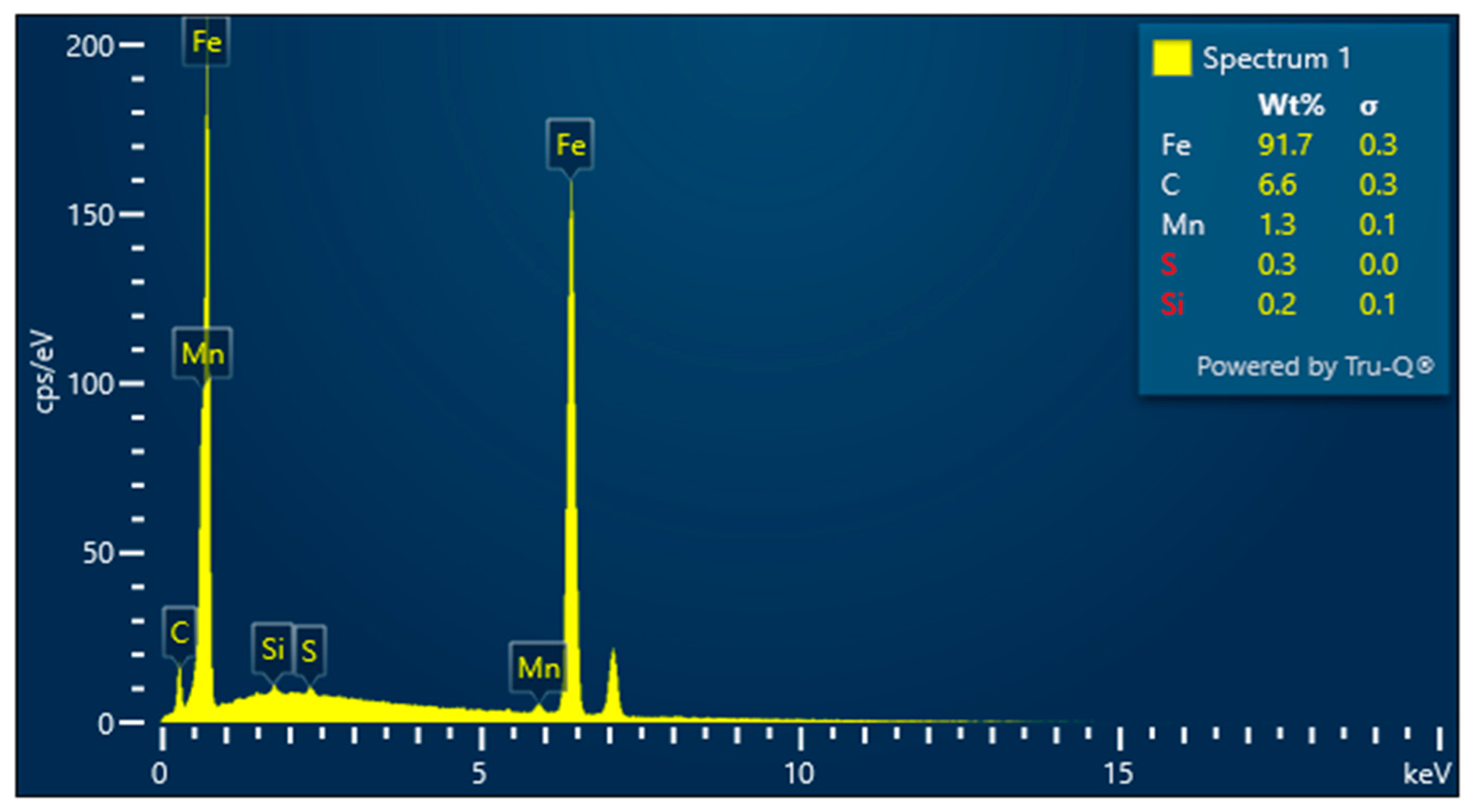
3.1. Energy Dispersive Spectroscopy (EDS) of AISI 1018 Steel
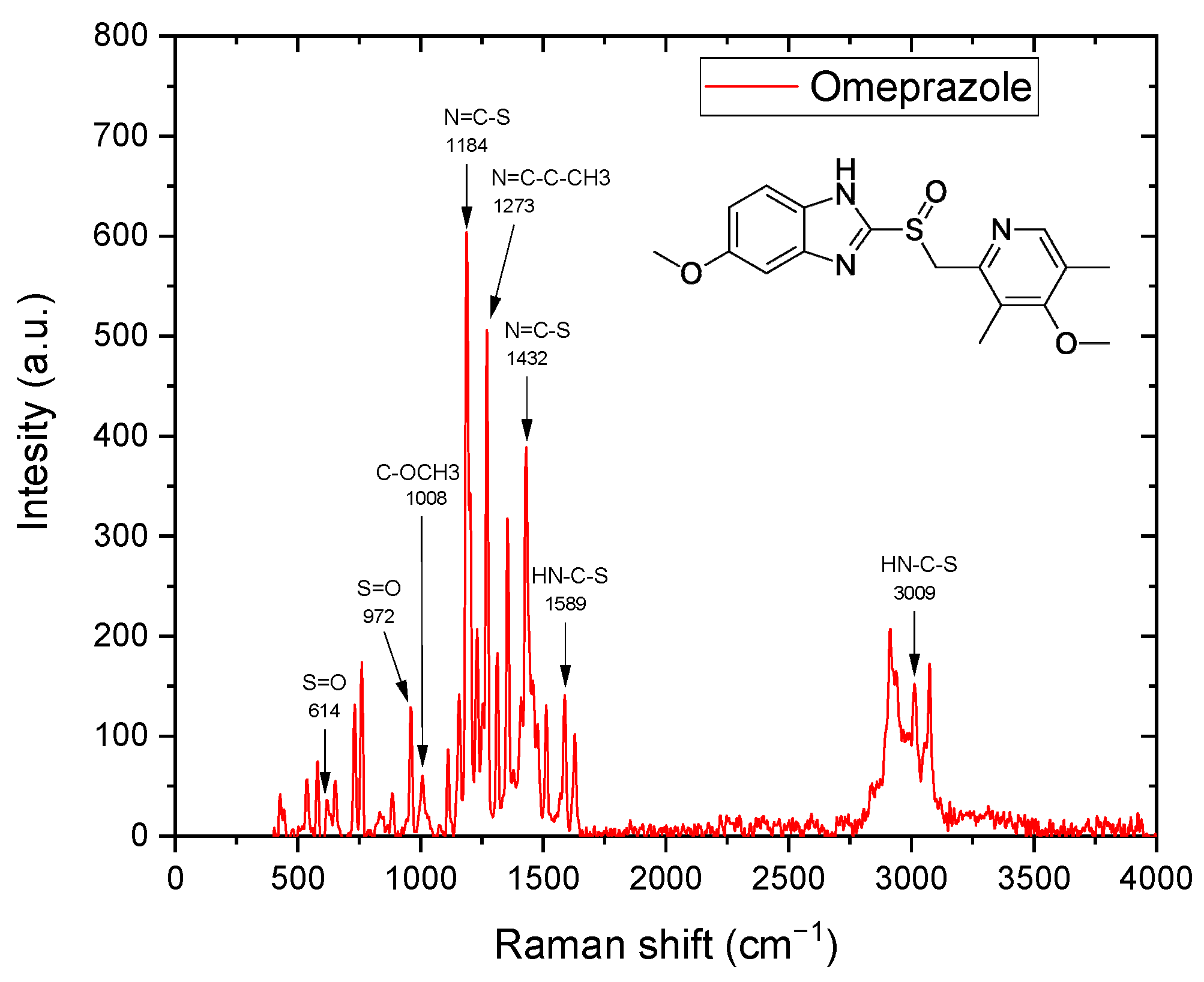
3.2. Raman Spectroscopy
3.3. Electrochemical Results
3.3.1. Electrochemical Noise (EN)
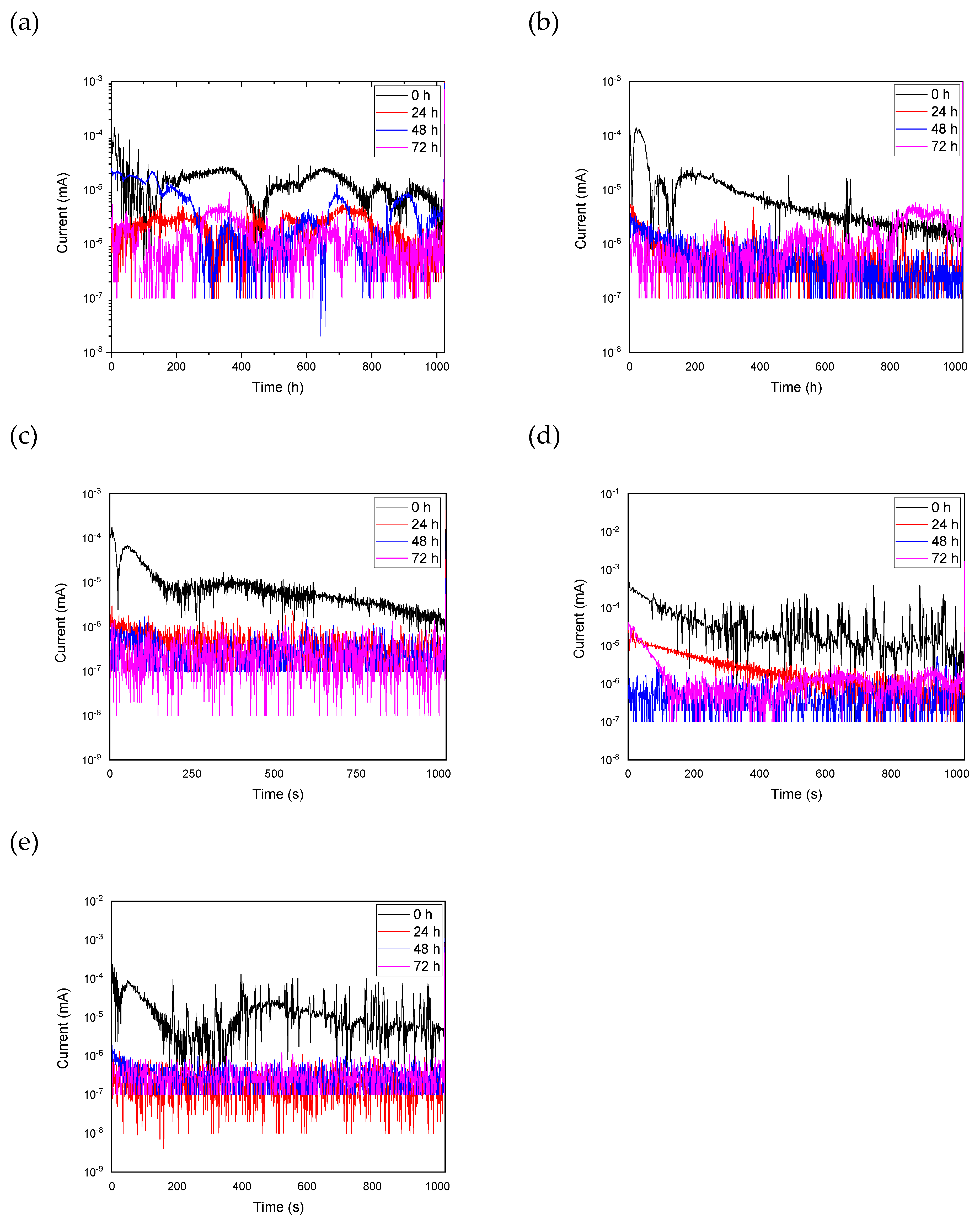
Current Noise Time Series
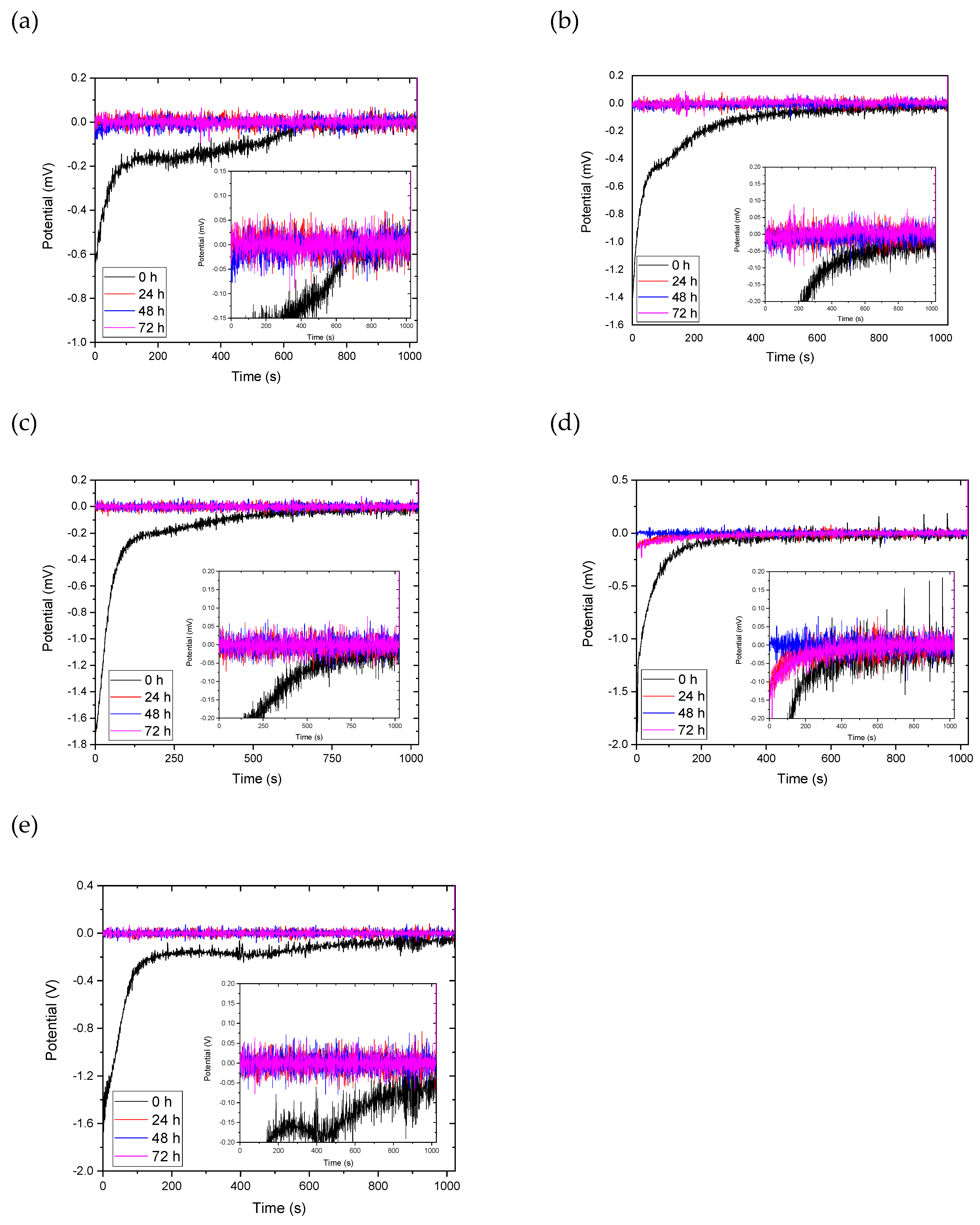
Potential Noise Time Series
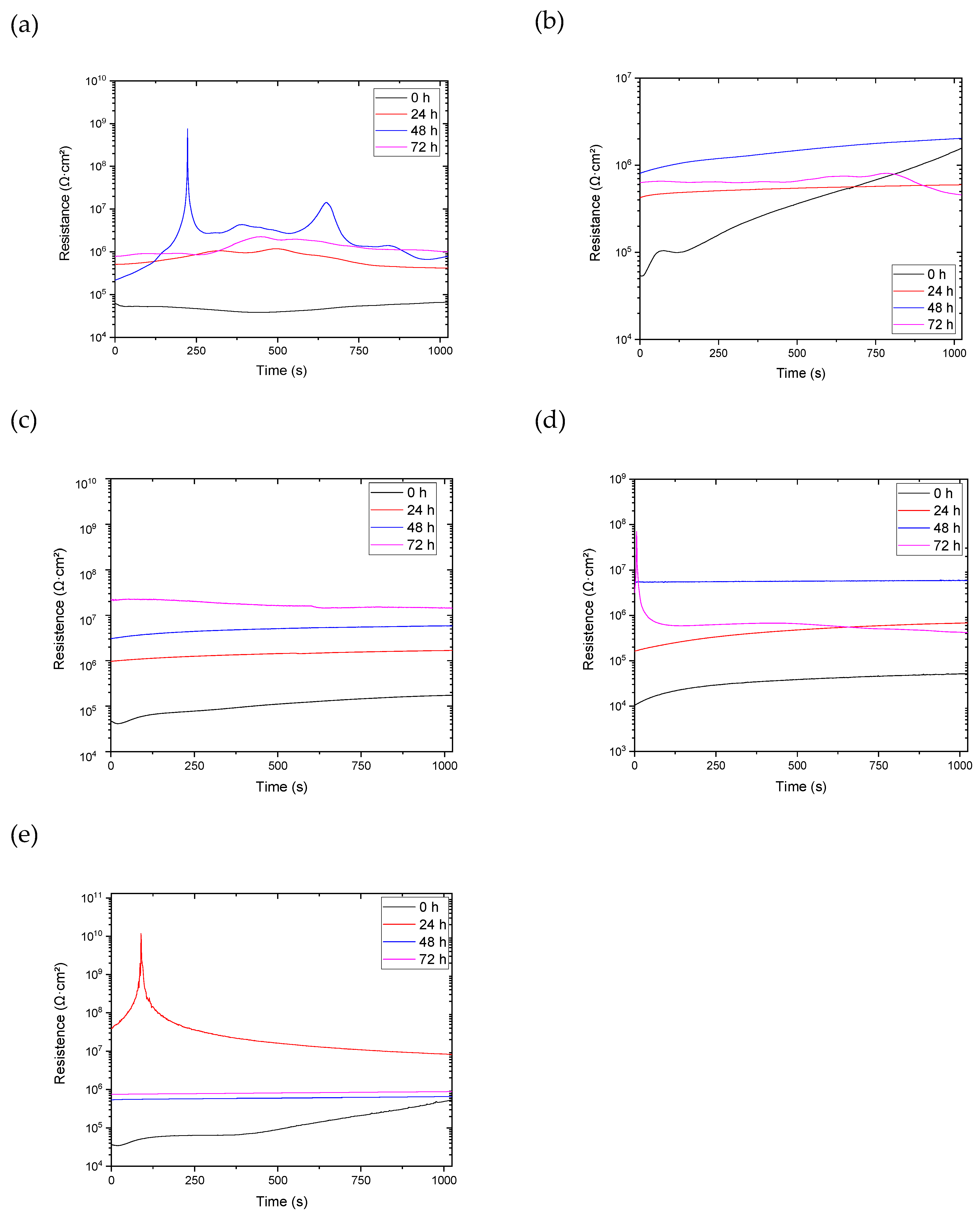
Resistance vs. Time
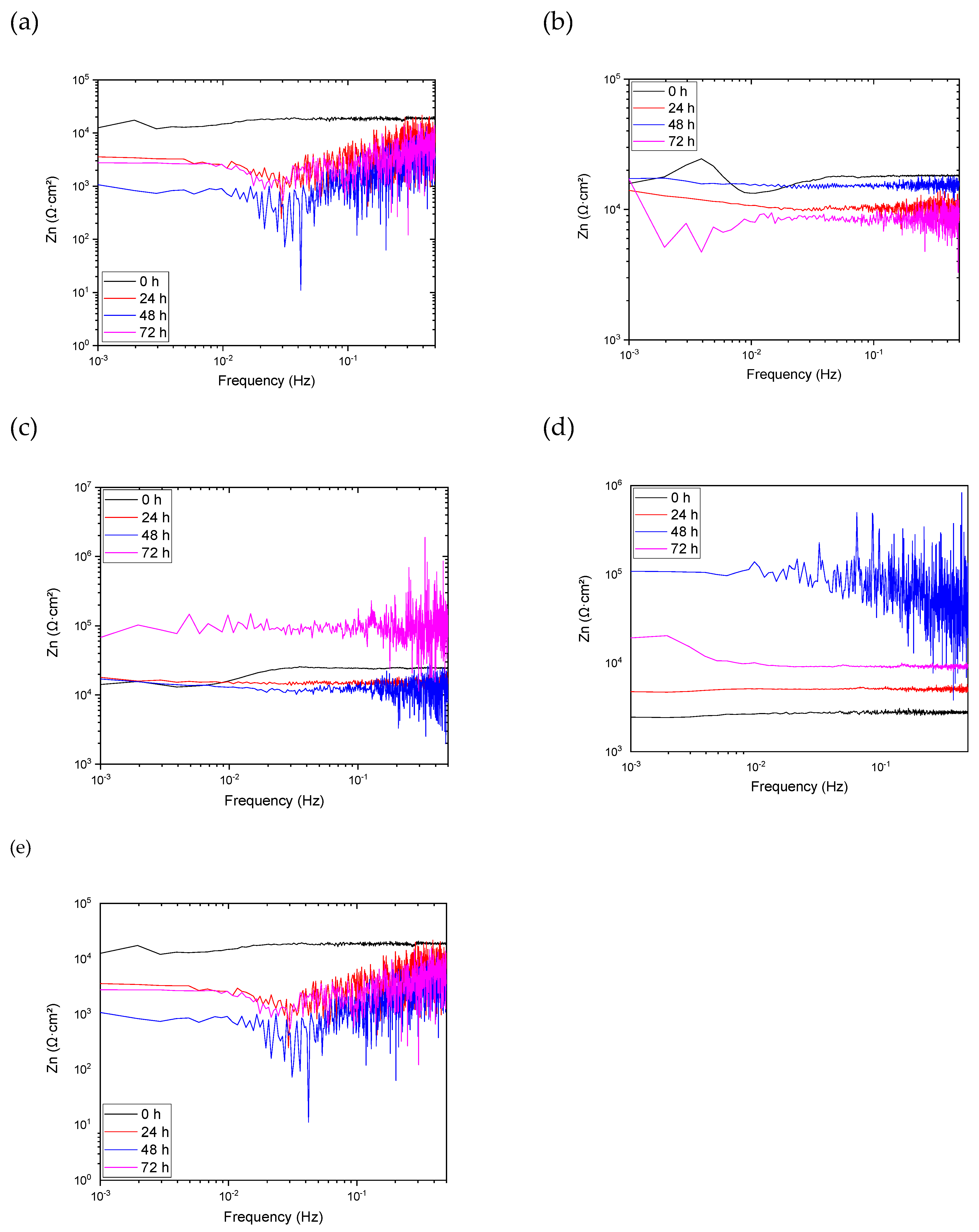
Noise Impedance in the Frequency Domain
Noise Resistance vs. Time
Index of Localized vs. Time
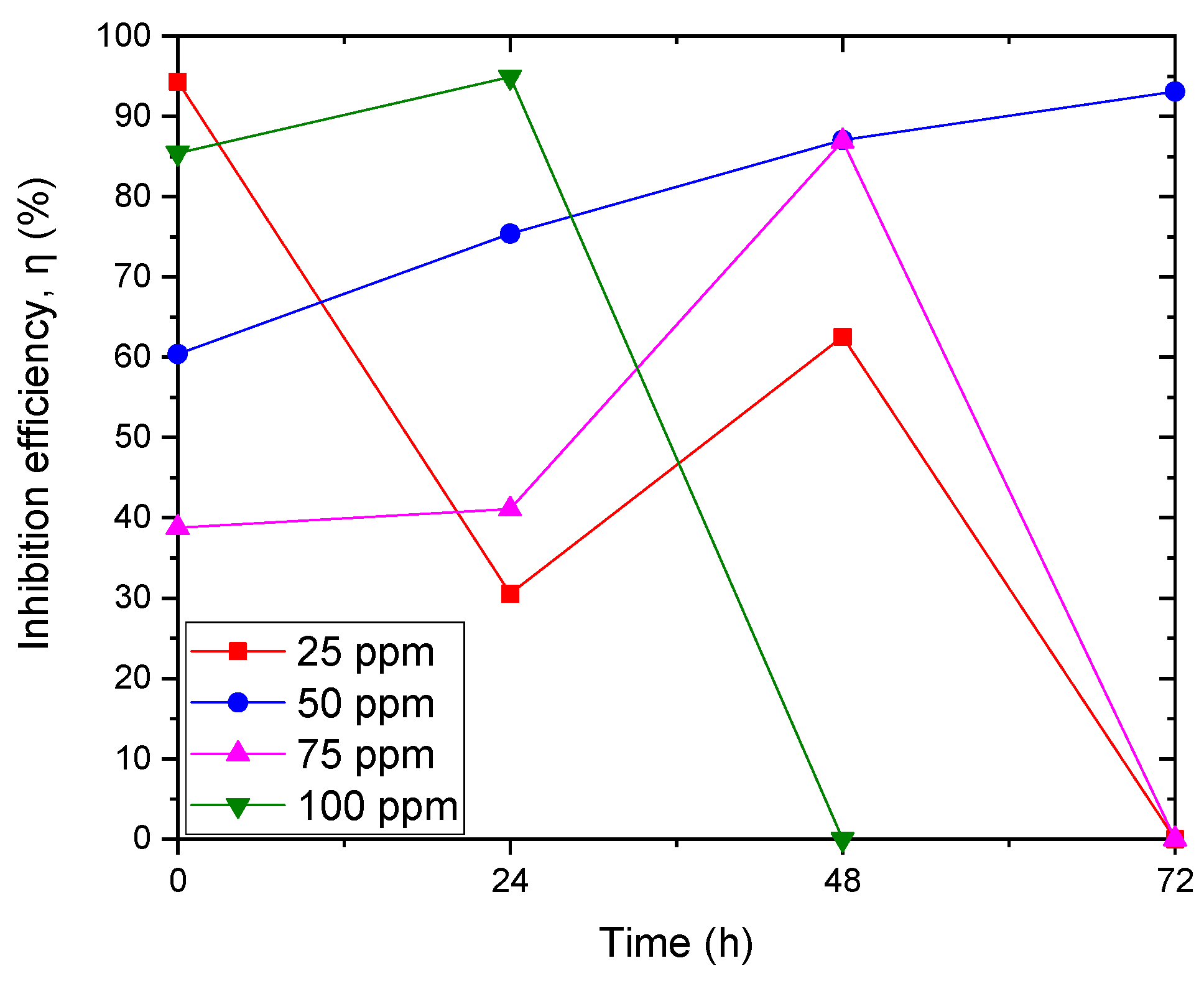
Inhibition Efficiency (η)
3.4. Electrochemical Reactions
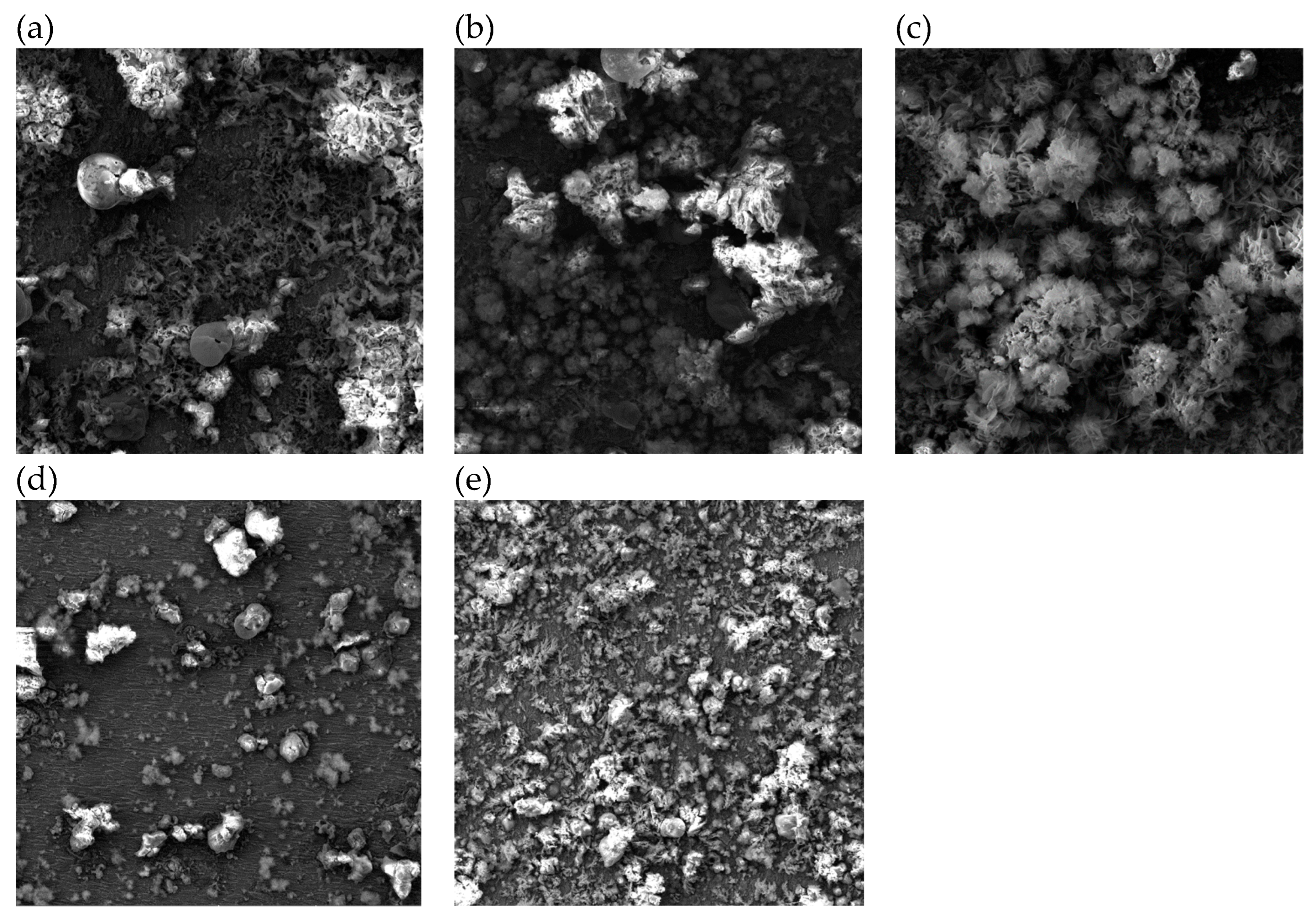
3.5. Scanning Electron Microscopy (SEM)
3.6. Density Functional Theory Analysis
3.7. Proposed Inhibition Mechanism
4. Conclusions
- Noise impedance analysis indicates that at 75 ppm there is an increase in charge transfer resistance and a reduction in high-frequency transients, suggesting effective surface coverage by the inhibitor film at specific exposure times.
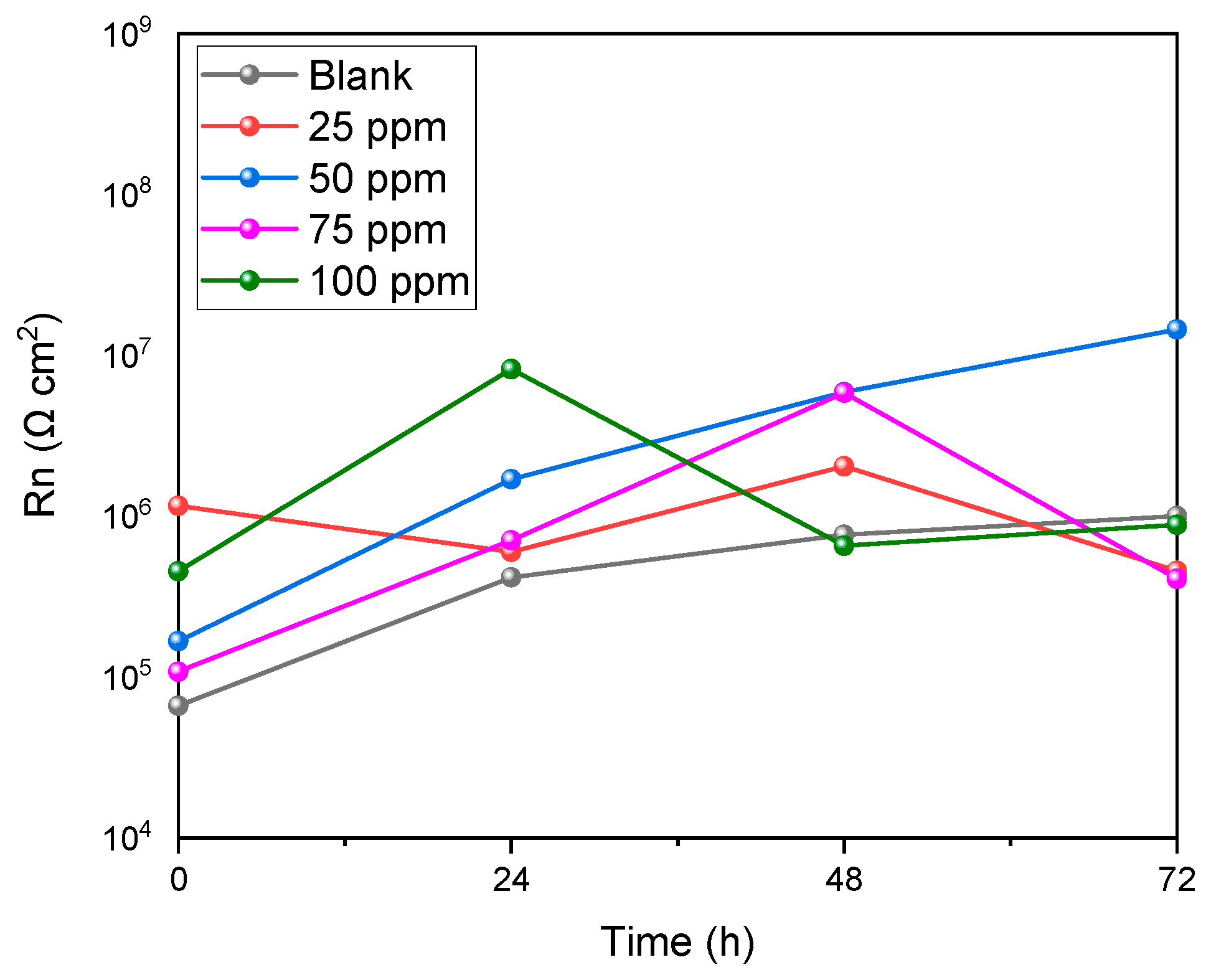
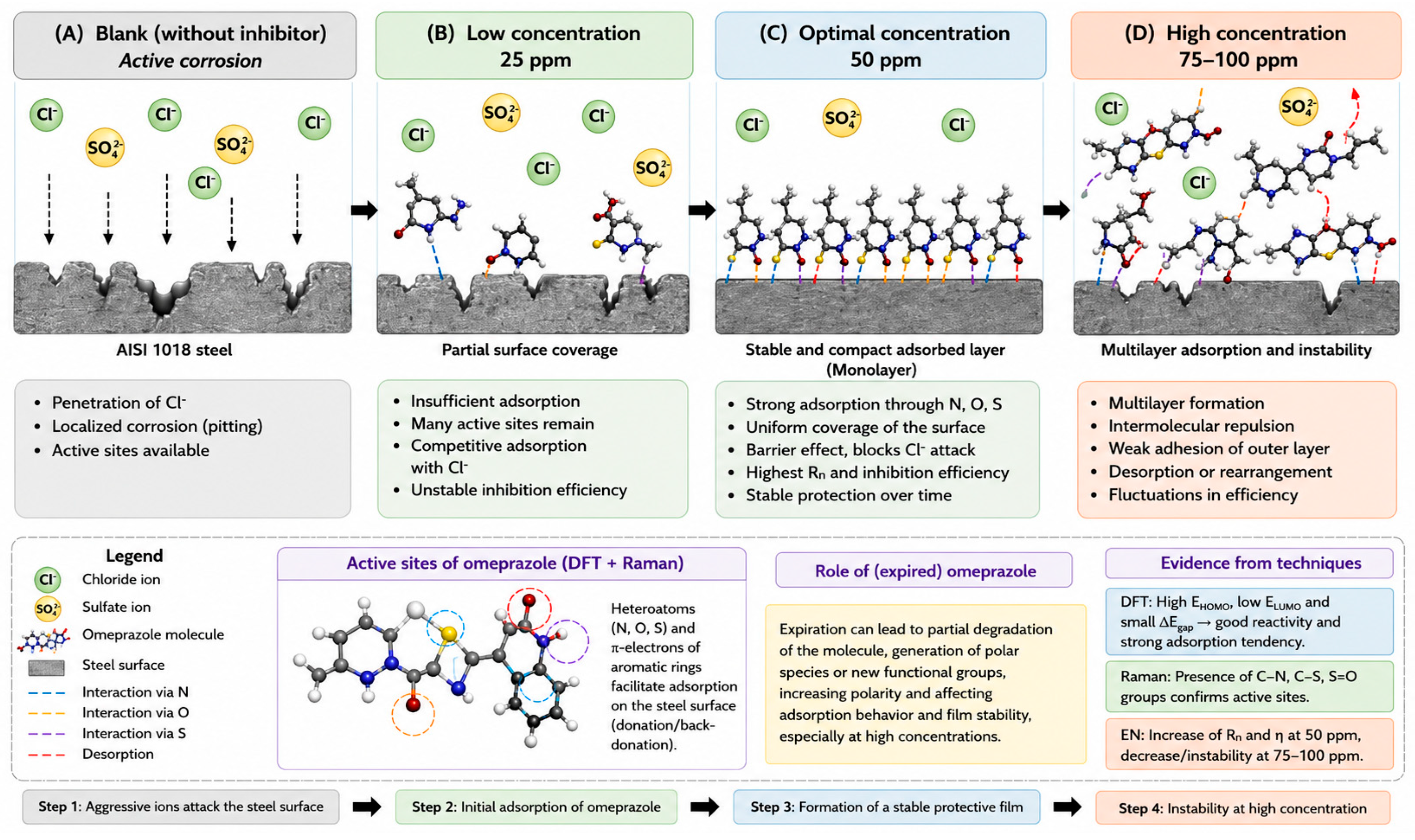
- Based on electrochemical noise resistance (Rn), 50 ppm provides the highest and most stable values over time, indicating sustained corrosion protection and lower current density.
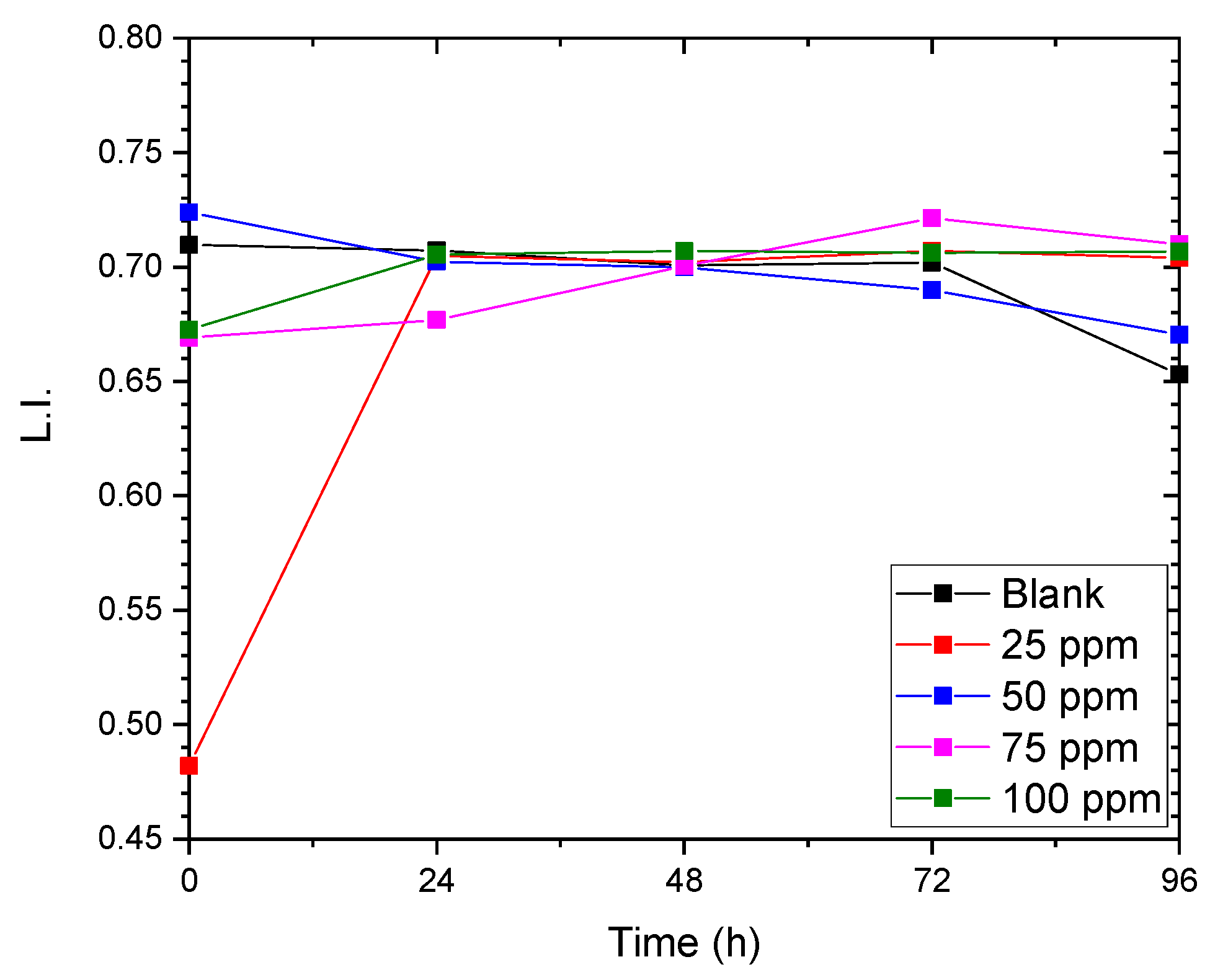
- The localization index (LI) decreases in the presence of the inhibitor, particularly at 50 and 75 ppm, confirming a reduction in corrosion activity, although localized corrosion remains predominant in all cases.
- SEM observations show that 75 ppm produces a more homogeneous surface after 72 h, suggesting effective surface coverage at the final stage of exposure.
- Overall, considering both stability and inhibition efficiency, 50 ppm is identified as the optimal concentration.
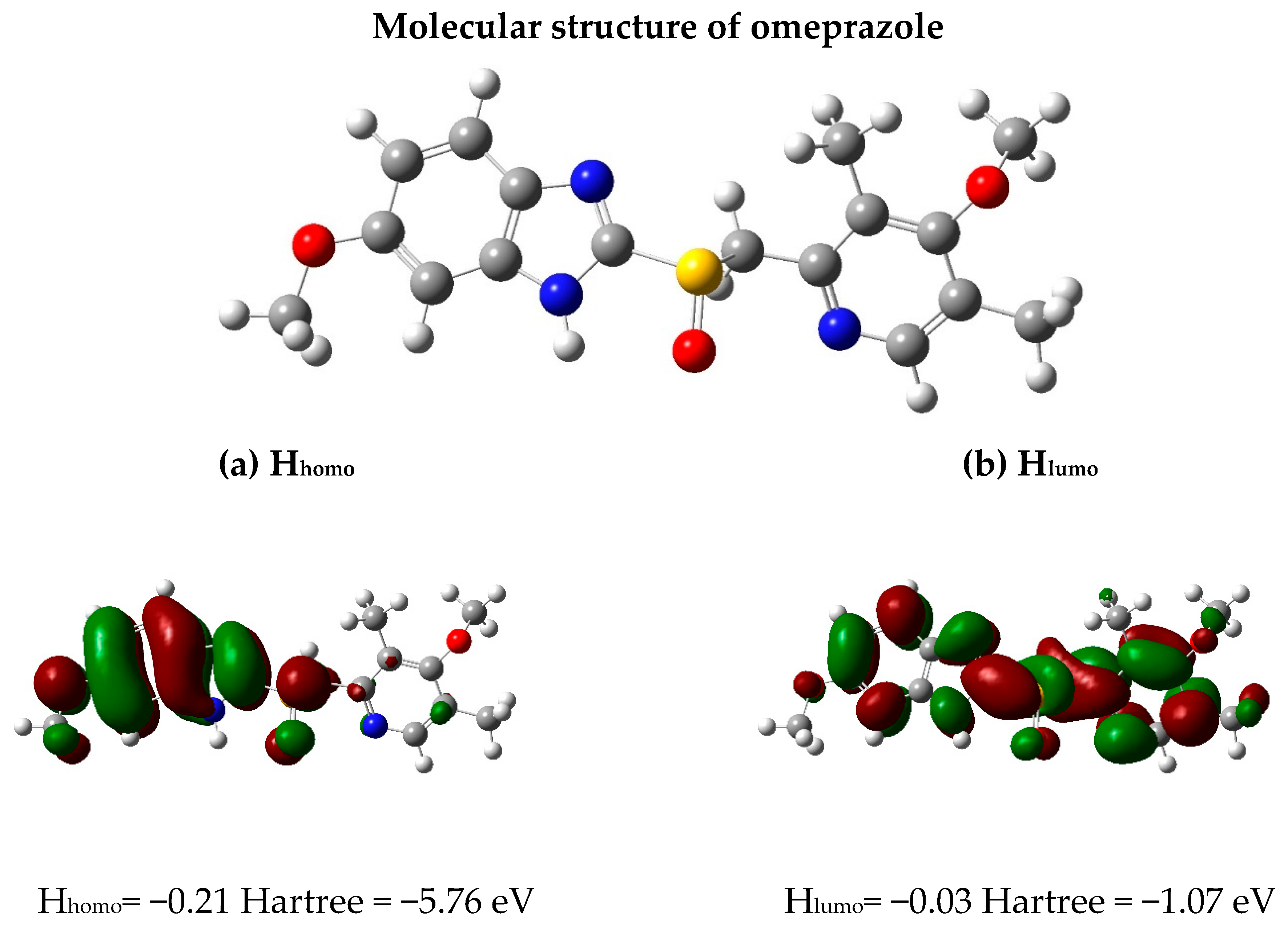
- DFT results confirm that omeprazole possesses suitable electronic properties for corrosion inhibition, including electron-donating ability, moderate reactivity, and favorable charge distribution, which promote adsorption onto the AISI 1018 steel surface and the formation of a protective layer.
- From an environmental perspective, the use of expired omeprazole represents a promising and sustainable alternative, promoting the reutilization of pharmaceutical waste and reducing reliance on conventional toxic inhibitors.
- The evaluated system simulates a marine–industrial atmospheric environment, suggesting potential applications in corrosion protection of carbon steel. However, further studies are required to assess long-term stability and validate the results using complementary electrochemical techniques.
Author Contributions
Funding
Institutional Review Board Statement
Informed Consent Statement
Data Availability Statement
Acknowledgments
Conflicts of Interest
References
- ISO 9223:2012; Corrosion of Metals and Alloys—Corrosivity of Atmospheres—Classification, Determination and Estimation. International Organization for Standardization: Geneva, Switzerland, 2012.
- ISO 12944-1:2017; Paints and Varnishes—Corrosion Protection of Steel Structures by Protective Paint Systems—Part 1: General Introduction. International Organization for Standardization: Geneva, Switzerland, 2017.
- ASTM A588/A588M-24; Standard Specification for High-Strength Low-Alloy Structural Steel, up to 50 ksi [345 MPa] Minimum Yield Point, with Atmospheric Corrosion Resistance. ASTM International: West Conshohocken, PA, USA, 2024.
- ASTM A847/A847M-23; Standard Specification for Cold-Formed Welded and Seamless High-Strength, Low-Alloy Structural tubing with Improved Atmospheric Corrosion Resistance. ASTM International: West Conshohocken, PA, USA, 2023.
- ASTM B117-26; Standard Practice for Operating Salt Spray (Fog) Apparatus. ASTM International: West Conshohocken, PA, USA, 2026.
- Silva, T.A.R.; Marques, A.C.; dos Santos, R.G.; Shakoor, R.A.; Taryba, M.; Montemor, M.F. Development of biopolyurethane coatings from biomass-derived alkylphenol polyols—A green alternative. Polymers 2023, 15, 2561. [Google Scholar] [CrossRef] [PubMed]
- Muñoz Ledo, R.; Uruchurtu Chavarín, J. Caracterización de la agresividad atmosférica sobre los materiales metálicos estructurales en la Zona Metropolitana de la Ciudad de México. Rev. Int. De Contam. Ambient. 2002, 18, 27–32. Available online: https://www.redalyc.org/articulo.oa?id=37018103 (accessed on 8 May 2026).
- Fu, G.Q.; Liang, L.D.; Jing, M.; Liang, G.X.; Yong, Z.M. Synergistic effect of sulfur dioxide and chloride on the corrosion of 3.55 wt% Ni weathering steel. Mater. Res. Express 2020, 7, 116503. [Google Scholar] [CrossRef]
- Chico, B.; de la Fuente, D.; Díaz, I.; Simancas, J.; Morcillo, M. Annual atmospheric corrosion of carbon steel worldwide: An integration of ISOCORRAG, IPN/UNECE and MICAT database. Materials 2017, 10, 601. [Google Scholar] [CrossRef]
- Avila Ayón, V.; Rodríguez Quesada, A.L.; Lías Rodríguez, Y. Influencia de los parámetros medioambientales en la corrosión de elementos estructurales metálicos. Cienc. Holguín 2005, 11, 1–11. [Google Scholar]
- Morcillo, M.; Díaz, I.; Cano, H.; Chico, B.; de la Fuente, D. Atmospheric corrosion of weathering steels: Overview for engineers. Part I: Basic concepts. Constr. Build. Mater. 2019, 213, 723–737. [Google Scholar] [CrossRef]
- Flores Nicolás, A.; Menchaca Campos, E.C.; Flores Nicolás, M.; Martínez González, J.J.; González Noriega, O.A.; Uruchurtu Chavarín, J. Influence of recycled high-density polyethylene fibers on the mechanical and electrochemical properties of reinforced concrete. Fibers 2024, 12, 24. [Google Scholar] [CrossRef]
- Farro, N.W.; Veleva, L.; Aguilar, P. Copper marine corrosion: I. Corrosion rates in atmospheric and seawater environments of Peruvian port. Open Corros. J. 2009, 2, 114–122. [Google Scholar] [CrossRef]
- Alcántara, J.; de la Fuente, D.; Chico, B.; Simancas, J.; Díaz, I.; Morcillo, M. Marine atmospheric corrosion of carbon steel: A review. Materials 2017, 10, 406. [Google Scholar] [CrossRef]
- Cai, Y.; Zhao, Y.; Ma, X.; Zhou, K.; Chen, Y. Influence of environmental factors on atmospheric corrosion in dynamic environments. Corros. Sci. 2018, 137, 163–175. [Google Scholar] [CrossRef]
- Maria, C.; Maria, E.; Raúl, G.; Nancy, E. Corrosividad atmosférica del cobre y del acero en dos localidades de Villahermosa, Tabasco. Ing. Investig. Tecnol. 2015, 16, 197–206. [Google Scholar] [CrossRef]
- Gladkikh, N.; Makarychev, Y.; Petrunin, M.; Maleeva, M.; Maksaeva, L.; Marshakov, A. Synergistic effect of silanes and azole for enhanced corrosion protection of carbon steel by polymeric coatings. Prog. Org. Coat. 2020, 138, 105386. [Google Scholar] [CrossRef]
- Jamali, S.S.; Mills, D.J. A critical review of electrochemical noise measurement as a tool for evaluation of organic coatings. Prog. Org. Coat. 2016, 95, 26–37. [Google Scholar] [CrossRef]
- Li, X.; Cao, G.; Guo, M.; Peng, Y.; Ma, K.; Wang, Z. Initial corrosion behavior of carbon steel Q235, pipeline steel L415, and pressure vessel steel 16MnNi under high humidity and high irradiation coastal-industrial atmosphere in Zhanjiang. Acta Metall. Sin. (Engl. Lett.) 2023, 59, 884–892. [Google Scholar] [CrossRef]
- Thandar, W.; Win, Y.Y.K.; Khaing, T.; Suzuki, Y.; Sugiura, K.; Nishizaki, I. Investigation of initial atmospheric corrosion of carbon and weathering steels exposed to urban atmospheres in Myanmar. Int. J. Corros. 2022, 2022, 4301767. [Google Scholar] [CrossRef]
- Benali, O.; Zebida, M.; Maschke, U. Synthesis and corrosion inhibition effect of two thiazole derivatives for carbon steel in 1 M HCl. J. Indian Chem. Soc. 2021, 98, 100113. [Google Scholar] [CrossRef]
- Schweitzer, P.A. Corrosion Technology; Taylor & Francis: Oxfordshire, UK, 2006. [Google Scholar]
- Berdimurodov, E.; Kholikov, A.; Akbarov, K.; Obot, I.B.; Guo, L. Thioglycoluril derivative as a new and effective corrosion inhibitor for low carbon steel in a 1 M HCl medium: Experimental and theoretical investigation. J. Mol. Struct. 2021, 1234, 130165. [Google Scholar] [CrossRef]
- Kooliyat, R.; Kakkassery, J.T.; Raphael, V.P.; Cheruvathur, S.V.; Paulson, B.M. Synthesis, cyclic voltammetric, electrochemical, and gravimetric corrosion inhibition investigations of Schiff base derived from 5,5-dimethyl-1,3-cyclohexanedione and 2-aminophenol on mild steel in 1 M HCl and 0.5 M H2SO4. Int. J. Electrochem. 2019, 2019, 1094148. [Google Scholar] [CrossRef]
- Refait, P.; Grolleau, A.-M.; Jeannin, M.; Rémazeilles, C.; Sabot, R. Corrosion of carbon steel in marine environments: Role of the corrosion product layer. Corros. Mater. Degrad. 2020, 1, 198–218. [Google Scholar] [CrossRef]
- Tamalmani, K.; Husin, H. Review on corrosion inhibitors for oil and gas corrosion issues. Appl. Sci. 2020, 10, 3389. [Google Scholar] [CrossRef]
- Sánchez-Salazar, E.; Vázquez-Vélez, E.; Uruchurtu, J.; Porcayo-Calderón, J.; Casales, M. Use of a gemini-surfactant synthesized from mango seed oil as a CO2-corrosion inhibitor for X-120 steel. Materials 2021, 14, 4206. [Google Scholar] [CrossRef] [PubMed]
- Benea, L.; Simionescu, N.; Mardare, L. The effect of polymeric protective layers and the immersion time on the corrosion behavior of naval steel in natural seawater. J. Mater. Res. Technol. 2020, 9, 13174–13184. [Google Scholar] [CrossRef]
- Zheng, D.; Gui, Q.; Xu, Y.; Song, G.-L. Modified AC–DC–AC method for evaluation of corrosion damage of acrylic varnish paint coating/Q215 steel system. Prog. Org. Coat. 2021, 159, 106401. [Google Scholar] [CrossRef]
- Lesly, T.; Pedro, M.; Edgar, A.; Maria, B. Plant extracts used as corrosion inhibitors. Inf. Técnico 2014, 72, 155–164. [Google Scholar]
- Li, L.; Qiao, Y.; Zhang, L.; Ma, A.; Ma, R.; Zheng, Y. Understanding the corrosion behavior of nickel–aluminum bronze induced by cavitation corrosion using electrochemical noise: Selective phase corrosion and uniform corrosion. Materials 2023, 16, 669. [Google Scholar] [CrossRef]
- Ghanbari, A.; Shahrabi, T.; Ramezanzadeh, B. Using of asymmetric cell to monitor corrosion performance of 304 austenitic stainless steel by electrochemical noise method. J. Mater. Res. Technol. 2022, 21, 3232–3246. [Google Scholar] [CrossRef]
- Zhang, Y.; Liu, H.; Wang, P.; Liu, Q.; Wang, X. Effect of loading conditions on corrosion fatigue process of FSW AA6061-T6 joint in 3.5% NaCl studied by electrochemical noise. J. Mater. Res. Technol. 2023, 24, 9808–9823. [Google Scholar] [CrossRef]
- Lv, J.; Yue, Q.-X.; Ding, R.; Wang, X.; Gui, T.-J.; Zhao, X.-D. The application of electrochemical noise for the study of metal corrosion and organic anticorrosion coatings: A review. ChemElectroChem 2021, 8, 337–351. [Google Scholar] [CrossRef]
- Lara-Banda, M.; Almeraya-Calderón, F.; Jáquez-Muñoz, J.M.; Nieves-Mendoza, D.; Baltazar-Zamora, M.A.; Olguín-Coca, J.; Estupiñan-Lopez, F.; Cabral Miramontes, J.; Santiago-Hurtado, G.; Gaona-Tiburcio, C. A study of the corrosion behavior of AHSS complex-phase CP 780 employing an electrochemical noise technique analyzed by different methods. Metals 2025, 15, 59. [Google Scholar] [CrossRef]
- Permeh, S.; Lau, K.; Duncan, M.; Simmons, R. Identification of steel corrosion in alkaline sulfate solution by electrochemical noise. Mater. Corros. 2021, 72, 1456–1467. [Google Scholar] [CrossRef]
- Tres, G.; Arriaga, R.; Malo, J.M.; Uruchurtu, J. Monitoreo por ruido electroquímico de la corrosión del acero en una atmósfera contaminada. Rev. Int. Contam. Ambient. 2001, 17, 171–178. Available online: http://www.redalyc.org/articulo.oa?id=37017401 (accessed on 8 May 2026).
- Obot, I.B.; Onyeachu, I.B.; Zeino, A.; Umoren, S.A. Electrochemical noise (EN) technique: Review of recent practical applications to corrosion electrochemistry research. J. Adhes. Sci. Technol. 2019, 33, 1453–1496. [Google Scholar] [CrossRef]
- Jáquez-Muñoz, J.M.; Gaona-Tiburcio, C.; Cabral-Miramontes, J.; Nieves-Mendoza, D.; Maldonado-Bandala, E.; Olguín-Coca, J.; Estupiñán-López, F.; López-León, L.D.; Chacón-Nava, J.; Almeraya-Calderón, F. Frequency analysis of transients in electrochemical noise of superalloys Waspaloy and Ultimet. Metals 2021, 11, 702. [Google Scholar] [CrossRef]
- Jáquez Muñoz, J.M.; Gaona Tiburcio, C.; Cabral Miramontes, J.; Nieves Mendoza, D.; Maldonado Bandala, E.; Olguín Coca, J.; López Léon, L.D.; Flores De los Ríos, J.P.; Almeraya Calderón, F. Electrochemical noise analysis of the corrosion of titanium alloys in NaCl and H2SO4 solutions. Metals 2021, 11, 105. [Google Scholar] [CrossRef]
- Espinoza Vázquez, A.; Rodríguez Gómez, F.J.; Martínez Cruz, I.K.; Ángeles Beltrán, D.; Negrón Silva, G.E.; Palomar Pardavé, M.; Lomas Romero, L.; Pérez Martínez, D.; Navarrete López, A.M. Adsorption and corrosion inhibition behaviour of new theophylline–triazole based derivatives for steel in acidic medium. R. Soc. Open Sci. 2019, 6, 181738. [Google Scholar] [CrossRef]
- Fakhry, H.; El Faydy, M.; Benhiba, F.; Laabaissi, T.; Bouassiria, M.; Allali, M. A newly synthesized quinoline derivative as corrosion inhibitor for mild steel in molar acid medium: Characterization (SEM/EDS), experimental and theoretical approach. Colloids Surf. A Physicochem. Eng. Asp. 2021, 610, 125746. [Google Scholar] [CrossRef]
- Beltrán-Pérez, C.; Serrano, A.A.A.; Solís-Rosas, G.; Martínez-Jiménez, A.; Orozco-Cruz, R.; Espinoza-Vázquez, A.; Miralrio, A. A general use QSAR-ARX model to predict the corrosion inhibition efficiency of drugs in terms of quantum mechanical descriptors and experimental comparison for lidocaine. Int. J. Mol. Sci. 2022, 23, 5086. [Google Scholar] [CrossRef] [PubMed]
- Ouakki, M.; Galai, M.; Benzekri, Z.; Arribou, Z.; Ech-Chihbi, E.; Guo, L.; Dahmani, K.; Nouneh, K.; Briche, S. A detailed investigation on the corrosion inhibition effect of by newly synthesized pyran derivative on mild steel in 1.0 M HCl: Experimental, surface morphological (SEM-EDS, DRX & AFM) and computational analysis (DFT & MD simulation). J. Mol. Liq. 2021, 344, 117777. [Google Scholar] [CrossRef]
- Espinoza-Vázquez, A.; Figueroa, I.A.; Rodríguez-Gómez, F.J.; Pérez-Vásquez, A.; Mata, R.; Ángeles Beltrán, D.; Miralrio, A.; Castro, M. (−)-Epicatechin gallate as a corrosion inhibitor for bronze in a saline medium and theoretical study. J. Mol. Struct. 2021, 1227, 129416. [Google Scholar] [CrossRef]
- Alaoui Mrani, S.; Ech-Chihbi, E.; Arrousse, N.; Rais, Z.; El Hajjaji, F.; El Abiad, C.; Radi, S.; Mabrouki, J.; Taleb, M.; Jodeh, S. DFT and electrochemical investigations on the corrosion inhibition of mild steel by novel Schiff’s base derivatives in 1 M HCl solution. Arab. J. Sci. Eng. 2021, 46, 5691–5707. [Google Scholar] [CrossRef]
- Kaya, S.; Tüzün, B.; Kaya, C.; Obot, I.B. Determination of corrosion inhibition effects of amino acids: Quantum chemical and molecular dynamic simulation study. J. Taiwan Inst. Chem. Eng. 2016, 58, 528–535. [Google Scholar] [CrossRef]
- Verma, D.K. Density Functional Theory (DFT) as a Powerful Tool for Designing Corrosion Inhibitors in Aqueous Phase; IntechOpen: London, UK, 2018. [Google Scholar] [CrossRef]
- Obot, I.B.; Macdonald, D.D.; Gasem, Z.M. Density functional theory (DFT) as a powerful tool for designing new organic corrosion inhibitors: Part 1: An overview. Corros. Sci. 2015, 99, 1–30. [Google Scholar] [CrossRef]
- Danaee, I.; Nikparsa, P.; Khosravi-Nikou, M.R.; Eskandari, H.; Nikmanesh, S. Density functional theory and electrochemical noise analysis of corrosion inhibition behavior of N,N′-bis(1-(3,5-dihydroxyphenyl)ethylidene)propane-1,3-diamine on steel in HCl solution. Prot. Met. Phys. Chem. Surf. 2019, 55, 986–1000. [Google Scholar] [CrossRef]
- Benhiba, F.; Benzekri, Z.; Guenbour, A.; Tabyaoui, M.; Bellaouchou, A.; Boukhris, S.; Oudda, H.; Warad, I.; Zarrouk, A. Combined electronic/atomic level computational, surface (SEM/EDS), chemical and electrochemical studies of the mild steel surface by quinoxalines derivatives anti-corrosion properties in 1 mol·L−1 HCl solution. Chin. J. Chem. Eng. 2020, 28, 1436–1458. [Google Scholar] [CrossRef]
- Obot, I.B.; Obi Egbedi, N.O.; Umoren, S.A. Antifungal drugs as corrosion inhibitors for aluminium in 0.1 M HCl. Corros. Sci. 2009, 51, 1868–1875. [Google Scholar] [CrossRef]
- Obot, I.B.; Obi Egbedi, N.O. Adsorption properties and inhibition of mild steel corrosion in sulphuric acid solution by ketoconazole: Experimental and theoretical investigation. Corros. Sci. 2010, 52, 198–204. [Google Scholar] [CrossRef]
- El Hamdouni, Y.; Bouhlal, F.; Kouri, H.; Chellouli, M.; Benmessaoud, M.; Dahrouch, A.; Labjar, N.; El Hajjaji, S. Use of omeprazole as inhibitor for C38 steel corrosion in 1.0 M H3PO4 medium. J. Fail. Anal. Prev. 2020, 20, 563–571. [Google Scholar] [CrossRef]
- Hossam, K.; Bouhlal, F.; Hermouche, L.; Merimi, I.; Labjar, N.; Chaouiki, A.; Serghini-Idrissi, M.; Dahrouch, A.; Chellouli, M.; Hammouti, B.; et al. Understanding corrosion inhibition of C38 steel in HCl media by omeprazole: Insights for experimental and computational studies. J. Fail. Anal. Prev. 2021, 21, 213–227. [Google Scholar] [CrossRef]
- Liu, Y.; Wang, Z.; Chen, X.; Zhang, Z.; Wang, B.; Li, H.-J.; Wu, Y.-C. Synthesis and evaluation of omeprazole-based derivatives as eco-friendly corrosion inhibitors for Q235 steel in hydrochloric acid. J. Environ. Chem. Eng. 2022, 10, 108674. [Google Scholar] [CrossRef]
- Tsygankova, L.E.; Bryksina, V.A.; Uryadnikov, A.A.; Abramov, A.E. Protective efficiency of expired drug against acid corrosion of carbon steel. Int. J. Corros. Scale Inhib. 2022, 11, 564–576. [Google Scholar] [CrossRef]
- Vaszilcsin, N.; Kellenberger, A.; Dan, M.L.; Duca, D.A.; Ordodi, V.L. Efficiency of Expired Drugs Used as Corrosion Inhibitors: A Review. Materials 2023, 16, 5555. [Google Scholar] [CrossRef]
- Baari, M.J.; Sabandar, C.W. A review on expired drug-based corrosion inhibitors: Chemical composition, structural effects, inhibition mechanism, current challenges, and future prospects. Indones. J. Chem. 2021, 21, 1316–1336. [Google Scholar] [CrossRef]
- Bustos, V.; Concha, L.; Menchaca-Campos, C.; Uruchurtu, J.; Romero, M.A.; Esparza, M.; Covelo, A.; Hernández, M.; Sarmiento, E. Eco-friendly recycled pharmaceutical inhibitor/waste particle containing hybrid coatings for corrosion protection. In Biobased and Environmentally Benign Coatings; Tiwari, A., Galanis, A., Soucek, M.D., Eds.; Wiley: Hoboken, NJ, USA, 2016; pp. 245–256. [Google Scholar]
- Al Badr, A.A. Omeprazole: Comprehensive profile. In Profiles of Drug Substances, Excipients and Related Methodology; Brittain, H.G., Ed.; Elsevier: Amsterdam, The Netherlands, 2010; Volume 35, pp. 151–262. [Google Scholar]
- STAT RX USA LLC. PRILOSEC® (Omeprazole) Delayed Release Capsules: Description [Etiqueta del Producto]. U.S. Food and Drug Administration. Available online: https://www.accessdata.fda.gov/drugsatfda_docs/label/2006/019810s083lbl.pdf (accessed on 8 May 2026).
- Gul, W.; Sajid, S.; Hamid, F.; Bhatti, S. Effect of acidic pH and heat on the degradation of omeprazole and esomeprazole. Pharma Innov. J. 2015, 4, 19–21. [Google Scholar]
- Rivai, H.; Hasanah, R.; Azizah, Z. Development and validation of omeprazole analysis methods in capsules with absorbance methods and areas under curves methods with UV Vis spectrophotometry. Technol. Innov. Pharm. Res. 2021, 3, 35–47. [Google Scholar] [CrossRef]
- Chaudhari, S.S.; Phalak, S.D. Development and validation of UV spectrophotometric method for simultaneous equation of aspirin and omeprazole in tablet dosage form. Pharm. Anal. Acta 2020, 11, 618. [Google Scholar] [CrossRef]
- Espinosa Bosch, M.; Ruiz Sánchez, A.J.; Sánchez Rojas, F.; Bosch Ojeda, C. Analytical methodologies for the determination of omeprazole: An overview. J. Pharm. Biomed. Anal. 2007, 44, 831–844. [Google Scholar] [CrossRef]
- Patta, S.; Afreen, S.; Tappa, S.; Nagarajan, C.; GnanaPrakash, K. Simultaneous estimation of aspirin and omeprazole (YOSPRALA) in bulk by UV spectroscopy. J. Drug Deliv. Ther. 2017, 7, 87–91. [Google Scholar] [CrossRef][Green Version]
- Karljikovic-Rajic, K.; Novovic, D.; Marinkovic, V.; Agbaba, D. First order UV derivative spectrophotometry in the analysis of omeprazole and pantoprazole sodium salt and corresponding impurities. J. Pharm. Biomed. Anal. 2003, 32, 1019–1027. [Google Scholar] [CrossRef] [PubMed]
- ASTM G199 09(2020)e1; Standard Guide for Electrochemical Noise Measurement. ASTM International: West Conshohocken, PA, USA, 2020. [CrossRef]
- Aballe, A.; Bethencourt, M.; Botana, F.J.; Marcos, M. Using wavelets transform in the analysis of electrochemical noise data. Electrochim. Acta 1999, 44, 4805–4816. [Google Scholar] [CrossRef]
- Ritter, S.; Huet, F.; Cottis, R.A. Guideline for an assessment of electrochemical noise measurement devices. Mater. Corros. 2012, 63, 297–302. [Google Scholar] [CrossRef]
- Arman, S.Y.; Naderi, R.; Pouryosefi Markhali, B. Effect of DC trend removal and window functioning methods on correlation between electrochemical noise parameters and EIS data of stainless steel in an inhibited acidic solution. RSC Adv. 2014, 4, 39045–39057. [Google Scholar] [CrossRef]
- Barrozo, S.; Peres, R.N.; Witzler, M.J.; Benedetti, A.V.; Fugivara, C.S. Electrochemical noise analysis to obtain the Rsn value via FFT using Excel. Eclét. Quím. 2020, 45, 57–70. [Google Scholar] [CrossRef]
- Lee, C.C.; Mansfeld, F. Analysis of electrochemical noise data for a passive system in the frequency domain. Corros. Sci. 1998, 40, 959–962. [Google Scholar] [CrossRef]
- Jáquez-Muñoz, J.M.; Gaona-Tiburcio, C.; Méndez-Ramírez, C.T.; Martínez-Ramos, C.; Baltazar-Zamora, M.A.; Santiago-Hurtado, G.; Estupiñán-López, F.; Landa-Ruiz, L.; Nieves-Mendoza, D.; Almeraya-Calderón, F. Electrochemical noise analysis: An approach to the effectivity of each method in different materials. Materials 2024, 17, 4013. [Google Scholar] [CrossRef]
- Danaee, I.; Nikparsa, P. Electrochemical frequency modulation, electrochemical noise, and atomic force microscopy studies on corrosion inhibition behavior of benzothiazolone for steel API X100 in 10% HCl solution. J. Mater. Eng. Perform. 2019, 28, 5088–5103. [Google Scholar] [CrossRef]
- PourghasemiHanza, A.; HosseinpourRokni, M.; Naderi, R.; Kowsari, E.; Mousavi, M. An imidazole-based benzilic-dicationic ionic liquid performance in 1.0 M HCl solution to mitigate the mild steel degradation: Electrochemical noise/impedance investigation. J. Mol. Liq. 2021, 336, 116320. [Google Scholar] [CrossRef]
- Shridhar; Janapareddy, P.K.; Kumar, G.B.V.; Sahu, S.K.; El-Rayyes, A.; Giri, J.; Singh, B. Mechanical properties and residual stresses in multi pass AISI 304 to AISI 1018 steel welds by SMAW and GTAW. Sci. Rep. 2025, 15, 27052. [Google Scholar] [CrossRef]
- Ahmed, M.M.Z.; Jouini, N.; Alzahrani, B.; Seleman, M.M.E.-S.; Jhaheen, M. Dissimilar friction stir welding of AA2024 and AISI 1018: Microstructure and mechanical properties. Metals 2021, 11, 330. [Google Scholar] [CrossRef]
- Vrbanec, T.; Šket, P.; Merzel, F.; Smrkolj, M.; Grdadolnik, J. Spectroscopic characterization of omeprazole and its salts. J. Spectrosc. 2017, 2017, 6505706. [Google Scholar] [CrossRef]
- Šahnić, D.; Meštrović, E.; Jednačak, T.; Habinovec, I.; Parlov Vuković, J.; Novak, P. Monitoring and Quantification of Omeprazole Synthesis Reaction by In-Line Raman Spectroscopy and Characterization of the Reaction Components. Org. Process Res. Dev. 2016, 20, 2092–2099. [Google Scholar] [CrossRef]
- Bellia, G.F.; Gil-Ramírez, G.; Baron, M.G.; Croxton, R.; Gonzalez-Rodriguez, J. Analysis of omeprazole and esomeprazole obtained from traditional pharmacies and unlicensed internet websites using Raman spectroscopy, 1H-NMR and chemometric analysis. Vib. Spectrosc. 2020, 106, 102996. [Google Scholar] [CrossRef]
- Lin, C.; Liu, Z.; Wang, X.; Zhang, Y. Electrochemical corrosion behaviour of four low-carbon steels in saline soil. RSC Adv. 2022, 12, 25289–25299. [Google Scholar] [CrossRef] [PubMed]







| Components | Concentration (g/L) |
|---|---|
| NaCl | 30.00 |
| Na2SO4 | 14.20 |
| Values | Corrosion Type |
|---|---|
| >1 | Initiation of pitting |
| 0.1–1 | Localized corrosion |
| 0.01–0.1 | Mixed corrosion |
| 0.001–0.01 | Generalized Corrosion or Passivation State |
| Material | Time (h) | σv (mV) | σi (mA) | Rn (Ω·cm2) | η | LI | Type of Corrosion |
|---|---|---|---|---|---|---|---|
| Blank | 0 h | 4.48 × 10² | 6.78 × 10⁻³ | 6.61 × 10⁴ | - | 0.70 | Localized corrosion |
| 24 h | 4.94 × 10² | 1.19 × 10⁻³ | 4.16 × 10⁵ | - | 0.70 | ||
| 48 h | 5.15 × 10² | 6.74 × 10⁻⁴ | 7.64 × 10⁵ | - | 0.70 | ||
| 72 h | 5.15 × 10² | 5.13 × 10⁻⁴ | 1.00 × 10⁶ | - | 0.70 | ||
| 25 ppm | 0 h | 4.81 × 10² | 4.15 × 10⁻⁴ | 1.16 × 10⁶ | 94.30 | 0.48 | Localized corrosion |
| 24 h | 5.22 × 10² | 8.72 × 10⁻⁴ | 5.99 × 10⁵ | 30.55 | 0.70 | ||
| 48 h | 5.30 × 10² | 2.59 × 10⁻⁴ | 2.04 × 10⁶ | 62.55 | 0.70 | ||
| 72 h | 5.13 × 10² | 1.12 × 10⁻³ | 4.57 × 10⁵ | - | 0.70 | ||
| 50 ppm | 0 h | 4.62 × 10² | 2.77 × 10⁻³ | 1.67 × 10⁵ | 60.42 | 0.72 | Localized corrosion |
| 24 h | 5.19 × 10² | 3.06 × 10⁻⁴ | 1.69 × 10⁶ | 75.38 | 0.70 | ||
| 48 h | 5.29 × 10² | 8.97 × 10⁻⁵ | 5.90 × 10⁶ | 87.05 | 0.70 | ||
| 72 h | 5.21 × 10² | 3.60 × 10⁻⁵ | 1.45 × 10⁷ | 93.10 | 0.69 | ||
| 75 ppm | 0 h | 4.67 × 10² | 4.33 × 10⁻³ | 1.08 × 10⁵ | 38.80 | 0.67 | Localized corrosion |
| 24 h | 5.10 × 10² | 7.22 × 10⁻⁴ | 7.06 × 10⁵ | 41.08 | 0.67 | ||
| 48 h | 5.26 × 10² | 8.99 × 10⁻⁵ | 5.85 × 10⁶ | 86.94 | 0.70 | ||
| 72 h | 4.95 × 10² | 1.21 × 10⁻³ | 4.08 × 10⁵ | - | 0.72 | ||
| 100 ppm | 0 h | 4.69 × 10² | 1.03 × 10⁻³ | 4.54 × 10⁵ | 85.44 | 0.67 | Localized corrosion |
| 24 h | 5.18 × 10² | 6.33 × 10⁻⁵ | 8.18 × 10⁶ | 94.91 | 0.70 | ||
| 48 h | 5.08 × 10² | 7.78 × 10⁻⁴ | 6.53 × 10⁵ | - | 0.70 | ||
| 72 h | 5.05 × 10² | 5.73 × 10⁻⁴ | 8.81 × 10⁵ | - | 0.70 |
| Inhibitor | EHOMO (eV) | ELUMO (eV) | ΔE (eV) | A (eV) | I (eV) | η (eV) | χ (eV) | σ (eV−1) | µ (eV) | ω | ΔN | µ (D) |
|---|---|---|---|---|---|---|---|---|---|---|---|---|
| Omeprazole | −5.76 | −1.07 | 4.69 | 1.07 | 5.76 | 2.34 | 3.42 | 0.42 | −3.42 | 2.49 | 0.29 | 3.30 |
Disclaimer/Publisher’s Note: The statements, opinions and data contained in all publications are solely those of the individual author(s) and contributor(s) and not of MDPI and/or the editor(s). MDPI and/or the editor(s) disclaim responsibility for any injury to people or property resulting from any ideas, methods, instructions or products referred to in the content. |
© 2026 by the authors. Licensee MDPI, Basel, Switzerland. This article is an open access article distributed under the terms and conditions of the Creative Commons Attribution (CC BY) license.
Share and Cite
Noriega, O.A.G.; Nicolás, A.F.; Chavarín, J.U.; Martínez, L.M.A.; Cárdenas, M.Y.D.; Peréz, C.A.G.; Ayala, S.L.; Campos, E.C.M. Corrosion Inhibition of Carbon Steel by Expired Omeprazole: Insights from Electrochemical Noise and DFT Studies. Metals 2026, 16, 552. https://doi.org/10.3390/met16050552
Noriega OAG, Nicolás AF, Chavarín JU, Martínez LMA, Cárdenas MYD, Peréz CAG, Ayala SL, Campos ECM. Corrosion Inhibition of Carbon Steel by Expired Omeprazole: Insights from Electrochemical Noise and DFT Studies. Metals. 2026; 16(5):552. https://doi.org/10.3390/met16050552
Chicago/Turabian StyleNoriega, Omar Alejandro González, Alejandro Flores Nicolás, Jorge Uruchurtu Chavarín, Laura Montserrat Alcantar Martínez, María Yesenia Díaz Cárdenas, César Augusto García Peréz, Susana López Ayala, and Elsa Carmina Menchaca Campos. 2026. "Corrosion Inhibition of Carbon Steel by Expired Omeprazole: Insights from Electrochemical Noise and DFT Studies" Metals 16, no. 5: 552. https://doi.org/10.3390/met16050552
APA StyleNoriega, O. A. G., Nicolás, A. F., Chavarín, J. U., Martínez, L. M. A., Cárdenas, M. Y. D., Peréz, C. A. G., Ayala, S. L., & Campos, E. C. M. (2026). Corrosion Inhibition of Carbon Steel by Expired Omeprazole: Insights from Electrochemical Noise and DFT Studies. Metals, 16(5), 552. https://doi.org/10.3390/met16050552