Article

Investigation of the High-Temperature Mechanical Property and Failure Analysis of GH2070P Alloy in Boiler Elbow Pipe


1
China Special Equipment Inspection and Research Institute, Beijing 100029, China
2
State Key Laboratory of Low-Carbon Thermal Power Generation Technology and Equipments, Beijing 101399, China
3
Technology Innovation Center of Boiler Clean, Low-Carbon, Efficient Combustion and Safety Evaluation, State Administration for Market Regulation, Beijing 101399, China
4
School of Energy Power and Mechanical Engineering, North China Electric Power University, Beijing 102206, China
*
Author to whom correspondence should be addressed.
These authors contributed equally to this work.
Metals 2026, 16(5), 551; https://doi.org/10.3390/met16050551
Submission received: 2 April 2026 / Revised: 7 May 2026 / Accepted: 11 May 2026 / Published: 19 May 2026

Abstract

This study investigated the high-temperature (600 °C, 650 °C, 700 °C, 750 °C and 800 °C) mechanical property and failure analysis of GH2070P alloy in boiler elbow pipe. The results show that the microstructures of GH2070P alloy at three typical positions (outer radius (OR), middle radius (MR) and inner radius (IR)) of the bent pipe exhibit distinct gradient features to some degree, and the unsignificant difference in the morphology and composition of the second phase can be found in OR, MR and IR. Below 700 °C, the mechanical properties at different positions show differences affected by the stress states of different positions. Among them, the tensile strength and yield strength of OR under tensile stress states are lower than those of IR under compressive stress states at the same temperature. However, above 700 °C, the mechanical properties of the three positions show no significant difference, which is related to stress release at high temperatures. From 700 °C to 800 °C, the degree of brittle fracture of the material increases, which is related to the performance degradation caused by the coarsening of the second phase at high temperatures. It is worth noting that within the temperature range of less than 700 °C, the yield strength increases with the rise in temperature, while the tensile strength and plasticity remain at a certain level without decreasing. This indicates that the GH2070P alloy has good service performance at 700 °C.

1. Introduction

Currently, it is worth noting that with the implementation of peak-load regulation in power station facilities, coal-fired power generation not only continues to serve as the mainstay of electricity supply, but also plays a critical supporting role in large-scale new energy accommodation and the maintenance of power grid security and stability [1,2,3]. The majority of generating units are designed for rated operating conditions, with boiler components’ high-temperature processes failing to adequately account for rapid startup–shutdown and peak-load cycling. This oversight renders them susceptible to tube burst failures induced by thermal stress and thermal deformation, thereby shortening the operational lifespan of the units [4,5]. Notably, boiler bends are particularly prone to localized uneven heating due to the complexity of the heat flow field during service, which can culminate in cracking failures [6,7]. Accordingly, this study focuses on the mechanical evaluation of boiler bends under high-temperature conditions, with a specific emphasis on investigating over-temperature failures arising from peak-load regulation processes. To address the peak-load regulation requirements of ultra-supercritical units, the nickel–iron-based GH2070P alloy is selected as the material for boiler bends.
Against the backdrop of deep peak shaving in power systems, boiler elbow pipes, as critical components of thermal systems, frequently undergo rapid start–stop and variable-load operations. The mechanical damage issue of boiler elbow pipes during over-temperature service has become a core factor restricting the safe and stable operation of units. From the perspective of macro damage types, boiler elbow pipes mainly face three types of mechanical damage during over-temperature service: thermal fatigue damage, creep damage, and oxidation corrosion damage. Thermal fatigue damage is the most common damage form during peak shaving [3,8,9]. Rapid start–stop leads to a sharp temperature difference between the inner and outer walls of the elbow pipe, generating alternating thermal stress. When the number of stress cycles exceeds the fatigue limit of the material, micro-cracks initiate and gradually propagate in stress concentration areas (such as the outer side of the elbow pipe) [10,11,12]. Macroscopically, it manifests as reticular cracks along the thickness direction of the pipe wall, and microscopically, mixed transgranular/intergranular fracture characteristics can be observed. Creep damage mainly occurs under long-term over-temperature service conditions [10,12]. High temperature puts the material in a creep state, and grain boundary sliding and vacancy aggregation form creep cavities, which eventually develop into intergranular cracks [13]. The inner side of the elbow pipe is more prone to creep cavity aggregation due to long-term compressive stress. Microscopically, creep cavities and wedge-shaped cracks at grain boundaries can be observed in the microstructure, and macroscopically, it manifests as pipe wall expansion and thickness reduction [14].
The formation and development of these mechanical damages are closely related to the microstructural characteristics of the material, especially grain boundaries and second-phase particles, which play a crucial role [10,11,12,13,14,15,16]. From the perspective of grain boundaries, they have a dual regulatory effect on mechanical properties. On one hand, the fine grain structure improves the yield strength and fatigue performance of the material through the Hall–Petch relationship [17]. The fine grain structure in the inner layer of the GH2070P alloy elbow pipe gives it better fatigue resistance. This is because fine grains increase the grain boundary area, hindering the movement of dislocations, thereby improving the strength of the material. On the other hand, during over-temperature service, the aggregation of carbides at grain boundaries weakens the grain boundary bonding force, promoting the initiation and propagation of intergranular cracks [18]. EBSD analysis shows that although the increase in the proportion of Σ3 and Σ9 grain boundaries at the IR position improves deformation coordination, it also provides paths for crack propagation. This is because the increase in special grain boundaries changes the energy state of grain boundaries, making grain boundaries more likely to become channels for crack propagation. Research shows that the Σ3 twin boundaries can still maintain their obstructive effect on dislocations in high-temperature and high-stress environments, significantly enhancing the high-temperature creep life of the alloy [19,20,21,22]. Second-phase particles also have a dual role in the mechanical damage process. Uniformly distributed nano-scale (Nb,Ti)xCy and Cr23C6 particles can effectively hinder dislocation movement, improving the high-temperature strength of the material [23,24,25,26,27,28]. The peak yield strength of the GH2070P alloy at 750 °C is closely related to the precipitation strengthening of the γ’ phase. This is because the interface between the second-phase particles and the matrix generates a stress field, hindering the movement of dislocations [29,30]. However, under over-temperature conditions, the second-phase particles coarsen and form interface stress concentration with the matrix, becoming the core of micro-crack initiation. At the same time, large-sized Ti-rich particles damage the continuity of the matrix, accelerating the failure process of the material. This is because coarsened second-phase particles cause local stress concentration, and when the stress exceeds the fracture strength of the material, micro-cracks initiate.
Further, from the perspective of the coupling relationship between stress, structure, and performance, the stress state at different positions regulates the behavior of grain boundaries and second-phase particles, ultimately affecting the mechanical properties and damage mechanism of the material [19,31,32]. Under tensile stress, long-term tensile stress promotes dislocation proliferation to form work hardening, maintaining the high tensile strength (580–620 MPa) of the material. However, the aggregation of carbides at grain boundaries weakens the grain boundaries, ultimately leading to transgranular micro-void coalescence fracture. This is because tensile stress promotes the movement and proliferation of dislocations, and dislocations interact with grain boundaries and second-phase particles during movement. When dislocations accumulate to a certain extent, micro-cracks initiate [19,20]. In the compressive stress area, compressive stress inhibits dislocation activity, accelerating carbide aggregation at grain boundaries and creep cavity formation, reducing the tensile strength of the material to 480–520 MPa, and the fracture mode transitions to intergranular fracture. This is because compressive stress inhibits the movement of dislocations, making dislocations more likely to accumulate at grain boundaries. At the same time, compressive stress promotes carbide aggregation at grain boundaries, weakening the grain boundary bonding force, leading to intergranular fracture. This difference essentially stems from the regulation of dislocation movement, precipitate evolution, and grain boundary stability by the stress field, ultimately changing the damage mechanism and failure behavior of the material [33,34].
In this work, the microstructural evolution and mechanical properties at different positions of boiler elbow pipes are investigated, and the mechanical influence laws of temperature and stress state on GH2070P alloy boiler elbow pipes are clarified, which provides an important theoretical basis for the failure modes, life prediction and damage protection of boiler elbow pipes.

2. Materials and Experiments

The chemical composition (wt.%) of the GH2070P alloy is composed of C ≤ 0.1, Ni 24–41, Cr 15–20, Ti+Al 3.0–4.5, Co+W+Mo 1.5–5.0, B ≤ 0.01, Si ≤ 0.5, , and Fe Balance, which was obtained from the Institute of Special Steels, Central Iron and Steel Research Institute Co., Ltd. (Beijing, China). GH2070P alloy samples were obtained from the un-serviced boiler bend pipe. It should be noted that the samples were obtained from the outer radius (OR), middle radius (MR) and inner radius (IR) of the curved pipe, and each position was further divided into outer, middle and inner layers. Samples were standard-mechanical polished to a crystal-like surface effect and then etched in a mixed solution (10 mL HCl + 3 mL HNO3 + 100 mL absolute ethyl alcohol) for 25 s at room temperature, and the microstructures of specimens were characterized by an optical microscope (OM) and scanning electron microscopy (SEM, Gemini 360, Germany). After the vibration polishing (UNIPOL-900Z, China) process, samples were characterized by the electron back-scattered diffraction (EBSD) technique for obtaining the grain orientation, the proportion of low-angle grain boundaries (LAGBs) and high-angle grain boundaries (HAGBs), and the phase composition after different aging processes.
Tensile tests were performed using a tensile testing machine (Z250, SANS, Beijing, China) equipped with an elevated temperature furnace and an extensometer in accordance with the GB/T 228.1-2021 standard [11]. The test temperatures were set to room condition, 600 °C, 650 °C, 700 °C, 750 °C and 800 °C for evaluating the high-temperature plastic deformation performance with a strain rate of 7 × 10⁻⁵ s−1. The Charpy V-notch impact toughness tests were conducted in accordance with the ASTM E23-21 standard [12] using a pendulum impact testing machine (Model: Instron 9250HV) at room temperature (25 ± 2 °C). Prior to testing, cylindrical specimens with a diameter of 10 mm and length of 55 mm were extracted from three distinct positions (denoted as Position A, B, and C) of the as-forged high-temperature alloy ingot. A 2 mm deep V-notch with an included angle of 45° was machined at the center of each specimen using a wire-cut electrical discharge machine, ensuring consistent notch geometry across all samples. Three tests were carried out to obtain the average value of the data, and the experimental plan refers to the previous work [23,26,30]. The neck portions of ruptured specimens were observed by SEM for illustrating the fracture mode. Yield strength, tensile strength, elongation and reduction in area were statistically analyzed.

3. Results

3.1. Microstructures Analysis

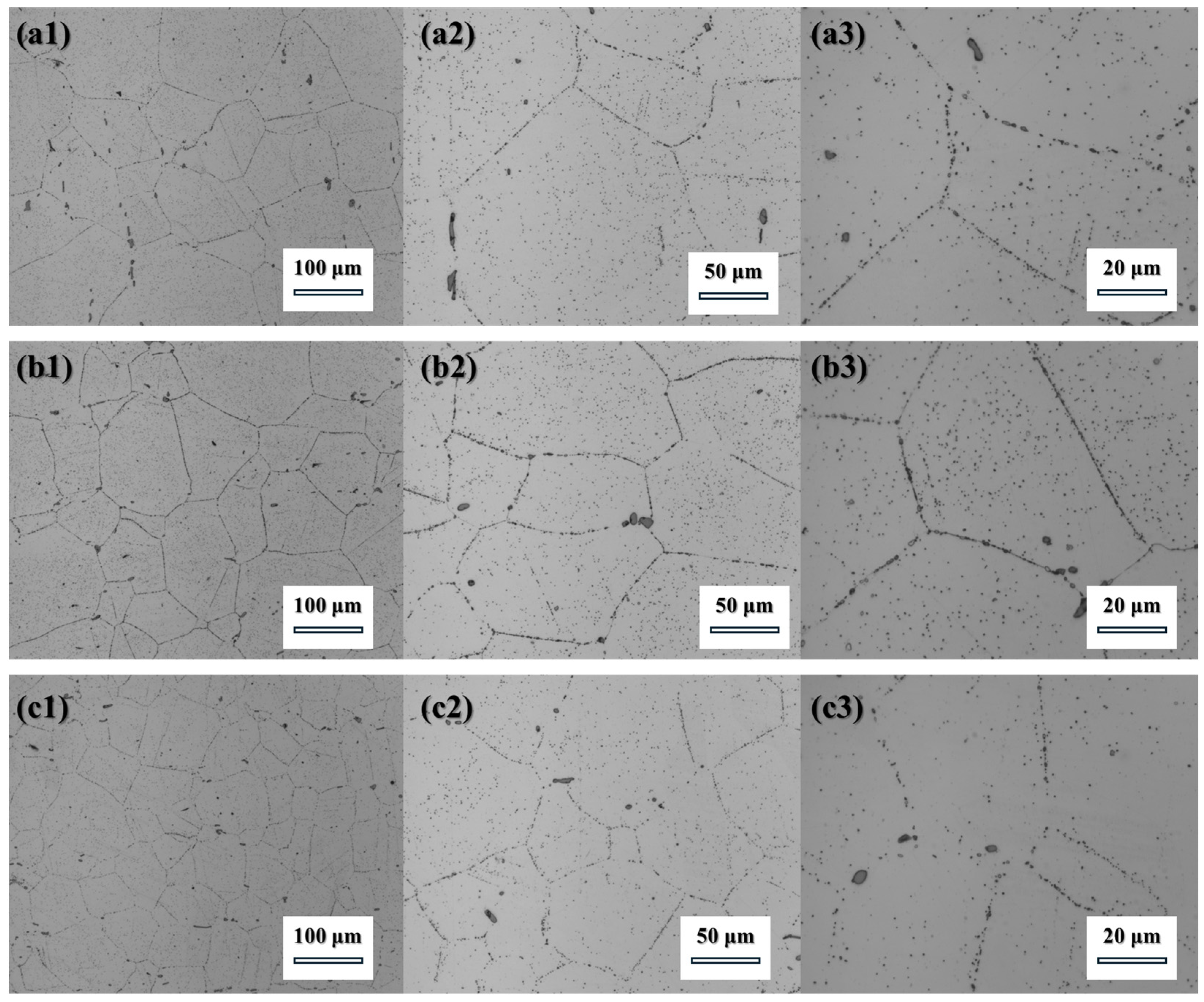
Figure 1 shows the metallographic results of different magnifications at the outer, middle and inner layers of the OR pipe wall. It can be seen that the grain size varies among different layers, and the grain size gradually decreases with increasing depth, which is related to the manufacturing process of the bent pipe and belongs to its inherent regular property. Through the magnified results, it can be seen that there are fine second-phase particles at the grain boundaries, and the size of the second-phase particles on the grain boundaries gradually decreases with the decrease in grain size, which indirectly indicates that the inner layer should contribute more to the performance. Further analysis shows that the fine grain size and uniformly distributed second-phase particles in the inner layer can significantly improve the yield strength and fatigue resistance of the material, which conforms to the Hall–Petch relationship (the finer the grains, the higher the material strength). The larger grain size in the outer layer is beneficial to improving the plastic deformation capacity of the material, which matches the stress state of the outer layer mainly bearing tensile stress and the inner layer mainly bearing compressive stress during the service of the bent pipe, reflecting the precise control of the manufacturing process on the mechanical properties of the bent pipe [34].
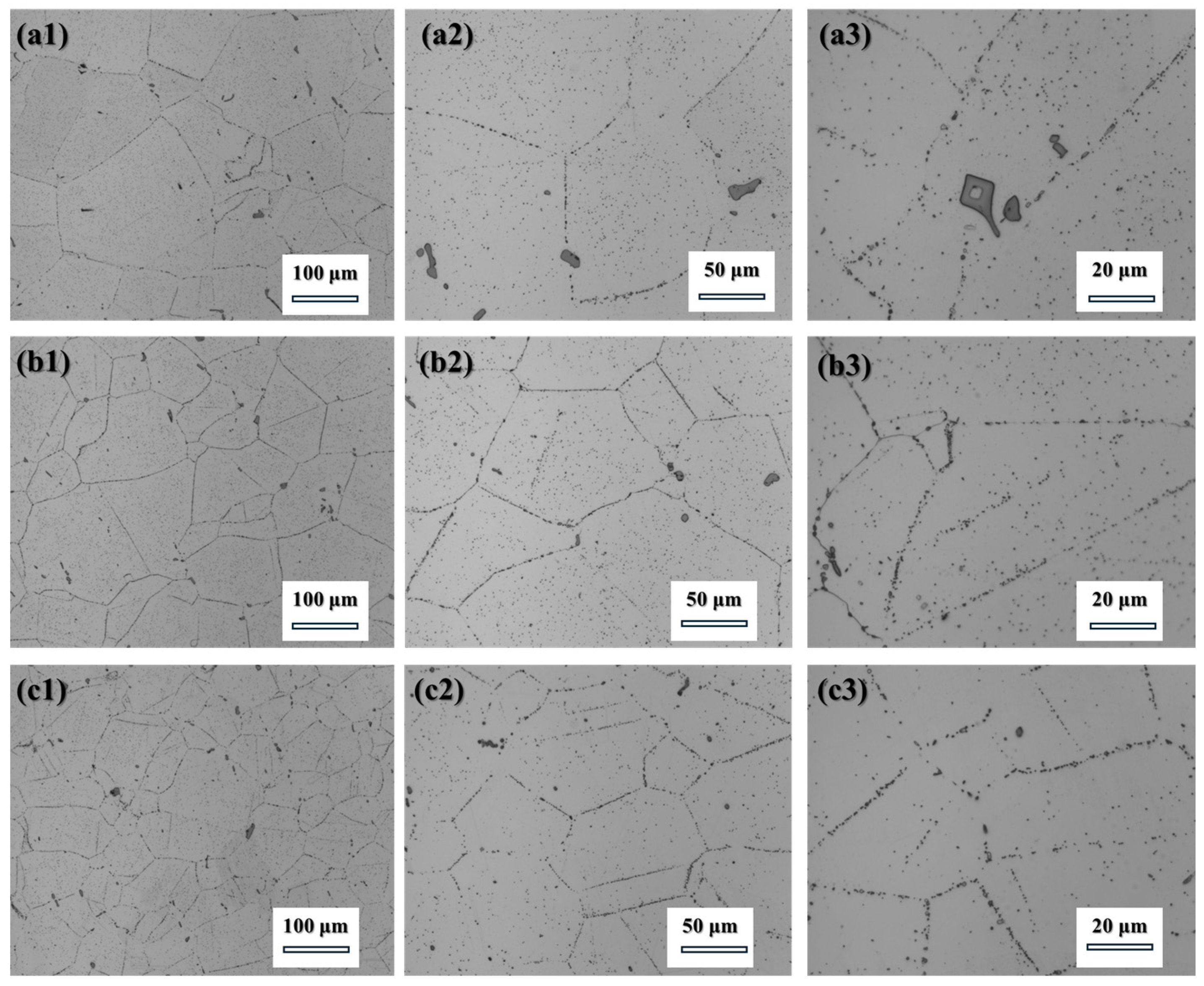
Figure 2 presents metallographic images captured at varying magnifications from the outer, middle, and inner layers of the MR pipe wall. Consistent with the microstructural characteristics observed in Figure 2, a gradient reduction in grain size is evident from the outer surface to the inner layer of the MR pipe wall, with prominent twin interfaces specifically identified in the inner layer region (Figure 2(c2)). Second-phase particles are also detectable along the grain boundaries throughout all layers. Quantitative analysis further reveals a notable decrease in the density of second-phase particles within the MR pipe wall compared to the OR pipe wall.
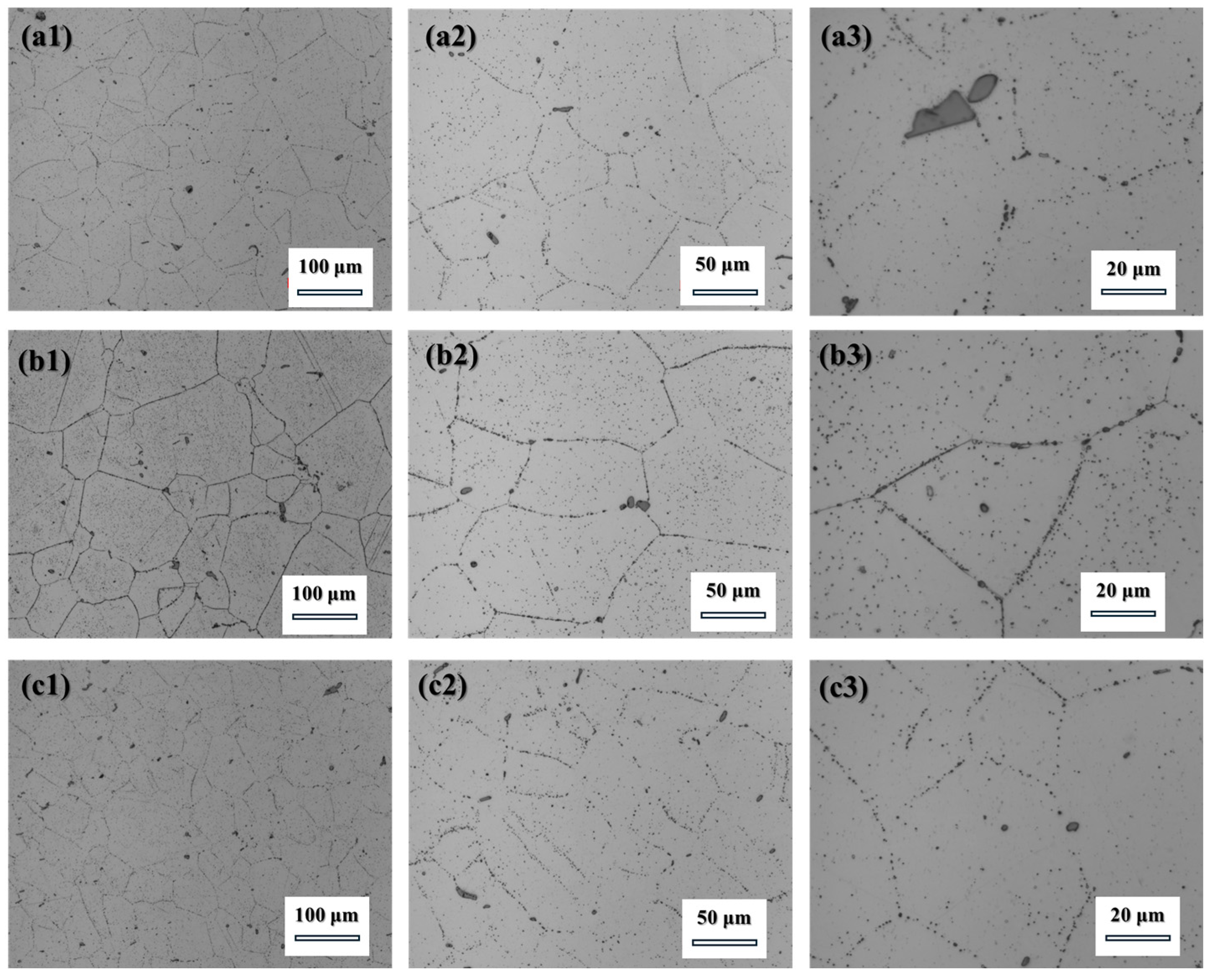
Figure 3 presents metallographic micrographs obtained at varying magnifications from the outer, middle, and inner layers of the IR pipe wall. In contrast to the microstructural gradients observed in OR and MR pipes, the IR pipe wall exhibits minimal variation in grain size across all layers, although second-phase particles are still detectable both along grain boundaries and within the grain interiors. Based on microstructural characterization, the IR pipe wall is inferred to be in a compressive stress state with a relatively homogeneous microstructure, which suggests that the mechanical properties of this component should be correspondingly uniform.
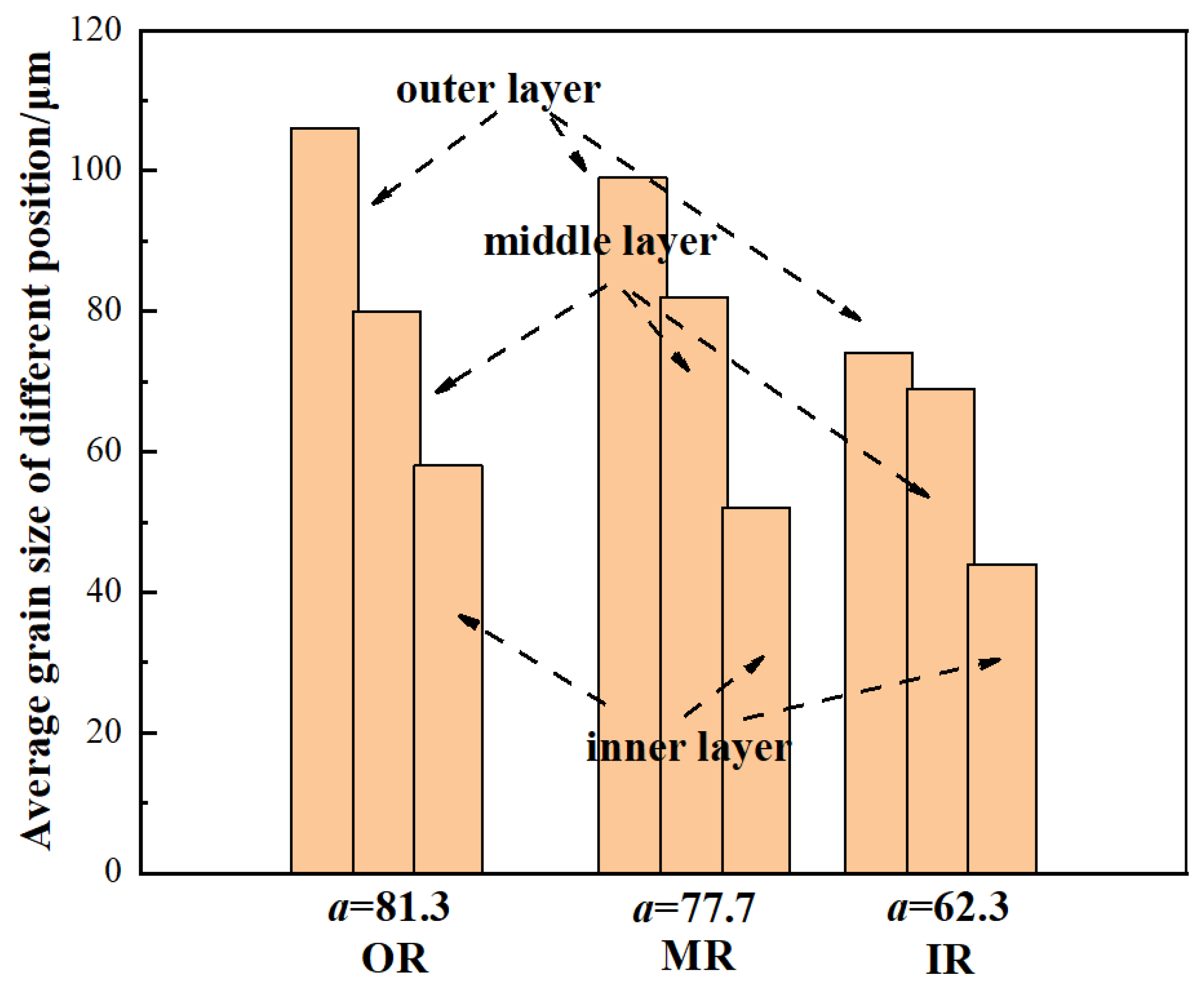
Figure 4 presents the statistics of grain size results of GH2070P alloy at different positions; it can be found that different positions exhibit different grain sizes. The grain sizes at the three positions of OR, MR and IR decrease with increasing depth, which is consistent with the overall variation trend of the pipeline. The average grain size (a value) of IR is 62.3, which is the smallest among the three positions, including 81.3 μm of OR and 77.7 of MR.
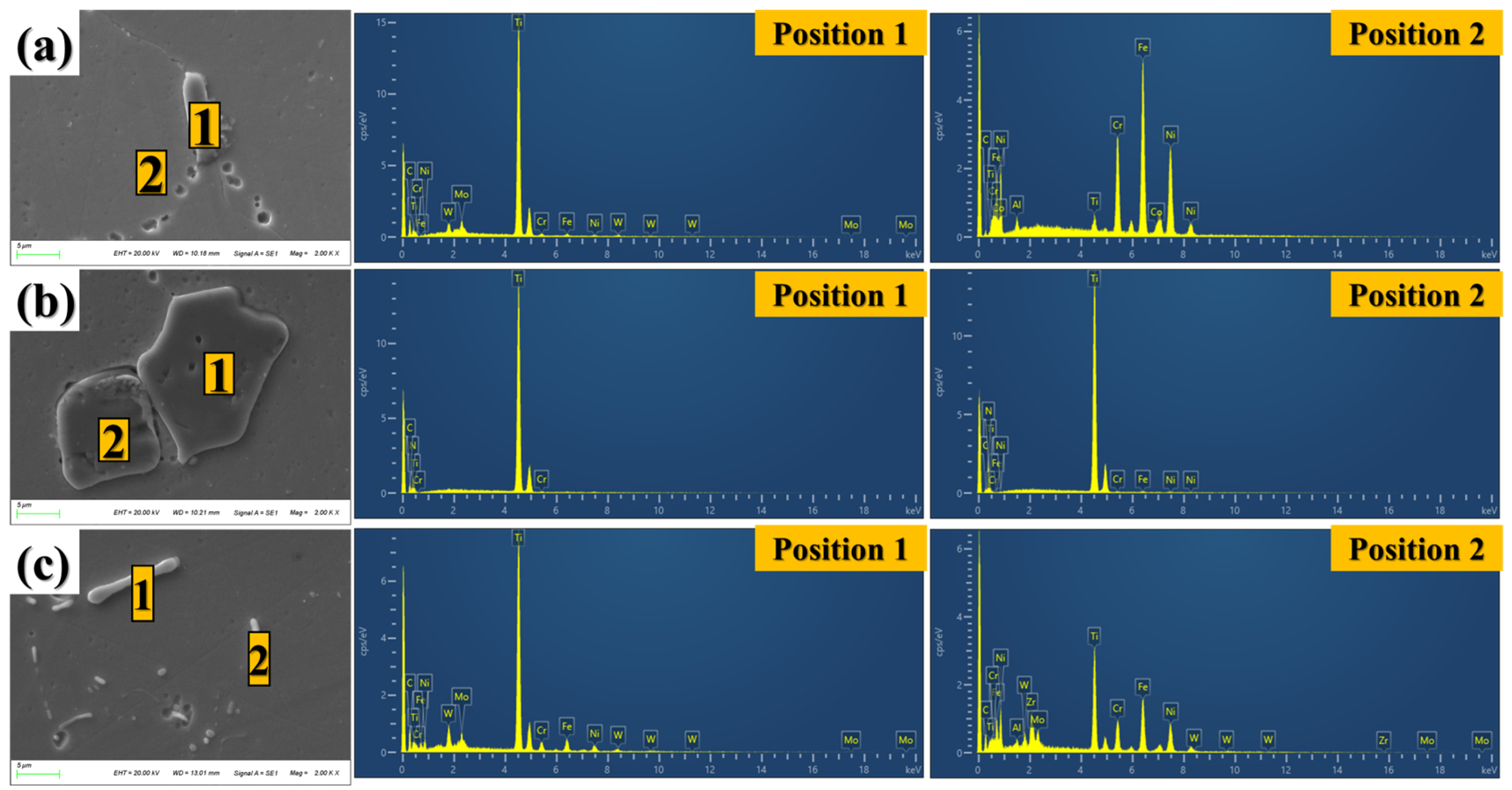
Figure 5 presents the SEM and EDS results of second-phase particles in GH2070P alloy made OR pipe wall. The characterization results exhibit nano-scale granular precipitates in OR pipe wall, including blocky particles (approximately 10 μm) and elongated small particles (approximately 50 nm). EDS analysis reveals that these particles are primarily composed of carbon–oxygen compounds and metal elements, serving an important role in the mechanical properties of the alloy. The second-phase particles identified in different layers are predominantly composed of (Nb,Ti)xCy and Cr23C6, with Ti-rich second-phase particles exhibiting relatively larger sizes.
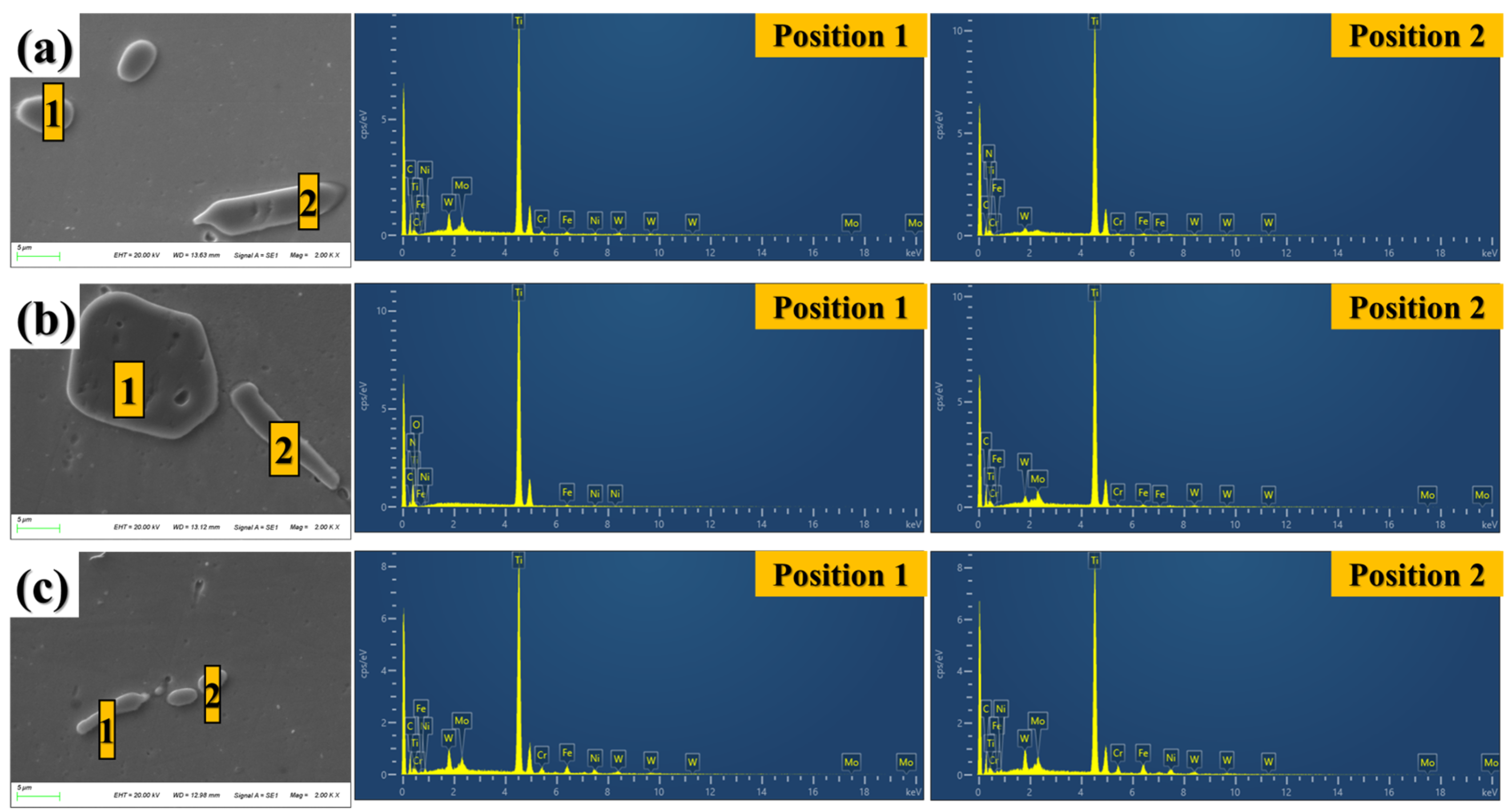
Figure 6 presents the SEM and EDS results of second-phase particles in GH2070P alloy IR pipe wall. The distribution pattern of (Nb,Ti)xCy and Cr23C6 in the IR pipe wall is consistent with that in the OR pipe wall, including morphology and size, which indicates that the difference in the characteristics of the second phase between the two positions of the elbow IR and OR is not significant, representing the uniformity of the manufacturing process. This indirectly indicates that the influence on the mechanical properties of different positions of the GH2070P alloy pipe should have a more significant relationship with the stress state at different positions, and the influence of macrostructural differences may be insignificant.

3.2. EBSD Characterizations

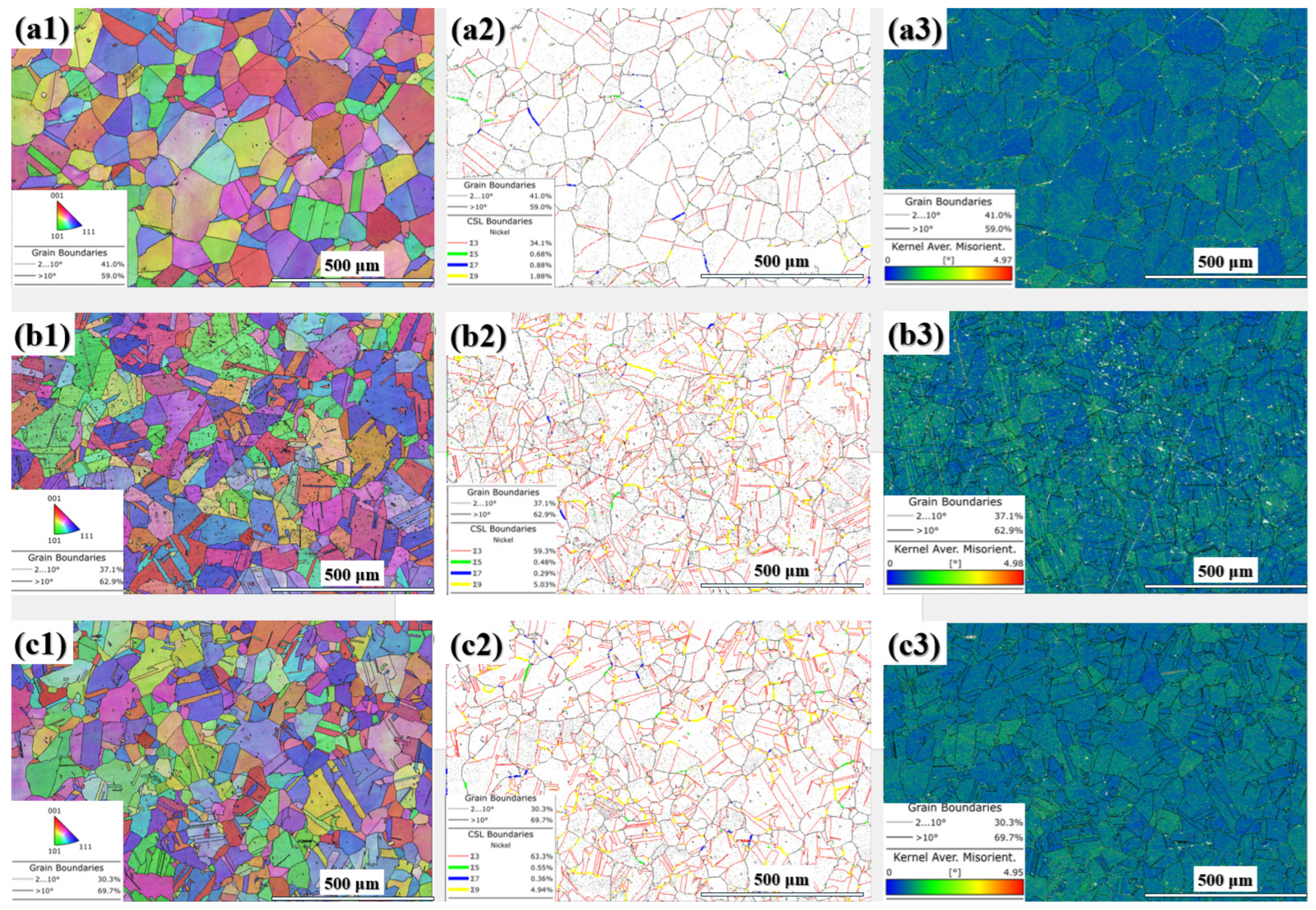
The microstructures and the random orientation of GH2070P alloy at OR, MR and IR were investigated by the EBSD techniques, as shown in Figure 7, including the inverse pole figure (IPF), grain boundary (GB) image and kernel average misorientation (KAM) image. From the IPF results in Figure 8(a1–c1), it can be found that the grain orientations at the three positions are relatively dispersed without significant concentration in IPF results. Meanwhile, it can be seen that the grain size decreases from OR to IR, characterized by uniformly distributed fine grain boundaries. As shown in Figure 8(a2–c2), statistics on high-angle grain boundaries (HAGB) and low-angle grain boundaries (LAGB) show that the proportions of HAGB in OR, MR and IR are 59%, 62.9% and 69.7% respectively. Further, the coincidence site lattice (CSL) distribution was obtained in the GB results. The CSL refers to a periodic lattice structure in which the positions of some atoms overlap when two adjacent crystals rotate at a specific angle [21,22,23,24]. The CSL grain boundaries allow dislocations to be transferred through specific slip mechanisms, coordinating the deformation of adjacent grains. This ability to coordinate deformation enables the material to maintain high strength without significantly reducing the elongation, achieving a good match between strength and plasticity [23,24,25,26]. It can be found that the proportion of Σ3 twin boundaries gradually increases from 34.1% in OR to 59.3% in MR and 63.3% in IR, indicating that the internal compressive stress causes plastic deformation at different positions of the elbow, leading to an increase in the proportion of local mechanical twins, which will affect the mechanical properties of different positions of the elbow to a certain extent and requires further analysis. It is also found that the proportion of Σ9 grain boundaries also increases significantly due to the existence of compressive stress, increasing from 1.88% in OR to 5.03% in MR and 4.94% in IR. It should be noted that Σ9 refers to a special interface structure where the ratio of the number of coincidence sites to the total number of crystal lattice sites in the coincidence site lattice is 1/9 [27]. The orientation difference between adjacent grains is 50.48°, and the rotation axis is in the <110> direction. Σ9 grain boundaries have high structural stability, are not easy to migrate at high temperatures, and can effectively hinder grain boundary sliding and improve the high-temperature strength of materials [24,25,26,27,28,29]. Further KAM characterization and analysis of the local stress distribution state in Figure 8(a3,b3,c3) reveal that the stress concentration degree in MR and IR is significantly higher than that in OR, indicating that compressive stress causes local plastic deformation and significant stress concentration, which is consistent with the results of CSL distribution.

3.3. Hardness Distribution and Tensile Test Results and Analysis

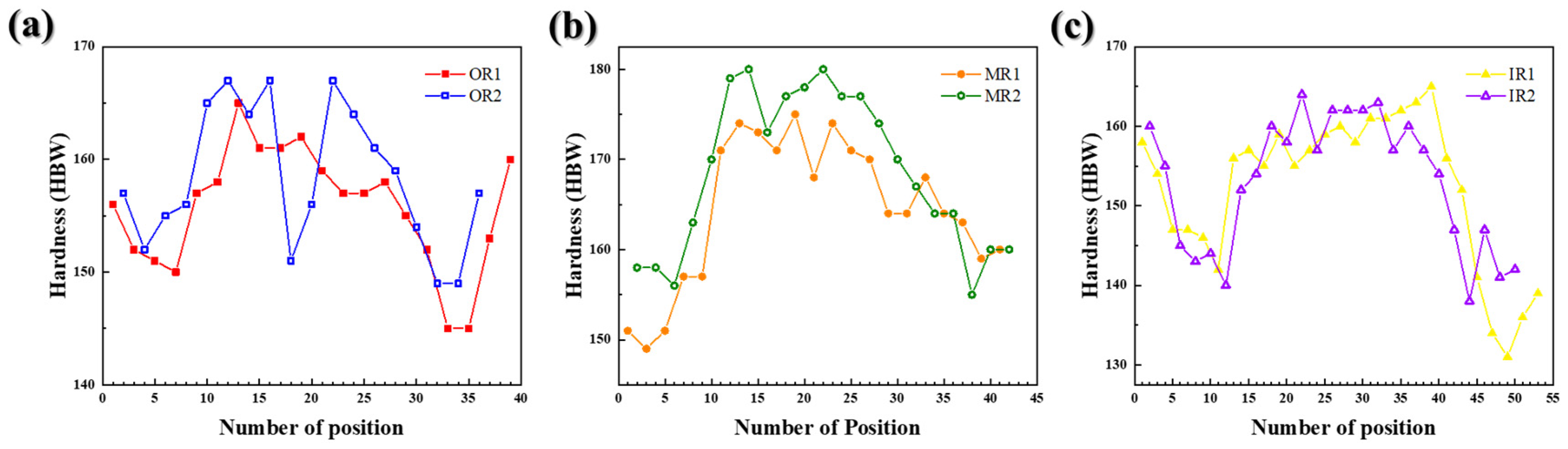
The cross-sectional hardness distribution is illustrated in Figure 8, with duplicate measurements acquired via the staggered sampling method, including the first round and the filling-in round. Increasing positional values in the x-axis correspond with depth, enabling characterization of hardness gradients across the thickness of the OR, MR, and IR regions. The measured hardness distributions exhibit excellent repeatability, with the maximum hardness difference between different positions fluctuating within the range of 20–40 HBW. Based on the previous study [12,13], the tolerance range of ±15 HBW is acceptable; thus, there is uneven hardness distribution due to positional differences, especially in the edge layers of the three positions. Notably, the hardness fluctuations in the MR and IR regions are more pronounced than those in the OR region. This phenomenon is attributed to the distinct stress states experienced by different regions during pipe bending. Specifically, compressive stress-induced localized elastoplastic deformation alters the microstructure, such as increasing the density of mechanical twins, which results in more significant hardness variations [12,15].
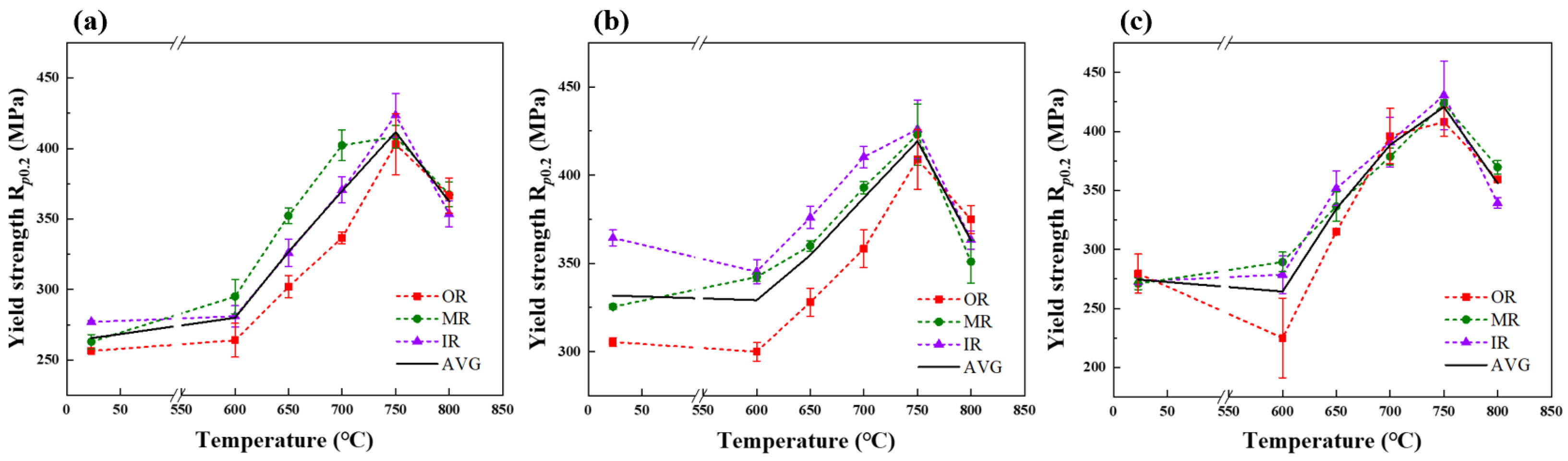
Figure 9, Figure 10, Figure 11 and Figure 12 present the mechanical properties of GH2070P alloy at various temperatures, including room temperature, 600 °C, 650 °C, 700 °C, 750 °C and 800 °C. Specifically, Figure 9 shows the yield strength distribution across outer, middle and inner layers of the OR, MR and IR regions. The results indicate that the yield strength of GH2070P alloy initially increases with temperature, reaching a maximum at 750 °C, followed by a gradual decrease at 800 °C. Notably, the yield strength of the OR region is consistently lower than that of the MR and IR regions, which can be attributed to the differential stress states experienced in the pipe wall. The observed inverse temperature dependence of yield strength across the OR, MR, and IR regions is attributed to the high-temperature dispersion strengthening effect inherent in the GH2070P alloy. Specifically, thermally activated γ’ phase (Ni3(Al, Ti)) precipitation at elevated temperatures enhances the high-temperature plastic deformation threshold by effectively impeding dislocation motion [15], which increases the yield strength value.
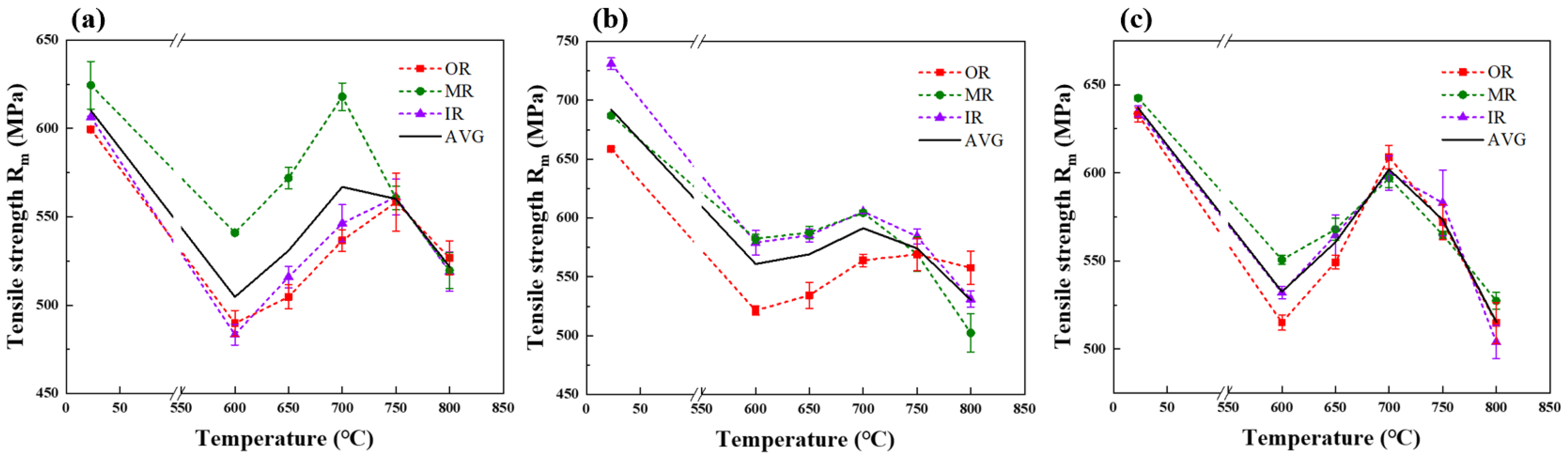
Figure 10 shows the tensile mechanical properties of GH2070P alloy at various temperatures, including room temperature, 600 °C, 650 °C, 700 °C, 750 °C and 800 °C. Different from the yield strength, which represents the stress threshold for large-scale dislocation movement inside the material, the tensile strength is the maximum stress that a material can withstand before fracture. It is essentially the stress limit at which dislocation movement inside the material is hindered, leading to eventual fracture. It can be seen that the tensile strength at different positions of OR, MR and IR first decreases and then increases with increasing temperature, reaching the highest value at 700 °C. This indicates that there is a work hardening peak during high-temperature plastic deformation of GH2070P alloy, and a high degree of dislocation entanglement exists at this temperature [28,29]. It is worth noting that the tensile strength of the middle layer at different positions shows a non-significant tensile stress peak, which is related to the overall element distribution [27,28,29].
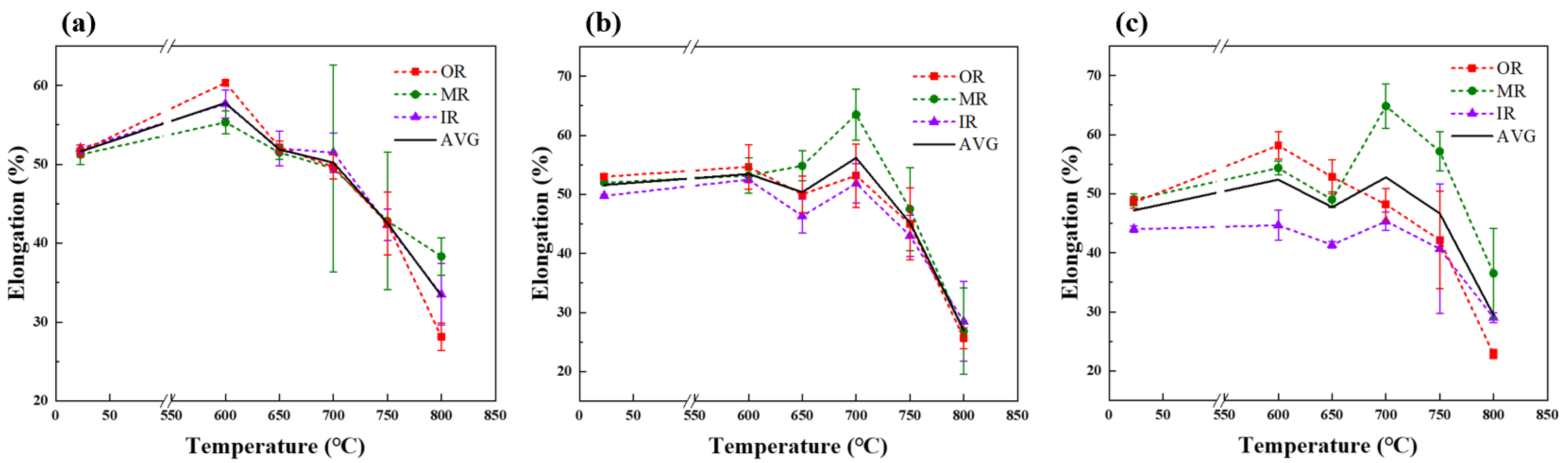
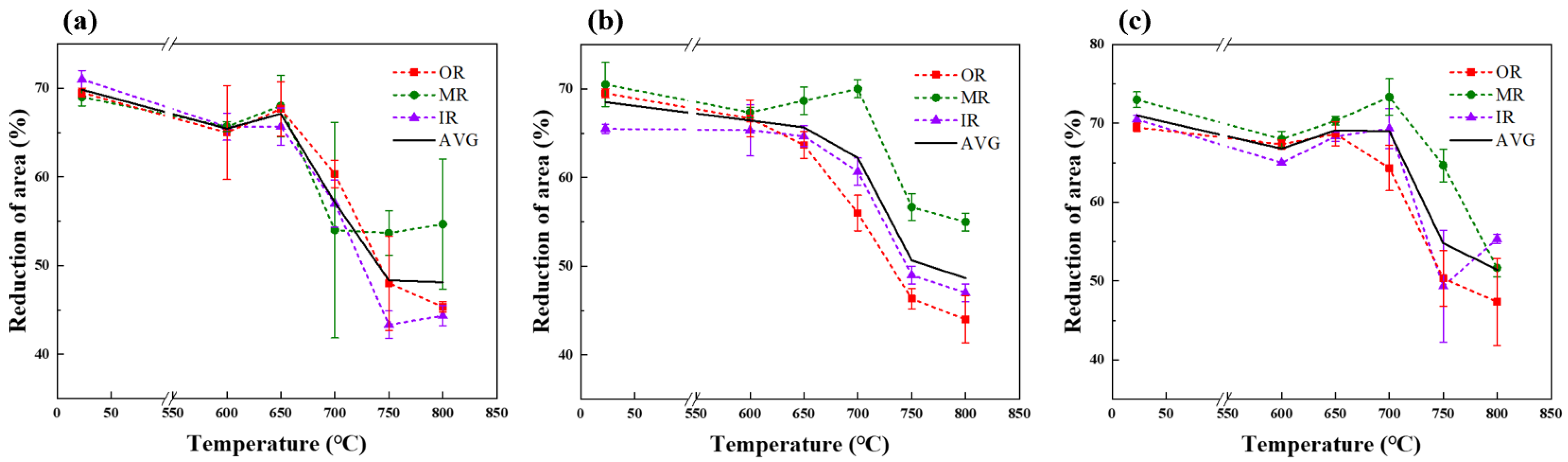
Figure 11 and Figure 12 show the statistical results of elongation (Figure 11) and reduction in area (Figure 12), respectively. It can be seen that the plasticity at the three positions remains constant first and then decreases with the increase in temperature. The plasticity decreases significantly after 700 °C, indicating that GH2070P alloy has good high-temperature plasticity, which is related to the microstructural thermal stability of GH2070P alloy. For nickel–iron alloys, the γ’ phase precipitated at high temperatures, as a strengthening phase, can effectively improve the high-temperature strength and plasticity of the material [23,24,25]. It has been reported that when the temperature rises, the γ’ phase not only roughens or dissolves, but also continuously hinders the movement of dislocations. At the same time, it can avoid stress concentration by coordinating deformation. The γ-γ’ dual-phase structure works in synergy, and the grain boundaries are strengthened and improved.
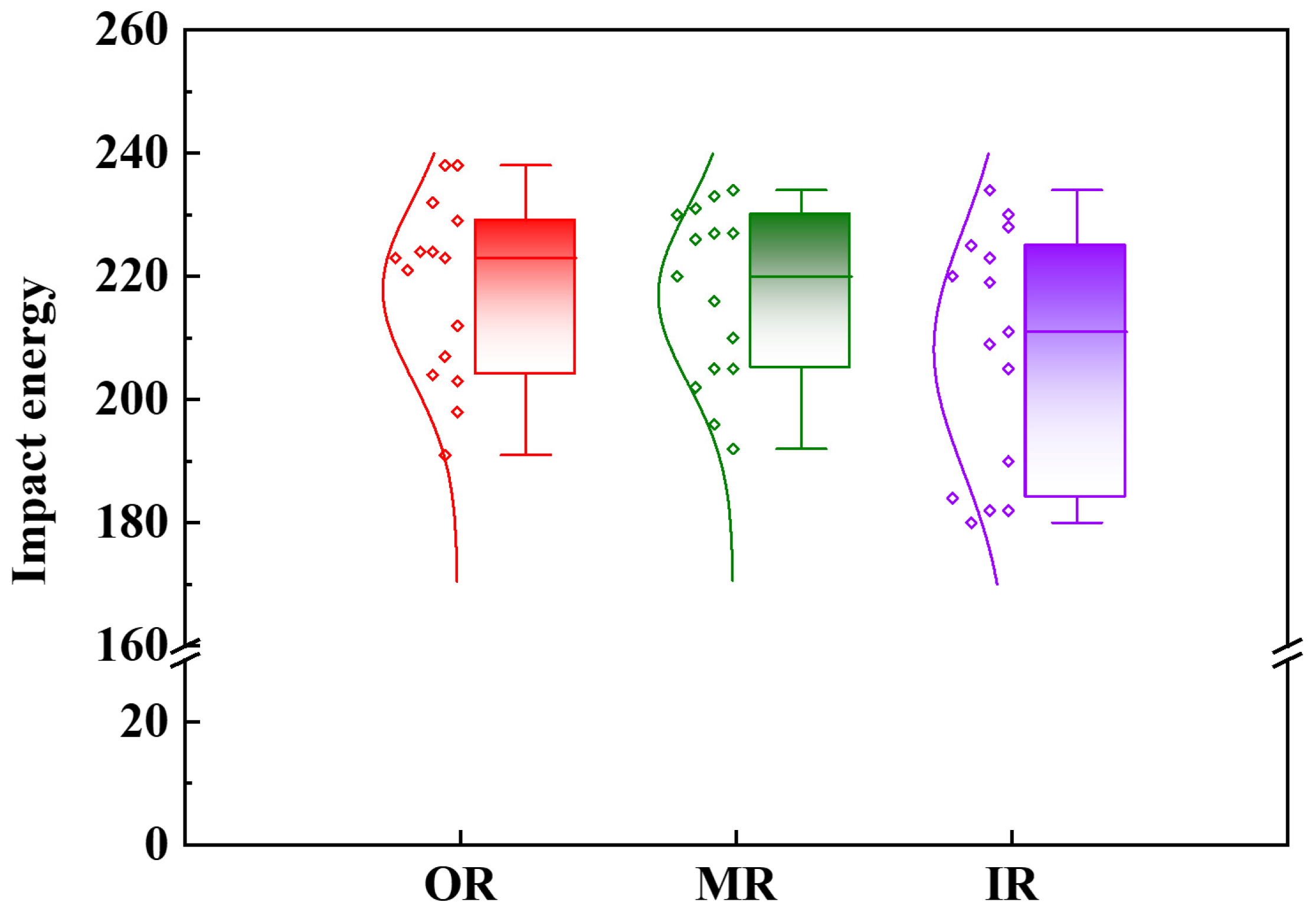
As shown in Figure 13, the impact toughness of the three positions falls within the range of 190–240, with average values between 210 and 222. This indicates that there is little difference in impact toughness among the three positions, which indirectly reflects that their resistance to impact damage is essentially the same.
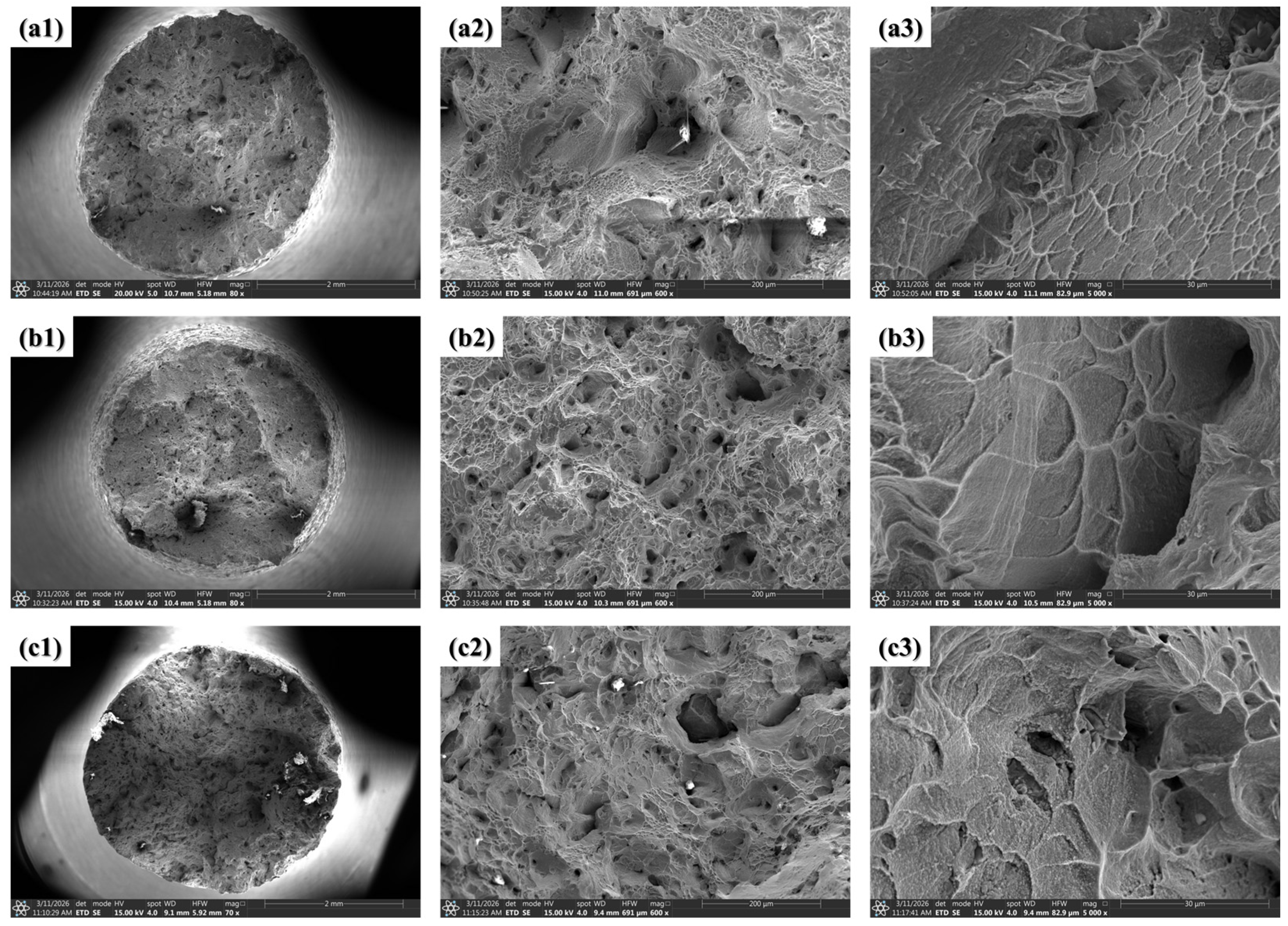
Figure 14 shows the fracture morphologies of OR, MR and IR at 700 °C. It can be seen from the macroscopic fracture that the samples mainly undergo brittle fracture at this temperature, characterized by insignificant necking. Point-like inclusions can be observed at the fracture dimples, and as the core of microporous nucleation, played a crucial role in the fracture process, which is similar to the research results of other materials [22,23,24,25]. The fractures of the three samples contain dimples and tearing edges in Figure 14(a3,b3,c3), indicating that the fracture mode of GH2070P alloy at this temperature is mainly ductile fracture, with local presence of a small amount of brittle fracture morphology. The fracture surfaces of the three samples all presented irregular and rough appearances without obvious necking, which is consistent with the mechanical property results at 700 °C in Figure 10, Figure 11, Figure 12 and Figure 13, suggesting that the degree of plastic deformation during the fracture process was limited. The fracture surface is scattered with a large number of tiny pits and a few larger holes, indicating that there was a process of micro-void aggregation and growth during the fracture. Thus, it can be concluded that all three samples exhibited a mixed ductile–brittle fracture pattern, and the ductile fracture was mainly characterized by micropore aggregation fractures, while the brittle fracture manifested as cleavage fractures and intergranular fractures. From the sample at OR to the sample at IR, the brittleness characteristics of the fracture surface gradually increase, presenting the increased size of the dimples, the increased area of the cleavage surface, and the characteristics of intergranular fracture, which gradually became obvious.
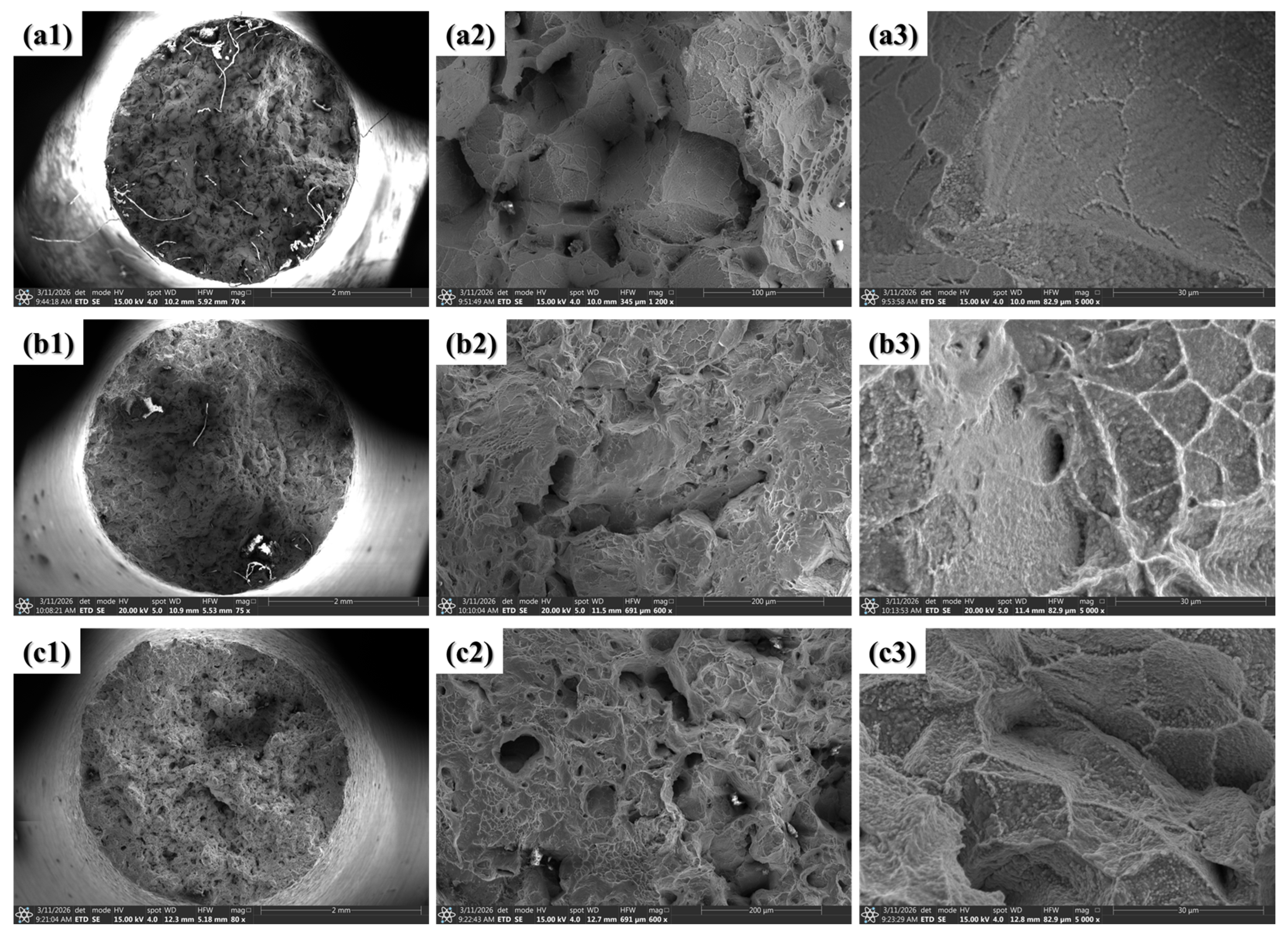
As shown in Figure 15, the fracture morphologies of samples at OR, MR, and IR positions at 800 °C show obvious evolutionary rules: From the low-magnification images in Figure 15(a1,b1,c1), it can be seen that the fracture surface of the OR sample is relatively flat, the MR sample shows local depressions, and the IR sample has the roughest fracture with the largest number of large-sized pores. The medium-magnification images in Figure 15(a2,b2,c2) reveal that the OR sample has small and dense dimples, the MR sample has irregular dimples with local tear ridges, and the IR sample has the largest dimples with obvious dimple merging. High-magnification images Figure 15(a3,b3,c3) indicate that the OR sample is dominated by dimple fracture with a small cleavage surface area, the MR sample has a certain proportion of both cleavage surfaces and dimples with a more complex fracture mechanism, and the IR sample has the largest cleavage surface area with the most significant intergranular fracture characteristics. Overall, from the OR to the IR position, the brittleness characteristics of the sample fractures gradually increase, and the fracture mode gradually transitions from ductile fracture-dominated to ductile–brittle mixed fracture, which is closely related to the coarsening of γ’ phase and grain boundary weakening caused by temperature increase, and is consistent with the results in Figure 10, Figure 11, Figure 12 and Figure 13.
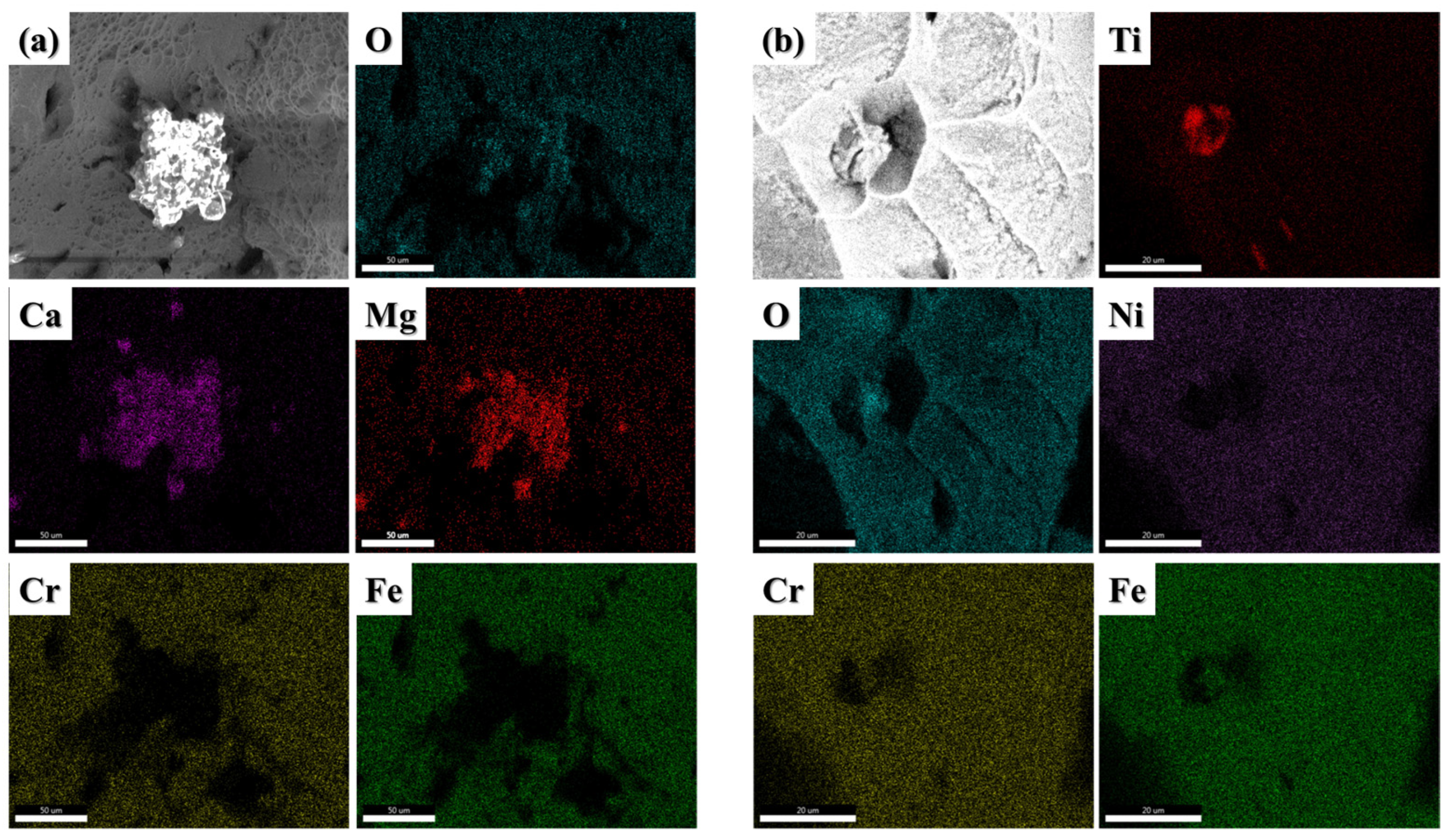
As shown in Figure 16, there are significant differences in morphology, composition, distribution, formation mechanism, and influence on mechanical properties between the inclusions at the fractures of OR and IR at 800 °C. The inclusions at OR are agglomerated oxide-types, mainly containing Ca, Mg, and O elements, concentrated in local areas. They are primary inclusions not completely removed during the smelting process, and have relatively little impact on the overall mechanical properties of the material. In contrast, the inclusions at IR are isolated particle-type titanium oxides, mainly containing Ti and O elements, distributed individually at the bottom of dimples. They are secondary inclusions formed during high-temperature service, acting as crack nucleation cores, which accelerate the fracture process of the material and significantly reduce the plasticity and toughness of the material.
Combined with the above results, it can be inferred that the mechanical properties of GH2070P alloy show significant differences between the OR position under tensile stress and the IR position under compressive stress at the temperature below 700 °C. At the OR position, tensile stress promotes dislocation movement and multiplication, forming work hardening, resulting in a tensile strength of 580–620 MPa and an elongation of 12–15%, with the fracture mode dominated by transgranular microporous aggregation fracture. In contrast, at the IR position, compressive stress inhibits dislocation activity and accelerates the aggregation of grain boundary carbides, weakening the grain boundaries, leading to a tensile strength of 480–520 MPa and an elongation of only 4–7%, with the fracture mode transitioning to intergranular fracture dominance. This difference essentially stems from the stress field regulating dislocation movement, precipitate evolution, and grain boundary stability, ultimately altering the material’s damage mechanism and failure behavior. Further, the degree of the brittle fracture of GH2070P alloy increases and the difference in mechanical properties decreases, which is associated with the coarsening of the second phase and the more obvious stress release at 750 °C and 800 °C.

4. Conclusions

The microstructures, mechanical properties, and fracture behaviors of GH2070P alloy bent pipes exhibit distinct position-dependent characteristics correlated with their stress states. At the outer radius (OR) under tensile stress, the larger grain size enhances plastic deformation capacity, while work hardening from dislocation movement and multiplication yields a tensile strength of 580–620 MPa and elongation of 12–15%, with fracture dominated by transgranular microporous aggregation; its grain boundaries contain coarser second-phase particles, and EBSD shows 59% high-angle grain boundaries (HAGBs) and 34.1% Σ3 twin boundaries with low stress concentration. As for the middle radius (MR), which experiences intermediate stress, grain size decreases, HAGB increases to 62.9%, Σ3 twin boundaries rise to 59.3%, and stress concentration becomes more pronounced, with mechanical properties transitioning between OR and IR. At the inner radius (IR) under compressive stress, the finest grain size and highest HAGB proportion (69.7%) with 63.3% Σ3 twin boundaries enhance yield strength and fatigue resistance via the Hall–Petch relationship, but compressive stress inhibits dislocation activity, accelerates grain boundary carbide aggregation, and weakens grain boundaries, resulting in lower tensile strength (480–520 MPa) and elongation (4–7%), with fracture transitioning to intergranular dominance; secondary titanium oxide inclusions at IR act as crack nucleation cores, further reducing plasticity and toughness. Notably, while second-phase particle compositions are consistent across OR and IR, their size distribution varies with grain size, and mechanical properties show inverse temperature dependence: yield strength peaks at 750 °C due to γ’ phase dispersion strengthening, tensile strength peaks at 700 °C due to dislocation entanglement work hardening, and plasticity remains stable below 700 °C before decreasing, all of which are more significantly influenced by position-specific stress states than macrostructural differences.

Author Contributions

Conceptualization, X.Y., S.M., T.Z., X.Z. and J.H.; Methodology, X.Z.; Software, N.B.; validation, J.H.; formal analysis, T.Z., X.Z. and J.H.; investigation, X.Y., X.Z. and J.H.; writing—original draft preparation, X.Y.; writing—review and editing, S.M. and N.B.; funding acquisition, N.B. All authors have read and agreed to the published version of the manuscript.

Funding

This work was supported by the National Key R&D Program of China (Grant No. 2023YFB4102300).

Data Availability Statement

The data presented in this study are available on request from the corresponding author. The data are not publicly available due to technical or time limitations.

Conflicts of Interest

Authors Xisheng Yang, Shaohai Ma, Xu Zhu, Jia He and Ning Bai was employed by China Special Equipment Inspection and Research Institute. The remaining author declares that the research was conducted in the absence of any commercial or financial relationships that could be construed as a potential conflict of interest.

References

  1. Hajra, R.N.; Rai, A.K.; Tripathy, H.P.; Raju, S.; Saroja, S. Influence of tungsten on transformation characteristics in P92 ferritic-martensitic steel. J. Alloy Compd. 2016, 689, 829–836. [Google Scholar] [CrossRef]
  2. Anwer, Z.; Umer, M.A.; Nisar, F.; Hafeez, M.A.; Yaqoob, K.; Luo, X.; Ahmad, I. Microstructure and mechanical properties of hot isostatic pressed tungsten heavy alloy with FeNiCoCrMn high entropy alloy binder. J. Mater. Res. Technol. 2023, 22, 2897–2909. [Google Scholar] [CrossRef]
  3. Zhao, L.; Jing, H.; Han, Y.; Xiu, J.; Xu, L. Prediction of creep crack growth behavior in ASME P92 steel welded joint. Comp. Mater. Sci. 2012, 61, 185–193. [Google Scholar] [CrossRef]
  4. Jing, H.; Su, D.; Xu, L.; Zhao, L.; Han, Y.; Sun, R. Finite element simulation of creep fatigue crack growth behavior for P91 steel at 625 °C considering creep-fatigue interaction. Int. J. Fatigue 2017, 98, 41–522. [Google Scholar] [CrossRef]
  5. Zhou, Q.; Chen, P.W. Fabrication and characterization of pure tungsten using the hot-shock consolidation. Int. J. Refract. Met. Hard Mater. 2014, 42, 215–220. [Google Scholar] [CrossRef]
  6. Zhang, J.C.; Di, H.S.; Deng, Y.G.; Misra, R.D.K. Effect of martensite morphology and volume fraction on strain hardening and fracture behavior of martensite-ferrite dual phase steel. Mater. Sci. Eng. A 2015, 627, 230–240. [Google Scholar] [CrossRef]
  7. Kar, S.; Srivastava, V.C.; Mandal, G.K. Low-density nano-precipitation hardened Ni-based medium entropy alloy with excellent strength-ductility synergy. J. Alloy Compd. 2023, 963, 171213. [Google Scholar] [CrossRef]
  8. Abe, F. Alloy design of creep and oxidation resistant 9% Cr steel for high efficiency USC power plant. Mater. Sci. Forum 2012, 706–709, 3–8. [Google Scholar] [CrossRef]
  9. Tsao, T.K.; Yeh, A.C.; Kuo, C.M.; Kakehi, K.; Murakami, H.; Yeh, J.W.; Jian, S.R. The high temperature tensile and creep behaviors of high entropy superalloy. Sci. Rep. 2017, 7, 12658. [Google Scholar] [CrossRef] [PubMed]
  10. Kwon, Y.J.; Won, Y.J.; Cho, K.S. Thermodynamic evaluation of the phase stability in mechanically alloyed AlCuxNiCoTi high-entropy alloys. J. Alloy Compd. 2023, 948, 169772. [Google Scholar] [CrossRef]
  11. Zhang, M.Y.; He, G.Z.; Lapington, M.; Zhou, W.Y.; Shory, M.P.; Bagot, P.A.J.; Moody, M.P. Nano-scale corrosion mechanism of T91 steel in staticlead-bismuth eutectic: A combined APT, EBSD, and STEM investigation. Acta Mater. 2024, 271, 119883. [Google Scholar] [CrossRef]
  12. Hamdi, H.; Abedi, H.R. Thermal stability of Ni-based superalloys fabricated through additive manufacturing: A review. J. Mater. Res. Technol. 2024, 30, 4424–4476. [Google Scholar] [CrossRef]
  13. Wang, X.; Zhai, W.; Li, H.; Wang, J.; Wei, B. Ultrasounds induced eutectic structure transition and associated mechanical property enhancement of FeCoCrNi2.1Al high entropy alloy. Acta Mater. 2023, 252, 118900. [Google Scholar] [CrossRef]
  14. Wang, J.; Wu, Q.; Li, Y.; Wang, Z.; Li, J.; Wang, J. Phase selection of BCC/B2 phases for the improvement of tensile behaviors in FeNiCrAl medium entropy alloy. J. Alloys Compd. 2022, 916, 165382. [Google Scholar] [CrossRef]
  15. Gao, X.; Chen, R.; Liu, T.; Fang, H.; Wang, L.; Su, Y. High deformation ability induced by phase transformation through adjusting Cr content in Co-Fe-Ni-Cr high entropy alloys. J. Alloys Compd. 2022, 895, 162564. [Google Scholar] [CrossRef]
  16. Hosseinifar, F.; Ekrami, A. The effect of cold-rolling prior to the inter-critical heat treatment on microstructure and mechanical properties of 4340 steel with ferrite-martensite microstructure. Mater. Sci. Eng. A 2022, 830, 142314. [Google Scholar] [CrossRef]
  17. Su, H.; Tang, Q.; Dai, P.; Gong, P.; Wang, H.; Chen, X. B2-precipitation induced optimization of grain boundary character distribution in an Al0.3CoCrFeNi high-entropy alloy. J. Alloys Compd. 2022, 918, 165587. [Google Scholar] [CrossRef]
  18. Li, Z.; Fu, L.; Peng, J.; Zheng, H.; Ji, X.; Sun, Y.; Ma, S.; Shan, A. Improving mechanical properties of an FCC high-entropy alloy by γ′ and B2 precipitates strengthening. Mater. Char. 2020, 159, 109989. [Google Scholar] [CrossRef]
  19. He, J.Y.; Wang, H.; Huang, H.L.; Xu, X.D.; Chen, M.W.; Wu, Y.; Liu, X.J.; Nieh, T.G.; An, K.; Lu, Z.P. A precipitation-hardened high-entropy alloy with outstanding tensile properties. Acta Mater. 2016, 102, 187–196. [Google Scholar] [CrossRef]
  20. Yang, M.; Yan, D.; Yuan, F.; Jiang, P.; Ma, E.; Wu, X. Dynamically reinforced heterogeneous grain structure prolongs ductility in a medium-entropy alloy with gigapascal yield strength. Proc. Natl. Acad. Sci. USA 2018, 115, 7224–7229. [Google Scholar] [CrossRef]
  21. Radhakrishna, C.H.; Rao, K.P. Studies on creep/stress rupture behaviour of superalloy 718 weldments used in gas turbine applications. Mater. High Temp. 1994, 12, 323–327. [Google Scholar] [CrossRef]
  22. Sun, S.J.; Tian, Y.Z.; An, X.H.; Lin, H.R.; Wang, J.W.; Zhang, Z.F. Ultrahigh cryogenic strength and exceptional ductility in ultrafine-grained CoCrFeMnNi high-entropy alloy with fully recrystallized structure. Mater. Today Nano 2018, 4, 46–53. [Google Scholar] [CrossRef]
  23. Lei, Z.; Liu, X.; Wu, Y.; Wang, H.; Jiang, S.; Wang, S.; Hui, X.; Wu, Y.; Gault, B.; Kontis, P.; et al. Enhanced strength and ductility in a high-entropy alloy via ordered oxygen complexes. Nature 2018, 563, 546–550. [Google Scholar] [CrossRef] [PubMed]
  24. Ding, Q.; Zhang, Y.; Chen, X.; Fu, X.; Chen, D.; Chen, S.; Gu, L.; Wei, F.; Bei, H.; Gao, Y.; et al. Tuning element distribution, structure and properties by composition in high-entropy alloys. Nature 2019, 574, 223–227. [Google Scholar] [CrossRef]
  25. Cantwell, P.R.; Tang, M.; Dillon, S.J.; Luo, J.; Rohrer, G.S.; Harmer, M.P. Grainboundary complexions. Acta Mater. 2014, 62, 1–48. [Google Scholar] [CrossRef]
  26. Laplanche, G.; Kostka, A.; Horst, O.M.; Eggeler, G.; George, E.P. Microstructure evolution and critical stress for twinning in the CrMnFeCoNi high-entropy alloy. Acta Mater. 2016, 118, 152–163. [Google Scholar] [CrossRef]
  27. Sun, S.J.; Tian, Y.Z.; Lin, H.R.; Dong, X.G.; Wang, Y.H.; Wang, Z.J.; Zhang, Z.F. Temperature dependence of the Hall–Petch relationship in CoCrFeMnNi high-entropy alloy. J. Alloys Compd. 2019, 806, 992–998. [Google Scholar] [CrossRef]
  28. Zhang, J.M.; Zhang, Y.; Xu, K.W. Dependence of stresses and strain energies on grain orientations in FCC metal films. J. Cryst. Growth 2005, 285, 427–435. [Google Scholar] [CrossRef]
  29. Dwivedi, A.; Koch, C.C.; Rajulapati, K.V. On the single phase fcc solid solution in nanocrystalline Cr-Nb-Ti-V-Zn high-entropy alloy. Mater. Lett. 2016, 183, 44–47. [Google Scholar] [CrossRef]
  30. Xu, J.; Guo, B.; Shan, D.; Li, M.; Wang, Z. Specimen dimension and grain size effects on deformation behavior in micro tensile of SUS304 stainless steel foil. Mater. Trans. 2013, 54, 984–989. [Google Scholar] [CrossRef]
  31. Liu, W.H.; Wu, Y.; He, J.Y.; Nieh, T.G.; Lu, Z.P. Grain growth and the Hall–Petch relationship in a high-entropy FeCrNiCoMn alloy. Scr. Mater. 2013, 68, 526–529. [Google Scholar] [CrossRef]
  32. Zou, S.; Dong, C.; Tan, X.; Liang, Z.; Bao, W.; He, B.; Lu, W. Mitigating embrittlement of sigma phase in dual-phase high-entropy alloys through heterostructure design. Int. J. Plast. 2025, 187, 104272. [Google Scholar] [CrossRef]
  33. Choudhuri, D.; Gwalani, B.; Gorsse, S.; Komarasamy, M.; Mantri, S.A.; Srinivasan, S.G.; Mishra, R.S.; Banerjee, R. Enhancing strength and strain hardenability via deformation twinning in fcc-based high entropy alloys reinforced with intermetallic compounds. Acta Mater. 2019, 165, 420–430. [Google Scholar] [CrossRef]
  34. Gok, K.; Ada, H.D.; Kilicaslan, N.; Gok, A. A Review of CFD Modeling of Erosion-induced Corrosion Formation in Water Jets Using FEA. J. Mech. Mater. Mech. Res. 2023, 6, 2. [Google Scholar] [CrossRef]
Figure 1. Metallographic morphology of GH2070P alloy obtained at (a) outer, (b) middle and (c) inner layers of the OR pipe wall, and the numbers represent different magnifications of the same location.
Metals 16 00551 g001
Figure 2. Metallographic morphology of GH2070P alloy obtained at (a) outer, (b) middle and (c) inner layers of the MR pipe wall, and the numbers represent different magnifications of the same location.
Metals 16 00551 g002
Figure 3. Metallographic morphology of GH2070P alloy obtained at (a) outer, (b) middle and (c) inner layers of the IR pipe wall, and the numbers represent different magnifications of the same location.
Metals 16 00551 g003
Figure 4. Statistics of grain size results of GH2070P alloy at different positions.
Metals 16 00551 g004
Figure 5. SEM morphology and EDS result of second-phase particles at (a) outer, (b) middle and (c) inner layers of the OR pipe wall.
Metals 16 00551 g005
Figure 6. SEM morphology and EDS result of second-phase particles at (a) outer, (b) middle and (c) inner layers of the IR pipe wall.
Metals 16 00551 g006
Figure 7. EBSD results of (a) OR, (b) MR and (c) IR for the GH2070P alloy made pipe wall, 1—IPF, 2—GB, 3—KAM.
Metals 16 00551 g007
Figure 8. Cross-sectional hardness distribution of (a) OR, (b) MR and (c) IR for the GH2070P alloy pipe wall; 1—first round, 2—filling-in round.
Metals 16 00551 g008
Figure 9. The statistical results of yield strength evolution at (a) outer, (b) middle and (c) inner layers of the GH2070P alloy pipe wall in OR, MR and IR regions, including the average value (AVG).
Metals 16 00551 g009
Figure 10. The statistical results of tensile strength evolution at (a) outer, (b) middle and (c) inner layers of the GH2070P alloy pipe wall in OR, MR and IR regions, including the average value (AVG).
Metals 16 00551 g010
Figure 11. The statistical results of elongation (%) at (a) outer, (b) middle and (c) inner layers of the GH2070P alloy pipe wall in OR, MR and IR regions, including the average value (AVG).
Metals 16 00551 g011
Figure 12. The statistical results of reduction in area (%) at (a) outer, (b) middle and (c) inner layers of the GH2070P alloy pipe wall in OR, MR and IR regions, including the average value (AVG).
Metals 16 00551 g012
Figure 13. Impact toughness results for the GH2070P alloy pipe wall at different positions.
Metals 16 00551 g013
Figure 14. SEM micrographs of tensile fracture for the GH2070P alloy pipe wall in (a) OR, (b) MR and (c) IR regions at 700 °C.
Metals 16 00551 g014
Figure 15. SEM micrographs of tensile fracture for the GH2070P alloy pipe wall in (a) OR, (b) MR and (c) IR regions at 800 °C.
Metals 16 00551 g015
Figure 16. SEM micrographs of inclusions in the tensile fracture for the GH2070P alloy pipe wall, (a) OR, (b) IR regions at 800 °C.
Metals 16 00551 g016
Disclaimer/Publisher’s Note: The statements, opinions and data contained in all publications are solely those of the individual author(s) and contributor(s) and not of MDPI and/or the editor(s). MDPI and/or the editor(s) disclaim responsibility for any injury to people or property resulting from any ideas, methods, instructions or products referred to in the content.