


Abstract
This study investigated the relationship between Mn segregation, damping capacity, and mechanical properties of a Mn–Cu damping alloy after aging at different temperatures. The results showed that after aging, the alloy underwent spinodal decomposition, forming Mn-segregated regions, while α-Mn precipitates appeared at the grain boundaries. The microstructure resulting from spinodal decomposition promoted martensitic transformation, created twin boundaries, and enhanced damping capacity. As the aging temperature increased, the Mn content in the Mn-rich regions gradually rose, thereby raising the martensitic transformation temperature. The twin density first increased and then decreased, which may be attributed to the precipitation and broadening of the α-Mn phase along the grain boundaries of the Mn-rich regions when the aging temperature was too high. At an aging temperature of 425 °C, the tanδ reaches a maximum of 0.05, and the martensitic transformation temperature reaches 100 °C, at which point the tanδ remains 0.04. After aging at 425 °C, a preferred orientation along <001> develops. The [001] orientation has the largest Schmid factor, which is most favorable for the reversible motion of twin boundaries under external stress, thus achieving the highest energy dissipation. To summarize, by promoting the creation of fine {011} twins by means of spinodal decomposition and by increasing the [001] oriented grain fraction through texture development, aging enhances the damping properties of the Mn–Cu alloy. In particular, the aging at 425 °C can provide the best combination of the microstructure and texture conditions, providing the highest damping performance in a wide temperature range.
1. Introduction
Twin boundaries are a feature of Mn–Cu alloys with high-damping characteristics. Due to their outstanding damping performance and good mechanical properties, they have found successful uses in civil projects and military purposes [1,2,3,4]. The outstanding damping property of Mn–Cu alloys occurs largely due to energy dissipation in the form of relaxational motion of the {110} twin boundaries on applied stress, which converts vibrational energy into heat [5]. Normally, for alloys with more than 82 at% Mn, superior damping behavior may easily be obtained by using the mechanism of phase transformation. Nevertheless, very high Mn content negatively impacts the mechanical properties and machinability of the alloy, thus preventing its practical industrial use [6]. This means that decreasing Mn to appropriate levels while at the same time increasing alloying elements like Fe and Ni occurs at the expense of some damping capabilities to attain better mechanical properties and processability [7,8].
In the course of cooling Mn–Cu alloys between high and low temperatures, Bacon et al. [9] noted that, with a Mn concentration higher than 69 at%, the paramagnetic–antiferromagnetic transition (second-order transition with transition temperature TN) is followed by a face-centered cubic to face-centered tetragonal martensite transformation (fcc → fct, a first-order transition with lattice parameter ratio c/a < 1, transition temperature TM). At a Mn content above 82 at%, the two transitions are closely related (TN ≈ TM), and both TN and TM decrease as the Mn content is reduced [10]. Both TN and TM have an impact on the damping performance. If the TM (martensite transformation temperature) rises above room temperature, the alloy can directly enter the martensitic state or undergo martensitic transformation more easily at room temperature without the need for external force or special heat treatment. And a high TN represents a wide temperature range of high damping capacities, enabling the alloy to maintain excellent damping performance at higher temperatures. Therefore, in Mn–Cu alloys with low manganese content, it is necessary to adjust these two transformation temperatures through certain means.
Mn20Cu5Ni2Fe alloy, among many other low-Mn-content Mn–Cu damping alloys, shows a good balance between stable mechanical properties and damping capacity. Fe and Ni additions provide mechanical properties and workability to the alloy. This alloy has received much attention and research interest due to its tensile strength being over 500 MPa, paired with its excellent damping value [11,12,13]. In Mn–Cu alloys with a low percentage of manganese content, the starting temperature of martensite in these alloys is much lower than room temperature, which makes it challenging to achieve martensitic transformation at room temperature. Spinodal decomposition may be caused by aging, forming a Mn-rich matrix and Cu-rich nanoscale network structure. The process raises the Ms of the Mn-rich areas significantly, allowing creation of a massive number of fine twin structures at room temperature and increasing the damping ability of the alloy [14,15,16]. Thus, proper heat treatment can be used to enhance the mechanical properties as well as the damping capacity of low-Mn-content Mn–Cu damping alloys. It is thus very important to investigate how heat treatment can affect the overall performance of Mn–Cu damping alloys. Lu et al. [17] investigated the microstructural evolution of Ce-modified M2052 alloys following aging at 400 °C. Dong et al. [18] elucidated the mechanisms governing the mechanical and damping behaviors of Mn–Cu–Al–Fe–Ni alloys subjected to aging at 450 °C for varying durations. Furthermore, Ding et al. [19] explored the synergistic strengthening mechanisms of cryogenic treatment on the mechanical and damping properties of Mn–Cu alloys. However, research that deals in particular with the effects of aging heat treatment on the overall properties of Mn–Cu damping alloys and the mechanisms behind them is still scarce in the available literature. In this paper, different aging heat treatment systems are explored in order to make Mn–Cu alloy have good mechanical properties and damping properties.
2. Materials and Methods
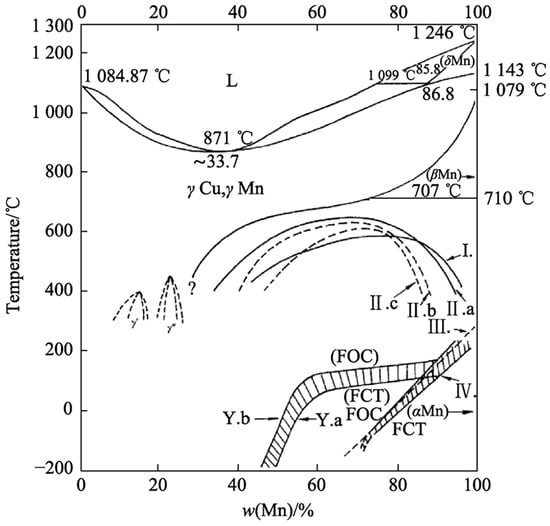
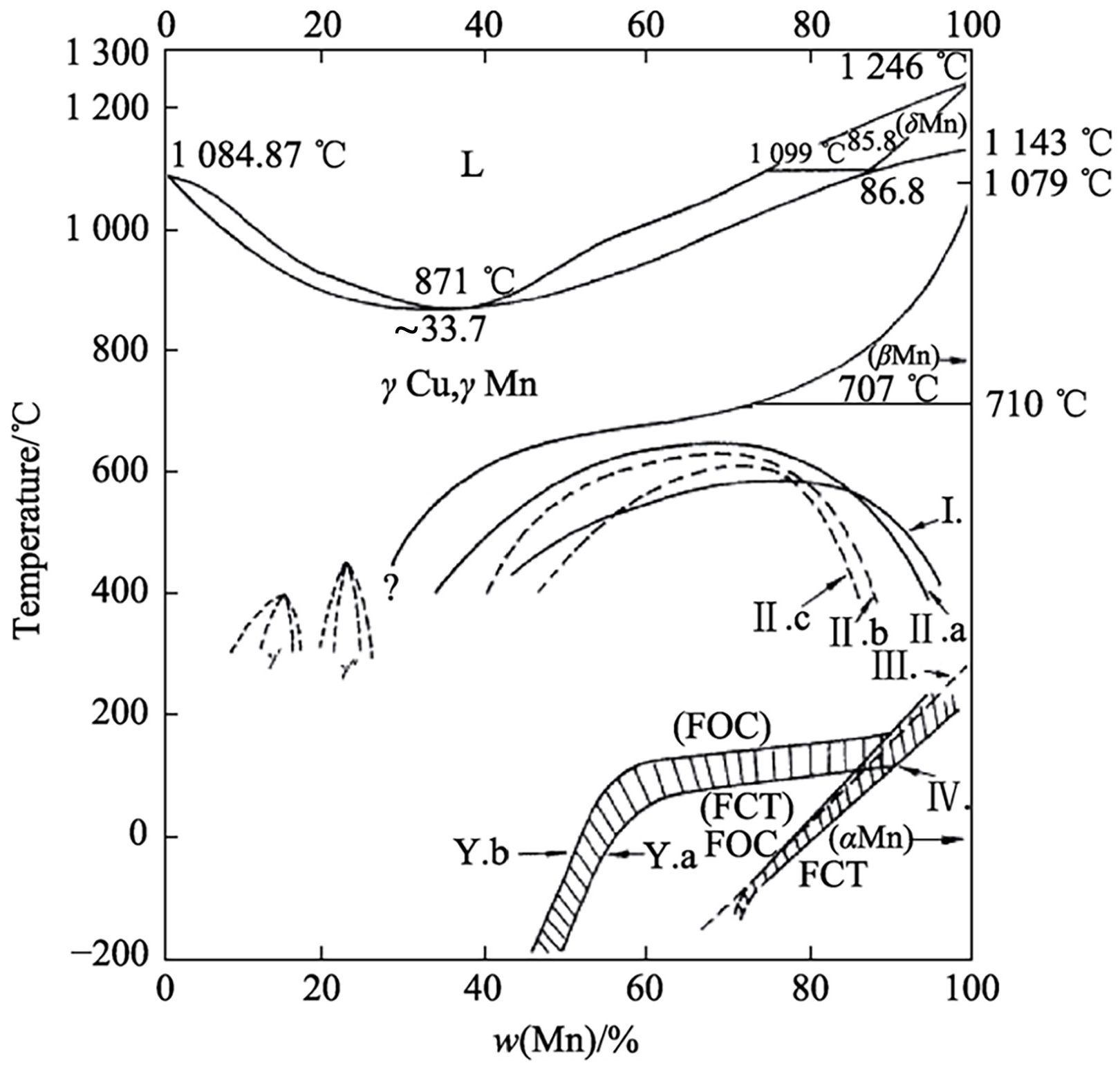
The raw materials chosen were high-purity metals (99.8% Cu, 99.9% Mn, Fe, and Ni). Alloy ingots of the nominal composition 73.48Mn-20.4Cu-4.35Ni-1.77Fe (wt%) were cast through vacuum induction melting using an argon atmosphere to guarantee compositional uniformity. Billets of size 100 × 100 mm were produced when the ingots were hot-forged at 880 °C. Based on the Mn–Cu alloy phase diagram [6] (Figure 1) and the existing literature, a series of solution and aging treatments was devised to optimize the microstructure and properties of the billets, resulting in specimens numbered 1# through 4#. The specific heat treatment conditions are given in Table 1.
Figure 1.
Mn–Cu binary phase diagram. Reprinted with permission from ref. [6].
Table 1.
Detailed parameters of heat treatment process.
X-ray diffraction (XRD, DX-2700B, Malvern Panalytical-Empyrean, Malvern, UK) analysis was carried out using Cu Kα radiation (λ = 1.5406 Å) at a 2θ range of 5° to 90° and a scan rate of 0.5°/min on the crystals to obtain accurate crystallographic information. Observation of spinodal decomposition was carried out using electron probe microanalysis (EPMA, JEOL JXA-iHP200F, JEOL, Tokyo, Japan). The sample was mechanically ground and polished to a mirror finish, ultrasonically cleaned in anhydrous ethanol for 5 min, and then dried. During the measurement, the accelerating voltage was set to 15 kV, the beam current to 1 × 10⁻⁷ A, and the working distance to 11 mm. Point quantitative analysis and elemental mapping were performed in wavelength-dispersive spectrometer (WDS) mode. Pure element standards were used for calibration, and the mass fractions of elements were calculated using the ZAF correction method to ensure quantitative accuracy of the micro-area composition. Thermal expansion behavior was evaluated through a vertical laser dilatometer (DIL 402 Expedis Select, NETZSCH, Selb, Germany). The damping behavior was tested with a dynamic mechanical analyser (DMA 850, TA Instruments, New Castle, DE, USA) in three-point bend mode. The size of the samples was 50 mm × 10 mm × 2 mm. The measurements were conducted within a temperature range of −100 °C to 200 °C with a heating rate of 5 °C/min and a frequency of 1 Hz. Loss tangent (tanδ) was used to measure the damping capacity. A universal testing instrument was used in testing mechanical properties based on round bar specimens with a diameter of 5 mm and a gauge length of 25 mm at a strain rate of 0.0012 s−1. Scanning electron microscopy (SEM, Apreo 2C, Thermo, Brno, Czech Republic) with an electron backscatter diffraction (EBSD, Oxford Instruments, High Wycombe, UK) detector was used to characterize the microstructure of the samples. Based on metallographic polishing, the EBSD sample was further polished using an argon ion polisher at a voltage of 5 kV for 2 h to remove the surface stress layer and lattice distortion. EBSD was then performed with an accelerating voltage of 20 kV, a step size of 1 μm, and a scanning area of 800 μm × 550 μm. For TEM observation, the sample was cut into 10 mm × 10 mm × 0.3 mm pieces, ground to a thickness of 50 μm using silicon carbide sandpaper, and finally punched into 3 mm diameter disks. The disks were then thinned with an ion mill (Gatan 695, Gatan, Pleasanton, CA, USA). The initial thinning was carried out at 5 keV with a thinning angle of 10°. After perforation, the energy was reduced to 3.5 keV and the angle to 5°. The microstructure was further examined using a 200 kV transmission electron microscope (TEM, H800, Hitachi, Tokyo, Japan).
3. Results and Discussion
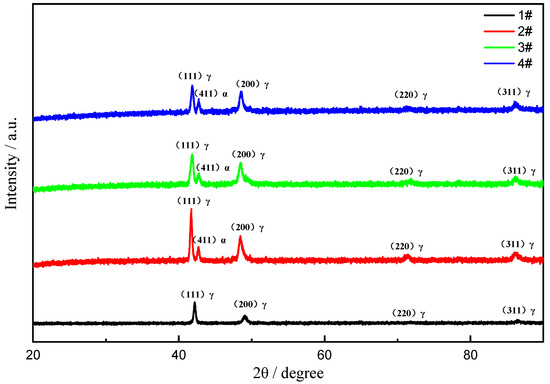
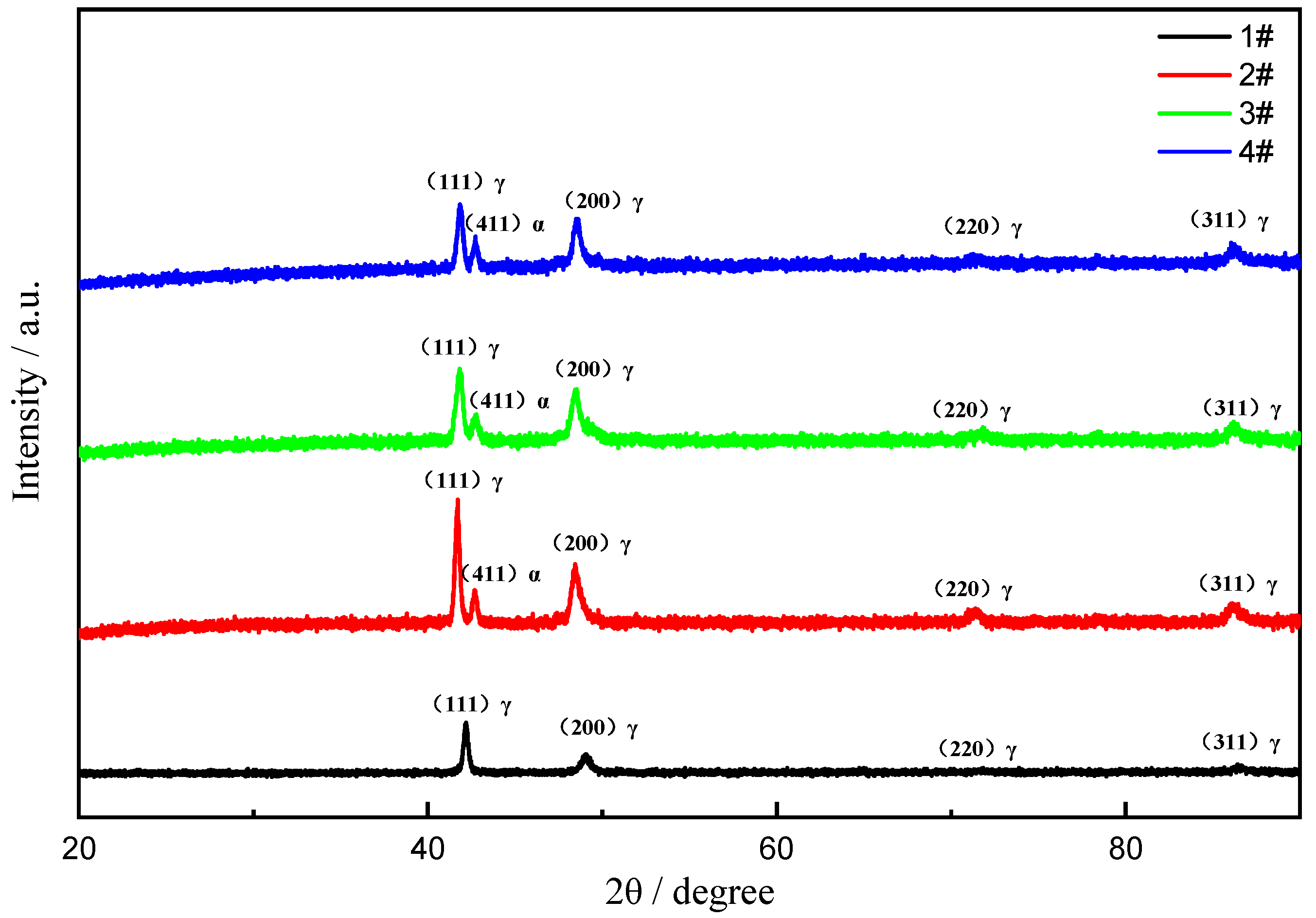
Figure 2 shows the XRD patterns of the Mn–Cu alloy subjected to four different heat treatment regimes. As shown by analysis, the alloy is predominantly made up of the γ-Mn phase and has a face-centered cubic (fcc) structure when it is at room temperature. Its diffraction peaks are located on the (111), (200), (220) and (311) planes. Upon aging treatment, a unique phase transformation takes place. The diffraction peaks of the aged samples are all associated with the (411) plane, which implies that the α-Mn phase has been precipitated. With the rise in the age temperature, the α-Mn diffraction peaks become more intense and the intensity of these peaks reflects the growing volume of precipitating Mn-rich phases.
Figure 2.
XRD patterns of Mn–Cu alloys with different heat treatment conditions.
At the first stage of aging, the supersaturated γ-Mn phase cannot directly precipitate the α-Mn. Rather, it is decomposed by a particular type of diffusion-controlled phase transformation called spinodal decomposition [20,21]. In that process, the alloy naturally splits into two phases with distinct compositions, and each phase has the same fcc structure as the parent phase:
(1) Mn-rich zones (γ-Mn-enriched): they are defined by a high Mn concentration, which is used as the precursor of later stages of α-Mn.
(2) A Cu-rich region (Cu enriched zone): with significant levels of Cu this would eventually be a member of the final matrix.
With the changing aging temperature, the decomposition continues to further form the α-Mn phase. The spinodal decomposition leads to the formation of regions (γ-Mn) with a high concentration of Mn, which is much higher than the nominal composition of this alloy. Under specific conditions of composition and structure, those regions become unstable themselves. After a long period of aging, these unstable fcc areas with excess Mn (γ-Mn) achieve an equilibrium, attaining a more structurally stable body-centered cubic (bcc) α-Mn phase through a martensitic transformation or precipitation mechanism. It is a shear type of transformation, which means that no diffusion occurs, but it leads to alteration of the lattice structure, namely, the transition of fcc to bcc. Thus, the α-Mn phase can be regarded as the end product, which was obtained due to transformation of the initial Mn-rich regions, instead of being precipitated directly out of the starting γ phase.
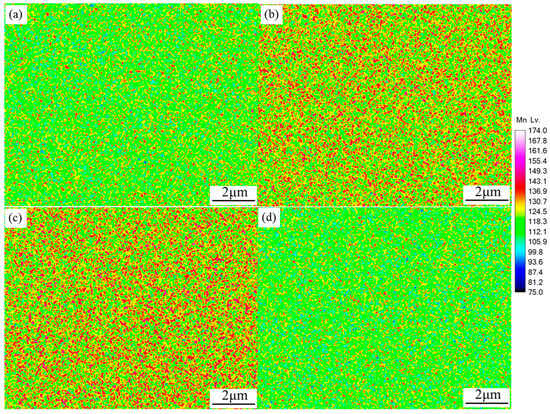
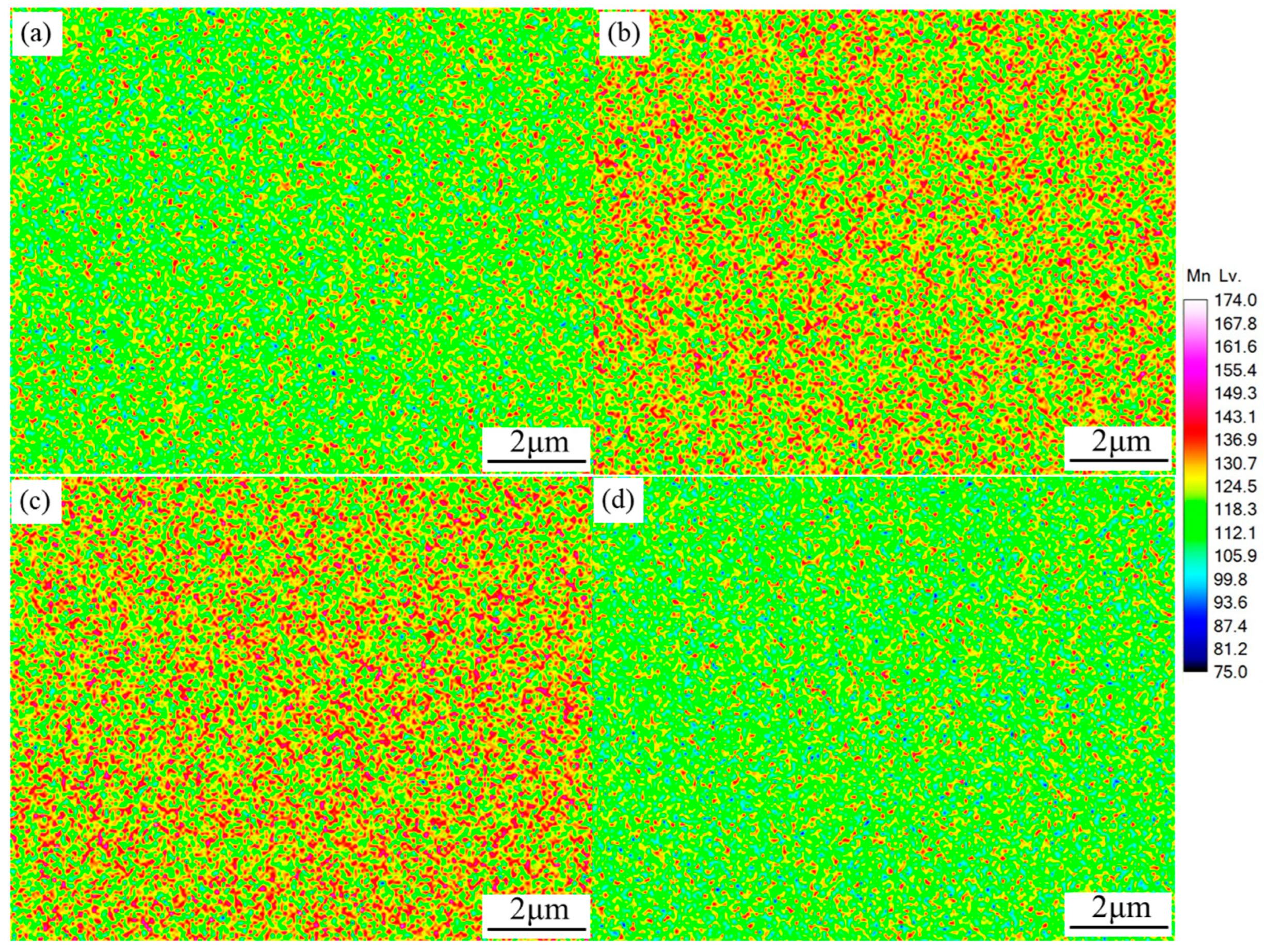
Here, we present the EPMA results of the samples. The surface scanning images of the solution-treated specimens (Figure 3a) reveal a uniform distribution of Mn and Cu elements, demonstrating a homogeneous composition of the alloys prior to spinodal decomposition. During the aging treatment, spinodal decomposition occurs in the alloy specimens, and the degree of compositional fluctuation varies markedly with aging temperature (Figure 3b–d).
Figure 3.
EPMA mapping of Mn in Mn–Cu alloys with different heat treatment conditions: (a) 1#; (b) 2#; (c) 3#; (d) 4#.
Figure 3 intuitively characterizes the spinodal decomposition behavior of the samples during aging. In this process, the initial single-phase homogeneous solid solution transforms into a compositionally modulated solid solution, and the microstructural morphology is strongly governed by the scale of compositional modulation.
The specimens aged at 400 °C and 425 °C (Figure 3b,c) exhibit coarse Mn-rich domains with intense compositional fluctuation. In comparison, the Mn-rich regions of the sample aged at 450 °C (Figure 3d) are relatively refined. This phenomenon is primarily attributed to the weakened spinodal decomposition of Mn–Cu alloys at such temperatures. Combined with the Mn–Cu binary phase diagram in Figure 1, this temperature is inferred to be close to the single-phase stable solid solution region.
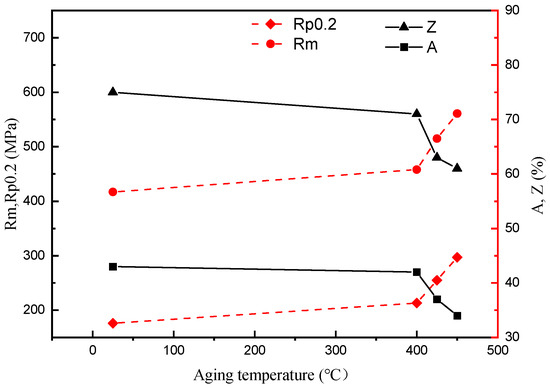
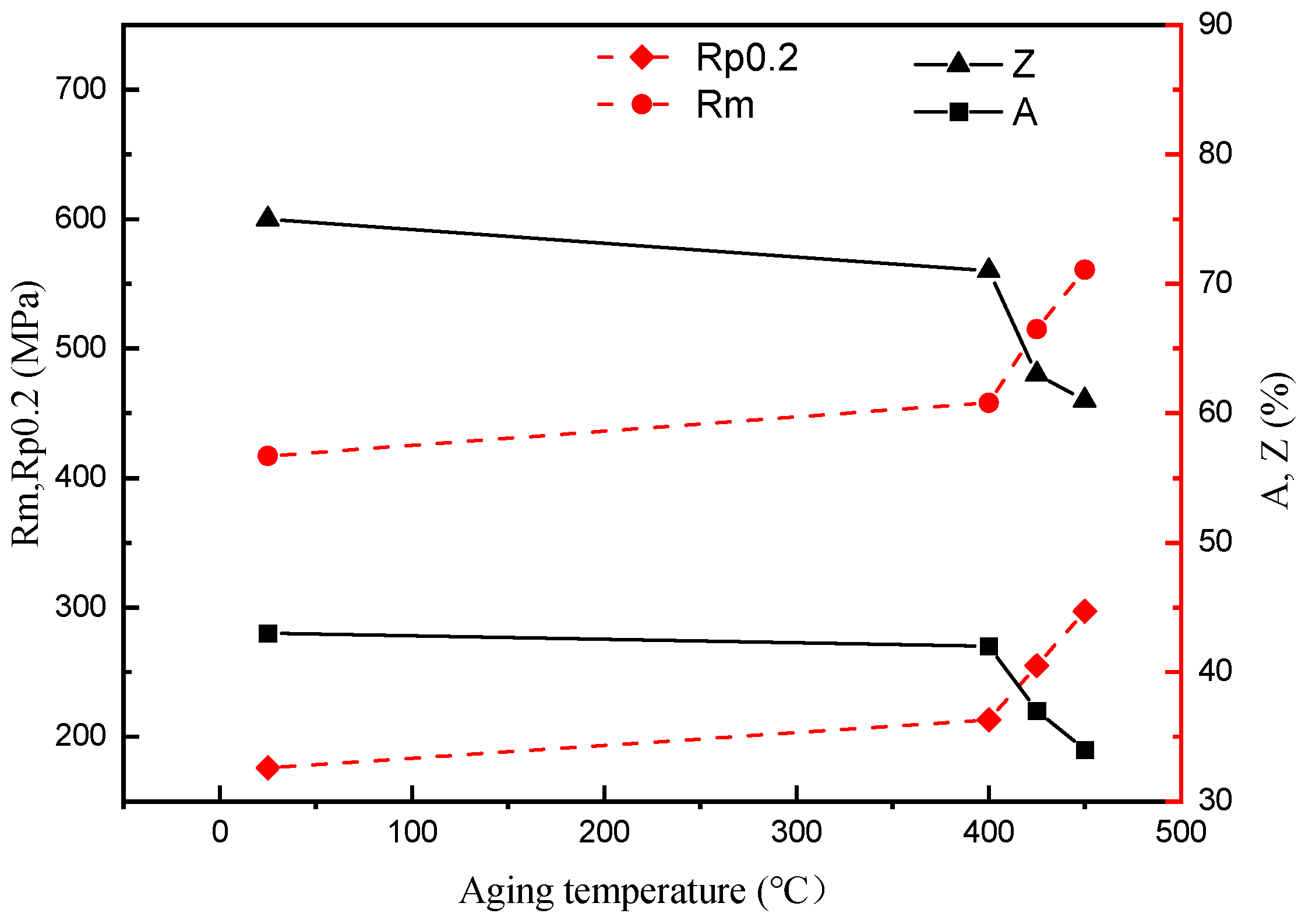
Figure 4 shows the variations in mechanical properties of the samples as a result of the solution treatment and aging at different temperatures, and the resulting statistics are captured in Table 2. The solution-treated sample has a high degree of elongation to fracture and relatively low values of tensile strength (UTS, Rm) and yield strength (YS, Rp0.2). Following the aging process, the tensile and yield strengths are much higher, whereas the elongation (A) and reduction in cross-sectional area (Z) are markedly lower, which means that the aging process improves strength at the cost of a certain amount of ductility.
Figure 4.
Mechanical properties of Mn–Cu alloys.
Table 2.
The resulting statistics of mechanical properties.
After further examination, it is found that as the aging temperature reaches 400–425 °C, the tensile strength rises by about 57 MPa, and the elongation is reduced by 5%. At the temperature of 425–450 °C, tensile strength is increased by approximately 46 MPa and elongation by 3%. Such a tendency indicates that the strength of the rise in magnitude and elongation reduction both decline in line with an increase in the temperature used in the aging process. In general, the specimen aged at 450 °C demonstrated the highest overall mechanical behavior, having a tensile strength of 561 MPa, a yield strength of 297 MPa and an elongation of 34%, which is a reasonable compromise between strength and ductility.
The results presented in Figure 2, Figure 3 and Figure 4 reveal that during the aging process, strain energy within the γ-Mn matrix is relieved via decomposition, leading to the formation of Mn-rich and Cu-rich regions and a characteristic spinodal (vermicular) microstructure [22]. This texture, resembling a woven fabric, reflects the internal compositional modulation and microstructural evolution. Investigations into the spinodal structures formed under varying aging temperatures indicate that the degree of decomposition exhibits a trend of initial increase followed by a decrease as the temperature rises. This decomposition process not only facilitates the martensitic transformation but also exacerbates lattice distortion, thereby substantially enhancing the mechanical properties of the alloy. Consequently, the spinodal structure plays a pivotal role in strengthening the material, providing a critical microstructural theoretical basis for the performance optimization of damping alloys.
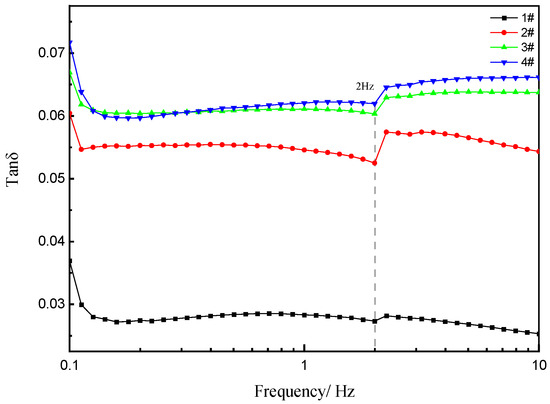
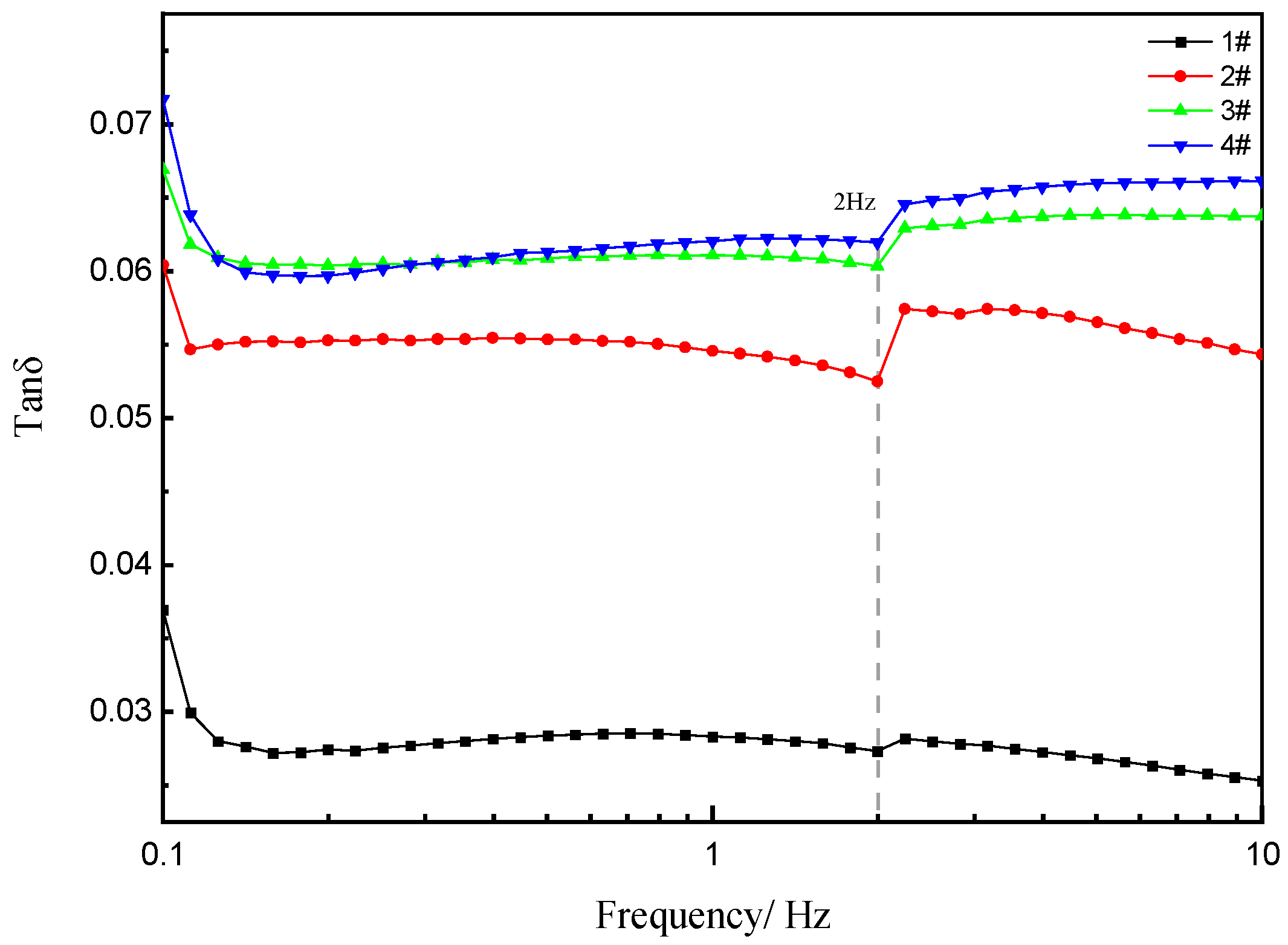
Figure 5 presents the damping capacity (tanδ) versus frequency at room temperature (25 °C) of alloys with various aging treatments. The damping capacity of each alloy is typically lowered with an increase in the frequency of testing. There is a notable decrease in tanδ in the low frequency region between 0.1 Hz and 0.2 Hz. After this, the downward trend slows until the minimum is reached at around 2 Hz. Such behavior can be expected of the most popular model of the interface or dislocation damping mechanism, in which the damping capability is greater at lower frequencies.
Figure 5.
Variation in damping properties of Mn–Cu alloys with frequency.
It is interesting to note that the damping ability of all the alloys in the frequency range of 2–3 Hz can be observed to recover sharply to a peak value and then begin to decrease gradually. The sudden shift in the damping behavior around 2 Hz can be explained by the fact that the motion of internal micro-interfaces can also vary with the frequency. High damping ability in Mn–Cu alloys depends greatly on the reciprocal motion and energy loss between the phase boundaries, twin boundaries, and antiferromagnetic domain walls in the thermoelastic martensite. Of all the samples, the ones with the highest damping capacity are the two samples 3# and 4# followed by sample 2#.
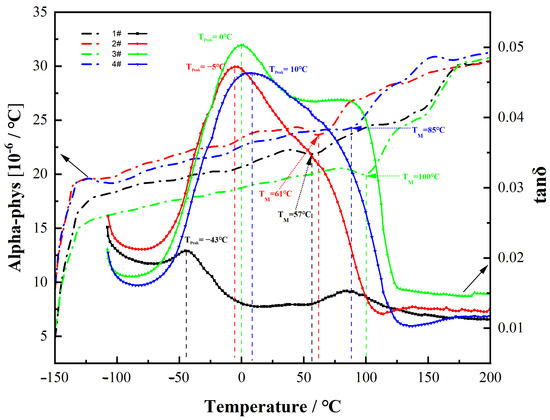
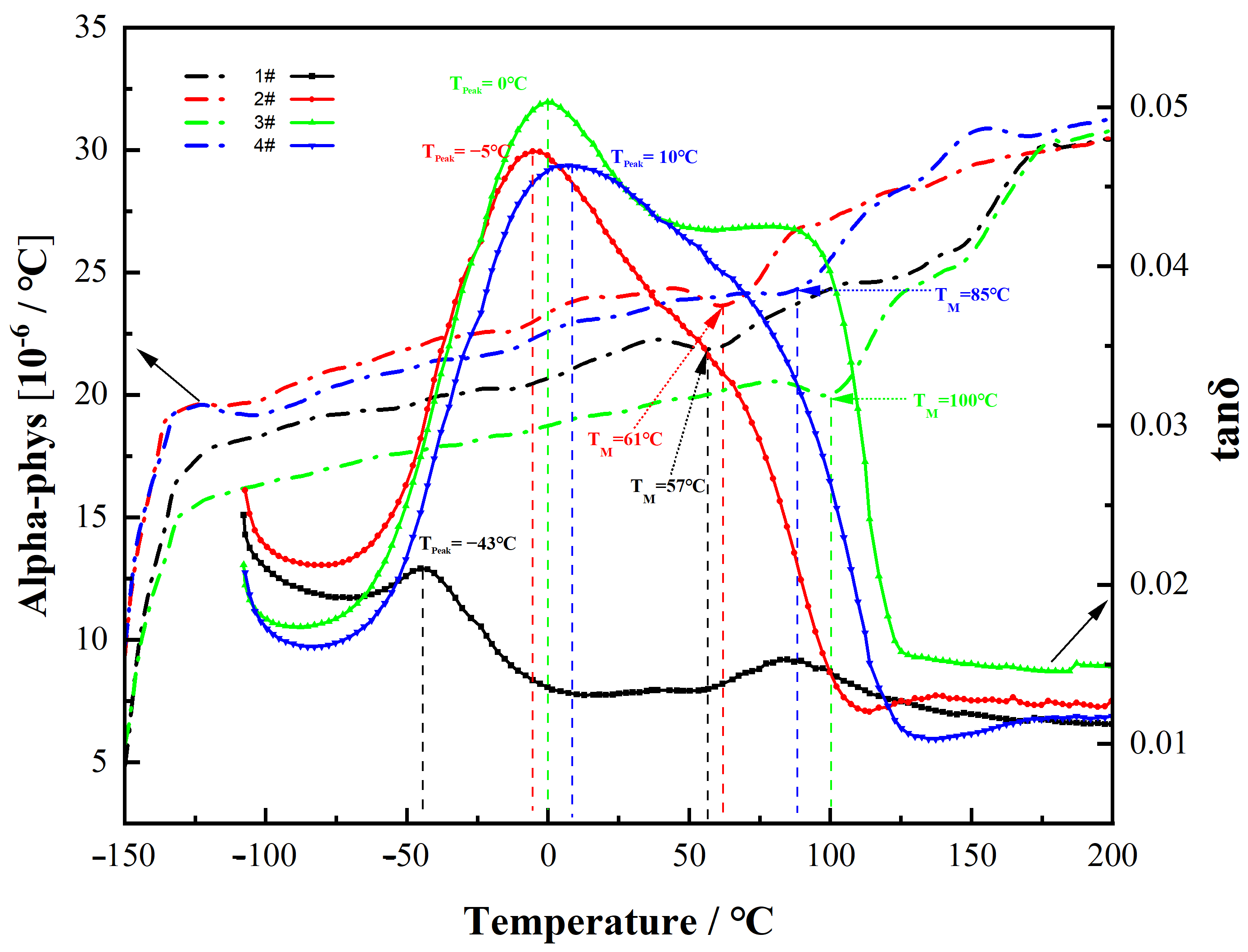
Figure 6 illustrates the temperature dependence of the physical expansion coefficient and loss tangent tanδ for Mn–Cu alloys subjected to different heat treatment regimes.
Figure 6.
Temperature dependence of the physical expansion coefficient (dashed line) and loss tangent tanδ (marked line) for Mn–Cu alloys subjected to different heat treatment regimes.
On average, α_phys is plotted in an increasing direction, which is the expected behavior of thermal expansion (Figure 6 dashed line). All samples are observed to have an accelerated rise in the region of −150 °C to −130 °C. The growth then decelerates and reaches its maximum at about 200 °C with a value of about 30 × 10−6 °C−1. Sample 3# has a peculiarly low α_phys at about 85 °C, which decreases sharply to about 100 °C, then gradually rises with increasing temperature again. Sharp changes in slope or an inflection point on the α_phys curve generally suggest the existence of a solid-state phase transformation. In this work, this phase transformation is the martensitic transformation, and the temperature of the transformation is named TM. The TM of the samples 1#, 2#, 3#, and 4# are about 57 °C, 61 °C, 85 °C, and 100 °C respectively.
In Figure 6, the dashed lines represent the temperature dependence of the loss tangent tanδ for the alloys under different heat treatment conditions over a temperature range from −100 °C to 200 °C, measured at a frequency of 1 Hz. The specimen which was treated only with a solution (1#) has a fairly flat damping response at all temperatures and relatively low tanδ values. Conversely, the aged samples have a gradual reduction in tanδ values in the temperature interval of −100 °C to −75 °C, which reaches its lowest point at around −75 °C. Then, the damping capacity sharply rises and peaks at about 0 °C. The peak temperatures for samples 2#, 3#, and 4# are −5 °C, 0 °C, and 10 °C, respectively. Of these, sample 3# has the maximum damping capacity with a peak tanδ of about 0.05. Further heating causes the damping capacity of the aged samples to reduce even more. It is worth noting that sample 3# displays a small improvement in tanδ in the temperature range of 50–100 °C instead of further decreasing. Above TM, as the paramagnetic transition begins, the tanδ value drops sharply to a very low level.
Based on the properties of Mn–Cu alloys, commonly displaying volume anomalies because of antiferromagnetic transitions or spinodal decomposition, and using the information obtained in XRD analysis and EPMA results, aging treatment facilitates the development of Mn-rich phase precipitation and thus raises the paramagnetic-to-antiferromagnetic transition temperature. A large antiferromagnetic transition temperature means that the alloy may be maintained in an antiferromagnetic state at a wider temperature interval, which is very important to ensure high damping behavior in room temperature regions and over-room temperature regions.
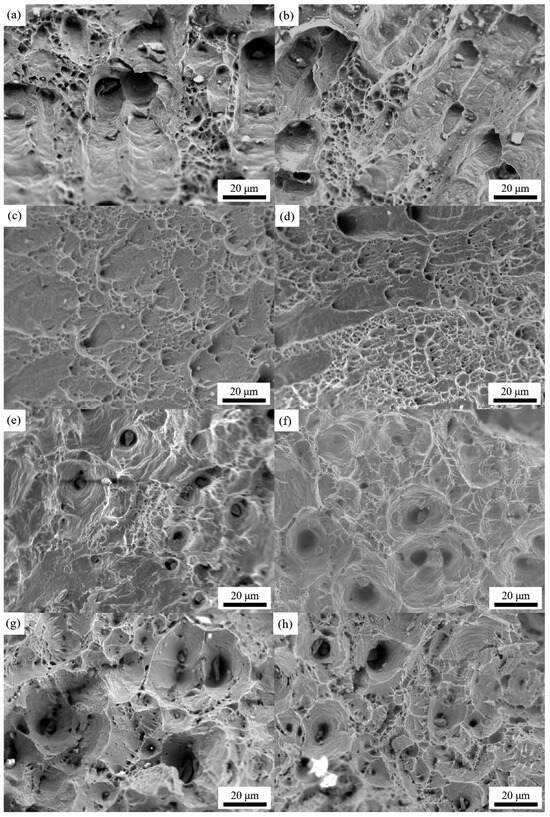
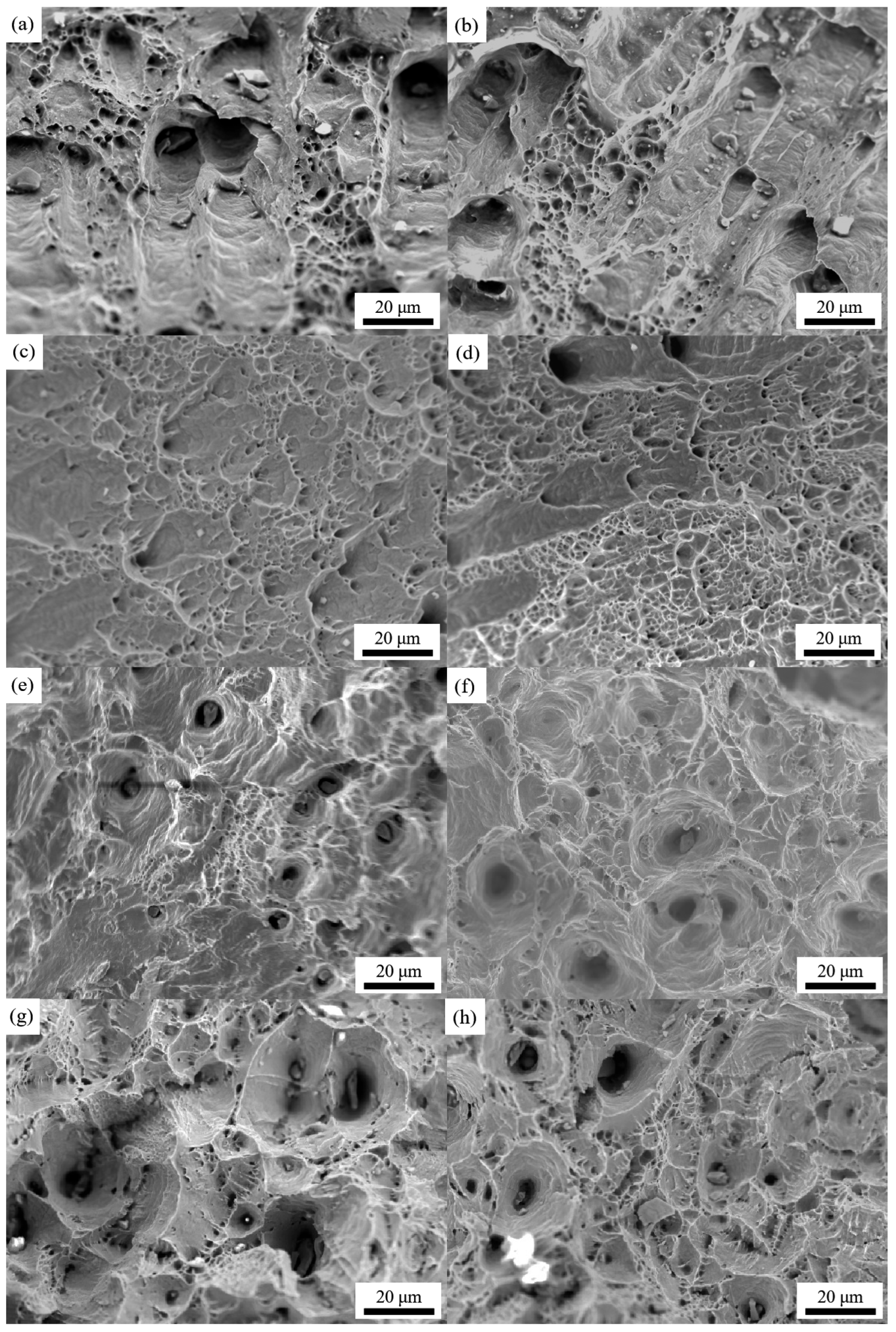
Figure 7 depicts the morphology of the tensile fracture surface. The solution-treated specimen (1#) shows typical properties of a ductile fracture that are characterized by the existence of dimple areas (dimples) within most of the fracture surface. The distribution of dimples is not even and it is closely connected with the mixed grain of the alloy structure, where the bigger grains represent deep dimples and the smaller ones shallow and more closely packed dimples. Conversely, the number of dimples present at the fracture face with increasing aging temperature decreases, whereas their size distribution grows less heterogeneous. In other regions, tear ridges are evident. Such a morphological transformation is probably related to a greater amount of brittle α-Mn second-phase precipitates in the aged alloys. These brittle particles, when subjected to tensional deformation, may serve as regions where cracks initiate and propagate preferentially, thus decreasing the ductility of the alloy. It is in agreement with the experimentally determined reduction in the elongation and area reduction after aging.
Figure 7.
Fracture morphology of tensile specimens: (a,b) 1#; (c,d) 2#; (e,f) 3#; (g,h) 4#.
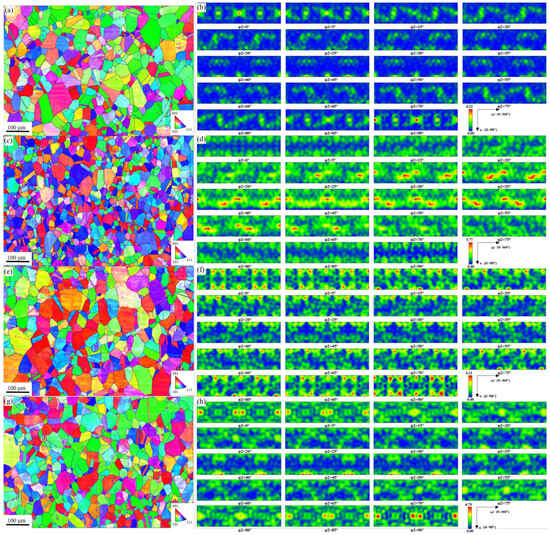
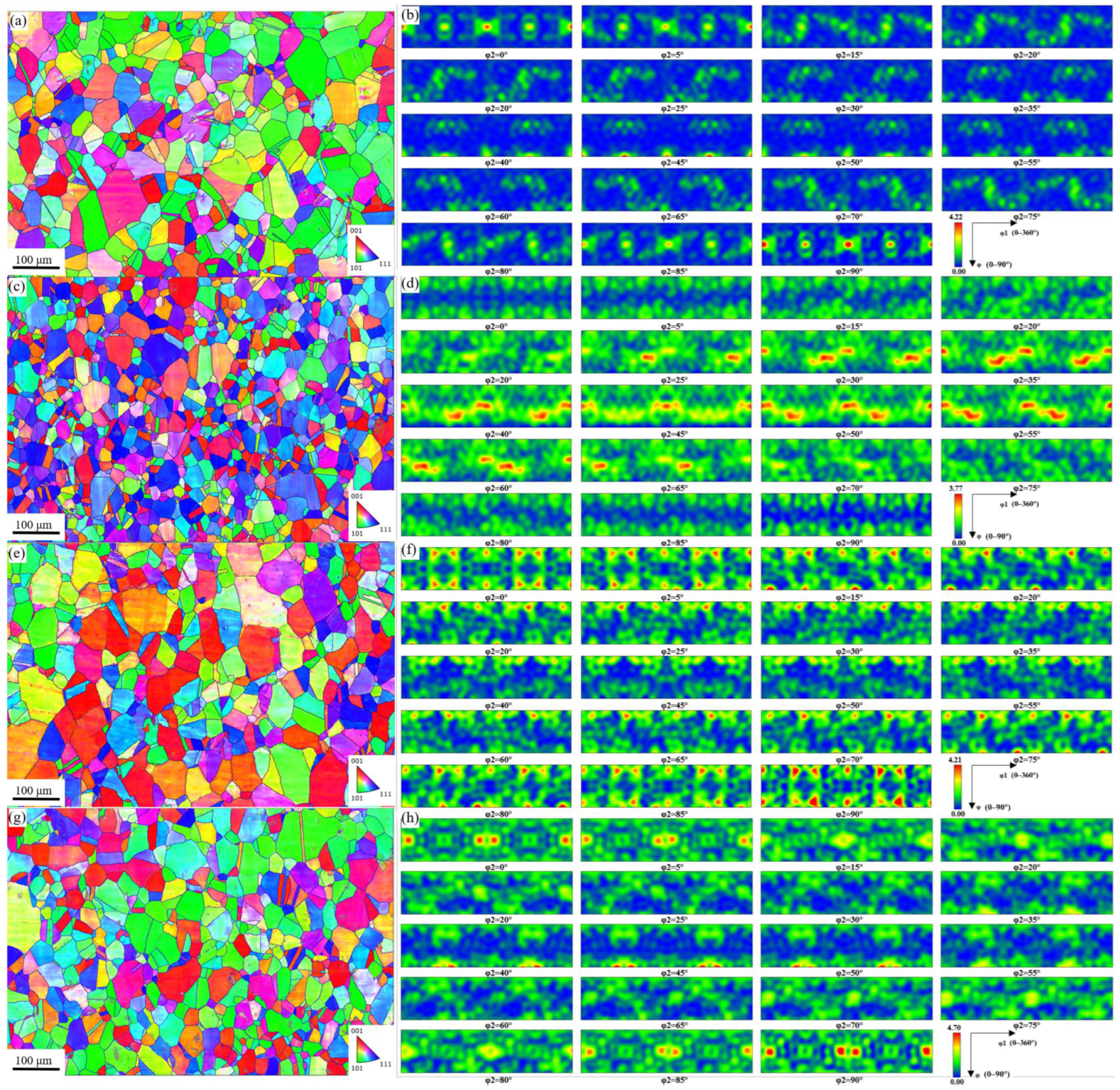
The graphs in Figure 8 show inverse pole figures (IPF) along with orientation distribution function (ODF) images of the alloy subjected to various heat treatment conditions. The average grain size of the solution-treated sample is 27.06 μm. After aging at 400 °C, 425 °C, and 450 °C, the average grain sizes are 19.25 μm, 26.14 μm, and 23.29 μm, respectively, indicating relatively uniform grain sizes after aging. Combined with the above results, the formation of α–Mn phase caused by aging heat treatment leads to the phenomenon that the grain size of the alloy does not change significantly with an increase in effective temperature, but the strength increases and the elongation decreases. Wang et al. [23] also discovered the same phenomenon and pattern.
Figure 8.
IPF + GB maps and ODFs of Mn–Cu alloys: (a,b) 1#; (c,d) 2#; (e,f) 3#; (g,h) 4#.
The ODF of the solution-treated sample is randomly oriented with a wide distribution of grain orientations and does not have any significant preferred orientation. It indicates an elimination or reduction in dendrite segregation and compositional heterogeneity in the initial as-worked condition by diffusion in the course of high-temperature solution treatment, giving rise to a homogeneous solid supersaturated solution of all alloying components in the fcc γ phase.
Following aging at 400 °C the ODF has a somewhat spread-out pattern of orientation, low in texture intensity, and hence it is concluded that the alloy is in the recovery or early recrystallization phase, and there is no prominent orientation formation. With rising aging to 425 °C the ODF shows more concentrated clusters of orientation, especially at certain Euler angles (e.g., at sections where φ2 = 0° and 45°), which implies the development of regular high-cube texture components. It demonstrates the fact that the recrystallization process is underway, and grains start to transform into lower-energy orientations, and deformation texture turns into recrystallization texture. At 450 °C, as the temperature continues to increase, texture intensity in ODF achieves the maximum and the distribution is more condensed with a definite preferred orientation present. The ODF analysis in conjunction with the appropriate IPF maps reveals the preferred [001] orientation post-aging at 425 °C changing into a preferred [101] orientation when the aging temperature is increased to 450 °C.
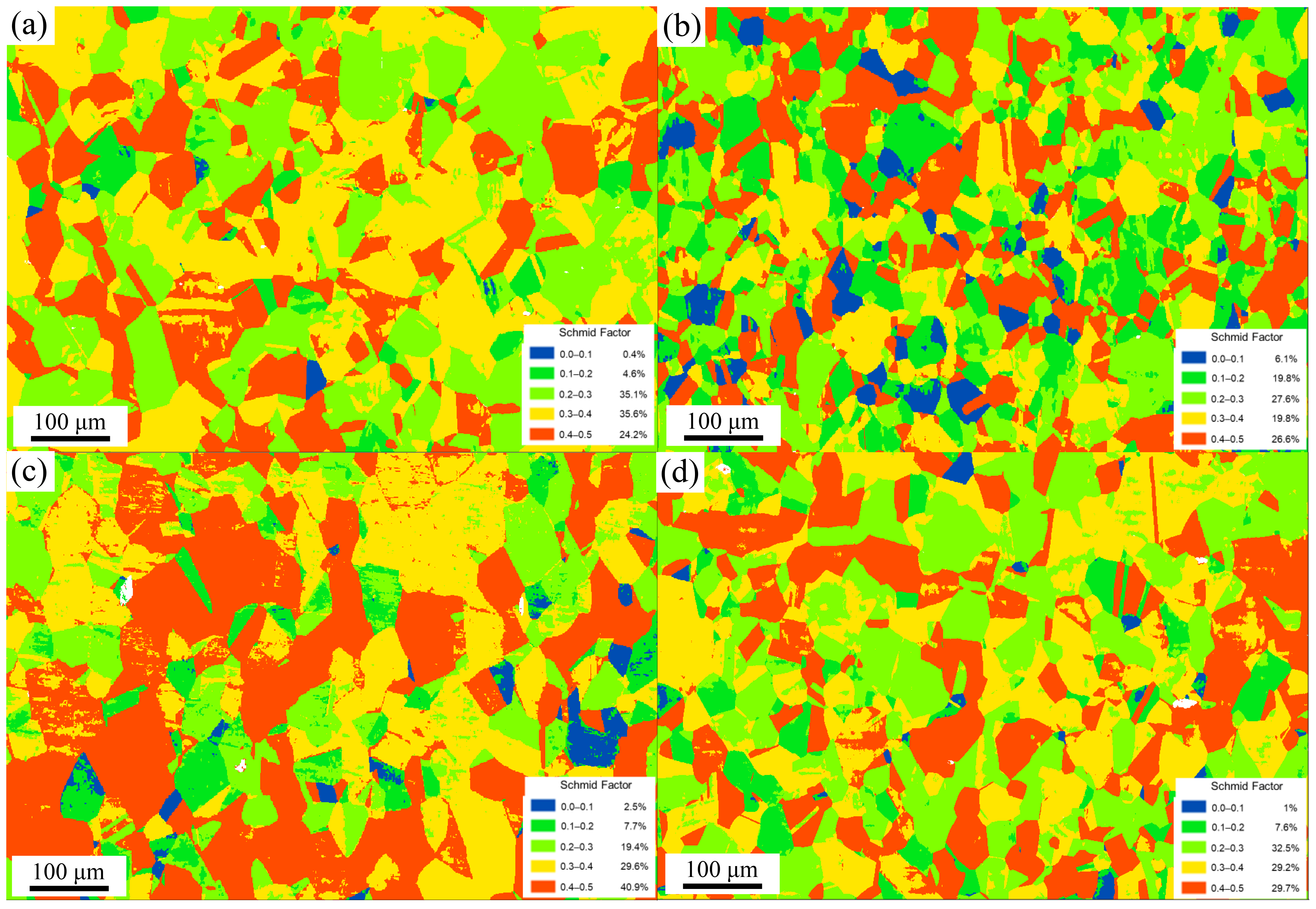
The computed Schmid factor in Figure 9 represents the relaxation motion of {011} twin boundaries on the {011}<01> system with various aging temperatures. The average Schmid factors are 0.33 and 0.29, respectively, in the solution-treated sample and in the sample aged at 400 °C, 0.38 in the sample aged at 425 °C and 0.34 in the sample aged at 450 °C. The sample aged at 425 °C has the highest average Schmid factor.
Figure 9.
Schmid factor for the relaxation movement of {011} twin boundaries on the {011}<01> slip system in Mn–Cu alloys: (a) 1#; (b) 2#; (c) 3#; (d) 4#.
In terms of damping mechanisms, the dissipated energy capability of the Mn–Cu alloy depends largely on the effectiveness of reversible {011} twin boundary motion during the alternating external stress [24]. According to Schmid factor analysis, the response efficiency of different crystallographic orientations to applied stress varies significantly. The [001] orientation possesses the highest Schmid factor, meaning that under the same applied stress, the resolved shear stress acting on the twin boundary is maximized, making the twin boundaries most susceptible to motion and consequently dissipating the most vibrational energy. In contrast, the [011] orientation has an intermediate Schmid factor, while the [111] orientation has the smallest, making twin boundary motion the most difficult. Therefore, when EBSD results show an increase in the proportion of [001]-oriented grains with extended aging time, it implies that the fraction of grains in the optimal damping orientation within the bulk material is increasing, enhancing the overall mobility of twin boundaries under alternating stress. Hence, increasing the proportion of [001]-oriented grains through texture evolution during aging is an effective strategy for improving the macroscopic damping capacity. This aligns with the study by Shungui Zuo et al. [25] on the orientation dependence of damping behavior in Mn–Cu alloys, where multi-directional damping tests on single crystals showed the highest damping capacity in the [001] direction and the lowest in the [111] direction.
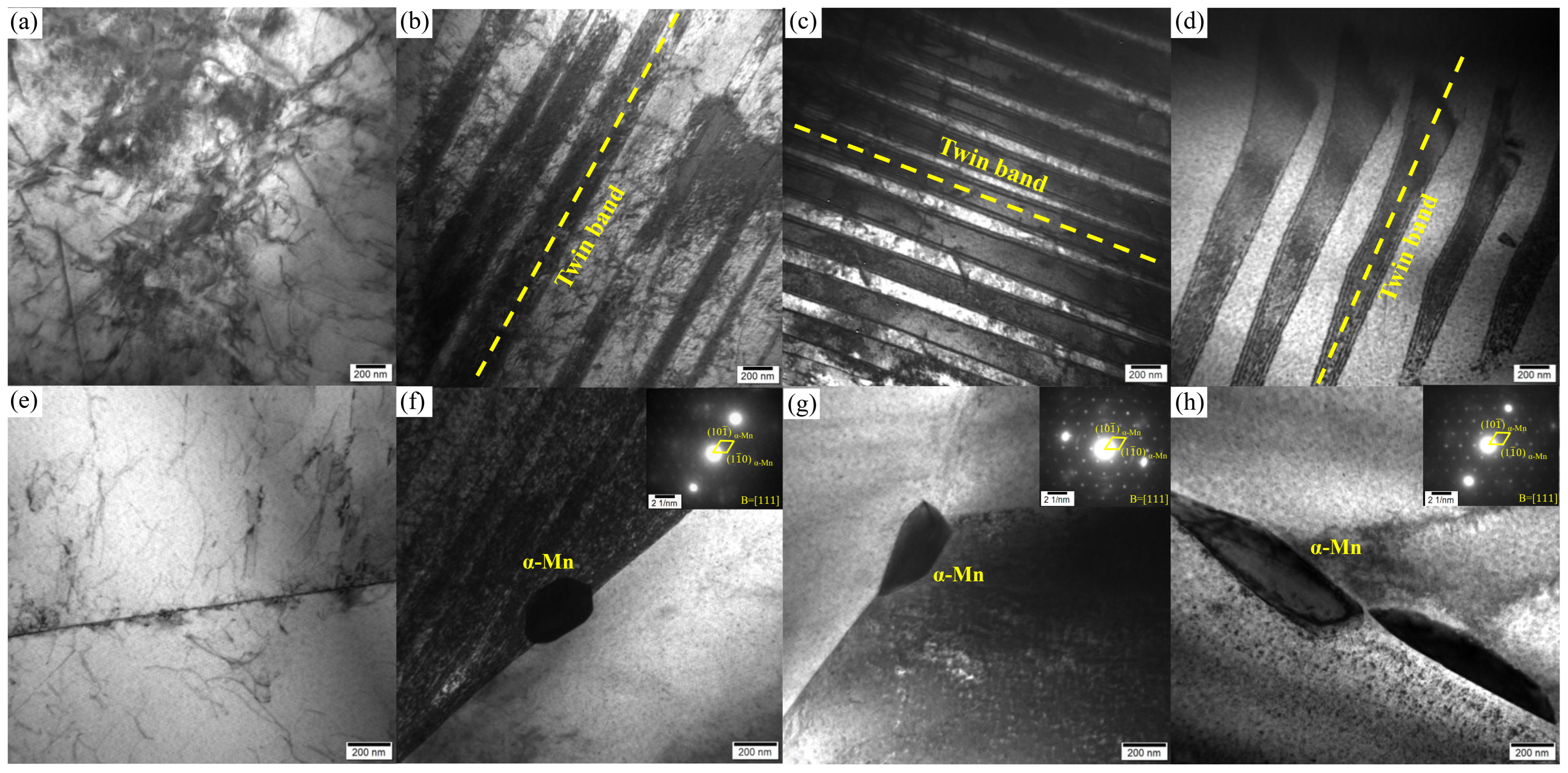
Figure 10 shows TEM images of the Mn–Cu alloy samples. In the as-solidified sample (1#), no twins are observed within the grains, while some dislocation tangles are present, and no precipitates are found at the grain boundaries. After aging treatment, twins appear inside the grains, and the twin density shows a trend of first increasing and then decreasing with rising aging temperature (see Figure 10b–d). Meanwhile, blocky α-Mn precipitates are present at the grain boundaries in all aged samples (see Figure 10f–h), and their size gradually increases as the aging temperature rises. The possible reasons for these observations are as follows. At lower aging temperatures, atomic diffusion is limited, and the driving force for twin nucleation is insufficient, resulting in a low twin density. As the temperature increases, thermal activation becomes stronger, and atomic migration rates rise, which facilitates twin nucleation induced by stacking faults or localized stress concentrations. In addition, an appropriate amount of precipitates may provide heterogeneous nucleation sites or local stress fields that promote twin growth, leading to an increase in twin density. However, when the aging temperature becomes excessively high, atomic mobility is too strong, making dislocation cross-slip and climb easier. As a result, recovery and recrystallization processes dominate within the grains, and the pre-existing twins may be annihilated or transformed. Furthermore, precipitate coarsening destroys the coherency with the matrix and weakens the local stress fields, causing the twin density to decrease. These combined factors give rise to the observed trend of twin density first increasing and then decreasing with aging temperature.
Figure 10.
Twins and α-Mn phases in Mn–Cu alloys. (a,e) 1#; (b,f) 2#; (c,g) 3#; (d,h) 4#.
Aging treatment first induces spinodal decomposition in the Mn–Cu alloy, causing the supersaturated solid solution to separate into a nanoscale alternating structure of Mn-rich and Cu-rich regions. This compositional separation process significantly elevates the martensite start temperature (Ms) of the Mn-rich regions, enabling the formation of a greater number of fine {011} twins at room temperature—the microstructural origin of the high damping capacity in Mn–Cu alloys. Meanwhile, as the aging temperature rises, the growth of grains promotes the formation of movable twinning [26], resulting in a higher density of movable twinning in larger grains. However, excessively high temperatures during the processing period will also lead to an increase in the amount of α-Mn precipitates, reducing the Mn content within the grains and resulting in a decrease in damping performance.
At the same time, there is a preferential evolution in the grain orientation under the aging of the material. With processes like twin reorientation and grain boundary migration, the fraction of [001]-oriented grains slowly increases.
To sum up, the aging treatment optimizes the twin structure as a result of spinodal decomposition and at the same time enhances the fraction of [001]-oriented grains by developing texture. These two factors, acting together, have a significant positive impact on the damping capability of the alloy.
4. Conclusions
This study systematically investigated the mechanisms by which aging heat treatment influences the microstructure evolution, crystallographic texture, and damping properties of a Mn–Cu alloy. Through comprehensive characterization using XRD, EPMA, DMA, dilatometry, TEM and EBSD, the following main conclusions were drawn:
(1) Controlling the aging temperature can effectively improve the mechanical and damping properties. The sample subjected to aging treatment at 425 °C for 4 h exhibits optimal comprehensive properties: a peak tanδ of 0.05, a martensite transformation temperature of 100 °C, a tensile strength of 515 MPa, a yield strength of 255 MPa, and an elongation of 37%.
(2) Under solution treatment, the Mn–Cu alloy is formed of a solitary supersaturated face-centered cubic (fcc) γ-Mn phase. The aging process causes spinodal decomposition. The composition fluctuation first increases and then decreases with increasing aging temperature, and the twin density shows a similar trend.
(3) The solution-treated sample has a random distribution of grain orientation without any distinct texture. The aging temperature increase causes recrystallization to take place, which results in the concentration of the texture. After aging at 425 °C, a preferable [001] orientation is observed. At a temperature of 450 °C, the texture intensity is maximal, and the preferred orientation shifts to [101]. In line with earlier research findings, the damping ability of Mn–Cu alloys is highly dependent on their orientation; the [001] orientation has the largest Schmid coefficient, which makes it the most favorable orientation of reversible twin boundary movement in response to external stresses, and thus dissipates the most energy.
(4) The aging process increases the formation of Mn-rich areas by spinodal decomposition, which leads to an increase in the martensite start temperature and allows the development of a significant amount of {011} twins at room temperature. It is the source of the structural foundation of the high capacity of damping. At the same time, the evolution of texture with aging allows an increase in the share of grains that are oriented along the [001] direction, thus promoting the enhancement of the fraction of the grain volume that has the optimal orientation concerning the damping and contributes to additional improvement of the overall mobility of twin boundaries at the alternating stress. The combined influence of these two mechanisms allows sample 3# to demonstrate the highest damping behavior (peak tanδ ≈ 0.05) within a broad temperature interval.
To sum up, aging treatment leads to a great improvement in the damping capacity of Mn–Cu alloys due to the two regulatory actions of spinodal decomposition and texture evolution. The proper choice of aging temperature will ensure an optimal twin structure as well as a desirable crystallographic texture development. It offers an explanation behind the design of heat treatment processes of high-damping Mn–Cu alloys. Between the conditions examined, microstructure and texture state achieved when aging is performed at 425 °C are considered the most favorable variables in order to reach synergistically optimized high damping performance in a wide range of temperatures.
Author Contributions
Conceptualization, B.W. and D.Z.; methodology, F.L.; validation, B.W., Z.W., B.L. and X.Z. (Xinqing Zhao); formal analysis, R.L. and X.Z. (Xiaojun Zhang); investigation, R.L. and X.Z. (Xiaojun Zhang); resources, B.W. and Z.W.; data curation, B.L.; writing—original draft preparation, B.W. and Z.W.; writing—review and editing, F.L. and F.Z.; visualization, X.Z. (Xinqing Zhao); supervision, F.Z. and D.Z.; project administration, Z.W. All authors have read and agreed to the published version of the manuscript.
Funding
This research was funded by Central Iron and Steel Research Institute R&D special fund, grant number SHI 25S60750B.
Data Availability Statement
The original contributions presented in this study are included in the article. Further inquiries can be directed to the corresponding author.
Conflicts of Interest
Authors Bin Wu, Zhaobo Wu, Bibo Li, Fengshuang Lu, Ran Li, Xiaojun Zhang, Feiyu Zhao were employed by Central Iron and Steel Research Institute, and Dongliang Zhao was employed by China Iron & Steel Research Institute Group Co., Ltd. The remaining authors declare that the research was conducted in the absence of any commercial or financial relationships that could be construed as a potential conflict of interest.
References
- Dong, L.; Wang, Q.; Wu, Y.; Xie, H.; Gao, S.; Ren, J.; Gao, J.; Dong, L.; Song, K. Preparation and research on the structure and properties of high damping Mn-Cu alloy. Vacuum 2024, 229, 113592. [Google Scholar] [CrossRef] [Scilit]
- Li, P.; Dai, S.; Liu, D.; Chai, S.; Li, Y. Status of research on material damping and damping alloys. J. Mater. Eng. 1999, 8, 44–48. Available online: https://api.semanticscholar.org/CorpusID:137987097 (accessed on 18 April 2026).
- Yin, F.X. Damping Behavior Characterization of the M2052 Alloy Aimed for Practical Application. Acta Metall. Sin. 2003, 39, 1023–1028. Available online: https://www.researchgate.net/publication/283960919_Damping_behavior_characterization_of_the_M2052_alloy_aimed_for_practical_application (accessed on 18 April 2026).
- Lu, F.S.; Ren, Y.L.; Tang, Y.P.; Zhang, J.F.; Feng, Q.; Zhao, D.L. Research and Application of M2052 High Damping Alloys. Met. Funct. Mater. 2013, 20, 1–6. Available online: https://api.semanticscholar.org/CorpusID:138076858 (accessed on 18 April 2026).
- Siefert, A.V.; Worrell, F.T. The Role of Tetragonal Twins in the Internal Friction of Copper Manganese Alloys. J. Appl. Phys. 1951, 22, 1257–1259. [Google Scholar] [CrossRef] [Scilit]
- Adachi, K.; Yamashita, T.; Taneda, Y.; Farkas, D.M.; Perkins, J. Dynamical transmission electron microscopy microstructure associated with electron-phonon interaction in high-damping Cu-Mn alloys. Philos. Mag. A 1996, 73, 1009–1034. [Google Scholar] [CrossRef] [Scilit]
- Kawahara, K.; Sakuma, N.; Nishizaki, Y. Effect of Third Elements on Damping Capacity of Mn-20Cu Alloy. J. Jpn. Inst. Met. 1993, 57, 1089–1096. [Google Scholar] [CrossRef] [Scilit]
- Yin, F.; Nagai, K.; Watanabe, K.; Kawahara, K. The Damping Behavior of Ni Added Mn-Cu Damping Alloys. Mater. Trans. 2003, 44, 1671–1674. [Google Scholar] [CrossRef] [Scilit]
- Bacon, G.E.; Dunmur, I.W.; Street, J.H.S. The Antiferromagnetism of Manganese Copper Alloys. Proc. R. Soc. Lond. A 1957, 241, 223–238. [Google Scholar] [CrossRef] [Scilit]
- Watanabe, Y.; Suga, Y.; Miura-Fujiwara, E.; Sato, H.; Nishino, Y. Training Effects on Damping Capacity in Mn-22.5mass%Cu-5mass%Ni-2mass%Fe Alloy. Mater. Sci. Forum 2012, 706–709, 2026–2031. [Google Scholar] [CrossRef] [Scilit]
- Li, D.; Liu, W.; Li, N.; Yan, J.; Shi, S. Remarkable improvement of damping capacity of Mn–20Cu–5Ni–2Fe (at%) alloy by zinc element addition. Adv. Eng. Mater. 2017, 19, 1700437. [Google Scholar] [CrossRef] [Scilit]
- Yin, F.; Takamori, S.; Ohsawa, Y.; Sato, A.; Kawaharaet, K. The damping behavior and practical applications of the M2052 damping alloy. In INTER-NOISE and NOISE-CON Congress and Conference Proceedings, InterNoise01, Hague, The Netherlands; International Institute of Noise Control Engineering: West Lafayette, IN, USA, 2001; pp. 1906–1909. [Google Scholar]
- Yan, J.; Li, N.; Fu, X.; Liu, W.; Liu, Y.; Zhao, X. Effect of pre-deformation and subsequent aging on the damping capacity of Mn-20at% Cu-5at% Ni-2at% Fe alloy. Adv. Eng. Mater. 2015, 17, 1332–1337. [Google Scholar] [CrossRef] [Scilit]
- Wang, J.; Wei, W.; Pan, F.; Tang, A.; Ding, P. New development and prospect of research on metallic damping materials. Mater. Rev. 2009, 23, 15–19. Available online: https://api.semanticscholar.org/CorpusID:138364305 (accessed on 18 April 2026).
- Kekalo, I.B. High-Damping Alloys. In Encyclopedia of Materials Science and Engineering; Pergamon Press: Oxford, UK, 1986. [Google Scholar]
- Holsten, G.V. Phase Transformations and Microstructural Evolution in Aged Mn-Cu-Based Alloys. Master’s Thesis, Naval Postgraduate School, Monterey, CA, USA, 1990. Available online: https://api.semanticscholar.org/CorpusID:133635339 (accessed on 18 April 2026).
- Lu, F.; Wu, B.; Zhang, J.; Li, P.; Zhao, D. Microstructure and damping properties of MnCuNiFeCe alloy. Rare Met. 2016, 35, 5. [Google Scholar] [CrossRef] [Scilit]
- Dong, L.; Wang, Q.; Wu, Y.; Xie, H.; Gao, J.; Chai, X.; Song, K. Effect of Process Conditions on Microstructure, Damping Capacity, and Mechanical Properties of Mn-Cu Alloys. Materials 2025, 18, 4391. [Google Scholar] [CrossRef] [Scilit]
- Ding, R.; Liu, G.; Tan, G.; Liu, S.; Ranjbar, M.; Potter, A.; Liu, H.; Lu, B.; Ji, J. Synergistic strengthening mechanism of cryogenic treatment for mechanical properties and damping characteristics of Mn–Cu alloy. J. Mater. Res. Technol. 2026, 41, 4732–4738. [Google Scholar] [CrossRef] [Scilit]
- Wang, D.; Niu, H.; Zhang, S.; Xuan, W.; Ren, Z.; Tian, Q. Enhancement of Damping Capbility of MnCu Alloy by High Magnetic Field. Metals 2023, 13, 6. [Google Scholar] [CrossRef] [Scilit]
- Fukuhara, M.; Yin, F.; Ohsawa, Y.; Takamori, S. High-damping properties of Mn–Cu sintered alloys. Mater. Sci. Eng. A 2006, 442, 439–443. [Google Scholar] [CrossRef] [Scilit]
- Yang, J.; Zhao, C.; Liang, H.; Wang, Z.; Su, C. Spinodal decomposition and martensitic transformation of the high manganese Mn–xCu alloys fabricated by additive manufacturing. Appl. Mater. Today 2021, 25, 101170. [Google Scholar] [CrossRef] [Scilit]
- Wang, W.; Sun, L.; Liu, S.; Long, D.; Zhang, H.; Yin, F. Effect of aging treatment on microstructure and mechanical properties of Mn-10Cu-4Cr alloy. Heat Treat. Met. 2024, 49, 175–178. [Google Scholar] [CrossRef]
- Jankowska-Kisielińska, J.; Świderska, K.; Mikke, K. Structure and Short Range Order of Two Phases in the Single Domain Mn0.75Cu0.25 Alloy after Spinodal Decomposition. Acta Phys. Pol. A 2010, 118, 795–798. [Google Scholar] [CrossRef] [Scilit]
- Zuo, S.; Xiao, F.; Fukuda, T. Orientation dependence of damping behavior in a Mn-Cu shape memory alloy. Scr. Mater. 2019, 170, 95–98. [Google Scholar] [CrossRef] [Scilit]
- Zhong, Y.; Sakaguchi, T.; Yin, F. Effects of transformation twin on Hall–Petch relationship in MnCu alloy. Mater. Sci. Eng. A 2008, 492, 419–427. [Google Scholar] [CrossRef] [Scilit]

Disclaimer/Publisher’s Note: The statements, opinions and data contained in all publications are solely those of the individual author(s) and contributor(s) and not of MDPI and/or the editor(s). MDPI and/or the editor(s) disclaim responsibility for any injury to people or property resulting from any ideas, methods, instructions or products referred to in the content. |
© 2026 by the authors. Licensee MDPI, Basel, Switzerland. This article is an open access article distributed under the terms and conditions of the Creative Commons Attribution (CC BY) license.