Article

Effects of Nozzle Configuration on Flow and Heat Transfer of Confined Jet in Semi-Enclosed Space

State Key Laboratory of Digital Steel, Northeastern University, Shenyang 110819, China
*
Author to whom correspondence should be addressed.
Metals 2026, 16(4), 452; https://doi.org/10.3390/met16040452
Submission received: 9 March 2026 / Revised: 8 April 2026 / Accepted: 18 April 2026 / Published: 21 April 2026
(This article belongs to the Topic Numerical Modelling on Metallic Materials, 2nd Edition)

Abstract

The quenching deformation of ultra-high-strength steel sheets is a technical challenge in the steel industry. Although air-jet quenching can effectively improve shape quality, it requires substantial energy consumption. How to improve the heat transfer intensity of air jets by improving key components has become the keypoint of using this technology in industry. In this study, a CFD model was established to investigate the impacts of nozzle shapes and jet arrangements on the flow structure, wall heat transfer intensity and wall heat transfer uniformity under the same total flow rate. The results show that the impingement heat transfer could only be realized by adopting a symmetrical nozzle design (including the symmetric nozzle shape and jet arrangement). And the intensity and uniformity of wall heat transfer were hardly affected by the specific symmetrical nozzle shape. Moreover, under the S/B (ratio of slot spacing to slot width) condition adopted in this study, multiple jets did not significantly enhance heat transfer uniformity but instead tended to reduce the overall heat transfer intensity. In this paper, the configuration of the horizontal nozzle with the central single jet was optimal due to its high heat transfer intensity, good heat transfer uniformity and lower energy consumption.

1. Introduction

As modern industry equipment becomes larger, lighter and more environmentally friendly [1,2,3], users have a stronger demand for ultra-high-strength steel sheets in the 2–3 mm thickness range. However, steel sheets demonstrate a thickness-dependent decline in critical buckling stress, and the requirements for quenching uniformity are more stringent [4]. In the production process of traditional iron and steel industry using water as cooling medium, the rewetting phenomenon will lead to the fluctuation of surface temperature and form thermal gradients along and perpendicular to the rolling direction [5], which can no longer meet the flatness requirements. In recent years, air-jet heat transfer, which shows good heat transfer uniformity in various industries such as metal annealing, turbine blade cooling and glass tempering [6,7,8,9], has been applied in the ultra-high-strength steel sheets quenching field to improve shape quality [10]. However, the heat transfer intensity of air jets is insufficient compared with water. In order to achieve the quenching process, increasing heat transfer intensity by traditional methods such as increasing air volume will significantly increase equipment and production costs, which cannot meet the demand for industrial production. Optimizing jet heat transfer capacity while maintaining good heat transfer uniformity has emerged as the key to the industrialization of the air-jet quenching process.
Improving key components of equipment is a common means of enhancing production efficiency in engineering. In the field of heat exchange engineering, the design of nozzles has become crucial. Numerous academics have performed substantial research on this subject. Reodikar et al. [11] and Wen et al. [12] utilized CFD models to evaluate the heat transfer efficiency across different nozzle shapes. The circular nozzle achieved a higher cooling rate under both compressible and incompressible flow conditions. Through comparative analysis of slot and circular jet configurations, Sarkar and Singh [13] demonstrated superior thermal uniformity in slot jets, while circular jets achieved higher local heat transfer rates at the stagnation region. Yeranee et al. [14] investigated the heat transfer characteristic of impinging jet arrays with entrained air ducts, which demonstrated that introducing ambient air into jets could enhance both the flow rate and heat transfer capacity. Kito et al. [15] compared the heat transfer intensity of single and double jets at jet inclination angles of 0°, 15°, 30° and 45°, demonstrating that the highest Numax and Nu ¯ were obtained when θ = 0°.
The jet arrangement method also plays a crucial role in improving the heat transfer efficiency. Xing et al. [16] noted that the inline array exhibited superior heat transfer performance compared to the staggered array at H/D = 3–5. Through comprehensive analysis of multi-jet impingement on cylindrical surfaces, Pachpute and Premachandran [17] demonstrated that the cooling effect of staggered arrays was stronger at small injection spacing and low jet height. Chen et al. [18] demonstrated that the wall-averaged Nusselt number exhibited a lower value under larger jet spacings. It was primarily caused by the inadequate spatial coverage of the wall jet regions with high heat transfer efficiency. Furthermore, Yong et al. [19] demonstrated that the reduced jet spacing was beneficial to improve the wall heat transfer. However, under too low S/D conditions, San and Lai [20] believed that the disturbance caused by the expansion of the adjacent jet shear layer would weaken the jet heat transfer intensity.
When heat transfer is carried out in a semi-enclosed space, optimizing the medium flow space could also improve the heat transfer capacity. Peng et al. [21] conducted a detailed investigation into how various geometric configurations influence the cooling efficiency of multi-jet microchannel (MJMC) heat sinks. Thermal analysis identified superior cooling characteristics in configurations with greater nozzle counts, wider flow outlets, and minimized fin-to-channel width proportions. Zhang et al. [22] compared and analyzed the cooling efficiency of rectangular, trapezoidal and circular flow channel sections with the same area in micro-channel slot-jet modules. Among all tested configurations, the trapezoidal channel design demonstrated highest heat transfer intensity and uniformity. Li et al. [23] designed a novel hybrid two-layered channel-jet heat sink for air cooling and examined how the heat dissipation performance was affected by geometric characteristics. The results showed that heat dissipation performance was optimized by increasing channel width, decreasing slot length and channel height.
In terms of research methods, the CFD (Computational Fluid Dynamics) method provides important support for the development of industrial cooling equipment because of its economy and high efficiency. Fan et al. [24] combined experiments with CFD analysis to investigate the frost accumulation in relation to airflow characteristics at the drainage hole. Their model optimization led to a reduction in defrost time by 8%. Cademartori et al. [25] simulated the production process of a galvanizing production line by building CFD models. The better transverse temperature uniformity was achieved by increasing jet height, which in turn leads to higher product quality. Through numerical simulations, Dong et al. [26] investigated the thermal and fluid dynamic behavior of ripple-surfaced solar air heaters, demonstrating 1.04–1.94 times enhanced heat transfer efficiency compared to smooth surface at the same blowing energy consumption.
In the industrial production process of ultra-high-strength steel sheets, multiple pressure rollers are usually used to apply dense constraints to reduce deformation. The limited heat transfer space creates significant sensor installation challenges, hindering effective monitoring of flow and heat transfer performance during the quenching process. How to improve the heat transfer intensity of the jet through equipment improvement has become a challenge. In this paper, a CFD model for roller-constrained slot air-jet quenching (hereinafter referred to as constrained jet quenching) was established to investigate the effects of different nozzle shapes and jet arrangements on the flow structure, wall heat transfer intensity, wall heat transfer uniformity and energy consumption under the same total flow rate. By optimizing the nozzle configuration, the heat transfer capacity was improved without reducing the heat transfer uniformity. This research will promote the industrialization of steel sheet air-jet quenching technology and provide a foundation for the upgrading of modern industry again.

2. Methodology

2.1. Model Description

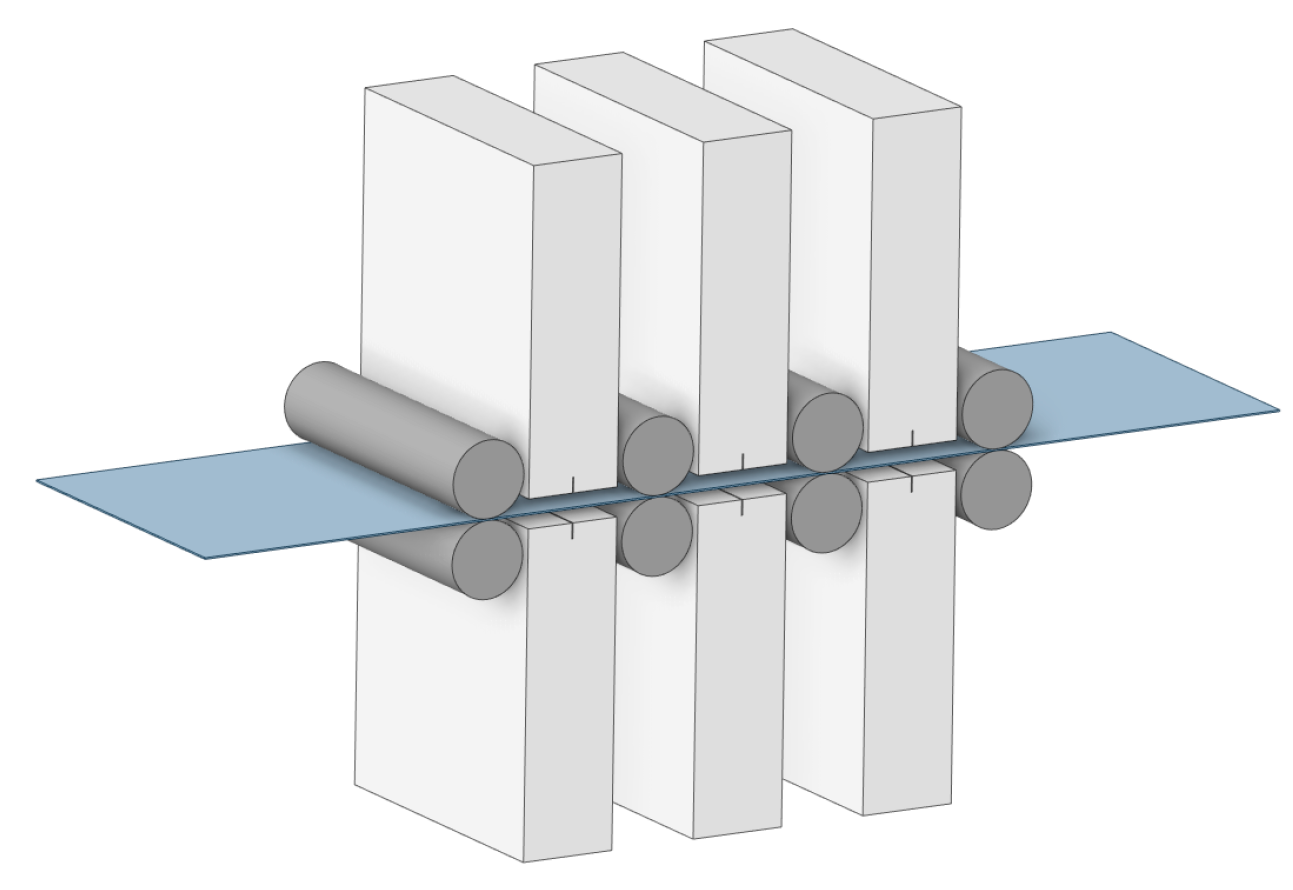
Figure 1 displays a three-dimensional model of constrained jet quenching equipment. To minimize steel sheet deformation and enhance cooling efficiency, the pressure roller spacing and the jet height are generally small. Therefore, a narrow semi-enclosed space is formed between constrained rollers, nozzles and the sheet surface. The flow behavior of the jet within this semi-enclosed space becomes a critical factor affecting wall heat transfer. In this paper, three nozzle shapes were designed: a horizontal nozzle, a unilateral stepped nozzle and a bilateral stepped nozzle. Compared to the horizontal nozzle, the stepped nozzle enlarges the local clearance from 24 mm to 64 mm at the end of the cooling zone, raising the critical interference warpage amplitude of the steel sheet head by 167%, thereby enhancing safety during the quenching process. In addition, different jet numbers and positions were designed, including the uniformly distributed single, double, triple jet and the asymmetrical single jet. The shape and local geometric parameters of nozzles and the number and position of the jet are shown in Figure 2, Table 1 and Table 2.

2.2. Turbulence Model

With good application for various jet types [27,28], Menter’s SST k-ω model [29] combines the benefits of the k-ω and k-ε models. Computational analysis of turbulence parameters (k, ω) was performed using the following equations:
( ρ k ) t + ρ u i k x i = P ˜ k β ρ k ω + x i μ + σ k μ t k x i ,
( ρ ω ) t + ( ρ u i ω ) x i = α ρ S 2 β ρ ω 2 + x i ( μ + σ ω μ t ) ω x i + 2 ( 1 F 1 ) ρ σ ω 2 1 ω k x i ω x i ,
where the coordinate direction is denoted by xi and the velocity components by ui. The fluid dynamic viscosity and density are indicated by μ and ρ. The strain rate, production limitation and blending function are indicated by the letters S, P ~ k and F1, respectively. The specific calculation details for the equation can be found in Ref. [30].
The inlet Reynolds number (Re), dimensionless velocity (U), dimensionless pressure (Cp), local Nusselt number (Nux) and average Nusselt number ( Nu ¯ ) were defined as Equations (3)–(7), respectively. The uniformity of heat transfer was evaluated using the normalized coefficient of variation of Nux (Cv), as defined in Equation (8). The discharge coefficient (Cd) was employed to evaluate the energy consumption of different nozzle configurations, as defined in Equation (9).
R e = U 0 B ν
U = u U 0
C p = p p 0 1 2 ρ 0 U 0 2
N u x = q w B ( T w T j ) k
N u ¯ = 1 L 0 L N u x d x
C v = x = 1 n ( N u x N u ¯ ) 2 n N u ¯
C d = m i n l e t B t o t a l 2 ρ ( P i n l e t P o u t l e y )
where U0, B, and qw are the average velocity at the jet inlet, hydraulic diameter and wall heat flux, respectively. The pressure roller spacing, L, is 0.24 m. Tw and Tj denote the wall and jet temperature. The mintlet, Btotal, ρ, Pinlet, and Poutlet are mass flow at inlet, total slot width, air density at inlet, total pressure at inlet and total pressure at outlet, respectively.

2.3. Boundary Conditions

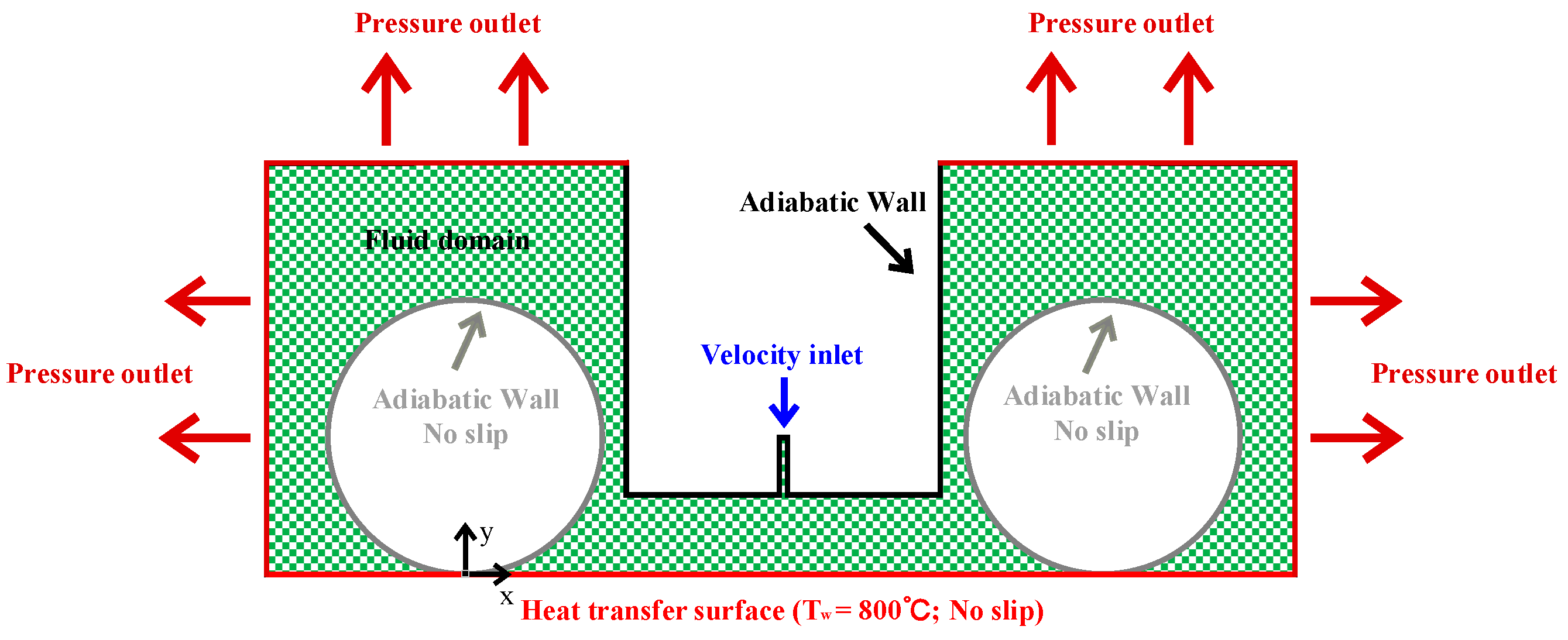
Since slot nozzles typically have aspect ratios larger than 600:1, the inaccuracy that results from interpreting them as 2D can be negligible [31,32]. Taking the local size of HS-1-C in Figure 2b as an example, a 2D computational domain of 371 × 113 mm was established, as illustrated in Figure 3. The total Reynolds number was 41,075. When multiple nozzles were used, the inlet velocity was equally distributed to the individual nozzles. The temperature, turbulence intensity and dimensionless height H/D of the jet were 26 °C, 4% and 16, respectively. To quantify the impact of boundary condition uncertainties on the thermal performance and to demonstrate the robustness of the numerical predictions, a sensitivity analysis was conducted on four models of horizontal nozzle. In practical jet impingement systems, the inlet air supply might experience slight fluctuations. Therefore, a ±5% perturbation was applied to the inlet velocity boundary condition. The uncertainty limits of the corresponding results were included as error bars or uncertainty bands in the subsequent result figures.
The outlets were defined as pressure outlet boundary conditions with a gauge pressure of 0 Pa, representing atmospheric pressure. Reverse flow was permitted at these boundaries. To account for possible entrainment of ambient air, the backflow temperature was specified as 26 °C, corresponding to the ambient temperature. The thermophysical properties of the air jet, including thermal conductivity, viscosity and specific heat capacity, were modeled as temperature-dependent polynomial functions [12].
This study aimed to evaluate the heat transfer intensity and uniformity of the jet under various configurations, which was reasonable maintaining a constant wall temperature of 800 °C. Thermal properties of Q1100 at this temperature were used for the heat transfer wall by the following parameters: density (ρ) = 7850 kg/m3, thermal conductivity (K) = 24.8 W·m−1·K−1 and specific heat capacity (Cp) = 596 J·kg−1·K−1. The sand-grain roughness modeling was applied to the sheet surface and the pressure roller wall with a roughness constant of 0.5 and the two walls were stationary. The walls of pressure roller and the nozzle served as adiabatic boundaries. The jet and ambient temperature were the same.

2.4. Grid Independence Analysis and Numerical Solution Verification

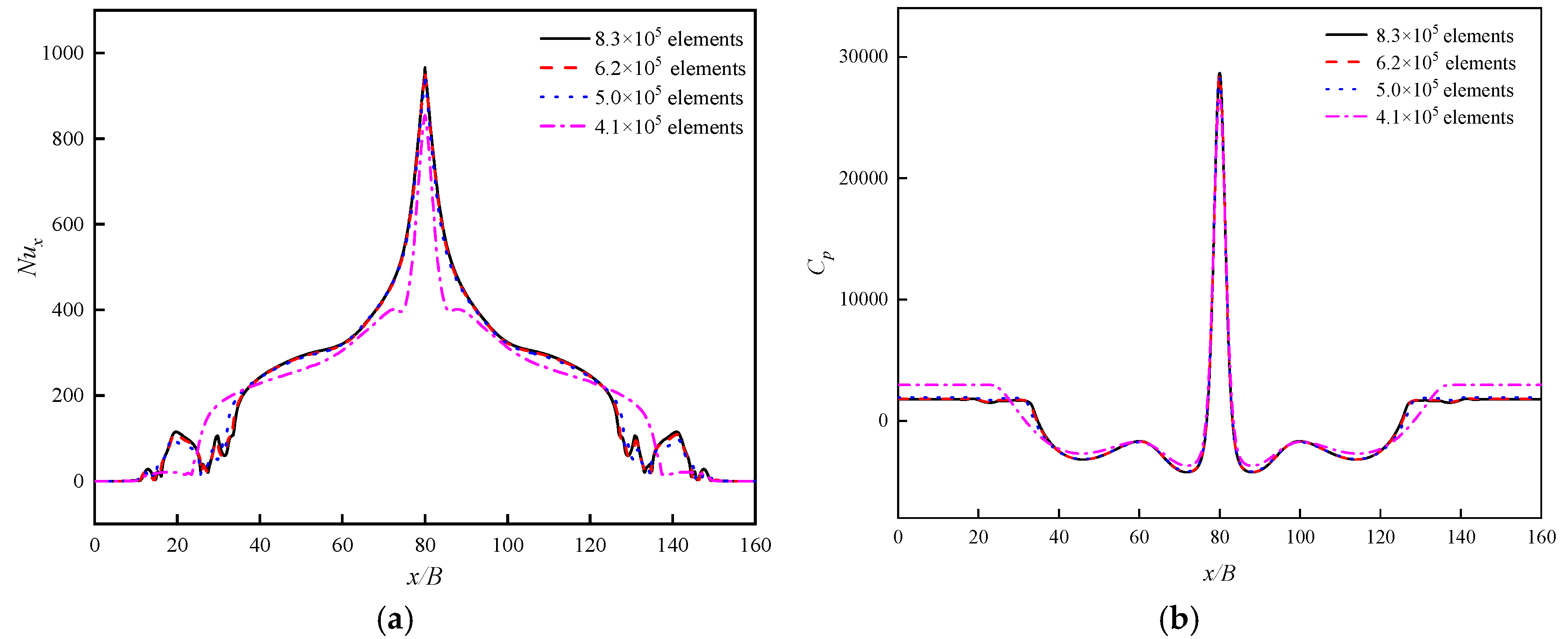
Mesh generation was conducted using the meshing module of the ANSYS Workbench 2020 R2, enabling precise control over grid size. The type of grid was mainly the quadrilateral grid. By employing 23 inflation layers with a growth rate of 1.2, the y+ values for all simulated models were strictly maintained below 1.0 across the entire impingement surface. Moreover, the expansion ratio from the wall-adjacent cells to the core flow region was controlled at 1.13, providing a smooth transition that reduced numerical diffusion and enhanced computational stability in the near-wall regions. The maximum cell skewness of the generated mesh was 0.475, while the minimum orthogonal quality was 0.423, both satisfying the criteria for high-fidelity CFD analysis. Four different grid numbers—8.3 × 10⁵, 6.2 × 10⁵, 5.0 × 10⁵ and 4.1 × 10⁵—were chosen to examine grid independence using a horizontal nozzle with a single central jet as an example. Figure 4 shows that the variation in local Nusselt number and local pressure coefficient were less than 1% when the number of grids exceeded 6.2 × 10⁵. This demonstrated that the local heat transfer and flow characteristics of the model had reached convergence. In order to ensure sufficient resolution in the formal calculation, the computational domain was discretized into 8.3 × 10⁵ elements.
The steady-state solution method was employed for numerical simulation. The gradient, energy space and pressure space were discretized using the Green–Gauss node-based method, second-order upwind scheme and second-order scheme, respectively. The coupling method was applied to solve the pressure-velocity coupling. The convergence criteria for models were as follows: normalized residuals for the energy equation below 10−6, normalized residuals for other variables below 10−4 and a net energy imbalance of less than 1% of the total heat transfer rate. This criterion improved the accuracy of wall heat transfer data while ensuring that the thermal results were not artifacts of incomplete convergence. The numerical simulations were conducted using the Pressure-Based Solver in ANSYS Fluent 2020R2, with subsequent data processing and visualization performed using Tecplot 2019R1 software.
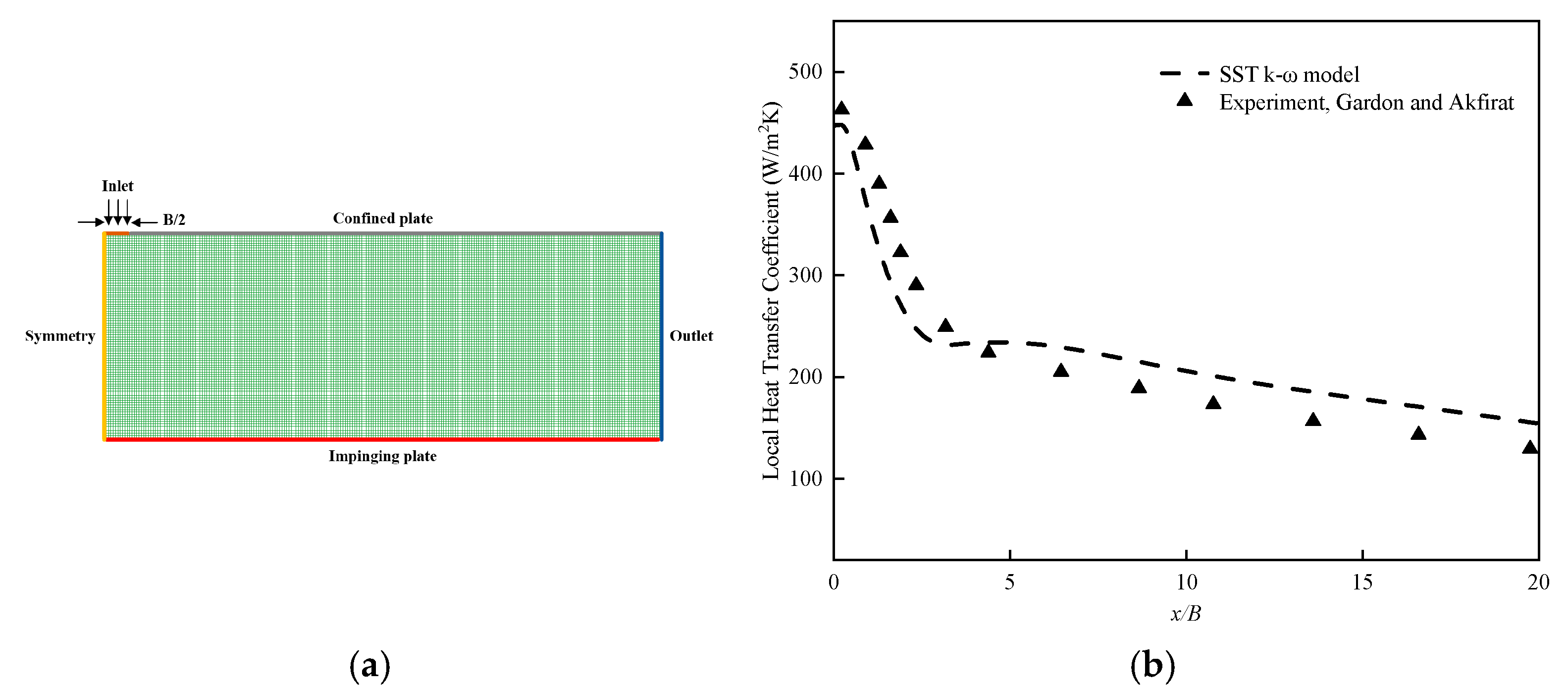
The experimental results of Gardon and Akfirat [33] were used to validate the numerical solution method in this paper. Figure 5a displays the computational domain of the numerical model under the following conditions: Reynolds number (Re) = 11,000, slot width (B) = 3.175 mm, and dimensionless jet height (H/B) = 8, wall temperature (Tw) = 50 °C and jet temperature (Tj) = 30 °C. The distribution of local heat transfer coefficients predicted by the SST k-ω model demonstrates excellent agreement with the experimental result, as illustrated in Figure 5b. Therefore, the numerical solution method in this paper was reliable.

3. Results and Discussion

3.1. Horizontal Nozzle

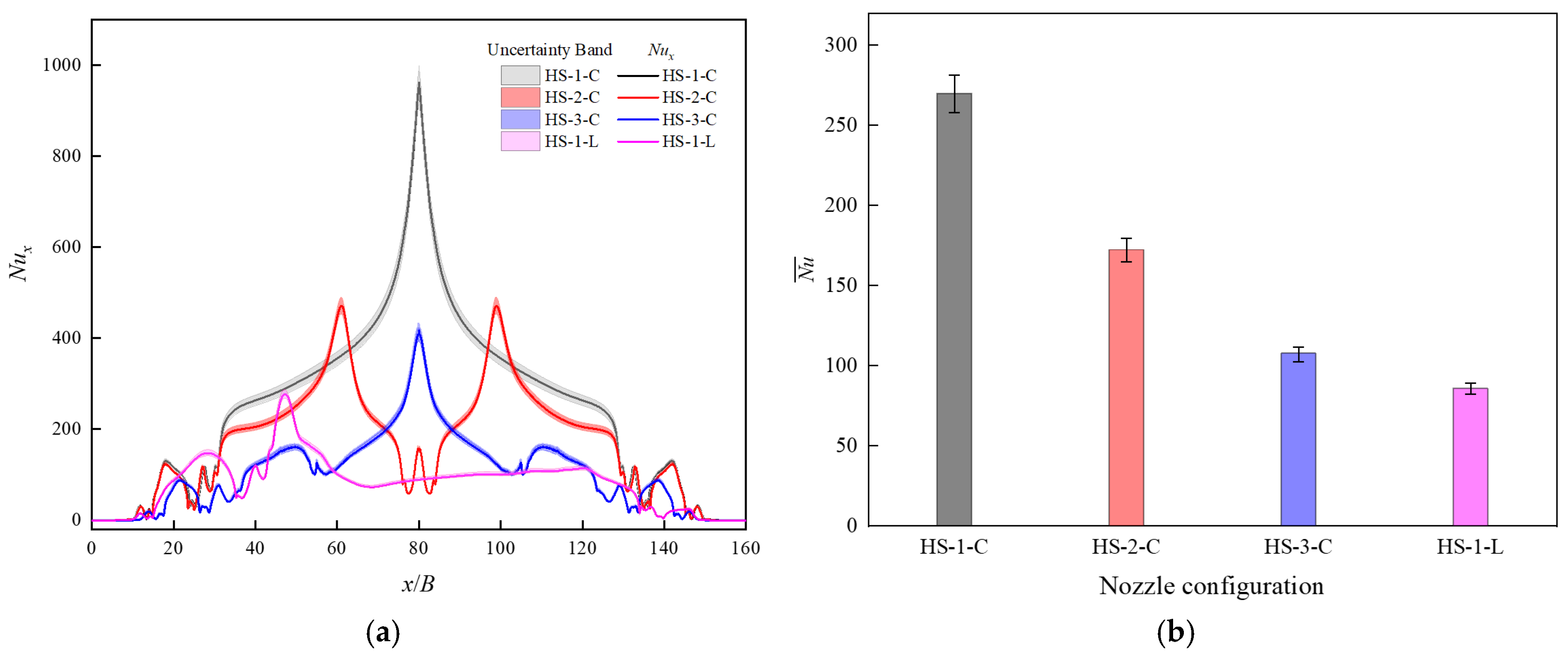
According to Figure 6, a ±5% change in the inlet velocity produced at most a ±4.5% relative change in Nux and Nu ¯ , confirming that the numerical trends discussed in this study remained highly reliable despite potential input fluctuations.
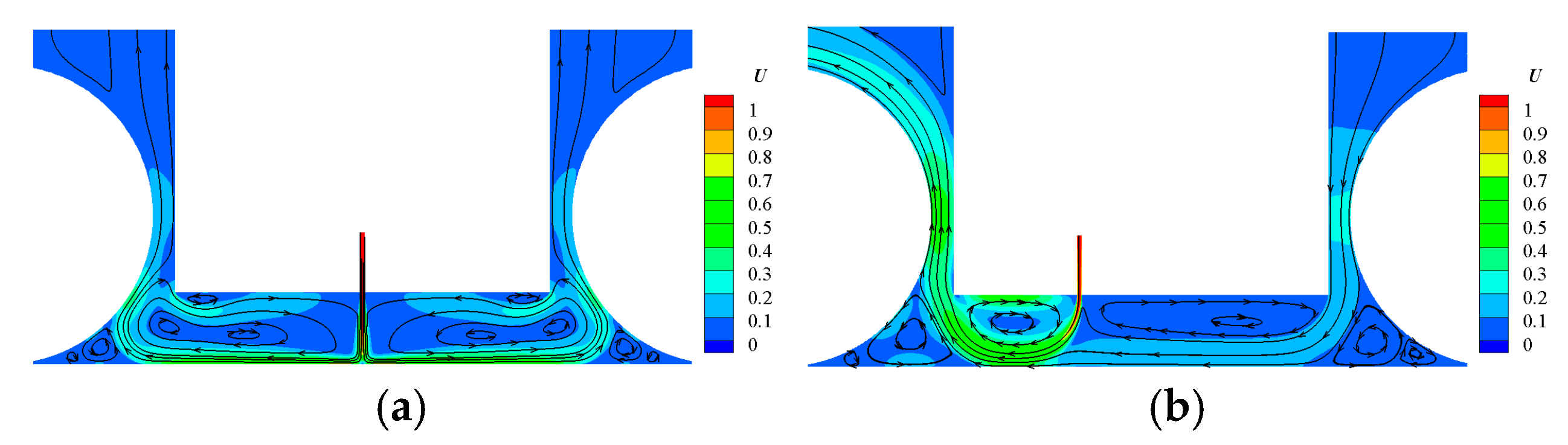
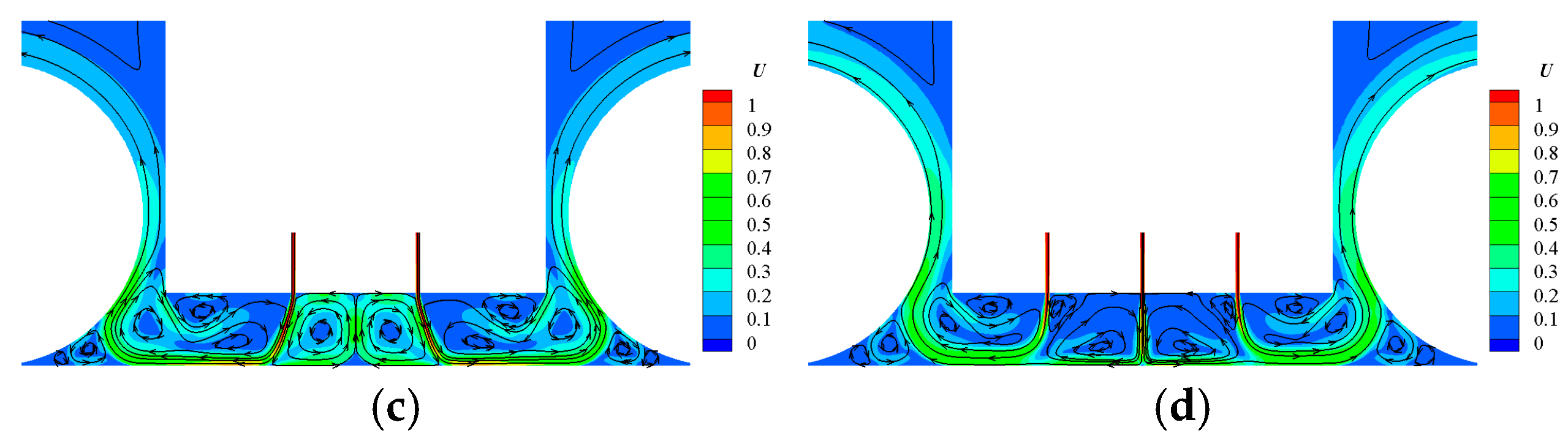
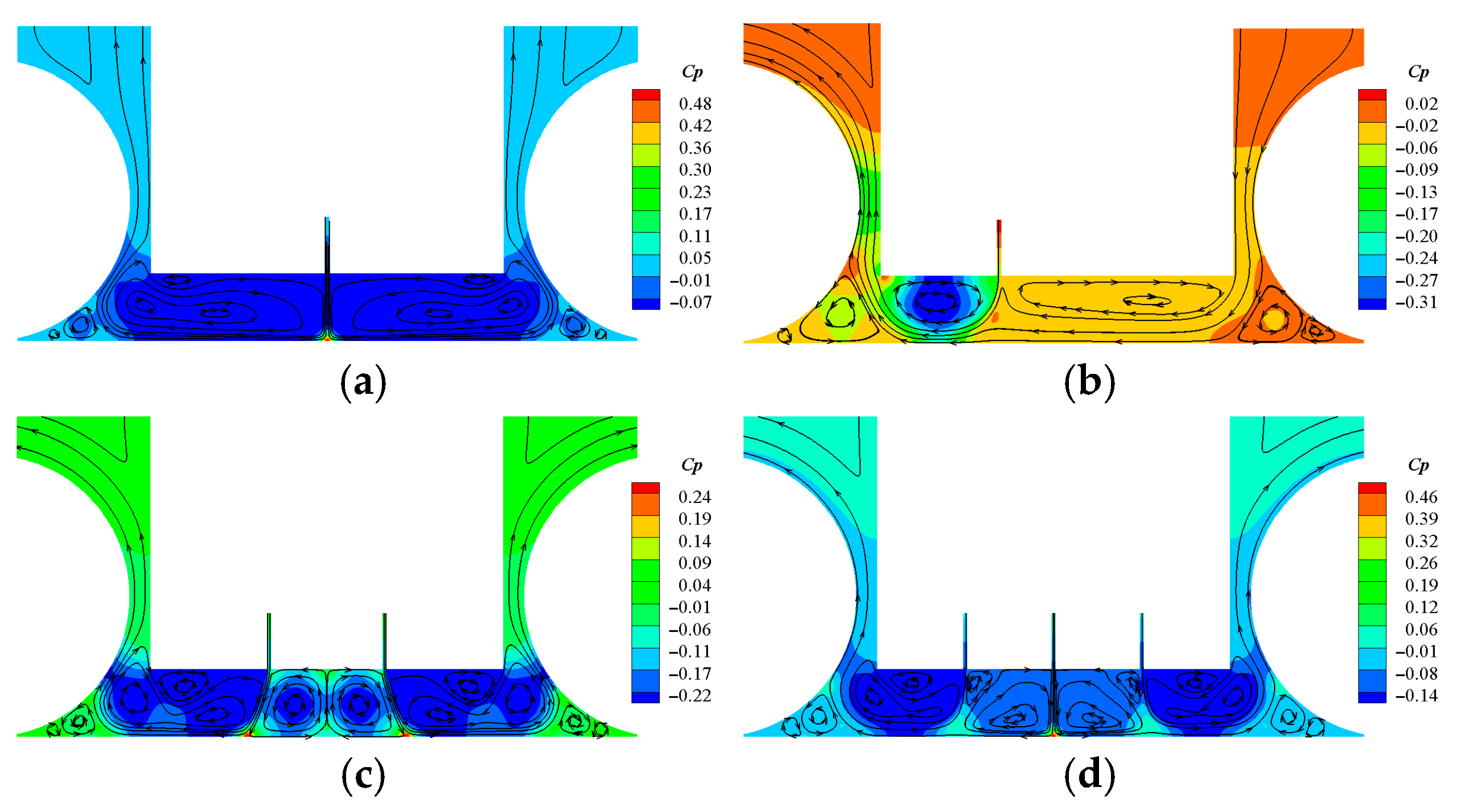
The flow-field distribution when the single jet was positioned at the center of the nozzle is shown in Figure 7a. The jet exited the nozzle with a uniform radial velocity distribution, creating shear forces that interacted with the ambient fluid. This shear caused the surrounding fluid to be entrained into the jet, leading to exchanges of mass, momentum and energy, and generating large amounts of turbulent kinetic energy in the shear layer. As the jet developed, the axial velocity gradually diminished near the target wall. The lost kinetic energy was converted into pressure energy, resulting in a stagnation zone characterized by a total velocity close to zero and high static pressure, as depicted in Figure 8a. The undeveloped boundary layer in this zone resulted in direct jet impingement on the wall, enhancing heat transfer. Consequently, it resulted in a peak Nusselt number of 961, as illustrated by the HS-1-C-Nux curve in Figure 6. In the wall jet region, local flow acceleration occurred near the stagnation point, and the interaction between the recirculating flow and the wall jet further supported the generation of significant turbulent kinetic energy. The contribution of this interaction to heat transfer was 77% of the total heat transfer. Upon the wall jet reaching the high-pressure region formed by the wall and the pressure roller, the transverse ΔCp became negative, leading to the detachment of the wall jet from the heat transfer surface. Consequently, Nux rapidly decreased from 250 to 69, as depicted in the curve HS-1-C-Nux in Figure 6.
The asymmetric position of the single jet at the nozzle generated asymmetrical spacing between the jet and outlets on both sides, resulting in notable variations in the near-wall flow field. Due to the limited amount of ambient air participating in momentum exchange near the outlet on the left side of the jet, the flow accelerated more readily in this region. A pressure difference of ΔCp = −0.11 was established across the two sides of the jet, as shown in Figure 8b. As a result, the jet turned toward the outlet and did not impinge directly on the wall, forming the flow field illustrated in Figure 7b. At this point, a wall jet formed at the edge of the main jet, and the peak Nusselt number reached only 28% of the HS-1-C. In addition, after the ambient air in the heat transfer zone was displaced by the main jet, it was supplemented by the air drawn in from the right outlet side, thereby generating a suction-driven wall jet along the wall surface. This mechanism accounts for 39% of the total heat transfer, as shown by the curve HS-1-L-Nux in Figure 6.
When the jet arrangement was the central double jet, the interaction between the jets adversely affected wall heat transfer. The wall jet generated by the inlet jet impinging on the wall merged in the region between the two jets, resulting in a fountain effect and creating a recirculation zone between the two inlet jets, as shown in Figure 7c. This phenomenon resulted in a secondary peak in the Nusselt number at the fountain position. Moreover, the main jets displayed a tendency to deflect outward toward the outlets, as shown in Figure 7c. This phenomenon can be attributed to the pressure imbalance between the jets (as shown in Figure 8c). As the two jets discharged, they continually entrained surrounding fluid. In the outer regions (toward the outlets), the entrained fluid encountered minimal resistance and was readily replenished, maintaining relatively low static pressure (Cp = −0.23). In contrast, the confined inner region between the jets exhibited upward flow due to the fountain effect, which fed fluid into the central recirculation zone. This restricted entrainment and accumulation of fluid resulted in a localized high-pressure region between the jets, with a local maximum of Cp = −0.02. Consequently, a significant transverse pressure gradient emerged across the jet cores. The pressure difference ΔCp between the inner and outer lateral sides was approximately 0.2 at the nozzle exit. This pressure imbalance, similar to the principles of the Coanda effect, caused the main jets to deflect outward toward their nearest outlets. However, the pressure difference across the two sides of the jet was reduced by approximately 55% compared to that of the single jet at the asymmetric position, allowing the jet to re-impact the wall. Two distinct peaks in the Nusselt number are observed in localized high-pressure regions, as shown by the curve HS-2-C-Nux in Figure 6. The central double jet configuration delivered a 1.5 times higher peak Nusselt number than the asymmetric single jet configuration under half the inlet flow rate, although the impingement effect was compromised by the stagnation point shifting toward the outlet side.
When the jet arrangement was the central triple jet, the interaction between the jets differed from that of the central double jet. Due to the symmetrical distribution of the jets, the interaction between the central jet and the two side jets was similar, resulting in no significant pressure difference between the two sides of the central jet. Therefore, the central jet exhibited flow-field characteristics similar to those of the central single jet, generating a local high-pressure region and a peak Nusselt number directly beneath the nozzle, as shown in Figure 7d and Figure 8d, and the curves HS-3-C-Nux in Figure 6. At the same time, the wall jet generated by the central jet impinged on the side jets, modifying their incidence angle on the heat transfer wall. The side jets did not form a local high-pressure region on the wall (as shown in Figure 8d), so heat transfer was governed primarily by the wall jet rather than by direct jet impingement. Consequently, the peak Nusselt numbers of the two side jets were only 25.5% that of the central jet.
The comparison of Nu ¯ for different jet arrangements is shown in Figure 6, following the order: central single jet > central double jet > central triple jet > asymmetric single jet. This trend can be explained by the distributions of Nux and the corresponding flow fields. Compared to the central double and triple jets, the central single jet exhibited the maximum heat transfer capacity, as all of the working fluid contributed to impingement heat transfer. This led to higher Nux values for the entire wall. In the case of multiple jets, the accumulation of exhaust gases altered the impingement angle on the wall, reducing jet penetration effectiveness and causing some jets to fail to achieve effective impingement heat transfer. For the asymmetric single jet, the incident flow contacted the wall only briefly, retained high velocity after leaving the surface, and did not fully exploit its heat transfer potential, resulting in the lowest Nu ¯ .

3.2. Unilateral Stepped Nozzle

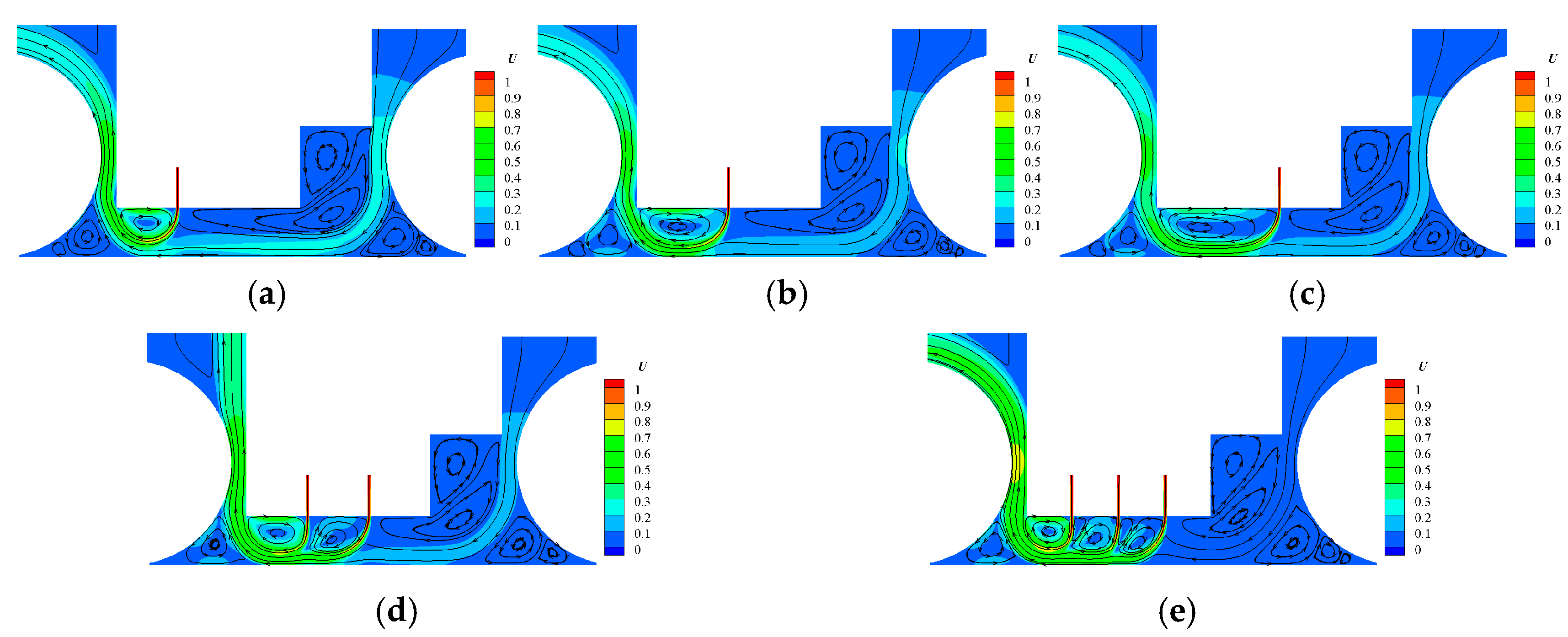
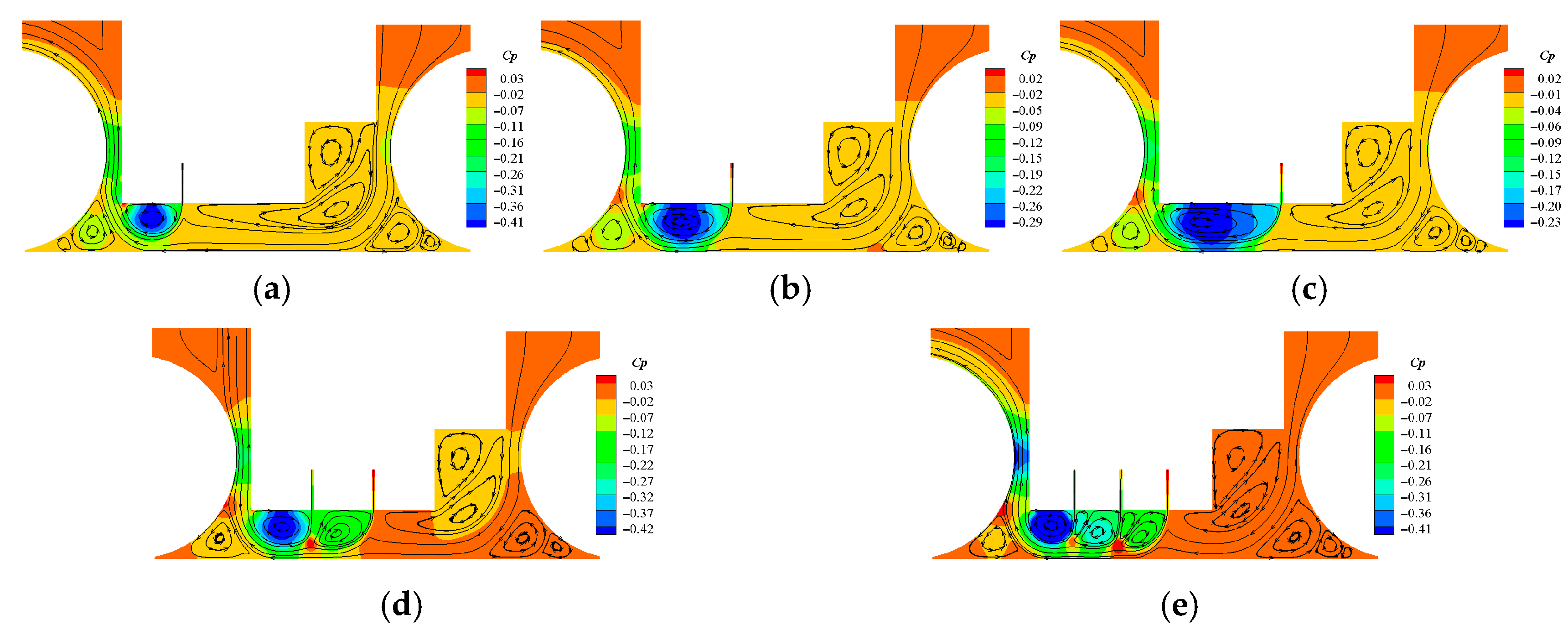
When the unilateral stepped nozzle was applied, the asymmetry of the space on either side of the jet significantly influenced its direction, as shown in Figure 9. Because the amount of air participating in momentum exchange with the jet is significantly smaller near the wall on the non-stepped side than on the stepped side, a recirculation region with relatively high velocity and low local pressure developed on the left side of the jet. The resulting pressure coefficient difference of about 0.11 between the two sides caused the jet to deflect toward the non-stepped side. Under these conditions, the heat transfer was dominated by wall-jet behavior rather than by a classical impinging jet. This is reflected in the dimensionless pressure contours, where the typical localized high-pressure impingement zone on the wall is absent, as shown in Figure 10. Meanwhile, ambient air was entrained into the heat transfer region and formed a wall jet, leading to an enhanced Nux, along the right-side wall. This region contributes approximately 6% (3-C) to 51% (1-C) of the total heat transfer, as illustrated in Figure 11.
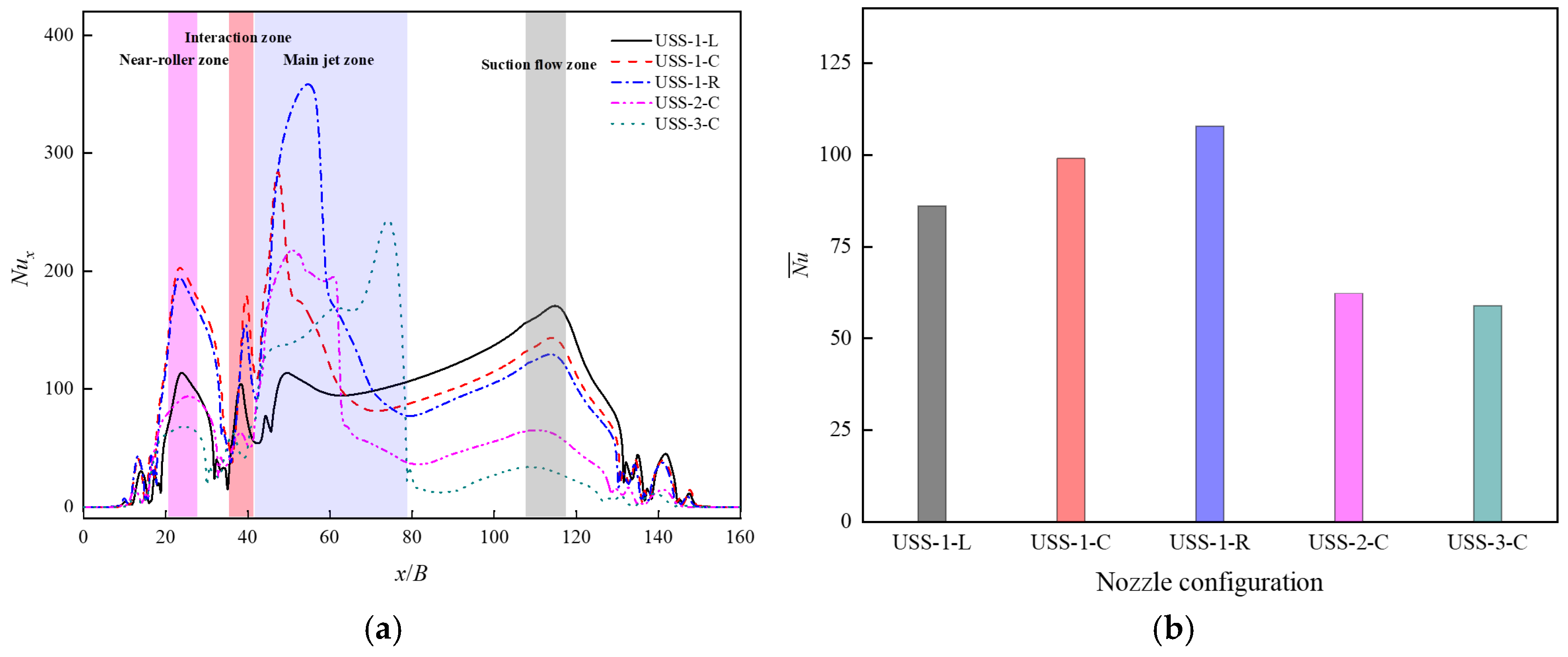
For the single jet, its position significantly influenced the flow-field distribution, as shown in Figure 9a–c. The distance from the outlet on the non-stepped side determined the extent of recirculation in that region. When the jet was located on the left, it moved toward the lower wall of the nozzle, with its edge failing to contact the heat transfer surface. At this point, the suction flow on the stepped side contributes 55% to the overall heat transfer, as illustrated in Figure 11. As the jet position moved to the right, the size of the non-stepped recirculation flow increased. The dimensionless length x/B of the wall jet formed by the main jet increased from 21.7 to 30.8, leading to a 9% increase in the Nu ¯ , as shown in Figure 11. In the double jet and triple jet configurations, the flow fields were similar, with nearly identical Nu ¯ , as shown in Figure 9d,e and Figure 11b. The pressure difference across the rightmost jet in the triple jet was reduced due to the smaller spacing and lower velocity compared with the double jet, as shown in Figure 10d,e. The impact angle of the jet with the wall was therefore larger, resulting in a higher Numax at the lower jet velocity.
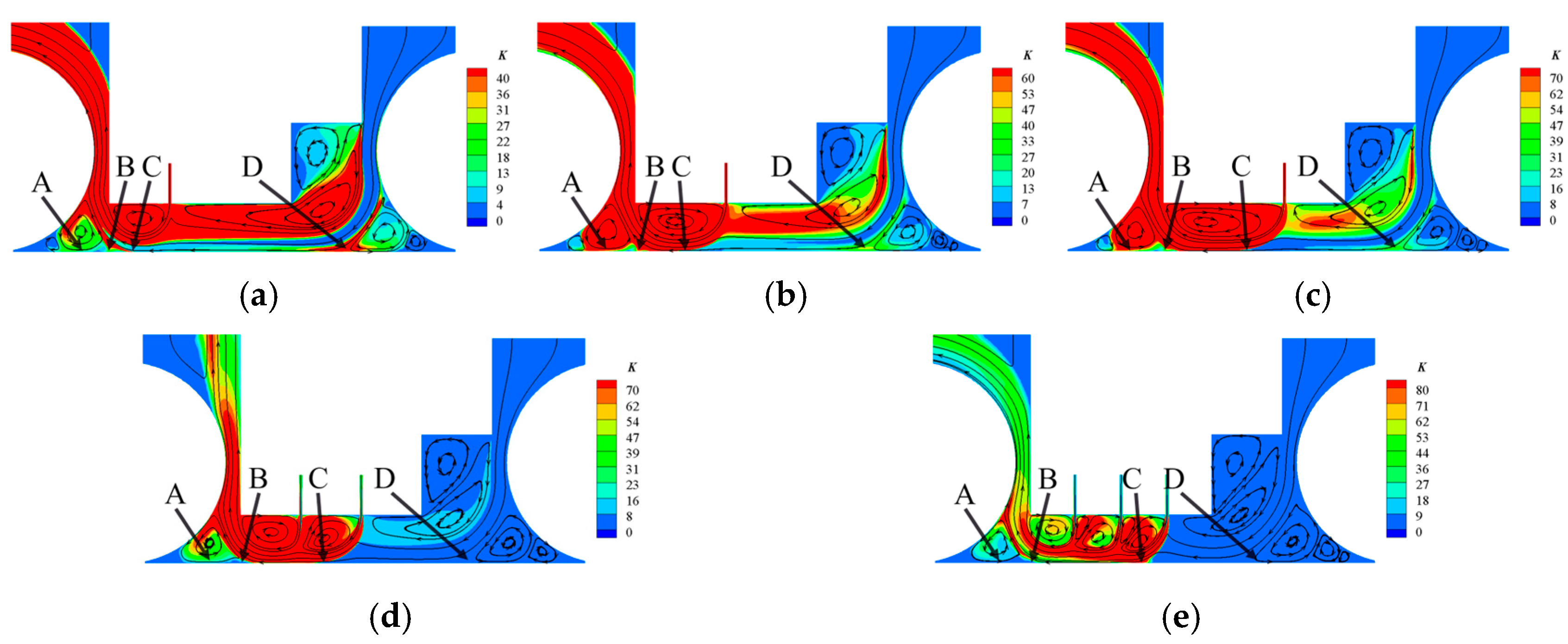
Compared to the horizontal nozzle, the unilateral stepped nozzle exhibited four distinct peak regions of Nux along the wall, as shown in Figure 11a. These peak regions corresponded to four main zones in the turbulence kinetic energy contours in Figure 12: the near-roller zone, interaction zone, main jet zone, and suction flow zone. In the near-roller zone (x < 0.05 m), the primary jet exiting the semi-closed region generated a reverse vortex in the flow. A high-turbulence kinetic energy zone formed near the wall at x = 0.03 m, leading to the appearance of a local Nux peak. In the interaction zone (x = 0.05–0.06 m), the tail of the main flow interacted with the reverse vortex from the near-roller zone near the wall, generating intense vortex activity in the shear layer. This vortex activity significantly intensified the local turbulence near the wall, thereby enhancing heat transfer and causing an increase in Nux. The main jet zone generally appeared between x = 0.06–0.12 m, where the primary jet directly impinged on the wall, reaching the highest turbulence kinetic energy. The strong turbulence in the shear layer promoted local heat transfer, forming the main Nux peak along the wall. Finally, in the suction flow zone (x = 0.16–0.18 m), although a high-turbulence kinetic energy region formed near the wall, the overall turbulence was relatively low. Only in the single-nozzle configuration was the suction flow not hindered by multi-nozzle interaction, allowing a higher Nux peak to form.
The comparison results of Nu ¯ for different configurations are shown in Figure 11b. Generally, the single jet > double jet ≈ triple jet. This was attributed to the interaction between the jets. Due to the deflection of the jet toward the non-stepped side, the stepped-side jet continuously impacted the other jets as it flowed downstream, reducing its jet penetration force and leading to a decrease of Nu ¯ .

3.3. Bilateral Stepped Nozzle

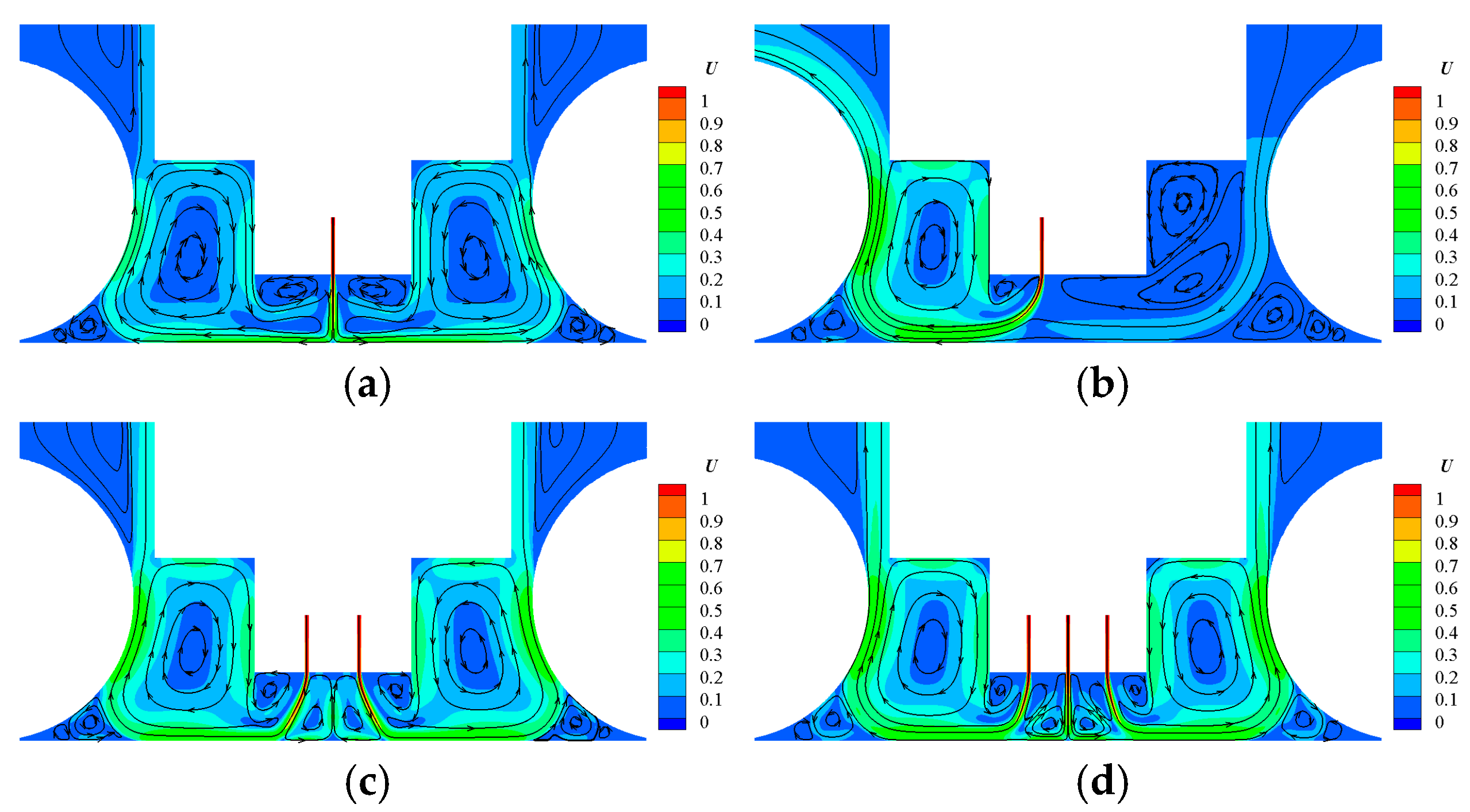
In the case of the bilateral stepped nozzle, the flow-field distribution changed significantly compared with that of the unilateral stepped nozzle. When the jet arrangements consisted of uniformly distributed single, double, and triple jets, the flow regions on both sides were symmetrically distributed. As a result, the flow-field distribution became symmetric again, similar to that observed with the same jet configurations in the horizontal nozzle, as shown in Figure 13a,c,d. The pressure on both sides of the central single jet became balanced, enabling the re-establishment of impingement jet heat transfer. The double and triple jets also induced varying degrees of impingement heat transfer. Moreover, the stepped design reduced the confinement of near-wall fluids, causing the secondary and recirculating flows to grow in size. Owing to the smaller jet spacing, the recirculating flow between the jets was further compressed.
For the asymmetric single jet, the difference in space on both sides created a pressure gradient, causing the jet to deflect toward the outlet closer to that side. However, unlike the horizontal nozzle, the stepped design did not show the Coanda effect, allowing it to form a wall jet. Under these conditions, the Numax and Nu ¯ on the heat transfer wall increased by 50% and 25%, respectively, compared to the horizontal nozzle. This suggested that the elimination of the Coanda effect was crucial for enhancing heat transfer at the wall when jet deflection occurred.
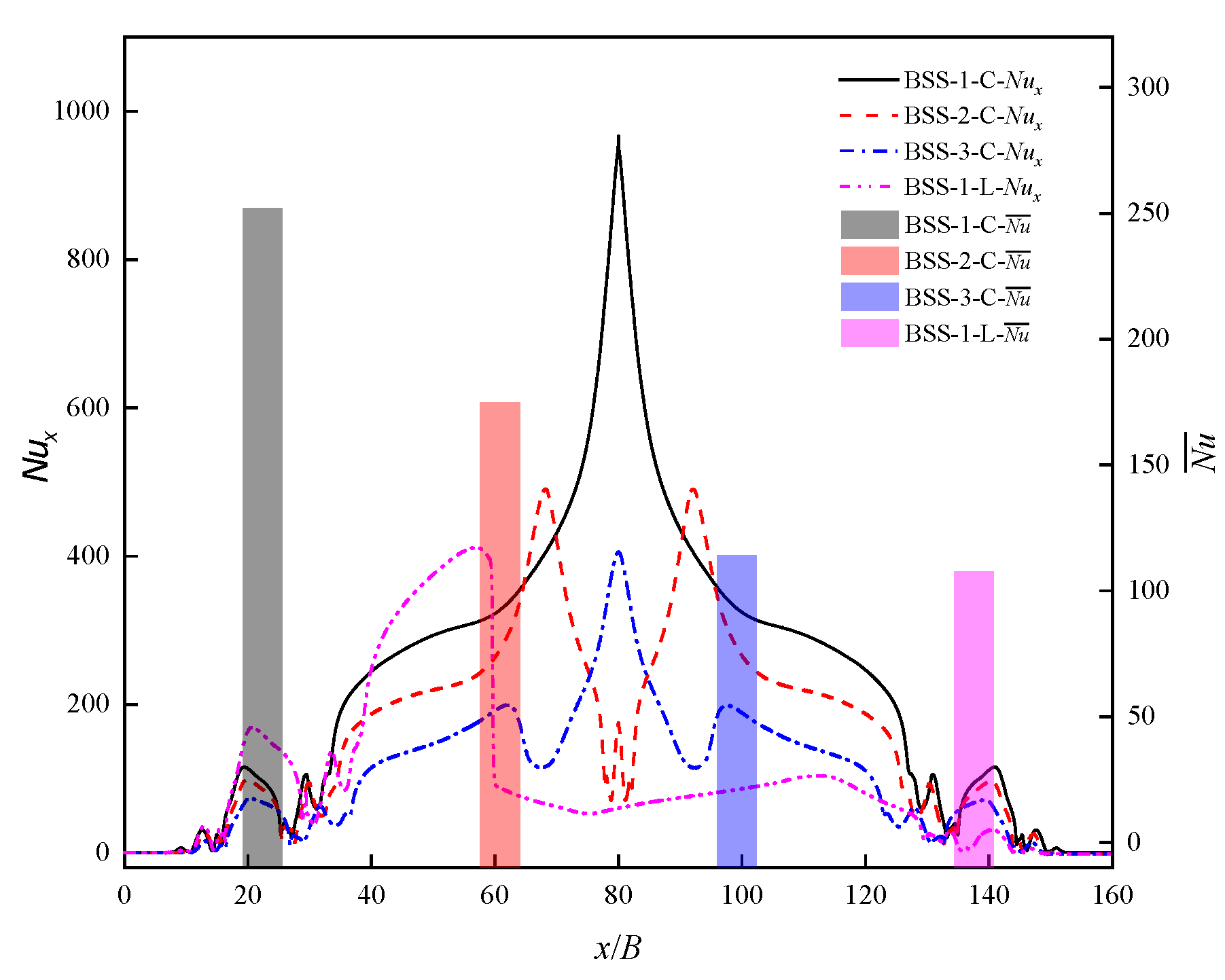
The comparison results of Nu ¯ are shown in Figure 14, where the central single jet > central double jet > central triple jet > asymmetric single jet, consistent with the results from the horizontal nozzle. It was clear that, although the shape of the nozzle had changed, as long as symmetry was maintained, the influence of the number and distribution of jets on wall heat transfer remained consistent. This provided valuable insights into the design of the nozzle’s shape and function.

3.4. Summary and Analysis of Wall Heat Transfer

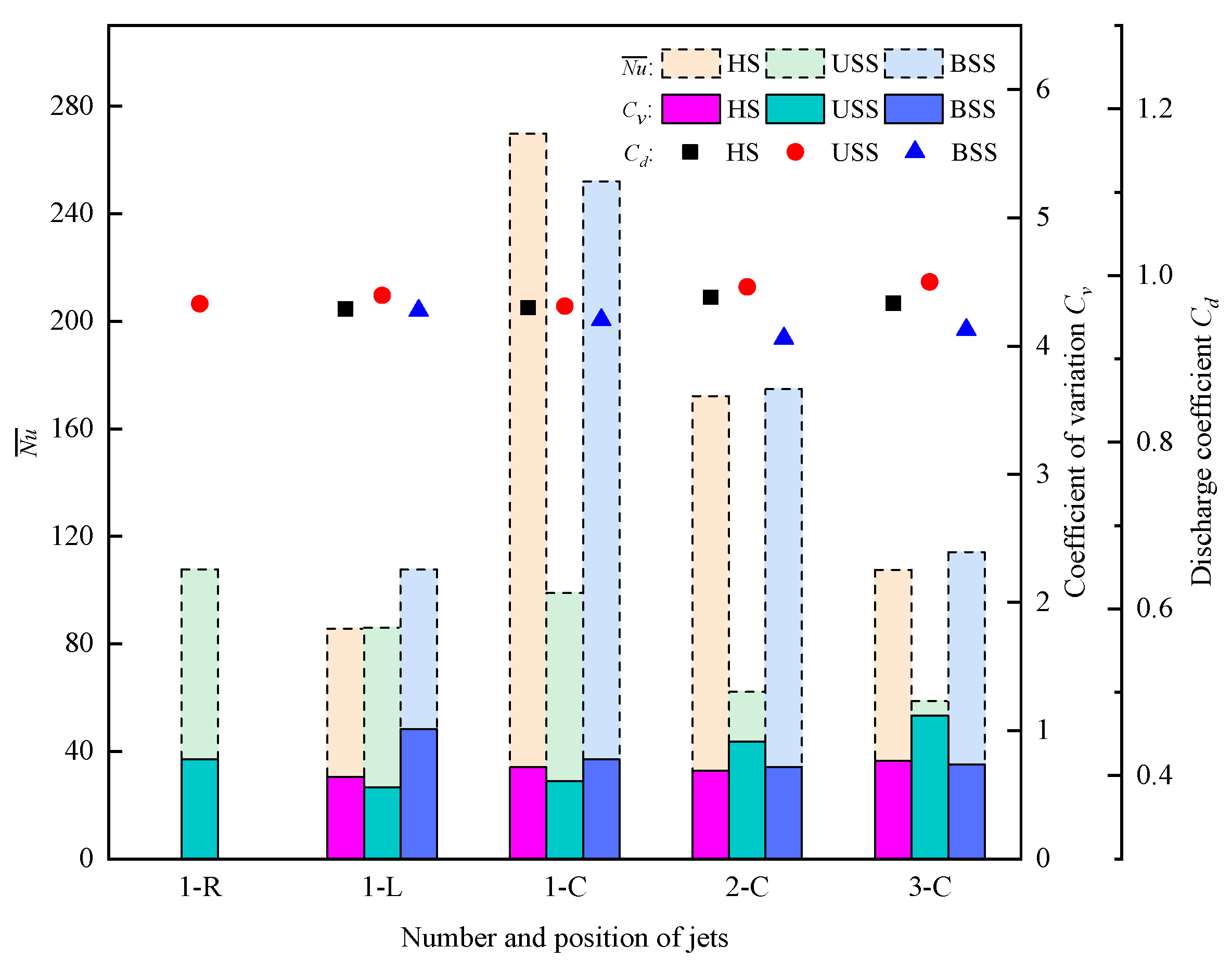
Nu ¯ , Cv and Cd are used to evaluate and compare the wall heat transfer intensity, heat transfer uniformity and energy consumption under different nozzle shapes and jet arrangements, as shown in Figure 15.
In terms of wall heat transfer intensity, the Nu ¯ values of the horizontal and bilateral stepped nozzles with central single, double and triple jet configurations were approximately 1.8–2.7 times higher than those of the unilateral stepped nozzle. In contrast, for off-center jet positions, the differences in Nu ¯ among the three nozzle geometries were minimal. This variation in heat transfer intensity arose from differences in the underlying heat transfer mechanisms. In the semi-enclosed space formed by the pressure roller, nozzle and sheet, the entrained ambient air could not be replenished in a timely manner. This limitation affected the strength of the recirculation flow and induced a pressure difference on both sides of the jet, thereby altering the jet trajectory and heat transfer mode. Only symmetric configurations could balance the pressure field, enabling effective impingement heat transfer and resulting in higher Nu ¯ . In contrast, under asymmetric configurations, heat transfer was dominated by wall jets, leading to lower Nu ¯ . These findings highlighted the critical role of nozzle design in enhancing wall heat transfer in semi-enclosed systems.
Regarding heat transfer uniformity, Cv ranged from 0.56 to 1.12 for all configurations in this study, indicating generally good uniformity. However, double and triple jets of the unilateral stepped nozzle and the asymmetric single jet of the bilateral stepped nozzle showed reduced uniformity, with Cv ranging from 0.92 to 1.12. Analysis of the flow field and Nux revealed that the deterioration in these three configurations resulted from the asymmetry induced by changes in the jet direction, as shown in Figure 9d,e and Figure 13b. In these cases, the jet flowed out to one side of the nozzle, creating a localized wall jet with high heat transfer intensity. On the non-outflow side, heat transfer was primarily driven by suction flow, producing lower heat transfer intensity. The wall heat transfer zone consisted of two parts: the main jet zone and the suction flow zone. The significant difference in Nux between these two regions led to the deterioration of wall heat transfer uniformity. The factors contributing to good uniformity differed among the other configurations. For the left, central and right single jets of the unilateral stepped nozzle, as well as the asymmetric single jet of the horizontal nozzle, the main jet also flowed toward one side of the wall; however, the affected wall area was relatively small, so Cv remained low. In the central single, double and triple jets of the horizontal and bilateral stepped nozzles, the main jet established impingement heat transfer across most of the wall area, which also resulted in a lower Cv.
Previous studies have shown that single jet configurations excel in heat transfer intensity, while multi-jet configurations offer advantages in uniformity [23]. However, in this study, the central single jet of both the horizontal and bilateral stepped nozzles achieved higher Nu ¯ and lower Cv values. This result was attributed to the small spacing between pressure rollers during the roller-constrained quenching of steel sheets. A convection heat transfer zone formed by a single jet could cover most of the heat transfer wall area, thus providing a balance between heat transfer intensity and uniformity. Moreover, the Cv values for the symmetric double and triple jets in the horizontal and bilateral stepped nozzles were nearly identical to those of the central single jet, whereas the Nu ¯ was significantly reduced. This reduction was attributed to the significant decrease in the local heat transfer coefficient, caused by the accumulation of heat transfer gas in the heat transfer zone, consistent with findings in previous studies [23].
In terms of energy consumption, the main channel flow exhibited symmetry and low resistance under the central jet configuration of the horizontal nozzle. Vortices were primarily concentrated at the bottom sides of the nozzle, with relatively confined vortex regions, resulting in low energy loss (discharge coefficient range: 0.960–0.973). In the unilateral stepped nozzle, the main flow shifted toward one side, generating localized recirculation zones. The vortices were compressed toward the edges, facilitating the main flow path. Compared with the horizontal nozzle, the unilateral stepped design reduced resistance in the primary flow, yielding higher discharge coefficients under specific conditions (discharge coefficient range: 0.963–0.992). In contrast, the central flow channel of the bilateral stepped nozzle was constricted by recirculation and boundary layer vortices from both sides, increasing flow resistance and pressure drop, thereby reducing the discharge coefficient (flow coefficient range: 0.925–0.958). Although the stepped design promoted local acceleration, the energy loss induced by vortices on both sides of the central channel was substantial, resulting in an overall decrease in efficiency.
In conclusion, the central single jet of the horizontal nozzle exhibited superior heat transfer intensity and uniformity, along with reduced energy consumption, making it the most favorable configuration in this study. The central single jet of the bilateral stepped nozzle not only enhanced heat transfer intensity and uniformity but also offered greater safety, and this configuration was identified as the second most favorable arrangement in the study. In contrast, the heat transfer intensity and uniformity of the central triple jet of the unilateral stepped nozzle were the lowest, rendering it the least efficient configuration in this study.

4. Conclusions

In this paper, a CFD model for constrained jet quenching was developed to investigate the effects of nozzle shapes and jet arrangements on flow structure, wall heat transfer intensity and wall heat transfer uniformity. The major conclusions were as follows:
  • Symmetric geometric design (including the symmetric nozzle shape and jet arrangement) was a necessary condition for achieving impingement heat transfer in semi-enclosed space. In contrast, asymmetric geometric configuration (including the asymmetric nozzle shape or jet arrangement) increased the pressure difference between both sides of the jet, causing heat transfer to occur solely through wall jets.
  • Under the symmetric geometric design condition (including the symmetric nozzle shape and jet arrangement), the wall heat transfer intensity and uniformity were minimally affected by the nozzle shape. Therefore, when designing the nozzle to achieve specific functions, as long as the overall shape remained symmetrical, the nozzle design had little impact on the wall heat transfer.
  • Under the S/B (ratio of slot spacing to slot width) condition adopted in this paper, the use of multiple jets did not lead to a significant improvement in heat transfer uniformity, regardless of whether the overall geometric design was symmetric or asymmetric, and it tended to reduce the overall heat transfer intensity.
  • The central single jet of the horizontal nozzle exhibited excellent heat transfer intensity and uniformity, along with lower energy consumption, making it the optimal configuration in this study. The central single jet of the bilateral stepped nozzle not only demonstrated good heat transfer intensity and uniformity but also offered greater safety, which was identified as the second-best configuration in the study.

Author Contributions

Conceptualization, Y.Y.; methodology, Y.Y.; software, Y.Y. and Y.H.; validation, Y.Y. and Y.H.; formal analysis, Y.Y. and Y.H.; investigation, Y.Y. and Y.H.; resources, T.F.; data curation, C.G. and G.L.; writing—original draft preparation, Y.Y. and T.F.; writing—review and editing, Y.Y., T.F., Y.H. and C.G.; visualization, Y.Y. and C.G.; supervision, T.F., C.G. and G.L.; project administration, T.F., C.G. and G.L.; funding acquisition, T.F. and G.L. All authors have read and agreed to the published version of the manuscript.

Funding

This work were supported by the National Youth Talent Project of China (QNBJ-2022-02) and the Youth Top notch Talent Project of Revitalizing Liaoning Elite Talent Program (XLYC2007039).

Data Availability Statement

The original contributions presented in this study are included in the article. Further inquiries can be directed to the corresponding author.

Conflicts of Interest

The authors declare no conflict of interest.

References

  1. Zhao, T.; Liang, H. Product lightweight research in green design. IOP Conf. Ser. Earth Environ. Sci. 2020, 463, 12083. [Google Scholar] [CrossRef]
  2. Wang, J.; Li, Y.; Hu, G.; Yang, M. Lightweight Research in Engineering: A Review. Appl. Sci. 2019, 9, 5322. [Google Scholar] [CrossRef]
  3. Zhang, W.; Xu, J. Advanced lightweight materials for Automobiles: A review. Mater. Des. 2022, 221, 110994. [Google Scholar] [CrossRef]
  4. Maraveas, C.; Gernay, T.; Franssen, J. Buckling of steel plates at elevated temperatures: Theory of perfect plates vs. Finite Element Analysis. In Proceedings of the 2nd International Conference on Structural Safety Under Fire and Blast Loading—CONFAB, London, UK, 10 September 2017. [Google Scholar]
  5. Samuel, A.; Prabhu, K.N. Residual Stress and Distortion during Quench Hardening of Steels: A Review. J. Mater. Eng. Perform. 2022, 31, 5161–5188. [Google Scholar] [CrossRef]
  6. Mayrhofer, M.; Koller, M.; Seemann, P.; Prieler, R.; Hochenauer, C. CFD investigation of a vertical annealing furnace for stainless steel and non-ferrous alloys strips—A comparative study on air-staged & MILD combustion. Therm. Sci. Eng. Prog. 2022, 28, 101056. [Google Scholar]
  7. Jahromi, H.B.; Kowsary, F. A comprehensive parametric study and multi-objective optimization of turbulent jet array impingement for uniform cooling of gas turbine blades with minimized compression power. Int. J. Therm. Sci. 2024, 201, 109035. [Google Scholar] [CrossRef]
  8. Gao, R.; Yue, G.; Zhang, Y.; Lin, H.; Li, M. Analysis of the influence of deflector shape on heat transfer rate in glass tempering process. Therm. Sci. Eng. Prog. 2023, 46, 102179. [Google Scholar] [CrossRef]
  9. Dai, J.; Diao, Y.F. Numerical analysis of transient coupled heat and moisture transfer in textile drying with porous relative impact jet. Appl. Therm. Eng. 2022, 212, 118613. [Google Scholar] [CrossRef]
  10. Ye, Y.; Fu, T.; Liu, G.; Wang, G. Numerical Study on the Heat Transfer of Confined Air-Jet Quenching of Steel Sheets. Metals 2024, 14, 377. [Google Scholar] [CrossRef]
  11. Reodikar, S.A.; Meena, H.C.; Vinze, R.; Prabhu, S.V. Influence of the orifice shape on the local heat transfer distribution and axis switching by compressible jets impinging on flat surface. Int. J. Therm. Sci. 2016, 104, 208–224. [Google Scholar] [CrossRef]
  12. Wen, Z.; He, Y.; Cao, X.; Yan, C. Numerical study of impinging jets heat transfer with different nozzle geometries and arrangements for a ground fast cooling simulation device. Int. J. Heat Mass Transf. 2016, 95, 321–335. [Google Scholar] [CrossRef]
  13. Sarkar, A.; Singh, R.P. Spatial variation of convective heat transfer coefficient in air impingement applications. J. Food Sci. 2003, 68, 910–916. [Google Scholar] [CrossRef]
  14. Yeranee, K.; Wae-hayee, M.; Nuntadusit, C. Flow and heat transfer of impinging jet array associated with entrained air ducts. Appl. Therm. Eng. 2020, 178, 115541. [Google Scholar] [CrossRef]
  15. Kito, M.; Matsumoto, T.; Shakouchi, T.; Tsujimoto, K.; Ando, T. Heat transfer characteristics for inclined twin-jet impingement. WIT Trans. Eng. Sci. 2012, 75, 169–180. [Google Scholar]
  16. Xing, Y.; Spring, S.; Weigand, B. Experimental and numerical investigation of heat transfer characteristics of inline and staggered arrays of impinging jets. ASME J. Heat Mass Transf. 2010, 132, 092201. [Google Scholar] [CrossRef]
  17. Pachpute, S.; Premachandran, B. Turbulent multi-jet impingement cooling of a heated circular cylinder. Int. J. Therm. Sci. 2020, 148, 106167. [Google Scholar] [CrossRef]
  18. Chen, L.; Brakmann, R.G.A.; Weigand, B.; Crawford, M.; Poser, R. Detailed heat transfer investigation of an impingement jet array with large jet-to-jet distance. Int. J. Therm. Sci. 2019, 146, 106058. [Google Scholar] [CrossRef]
  19. Yong, S.; Jing-zhou, Z.; Gong-nan, X. Convective heat transfer for multiple rows of impinging air jets with small jet-to-jet spacing in a semi-confined channel. Int. J. Heat Mass Transf. 2015, 86, 832–842. [Google Scholar] [CrossRef]
  20. San, J.; Lai, M. Optimum jet-to-jet spacing of heat transfer for staggered arrays of impinging air jets. Int. J. Heat Mass Transf. 2001, 44, 3997–4007. [Google Scholar] [CrossRef]
  21. Peng, M.; Chen, L.; Ji, W.; Tao, W. Numerical study on flow and heat transfer in a multi-jet microchannel heat sink. Int. J. Heat Mass Transf. 2020, 157, 119982. [Google Scholar] [CrossRef]
  22. Zhang, Y.; Wang, S.; Ding, P. Effects of channel shape on the cooling performance of hybrid micro-channel and slot-jet module. Int. J. Heat Mass Transf. 2017, 113, 295–309. [Google Scholar] [CrossRef]
  23. Li, Y.; Fan, H.; Jiu, Y. Investigation of a hybrid two-layered channel-jet heat sink for air cooling. Int. J. Therm. Sci. 2024, 203, 109121. [Google Scholar] [CrossRef]
  24. Fan, J.; Lee, S.; Kang, S.; Cho, J.; Cho, Y.; Yeom, E. Design of drain hole for household refrigerator fan module based on experiments and CFD simulation. Appl. Therm. Eng. 2023, 219, 119567. [Google Scholar] [CrossRef]
  25. Cademartori, S.; Cravero, C.; Marini, M.; Marsano, D. CFD Simulation of the Slot Jet Impingement Heat Transfer Process and Application to a Temperature Control System for Galvanizing Line of Metal Band. Appl. Sci. 2021, 11, 1149. [Google Scholar] [CrossRef]
  26. Dong, Z.; Liu, P.; Xiao, H.; Liu, Z.; Liu, W. A study on heat transfer enhancement for solar air heaters with ripple surface. Renew. Energy 2021, 172, 477–487. [Google Scholar] [CrossRef]
  27. Pulat, E.; Beyazoglu, E. Computational investigation of confined wall inclination effects on impinging jet fluid flow and heat transfer. Int. J. Therm. Sci. 2021, 163, 106749. [Google Scholar] [CrossRef]
  28. Ahmed, Z.U.; Al-Abdeli, Y.M.; Guzzomi, F.G. Flow field and thermal behaviour in swirling and non-swirling turbulent impinging jets. Int. J. Therm. Sci. 2017, 114, 241–256. [Google Scholar] [CrossRef]
  29. Menter, F.R. Two-equation eddy-viscosity turbulence models for engineering applications. AIAA J. 1994, 32, 1598–1605. [Google Scholar] [CrossRef]
  30. Zhang, R.; Li, Z.; Zhang, Y.; Chen, D.; Yuan, G. Numerical investigation of jet layout for annular jet cooling on a steel tube. Appl. Therm. Eng. 2022, 213, 118825. [Google Scholar] [CrossRef]
  31. Hajishafiee, A.; Kadiric, A.; Ioannides, S.; Dini, D. A coupled finite-volume CFD solver for two-dimensional elasto-hydrodynamic lubrication problems with particular application to rolling element bearings. Tribol. Int. 2017, 109, 258–273. [Google Scholar] [CrossRef]
  32. Ozmen, Y.; Kinay, H. Investigation of flow and heat transfer characteristics of impinging slot jets confined with inclined plates. Heat Mass Transf. 2022, 59, 509–534. [Google Scholar] [CrossRef]
  33. Gardon, R.; Akfirat, J.C. Heat transfer characteristics of impinging two-dimensional air jets. J. Heat Transf. 1966, 88, 101–107. [Google Scholar] [CrossRef]
Figure 1. Three-dimensional model of constrained jet quenching equipment.
Metals 16 00452 g001
Figure 2. Two-dimensional local dimensions of different nozzle shapes and jet arrangements. The local dimensions of A–F and H are shown in Table 2. (a) Horizontal shape (HS); (b) unilateral stepped shape (USS); (c) bilateral stepped shape (BSS).
Metals 16 00452 g002
Figure 3. Computational domain (taking horizontal nozzle with central single jet as an example).
Metals 16 00452 g003
Figure 4. Grid independence analysis (taking the bilateral stepped nozzle with central single jet as an example). (a) Local Nusselt number; (b) local pressure coefficient.
Metals 16 00452 g004
Figure 5. Validation of numerical solution method. (a) Computational domain of validation model; (b) comparison between simulated and experimental data.
Metals 16 00452 g005
Figure 6. Nux and Nu ¯ at different jet arrangements of the horizontal nozzle (including uncertainty limits). (a) Nux; (b) Nu ¯ .
Metals 16 00452 g006
Figure 7. Stream traces and velocity contours at various jet arrangements of the horizontal nozzle. (a) Central single jet; (b) asymmetric single jet; (c) central double jet; (d) central triple jet.
Metals 16 00452 g007aMetals 16 00452 g007b
Figure 8. Stream traces and pressure contours at various jet arrangements of the horizontal nozzle. (a) Central single jet; (b) asymmetric single jet; (c) central double jet; (d) central triple jet.
Metals 16 00452 g008
Figure 9. Stream traces and velocity contours at various jet arrangements of the unilateral stepped nozzle. (a) Left single jet; (b) central single jet; (c) right single jet; (d) central double jet; (e) central triple jet.
Metals 16 00452 g009
Figure 10. Stream traces and pressure contours at various jet arrangements of the unilateral stepped nozzle. (a) Left single jet; (b) central single jet; (c) right single jet; (d) central double jet; (e) central triple jet.
Metals 16 00452 g010
Figure 11. Nux and Nu ¯ at different jet arrangements of the unilateral stepped nozzle. (a) Nux; (b) Nu ¯ .
Metals 16 00452 g011
Figure 12. Stream traces and turbulence kinetic energy contours at various jet arrangements of the unilateral stepped nozzle. Region Marking: A: near-roller zone; B: interaction zone; C: main jet zone; D: suction flow zone. (a) Left single jet; (b) central single jet; (c) right single jet; (d) central double jet; (e) central triple jet.
Metals 16 00452 g012
Figure 13. Stream traces and velocity contours at various jet arrangements of the bilateral stepped nozzle. (a) Central single jet; (b) asymmetric single jet; (c) central double jet; (d) central triple jet.
Metals 16 00452 g013
Figure 14. Nux and Nu ¯ at different jet arrangements of the bilateral stepped nozzle.
Metals 16 00452 g014
Figure 15. Nu ¯ , Cv and Cd for different nozzle shapes and jet arrangements. Note on nozzle shape: HS: horizontal shape; USS: unilateral stepped shape; BSS: bilateral stepped shape. Note on number and position of jets: 1-R: right single jet; 1-L: left single jet; 1-C: central single jet; 2-C: central double jets; 3-C: central triple jets.
Metals 16 00452 g015
Table 1. Number and position of the jet at different nozzle shapes.
Nozzle ShapeNo.Number and Position of the Jet
1/41/31/22/33/4
HS, BSS
(symmetry)
1-L
1-C
2-C
3-C
USS
(asymmetry)
1-L
1-C
1-R
2-C
3-C
Note: L—left side of nozzle; C—center of nozzle; R—right side of nozzle; the jet position is determined by the proportion of the distance from the jet centerline to the left edge of the nozzle to the length of the nozzle’s lower edge. The checkmark indicates the position of the jet flow. The naming rule follows the order of nozzle shape, jet number and jet position. For example, the central triple jets of horizontal nozzle was HS-3-C.
Table 2. Local geometric parameters.
A, mmB, mmC, mmD, mmE, mmF, mmH, mm
1251.57.5100354024
Disclaimer/Publisher’s Note: The statements, opinions and data contained in all publications are solely those of the individual author(s) and contributor(s) and not of MDPI and/or the editor(s). MDPI and/or the editor(s) disclaim responsibility for any injury to people or property resulting from any ideas, methods, instructions or products referred to in the content.