Review

Effect of Post-Weld Grinding on the Fatigue Strength of Thin-Walled RHS High-Strength Steel T-Joints Under Different Load Stress Ratios


1
Plasser und Theurer Export von Bahnbaumaschinen, Gesellschaft GmbH, 4021 Linz, Austria
2
Christian Doppler Laboratory for Structural Integrity in Rail Vehicle Design, Institute of Structural Durability and Railway Technology, Graz University of Technology, 8010 Graz, Austria
3
GSI Gesellschaft für Schweißtechnik International GmbH, Branch SLV Duisburg, 47057 Duisburg, Germany
*
Author to whom correspondence should be addressed.
Metals 2026, 16(4), 431; https://doi.org/10.3390/met16040431
Submission received: 13 February 2026 / Revised: 7 April 2026 / Accepted: 8 April 2026 / Published: 16 April 2026
(This article belongs to the Special Issue Fracture and Fatigue of Advanced Metallic Materials)

Abstract

In this work, the focus is laid on the mean stress effect on the fatigue strength of thin-walled rectangular hollow section T-joints made of high-strength steel S960 M x-treme. The specimens are cyclically tested at a stress ratio of R = −1 and R = 0.1 in both as-welded and ground (weld-profiled) conditions. In the context of nominal stress evaluations, the ground specimens demonstrate a distinct advantage in contrast to the as-welded condition, exhibiting an increase of +33% at R = 0.1 and +16% at R = −1. Based on the experimental results, a corresponding Haigh diagram is evaluated, revealing a notable difference in the mean stress sensitivity, with M1 = 0.58 for the as-welded condition and M1 = 0.39 for the ground condition. Finally, mean stress factors are presented, enabling feasible application in the fatigue design of welded and post-treated structures. The resulting factors are compared with values from the literature for steel applications, showing an increased mean stress influence using high-strength steel as the base material.

1. Introduction

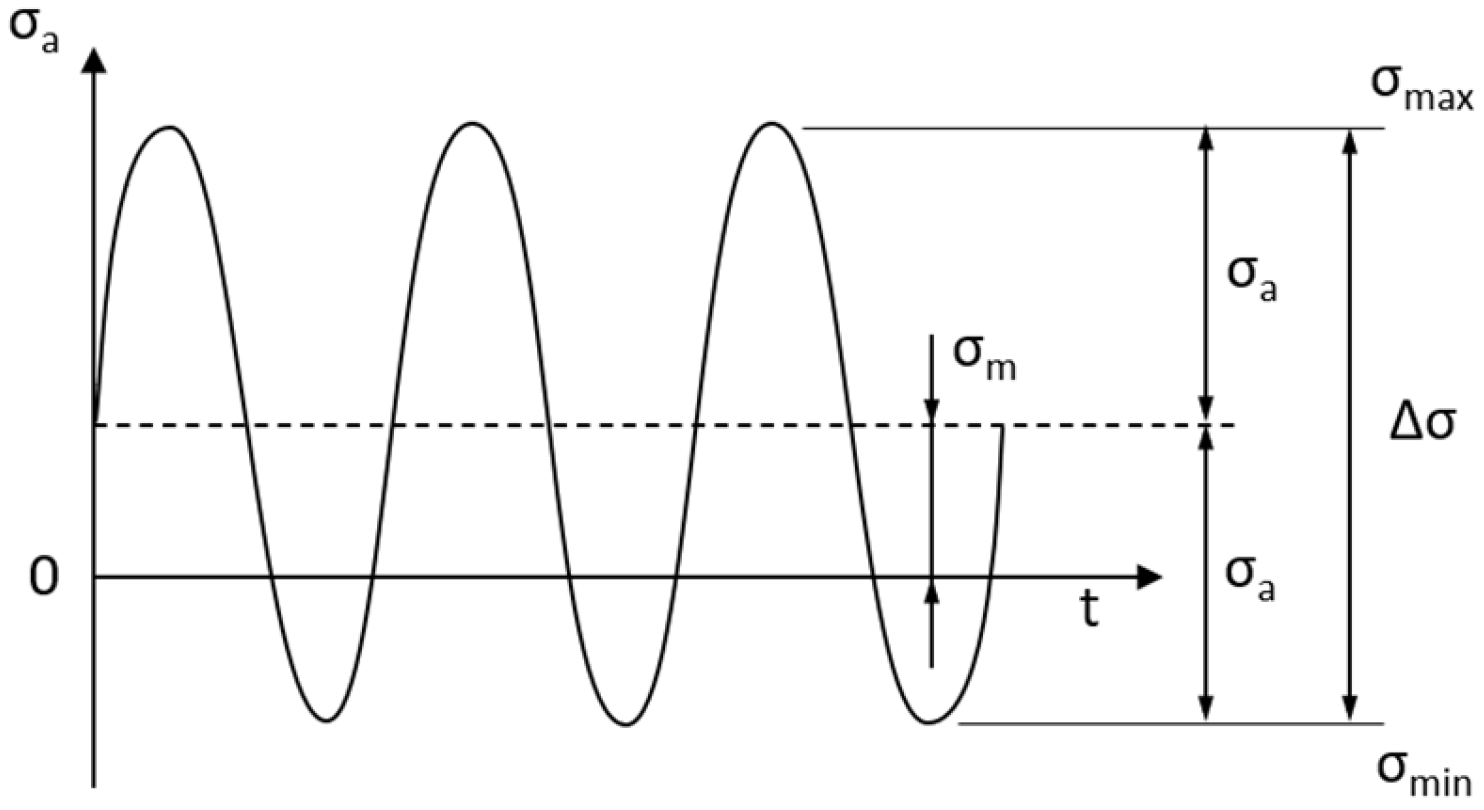
Cyclically loaded structures commonly experience different types of stress at specific stress ratios. When assessing fatigue behaviour, stresses can be described in terms of compressive, alternating and tensile stresses [1]. The analyses in this paper are based on standardised formulas used in standards like the IIW recommendations [2] and the DVS1612 [3]. In Figure 1, the relationship between the mean stress σm and the stress range Δσ = 2σa is outlined. Further, the stress ratio R can be calculated in accordance with Equation (1).
The present work focuses on an application-oriented and practical–realistic T-joint-shaped tube sample that is made of high-strength fine-grained structural steel S960, which is tested under specific cyclic loads. Due to increasing requirements, whether in terms of stress or weight reduction (in regard, for instance, to sustainability reasons), high-strength steels are becoming more and more important. This kind of structural detail is applied, for instance, in the fabrication chassis frames and cabin constructions for rail vehicle structures. Therefore, high-strength steel materials are analysed in more detail below.
R = σ m i n σ m a x = σ m σ a   σ m + σ a
The motivation consists of evaluating the differences in the effect of mean stress between an untreated as-welded condition (AW) and a post-treated ground state using weld-profiling with the aid of an angle grinder (GR). Nevertheless, there are several studies that have already focused on the mean stress effect [4,5,6]. This study aims to make a significant contribution to this knowledge, as the analysis of the mean stress effect has so far been based largely on the use of data at 2 × 10⁶ cycles.
It is necessary to use post-treatment processes to exploit the potential of high-strength material in fatigue strength. In fact, there is a variety of treatments, such as high-frequency mechanical impact (HFMI) [7,8,9], shot peening [10,11,12] or TIG dressing [13,14,15]. However, based on previous studies [16,17] and simplified handling in the workshop, with regard to the use of realistic T-shaped tubes, only grinding [18,19,20] is considered here.
In this study, thin-walled rectangular hollow section T-joints with a stress ratio of R = −1 are tested for their fatigue strength. In order to base the comparisons on a broader data set, the test data from an earlier study is used, in which the tests and evaluations were carried out at a stress ratio of R = 0.1. To ensure comparability, the sample geometry, the test setup, and the limited cycle number are identical to those of the preliminary study [21]. These fatigue tests are evaluated in a frequency range of 5–24 Hz.
On the one hand, the aim of this paper is to investigate the scope of application of fatigue behaviour and thereby contribute to existing standards such as the IIW recommendation [2], the FKM guideline [22] and the DVS1612 [3]. The use of higher-strength materials should significantly increase the expected service life compared to the more conservative recommended values in these guidelines. On the other hand, the mean stress effect of the tested specimens, especially from AW to GR specimens, is to be analysed and evaluated. Therefore, a Haigh diagram is evaluated based on the practice-oriented experimental results and the corresponding mean stress sensitivity factors for both conditions, which are calculated using the fatigue strength amplitude σaR = −1 at R = −1 and σaR = 0 at R = 0, as well as the mean stress σmR = 0 at R = 0.
The main scientific contributions of this paper can be summarised as follows:
  • Experimental investigation of the mean stress effect for thin-walled rectangular hollow section T-joints as representative specimens for high-strength steel S960 weld structures.
  • Development of Haigh diagrams for both as-welded and ground conditions and evaluation of the corresponding mean stress sensitivity values.
  • Suggestion of engineering-feasible mean stress factors for each condition, ensuring practicable consideration of the mean stress effect in design.
Actually, this article starts with the evaluation of materials and components, proceeding to a fracture surface analysis. The following chapter Fatigue Test Results discusses the influence of grinding and shows nominal stress fatigue curves with the influence of mean stress. The curves are evaluated separately for each treatment in order to obtain a detailed overview. In the final section on outcomes, the data is presented in a Haigh diagram, and the mean stress effect on the realistic-oriented T-joints is evaluated. Finally, the findings are summarised in the Conclusion.

2. Experimental Investigations

2.1. Material and Specimen Geometry

The welded material examined is high-strength S960 fine-grained structural steel. The shaped tube has the main dimensions of 60 mm × 60 mm × 3 mm, with a length of 360 mm. The test procedure, including the strain gauge application, is described in detail in an earlier paper [21]. The chemical compositions of the RHS tube are listed in Table 1. The material exhibits a nominal yield strength of fy = 975 MPa and a maximum ultimate tensile strength of fu = 1035 MPa [23].
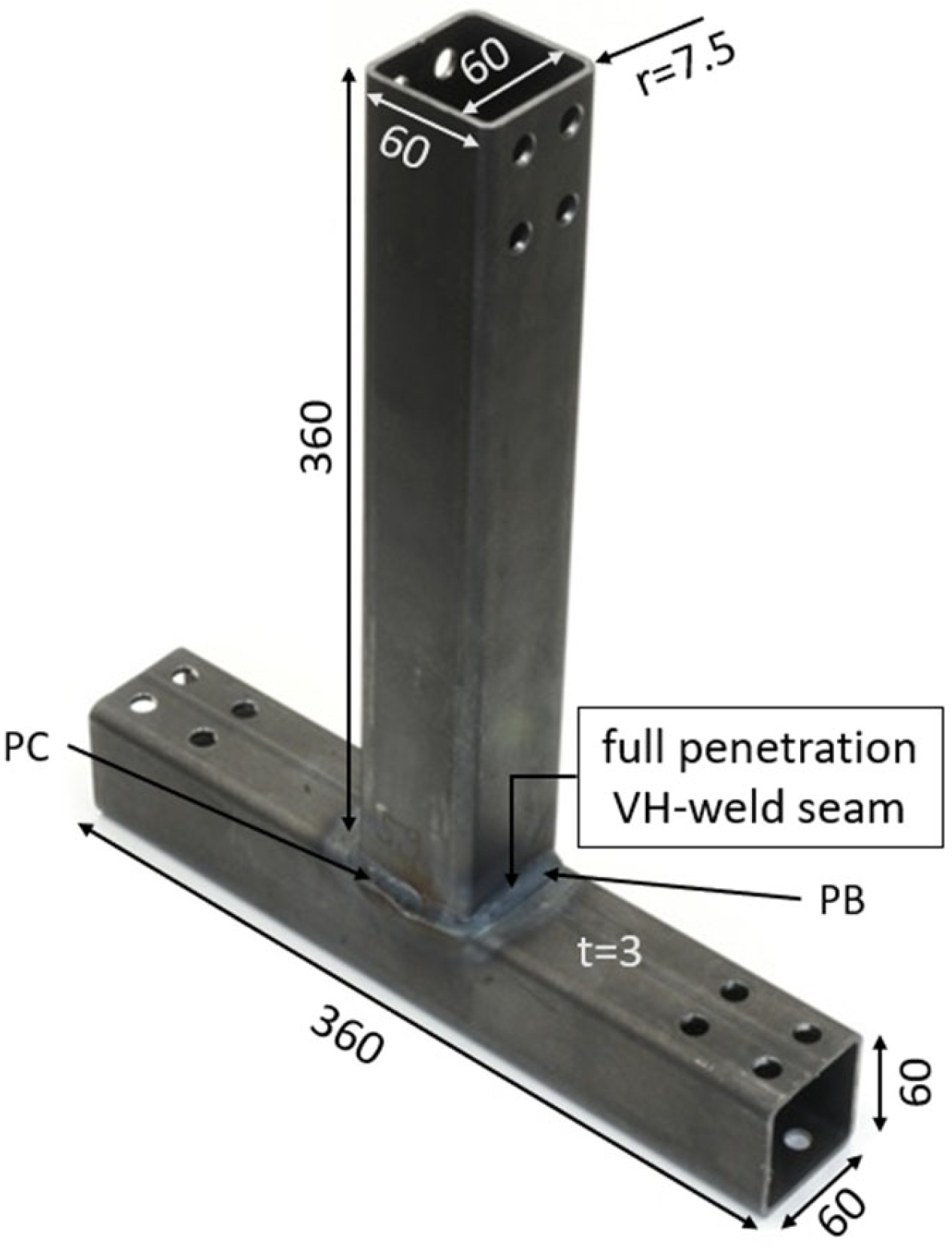
The test specimen is a single-sided through-welded HV3 robotic seam [24], where the weld layer looks like a backing layer. There are two different welding positions on the specimen. The robotic welding system is a metal active gas (MAG) welding process, which is used with the shielding gas type 273 Corgon® 18 [25]. On the longitudinal side is a PC layer and on the transversal side a PB layer [26]. The chemical composition of the filler material is listed in Table 2. The samples are tested for fatigue strength in an untreated state, AW, and a post-treated state, GR. The seam surface was ground by applying weld-profiling using an angle grinder with an A40 grit. Based on preliminary investigations [16,17], this post-treatment method has become particularly established in applications such as forklifts or driving cabin frames in rail vehicle engineering and is therefore investigated further in this paper. The finished welded specimen is presented together with its main dimensions (in mm) in Figure 2. In order to gain more profound insights into the intricacies of robotic welding processes, the welding parameters are illustrated in Table 3.

2.2. Experimental Setup

The fatigue tests on the RHS specimens are performed at stress ratios of R = 0.1 and R = −1, whereby details of the tests under R = 0.1 are given in a previous study [21]. The fatigue test termination criterion is either macroscopic crack initiation, resulting in a reduction in the structural stiffness, or run-out, defined as 5 × 10⁶ cycles. A total of 80 specimens is examined in this study, with 20 specimens each being analysed for the stress ratio in both AW and GR. The failure criterion for the fatigue tests is set at a cylinder stroke difference of +/− 0.25 mm. According to the available data, the fatigue test is stopped as soon as a higher value is recorded.
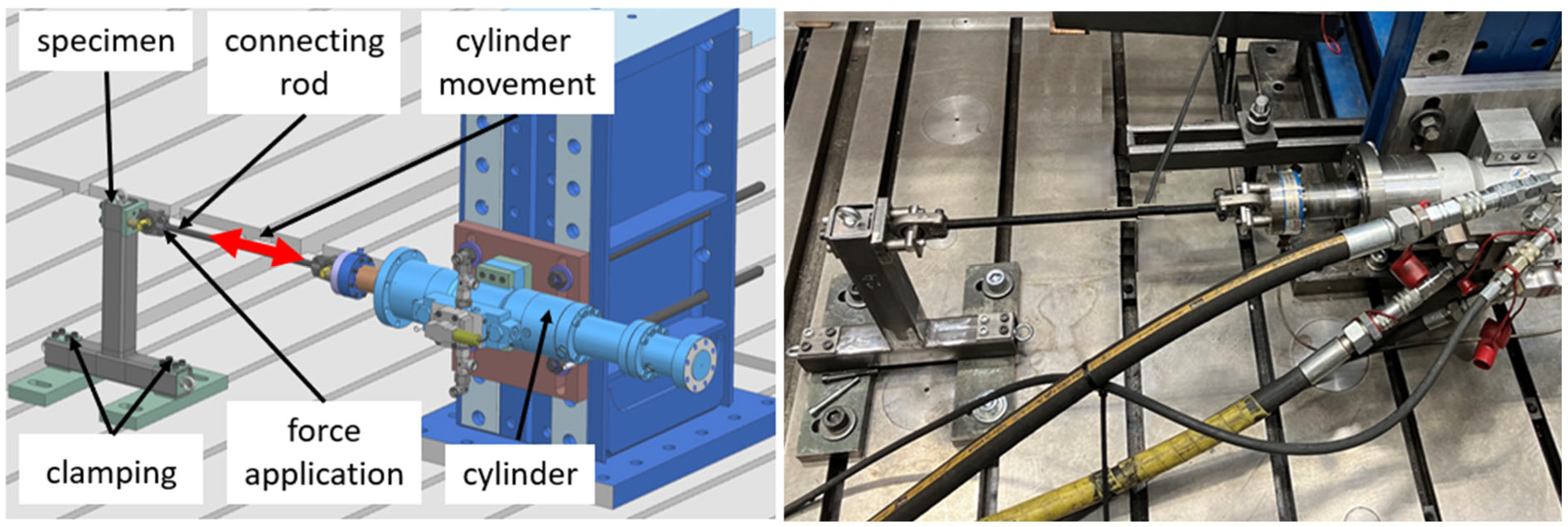
The fatigue test setup is described in Figure 3, where the most important main components are shown. The RHS specimen is screwed firmly on the bottom to the testing machine. A horizontal force acts on the upper section, which is connected to the hydraulic cylinder by a connecting rod. The testing load acts purely horizontally on the upper end of the RHS specimen, which is indicated as “force application”.

3. Investigation of Fracture Surfaces

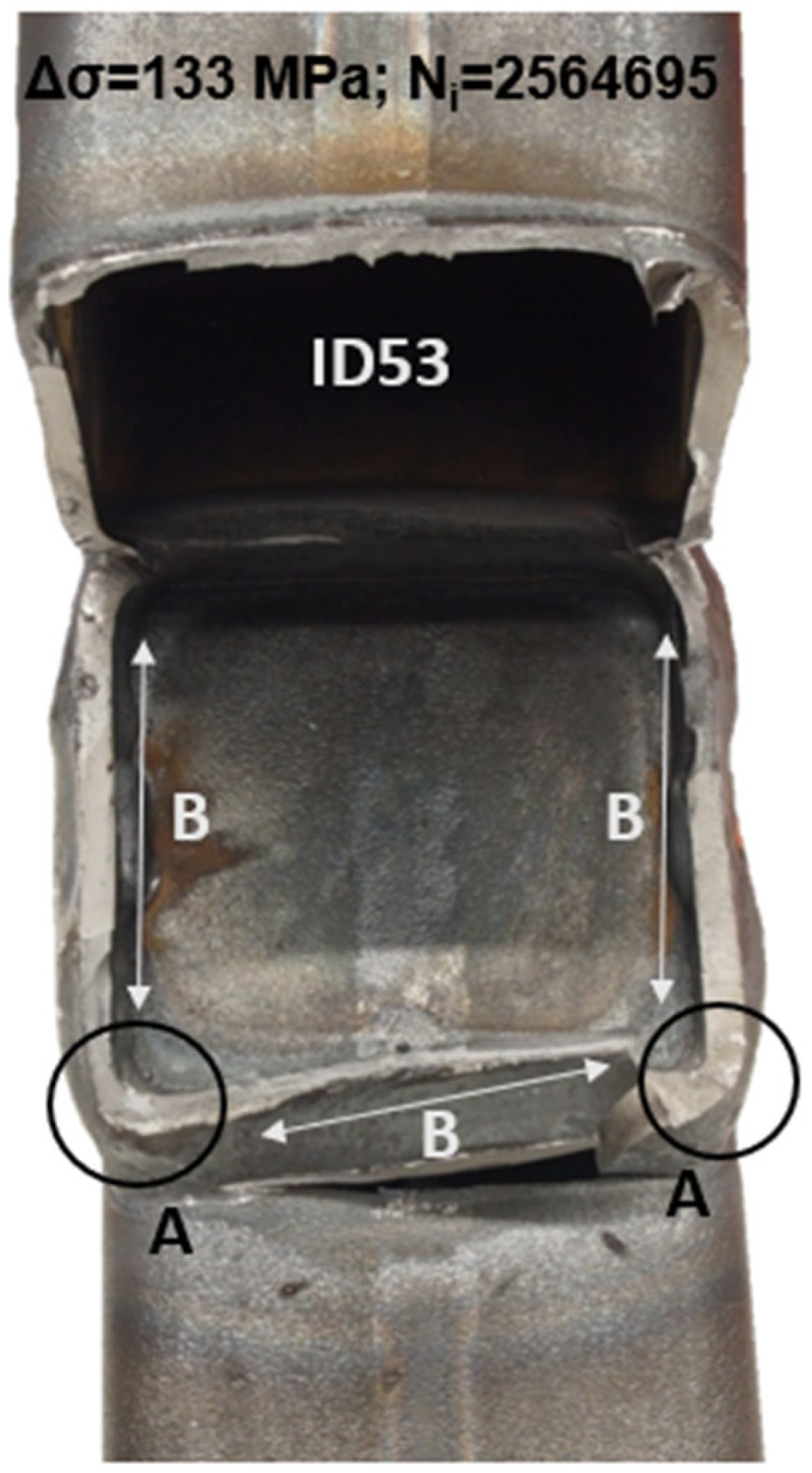
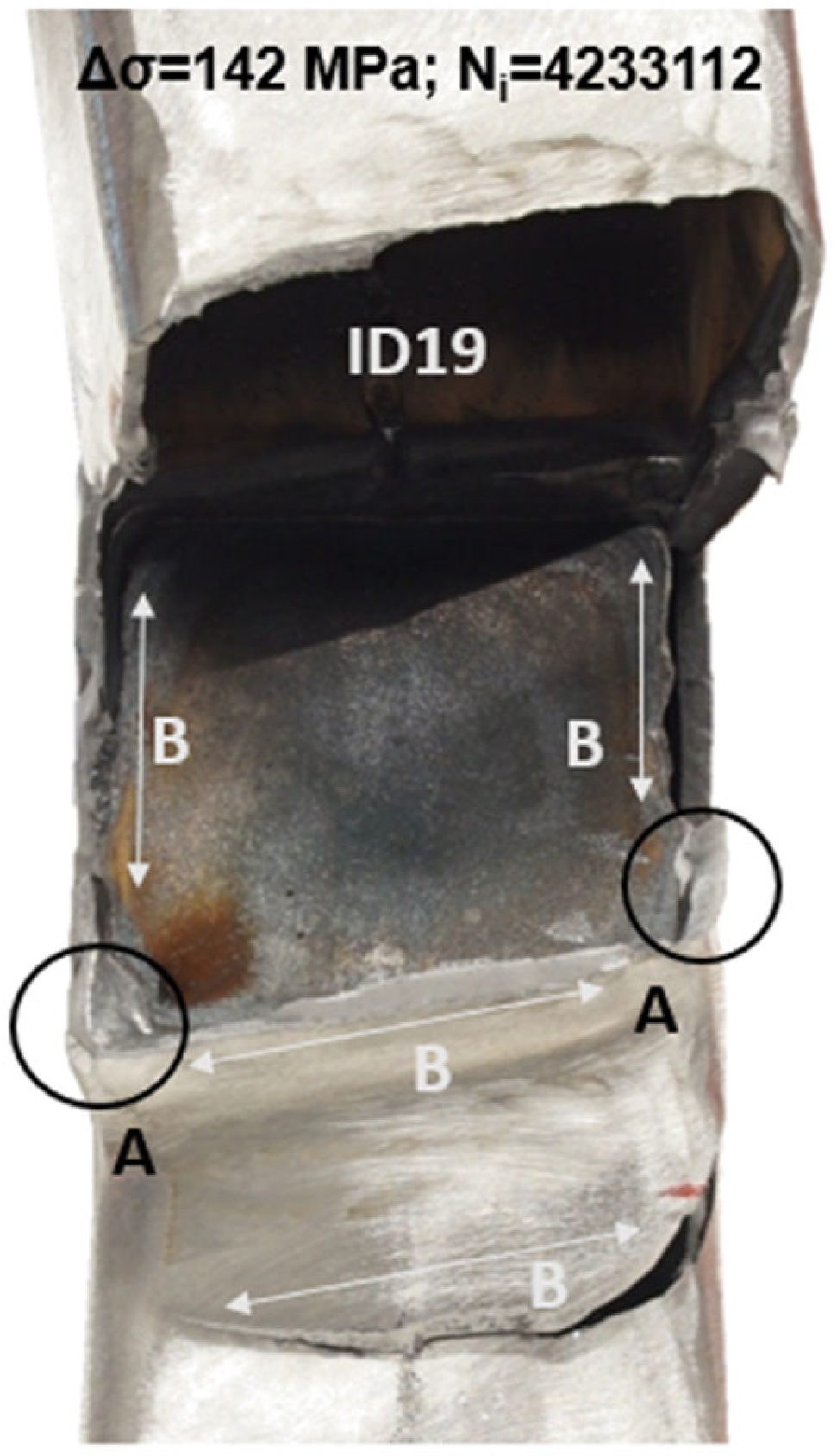
After testing, the failed specimens exhibiting macroscopic crack initiation are further fully ruptured to enable a fracture surface characterisation. Figure 4 and Figure 5 present an AW and GR specimen, respectively. There is no significant difference in the fracture behaviour. Both specimens demonstrate a fatigue fracture due to the cyclic load at the outer edges, defined here with the index “A”. The areas marked “B” in the illustrations show the subsequent fractures that were generated. In essence, the only discernible distinction is that the initiation of cracking at the outer edges occurs substantially later in the GR specimens. Hence, the specimens cracked where the fracture is expected to occur. This is therefore a consequence of the reduction in notch stress caused by the grinding process after welding. It is essential that the notches are smoothed and the weld seam transitions are ground as notch-free as possible. The finding suggests that the GR specimens demonstrate the capacity to withstand extended load cycles under equivalent loads, thereby exhibiting a level of durability comparable to that of the AW specimens when subjected to higher loads [28,29]. The fracture behaviour exhibited by the specimens is comparable to the simulation results. A large number of research papers has been published that demonstrates analogous fracture behaviour in this area [30,31,32,33].

4. Fatigue Test Results

4.1. Influence of Grinding

The S/N curves are evaluated based on the pearl string method in accordance with the DIN 50100 standard and calculated using Equation (2) to determine the permissible fatigue strength amplitude σa for the service lifetime [34]. The stress range, designated as Δσ, is set at 2 × 10⁶ for N, representing the number of load cycles. The definition of both Δσi and Ni is shown to be equivalent at a given point, for instance, in the fatigue life curves at 30,000 load cycles. This serves as a starting point for the S/N diagrams.
σ = σ i   N i N 1 m  
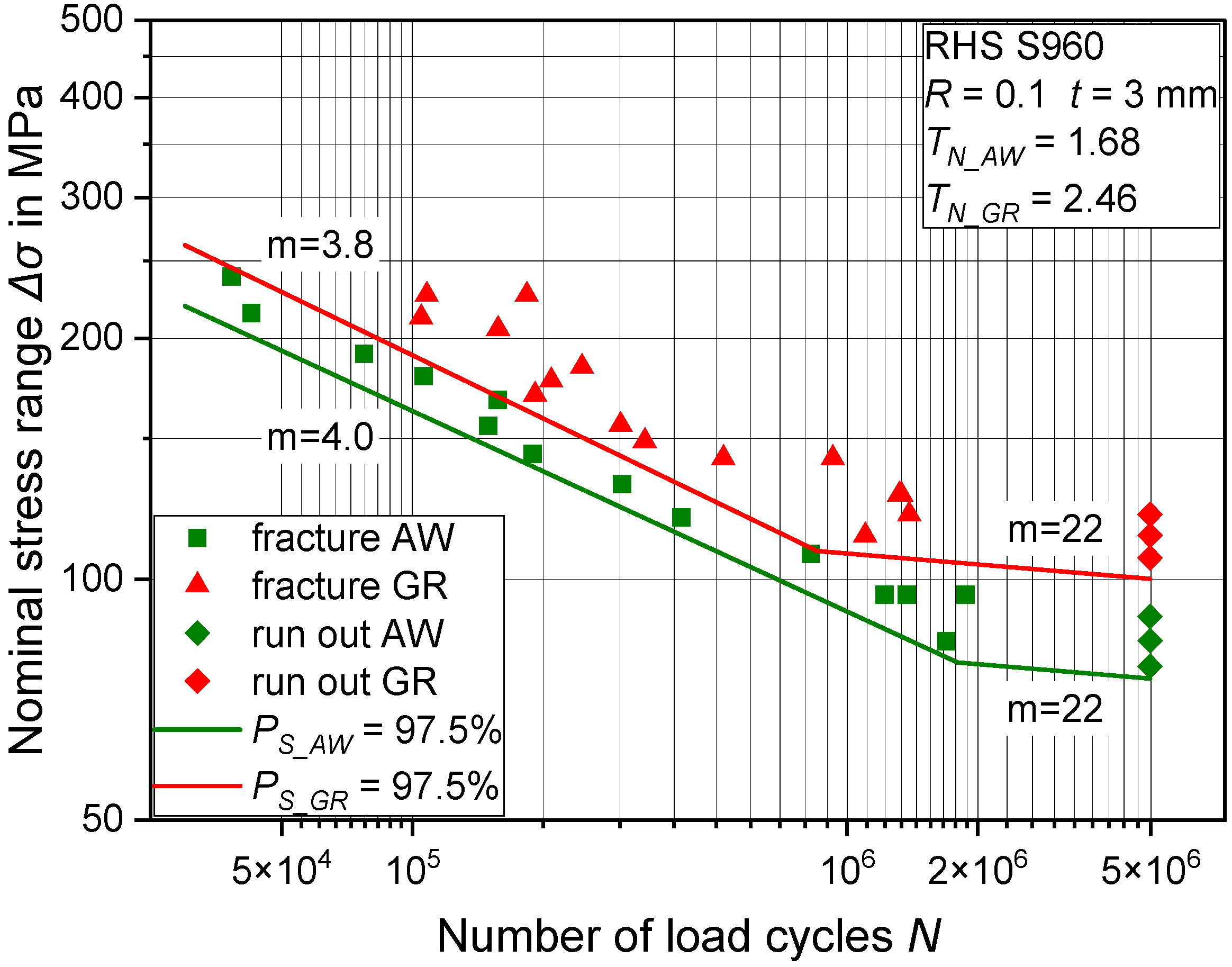
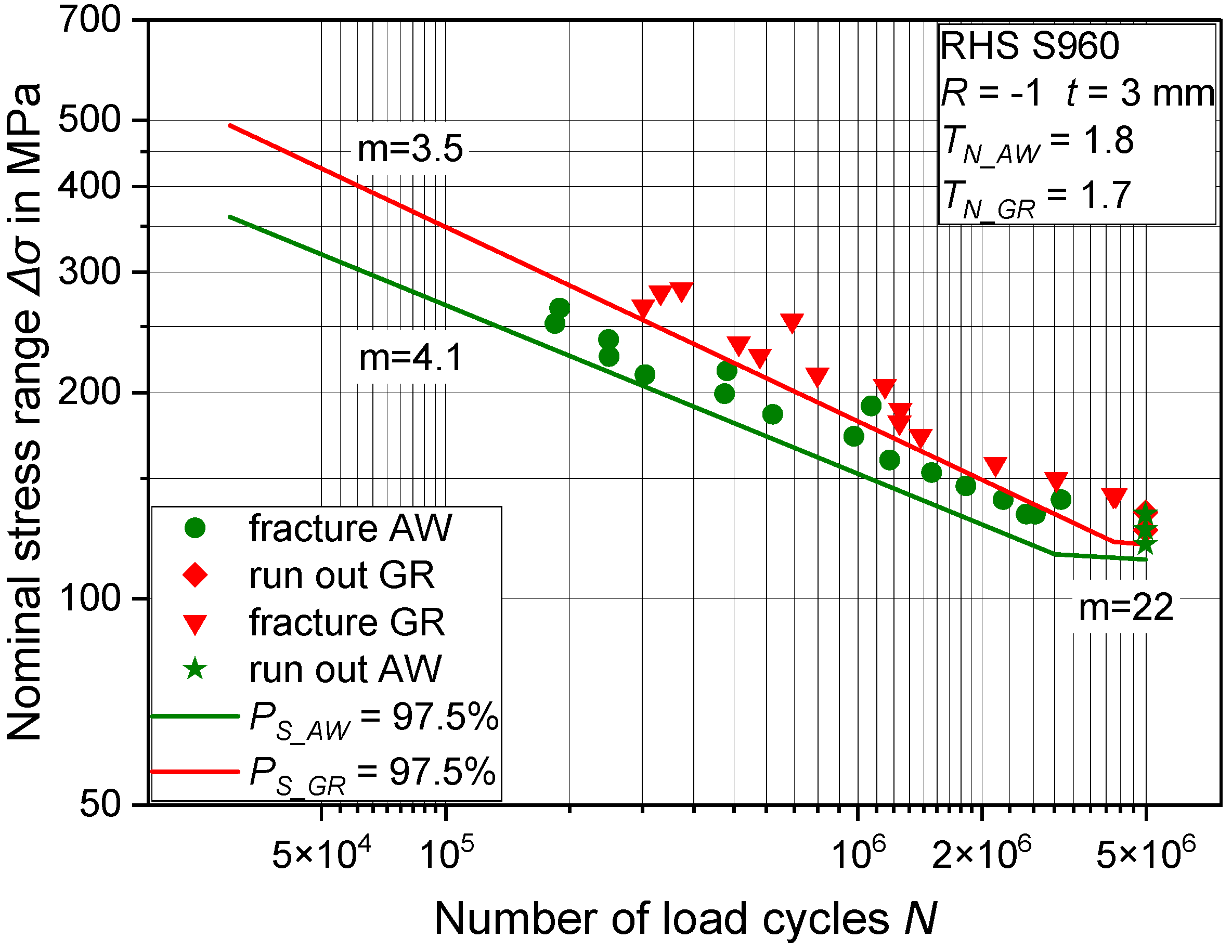
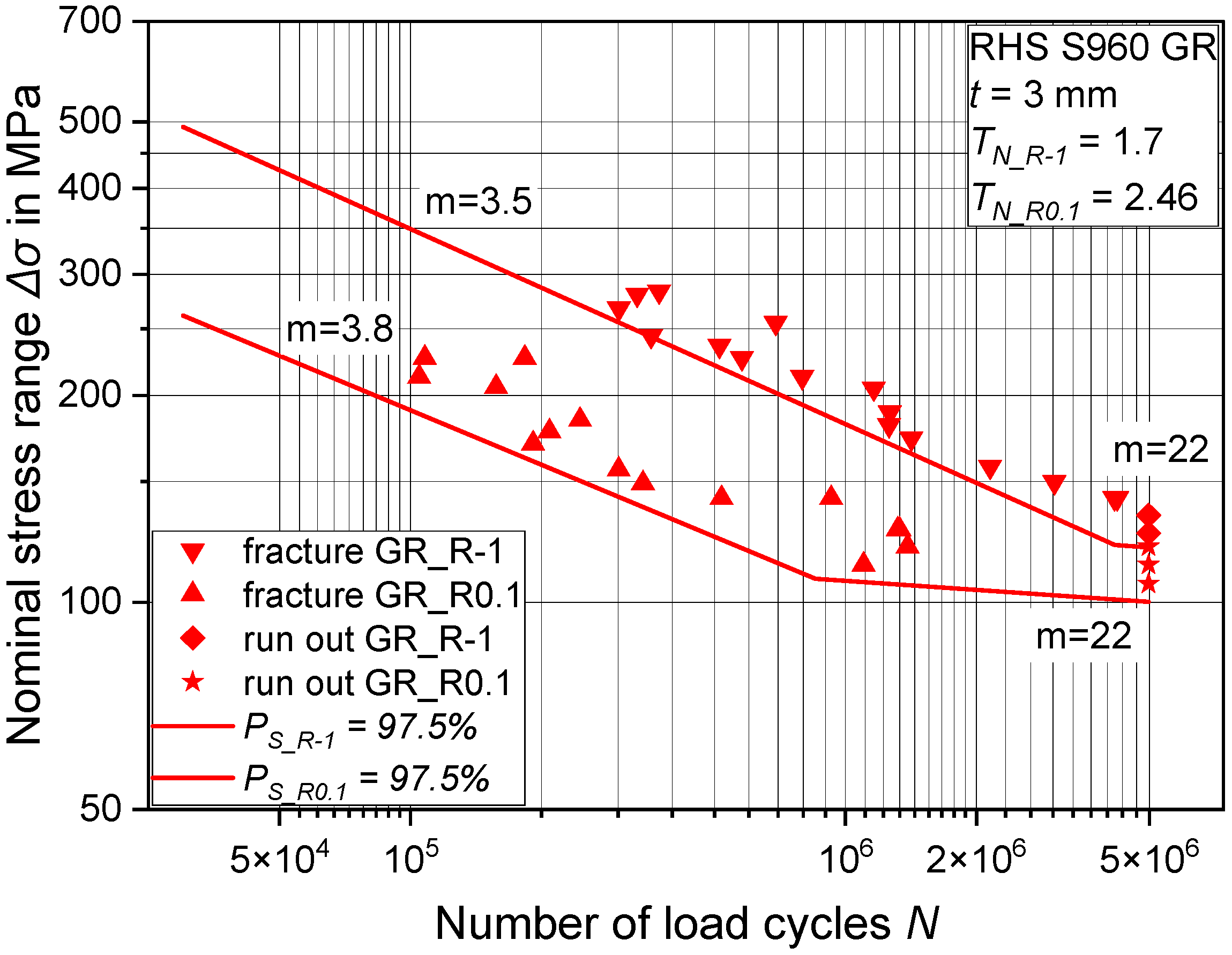
As shown in Figure 6 and Figure 7, the data is represented using nominal normal stresses evaluated by analytical computation and is calculated with a survival probability of Ps = 97.5%. It is imperative to note that the calculation of the permissible stress is based exclusively on specimens that have exhibited a maximum of 2 × 10⁶ load cycles. It is evident that all other specimens that have undergone 5 × 10⁶ load cycles or more are to be classified as run outs. This classification is explicitly demonstrated in the following diagrams. The slopes after the knee point are defined for all samples as m = 22, according to the IIW recommendations [2]. As in the previous study, the knee point can be determined numerically using an equation-matching procedure based on Equation (2), the slopes, and the data from the fatigue strength curves. The knee point at R = −1 is calculated using Equation (2). By comparing the two slopes, the curves can be equated, and the required load amplitude and the number of cycles can be determined at the point where the two curves cross. The calculation is constrained by the boundary conditions of N_start = 3 × 10⁵ load cycles at the initiation point and N_end = 5 × 10⁶ load cycles at the endpoint. For the AW specimens, which have slopes m = 4.1 and m = 22, a knee point is determined for Δσ_AW_kneept_R-1 = 116 MPa at N_AW_kneept_R-1 = 3.01 × 10⁶ load cycles. For the GR specimens, using slopes m = 3.5 and m = 22, a knee point is calculated at Δσ_GR_kneept_R-1 = 121 MPa and N_GR_kneept_R-1 = 4.18 × 10⁶ load cycles. Figure 6 shows a Δσ_AW_R0.1 = 78 MPa at a stress ratio of R = 0.1 and 2 × 10⁶ load cycles, with a slope of m = 22 in the AW cycles. The ground specimens show a Δσ_GR_R0.1 = 104 MPa with a slope of m = 22. Compared to the fatigue strength, the specimens exhibit Δσ_AW_R0.1 = 108 MPa with m = 4 at 5 × 10⁵ load cycles, as well as Δσ_GR_R0.1 = 125 MPa with a slope of m = 3.8. In general, therefore, an increase of +33% can be achieved in the GR condition compared to the AW. This gathered data can also be found in Table 4.
The nominal fatigue curves shown in Figure 7 are performed and evaluated with a stress ratio of R = −1; apart from that, the other test parameters are identical to those of the R = 0.1 specimens. It is evident from the analysis of the AW specimens that they demonstrate a Δσ_AW_R-1 = 128 MPa in conjunction with a slope of m = 4.1. The data of the GR condition, designated as Δσ_GR_R-1 = 150 MPa, has been determined with a slope of m = 3.5. This corresponds to an increase of +16% from the AW to GR condition at N = 2 × 10⁶ load cycles. The fatigue tests results from an earlier study [21] are illustrated in Table A1 in the Appendix A.
For both S/N curves in Figure 6 and Figure 7, the scatters are listed in the upper right corner. The slopes are almost identical in the AW, which suggests a similar dispersion of TN_AW_R0.1 = 1.7 and TN_AW_R-1 = 1.8. This phenomenon is attributable to a highly consistent robotic welding process. The deviations for the GR condition of the two scatter plots are greater at TN_GR_R0.1 = 2.5 and TN_GR_R-1 = 1.7. This can be attributed to the manual grinding process. Due to the dexterity and skill required to handle the angle disc grinder, there are greater differences in fatigue strength, especially at higher load cycles. As demonstrated in Figure 12 based of another study [35], differences between series due to factors such as a tested frequency range from 5 to 24 Hz and the applied load have no negative influence on the test results. Influences such as the residual stresses have not been considered in this study. As demonstrated in Table A2, which is cited in the Appendix A, the outcomes of the above-mentioned fatigue tests are illustrated.

4.2. Influence of Mean Stress

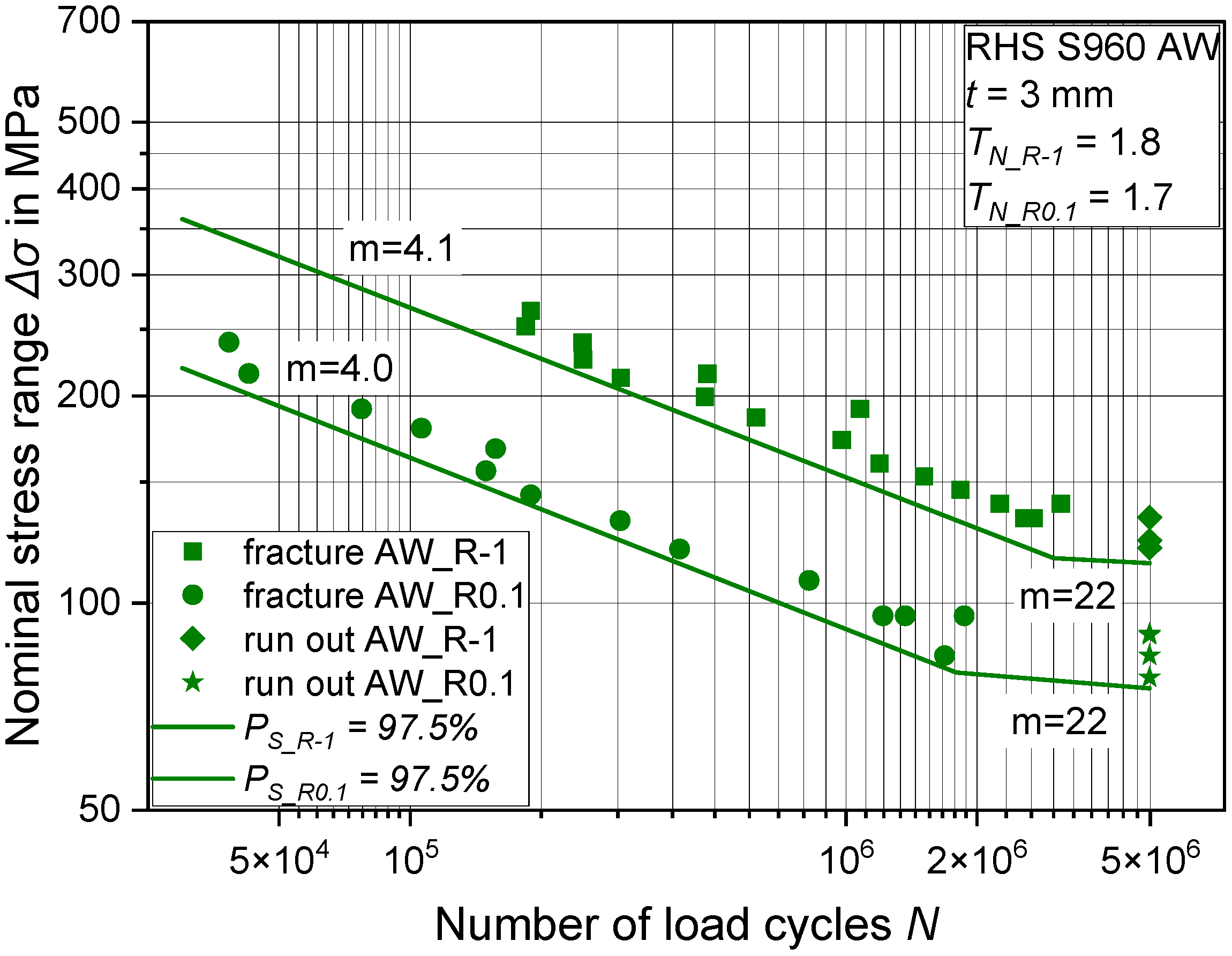
To illustrate the obtained data more clearly in terms of the influence of the mean stress state, all results are presented in the AW in Figure 8 and in the GR condition in Figure 9. In these both diagrams, regardless of the post-treatment, the S/N curves are reduced from the stress ratio R = −1 to R = 0.1. There are further research papers that present a similar nominal stress range for the determined stress ratios [36,37].
Table 5 shows the influences of mean stress conditions at 2 × 10⁶ load cycles. The differences between R = 0.1 and R = −1 are presented and evaluated in both treatments. Taking an even deeper look at the results, the reduction is lower, from 39% in the AW to 31% in the GR samples.

5. Evaluation of Haigh Diagram

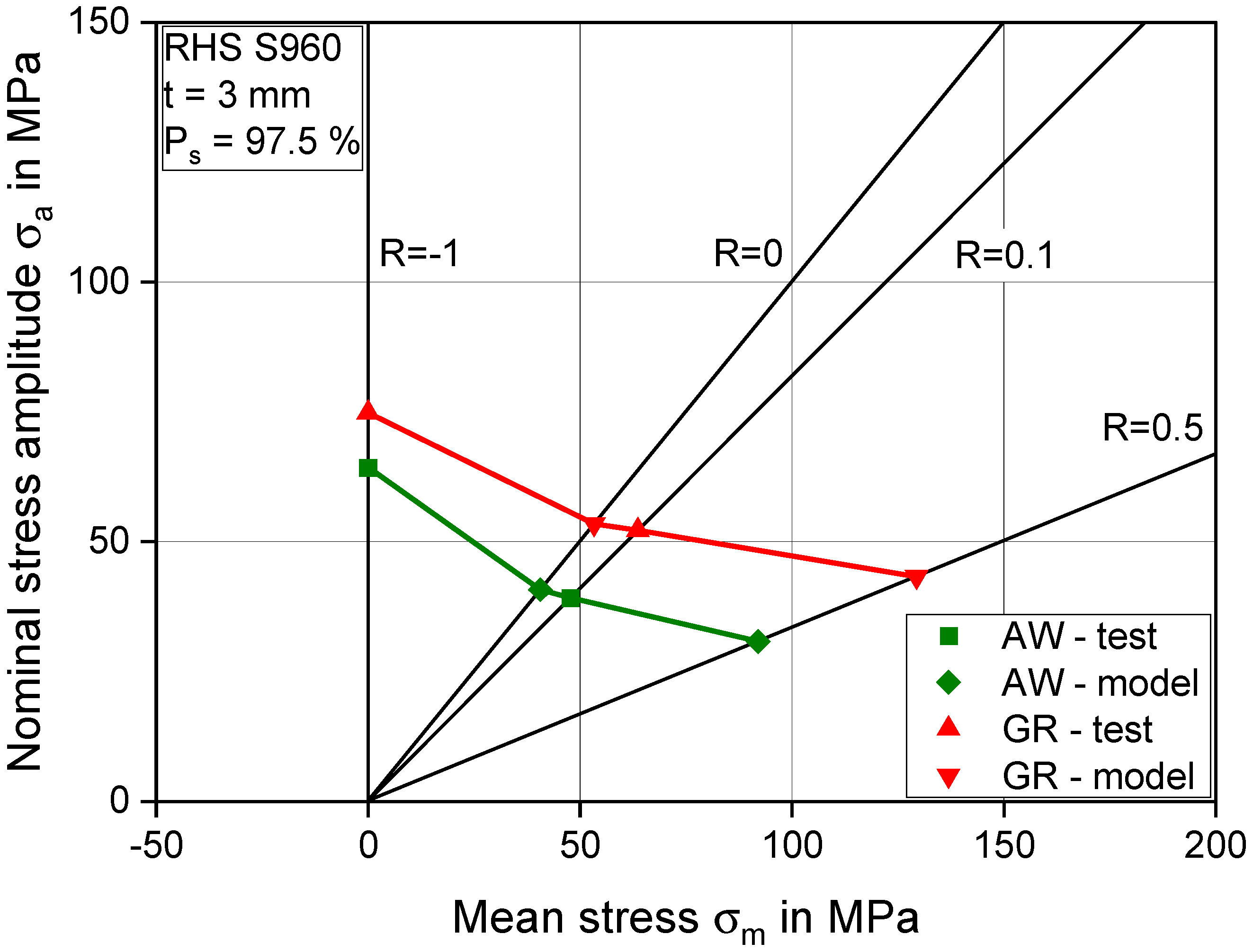
Based on the FKM guideline [22], a linear decrease in the fatigue strength amplitude σa between the value of σaR = −1 at R = −1 and σaR = 0 at R = 0 by the mean stress sensitivity M is defined according to Equation (3). In the region between σaR = 0 at R = 0 and σaR = 0.5 at R = 0.5, a shallower decrease by M/3 is defined. The available data of the FKM interpolations allows general data for welded standard steel grades to be obtained. These equations are derived from the experimental data points in the Haigh diagram using a straight-line equation. A detailed derivation of these equations is described in the following literature [38]. As the value of σaR = 0.1 at R = 0.1 is evaluated based on the conducted fatigue tests, Equation (4) is applied to evaluate the Haigh diagram in this range. Based on the statistically evaluated values σaR = −1 and σaR = 0.1 of the tests carried out, the values σaR = 0 and σaR = 0.5 are calculated using the given equations. The resulting Haigh diagrams for the AW and the GR condition are depicted in Figure 10 and the corresponding values are summarised in Table 6.
M 1 = σ a R = 1 σ a R = 0 σ m R = 0 = σ a R = 1 σ a R = 0 1
M 2 = M 1 3 = σ a R = 0 σ a R = 0.1 σ m R = 0.1 σ m R = 0 σ a R = 0 σ a R = 0.1 σ m R = 0.1 σ a R = 0
The Haigh diagram shows that the AW specimens have a notable steeper decline of the slope than the ones in the GR condition. This indicates that the GR specimens have lower mean stress sensitivity, which suggests the influence of the post-weld treatment process. The allowable stress amplitude decreases if the means stress increases. This, in turn, has a negative impact on the fatigue strength of the components subjected to cyclic loading in both conditions.
Based on the evaluated Haigh diagram and the underlying fatigue strength amplitude values, the mean stress sensitivity M1, applicable between R = −1 and R = 0, and M2, applicable between R = 0 and R = 0.5 and equalling M1/3, is defined and given for both conditions in Table 7. The presented values show that due to the post-treatment process, the mean stress sensitivity decreased from M1 = 0.580 for the AW down to M1 = 0.401 for the GR condition. A comparison of these values with the data from other studies in the literature [36,39,40] related to steel grades lower than those investigated in this study is warranted. Such a comparison would reveal an increase in the mean stress sensitivity when high-strength steel is used as the base material.
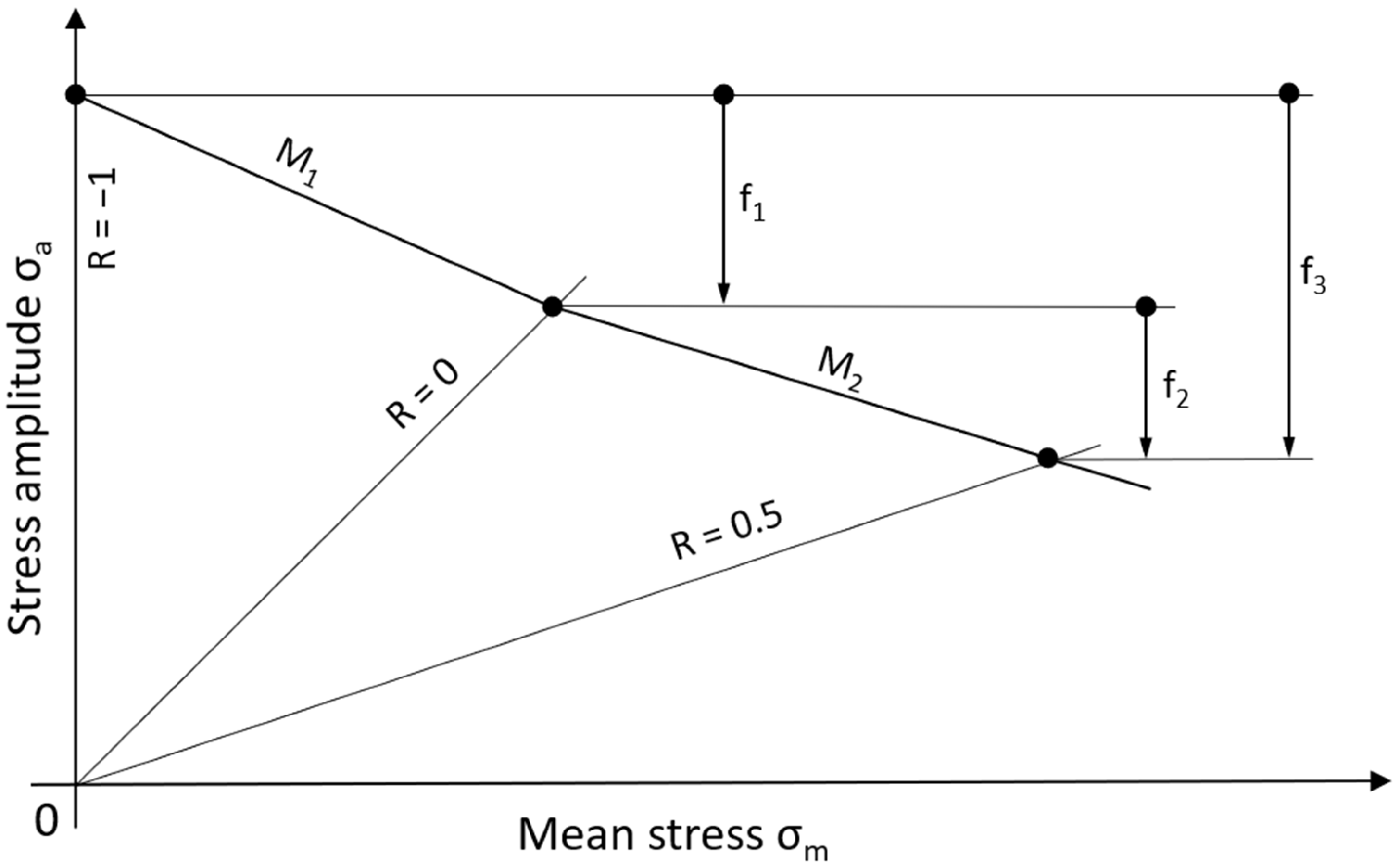
In order to more feasibly represent the effect of the mean stress state, the corresponding mean stress factors are evaluated, as seen in Figure 11. Due to the use of a higher-strength material, the data reveals increased factors compared to a previous study [39], generally valid for steel applications.
Table 8 shows that the mean stress factor f3_Steel = 1.32 (PS = 97.7%) given in [39] is lower compared to the results of the AW S960 material, which is evaluated as f3_S960_AW = 2.09 (PS = 97.5%) based on the results of this study, and can be mainly explained due to the increased mean stress sensitivity of high-strength materials corresponding to [1,5]. Further, Table 8 demonstrates that the factor of the GR samples f3_S960_GR = 1.73 (PS = 97.5%) is reduced compared to the AW, revealing a decreased mean stress influence if applying grinding as a post-treatment process. The resulting mean stress factors of this study are additionally evaluated for a mean probability of survival of PS = 50%. Comparing the results of S960 at PS = 97.5% and PS = 50%, it can be observed that the factors are quite similar in the case of the AW. Related to the GR condition, a slight decrease in the mean stress factors at PS = 50% is evaluated, which can be explained by the influence of different scattering in the fatigue tests results at R = −1 and R = 0.1. However, as is also shown in the case of PS = 50%, the GR condition leads to a decreased mean stress effect in comparison to the AW.
The stated mean stress sensitivities M1 and M2, as well as the mean stress factors f1, f2 and f3, are evaluated based on the test results of this study. These values do not represent a general recommendation, and additional test results, especially for high-strength steel welded joints, are necessary to establish statistically consolidated correction factors for design applications.

6. Conclusions

In this paper, the fatigue strength of thin-walled S960 M high-strength steel rectangular hollow section T-joints is analysed considering as-welded and ground (by weld profiling) conditions. Evaluations for the complete creation of the Haigh diagram are derived from the measurement results of the fatigue test, with additional results calculated numerically using the mean stress influence factor equations. The cyclic tests are conducted at load stress ratios of R = −1 and R = 0.1, leading to the following conclusions of this study:
Fatigue cracks appeared on both sample series at the outer corners. It was only evident that the GR specimens withstood higher loads due to the post-weld treatment process.
The nominal stress results show a benefit of the GR condition compared to the AW by +33% at R = 0.1 and by +16% at R = −1. Therefore, the great potential of the post-treatment process is observed.
Based on the evaluated Haigh diagram, a mean stress sensitivity M1 applicable between R = −1 and R = 0 is evaluated as 0.580 for the AW and 0.401 for GR condition. The results show that due to the post-treatment process, the mean stress effect is reduced.
Finally, corresponding mean stress factors are evaluated, which represent the decrease in the fatigue strength at higher load stress ratios compared to R = −1. The results are compared to values for AW steel applications with comparable joint geometries, which were the result of an earlier study [39]. It reveals an increase in the mean stress effect using a higher-strength steel. However, due to the post-weld treatment, the factors again show a decrease in the mean stress effect for the higher-strength steel as the base material.
The reduction in mean stress sensitivity after grinding is probably the result of two factors. Firstly, the notch effect of the weld profile is reduced. Secondly, tensile residual stresses were the result of grinding. More in-depth research on that topic could be interesting.

Author Contributions

Conceptualization: B.L. and M.L.; Methodology: B.L. and M.L.; Validation: B.L. and C.B.; Formal analysis: B.L.; Investigation: B.L.; Resources: B.L., C.B., P.B. and M.L.; Data curation: B.L. and C.B.; Writing—original draft preparation: B.L.; Writing—review and editing: C.B., P.B., M.L. and M.F.; Visualization: B.L., C.B. and M.L.; Supervision: C.B., P.B., M.L.; Project administration: B.L. and M.L. All authors have read and agreed to the published version of the manuscript.

Funding

The financial support by the Austrian Federal Ministry of Economy, Energy and Tourism, the National Foundation for Research, Technology and Development and the Christian Doppler Research Association is gratefully acknowledged.

Data Availability Statement

Data is contained within the article.

Conflicts of Interest

Author Benjamin Laher was employed by the company Plasser und Theurer Export von Bahnbaumaschinen, Gesellschaft GmbH. Author Majid Farajian was employed by the company GSI Gesellschaft für Schweißtechnik International GmbH. The remaining authors declare that the research was conducted in the absence of any commercial or financial relationships that could be construed as a potential conflict of interest.

Abbreviations

Nomenclature
AWas-welded condition
FATcharacteristic fatigue class in MPa at two million load cycles
FEfinite element
fyyield strength in MPa
Fiload in N
ΔFload range in N
GRground
HSSHigh-strength steel
IIWInternational Institute of Welding
Llongitudinal side
mslope of S/N curve
Msensitivity to mean stress
MAGmetal active gas
Niload cycle
Pssurvival probability
Rstress ratio
RTouter tube radius in mm
fuultimate tensile strength in MPa
RHSrectangular hollow sections
tthickness in mm
Ttransverse side
wt% weight percent
σafatigue strength amplitude in MPa
σCstress occurring in the cross-section in MPa
σmmean stress in MPa
Δσstress range in MPa

Appendix A

Table A1. Results from the fatigue tests with R = 0.1.
Specimen
ID
ConditionStress Ratio R
in (-)
Testing Frequency in (Hz)Load-Cycles
Ni in (-)
Nominal Stress
Δσ in (MPa)
10AW0.1569,881191
9AW0.17125,394167
78AW0.11538,152215
56AW0.115373,191119
60AW0.1151,319,80795
61AW0.1155,000,00072
62AW0.11533,275238
63AW0.115164,790143
64AW0.115774,986107
65AW0.115276,327131
69AW0.115131,321155
67AW0.11594,143179
79AW0.117.51,595,11383
77AW0.1205,000,00077
80AW0.1245,000,00083
81AW0.1245,000,00089
47AW0.1241,810,79595
48AW0.1245,000,00089
52AW0.1241,112,69595
8GR0.17162,786226
6GR0.17.5457,768198
1GR0.1784,507226
20GR0.115169,778169
14GR0.115907,124141
25GR0.1201,051,872113
23GR0.12095,729212
26GR0.120230,918183
15GR0.124283,684155
45GR0.1241,268,253127
27GR0.1245,000,00099
40GR0.1245,000,000106
35GR0.1245,000,000113
37GR0.1245,000,000120
39GR0.1241,301,614127
34GR0.124486,681141
31GR0.1241,321,460120
42GR0.124307,537148
30GR0.124193,464176
18GR0.124149,480205
Table A2. Results from the fatigue tests with R = −1.
Specimen
ID
ConditionStress Ratio R
in (-)
Testing Frequency in (Hz)Load-Cycles
Ni in (-)
Nominal Stress
Δσ in (MPa)
7AW−17.5920,059191
2AW−17354,175215
59AW−17265,144212
68AW−17211,354239
74AW−1101,142,725159
58AW−15159,663266
55AW−1125,000,000133
54AW−117.41,676,754146
72AW−116.4892,569173
73AW−116.4408,326199
75AW−116.42,950,451139
76AW−116.4208,131226
70AW−116.4154,627252
57AW−116.4550,371186
71AW−116.41,413,393153
66AW−116.42,108,936139
50AW−116.42,491,612133
49AW−116.45,000,000120
51AW−1185,000,000126
53AW−1182,330,815133
5GR−17.5480,584227
4GR−17424,960255
3GR−17351,937283
17GR−1181,152,812189
13GR−1162,026,833157
32GR−1165,000,000126
46GR−116267,701267
16GR−116475,231236
29GR−1161,089,388204
21GR−1161,309,309173
19GR−1164,005,717142
24GR−1165,000,000134
12GR−1163,925,322142
22GR−1122,852,268149
36GR−1121,168,657181
28GR−116719,686212
41GR−18317,761244
44GR−116301,466280
11GR−184,631,213134
38GR−1125,000,000126

References

  1. Radaj, D.; Vormwald, M. Ermüdungsfestigkeit: Grundlagen für Ingenieure, 3rd ed.; Springer: Berlin/Heidelberg, Germany, 2007. [Google Scholar]
  2. Hobbacher, A.F.; Baumgartner, J. (Eds.) Recommendations for Fatigue Design of Welded Joints and Components; Springer Nature: Cham, Switzerland, 2024. [Google Scholar] [CrossRef]
  3. DVS 1612; Design and Endurance Strength Analysis of Steel Welded Joints in Rail-Vehicle Construction. Deutscher Verband für Schweißen und Verwandte Verfahren e.V.: Düsseldorf, Germany, 2017.
  4. Yoshihara, Y.; Osawa, N.; Murakawa, H.; Dai, P. Study on the estimation method for the mean stress effect on the fatigue strength of welded joints with various failure modes and joint types. Weld. World 2025, 69, 151–167. [Google Scholar] [CrossRef]
  5. Hensel, J. Mean stress correction in fatigue design under consideration of welding residual stress. Weld. World 2020, 64, 535–544. [Google Scholar] [CrossRef]
  6. Da Gaia Silva, D.; Lockwood, J.T.; Liang, W.; Topper, T.H. Mean stress effect in stress-life for hard steels. Int. J. Fatigue 2021, 146, 106101. [Google Scholar] [CrossRef]
  7. Leitner, M.; Mössler, W.; Putz, A.; Stoschka, M. Effect of post-weld heat treatment on the fatigue strength of HFMI-treated mild steel joints. Weld. World 2015, 59, 861–873. [Google Scholar] [CrossRef]
  8. Harati, E.; Svensson, L.-E.; Karlsson, L.; Widmark, M. Effect of high frequency mechanical impact treatment on fatigue strength of welded 1300 MPa yield strength steel. Int. J. Fatigue 2016, 92, 96–106. [Google Scholar] [CrossRef]
  9. Yıldırım, H.C. Recent results on fatigue strength improvement of high-strength steel welded joints. Int. J. Fatigue 2017, 101, 408–420. [Google Scholar] [CrossRef]
  10. Hensel, J.; Eslami, H.; Nitschke-Pagel, T.; Dilger, K. Fatigue Strength Enhancement of Butt Welds by Means of Shot Peening and Clean Blasting. Metals 2019, 9, 744. [Google Scholar] [CrossRef]
  11. Kinoshita, K.; Ono, Y.; Banno, Y.; Yamada, S.; Handa, M. Application of shot peening for welded joints of existing steel bridges. Weld. World 2020, 64, 647–660. [Google Scholar] [CrossRef]
  12. Kinoshita, K.; Sugawa, K.; Banno, Y.; Ono, Y.; Yamada, S.; Kameyama, S. Fatigue strength of shot-peened welded joints of steel bridges. Weld. World 2023, 67, 651–668. [Google Scholar] [CrossRef]
  13. Dahle, T. Design fatigue strength of TIG-dressed welded joints in high-strength steels subjected to spectrum loading. Int. J. Fatigue 1998, 20, 677–681. [Google Scholar] [CrossRef]
  14. Huo, L.; Wang, D.; Zhang, Y. Investigation of the fatigue behaviour of the welded joints treated by TIG dressing and ultrasonic peening under variable-amplitude load. Int. J. Fatigue 2005, 27, 95–101. [Google Scholar] [CrossRef]
  15. Mettänen, H.; Nykänen, T.; Skriko, T.; Ahola, A.; Björk, T. Fatigue strength assessment of TIG-dressed ultra-high-strength steel fillet weld joints using the 4R method. Int. J. Fatigue 2020, 139, 105745. [Google Scholar] [CrossRef]
  16. Laher, B.; Buzzi, C.; Leitner, M.; Brunnhofer, P. Effect of angular distortion and axial misalignment on the fatigue strength of welded and ground mild steel cruciform joints. Weld. World 2024, 68, 1169–1186. [Google Scholar] [CrossRef]
  17. Laher, B.; Buzzi, C.; Brunnhofer, P.; Leitner, M. Effect of grinding on the fatigue strength of mild and high strength steel fillet weld joints. Results Eng. 2024, 22, 102135. [Google Scholar] [CrossRef]
  18. Mecséri, B.J.; Kövesdi, B. 09.09: Experimental fatigue analysis of high strength steel structures. ce/papers 2017, 1, 2424–2433. [Google Scholar] [CrossRef]
  19. Garud, V.; Bhoite, S.; Ingale, S.; More, S.; Lakade, S.S.; Matekar, S.B. Effect of Post Weld Toe Treatments on Fatigue Life of Welded Structures using FEA. Mater. Today Proc. 2017, 4, 1116–1126. [Google Scholar] [CrossRef]
  20. Braun, M.; Wang, X. A review of fatigue test data on weld toe grinding and weld profiling. Int. J. Fatigue 2021, 145, 106073. [Google Scholar] [CrossRef]
  21. Laher, B.; Buzzi, C.; Brunnhofer, P.; Leitner, M. Effect of weld profiling on the fatigue strength of thin-walled rectangular hollow section T-joints made of high strength steel. Forces Mech. 2026, 23, 100359. [Google Scholar] [CrossRef]
  22. Rennert, R.; Kullig, E.; Vormwald, M.; Esderts, A.; Siegele, D. FKM-Richtlinie. Rechnerischer Festigkeitsnachweis für Maschinenbauteile aus Stahl, Eisenguss- und Aluminiumwerkstoffen; Forschungskuratorium Maschinenbau: Frankfurt am Main, Germany, 2012. [Google Scholar]
  23. Voestalpine Krems GmbH. Mechanical PropErties Tube S960 Voest. 2023: Zertifikat-Nr. 95546/000; Datenblatt S960 Formrohr voest; Voestalpine Krems GmbH: Krems, Germany, 2023. [Google Scholar]
  24. ÖNORM EN ISO 2553; Welding and Allied Processes—Symbolic Representation on Drawings—Welded Joints. Austrian Standards International: Wien, Austria, 2023.
  25. Linde. Safety Data Sheet CO2 18%; Ar 82%. 2018: According to Regulation (EC) No. 1907/2006 (REACH) Article 31, Annex II as Amended. Argon, Compressed. Linde Gas GmbH. Available online: https://produkte.linde-gas.at/sdb_konform/COR18_10022086EN.pdf (accessed on 2 April 2026).
  26. ÖNORM EN ISO 15614-1; Specification and Qualification of Welding Procedures for Metallic Materials—Welding Procedure Test. 2020: Part 1: Arc and Gas Welding of Steels and Arc Welding of Nickel and Nickel Alloys, 75.080. Austrian Standards International: Wien, Austria, 2020.
  27. Böhler Welding. BÖHLER Alform® 960-IG. 2021: Solid Wire, Low-Alloyed, High Strength; Böhler Welding: Kapfenberg, Austria, 2021. [Google Scholar]
  28. Zhang, Y.-H.; Maddox, S.J. Fatigue life prediction for toe ground welded joints. Int. J. Fatigue 2009, 31, 1124–1136. [Google Scholar] [CrossRef]
  29. Braun, M.; Hensel, J.; Song, S.; Ehlers, S. Fatigue strength of normal and high strength steel joints improved by weld profiling. Eng. Struct. 2021, 246, 113030. [Google Scholar] [CrossRef]
  30. Mashiri, F.R.; Zhao, X.-L. Square hollow section (SHS) T-joints with concrete-filled chords subjected to in-plane fatigue loading in the brace. Thin-Walled Struct. 2010, 48, 150–158. [Google Scholar] [CrossRef]
  31. McFadden, M.R. Weld effective lengths of rectangular hollow section T-connections under branch bending. Weld. World 2015, 59, 295–305. [Google Scholar] [CrossRef]
  32. Yang, Z.M.; Lie, S.T.; Gho, W.M. Fatigue crack growth analysis of a square hollow section T-joint. J. Constr. Steel Res. 2007, 63, 1184–1193. [Google Scholar] [CrossRef]
  33. Zhao, B.; Lin, C.; Wang, R.; Lin, S. Seismic Performance of Rectangular Hollow Section X-Joints Subjected to In-Plane Bending Moment. Buildings 2023, 13, 2503. [Google Scholar] [CrossRef]
  34. DIN 50100; Load Controlled Fatigue testing-Execution and Evaluation of Cyclic Tests at Constant Load Amplitudes on Metallic Specimens and Components. Deutsches Institut für Normung e. V.: Berlin, Germany, 2016.
  35. Hong, Y.; Hu, Y.; Zhao, A. Effects of loading frequency on fatigue behavior of metallic materials—A literature review. Fatigue Fract. Eng. Mater. Struct. 2023, 46, 3077–3098. [Google Scholar] [CrossRef]
  36. Kim, J.H.; Jang, S.W.; Kim, M.H. An investigation of compressive mean stress effect on fillet welded joints with high strength steel. Weld. World 2025, 69, 2311–2322. [Google Scholar] [CrossRef]
  37. Nykänen, T.; Björk, T. Assessment of fatigue strength of steel butt-welded joints in as-welded condition–Alternative approaches for curve fitting and mean stress effect analysis. Mar. Struct. 2015, 44, 288–310. [Google Scholar] [CrossRef]
  38. Haibach, E. Betriebsfestigkeit: Verfahren und Daten zur Bauteilberechnung, 3rd ed.; VDI-Buch; Springer: Berlin/Heidelberg, Germany, 2006. [Google Scholar]
  39. Sonsino, C.M. A Consideration of Allowable Equivalent Stresses for Fatigue Design of Welded Joints According to the Notch Stress Concept with the Reference Radii rref = 1.00 and 0.05 mm. Weld. World 2009, 53, R64–R75. [Google Scholar] [CrossRef]
  40. Mayer, H.; Schuller, R.; Karr, U.; Fitzka, M.; Irrasch, D.; Hahn, M.; Bacher-Höchst, M. Mean stress sensitivity and crack initiation mechanisms of spring steel for torsional and axial VHCF loading. Int. J. Fatigue 2016, 93, 309–317. [Google Scholar] [CrossRef]
Figure 1. Relationship between stress variables under cyclic loading with constant amplitude according to [1].
Metals 16 00431 g001
Figure 2. Representation of RHS specimen geometry (dimensions in mm).
Metals 16 00431 g002
Figure 3. Fatigue test setup: schematic description (left) and final lap setup (right).
Metals 16 00431 g003
Figure 4. Example of fracture surface for AW (tested at R = −1).
Metals 16 00431 g004
Figure 5. Example of fracture surface for GR condition (tested at R = −1).
Metals 16 00431 g005
Figure 6. Nominal stress S/N curves for R = 0.1 [21].
Metals 16 00431 g006
Figure 7. Nominal stress S/N curves for R = −1.
Metals 16 00431 g007
Figure 8. Nominal stress S/N curves for R = 0.1 and R = −1 (AW).
Metals 16 00431 g008
Figure 9. Nominal stress S/N curves for R = 0.1 and R = −1 (GR).
Metals 16 00431 g009
Figure 10. Haigh diagram for AW and GR condition.
Metals 16 00431 g010
Figure 11. Definition of mean stress factors in Haigh diagram according to [39].
Metals 16 00431 g011
Table 1. Chemical composition of alform S960 M x-treme tube in wt% according to [23].
CSiMnPSAlCrNiMoCuTiVNbZrNB
0.0860.1151.620.0070.00090.0550.920.4800.2210.0190.0240.120.0020.0020.00570.0021
Table 2. Chemical composition of the consumable 960-IG in wt% according to [27].
CSiMnCrMoNi
0.120.801.900.4500.552.350
Table 3. Robotic MAG welding parameters.
Welding Position
in (-)
Wire Diameter in mmCurrent Range in
A
Voltage Range in VWire Feed Speed in m/minWelding Speed in cm/minPreheated
PC1.2100–16020–305–1030–45no
PB1.2140–19020–306–1225–40no
Table 4. Influence of post-treatment at N = 2 × 10⁶ for R = 0.1 and R = −1.
Stress Ratio R
in (-)
Number of Load Cycles N in (-)Δσ for AW in MPaΔσ for GR in MPaBenefit GR/AW in %
R = 0.12 × 10678104+33
R = −12 × 106128150+16
Table 5. Influence of mean stress condition at N = 2 × 10⁶ for AW and GR condition.
ConditionNumber of Load Cycles N in (-)Δσ_R = −1
in MPa
Δσ_R = 0.1
in MPa
Reduction from
R = −1 to R = 0.1 in %
AW2 × 10612878−39
GR2 × 106150104−31
Table 6. Fatigue strength amplitudes and corresponding mean stress values at 2 × 10⁶ load cycles and Ps = 97.5%, as the basis for the Haigh diagram for both conditions.
Stress Ratio
R in
(-)
Model
Interpretation
in (-)
Stress
Amplitude σa_2 × 106_AW
in MPa
Stress
Amplitude σa_2 × 106_GR
in MPa
Mean Stress
σm_AW
in MPa
Mean Stress σm_GR
in MPa
−1test64.2474.7500
0model40.6553.3540.6553.35
0.1test39.0952.1347.7863.71
0.5model30.7043.1792.10129.50
Table 7. Mean stress sensitivity for PS = 97.5%.
ConditionM1 in (-)M2 in (-)
AW0.5800.193
GR0.4010.134
Table 8. Mean stress factors of different steels and treatments.
Mean Stress FactorAW
Steel [39] in (-)
AW S960
in (-)
GR Condition S960
in (-)
-PS = 97.7%PS = 97.5%PS = 50%PS = 97.5%PS = 50%
f11.201.581.611.401.32
f21.101.321.341.241.19
f31.322.092.161.731.57
Disclaimer/Publisher’s Note: The statements, opinions and data contained in all publications are solely those of the individual author(s) and contributor(s) and not of MDPI and/or the editor(s). MDPI and/or the editor(s) disclaim responsibility for any injury to people or property resulting from any ideas, methods, instructions or products referred to in the content.