1. Introduction
Steel materials are renowned for their low cost, high strength, excellent ductility, and superior processability [
1], and their derived products are widely used in various aspects of daily life, such as high-rise buildings, automobiles, household appliances, and transportation infrastructure. As a cornerstone of modern industries—including construction, infrastructure engineering, manufacturing, tool and equipment production, energy and transportation, and daily commodity manufacturing—the quality of steel materials, and particularly quality control during the production and manufacturing process, directly affects user experience and safety in daily life and has thus attracted widespread attention. According to incomplete statistics, annual economic losses caused by surface quality issues in steel materials amount to tens of billions of US dollars [
2]. This necessitates close attention to the origins and evolution of surface quality defects during high-temperature metallurgical production processes.
The continuous casting process [
3], as the intermediate link between smelting and rolling, is the primary source of raw materials for all subsequent semi-finished and finished rolled steel products [
4]. The level of online detection and feedback control of surface quality in the continuous casting stage directly determines the final surface quality of steel products [
5,
6,
7,
8,
9]. Thus, numerous scholars have conducted extensive research on imaging and identification methods for surface defects in continuous casting billets under high-temperature conditions.
Ghorai et al. investigated defect detection methods for hot-rolled flat steel products [
10], while Saleh et al. studied subsurface defect detection in concrete structures using two-dimensional continuous wavelet transform [
11]. Fu proposed a quality inspection method for continuous casting billets based on infrared flaw detection and two-dimensional (2D) imaging [
12], and Qiu developed a defect classification approach for continuous casting slabs using pulsed eddy current technology combined with spectral analysis and wavelet decomposition [
13]. Obeso [
14], Alvarez [
15], Zhao [
16], Zhang [
17], and Ma [
18] also carried out research on traditional 2D deep learning-based classification methods for surface defects in continuous casting slabs. However, due to the harsh high-temperature working environment and interference from complex backgrounds such as oxide scales, the aforementioned studies have failed to effectively improve the recognition accuracy for surface defects in high-temperature continuous casting billets. With the rapid advancement of deep learning technologies, some researchers have enhanced the accuracy of surface defect recognition against steel backgrounds through strategies such as model lightweighting, targeted focus on defect features, local adoption of multi-layer convolutional structures, and the integration of attention mechanisms [
19,
20,
21,
22,
23].
Meanwhile, the three-dimensional (3D) depth information of surface defects in high-temperature continuous casting billets is critical for accurately evaluating defect severity and providing precise guidance for subsequent grinding processes. Traditional 2D defect detection methods are thus unable to meet the 3D depth detection requirements for surface defects in high-end steel grades. In response, some researchers have explored photometric stereo-based 3D reconstruction methods for surface defects [
24,
25,
26]. Nevertheless, as photometric stereo methods rely on the coordinated operation of multiple light sources and imaging systems, their detection speed fails to satisfy the real-time requirements of online inspection for high-temperature continuous casting billets [
27].
In view of the above challenges, this paper proposes a multi-dimensional online detection technology for surface defects in high-temperature continuous casting billets based on multi-information fusion. A four-channel multispectral image sensor and a corresponding three-light-source imaging system were developed. Additionally, a defect sample augmentation method, a deep learning-based 2D defect recognition method, and a photometric stereo-based 3D defect reconstruction method were designed to address the low detection accuracy and poor robustness caused by sample imbalance across different defect types. Finally, industrial application tests were performed on large-section continuous casting billets, beam blanks, and billets during the grinding process. Based on the specific surface defect detection requirements of different inspected objects, multispectral multi-information fusion and traditional 2D defect imaging methods were employed respectively. The experimental results confirm that the proposed technology enables high-precision online detection of surface defects in continuous casting billets, exhibiting excellent practical application effects.
2. Key Challenges
2.2. Detection Challenges
For a long time, surface defect detection for continuous casting billets has mainly relied on manual inspection, which could generalize into two categories.
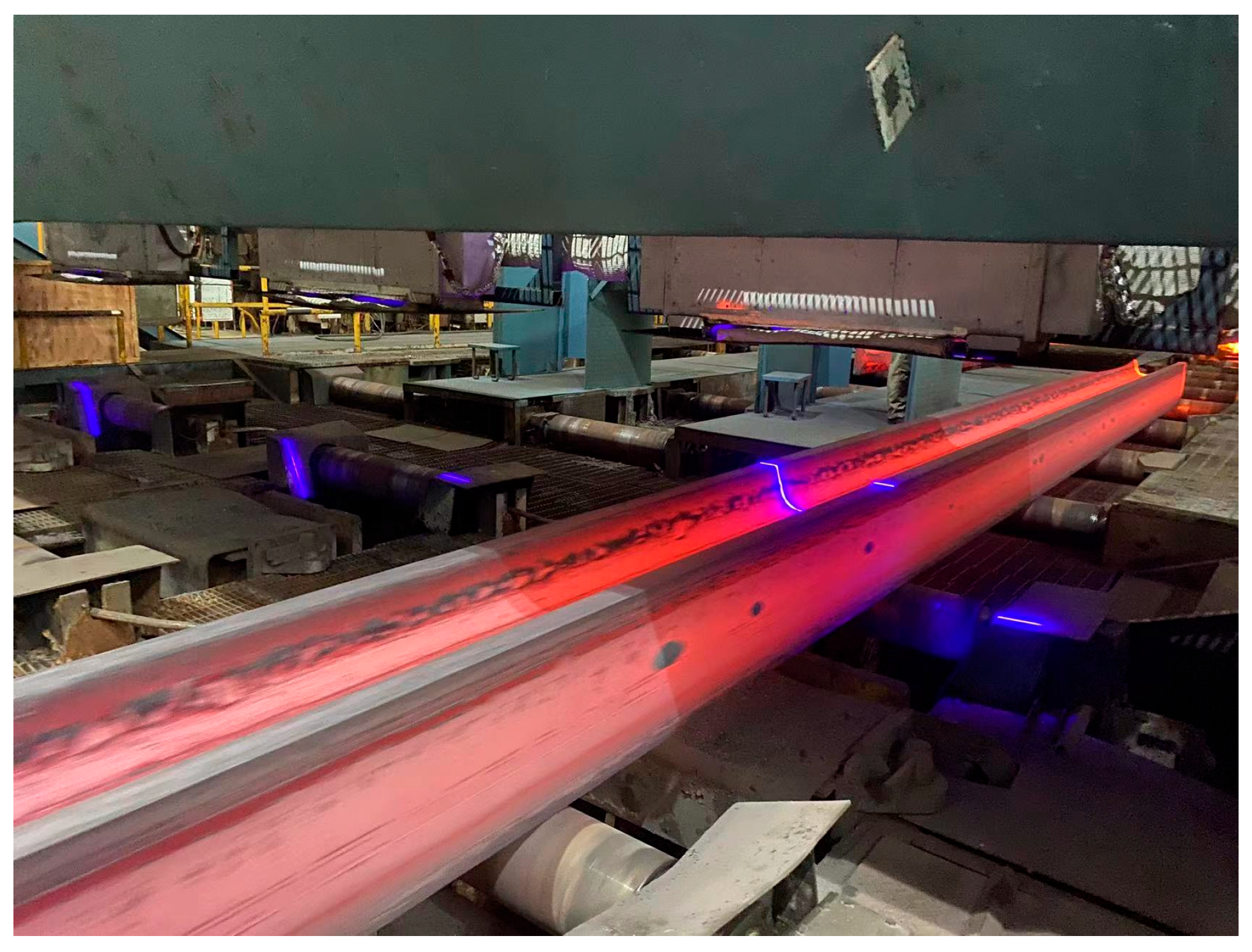
The preferred option method is online inspection, in which workers directly observe the surface of red-hot billets after cutting. Due to high temperatures, workers cannot approach the billets closely, leading to a very limited detection range that cannot achieve full coverage. In addition, some minor defects, especially fine cracks, are easily overlooked. The harsh working environment and high labor intensity also make it difficult to maintain stable and continuous inspection.
The traditional method is offline inspection, which requires removing billets from the production line and cooling them before manual examination. Although this method improves visibility, it does not support hot charging and direct rolling. Furthermore, it cannot realize real-time identification of surface defects or provide a rapid response mechanism. This may also cause the continuous occurrence of defects and production shutdowns, resulting in substantial economic losses.
The main challenges of online surface defect detection for high-temperature continuous casting billets are summarized as follows:
Firstly, continuous casting billets have various specifications and types. In addition, beam blanks and ground continuous casting billets usually have uneven and complex surfaces. Therefore, achieving high-definition imaging under high dynamic conditions and diverse specifications is one of the primary challenges for real-time online defect detection.
Secondly, owing to the strong surface radiation of high-temperature billets, images captured by conventional white-light sources and cameras often suffer from low contrast between defects and the background. Improving imaging quality thus becomes the second major challenge affecting detection accuracy.
Thirdly, the surfaces of high-temperature billets are affected by complex background interference, such as oxide scales and water stains. In particular, edges of oxide scales can resemble crack edges and are difficult to distinguish by using conventional image features. Accurate defect identification under strong interferences from oxide scales and water stains therefore constitutes the third key challenge.
Fourthly, the collection and verification of defect samples for high-temperature billets are difficult. Defects observed in images cannot be directly compared with those on hot billets in real time. Once billets cool down, defect features may change or be covered by oxide scales. Consequently, rapid and accurate acquisition of defect samples is another critical challenge for reliable surface defect detection.
Given the unique characteristics of continuous casting billet inspection, comprehensive considerations must be given to imaging system design, algorithm development, and defect sample collection methods.
2.3. Solution Strategies
This study focuses on multiple difficulties encountered in high-temperature continuous casting billet inspection, including challenges in high-definition imaging, complex and variable product specifications, strong interference from surface oxide scales, requirements for four-sided inspection, high imaging background noise, limited defect sample volumes, and low defect detection and classification accuracy. This paper proposes three aspects to solve these problems: high-contrast imaging design, multi-information fusion detecting, and defect recognition algorithm modeling.
(1) Development of short-wave illumination technology suitable for high-temperature continuous casting billets.
High-temperature environments promote the formation of oxide scales and other contaminants on billet surfaces, which severely interfere with imaging. By developing a novel illumination system based on a 450 nm blue semiconductor laser source, imaging contrast and clarity are significantly improved, effectively suppressing the interference caused by high temperatures and oxide scales.
(2) Development of multispectral-based large-depth-of-field dynamic imaging technology for high-temperature continuous casting billets.
High-temperature continuous casting billet surfaces frequently exhibit small-scale dimensional defects such as pores and cracks, whose accurate detection is essential for high-quality production. However, such minor defects are often masked by complex interferences including high temperatures and oxide scales, creating great difficulties for surface imaging. To solve these problems, this paper proposes an integrated imaging strategy that simultaneously acquires and synchronizes 2D grayscale information, 3D depth data, and surface temperature distribution. Using a high-definition variable-cross-section imaging method with multi-angle and large-depth-of-field capability, the billet surface is imaged from multiple perspectives and depth ranges to obtain comprehensive surface information.
(3) Development of a multi-information fusion-based multidimensional defect detection model for high-temperature continuous casting billets.
Traditional deep learning algorithms facing limitations in billet defect detection, including difficulties in extracting discriminative features and unsatisfactory performance caused by insufficient training samples. To solve these issues, this study develops a multidimensional defect detection model based on multi-information fusion for high-temperature continuous casting billets.
The model integrates temperature measurement with 2D image defect detection algorithms to establish a real-time pseudo-defect identification method, which effectively eliminates background interference from oxide scales, water stains, and other sources. A data augmentation technique based on neural style transfer learning is also introduced, which converts original images into new samples with specific styles to enlarge the dataset and reduce overfitting caused by limited data, thus solving the small-sample problem.
In addition, a 3D depth recognition method for billet surface defects is developed based on multispectral photometric stereo technology. This method enables fast and robust identification of various surface defects, including pores, slag inclusions, and cracks.
4. Multi-Information Defect Recognition Model
4.2. Deep Learning-Based 2D Defect Recognition Model
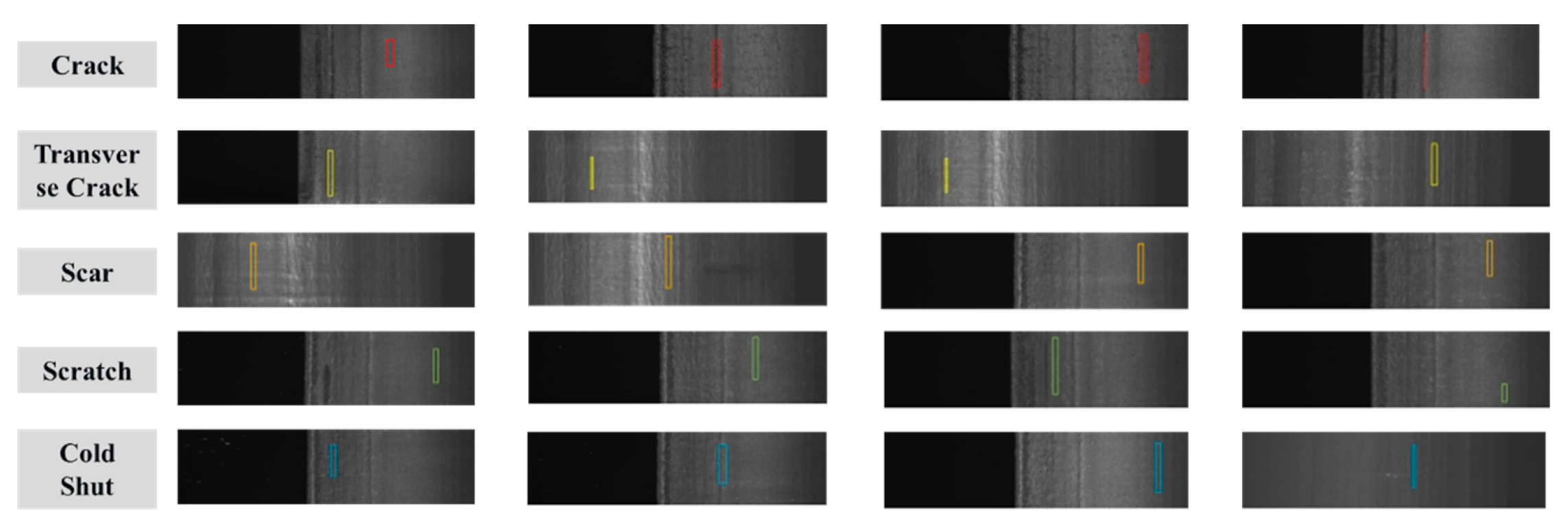
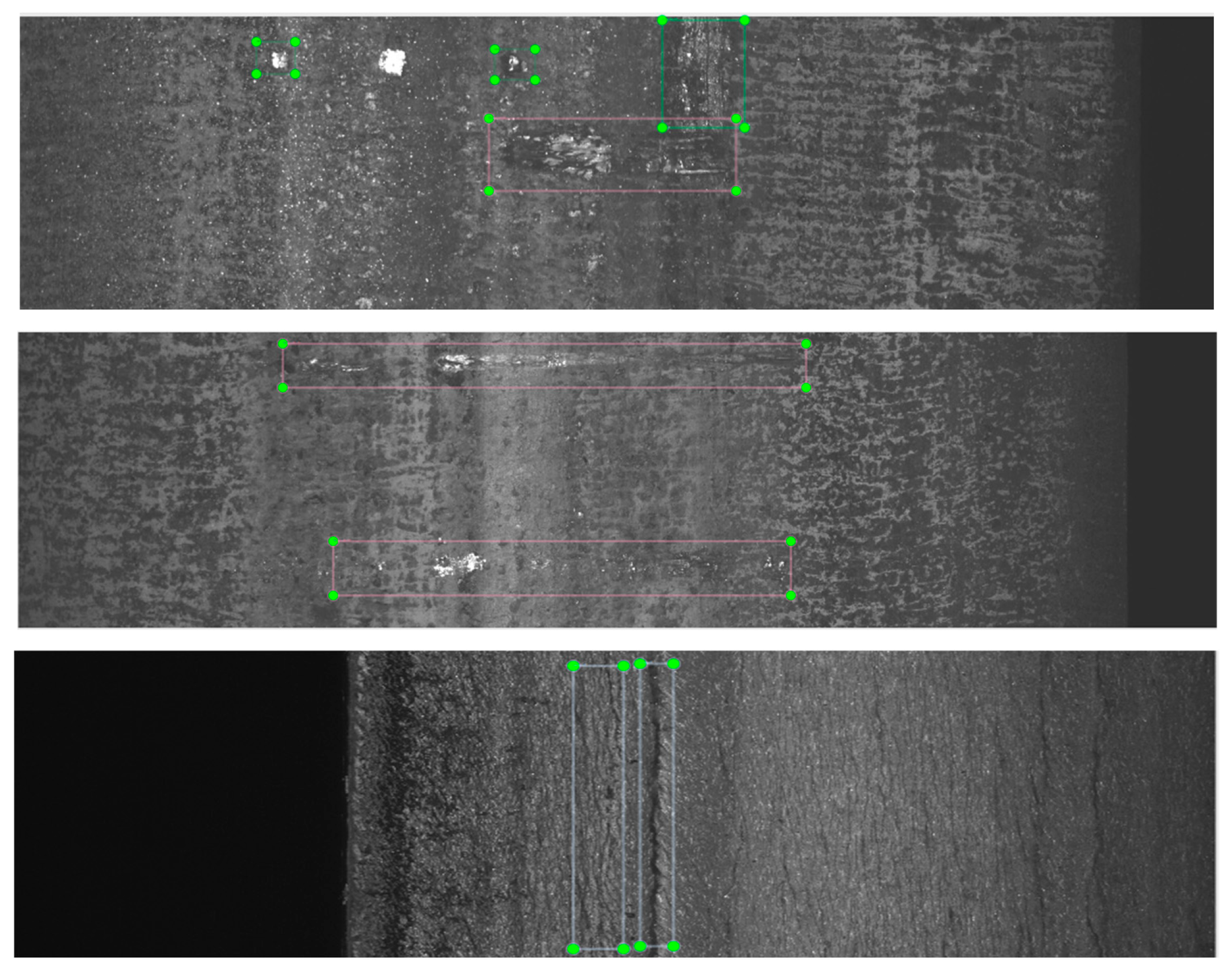
At present, with a sufficiently large number of various surface defect samples, deep learning models represented by the YOLO series have achieved promising recognition and classification performance in defect identification. Therefore, this study conducts adaptive research on surface defect recognition for high-temperature continuous casting billets, focusing on two aspects: algorithm-level improvements to the YOLO series and post-deployment optimization in practical applications.
On the one hand, an attention mechanism is integrated into YOLO-based recognition algorithms. The Convolutional Block Attention Module or Coordinate Attention is embedded into the backbone or neck network, enabling the model to focus on regions with texture variations on the high-temperature billet surface while suppressing interference from uniform high-temperature backgrounds. For continuous casting billets, defects typically appear as local texture anomalies, and attention mechanisms help capture such fine details.
To address large cross-scale differences between small defects such as roll marks and long narrow longitudinal cracks, the expressive power of multi-scale features is enhanced. The feature pyramid structure is improved by increasing the utilization of shallow features and introducing Adaptive Spatial Feature Fusion to dynamically learn weights for features at different scales. For elongated crack defects, Deformable Convolutional Networks are incorporated to adapt convolution kernels to defect shapes, thereby improving sensitivity to irregular defects.
Considering the directional characteristics of defects such as cracks and scratches on continuous casting billets, an angular penalty term is added to the bounding box regression loss, or rotated bounding box detection is used to strengthen shape-aware loss for defects. For hard-to-identify defects such as cracks, a lightweight preprocessing network is designed to perform temperature field normalization or thermal radiation correction on input images based on multi-information fusion temperature-aware results, reducing the influence of temperature variations on surface texture representation.
Meanwhile, for pseudo-defects and real defects that are difficult to distinguish under high-temperature interference, Focal Loss or GHM loss is adopted to reduce the weight of simple negative samples in uniform high-temperature regions, allowing the model to focus on hard samples. To meet real-time detection requirements, lightweight techniques including model pruning and quantization are applied to balance model compactness and real-time performance in the 2D defect recognition model.
On the other hand, after the locally trained model is deployed online, inter-frame information is utilized for continuously moving high-temperature billets. Inter-frame stability constraints are introduced to improve the positional continuity of defects across adjacent frames, effectively reducing false positives. An adaptive threshold mechanism is designed to adjust dynamically according to the overall image noise level, avoiding missed or false detections in frames with severe interference.
An online adaptive learning mechanism is established after model deployment. New samples are automatically added to a buffer pool when operators confirm or correct detection results. Periodic incremental learning or online fine-tuning is performed to adapt the model to variations on the production line. In this paper, four high-performance NVIDIA GeForce RTX 4090 graphics cards, which are built on the Ada Lovelace architecture and equipped with 24 GB of GDDR6X VRAM, are applied for model training and on-site inference.
4.3. Photometric Stereo-Based 3D Defect Recognition Model
Photometric stereo is a branch of the classical 3D reconstruction method known as Shape-From-Shading. It involves capturing images with varying photometric information by changing the position or spectrum of the light source while keeping the relative positions of the camera and the object unchanged. The surface normal of the object is then recovered based on an imaging photometric model. Since photometric stereo performs calculations at the pixel level, it is particularly suitable for high-frequency signals and excels at preserving fine surface details.
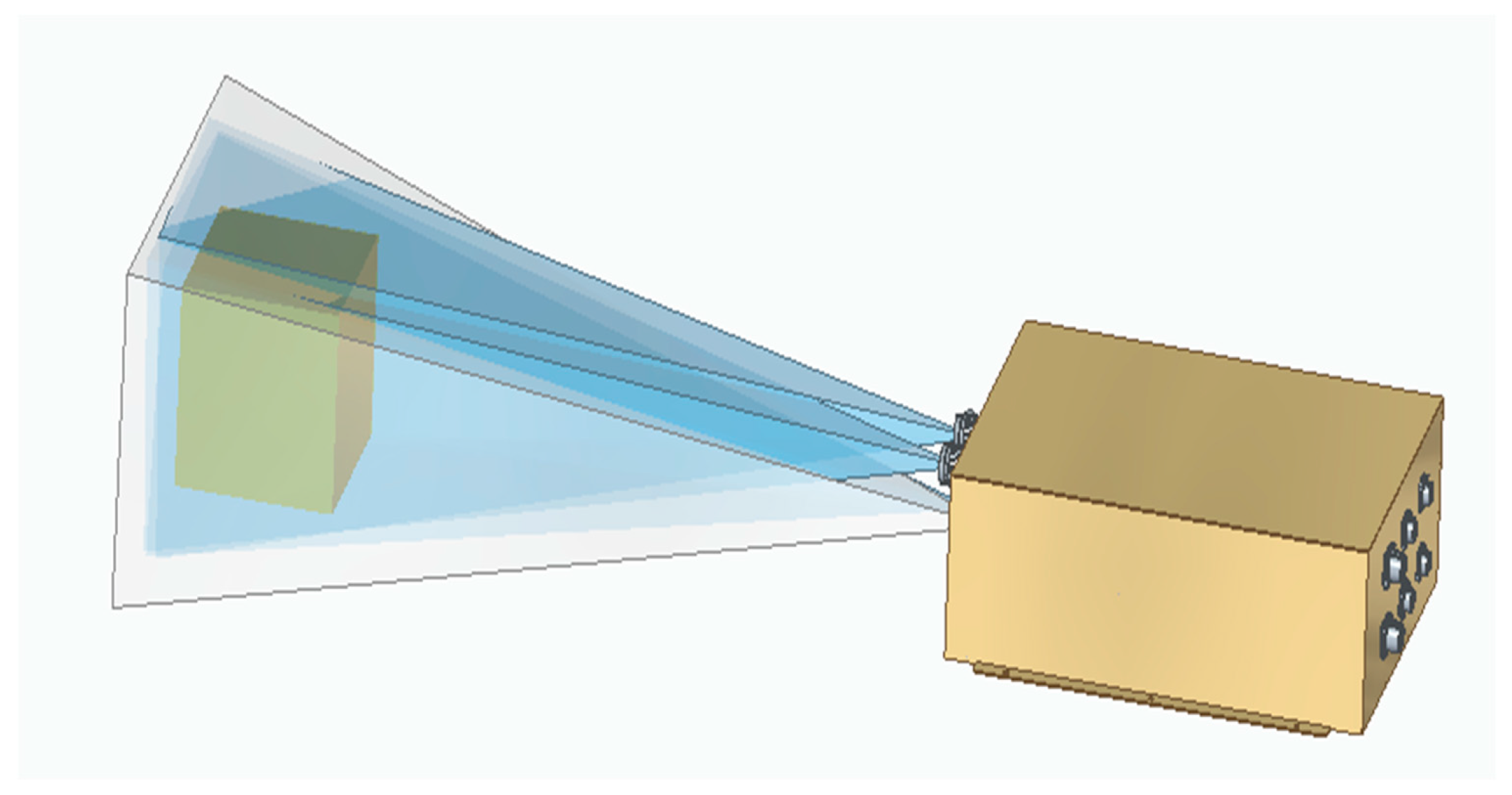
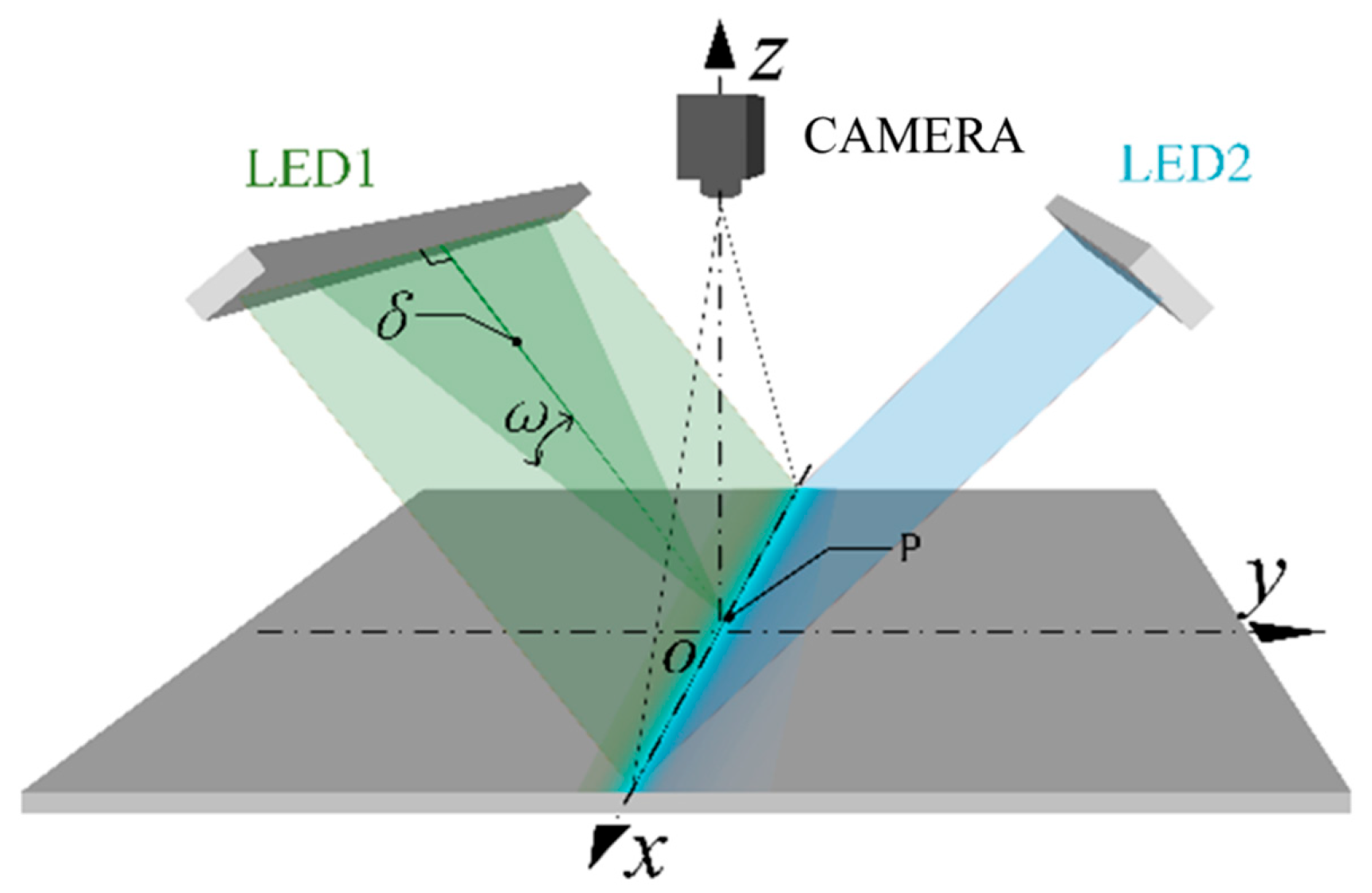
Traditionally, photometric stereo-based 3D reconstruction theoretically requires at least three non-collinear light sources to accurately determine surface normal and reconstruct the 3D surface. However, increasing the number of light sources also complicates the system structure. Therefore, this study develops a photometric stereo 3D measurement method using only two light sources, as illustrated in
Figure 5.
LED1 and LED2 are two alternately lit LED line lights, and the camera is a line-scan camera positioned perpendicular to the measured plane. LED1 and LED2 are symmetrically arranged on both sides of the camera’s optical plane at the same height above the measured surface. Their incident light converges on the measured plane and remains collinear with the camera’s optical plane. Image acquisition by the camera is fully synchronized with LED1 and LED2.
As LED1 and LED2 illuminate alternately, the camera performs alternating line-scan imaging. When the high-temperature continuous casting billet passes through the measurement area, the system first sends a trigger signal to LED1 and the camera. LED1 illuminates while the camera exposes, capturing the object image under LED1 lighting, corresponding to the odd scan lines. The system then triggers LED2 and the camera: LED2 illuminates and the camera exposes, capturing the image under LED2 lighting, corresponding to the even scan lines.
Once the camera captures the preset number of lines, the odd and even lines can be extracted to form odd and even fields, respectively. The odd field corresponds to the object image under LED1 illumination, and the even field corresponds to the image under LED2 illumination. Due to the high acquisition frequency of the line-scan camera, the time interval between triggering odd and even lines is extremely short, so the offset between them can be neglected. Thus, the odd and even fields can be regarded as corresponding to the same position on the measured object, satisfying the requirements for photometric stereo 3D reconstruction.
The 3D reconstruction and detection workflow of the dual-light-source photometric stereo method is as follows:
First, system calibration is performed for the dual-light-source hardware setup. A standard diffuse reflection whiteboard is used to accurately measure or calibrate the direction vectors of the two light sources relative to the camera.
Then, image acquisition is carried out, ensuring that the object and camera remain essentially stationary during the two exposures.
Image preprocessing is performed, including denoising and non-uniform illumination correction (flat-field correction), followed by selection of a flat reference background region.
Next, calculations are performed for the pseudo-normal vector field, reference region normalization, gradient field computation, and surface integration.
Finally, a height map of the surface texture is obtained, supporting intuitive visualization of defect depths.
In summary, using the dual-light-source photometric stereo method for 3D reconstruction of high-temperature continuous casting billet surfaces enables the derivation of y-direction gradient values via photometric stereo even with only two light sources. This provides critical support for obtaining depth information on the surface of high-temperature continuous casting billets.
5. Online Surface Defect Detection Equipment and Field Application Cases
The online surface defect detection system for high-temperature continuous casting billets described above integrates multi-information fusion based on two-dimensional visual features, three-dimensional depth information, and surface temperature data. This technology provides critical guidance for quality inspection of high-value continuous casting billets. However, it still faces challenges such as relatively high implementation costs and varying application requirements across different inspection scenarios.
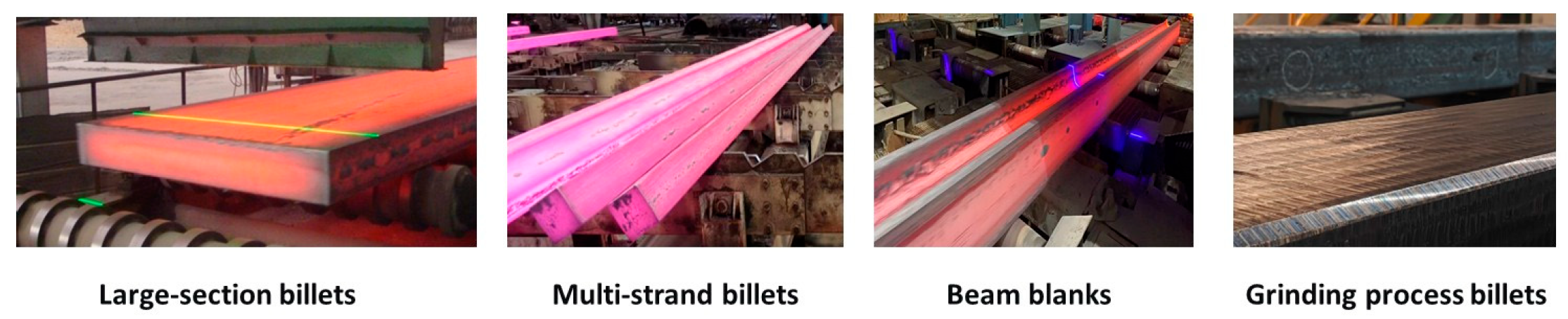
This section elaborates on the features and performance of the online surface defect detection technology for high-temperature continuous casting billets in three typical application scenarios: large-section billets, beam blanks, and continuous casting billets during the grinding process. Among these configurations, the multi-information fusion scheme is adopted for large-section billets, while only top-surface inspection is applied for beam blanks and billets during grinding, which is sufficient to meet their respective quality requirements.
5.1. Large-Section Billets
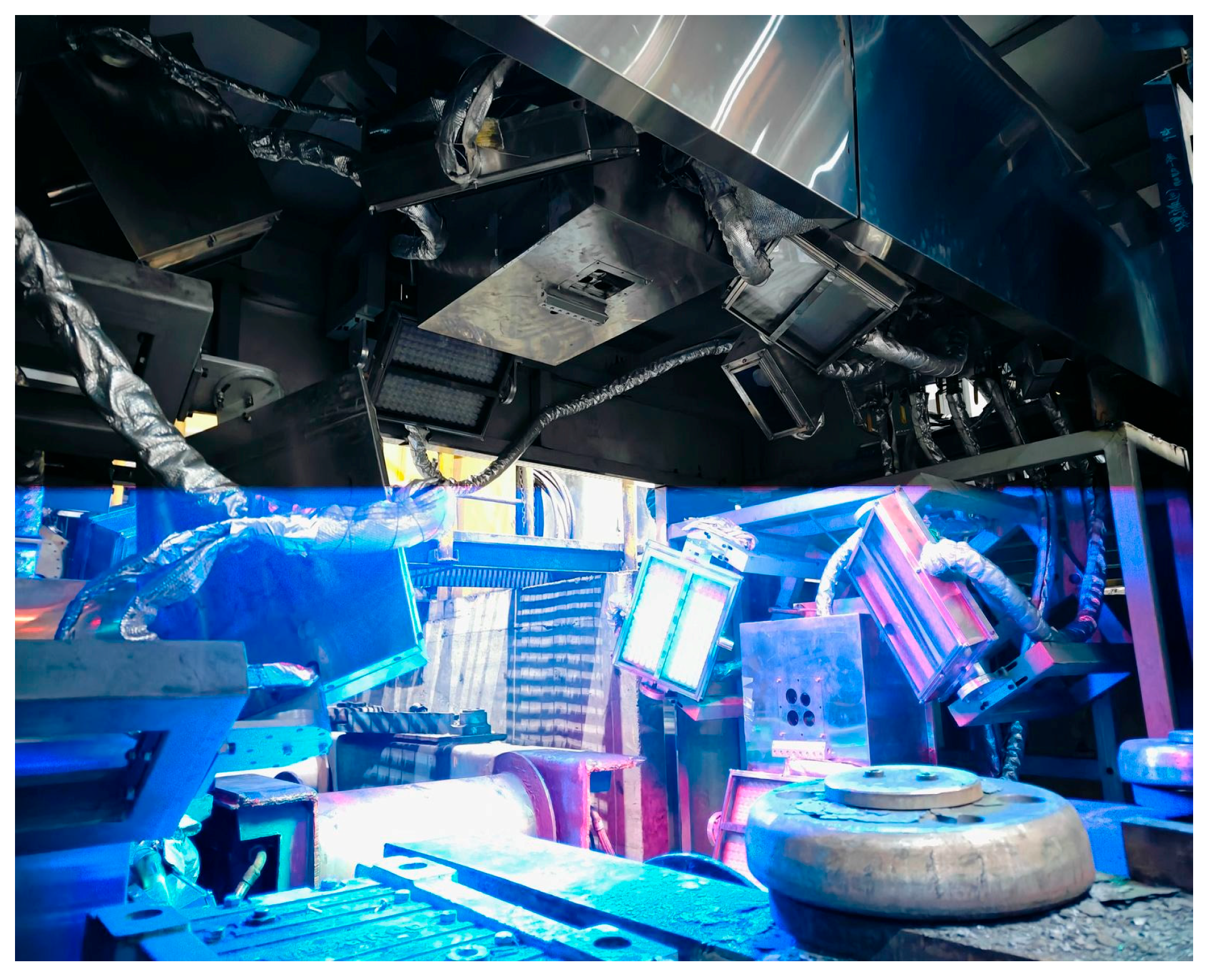
The surface defect detection system for large-section continuous casting billets mainly consists of the following components: multispectral image sensors, illumination sources, integrated protective enclosures, acquisition controllers, environmental control systems, servers, network switches, and user terminals. The detection units for the top, bottom, left, and right surfaces of the high-temperature billet include both illumination sources and multispectral image sensors. Each multispectral sensor is equipped with three light sources (R, G, and B), arranged in a triangular layout surrounding the sensor.
The imaging system captures surface image information of the moving billet and transmits the data to a parallel computer processing system for analysis. This system comprises multiple client computers, each connected to an individual camera to receive and process the corresponding image data. This configuration ensures that images from each multispectral camera are processed by a dedicated computer, enabling parallel computing across multiple hosts and significantly improving the overall data processing capability.
When an abnormality is detected on the billet surface, the system stores the image in a buffer for further analysis. Using image processing and pattern recognition techniques, the system automatically identifies defects on the top, bottom, left, and right surfaces. Defects are classified into predefined categories according to the built-in classification scheme, and different alarm strategies are triggered based on defect severity. All image processing and pattern recognition tasks are executed on the client computers. The surface defect detection system for large-section high-temperature continuous casting billets is shown in
Figure 6.
After processing and analysis by the parallel computing system, the defect results are transmitted to the server. Since large defects may extend across images captured by different cameras, the server merges these partial results to generate a complete defect distribution map of the entire billet, supporting comprehensive surface quality evaluation. Meanwhile, the server archives the billet defect distribution information in a database for storage and traceability.
The server connects to multiple console terminals for displaying and recording defect images and data. The surface detection system interfaces with the billet production line automation system and process control computer to obtain key production data, including billet ID, production status, steel grade, casting speed, width, and length. By integrating this information with surface inspection results, a complete quality record is established for each billet.
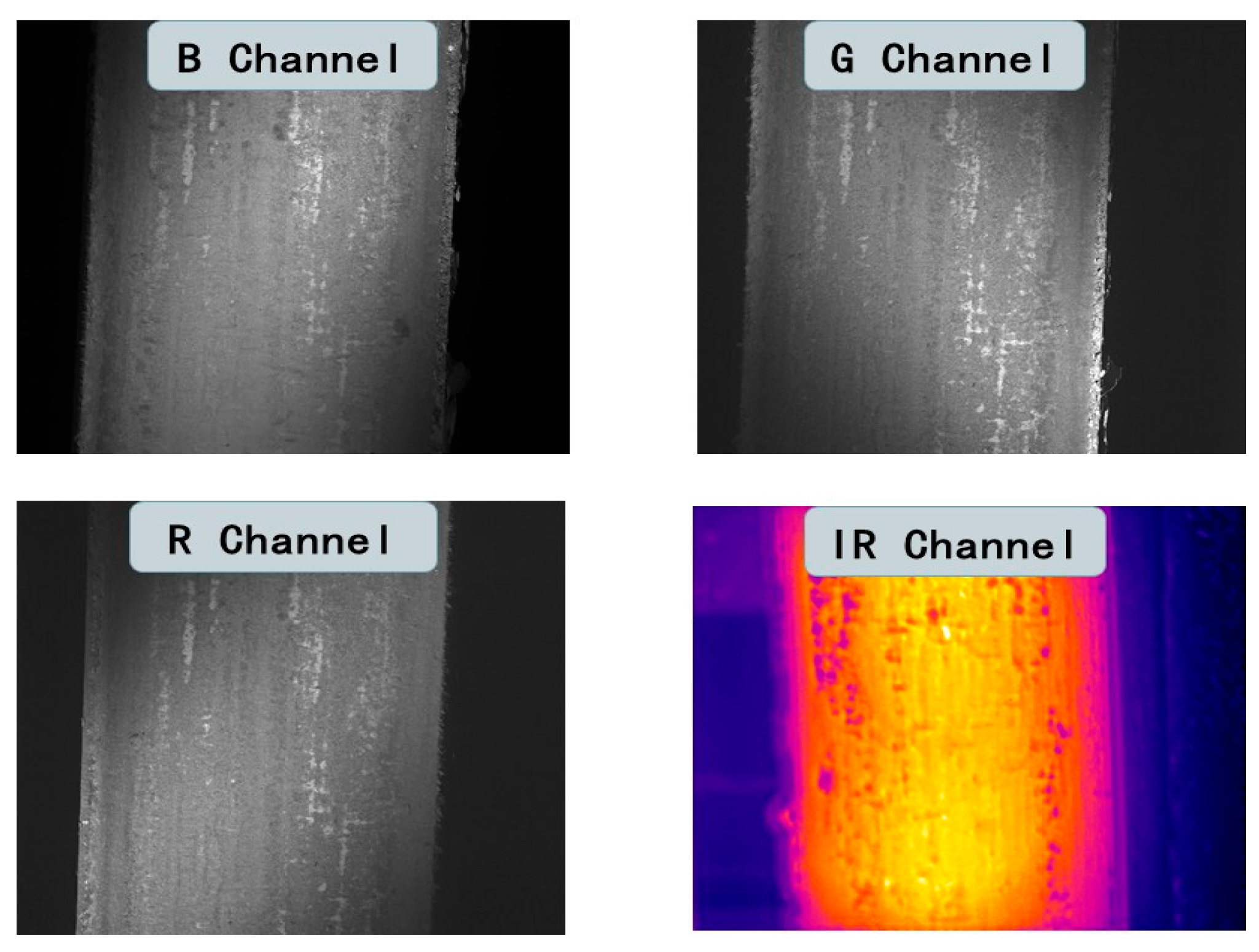
Figure 7 shows four-channel surface images of a high-temperature continuous casting billet acquired by the multispectral imaging system.
A dual-light-source photometric stereo method is used to estimate the surface depth distribution of the billet. Temperature measurement is applied to analyze surface temperature differences, helping to identify regions covered by oxide scale. Finally, temperature information, depth data, and 2D deep learning-based defect recognition results are fused to distinguish between pseudo-defects and real defects.
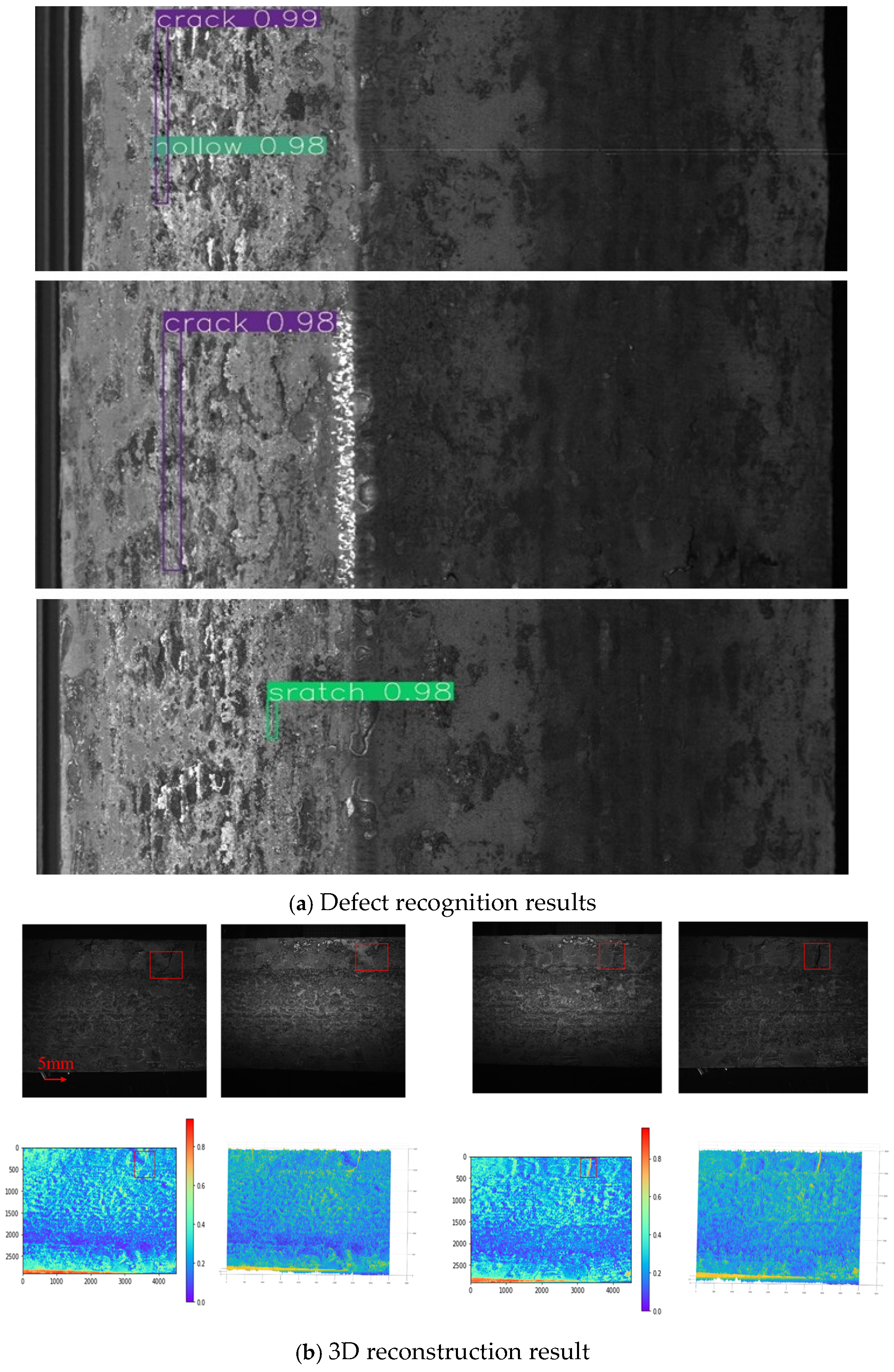
Figure 8 presents the 3D reconstruction results and defect recognition performance for large-section billet surfaces. The meanings represented in
Figure 8b by the colors are shown on the right side of each figure. The redder the color, the greater the depth; the bluer the color, the smaller the depth. The detection rates for typical surface defects including cracks, pits, and scratches reach 95.5%, 97%, and 96.4%, respectively, with corresponding classification accuracies of 91%, 95.5%, and 90.8%.