1. Introduction
The rapid expansion of electric vehicles (EVs), including battery electric (BEV), hybrid electric (HEV), plug-in hybrid (PHEV), and fuel cell (FCEV) platforms, is fundamentally reshaping lubricant design requirements. Unlike internal combustion engine (ICE) vehicles, where lubricant formulations have been largely driven by combustion-related constraints, electrified powertrains integrate electric motors, gears, bearings, and power electronics into compact architectures operating at higher rotational speeds and power densities [
1,
2,
3,
4]. These changes have intensified interest in multifunctional fluids capable of simultaneously providing lubrication and thermal management. In this context, water-based lubricants (WBLs), defined as fluids containing ≥50 wt.% water, and water-containing lubricants (WCLs, <50 wt.% water) have attracted increasing attention due to their high thermal conductivity, low viscosity, and reported friction reduction capabilities [
2,
5,
6,
7,
8,
9]. Recent industry reports further indicate growing original equipment manufacturer (OEM) interest in such fluids to improve energy efficiency and reduce system complexity [
2].
Substantial tribological research has demonstrated that water-containing polyalkylene glycols (PAGs), glycerol mixtures, and related aqueous systems can achieve low friction and even superlubricity under certain elastohydrodynamic (EHL) and boundary lubrication conditions [
7,
8,
9,
10,
11,
12]. For example, water-containing PAGs have been shown to produce friction coefficients below 0.01 in rolling-sliding contacts [
9,
13,
14], and glycerol–water mixtures have exhibited significant friction reductions compared to conventional polyalphaolefin (PAO) oils [
8,
15,
16,
17]. These effects have been attributed to reduced pressure–viscosity coefficients, formation of low-shear hydrated layers, and tribofilm development under sliding conditions [
8,
10,
18,
19,
20,
21,
22]. However, increasing water concentration reduces film thickness and can promote transitions from full film to mixed or boundary lubrication at high speeds or loads [
8,
16], highlighting the complex interplay between rheology and lubrication regime.
Despite these advances in friction and film formation, the electrochemical compatibility of WBLs with bearing steels remains comparatively underexplored. High water content fundamentally alters interfacial chemistry and can promote anodic dissolution, modify passivation behavior, and increase susceptibility to localized corrosion, particularly in high-strength steels such as AISI 52100 commonly used in rolling element bearings [
23]. Conditions relevant to EV drivetrains, including elevated temperatures, dissolved oxygen, and stray electrical potentials, may further accelerate corrosion processes. To mitigate these effects, corrosion inhibitors such as sodium nitrate (NaNO
3) may be incorporated to promote passivation of AISI 52100 steel through stabilization of protective iron oxide films, thereby suppressing anodic dissolution and reducing corrosion current density in high-water-content lubricant environments.
This issue is critical for enabling a single-fluid approach, wherein a single aqueous lubricant serves both cooling and lubrication functions within electrified powertrains. While WBLs offer enhanced heat dissipation and reduced viscous losses, their adoption as primary drivetrain fluids requires assurance that corrosion rates, passivation stability, and surface degradation remain within acceptable limits. Recent tribocorrosion studies on GCr15 steel (equivalent to AISI 52100) have shown that water–glycol fluids can alter reaction film composition and wear behavior under aggressive environments [
24]. Similarly, investigations of aqueous lubricant systems containing ionic additives have demonstrated that water-rich media influence oxide tribofilm formation on AISI 52100, affecting both friction and corrosion pathways [
23]. These findings underscore the coupled nature of tribological and electrochemical degradation in aqueous lubricant environments.
Similar aqueous-glycol environments are widely encountered in automotive engine cooling systems, where water–ethylene glycol mixtures are used for thermal management. In these systems, steel and cast iron components are exposed to water–glycol solutions containing corrosion inhibitors designed to control anodic dissolution and stabilize protective oxide films. Previous studies showed that corrosion behavior in such coolant environments strongly depends on glycol concentration, oxygen availability, and inhibitor chemistry [
25,
26]. While the corrosion of metals in automotive coolants has been studied extensively, these systems are primarily designed for heat transfer rather than lubrication. As a result, the electrochemical behavior of bearing steels in high-water-content lubricants remains less understood, particularly when such fluids are proposed as multifunctional lubricants and coolants in electrified drivetrains.
In addition to conventional water–glycol coolant systems, increasing attention has been directed towards polyol-based aqueous solutions, including glycerol and polyethylene glycol containing solutions, due to their potential to modify corrosion behavior through interactions at the metal–electrolyte interface. Glycerol based systems have been reported to exhibit reduced corrosion activity relative to purely aqueous environments, attributed to their increased solution viscosity, reduced oxygen transport, and the formation of adsorbed surface films that enhance passivation stability [
27,
28,
29]. Similarly, polyethylene glycol (PEG) has demonstrated the ability to influence electrochemical behavior through adsorption-driven mechanisms, contributing to the formation of protective interfacial layers and reduced corrosion current densities in aqueous systems [
30]. In contrast, lower molecular weight aqueous glycol systems such as ethylene glycol may exhibit more complex behavior due to chemical degradation processes; oxidation of ethylene glycol can generate organic acids, which reduce solution pH and accelerate anodic dissolution of steel surfaces [
31]. Furthermore, corrosion behavior in aqueous glycol solutions has been shown to depend strongly on water content and solution chemistry, with higher water fractions promoting increased electrochemical activity [
32]. While recent studies on glycol-based heat transfer fluids demonstrated the importance of inhibitor chemistry in mitigating corrosion processes [
33], these systems have been typically optimized for thermal management rather than lubrication. Consequently, a systematic understanding of corrosion mechanisms across glycerol, PEG, and glycol-based water-based lubricants remains limited, particularly for bearing steels operating in high-water content environments.
While these studies provide important mechanistic insight, systematic electrochemical evaluation of neat WBL base fluids (≥50 wt.% water) remains limited. Much of the literature emphasizes additive-enhanced formulations or WCL systems (<50 wt.% water), leaving intrinsic corrosion kinetics, passivation characteristics, and polarization responses of high-water-content WBLs insufficiently characterized. This knowledge gap limits engineering assessment of WBLs as primary lubricating fluids because water-induced corrosion may offset gains in friction reduction and thermal performance.
Accordingly, this work investigated the corrosion behavior and inhibition of WBLs in contact with AISI 52100 bearing steel using open circuit potential (OCP) monitoring and potentiodynamic polarization techniques. The objective was to quantify electrochemical stability, compare corrosion kinetics across lubricant chemistries, and assess the feasibility of WBLs for single-fluid EV drivetrain lubrication.
2. Materials and Methods
Round disks made of through-hardened AISI 52100 bearing steel(McMaster-Carr, Aurora, OH, USA) were used to study their electrochemical response under different solutions. The elemental composition of AISI 52100 can be seen in
Table 1. The disks had a diameter of 15.875 mm and a thickness of 10 mm; prior to the electrochemical tests the samples were degreased in an ultrasonic cleaner with hexane and isopropyl alcohol (VWR, Radnor, PA, USA) and air dried.
The WBLs studied were prepared using 50 wt.% dilutions of deionized water and either glycerol (VWR, Radnor, PA, USA), ethylene glycol (MEG) (VWR, Radnor, PA, USA), polyethylene glycol (PEG) (Sigma Aldrich, 99%, St. Louis, MO, USA), and polyalkylene glycol (PAG) (BASF, Florham Park, NJ, USA). The 500 mL dilutions were mixed at 50 °C with a magnetic stirrer at 500 rpm for 45 min in a sealed container to prevent water evaporation. The properties of the fluids can be seen in
Table 2, obtained from ref. [
34]. Among the most important properties for lubricants is the pressure–viscosity coefficient (α
0). This coefficient indicates how thick lubricant films will become in elastohydrodynamic lubricated contacts [
35]. Sodium nitrate (NaNO
3) (Sigma Aldrich, St. Louis, MO, USA) was incorporated as a corrosion inhibitor at a 0.2 wt.% of solution; this treatment level is common in lubricant applications [
36].
Electrochemical tests were carried out in a Gamry Instruments Reference 600 Potentiostat (Warminster, PA, USA) according to the ASTM G3-14 standard with a three-electrode cell set up [
37]. Round AISI 52100 steel 3.175 cm in diameter samples were ground up to 1200 grit using SiC paper and then exposed to the electrolyte as the working electrode (WE) with an exposed area of 3.14 cm
2, a graphite rod as the counter electrode (CE), a saturated calomel electrode (SCE) acting as a reference electrode (RE), and the different WBLs at room temperature (25 °C) as the electrolytes. First, open circuit potential (OCP) was monitored for 1800 s to stabilize the corrosion potential (
Ecorr). Linear polarization resistance (LPR) tests were performed within a potential range of ±20 mV
OCP and scan rate of 0.125 mV/s according to ASTM G59-97 [
38]. EIS measurements were conducted at the
Ecorr, in a frequency range between 10
−2 and 10
5 Hz, a 10 mV rms excitation signal, and a step rate of 10 points per decade. Potentiodynamic polarization curves were performed in a potential range of +800 to −200 mV
OCP with a scan rate of 1.667 mV/s. All experiments were performed in triplicate.
The polarization resistance (
) was obtained from linear polarization resistance measurements by applying a small potential perturbation around the corrosion potential (
). In this near-equilibrium region, the current-potential relationship can be approximated as linear, and the polarization resistance is defined as the slope of the potential-current response [
39,
40]:
where
is the electrode potential and
is the current density. The value of
was determined by performing a linear regression of the measured current-potential data within a narrow potential range around
.
Potentiodynamic polarization curves were used to determine the corrosion potential (
), corrosion current density (
), and the anodic and cathodic Tafel slopes (
and
). These slopes were obtained by fitting the linear regions of the anodic and cathodic branches of the polarization curves according to the Tafel relationship [
41]:
where
is the overpotential,
is the current density, and
represents the anodic (
) or cathodic (
) Tafel slope expressed in V/dec.
The corrosion current density was estimated using the Stern–Geary relationship:
where the Stern–Geary constant
is defined as follows [
38,
39]:
Here, is expressed in A/cm2, in Ω, and the Tafel slopes in V/dec. This methodology allows quantification of corrosion kinetics by combining LPR-derived polarization resistance with Tafel parameters obtained from potentiodynamic polarization measurements.
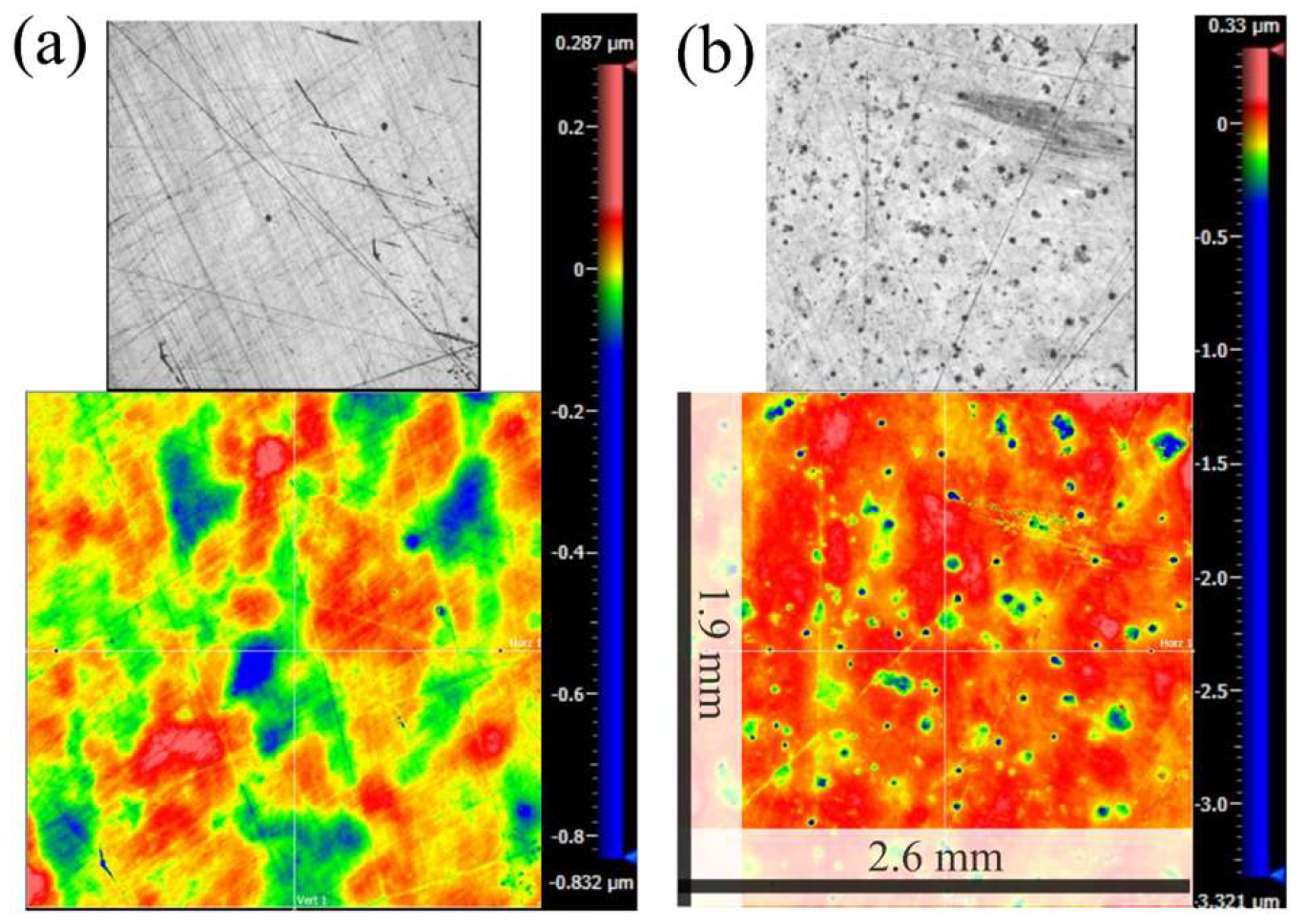
The final surfaces before and after testing had an average surface roughness of R
a = 0.029 ± 0.008 µm and R
a = 0.046 ± 0.014 µm, respectively, as can be seen in
Figure 1.
The electrical conductivity of the WBLs was evaluated using an Apera Instruments PC800 (Columbus, OH, USA) pH/Conductivity Meter equipped with a conductivity probe used to measure the conductivity of the aqueous solutions. A two-point calibration was performed using an 84 μS/cm standard buffer solution and a 1413 μS/cm standard buffer solution. Each fluid was measured at 23 °C ± 1 °C with three replicate measurements per fluid, reported as mean ± standard deviation.
Optical images of the exposed surface area of the AISI 52100 samples were taken with an optical microscope (OM) from Nikon Eclipse MA 100 (Melville, NY, USA). Analysis of the surfaces was performed using a scanning white-light interferometry (SWLI) microscope, Zygo NewView 9000 (Middlefield, CT, USA). Scanning electron microscopy (SEM) characterization and local composition analysis was performed via energy dispersive X-ray spectroscopy (EDX) using an FEI Quanta 200 microscope (Hillsboro, OR, USA). An acceleration voltage of 20 kV and a working distance of 10 mm were used according to the ASTM E986-04 standard [
42].
4. Discussion
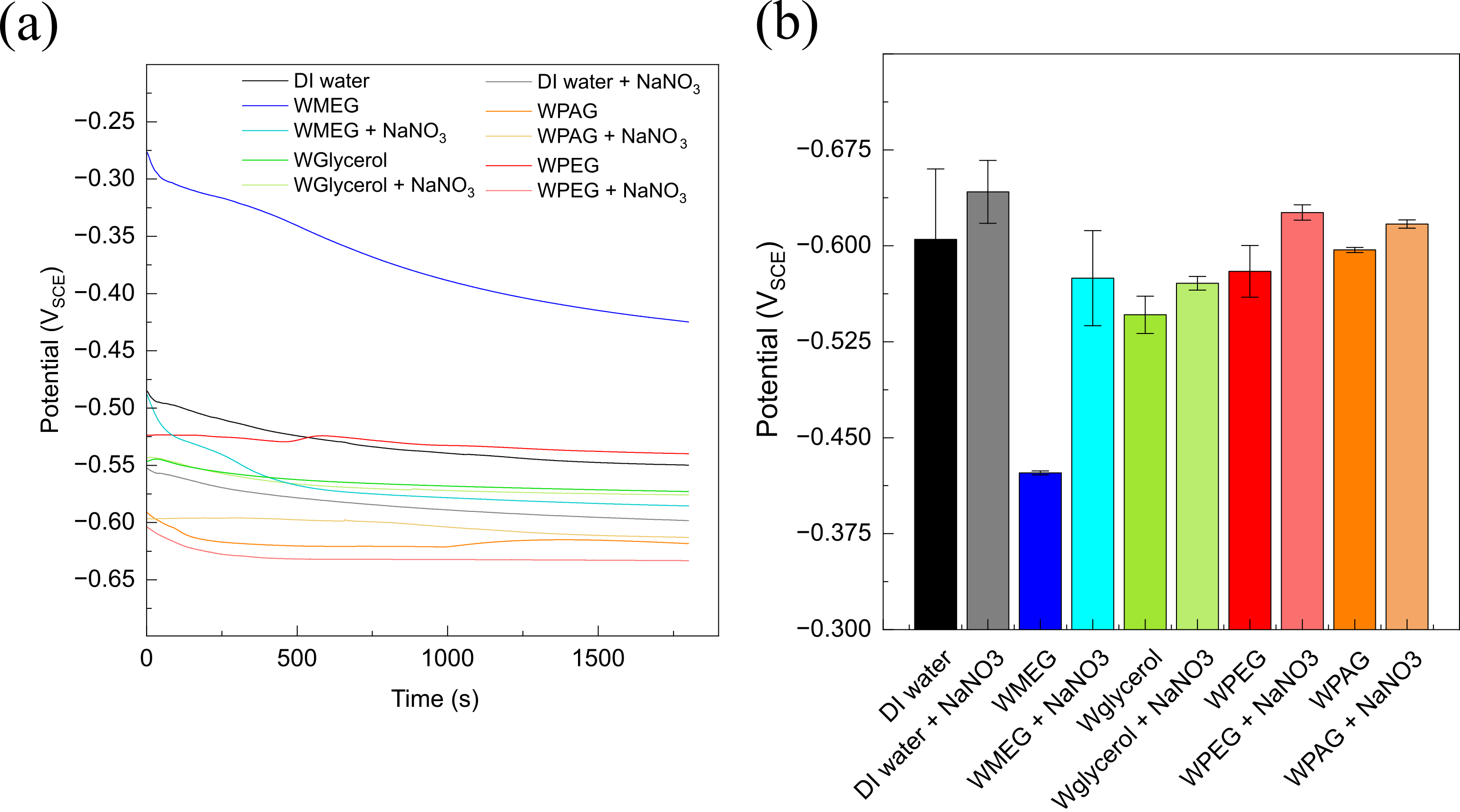
The electrochemical corrosion parameters were determined from open circuit potential (OCP), linear polarization resistance (LPR), potentiodynamic polarization measurements, and EIS. Prior to polarization measurements, the working electrode was allowed to stabilize at open circuit potential for 1800 s to reach a steady-state electrochemical condition.
Figure 2 shows the evolution of the open circuit potential (OCP) as a function of time for the different fluids, along with the average steady-state OCP values and associated standard deviations. In all cases, the potential exhibits an initial transient before stabilizing, which is typical of surface equilibration and the formation of surface films upon immersion. The WMEG electrolyte displays the most positive OCP values, indicating a more noble electrochemical behavior. In contrast, the WPEG+ (with corrosion inhibitor) solution shifts the potential toward more negative values, suggesting a more active surface condition consistent with a more aggressive electrolyte environment. The rest of the water-based lubricant formulations exhibit intermediate OCP values, indicating partial stabilization of the surface compared to the blank condition. Once stabilized, the potentials remain relatively constant, and the small standard deviations observed in the averaged values indicate good repeatability of the measurements. Overall, the results suggest that the different fluid chemistries influence the electrochemical state of the surface, with more negative potentials corresponding to a greater tendency toward active corrosion behavior.
The electrochemical parameters summarized in
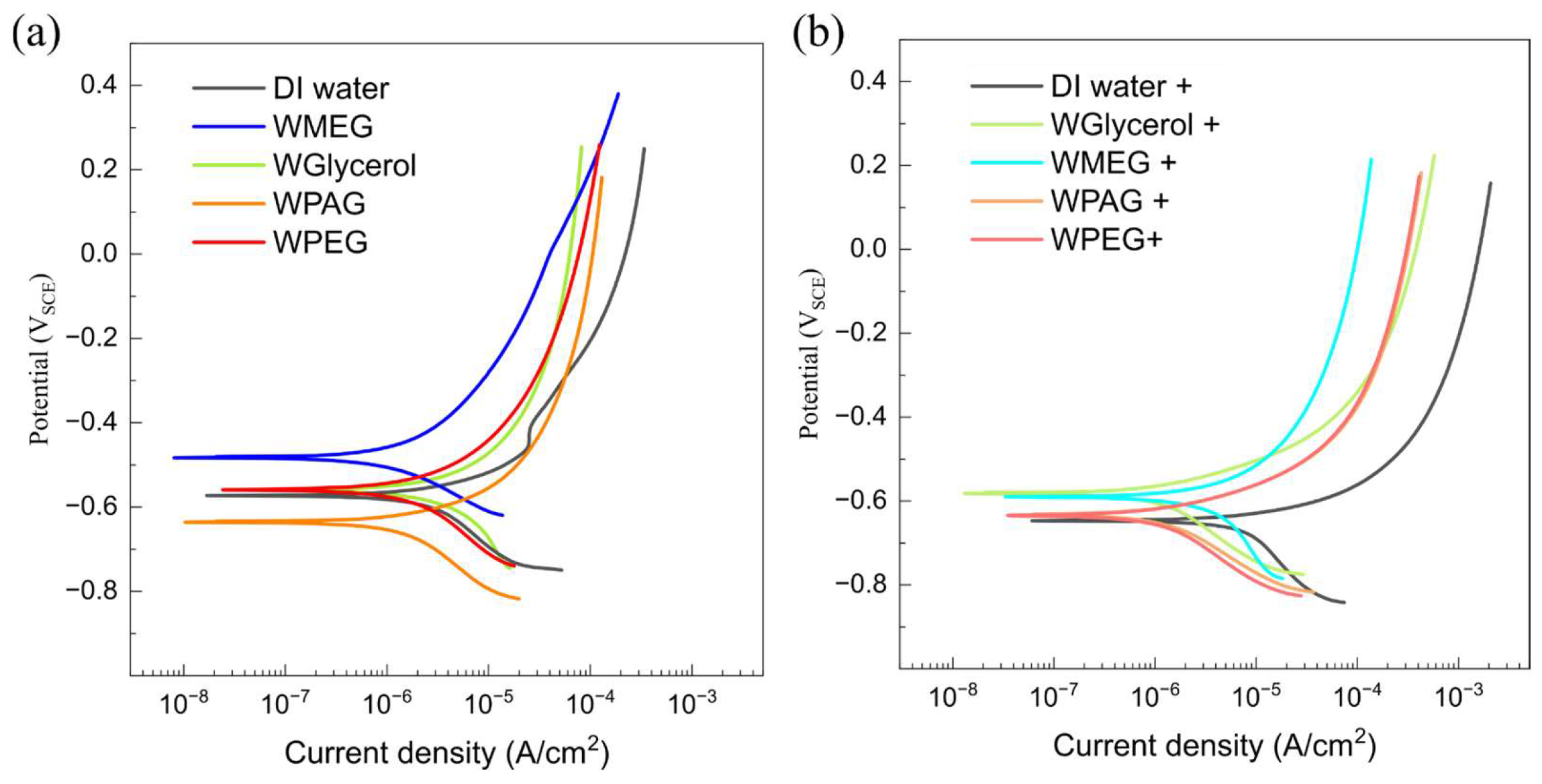
Table 3 reveal clear differences in the corrosion behavior of AISI 52100 steel depending on the chemistry of the water-based lubricant. Among the uninhibited fluids, DI water exhibited the highest corrosion current density (
µA/cm
−2), indicating the most aggressive corrosion environment. In contrast, the organic water-based mixtures significantly reduced the corrosion rate. In particular, WGlycerol and WPEG displayed the lowest
values (0.79 and 0.85 µA/cm
−2, respectively) and the highest polarization resistance values (
and
Ω), suggesting improved corrosion resistance relative to the other fluids. WMEG and WPAG exhibited intermediate behavior, with corrosion currents approximately one order of magnitude lower than DI water but higher than the glycerol- and PEG-based systems. These trends indicate that the chemical structure of the water-soluble organic components plays a significant role in moderating the electrochemical reactivity of the steel surface. Polyols such as glycerol and PEG are known to interact with metal surfaces and can reduce corrosion rates through adsorption and modification of the interfacial water structure, which can suppress both anodic dissolution and cathodic reactions.
The results obtained were compared to the available literature. A study of 50 wt.% ethylene glycol dilutions showed corrosion current densities of 0.31 µA/cm
2 for 4130 steel in 100 ppm NaCl, values similar to the ones obtained in the current study [
43]. Another study on glycerol indicated corrosion current densities in the range 5 to 8 µA/cm
2 for a solution containing 2 wt.% NaCl [
28]. A study in PEG showed the corrosion behavior of pure iron in water–PEG mixtures with corrosion current densities in the range 5 to 8 A/cm
2 [
44]. Santambrogio et al. studied the corrosion behavior for electrolytes comprised of ethylene glycol with different acids with corrosion current densities ranging from 14 to 55 µA/cm
2 for low carbon steel [
31]. All of the literature results are well within the range of the corrosion current densities observed in this study, despite the different alloys and electrolyte compositions.
The observed influence of glycol chemistry on corrosion behavior is consistent with previous studies of aqueous glycol systems used in automotive cooling applications. Water–ethylene glycol mixtures are known to alter electrochemical reactions at steel surfaces by modifying electrolyte conductivity, oxygen solubility, and interfacial adsorption behavior [
25,
26,
45]. In cooling systems, corrosion inhibitors such as nitrates or nitrites are commonly used to promote the formation of protective oxide films and reduce anodic dissolution of steel components. However, the effectiveness of these inhibitors depends strongly on the surrounding electrolyte composition and the presence of competing species that may influence adsorption and film stability. The results obtained in this work suggest that similar interactions occur in water-based lubricants, where organic components such as glycols and polyols modify the metal–electrolyte interface and influence corrosion kinetics.
The addition of NaNO
3 altered the electrochemical response of the systems, although the effect was not uniform across the different fluids. While the inhibitor slightly reduced the corrosion current density in DI water, its presence generally increased
and reduced polarization resistance in several of the water-based lubricant formulations, particularly in the PEG- and PAG-based mixtures. For example, the corrosion current density of WPEG increased from 0.85 to 4.6 µA/cm
2 after the addition of NaNO
3, accompanied by a substantial decrease in
. Nitrate salts are commonly used as corrosion inhibitors in aqueous systems because they can promote the formation of protective ferric oxide or hydroxide films on steel surfaces and shift the corrosion potential toward more noble values [
46]. However, the effectiveness of such inhibitors strongly depends on the surrounding electrolyte composition and the presence of other adsorbing species. In complex aqueous-organic systems such as the WBL formulations studied here, organic molecules and glycol-based components may compete with nitrate species for adsorption sites or alter oxide film stability, thereby modifying the inhibition mechanism. Additionally, increased ionic strength and conductivity in multi-component fluids can enhance charge transfer processes and accelerate electrochemical reactions. Changes in the corrosion potential (
) further indicate that NaNO
3 influences the balance between anodic dissolution and cathodic reduction reactions rather than producing a simple passivating shift.
The different behavior of NaNO
3 in the WBL formulations may be related to interactions between nitrate species and the organic components of the fluid. Glycols and polyols are known to adsorb on steel surfaces and modify the metal–electrolyte interface, potentially competing with nitrate ions for adsorption sites and altering passive film stability [
47,
48]. In addition, changes in electrolyte conductivity and interfacial water structure in aqueous-organic mixtures can influence charge-transfer reactions and corrosion kinetics [
40,
49]. Overall, these results demonstrate that corrosion behavior in water-based lubricants is strongly dependent on base fluid chemistry and that the effectiveness of nitrate-based inhibition strategies must be evaluated within the specific fluid environment.
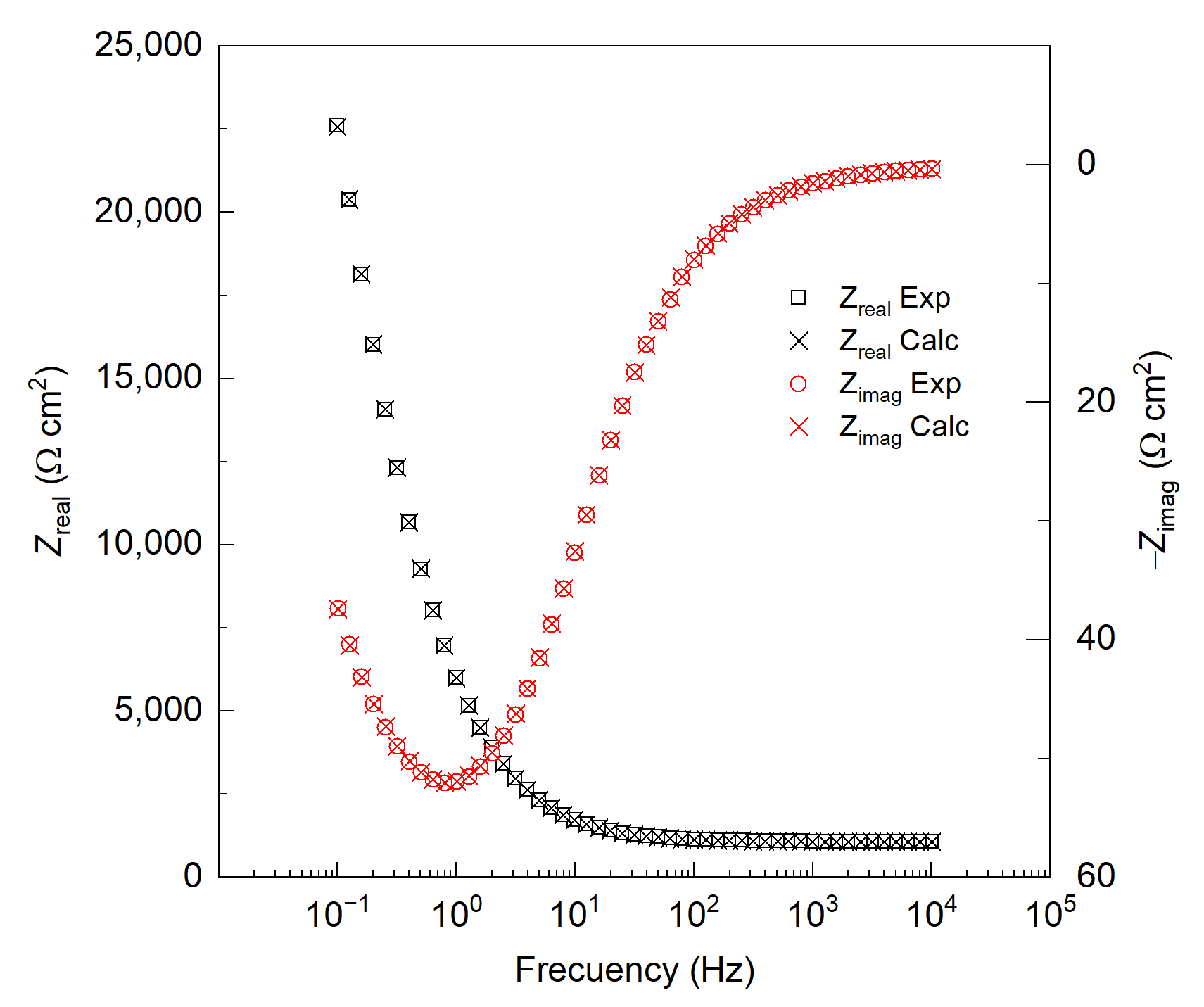
Before performing the EIS analysis, Kramers–Kronig (KK) transforms were produced to determine the robustness of the data. The analysis consists of calculating the real impedance values using the imaginary experimental data and vice versa. In order to determine the robustness of the experimental data, both results, experimental and calculated data, must have a good correlation [
50,
51]. This can be seen in
Figure 6, where the empty symbols represent the experimental values and the crosses represent the calculated values; the overlapping indicates a good fit, thus showing the robustness of the data obtained. For clarity and compactness only the results for the WMEG test are shown.
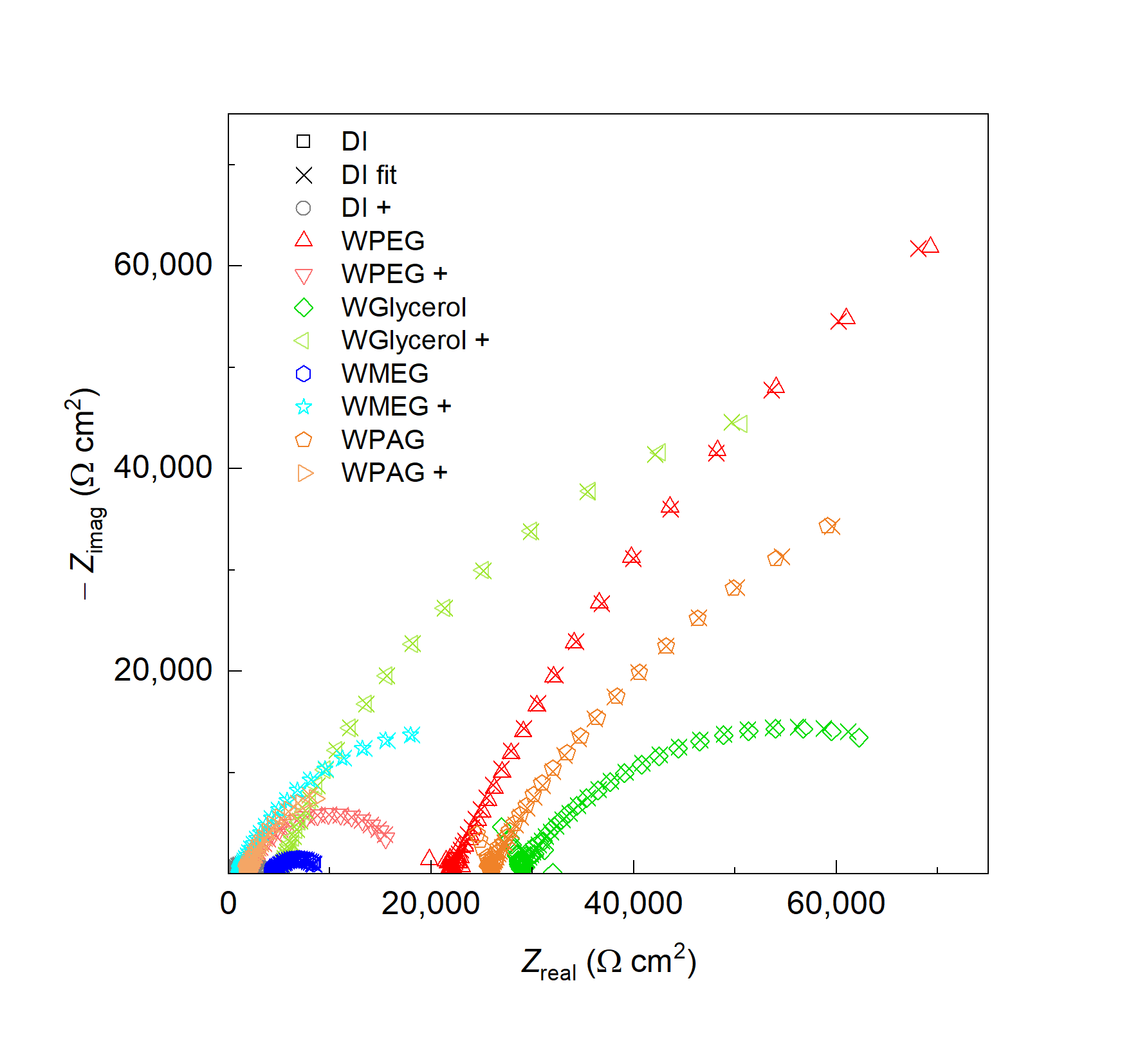
The EIS Nyquist plots are presented in
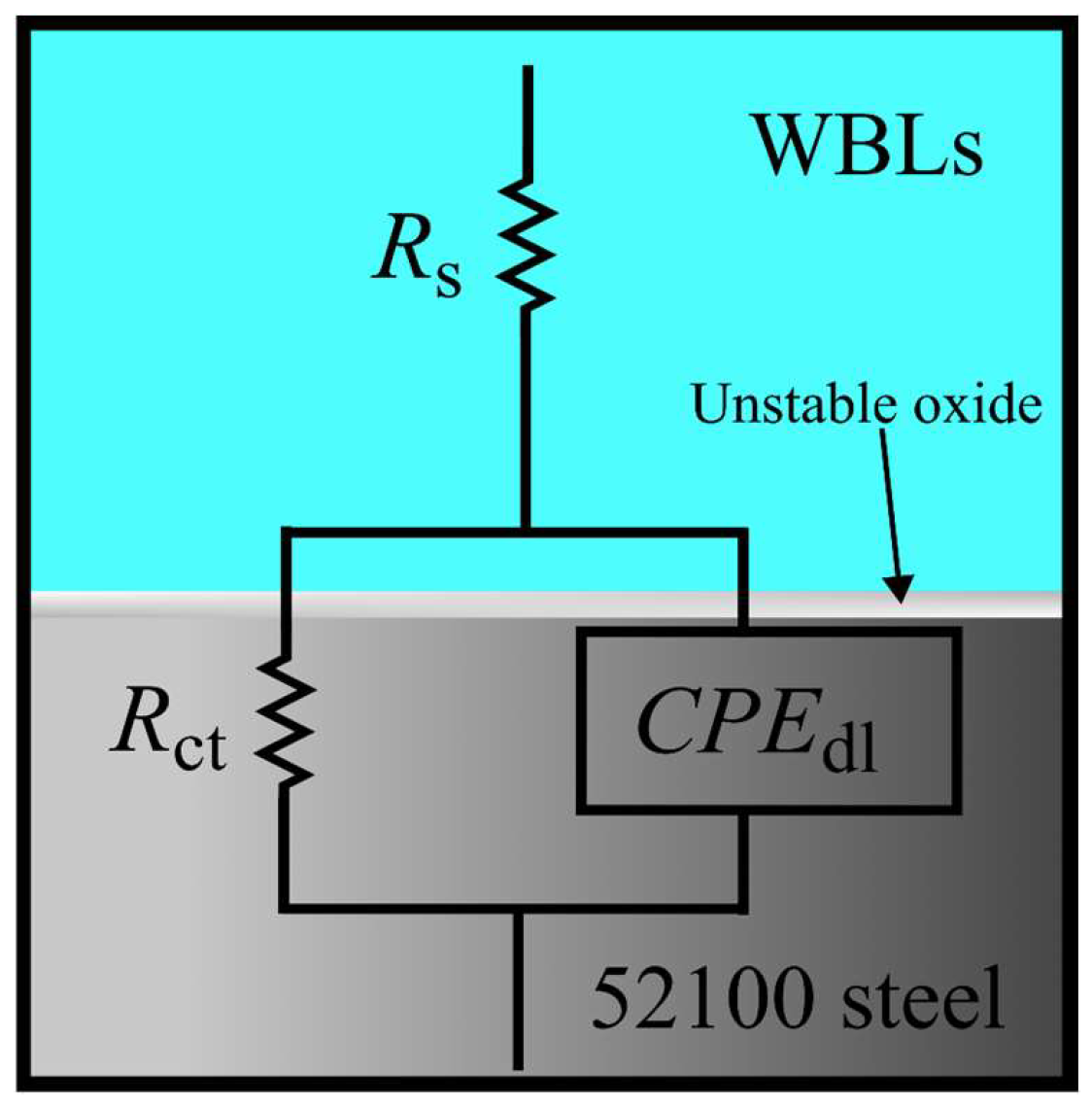
Figure 4 for the AISI 52100 steel in the different WBL fluids. The proposed electrical equivalent circuit (EEC) used to fit the EIS data is shown in
Figure 7. The EEC presents a hierarchically distributed equivalent circuit consisting of the following:
Rs, the resistance of the solution (this is attributed to the ohmic resistance between the WE and the RE);
CPEdl which is the constant phase element related to the double layer (low frequencies); and
Rct which is the charge transfer resistance (presenting an inverse proportionality with the corrosion rate). This EEC proposal is supported by observing the Bode plots in
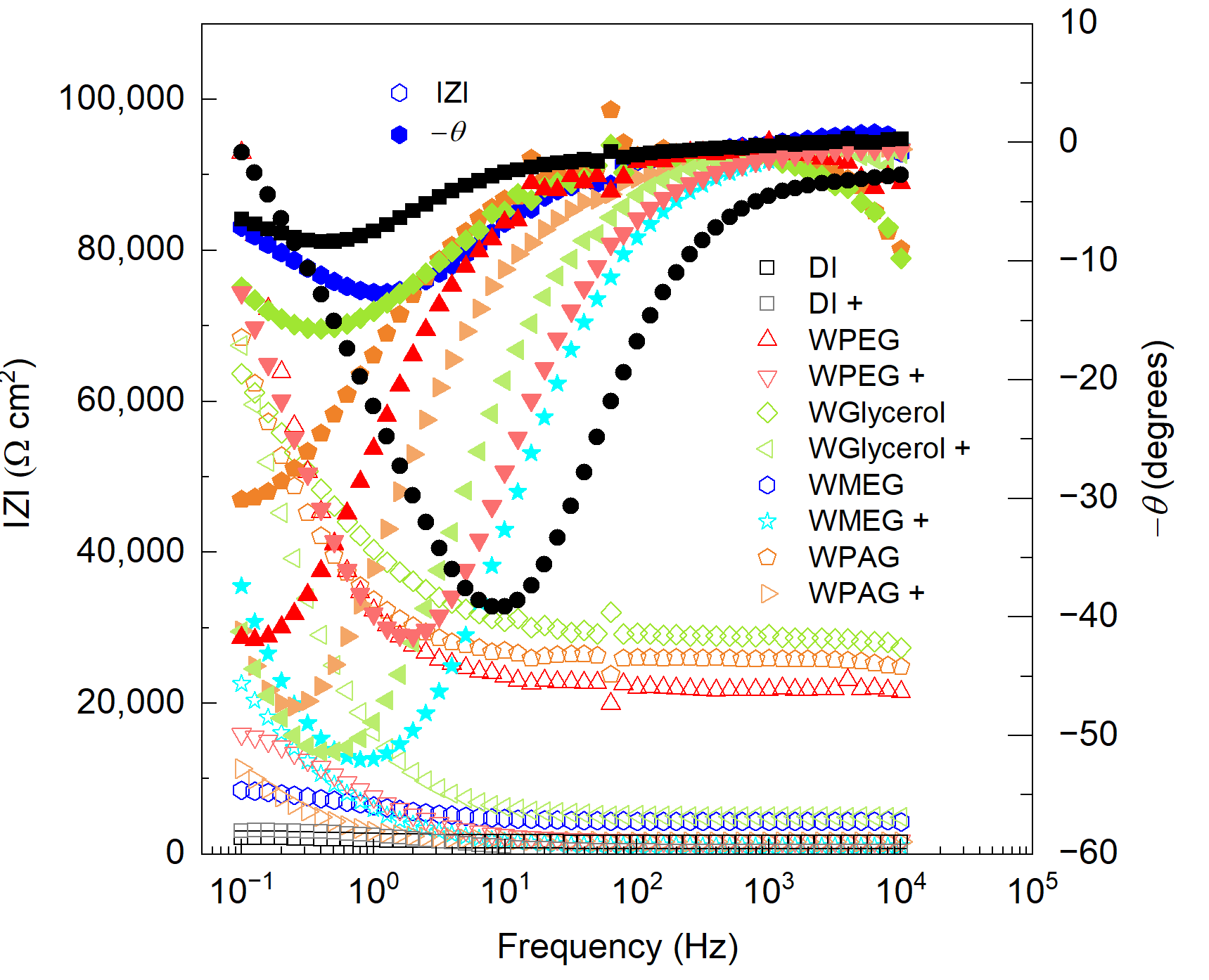
Figure 8. The Bode phase plots (
Figure 8) show a single broad phase maximum, indicating that the corrosion response is dominated by one principal relaxation process associated with the electrochemical interface [
51,
52]. Minor deviations in the phase angle slope are observed at high frequencies; however, these are attributed to interfacial non-idealities or measurement artifacts rather than a distinct second time constant. Specifically, for the WGlycerol and WPAG fluids which exhibit a minor deviation at low frequencies that could suggest a secondary process, the attempts to fit the data with a two-time-constant equivalent circuit yielded a goodness of fit of ~10
−3 with parameter errors exceeding 40%, indicating an over-parameterized model. The single
Rs–(CPE//R
ct) circuit was therefore retained for all fluids, with the low-frequency deviation in WGlycerol attributed to measurement non-stationarity during the extended acquisition window. Therefore, the selected
Rs–
Rct//
CPEdl circuit adequately describes the system without introducing additional elements [
53]. In the time constant associated with the double layer, the
CPE element represents a branched ladder
RC network that is presented instead of an ideal capacitor due to the non-ideal capacitance of an electrode in an active state [
50]. The impedance of this
CPE can be obtained by
ZCPE = (
Y)
−1(j
ω)
−n, where
Y is the admittance (S cm
−2 s
n),
ω is the angular frequency (rad s
−1), j is the imaginary number, j
2 = (−1), and
n is a dimensionless fraction exponent ranging from −1 to 1. The fitting parameters of the Nyquist plots using the proposed EEC are presented in
Table 4. The goodness of fit (
χ2) for all the alloys tested falls within 10
−4, and the error percentage for each parameter is always below 10% for all the tests performed.
From the fitting values presented in
Table 4, some trends can be extracted;
Rs presents an average value on the order of 10
3 Ω cm
2, with variations depending on electrolyte composition. The
Rct varies significantly between samples, ranging from 10
3 to 10
5 Ω cm
2, reflecting substantial differences in corrosion resistance among the tested fluids. The effect of NaNO
3 is not uniform across all systems. In DI water and water–glycerol solutions, the addition of NaNO
3 increases
Rct, indicating improved corrosion resistance. In contrast, for PEG- and PAG-based lubricants, the addition of NaNO
3 leads to a decrease in
Rct, suggesting a deterioration of the protective behavior. The
Ydl remains in the range of 10
−6 to 10
−4 S/cm
2 s
n,dl, for the whole set of lubricants. The
ndl values range from 0.62 to 0.79, indicating that the interface shows a non-ideal capacitor behavior, which is influenced by the applied polarization, the surface roughness, the presence of defects, and the presence of oxide films or adsorbed species.
The electrical conductivity of all the tested fluids is presented in
Table 5. Among the neat WBLs, the conductivity ranged from 1.9 µS/cm (WPAG) to 62.9 µS/cm (WGlycerol), with WPAG falling below DI water (6.2 µS/cm), reflecting differences in ionic dissociation behavior across the fluid chemistries. The addition of NaNO
3 increased the conductivity by one to three orders of magnitude across all fluids, with DI+ reaching the highest value (3213 µS/cm) and WPAG+ the most moderate increase among the inhibited polymer fluids (264 µS/cm). These conductivity values are consistent with the solution resistance (
Rs) values extracted from EIS fitting (
Table 4), providing independent validation of the electrochemical measurements.
A mechanistic interpretation can be proposed based on the evolution of Rct, Ydl, and ndl. In DI water, the low Rct and high Ydl indicate an active corrosion process with a thin and poorly protective oxide layer. The addition of NaNO3 reduces Ydl and increases ndl suggesting the formation of a more homogeneous and stable interfacial film, likely associated with enhanced passivation and suppression of active dissolution.
In water–glycerol systems, a strong synergistic effect is observed. Glycerol molecules can adsorb at the steel/electrolyte interface and structure the interfacial region through hydrogen bonding, partially blocking active sites. When NaNO
3 is added,
Rct increases by more than one order of magnitude, while
ndl approaches more ideal capacitive behavior. This suggests the formation of a compact and protective interfacial layer combining organic adsorption and improved surface passivation [
28,
30,
31,
43,
44,
54].
In contrast, for PEG- and PAG-based lubricants, high
Rct values are already observed without inhibitor, indicating that these polymers form an effective barrier layer at the interface. The addition of NaNO
3 results in a decrease in
Rct and an increase in
Ydl, which can be attributed to competitive adsorption or disruption of the polymer-rich boundary layer [
43]. The presence of nitrate ions and increased ionic conductivity may facilitate charge transfer by creating conductive pathways through the organic film.
For WMEG systems, intermediate behavior is observed, where the addition of NaNO
3 slightly modifies the interfacial structure (as indicated by changes in
Ydl and
ndl) but does not significantly improve
Rct. This suggests that MEG provides partial surface coverage, but the interaction with nitrate does not produce a strong synergistic or detrimental effect [
54].
In order to correct the value of the pseudo-capacitance of the double-layer (
Ydl) and find the effective capacitance (
Ceff,dl), the
Rs and
Rct are considered and used in combination with the
Ydl and
ndl. The equation proposed by Brug et al. was used to calculate
Ceff,dl (see Equation (5)) [
55,
56,
57]:
Using Equation (5), the following
Ceff,dl values are obtained and shown in
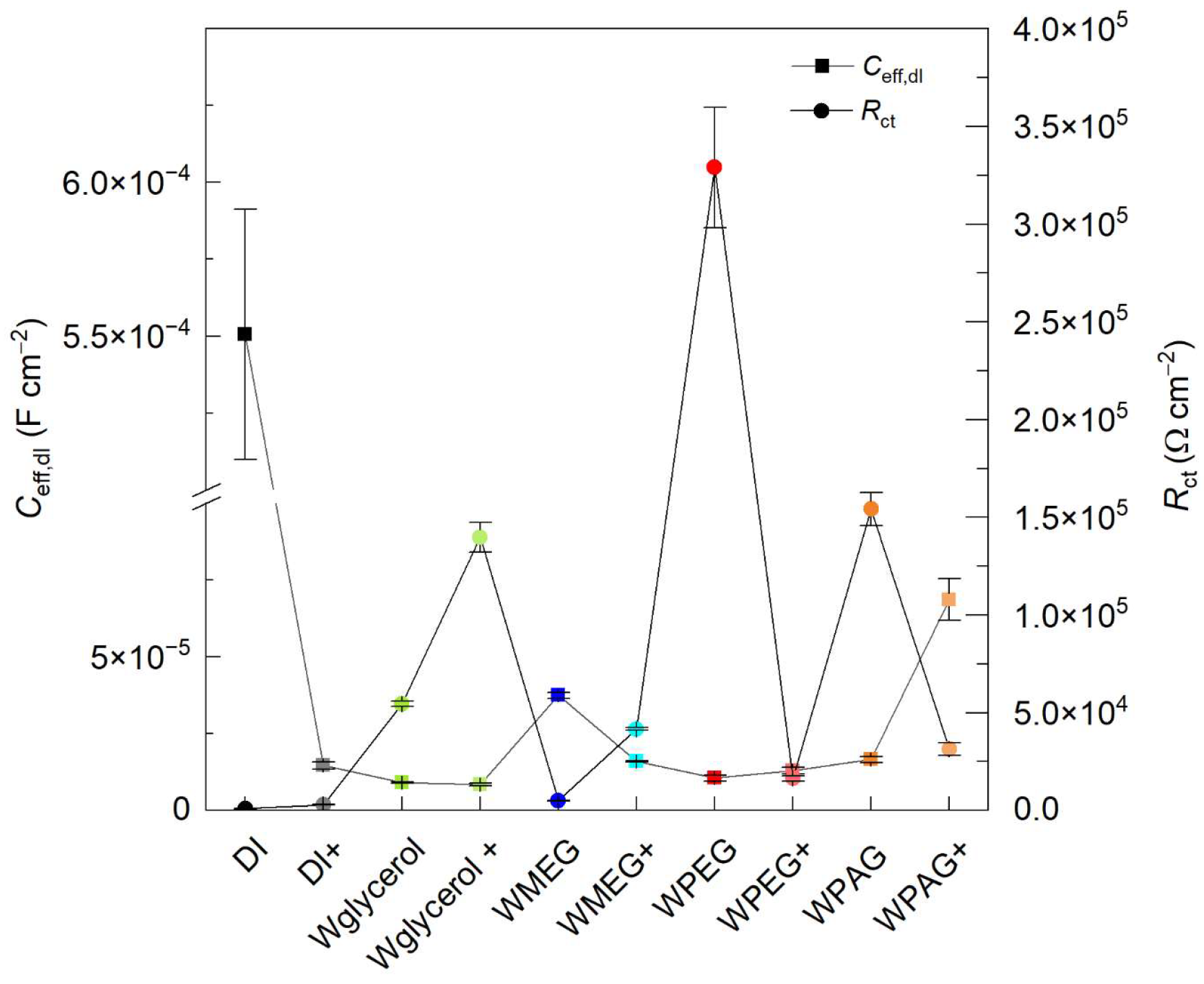
Figure 9. In addition, the
Rct values are also included to compare the evolution of both parameters with each thermomechanical treatment. From
Figure 9, an inverse relationship between
Ceff,dl and
Rct is observed across all fluids. Systems with higher
Rct exhibit lower
Ceff,dl, indicating the formation of more protective interfacial films. This trend confirms that improved corrosion resistance is associated with reduced effective double-layer capacitance, which reflects decreased active surface area and/or increased film thickness. The higher the
Rct, the lower the
Ceff,dl, which corroborates the previous results as the higher the impedance and the lower the capacitance the more protection the film imparts [
50,
58,
59]. Overall, the combined EIS analysis suggests that corrosion protection in these water-based lubricants is governed by the interplay between inorganic passivation (promoted by nitrate ions) and organic adsorption layers (provided by glycerol, PEG, and PAG) [
27,
28,
29,
30,
31]. The effectiveness of NaNO
3 depends strongly on the base fluid chemistry, leading to either synergistic enhancement (DI and glycerol systems) or competitive/interfering effects (PEG and PAG systems). These findings are in accordance with previous literature results [
31].
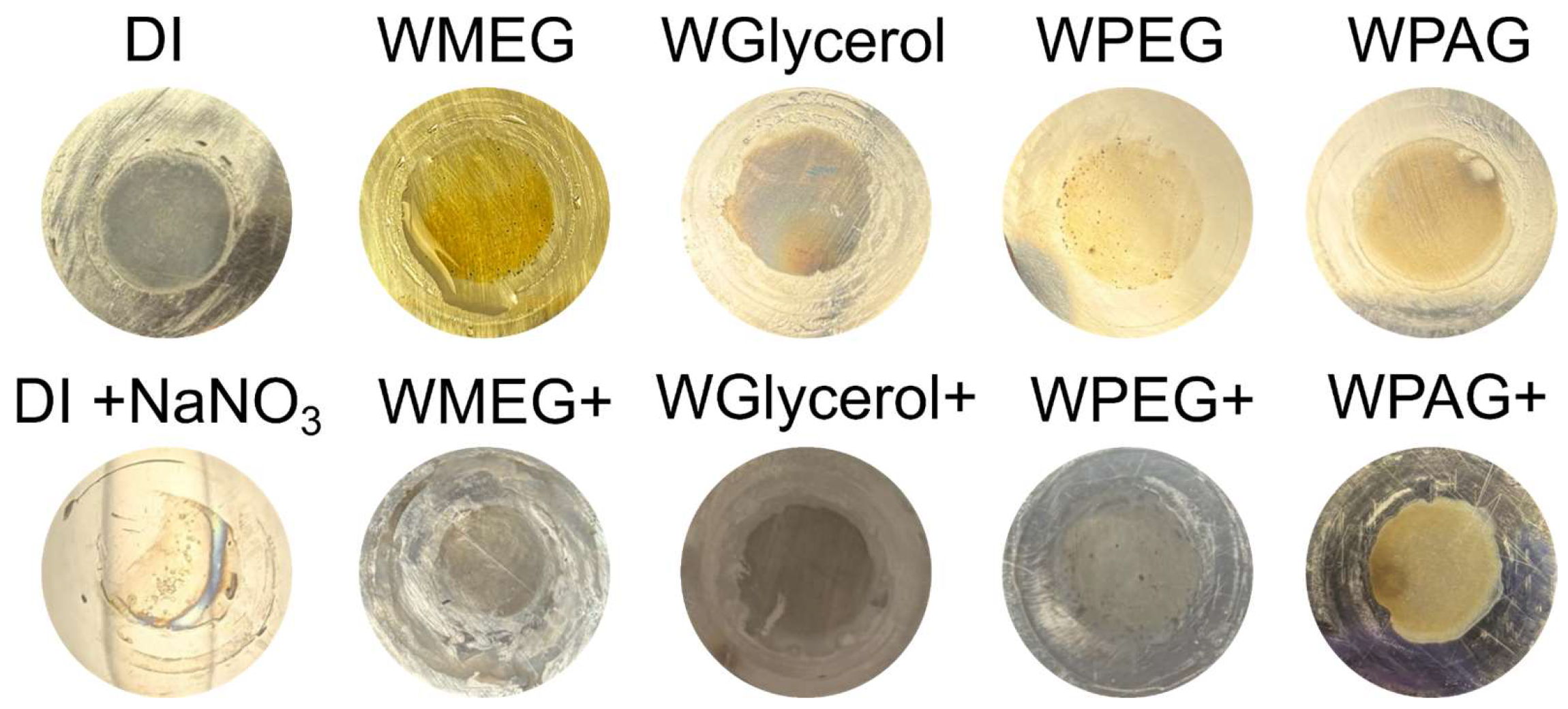
The optical images provide qualitative confirmation of the electrochemical trends obtained from the polarization experiments. The severe surface discoloration and corrosion products observed on the specimen exposed to DI water are consistent with the high corrosion current density measured for this fluid, indicating significant metal dissolution. The yellow-brown coloration visible on several samples is characteristic of iron oxide and oxyhydroxide corrosion products such as Fe
2O
3 and FeOOH, which commonly form during the corrosion of steel in aqueous environments [
60,
61]. In contrast, the relatively uniform surfaces observed for the glycerol- and PEG-based fluids agree with the lower corrosion currents and higher polarization resistance values, suggesting that these organic components help reduce electrochemical activity at the steel interface. Organic molecules such as polyols and glycols can adsorb onto metal surfaces and modify the interfacial chemistry, reducing both anodic dissolution and cathodic reduction reactions and thereby decreasing the overall corrosion rate [
47,
48]. In the systems where NaNO
3 increased the corrosion current density, the optical images reveal more pronounced surface changes and localized corrosion features, supporting the interpretation that the inhibitor does not provide effective protection in these complex aqueous-organic environments. The performance of nitrate-based inhibitors is known to depend strongly on electrolyte composition and oxide film stability, and their protective effect may be disrupted when competing species modify adsorption processes at the metal surface [
40,
46]. Overall, the surface observations align well with the electrochemical measurements, indicating that the corrosion behavior inferred from the polarization data is consistent with the physical condition of the tested surfaces.
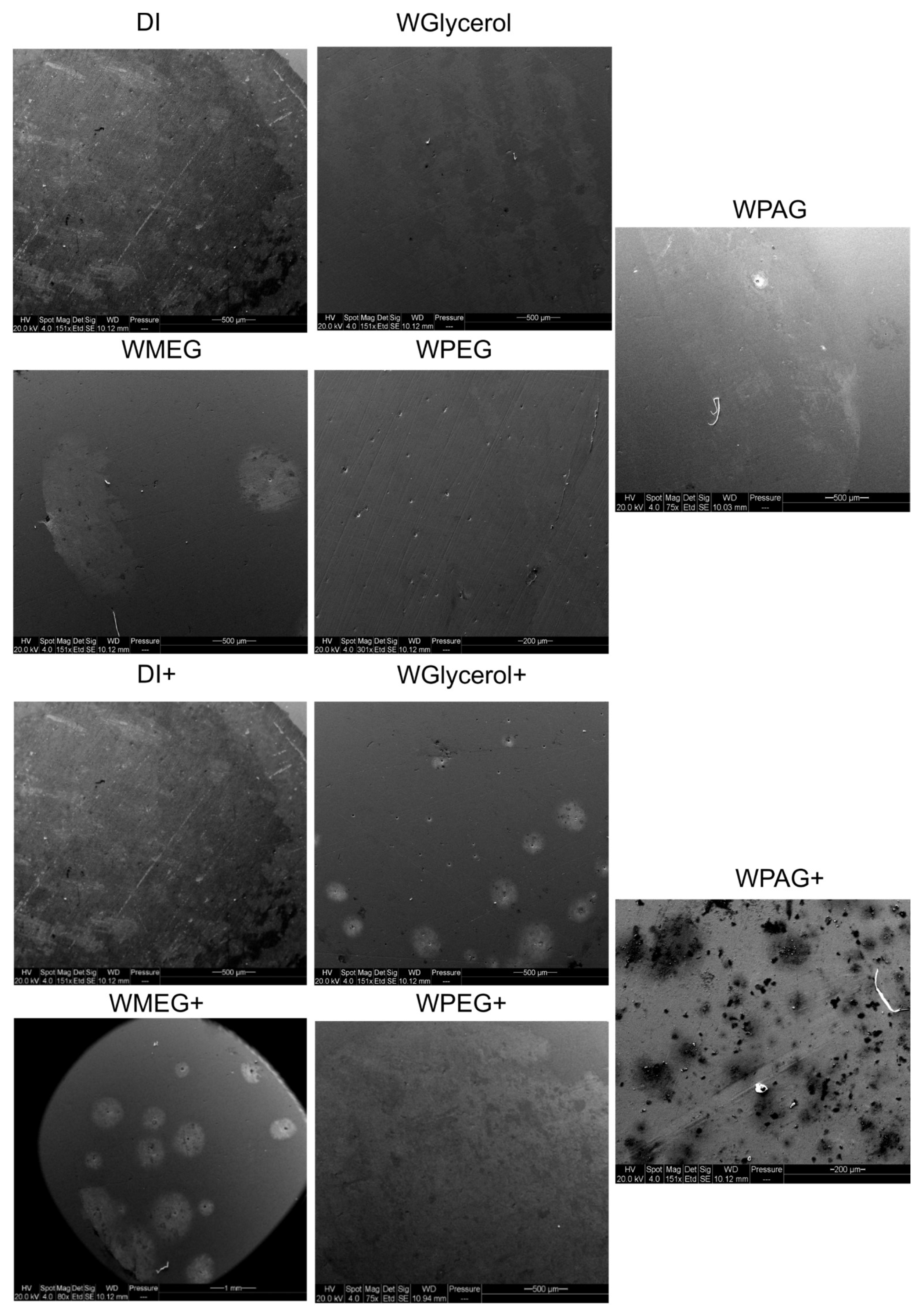
SEM micrographs and EDAX compositional analysis were performed on representative ball specimens to corroborate the electrochemical findings and characterize the surface degradation morphology (
Figure 10 and
Table 6, respectively). The O:Fe ratio, derived from EDAX area scans, is used as the primary indicator of the surface oxidation state; carbon values are reported as indicative only, as contributions from the carbon-based mounting adhesive cannot be fully excluded from broad-area scans. The SEM micrographs reveal distinct surface morphologies that are consistent with the electrochemical behavior observed in the EIS analysis. In DI water, the corroded surface exhibits the most severe morphological damage, characterized by widespread pitting and a rough, heterogeneous topography across the exposed surface (
Figure 10). EDAX confirms the highest C and O weight fractions (27.27 and 14.42 wt.%, respectively) and the lowest Fe content (55.63 wt.%) among all fluids tested, yielding the highest O:Fe ratio of up to 0.36, indicative of substantial oxide accumulation at corrosion sites, consistent with the lowest
Rct value obtained from EIS, confirming active and largely unimpeded corrosion in the absence of any organic additive or inhibitor. EDAX shows the presence of an oxygen-containing surface layer whose composition is consistent with a thin iron oxide/oxyhydroxide film, although phase identification requires complementary techniques such as Raman spectroscopy or XPS. In contrast, the WGlycerol surface appears considerably smoother and more uniform, with only minor surface features visible and a significantly reduced O content (2.56 wt.%) and elevated Fe (87.9 wt.%), pointing to a cleaner metallic surface with minimal oxide buildup, in agreement with the high
Rct observed for this fluid. The WMEG surface shows an intermediate response, with a localized bright region visible in the micrograph that is characteristic of a non-uniform corrosion product deposit, while the EDAX composition (C: 11.32, O: 2.49, Fe: 84.00 wt.%) suggests a partially protected surface. The WPEG surface displays a relatively featureless morphology with low O (2.81 wt.%) and high Fe (87.39 wt.%), suggesting that the PEG polymer effectively suppresses corrosive attack at the steel/electrolyte interface, corroborated by the highest
Rct (65,800 Ω cm
2) of all fluids tested. The WPAG surface similarly shows clean metallic morphology with minimal corrosion products and the lowest O:Fe ratios (0.02) recorded across the entire dataset (0.022–0.033) and a high
Rct of 30,840 Ω cm
2, reinforcing the conclusion that PAG provides a significant effective interfacial barrier [
31]. Across all glycol and polymer-based fluids, the consistently low O:Fe ratios, well below the theoretical stoichiometry of even the least oxidized iron oxide phase, indicate that the EDAX signal is dominated by the metallic iron substrate, reflecting the nm-scale thickness of the surface oxide relative to the μm-scale interaction volume of the electron beam, and further confirming that the corrosion products form only a thin, discontinuous film rather than a developed oxide layer. Upon addition of NaNO
3, the surface morphologies change markedly in a fluid-dependent manner. DI+ surfaces retain significant surface degradation with general corrosion features, consistent with the moderate
Rct improvement observed. WGlycerol+ exhibits a notable increase in the number and uniformity of discrete pits distributed across an otherwise smooth surface, suggesting that while NaNO
3 promotes a more homogeneous passive film, consistent with the large
Rct increase, localized breakdown at inclusion sites still occurs. WMEG+ similarly shows a region with distributed pitting, consistent with the limited synergistic effect of NaNO
3 in MEG-based systems identified from EIS. Most strikingly, WPAG+ displays an entirely different morphology, with a surface covered by dark, irregularly distributed corrosion patches occupying a substantial fraction of the exposed area, with elevated C (35–61 wt.%) and O (8–11 wt.%) and dramatically reduced Fe (30–52 wt.%), the highest O:Fe ratios in the entire NaNO
3 dataset (0.22–0.27). This severe surface degradation directly corroborates the EIS finding that NaNO
3 decreases
Rct and increases
Ydl in the PAG system, consistent with disrupting the protective polymer boundary layer and exposing large areas of the steel surface to active corrosion. Taken together, the SEM and EDAX data consistently support a corrosion mechanism governed by a weak, non-passive interfacial oxide whose protective character is modulated by organic adsorption from the lubricant additives, with NaNO
3 producing divergent effects depending on the base fluid chemistry [
27,
28,
29].
The corrosion of AISI 52100 steel in all water-based lubricants tested is governed by a single charge-transfer-controlled process at a weak, non-passive oxide interface, as evidenced by the single time constant in the EIS response. The native oxide film is insufficient to prevent either uniform or localized dissolution. Fluid additives modulate but do not eliminate the corrosion process: organic molecules (glycerol, PEG, PAG) adsorb at the interface and suppress general dissolution with varying intensities, shifting the corrosion mode toward localized pitting at heterogeneous sites (carbide inclusions, surface defects). NaNO
3 enhances passivation in simple aqueous systems but disrupts polymeric adsorption layers in PEG/PAG-based fluids, paradoxically promoting uniform attack [
30,
31,
32]. The inverse
Rct–
Ceff,dl relationship across all systems confirms that corrosion protection is directly linked to the extent of active surface area suppression, whether through inorganic passivation or organic adsorption. Khomami et al. [
45] investigated the electrochemical behavior of AISI 4130 steel in ethylene glycol–water mixtures and reported that the corrosion rate decreased consistently with increasing ethylene glycol concentration, attributed to the adsorption of glycol molecules at the steel surface and a reduction in the double-layer capacitance, a mechanism directly consistent with the reduced corrosion current densities and lower
Ceff,dl values observed in the present work for WMEG relative to DI water. Importantly, Khomami et al. [
45] also found that while both nitrite and nitrate provided surface passivation, nitrate yielded lower inhibition efficiency than nitrite, and that the addition of these anions shifted
Ecorr in a manner dependent on their competitive adsorption against aggressive Cl
− ions, a behavior analogous to the fluid-dependent
Ecorr shifts and inconsistent inhibition response of NaNO
3 observed across the different WBL formulations in the present study. Khomami et al. [
61] further showed through kinetic and thermodynamic analysis that the adsorption of inhibitor species on steel in ethylene glycol–water systems is a spontaneous process governed by competitive surface interactions, reinforcing the interpretation that in complex aqueous-organic environments, the effectiveness of inorganic inhibitors is strongly modulated by the pre-existing organic adsorption layer.
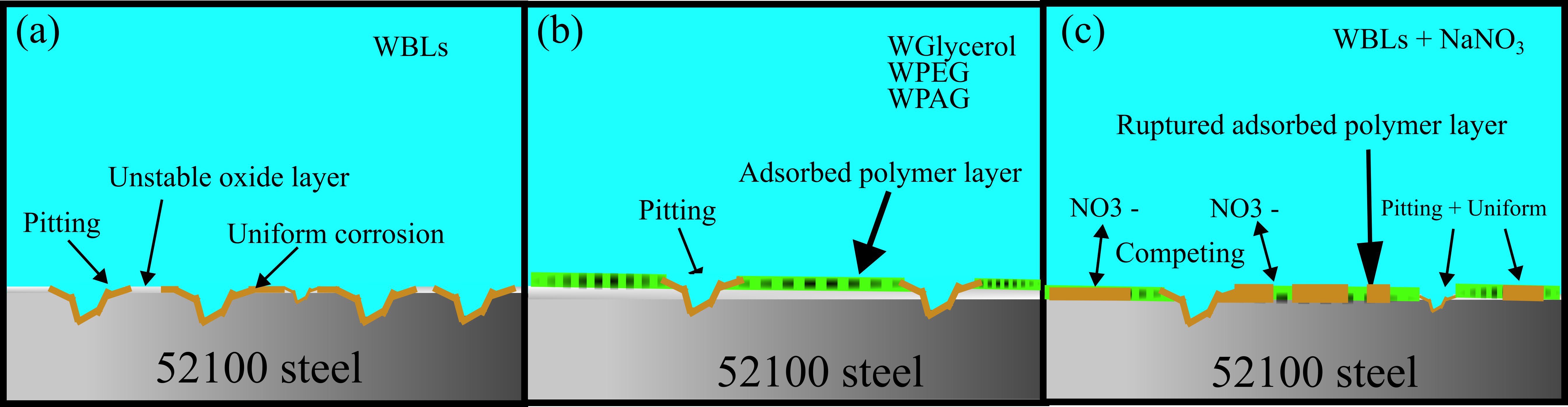
Figure 11 shows the proposed corrosion mechanism for the different sets of fluids characterized according to their electrochemical response and which is in accordance with previously published data [
43,
54,
62].
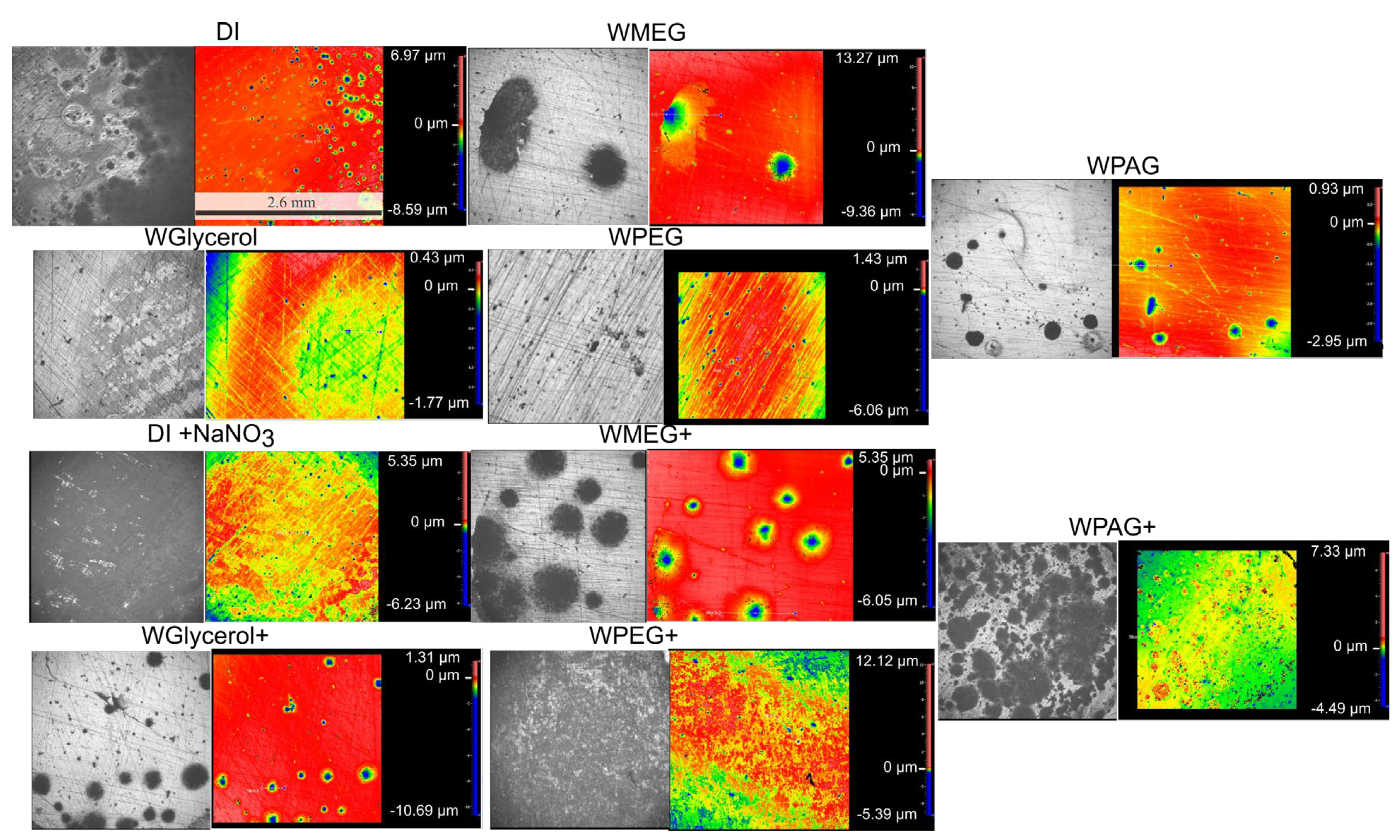
White-light interferometry was employed in
Figure 12 to characterize the post-test surface topography of all samples, providing direct three-dimensional corroboration of the proposed corrosion mechanism. The pit depth data in
Table 7 reveal trends that are broadly consistent with the EIS and SEM/EDAX findings, although it should be noted that the measured values likely represent a lower bound of the true pit depth, as surface corrosion products and oxide films present on the corroded surfaces may partially fill or obscure pit cavities, hindering accurate depth measurement. Electrochemical etching of the corroded surfaces prior to interferometry would remove these products and provide a more accurate description of the actual pit morphology. With this caveat in mind, the data still reveal meaningful trends.
In DI water, the maximum pit depth of 5.18 µm reflects severe unimpeded corrosion, consistent with the lowest Rct recorded, and decreases to 2.37 µm upon NaNO3 addition, corroborating the nitrate-enhanced passivation observed electrochemically. WGlycerol exhibits one of the shallowest pit depths among uninhibited fluids (1.59 µm), consistent with partial surface blocking by glycerol adsorption. Yet NaNO3 addition produces the deepest pit recorded across the entire dataset (5.61 µm), suggesting that while the average interfacial resistance increases, the remaining breakdown sites are attacked more aggressively. WMEG follows a similar detrimental trend upon inhibitor addition, with pit depth increasing from 3.69 to 5.19 µm. In contrast, WPEG and WPAG show shallow pits in their uninhibited forms (1.63 and 2.26 µm, respectively), and pit depths decrease further upon NaNO3 addition (1.08 and 1.35 µm). This apparent contradiction with the reduced Rct observed in EIS for these fluids is reconciled by considering that nitrate disrupts the polymer boundary layer and redistributes corrosive attack more uniformly across the surface, reducing individual pit depths while increasing the total corroded area, a transition from localized to combined localized and uniform corrosion that is directly visible in the interferometry images and consistent with the SEM observations. Furthermore, the presence of oxide films on the more severely corroded surfaces may additionally contribute to an underestimation of pit depths in those specimens, meaning the relative differences between fluids reported here should be interpreted with caution. Collectively, the interferometry data confirm that corrosion severity and spatial distribution of attack are governed by the interplay between organic adsorption and inorganic passivation, as proposed in the mechanistic framework derived from the EIS analysis, while also highlighting the need for surface preparation protocols in future work to enable more quantitative pit depth characterization.