Article

Effect of Al Substitution of Si on the Microstructure, Retained Austenite Stability and Mechanical Properties of Low-Alloyed TRIP-Aided Steels


1
School of Materials Science and Engineering, Fujian University of Technology, Fuzhou 350118, China
2
Fujian Provincial Key Laboratory of Advanced Materials Processing and Application, Fuzhou 350118, China
3
School of Materials Science and Engineering, Northeastern University, Shenyang 110819, China
4
Key Laboratory of Lightweight Structural Materials, Shenyang 110819, China
*
Authors to whom correspondence should be addressed.
Metals 2026, 16(4), 379; https://doi.org/10.3390/met16040379
Submission received: 6 March 2026 / Revised: 25 March 2026 / Accepted: 26 March 2026 / Published: 29 March 2026

Abstract

In this work, the effect of partial to complete Al substitution of Si on the microstructure, retained austenite (RA) stability, and mechanical properties of cold-rolled TRIP-aided steels was investigated. Four experimental TRIP-aided steels (Fe-0.2C-1.5Mn-1.5/1.0/0.5/0Si-0/0.5/1.0/1.5Al-0.025Nb, wt.%) were designed. The results indicate that replacing Si with Al significantly increases the volume fraction of soft polygonal ferrite (from 52% to 73%) and decreases that of bainite. Although the volume fraction of RA decreases (from 15.6% to 12.4%), its average carbon content and, consequently, its mechanical stability are enhanced, which suppresses the strain-induced martensitic transformation. In terms of mechanical properties, the substitution leads to a monotonic decrease in both yield strength (from 573 MPa to 536 MPa) and ultimate tensile strength (UTS) (from 839 MPa to 648 MPa), primarily due to reduced solid-solution strengthening, coarsened ferrite grains, and a weakened TRIP effect. Conversely, the total elongation (TEL) increases from 28.3% to 32.4%, attributed to the higher fraction of ductile ferrite. Consequently, the product of tensile strength and total elongation (PSE) exhibits a slight decline. The 1.5Si-TRIP steel exhibited the most balanced mechanical properties, achieving the highest PSE of 23.7 GPa·%.

1. Introduction

As typical representatives of advanced high-strength steels, transformation-induced plasticity (TRIP) steels have a good strength–ductility combination, allowing them to exhibit extensive applications in the automotive industry [1,2,3,4]. It is well known that traditional TRIP steels are developed from Fe-C-Mn-Si alloy systems [5]. However, high Si addition will result in a strong oxide layer on the surface of hot-rolled TRIP steel plates and cause galvanizing problems [6,7]. Therefore, it is crucial to find elements that can replace Si in TRIP steels.
Al is considered an ideal substitution for Si due to their chemically similar behavior [6,7]. Its addition effectively suppresses cementite precipitation without deteriorating the coating ability of TRIP steel [8,9]. Consequently, the influence of partial or complete replacement of Si with Al in low-alloyed TRIP steels has been widely studied over the past two decades [7,8,9,10]. Research findings, however, have shown variations: El-Sherbiny et al. reported a decrease in ultimate tensile strength (UTS) and the product of tensile strength and total elongation (PSE) with the complete replacement of Si with Al [7], whereas Zhu et al. observed that TRIP steel with added Al achieved a higher PSE than its counterpart with Si added when the isothermal bainitic transformation (IBT) temperature exceeded 450 °C [8]. Similarly, Barbé et al. noted that Al substitution of Si leads to improved galvanizing properties but at the expense of some strength [9]. Conversely, Wang et al. demonstrated that the partial replacement of Si with Al significantly enhances total elongation (TEL) and PSE in Nb-Mo microalloyed TRIP steel [10]. These conflicting results indicate that the effect of partially or fully substituting Al for Si on the mechanical properties of TRIP steels remains unclear and necessitates further systematic investigation.
While understanding these variations in mechanical properties is important, the stability of retained austenite (RA)—a more fundamental aspect—has been largely overlooked in studies on Si/Al substitution in TRIP steels. Previous studies have primarily focused on the effect of this substitution on microstructure and mechanical properties, neglecting its critical effect on RA stability, which is fundamental to the TRIP effect [11,12,13]. To address this gap, four experimental TRIP steels (Fe-0.2C-1.5Mn-1.5/1.0/0.5/0Si-0/0.5/1.0/1.5Al-0.025Nb, wt.%) were designed to systematically study the effects of partial to complete Al substitution of Si on the microstructure, RA stability, and mechanical properties of TRIP steel.

2. Experimental

The chemical compositions of the experimental steels are given in Table 1. First, 50 kg ingots were prepared by vacuum induction melting, followed by homogenization at 1200 °C for 2 h and hot forging into rectangular slabs. Subsequently, the slabs were reheated to 1200 °C for 2 h, hot-rolled to 3 mm sheets, and finally cold-rolled to a final thickness of 1 mm.
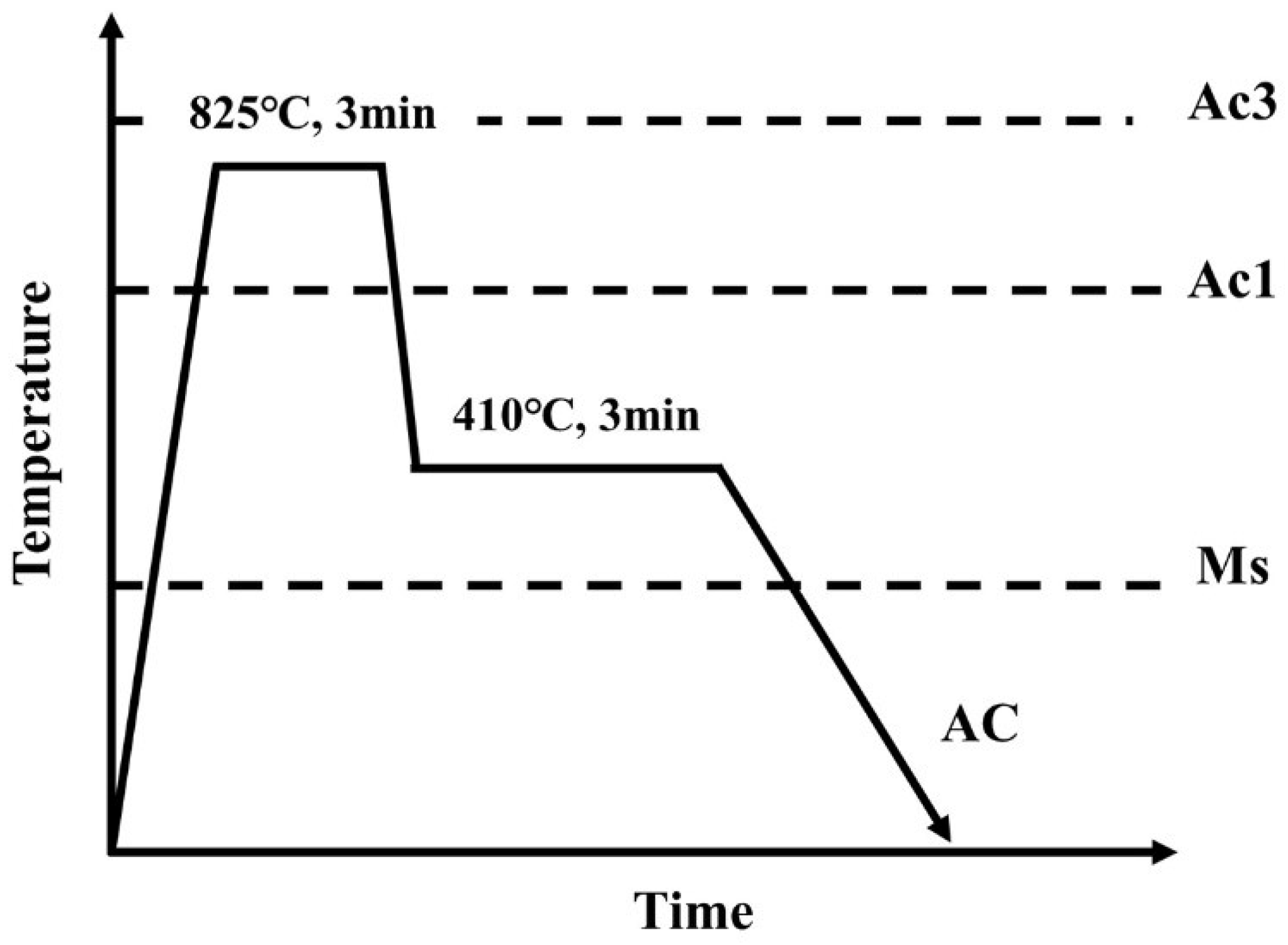
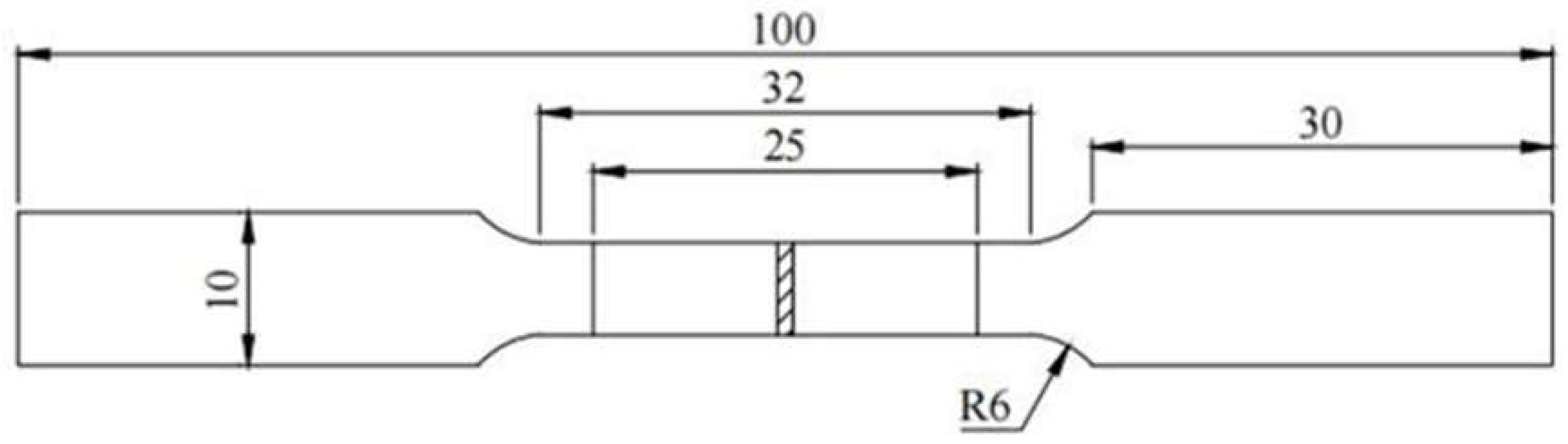
A two-stage salt bath heat treatment was applied. Samples were first austenitized by immersion in a salt bath at 825 °C for 3 min, then rapidly quenched by transfer to a second salt bath held at the IBT temperature of 410 °C for 3 min, followed by air cooling (AC) outside the furnace to room temperature (Figure 1). Based on their respective Si and Al contents, the resulting heat-treated steels are designated as the 1.5Si-TRIP, 1.0Si0.5Al-TRIP, 0.5Si1.0Al-TRIP, and 1.5Al-TRIP samples. Flat dog-bone tensile specimens with a gauge section of 25 mm × 6 mm were machined parallel to the rolling direction (Figure 2). Uniaxial tensile tests were performed at an initial strain rate of 1.3 × 10⁻³ s−1 using a SANSCMT-5000 universal testing machine (MTS, Eden prairie, MN, USA).
Microstructural characterization was carried out employing optical micrograph (OM), field-emission scanning electron microscopy (FE-SEM), and transmission electron microscopy (TEM). For OM and SEM analysis, specimens were electropolished and then etched with 4% Nital or LePera reagent (prepared by mixing equal volumes of 1% aqueous Na2S2O5 and 4% alcoholic picric acid). Eight representative micrographs were captured for each condition, and the volume fraction of ferrite (VF) was quantified via a pixel-based method using Image-Pro Plus 6.0 software. Concave polygonal ferrite grains were manually segmented and colored in Photoshop, after which the total ferrite area (AF) and the total micrograph area (AT) were measured. This process was repeated eight times, and VF was calculated as VF = ΣAFi / ΣATi (i = 1 − 8). The average ferrite grain size (DF) was obtained from fifty randomly selected grains. Electron back-scatter diffraction (EBSD) was conducted at 20 kV with a step size of 50 nm. For TEM, foils were mechanically ground to approximately 50 µm, punched into 3 mm discs, and twin-jet-electropolished at −20 °C using a Struers Tenuol-5 unit with an electrolyte of 95% ethanol and 5% perchloric acid. The volume fraction (Vγ) and carbon content of RA were measured by X-ray diffraction (XRD, Rigaku D/Max2250/PC, Cu Kα radiation). Specifically, Vγ was determined via the direct comparison method [14], while the carbon (C) content was evaluated from the lattice parameter based on reference [15].

3. Results and Discussion

3.1. Heat Treatment Schedule

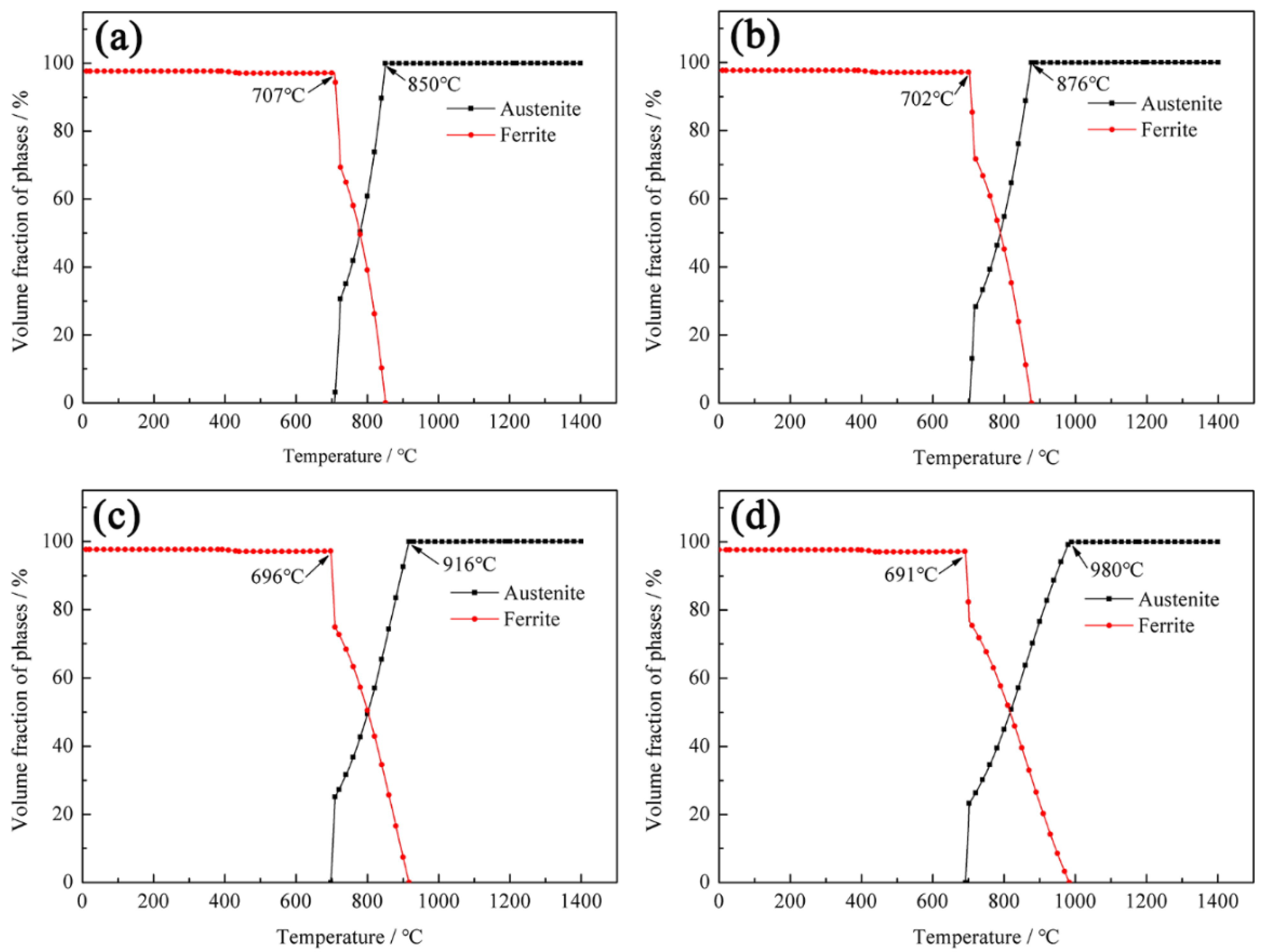
To select an appropriate intercritical annealing (IA) temperature, the equilibrium phase fractions of the experimental steels were simulated as a function of temperature using JMatPro. As shown in Figure 1, substituting Si with Al significantly shifted the critical transformation temperatures: the Ae1 temperature decreased from 707 °C to 691 °C, while the Ae3 temperature increased from 850 °C to 980 °C (Figure 3). This trend indicates a substantial expansion of the α + γ two-phase region with increasing Al content. To isolate the effect of this substitution on the resulting microstructure and properties, all steels were subjected to the same IA treatment at 825 °C.
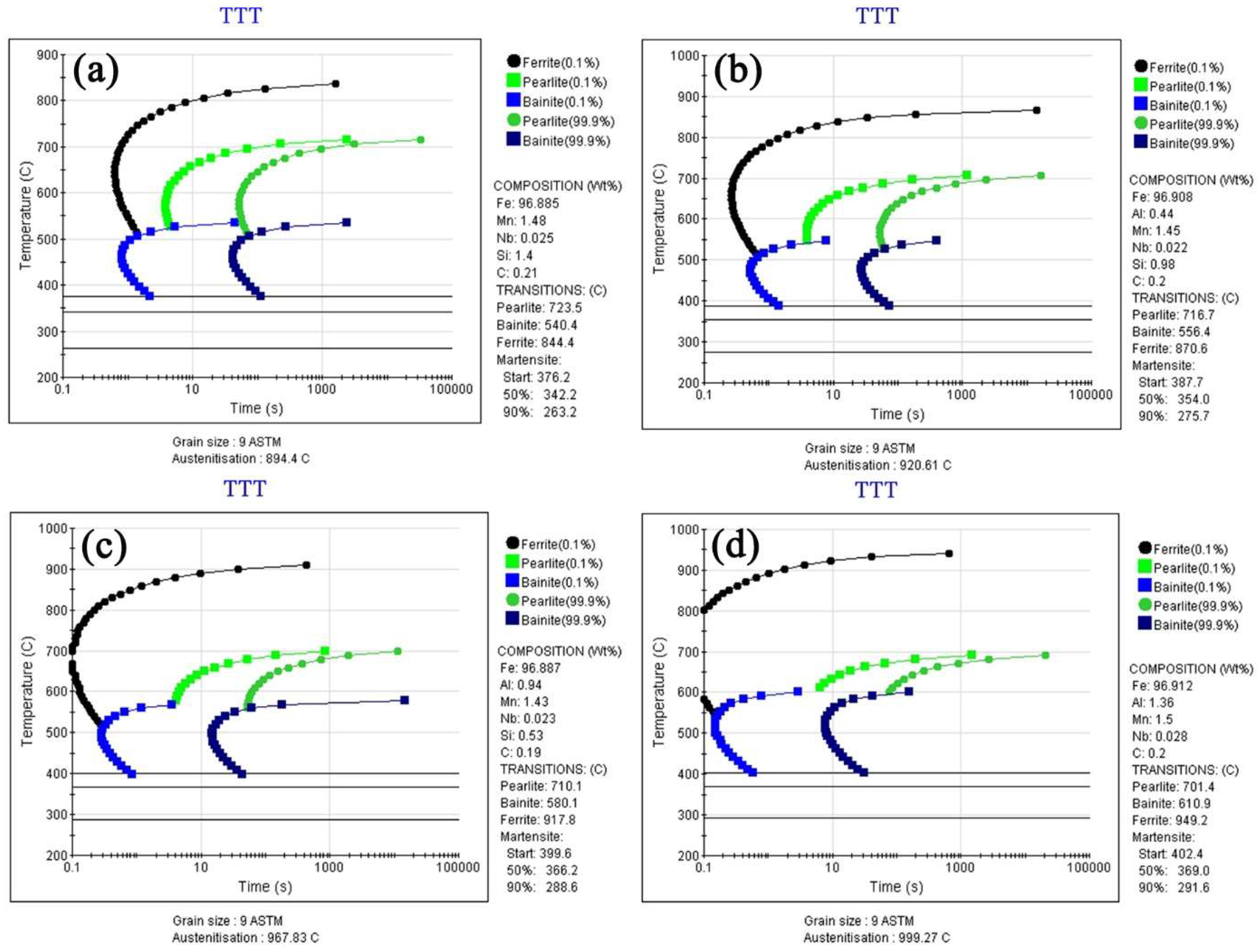
The IBT temperature, along with the IA temperature, is a critical parameter for cold-rolled TRIP steels, as it dictates the grain size, morphology, carbon content, and volume fraction of RA. To clarify the microstructural evolution during bainitic transformation, time–temperature transformation (TTT) curves for the metastable austenite of the four experimental steels were calculated using JMatPro (Figure 4). Al substitution of Si increased the bainite start (Bs) temperature from 540 °C to 611 °C and shifted the nose of the bainitic bay from approximately 450 °C to about 550 °C. This substitution also elevated the martensite start (Ms) temperature from 376 °C to 402 °C (Table 2). Selecting an IBT temperature too close to this nose temperature accelerated bainite formation, which reduced the RA content at room temperature. Conversely, an IBT temperature below Ms led to the formation of martensite. Both conditions degraded the strength–ductility balance. Therefore, an IBT temperature of 410 °C was chosen in this study to optimize the microstructure and mechanical properties.
Table 2. Bs, Ms, and Mf temperature calculated by JMatPro for the experimental steels.
SteelBs/°CMs/°CMf/°C
1.5Si Steel540376263
1.0Si0.5Al Steel556388276
0.5Si1.0Al Steel580400289
1.5Al Steel611402292
In addition to temperature, the holding times of IA and IBT significantly influence the final properties of TRIP steels. Wang et al. [16] demonstrated that an IA time of 1–3 min is sufficient to achieve an optimal strength–ductility balance. Similarly, Zhang et al. [17] reported that an IBT time of 3–4 min represents the most favorable processing window. A shorter IBT time leads to carbon-depleted RA with low mechanical stability, whereas prolonged holding promotes excessive bainite formation at the expense of austenite content—both scenarios suppress the TRIP effect. Accordingly, in this study, both the IA and IBT time were set to 3 min. The corresponding heat treatment schedule is illustrated in Figure 1.

3.2. Microstructure

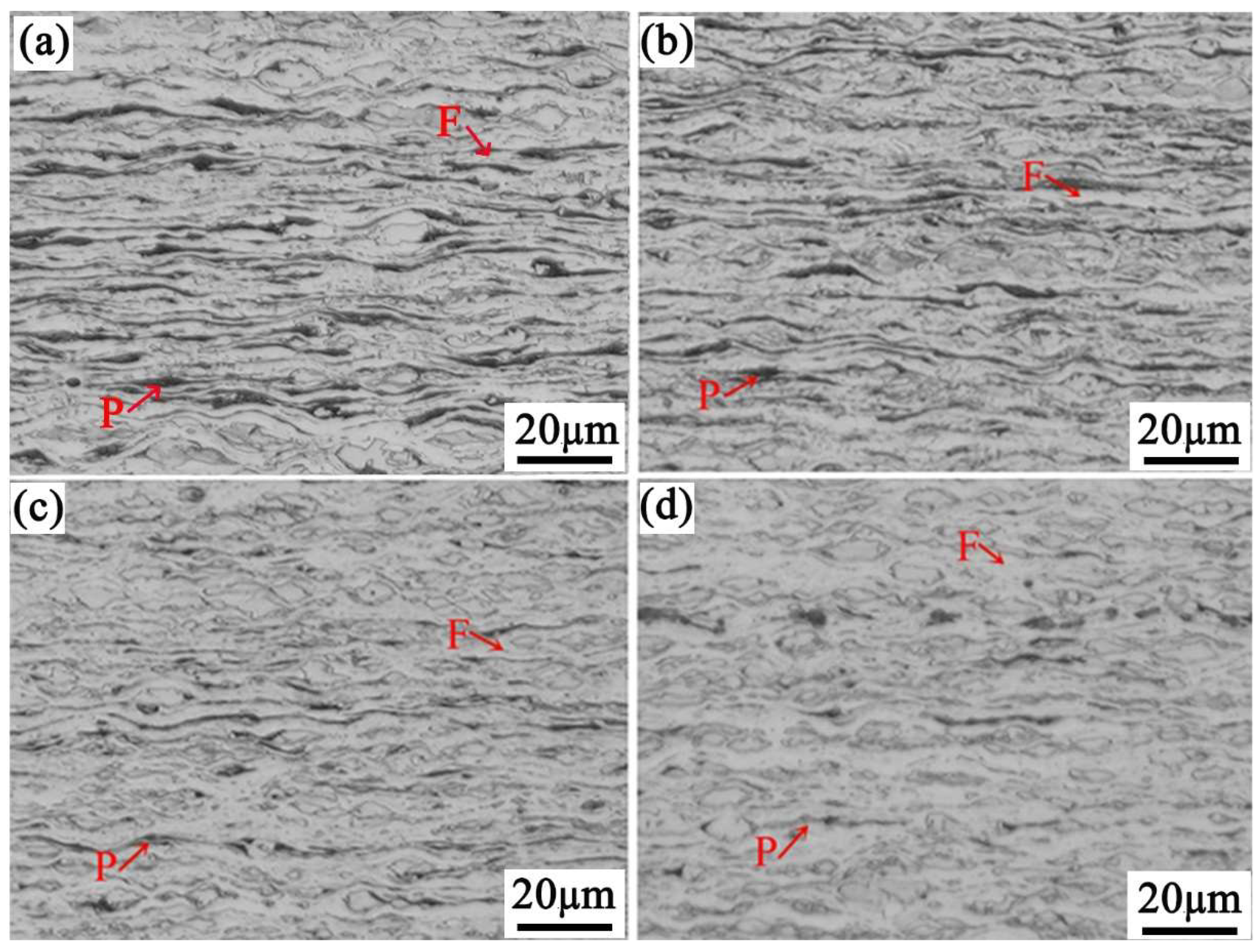
Figure 5 shows the OM images of the four experimental steels after cold rolling. The microstructure of all samples is primarily composed of ferrite (the white phase) and pearlite (the black phase). Both constituents are markedly elongated along the rolling direction, forming a distinct banded structure. It is evident that substituting Si with Al leads to an increase in the volume fraction of ferrite and a corresponding decrease in pearlite.
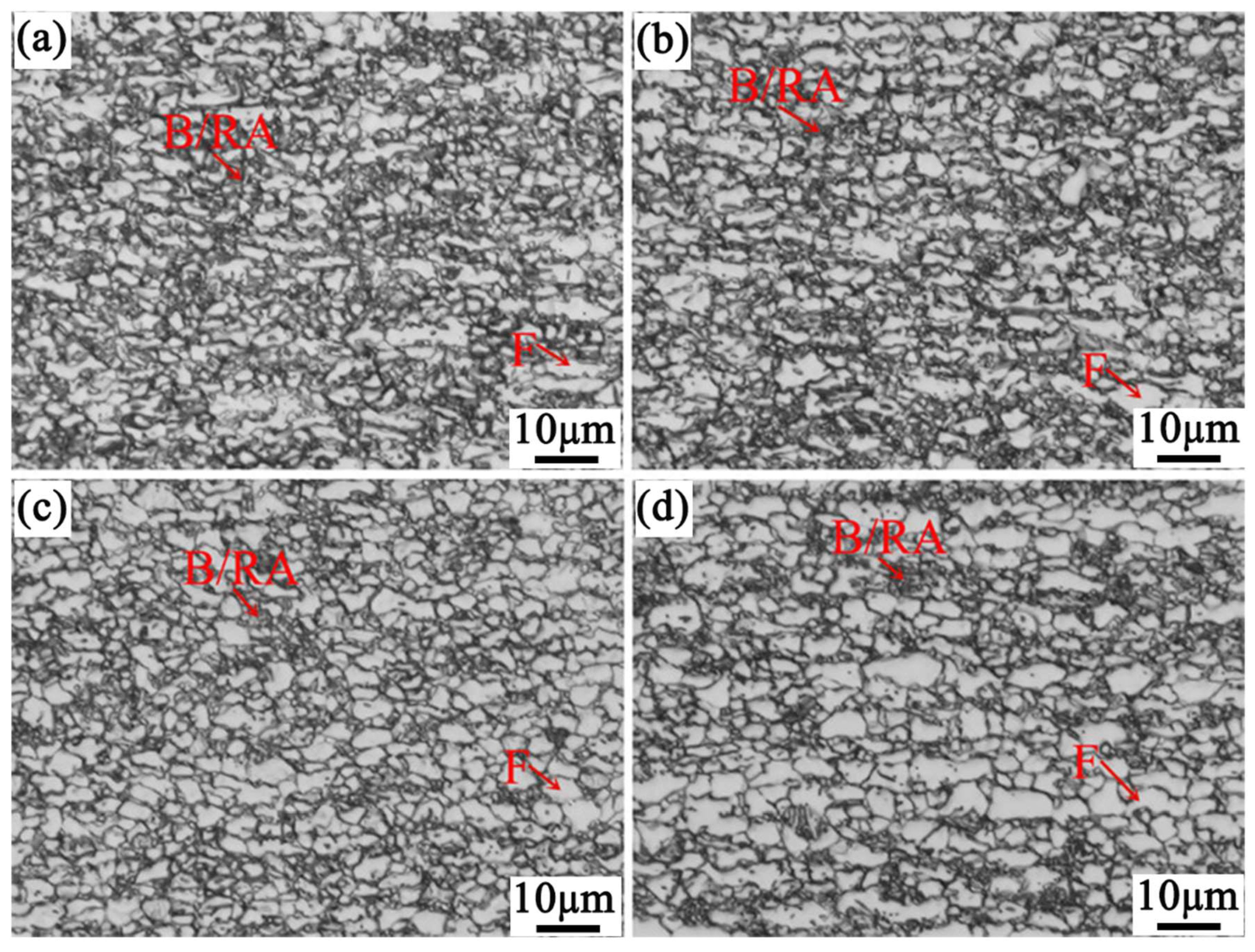
Figure 6 shows the OM images of the four experimental steels after the two-stage heat treatment. The banded structure was eliminated in all samples, resulting in microstructures consisting of uniformly distributed white blocky polygonal ferrite, along with light gray bainite and RA. Both the volume fraction and size of the polygonal ferrite increase with Al content. This is attributed to the role of Al as a ferrite (α) stabilizer, which expands the α-phase field and contracts the austenite (γ) region (Figure 3). Therefore, during intercritical annealing at 825 °C for 3 min, a higher Al content promotes the formation of more ferrite and less initial austenite. This lower initial austenite content, in turn, results in reduced bainite content after the IBT transformation.
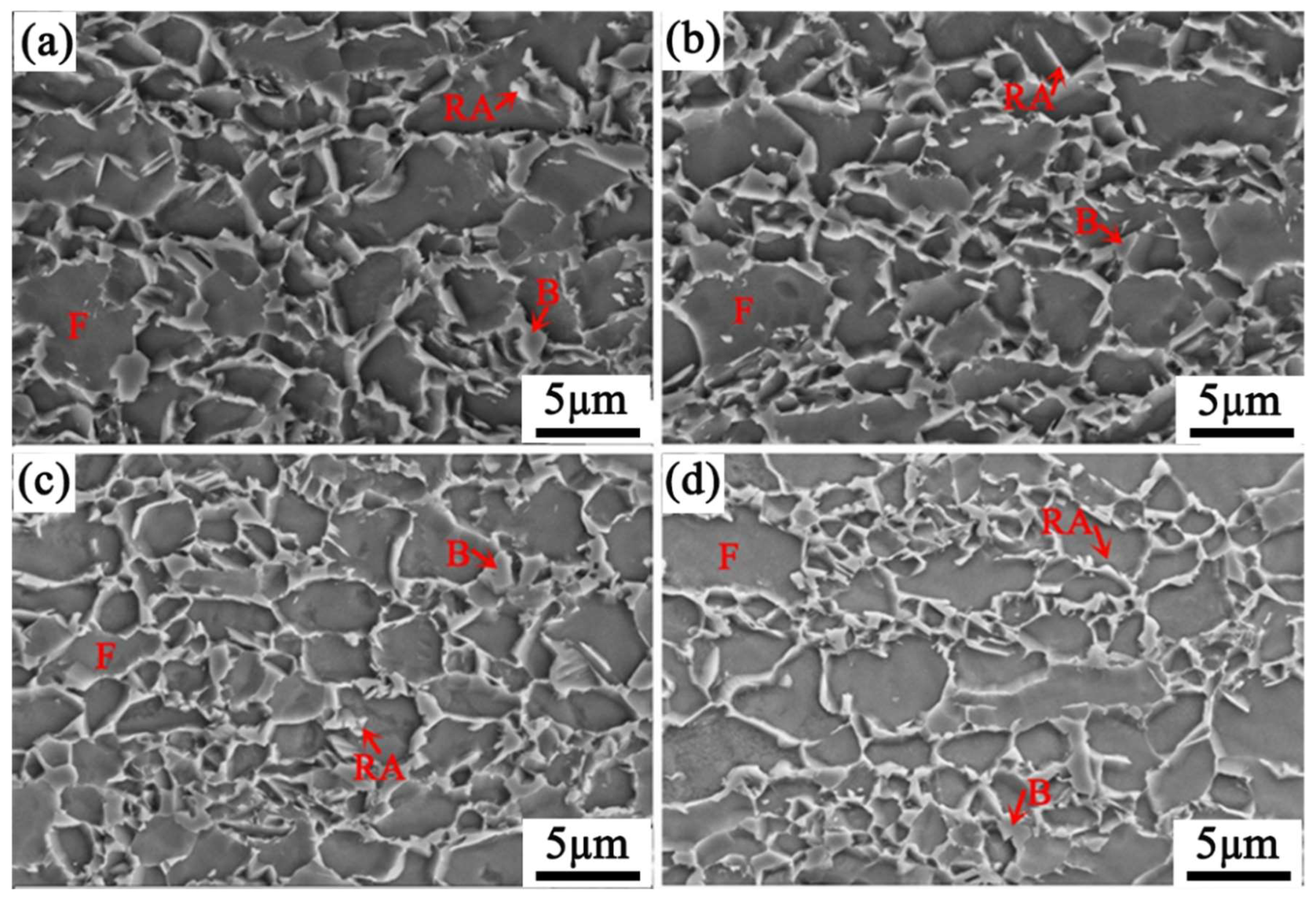
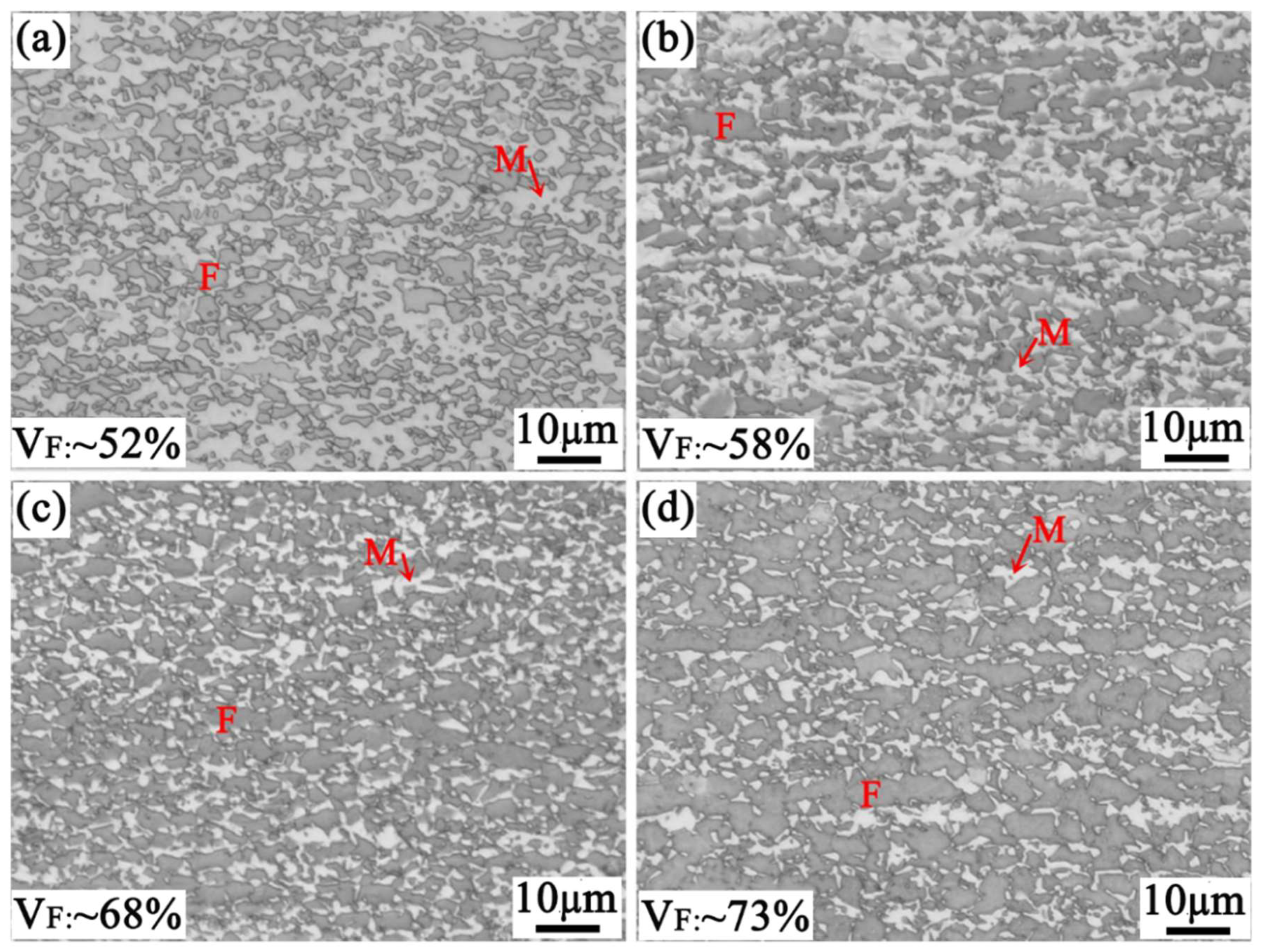
Figure 7 shows the SEM micrographs of the four experimental steels after the two-stage heat treatment. The microstructures primarily consist of polygonal ferrite and granular bainite, with RA (white phase) uniformly distributed both within the ferrite matrix and along the grain boundaries. The quantitative analysis shown in Figure 8 confirms that the volume fraction of ferrite increases systematically from 52% to 73% as Si is substituted with Al: specifically, 52% (1.5Si), 58% (1.0Si0.5Al), 68% (0.5Si1.0Al), and 73% (1.5Al).
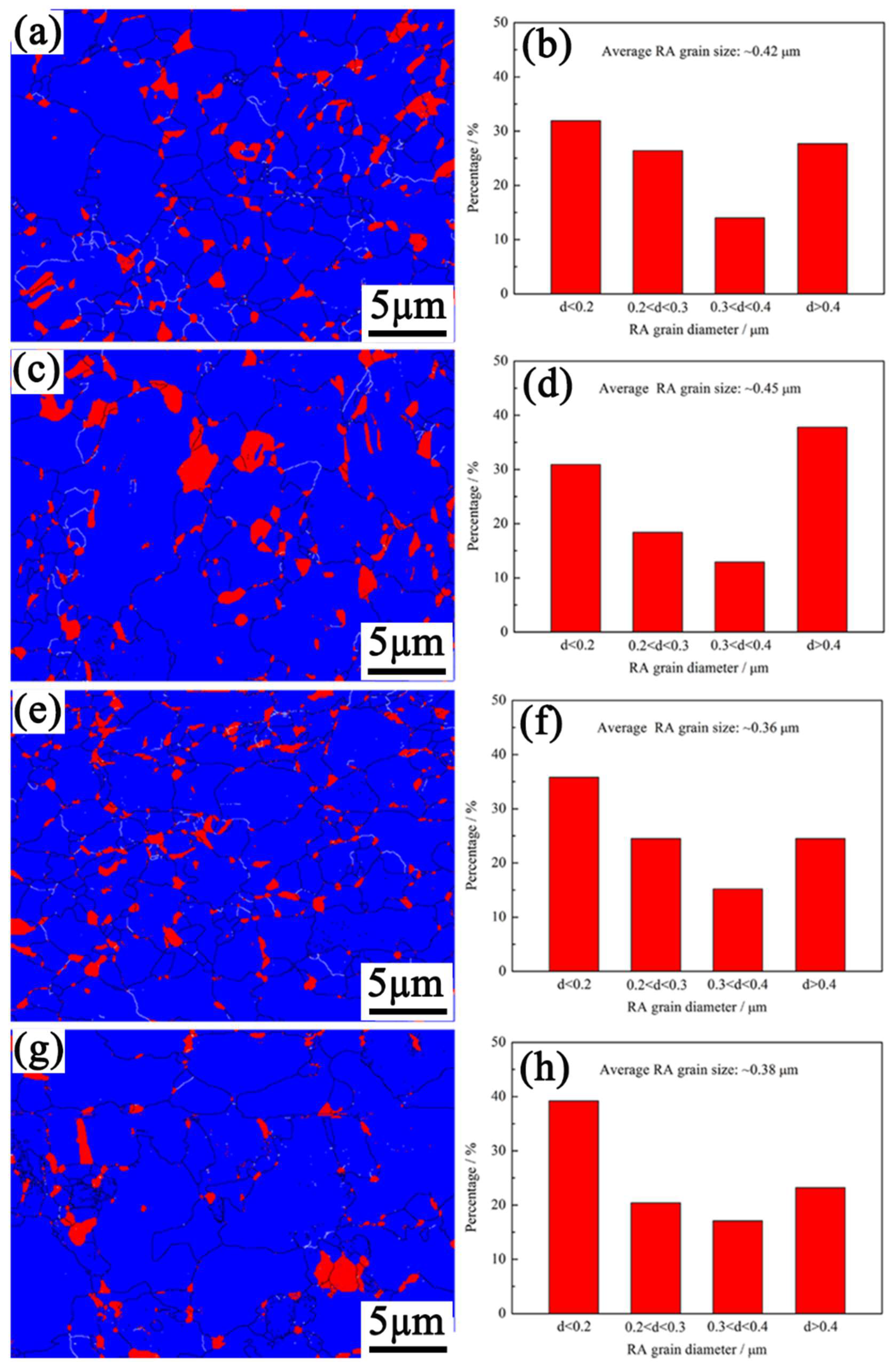
To elucidate the effect of Al substitution of Si on the characteristics of RA, EBSD analysis was performed on four experimental steels subjected to the two-stage heat treatment. The corresponding phase maps and RA size distribution histograms are presented in Figure 9. In the phase maps, the α-bcc phase and RA are colored blue and red, respectively, while the white and black lines denote low-angle (2–15°) and high-angle (>15°) grain boundaries. As shown in Figure 9a,c,e,g, with Al substitution of Si, the RA in all steels primarily exhibits a granular or blocky morphology, with only a minor lath-like fraction. The RA is predominantly distributed along ferrite grain boundaries, with a small amount located within the grains, consistent with the SEM observations. As summarized in Figure 9b,d,f,h, the average RA grain size ranges from 0.36 to 0.45 μm.
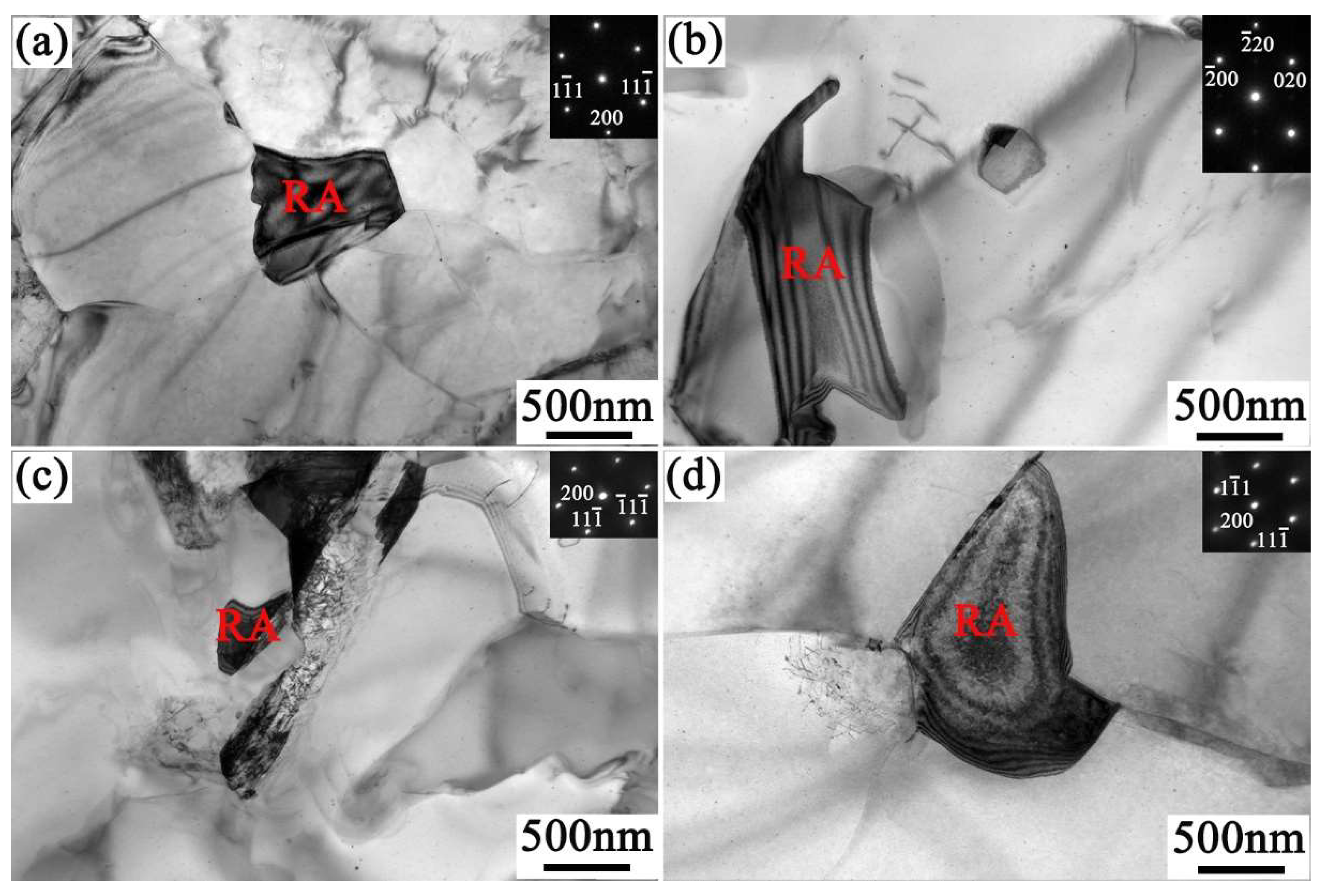
To further elucidate RA morphology, TEM analysis was conducted. As shown in Figure 10, the RA in the four experimental steels predominantly exists as blocky or granular particles located at the ferrite grain boundaries, with a smaller fraction found within the grains, in good agreement with the SEM and EBSD results.
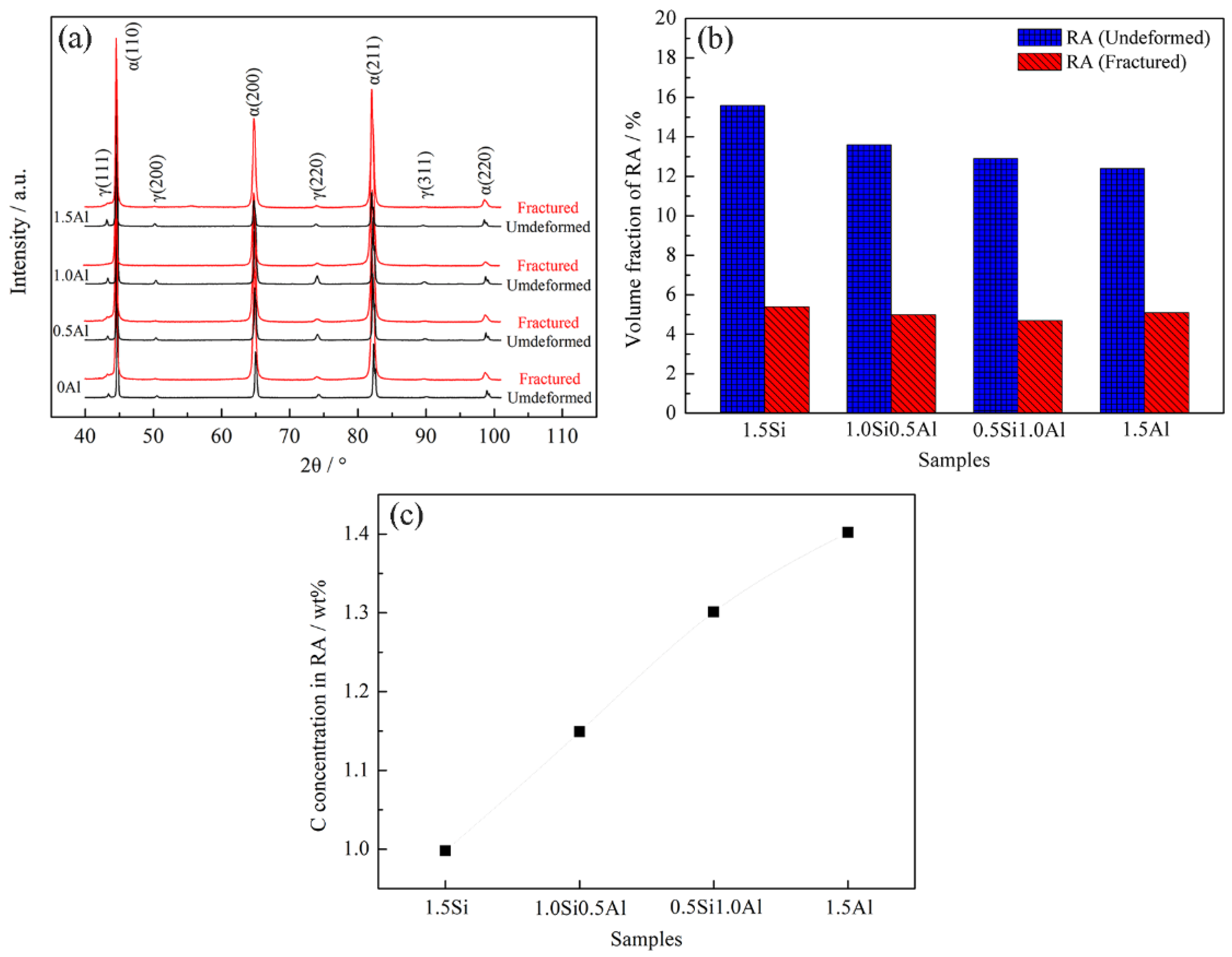
To further investigate the influence of Al substitution for Si on the volume fraction, carbon content, and mechanical stability of RA, XRD analyses were performed on the four experimental steels before and after tensile testing. The resulting data for the RA volume fraction and its average carbon content are presented in Figure 11. As Si is replaced by Al, the volume fraction of RA (Vγ) decreases from 15.6% to 12.4%, while its carbon content (Cγ) increases from 1.0 wt.% to 1.4 wt.% (Figure 11b,c). After tensile deformation, the RA contents in the four experimental steels drop to 5.4%, 5.0%, 4.7%, and 5.1%.
Austenite stability can be categorized into thermal stability and mechanical stability. This study focuses on the mechanical stability of RA, which reflects its tendency to transform into martensite under plastic deformation. The mechanical stability parameter k was quantitatively evaluated using the following equation [18]:
f γ = f γ 0 exp ( k ε ) ,
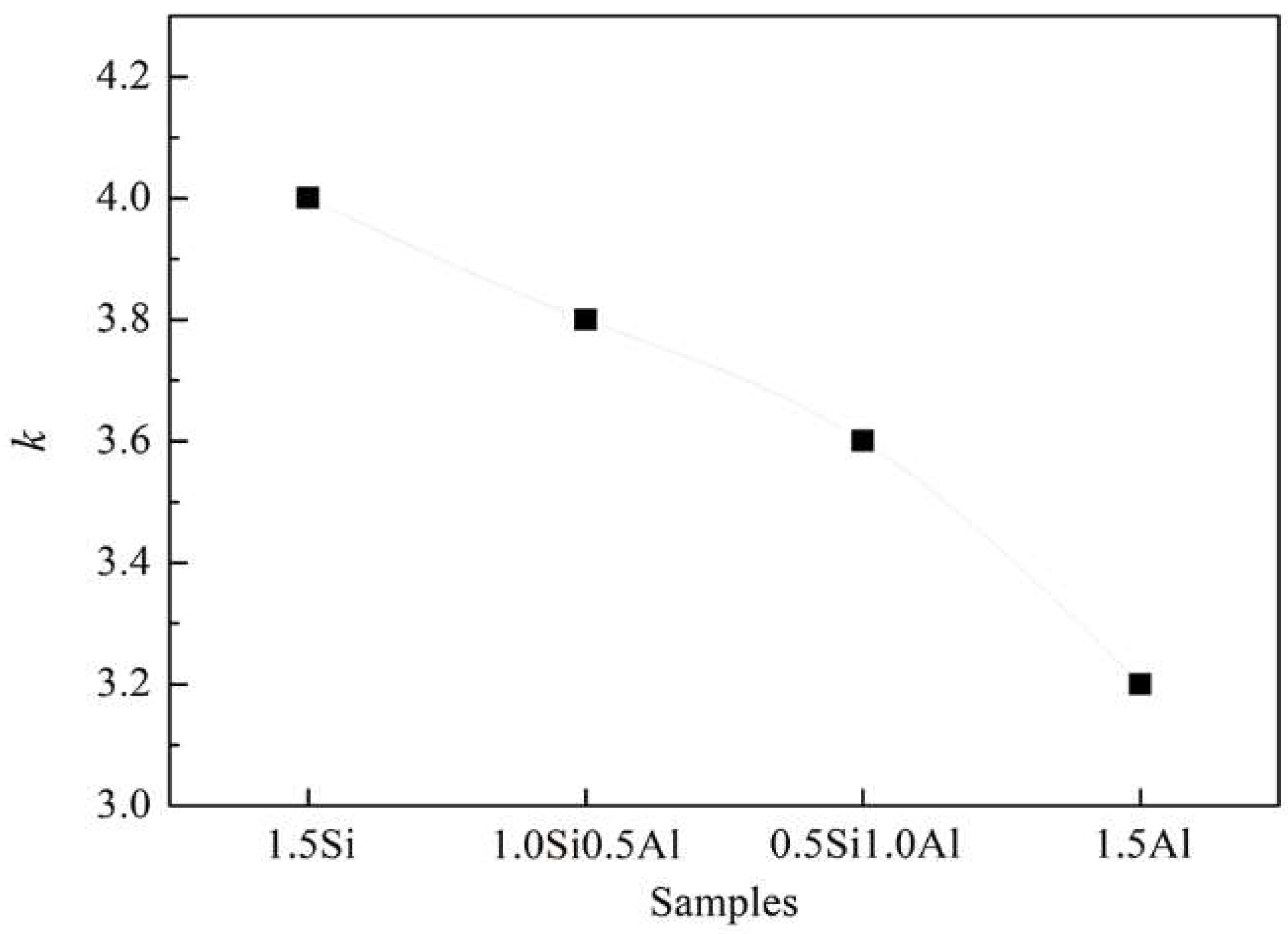
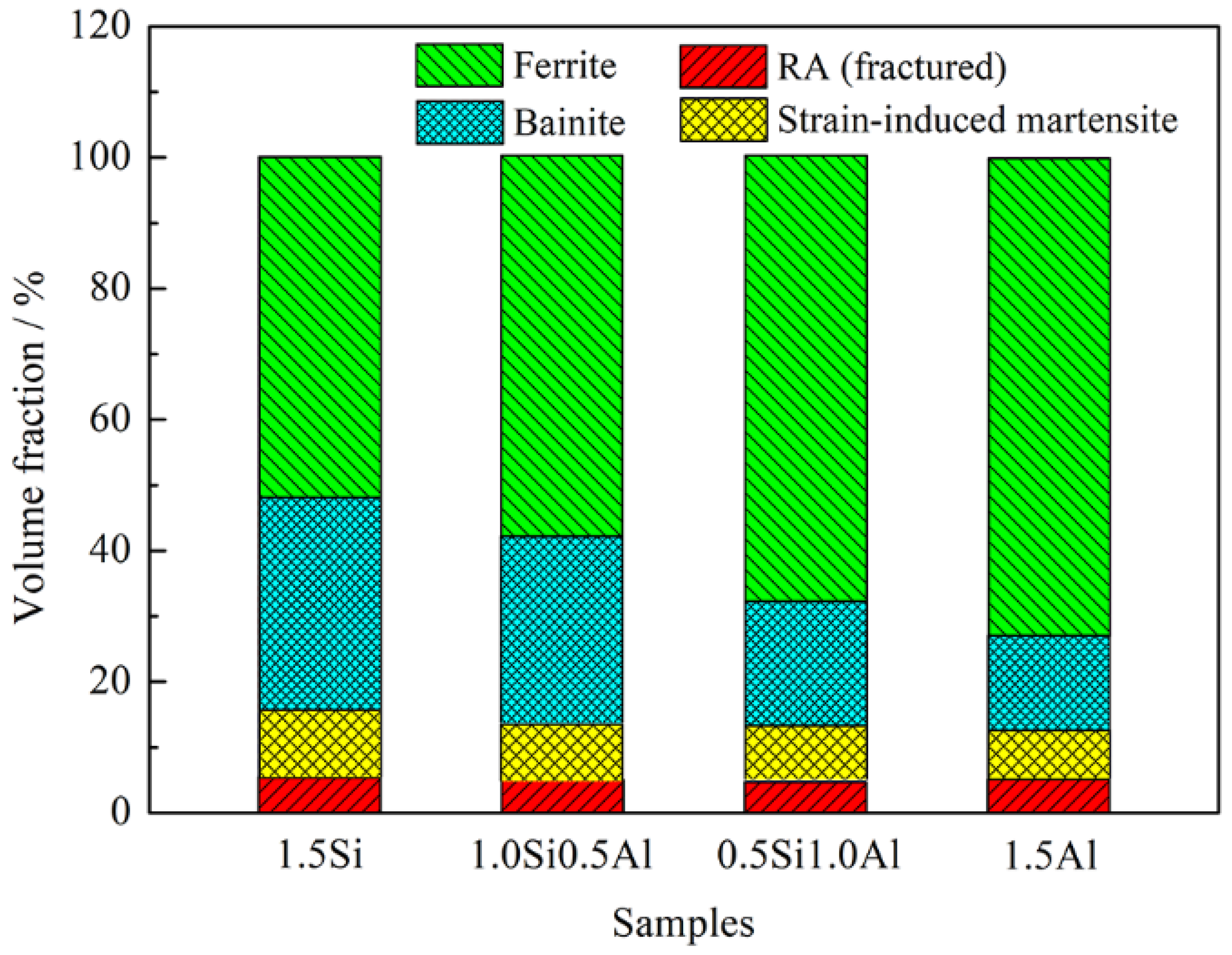
where f γ 0 is the initial volume fraction of RA, f γ is the volume fraction of RA at a true strain of ε, and k is the mechanical stability constant. A higher k value indicates a lower mechanical stability of RA [19]. Figure 12 shows the calculated k values for the four experimental steels after the two-stage heat treatment. As Si is replaced by Al, the k value decreases from approximately 4.0 to 3.2, indicating an enhancement in the mechanical stability of the RA. This enhanced stability is primarily attributed to the increased carbon content in the RA, which rises from 1.0 wt.% to 1.4 wt.% with Al addition (Figure 11c). As widely reported [20,21,22,23], the mechanical stability of RA is decided by its carbon content, grain size, and morphology. Specifically, a higher carbon content generally results in greater stability [24]. Consequently, the improved stability leads to a reduction in the amount of strain-induced martensitic transformation from 10.2% to 7.3% after tensile deformation (Figure 11b).
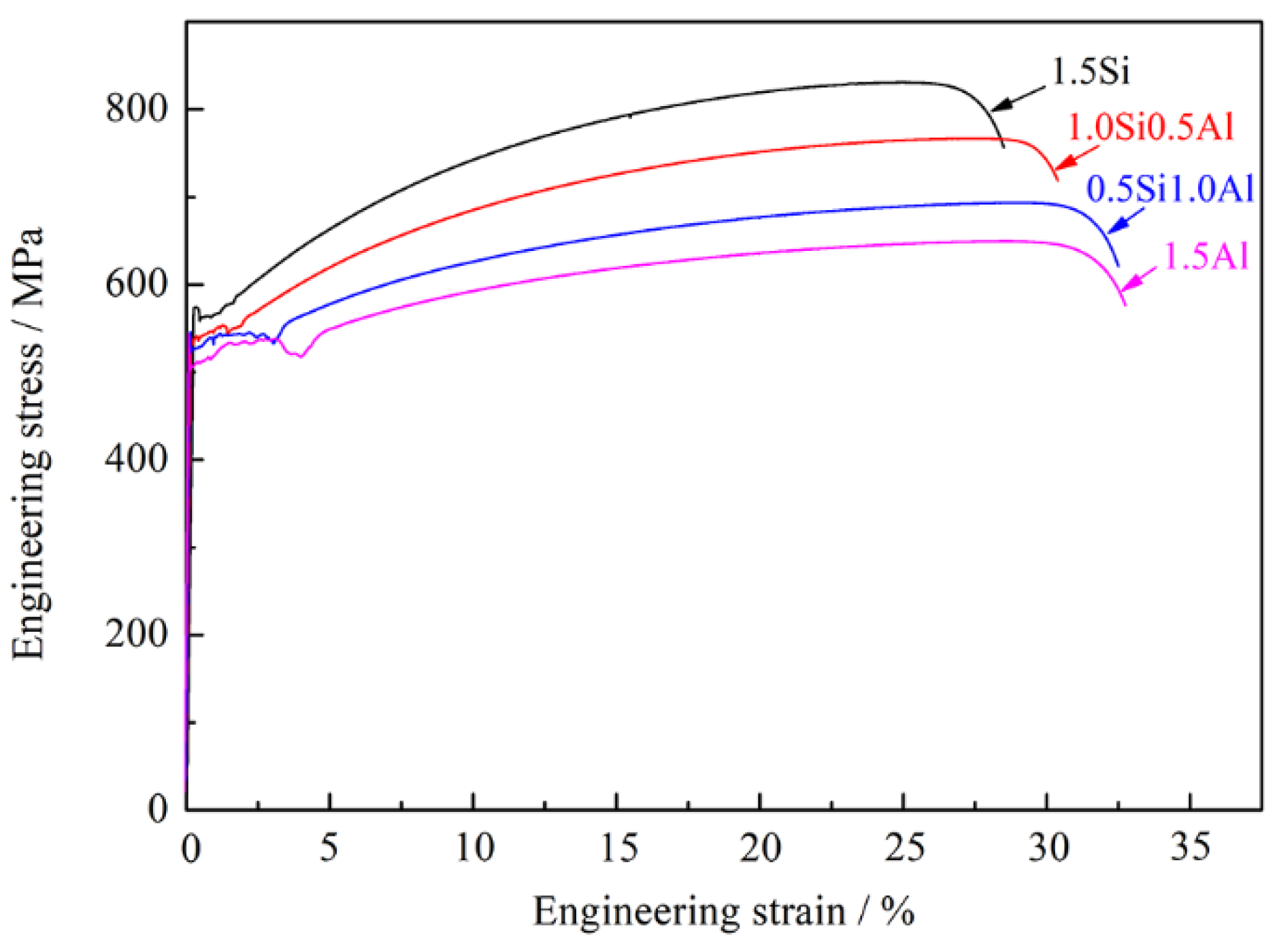
Figure 13 presents the engineering stress–strain curves of the four experimental steels after the two-stage heat treatment, and the corresponding mechanical properties are summarized in Table 3. As Si is replaced by Al, both the yield strength (YS) and UTS decrease monotonically from 573 MPa to 536 MPa and from 839 MPa to 648 MPa, respectively. In contrast, the TEL increases from 28.3% to 32.4%. Consequently, the product of UTS and TEL (PSE) shows a slight decline from 23.7 GPa·% to 21.0 GPa·%.
The balanced mechanical properties of TRIP steels arise from their three-phase microstructure of soft ferrite, hard bainite, and metastable RA. This strength–ductility synergy depends on the volume fractions of these phases and the mechanical stability of the RA. In the present experimental steels, the systematic substitution of Si with Al modifies both the phase fractions and the RA stability, thus controlling the overall mechanical response.
The YS of the experimental steels is described by the following equation [25]:
Y S = σ 0 + σ s + σ g + σ p + σ d ,
where σ 0 is the lattice friction stress and σ s , σ g , σ p , and σ d represent the strengthening increments from solid-solution, grain-refinement, precipitation, and dislocation hardening, respectively. The observed decrease in YS in the high-Al steels primarily stems from the concurrent weakening of two key strengthening mechanisms. First, the replacement of Si with Al reduces the solid-solution strengthening contribution ( σ s ), as Al imparts a weaker strengthening effect compared to Si [8,26] Second, the ferrite grain size increases with Al addition, which diminishes the grain boundary strengthening contribution ( σ g ). The combined reduction in both σ s and σ g thereby accounts for the overall lower YS of these steels.
The decline in UTS of the experimental steels is primarily due to the synergistic effect of three key microstructural and compositional changes. Firstly, the Al substitution for Si leads to a reduction in YS. Concurrently, a significant microstructural transformation occurs, characterized by an increase in the volume fraction of the soft ferrite phase from 52% to 73%, coupled with a decrease in the hard bainite phase from 32.4% to 14.6% (Figure 14). Furthermore, the stability of the RA is enhanced as its carbon content rises from 1.0 wt.% to 1.4 wt.%, which suppresses the strain-induced transformation from 10.2% to 7.3% during deformation. Consequently, the contribution of the TRIP effect to strengthening is significantly diminished, collectively accounting for the reduction in UTS.
Notably, despite the attenuated TRIP effect, the TEL of the experimental steels increases from 28.5% to 32.4% with Al’s substitution of Si. This enhancement in ductility is primarily attributed to a concurrent microstructural evolution characterized by a significant increase in the volume fraction of the soft, ductile ferrite phase (from 52% to 73%) and a corresponding decrease in the hard bainite phase (from 32.4% to 14.6%). The enlarged ferrite fraction provides an enhanced capacity for accommodating plastic strain, effectively compensating for the reduced TRIP effect and thereby leading to the improved TEL.

4. Conclusions

In this study, the effects of Al substitution of Si on the microstructure evolution, RA stability, and mechanical properties of low-alloy TRIP-aided steels were investigated. The primary conclusions are summarized as follows:
  • With Al substituting for Si, the volume fraction of ferrite increased from 52% to 73%, while that of bainite decreased from 32.4% to 14.6%.
  • The substitution of Si by Al reduced the volume fraction of RA from 15.6% to 12.4%, but increased its carbon content and mechanical stability.
  • Al substitution in place of Si led to a decline in both YS (from 573 MPa to 536 MPa) and UTS (from 839 MPa to 648 MPa). In contrast, the TEL increased from 28.3% to 32.4%. Consequently, the 1.5Si-TRIP steel achieved an excellent combination of mechanical properties, characterized by a PSE of 23.7 GPa·%.

Author Contributions

Conceptualization, J.H. and Z.T.; Methodology, J.H.; Software, J.H. and G.L.; Validation, J.H.; Formal analysis, J.H., G.L., S.D., C.Z. and H.C.; Investigation, J.H.; Resources, Z.T.; Data curation, J.H.; Writing – original draft, J.H.; Writing – review & editing, J.H.; Supervision, P.D. and Z.T.; Project administration, J.H.; Funding acquisition, J.H. All authors have read and agreed to the published version of the manuscript.

Funding

This work was supported by grants from the Fujian Regional Development Project (2024H4010), the Fujian Provincial Guided Project (2025H0028), the Fujian Provincial STS Program (2024T3026), and the Natural Science Foundation of Fujian Province (2025J09050).

Data Availability Statement

The raw data supporting the conclusions of this article will be made available by the authors on request.

Conflicts of Interest

The authors declare no conflict of interest.

References

  1. Xiao, B.; Yu, J.R.; Yu, Y.S.; Hu, B.; Misra, R.D.K.; Liu, S.L.; Liu, W.Q. Uncovering the effect of retained austenite stability on the dynamic mechanical properties of TRIP-aided steel. Mater. Sci. Eng. A 2025, 942, 148729. [Google Scholar] [CrossRef]
  2. Liu, Z.X.; Hu, X.; Xie, T.; Zheng, H.Q.; Su, G.Q.; Jin, Y.; Fan, H.; Wang, H.; Huang, X.F. Effect of combined V and Ti microalloying on the microstructure and mechanical properties of TRIP-aided bainitic ferrite steel during industrial continuous annealing. J. Mater. Res. Technol. 2025, 37, 3518–3532. [Google Scholar] [CrossRef]
  3. Yan, J.H.; Zhang, X.G.; Liu, H.; Miyamoto, G.; Cao, Z.M.; Zhang, Y.J.; Pei, Y.W.; Shi, P.; Chen, J.J.; Furuhara, T. Enhancing ductility of the TRIP aided bainitic ferrite steel by Mn heterogeneity introduced via reversion: Towards the 3rd generation. Scripta Mater. 2024, 252, 116241. [Google Scholar] [CrossRef]
  4. Xiao, B.; Yu, Y.S.; Hu, B.; Wang, H.R.; Wang, W.; Liu, S.L.; Liu, W.Q. Insights into the role of retained austenite stability in TRIP-aided steel: Ductilizing and toughening. J. Mater. Res. Technol. 2024, 33, 7698–7708. [Google Scholar] [CrossRef]
  5. Suh, D.W.; Park, S.J.; Oh, C.S.; Kim, S.J. Influence of partial replacement of Si by Al on the change of phase fraction during heat treatment of TRIP steels. Scr. Mater. 2007, 57, 1097–1100. [Google Scholar] [CrossRef]
  6. De Meyer, M.; Vanderschueren, D.; De Cooman, B.C. The influence of the substitution of Si by Al on the properties of cold rolled C-Mn-Si TRIP steels. ISIJ Int. 1999, 39, 813–822. [Google Scholar] [CrossRef]
  7. El-Sherbiny, A.; El-Fawkhry, M.K.; Shash, A.K.; El-Hossany, T. Replacement of silicon by aluminum with the aid of vanadium for galvanized TRIP steel. J. Mater. Res. Technol. 2020, 9, 3578–3589. [Google Scholar] [CrossRef]
  8. Zhu, K.Y.; Mager, C.; Huang, M.X. Effect of substitution of Si by Al on the microstructure and mechanical properties of bainitic transformation-induced plasticity steels. J. Mater. Sci. Technol. 2017, 33, 1475–1486. [Google Scholar] [CrossRef]
  9. Barbé, L.; Verbeken, K.; Wettinck, E. Effect of the Addition of P on the Mechanical Properties of Low Alloyed TRIP Steels. ISIJ Int. 2006, 46, 1251–1257. [Google Scholar] [CrossRef]
  10. Wang, C.; Ding, H.; Zhang, J.; Di, H.F. Effect of partial replacement of Si with Al on the microstructures and mechanical properties of 1000MPa TRIP steels. J. Mater. Eng. Perform. 2014, 23, 3896–3906. [Google Scholar] [CrossRef]
  11. Liu, P.; Yang, C.Y.; Hou, X.D.; Zheng, C.W.; Luan, Y.K.; Chen, H.L.; Ma, G.C.; Li, D.Z. Towards the understanding of rare earth microalloying on the improvement of thermal stability of intragranular austenite and mechanical property of TRIP steels. Mater. Sci. Eng. A 2024, 914, 147135. [Google Scholar] [CrossRef]
  12. Xu, D.M.; Zhang, D.K.; Yang, G.W.; Wang, Q.; Bao, S.Q.; Zhao, G. Effect of quenching temperature on the austenite stability and mechanical properties of high-strength air-cooled TRIP steel prepared with hot-rolled C–Si–Mn sheets. J. Mater. Res. Technol. 2024, 31, 420–433. [Google Scholar] [CrossRef]
  13. Liu, P.; Hou, X.D.; Yang, C.Y.; Luan, Y.K.; Zheng, C.W.; Li, D.Z.; Ma, G.C. Tailoring microstructure evolution and austenite stability of TRIP steels by Rare-Earth micro-alloying. Mater. Charact. 2023, 203, 113035. [Google Scholar] [CrossRef]
  14. Cai, Z.H.; Ding, H.; Misra, R.D.K.; Ying, Z.Y. Austenite stability and deformation behavior in a cold-rolled transformation-induced plasticity steel with medium manganese content. Acta Mater. 2015, 84, 229–336. [Google Scholar] [CrossRef]
  15. Tang, Z.Y.; Huang, J.N.; Ding, H.; Cai, Z.H.; Misra, M.D.K. Austenite stability and mechanical properties of a low-alloyed ECAPed TRIP-aided steel. Mater. Sci. Eng. A 2018, 724, 95–102. [Google Scholar] [CrossRef]
  16. Wang, C.; Ding, H.; Zhang, J.; Wu, H.Y. Effect of intercritical annealing time on the microstructures and tensile properties of a high strength TRIP steel. Acta Met. Sin-Engl. 2014, 27, 457–463. [Google Scholar] [CrossRef]
  17. Zhang, Z.C.; Manabe, K.; Li, Y.M.; Zhu, F.X. Effect of isothermal bainite treatment on microstructure and mechanical properties of low-carbon TRIP seamless steel tube. Steel Res. Int. 2012, 83, 645–652. [Google Scholar] [CrossRef]
  18. Shi, J.; Sun, X.J.; Wang, M.Q.; Hui, W.J.; Dong, H.; Cao, W.Q. Enhanced work-hardening behavior and mechanical properties in ultrafine-grained steels with large-fractioned metastable austenite. Scr. Mater. 2010, 63, 815–818. [Google Scholar] [CrossRef]
  19. Cai, Z.H.; Ding, H.; Kamoutsi, H.; Haidemenopoulos, G.N.; Misra, R.D.K. Interplay between deformation behavior and mechanical properties of intercritically annealed and tempered medium-manganese transformation-induced plasticity steel. Mater. Sci. Eng. A 2016, 654, 359–367. [Google Scholar] [CrossRef]
  20. Lee, S.J.; Lee, S.; De Cooman, B.C. Mn partitioning during the intercritical annealing of ultrafine-grained 6% Mn transformation-induced plasticity steel. Scripta Mater. 2011, 64, 649–652. [Google Scholar] [CrossRef]
  21. Cai, Z.H.; Ding, H.; Xue, X.; Xin, Q.B. Microstructural evolution and mechanical properties of hot-rolled 11% manganese TRIP steel. Mater. Sci. Eng. A 2013, 560, 388–395. [Google Scholar] [CrossRef]
  22. Zou, Y.; Xu, Y.B.; Hu, Z.P.; Gu, X.L.; Peng, F.; Tan, X.D.; Chen, S.Q.; Han, D.T.; Misra, R.D.K.; Wang, G.D. Austenite stability and its effect on the toughness of a high strength ultra-low carbon medium manganese steel plate. Mater. Sci. Eng. A 2016, 675, 153–163. [Google Scholar] [CrossRef]
  23. Wang, C.; Ding, H.; Cai, M.H.; Rolfe, B. Multi-phase microstructure design of a novel high strength TRIP steel through experimental methodology. Mater. Sci. Eng. A 2014, 610, 436–444. [Google Scholar] [CrossRef]
  24. Li, Z.C.; Misra, R.D.K.; Cai, Z.H.; Li, H.X.; Ding, H. Mechanical properties and deformation behavior in hot-rolled 0.2 C-1.5/3Al-8.5 Mn-Fe TRIP steel: The discontinuous TRIP effect. Mater. Sci. Eng. A 2016, 673, 63–72. [Google Scholar] [CrossRef]
  25. Mao, X.P.; Huo, X.D.; Sun, X.J.; Chai, Y.Z. Strengthening mechanisms of a new 700 MPa hot rolled Ti-microalloyed steel produced by compact strip production. J. Mater. Process. Tech. 2010, 210, 1660–1666. [Google Scholar] [CrossRef]
  26. Girault, E.; Mertens, A.; Jacques, P.; Houbaert, Y.; Verlinden, B.; Humbeeck, J.V. Comparison of the effects of silicon and aluminium on the tensile behaviour of multiphase TRIP-assisted steels. Scr. Mater. 2001, 44, 885–892. [Google Scholar] [CrossRef]
Figure 1. Heat treatment schedule of the experimental steels (AC: air cooling).
Metals 16 00379 g001
Figure 2. The dimension of tensile specimen (unit: mm).
Metals 16 00379 g002
Figure 3. Phase fraction calculated by JMatPro for the experimental steels: (a) 1.5Si steel, (b) 1.0Si0.5Al steel, (c) 0.5Si1.0Al steel, (d) 1.5Al steel.
Metals 16 00379 g003
Figure 4. Time–temperature transformation (TTT) curves of the experimental steels: (a) 1.5Si steel, (b) 1.0Si0.5Al steel, (c) 0.5Si1.0Al steel, (d) 1.5Al steel.
Metals 16 00379 g004
Figure 5. OM of the experimental steel after cold rolling: (a) 1.5Si steel, (b) 1.0Si0.5Al steel, (c) 0.5Si1.0Al steel, (d) 1.5Al steel (F: ferrite, P: pearlite).
Metals 16 00379 g005
Figure 6. OM of the experimental steels after two-stage heat treatment: (a) 1.5Si-TRIP sample; (b) 1.0Si0.5Al-TRIP sample; (c) 0.5Si1.0Al-TRIP sample; (d) 1.5Al-TRIP sample (B: bainite; RA: retained austenite).
Metals 16 00379 g006
Figure 7. SEM microstructures of the experimental steels after two-stage heat treatment: (a) 1.5Si-TRIP sample; (b) 1.0Si0.5Al-TRIP sample; (c) 0.5Si1.0Al-TRIP sample; (d) 1.5Al-TRIP sample.
Metals 16 00379 g007
Figure 8. OM of the experimental steels after annealing at 825 °C for 3 min: (a) 1.5Si steel; (b) 1.0Si0.5Al steel; (c) 0.5Si1.0Al steel; (d) 1.5Al steel (M: martensite; etched with LePera reagent).
Metals 16 00379 g008
Figure 9. EBSD maps and size distribution histogram of retained austenite of the experimental steels: (a,b) 1.5Si-TRIP sample; (c,d) 1.0Si0.5Al-TRIP sample; (e,f) 0.5Si1.0Al-TRIP sample; (g,h) 1.5Al-TRIP sample.
Metals 16 00379 g009
Figure 10. TEM micrographs of the experimental steels: (a) 1.5Si-TRIP sample; (b) 1.0Si0.5Al-TRIP sample; (c) 0.5Si1.0Al-TRIP sample; (d) 1.5Al-TRIP sample.
Metals 16 00379 g010
Figure 11. XRD patterns showing measured RA fraction and average C concentration of the experimental steels before and after tensile test: (a) XRD patterns; (b) volume fraction of RA; (c) average carbon content of RA.
Metals 16 00379 g011
Figure 12. The k parameters of experimental steels after two-stage heat treatment.
Metals 16 00379 g012
Figure 13. The engineering stress–strain curve of the experimental steels after two-stage heat treatment.
Metals 16 00379 g013
Figure 14. The volume fraction of ferrite, bainite, retained austenite, and strain-induced martensite of the experimental steels after tensile test.
Metals 16 00379 g014
Table 1. Chemical composition (wt.%) of the experimental steels.
SteelCMnSiAlNbFe
1.5Si Steel0.211.481.4000.025Bal.
1.0Si0.5Al Steel0.201.450.980.440.022Bal.
0.5Si1.0Al Steel0.191.430.530.940.022Bal.
1.5Al Steel0.201.5001.360.028Bal.
Table 3. Mechanical properties of the experimental steels after two-stage heat treatment.
SteelYS/MPaUTS/MPaEL/%PSE/GPa·%
1.5Si-TRIP sample57383928.323.7
1.0Si0.5Al-TRIP sample54376430.423.2
0.5Si1.0Al-TRIP sample54169332.322.4
1.5Al-TRIP sample53664832.421.0
Disclaimer/Publisher’s Note: The statements, opinions and data contained in all publications are solely those of the individual author(s) and contributor(s) and not of MDPI and/or the editor(s). MDPI and/or the editor(s) disclaim responsibility for any injury to people or property resulting from any ideas, methods, instructions or products referred to in the content.