Review

Research Progress on Hot Deformation Behavior of High Nitrogen Austenitic Stainless Steels: Influence Factors and Microstructure Control of Hot Deformation at High Temperature

1
Chengdu Institute of Advanced Metallic Material Technology and Industry Co., Ltd., Chengdu 610000, China
2
National Center for Materials Service Safety, University of Science and Technology Beijing, Beijing 100083, China
3
Pangang Group Jiangyou Changcheng Special Steels Co., Ltd., Jiangyou 621704, China
4
School of Materials Science and Technology, Nanjing University of Aeronautics and Astronautics, Nanjing 210016, China
*
Author to whom correspondence should be addressed.
Metals 2026, 16(4), 361; https://doi.org/10.3390/met16040361
Submission received: 10 February 2026 / Revised: 10 March 2026 / Accepted: 16 March 2026 / Published: 25 March 2026

Abstract

High nitrogen austenitic stainless steels are an important engineering structural material. Under annealing conditions, the addition of interstitial solid solution element nitrogen can improve the yield strength and tensile strength of the alloy without reducing its plasticity. In addition, nitrogen can partly or completely replace the more expensive nickel element at a relatively cheap element cost to improve economic benefits, while maintaining or even enhancing the excellent corrosion resistance of stainless steels. However, the cracks and defects caused by high nitrogen austenitic stainless steels during hot working in high temperature ranges have always been the pain points in the engineering field. High nitrogen elements bring high temperature strength, but also narrow the hot working temperature range, the possibility of nitride precipitation and the tendency of heat induced cracking, which limit the further engineering application of high nitrogen austenitic stainless steels. It is urgent to analyze and study the hot deformation law of high nitrogen austenitic stainless steels in engineering. This article commences with an examination of the developmental trajectory of high nitrogen austenitic stainless steel, elucidates the role and strengthening mechanism of nitrogen, and delineates the factors influencing the mechanical behavior of high nitrogen austenitic stainless steel during hot working. These factors include the impact of nitrogen content and manufacturing processes, hot-working parameters, grain size distribution, and the presence of precipitated phases. This article synthesizes various studies, analyzes the causes of thermal cracking, and proposes potential solutions. Ultimately, it summarizes the practical applications and future prospects of high nitrogen austenitic stainless steel, highlighting its substantial potential.

1. Introduction

Austenitic stainless steel is renowned for its exceptional plasticity, corrosion resistance, and machinability. It is extensively utilized in various sectors, including transportation, construction materials, medical equipment, and the military industry, constituting over 70% of global stainless steel production [1,2]. Nevertheless, conventional austenitic stainless steel typically exhibits low strength and limited load-bearing capacity. Additionally, nickel (Ni), a crucial element in the most stable austenite phase region, is both scarce and costly, thereby elevating the expense of nickel-containing austenitic stainless steel and diminishing its market competitiveness. Consequently, research efforts have been undertaken both domestically and internationally to substitute nitrogen (N) and enhance the strength of stainless steel [3,4,5]. In 1912, Andrew et al. first identified that N positively influences the properties of steel [6]. Prior to this discovery, nitrogen was generally considered a detrimental element in steel, associated with age hardening, segregation, porosity, and other defects [7,8]. Adcodk and other researchers demonstrated that nitrogen significantly enhances the strength of steel and possesses an excellent capacity to stabilize austenite [9,10,11]. Subsequent research confirmed this discovery and determined that the ability of nitrogen to stabilize austenite was much greater than that of nickel (approximately 18 times). In the study by Chen et al. [12,13], it was observed that nitrogen enhances the corrosion resistance of steel, particularly its pitting corrosion performance. Given its ability to improve the mechanical properties and structural stability of austenitic stainless steel, nitrogen has increasingly been employed to stabilize austenite in place of nickel in future production, thereby ensuring the performance of stainless steel. The growing production demands and practices provide a foundation for the research and application of high-nitrogen austenitic stainless steel.
Simmons et al. demonstrated that within the concentration range of 0~1.1 wt%, the yield and fracture strengths of austenitic stainless steel can be linearly enhanced by increasing the solid solution nitrogen content [14,15,16]. By compiling and analyzing the strength data of steels with varying nitrogen contents, Speidel confirmed that an increase in nitrogen content augments the yield and fracture strengths of austenitic stainless steel; however, this enhancement is linear with respect to the square root of the nitrogen content [17]. As the volume of experimental data increased, fluctuations were observed around the theoretical predictions; however, the overall trend remained consistent. These investigations indicate that as an interstitial alloying element, higher nitrogen content is advantageous. Nevertheless, in the original nitrogen-containing stainless steels, due to the low solid solution limit of nitrogen in liquid iron-based alloys at atmospheric pressure [18,19], some Ni is still necessary to stabilize the austenite phase region. Subsequently, researchers successfully increased the nitrogen content in steel by elevating the nitrogen partial pressure during smelting, discovering that the solubility of nitrogen in liquid steel is proportional to the square root of the nitrogen partial pressure (i.e., Sievert’s law) [20]. Consequently, nitriding under high pressure is an effective method for enhancing the nitrogen content; however, it poses certain risks in large-scale production. With advancements in pressure metallurgy technology and the development of the nitrogen alloy thermodynamic theory, the nitrogen content in austenitic stainless steel eventually surpasses its solid solubility limit, entering the realm of high nitrogen steel [21]. “High nitrogen steel” refers to steel in which the actual nitrogen content exceeds the limit that can be accommodated under normal temperature and pressure conditions. For ferritic and austenitic steels, these limits are typically 0.08 and 0.4 wt%, respectively [22]. In the 1990s, researchers discovered that the addition of Cr, Mo, and Mn could increase the solubility of nitrogen in molten steel, whereas the addition of Ni reduced it [23,24,25,26]. These findings continue to advance the research on high nitrogen stainless steel, and owing to the unique mechanical and corrosion resistance advantages of high nitrogen austenitic stainless steel, nitrogen is widely regarded as a key element for enhancing the performance of stainless steel.
In the production of forgings, particularly during the hot forming of large components such as retaining ring steel, heavy rotors, and reactor pressure vessels, high-nitrogen austenitic stainless steels are susceptible to defects including uneven deformation, surface cracks, coarse grains, and mixed grain structures [27,28]. The emergence of surface cracks necessitates halting the forging process to address these defects, which can sometimes result in the failure of the entire process. Furthermore, such interruptions complicate the control of the microstructure, rendering the production process less cost-effective and efficient [29]. Investigating the hot deformation behavior of high-nitrogen austenite is essential for optimizing hot deformation process parameters (such as deformation temperature, rate, and amount) and understanding microstructural changes during hot deformation, thereby mitigating adverse effects on material properties. This paper reviews the factors influencing the hot deformation behavior of high-nitrogen austenitic stainless steel and the corresponding solutions. It primarily discusses the strengthening effect and mechanism of nitrogen, the impact of hot working process parameters and pre-processing microstructure on the thermal properties of steel, the elements affecting thermal flow stress, the initiation sites and mechanisms of cracks under hot working conditions, the factors leading to harmful precipitate formation and their prevention, and the manufacturing process of high-nitrogen austenitic stainless steel. Finally, the application direction and research prospect of high nitrogen austenitic stainless steels are summarized and prospected.

2. Influencing Factors of Hot Working Mechanical Properties of High Nitrogen Austenitic Stainless Steels

In hot processing, to prevent hot cracking of steel and obtain materials with excellent comprehensive performance, many process variables must be considered. These include the determination of the steel composition, preheating temperature before processing, deformation temperature during processing, strain rate during processing, and adopted process flow. The following summarizes the research status of each part to extract the factors that are beneficial for reducing thermal cracks.

2.1. Influencing Factors of the Nitrogen

An increase in nitrogen content enhances the mechanical properties of stainless steel. Several studies have demonstrated that while the fracture toughness of high nitrogen austenitic stainless steel remains relatively unchanged, its strength is augmented [30]. Presently, two well-established mechanisms of nitrogen-induced strengthening are recognized: solid solution strengthening and fine-grain strengthening. In comparison to conventional carbon alloying, the distortion of the lattice constant induced by nitrogen atoms is more pronounced in the octahedral interstitial sites within the face-centered cubic lattice. Furthermore, nitrogen atoms interact with substitutional atoms in the face-centered cubic lattice. Research by Irvine suggests that the interaction energy between nitrogen and dislocations exceeds that of carbon by more than 1.5 times [31]. This suggests that nitrogen atoms, in comparison to commonly utilized carbon-based alloys, can more effectively inhibit dislocation movement due to their stronger pinning effects.
The strengthening effect of nitrogen on steel is also reflected in its increased activation energy for hot deformation flow. An increase in the activation energy typically requires higher temperatures or lower strain rates to promote dynamic recrystallization. As the nitrogen content increases, its thermal deformation activation energy may show a trend of first decreasing and then increasing. For example, Sahu et al. studied the effect of nitrogen content on the activation energy in common 316 L stainless steel [32]. In the hot working range of 1200–1400 °C, the activation energy of steel with extremely low nitrogen content is between 400–500 KJ/mol, whereas when the nitrogen content increases to 0.14% (wt), its activation energy decreases to approximately 150 kJ/mol. However, as the nitrogen content continued to increase, the activation energy reached 671.7 KJ/mol at 0.28%. It is worth noting that although the addition of nitrogen sometimes reduces its deformation activation energy, the addition of nitrogen usually still improves the high-temperature strength of steel. In Wang’s study, two types of austenitic stainless steels with nitrogen contents of 0.45% and 0.95% were compared [33]. As the nitrogen content increases, the activation energy for thermal deformation flow increases from 315.8 KJ/mol to 628.4 KJ/mol. In other studies [34], it has been found that nitrogen has an increasing effect on the activation energy of high-temperature processing, proving that with the increase in nitrogen, the activation energy also increases.
The impact of nitrogen on the stacking fault energy of austenitic stainless steel is a significant area of study, as stacking fault energy influences mechanical properties by dictating the deformation mode. However, there is ongoing debate regarding its effects. Some researchers have reported that nitrogen addition decreases stacking fault energy [35,36], while numerous studies concur that nitrogen increases the stacking fault energy of austenitic steel [37]. This controversy suggests that the effect of nitrogen on stacking fault energy is modulated by various factors, including potential opposing effects in alloys with different compositions. Nonetheless, the overall stacking fault energy of high-nitrogen austenitic stainless steel remains relatively low. It is widely accepted that nitrogen addition promotes short-range ordering within austenitic stainless steel, with nitrogen atoms being more readily attracted to Mn and Cr atoms and repelled by Ni atoms. Consequently, nitrogen is more likely to occupy interstitial positions surrounded by Mn and Cr atoms, forming short-range-ordered structures. The reduced stacking fault energy in high-nitrogen austenitic stainless steel facilitates the decomposition of dislocations into extended dislocations, thereby inhibiting their cross-slip, while short-range ordering further impedes dislocation slip [38,39]. The combined effect of these phenomena can significantly enhance the yield strength and work-hardening capacity of the material.
In practical industrial applications, although increasing the nitrogen content can improve the overall performance of steel, it can also lead to higher nitride precipitation, narrower shaping temperature processing range, and more stringent processing requirements [40]. So the nitrogen content is typically maintained below 1.0 wt% due to the significant challenges associated with manufacturing and processing.

2.2. Influencing Factors of the Steel Smelting Stage

High nitrogen austenitic stainless steels are typically manufactured through high-pressure melting casting or powder metallurgy [41,42]. The high-pressure melting and casting process involves melting the material at elevated nitrogen partial pressures, thereby increasing the nitrogen content in the molten steel solution. A primary challenge in this process is to prevent component segregation and nitride precipitation. Given that the maximum solid solubility of nitrogen in the austenite matrix exceeds its solubility in the liquid state, nitrogen gas precipitation can lead to the formation of pores within the ingot, resulting in industrial defects. Dense high nitrogen steel ingots are generally achieved through electroslag remelting under a nitrogen atmosphere. In contrast, powder metallurgy utilizes pre-permeated nitrogen powder. Due to the powder’s large specific surface area, the resulting steel exhibits a higher nitrogen content, and within a constrained range of nitrogen permeation and diffusion, the distribution of elements is more uniform and controllable. Although this method may face challenges such as excessive product porosity, powder metallurgy has become a prevalent technique for producing high nitrogen austenitic stainless steel [43].
In the compositional design of high-nitrogen austenitic stainless steel, the incorporation of strong nitride-forming elements, such as V and Nb, is typically avoided due to their propensity to form precipitation phases that may compromise the material’s toughness and corrosion resistance. Nevertheless, Kim et al. proposed the addition of Nb as a strategy to enhance the yield strength of high-nitrogen austenitic stainless steel [44]. Their findings indicated that Nb-containing steel exhibited Z-phase precipitation during homogenization and heat treatment, with the precipitation remaining largely unchanged in size and composition even after aging at 1050 °C. This phenomenon effectively delays grain coarsening during hot processing. Mechanical testing revealed that the yield strength of Nb-containing steel consistently exceeded that of Nb-free steel by 30–83 MPa. This approach represents a viable strengthening strategy, notwithstanding considerations of cost and the deduce in ductility. Andersson observed that element segregation during the solidification process of steel may lead to the precipitation of the ferrite phase in high-nitrogen austenitic stainless steel [45]. He proposed increasing the proportion of Ni without altering the proportion of Cr as a strategy. Another viable approach involves utilizing phase diagram calculation software, such as Thermo-Calc, to assist in component design [46]. Figure 1 shows the calculated phase diagram of common austenitic stainless steel X2CrNiMo17-12-2. Phase diagram calculation can ensure that the ingot achieves a single austenite structure under a specific nitriding atmosphere or promotes austenitization through rapid cooling by determining the temperature range of two-phase and multiphase regions. These strategies for changing the properties through alloy composition can expand the potential range of steel performance utilization.

2.3. Influencing Factors of the Hot Working Process

In the hot processing, excessive preheating temperature may lead to unnecessary grain growth in the steels, thus reducing the hot ductility of the steels [47,48]. High deformation temperature can promote dynamic recrystallization (DRX) [49,50] to obtain higher hot ductility, but when the temperature is too high, the newly formed grains will rapidly increase and coarsen, and may also lead to burning loss in some areas. On the contrary, at a lower temperature, harmful precipitation phase may appear during the processing of high nitrogen austenitic stainless steels, which has a negative impact on the hot ductility [51]. The effect of strain rate on the hot ductility of steels is complex. Scholars’ research process found that no obvious strain rate effect was observed in super 304H austenitic steels, but in some other austenitic steels, such as Cr17Mn6Ni4Cu2N, the harmful effect of low strain rate on hot ductility was observed [52]. Analysis of steels exhibiting different properties shows that the main softening mechanism of strain-rate-sensitive steels during hot working is dynamic recrystallization, as dynamic recrystallization can be fully carried out at low deformation rates, resulting in more thorough softening. The main factors leading to the dominance of dynamic recrystallization are lower dislocation energy, which makes it difficult for dislocations to aggregate and slip during decomposition, and higher temperature, which provides sufficient recrystallization kinetics. In addition, the main softening mechanism of steel that is insensitive to the strain rate during hot working is dynamic recovery. The main reasons for the dominance of dynamic recovery are precipitation phase pinning at grain boundaries to suppress dynamic recrystallization and high dislocation energy for slip and climb to eliminate stress. The characteristics of the steel itself determine the demand for a corresponding variable rate during its processing, and its high-temperature mechanical properties need to be analyzed before processing.
In addition, the microstructure distribution and grain distribution of the steels before processing are also factors to be considered, because finer grains at room temperature can usually bring significant fine grain strengthening, while at high temperature, more grains may reduce the strength due to the loss of strength at the grain boundary at high temperature [53]. However, sometimes small grains may be easier to move or turn over due to their small volume, which may make them turn to soft orientation so as to disperse the deformation everywhere without fracture [54,55].
Wang et al. investigated the effects of temperature and strain rate on the hot deformation behavior of common high nitrogen austenitic stainless steel, 18Mn18Cr0.6N. he plastic deformation ability of a material is characterized by its cross-sectional shrinkage rate. The larger the cross-sectional shrinkage rate, the more complete the plastic defor-mation that occurs before the material fractures; that is, it has better plastic toughness [56]. The formula of the reduction of area is ϕ = A 0 A 1 A 0 × 100 % , ϕ represents the reduction of area, A 0 represents the cross-sectional area of the sample element, and A 1 represents the minimum cross-sectional area at the necking after fracture. The sum-mary of the experimental results shows that the higher the deformation temperature, the better the thermal plasticity of the material. When deformed at the same tempera-ture, the overall hot ductility shows an increasing trend with the increase of the de-formation rate. At 1473 K, when the strain rate is 10 s−1, the cross-sectional shrinkage rate is even greater than 90%, indicating that sufficient plastic deformation occurred before fracture. However, at 1373 K, when the deformation rate exceeds a certain val-ue, the hot ductility decreases. This indicates that when greater thermal deformation is required, the deformation temperature should be appropriately increased, but whether other defects will affect the final performance of the steels should be considered. In terms of the selection of processing deformation speed, selecting the best deformation rate of material hot ductility at processing temperature can theoretically have better hot ductility. The results show that 18Mn18Cr0.6N is a strain rate sensitive material, and the defor-mation resistance almost always increases with the increase of deformation speed at the same temperature. In addition, the elongation at break also increases with the in-crease of deformation rate. Reducing the temperature under the same conditions in-creases the resistance to deformation. Xu et al. reported analogous findings, demonstrating that rheological stress diminishes with an increase in deformation temperature, whereas it escalates with an increase in deformation speed, thereby enhancing the reliability of the experiment [57]. In order to study the microstructure near the crack, the fractured or unbroken speci-men was cut parallel along the tensile direction, and the microstructure after tensile deformation was analyzed by electron backscatter diffraction (EBSD). The results show that the strain of grain is mainly concentrated at the grain boundary (including large angle grain boundary and small angle grain boundary), and the crack tends to form at the large angle grain boundary and then propagate along the small angle grain boundary. The authors observed that at higher temperatures, higher strain rates re-fined recrystallized grains and inhibited dynamic recovery. Conversely, lower strain rates led to larger, coarser grains and more concentrated stress at grain boundaries, potentially inducing transgranular cracking. In addition, the author points out that the effect of strain rate on hot cracks is mainly due to the microstructure evolution caused by it, and strain rate cannot be regarded as a factor affecting hot cracks only.
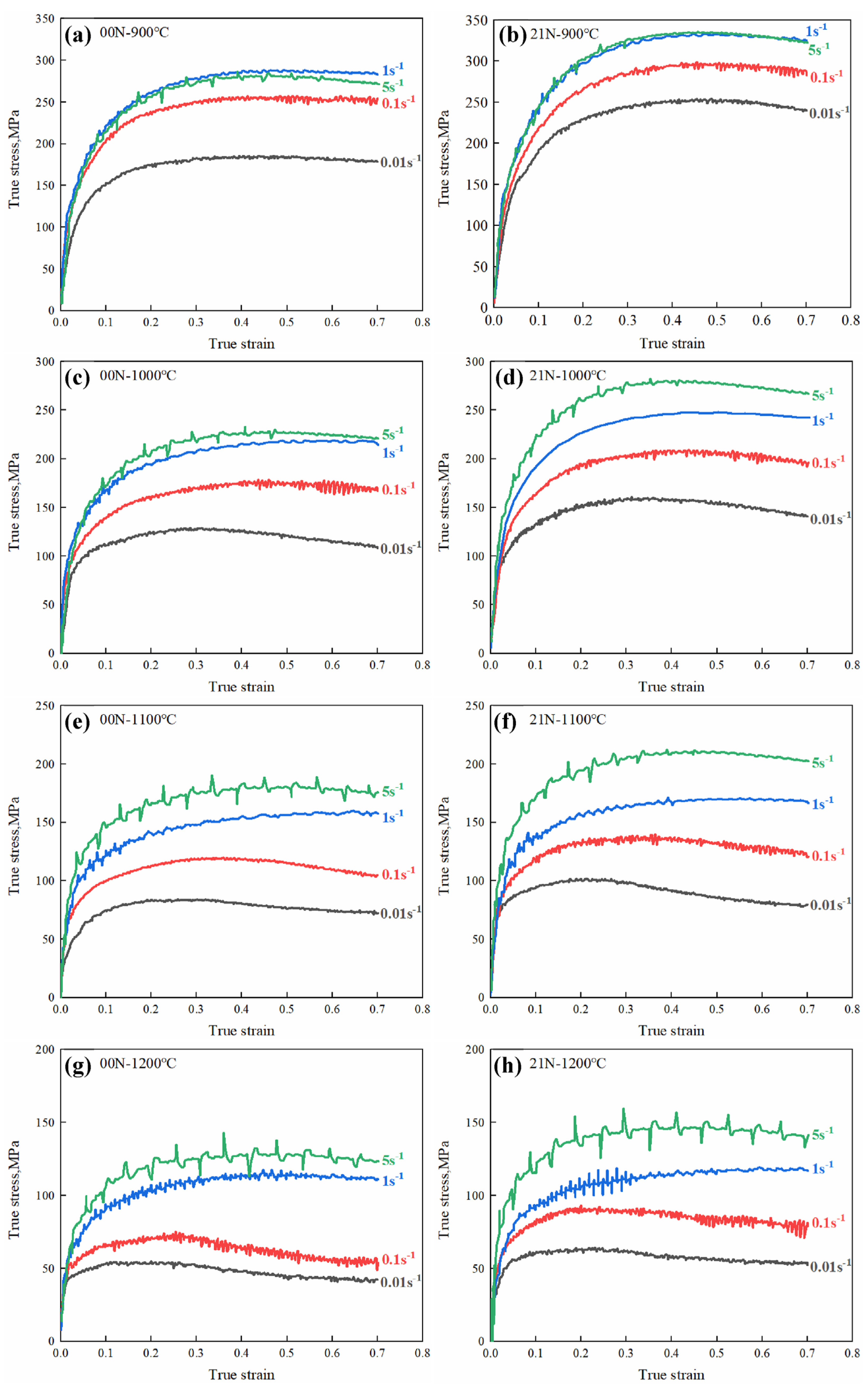
The above experiment provides a simple description of the hot deformation behavior of high nitrogen austenitic stainless steel under temperature and strain rate, but does not provide a deeper explanation of its microscopic mechanism. Hao et al. conducted different control experiments on austenitic stainless steels containing the same amount of Mn [58]. Use 00N to refer to stainless steel without nitrogen and 21N to refer to austenitic stainless steel with a nitrogen content of 21 (wt%), and test their flow stress at different temperatures and strain rates, as shown in Figure 2. The relationship between its rheological stress and temperature and strain rate changes is consistent with the relationship explained earlier; that is, the stress increases with the increase in deformation rate and decreases with the increase in deformation temperature, further strengthening the reliability of the law. By comparing the information in the graph, it can be found that the flow stress of nitrogen-containing stainless steel is significantly higher than that of non-nitrogen-containing stainless steel, which can be attributed to the strengthening effect of various nitrogen atoms mentioned earlier. In addition, most flow curves exhibit a sawtooth shape, which can be attributed to dynamic strain aging at high temperatures [59].
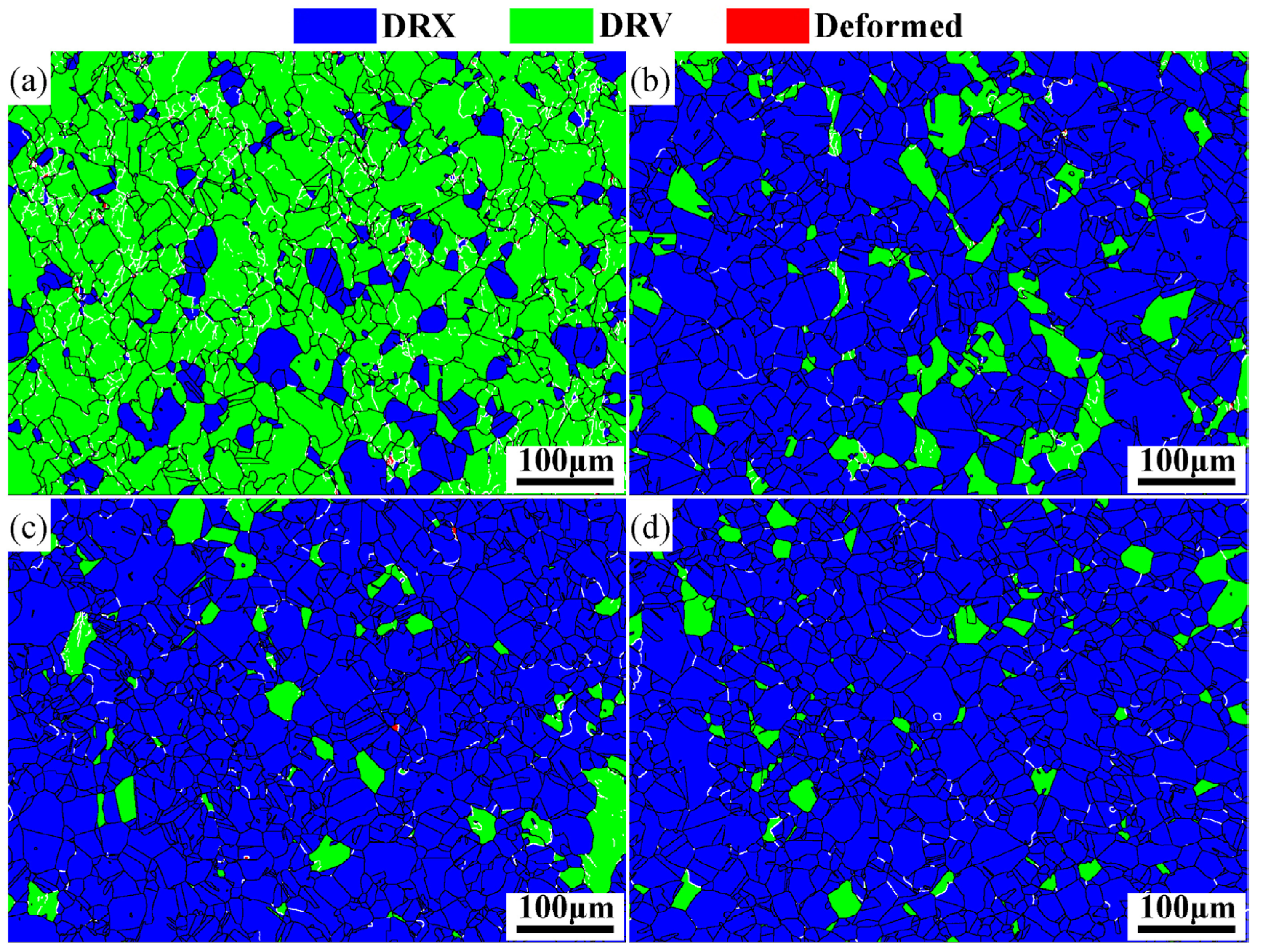
At higher temperatures (i.e., 1000 °C and above), nitrogen-containing stainless steel exhibits higher strain rate sensitivity, meaning that stress changes more with changes in the strain rate. Researchers have also analyzed the microstructure of nitrogen-containing austenitic stainless steels after deformation at the same temperature but different strain rates. A GOS map of the deformed microstructure is shown in Figure 3. From the changes in Figure 3, it can be seen that as the deformation rate increased, the proportion of blue areas representing dynamic recrystallization (RDX) gradually increased. This may be due to the heating effect caused by rapid deformation, which provides more energy sources for atomic diffusion and dislocation motion [59].
Li et al. studied the microstructure near cracks by cutting fractured or unbroken specimens parallel to the tensile direction and analyzing the microstructure after tensile deformation using electron backscatter diffraction (EBSD) [60]. The results indicate that grain strain is mainly concentrated at grain boundaries (including large-angle grain boundaries and small-angle grain boundaries), and cracks tend to form at large-angle grain boundaries and then propagate along small-angle grain boundaries. The authors observed that at higher temperatures, higher strain rates refined recrystallized grains and inhibited dynamic recovery. In contrast, lower strain rates result in larger and coarser grains, more concentrated grain boundary stress, and may trigger transgranular cracking. In addition, the author points out that the effect of strain rate on hot cracking is mainly due to the microstructural evolution it causes and that strain rate cannot be regarded solely as a factor affecting hot cracking.
Wang et al. argued that the experimental conditions of hot tension and hot compression deformation at constant temperature in traditional research are different from the actual production process, such as the nucleation and propagation of cracks on the free surface during continuous cooling in the hot forging process of heavy forgings, especially in the upsetting stage [61]. They conducted continuous cooling tensile fracture experiments on 18Mn18Cr0.6N high nitrogen austenitic stainless steel. The starting temperature was set at 1473 K, the ending temperature was set at 1363 K, and the temperature reduction rate was 0.4 Ks−1. For comparison, the same tensile fracture experiments were carried out on the specimens at 1473 K and 1363 K, respectively. The analysis of the experimental results shows that the initial tensile stress is only related to temperature, and for continuously cooled samples, owing to the continuous decrease in temperature, the stress also slowly increases, but the final stress peak is smaller than that of the isothermal test at lower temperatures. The high-temperature test conducted at 1473 K ultimately produced the maximum true strain and the maximum area reduction, indicating that increasing the temperature can indeed improve the thermal plasticity of the material. The true strain of the continuously cooled sample is close to that of the low-temperature 1363 K sample, but its area reduction is smaller than that of the 1363 K sample, which indicates that continuous cooling does indeed reduce the thermal ductility of the material. In this study, researchers also examined the microstructure of fractured attachments to elucidate the reduced thermal ductility observed in samples subjected to continuous cooling. The findings revealed that tensile specimens maintained at a constant high temperature exhibited a lower defect density, indicative of more complete dynamic recrystallization. Conversely, continuously cooled tensile specimens demonstrated a significantly higher defect density, suggesting that dynamic recrystallization was either slow or inhibited during the tensile process, as evidenced by the elevated proportion of low-angle grain boundaries. The results ultimately suggest that constant-temperature tensile testing facilitates dynamic recrystallization in metals, thereby mitigating work hardening. The authors concluded that the diminished thermal plasticity associated with continuous cooling is attributable to the suppression of dynamic recrystallization during this process. Based on the data presented in this study, the inhibition mechanism is as follows:
At a higher deformation temperature, the formation of the subgrain is caused by dislocation entanglement and polygonal formation, while the constant deformation temperature makes the newly formed subgrain have similar size and defect density to the previous subgrain. When the strain reaches the critical value, some sub crystals with energy advantage become the core of dynamic recrystallization. With the migration of high angle grain boundaries, recrystallized grains grow rapidly, which reduces the hardening level. When the deformation temperature is low, the recrystallization behavior is the same as that at high temperature, but the size of the sub crystal formed is smaller, the defect density is higher, and the recrystallization is slower, which leads to the lower hot ductility performance than that at high temperature. However, during continuous cooling, the energy stored in the subgroups formed at higher temperatures earlier is lower, and they have no energy advantage compared with the subgroups with more defects and smaller grains formed at lower temperatures [62]. As a result, recrystallization nucleation is inhibited, and the continuously cooled specimen exhibits the worst hot ductility. Sun’s experiment can show that the hot processing of steels in industrial practice is facing a more severe test than the usual tensile test, and the experimental conditions need to be closer to the actual production environment. When taking the experiment as a reference, we need to consider more performance degradation caused by actual production.
Hong et al. Studied and analyzed the mechanical properties of the different hot working process for high nitrogen austenitic stainless steels [63]. They obtained high nitrogen austenitic stainless steel with chemical composition of C0.11, Cr21.4, Ni1.8, N0.65 and residual iron (wt%) by continuous casting. The as-cast steel was hot-rolled at 1250 °C into plates with thicknesses of 10, 14, and 20 mm. These plates were then finish-rolled at 850 °C followed by immediate water quenching. The 14 mm thick plate was aged at 1080 °C for one hour before water quenching. Carbides, nitrides, and ferrites precipitated at the grain boundary and in the grains of the samples without aging treatment. The precipitates of the samples with a thickness of 10 mm are finer and uniformly distributed, which means that higher strain at lower temperature (because lower thickness means more rolling times) is conducive to the refinement of precipitates. However, after aging heat treatment, there is almost no precipitated phase, only a small amount of ferrite phase. The results of tensile test at room temperature show that larger deformation can enhance the yield strength and breaking strength of the material, but lead to the decrease of elongation at break and reduction of area. In general, deformation can bring about changes in the ideal properties of the material. The impact test results at −40 °C show that the impact toughness of the sample without aging treatment is very poor, but the impact toughness of 10 mm sample is 29% higher than that of 20 mm sample. Therefore, the authors concluded that greater deformation does not necessarily change the toughness of high nitrogen austenitic stainless steels, and the distribution and size of precipitates are sometimes the key to the plastic and ductile properties, but the best condition is to avoid grain boundary precipitation during rolling. In addition, the author found that there were coarse carbon and nitrogen precipitates around the grain at the fracture of the sample without aging, and the fracture mode was intergranular brittle fracture. However, the grain boundary is no longer an effective crack propagation path for the aged sample because the precipitates dissolve into the matrix, and its fracture has quasi dissociation characteristics. The experiments show that the hot working process has a significant effect on the final properties of the material. Using different process combinations can bring more ideal changes to the microstructure and properties of steels in the high temperature processing stage.
Based on the above research, several important conclusions can be drawn: (1). Increasing the deformation temperature and rate can enhance the high-temperature thermoplasticity of high nitrogen austenitic stainless steel without causing material combustion or precipitation of harmful phases. This phenomenon may be attributed to the face-centered cubic structure of high nitrogen austenitic stainless steel, which has a lower stacking fault energy and cannot fully recover at high temperatures. Its essence is based on the fact that high nitrogen austenitic stainless steel can promote dynamic recrystallization and relieve internal stress at higher deformation rates and temperatures, while increasing the deformation rate for other alloys often inhibits recrystallization and results in poor thermoplasticity. The main softening mechanism during processing is dynamic recrystallization. When strain is applied at a high rate, the actual temperature rise of the crystal owing to its adiabatic effect promotes dynamic recrystallization. Dynamic recrystallization can release stress concentration at the interface and heal small cracks. In addition, deformation twinning was activated when the strain rate was extremely high, thereby enhancing the thermal plasticity of the material. On the contrary, at lower strain rates, there is a greater likelihood of grain growth, and cracks are more likely to propagate from grain boundaries. (2). Cracks often start at large-angle grain boundaries and then propagate along small-angle grain boundaries. This means that the large-angle grain boundaries, which represent higher migration rates and are usually nucleation points for recrystallization, are also areas of weaker strength. It is necessary to analyze the morphology of the fracture grain boundaries and the precipitation products at these boundaries. It may be necessary to adjust the steel composition or processing flow to prevent weak grain boundaries caused by the precipitation phases. (3). It is crucial to maintain a constant temperature during hot processing of the product, as temperature fluctuations can have adverse effects on the formation of steel.

2.4. Influencing Factors of the Grain Size

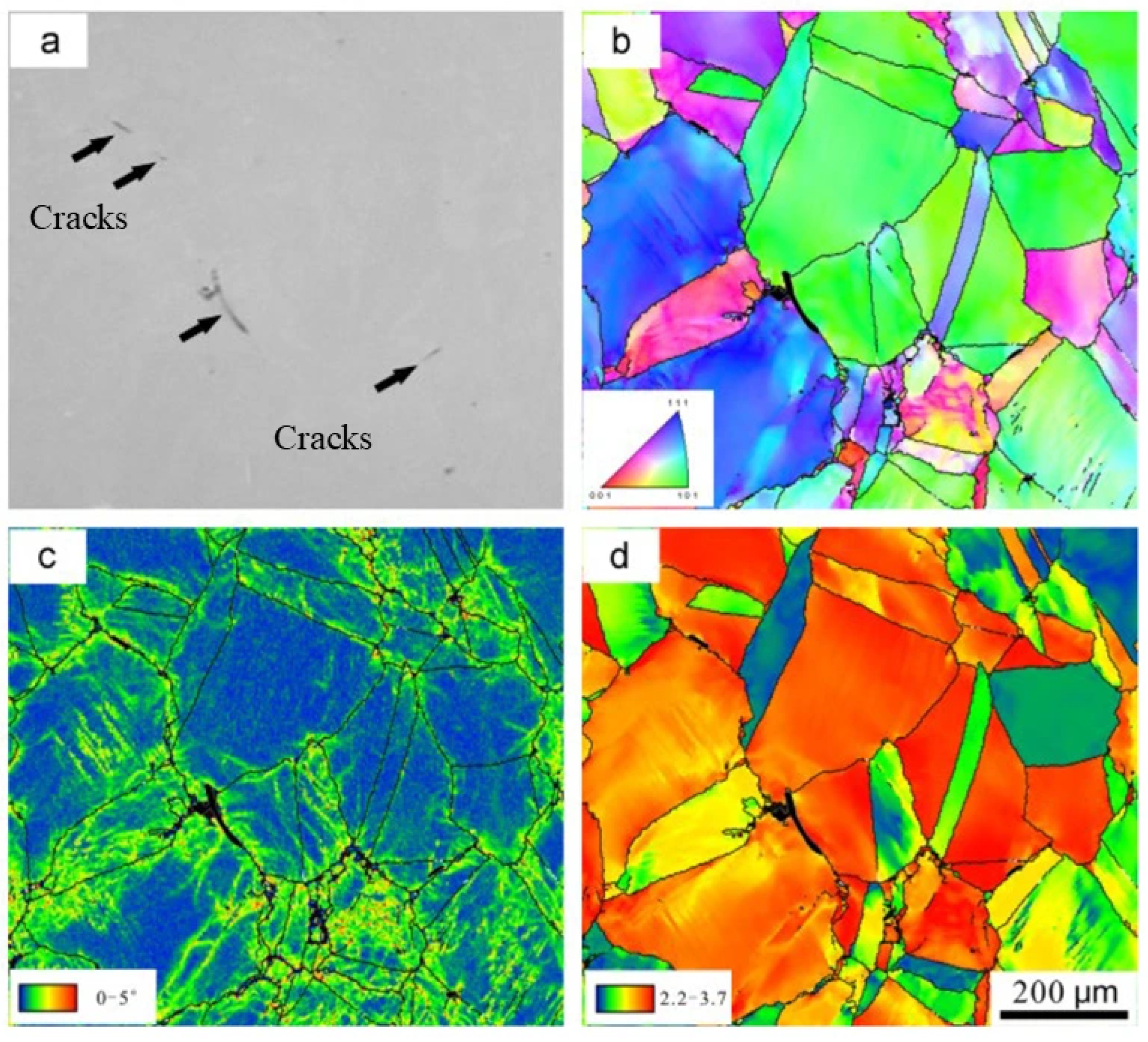
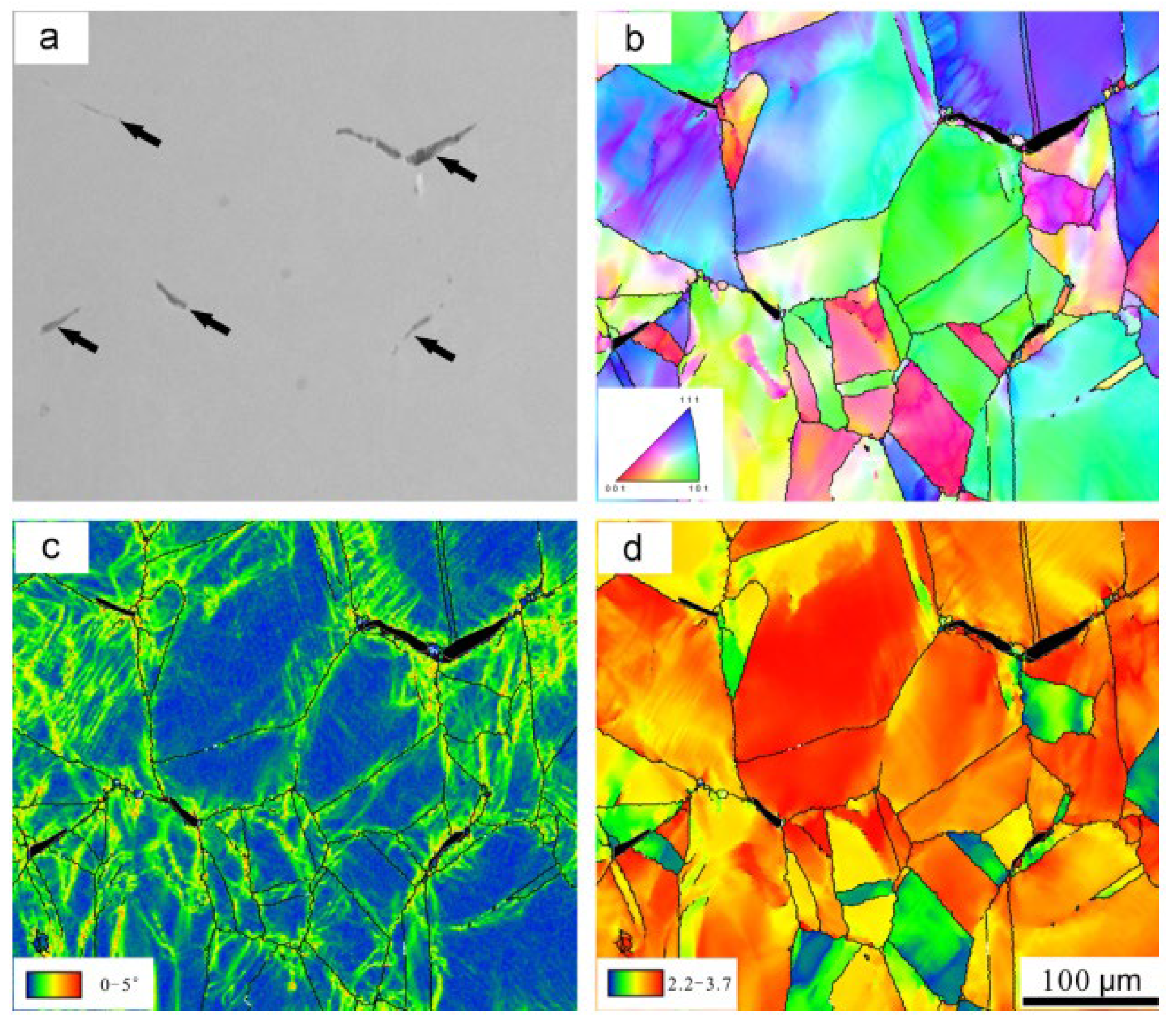
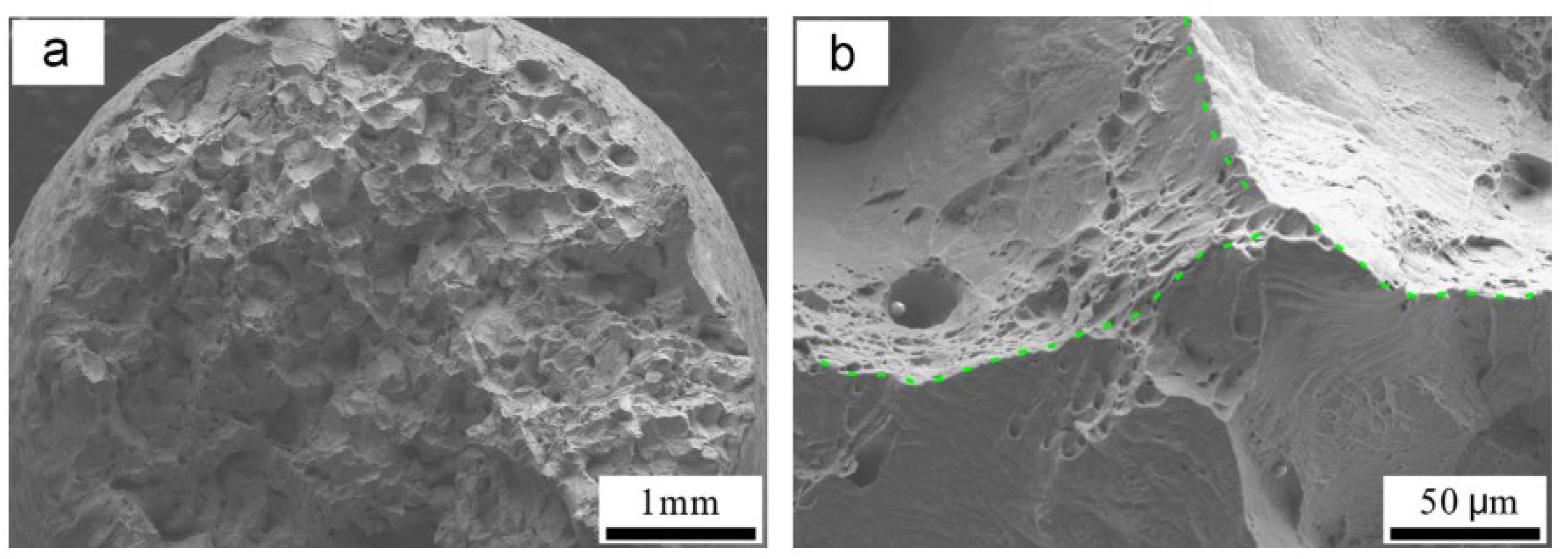
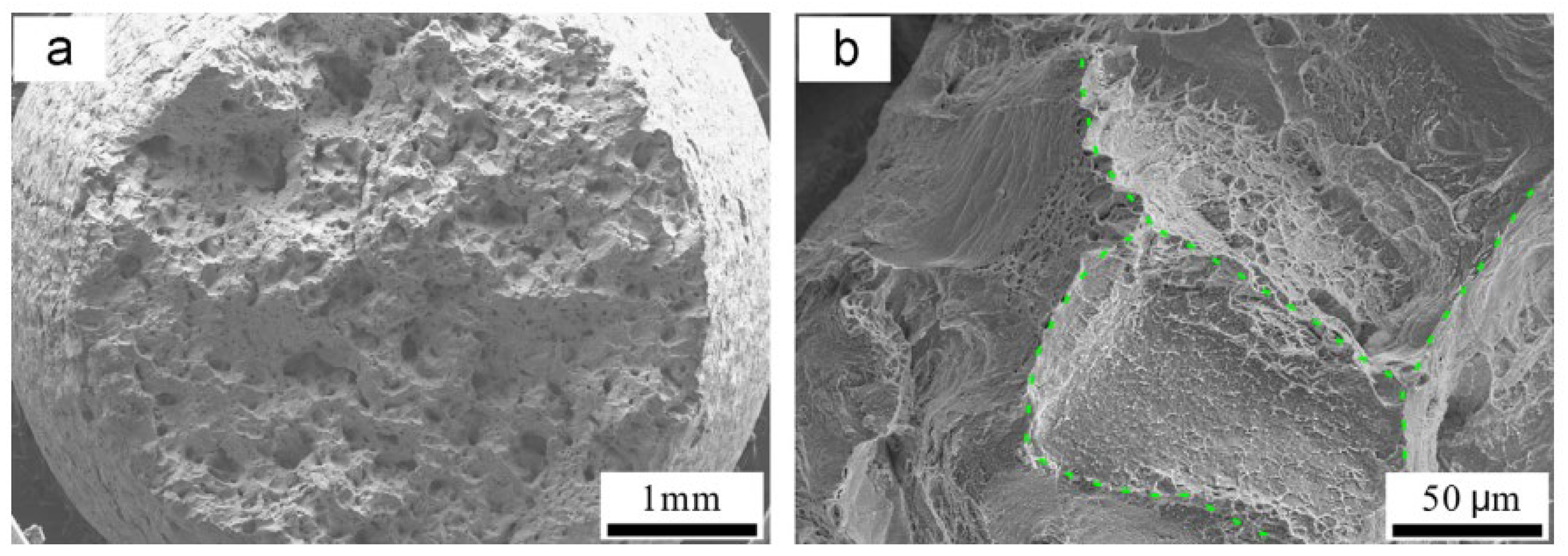
Understanding crack initiation and propagation mechanisms is essential for developing strategies to avoid them. Through the mechanism to guide the process optimization, the product qualification rate can be improved and the production efficiency can be expanded. In order to study whether the grain size before hot working has an impact on the crack formation during hot working, Wang et al. carried out tensile tests on four different grain sizes of 18Mn18Cr0.5N steel at the strain rate of 0.1 s−1 and the temperature range is from 900~1100 °C [64]. By maintaining the rolled samples at elevated temperatures for varying lengths of time, grain sizes of 28, 51, 106, and 177 μm were achieved. EBSD technology was used to detect and analyze the tensile samples. It is found that the nucleation position of the crack is not related to the grain size. The crack is mainly formed between the grain boundaries with large Taylor factor. This is because the larger the Taylor factor, the greater the energy required for the actual sliding of the crystal. The crack is formed between two harder grains, and it is difficult to prevent the crack propagation through sliding. As shown in Figure 4 and Figure 5, the green color representing higher deformation in the KAM diagram is mainly concentrated at the grain boundary, and the strain levels near the crack is the highest. From the fracture morphology shown in Figure 6 and Figure 7, it can be seen that the fracture form is brittle fracture, and the crack is mainly generated at the grain boundary triple junctions (marked by dotted lines). Under a given deformation condition, the material with larger grain size is easier to fracture, because the material with larger grain size has fewer grain boundaries, and the stress is concentrated at the grain boundaries. In addition, the author found that the cracks in the specimen with finer initial grain are more parallel to the tensile direction. With the tensile test, these cracks are difficult to merge in the transverse direction, which can make the fine grain material bear greater damage before fracture and have better hot ductility. Wang’s experimental results indicate that the hot workability of high nitrogen austenitic stainless steels should be effectively improved by improving the grain boundary strength and adopting steels with smaller grain size for hot processing.
Austenitic stainless steels do not experience phase transformation at standard annealing temperatures. Consequently, the sole method to achieve a refined microstructure is through dynamic recrystallization. Typically, the material undergoes a rolling process, followed by maintenance at elevated temperatures to facilitate recrystallization and crystal growth. Reducing the holding time while eliminating most of the stress is an effective method for grain refinement.

2.5. Influencing Factors of the Precipitates

High nitrogen austenitic stainless steel is susceptible to the formation of precipitates, such as nitrides and intermetallic compounds, at elevated temperatures ranging from 800 to 1000 °C [65,66]. These precipitates can adversely impact the material’s hot ductility at high temperatures. Addressing the issue of deformation and cracking induced by precipitated phases during hot processing is crucial. The subsequent paragraph provides a detailed study of precipitation phases and the strategies to mitigate their effects.
Fu et al. conducted a compression test on 18Mn18Cr0.5N high nitrogen austenitic stainless steel at different preheating temperatures [67]. They found that the compression performance of 18Mn18Cr0.5N high nitrogen austenitic stainless steel deteriorated with an increase in the preheating temperature in the range of 1100–1200 °C. The relationship between the crack morphology and precipitated phase was observed. Because the precipitated phase is incompatible with the strain of the matrix, cracks nucleate on the surface of the precipitated phase and expand along the grain boundary. The study by Fu provides an idea to avoid cracks caused by precipitated phases, that is, to guide the process through the alloy composition phase diagram and avoid the temperature range of harmful phase precipitation. For the unavoidable temperature range, the processing time should be shortened, and the range should be avoided during preheating.
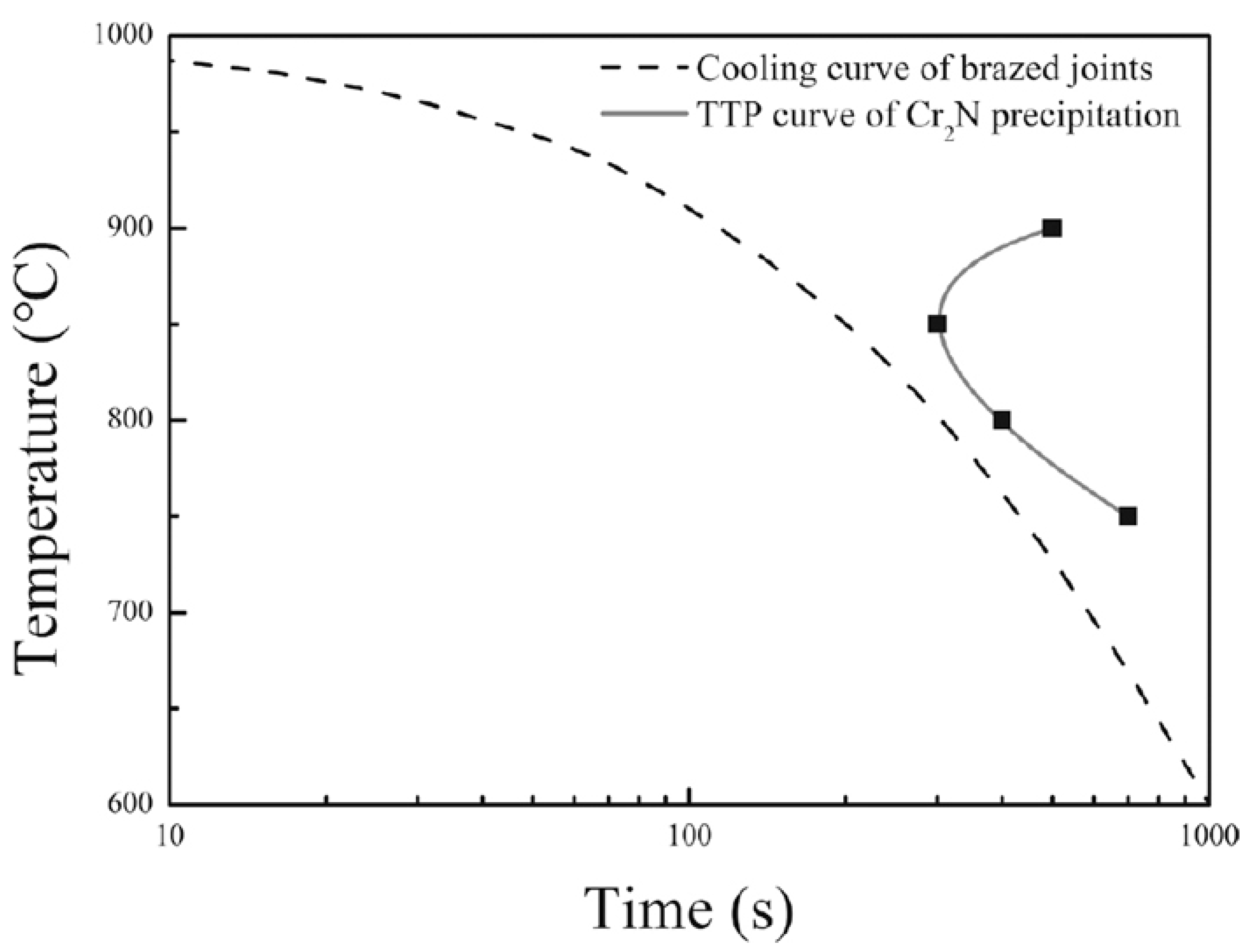
Uggwitzer’s study on the solution treatment temperature of nitrogen-containing austenitic stainless steel shows that a solution temperature below 1000 °C can lead to the precipitation of the Cr2N phase, whereas a temperature above 1200 °C may lead to the formation of the δ ferrite phase [68]. Zhang et al. aimed to avoid unnecessary precipitation in brazed high nitrogen austenitic stainless steel joints [69]. The time–temperature-precipitation (TTP) curve of the high-nitrogen austenitic stainless steel matrix was plotted by analyzing the metallographic structure of multiple experiments using statistical software, as shown in Figure 8. The curve was analyzed to determine whether nitrides will precipitate in the substrate under experimental cooling conditions. Owing to the more complex precipitation conditions faced during hot processing, this method can be used to determine whether nitride precipitation can be avoided under hot processing conditions.
Shi et al. investigated the sensitivity of Cr2N and other precipitates to precipitation [70]. Researchers aged high nitrogen austenitic stainless steel containing Cr18.7, Mn11.8, N0.48, Si0.16, and Al0.02 (wt%) components at different temperatures. In the sample aged at 800 °C, precipitates begin to grow into austenite grains. There was no difference between the sample aged at 950 °C for 96 h and the austenite structure of the matrix, indicating that 950 °C is the upper limit temperature for precipitation, and precipitation will not occur beyond this temperature. In some published studies, this is explained by the fact that nitrides are more likely to precipitate at approximately 900 °C; however, above this temperature, recrystallization occurs before precipitation [71]. A similar temperature-related precipitation effect was observed in Simmons’ study, which conducted aging tests on high-nitrogen austenitic stainless steel with a composition of Cr19.3, Ni5.2, Mn5.2, Mo2.9, C0.024, and N0.69 (wt%) [66]. It was found that only nitride precipitates formed at the grain boundary at 700 °C, while cellular precipitates also formed at 900 °C. During industrial production, the thermal processing of the nitride precipitation zone should be avoided, and the time the sample spends in this temperature zone during cooling should be minimized to prevent precipitation. The diffusion of alloy atoms drives the precipitation of the second phase, and there is generally a temperature range that is most sensitive. From the figure, it is evident that 800 °C is the temperature range with the most precipitates, which grow from the grain boundary into the crystal due to the low energy at the grain boundary, facilitating the accumulation of N elements and subsequent growth into the matrix. Pickering et al. suggested that δ ferrite generated at higher preheating temperatures during hot working can purify grain boundaries and inhibit intergranular fracture caused by precipitates [72]. However, Dubey et al. argue that the strength of δ ferrite is only about one-quarter that of austenite, and while impurities can be removed when it is less precipitated, it becomes a source of cracking when more precipitated [73].
In conclusion, to mitigate the formation of precipitates, the temperature range for precipitation can be narrowed by regulating the composition, or the cooling rate can be increased in areas sensitive to precipitation. The incorporation of various alloying elements can alter the precipitation rate or temperature of the precipitated phase. Anticipating and testing the diverse properties of a material prior to processing can significantly decrease the likelihood of failure during hot working.

3. Summary and Outlook

This review systematically tracks the research progress on high nitrogen austenitic stainless steels in hot working direction. The influence of various factors on the mechanical properties of hot working, to the birth and suppression methods of defects in the process of hot working. Finally, the application of surface nitrogen alloying and the optimization of corrosion performance through nitrogen alloying are succinctly introduced. At present, the industrial applications of high nitrogen austenitic stainless steels include power generation industry, transportation, chemical equipment, pressure vessels, etc. compared with more traditional alloys, the advantages of high nitrogen austenitic stainless steels in these fields can be summarized as [74,75]: (1). its higher yield strength, tensile strength and ductility. (2). It can resist the formation of deformation-induced martensite. (3). It has low permeability, which is a characteristic of austenite. (4). It has excellent corrosion resistance.
In addition, austenitic stainless steel is precipitation-sensitive. Both hot and cold working in the production process may lead to the precipitation of harmful phases, such as carbides and nitrides, because the precipitation of these precipitates has an adverse effect on the tensile ductility and impact toughness, which increases the instability of its properties. The precipitation of nitride Cr2N is mainly controlled by Cr diffusion; however, Cr is an important corrosion-resistant and antioxidant element in stainless steels [76]. There will be no element replacing Cr in a short time, but the precipitation generation trend can be reduced by controlling the steel composition and processing technology. Currently, it is known that the Fe-18Cr-18Mn-0.6N high nitrogen stainless steels made in Europe have a lower nitride precipitation rate than conventional materials [77]. Therefore, the research and development of high nitrogen austenitic stainless steels with independent domestic property rights and low precipitation sensitivity is a plan that needs to be put on the agenda, which requires a deeper understanding of the thermal stability of this material. Understanding and solving these problems can broaden the application prospects of high-nitrogen austenitic stainless steels.

Author Contributions

Y.W.: Conceptualization, Validation, Formal Analysis, Investigation, Resources, Data Curation, Writing—Original Draft, Writing—Review and Editing, Supervision, Project Administration, Funding Acquisition. L.C.: Methodology, Investigation, Data Curation, Writing—Original Draft, Writing—Review and Editing, Visualization. Z.S.: Methodology, Investigation, Writing—Original Draft, Writing—Review and Editing. E.W.: Formal Analysis, Writing—Review and Editing, Visualization. J.X.: Formal Analysis, Writing—Review and Editing. J.W.: Investigation, Resources, Writing—Review and Editing. All authors have read and agreed to the published version of the manuscript.

Funding

This work was financially supported by the Joint Training Scholarship for PhD/Master’s Students in Key Industrial Sectors (Grant No. 2025-RC04-00165-RC).

Data Availability Statement

No new data were created or analyzed in this study. Data sharing is not applicable to this article.

Conflicts of Interest

Authors Yinghu Wang, Limei Chen, Zhendong Sheng and Enuo Wang were employed by the company Chengdu Institute of Advanced Metallic Material Technology and Industry Co., Ltd. Jianqiang Wang was employed by the Pangang Group Jiangyou Changcheng Special Steels Co., Ltd. The remaining authors declare that the research was conducted in the absence of any commercial or financial relationships that could be construed as a potential conflict of interest.

References

  1. Lo, K.H.; Shek, C.H.; Lai, J. Recent developments in stainless steels. Mater. Sci. Eng. R Rep. 2009, 65, 39–104. [Google Scholar] [CrossRef]
  2. Xi, Y.-T.; Liu, D.-X.; Han, D. Improvement of corrosion and wear resistances of AISI 420 martensitic stainless steel using plasma nitriding at low temperature. Surf. Coat. Technol. 2008, 202, 2577–2583. [Google Scholar] [CrossRef]
  3. Marshall, P. Austenitic Stainless Steels: Microstructure and Mechanical Properties; Springer Science & Business Media: Berlin/Heidelberg, Germany, 1984. [Google Scholar]
  4. Li, S.; Zhang, C.; Lu, J.; Chen, R.; Chen, D.; Cui, G. A review of progress on high nitrogen austenitic stainless-steel research. Mater. Express 2021, 11, 1901–1925. [Google Scholar] [CrossRef]
  5. Ren, Y.; Yang, K.; Liang, Y. Harmfulness of nickel in medical metal materials. J. Biomed. Eng. 2005, 1067–1074. [Google Scholar]
  6. Andrew, J. The Iron and Steel Institute; Council and Officers: London, UK, 1912; Volume 7, pp. 210–226. [Google Scholar]
  7. Haghir, T.; Abbasi, M.H.; Golozar, M.A.; Panjepour, M. Investigation of α to γ transformation in the production of a nanostructured high-nitrogen austenitic stainless steel powder via mechanical alloying. Mater. Sci. Eng. A 2009, 507, 144–148. [Google Scholar] [CrossRef]
  8. Dimitrov, V.I.; Jekov, K.; Avinc, A. Prediction of the solubility of nitrogen in steels obtained by pressurised electroslag remelting process. Comput. Mater. Sci. 1999, 15, 400–410. [Google Scholar] [CrossRef]
  9. Adcock, F. The effect of nitrogen on chromium and some iron-chromium alloys. J. Iron Steel Inst. 1926, 114, 117–126. [Google Scholar]
  10. Hung, C.; Wu, C.; Lee, W.; Ou, K.; Liu, C.; Peng, P. The effect of nitrided layer on antibacterial properties for biomedical stainless steel. Phys. Procedia 2012, 32, 914–919. [Google Scholar] [CrossRef]
  11. Delong, W. Effect of Nitrogen in Stabilizing Austenite Phase. Met. Process 1960, 11, 98. [Google Scholar]
  12. Chen, C.-Y.; Chiang, I.; Kang, Y.-C. The effects of austenitization temperature on the microstructural characteristics and mechanical properties of Cr–Mo–V hot work tool steels with different nitrogen contents. J. Mater. Res. Technol. 2024, 30, 9115–9129. [Google Scholar] [CrossRef]
  13. Speidel, M.O.; Pedrazzoli, R.M. High nitrogen stainless steels in chloride solutions. In Proceedings of the CORROSION 1992, Nashville, TN, USA, 27 April–1 May 1992; pp. 1–5. [Google Scholar]
  14. Byrnes, M.; Grujicic, M.; Owen, W. Nitrogen strengthening of a stable austenitic stainless steel. Acta Metall. 1987, 35, 1853–1862. [Google Scholar] [CrossRef]
  15. Simmons, J. Overview: High-nitrogen alloying of stainless steels. Mater. Sci. Eng. A 1996, 207, 159–169. [Google Scholar] [CrossRef]
  16. Wang, Y.; Feng, H.; Li, H.; Zhang, Y.; Jiang, Z.; Wang, X. Study on the mechanism of excellent strength and toughness combination of a high nitrogen martensitic stainless steel treated by QCPT process. J. Mater. Res. Technol. 2023, 27, 804–812. [Google Scholar] [CrossRef]
  17. Speidel, M.O. Nitrogen containing austenitic stainless steels. Mater. Werkst. Entwickl. Fert. Prüfung Eig. Anwendungen Tech. Werkst 2006, 37, 875–880. [Google Scholar] [CrossRef]
  18. Rayaprolu, D.; Hendry, A. High nitrogen stainless steel wire. Mater. Sci. Technol. 1988, 4, 136–145. [Google Scholar] [CrossRef]
  19. Liljas, M.; Nilsson, J.O. Development of commercial nitrogen-rich stainless steels. In Proceedings of the Materials Science Forum; Trans Tech Publications: Baech, Switzerland, 1999; pp. 189–200. [Google Scholar]
  20. Satir-Kolorz, A.H.; Feichtinger, H.K. On the solubility of nitrogen in liquid iron and steel alloys using elevated pressure/Über die löslichkeit von stickstoff in eisen-und stahllegierungen unter erhöhtem druck. Int. J. Mater. Res. 1991, 82, 689–697. [Google Scholar] [CrossRef]
  21. Tomota, Y.; Endo, S. Cleavage-like fracture at low temperatures in an 18Mn-18Cr-0.5 N austenitic steel. ISIJ Int. 1990, 30, 656–662. [Google Scholar] [CrossRef]
  22. Hume-Rothery, W.; Raynor, G.V. The Structure of Metals and Alloys; Institute of Metals: London, UK, 1936. [Google Scholar]
  23. Behjati, P.; Kermanpur, A.; Najafizadeh, A. Influence of nitrogen alloying on properties of Fe318Cr312Mn3XN austenitic stainless steels. Mater. Sci. Eng. A 2013, 588, 43–48. [Google Scholar] [CrossRef]
  24. Gossé, S. Thermodynamic assessment of solubility and activity of iron, chromium, and nickel in lead bismuth eutectic. J. Nucl. Mater. 2014, 449, 122–131. [Google Scholar] [CrossRef]
  25. Naka, M.; Masumoto, T.; Imai, Y. Solubility of Nitrogen in Austenitic Iron Under High Nitrogen Pressure and Thermodynamic Properties of Iron-Nitrogen Interstitial Solid Solution; Tohoku University: Sendai, Japan, 1972. [Google Scholar]
  26. Zhu, H.C.; Jiang, Z.H.; Li, H.B.; Wang, P.B.; Zhu, J.H. Effect of solidification pressure on thermodynamic and kinetic parameters of 19Cr14Mn4Mo0. 9N high nitrogen steel. Steel Res. Int. 2018, 89, 1700475. [Google Scholar] [CrossRef]
  27. Li, H.; Jiang, Z.; Feng, H.; Zhang, S.; Li, L.; Han, P.; Misra, R.; Li, J. Microstructure, mechanical and corrosion properties of friction stir welded high nitrogen nickel-free austenitic stainless steel. Mater. Des. 2015, 84, 291–299. [Google Scholar] [CrossRef]
  28. RHODES, J. The Non-Destructive Testing of Steel Castings and Forgings. Transactions 1949, 61. [Google Scholar]
  29. Ma, L.-T.; Wang, L.-M.; Liu, Z.-D.; Yang, G.; Lu, L.; Peng, M.-D. Hot deformation behavior of F6NM stainless steel. J. Iron Steel Res. Int. 2014, 21, 1035–1041. [Google Scholar] [CrossRef]
  30. Lee, T.-H.; Oh, C.-S.; Kim, S.-J.; Takaki, S. Deformation twinning in high-nitrogen austenitic stainless steel. Acta Mater. 2007, 55, 3649–3662. [Google Scholar] [CrossRef]
  31. Irvine, K. The strength of austenitic stainless steels. J. Iron Steel Inst. 1969, 207, 1017–1028. [Google Scholar]
  32. Sahu, N.; Selokar, A.; Prakash, U. Thermo-mechanical behaviour of 23/8 austenitic stainless steel. ISIJ Int. 2014, 54, 970–978. [Google Scholar] [CrossRef]
  33. Wang, D.; Liu, J.; Teng, Y.; Guo, J.; Zhang, D. Hot deformation behavior and processing map of Cr–Mn–Ni–Mo–N austenitic stainless steels. Steel Res. Int. 2024, 95, 2400296. [Google Scholar] [CrossRef]
  34. Qi, X.; Chen, C.; Wang, Z.; Li, Y.; Lv, B.; Yang, Z.; Zhang, F. Study on hot workability of a novel Cr+ N alloyed high-Mn austenitic steel. Mater. Charact. 2023, 203, 113071. [Google Scholar] [CrossRef]
  35. Müllner, P.; Solenthaler, C.; Uggowitzer, P.; Speidel, M. On the effect of nitrogen on the dislocation structure of austenitic stainless steel. Mater. Sci. Eng. A 1993, 164, 164–169. [Google Scholar] [CrossRef]
  36. Stoltz, R.; Vander Sande, J. The effect of nitrogen on stacking fault energy of Fe-Ni-Cr-Mn steels. Metall. Trans. A 1980, 11, 1033–1037. [Google Scholar] [CrossRef]
  37. Ojima, M.; Adachi, Y.; Tomota, Y.; Katada, Y.; Kaneko, Y.; Kuroda, K.; Saka, H. Weak beam TEM study on stacking fault energy of high nitrogen steels. Steel Res. Int. 2009, 80, 477–481. [Google Scholar]
  38. Masumura, T.; Seto, Y.; Tsuchiyama, T.; Kimura, K. Work-hardening mechanism in high-nitrogen austenitic stainless steel. Mater. Trans. 2020, 61, 678–684. [Google Scholar] [CrossRef]
  39. Kubota, S.; Xia, Y.; Tomota, Y. Work-hardening behavior and evolution of dislocation-microstructures in high-nitrogen bearing austenitic steels. ISIJ Int. 1998, 38, 474–481. [Google Scholar] [CrossRef]
  40. Kostina, M.; Rigina, L.; Muradyan, S.; Il’inskii, A.; Kostina, V. Properties of austenitic, heavily alloyed, high-nitrogen steels made by various casting, special electrometallurgy, and hot deformation methods. Russ. Metall. (Met.) 2022, 2022, 559–568. [Google Scholar] [CrossRef]
  41. Becker, L.; König, P.; Lentz, J.; Weber, S. A new process route for the additive manufacturing of a high nitrogen containing martensitic stainless steel-A feasibility study. Addit. Manuf. Lett. 2024, 11, 100257. [Google Scholar] [CrossRef]
  42. Stein, G.; Hucklenbroich, I. Manufacturing and applications of high nitrogen steels. Mater. Manuf. Process. 2004, 19, 7–17. [Google Scholar] [CrossRef]
  43. Cui, C.; Uhlenwinkel, V.; Schulz, A.; Zoch, H.-W. Austenitic stainless steel powders with increased nitrogen content for laser additive manufacturing. Metals 2019, 10, 61. [Google Scholar] [CrossRef]
  44. Kim, D.W.; Kwon, D.Y.; Kang, J.-H. Strengthening of high nitrogen austenitic stainless steel by Nb addition. Mater. Charact. 2024, 209, 113776. [Google Scholar] [CrossRef]
  45. Andersson, J.-O.; Helander, T.; Höglund, L.; Shi, P.; Sundman, B. Thermo-Calc & DICTRA, computational tools for materials science. Calphad 2002, 26, 273–312. [Google Scholar] [CrossRef]
  46. Hecker, L.; Becker, L.; Siebert, S.; Weber, S. High pressure nitriding of austenitic stainless steels via hot isostatic pressing. Mater. Today Commun. 2025, 47, 113200. [Google Scholar] [CrossRef]
  47. Liu, C.-M.; Wang, H.-M.; Tian, X.-J.; Liu, D. Development of a pre-heat treatment for obtaining discontinuous grain boundary α in laser melting deposited Ti–5Al–5Mo–5V–1Cr–1Fe alloy. Mater. Sci. Eng. A 2014, 604, 176–182. [Google Scholar] [CrossRef]
  48. Cho, Y.K.; Yoon, D.Y.; Henry, M.F. The effects of deformation and pre-heat-treatment on abnormal grain growth in RENÉ 88 superalloy. Metall. Mater. Trans. A 2001, 32, 3077–3090. [Google Scholar] [CrossRef]
  49. Mirzadeh, H. Grain refinement of magnesium alloys by dynamic recrystallization (DRX): A review. J. Mater. Res. Technol. 2023, 25, 7050–7077. [Google Scholar] [CrossRef]
  50. Kim, S.-I.; Yoo, Y.-C. Dynamic recrystallization behavior of AISI 304 stainless steel. Mater. Sci. Eng. A 2001, 311, 108–113. [Google Scholar] [CrossRef]
  51. Sourmail, T. Precipitation in creep resistant austenitic stainless steels. Mater. Sci. Technol. 2001, 17, 1–14. [Google Scholar] [CrossRef]
  52. Zener, C.; Hollomon, J.H. Effect of strain rate upon plastic flow of steel. J. Appl. Phys. 1944, 15, 22–32. [Google Scholar] [CrossRef]
  53. Langdon, T.G. The role of grain boundaries in high temperature deformation. Mater. Sci. Eng. A 1993, 166, 67–79. [Google Scholar] [CrossRef]
  54. Chen, B.; Zhu, L.; Xin, Y.; Lei, J. Grain rotation in plastic deformation. Quantum Beam Sci. 2019, 3, 17. [Google Scholar] [CrossRef]
  55. Liu, Q.; Xiong, Z.; Liu, X.; Fang, L.; Lv, C.; Yang, J.; Liu, Y.; Zhang, Y.; Zhu, W.; Li, J. Grain size dependence of grain rotation under high pressure and high temperature. J. Appl. Phys. 2023, 134, 185903. [Google Scholar] [CrossRef]
  56. Wang, Z.; Meng, Q.; Qu, M.; Zhou, Z.; Wang, B.; Fu, W. Effect of strain rate on hot ductility behavior of a high nitrogen Cr-Mn austenitic steel. Metall. Mater. Trans. A 2016, 47, 1268–1279. [Google Scholar] [CrossRef]
  57. Xu, X.; Zhang, P.; Fang, J.; Wen, L.; Yang, Y.; Zhao, Y.; Chen, L. The hot deformation behavior and processing map analysis of a high-nitrogen austenitic stainless steel. J. Mater. Res. Technol. 2024, 33, 1359–1365. [Google Scholar] [CrossRef]
  58. Hao, X.; Sun, X.; Zhao, T.; Shen, S.; Wang, Y.; Wang, T. Effect of N on hot deformation behavior of high-Mn austenitic steel. J. Mater. Res. Technol. 2023, 27, 4345–4355. [Google Scholar] [CrossRef]
  59. Wang, J.; Qin, F.; Chen, H. Grain Refining Behavior by Dynamic Recrystallization of As-Forged Austenitic Stainless Steel with High N. J. Mater. Eng. Perform. 2022, 31, 6736–6746. [Google Scholar] [CrossRef]
  60. Wang, L.; Li, Z.; Hu, X.; Lv, B.; Chen, C.; Zhang, F. Hot deformation behavior and 3D processing map of super austenitic stainless steel containing 7Mo–0.46 N–0.02 Ce: Effect of the solidification direction orientation of columnar crystal to loading direction. J. Mater. Res. Technol. 2021, 13, 618–634. [Google Scholar] [CrossRef]
  61. Wang, Z.; Xue, H.; Fu, W. Fracture Behavior of High-Nitrogen Austenitic Stainless Steel Under Continuous Cooling: Physical Simulation of Free-Surface Cracking of Heavy Forgings. Metall. Mater. Trans. A 2018, 49, 1470–1474. [Google Scholar] [CrossRef]
  62. Humphreys, F.J.; Hatherly, M. Recrystallization and Related Annealing Phenomena; Elsevier: Amsterdam, The Netherlands, 2012. [Google Scholar]
  63. Hong, C.-M.; Shi, J.; Sheng, L.-Y.; Cao, W.-Q.; Hui, W.-J.; Dong, H. Influence of hot working on microstructure and mechanical behavior of high nitrogen stainless steel. J. Mater. Sci. 2011, 46, 5097–5103. [Google Scholar] [CrossRef]
  64. Wang, Z.; Wang, Y.; Wang, C. Grain size effect on the hot ductility of high-nitrogen austenitic stainless steel in the presence of precipitates. Materials 2018, 11, 1026. [Google Scholar] [CrossRef]
  65. Vanderschaeve, F.; Taillard, R.; Foct, J. Discontinuous precipitation of Cr2N in a high nitrogen, chromium-manganese austenitic stainless steel. J. Mater. Sci. 1995, 30, 6035–6046. [Google Scholar] [CrossRef]
  66. Simmons, J. Influence of nitride (Cr2N) precipitation on the plastic flow behavior of high-nitrogen austenitic stainless steel. Scr. Metall. Mater. 1995, 32, 265–270. [Google Scholar] [CrossRef]
  67. Wang, Z.; Fu, W.; Sun, S.; Lv, Z.; Zhang, W. Effect of preheating temperature on surface cracking of high nitrogen CrMn austenitic stainless steel. J. Mater. Sci. Technol. 2010, 26, 798–802. [Google Scholar] [CrossRef]
  68. Uggowitzer, P.J.; Magdowski, R.; Speidel, M.O. Nickel free high nitrogen austenitic steels. ISIJ Int. 1996, 36, 901–908. [Google Scholar] [CrossRef]
  69. Zhang, H.; Zhu, W.; Zhang, T.; Guo, C.; Ran, X. Effect of brazing temperature on microstructure and mechanical property of high nitrogen austenitic stainless steel joints brazed with Ni–Cr–P filler. ISIJ Int. 2019, 59, 300–304. [Google Scholar] [CrossRef]
  70. Shi, F.; Wang, L.-j.; Cui, W.-f.; Liu, C.-m. Precipitation Kinetics of Cr2N in High Nitrogen Austenitic Stainless Steel. J. Iron Steel Res. Int. 2008, 15, 72–77. [Google Scholar] [CrossRef]
  71. Müllner, P. On the ductile to brittle transition in austenitic steel. Mater. Sci. Eng. A 1997, 234, 94–97. [Google Scholar] [CrossRef]
  72. Pickering, F. High strength steels and their use today. In Metallurgical Achievements: Selection of Papers Presented at the Birmingham Metallurgical Society’s Diamond Jubilee Session; Elsevier: Amsterdam, The Netherlands, 2013; Volume 1963–1964, p. 199. [Google Scholar]
  73. Dubey, P.K. Exploiting Fine-Grain Concurrency: Analytical Insights in Superscalar Processor Design. Ph.D. Thesis, Purdue University, West Lafayette, IN, USA, 1991. [Google Scholar]
  74. Baba, H.; Kodama, T.; Katada, Y. Role of nitrogen on the corrosion behavior of austenitic stainless steels. Corros. Sci. 2002, 44, 2393–2407. [Google Scholar] [CrossRef]
  75. Lang, Y.-P.; Qu, H.-P.; Chen, H.-T.; Weng, Y.-Q. Research progress and development tendency of nitrogen-alloyed austenitic stainless steels. J. Iron Steel Res. Int. 2015, 22, 91–98. [Google Scholar] [CrossRef]
  76. Rhodes, G.O.; Conway, J.J. High-nitrogen austenitic stainless steels with high strength and corrosion resistance. Jom 1996, 48, 28–31. [Google Scholar] [CrossRef]
  77. Qiu, C. Thermodynamic analysis and evaluation of the Fe-Cr-Mn-N system. Metall. Mater. Trans. A 1993, 24, 2393–2409. [Google Scholar] [CrossRef]
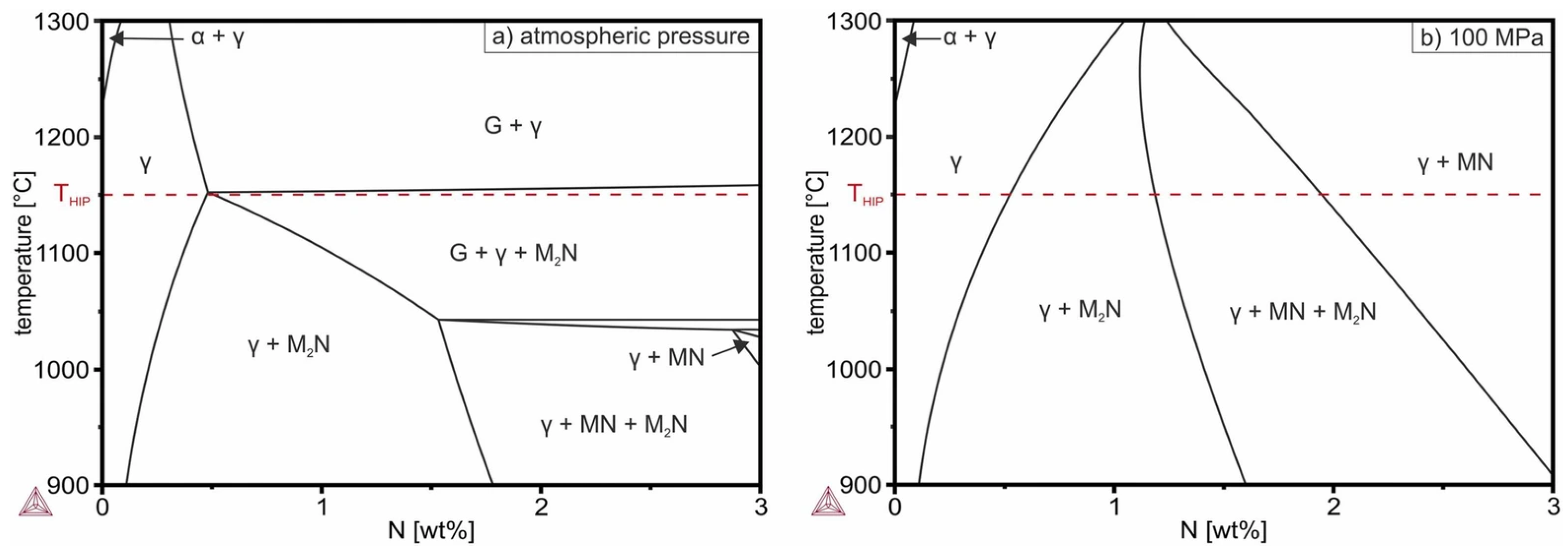
Figure 1. Phase diagrams of calculated with Thermo-Calc® for different pressures. (a) Atmospheric pressure, (b) 100 MPa [46]. High pressure nitriding of austenitic stainless steels via hot isostatic pressing.
Metals 16 00361 g001
Figure 2. Flow curves of (a,c,e,g) no N and (b,d,f,h) 21 wt% N steels at different temperatures and strain rates [58]. Effect of N on hot deformation behavior of high-Mn austenitic steel.
Metals 16 00361 g002
Figure 3. GOS maps of 21 N steel deformed at 1200 °C/0.01–5 s−1 (a) 0.01 s−1, (b) 0.1 s−1, (c) 1 s−1, (d) 5 s−1 [59].
Metals 16 00361 g003
Figure 4. (a) SEM image of the specimen tensioned at 900 °C to a strain of 0.3 with an initial grain size of 177 μm. (b) Corresponding IPF map, (c) KAM map, and (d) Taylor factor map [64]. (The vertical direction is the tensile direction).
Metals 16 00361 g004
Figure 5. (a) SEM image of the specimen tensioned at 900 °C to a strain of 0.45 with an initial grain size of 106 μm. (b) Corresponding IPF map, (c) KAM map, and (d) Taylor factor map [64]. (The vertical direction is the tensile direction).
Metals 16 00361 g005
Figure 6. Fracture surface of the specimen deformed at 900 °C with an initial grain size of 177 μm. (a,b) are images taken of the same specimen at different magnifications [64].
Metals 16 00361 g006
Figure 7. Fracture surface of the specimen deformed at 900 °C with an initial grain size of 106 μm. (a,b) are images taken of the same specimen at different magnifications [64].
Metals 16 00361 g007
Figure 8. TTP curve of nitride precipitation [69].
Metals 16 00361 g008
Disclaimer/Publisher’s Note: The statements, opinions and data contained in all publications are solely those of the individual author(s) and contributor(s) and not of MDPI and/or the editor(s). MDPI and/or the editor(s) disclaim responsibility for any injury to people or property resulting from any ideas, methods, instructions or products referred to in the content.