Article

Mechanical Properties and Deformation Behaviors of Metastable Fe50Mn20Ni20Cr10 High-Entropy Alloy at Ambient and Cryogenic Temperatures

1
School of Materials Science and Engineering, Hunan University of Technology, Zhuzhou 412000, China
2
China International Engineering Consulting Corporation, Beijing 100048, China
3
Advanced Materials Additive Manufacturing Innovation Research Center, Hangzhou City University, Hangzhou 310015, China
*
Authors to whom correspondence should be addressed.
Metals 2026, 16(3), 304; https://doi.org/10.3390/met16030304
Submission received: 21 January 2026 / Revised: 26 February 2026 / Accepted: 4 March 2026 / Published: 9 March 2026

Abstract

A single-phase FCC structure of the Fe50Mn20Ni20Cr10 high-entropy alloy (HEA) was fabricated by vacuum arc melting. The mechanical properties and deformation mechanisms at both ambient and cryogenic temperatures were systematically investigated. The results reveal that the Fe50Mn20Ni20Cr10 HEA exhibits an ultimate tensile strength of 763 ± 30 MPa and an elongation of 66 ± 3.2% at 77 K. These values represent 58% and 35% increases, respectively, when compared with the alloy’s tensile properties measured at ambient temperature. The significantly enhanced yield strength and sustained stable strain-hardening behavior owing to the deformation-induced twinning and phase-transformation capabilities at 77 K. The twinning-prone matrix is capable of inducing more pronounced twinning-induced plasticity (TWIP) effects, thereby contributing to superior ductility of the alloy. Owing to the significant enhancement in both strength and ductility at 77 K, this alloy provides a new perspective for the design of chemical composition and mechanical deformation behavior of high-performance HEAs used in low-temperature environments.

1. Introduction

Structural materials applied in polar development, aerospace, and liquid nitrogen transportation impose stringent requirements for superior mechanical properties at cryogenic temperatures. However, at low temperatures, ductility significantly decreases in most conventional alloys and is often accompanied by a distinct ductile-to-brittle transition. Consequently, developing structural materials with high cryogenic performance continues to pose a fundamental engineering challenge. In recent years, high-entropy alloys (HEAs), composed of multiple principal elements, have disrupted traditional alloy design strategies and opened new avenues for developing advanced low-temperature structural materials [1,2,3,4,5]. HEAs typically solidify into single-phase solid-solution structures (primarily BCC or FCC) characterized by severe lattice distortion due to atomic size mismatches [6,7]. Owing to their compositionally disordered solid solutions and distorted lattices, HEAs achieve enhanced yield strength and cryogenic fracture toughness as temperature decreases, positioning them as viable alternatives to conventional alloys for cryogenic environments. For instance, equiatomic HEAs such as FeCoCrNiMn and CoCrNi exhibit exceptional strength, ductility, and fracture toughness at cryogenic temperatures [8,9,10]. This mechanical synergy primarily arises from the dynamic activation of twinning-induced plasticity (TWIP) and transformation-induced plasticity (TRIP) mechanisms, favorably triggered at cryogenic temperatures in these alloys [11,12]. Despite these advances, equiatomic HEAs face practical limitations in cryogenic engineering applications due to their relatively high raw material costs and non-optimized strength-ductility trade-off, creating a pressing need for the design of non-equiatomic HEAs with tailored compositions, cost efficiency, and enhanced cryogenic performance.
Recent advances in non-equimatomic HEAs have targeted cryogenic applications, with Fe-Mn-Ni-Cr systems specifically engineered to exploit synergistic TWIP/TRIP interactions for strength-ductility enhancements [13,14,15]. For instance, Jiang et al. [16] designed the Fe40Mn40Ni10Cr10 HEA with an ultimate tensile strength of 272 MPa and an elongation of 42%. Qiao et al. [17] revealed that reducing Mn content enhanced both ambient and cryogenic temperature mechanical properties of Fe40Mn20Ni20Cr20 HEA. Similarly, Li et al. [18] showed increased Fe content, which thereby directly contributes to the mechanical performance of Fe50Mn25Ni15Cr10 HEA. However, current non-equiatomic Fe-Mn-Ni-Cr HEAs either rely on a single deformation mechanism or an unbalanced TWIP/TRIP synergy, resulting in suboptimal cryogenic strength-ductility synergy. There remains a lack of targeted composition design for achieving precise balance of TWIP and TRIP effects and systematic elucidation of their coupled deformation mechanisms at cryogenic temperatures. This research gap constitutes the core motivation of the present study: to design a Fe-Mn-Ni-Cr HEA with an optimized Fe/Mn ratio to realize balanced TWIP/TRIP synergy, and to reveal its temperature-dependent deformation mechanisms, thereby providing a new composition design paradigm for high-performance cryogenic HEAs.
In this work, we designed an Fe50Mn20Ni20Cr10 HEA by strategically increasing Fe and reducing Mn content relative to established compositions. This composition design is intended to achieve a precise balance of TWIP and TRIP effects, addressing the limitation of unbalanced deformation mechanisms in existing alloys. The mechanical properties of the Fe50Mn20Ni20Cr10 HEA at ambient and cryogenic temperature were characterized, while the temperature-dependent deformation pathways were systematically elucidated.

2. Materials and Methods

The Fe50Mn20Ni20Cr10 HEA was synthesized via vacuum arc melting utilizing high-purity constituent metals (99.9 wt.%) under argon atmosphere. Button ingots with a mass of 100 g, approximately 60 mm in diameter and 20 mm in height, were subjected to five remelting cycles in a water-cooled copper crucible to obtain uniform elemental distribution. The chemical composition was determined by inductively coupled plasma mass spectrometry (ICP-MS) analysis, and the bulk composition was measured to be Fe50.7Mn19.3Ni21.1Cr8.9 (at.%), as seen in Table 1. Then, samples for microstructural characterization and mechanical testing were prepared from as-cast ingots using wire electrical discharge machining (WEDM).
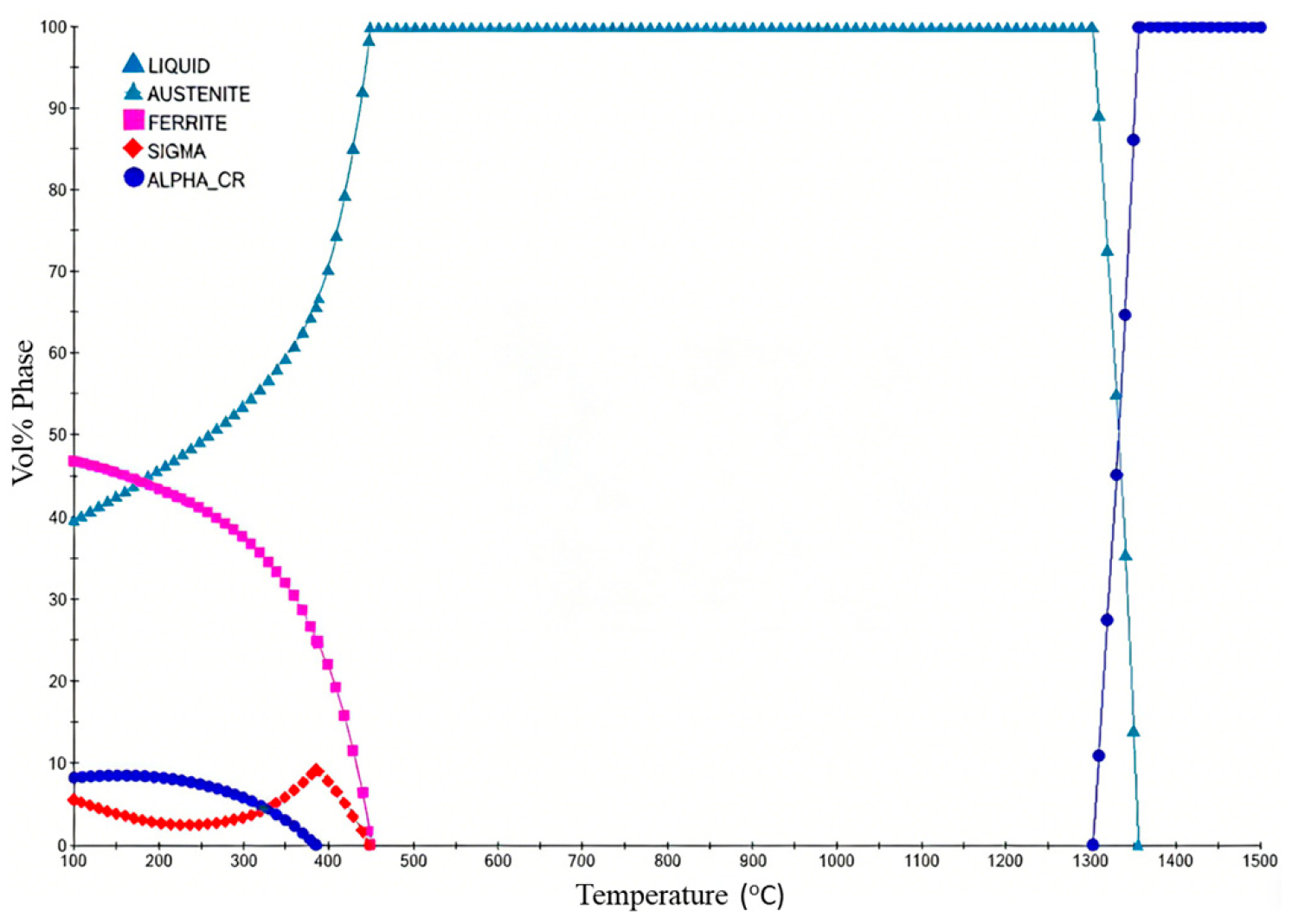
The equilibrium phase diagram and phase volume fraction evolution of the Fe50Mn20Ni20Cr10 HEA were calculated using JMatPro software (v. 10.0) with the Fe-based database. The calculation was carried out under equilibrium conditions, with the temperature range set from 100 °C to 1500 °C at a step size of 10 °C. The molar volume of each phase was calculated based on the lattice parameters and atomic packing density, and the equilibrium volume fractions of liquid, austenite (FCC), ferrite (BCC), sigma, and α-Cr phases were determined by minimizing the total Gibbs free energy of the system at each temperature. The resulting phase volume fraction vs. temperature curve was plotted to visualize the phase stability and transformation behavior of the alloy.
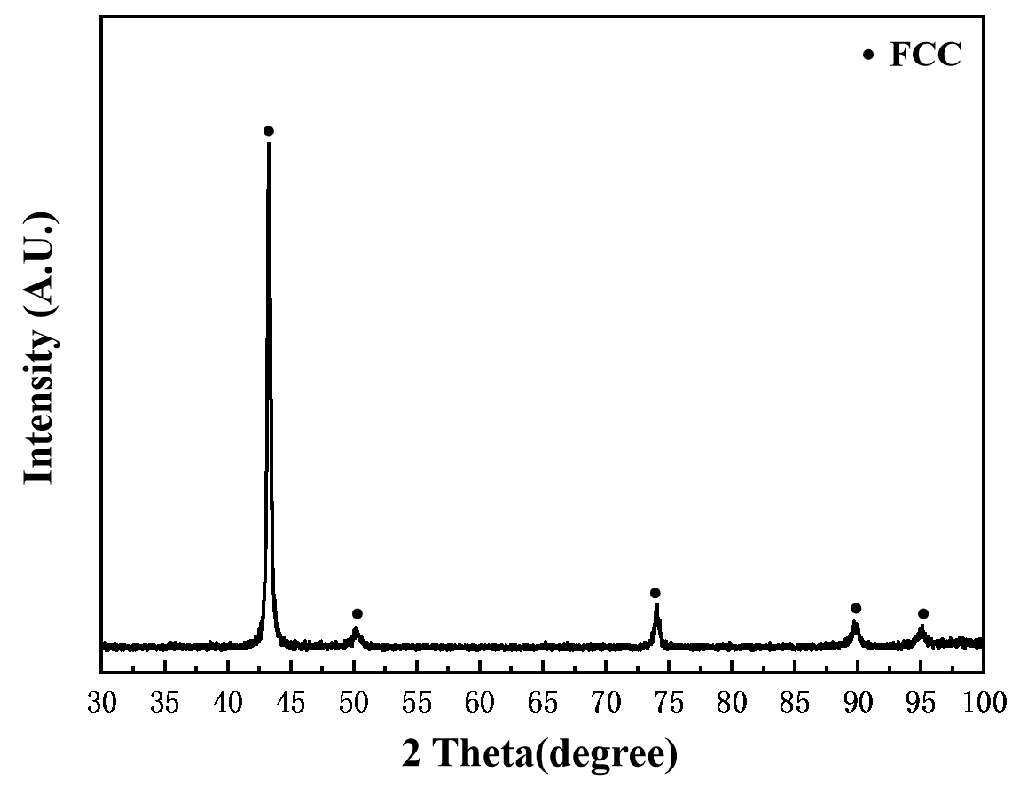
Phase identification was conducted via an X-ray diffraction (XRD, Rigaku, D/MAX-2250, Tokyo, Japan). The diffractometer was operated at 40 kV/15 mA with a 0.02° scanning step and a 2°/min scanning speed over the 2θ 30°~100° range. The diffraction patterns were analyzed via MDI Jade 6.0 to identify the single FCC phase by comparing the measured diffraction peaks with the standard card data of FCC structure in the ICDD database. Microstructural characterization was performed using a field-emission scanning electron microscope (FE-SEM, Thermo Scientific, Helios Nanolab G3 UC, Waltham, MA, USA) equipped with an electron backscatter diffraction (EBSD) system. Additional microstructural analysis was conducted via transmission electron microscopy (TEM, Thermo Scientific, Talos F200X, Waltham, MA, USA). Samples for both EBSD and TEM were electropolished using a twin-jet system (Struers TenuPol-5, Ballerup, Denmark) at −30 V in an electrolyte of 5 vol% perchloric acid, 35 vol.% n-butyl alcohol, and 60 vol.% methanol at −25 °C. Flat tensile samples with the size of 15 mm × 6 mm (length × width) were cut using EDM. Quasi-static uniaxial tensile experiments were conducted at a 1 × 10⁻³ s−1 strain rate using an Instron 3369 universal testing machine (Norwood, MA, USA) at ambient (298 K) and cryogenic (77 K) temperatures. Cryogenic specimens were submerged in liquid nitrogen during testing. The yield strength of the Fe50Mn20Ni20Cr10 HEA is defined as 0.2% offset method. To ensure the accuracy of the results, an extensometer was employed, and at least three samples of each case were tested.

3. Results and Discussion

3.1. Phase Constitution and Microstructure

Figure 1 presents the calculated equilibrium phase diagram of the Fe50Mn20Ni20Cr10 HEA as a function of temperature, showing the volume fraction evolution of different phases during heating and cooling. The diagram reveals that the alloy exhibits a multi-phase region at temperatures below 450 °C, consisting of FCC, sigma phase, and α-Cr phase. As the temperature increases, the sigma and α-Cr phases gradually dissolve, and the microstructure transitions to a single FCC phase above approximately 500 °C. This single FCC phase remains stable over a wide temperature range (500~1280 °C) until the onset of melting at approximately 1280 °C, with complete liquefaction occurring at 1350 °C. This suggests that the phase structure under the high cooling rate of suction casting retains the phase configuration corresponding to the 500~1280 °C range, namely, a single-phase FCC structure.
Figure 2 displays the XRD pattern of the Fe50Mn20Ni20Cr10 HEA. It is evident that the HEA exhibits a single-phase face-centered cubic (FCC) structure. No secondary phases were detectable within the instrument resolution, as evidenced by the absence of detectable diffraction peaks except for the FCC structure.
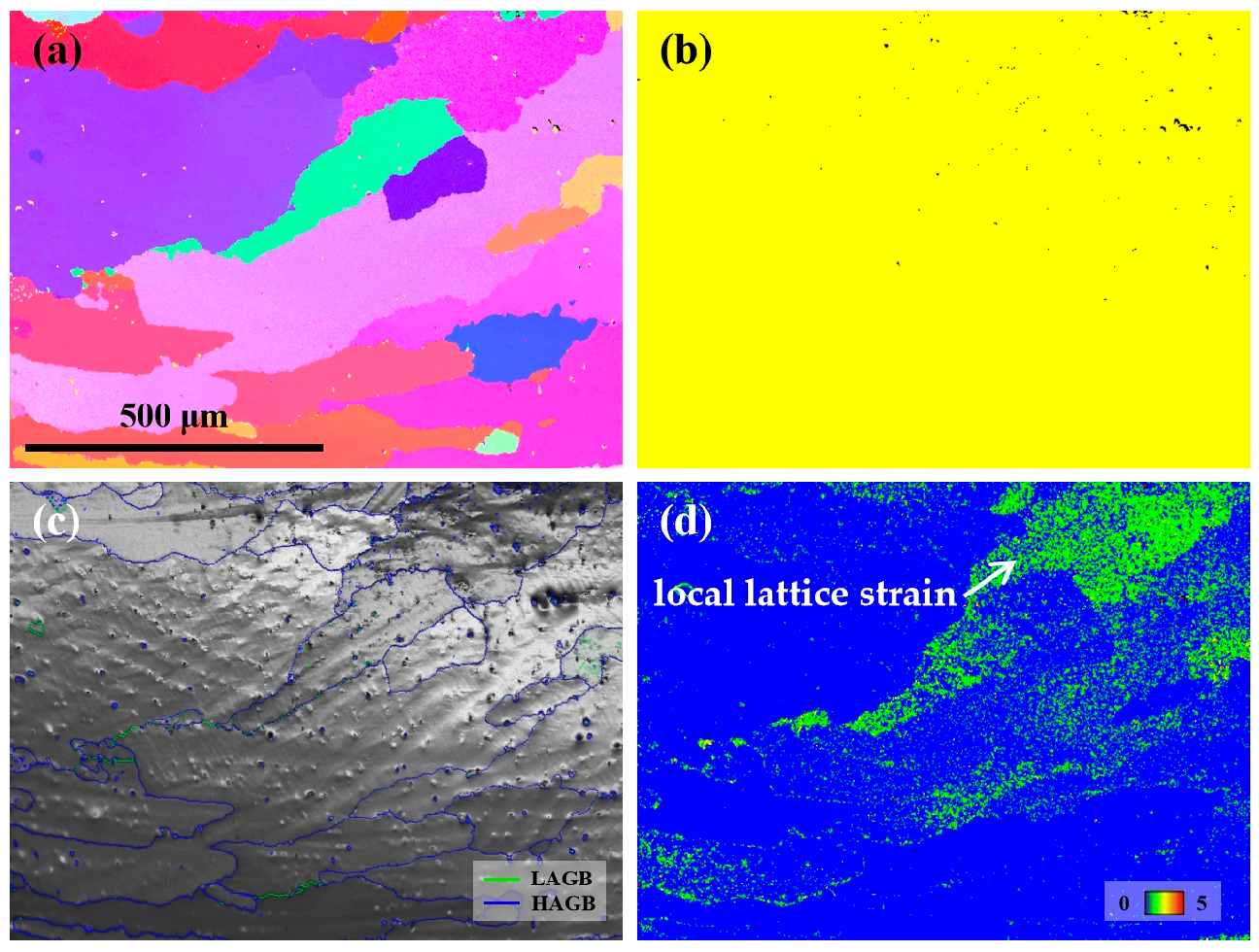
Figure 3 reveals the crystallographic microstructure of the Fe50Mn20Ni20Cr10 HEA via EBSD. As seen in Figure 3a, the inverse pole figure (IPF) map, the HEA exhibits a distinct columnar structure, with a width of 150 μm and a length of 400 μm. Figure 3b presents the phase distribution map of the Fe50Mn20Ni20Cr10 HEA. It is clearly observed that the alloy exhibits a single face-centered cubic (FCC) phase across the entire detection area, with no other secondary phases detected. This microstructure of single FCC phase is in excellent agreement with the phase identification results obtained from XRD in Figure 2, thus verifying the single-phase characteristic of the designed HEA. The corresponding grain boundary (GB) map in Figure 3c indicates that the Fe50Mn20Ni20Cr10 HEA consists almost entirely of high-angle grain boundaries (HAGBs). Here, we define grain boundaries with a misorientation angle higher than 15° as HAGBs [18,19]. The total line fraction of these HAGBs is as high as 95%, which means that few subgrains are present in the as-cast Fe50Mn20Ni20Cr10 HEA. The Kernel average misorientation (KAM) map presented in Figure 3d demonstrates that the local misorientation values across the bulk Fe50Mn20Ni20Cr10 HEA matrix remain at an extremely low level, indicative of a generally homogeneous and defect-sparse microstructure with minimal lattice distortion and internal stress concentration in the majority region. The discrete regions with slightly elevated KAM values observed in Figure 3d are only sporadically distributed, which are attributed to minor local lattice strain induced by the rapid non-equilibrium cooling during vacuum arc melting. These localized heterogeneities are slight and sporadic, rather than pervasive, and do not alter the overall low-defect characteristic. Generally, lattice distortion and internal strain introduce excess Gibbs free energy into the crystalline system, which is the main cause of thermodynamic metastability. In combination with the high fraction of HAGBs observed in Figure 3c, it can be inferred that the as-cast HEA possesses a relatively thermodynamically stable grain structure.
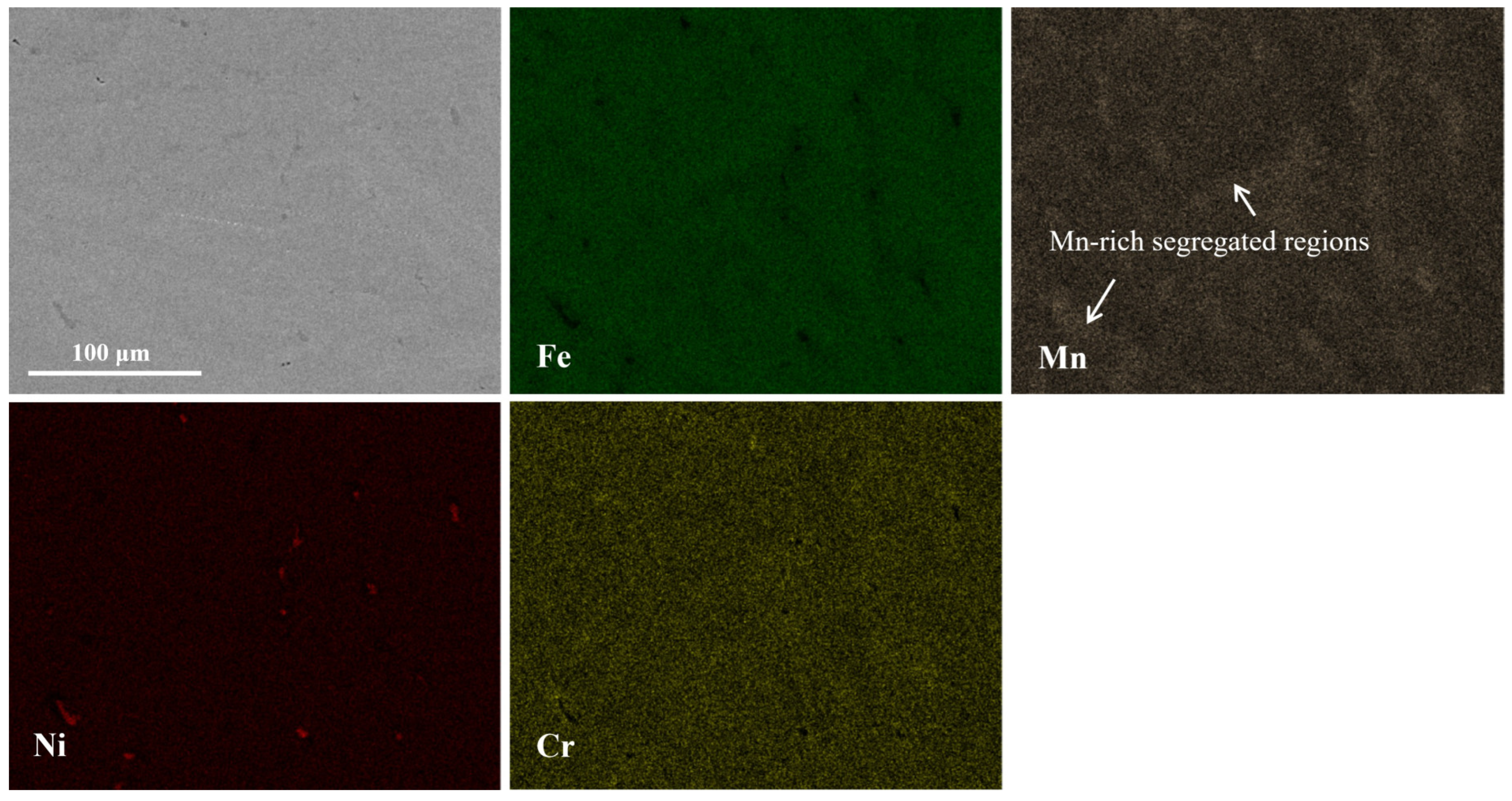
Figure 4 presents the backscattered electron (BSE) scanning electron microscopy micrograph as well as the corresponding energy-dispersive X-ray spectroscopy (EDS) elemental distribution mappings of the Fe50Mn20Ni20Cr10 HEA. It is evident from the BSE image that the alloy achieves full densification, free of any discernible casting defects, such as pores, shrinkage cavities or microcracks. Moreover, qualitative analysis of the EDS mappings reveals that the primary constituent elements of Fe, Mn, Ni and Cr are distributed in a predominantly homogeneous fashion throughout the matrix. Despite the overall uniform elemental distribution, localized segregation of Mn occurs inevitably during the non-equilibrium solidification process, giving rise to discrete Mn-rich segregated regions with a typical rod-like morphology of approximately 70 μm in length and 20 μm in width. In addition to the Mn-rich segregated regions, several isolated Cr-rich segregated regions with a characteristic size ranging from several micrometers to tens of micrometers are also detectable in the matrix. In fact, these element-enriched regions can also impede dislocation motion during alloy deformation [20,21].

3.2. Mechanical Property

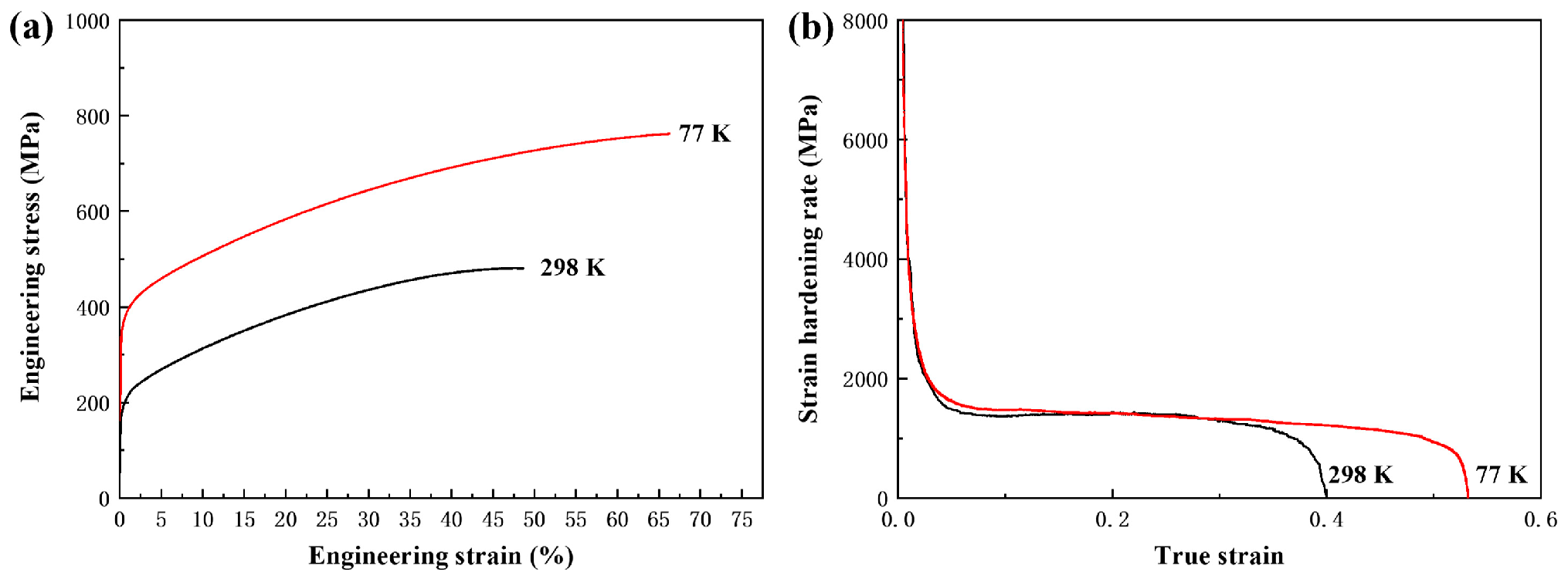
Figure 5a depicts the engineering stress–strain curves of the Fe50Mn20Ni20Cr10 HEA at 298 K and 77 K, demonstrating its remarkable strength–ductility synergy. At 298 K, the Fe50Mn20Ni20Cr10 HEA demonstrates a well-balanced mechanical performance profile, exhibiting a high yield strength (YS) of 181 ± 12 MPa, an ultimate tensile strength (UTS) of 483 ± 21 MPa, and a remarkable tensile elongation of 49 ± 1.3%, respectively. In comparison, the mechanical properties at 77 K are significantly enhanced, with increases of 98% in YS, 58% in UTS, and 35% in elongation. It can be clearly seen that the Fe50Mn20Ni20Cr10 HEA possesses an outstanding strength-ductility combination at 77 K. By comparison, the mechanical properties of the HEA are remarkably boosted when tested at 77 K, with increases of 98% in YS, 58% in UTS, and 35% in elongation relative to the ambient-temperature values. Unlike many conventional alloys that suffer from ductility loss at low temperatures, this HEA maintains a synchronous rise in strength and ductility, and it can be clearly seen that it possesses an outstanding strength-ductility combination at 77 K, thus showing great promise for cryogenic structural applications in aerospace, liquefied natural gas storage, and other related fields. Figure 5b depicts the strain-hardening curves of the Fe50Mn20Ni20Cr10 HEA at 298 K and 77 K. It is evident that the strain-hardening rate remains relatively high throughout the entire deformation process at both temperatures. In contrast, typical FCC HEAs such as FeCoCrNiMn and CoCrNi HEAs, which exhibit a characteristic monotonic decay of strain-hardening rate with increasing strain [22,23,24]. This deviation indicates that the Fe50Mn20Ni20Cr10 HEA may activate additional deformation mechanisms beyond conventional TWIP effects, potentially involving TRIP effects, which will be discussed in detail later.
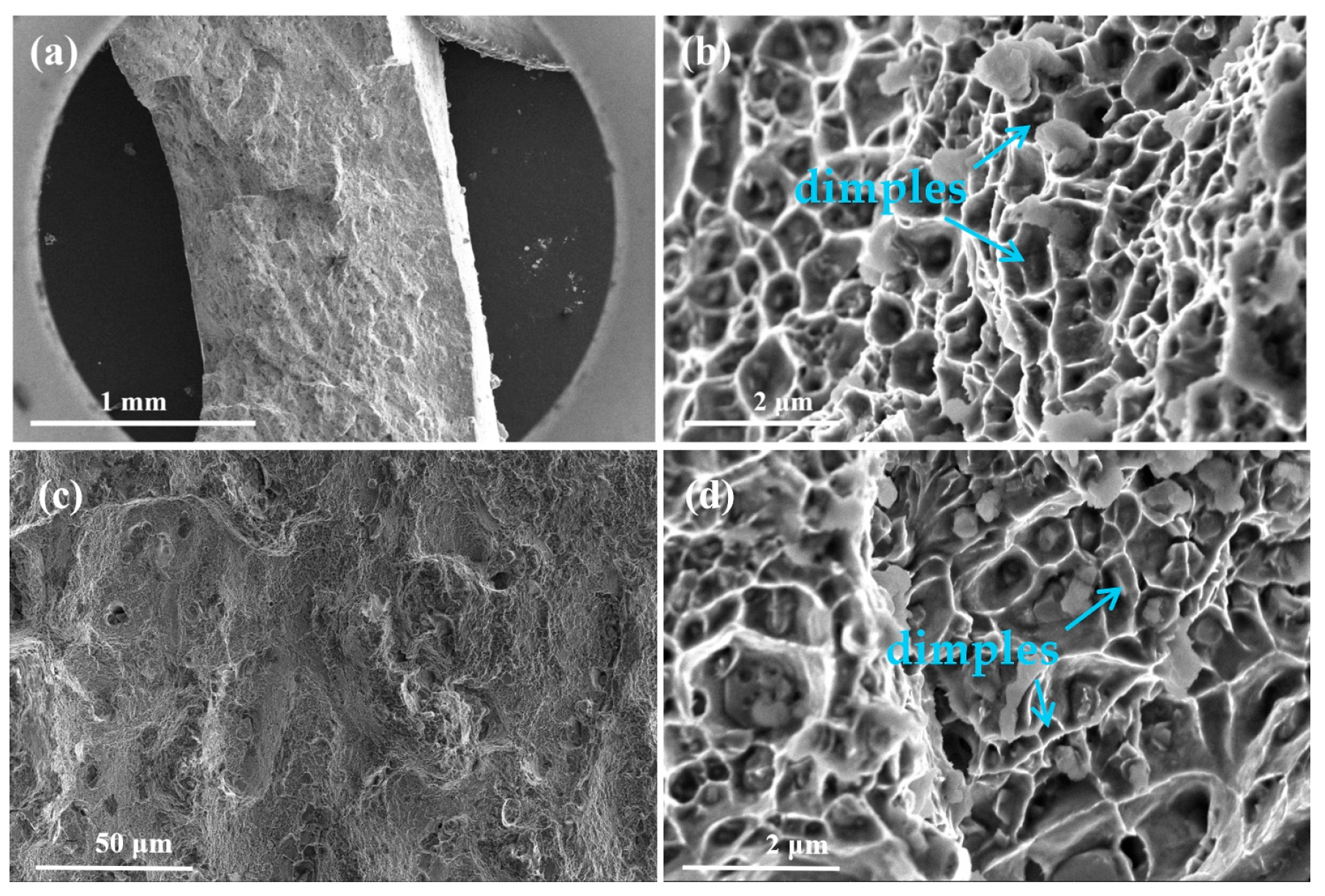
Figure 6 presents a detailed characterization of the tensile fracture morphology of the Fe50Mn20Ni20Cr10 HEA at ambient and cryogenic temperatures. As shown in the fracture morphology at cryogenic temperature in Figure 6a,b, it is evident that the surface is dominated by a uniformly distributed equiaxed and fine scaled dimple structure. Such a morphological feature is widely recognized as a definitive signature of ductile fracture behavior, demonstrating that the alloy undergoes significant plastic deformation prior to fracture under the tested cryogenic tensile loading conditions. Figure 6c,d show the fracture morphology at ambient temperature, where the fracture surface is also dominated by a uniformly distributed dimple structure. In comparison with that at cryogenic temperature, the dimples here are larger in size, which indicates relatively limited ductility at ambient temperature.

3.3. Deformation Mechanism

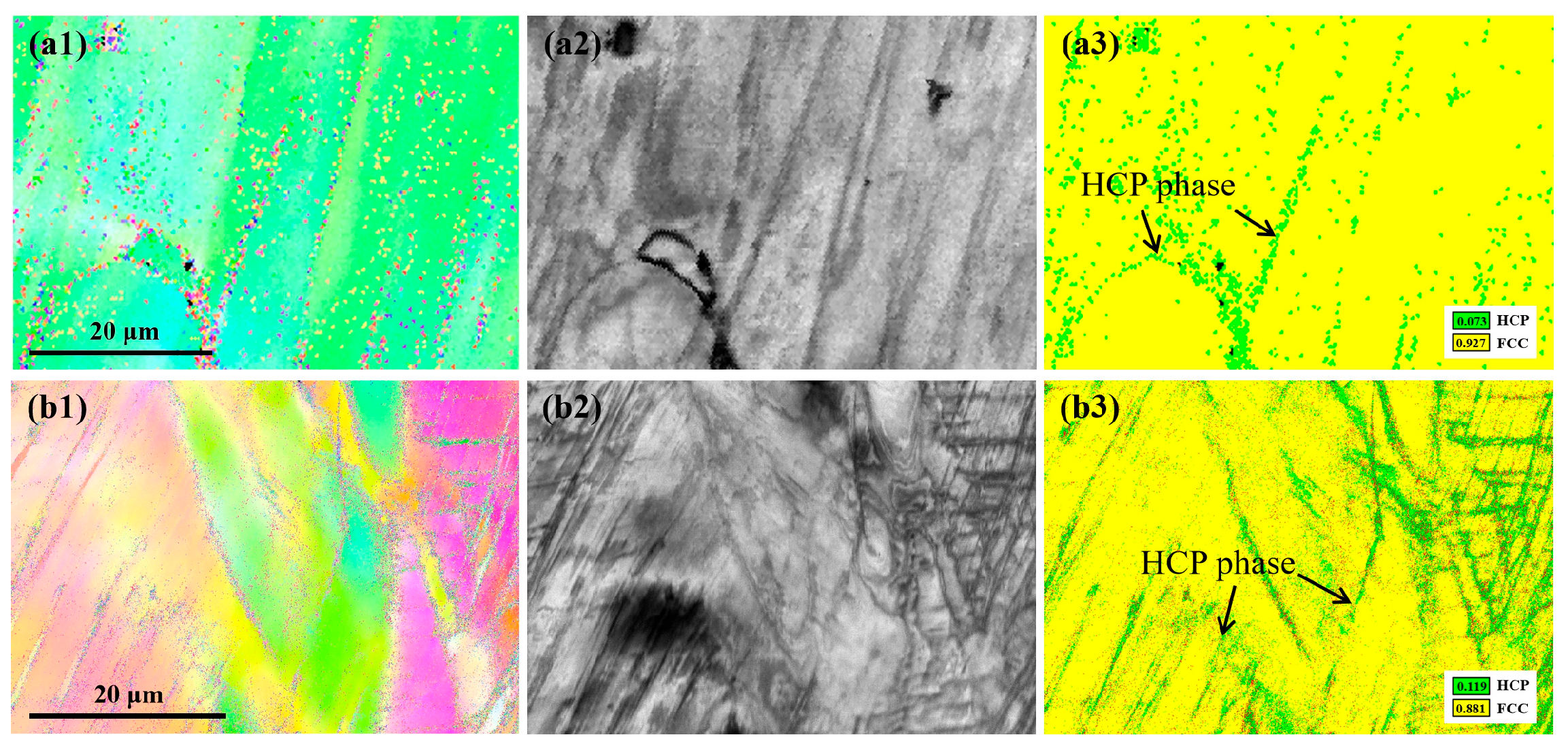
To fundamentally elucidate the intrinsic origin of the exceptional cryogenic mechanical properties exhibited by the Fe50Mn20Ni20Cr10 HEA, the EBSD and TEM characterization techniques were systematically applied to analyze and characterize the deformed microstructures of the alloy specimens subjected to a tensile strain of 45% under both 298 K and 77 K. As displayed in Figure 7(a1–a3), the typical deformation microstructure of the alloy at 298 K is dominated by two key structural components: deformation-induced twins and HCP laths. Notably, both types of microstructural features exhibit a distinct orientation preference, being primarily aligned along a single direction. It can be seen from Figure 7(a2) that the HCP phase forms subsequent to tensile deformation, a phenomenon attributed to deformation-induced phase transformation. The content of the HCP phase is measured to be 7.3%. In contrast, the Fe50Mn20Ni20Cr10 HEA deformed at 77 K displays a notably elevated density of twins and HCP laths. As illustrated by the IPF map presented in Figure 7(b1), tensile deformation at 77 K leads to a distinct proliferation of twin structures, which is evident when making a direct comparison with the microstructural characteristics in Figure 7(a1). In addition, the phase map in Figure 7(b3) reveals an HCP phase area fraction of 11.9%, 1.63 times greater than that at 298 K. Notably, it is particularly noteworthy that deformation-induced twinning and phase transformation are markedly enhanced at 77 K. This remarkable microstructural difference is attributed to the activation of multi-directional deformation behaviors at cryogenic temperatures, which effectively promote the nucleation and growth of large-scale deformation twins and continuous HCP phase networks throughout the matrix—a key microstructural factor that is responsible for sustaining the alloy’s exceptional high strain-hardening capacity during tensile deformation.
Generally, the capabilities of twinning and phase transformation are closely related to the formation of stacking faults. The critical resolved shear stresses (CRSS) required for the nucleation of deformation twins and HCP laths can be determined as follows [25,26,27,28]:
τ t w i n = γ S F E 3 b t w i n + K t w i n H P d
τ t r = 2 σ γ / ε 3 b t r + 3 G b t r L t r + h G γ ε 3 b t r
where γSFE is the stacking fault energy; btwin and btr are the Burgers vectors of the partial dislocations associated with twinning and athermal phase transition, respectively; K t w i n H P is the Hall-Petch-type constant for deformation twinning; d is the average grain size; σ γ / ε and G γ ε are the interfacial energy and Gibbs free energy difference between the FCC and HCP phases, respectively; G is the shear modulus; h and Ltr are the height and width of the HCP nucleus.
Since σ γ / ε , G γ ε , and γSFE are all temperature-dependent parameters, the critical stresses required for the formation of twins and HCP laths decrease with decreasing temperature. The SFE of the Fe50Mn20Ni20Cr10 HEA should be close to that of the reported Fe40Mn20Cr20Ni20 HEA (~40.06 mJ/m2) with a similar composition [29], and the SFE of HEA tends to decrease slightly with decreasing temperature [3,23,30,31]. This notable trend implies that the two core deformation mechanisms, deformation-induced twinning and FCC-to-HCP martensitic phase transformation, can be readily activated under much lower applied loads at cryogenic temperatures compared with ambient conditions. Furthermore, the Fe50Mn20Ni20Cr10 HEA exhibits a significantly higher yield strength at 77 K compared to that at 298 K, which promotes the initiation twinning and phase transformation at lower applied strains and sustains these mechanisms over a wider strain range under cryogenic deformation.
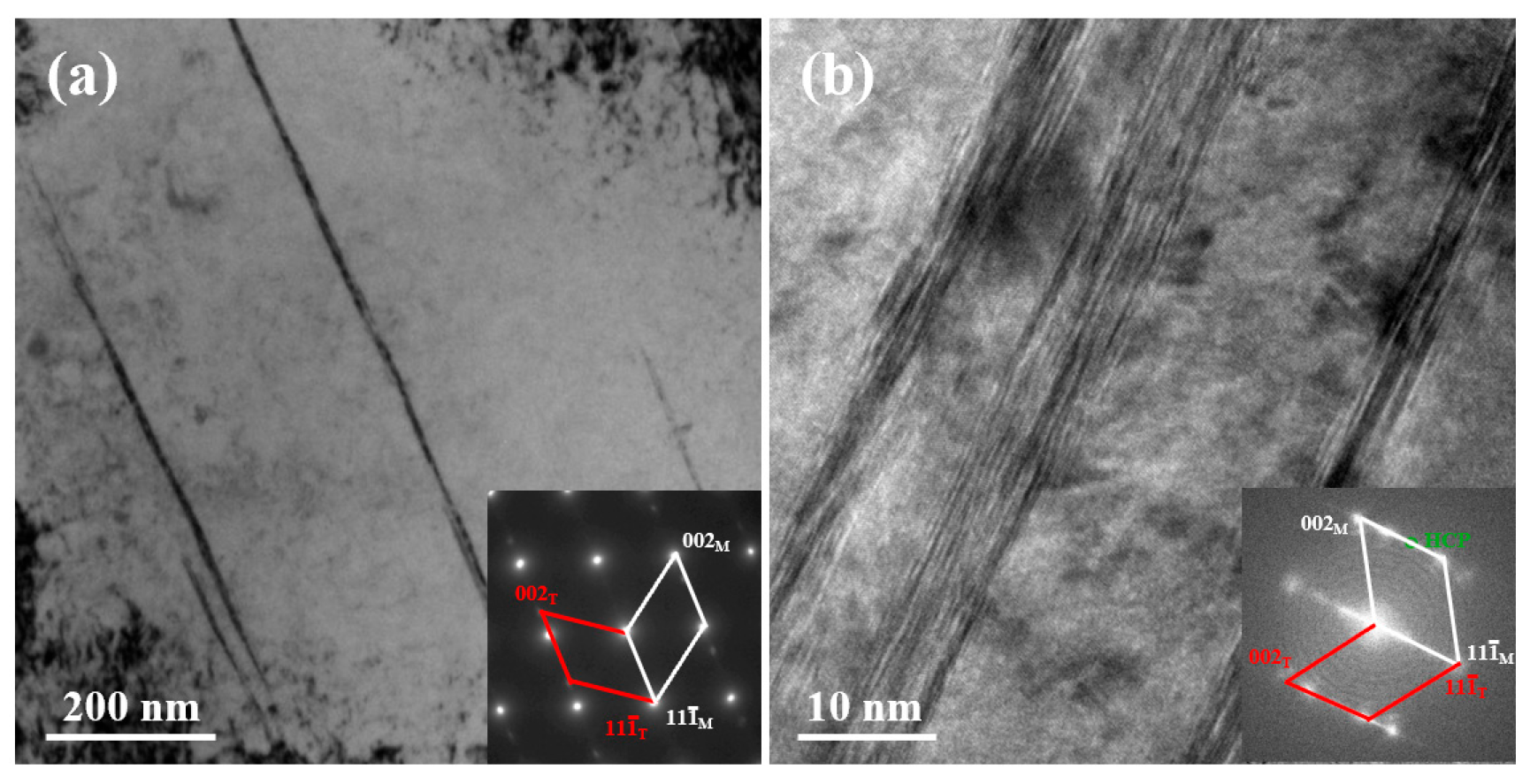
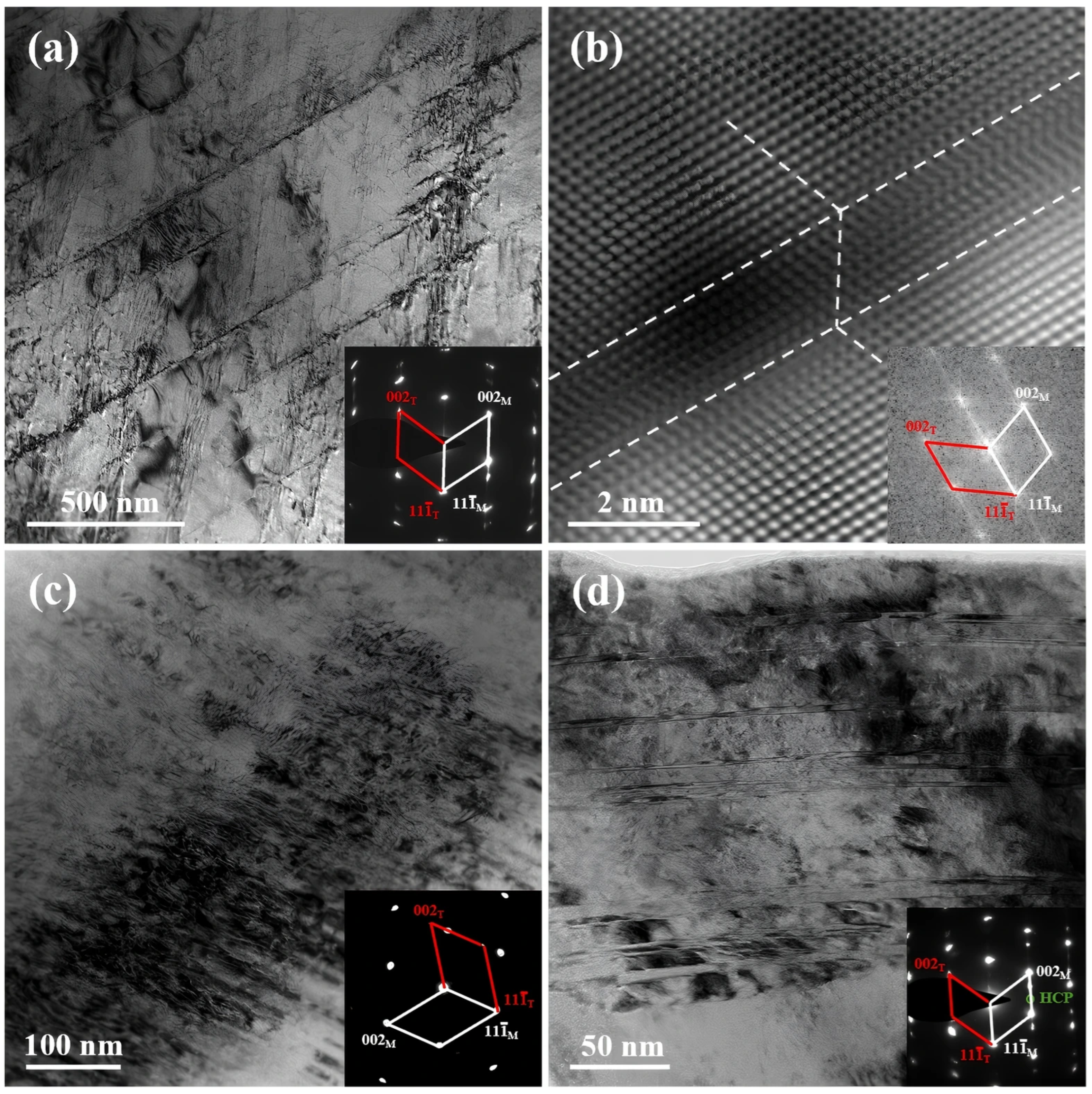
TEM analysis reveals that the Fe50Mn20Ni20Cr10 HEA deforms via a synergistic TWIP-TRIP mechanism at 298 K. As shown in Figure 8a, sparse planar deformation twins are observed within the FCC matrix, and the corresponding selected-area electron diffraction (SAED) pattern confirms the coexistence of the FCC matrix (white reflections) and deformation twins (red reflections), verifying the activation of twinning-induced plasticity. At higher magnification in Figure 8b, dense lamellar HCP martensite is formed within the matrix, as evidenced by additional diffraction spots in the SAED pattern, indicating the occurrence of transformation-induced plasticity. However, the density of deformation twins and the volume fraction of the HCP phase are relatively low at this temperature, which is attributed to the relatively high stacking fault energy of the alloy under ambient conditions.
Figure 9 shows the TEM images of the Fe50Mn20Ni20Cr10 HEA after tensile deformation at 77 K. It can be seen from Figure 9a that the microstructure shows distinctive features: extensive intertwined deformation twin networks that crisscross the matrix, together with densely distributed lamellar HCP phase laths that are embedded within the twin boundaries and the parent phase grains. This unique microstructural evolution serves as direct evidence to verify that both the TWIP effect and the TRIP effect play synergistic and significant roles in mediating the plastic deformation process of the material under such extreme cryogenic conditions. Specifically, the formation of deformation twin networks provides additional deformation coordination mechanisms by activating supplementary slip systems, thereby effectively accommodating the plastic strain and preventing premature localized fracture [32]. Figure 9b displays the high-resolution transmission electron microscopy (HR-TEM) image of the nanoscale deformation twin, whose width measures approximately 1.8 nm. In addition, a high density of twin bands can be detected, as shown in Figure 9c. Compared with the deformation mechanism of the Fe50Mn20Ni20Cr10 HEA at 298 K, as seen in Figure 8a, the density of twin bands increases significantly at cryogenic temperature, which is attributed to the relatively low stacking fault energy of the alloy at low temperatures. Meanwhile, as observed in Figure 9d, the generated HCP paths further hinder the movement of dislocations and promote the continuous accumulation of plastic deformation, ultimately leading to the excellent combination of strength and ductility of the material at cryogenic temperatures. Furthermore, the progressive formation of deformation twins and HCP laths dynamically refines the grain size, resulting in substantial strengthening via the dynamic Hall–Petch effect. Concurrently, these deformation mechanisms facilitate strain accommodation and mitigate stress localization, thereby improving overall ductility. Consequently, the Fe50Mn20Ni20Cr10 HEA demonstrates ultrahigh strength and excellent ductility at 77 K.
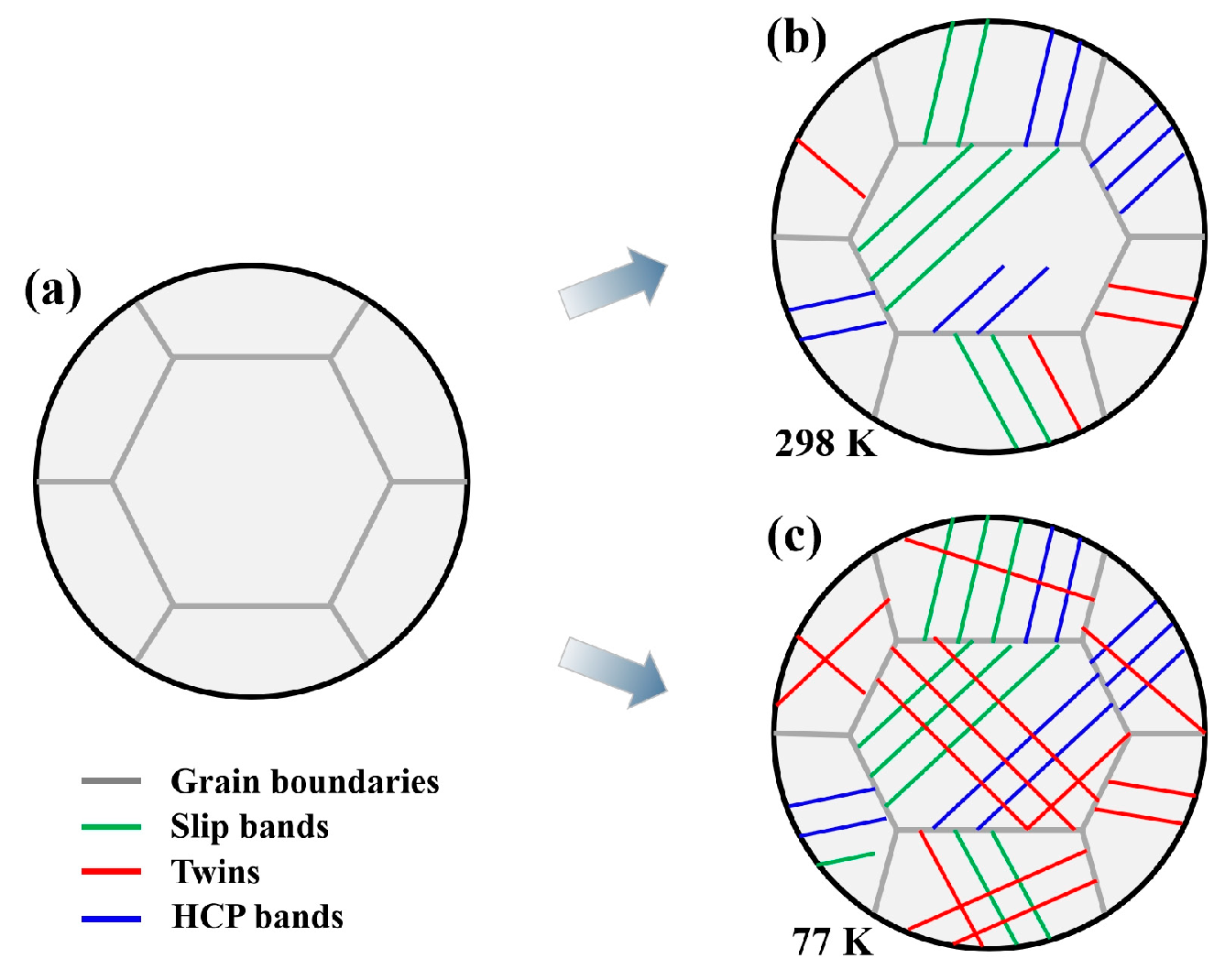
Figure 10 illustrates the tensile deformation mechanisms of the Fe50Mn20Ni20Cr10 HEA at 298 K and 77 K. As depicted in Figure 9a, the as-cast Fe50Mn20Ni20Cr10 HEA exhibits a homogeneous single-phase FCC microstructure, with negligible secondary phases and deformation twins observed in the initial state. This observation is further corroborated by the microstructural characterization results presented in Figure 3, which confirms the absence of heterogeneous phases or pre-existing twin boundaries in the as-cast alloy. When subjected to tensile loading at 298 K, the HEA undergoes notable microstructural evolution driven by the combined effects of deformation-induced twinning and martensitic phase transformation, as seen in Figure 9. Specifically, the formation of distinct slip bands, isolated deformation twins, and HCP bands can be clearly identified in the deformed microstructure. Quantitative phase analysis reveals that the volume fraction of the deformation-induced HCP phase is approximately 7.3% at this temperature. Additionally, the deformation twins formed at ambient temperature are predominantly discrete and non-interlaced. This sparse twin distribution is closely associated with the relatively high stacking fault energy of the alloy, which suppresses extensive twin nucleation and growth. In stark contrast, tensile deformation at 77 K triggers a drastically different microstructural response, as shown in Figure 9d. The cryogenic temperature significantly reduces the stacking fault energy of the HEA, which facilitates massive twin nucleation and rapid twin propagation throughout the matrix. Consequently, the deformed microstructure is dominated by a dense, highly interlaced twin network that penetrates the original FCC grains, dividing them into numerous fine twin lamellae. Simultaneously, the low-temperature environment promotes a much more extensive deformation-induced FCC-to-HCP martensitic transformation, with the volume fraction of the HCP phase increasing to 11.9% sharply compared to that at 298 K. The synergistic effect of the dense twin network and the high fraction of HCP martensite effectively impede the movement of dislocations during tensile deformation, leading to a remarkable enhancement in the strength and ductility of HEA at cryogenic temperatures. This distinct temperature-dependent deformation behavior highlights the critical role of environmental temperature in tailoring the deformation mechanisms and mechanical performance of the Fe50Mn20Ni20Cr10 HEA.

4. Conclusions

This work systematically investigated the mechanical properties and deformation behaviors of the vacuum arc-melted metastable Fe50Mn20Ni20Cr10 HEA at ambient and cryogenic temperatures. This HEA achieves a yield strength of 181 ± 12 MPa, an ultimate tensile strength of 483 ± 21 MPa and an elongation of 49 ± 1.3% at 298 K, while its mechanical properties are drastically enhanced at 77 K, with YS, UTS and elongation increasing by 98%, 58% and 35% to 358 ± 18 MPa, 763 ± 30 MPa and 66 ± 3.2%, respectively. The remarkable cryogenic strength-ductility synergy of this HEA originates from the temperature-dependent synergistic activation of TWIP and TRIP effects. The twin network and lamellar HCP laths realize effective strengthening via the dynamic Hall-Petch effect by refining the effective grain size, and simultaneously accommodate plastic strain, alleviate local stress concentration and activate additional slip systems to maintain high ductility, with the synergistic TWIP-TRIP effects being the core mechanism supporting the alloy’s excellent cryogenic mechanical performance and stable strain-hardening behavior. The compositional design of the Fe50Mn20Ni20Cr10 HEA achieves a precise balance between the TWIP and TRIP effects, which optimizes the cryogenic mechanical properties of Fe-Mn-Ni-Cr-based HEAs and provides new insights into compositional regulation for cryogenic structural applications.

Author Contributions

J.L.: Methodology, Writing—original draft. B.Z.: Investigation, Funding acquisition, Supervision. N.M.: Methodology, Investigation, Writing—original draft. S.X.: Funding acquisition, Project administration, Formal analysis. All authors have read and agreed to the published version of the manuscript.

Funding

This study was financially supported by the Natural Science Foundation of Zhejiang Province [No. LMS25E040002].

Data Availability Statement

The original contributions presented in this study are included in the article. Further inquiries can be directed to the corresponding authors.

Conflicts of Interest

Author Nanxuan Mei was employed by the company China International Engineering Consulting Corporation. The remaining authors declare that the research was conducted in the absence of any commercial or financial relationships that could be construed as a potential conflict of interest.

References

  1. George, E.P.; Raabe, D.; Ritchie, R.O. High-entropy alloys. Nat. Rev. Mater. 2019, 4, 515–534. [Google Scholar] [CrossRef]
  2. Luo, H.; Li, Z.; Mingers, A.M.; Raabe, D. Corrosion behavior of an equiatomic CoCrFeMnNi high-entropy alloy compared with 304 stainless steel in sulfuric acid solution. Corros. Sci. 2018, 134, 131–139. [Google Scholar] [CrossRef]
  3. Fu, A.; Liu, B.; Liu, B.; Cao, Y.; Wang, J.; Liao, T.; Li, J.; Fang, Q.; Liaw, P.K.; Liu, Y. A novel cobalt-free oxide dispersion strengthened medium-entropy alloy with outstanding mechanical properties and irradiation resistance. J. Mater. Sci. Technol. 2023, 152, 190–200. [Google Scholar] [CrossRef]
  4. Fu, A.; Xie, X.; Wang, J.; Cao, Y.; Wang, B.; Li, J.; Fang, Q.; Li, X.; Liu, B.; Liu, Y. Controlling of cellular substructure and its effect on mechanical properties of FeCoCrNiMo0.2 high entropy alloy fabricated by selective laser melting. Mater. Sci. Eng. A 2024, 901, 146547. [Google Scholar] [CrossRef]
  5. Zhang, B.; Ma, X.L. A review-Pitting corrosion initiation investigated by TEM. J. Mater. Sci. Technol. 2019, 35, 1455–1465. [Google Scholar] [CrossRef]
  6. Schneider, M.; Laplanche, G. Effects of temperature on mechanical properties and deformation mechanisms of the equiatomic CrFeNi medium-entropy alloy. Acta Mater. 2021, 204, 116470. [Google Scholar] [CrossRef]
  7. Fu, A.; Liu, B.; Li, Z.; Yang, T.; Cao, Y.; He, J.; Wang, B.; Li, J.; Fang, Q.; Cheng, X. Superb impact resistance of nano-precipitation-strengthened high-entropy alloys. Adv. Powder Mater. 2025, 4, 100277. [Google Scholar] [CrossRef]
  8. Miracle, D.B.; Senkov, O.N. A critical review of high entropy alloys and related concepts. Acta Mater. 2017, 122, 448–511. [Google Scholar] [CrossRef]
  9. Laplanche, G.; Kostka, A.; Reinhart, C.; Hunfeld, J.; Eggeler, G.; George, E.P. Reasons for the superior mechanical properties of medium-entropy CrCoNi compared to high-entropy CrMnFeCoNi. Acta Mater. 2017, 128, 292–303. [Google Scholar] [CrossRef]
  10. Joseph, J.; Haghdadi, N.; Annasamy, M.; Kada, S.; Hodgson, P.D.; Barnett, M.R.; Fabijanic, D.M. On the enhanced wear resistance of CoCrFeMnNi high entropy alloy at intermediate temperature. Scr. Mater. 2020, 186, 230–235. [Google Scholar] [CrossRef]
  11. Fu, A.; Liu, B.; Lu, W.; Liu, B.; Li, J.; Fang, Q.; Li, Z.; Liu, Y. A novel supersaturated medium entropy alloy with superior tensile properties and corrosion resistance. Scr. Mater. 2020, 186, 381–386. [Google Scholar] [CrossRef]
  12. Lin, Q.; Liu, J.; An, X.; Wang, H.; Zhang, Y.; Liao, X. Cryogenic-deformation-induced phase transformation in an FeCoCrNi high-entropy alloy. Mater. Res. Lett. 2018, 6, 236–243. [Google Scholar] [CrossRef]
  13. Su, J.; Raabe, D.; Li, Z. Hierarchical microstructure design to tune the mechanical behavior of an interstitial TRIP-TWIP high-entropy alloy. Acta Mater. 2019, 163, 40–54. [Google Scholar] [CrossRef]
  14. Li, Q.; Li, X.; Jin, C.; Li, H.; Hua, K.; Deng, X.; Wang, H. Trace B doping Fe50Mn30Co10Cr10 high entropy alloy: Mechanical response and multi-microstructure evolution under TWIP and TRIP effects. Mater. Sci. Eng. A 2023, 873, 145037. [Google Scholar] [CrossRef]
  15. Yang, Q.; Wu, W.; Zhang, W.; Zhang, Y.; Yan, D.; Li, Z. Synergetic mechanisms of nanoprecipitation and TRIP-TWIP effects in strong and ductile micro-alloyed metastable interstitial high-entropy alloys. J. Mater. Sci. Technol. 2026, 242, 238–254. [Google Scholar] [CrossRef]
  16. Shi, Y.; Wang, J.; Yun, P.; Tang, K.; Chen, L.; Wei, R.; Tian, J.; Wu, Y.; Jiang, F. Achieving high performance low-cost Co-free FeMnCrNi-based medium entropy alloys via multiple synergistic strategies. J. Alloy. Compd. 2025, 1032, 181159. [Google Scholar] [CrossRef]
  17. Bian, B.; Guo, N.; Yang, H.; Guo, R.; Yang, L.; Wu, Y.; Qiao, J. A novel cobalt-free FeMnCrNi medium-entropy alloy with exceptional yield strength and ductility at cryogenic temperature. J. Alloy. Compd. 2020, 827, 153981. [Google Scholar] [CrossRef]
  18. Wei, R.; Jiang, Z.; Gao, Q.; Chen, C.; Zhang, S.; Han, Z.; Chen, L.; Wang, T.; Wu, S.; Li, F. A comparison of the mechanical and corrosion behavior of Fe49.5Mn25Cr15Ni10C0.5 medium-entropy alloy with its subsystems steels. Intermetallics 2022, 151, 107736. [Google Scholar] [CrossRef]
  19. Huang, M.; Jia, C.; Shen, C.; Xu, S. Deformation Behavior and Tensile Properties of Layered Bis Austenitic Steel. JOM 2026, in press. [Google Scholar] [CrossRef]
  20. Xie, T.; Ding, C.; Wang, P.; Huang, M.; Xu, S.; Wang, Z.; Tang, H. Size-dependent mechanical properties of additive manufactured Ti-6Al-4V thin walls. Addit. Manuf. Lett. 2026, in press. [Google Scholar]
  21. Yang, X.; Ding, C.; Wang, P.; Song, C.; Ning, Y.; Saetang, V.; Hou, Y.; Li, X.; Pan, J.; Huang, Z.; et al. Additive Manufactured 18-Ni 300 with Thin-walled Structure: Effect of Structural Thickness on the Formability and Mechanical Properties. Materials 2026, in press. [Google Scholar]
  22. Duan, H.; Liu, B.; Fu, A.; He, J.; Yang, T.; Liu, C.T.; Liu, Y. Segregation enabled outstanding combination of mechanical and corrosion properties in a FeCrNi medium entropy alloy manufactured by selective laser melting. J. Mater. Sci. Technol. 2022, 99, 207–214. [Google Scholar] [CrossRef]
  23. Yang, X.; Lu, T.; Chen, X.; Yao, N.; Wan, B.; Shi, J.; Sun, B.; Zhang, X.; Tu, S. Reasons for abnormal difference in temperature-dependent strain hardening and ductility between additively manufactured CoCrNi and CoCrFeMnNi. Int. J. Plast. 2025, 196, 104576. [Google Scholar] [CrossRef]
  24. Tirunilai, A.S.; Hanemann, T.; Reinhart, C.; Tschan, V.; Weiss, K.P.; Laplanche, G.; Freudenberger, J.; Heilmaier, M.; Kauffmann, A. Comparison of cryogenic deformation of the concentrated solid solutions CoCrFeMnNi, CoCrNi and CoNi. Mater. Sci. Eng. A 2020, 783, 139290. [Google Scholar] [CrossRef]
  25. Fu, A.; Liu, B.; Zhou, H.; Wang, J.; Li, K.; Cao, Y.; Wang, B.; Han, L.; Li, X.; Liu, Y. A supersaturated super stainless high-entropy steel with extraordinary comprehensive performances for marine application. J. Mater. Sci. Technol. 2025, 244, 301–312. [Google Scholar] [CrossRef]
  26. Li, Y.; Wang, Q.; Xu, C.; Fu, B.; Jia, X. Cooperative roles of twinning, transformation and strain partitioning on the excellent cryogenic strength-toughness synergy of dual-heterogeneous metastable high entropy alloys. Mater. Sci. Eng. A 2024, 906, 146708. [Google Scholar] [CrossRef]
  27. Yang, W.; Tu, J.; Li, Z.; Liang, Y.; Luo, J. Unveiling the competitive and synergistic evolution of deformation mechanisms in a metastable Fe30Mn50Co10Cr10 high-entropy alloy. Mater. Sci. Eng. A 2025, 950, 149490. [Google Scholar] [CrossRef]
  28. Wagner, C.; Laplanche, G. Effect of grain size on critical twinning stress and work hardening behavior in the equiatomic CrMnFeCoNi high-entropy alloy. Int. J. Plast. 2023, 166, 103651. [Google Scholar] [CrossRef]
  29. Lee, S.L.; Lee, S.Y.; Hwang, B. Deformation behavior and tensile properties of an austenitic Fe-24Mn-4Cr-0.5C high-manganese steel: Effect of grain size. Mater. Sci. Eng. A 2019, 742, 334–343. [Google Scholar] [CrossRef]
  30. Otto, F.; Dlouhý, A.; Somsen, C.; Bei, H.; Eggeler, G.; George, E. The influences of temperature and microstructure on the tensile properties of a CoCrFeMnNi high-entropy alloy. Acta Mater. 2013, 61, 5743–5755. [Google Scholar] [CrossRef]
  31. Lee, B.J.; Shim, S.H.; Lee, H.B.; Hong, S.K.; Lee, B.J.; Kim, H.S.; Hong, S.I. Deformation-induced multi-step TRIP/TWIP (fcc, hcp) behaviors in metastable Fe55Mn25Co10Cr10 high-entropy alloy at ambient and cryogenic temperatures. Mater. Sci. Eng. A 2024, 913, 147030. [Google Scholar] [CrossRef]
  32. Tang, L.; Yan, K.; Cai, B.; Wang, Y.Q.; Liu, B.; Kabra, S.; Attallah, M.M.; Liu, Y. Deformation mechanisms of FeCoCrNiMo0.2 high entropy alloy at 77 and 15 K. Scr. Mater. 2020, 178, 166–170. [Google Scholar] [CrossRef]
Figure 1. Solidification paths of the Fe50Mn20Ni20Cr10 HEA.
Metals 16 00304 g001
Figure 2. XRD spectra of the Fe50Mn20Ni20Cr10 HEA.
Metals 16 00304 g002
Figure 3. (a) EBSD IPF map, (b) phase distribution map, (c) image quality (IQ) map superimposed with HAGBs and LAGBs and (d) KAM statistic image of the Fe50Mn20Ni20Cr10 HEA.
Metals 16 00304 g003
Figure 4. SEM-BSE image and EDS elemental mappings of the Fe50Mn20Ni20Cr10 HEA.
Metals 16 00304 g004
Figure 5. (a) Tensile engineering stress–strain curves and (b) the corresponding strain-hardening curves of the Fe50Mn20Ni20Cr10 HEA at ambient (298 K) and cryogenic (77K) temperatures.
Metals 16 00304 g005
Figure 6. Fracture morphology of the Fe50Mn20Ni20Cr10 HEA at (a) low magnification at 77 K; (b) high magnification at 77 K; (c) low magnification at 298 K; (d) high magnification at 298 K.
Metals 16 00304 g006
Figure 7. EBSD results of Fe50Mn20Ni20Cr10 HEA at (a1a3) 298 K and (b1b3) 77 K.
Metals 16 00304 g007
Figure 8. TEM results of the Fe50Mn20Ni20Cr10 HEA after tensile at ambient temperature showing (a) twins and (b) HCP phase.
Metals 16 00304 g008
Figure 9. TEM results of the Fe50Mn20Ni20Cr10 HEA after tensile at cryogenic temperature showing (a) twin networks with (b) HR-TEM image (c) high-density twin bands and (d) HCP laths.
Metals 16 00304 g009
Figure 10. Schematic diagram of the plastic deformation process of the Fe50Mn20Ni20Cr10 HEA: (a) initial microstructural feature, (b) deformed at 298 K and (c) deformed at 298 K.
Metals 16 00304 g010
Table 1. The chemical composition of the Fe50Mn20Ni20Cr10 HEA.
ElementFeMnNiCr
Content/at. %50.719.321.18.9
Disclaimer/Publisher’s Note: The statements, opinions and data contained in all publications are solely those of the individual author(s) and contributor(s) and not of MDPI and/or the editor(s). MDPI and/or the editor(s) disclaim responsibility for any injury to people or property resulting from any ideas, methods, instructions or products referred to in the content.