1. Introduction
As the lightest metallic structural material, magnesium (Mg) alloys hold great promise for applications in aerospace, automotive, rail transit, and 3C electronics owing to their low density, high specific strength, and excellent electromagnetic interference shielding effectiveness [
1,
2]. Nevertheless, a prominent strength ductility trade-off often exists in Mg alloys at room temperature, which severely limits their use in load-bearing components [
3,
4]. This limitation originates from the hexagonal close-packed (HCP) crystal structure of Mg, which offers a restricted number of active slip systems at room temperature, resulting in poor formability and pronounced mechanical anisotropy. In particular, hot plastic deforming such as extrusion and rolling frequently promote the development of a strong basal texture, which further suppresses the activation of non-basal slip systems [
5,
6]. Hence, achieving a simultaneous enhancement of strength and ductility in Mg alloys remains a critical challenge in the field.
In recent years, researchers have sought to address the above-mentioned trade-off by focusing on alloy design and process control. To enhance strength, the addition of rare earth (RE) elements has proven effective in modulating microstructure and mechanical properties. Elements such as Gd and Y exhibit high solid solubility in the magnesium matrix, which decreases sharply with temperature, imparting a pronounced age-hardening response in Mg alloys [
7,
8]. The corresponding strengthening phases typically include GP zones, β″, and β′ precipitates [
9,
10]. However, alloying alone often fails to achieve a satisfactory balance with ductility. For instance, while the addition of Gd or Zn to Mg-Nd alloys can further improve strength, it frequently leads to a notable decline in plasticity [
11,
12]. This is primarily attributed to the formation of coarse secondary phase particles due to excessive precipitation, coupled with the enhanced basal texture that restricts the activation of non-basal slip systems. Fine-grained Mg alloys are commonly obtained via severe plastic deformation (SPD). Yang [
13] optimized the extrusion process of a Mg-3.5Sm-0.6Zn-0.5Zr alloy and obtained an ultrafine-grained structure with grain sizes ranging from 470 to 500 nm. After aging, the alloy exhibited strength comparable to that of high-content Mg-RE alloys, with tensile strength, yield strength, and elongation reaching 427 MPa, 416 MPa, and 5.1%, respectively. Similarly, Wan [
14] fabricated a Mg-Gd-Y-Zr alloy with a nanoscale grain structure (≈80 nm) using rotary forging, achieving a tensile strength of 710 MPa, a yield strength of 650 MPa, and an elongation of 4.5%. Although grain refinement can also improve ductility, the strong basal texture typically developed during hot working limits the activation of additional slip systems, thereby constraining strain compatibility and overall plasticity. Thus, it appears that gains in strength are often achieved at the expense of ductility.
Improving the plasticity of magnesium alloys generally requires the activation of non-basal slip systems or modification of the deformation texture. The addition of rare earth (RE) elements, particularly Gd and Y, has been demonstrated to effectively weaken the strong basal texture and promote the formation of a so-called “RE texture”, where the basal plane tends to tilt at a certain angle to the extrusion direction (ED) [
15,
16]. This texture modification facilitates basal slip during tensile loading along the ED, thereby markedly enhancing ductility. Alternatively, alloying with lightweight elements such as Li can reduce the critical resolved shear stress (CRSS) for non-basal slip, promoting the activation of prismatic <a> and pyramidal <c + a> slip systems and consequently improving plasticity [
17]. Similarly, minor Si additions have been shown to activate <c + a> slip even under small strains at room temperature, leading to a significant increase in alloy ductility [
18]. Beyond alloying, microstructural design offers another effective route to reconcile strength and ductility. For instance, constructing a bimodal microstructure composed of fine dynamic recrystallized (DRXed) grains and coarse unDRXed grains has emerged as a promising strategy [
19]. Fine grains contribute to strength via grain boundary strengthening, while coarse grains, often accompanied by favorable textures, accommodate plastic strain. Furthermore, multi-step or hybrid deformation processing can be employed to simultaneously achieve grain refinement and texture weakening, thereby enhancing overall performance [
20,
21]. Multi-directional forging (MDF) effectively breaks down initial coarse grains through multi-axial strain paths, introducing high dislocation densities and dynamic precipitates that create a favorable microstructural “pre-state” for subsequent forming operations [
22,
23]. As a typical severe plastic deformation process, extrusion parameters directly govern the dynamic recrystallization mechanisms and texture evolution. In commercial AZ31 alloys, varying deformation conditions activate distinct slip systems and recrystallization behaviours, resulting in markedly different crystallographic orientations and mechanical properties [
24,
25]. These findings underscore that the interplay between deformation mechanisms and recrystallization behaviour lies at the core of tailoring texture and properties under complex stress states.
While the addition of Gd and Y is known to impart age-hardening effects and enable texture modification in magnesium alloys, making Mg-Gd-Y systems a focus of considerable research interest [
26,
27,
28], a critical knowledge gap remains. There is still a lack of systematic understanding regarding the interplay among microstructure evolution, dynamic recrystallization mechanisms, and texture development during complex thermomechanical processing in these alloys, and how this interplay ultimately governs their final mechanical properties.
Therefore, this work systematically investigates an Mg-8Gd-4Y-1Nd-0.5Zr alloy subjected to MDF combined extrusion process. It aims to reveal how the forging pretreatment modulates the initial microstructure state, subsequently governs dynamic recrystallization and texture evolution during extrusion, and influences the competition between dynamic and aging precipitation. By comparing the results with those from direct extrusion, the effectiveness of this multi-stage route in achieving a superior strength–ductility balance is demonstrated. This research provides both theoretical insights into the microstructure–texture–property relationships in complex processing and a practical design strategy for developing high-performance Mg-RE alloys.
2. Materials and Methods
Mg-8Gd-4Y-1Nd-0.5Zr (wt.%) alloy ingots were fabricated via gravity casting. Prior to melting, the raw materials, including Mg-30 wt.% Gd, Mg-25 wt.% Y, Mg-30 wt.% Nd, and Mg-30 wt.% Zr master alloys, were preheated and mechanically polished to remove surface oxides. Pure magnesium was first placed in a crucible and heated to 760 °C under an argon protective atmosphere. Subsequently, the Mg-Nd, Mg-Gd, Mg-Y, Mg-Zr, and Mg-Si master alloys were added sequentially into the molten magnesium. After complete melting, the melt was stirred and treated with a refining agent for degassing and slag removal. Following settling, the melt was poured into a mold. The as-cast ingots were then subjected to homogenization treatment at 520 °C for 12, followed by water quenching.
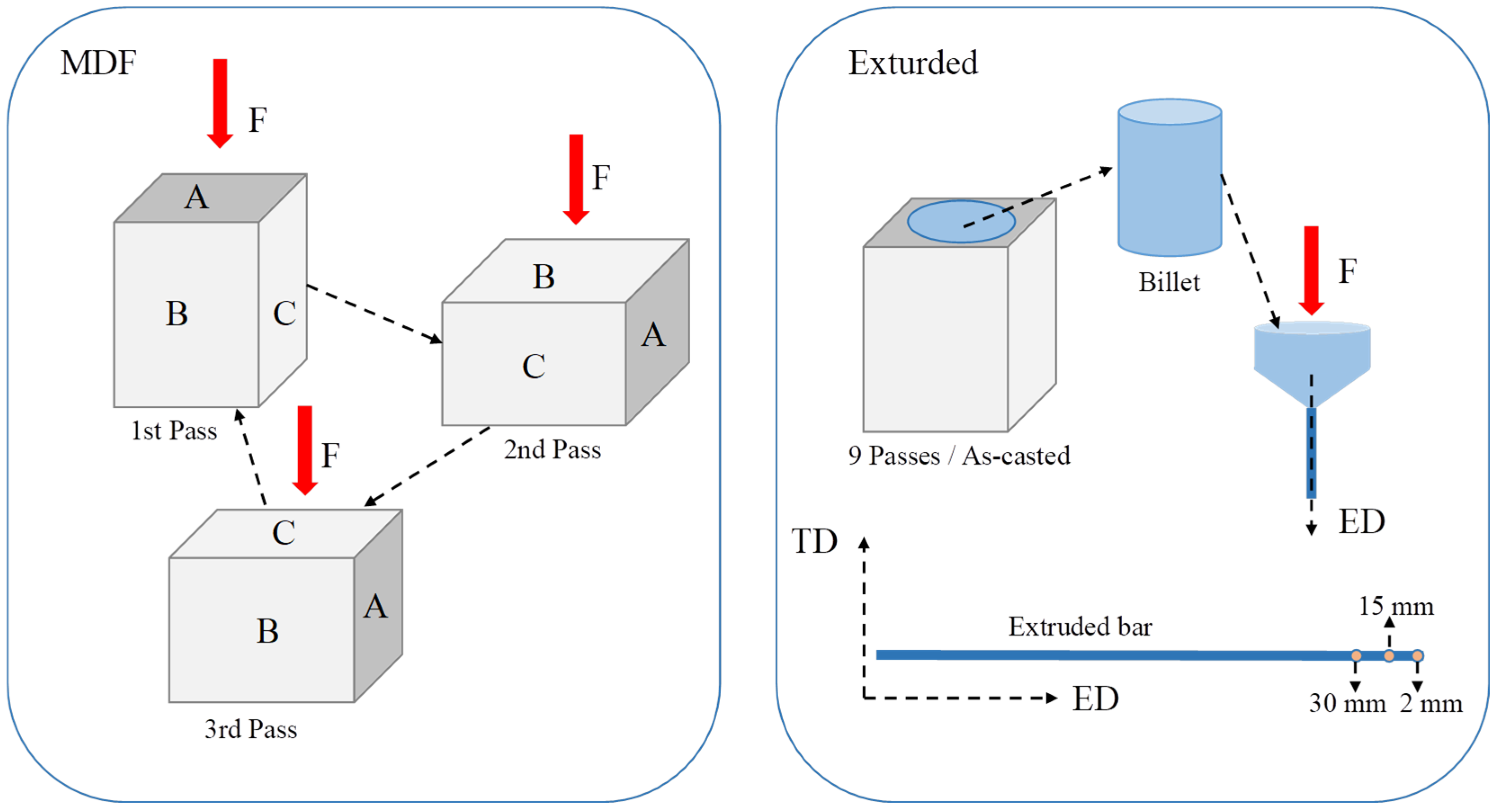
The homogenized ingots were machined into cylindrical billets with dimensions of Φ 32 mm × 50 mm for extrusion. Extrusion was performed at a temperature of 430 °C and a speed of 1 mm/s, with an extrusion ratio of 16:1. To reduce friction, a mixture of graphite and engine oil was applied as a lubricant on the inner surface of the extrusion container. For multi-directional forging (MDF), homogenized samples were prepared into rectangular blocks measuring 40 mm × 45 mm × 50 mm. MDF was conducted on a hydraulic press at 500 °C with a strain rate of 1 s
−1 and a true strain of 0.15 per pass. The first forging was applied on the 40 mm × 45 mm surface. Subsequently, the sample was rotated 90° and forged on the 45 mm × 50 mm surface, followed by another 90° rotation and forging on the 40 mm × 50 mm surface, completing one full deformation cycle. After 9 passes forging, the sample was immediately water-quenched and subsequently used as the extrusion billet under the same extrusion parameters described above. The schematic diagram of MDF and extrusion processes is shown in
Figure 1.
Tensile specimens with a gauge diameter of 5 mm, gauge length of 25 mm, and total length of 75 mm were machined for mechanical testing. Room-temperature tensile tests were performed using an Instron 3369 testing machine (Instron corporation, Boston, MA, USA). Each set of experiments included three parallel samples. For hardness measurements, samples were sequentially ground with 600#, 1200#, and 1500# grit SiC paper, dried, and tested on an HV-10 Vickers hardness tester (Aolong, Shanghai, China) under a load of 3 kg with a dwell time of 30 s. The reported hardness values represent the average of five independent measurements.
Metallographic samples were mechanically ground, polished, and etched for 10~15 s using a solution composed of 4 mL nitric acid, 5 g citric acid, and 96 mL ethanol. For scanning electron microscopy (SEM), samples were prepared following the same grinding and polishing procedure. Microstructural and secondary phase characterization was performed using a FEI Quanta-200 SEM (FEI, Oregon, OR, USA) equipped with an energy dispersive spectroscopy (EDS) system. Electron backscatter diffraction (EBSD) samples were prepared similarly to metallographic specimens. EBSD analysis was conducted using an Oxford detector mounted on a HELIOS NanoLab 600i scanning electron microscope (FEI, Oregon, OR, USA), and data were processed with HKL Channel 5 software (V5.12). Transmission electron microscopy (TEM) samples were first mechanically ground to approximately 200 μm, followed by manual thinning to about 70 μm. Discs of Φ 3 mm were punched and then electropolished using a twin-jet electrolytic polisher (MTP-1) with a solution containing 2.81 g LiCl, 5.91 g Mg(ClO4)2, 265 mL methanol, and 53 mL butyl cellosolve, cooled to −40 °C with liquid nitrogen under a current of 15 mA. TEM observations were conducted on a Tecnai G2 20 microscope (Thermo Fisher Scientific, Oregon, OR, USA).
3. Results
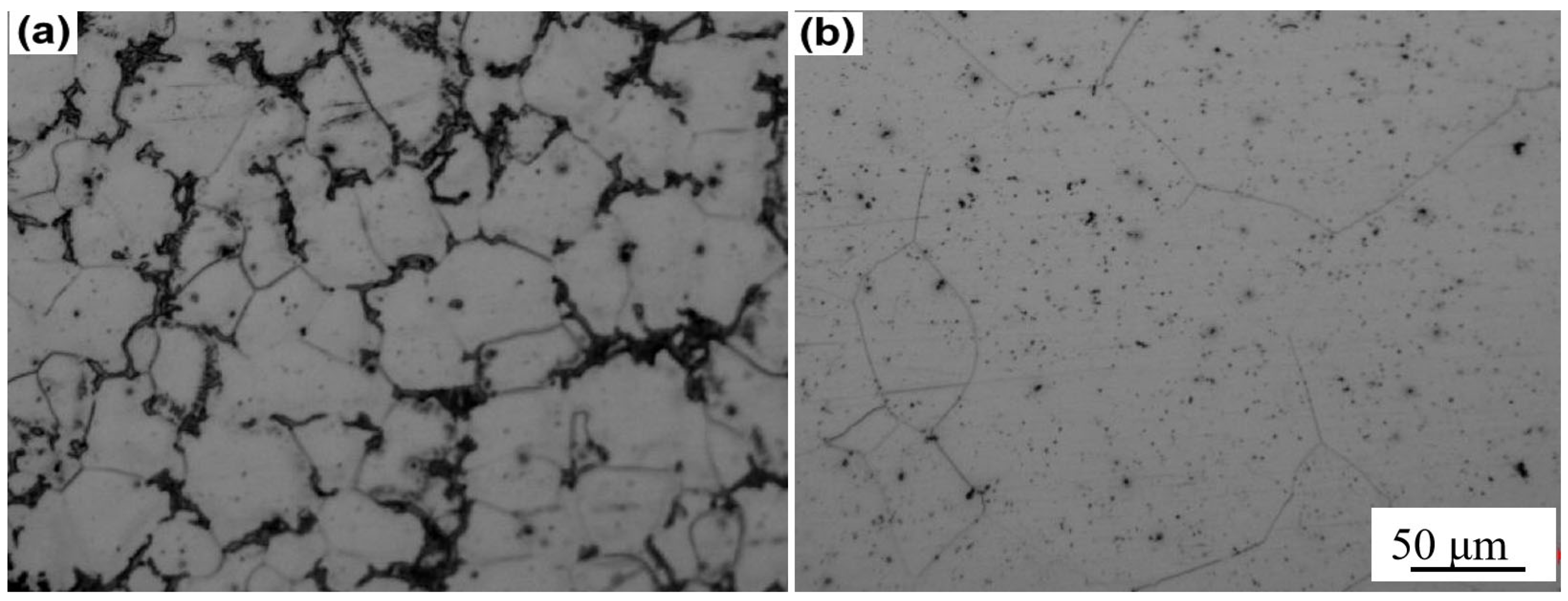
Figure 2 presents the metallographic structures of the Mg-8Gd-4Y-1Nd-0.5Zr alloy. In the as-cast condition, the microstructure is characterized by equiaxed dendrites with an average grain size of approximately 40 μm. Additionally, a significant quantity of intergranular non-equilibrium eutectic phases, exhibiting a network-like morphology, is observed along the grain boundaries. Following solid solution treatment, the majority of these grain boundary eutectic phases dissolve, resulting in their virtual elimination. However, a limited number of blocky second-phase particles persist within the grain interiors. Moreover, a notable grain growth occurs during the treatment, increasing the average grain size to approximately 100 μm.
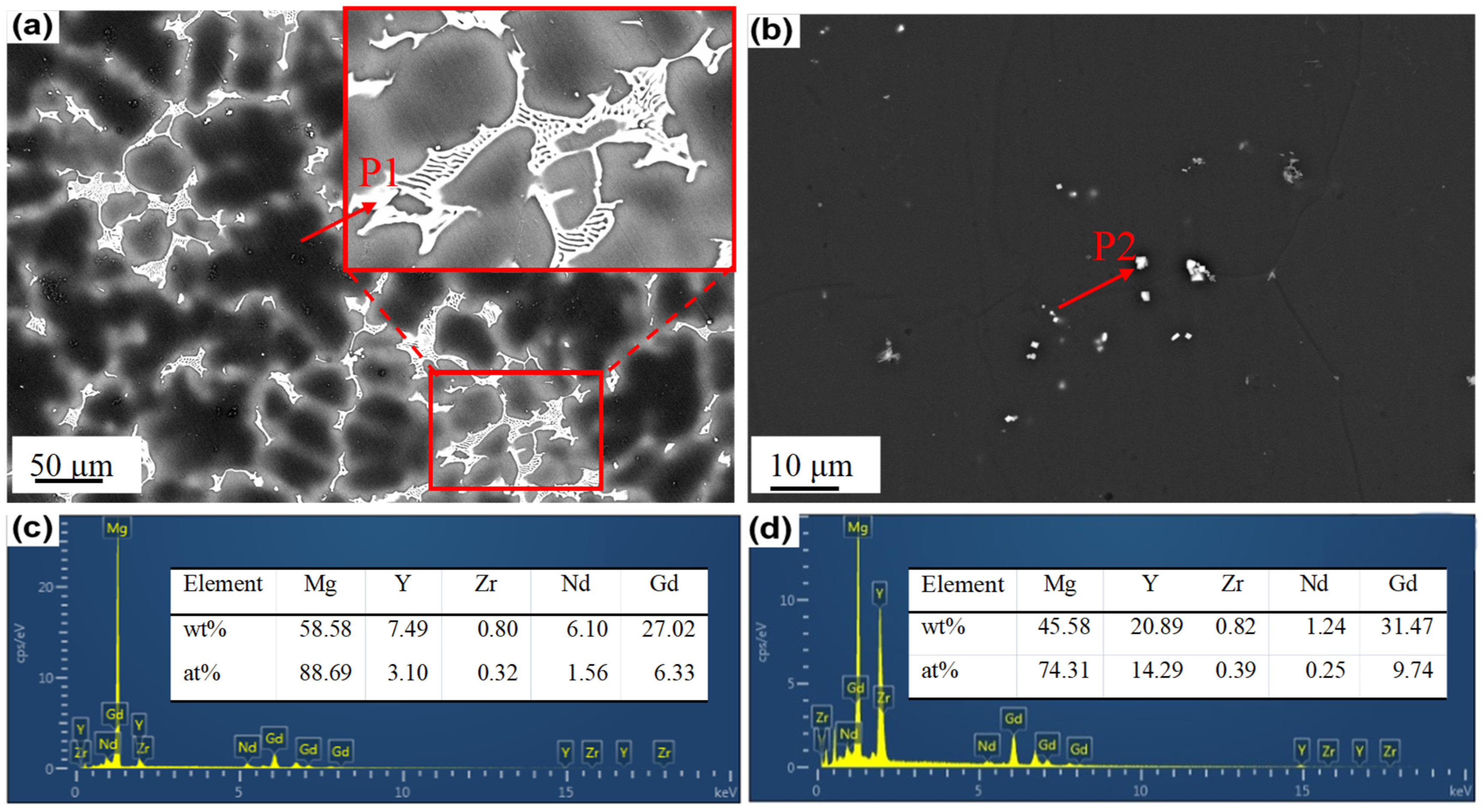
The SEM images and corresponding EDS results of the Mg-8Gd-4Y-1Nd-0.5Zr alloy in both the as-cast and solid-solution states are shown in
Figure 3. As shown in
Figure 3a, the non-equilibrium eutectic phase in the as-cast microstructure exhibits a distinctive “skeletal” morphology at higher magnification (highlighted by the red box). EDS analysis indicates that these phases are primarily enriched with rare earth (RE) elements. Following a solid-solution treatment, the continuous network-like eutectic structure was almost entirely dissolved into the matrix. However, a small number of blocky secondary phases remained undissolved shown in
Figure 3b. EDS analysis confirmed that these residual phases were also RE-rich. The measured atomic ratio of Mg to (Gd and Y) in these particles was approximately 5:1. Given the similar chemical behavior of Gd and Y in magnesium alloys, where these elements can readily substitute for each other in the secondary phase [
29], these phases are identified as Mg
5(Gd,Y).
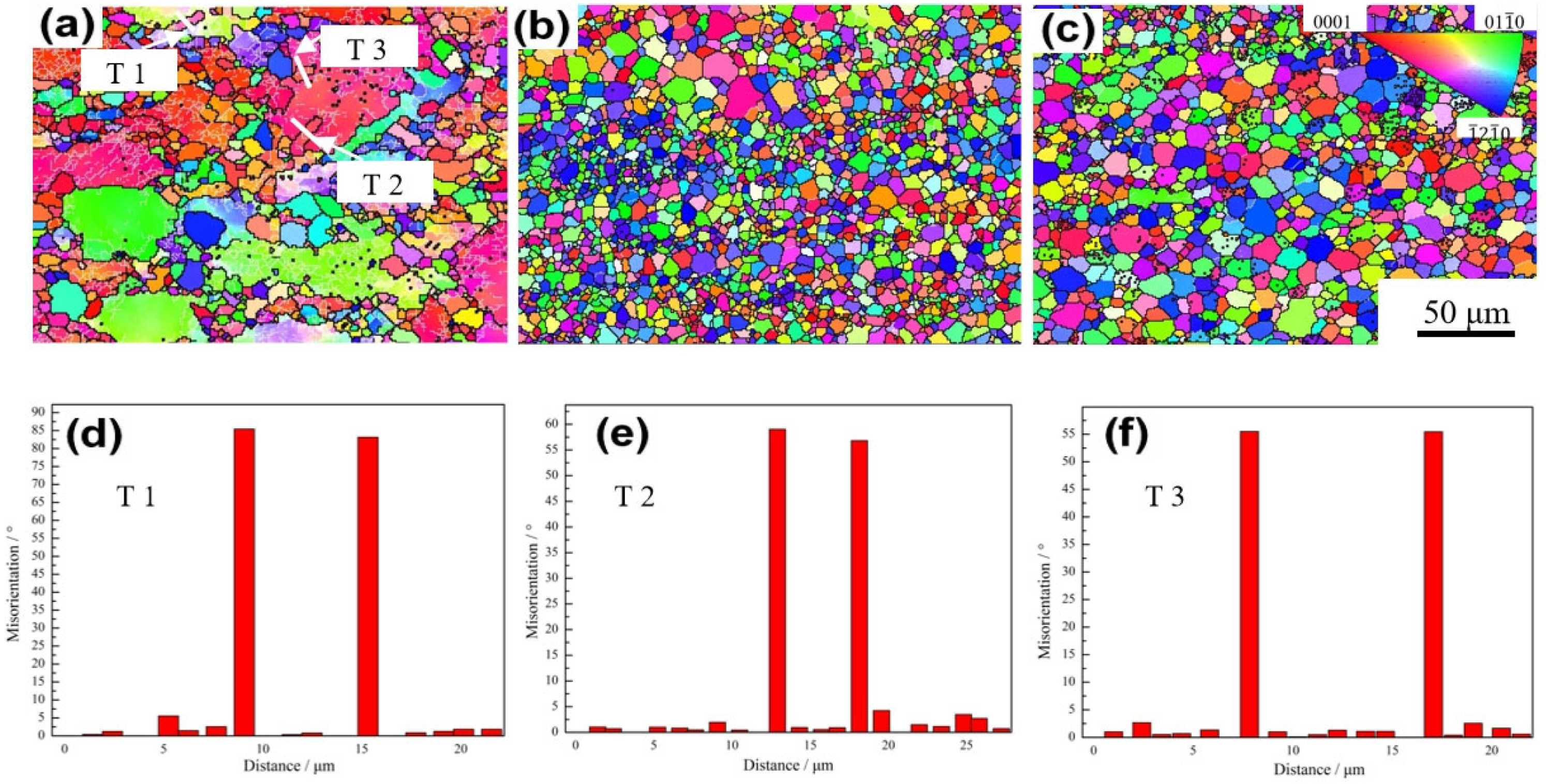
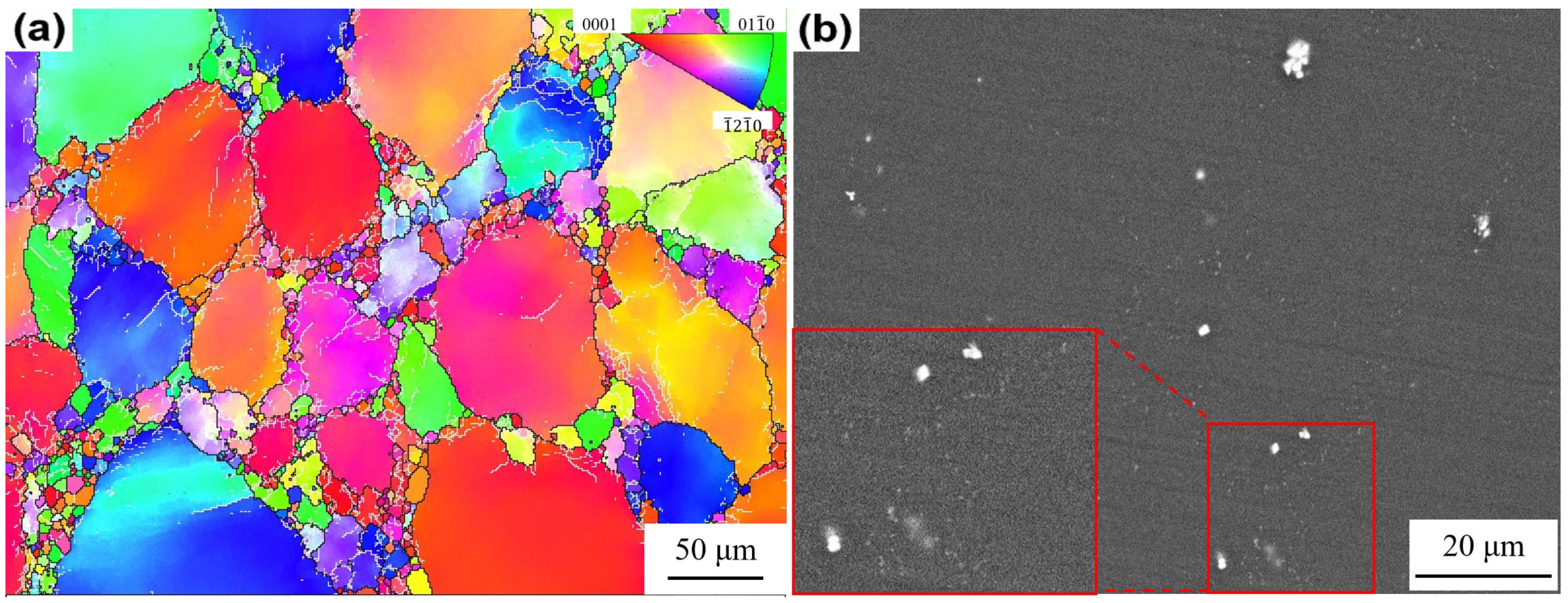
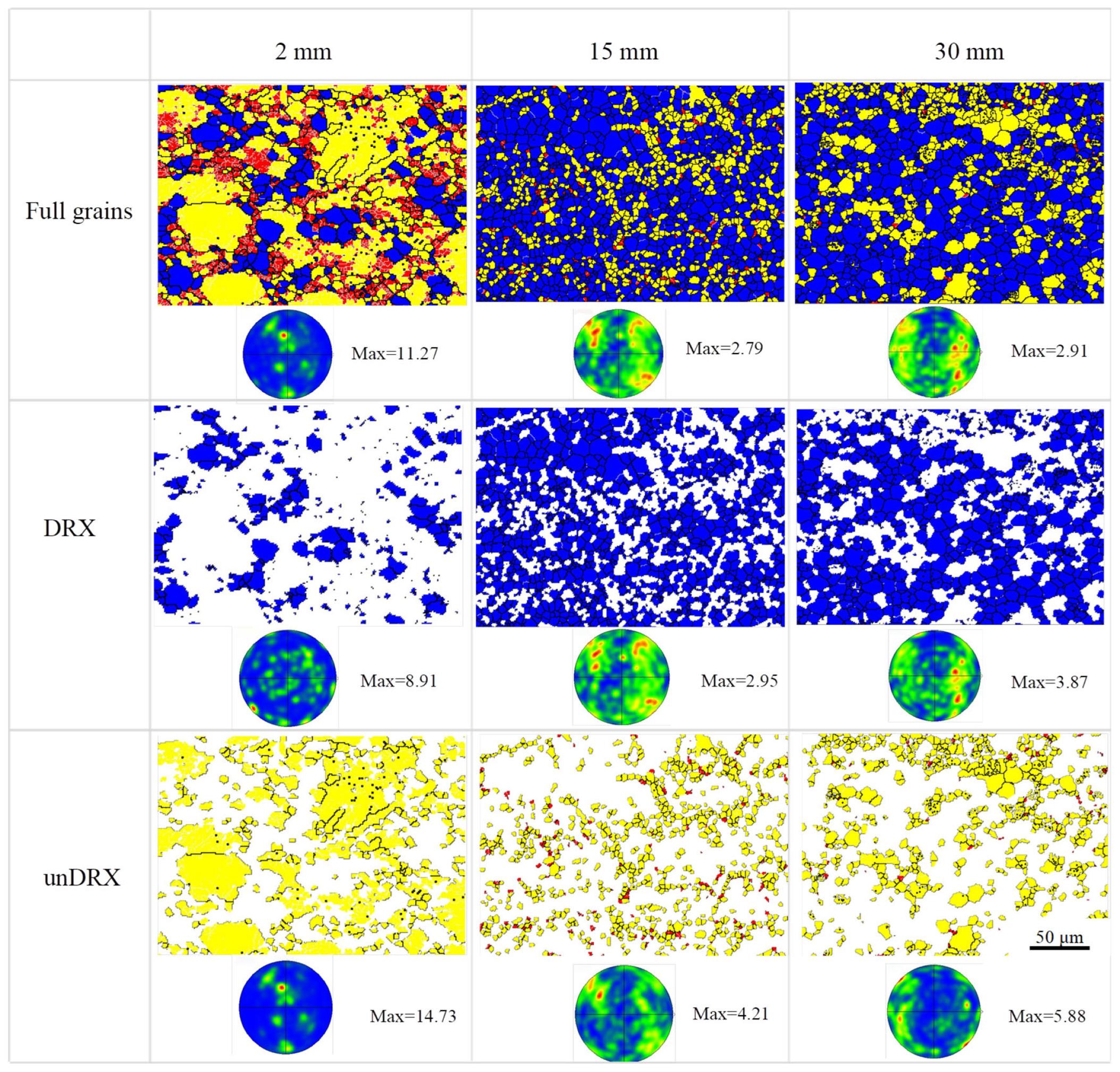
Figure 4a is the EBSD analysis of the Mg-8Gd-4Y-1Nd-0.5Zr alloy after multi-directional forging. As shown, the grain boundaries exhibit a distinct “serrated” morphology following 9 forging passes. This characteristic is attributed to strain induced grain boundary migration, wherein a difference in stored deformation energy between adjacent grains causes originally straight boundaries to bulge toward the grain with higher energy storage, thereby creating a serrated profile and providing favorable conditions for recrystallization. Additionally, fine equiaxed recrystallized grains are observed to be distributed in a chain-like manner along the boundaries of coarse grains. This partially recrystallized microstructure is expected to significantly influence the microstructure and mechanical properties during subsequent extrusion. Combined with SEM observation presented in
Figure 4b, dynamic precipitation is also evident in the alloy during forging. This finding appears inconsistent with the report by Xiao [
30], which indicated that no dynamic precipitation occurs when compression temperature exceeds 450 °C, as alloying elements such as Gd and Y remain in solid solution. Although the initial forging temperature in this study was 500 °C, the temperature of the magnesium billet continuously decreased during multi-pass forging. By the completion of the 9th pass, the billet temperature had dropped to approximately 420 °C. At this lower temperature, Gd and Y atoms exhibit limited solubility in the matrix and can diffuse to form dynamic precipitates.
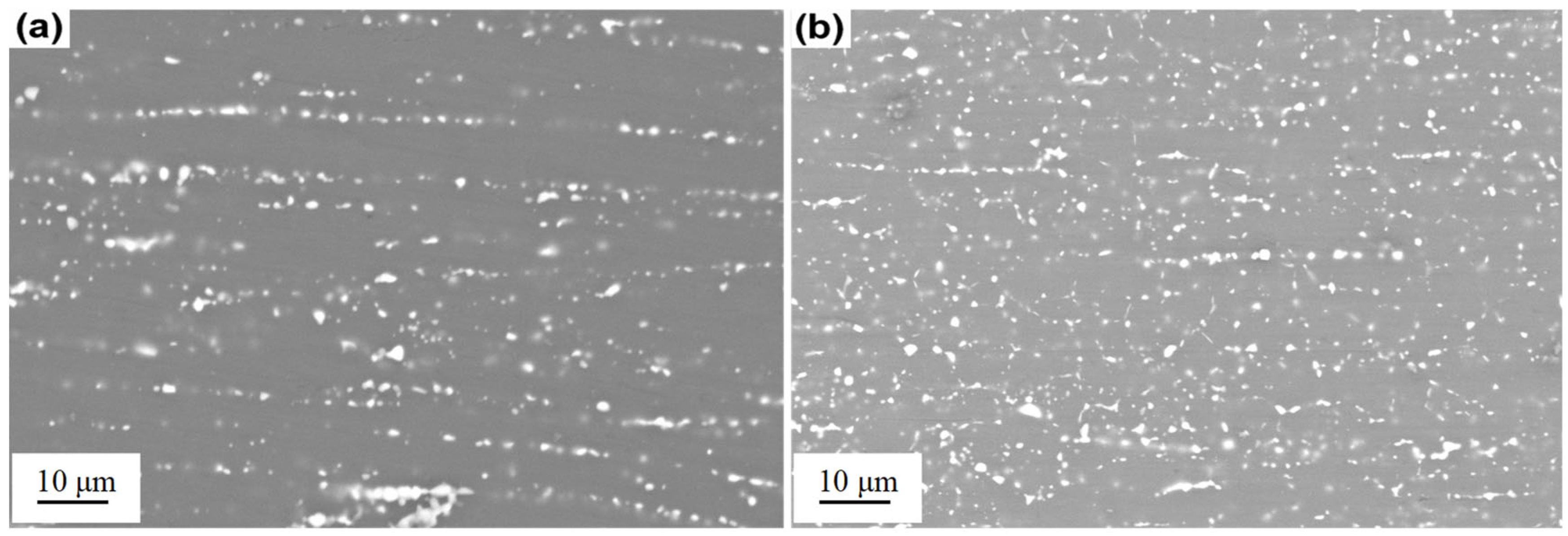
Figure 5 presents the SEM microstructures of the alloy after extrusion alone and MDF followed by extrusion. In both processing conditions, the alloy undergoes extensive plastic deformation, accompanied by significant dynamic precipitation of secondary phases. However, the alloy subjected to MDF prior to extrusion exhibits a considerably higher density of fine precipitates compared to that processed by direct extrusion. With higher imposed strain than forging, extrusion generates a substantially greater dislocation density within the alloy. The combination of this high dislocation density and the elevated extrusion temperature provides both diffusion pathways (dislocation pipes) and the necessary driving force for solute atom diffusion. Consequently, the extrusion deformation promotes more extensive dynamic precipitation than the forging process alone.
In the case of the MDF + extrusion route, the initial MDF step itself introduces a high dislocation density and fine-scale dynamic precipitates into the alloy. This pre-deformed and pre-precipitated microstructure plays a crucial role during the subsequent extrusion. Firstly, the pre-existing high dislocation density provides abundant nucleation sites for new precipitates, significantly enhancing the nucleation rate. Secondly, the fine precipitates from MDF pin dislocations, helping to retain a high dislocation density during extrusion, while their partial dissolution also supplies solute atoms for continuous precipitation. Finally, the well-developed dislocation network significantly accelerates solute diffusion through pipe diffusion mechanisms. Collectively, this “pre-conditioned” microstructure resulting from MDF enables earlier initiation, faster kinetics, and more uniform distribution of dynamic precipitation during the subsequent extrusion. Therefore, the MDF + extrusion processing path ultimately produces a finer and more dispersed precipitate distribution compared to direct extrusion alone.
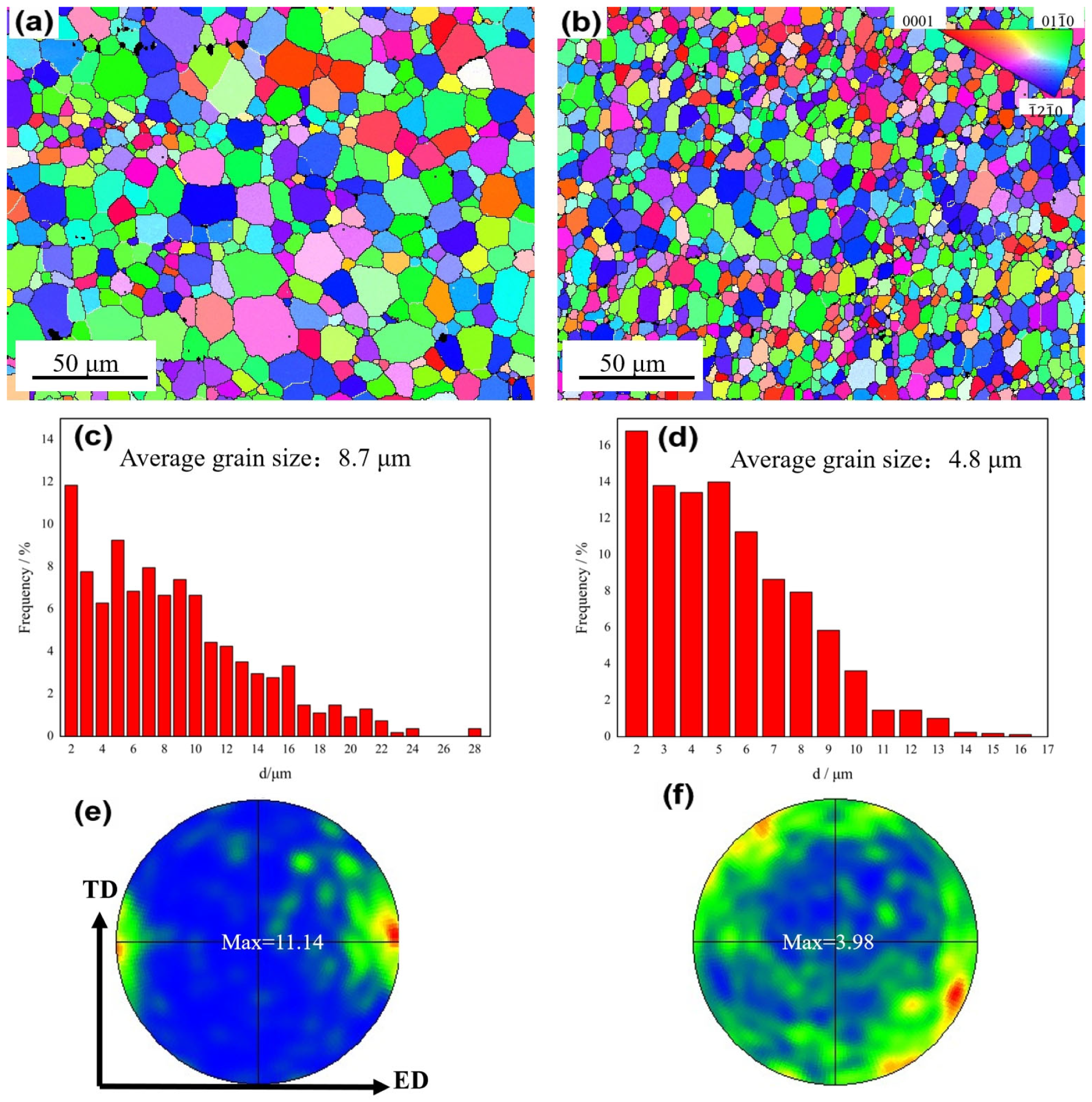
The EBSD analysis of the alloys processed by direct extrusion and MDF + extrusion is presented in
Figure 6. The grains subjected to MDF pretreatment are significantly refined. Statistical analysis of grain size reveals that the directly extruded alloy exhibits a maximum grain size of 28 μm and an average grain size of 8.7 μm. In contrast, the alloy processed by MDF prior to extrusion shows a much finer microstructure, with a maximum grain size of 16 μm and an average grain size of 4.8 μm. Notably, the different thermo-mechanical routes also lead to distinct texture characteristics. As shown in
Figure 6e, the direct extruded alloy displays a texture with {0001} planes oriented perpendicular to the extrusion direction and a maximum texture intensity of 11.14. In comparison, the MDF + extrusion processed alloy exhibits a weakened texture, with the {0001} basal planes tilted approximately 30° away from the extrusion direction and a significantly reduced intensity of 3.98 shown in
Figure 6f.
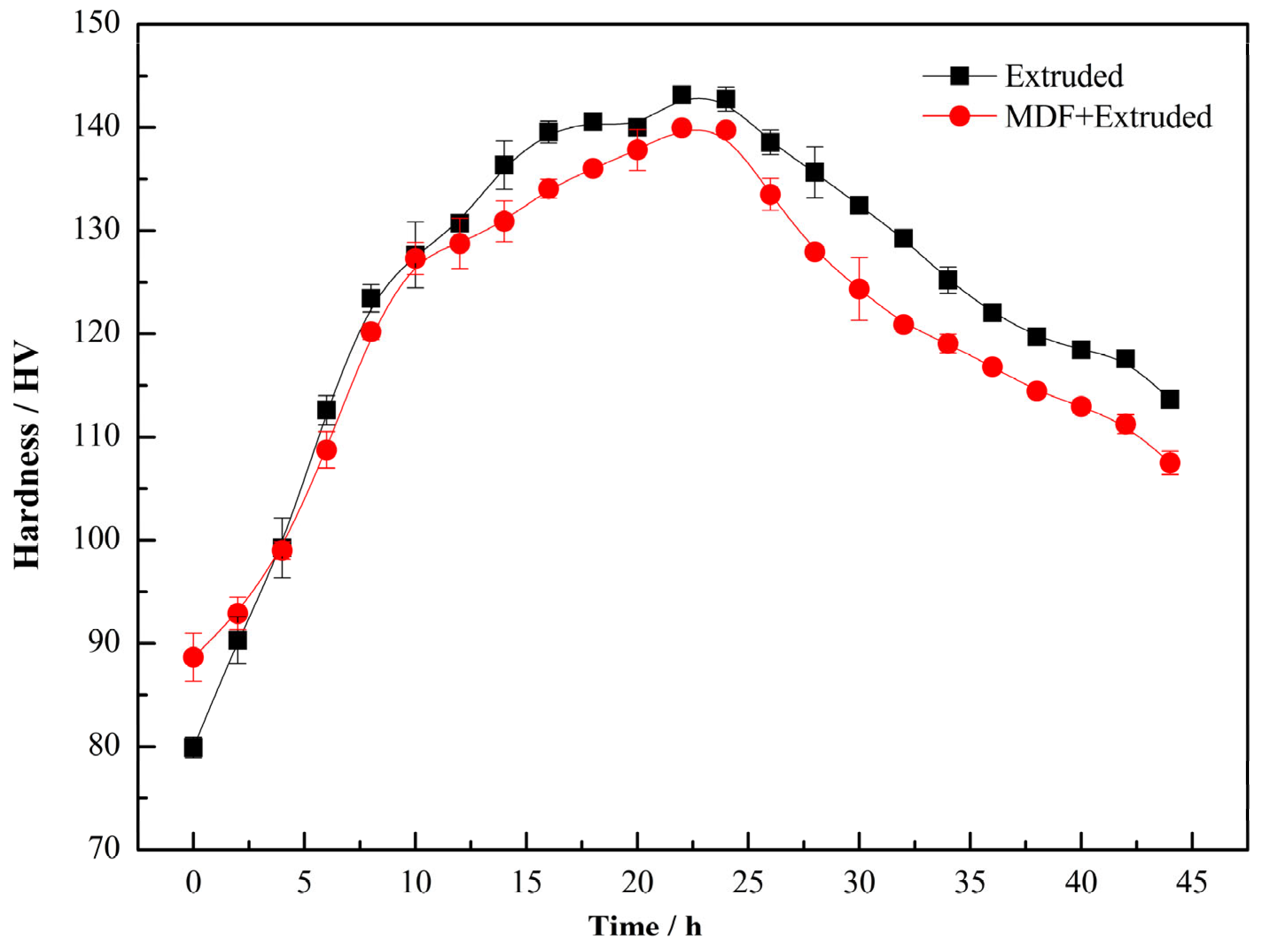
Figure 7 presents the age-hardening curves of the directly extruded and MDF + extrusion alloys at 215 °C. The hardness increases rapidly during the initial aging stage and reaches its peak value at approximately 22 h for both alloys. Further extension of the aging time leads to a decrease in hardness, indicating an over aging. Interestingly, in the as-deformed state prior to aging, the directly extruded alloy exhibits a lower hardness of 79.9 ± 0.99 HV, while the alloy subjected to MDF + extrusion shows a higher initial hardness of 88.65 ± 2.32 HV. During the aging process, the hardness of the directly extruded alloy increases more significantly, reaching a peak hardness of 143.16 ± 0.78 HV at peak aging, which is 3.21 HV higher than that of MDF + extrusion alloy.
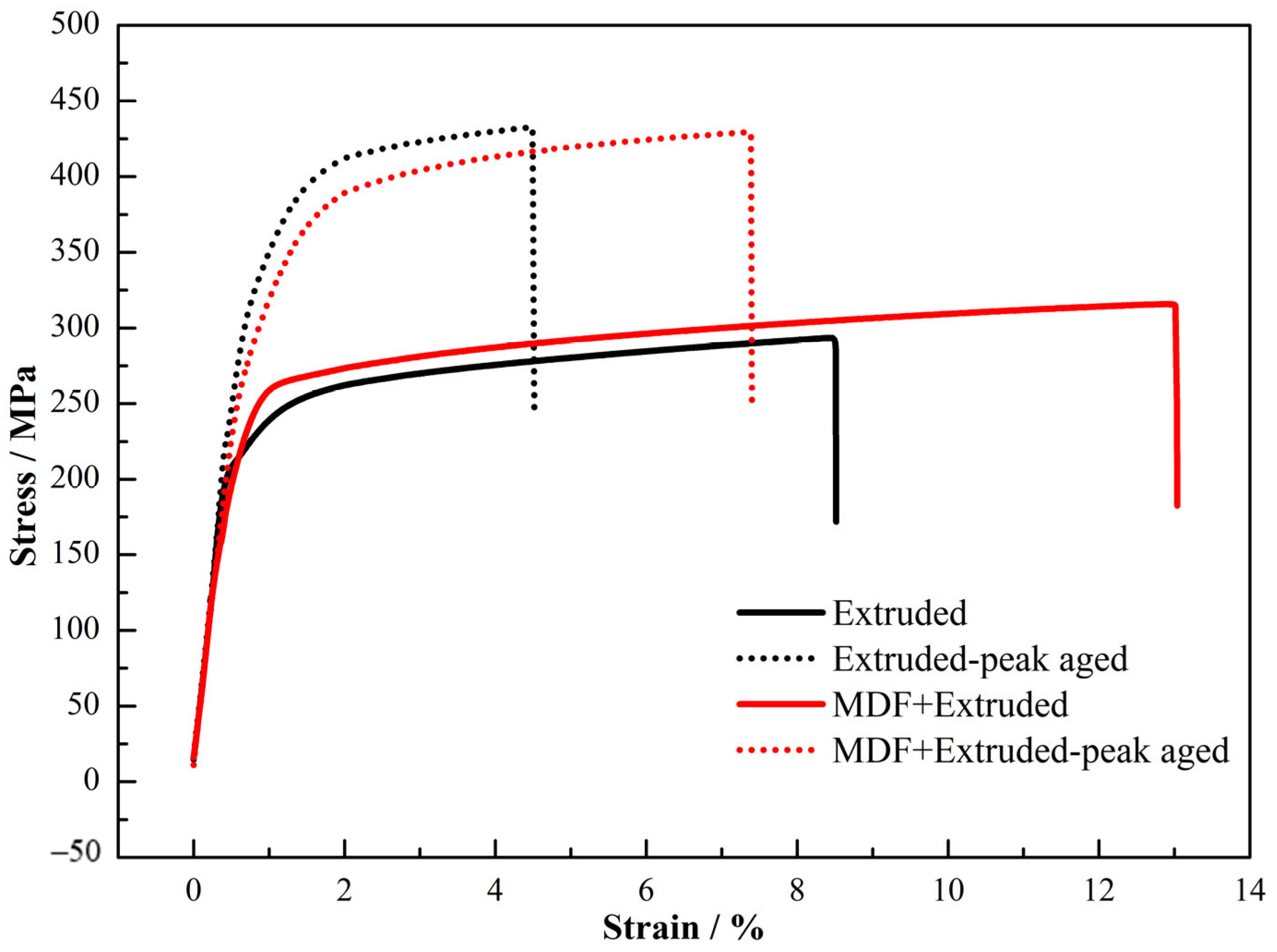
Figure 8 presents the room temperature tensile properties of the alloys processed by extrusion and MDF + extrusion at peak aged state. The tensile strength of MDF + extrusion alloy is 315 ± 2.1 MPa, the yield strength is 228 ± 3.6 MPa, and the elongation is 13.1 ± 1.7% in the as-deformed state. After peak aging treatment, its tensile strength and yield strength increases to 429 ± 3.2 MPa and 323 ± 1.8 MPa, while the elongation decreases to 7.3 ± 1.3%. In comparison, the directly extruded alloy exhibits tensile strength, yield strength and elongation values of 293 ± 2.1 MPa, 211 ± 1.9 MPa, and 8.3 ± 2.2%, respectively, in the unaged condition. Following aging, these values change to 433 ± 2.4 MPa, 332 ± 2.5 MPa, and 4.43 ± 0.9%. Notably, the MDF + extrusion alloy demonstrates superior ductility in both the as-deformed and peak-aged states compared to its directly extruded counterpart. A further comparison reveals that the MDF + extrusion alloy possesses higher strength in the as-deformed condition. However, after aging, its strength becomes slightly lower than that of the directly extruded alloy, which is consistent with the age-hardening curves presented earlier.
As shown in
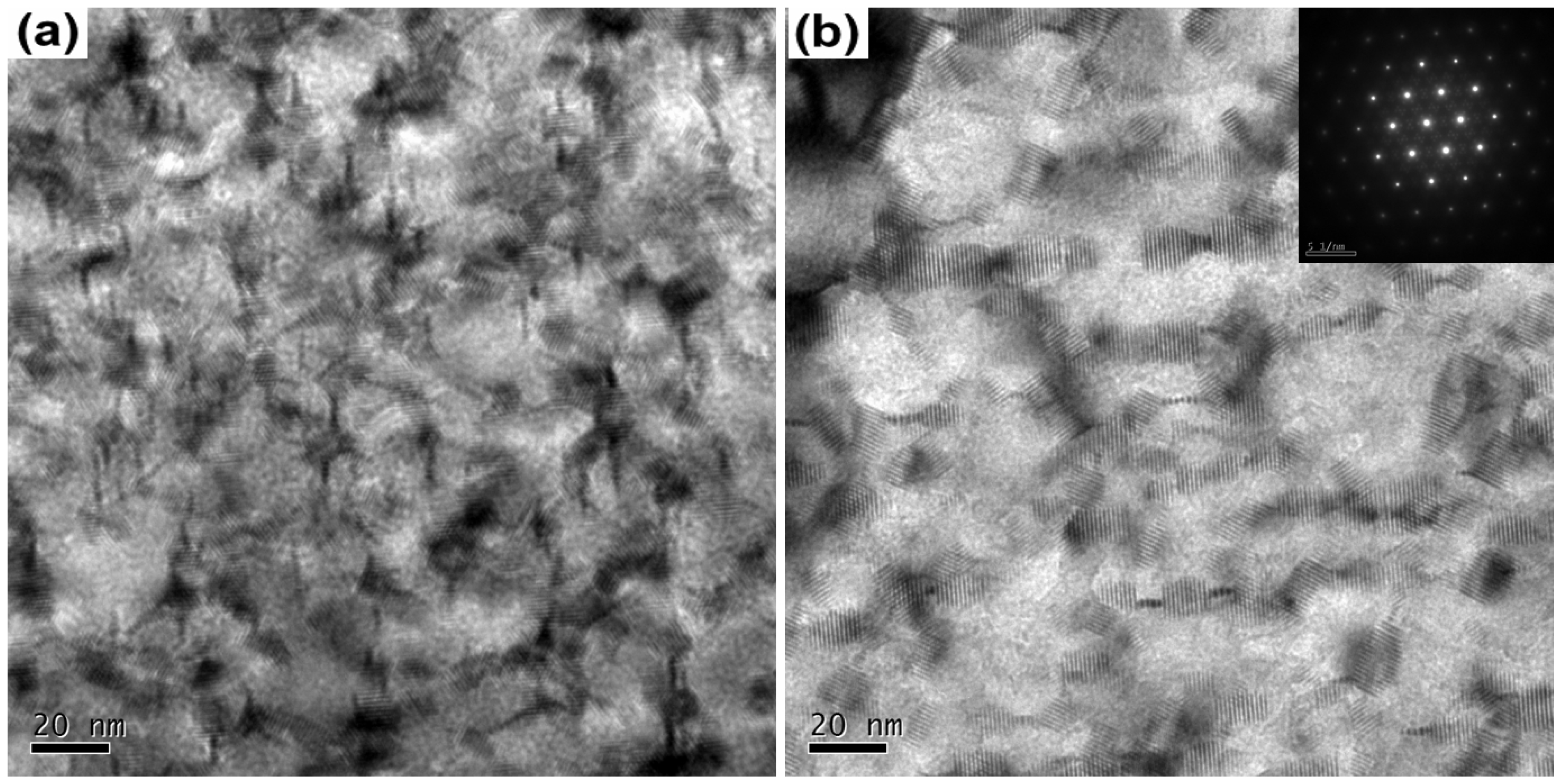
Figure 9, TEM observations reveal a high density of nanometer scale β′ precipitates in both alloys under the peak aged condition. The β′ phase possesses a base centered orthorhombic structure [
31], with lattice parameters of
. Its orientation relationship with the magnesium matrix is defined as
. A comparison of the precipitate characteristics between the directly extruded and the MDF + extruded alloys after peak aging treatment shows no distinct difference in morphology. Both exhibit a characteristic “dumbbell-shaped” composite structure, which consists of a relatively thick ellipsoidal core flanked symmetrically by slender and needle-like extensions. The central ellipsoidal region maintains a coherent or semi-coherent interface with the Mg matrix, while the thin needle-like ends grow along low strain energy crystallographic directions to release long-range elastic strain [
32]. However, differences are observed in terms of precipitate size and number density. In the extruded alloy, the β′ precipitates have an approximate length of 20 nm and width of 5 nm. In contrast, those in the MDF + extruded alloy are coarser, with an average length of about 28 nm and width of about 10 nm. Furthermore, the number density of the β′ precipitates is noticeably lower in the MDF + extruded alloy compared to the extruded counterpart. This difference is attributed to the extensive dynamic precipitation occurring during the multi-directional forging process, which consumes a significant portion of the rare earth solute atoms in the matrix. Consequently, the solid solution supersaturation prior to aging is reduced in the MDF + extruded alloy. During the subsequent peak aging treatment, the lower reserve of available solute atoms leads to a reduced nucleation rate for precipitation hardening phases, resulting in fewer precipitates. This lower nucleation rate also facilitates the migration and aggregation of solute atoms toward fewer precipitate nuclei, thereby promoting precipitate coarsening.
Author Contributions
Conceptualization, L.G. and H.W.; methodology, L.G. and J.C.; software, H.W. and L.F.; formal analysis, L.F. and J.C.; investigation, L.G. and Y.W.; data curation, F.J.; writing—original draft preparation, L.G.; writing—review and editing, F.J.; funding acquisition, L.G., Y.W. and F.J. All authors have read and agreed to the published version of the manuscript.
Funding
This research was funded by Start-up Fund for New Ph.D. Researchers of Suzhou Chien-Shiung Institute of Technology (2022), Science and Technology Project of Baotou, (2025C1008), Natural Science Foundation of the Jiangsu Higher Education Institutions (25KJD460008), Innovative Team for multi-scale material forming and testing technology of aviation components (2023JXKYTD02), Science and Technology Innovation Program of Hunan Province (2023RC3049) and the Taicang Basic Research Program (TC2024JC27).
Data Availability Statement
The original contributions presented in this study are included in the article. Further inquiries can be directed to the corresponding author.
Conflicts of Interest
The authors declare no conflicts of interest.
References
- Zhao, T.; Zhang, Q.; Wang, R.; Wu, J.; Hu, Y.; Jiang, B.; Pan, F. Achieving high strength-ductility synergy in Mg-Gd-Zn-Zr alloy by controlling extrusion processes parameters. Mater. Sci. Eng. A 2024, 916, 147342. [Google Scholar] [CrossRef] [Scilit]
- Yin, S.; Wang, N.; Han, H.; Liu, Z.; Zhang, G.; Guan, R. The Dependence of Electrochemical Behavior and Discharge Performance on the Zn/Gd Ratio of Mg-Li-Zn-Gd Anodes for Mg-Air Batteries. Metals 2024, 14, 1202. [Google Scholar] [CrossRef] [Scilit]
- Chowdhury, T.; Islam, M.; Muhury, A.; Ahmad, S.; Gulshan, F. Study of microstructural characterization & molecular dynamics evolution of temperature and strain rate effect on tensile properties of Mg-Zn-Nd alloy. Mater. Today Commun. 2026, 50, 114496. [Google Scholar]
- Huang, Y.; Pan, H.; Pan, Z.; Zeng, Z.; Tang, W.; Yang, C.; Du, S. Effect of pre-stretching on enhancing yield strength of as-extruded Mg-Sm-Ce based alloy. J. Alloys Compd. 2023, 968, 171869. [Google Scholar] [CrossRef] [Scilit]
- Jin, Z.; Zha, M.; Wang, H.; Ma, J.; Liu, Y. Achieving remarkable enhancement of yield strength and high ductility in a fine-grained Mg-6Zn-0.2Ca alloy via rotated hard-plate rolling. Mater. Des. 2023, 234, 112345. [Google Scholar] [CrossRef] [Scilit]
- Guan, L.; Deng, Y.; Shi, H. Effects of Nd Addition on the Microstructure and Mechanical Properties of Extruded Mg-6Gd-2.5Y-0.5Zr Alloy. J. Mater. Eng. Perform. 2018, 23, 243–252. [Google Scholar] [CrossRef] [Scilit]
- Wang, Z.; Wang, J.; Lin, X.; Feng, L.; Ouyang, L.; Dai, C.; Yang, W.; Huang, W.; Pan, F. Effect of heat treatment on microstructure evolution and strengthening-toughening behavior of high-strength Mg-Gd-Y-Zn-Zr alloy fabricated by wire-arc additive manufacturing. J. Mater. Res. Technol. 2024, 31, 1896–1911. [Google Scholar] [CrossRef] [Scilit]
- Chu, S.; Li, Y.; Xiong, Z.; Liu, P.; Qiu, D.; Zeng, X. Achieving stable coherent pure Y nanoprecipitates in a Mg-Y alloy. Mater. Charact. 2024, 214, 114081. [Google Scholar] [CrossRef] [Scilit]
- Bhattacharyya, J.; Sasaki, T.; Nakata, T.; Hono, K.; Kamado, S.; Agnew, S. Determining the strength of GP zones in Mg alloy AXM10304, both parallel and perpendicular to the zone. Acta Mater. 2019, 171, 231–239. [Google Scholar] [CrossRef] [Scilit]
- Yu, Z.; Huang, Y.; Liu, L.; Shi, K.; Du, B.; Liu, K.; Li, S.; Du, W. New strategy to solve the ambient strength-ductility dilemma in precipitation-strengthened Mg-Gd alloys via Li addition. Scripta Mater. 2022, 220, 114901. [Google Scholar] [CrossRef] [Scilit]
- Xie, H.; Wu, G.; Zhang, X.; Liu, W.; Ding, W. The role of Gd on the microstructural growth and mechanical properties of Mg-3Nd-0.2Zn-0.5Zr alloy. Mater. Charact. 2021, 175, 111088. [Google Scholar] [CrossRef] [Scilit]
- Ding, X.; Zhao, J.; Zhang, L.; Xu, J.; Wang, Q.; Chai, Y.; Yuan, Y.; Jiang, B. Microstructure, mechanical properties, and strengthening mechanisms of extruded Mg-1Nd-1Mn alloy with different Zn. J. Mater. Eng. Perform. 2025, 34, 10990–10998. [Google Scholar] [CrossRef] [Scilit]
- Pan, Y.; Guan, W. Exploring the novel structure, elastic and thermodynamic properties of W3Si silicides from first-principles calculations. Ceram. Int. 2019, 45, 15649–15653. [Google Scholar] [CrossRef] [Scilit]
- Wan, Y.; Tang, B.; Gao, Y.; Tang, L.; Sha, G.; Zhang, B.; Liang, N.; Liu, C. Bulk nanocrystalline high-strength magnesium alloys prepared via rotary swaging. Acta Mater. 2020, 200, 274–286. [Google Scholar] [CrossRef] [Scilit]
- He, C.; Huang, L.; Jiang, B.; Chen, X.; Wang, S.; Bai, S.; Zhao, Q.; Wang, Q.; Huang, G.; Pan, F. Effect of the orthotropic basal texture on the deformation behavior of Mg alloys during the multiaxial stretch forming. J. Alloys Compd. 2025, 1037, 182616. [Google Scholar] [CrossRef] [Scilit]
- Zheng, T.; Hu, Y.; Zhang, C.; Zhao, T.; Jiang, B.; Pan, F.; Tang, A. Uncovering of the formation of rare earth texture and pseudo fiber bimodal microstructure in the high ductility Mg-2Gd-0.4Zr alloy during extrusion. J. Mater. Sci. Technol. 2024, 172, 166–184. [Google Scholar] [CrossRef] [Scilit]
- Agnew, S.; Horton, J.; Yoo, M. Transmission electron microscopy investigation of <c+a> dislocations in Mg and α-solid solution Mg-Li alloys. Metall. Mater. Trans. A 2002, 33, 851–858. [Google Scholar] [CrossRef]
- Guan, L.; Deng, Y.; Luo, A.; Tang, C. Activation of <c+a> slip and enhanced ductility in as-extruded Mg-Gd-Y-Nd alloys through Si addition. Mater. Sci. Eng. A 2021, 804, 140736–140746. [Google Scholar] [CrossRef] [Scilit]
- Zha, M.; Zhang, H.; Zhang, Y. Bimodal microstructure and mechanical properties of AZ91 alloy processed by hard-plate rolling. J. Alloys Compd. 2018, 765, 1228–1236. [Google Scholar] [CrossRef] [Scilit]
- Shi, K.; Li, B.; Yu, Z.; Du, B.; Liu, K.; Du, W. Microstructure and mechanical performance of Mg-Gd-Y-Nd-Zr alloys prepared via pre-annealing, hot extrusion and ageing. J. Alloys Compd. 2023, 931, 167476. [Google Scholar] [CrossRef] [Scilit]
- Wu, Z.; Nakata, T.; Guo, E.; Xu, C.; Pan, H.; Wang, X.; Shi, H.; Li, X.; Kamado, S.; Geng, L. Unusual texture evolution in extruded AZ31 Mg alloy plates with bimodal grain structures. J. Mag. Alloys 2025, 13, 4933–4949. [Google Scholar] [CrossRef] [Scilit]
- Zhang, Y.; Rong, W.; Wu, Y.; Peng, L. Achieving ultra-high strength in Mg-Gd-Ag-Zr wrought alloy via bimodal-grained structure and enhanced precipitation. J. Mater. Sci. Technol. 2020, 54, 160–170. [Google Scholar] [CrossRef] [Scilit]
- Heczel, A.; Akbaripanah, F.; Salevati, M.; Mahmudi, R.; Vida, Á.; Gubicza, J. A comparative study on the microstructural evolution in AM60 alloy processed by ECAP and MDF. J. Alloys Compd. 2018, 763, 629–637. [Google Scholar] [CrossRef] [Scilit]
- Li, Z.; Nie, H.; Zhang, H.; Yang, S.; Zheng, L.; Chen, H.; Liang, W. Effect of Initial Microstructure on Twinning, Dynamic Recrystallization Behaviors, and Mechanical Properties of Pre-twinned AZ31 Mg Sheets. Metall. Mater. Trans. A 2025, 56, 991–1006. [Google Scholar] [CrossRef] [Scilit]
- Liss, K.; Han, J.; Blankenburg, M.; Lienert, U.; Harjo, S.; Kawasaki, T.; Xu, P.; Yukutake, E.; Kawasaki, M. Recrystallization of bulk nanostructured magnesium alloy AZ31 after severe plastic deformation: An in situ diffraction study. J. Mater. Sci. 2024, 59, 5831–5853. [Google Scholar] [CrossRef] [Scilit]
- Tang, C.; Cui, L.; Jiang, H.; Liu, W.; Liu, X.; Li, H. The role of initial grain size on bimodal-grained microstructure and mechanical properties of an extruded Mg-Gd-Y-Nd-Zr alloy. J. Mater. Res. Technol. 2023, 23, 4663–4677. [Google Scholar] [CrossRef] [Scilit]
- Cheng, M.; Wu, X.; Zhang, Z. Study of the Dynamic Recrystallization Behavior of Mg-Gd-Y-Zn-Zr Alloy Based on Experiments and Cellular Automaton Simulation. Metals 2024, 14, 570. [Google Scholar] [CrossRef] [Scilit]
- Yuan, M.; Zhang, J.; Deng, Y.; Guo, X.; Guan, L. Mechanism of Ductility Enhancement of the Mg-8Gd-4Y-1Nd-0.5Si Alloy by Multi-Directional Forging Process before Extrusion. Met. Mater. Int. 2023, 29, 1323–1333. [Google Scholar] [CrossRef] [Scilit]
- Yu, Z.; Huang, Y.; Qiu, X.; Yang, Q.; Sun, W.; Tian, Z.; Zhang, D.; Meng, J. Fabrication of magnesium alloy with high strength and heat-resistance by hot extrusion and ageing. Mater. Sci. Eng. A 2013, 578, 346–353. [Google Scholar] [CrossRef] [Scilit]
- Xiao, H.; Tang, B.; Liu, C. Dynamic precipitation in a Mg-Gd-Y-Zr alloy during hot compression. Mater. Sci. Eng. A 2015, 645, 241–247. [Google Scholar] [CrossRef] [Scilit]
- Honma, T.; Ohkubob, T.; Hono, K. Chemistry of nanoscale precipitates in Mg-2.1Gd-0.6Y-0.2Zr (at. %) alloy investigated by the atom probe technique. Mater. Sci. Eng. A 2005, 395, 301–306. [Google Scholar] [CrossRef] [Scilit]
- Nie, J. Precipitation and Hardening in Magnesium Alloys. Metall. Mater. Trans. A 2012, 43, 3891–3939. [Google Scholar] [CrossRef] [Scilit]
- Orowan, E. Symposium on Internal Stress in Metals and Alloys; Institute of Metals: London, UK, 1948; pp. 451–453. [Google Scholar]
- Yin, H.; Wen, K.; Li, Z.; Li, X.; Li, Y.; Yan, L.; Yan, H.; Yu, M.; Zhang, Y.; Xiong, B. Investigation on precipitate behavior and mechanical properties of Al-Zn-Mg-Cu alloys with various Zn/Mg ratios. J. Mater. Res. Technol. 2024, 33, 5769–5783. [Google Scholar] [CrossRef] [Scilit]
- Bhattacharyya, J.; Wang, F.; Stanford, N.; Agnew, S. Slip mode dependency of dislocation shearing and looping of precipitates in Mg alloy WE43. Acta Mater. 2018, 146, 55–62. [Google Scholar] [CrossRef] [Scilit]
- Wen, K.; Fan, Y.; Wang, G. Aging behavior and precipitate characterization of a high Zn-containing Al-Zn-Mg-Cu alloy with various tempers. Mater. Des. 2016, 101, 16–23. [Google Scholar] [CrossRef] [Scilit]
- Della, N.; Kalácska, S.; Casari, D. {1012} twinning mechanism during in situ micro-tensile loading of pure Mg: Role of basal slip and twin-twin interactions. Mater. Des. 2021, 197, 109206–109221. [Google Scholar] [CrossRef] [Scilit]
- Yin, D.; Boehlert, C.; Long, L. Tension-compression asymmetry and the underlying slip/twinning activity in extruded Mg-Y sheets. Int. J. Plast. 2021, 136, 102878–102898. [Google Scholar] [CrossRef] [Scilit]
- Zhao, L.; Zhang, M.; Wang, J. Effects of initial grain size and orientation on the twin behavior in ZK60 Mg alloy. Mater. Charact. 2020, 167, 110496–110502. [Google Scholar] [CrossRef] [Scilit]
- Lu, S.; Wu, D.; Chen, R. The effect of twinning on dynamic recrystallization behavior of Mg-Gd-Y alloy during hot compression. J. Alloys Compd. 2019, 803, 277–290. [Google Scholar] [CrossRef] [Scilit]
- Hao, M.; Cheng, W.; Wang, L. Texture evolution induced by twinning and dynamic recrystallization in dilute Mg-1Sn-1Zn-1Al alloy during hot compression. J. Mag. Alloys 2020, 8, 899–909. [Google Scholar] [CrossRef] [Scilit]
- Wang, Y.; Huang, J. The role of twinning and untwinning in yielding behavior in hot-extruded Mg-Al-Zn alloy. Acta Mater. 2007, 55, 897–905. [Google Scholar] [CrossRef] [Scilit]
- Zhang, K.; Shao, Z.; Jiang, J. Effects of twin-twin interactions and deformation bands on the nucleation of recrystallization in AZ31 magnesium alloy. Mater. Des. 2020, 194, 108936–108948. [Google Scholar] [CrossRef] [Scilit]
- Liu, Y.; Li, Y.; Zhang, H. Influence of twinning-induced recrystallization on texture evolution in a high strain rate compressed Mg-Zn alloy. Mater. Charact. 2020, 162, 110192–110201. [Google Scholar] [CrossRef] [Scilit]
- Jin, Z.; Cheng, X.; Zha, M. Effects of Mg17Al12 second phase particles on twinning-induced recrystallization behavior in Mg-Al-Zn alloys during gradient hot rolling. J. Mater. Sci. Technol. 2019, 35, 2017–2026. [Google Scholar] [CrossRef] [Scilit]
- Zhang, W.; Liu, X.; Ma, J.; Wang, W.; Chen, W.; Liu, Y.; Yang, J. Evolution of microstructure and mechanical properties of ZK60 magnesium alloy processed by asymmetric lowered-temperature rolling. Trans. Nonferrous Met. Soc. China 2022, 32, 2877–2888. [Google Scholar] [CrossRef] [Scilit]
- Jiang, J.; Godfrey, A.; Liu, W.; Liu, Q. Identification and analysis of twinning variants during compression of a Mg-Al-Zn alloy. Scripta Mater. 2008, 58, 122–125. [Google Scholar] [CrossRef] [Scilit]
- Yu, Z.; Peng, B.; Liu, Y.; Li, Z.; Du, W. Improving the strength-ductility synergy of precipitation-strengthened Mg-Nd alloys by Li addition. J. Alloys Compd. 2025, 1037, 182347. [Google Scholar] [CrossRef] [Scilit]
| Disclaimer/Publisher’s Note: The statements, opinions and data contained in all publications are solely those of the individual author(s) and contributor(s) and not of MDPI and/or the editor(s). MDPI and/or the editor(s) disclaim responsibility for any injury to people or property resulting from any ideas, methods, instructions or products referred to in the content. |