


Abstract
Bronze (Cu-Sn) alloys have long been used as the standard material for constructing temple bells because of their superior strength and acoustic properties. However, due to the rising cost of tin, alternative materials for the production of temple bells have been sought after in both academia and industry. Cu-Si alloys containing 2.0, 4.0, 6.0, and 8.0 wt% Si were fabricated by casting and evaluated in terms of their mechanical, structural and acoustic properties compared with a conventional Cu-15.5 wt% Sn alloy. Tensile strength, yield strength, elastic modulus, impact toughness, and hardness were measured alongside natural frequency and damping ratio. The results show that increasing Si content up to 6.0 wt% leads to enhanced strength, increased natural frequency, and reduced damping ratio, while Si content of 8.0 wt% results in brittle microstructural features and degraded performance. Overall, Cu-6.0 wt% Si exhibited mechanical properties superior to or comparable with Cu-15.5 wt% Sn alloy, alongside a higher-pitched, longer-lasting sound.
1. Introduction
Temple bells are percussion instruments cast and used in ritual worship throughout East and Southeast Asia. Although durability and machinability are often prioritized for general industrial castings, for temple bells, acoustic characteristics such as tone quality and resonance are prioritized instead. These acoustic characteristics are closely related to the physical properties of the bell material, which include factors such as density [1], elastic modulus [2], strength [3], thickness [4], geometry [5], and surface finish [6]. Density and elasticity affect sustain and resonance frequencies, while surface roughness and geometric differences affect scattering and modal behavior [7,8,9].
The quality of temple bell acoustics is evaluated by the analysis of acoustic characteristics such as damping ratio and frequency, which are ultimately determined by the microstructure and composition of the casting alloy [10,11]. Material selection is thus extremely important in bell fabrication. Among the materials commonly used in bell production, bronze is often preferred among bell materials due to its clear, long-lasting resonance and its superior physical properties [12]. Adding tin (Sn) to copper (Cu) increases strength as well as preventing deformation and the distortion of sound under stress [13]. The tin content used in bell casting is particularly high, with reported bell bronzes spanning ~13–24 wt% Sn, much higher than the 10 wt% Sn or less often found in industrial bronzes; the higher tin content increases strength and reduces damping, allowing resonance to persist longer. However, when the Sn content exceeds 20%, the bronze becomes brittle, making the bell susceptible to fracturing [14].
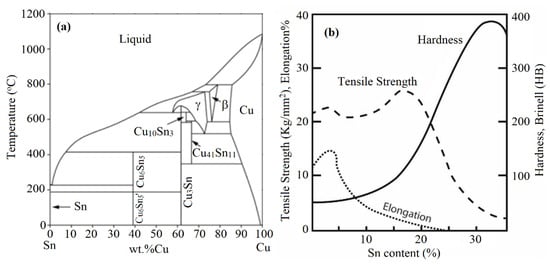
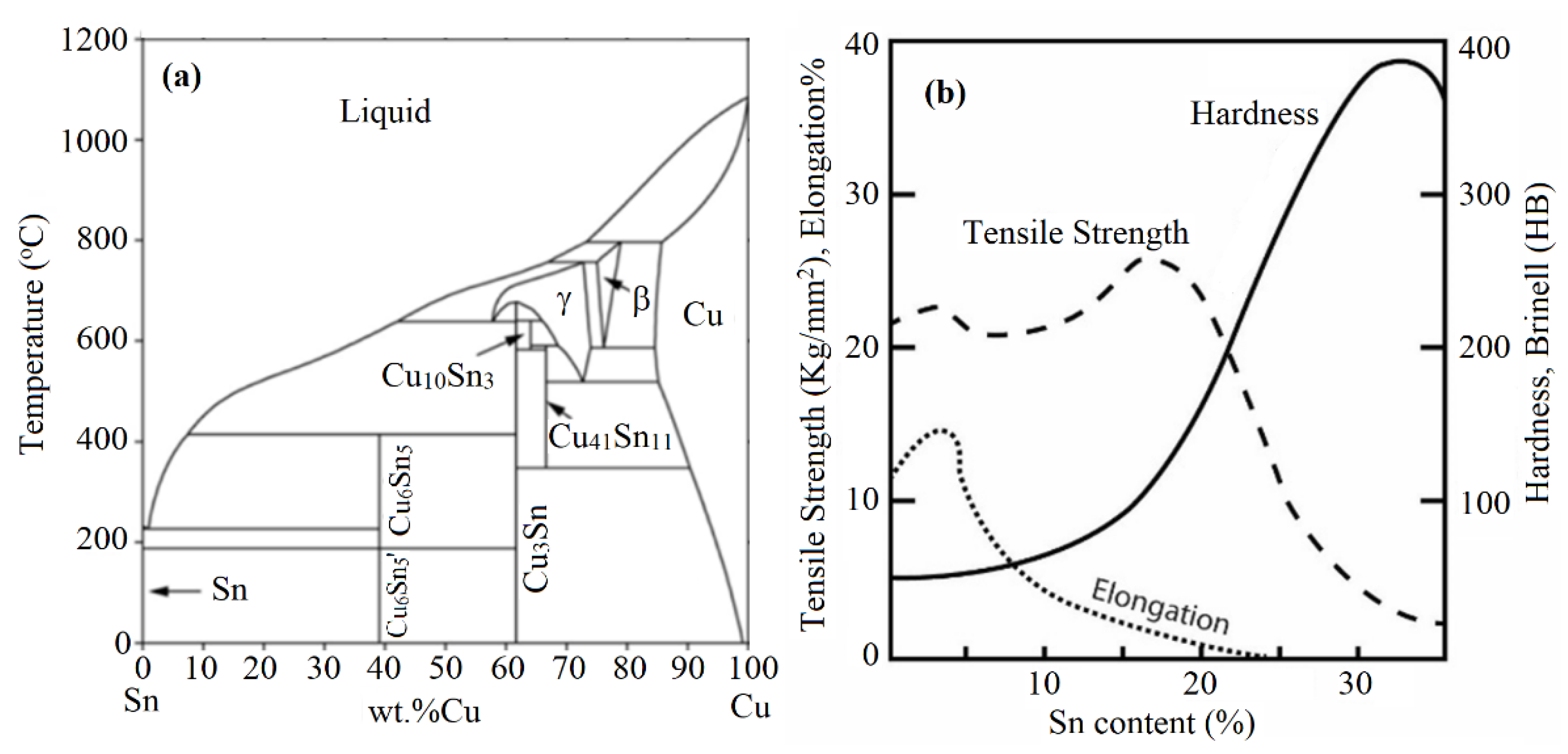
The microstructure of bronze consists of an α solid solution phase and an α+δ eutectoid phase, which are known to be influenced by both Sn content and the casting and cooling conditions. Here, the δ phase is a brittle intermetallic compound, Cu31Sn8. From the Cu-Sn phase diagram shown in Figure 1a, it can be seen that other intermetallic compound phases such as Cu6Sn5 and Cu3Sn can also form [15]. Since these intermetallic compounds can cause overall brittleness and crack formation during long-term use, minimizing their formation helps to maintain mechanical integrity and stable acoustic behavior [16].
Figure 1.
Cu-Sn binary phase diagram (a) and mechanical property of bronze castings (b).
As shown in Figure 1b, the mechanical properties of bronze castings exhibit maximum tensile strength at 17% Sn, maximum elongation at 4–5% Sn, and maximum hardness at 32% Sn [17]. In general, higher tensile strength and hardness are seen as desirable for bell materials, which can contribute to resistance against deformation and favorable resonance behavior [18]; however, when the Sn content exceeds 20%, although hardness increases, brittleness appears, resulting in low impact resistance and segregation during solidification, which can hinder microstructural uniformity [19].
However, tin is among the more expensive metals, and the tin content acts as a major factor increasing the manufacturing cost of bells. As of December 2025, LME-reported tin prices were approximately $40–$44 per kg (converted from USD/tonne), indicating substantial cost sensitivity for tin-based bell bronzes [20]. This motivates interest in lower-cost alternative bell alloys as alternatives to traditional Cu-Sn bronze alloys.
Prior studies on bell bronze and percussion-instrument alloys show that elastic stiffness and damping properties strongly influence vibrational responses, while microstructure and casting conditions can also affect acoustic metrics [21,22]. In addition, bell geometry and mass distribution have been demonstrated to strongly influence modal frequencies and timbre [9]. The present work focuses on isolating composition-driven effects using standardized alloy specimens, and, as such, full-scale bell geometry effects are omitted from this study and are left for future work.
While the previous literature does explore the microstructure and physical properties of other Cu alloys, such as nickel–bronze and cobalt–bronze [23,24], there has been relatively little research into the acoustic and physical properties of copper–silicon (Cu-Si) alloys. Accordingly, this study focuses on the viability of Cu-Si alloys as possible alternatives to Cu-Sn alloys. Cu-Si alloys containing 2.0, 4.0, 6.0, and 8.0 wt% Si were fabricated by casting and compared with a Cu-15.5 wt% Sn alloy in terms of castability, mechanical properties (tensile/yield strength, elastic modulus, impact toughness, and hardness), microstructure, and acoustic characteristics (natural frequency and damping ratio).
2. Materials and Methods
2.1. Alloy Formation
In preliminary experiments in which casting specimens were fabricated by increasing the Si content from 2.0 wt% in increments of 2.0 wt%, high brittleness appeared at Si contents of 8.0 wt% and above. Machining at 8.0 wt% Si was inconsistent, while compositions above 8.0 wt% Si could not be machined reliably. For this reason, the composition range of the Cu-Si alloy system was set to 4 compositions of 2.0, 4.0, 6.0, and 8.0 wt%.
Alloys were created via a standard diesel-fired crucible furnace. The crucible was preheated to 800 °C, the alloying was then performed by first melting Cu and then adding metallic Si. After heating the molten alloy to 1200 °C, the alloy was degassed by N2 at a melt temperature of 1100 °C for approximately 5 min and then poured at a temperature of 1050 °C into the respective sand molds, the details of which are specified in subsequent subsections. The alloy was then solidified by open-air cooling after casting.
In order to achieve complete alloying of the two metals, a master alloy was prepared prior to specimen casting. The master alloy was prepared with the composition Cu-8.0 wt% Si, which has the highest Si content, and cast into an ingot form; the remaining compositions were created by diluting the master alloy with pure copper until the specimens matched each target composition. The number of specimens per composition for each test, as well as the testing standards are specified in Section 2.2, Section 2.3 and Section 2.4. The compositions of the alloys were later verified via SEM imaging and EDS analysis, as described in Section 3.3. Electrolytic copper was purchased from Agne Metal Co., Ltd., Gimpo, Gyeonggi-do, Republic of Korea, while metallic Si with model number 3303 was purchased from Sejin Metal Co., Ltd, Ulju-gun, Ulsan, Republic of Korea.
2.2. Mechanical Testing
In order to analyze the mechanical properties of Cu-Si alloys, fluidity, tensile strength, yield strength, elastic modulus, impact toughness, and hardness were measured using the following methods.
2.2.1. Fluidity
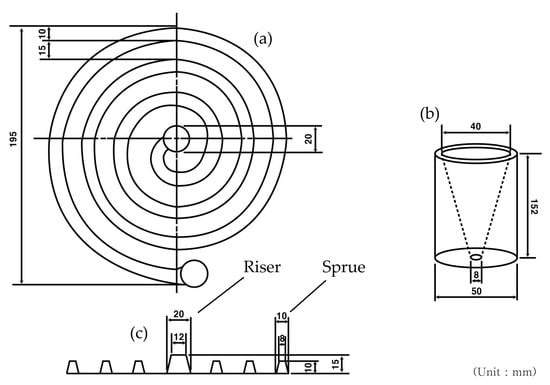
To evaluate fluidity, a spiral fluidity test of Cu-Si alloys was conducted by measuring the filled length of a spiral sand mold, in line with AFS Standard Fluidity Spiral testing standards. Five molds with a 10 mm by 10 mm cross-section and a maximum length of 1200 mm were prepared (Figure 2), and each composition of Cu-Si alloy, along with a reference Cu-15.5 wt% Sn alloy, was melted and poured once per composition at 1100 °C under identical conditions. Each molten alloy’s final travel distance after solidification was recorded as a measurement of fluidity.
Figure 2.
Main schematic diagram of the spiral fluidity mold, with (a) main body of spiral cavity, (b) side view of pouring/gating basin, and (c) riser and sprue dimensions.
2.2.2. Tensile Strength, Yield Strength, and Elastic Modulus
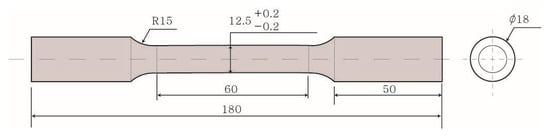
In this study, a tensile test was conducted using an MTS Landmark machine to analyze tensile strength, yield strength (0.2% offset), and elastic modulus. For the tensile strength test, a total of five types of specimens were fabricated by adding one Cu-15.5 wt% Sn alloy to the four Cu-Si alloys, totaling 20 specimens with four specimens per composition type. However, all four 8.0 wt% Si specimens fractured during machining, and therefore tensile tests were conducted for only three types of Cu-Si alloys, with contents of 2.0, 4.0, and 6.0 wt% Si, and for the 15.5 wt% Sn alloy. The specimens were then machined to meet the standard ASTM E8/E8M round-bar tensile test specimen specifications (Figure 3) [25]. Testing was done at a test speed of 1 mm per minute, with samples taken at a rate of 50 Hz and at a temperature of 25 °C.
Figure 3.
Specimen diagram for tensile testing.
2.2.3. Impact Toughness
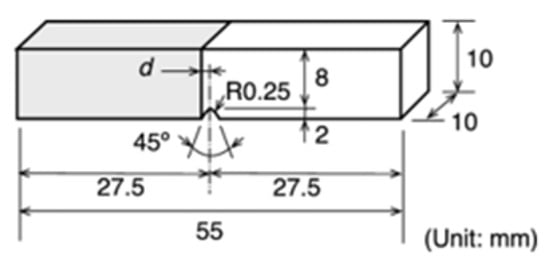
To analyze the impact toughness, a Charpy impact test was conducted. As in the tensile strength test, a total of five types of specimens were prepared (4 Cu-Si compositions and a reference Cu-15.5 wt% Sn composition), with four specimens per type for a total of 20 specimens. All Charpy V-notch specimens were prepared in accordance with the JIS Z 2242 standard shown in Figure 4 [26], and the impact toughness test was conducted using a Charpy impact testing machine at a temperature of 20 °C. The specimens were then struck with the impact machine at a speed of 3 m/s and a total of 150 J of energy, after which the results were tabulated.
Figure 4.
Specimen diagram for Charpy impact test.
2.2.4. Vickers Hardness
To analyze hardness, a Vickers hardness test was conducted using a Vickers hardness tester (a Mitutoyo MVK-H1). As in the previous tests, a total of five composition types were prepared, with one Cu-15.5 wt% Sn alloy added to the four Cu-Si alloys, for a total of 20 specimens, with four specimens per type, all in accordance with the ASTM E92 standard [27], with a test force of 30 kg force and an indentation time of 10 s.
2.3. Microstructure
Specimens for microstructure analysis were prepared using the cut gate portions of the impact toughness specimens to represent an as-cast microstructure. The samples were mounted using epoxy, and grinding was performed sequentially using SiC papers (#500, 1200, 2400, and 4000), followed by surface polishing using 1 μm diamond paste. After polishing, an etching solution was prepared using 25 mL of DI water, 25 mL of HNO3, and 2.5 g of silver nitrate, and etching was performed. Microstructures were examined using SEM (20 kV) alongside EDS compositional analysis.
2.4. Acoustic Testing
Acoustic analysis was conducted in two stages: First, Cu-Si alloys with Si contents of 2.0 wt%, 4.0 wt%, and 6.0 wt% were evaluated. Subsequently, a second stage direct comparison was conducted between the Cu-6.0 wt% Si alloy, which was identified as the most promising composition, and a conventional Cu-15.5 wt% Sn alloy.
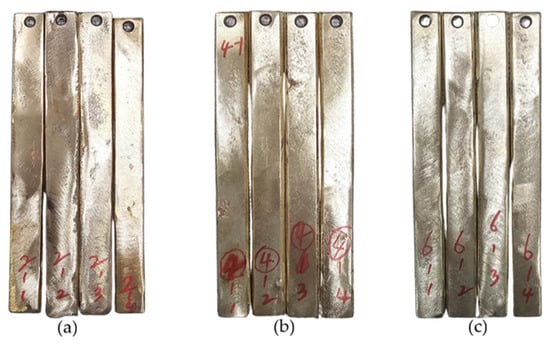
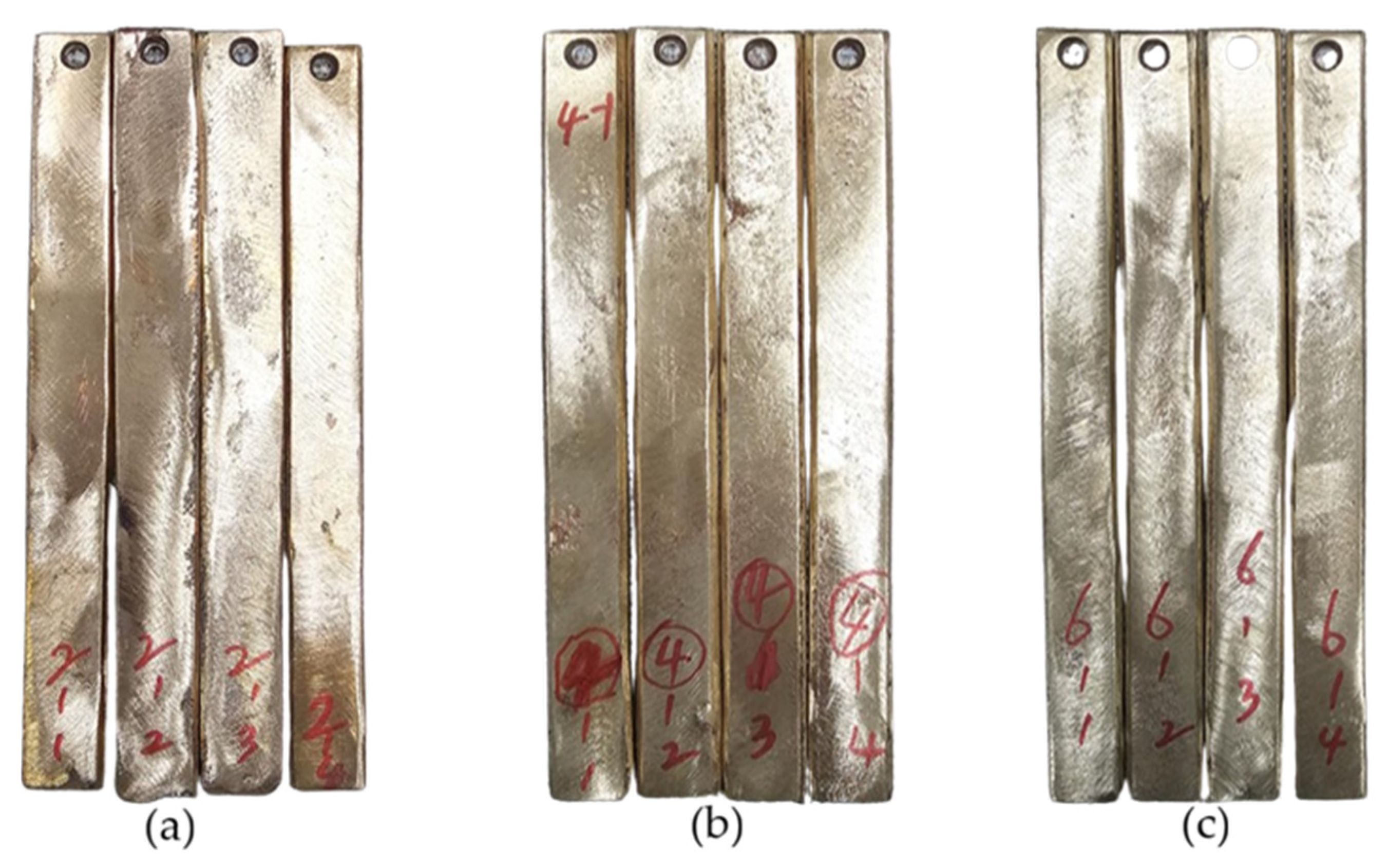
In the first experimental stage, four specimens were initially produced for each composition, from 2.0 to 8.0 wt% Si. However, for the 8.0 wt% Si composition, all specimens fractured during processing due to severe brittleness; therefore, specimens could only be fabricated for the 2.0, 4.0, and 6.0 wt% compositions. The specimen dimensions were 200 × 22 × 3.5 mm, and all analyses were conducted in the as-cast condition (Figure 5). Each specimen was then subjected to three impact excitations, resulting in a total of 36 tests, from which the natural frequency and damping ratio were measured.
Figure 5.
Vibration waveform measurement specimens created for the first stage of acoustic testing, with (a) 2.0 wt% Si, (b) 4.0 wt% Si, (c) 6.0 wt% Si alloys.
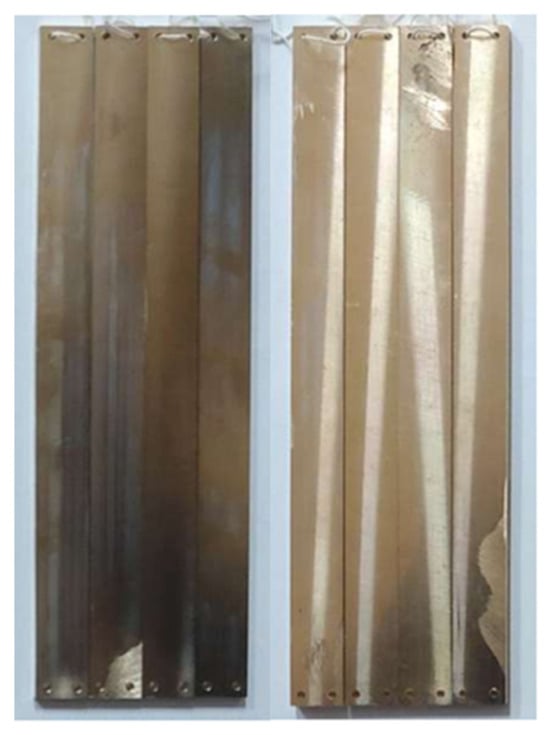
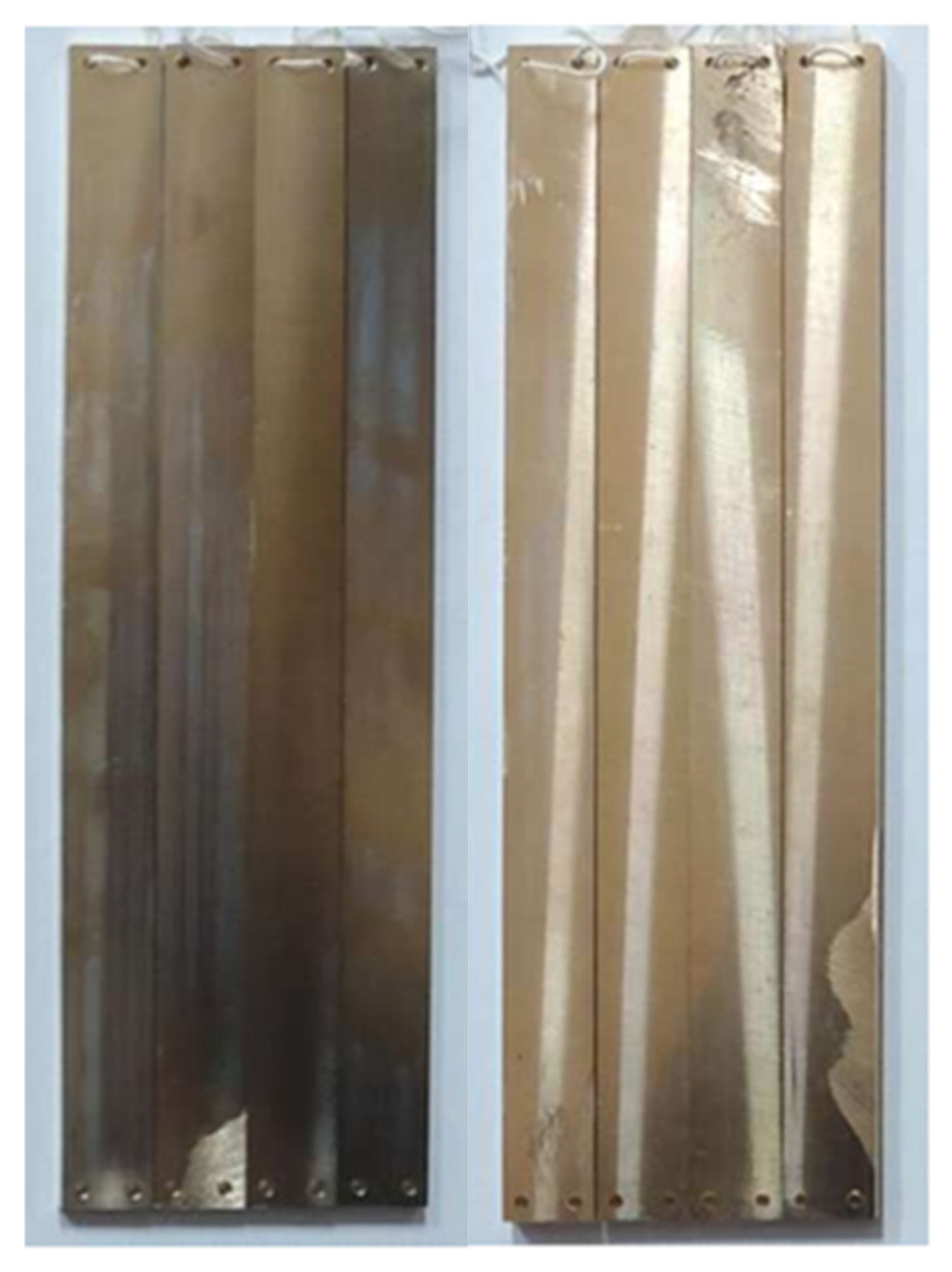
In the second experimental stage, two compositions were analyzed to enable a direct comparative evaluation between the Cu-6.0 wt% Si alloy, identified as the most promising composition in the first experimental stage, and the conventional temple bell material, the Cu-15.5 wt% Sn alloy. Three specimens were fabricated for each alloy, with the initial specimen dimensions 250 × 15 × 3.5 mm. To reduce dimensional variations among specimens, the samples were subsequently machined using a lathe to final dimensions of 250 × 10 × 2 mm (Figure 6). Each specimen was subjected to five impact excitations, for a total of 30 test results upon which acoustic analysis was performed.
Figure 6.
Specimens created for the second stage of acoustic testing from Cu-6.0 wt% Si (left) and reference Cu-15.5 wt% Sn (right).
2.4.1. Vibration Waveforms
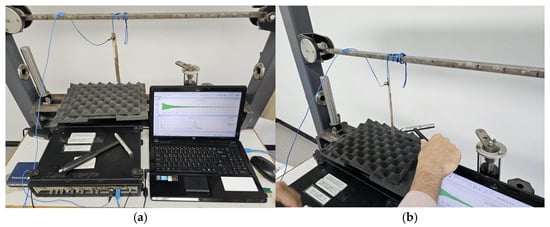
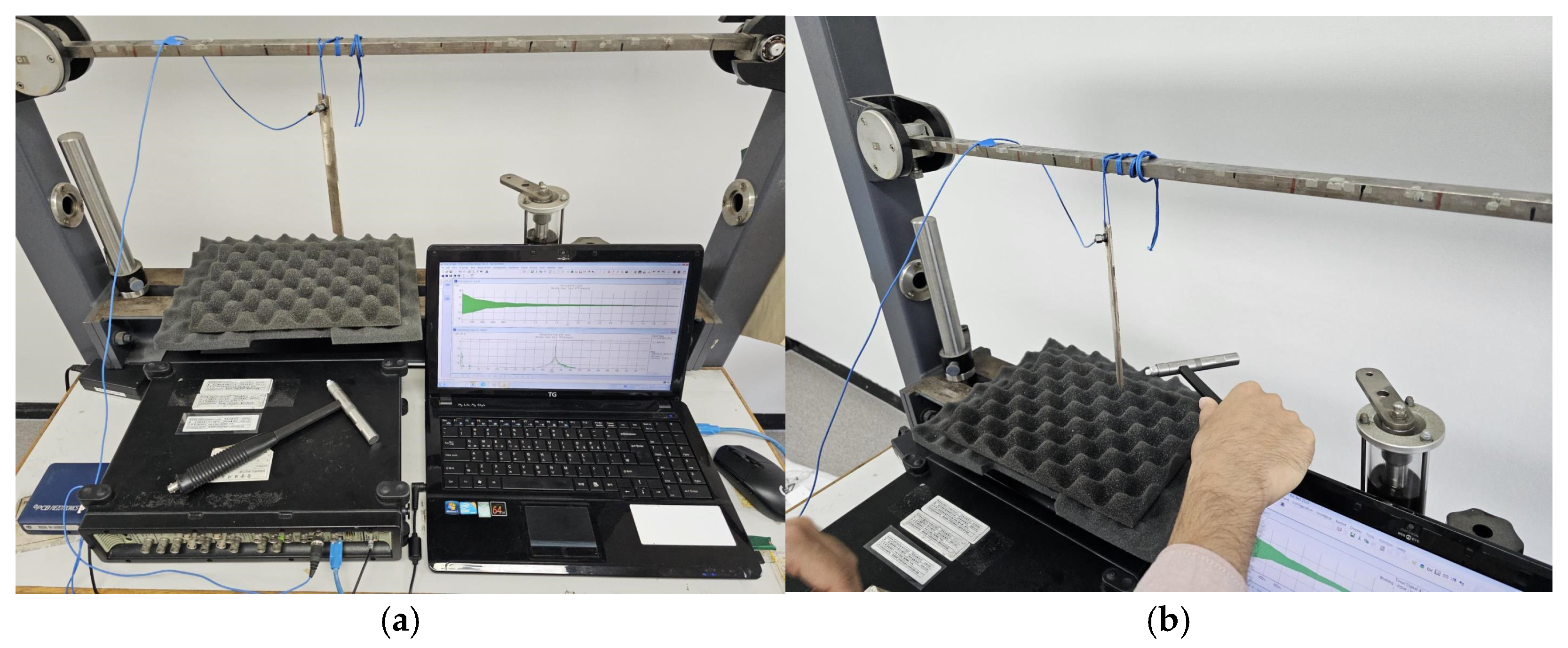
A small hole was drilled at the top of each specimen, and the specimens were suspended by a string to approximate free–free boundary conditions, after which vibration waveforms, responses, and spectra were measured using an impact test. As shown in the experimental setup in Figure 7b, each specimen was struck in the lower end with an impact hammer. Vibrations were measured at the upper end using an accelerometer (352C65, PCB), and frequency analysis was performed using a signal analyzer (PULSE Type 3560-c, Bruel & Kjaer).
Figure 7.
Vibration waveform measurement. (a) Equipment setup. (b) Striking the specimen.
2.4.2. Damping Ratio
Given the low expected damping values, the damping ratio was extracted from the time-domain decay using logarithmic decrement. The measured vibration waveform was frequency-transformed to the frequency domain (FFT) to identify the first natural frequency. Subsequently, filtering was applied with a bandwidth of ±15 Hz to isolate the first natural frequency vibration waveform, and the damping ratio was then calculated from the logarithmic decrement method.
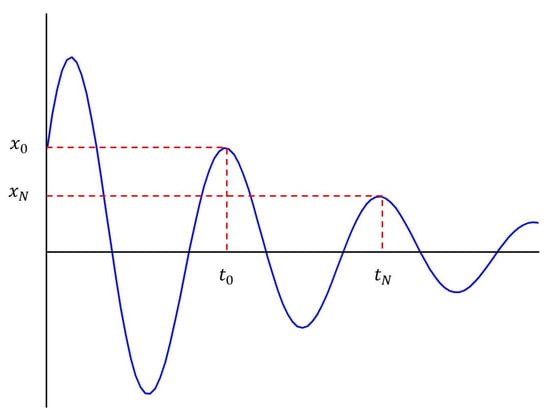
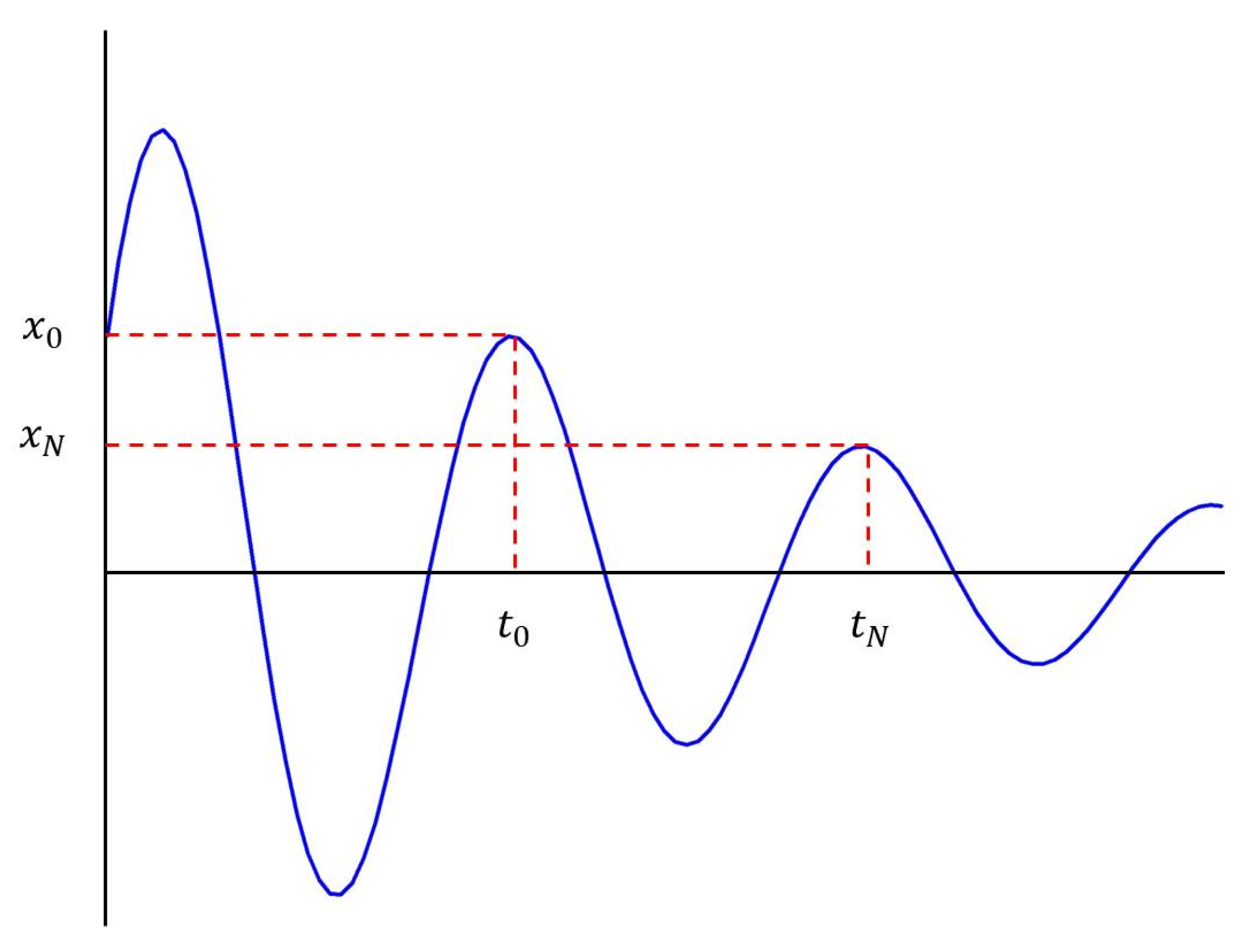
As shown in Figure 8, in the logarithmic decrement method, the amplitude of a damped oscillator at time t0 in a single-frequency waveform is measured as x0, and the reduced amplitude at time tN after N cycles is measured as xN. The logarithmic decrement of the amplitude ratio, δ, is then calculated using (1), which in this experiment is taken from peak amplitudes separated by N, ranging from 170 to 200 cycles, depending on the alloy composition. From there the viscous damping ratio, ζ, was obtained via (2).
Logarithmic decrement δ = 1/N ln (x0/x_N),
Viscous damping ratio ζ = δ/√(4π2 + δ2),
Figure 8.
Sample damped oscillation from which the values for logarithmic decrement can be calculated.
3. Results and Discussion
3.1. Castability and Fluidity Results
Table 1 presents the results of the sand mold spiral fluidity test.
Table 1.
Fluidity test results of Cu-Si alloys.
All Cu-Si composition types, as well as the Cu-15.5 wt% Sn alloy reached the maximum measurable fill length of 1200 mm. In line with the prior casting literature, the data indicates that, under the current pouring and mold conditions, Cu-Si alloys achieve castability comparable to conventional bell bronze and are not disadvantaged when it comes to casting objects of comparable size [28]. At the same time, complete filling in this spiral geometry does not by itself guarantee defect-free casting in larger, thicker, or more-complex bell structures; therefore, full-scale casting validation remains necessary [29]. However, it still demonstrates a similar fluidity to traditional bell bronze within this context, preventing incomplete mold filling, misruns and other casting defects that could affect structural integrity and acoustic performance.
3.2. Mechanical Properties
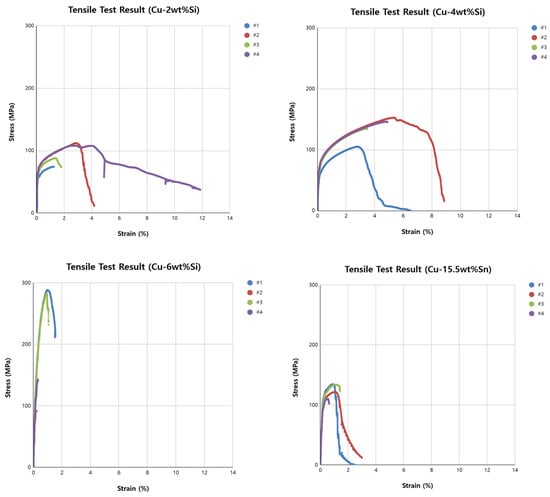
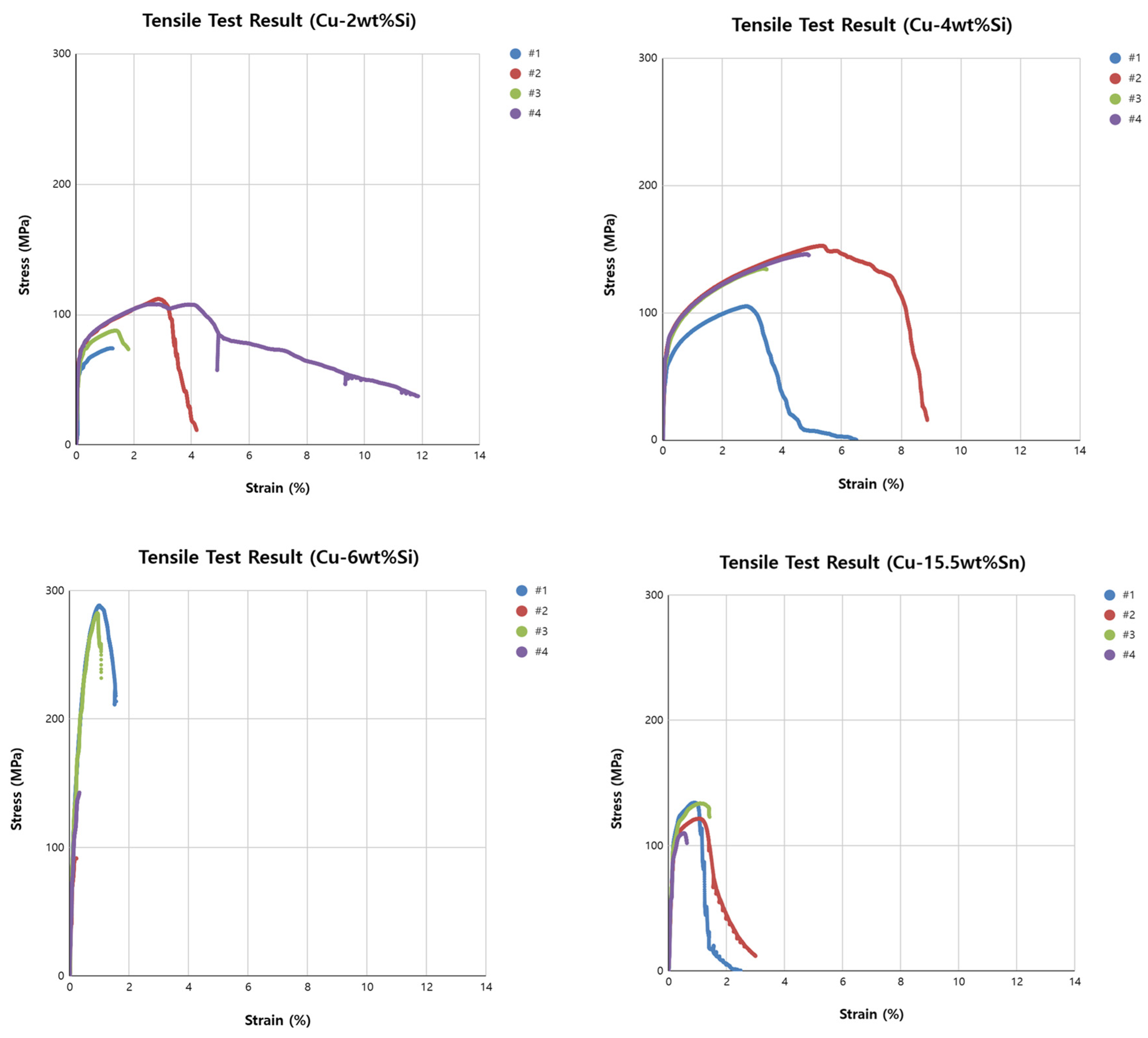
Figure 9 shows the stress–strain curves for each Cu-Si composition as well as the Cu-15.5 wt.% Sn reference alloy. During mechanical testing, fracture occurred outside the designated gauge section, preventing the acquisition of valid and reliable data for all of the 8.0 wt% Si specimens, as well as a number of the other Si alloy specimens. As a result, those data were excluded from the analysis, though a number of specimens had data valid for use in the tensile strength and elastic modulus sections, leading to a different number of specimens for each test.
Figure 9.
Stress–strain curves for the Cu-Si alloys and Cu-15.5 wt% Sn alloy.
3.2.1. Tensile Strength Results
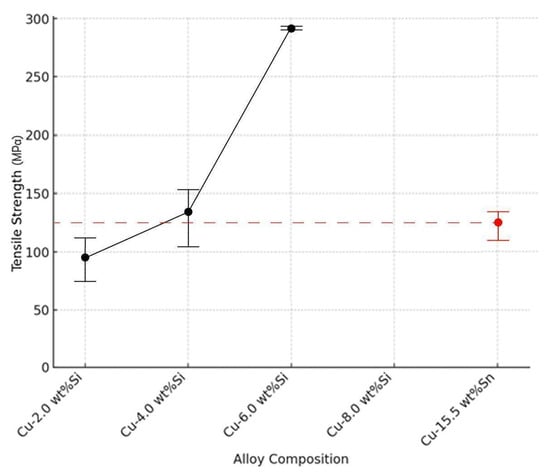
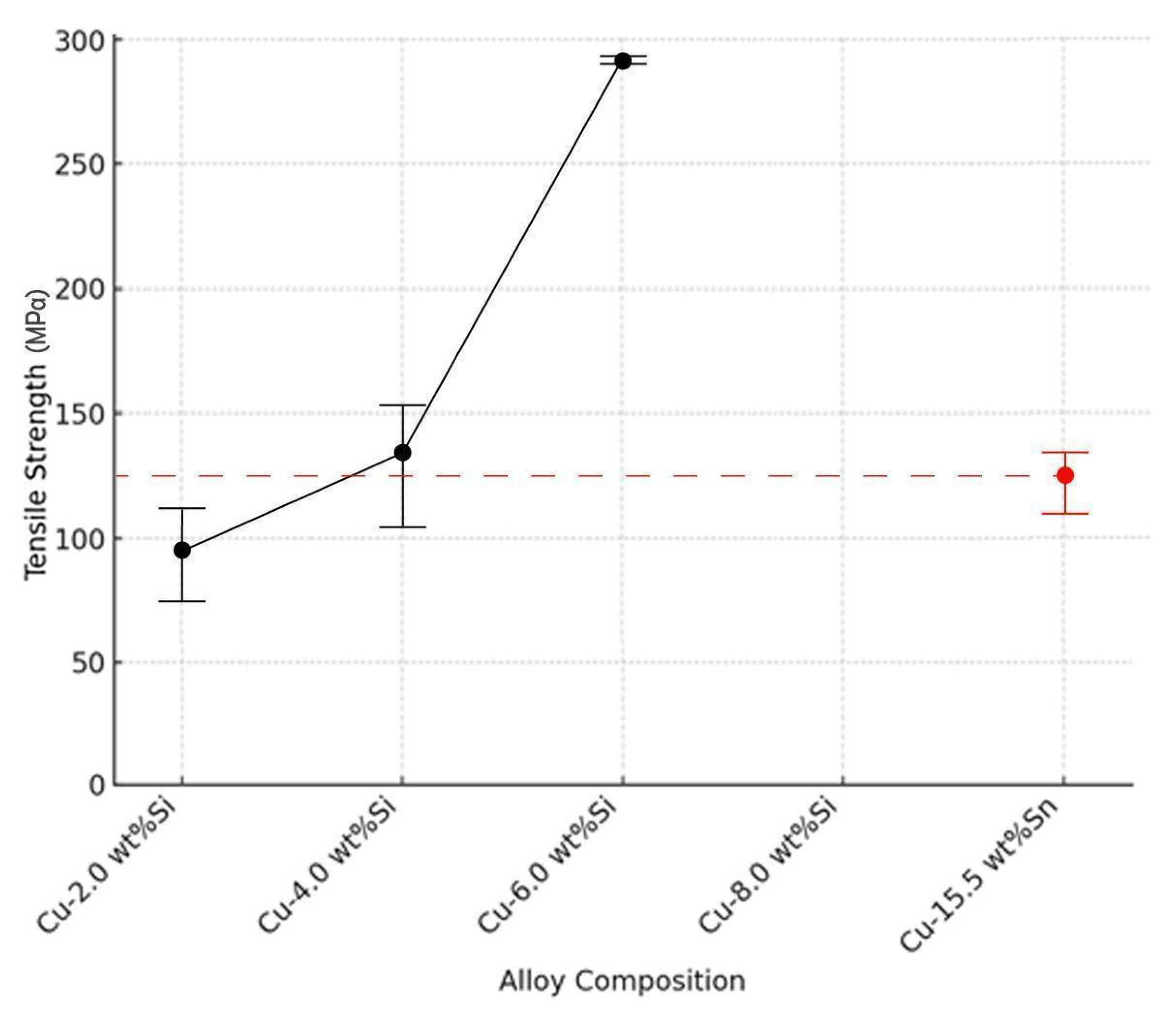
Table 2 and Figure 10 present the tensile strength measurements of Cu-Si alloys with 2.0, 4.0, 6.0 wt% Si alongside the Cu-15.5 wt% Sn alloy.
Table 2.
Tensile strength test results of the Cu-Si alloys and Cu-15.5 wt% Sn alloy.
Figure 10.
Tensile strength graph of the Cu-Si alloys and Cu-15.5 wt% Sn alloy.
As the Si content in Cu increased from 2.0 wt% to 6.0 wt%, the tensile strength showed an increasing trend from an average of 95.49 MPa to 285.50 MPa, which is likely due to an increase in tensile strength caused by solid solution strengthening and microstructural refinement as the Si content increased. Meanwhile, at an Si content of 8.0 wt%, all specimens fractured during machining, and measurements could not be conducted; this is consistent with the presence of Si/SiO2-rich brittle features observed in SEM/EDS. When Cu was alloyed with Si contents ranging from 4.0 wt% to 6.0 wt%, the tensile strength ranged from an average of 134.79 to 285.50 MPa, which was higher than the average tensile strength of 125.11 MPa for the Cu-15.5 wt% Sn alloy.
The large increase in tensile strength at 6.0 wt% Si is consistent with combined solute strengthening and grain-refinement strengthening in Cu-based alloys, as seen in Section 3.3 and reported in the previous literature [30]. In metallic materials, larger grain sizes generally lead to lower strength, whereas finer grains result in higher strength [31]. The rounded features of the grains become significantly smaller at 6.0 wt% Si than at 4.0 wt%, which explains the pronounced increase in tensile strength. The magnitude of improvement at 6.0 wt% Si relative to Cu-15.5 wt% Sn shows that Cu-Si can exceed traditional bell bronzes in basic load-bearing capacity under tensile stress. The machining failure at 8.0 wt% Si indicates a brittle transition at high Si content that marks a potential upper limit of silicon composition for structural bell applications.
3.2.2. Yield Strength Results
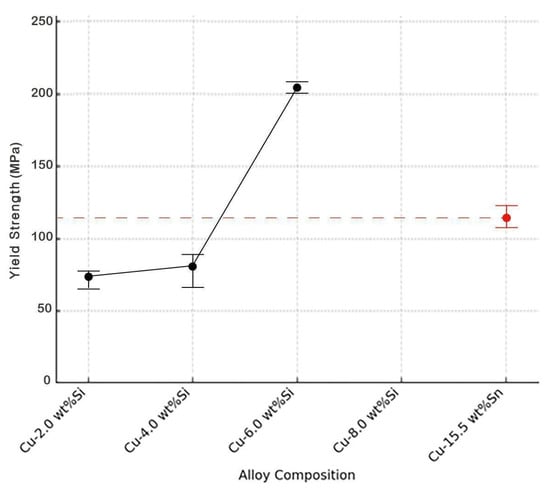
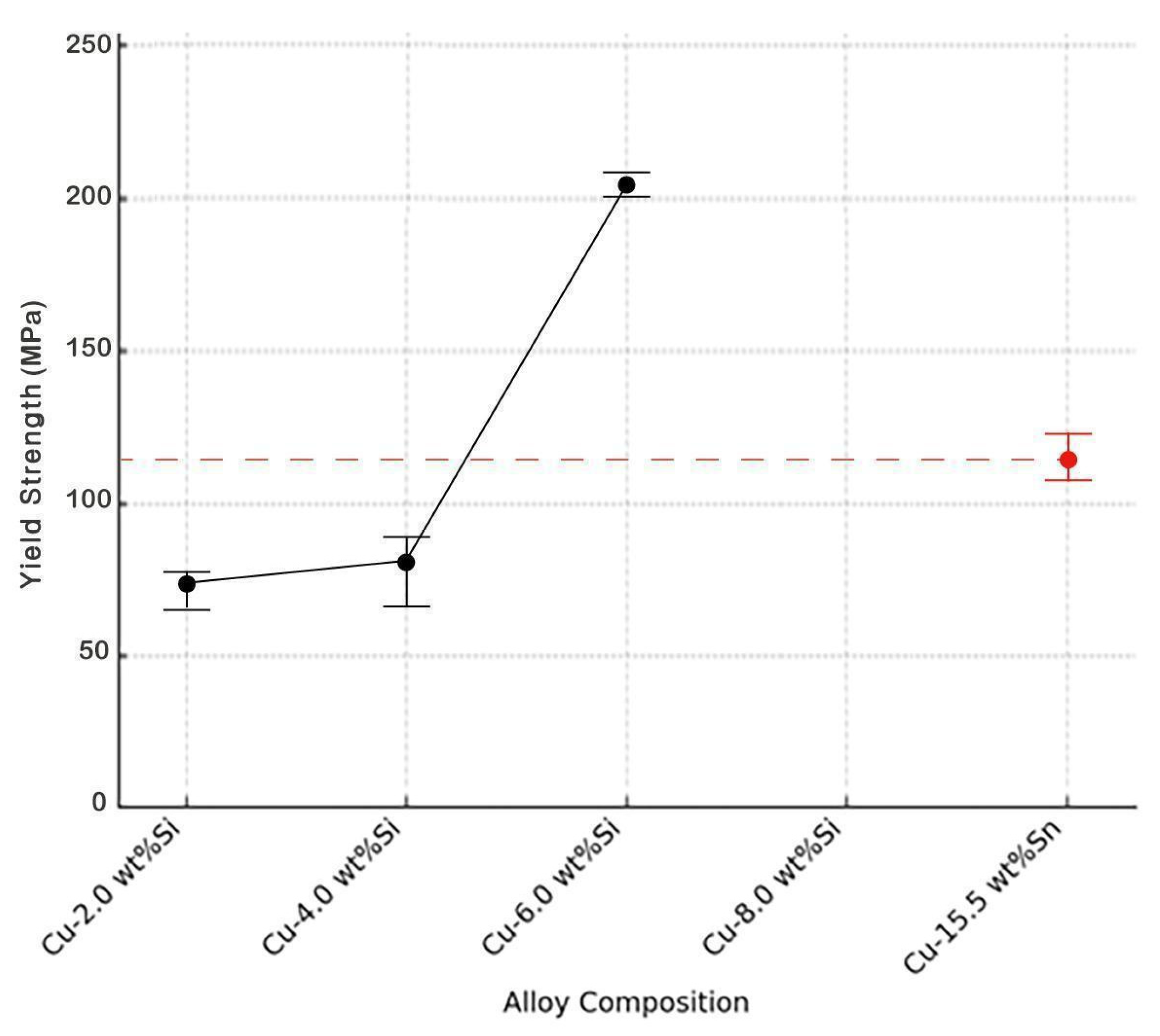
Table 3 and Figure 11 present the yield strength measurement results of the Cu-Si compositions along with the Cu-15.5 wt% Sn alloy.
Table 3.
Yield strength test results of the Cu-Si alloys and Cu-15.5 wt% Sn alloy.
Figure 11.
Yield strength graph of the Cu-Si alloys and Cu-15.5 wt% Sn alloy.
As before, the 8.0 wt% Si specimens fractured during machining and are absent from yield strength measurements. As the Si content in Cu was increased from 2.0 wt% to 6.0 wt%, the yield strength, like the tensile strength, showed an increasing trend, from an average of 76.33 MPa to 204.26 MPa. The yield strength increase is also consistent with solid solution strengthening and microstructural refinement as the Si content increases. The yield strengths at Si contents of 2.0 wt% and 4.0 wt% were lower than the yield strength of the Cu-15.5 wt% Sn alloy. However, at 6.0 wt% Si, the yield strength was greater.
As in the previous section, the sharp increase in yield strength at 6.0 wt% Si is likely due to similar effects from grain refinement as the silicon content increases [30]. The finer microstructure at 6.0 wt% Si compared with those at 2.0 and 4.0 wt% Si compositions resulted in a large increase in yield strength and explains the improved resistance to permanent deformation compared with lower-Si alloys and the Cu-15.5 wt% Sn reference. In temple bells, yield strength directly relates to long-term dimensional stability under repeated impacts, because local plastic deformation can shift vibrational behavior and degrade tone consistency over time. The strong yield strength gain at 6.0 wt% Si supports its viability as an alternative or substitute material in bell production.
3.2.3. Elastic Modulus Results
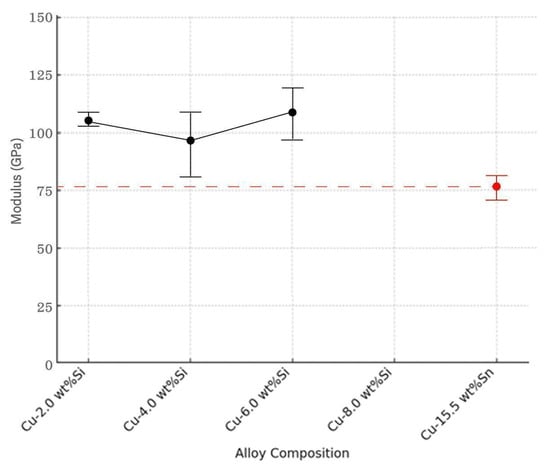
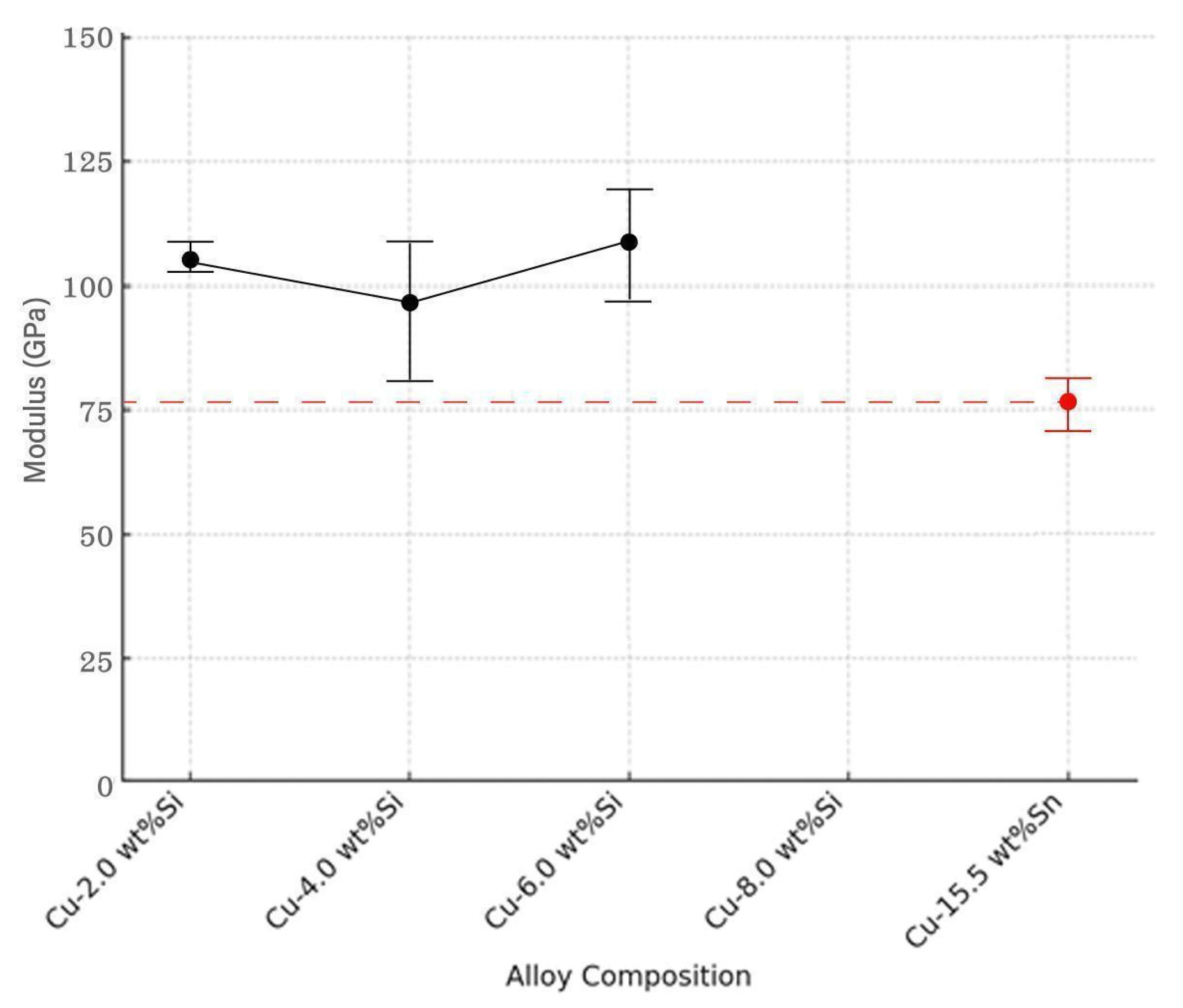
Table 4 and Figure 12 present the elastic modulus measurement results of the Cu-Si compositions along with the Cu-15.5 wt% Sn alloy.
Table 4.
Modulus test results of the Cu-Si alloys and Cu-15.5 wt% Sn alloy.
Figure 12.
Modulus graph of the Cu-Si alloys and Cu-15.5 wt% Sn alloy.
As for the past two properties, elastic modulus data is absent for Cu-8.0 wt% Si due to fracturing during machining. Values obtained for the modulus range between 97.35–109.05 GPa with no observable trend, though the highest elastic modulus of 109.05 GPa was observed at an Si content of 6.0 wt%. In addition, under all conditions with Si contents from 2.0 wt% to 6.0 wt%, the elastic modulus was higher than that of the Cu-15.5 wt% Sn alloy, which is 76.44 GPa.
Since resonance frequencies scale with stiffness and geometry, increased modulus supports the observed shift toward higher natural frequencies in Cu-Si alloys. As in prior material acoustic studies, frequencies depend on effective stiffness and geometry [32], and the higher modulus values are consistent with the Cu-Si alloys having exhibited higher natural frequencies and lower damping ratios, as seen in Section 3.4. In general, this results in more-efficient transmission of vibrations, which results in a longer vibration duration [33] and sounds that are sustained for a longer period, often seen as a beneficial trait in temple bells.
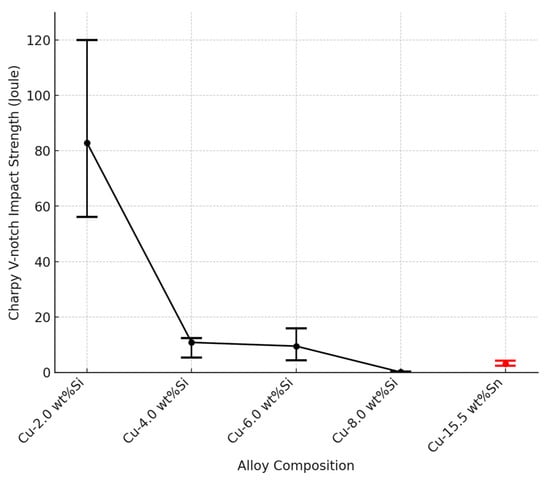
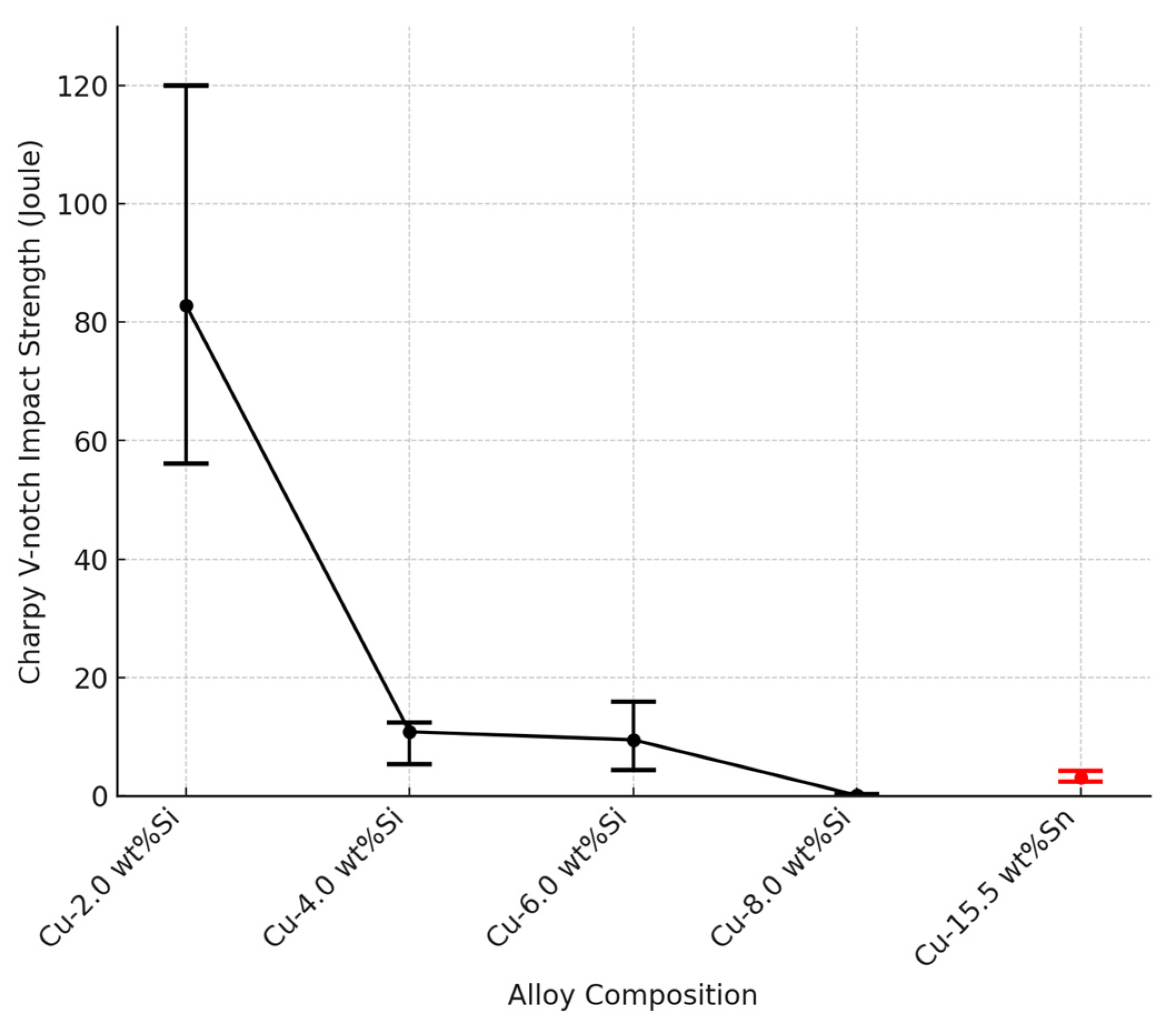
3.2.4. Impact Toughness Results
Table 5 and Figure 13 present the impact toughness measurement results of the Cu-Si compositions along with the Cu-15.5 wt% Sn alloy.
Table 5.
Charpy V-notch impact toughness test results of the Cu-Si alloys and Cu-15.5 wt% Sn alloy.
Figure 13.
Charpy V-notch impact toughness graph of the Cu-Si alloys and Cu-15.5 wt% Sn alloy.
The impact toughness showed the highest average value of 82.9 J at an Si content of 2.0 wt%, and when the Si content increased to 4.0 wt% and 6.0 wt%, the average impact toughness reduced to 9.48 and 9.00 J, respectively, and as the Si content increased to 8.0 wt%, the impact toughness showed a drastic decrease to 0.07 J, which is in line with the Si/SiO2-rich brittle features observed near 8.0 wt% Si. The 4.0 wt% to 6.0 wt% alloys show a minimum average value of 9.00 J, which is nearly three times higher than the average impact toughness of 3.3 J for the Cu-15.5 wt% Sn alloy. The high impact toughness of the 2.0 wt% Si alloy can be understood through its significantly coarser grains and lack of brittle features compared with higher-Si-content alloys. These factors often result in a softer material that tends to deform plastically rather than fracture under impact loading, resulting in a greater impact toughness.
Likewise, the reduction in impact toughness at higher Si contents shows that the alloy transitions from a relatively impact-tolerant regime to a more brittle regime as second phases and microstructural heterogeneities develop. The near-zero toughness at 8.0 wt% Si is also consistent with brittle feature behavior reported in related high-Si conditions [34], making them unreliable for machining as well as presenting a high cracking risk under real bell striking. Regardless, 4.0 and 6.0 wt% Si retained higher impact energy than the Cu-15.5 wt% Sn reference, showing that Cu-6.0 wt% Si can achieve a high-strength state without significantly sacrificing impact tolerance compared with conventional bell bronze.
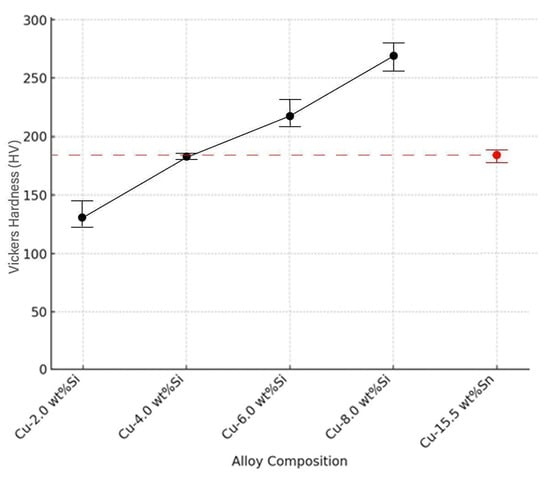
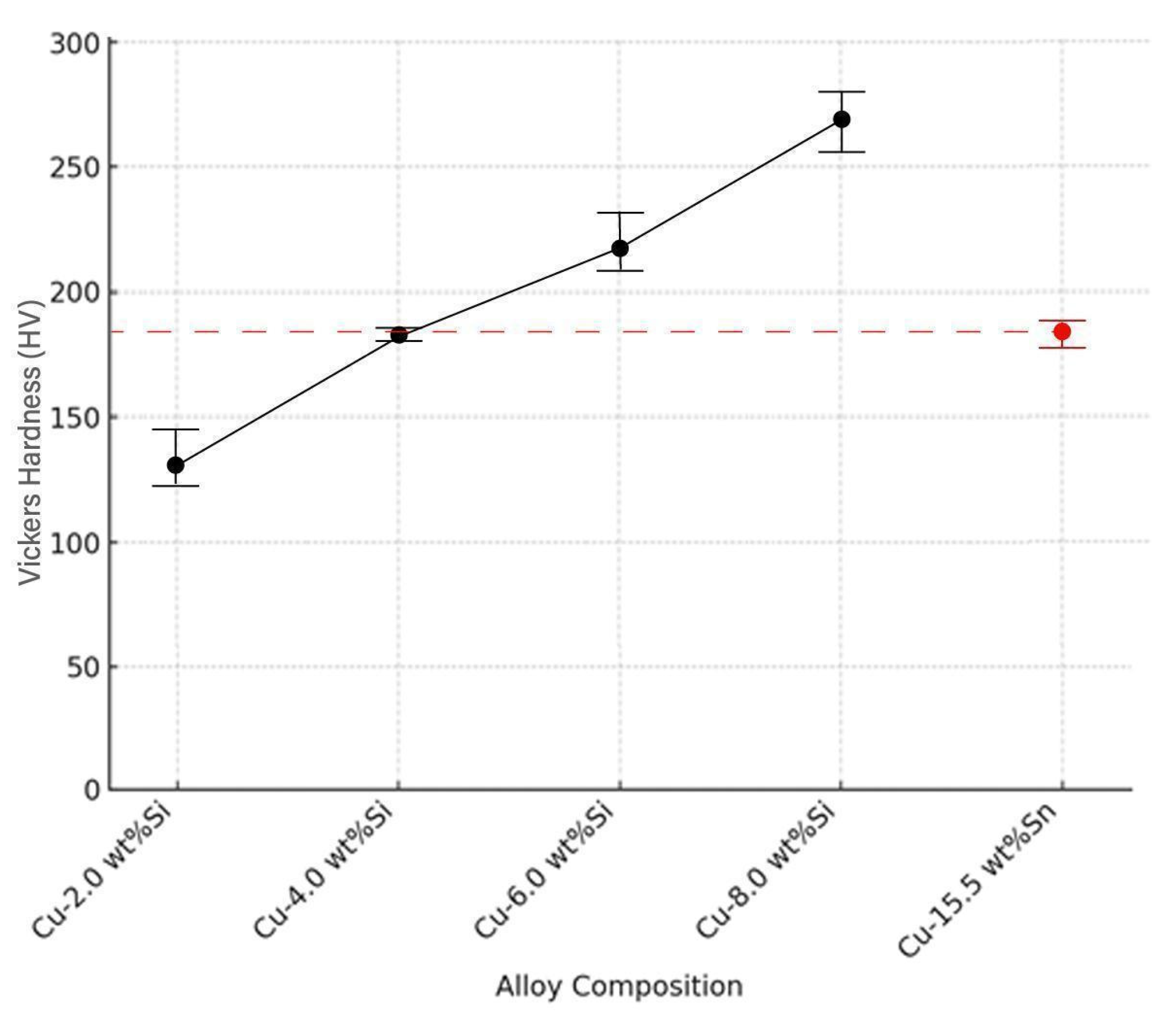
3.2.5. Vickers Hardness Results
Table 6 and Figure 14 present the Vickers hardness measurement results of the Cu-Si compositions along with the Cu-15.5 wt% Sn alloy.
Table 6.
Vickers hardness test results of the Cu-Si alloys and Cu-15.5 wt% Sn alloy.
Figure 14.
Vickers hardness graph of the Cu-Si alloys and Cu-15.5 wt% Sn alloy.
As the Si content in Cu was increased from 2.0 wt% to 8.0 wt%, the hardness also showed an increasing trend from an average of 132.2 HV to 270.0 HV; this is consistent with strengthening associated with Si addition and the microstructural changes observed at a higher Si content. Compared with the Cu-15.5 wt% Sn alloy, the average hardness of the 2.0 wt% Si was lower. However, at an Si content of 4.0 wt%, a comparable hardness value was observed, and as the Si content increased to 6.0 and 8.0 wt%, hardness increased further, exceeding that of the Cu-15.5 wt% Sn alloy.
This increase in hardness is consistent with the strengthening trends seen earlier with higher Si contents and implies an improved resistance to surface damage from repeated striking and environmental wear. Increased hardness for temple bells supports improved durability and reduced risk of surface deformation over time. The large hardness values at 8.0 wt% Si indicate the emergence of brittle microstructural features alongside possible difficulty in producing sturdy temple bells above 8.0 wt% Si, as brittleness may promote defects in casting and under normal strain.
3.3. Microstructure Analysis Results
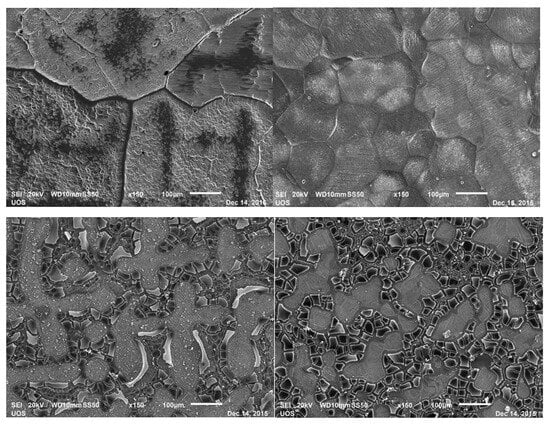
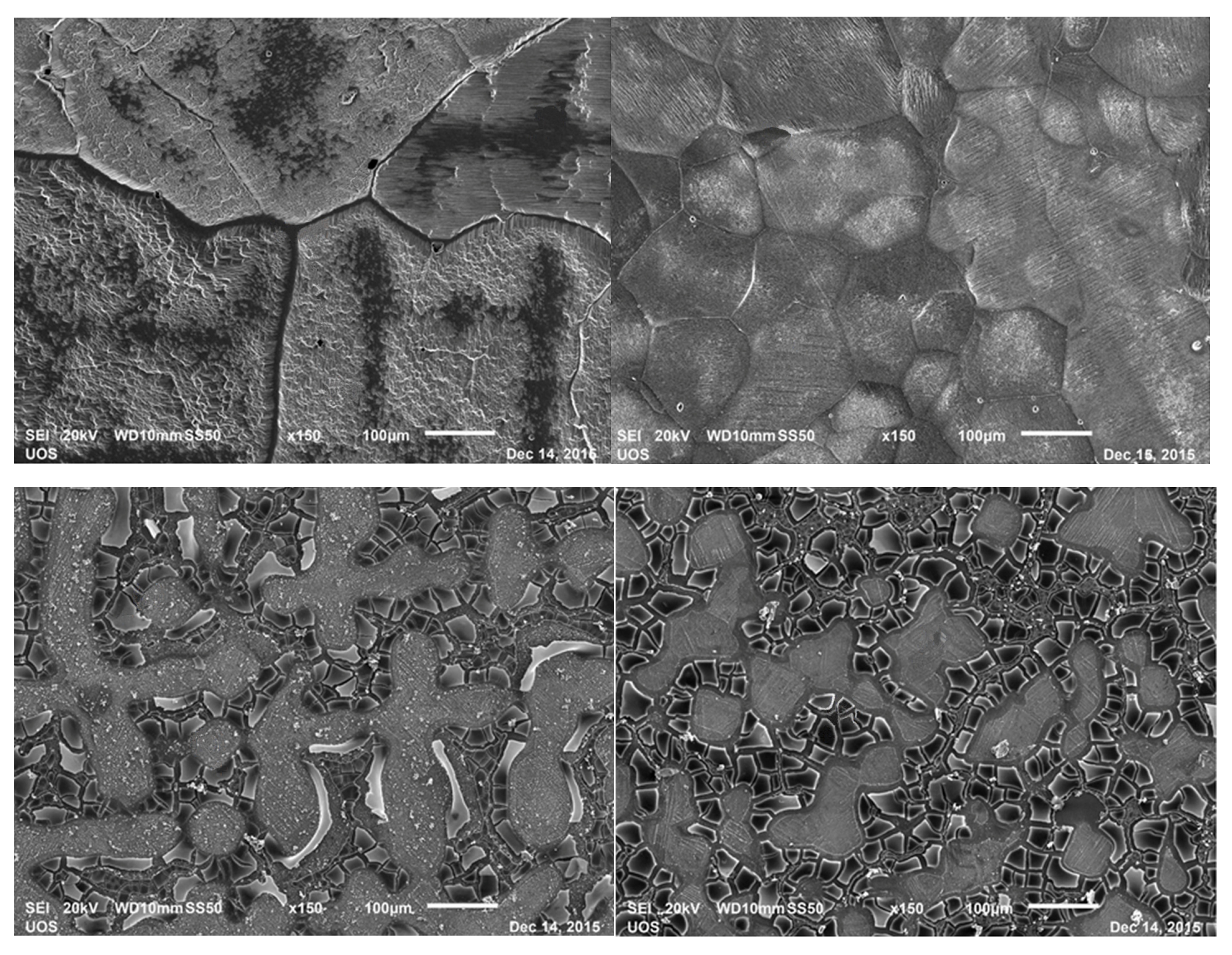
Figure 15 shows the SEM images of Cu-Si alloys with Si contents of 2.0, 4.0, 6.0, and 8.0 wt%, respectively. In the alloys containing 2.0 wt% Si and 4.0 wt% Si, no distinct Si-rich second phase was observed; however, in the alloys containing the 6.0 wt% Si and 8.0 wt% alloys, Si-rich and O-rich regions consistent with SiO2 were observed. From the observed FE-SEM images, the area fraction of the SiO2 phase relative to the matrix phase was estimated via image thresholding to be approximately 58% in Cu-6.0 wt% Si and approximately 81% in Cu-8.0 wt% Si.
Figure 15.
SEM imaging of Cu-Si alloys of 2.0 (top left), 4.0 (top right), 6.0 (bottom left), and 8.0 (bottom right) wt% Si.
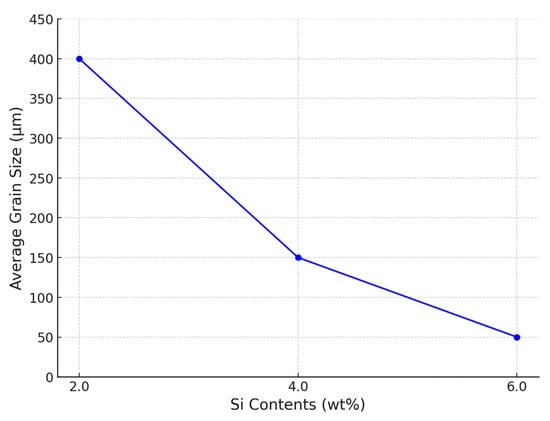
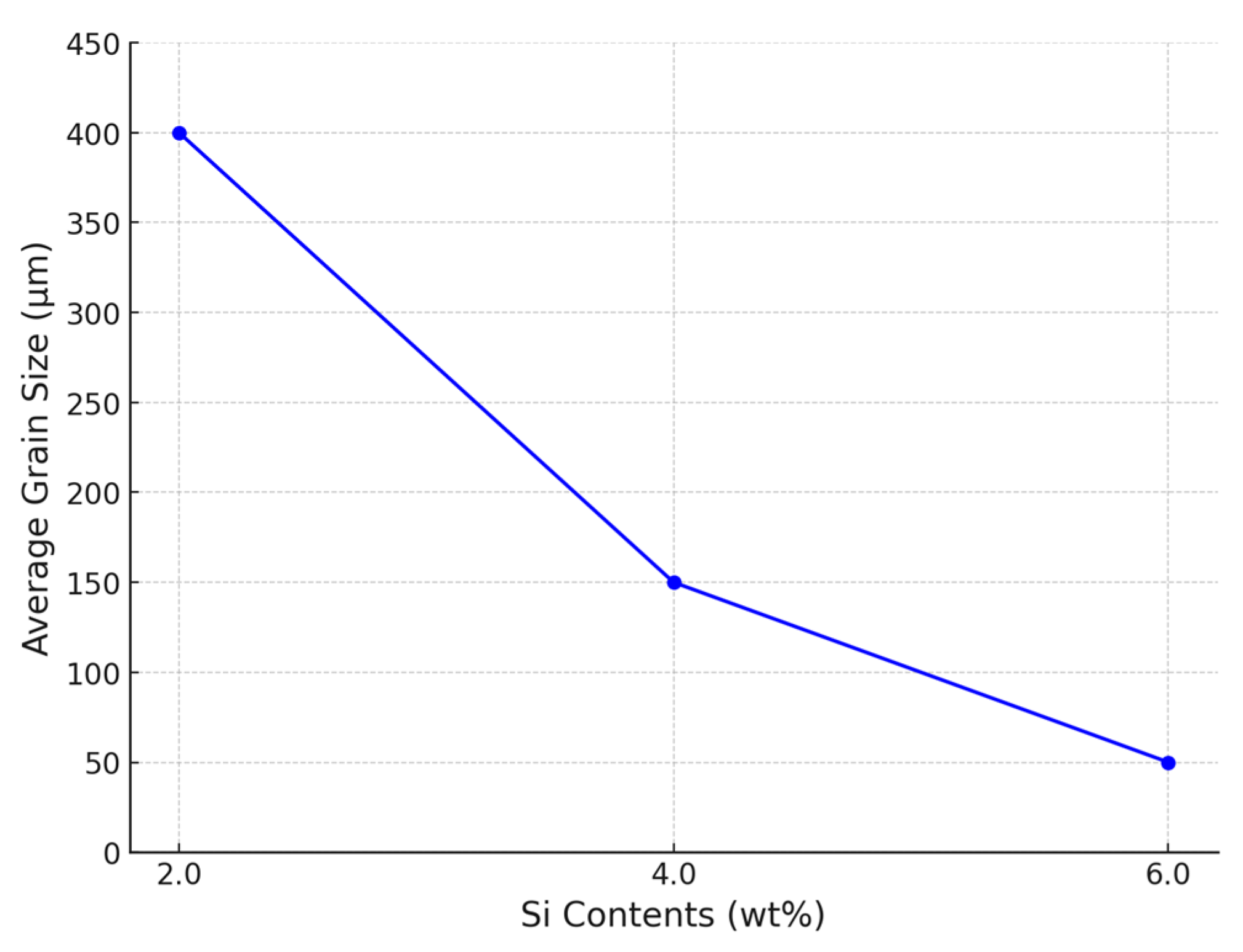
Meanwhile, as shown in Figure 16, as the Si content in Cu-Si alloys increased from 2.0 to 6.0 wt%, grain refinement progressed, and average grain size reduced as Si content increased.
Figure 16.
Average grain size with Si content.
The increasing grain refinement from 2.0 to 6.0 wt% Si supports increased strength through grain-boundary strengthening, matching the strong rises in tensile and yield strength [31]. At higher Si contents, the emergence and growth of Si-rich and O-rich regions are consistent with the impact toughness and hardness findings in Section 3.2.4 and Section 3.2.5, as well as the brittle behavior described in the related Cu-alloy microstructure literature [35]. Taken together, the microstructure supports 6.0 wt% Si as a practical balance point that maximizes strengthening while avoiding more-severe brittle properties associated with the large increase in secondary structures at higher Si contents.
3.4. Acoustic Characteristics
Acoustic testing was performed in two ‘stages’ (see Section 2.4). Stage 1 screened three Cu-Si compositions (2.0, 4.0, 6.0 wt% Si) using as-cast bar specimens (200 × 22 × 3.5 mm) to evaluate Si-content-based trends in natural frequency and damping ratio. Stage 2 compared Cu-6.0 wt% Si with Cu-15.5 wt% Sn using machined specimens (250 × 10 × 2 mm). Because the specimen dimensions differ between stages, absolute natural frequencies are not directly comparable across Stage 1 and Stage 2.
3.4.1. Natural Frequency Results
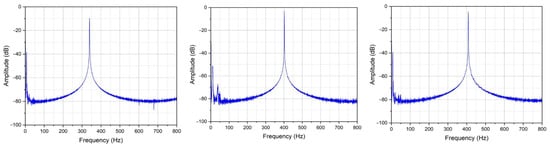
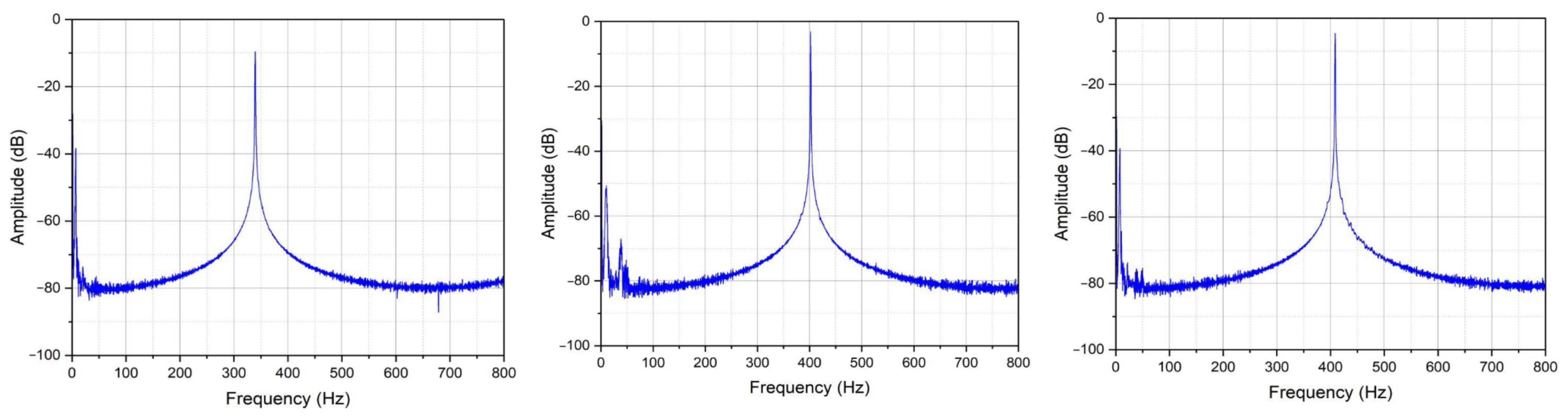
To identify the frequency components of the vibration waveforms, each was frequency-transformed to the frequency domain (FFT). All measurement results in the primary stage showed a single dominant frequency peak, which represented the first natural frequency of the specimen. Representative frequency spectra are shown for each of the three Cu-Si alloys tested in the first stage of the experiment (Figure 17).
Figure 17.
Representative frequency spectra for varying Cu-Si alloys (2.0% Si (left), 4.0% Si (middle), 6.0% Si (right)).
The extracted natural frequencies of each specimen used for filtering are summarized in Table 7. The first natural frequencies of the four specimens of each composition show slight differences, which may be influenced by variations in specimen dimensions, particularly thickness, as well as differences in Si content. By contrast, no change in natural frequency according to measurement order was observed for any specimen, with all three strikes per specimen remaining consistent for all 12 specimens.
Table 7.
Natural frequency results for Cu-Si alloys with varying Si content.
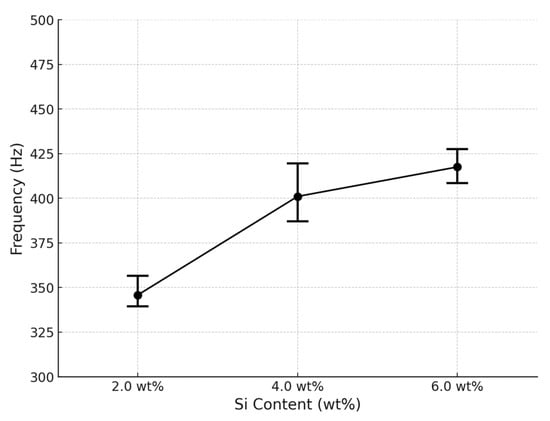
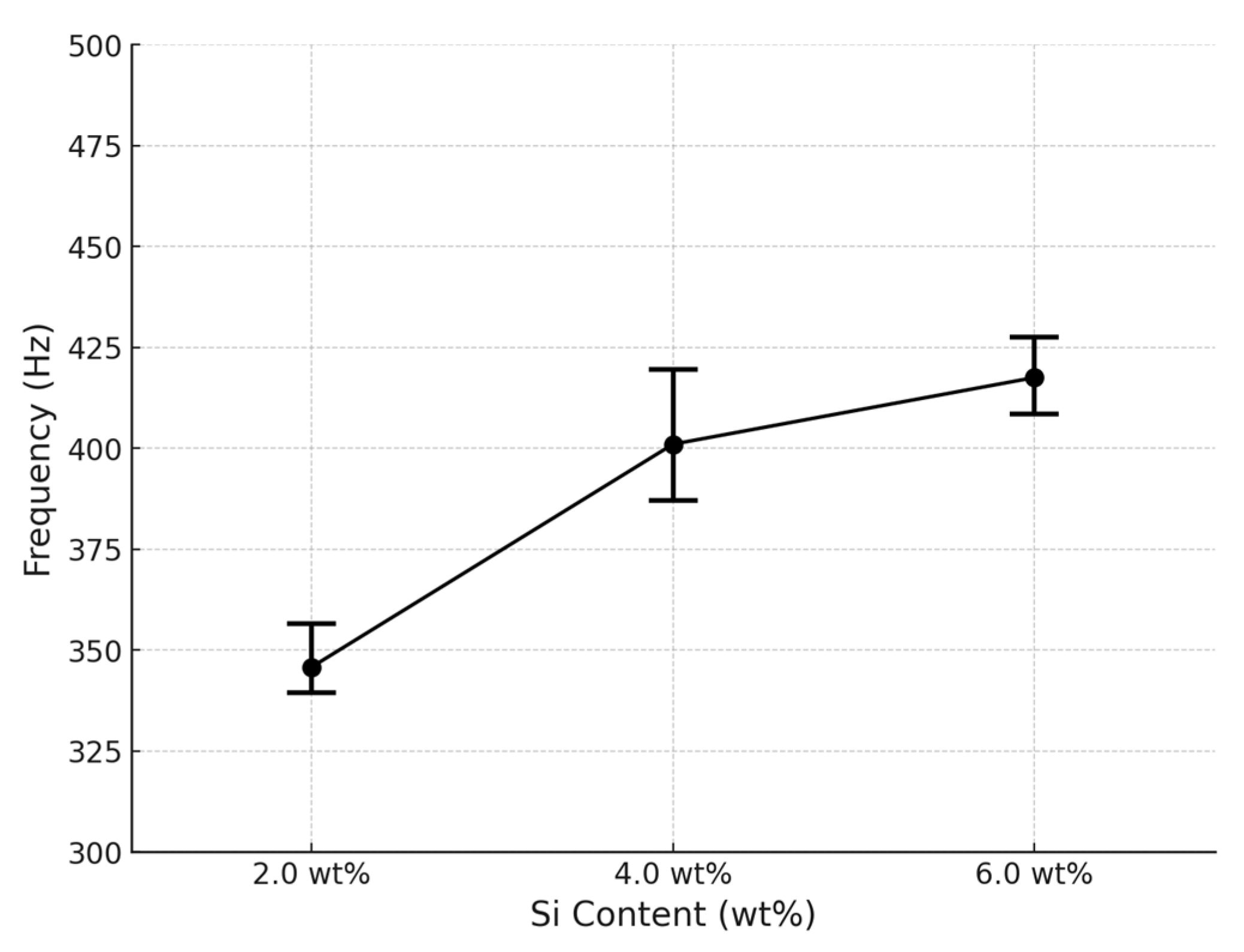
Figure 18 shows the variation in natural frequency as a function of the Si content. As the Si content increases, the natural frequency also increases, which is consistent with the increased stiffness that the Cu-Si alloys display.
Figure 18.
Graphical comparison of natural frequency for Cu-Si alloys with varying Si content.
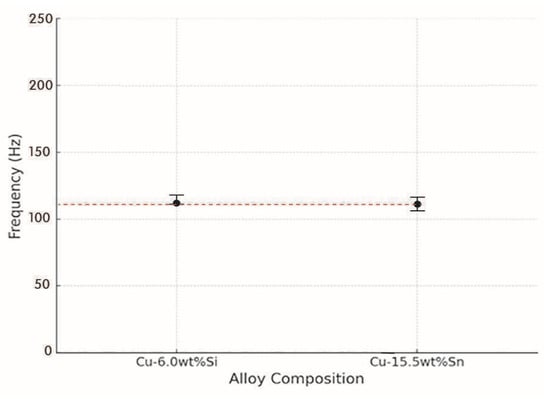
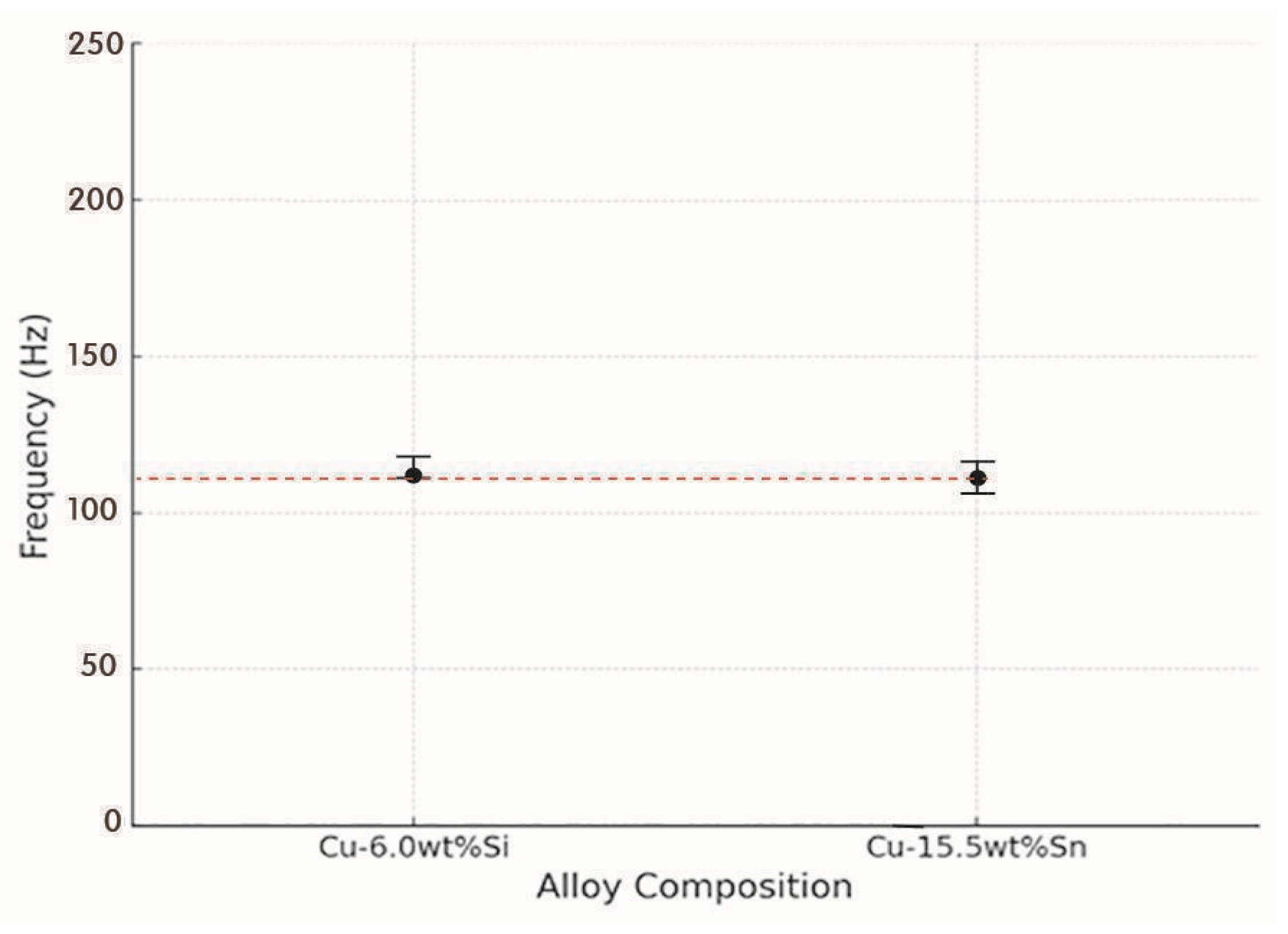
The secondary stage analysis had much more consistency between the different specimens, due to the precision machining, as can be seen in Table 8 and Figure 19. Overall, it can be seen that the Cu-6.0 wt% Si alloy and the traditional Cu-15.5 wt% Sn alloy have extremely similar natural frequencies, with a difference of 2.0 Hz. Note that the absolute natural frequencies in the primary and secondary experiments are not directly comparable because the specimen geometries differ (200 × 22 × 3.5 mm vs. 250 × 10 × 2 mm machined), which may change stiffness and mass distribution and therefore may shift the resonance frequency.
Table 8.
Natural frequency of Cu-6.0 wt% Si and Cu-15.5 wt% Sn alloys.
Figure 19.
Comparison of frequency for Cu-6.0 wt% Si and Cu-15.5 wt% Sn alloys.
The increase seen in natural frequency with Si content is consistent with the reduction in grain size and the increase in brittle features seen in Section 3.3, as well as the trends seen in impact toughness and yield and tensile strength, as expected from the prior vibration literature [32]. In the second stage, the small difference between Cu-6.0 wt% Si and Cu-15.5 wt% Sn indicates that Cu-6.0 wt% Si can reproduce comparable frequencies and sounds under similar geometry and conditions. In general, a higher pitch is not seen as either particularly favorable or unfavorable, and the similar natural frequencies seen between the Cu-6.0 wt% Si and reference Cu-15.5 wt% Sn alloy demonstrate that the 6.0% alloy can produce tones at least comparable to that of standard bell bronze [36].
3.4.2. Damping Ratio Results
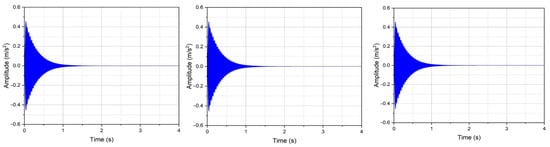
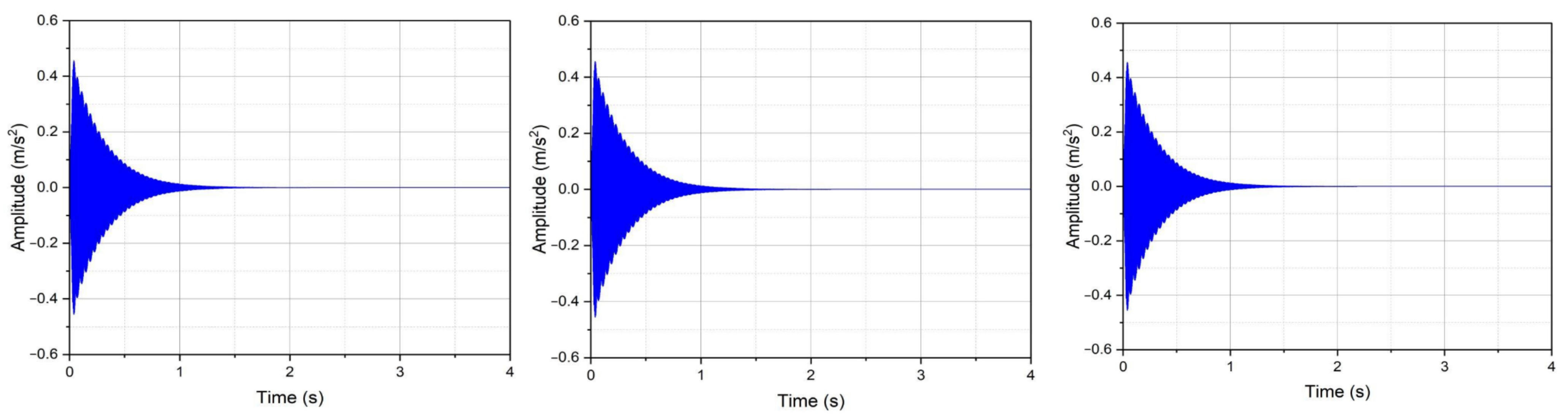
In extracting the damping ratio, the vibration waveforms passed through a ±15 Hz band centered on the first natural frequency for each specimen, removing low-frequency regions from the waveforms, which are shown in Figure 20. Subsequently, the viscous damping ratio was obtained using the logarithmic decrement method shown in Section 2.4.2.
Figure 20.
Representative time-domain decay waveforms for varying Cu-Si alloys (2.0% Si (left), 4.0% Si (middle), 6.0% Si (right)).
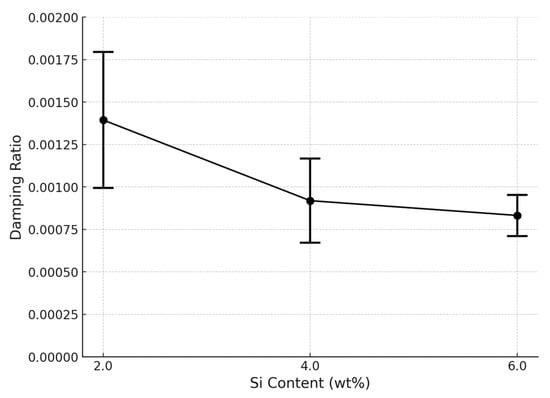
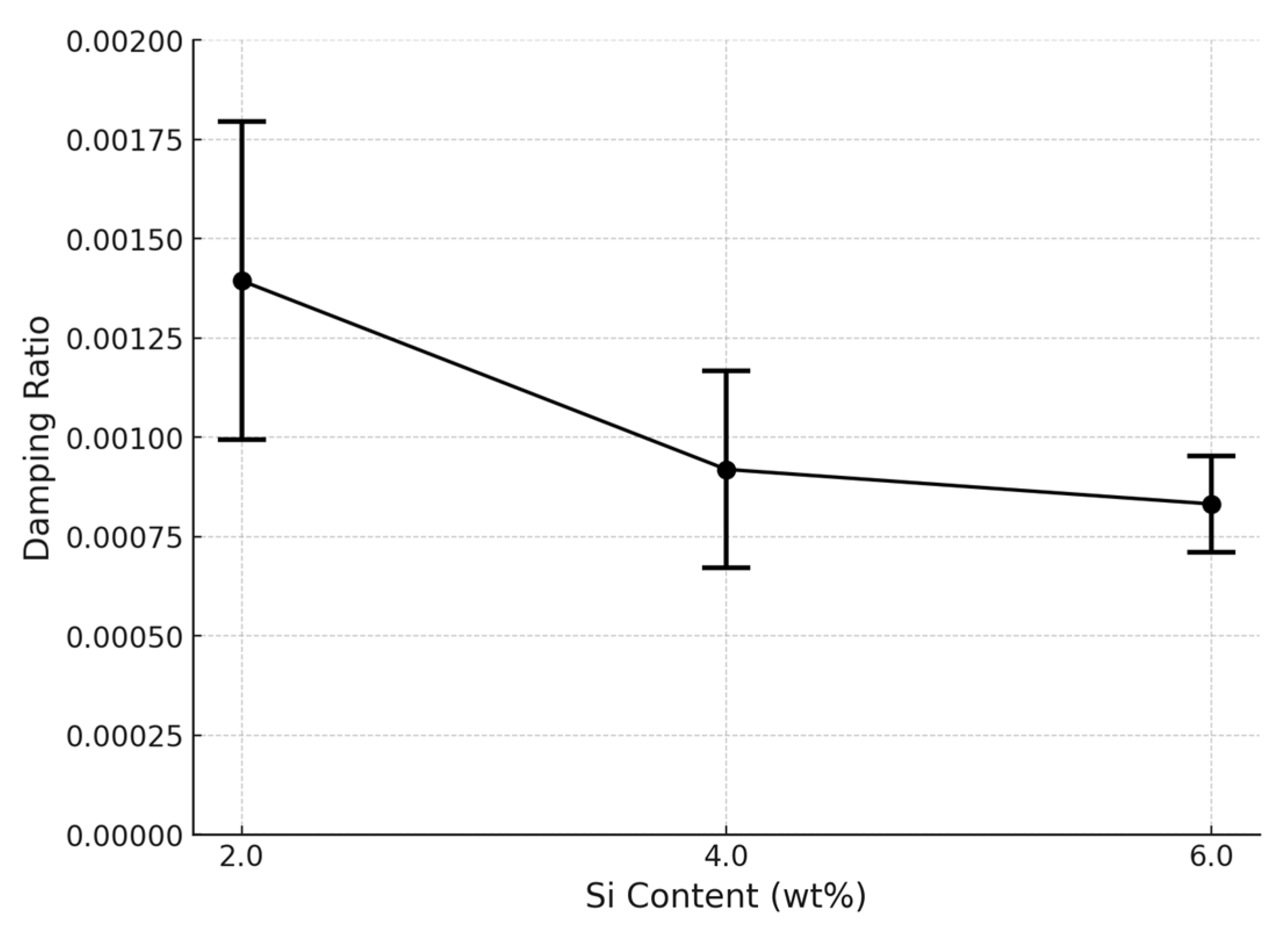
The average damping ratios of specimens with Si contents of 2.0 wt%, 4.0 wt%, and 6.0 wt% are summarized and compared in Table 9 and Figure 21. Overall, the damping ratio decreases as the Si content increases. This indicates that, within the 2.0 wt% to 6.0 wt% Si, decay times increase as Si content increases.
Table 9.
Damping ratio results for Cu-Si alloys with varying Si content.
Figure 21.
Graphical comparison of damping ratios for Cu-Si alloys with varying Si content.
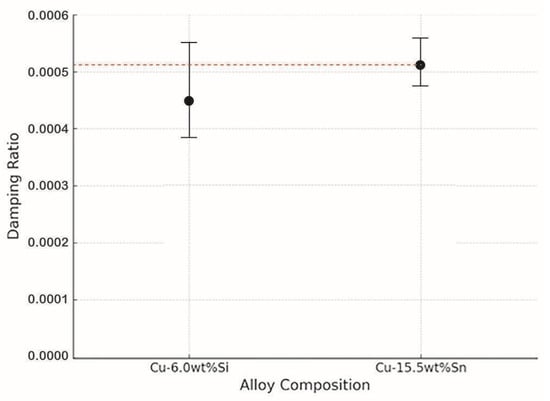
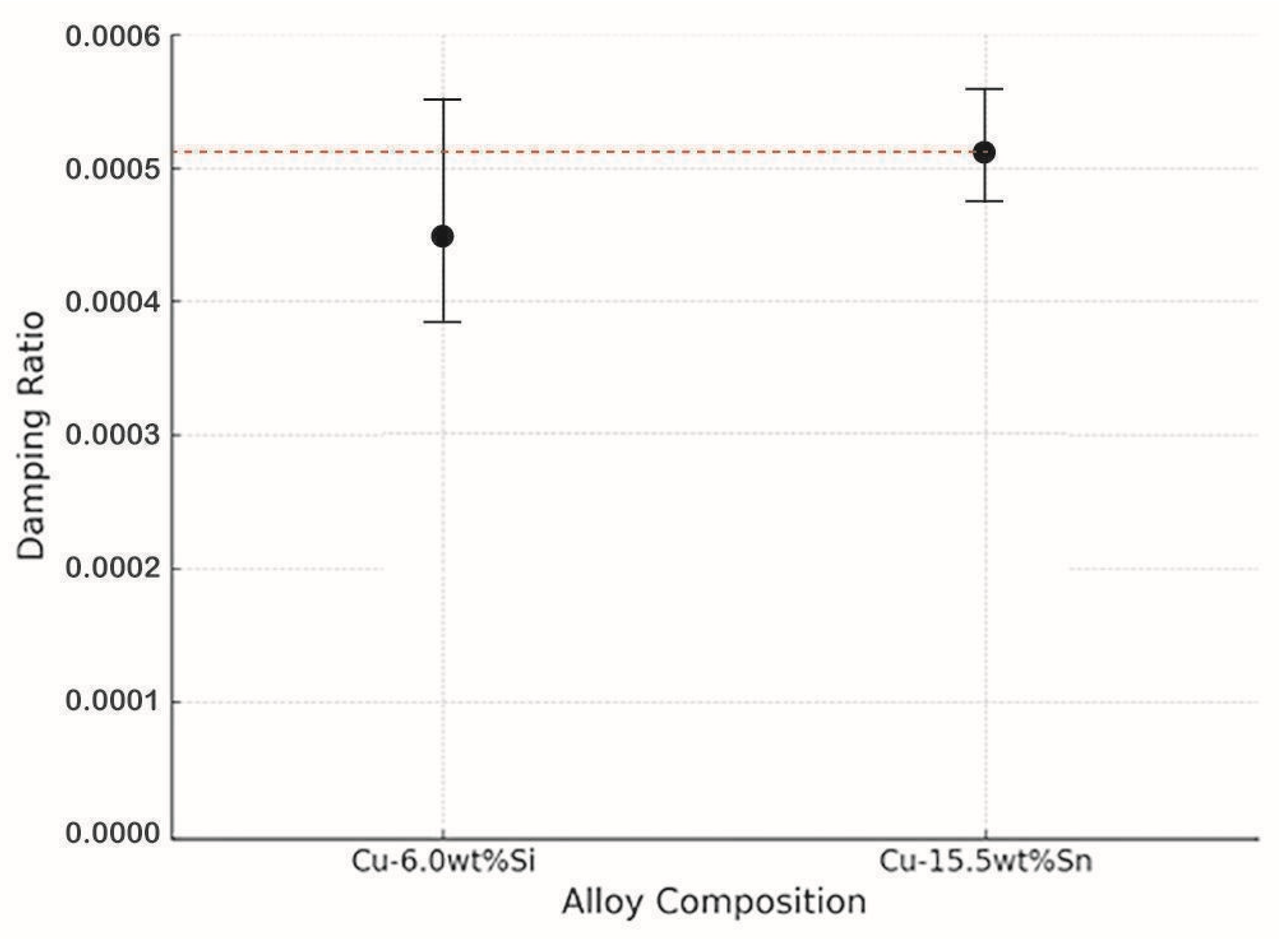
For the secondary stage analysis, Cu-6.0 wt% Si appeared to have a slightly lower damping ratio than Cu-15.5 wt% Sn, as illustrated by Table 10, though Figure 22 shows that the difference is small relative to experimental uncertainty.
Table 10.
Damping ratio results for Cu-6.0 wt% Si and Cu-15.5% Sn alloys.
Figure 22.
Comparison of damping ratio for Cu-6.0 wt% Si and Cu-15.5 wt% Sn alloys.
The damping ratio decrease from 2.0 to 6.0 wt% Si indicates progressively lower vibrational energy loss and longer decay times with increasing Si content within the tested range, which is in line with expected trends in elastic modulus and microstructure in Section 3.2.3 and Section 3.3 and those seen in the previous literature [33]. In the secondary comparison, Cu-6.0 wt% Si exhibited a lower damping ratio than Cu-15.5 wt% Sn, which supports a longer and more-vibrant sustain for bells constructed from the Cu-6.0 wt% Si alloy [37]. In general, since traditional Cu-Sn shows opposing trends for strength and damping ratio [36], acoustic qualities in Cu-Sn alloys have to be compromised and reduced in favor of yield and tensile strength. However, since Cu-6.0 wt% Si, as a composition, displays both the lowest damping ratio and the most favorable mechanical properties, Cu-6.0 wt% Si shows a clear advantage, maximizing both of these properties as compared with conventional bell bronze.
4. Conclusions
Cu-Si alloys (2.0–8.0 wt% Si) were evaluated as possible alternatives to Cu-Sn bell bronze by measuring castability, mechanical properties, microstructure, and acoustic metrics. The effects of Si content, up to 8.0 wt% Si, on fluidity, tensile strength, yield strength, elastic modulus, impact toughness, Vickers hardness, microstructure, natural frequency, and damping ratio were studied and are as follows:
From the perspective of mechanical properties, the Cu-6.0 wt% Si alloy exhibited superior values compared with the Cu-15.5 wt% Sn alloy in all evaluated parameters, including tensile strength, yield strength, impact toughness, and hardness. This implies that the Cu-6.0 wt% Si alloy may possess overall superior durability relative to the Cu-15.5 wt% Sn alloy under heavy loads and repeated striking. Therefore, temple bells manufactured using the Cu-6.0 wt% Si alloy have potential for improved structural stability and an extended service life compared with temple bells produced using the conventional Cu-15.5 wt% Sn alloy.
As for acoustic properties, the Cu-6.0 wt% Si alloy exhibited a higher elastic modulus and a lower damping ratio than the Cu-15.5 wt% Sn alloy. This results in a greater vibration duration and a lengthened period of resonance. These factors influence better-sustained, longer-lasting sounds that would provide an advantage for Cu-6.0 wt% Si alloys over conventional Cu-15.5 wt% Sn alloys.
Overall, these properties indicate that Cu-6.0 wt% Si alloys show promise in use for constructing temple bells that can exhibit superior mechanical durability and acoustic performance compared with the Cu-15.5 wt% Sn alloy, which has been widely used as a traditional material for temple bells. However, the specimens tested are limited in that the geometry of specific bell types was not explored, and further testing in this regard is likely required to build on the conclusions presented.
Author Contributions
Conceptualization, C.-S.W. and J.P.J.; methodology, C.-S.W.; software, D.Y.P.; validation, C.-S.W. and J.P.J.; formal analysis, C.-S.W.; investigation, C.-S.W. and D.Y.P.; resources, C.-S.W.; data curation, D.Y.P.; writing—original draft preparation, D.Y.P.; writing—review and editing, D.Y.P.; visualization, D.Y.P.; supervision, J.P.J.; project administration, J.P.J.; funding acquisition, C.-S.W. All authors have read and agreed to the published version of the manuscript.
Funding
This research was funded by the Ministry of SMEs and Startups (MSS), Republic of Korea, under the Industrial–Academic–Research Cooperation, R&D Program, grant number C0297381. The APC will be covered by the publisher.
Data Availability Statement
The original contributions presented in this study are included in the article. Further inquiries can be directed to the corresponding author.
Conflicts of Interest
The authors declare no conflicts of interest.
References
- Mott, R.L. Applied Strength of Materials; Pearson Education: London, UK, 2008; pp. 245–246. [Google Scholar]
- Beer, F.P.; Johnston, E.R. Mechanics of Materials; McGraw-Hill: Columbus, OH, USA, 2006; pp. 131–132. [Google Scholar]
- Timoshenko, S.P.; Goodier, J.N. Theory of Elasticity; McGraw-Hill: Columbus, OH, USA, 1951; pp. 278–279. [Google Scholar]
- Rossing, T.D. The Science of Sound; Addison-Wesley: Boston, MA, USA, 2007; pp. 55–57. [Google Scholar]
- Fletcher, N.H.; Rossing, T.D. The Physics of Musical Instruments; Springer: Berlin/Heidelberg, Germany, 1998; pp. 203–205. [Google Scholar]
- Legge, K.A.; Petrolito, J. Designing idiophones with tuned overtones. Acoust. Aust. 2007, 35, 47–50. [Google Scholar]
- Park, S.H.; Lee, M.; Hahn, N.; Sung, K.M. Acoustic Characteristics and Timbre Preferences of Korean Bells. J. Korean Acoust. Soc. 2011, 30, 273–280. [Google Scholar] [CrossRef] [Scilit]
- Fletcher, N.H. The nonlinear physics of musical instruments. Rep. Prog. Phys. 1999, 62, 723–764. [Google Scholar] [CrossRef] [Scilit]
- Cekus, D.; Kwiaton, P.; Nadolski, M.; Sokół, K. Quality Assessment of a Manufactured Bell Using a 3D Scanning Process. Sensors 2020, 20, 7057. [Google Scholar] [CrossRef] [Scilit] [PubMed]
- Nadolski, M.; Cekus, D. The Influence of Casting Parameters on the Sound of a Bell. In Proceedings of the METAL 2017: 26th International Conference on Metallurgy and Materials, Brno, Czech Republic, 24–26 May 2017; pp. 1893–1898. [Google Scholar]
- Debuta, V.; Carvalho, M.; Figueiredo, E.; Antunes, J.; Silva, R. The Sound of Bronze: Virtual Resurrection of a Broken Medieval Bell. J. Cult. Herit. 2016, 19, 544–554. [Google Scholar] [CrossRef] [Scilit]
- Cekus, D.; Nadolski, M. Assessment of the Change in the Tin Concentration in Bronzes to the Basic Components of the Sound of Bells. Arch. Metall. Mater. 2021, 66, 531–535. [Google Scholar] [CrossRef] [Scilit]
- Nadolski, M. The Evaluation of Mechanical Properties of High-tin Bronzes. Arch. Foundry Eng. 2017, 17, 127–130. [Google Scholar] [CrossRef] [Scilit]
- National Institute of Standards and Technology (NIST). Cu–Sn Phase Diagram Database. Available online: www.metallurgy.nist.gov/phase/solder/cusn.html (accessed on 10 November 2025).
- Strafford, K.N.; Newell, R.; Audy, K.; Audy, J. Analysis of Bell Material from the Middle Ages to the Recent Time. Endeavour 1996, 20, 22–27. [Google Scholar] [CrossRef] [Scilit]
- Yum, Y.H. Korean Bell; Seoul National University Press: Seoul, Republic of Korea, 1991; pp. 3–43. [Google Scholar]
- Audy, J.; Audy, K. Analysis of bell materials: Tin bronzes. China Foundry 2008, 5, 199–204. [Google Scholar]
- Adamski, C.z.; Bonderek, Z.; Piwowarczyk, T. Microstructures of Copper Casting Alloys and Zinc Casting Alloys; Ed. Silesia: Katowice, Poland, 1972. (In Polish) [Google Scholar]
- London Metal Exchange (LME). LME Tin—Market Data (Official Prices). Available online: https://www.lme.com/en/metals/non-ferrous/lme-tin (accessed on 13 December 2025).
- Geng, Y.; Ban, Y.; Wang, B.; Li, X.; Song, K.; Zhang, Y.; Jia, Y.; Tian, B.; Liu, Y.; Volinsky, A.A. A review of microstructure and texture evolution with nanoscale precipitates for copper alloys. J. Mater. Res. Technol. 2020, 9, 11918–11934. [Google Scholar] [CrossRef] [Scilit]
- Bucur, V. Metallic Alloys for Percussion Instruments. In Handbook of Materials for Percussion Musical Instruments; Springer: Cham, Switzerland, 2022. [Google Scholar] [CrossRef] [Scilit]
- Gao, M.; Cao, Y.; Zeng, X.-Y.; Hu, J.-X. Microstructure characteristics and acoustic properties of laser repaired Chinese bronze bells 2300 years ago. J. Alloys Compd. 2011, 509, 953–956. [Google Scholar] [CrossRef] [Scilit]
- Li, F.; Liu, W.; Ding, C.; Wang, S.; Meng, X. The Microstructures and Properties of Cu-Ni-Co-Si Alloys: A Critical Review. Metals 2025, 15, 564. [Google Scholar] [CrossRef] [Scilit]
- Ban, Y.; Zhang, Y.; Tian, B.; Jia, Y.; Song, K.; Li, X.; Zhou, M.; Liu, Y.; Volinsky, A.A. Microstructure Evolution in Cu-Ni-Co-Si-Cr Alloy During Hot Compression by Ce Addition. Materials 2020, 13, 3186. [Google Scholar] [CrossRef] [Scilit] [PubMed]
- ASTM E8/E8M-24; Standard Test Methods for Tension Testing of Metallic Materials. ASTM International: West Conshohocken, PA, USA, 2024.
- JIS Z 2242:2018; Method of Charpy Pendulum Impact Test for Metallic Materials. Japanese Standards Association: Tokyo, Japan, 2023.
- ASTM E92-23; Standard Test Methods for Vickers Hardness and Knoop Hardness of Metallic Materials. ASTM International: West Conshohocken, PA, USA, 2023.
- Campbell, J.; Harding, R.A. The Fluidity of Molten Metals; European Aluminium Association: Brussels, Belgium, 1994. [Google Scholar]
- Slamet, S.; Suyitno; Kusumaningtyas, I. Effect of Composition and Pouring Temperature of Cu-Sn on Fluidity, Density and Mechanical Properties by Investment Casting. In Proceedings of the 1st International Conference on Computer Science and Engineering Technology, Kudus, Indonesia, 25–26 October 2018. [Google Scholar]
- Yan, H.; Hu, H.; Li, L.; Huang, W.; Li, C. Research Progress of Cu-Ni-Si Series Alloys for Lead Frames. Coatings 2025, 15, 91. [Google Scholar] [CrossRef] [Scilit]
- Olesinski, R.W.; Abbaschian, G.J. The Cu−Si (Copper-Silicon) system. Bull. Alloy Phase Diagr. 1986, 7, 170–178. [Google Scholar] [CrossRef] [Scilit]
- Ranganathan, R.; Yunfeng, S.; Keblinski, P. Frequency-dependent mechanical damping in alloys. Phys. Rev. B 2017, 95, 214112. [Google Scholar] [CrossRef] [Scilit]
- Drnevich, V.P. A Relationship between Modulus and Damping Provides for Simple, Unified Modeling of Both. Geotech. Front. 2017, 2017, 48–60. [Google Scholar] [CrossRef] [Scilit]
- Kohler, F.; Germond, L.; Wagnière, J.-D.; Rappaz, M. Peritectic solidification of Cu–Sn alloys: Microstructural competition at low speed. Acta Mater. 2009, 57, 56–68. [Google Scholar] [CrossRef] [Scilit]
- Mitrasinovic, A. Characterization of the Copper-Silicon System and Utilization of Metallurgical Techniques in Silicon Refining for Solar Cell Applications; Library and Archives Canada: Ottawa, ON, Canada, 2010. [Google Scholar]
- Okuma, T.; Hoshino, K.; Otani, T. Mechanical and Acoustic Characteristics of Cu–Sn Alloy-based Temple Bells. J. Acoust. Soc. Jpn. 2001, 57, 319–325. [Google Scholar]
- Blanter, M.S.; Golovin, I.S.; Neuhauser, H.; Sinning, H.-R. Internal Friction in Metallic Materials; Springer: Berlin/Heidelberg, Germany, 2007. [Google Scholar]

Disclaimer/Publisher’s Note: The statements, opinions and data contained in all publications are solely those of the individual author(s) and contributor(s) and not of MDPI and/or the editor(s). MDPI and/or the editor(s) disclaim responsibility for any injury to people or property resulting from any ideas, methods, instructions or products referred to in the content. |
© 2026 by the authors. Licensee MDPI, Basel, Switzerland. This article is an open access article distributed under the terms and conditions of the Creative Commons Attribution (CC BY) license.