Article

Enhancement of Mechanical Strength and Degradation Rate of Mg-5Al Alloy by Fe Addition via SPS Rapid Densification for Fracturing Applications

1
Hunan Mechanical & Electrical Polytechnic, Changsha 410151, China
2
College of Mechanical Engineering, Hunan Institute of Science and Technology, Yueyang 414006, China
3
Hunan Key Laboratory of Electromagnetic Equipment Design and Manufacture, Hunan Institute of Science and Technology, Yueyang 414006, China
4
School of Materials Science and Engineering, Hunan University, Changsha 410082, China
*
Author to whom correspondence should be addressed.
Metals 2026, 16(2), 217; https://doi.org/10.3390/met16020217
Submission received: 13 January 2026 / Revised: 8 February 2026 / Accepted: 9 February 2026 / Published: 13 February 2026

Abstract

With surging demand for oil and gas resources, staged fracturing is becoming extremely important, and fracturing material is the key factor in exploration. Recently developed Mg-Al alloys cannot simultaneously achieve high strength and rapid degradation, limiting their widespread application in the exploration. To address this issue, this study utilized the rapid densification technology of spark plasma sintering (SPS) to sinter Mg, Al, and Fe powders at a ratio of Mg-5Al-Fe (0, 2, 4, 6 wt.%) under a temperature of 510 °C and a pressure of 35 MPa for 800 s. And this study conducted investigations on the microstructure, mechanical strength and degradation rate of the alloy through scanning electron microscope, hardness and compression tests, as well as immersion experiments. The results indicated that SPS enabled rapid powders densification and grain refinement, and the addition of Fe particles formed a second-phase strengthening which could block dislocation, thereby increasing mechanical strength. The ultimate compressive strength (UCS) was increased from 189.37 ± 6.12 MPa for Mg-5Al to 421.21 ± 12.31 MPa for Mg-5Al-6Fe. Furthermore, the addition of Fe accelerated the degradation rate, with the Mg-5Al-6Fe alloys reaching 45.26 ± 2.6 mm/year. Meanwhile, the alloys also had a low density of 1.38 ± 0.027–1.53 ± 0.030 g/cm3, which could effectively reduce the pumping energy consumption of fracturing fluids. These characteristics met the core requirements of degradable fracturing balls, showing the great potential of Mg-5Al-Fe alloys for staged fracturing.

1. Introduction

Staged fracturing is a core technology for the effective development of petroleum and natural gas [1], and the downhole fracturing ball stands as a key determinant that decides whether staged fracturing achieves its intended goals [2,3,4]. Traditional fracturing materials face a serious problem of non-degradability which requires the use of drilling and grinding equipment to break and retrieve the balls after fracturing, consuming substantial human and financial resources and posing the risk of oil pipe blockage [5,6]. Therefore, degradable materials for making fracturing balls can significantly shorten project cycles and reduce costs [7,8]. The controllability of the corrosion resistance of degradable materials directly determines the effectiveness of the fracturing process. The corrosion resistance should not be too weak, which would lead to premature degradation and failure; nor should it be too strong, which would cause slow degradation and block the oil outlet. Moreover, porosity can reduce corrosion resistance, and lead to local corrosion, uneven degradation, and fracturing failure. It is necessary to eliminate porosity.
Currently, Mg alloys are highly promising in fracturing applications due to their low density (≈1.74 g/cm3) and high specific strength [9,10]. These features enable the fracturing balls to complete the fracturing tasks with low energy consumption in high pressure environments and still provide sufficient rigidity on the basis of lightweight [11]. In addition, Mg alloys are prone to corrosion and degradation in fracturing fluids [12,13]. It can enable the fracturing balls to degrade after completing the fracturing work, avoiding the blockage of the oil outlet [14,15,16], and the degradation products, such as Mg2+, are non-toxic, which meets environmental protection requirements. Therefore, degradable Mg alloy fracturing balls hold great significance.
Recently, some Mg alloys as fracturing materials have been studied. Among various Mg alloys, Mg-Al alloys demonstrate comparatively high strength, hardness, and thermal resistance at elevated temperatures [17], such as Mg-17Al-7Cu-3Zn-1Gd alloys [18], Mg-20Al-5Zn-1.5Cu alloys [19], and Mg-17Al-3Zn-5Cu alloys [20], etc. These studies have added Cu to the Mg matrix to improve the degradation rate. However, Cu deteriorates the mechanical performance of Mg alloys to a certain extent [5]. Thus, it is essential to fabricate a new type of Mg-Al alloy that can simultaneously fulfill criteria for mechanical characteristics and degradation rate.
The combination of higher strength and lower density makes Fe a particularly promising candidate for fracturing ball applications in comparison with Cu [21]. These characteristics are conducive to increasing strength and maintaining the low density of Mg-Al alloys. Firstly, Fe acts as secondary phase, and it can block dislocations [22,23]. Secondly, compared with Cu, Fe is less likely to form brittle metal phases that would reduce the strength of the alloy. For Mg alloys, impurity elements, such as Fe, Cu, and Ni act as cathodes, accelerating the hydrogen evolution reaction and thus leading to an increased corrosion rate. Among them, Fe has a particularly prominent corrosive effect on Mg alloys due to significant potential difference between Fe and Mg [24]. Fe can promote the corrosion of Mg-Al alloys [25,26]. Additionally, in comparison with ceramic (such as Al2O3), Fe is electrically conductive and can serve as a cathode, inducing galvanic corrosion and thereby enhancing the degradation rate. Therefore, the addition of Fe probably achieves rapid degradation while still meeting strong mechanical properties. These properties show great promise for the application of degradable fracturing balls, which would help reduce working time and costs.
It is necessary to select a suitable method to prepare Mg-Al-Fe alloys. On the one hand, since the density of Fe (7.8 g/cm3) is much greater than those of Mg (1.74 g/cm3) and Al (2.7 g/cm3), Fe will quickly sink and deposit at the bottom when the powder melts together. This will affect the performance of Mg-Al-Fe alloys. On the other hand, the melting point of Fe (1538 °C) is much higher than the boiling point of Mg (1090 °C), so Mg may have evaporated before Fe melts. Therefore, it is difficult to prepare Mg-Al-Fe alloys using conventional processes. Spark plasma sintering (SPS) is a technique of high efficiency consolidation of powders. The technique generates high temperature within a fraction of a second due to electrical discharge and generation of plasma spark, which only melts the surface of powders. Meanwhile, pressure was applied to consolidate powders during SPS process. Mondet et al. utilized SPS technique to consolidate AZ91 powders at different temperatures in the range of 310 °C–500 °C [27]. They found the hardness and yield compressive strength were superior conventional cast Mg alloys. Accordingly, SPS enables the rapid combination of Mg, Al and Fe powders in solid-state, avoiding completely melting of powders, which probably solves the problem of differences in both melting point, boiling point and density. Thus, SPS process may be suitable to prepare Mg-Al-Fe alloys.
In this study, SPS was used to prepare Mg-Al-Fe alloys for higher mechanical strength and degradation rate for potential fracturing applications, and the influence of Fe content on its microstructure, compressive test, hardness test, corrosion behaviors were investigated in detail.

2. Experimental Procedure

2.1. Alloy Preparation

In this study, commercial Mg (>99.9%), Al (>99.9%) and Fe (>99.9%) were obtained from Shanghai Naiou Nano Tech. Co., Ltd. (Shanghai, China), and used as raw powders to prepare Mg-5Al-xFe alloys (x = 0, 2, 4, and 6 wt.%) [28,29]. The particle size of the starting Mg, Al and Fe powders were 20–40 μm, 20–40 μm, and 6–10 μm, respectively. For each composition, the raw powders were weighed according to the designated ratio, with a total mass of 20 g per batch. Three replicate batches were prepared for every composition to ensure the availability of sufficient specimens for subsequent tests. The mixed powders were then uniformly dispersed by a ball mill (XQM-2, Shanghai Qiuzuo Scientific Instrument Co. Ltd., Shanghai, China) under the protection of high-purity Ar (99.95%) to ensure uniform mixing without oxidation. The ball-to-powder ratio was set to 10:1, and the rotational speed of the ball mill was 300 revolutions per minute (rpm) during the 40-min mixing process. Subsequently, Mg-5Al-Fe powders were sintered under pressure of 35 MPa by SPS according to similar literature on Mg-Al alloys [30,31]. During the SPS process, the sintering temperature increased with a speed of 50 °C/min up to 510 °C, at which it was then sintered for 10 min. Finally, cylindrical Mg-5Al-Fe alloys were cooled for 40 min to room temperature in a furnace, resulting in consolidated Mg-5Al-Fe alloys with a diameter of 30 mm and height of 17 mm.

2.2. Microstructure

Mg-5Al-Fe alloys were sanded from 80 to 1500 grit, followed by polishing with diamond paste/alumina nanoparticles. Then, Mg-5Al-Fe alloys were ultrasonicated for 2 min in ethanol at room temperature and finally dried in hot air after the ethanol pretreatment. Density of Mg-5Al-Fe alloys was determined by Archimedes’ principle [32,33]. X-ray diffraction (XRD) patterns were obtained via a Rigaku X-ray diffractometer (Rigaku, D/MAX-2500, Tokyo, Japan) at scanning speed of 10°/min using Cu Kα for the analysis of phases in Mg-5Al-Fe alloys. The microstructural observation of Mg-5Al-Fe alloys was performed on an Olympus OLS4000 optical microscope (Olympus Schweiz AG, Wallisellen, Switzerland). Before the observation of metallographic morphology, a solution of 95 mL ethanol and 5 mL nitric acid was used to corrode the surface of Mg-5Al-Fe alloys for 5 s. Surface morphology, phase compositions and corrosion products were analyzed via JEOL scanning electron microscope (SEM, JSM-7800F, JEOL. Ltd., Tokyo, Japan) at 15 kV at room temperature combined with X-ray energy-dispersive spectrometry (EDS, JSM 600LA, JEOL. Ltd, Tokyo, Japan).

2.3. Mechanical Strength Tests

The tests of Vickers hardness were carried out on a HMAS-D1000Z tester (Shanghai Microcre Light-Machine Technology Co. Ltd., Shanghai, China) by applying a force of 9.8 N over a period of 10 s at room temperature. The hardness test was conducted in the relatively smooth middle of the specimens. The test was carried out at an appropriate distance (1 mm) from each other to ensure the reliability of the hardness. Seven sets of data were collected for every specimen, and the average value was calculated. Meanwhile, the compressive properties of sintered Mg-5Al-Fe alloys were tested by a PWS-100 electronic universal tester (Hualong Testing Instrument Co. Ltd., Shanghai, China) with a capacity of 100 kN. The specimens for compressive tests were 6 mm in height and 3 mm in diameter, and all the faces were polished by 1500-mesh paper. During the compressive tests, the loading speed was 0.5 mm/min. Four replicate specimens were used for the aforementioned tests to ensure the reliability of the experimental results.

2.4. Corrosion Behaviors

Corrosion behaviors of SP-sintered Mg-5Al-Fe alloys were systematically investigated by immersion tests. Specimens (8 mm in height and 10 mm in diameter) were precisely machined by electrical discharge wire cutting for corrosion behaviors. The ionic composition of fracturing fluid predominantly contained Cl, and 3.5 wt.% sodium chloride (NaCl) was used as the corrosive medium. Temperatures below 30 °C were avoided according to the well conditions [34,35,36], and high temperatures (>80 °C) were also excluded because of significant medium evaporation. The test temperature was set at 40 °C via a water bath.

2.4.1. Electrochemical Tests

Potentiodynamic polarization tests were performed on a RST5202F electrochemical workstation (Zhengzhou ShiRuiSi Instrument Technology Co. Ltd., Zhengzhou, China). Mg-5Al-Fe alloys (surface area 0.785 cm2) were embedded in epoxy resin and acted as the working electrode. The saturated calomel electrode and the platinum electrode were the reference electrode and the counter electrode, respectively. The temperature of the 3.5 wt.% NaCl was controlled by the water bath during the tests. Before the tests, Mg-5Al-Fe alloys were polished by sandpaper below grade 2000 for the same level of surface. The potentiodynamic polarization tests were performed with a scanning rate of 1 mV/s. The corrosion current density and corrosion potential of Mg-5Al-Fe alloys were determined from the polarization curves via Tafel extrapolation. After potentiodynamic polarization tests, the morphologies of corrosion surfaces on Mg-5Al-Fe alloys were studied by an OLS5000-SAF laser scanning confocal microscopy (LSCM, Keyence, Osaka, Japan).

2.4.2. Immersion Tests

Mg-5Al-Fe alloys were first sealed with epoxy resin to expose a specific surface area of 0.785 cm2. Then ground down to 2000 grit using silicon carbide (SiC) abrasive paper, buff-polished with alumina suspension (0.5 mm), and finally cleaned by ultrasonic cleaning in ethanol (95 wt.%). After electrochemical test, the morphologies of corrosion surfaces on Mg-5Al-Fe alloys were studied by an OLS5000-SAF laser scanning confocal microscopy (LSCM, Japan).
Tests on hydrogen evolution and weight loss of Mg-5Al-Fe alloys were simultaneously carried out. The sintered Mg-5Al-Fe alloys were dipped into 3.5 wt.% NaCl solution for a duration of 90 min, with the proportion of solution volume to specimen surface area maintained at 20 mL/cm2. After tests, Mg-5Al-Fe alloys were ultrasonically cleaned for 180 s in a solution of chromium trioxide (CrO3) (200 g/L) and silver nitrate (AgNO3) (10 g/L). Subsequently, Mg-5Al-Fe alloys were dried and weighed. The weight loss exhibited by the epoxy resin was insignificant, and corrosion rates were computed based on the mathematical formula:
V = M/AT
in which M is the weight loss (g), A is the specimen area exposure to NaCl solution (0.785 cm2), and T is the exposure time (1.5 h). SEM with EDS was employed to investigate the corrosion products on the immersed surface of Mg-5Al-Fe alloys.

2.5. Statistical Analysis

Each test was performed in triplicate at minimum, and test outcomes were depicted using mean ± standard deviation values, and one-way analysis of variance was utilized to verify statistical significance among experimental groups. (p ≤ 0.05).

3. Results and Discussion

3.1. Preparation of Mg-5Al-Fe Alloys

The schematic diagram for rapid sintering of Mg-5Al-Fe alloys under pressure of 35 MPa at 510 °C is shown in Figure 1a,b. Powders of Mg, Al and Fe were rapidly sintered for 800 s at high pressure. In this case, the surface of powders was melted by SPS created by a pulsed direct current as shown in Figure 1c, and then the powders were sintered by mechanical pressure during SPS, which increased the compact of sintering. By the advanced SPS process, Mg-5Al-Fe alloys with a height of 17 mm and diameter of 30 mm were prepared (Figure 1d). The density of Mg-5Al-xFe (x = 0, 2, 4, 6) was 1.38 ± 0.027, 1.46 ± 0.029, 1.52 ± 0.030, and 1.53 ± 0.030 g/cm3, respectively (Figure 1e). Due to the low density, on the one hand, it could reduce the pumping consumption of the fracturing fluid and ensure that the fracturing balls were accurately delivered to the designated position; On the other hand, it was also easier to recover them after the fracturing operation [37]. The relative density of Mg-5Al-Fe alloys was higher than that of Mg-5Al alloy (Figure 1f), indicating that powders of Mg, Al, and Fe were connected with each other after sintering. Since the density of Fe (7.8 g/cm3) is much higher than that of Mg (1.74 g/cm3) and Al (2.7 g/cm3), theoretically, as the Fe content increases, the density should also increase. However, experimental results showed that there was no significant change in density as Fe increased. This was because the addition of Fe increased the porosity and it could also be confirmed from the decrease in relative density shown in Figure 1f. This was the reason that Fe content did not significantly change the experimental density, it led to noticeable variations in porosity.
XRD was carried out to distinguish the phase compositions of the sintered Mg-5Al-Fe alloys with that of Mg-5Al alloy as control, and the results are presented in Figure 1g. Obviously, the Mg-5Al alloy was composed of α-Mg and an Al phase. As Fe was added, Fe phase formed in the Mg-5Al-Fe alloys, and the volume fraction of Fe phase rose with increasing Fe concentration—notably in the Mg-5Al-6Fe alloy. The absence of intermetallic phases in the XRD patterns of Mg-5Al-Fe alloys was related to SPS rapid densification, in which the rapid heating (50 °C/min) and short holding time (5 min) of this process prevented the formation of intermetallic phase due to insufficient reactive time. Spark discharge generated by pulsed current only caused local melting on the particle surface of powders, while the overall powders remained in a solid-state, avoiding free reactions of atoms. Therefore, no intermetallic phases were obviously detected in Figure 1g.
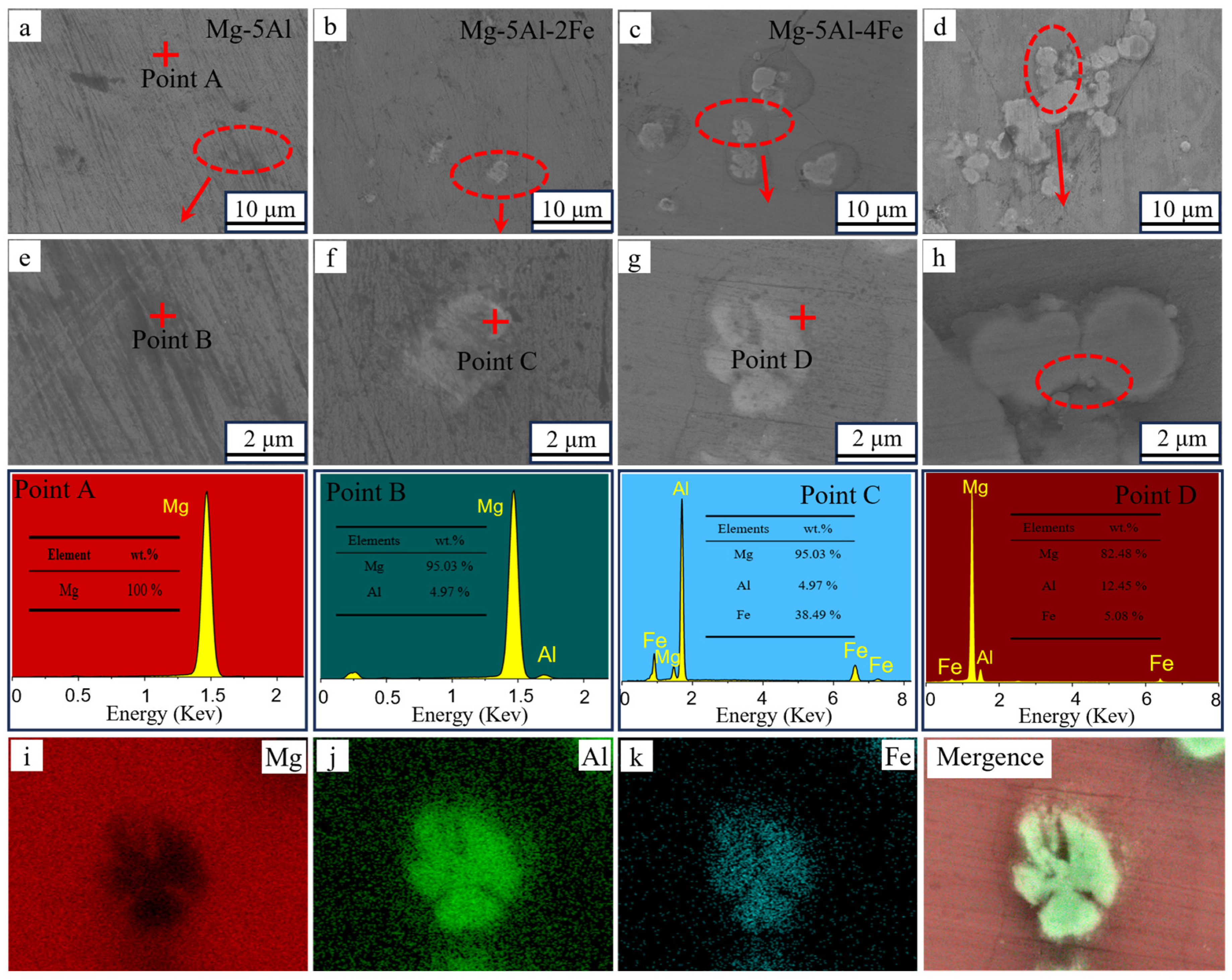
The microstructural characteristics and EDS results of sintered Mg-5Al-Fe alloys by SPS are presented in Figure 2. It could be found that Mg-5Al alloys were mainly composed of a gray bulk phase and α-Mg matrix in Figure 2a, while Mg-5Al-Fe alloys contained an additional bright white phase besides these two phases in Figure 2b–d. According to EDS analysis of point A and B, the Mg matrix was not contaminated during SPS and the gray bulk area was the Al phase. When the Fe content was 2 wt.%, the regular bright white phase gradually appeared, and the microstructure was dense and free of defects such as micropores. With the further increase in Fe (4 wt.%), the bright white phase evenly distributed in the α-Mg matrix. It could be inferred that the bright white area was an Fe phase. When the Fe content was 6 wt.%, the bright white phase and gray bulk phases were interspersed with each other with block-shaped distribution. For detailed observation of elemental distributions, the Mg-5Al-4Fe alloy in Figure 2g was studied by EDS mapping, and the distributions of Mg, Al, and Fe elements within the Mg-5Al-4Fe alloy are illustrated in Figure 2i–k. It could be found that the heart-shaped region was mainly composed of Fe, while Mg distributed on the outer side of the heart-shaped region. Moreover, Al acted as a bridge, filling the gap between the incompatible Fe and Mg, avoiding the formation of microcracks.
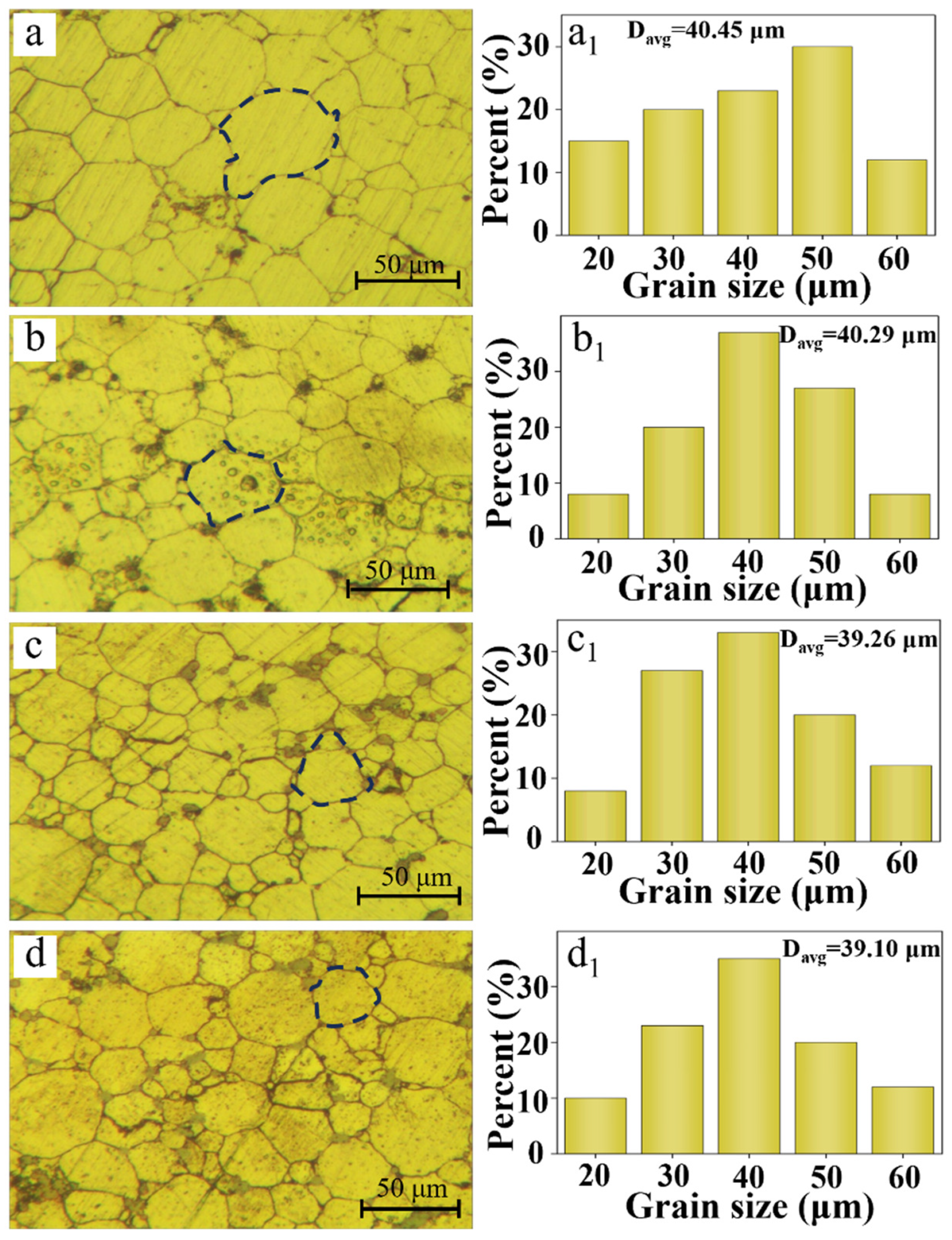
The optical morphologies and their corresponding distributions of grain size for the sintered Mg-5Al-Fe alloys are shown in Figure 3. It could be found that microstructure features of Mg-5Al-Fe alloys with different amounts of Fe showed structural resemblances which mainly composed of equiaxed grains of Mg-Al and the Fe phase in Figure 3a–d. The primary Mg-Al grains were separated by the Fe phase which was segregated along the grain boundaries. The grain size of the Mg-5Al alloy was large and their average grains were 40.45 ± 2.2 µm in Figure 3(a1). With the elevation of Fe content, the grain sizes of Mg-5Al-2Fe and Mg-5Al-4Fe gradually decreased to 40.29 ± 1.9 µm and 39.26 ± 2.7 µm, respectively, as shown in Figure 3(b1,c1). This might be due to the inhibition effects of the Fe phase. The very limited solid solubility of Fe in the α-Mg matrix was only 0.011 wt.% [38], which led to an accumulation of the Fe phase around the solid/liquid interface, thereby reducing migration of α-Mg grain boundaries during rapid SPS (800 s). Moreover, the characteristic of only melting the surface of the powder by SPS with sintering at 510 °C and pressure of 35 MPa meant it could also maintain fine-grained. The grains could not grow or refine significantly and could only maintain a grain size close to that of the original powders. It is worth noting that with increasing the Fe content to 6 wt.%, the average grain size grew to 39.10 ± 2.4 μm. Fe content modified the microstructures of Mg-5Al alloys and accordingly affected their mechanical and corrosion properties. Thus, the effects of Fe on these two properties will be comprehensively presented and discussed in the following sections.

3.2. Mechanical Strength

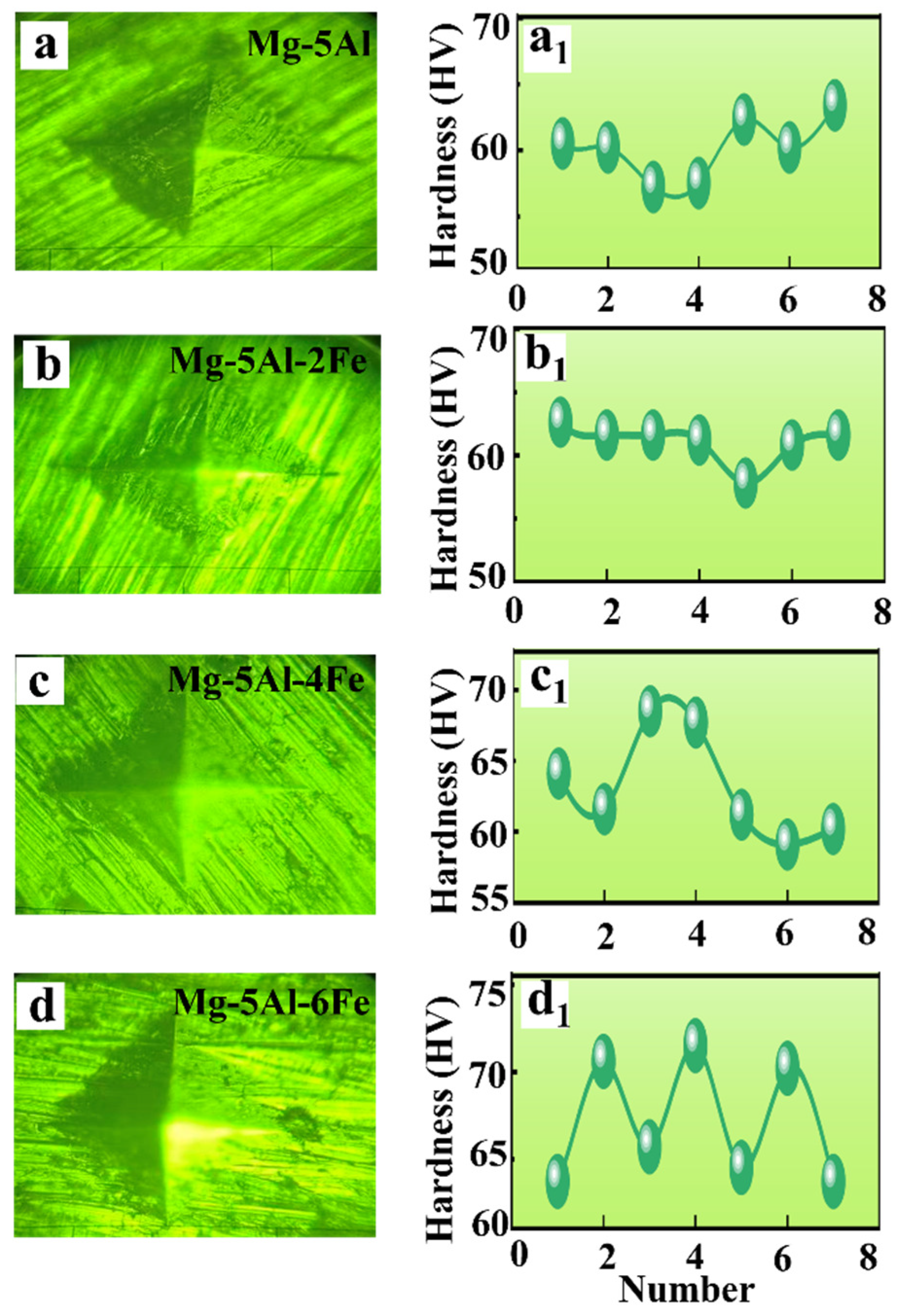
The mechanical strength of Mg-5Al-Fe alloys are shown in Figure 4. Figure 4a–d show several marks left on the surface of tested Mg-5Al-Fe alloys by the hardness instrument. These marks all present a similar rhombus shape. The specific values of Vickers hardness are shown as Table 1. The average hardness of Mg-5Al-2Fe, Mg-5Al-4Fe and Mg-5Al-6Fe alloys were 62.68 ± 3.01 HV, 64.80 ± 2.98 HV, and 71.84 ± 3.22 HV respectively, which were all higher than that of the Mg-5Al alloy (60.94 ± 1.54 HV). This indicates that as the Fe content increased, the hardness value showed an increasing trend.
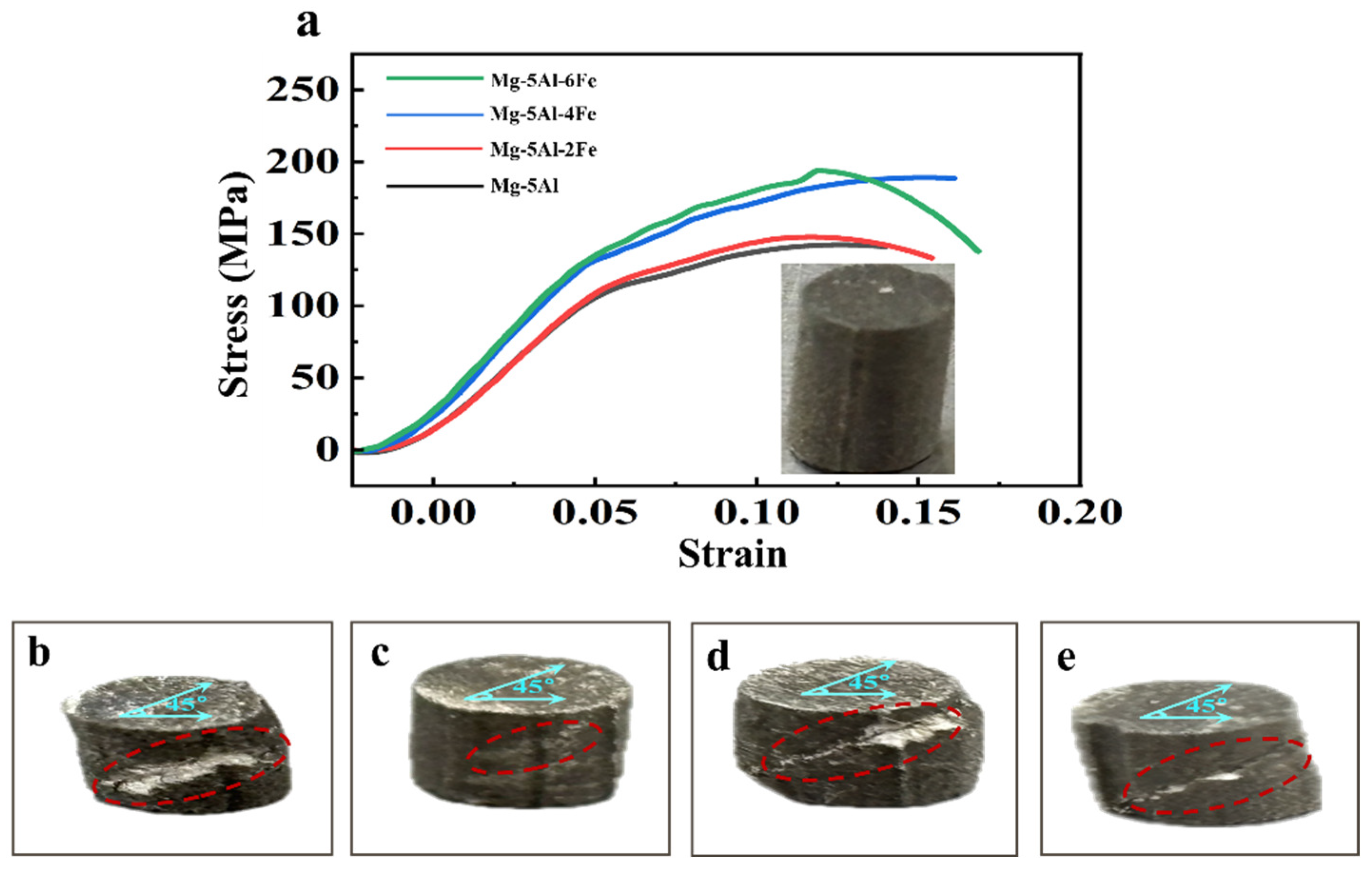
The compressive stress–strain curves of Mg-5Al-Fe alloys are illustrated in Figure 5a. The compressive stress–strain curves show a similar trend, with maximum stress increasing as the Fe content rose. The compressive yield strength (CYS), elastic modulus, and ultimate compressive strength (UCS) of Mg-5Al-Fe alloys are presented in Table 2. Addition of Fe led to a significant enhancement in these three mechanical strengths: the CYS increased gradually from 139 ± 3.99 MPa (Mg-5Al alloy) to 141 ± 5.17 MPa (Mg-5Al-2Fe alloy), 183 ± 4.89 MPa (Mg-5Al-4Fe alloy), and 189 ± 6.12 MPa (Mg-5Al-6Fe alloy). The elastic modulus also changed from 34 ± 3.03 GPa for Mg-5Al to 74 ± 3.28 GPa for Mg-5Al-6Fe. Similarly, the UCS increased from 206 ± 8.54 MPa in the Mg-5Al alloy to 218 ± 8.66 MPa in the Mg-5Al-2Fe alloy, 393 ± 6.59 MPa for the Mg-5Al-4Fe alloy, and 421 ± 12.31 MPa for the Mg-5Al-6Fe alloy. The increase in hardness and compressive strength was attributed to the formation of a second-phase strengthening when Fe was added to the Mg-5Al-Fe alloys [39,40,41]. When the dislocation moved to the location of the hard Fe phase, it would be physically blocked by the Fe phase and could not pass through directly. The dislocation needed to bypass the Fe phase to continue moving. This process required more external force, and macroscopically, it was manifested as the alloy needing to withstand greater pressure to undergo deformation; thus, the compressive strength increased. Overall, the compressive strength from Mg-5Al-4Fe to Mg-5Al-6Fe did not increase significantly, and Mg-5Al-6Fe has the risk of local corrosion [42]. In summary, the performance of Mg-5Al-4Fe was better and was sufficient to meet the fracturing requirements of high pressure (>70 MPa).
The compressive fracture surfaces of sintered Mg-5Al alloys are shown in Figure 5b–e. As Fe increased, they presented similar fracture morphologies which were composed of lots of microcracks. According to the microstructure, microcracks probably formed at the interface among the Mg matrix and the Fe phase, then propagated along with the Fe phase. Moreover, these cracks were all approximately at a 45-degree angle to the loading axis which indicated their shear failure mechanism [43]. When 45-degree cracks appeared in the specimen, it showed that the material mainly fails due to shear, which was a typical compression failure mode of brittle materials.

3.3. Electrochemical Test

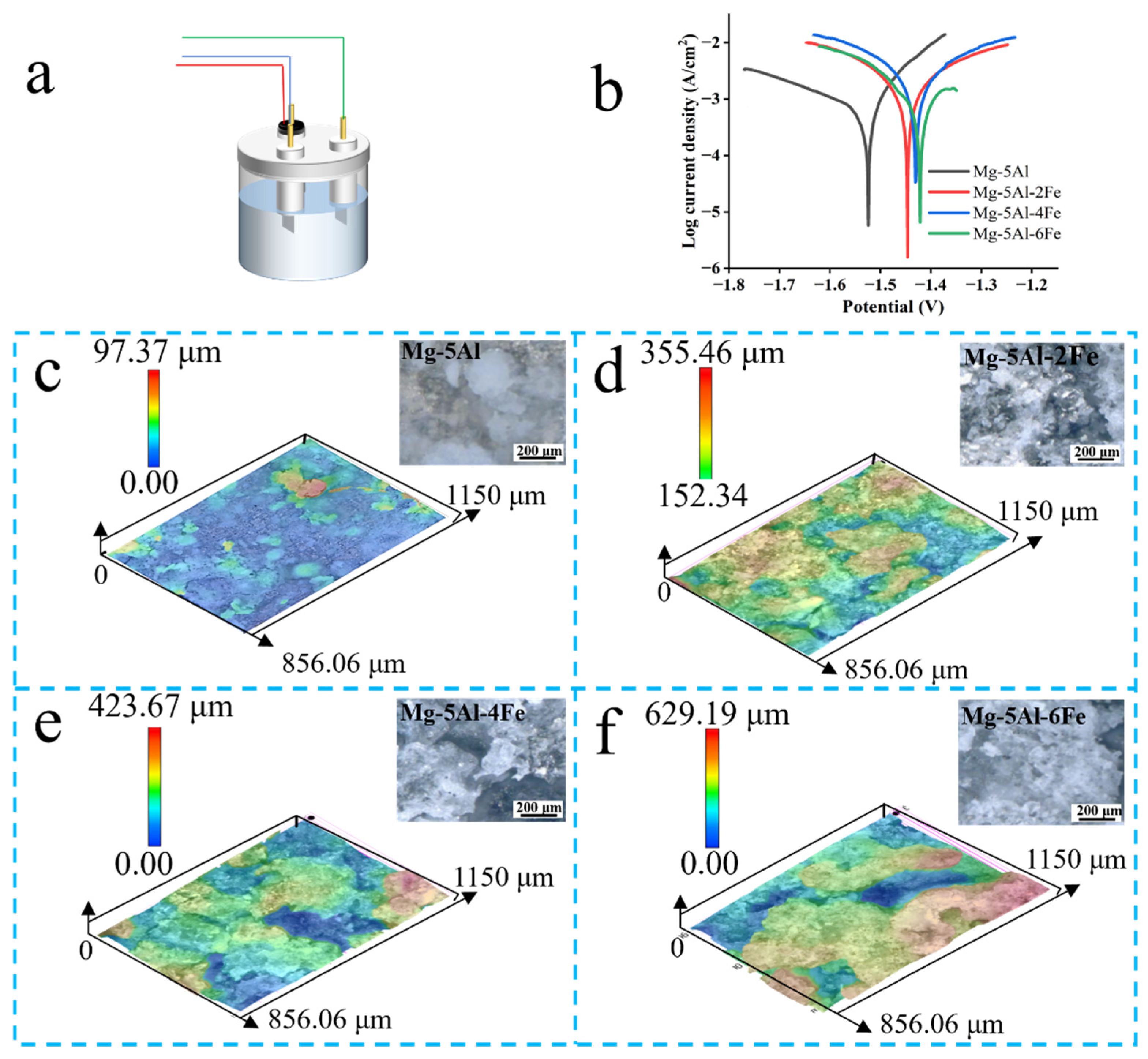
The electrochemical behavior of the Mg-5Al-Fe alloys in 3.5% NaCl solution was evaluated using polarization curves, corrosion current density, and corrosion potential (Figure 6). The electrochemical test employed a three-electrode system, as shown in Figure 6a. The working electrodes were Mg-Al-Fe alloys, the auxiliary electrode was a platinum sheet, and the reference electrode was a saturated calomel electrode (SCE). It was found that the polarization curves of Mg-Al alloys with different Fe contents were separated in Figure 6b, indicating that the Fe content significantly altered the electrochemical behavior of the Mg-Al alloys.
As can be seen from Table 3, the corrosion potential of Mg-5Al, Mg-5Al-2Fe, Mg-5Al-4Fe and Mg-5Al-6Fe alloys reached −1.25 ± 0.10 V, −1.40 ± 0.12 V, −1.60 ± 0.16 V, and −1.83 ± 0.15 V, respectively. As the Fe content increased, the corrosion potential gradually became more negative. As seen in Table 3, the current density generally showed an upward trend as the Fe content increased. The corrosion current density of Mg-5Al, Mg-5Al-2Fe, Mg-5Al-4Fe and Mg-5Al-6Fe alloys reached 1.0 ± 0.21 mA/cm2, 3.0 ± 0.30 mA/cm2, 4.50 ± 0.25 mA/cm2, and 5.51 ± 0.28 mA/cm2, respectively. The degradation rate was directly proportional to the corrosion current density and the above data indicated that the degradation rate followed the trend: Mg-5Al-6Fe > Mg-5Al-4Fe > Mg-5Al-2Fe > Mg-5Al.
The surface morphology of Mg-5Al-Fe alloys after the electrochemical test was characterized by using LSCM, as illustrated in Figure 6c–f. Figure 6c shows a small height range (0.00–97.37 μm) and a relatively smooth three-dimensional morphology, indicating low damage on the surface of Mg-5Al alloys after corrosion. Figure 6d shows an increased height range (0.00–355.46 μm) and more pronounced undulations of three-dimensional morphology, indicating significant damage on the Mg-5Al-2Fe surface. Figure 6e further expands the height range (0.00–423.67 μm) and highlights more pronounced height differences in the three-dimensional morphology on the Mg-5Al-4Fe alloy surface. Figure 6f shows the largest height range (0.00–629.19 μm) and the most severe height difference in three-dimensional morphology, indicating the most severe damage on Mg-5Al-6Fe alloys. All the above phenomena indicates that incorporation of Fe promoted corrosion in Mg-5Al alloys, and the higher the Fe content, the more pronounced the corrosion tendency. This might be attributed to the fact that the standard electrode potential of Mg is very low (−2.37 V), while the standard electrode potential of Fe (−0.44 V) is much higher than that of Mg. When two phases with different potential are found in the alloy, they constitute a micro-galvanic corrosion of the Mg matrix (anode)–Fe phase (cathode) [44,45]. As the Fe content increased, the presence of many cathode phases significantly enhanced the overall rate of cathodic reduction reaction, meaning that more sites consumed electrons simultaneously, which required the anode of the Mg matrix to provide more electrons to maintain equilibrium. The higher the Fe concentration, the more susceptible the alloy system was to corrosion. Therefore, as Fe content increased, Mg-5Al-Fe alloys showed an elevated tendency toward corrosion.

3.4. Immersion Test

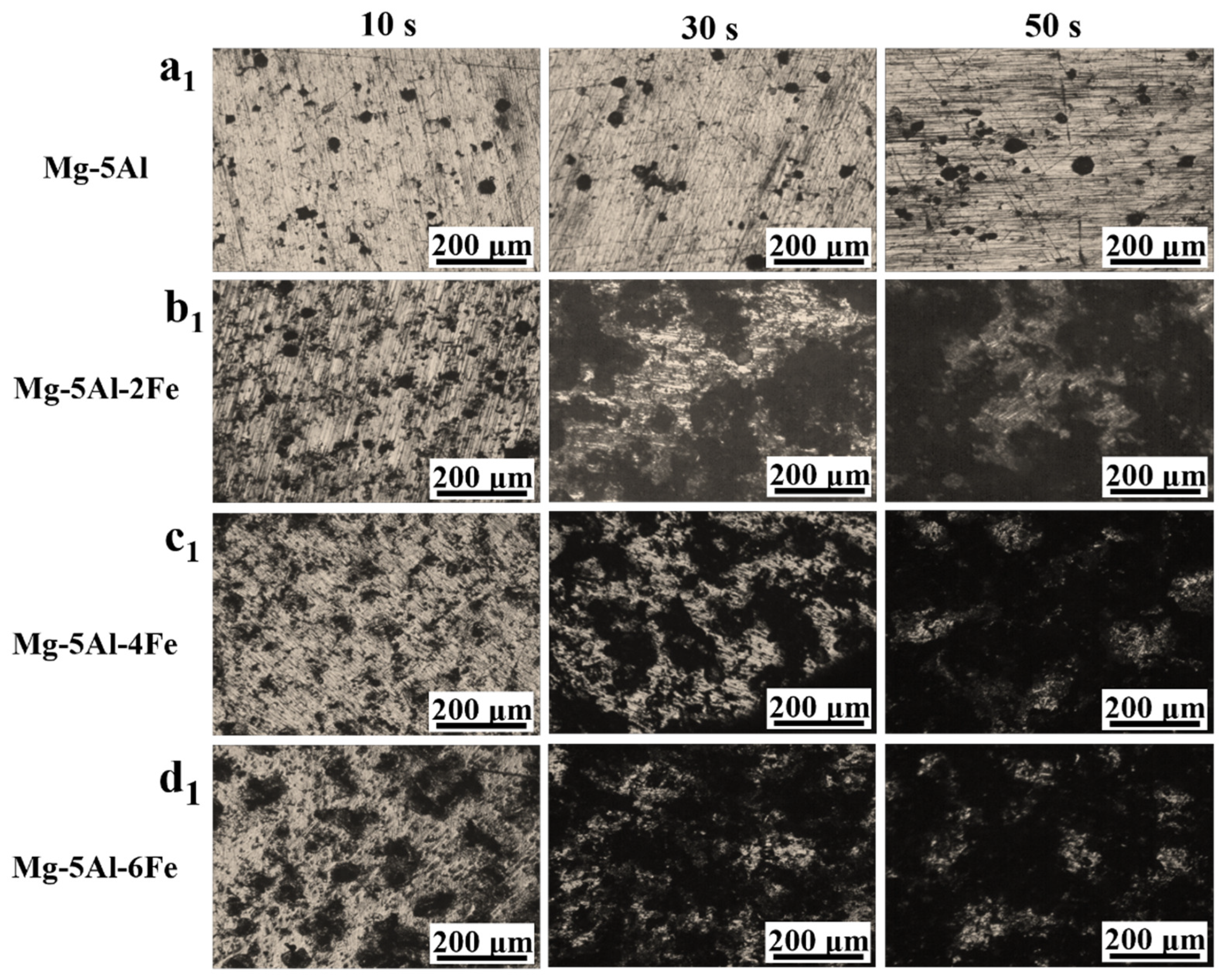
Mg-5Al-Fe alloys were immersed in 3.5% NaCl solution for 10 s, 30 s and 50 s respectively, then placed under a light microscope for observation to obtain Figure 7. It could be found that the longer the corrosion time, the more severe was the corrosion of the Mg-5Al-Fe alloys. As the Fe content increased, the corrosion degree of Mg-5Al-Fe alloys also increased. Therefore, adding the Fe element to the Mg-5Al alloys could accelerate the corrosion of the fracturing balls after they completed their work. There was no need to arrange a retrieval process anymore, which reduced the equipment investment and construction time.
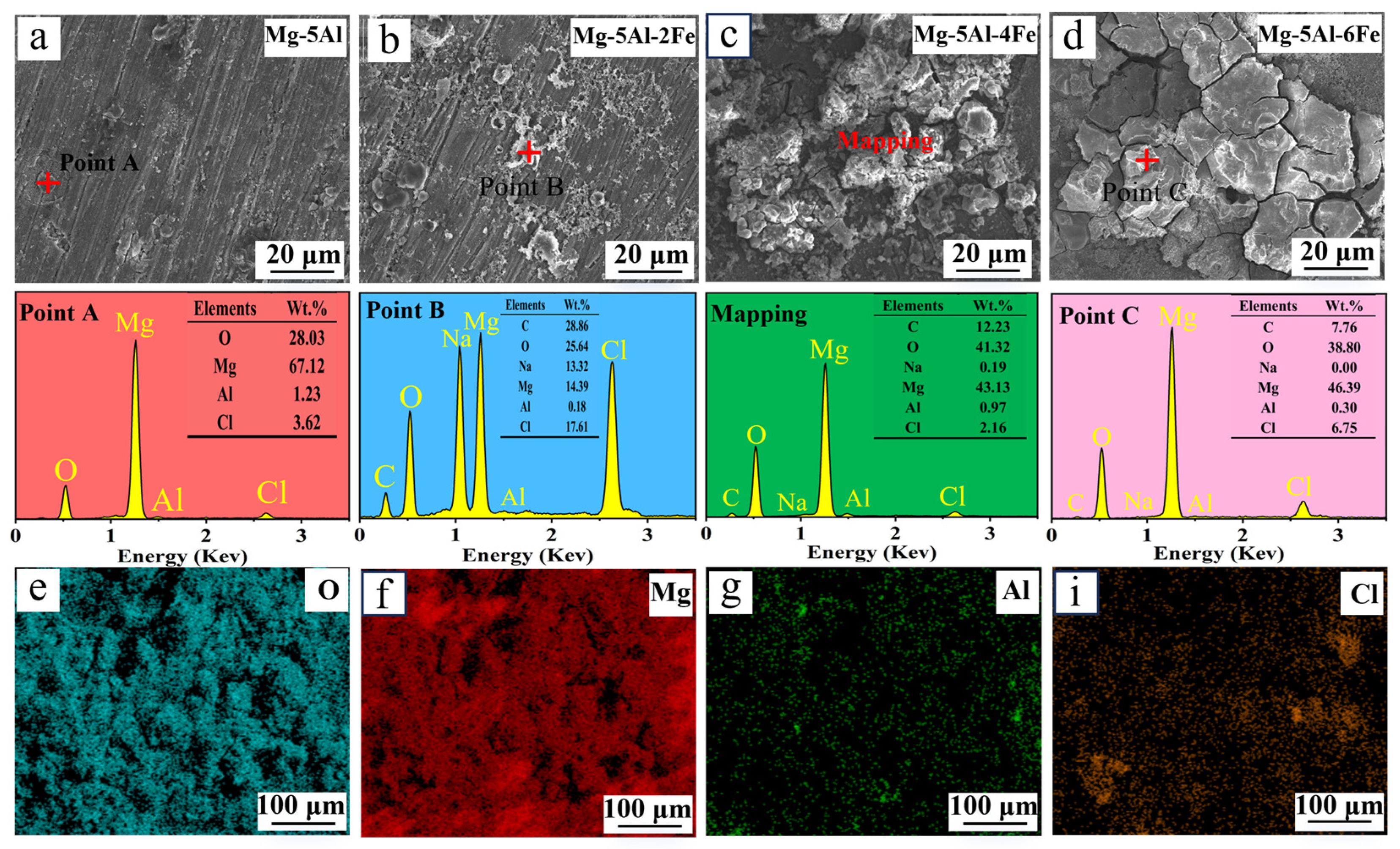
Figure 8 illustrates the corrosion morphology of the Mg-5Al-Fe alloys following 90 min of immersion in 3.5% NaCl solution. Sparse particles were found on the surface of Mg-5Al alloys (Figure 8a). Increasing the Fe content led to a significant increase in the number of surface particles on Mg-5Al-Fe alloys, accompanied by dry cracks as corrosion products, as shown in Figure 8b–d. Therefore, the addition of Fe promoted the corrosion of Mg-5Al alloys. After analyses of points A–C and surface scanning of Figure 8c, it was found that the corrosion products on Mg-5Al and Mg-5Al-Fe alloys contained elements of O, Mg, Al and Cl. Furthermore, the Mg-5Al-Fe alloys also contained elements of C. This indicated that Fe accelerated the corrosion of the Mg-5Al alloy. Because the Mg-5Al-Fe alloys were more severely corroded, the CO2 and Na ions in NaCl solution were more likely to penetrate the porous and loose corrosion products. The specific elements obtained through the EDS surface scanning are shown in Figure 8e–i.
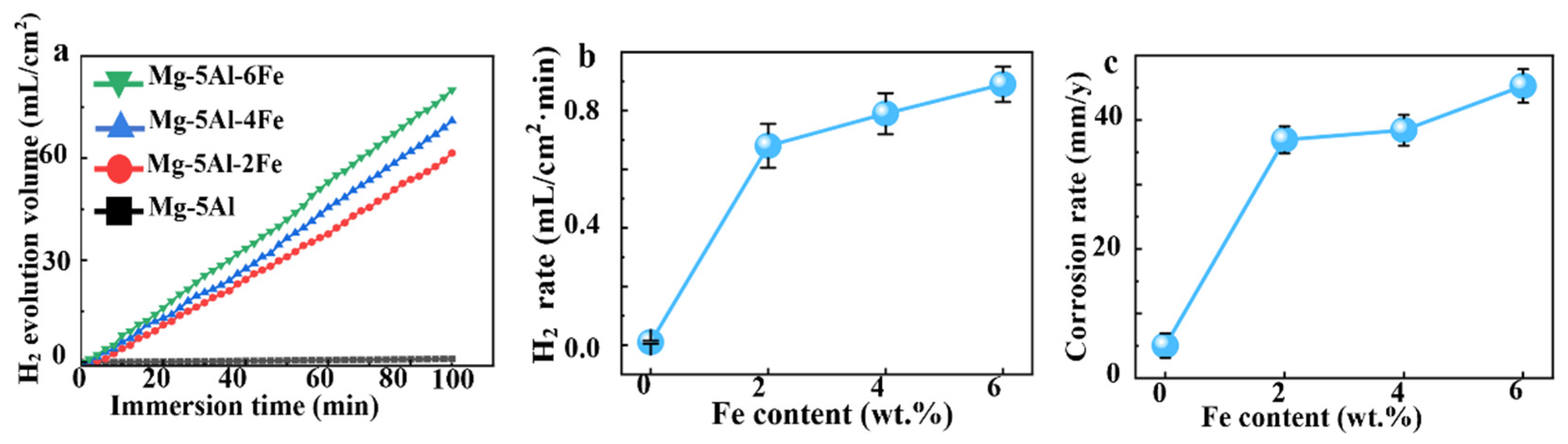
As observed in Figure 9a–c, the volume of hydrogen gas produced by the Mg-5Al alloy and the hydrogen gas generation were extremely low. However, the addition of Fe (especially in Mg-5Al-6Fe) significantly accelerated the reaction rate; the hydrogen evolution rate and corrosion rate reached 0.89 ± 0.06 cm2/min and 45.26 ± 2.6 mm/y, respectively. The first reason was that it could form a micro-battery effect. Mg had a lower electrode potential, while Fe had a relatively higher one. In 3.5% NaCl solution, Mg acted as the anode and underwent oxidation, with the electrode reaction formula: Mg → Mg2+ +2e. Fe acted as the cathode, and H+ in the water gained electrons and underwent reduction at the cathode, with the electrode reaction formula: 2H+ + 2e→ H2. A higher content of Fe was present, there was a relatively larger area of the formed cathode, the number of micro-batteries increased, thereby accelerating the rate of the hydrogen evolution reaction; the second reason was that it could reduce the hydrogen evolution overpotential. Fe is a metal with low hydrogen overpotential compared with metals like Mg, and H+ is more likely to gain electrons and undergo reduction on the surface of Fe. As the content of Fe increased, the area with low hydrogen overpotential on the alloy surface increased, the overpotential of the hydrogen evolution reaction decreased, the activation energy of the reaction reduced, and the hydrogen evolution reaction became more vigorous and easier to occur. Therefore, the addition of Fe was beneficial to the degradation of Mg-5Al alloys. The rapid degradation of Mg-5Al-Fe alloys enabled the fracturing balls to disappear automatically after completing the blocking task, reducing the consumption of manpower resources and avoiding hindrance to the subsequent oil extraction process. The advantages of this study compared to other similar literature are in Table 4. Mg-5Al-Fe alloys, especially Mg-5Al-4Fe and Mg-5Al-6Fe exhibit degradable rates of 38.41 ± 2.4 mm/y and 45.26 ± 2.6 mm/y, which was higher than Fe-7Mg (4.7 mm/y) [46]. Moreover, Mg-5Al-4Fe and Mg-5Al-6Fe exhibit higher compressive strengths of 393 ± 6.59 MPa and 421 ± 12.31 MPa respectively, which was higher than Mg-10Zn-5Al (214.95 MPa) [47].

3.5. Corrosion Mechanism

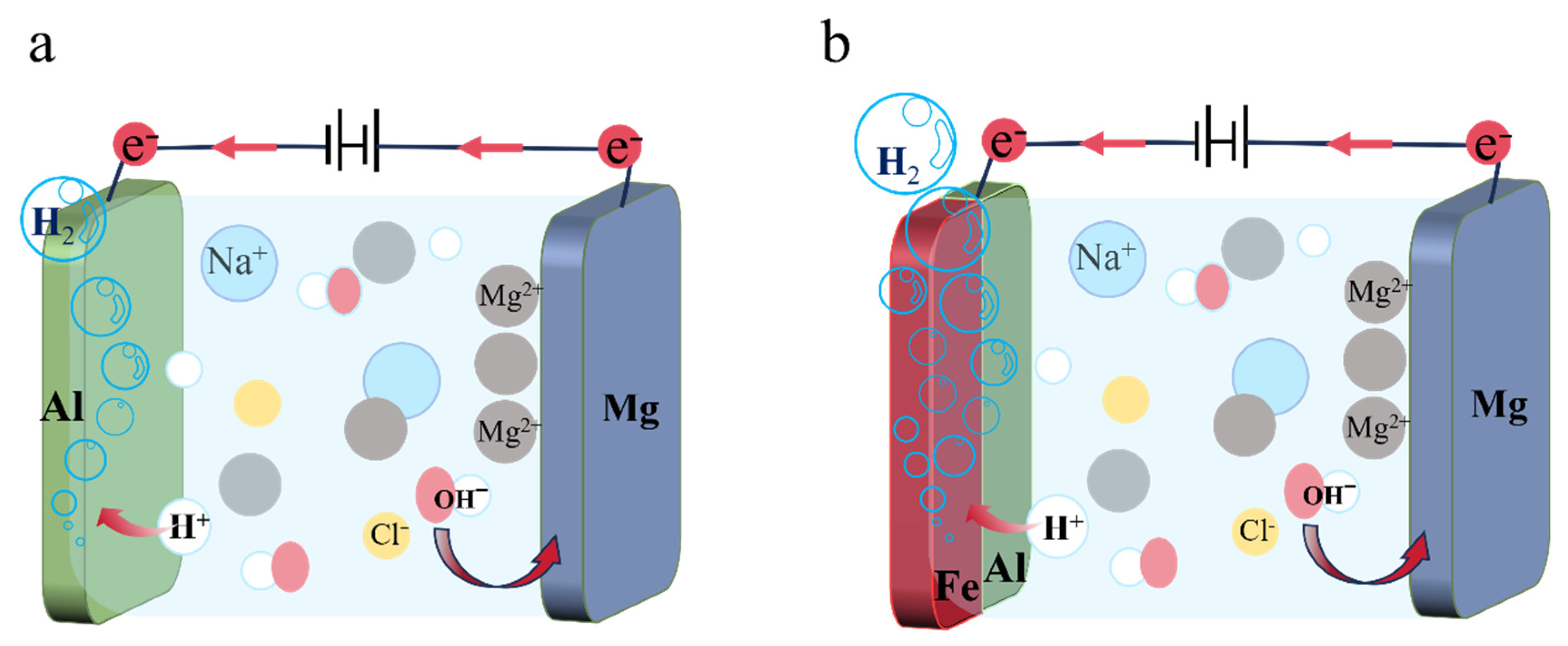
The corrosion behaviors of Mg-5Al-Fe alloys were primarily controlled by a micro-galvanic corrosion mechanism. The corrosion mechanism causing this phenomenon is shown in Figure 10a,b. Firstly, the metallic activity of Mg, Al, and Fe decreased in sequence. When the Mg-5Al alloy was immersed into 3.5% NaCl solution, Mg acted as the anode and Al as the cathode, and electrons flowed from Mg to Al. When Fe was added to the Mg-5Al alloys, Fe acted as the cathodes and the Mg matrix acted as the anode. Electrons flowed from Mg to Fe, the volume of hydrogen gas was greater, and the rate of production was also faster, causing rapid oxidation and corrosion of Mg.
Secondly, during the corrosion process of Mg, the cathode underwent a hydrogen evolution reaction (H+ + e → H2↑). Fe acted as an efficient catalyst for this reaction, significantly reducing the activation energy of the reaction. This made the hydrogen evolution reaction easier to occur, and in turn, accelerate the dissolution of Mg at the anode.
Finally, higher Fe content in Mg-5Al-Fe alloys led to a greater quantity of micro-batteries, which enhanced the corrosion current of the whole system and eventually caused a sharp surge in corrosion rate.

4. Conclusions

In this study, SPS rapid densification was combined with the addition of Fe (0, 2, 4, 6 wt.%) to establish a synergistic mechanism of grain refinement and secondary phase strengthening under a temperature of 510 °C and a pressure of 35 MPa for 800 s. The rapid heating of SPS limited the migration of grain boundaries and the coarsening of grains, maintaining a fine-grained structure and enhancing mechanical properties. Moreover, Fe could block dislocation, which increased the compressive strength of Mg-5Al-Fe alloys from 206.07 ± 8.54 MPa to 421.21 ± 12.31 MPa, and the hardness from 60.94 ± 1.54 HV to 71.84 ± 3.22 HV. Meanwhile, the addition of Fe increased the degradation rate. The hydrogen evolution demonstrated that the corrosion rate for the Mg-5Al-Fe alloys was effectively controlled. Among them, the corrosion rate of the Mg-5Al-6Fe alloys reached 45.26 ± 2.6 mm/y. Besides, the Mg-5Al-Fe alloys also had the low-density characteristic of 1.38 ± 0.027–1.53 ± 0.030 g/cm3. Compared with other studies, the uniqueness of this study lay in the use of the advanced SPS process, which enabled the powder to be sintered and formed in a solid-state, avoiding the formation of brittle metal phases and enhancing the mechanical properties of the alloy. Moreover, the addition of Fe increased the degradation rate of Mg-Al alloys, solving the problem that previous studies could not simultaneously met strong mechanical properties and a fast degradation rate. In total, Mg-5Al-Fe alloys via SPS rapid densification simultaneously possessed high mechanical strength, rapid degradability, and low-density characteristics, providing a new alloy system and design concept for degradable fracturing balls.

Author Contributions

Conceptualization, D.X.; Formal analysis, D.X. and J.A.; Investigation, J.A.; Writing—original draft, Y.S.; Writing—review & editing, Y.S.; Supervision, S.L.; Project administration, S.L.; Funding acquisition, D.X. All authors have read and agreed to the published version of the manuscript.

Funding

This research was funded by Provincial Natural Science Foundation of Hunan grant number [2023JJ60209].

Data Availability Statement

The original contributions presented in this study are included in the article. Further inquiries can be directed to the corresponding author.

Conflicts of Interest

The authors declare no conflicts of interest.

References

  1. Liao, S.; Sang, Y.; Song, Y.; Zeng, B.; Liu, W.; Yang, L. Research and Field Tests of Staged Fracturing Technology for Casing Deformation Sections in Horizontal Shale Gas Wells. Nat. Gas Ind. B 2018, 5, 16–21. [Google Scholar] [CrossRef]
  2. Gong, L.; Zhang, W.; Zhang, S.; Tao, X.; Lu, W.; Lv, H.; Liu, L. Advancements in Downhole Monitoring for Horizontal Well Hydraulic Fracturing. In Proceedings of the SPE Middle East Oil and Gas Show and Conference, Manama, Bahrain, 16–18 September 2025. [Google Scholar]
  3. Soliman, M.Y.; Daal, J.; East, L. Impact of Fracturing and Fracturing Techniques on Productivity of Unconventional Formations. In Proceedings of the SPE/EAGE European Unconventional Resources Conference and Exhibition, Vienna, Austria, 20–22 March 2012. [Google Scholar]
  4. Ma, K.; Liu, S.; Dai, C.; Liu, X.; Ren, J.; Pan, Y.; Peng, Y.; Su, C.; Wang, J.; Pan, F. Effect of Ni on the Microstructure, Mechanical Properties and Corrosion Behavior of MgGd1Nix Alloys for Fracturing Ball Applications. J. Mater. Sci. Technol. 2021, 91, 121–133. [Google Scholar] [CrossRef]
  5. Wang, J.; Gao, S.; Liu, X.; Peng, X.; Wang, K.; Liu, S.; Jiang, W.; Guo, S.; Pan, F. Enhanced Mechanical Properties and Degradation Rate of Mg–Ni–Y Alloy by Introducing LPSO Phase for Degradable Fracturing Ball Applications. J. Magnes. Alloys 2020, 8, 127–133. [Google Scholar] [CrossRef]
  6. Farjam, P. Surface Treatment on AZ31 Magnesium Alloy to Improve Stability and Biocompatibility. Master’s Thesis, ING—Scuola di Ingegneria Industriale e dell' Informazione, Milano, Italy, 2018. [Google Scholar]
  7. Pang, M.; Zhong, T.; Jin, S.; Ma, X.; Wu, R.; Hou, L.; Tashlykova-Bushkevich, I.I.; Krit, B.; Zhang, J. Tailoring the degradation rate of magnesium-lithium alloy with alloying elements of gadolinium and nickel. J. Alloys Compd. 2024, 976, 173115. [Google Scholar] [CrossRef]
  8. Aviles, I.; Marya, M.; Hernandez, T.R.; Dunne, T.; Dardis, M.; Baihly, J.D. Application and Benefits of Degradable Technology in Open-Hole Fracturing. In Proceedings of the SPE Annual Technical Conference and Exhibition, New Orleans, LA, USA, 30 September–2 October 2013. [Google Scholar]
  9. Song, J.; She, J.; Chen, D.; Pan, F. Latest Research Advances on Magnesium and Magnesium Alloys Worldwide. J. Magnes. Alloys 2020, 8, 1–41. [Google Scholar] [CrossRef]
  10. Yang, Y.; Xiong, X.; Chen, J.; Peng, X.; Chen, D.; Pan, F. Research Advances in Magnesium and Magnesium Alloys Worldwide in 2020. J. Magnes. Alloys 2021, 9, 705–747. [Google Scholar] [CrossRef]
  11. Ellafi, A.; Jabbari, H.; Tomomewo, O.S.; Mann, M.D.; Geri, M.B.; Tang, C. Future of Hydraulic Fracturing Application in Terms of Water Management and Environmental Issues: A Critical Review. In Proceedings of the SPE Canada Unconventional Resources Conference, Virtual, 28 September–2 October 2020. [Google Scholar]
  12. Zhu, Q.; Li, Y.; Cao, F.; Qiu, D.; Yang, Y.; Wang, J.; Zhang, H.; Ying, T.; Ding, W.; Zeng, X. Towards development of a high-strength stainless Mg alloy with Al-assisted growth of passive film. Nat. Commun. 2022, 13, 5838. [Google Scholar] [CrossRef]
  13. Atrens, A.; Shi, Z.; Mehreen, S.U.; Johnston, S.; Song, G.-L.; Chen, X.; Pan, F. Review of Mg Alloy Corrosion Rates. J. Magnes. Alloys 2020, 8, 989–998. [Google Scholar] [CrossRef]
  14. Tan, W.; Li, T.; Li, S.; Fang, D.; Ding, X.; Sun, J. High Strength-Ductility and Rapid Degradation Rate of as-Cast Mg-Cu-Al Alloys for Application in Fracturing Balls. J. Mater. Sci. Technol. 2021, 94, 22–31. [Google Scholar] [CrossRef]
  15. Zheng, C.; Wu, X.; Zheng, X.; Jin, H.; Liu, Y. Mechanical Properties and Wear Behavior of a Dissolvable Magnesium Alloy Used for Multistage Fracturing. Wear 2021, 466–467, 203559. [Google Scholar] [CrossRef]
  16. Jiang, T.; Lu, Z.; Fan, H.; Wang, X.; Li, L.; Dai, C.; Liu, E. Self-Degradable Magnesium Alloy-Based Temporary Plugging Ball for Fracturing in Deep Reservoir. J. Alloys Compd. 2025, 1033, 181221. [Google Scholar] [CrossRef]
  17. Wu, F.; Luo, J.; He, Q.; Cheng, Y.; Luo, X.; Huang, X.; Xin, Y. Improvement heat resistance and thermal stability of Mg-7Y-3Zn-0.4 Mn alloy by Al/Ca element addition. J. Magnes. Alloys 2025, 13, 5145–5165. [Google Scholar] [CrossRef]
  18. Geng, Z.; Xiao, D.; Chen, L. Microstructure, Mechanical Properties, and Corrosion Behavior of Degradable Mg-Al-Cu-Zn-Gd Alloys. J. Alloys Compd. 2016, 686, 145–152. [Google Scholar] [CrossRef]
  19. Xiao, D.H.; Geng, Z.W.; Chen, L.; Wu, Z.; Diao, H.Y.; Song, M.; Zhou, P.F. Effects of Alloying Elements on Microstructure and Properties of Magnesium Alloys for Tripling Ball. Met. Mater. Trans. A 2015, 46, 4793–4803. [Google Scholar] [CrossRef]
  20. Chen, L.; Wu, Z.; Xiao, D.-H.; Geng, Z.-W.; Zhou, P.-F. Effects of Copper on the Microstructure and Properties of Mg-17Al-3Zn Alloys. Mater. Corros. 2015, 66, 1159–1168. [Google Scholar] [CrossRef]
  21. Hu, S.; Zheng, Z.; Yang, W.; Yang, H. Fe–Mn–C–Al Low-Density Steel for Structural Materials: A Review of Alloying, Heat Treatment, Microstructure, and Mechanical Properties. Steel Res. Int. 2022, 93, 2200191. [Google Scholar] [CrossRef]
  22. Zhao, Y.; Song, D.; Wang, H.; Jia, Y.; Lin, B.; Tang, Y.; Tang, Y.; Shu, D.; Sun, Z.; Fu, Y.; et al. Revealing the influence of Fe on Fe-rich phases formation and mechanical properties of cast Al-Mg-Mn-Fe alloys. J. Alloys Compd. 2022, 901, 163666. [Google Scholar] [CrossRef]
  23. Cai, Y.; Song, D.; Zhao, Y.; Yang, D.; Zhang, D.; Zhang, W. Effects of Fe content on the 3D morphology of Fe-rich phases and mechanical properties of cast Al-Mg-Si alloy. J. Alloys Compd. 2024, 990, 174501. [Google Scholar] [CrossRef]
  24. Wang, L.; He, J.; Yu, J.; Arthanari, S.; Lee, H.; Zhang, H.; Lu, L.; Huang, G.; Xing, B.; Wang, H.; et al. Review: Degradable Magnesium Corrosion Control for Implant Applications. Materials 2022, 15, 6197. [Google Scholar] [CrossRef]
  25. Chen, L.; Huang, G.; Zhang, C.; Xia, D.; Zhao, Y.; Pan, F. Corrosion Behaviours and Mechanical Properties of Fe/Mg–8Al–1Zn Matrix Composite. Mater. Sci. Technol. 2017, 33, 1312–1318. [Google Scholar] [CrossRef]
  26. Yang, L.; Liu, G.; Ma, L.; Zhang, E.; Zhou, X.; Thompson, G. Effect of Iron Content on the Corrosion of Pure Magnesium: Critical Factor for Iron Tolerance Limit. Corros. Sci. 2018, 139, 421–429. [Google Scholar] [CrossRef]
  27. Mondet, M.; Barraud, E.; Lemonnier, S.; Guyon, J.; Allain, N.; Grosdidier, T. Microstructure and mechanical properties of AZ91 magnesium alloy developed by Spark Plasma Sintering. Acta Mater. 2016, 119, 55–67. [Google Scholar] [CrossRef]
  28. Ma, Y.; Xiong, H.; Chen, B. Effect of heat treatment on microstructure and corrosion behavior of Mg-5Al-1Zn-1Sn magnesium alloy. Corros. Sci. 2021, 191, 109759. [Google Scholar] [CrossRef]
  29. Nam, N.D. Corrosion behavior of Mg–5Al based magnesium alloy with 1 wt.% Sn, Mn and Zn additions in 3.5 wt.% NaCl solution. J. Magnes. Alloys 2014, 2, 190–195. [Google Scholar] [CrossRef]
  30. Khan, M.U.F.; Patil, A.; Christudasjustus, J.; Borkar, T.; Gupta, R.K. Spark plasma sintering of a high-energy ball milled Mg-10 wt% Al alloy. J. Magnes. Alloys 2020, 8, 319–328. [Google Scholar] [CrossRef]
  31. Hadnadjev, M.; Vulic, T.; Marinkovic-Neducin, R.; Suchorski, Y.; Weiss, H. The iron oxidation state in Mg–Al–Fe mixed oxides derived from layered double hydroxides: An XPS study. Appl. Surf. Sci. 2008, 254, 4297–4302. [Google Scholar] [CrossRef]
  32. Bruce, D.; Paradise, P.; Saxena, A.; Temes, S.; Clark, R.; Noe, C.; Benedict, M.; Broderick, T.; Bhate, D. A critical assessment of the Archimedes density method for thin-wall specimens in laser powder bed fusion: Measurement capability, process sensitivity and property correlation. J. Manuf. Process. 2022, 79, 185–192. [Google Scholar] [CrossRef]
  33. Cheng, W.-S.; Chen, G.-Y.; Shih, X.-Y.; Elsisi, M.; Tsai, M.-H.; Dai, H.-J. Vickers hardness value test via multi-task learning convolutional neural networks and image augmentation. Appl. Sci. 2022, 12, 10820. [Google Scholar] [CrossRef]
  34. Yang, M.; Luo, D.; Chen, Y.; Li, G.; Tang, D.; Meng, Y. Establishing a Practical Method to Accurately Determine and Manage Wellbore Thermal Behavior in High-Temperature Drilling. Appl. Energy 2019, 238, 1471–1483. [Google Scholar] [CrossRef]
  35. Zhang, J.; Zhu, X.; Guo, P.; Zhang, Y.; Xu, D.; Pang, Y.; Song, Z.; Yang, L. Effects of Li Addition on the Properties of Biodegradable Zn–Fe–Li Alloy: Microstructure, Mechanical Properties, Corrosion Behavior, and Cytocompatibility. Mater. Today Commun. 2024, 39, 108661. [Google Scholar] [CrossRef]
  36. Lei, H.; Wang, Z.; Qiao, L.; Yan, Y. Tribocorrosion behavior of 316L stainless steel in alternating wet and dry environments. J. Mater. Res. Technol. 2025, 37, 2118–2127. [Google Scholar] [CrossRef]
  37. Huang, Q.; Liu, S.; Cheng, W.; Wang, G. Fracture Permeability Damage and Recovery Behaviors with Fracturing Fluid Treatment of Coal: An Experimental Study. Fuel 2020, 282, 118809. [Google Scholar] [CrossRef]
  38. Jiang, S.; Yuan, Y.; Wang, J.; Chen, T.; Wu, L.; Chen, X.; Jiang, B.; Tang, A.; Pan, F. Effect of Alloying Elements on the Dissolution Behavior of Iron in Magnesium Melt. Calphad 2022, 79, 102503. [Google Scholar] [CrossRef]
  39. Singarapu, B.; Galusek, D.; Durán, A.; Pascual, M.J. Glass-Ceramics Processed by Spark Plasma Sintering (SPS) for Optical Applications. Appl. Sci. 2020, 10, 2791. [Google Scholar] [CrossRef]
  40. Zhang, S.; Teng, Z.; Wu, L.; Chen, C.; Tan, Y.; Zhou, X. Rapid Preparation of Traditional and High-Entropy Garnet Ceramics by SPS at Low Temperature with Ultrafast Densification. Ceram. Int. 2023, 50, 4573–4580. [Google Scholar] [CrossRef]
  41. Wu, J.; Wu, X.; Gao, Y.; Yan, Z. Innovations in Electric Current-Assisted Sintering for SOFC: A Review of Advances in Flash Sintering and Ultrafast High-Temperature Sintering. Appl. Sci. 2024, 14, 3953. [Google Scholar] [CrossRef]
  42. Kostryzhev, A.G. Strengthening Mechanisms in Metallic Materials. Metals 2021, 11, 1134. [Google Scholar] [CrossRef]
  43. Hong, C.; Lee, S.; Ji, W. Shear Strength Determining Mechanism of a +/−45 Laminate under Tensile Loading. Compos. Struct. 2023, 326, 117627. [Google Scholar] [CrossRef]
  44. Liu, L.; Zhou, Y.; Zhao, Z.; Zhang, Z.; Xu, Z.; Li, J. Using the potentiodynamic polarization curves to study the photoelectrochemical effect of cuprite on the corrosion of pristine copper. Anti-Corrosion Methods Mater. 2025, 72, 593–604. [Google Scholar] [CrossRef]
  45. Zhao, X.; Huang, H.; Su, Y.; Qiao, L.; Yan, Y. Data-driven electrochemical behavior prediction for refractory high-entropy alloys by global and focused learning. Mater. Des. 2025, 255, 114202. [Google Scholar] [CrossRef]
  46. Alsakkaf, A.; Yusop, A.H.; Idris, H.; Hassan, A.G.; Iqbal, N.; Unal, R.; Sudin, I. Development of Fe-Mg alloys with intermediate degradation kinetics as potential biodegradable bone implants. Mater. Today Commun. 2024, 41, 110609. [Google Scholar] [CrossRef]
  47. Jiang, A.; You, Z.; Wang, K.; Han, P.; Jin, S.; Sun, C.; Li, M. Study on the Effect of Sc and Zr Segregation Elements on the Precipitation Behavior of Precipitates in Mg–10Zn–5Al Alloys. Int. J. Metalcast. 2025, 19, 3759–3772. [Google Scholar]
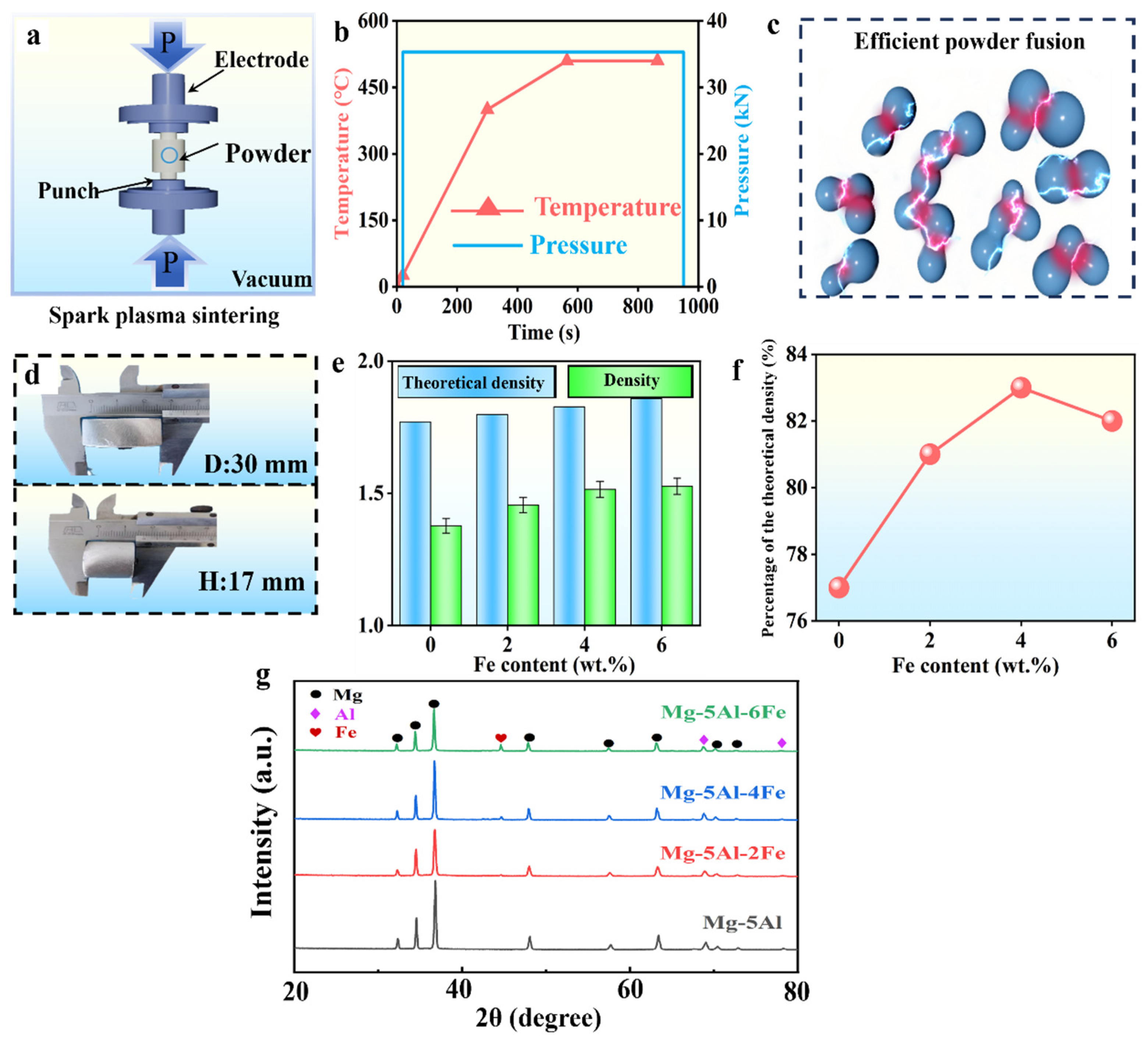
Figure 1. (a) Schematic diagram of rapid sintering for Mg-5Al-Fe powders via SPS rapid densification process, (b) temperature and pressure and (c) powder surface melting during SPS, (d) size and morphology of specimens after sintering, (e) the theoretical density, density, and (f) relative density of alloys with different Fe contents, and (g) the XRD patterns of Mg-5Al-Fe alloys.
Metals 16 00217 g001
Figure 2. SEM images depicting the microstructural features of (ad) Mg-5Al-Fe alloys; (eh) the morphologies under high-magnification observation and the corresponding EDS analysis for points A–D; mapping analysis of (g) the Mg-5Al-2Fe alloy to reveal the elemental distributions of (i) Mg, (j) Al and (k) Fe, respectively. (The red plus signs representing the points A, B, C, D used for EDS scanning, the red dashed circle representing the magnified area).
Metals 16 00217 g002
Figure 3. Optical morphologies of (a) Mg-5Al, (b) Mg-5Al-2Fe, (c) Mg-5Al-4Fe, (d) Mg-5Al-6Fe, and (a1d1) their corresponding distributions of grain size. (The black dashed circle indicating the grain size).
Metals 16 00217 g003
Figure 4. Mechanical strength of Mg-5Al-Fe alloys sintered via SPS: (ad) images of alloys with different Fe contents under a microhardness tester; (a1d1) the specific value of Vickers hardness.
Metals 16 00217 g004
Figure 5. (a) The compressive stress-strain curves of Mg-5Al-Fe alloys; (be) the morphology of Mg-5Al-Fe alloys after compression. (The part circled in red representing the cracks that occurred during the compression experiment).
Metals 16 00217 g005
Figure 6. Electrochemical characteristics of Mg-5Al-Fe alloys in 3.5% NaCl solution: (a) three-electrode diagram; (b) polarization curves; Surface morphology of (c) Mg-5Al, (d) Mg-5Al-2Fe, (e) Mg-5Al-4Fe and (f) Mg-5Al-6Fe alloys observed after the electrochemical tests.
Metals 16 00217 g006
Figure 7. Macroscopic morphologies of (a1) Mg-5Al, (b1) Mg-5Al-2Fe, (c1) Mg-5Al-4Fe, (d1) Mg-5Al-6Fe alloys corroded by 3.5% NaCl solution for 10 s, 30 s and 50 s using a light microscope.
Metals 16 00217 g007
Figure 8. Corrosion product images of Mg-5Al-Fe alloys after immersion in 3.5% NaCl solution for 90 min; (a) Mg-5Al; (b) Mg-5Al-2Fe; (c) Mg-5Al-4Fe; (d) Mg-5Al-6Fe and their corresponding point scanning or surface scanning analysis; (ei) images of O, Mg, Al, and Cl elements scanned by EDS. (The red plus sign representing the three points used for EDS scanning).
Metals 16 00217 g008
Figure 9. (a) the volume of hydrogen gas; (b) the rate of hydrogen release and (c) the corrosion rate of Mg-5Al-Fe alloys after immersion in NaCl solution.
Metals 16 00217 g009
Figure 10. Diagrams of corrosion mechanisms: (a) Mg-5Al alloys; and (b) Mg-5Al-Fe alloys.
Metals 16 00217 g010
Table 1. The average hardness for Mg-5Al-Fe alloys.
SpecimensHardness
Mg-5Al60.94 ± 1.54 HV
Mg-5Al-2Fe62.68 ± 3.01 HV
Mg-5Al-4Fe64.80 ± 2.98 HV
Mg-5Al-6Fe71.84 ± 3.22 HV
Table 2. The parameters of compressive test for Mg-5Al-Fe alloys.
SpecimensCYSUCSElastic Modulus
Mg-5Al139 ± 3.99 MPa206 ± 8.54 MPa34 ± 3.03 GPa
Mg-5Al-2Fe141 ± 5.17 MPa218 ± 8.66 MPa55 ± 4.21 GPa
Mg-5Al-4Fe183 ± 4.89 MPa393 ± 6.59 MPa57 ± 4.18 GPa
Mg-5Al-6Fe189 ± 6.12 MPa421 ± 12.31 MPa74 ± 3.28 GPa
Table 3. Electrochenmical parameters and corrosion rates for Mg-5Al-Fe alloys.
SpecimensCorrosion PotentialCurrent DensityCorrosion Rate
Mg-5Al−1.25 ± 0.1 V1.0 ± 0.2 mA/cm20.24 ± 0.05 mm/y
Mg-5Al-2Fe−1.4 ± 0.12 V3.0 ± 0.7 mA/cm20.71 ± 0.17 mm/y
Mg-5Al-4Fe−1.6 ± 0.16 V4.5 ± 0.5 mA/cm21.07 ± 0.12 mm/y
Mg-5Al-6Fe−1.83 ± 0.15 V5.5 ± 0.3 mA/cm21.30 ± 0.07 mm/y
Table 4. The advantages of this study compared to other similar literature.
SpecimensUCSDegradable RateReference
Mg-5Al-4Fe393 ± 6.59 MPa38.41 ± 2.4 mm/yThis study
Mg-5Al-6Fe421 ± 12.31 MPa45.26 ± 2.6 mm/yThis study
Fe-7MgNot reported4.7 mm/y[46]
Mg-10Zn-5Al214.95 MPaNot reported[47]
Disclaimer/Publisher’s Note: The statements, opinions and data contained in all publications are solely those of the individual author(s) and contributor(s) and not of MDPI and/or the editor(s). MDPI and/or the editor(s) disclaim responsibility for any injury to people or property resulting from any ideas, methods, instructions or products referred to in the content.