Hydrogen-Induced Crack Evolution and Microstructural Adaptation in Zirconium Alloy: An In Situ EBSD Tensile Study

Abstract
1. Introduction
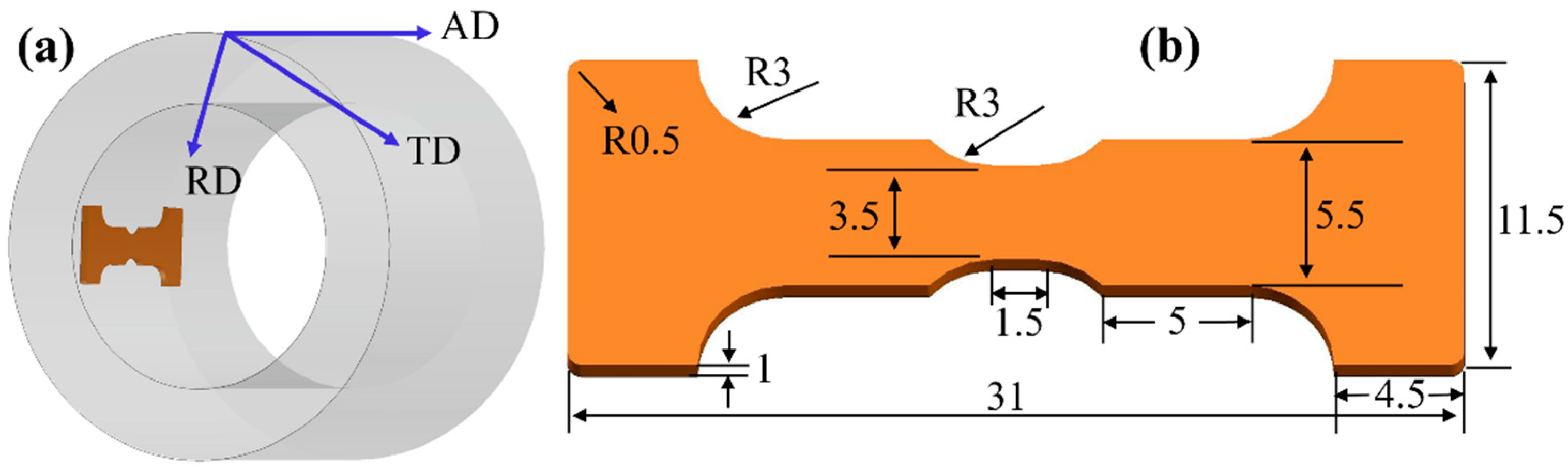
2. Experimental Procedure
3. Results and Discussion
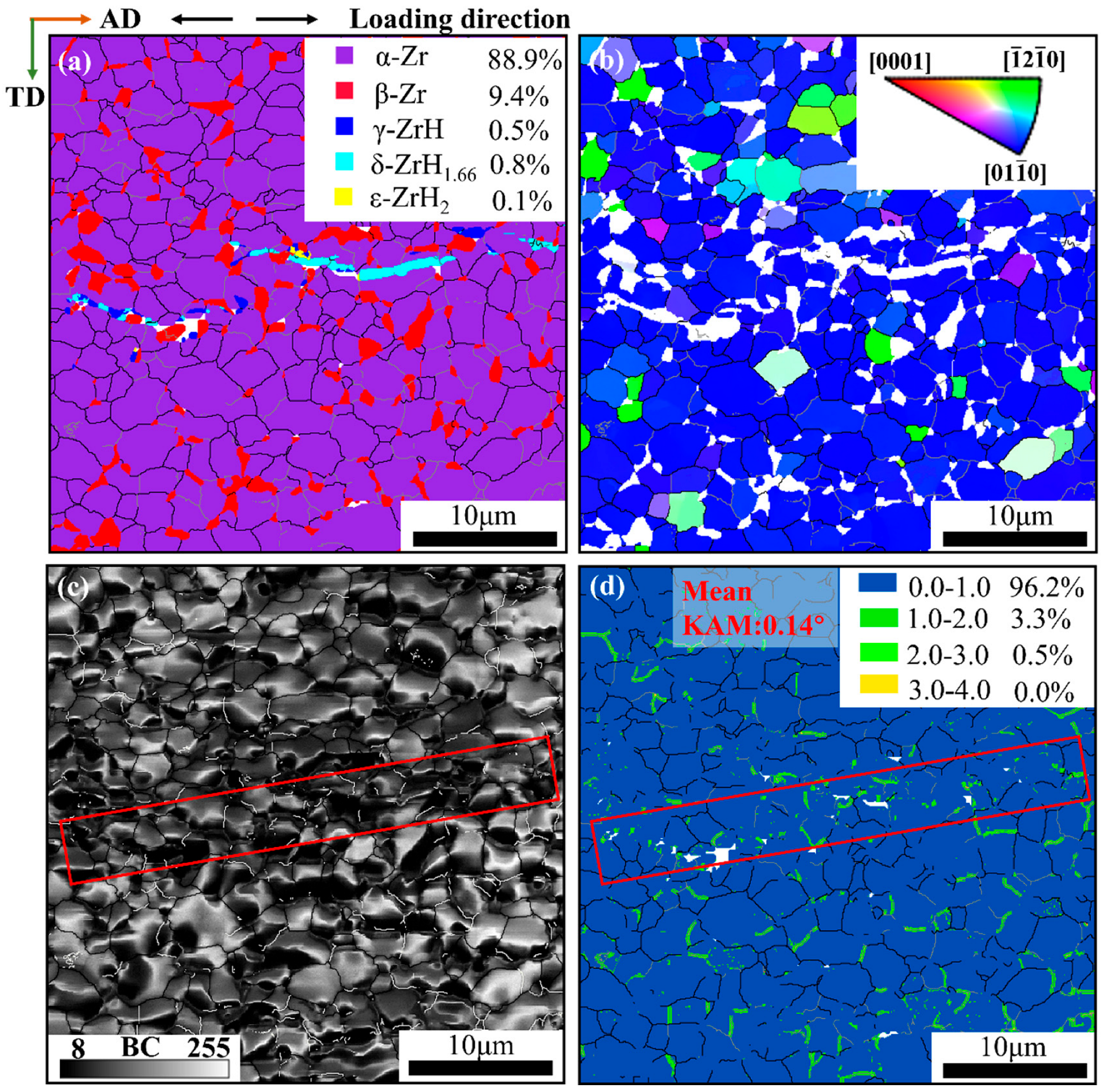
3.1. Initial Microstructure
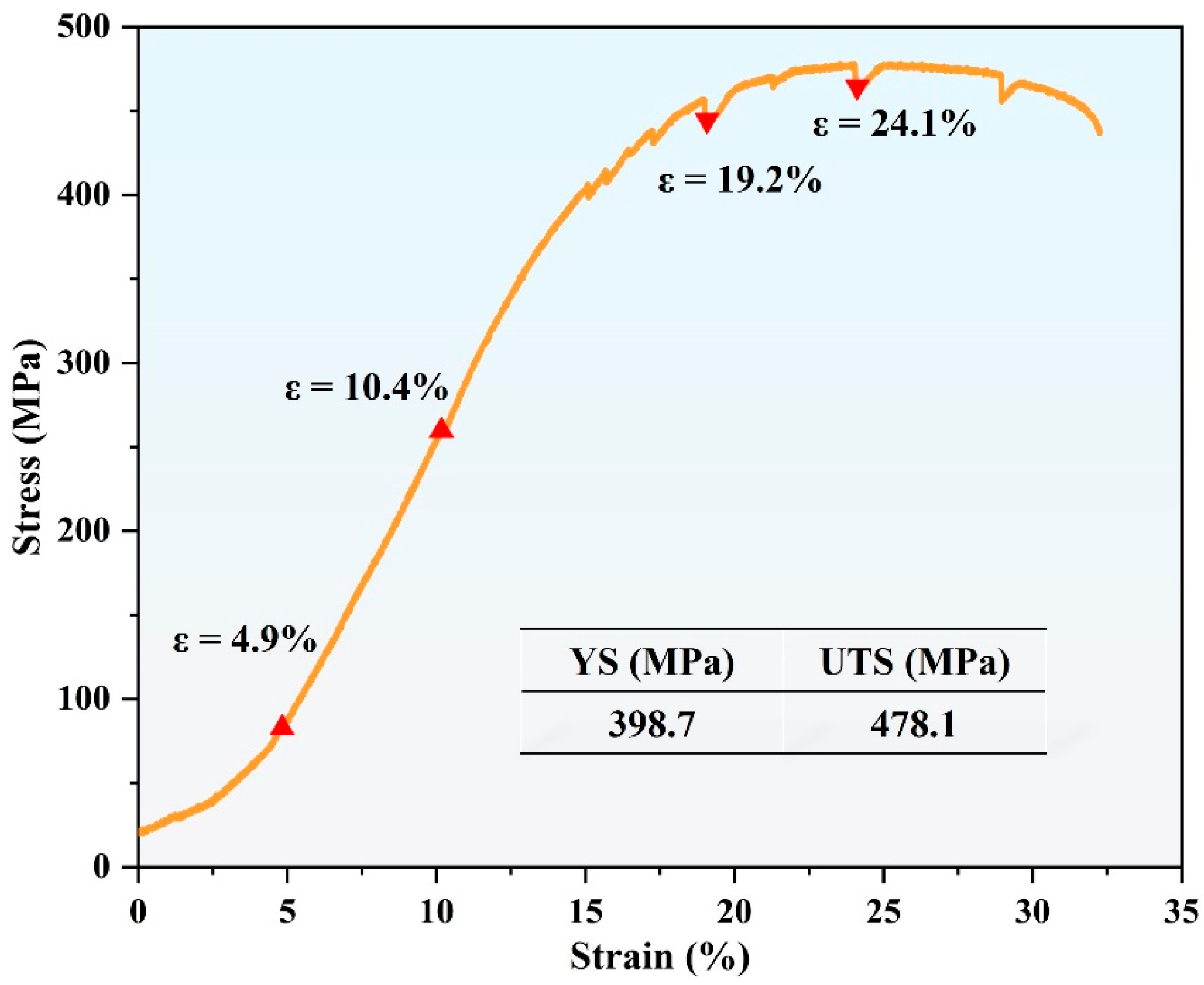
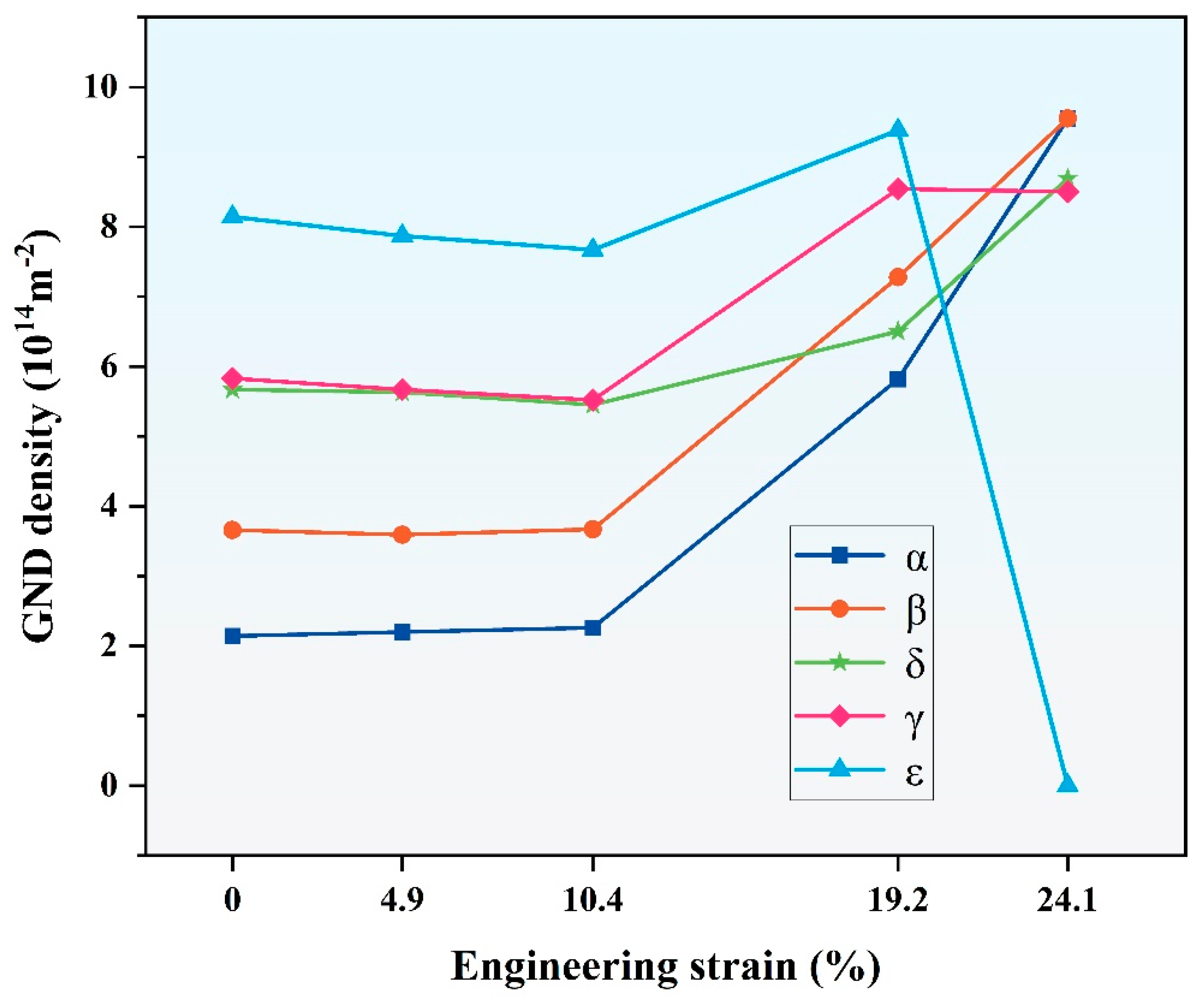
3.2. Tensile Behavior
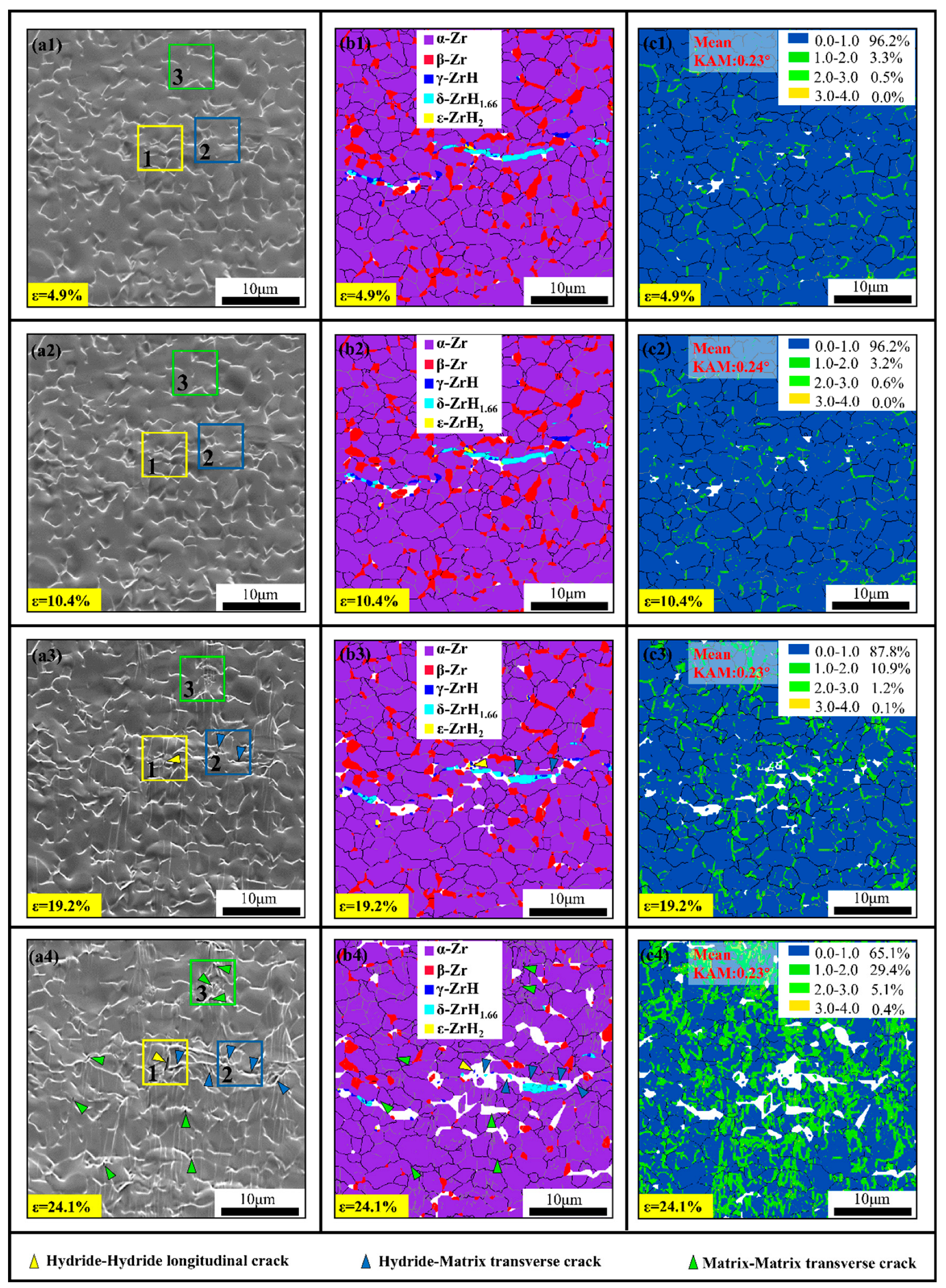
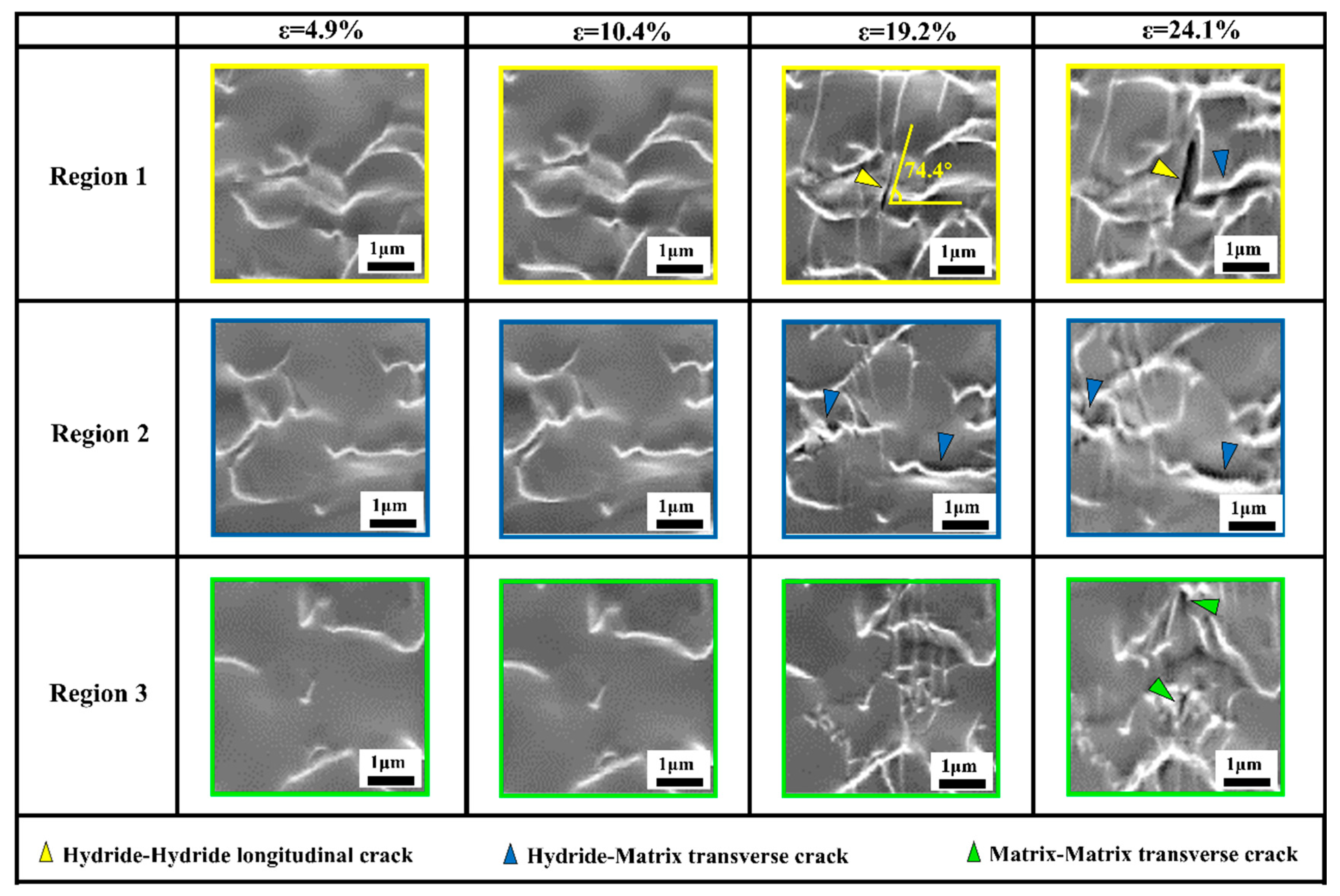
3.3. Crack Evolution
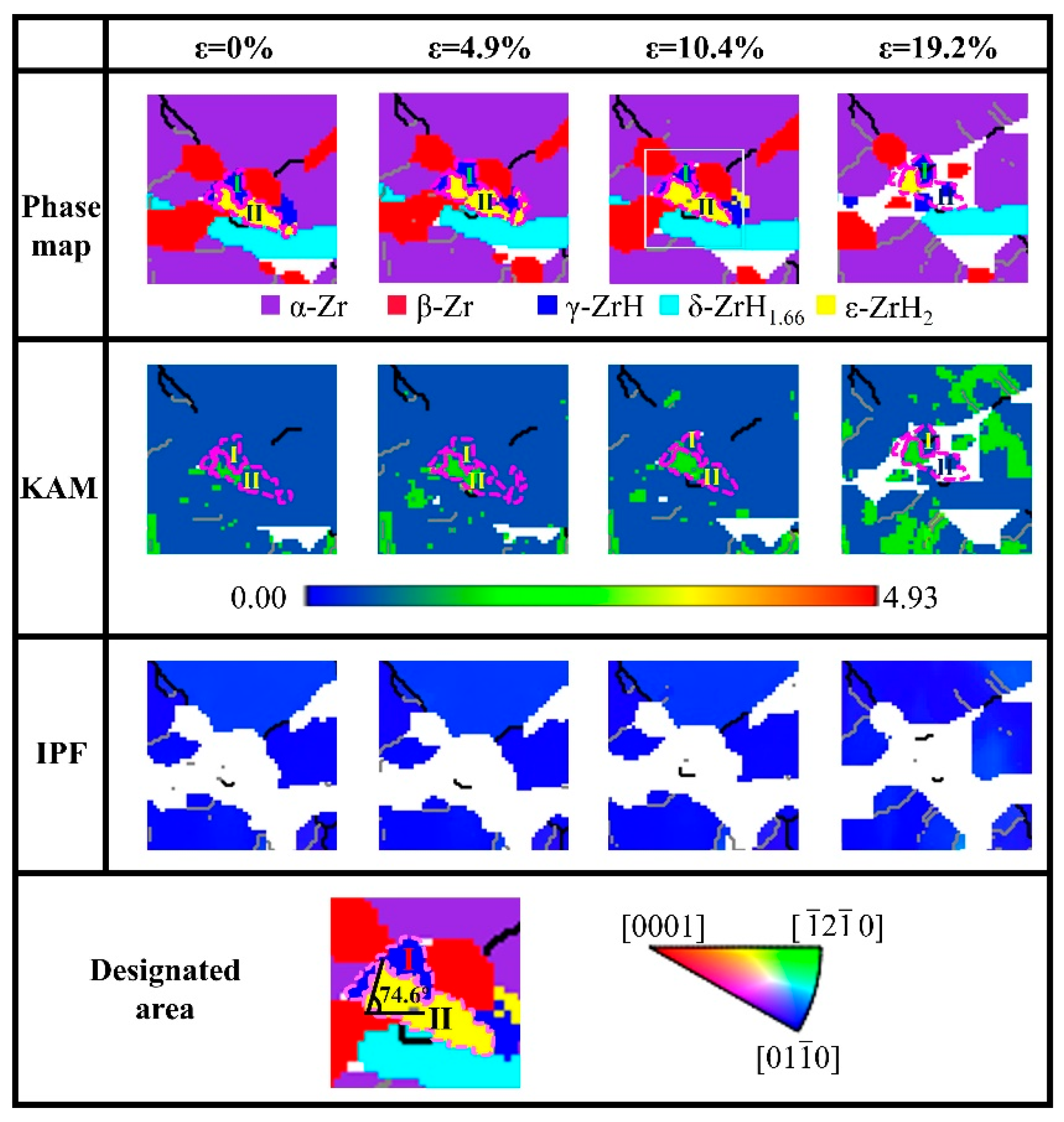
3.3.1. Hydride–Hydride Longitudinal Cracks
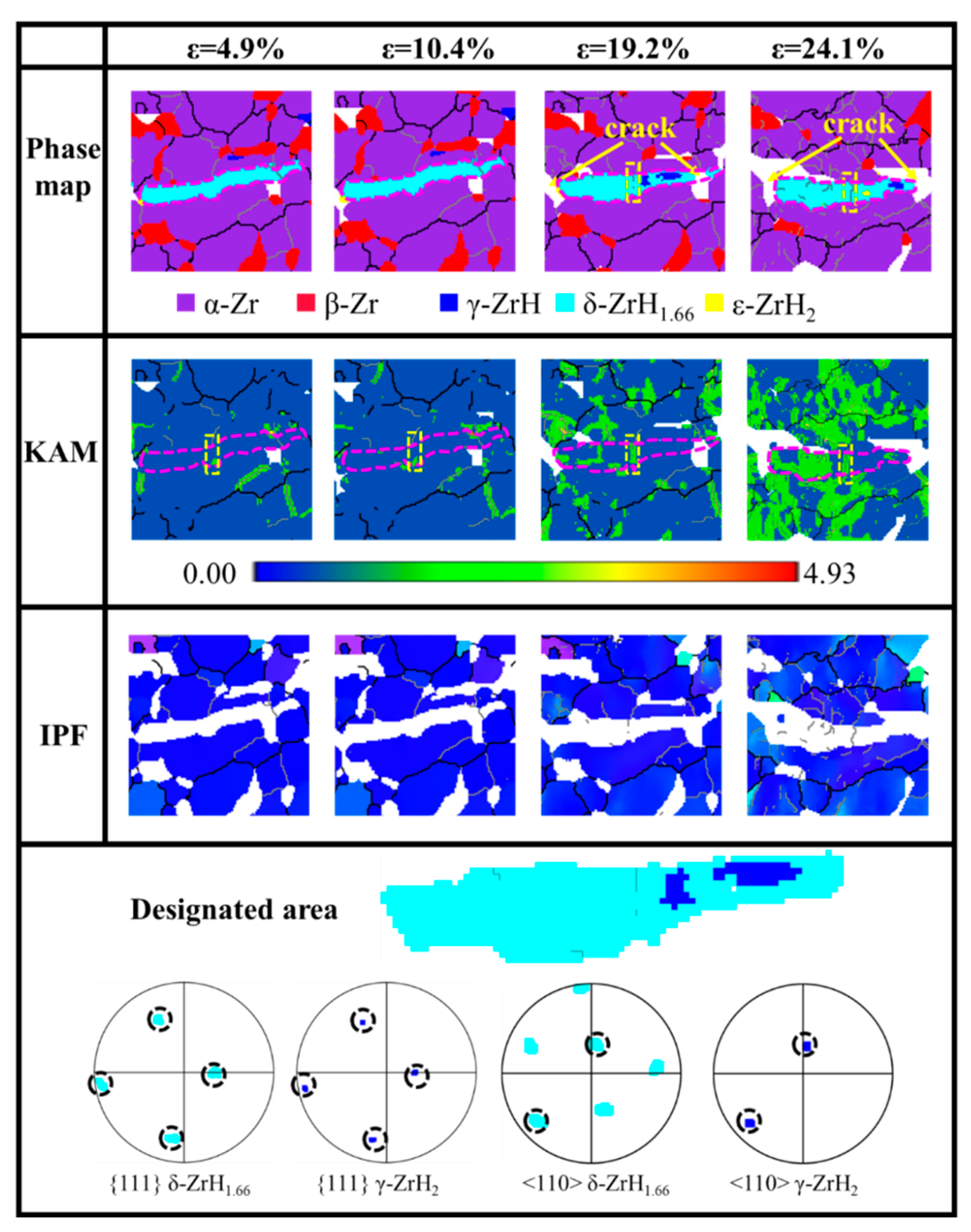
3.3.2. Hydride–Matrix Transverse Cracks
3.3.3. Matrix–Matrix Longitudinal Crack
4. Conclusions
- The evolution of microcracks can be categorized into three stages: initially, the formation of longitudinal hydride–hydride interface cracks; subsequently, the emergence of transverse hydride–matrix interface cracks; and ultimately, the generation of longitudinal matrix–matrix interface cracks.
- The non-coherent interfaces of the two types of hydrides and the inherent brittleness result in the initiation of longitudinal hydride–hydride interface cracks. During crack propagation, the diffusion of hydrogen atoms induces the phase transformation ε-ZrH2 to γ-ZrH.
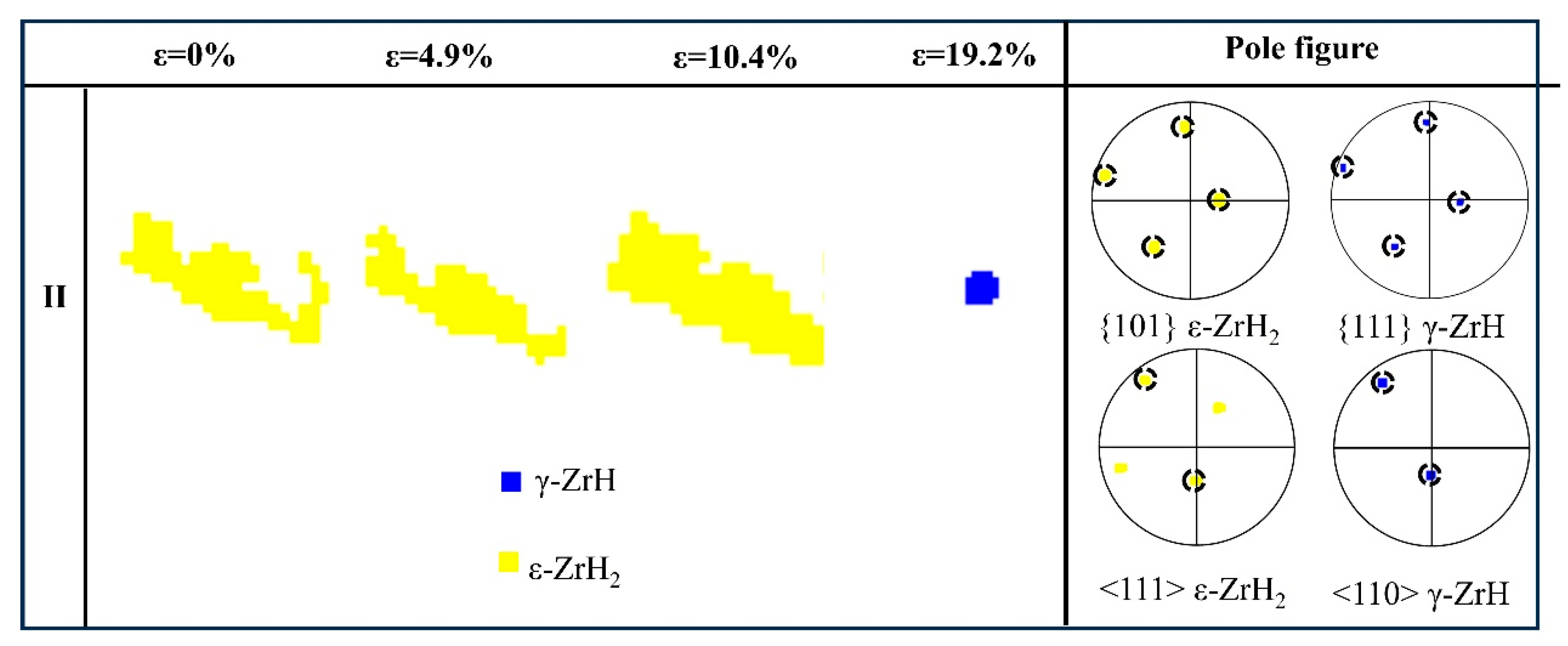
- The small proportion of hydride–hydride interface cracks is inadequate to absorb stress, resulting in the subsequent initiation of microcracks at the transverse hydride–matrix interface. Meanwhile, large-sized hydrides experience refinement, and phase transformation occurs in some areas, yet no rotation of hydride grains has been observed.
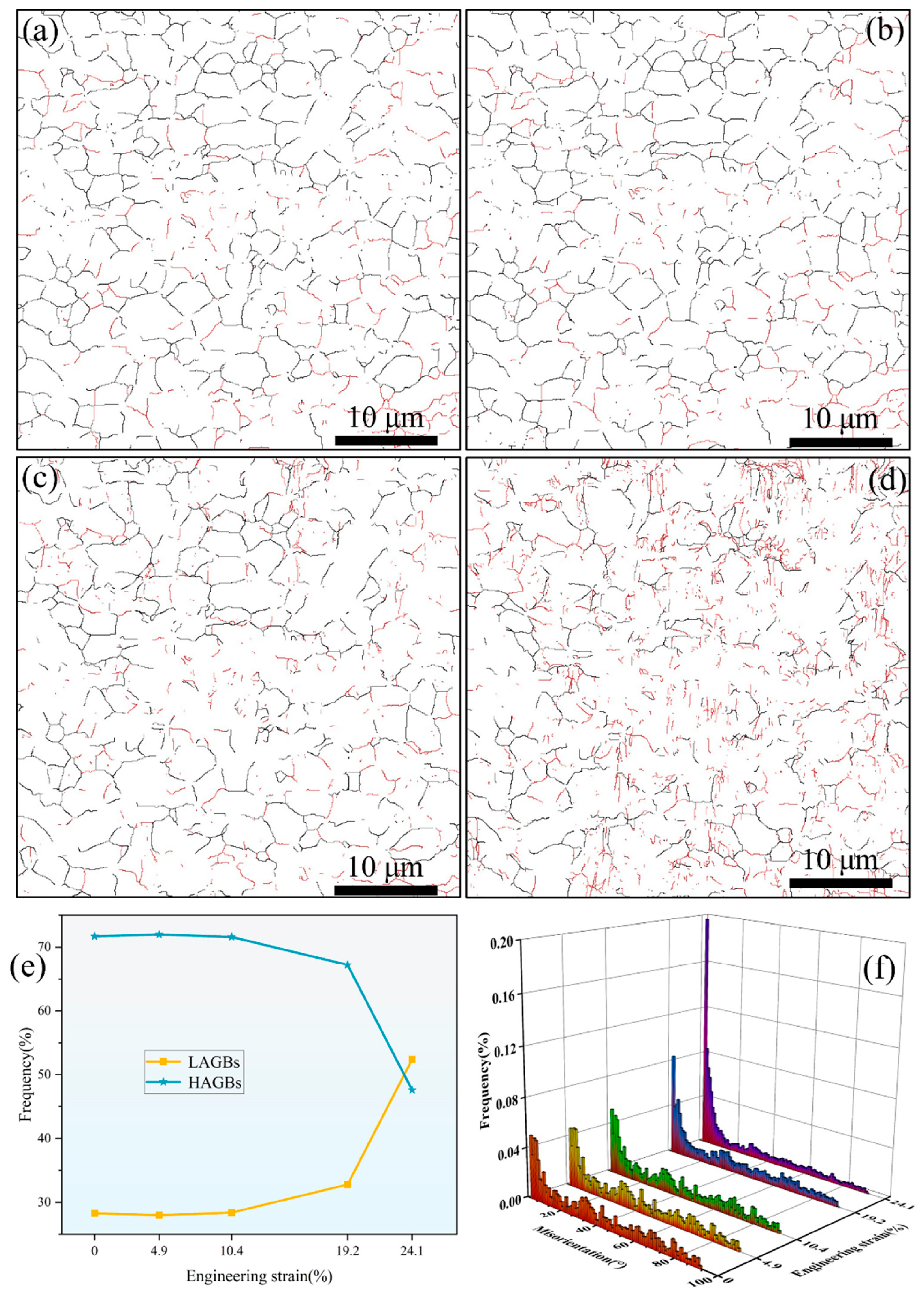
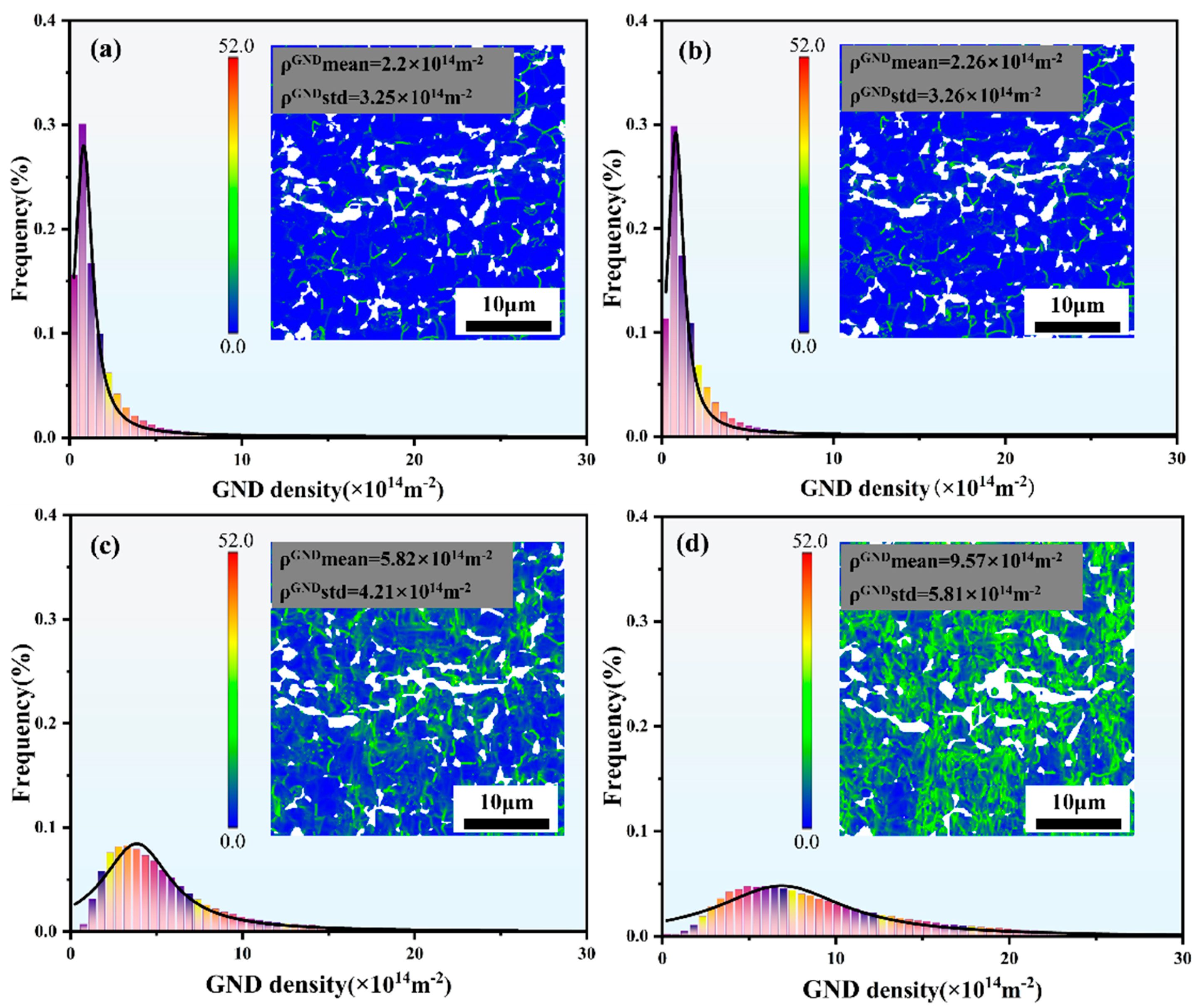
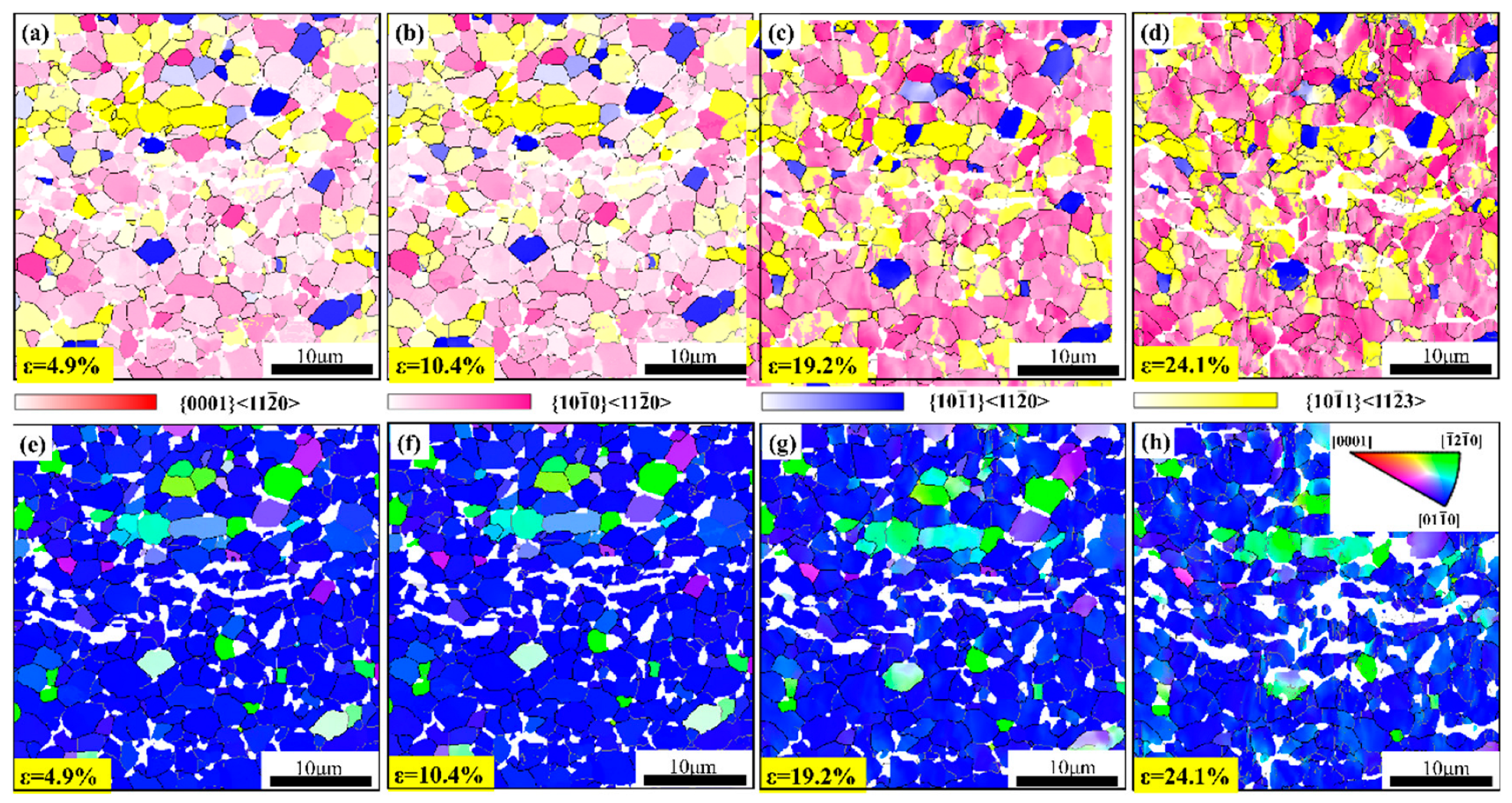
- Under high strain conditions, the motion of dislocations in the matrix markedly increases, resulting in the extensive formation of LAGBs. The lower CRSS of prismatic slip {100} <110> enables it to maintain activity throughout the deformation. A small portion of pyramidal slip {101} <113> activates to coordinate the deformation. As strain further increases, longitudinal matrix–matrix interface cracks begin to form at certain grain boundary locations.
Author Contributions
Funding
Data Availability Statement
Conflicts of Interest
References
- Sunil, S.; Gopalan, A.; Bind, A.K.; Sharma, R.K.; Murty, T.N.; Singh, R.N. Effect of radial hydride on delayed hydride cracking behaviour of Zr-2.5Nb pressure tube material. J. Nucl. Mater. 2020, 542, 152457. [Google Scholar] [CrossRef]
- Zhang, J.W.; Wang, J.X.; Zou, X.W.; Beyerlein, I.J.; Han, W.Z. Texture evolution and temperature-dependent deformation modes in ambient-and cryogenic-rolled nanolayered Zr-2.5Nb. Acta Mater. 2022, 234, 118023. [Google Scholar]
- Nouduru, S.K.; Mandapaka, K.K.; Dubey, V.; Roychowdhury, S.; Kain, V. Uniform oxidation in steam and nodular corrosion in gas phase of Zr-2.5Nb pressure tube material—Effect of nature of initial oxide. J. Nucl. Mater. 2022, 572, 154067. [Google Scholar] [CrossRef]
- Suman, S.; Khan, M.K.; Pathak, M.; Singh, R.N.; Chakravartty, J.K. Hydrogen in Zircaloy: Mechanism and its impacts. Int. J. Hydrogen Energy 2015, 40, 5976–5994. [Google Scholar] [CrossRef]
- Bair, J.; Zaeem, M.A.; Tonks, M. A review on hydride precipitation in zirconium alloys. J. Nucl. Mater. 2015, 466, 12–20. [Google Scholar] [CrossRef]
- Steuwer, A.; Santisteban, J.R.; Preuss, M.; Peel, M.J.; Buslaps, T.; Harada, M. Evidence of stress-induced hydrogen ordering in zirconium hydrides. Acta Mater. 2009, 57, 145–152. [Google Scholar] [CrossRef]
- Coleman, C.E.; McRae, G.A.; Buyers, A.; Hanlon, S. Gamma-zirconium hydride on DHC fracture surfaces is a legitimate stable phase, not a metastable phase. J. Nucl. Mater. 2021, 548, 152839. [Google Scholar] [CrossRef]
- Zhang, Y.; Qi, H.D.; Song, X.P. Expansion deformation behavior of zirconium alloy claddings with different hydrogen concentrations. J. Nucl. Mater. 2021, 554, 153082. [Google Scholar] [CrossRef]
- Wang, S.; Giuliani, F.; Britton, T.B. Slip–hydride interactions in Zircaloy-4: Multiscale mechanical testing and characterization. Acta Mater. 2020, 200, 537–550. [Google Scholar]
- Marashi, S.; Abdolvand, H. The interactions of deformation twins, zirconium hydrides, and microcracks. Int. J. Plast. 2024, 183, 104149. [Google Scholar] [CrossRef]
- Weekes, H.E.; Vorontsov, V.A.; Dolbnya, I.P.; Plummer, J.D.; Giuliani, F.; Britton, T.B.; Dye, D. In situ micropillar deformation of hydrides in Zircaloy-4. Acta Mater. 2015, 92, 81–96. [Google Scholar] [CrossRef]
- Wang, S.; Kalácska, S.; Maeder, X.; Michler, J.; Giuliani, F.; Britton, T.B. The effect of δ-hydride on the micromechanical deformation of a Zr alloy studied by in situ high angular resolution electron backscatter diffraction. Scr. Mater. 2019, 173, 101–105. [Google Scholar] [CrossRef]
- Vizcaíno, P.; Santisteban, J.R.; Vicente, A.M.A.; Banchik, A.D.; Almer, J. Effect of crystallite orientation and external stress on hydride precipitation and dissolution in Zr2.5%Nb. J. Nucl. Mater. 2014, 447, 82–93. [Google Scholar] [CrossRef]
- Colldeweih, A.W.; Makowska, M.G.; Tabai, O.; Sanchez, D.F.; Bertsch, J. Zirconium hydride phase mapping in Zircaloy-2 cladding after delayed hydride cracking. Materialia 2023, 27, 101689. [Google Scholar] [CrossRef]
- Liu, S.; Ishii, A.; Mi, S.; Ogata, S.; Li, J.; Han, W. Dislocation-Mediated Hydride Precipitation in Zirconium. Small 2022, 18, 2105881. [Google Scholar] [CrossRef]
- Tondro, A.; Taherijam, M.; Abdolvand, H. Diffusion and redistribution of hydrogen atoms in the vicinity of localized deformation zones. Mech. Mater. 2023, 177, 104544. [Google Scholar] [CrossRef]
- Lin, X.H.; Beyerlein, I.J.; Han, W.Z. Annealing cracking in Zr and a Zr-alloy with low hydrogen concentration. J. Mater. Sci. Technol. 2024, 182, 165–175. [Google Scholar] [CrossRef]
- Li, F.; Li, S.; Yang, K.; Wang, Y. Morphology and microstructure evolution of surface hydride in zirconium alloys during hydrogen desorption process. Int. J. Hydrogen Energy 2021, 46, 24247–24255. [Google Scholar] [CrossRef]
- Wang, Z.; Garbe, U.; Li, H.; Wang, Y.; Studer, A.J.; Sun, G.; Harrison, R.P.; Liao, X.; Vicente, A.M.A.; Santisteban, J.R.; et al. Microstructure and texture analysis of δ-hydride precipitation in Zircaloy-4 materials by electron microscopy and neutron diffraction. J. Appl. Crystallogr. 2014, 47, 303–315. [Google Scholar] [CrossRef]
- Fan, H.; Wang, Q.; El-Awady, J.A.; Raabe, D.; Zaiser, M. Strain rate dependency of dislocation plasticity. Nat. Commun. 2021, 12, 1845. [Google Scholar]
- Zhang, C.; Ya, R.; Sun, M.; Ma, R.; Cui, J.; Li, Z.; Tian, W. In-situ EBSD study of deformation behavior of nickel-based superalloys during uniaxial tensile tests. Mater. Today Commun. 2023, 35, 105522. [Google Scholar] [CrossRef]
- Thomas, R.; Lunt, D.; Atkinson, M.D.; Fonseca, J.Q.D.; Preuss, M.; Honniball, P.; Frankel, P. The role of hydrides and precipitates on the strain localisation behaviour in a zirconium alloy. Acta Mater. 2023, 261, 119327. [Google Scholar] [CrossRef]
- Pan, H.; He, Y.; Zhang, X. Interactions between dislocations and boundaries during deformation. Materials 2021, 14, 1012. [Google Scholar] [CrossRef] [PubMed]
- Motta, A.T.; Capolungo, L.; Chen, L.Q.; Cinbiz, M.N.; Daymond, M.R.; Koss, D.A.; Lacroix, E.; Pastore, G.; Simon, P.C.A.; Tonks, M.R.; et al. Hydrogen in zirconium alloys: A review. J. Nucl. Mater. 2019, 518, 440–460. [Google Scholar] [CrossRef]
- Nagarajan, S.; Jain, R.; Gurao, N.P. Microstructural characteristics governing the lattice rotation in Al-Mg alloy using in-situ EBSD. Mater. Charact. 2021, 180, 111405. [Google Scholar] [CrossRef]
- Peng, H.; Hu, L.; Baker, I. In-situ EBSD study of the active slip systems and substructure evolution in a medium-entropy alloy during tensile deformation. Mater. Charact. 2024, 217, 114405. [Google Scholar] [CrossRef]
- Wang, Z.; Baker, I.; Cai, Z.; Chen, S.; Poplawsky, J.D.; Guo, W. The effect of interstitial carbon on the mechanical properties and dislocation substructure evolution in Fe40.4Ni11.3Mn34.8Al7.5Cr6 high entropy alloys. Acta Mater. 2016, 120, 228–239. [Google Scholar] [CrossRef]
- Park, K.T. Tensile deformation of low-density Fe–Mn–Al–C austenitic steels at ambient temperature. Scr. Mater. 2013, 68, 375–379. [Google Scholar] [CrossRef]
- Ma, G.; Hughes, D.A.; Godfrey, A.W.; Chen, Q.; Hansen, N.; Wu, G. Microstructure and strength of a tantalum-tungsten alloy after cold rolling from small to large strains. J. Mater. Sci. Technol. 2021, 83, 34–48. [Google Scholar] [CrossRef]
- Chen, J.; Shi, H.; Lin, G.; Zhang, R.; Gui, K.; Zhou, C.; Shen, X.; Liu, H. Investigation on deformation mechanisms of Zr-1Sn-0.3Nb-0.3Fe-0.1Cr alloy using in situ EBSD/SEM. Int. J. Refract. Met. Hard Mat. 2024, 120, 106603. [Google Scholar] [CrossRef]





| Strain, % Slip System | 0% | 4.9% | 10.4% | 19.2% | 24.1% |
|---|---|---|---|---|---|
| (Ba<a>) {0001} <11–20> | 0.01% | 0.01% | 0.01% | 0.05% | 0.15% |
| (Pr<a>) {10–10} <11–20> | 56.5% | 55.6% | 55.9% | 55.0% | 59.4% |
| (Py<a>) {10–11} <11–20> | 7.26% | 7.22% | 7.05% | 6.91% | 5.75% |
| Py<c+a>1st {10–11} <11–23> | 25.2% | 25.2% | 26.3% | 28.8% | 28.8% |
Disclaimer/Publisher’s Note: The statements, opinions and data contained in all publications are solely those of the individual author(s) and contributor(s) and not of MDPI and/or the editor(s). MDPI and/or the editor(s) disclaim responsibility for any injury to people or property resulting from any ideas, methods, instructions or products referred to in the content. |
© 2026 by the authors. Licensee MDPI, Basel, Switzerland. This article is an open access article distributed under the terms and conditions of the Creative Commons Attribution (CC BY) license.
Share and Cite
Cui, C.; Li, B.; Sun, H.; Wang, H.; Sun, S.; Zhao, G.; Feng, Z.; Zhang, W. Hydrogen-Induced Crack Evolution and Microstructural Adaptation in Zirconium Alloy: An In Situ EBSD Tensile Study. Metals 2026, 16, 166. https://doi.org/10.3390/met16020166
Cui C, Li B, Sun H, Wang H, Sun S, Zhao G, Feng Z, Zhang W. Hydrogen-Induced Crack Evolution and Microstructural Adaptation in Zirconium Alloy: An In Situ EBSD Tensile Study. Metals. 2026; 16(2):166. https://doi.org/10.3390/met16020166
Chicago/Turabian StyleCui, Changxing, Bo Li, Huanzheng Sun, Hui Wang, Shuo Sun, Guannan Zhao, Zheng Feng, and Wen Zhang. 2026. "Hydrogen-Induced Crack Evolution and Microstructural Adaptation in Zirconium Alloy: An In Situ EBSD Tensile Study" Metals 16, no. 2: 166. https://doi.org/10.3390/met16020166
APA StyleCui, C., Li, B., Sun, H., Wang, H., Sun, S., Zhao, G., Feng, Z., & Zhang, W. (2026). Hydrogen-Induced Crack Evolution and Microstructural Adaptation in Zirconium Alloy: An In Situ EBSD Tensile Study. Metals, 16(2), 166. https://doi.org/10.3390/met16020166