Article

Synergistic Effects in Separation of Cobalt(II) and Lithium(I) from Chloride Solutions by Cyphos IL-101 and TBP


Department of Materials Engineering, Czestochowa University of Technology, 19 Armii Krajowej Ave., 42-200 Czestochowa, Poland
Metals 2026, 16(2), 165; https://doi.org/10.3390/met16020165
Submission received: 31 December 2025 / Revised: 23 January 2026 / Accepted: 26 January 2026 / Published: 30 January 2026
(This article belongs to the Section Extractive Metallurgy)

Abstract

This work reports on the extraction and separation of Co(II) and Li(I) ions from chloride solutions using a synergistic mixture, namely Cyphos IL 101 (trihexyl(tetradecyl)phosphonium chloride[R4PCl] and TBP (tributylphosphate). This system has not been described up to now. The aim of this research was to compare the extraction efficiency (%E) and the extraction selectivity of Co(II) over Li(I) (SCo/Li) using single extractants and their equimolar mixture. Co(II) extraction with Cyphos IL 101 and TBP depends strongly on hydrochloric acid concentration in the aqueous phase. The separation coefficient of the studied metal ions was determined depending on the hydrochloric acid concentrations in the aqueous phase. The significance of the work is in the examination of the re-extraction of cobalt(II) from the organic phase after extraction. For this purpose, inorganic acids were investigated as the stripping agents, i.e., HCl (hydrochloric acid), H2SO4 (sulfuric acid) and HNO3 (nitric acid). Finally, optimal conditions for the separation of Co(II) and Li(I) were established by using a synergistic mixture. A highly selective and effective solvent extraction of cobalt(II) over lithium(I) from 5 mol∙dm−3 hydrochloric acid has been achieved with the synergistic mixture of 0.1 mol∙dm−3 Cyphos IL 101 and 0.1 mol∙dm−3 TBP in kerosene. The selectivity coefficients of Co(II) over Li(I) (CCo/Li) in the solvent extraction with 0.1 mol∙dm−3 Cyphos IL 101, 0.1 mol∙dm−3 TBP, and with their equimolar mixture were found to be equal: 73.1, 3.7 and 225.5, respectively. Efficient Co(II) stripping was achieved using 0.5 mol∙dm−3 sulfuric acid.

1. Introduction

Cobalt and lithium are strategic metals. These metals are useful in metallurgy for the production of magnets, high-speed tool steels, alloys and superalloys that are corrosion-, wear- and heat-resistant. In non-metallurgical applications, lithium and cobalt are used as important components of lithium-ion batteries (LiBs) [1,2,3,4,5]. Cobalt can be obtained from primary and secondary sources, and spent LiBs are a valuable secondary source of many various metals such as lithium, cobalt, nickel and manganese [4]. The production of LiBs mainly requires cobalt and lithium because lithium cobalt oxide (LiCoO2) is the main component of cathode materials. Therefore, these metals can be recovered from spent LiBs. For this purpose, we can use metallurgical methods including pyro- and hydrometallurgical technologies [3]. In the recycling process, hydrometallurgical technology (including pre-treatment, leaching by acids, precipitation, solvent extraction, electrochemical methods, ion exchange or adsorption) is a suitable technique [6,7]. This technology has many advantages, such as the high recovery of metals with high purity and low energy consumption, as well as very low carbon dioxide (CO2) emissions [1].
The separation of metal ions from solutions after leaching spent batteries is a key stage in the processing of this type of solutions. Solvent extraction (SX) is one of the most effective hydrometallurgical methods used for the separation of cobalt(II) from aqueous solutions containing various metal ions. However, the efficient, economical and environmentally friendly process requires the use of an appropriate extractant. Liquid–liquid extraction is the separation method often applied for the processing of the leached liquor containing Co(II) and other metal ions. This technique is very useful due to its high separation efficiency.
One of the reported commercial applications was the extraction of Co(II) using Cyanex 272 (bis(2,4,4,-trimethylpentyl)phosphinic acid) [8]. One can find many examples of the selective extraction of Co(II) using various organophosphorus acids. Table 1 presents a list of the extractants used for the selective separation of Co(II) ions from aqueous solutions.
The extractants used in hydrometallurgical processes to separate metal ions from aqueous solutions are organic compounds with a highly diverse molecular structure and distinct physicochemical properties. The selection of the appropriate extractant is determined by factors such as the composition of the leached solution, pH and the concentration of accompanying metals. However, the extractants are practically never used in their pure form. Moreover, they are usually soluble in organic solvents—chemically inert products of crude oil distillation, characterized by a density different from that of water, low solubility in water, possessing a high boiling point and low viscosity. A crucial characteristics is their ability to phase separation, which is particularly important in industrial applications.
Table 2 shows structures of extractants used for the extraction of Co(II) ions. However, during the liquid–liquid extraction process, depending on the extractant’s selectivity, other useful metals and impurities also pass into the organic phase. They are subsequently washed out from the organic phase during the purification stage. Depending on the extraction mechanism, aqueous solutions of various chemical compounds are used for washing. With sufficiently high extractant selectivity and minimal solution contamination, the scrubbing stage can be omitted. The purpose of re-extraction or stripping is to obtain a pure aqueous solution by moving metal ions from a loaded organic phase suitable for electrolysis. The stripping (re-extraction) is usually carried out using relatively concentrated aqueous solutions of inorganic acids.
Currently, there are known organic compounds allowing the extraction of all metals. However, in practice, the properties that should characterize extractants used in analytical chemistry and industrial processes vary significantly. This variation is related to the need for the adequate hydrophobicity of industrial extractants. Every industrially used extractant should be able to perform the following:
Exhibit the minimal solubility in the aqueous phase,
Extract selectively,
Enable repeated use,
Be stable in organic solvents or act as a solvent,
Ensure an appropriate extraction and re-extraction rate,
Not form stable emulsions,
Show low production cost,
Be non-toxic, non-flammable, non-carcinogenic, and biodegradable.
In practice, it is difficult to find extractants that meet all of the above requirements. In most of the cases, the extractants used are a compromise between the individual requirements. However, regardless the type of extractant, each of them contains a hydrophilic and a hydrophobic group. This structure allows the extractant molecule to adsorb at the interface and allows the hydrophilic group to interact with metal ions present in the aqueous phase. A fundamental characteristic of a good metal extraction agent is its significant solubility in the organic phase, both in its free form and when bound to the metal being extracted. Extraction selectivity is a characteristic of the extractant, but it is largely determined by the individual physicochemical properties of the metal ions.
Recently, ionic liquids (ILs) have been used for extraction of metal ions from aqueous solutions due to their physicochemical and extraction properties. These compounds are very significant extractants for applications in green chemistry. The molecule of an ionic liquid contains a cation and an anion. The cation is organic and large and the anion is organic or inorganic, and of various sizes [17,18,19,20,21,22,23]. The examples of commercial ILs are the following:
Cyphos IL 101 and Cyphos IL 104 have been studied as extractants of Co(II) and Ni(II) ions by Rybka and Regel-Rosocka [20] and Janiszewska et al. [21]. The results showed that Co(II) extraction with Cyphos IL 101 depends on hydrochloric acid concentration in the aqueous phase. Co(II) extraction with Cyphos IL 104 is the most efficient for the aqueous phase without HCl. Xu et al. [22] applied Cyphos IL 101 for the recovery of Co(II) and Li(I) from 0.5 mol∙dm−3 HCl at 60 °C. They obtained very good results under the optimal conditions. The separation coefficient SCo/Li was 102.1. Finally, cobalt and lithium was recovered by precipitation with high efficiency (90.5% and 86.2%, respectively).
Table 3 presents a list of various ILs used as extractants of cobalt(II) from aqueous solutions.
The many results of numerous investigations shows that the application of a mixture of extractants can be more effective than using a single extractants [23,24,25]. This is the synergistic effect, which is beneficial for both the extraction efficiency (%E) and the extraction selectivity (S). For instance, the application of Cyphos IL 101 for cobalt(II) extraction is usually not sufficient, because this compound primarily extracts anionic metal complexes. Therefore, its extraction capacity largely depends on the chloride ion concentration in the aqueous solution. At high HCl concentration, Co(II) ions form in the organic-phase tetrahedral anionic complexes [17]. Adding another substance can significantly increase extraction efficiency. For instant, Cyanex 272 can be suggested as an additive to Cyphos IL 101, which can influence the efficiency and selectivity of the Co(II) and Ni(II) [23] separation. Sarangi, Reddy and Das [26] studied the extraction of cobalt(II) and nickel(II) from 1.0 mol∙dm−3 HCl using a mixture of sodium salts of the extractants Cyanex 272, PC-88A and D2EHPA. The extraction percentage increased with increasing aqueous phase pH, extractant concentration and temperature, and the obtained selectivity series was as follows: Na-Cyanex 272 > Na-PC88A < Na-D2EHPA.
In the cobalt(II) and nickel(II) extraction systems using D2EHPA [13], TBP (tributylphosphate) [25], EHO (2-ethylhexanal) and LIX 63 (5,8-diethyl-7-hydroxy-6-dodecane oxime) [27] were used as extractant additives. The strongest synergistic effect was observed with LIX 63 and EHO [27]. Synergism was also observed when extracting nickel(II) and cobalt(II) ions using a mixture containing 20% D2EHPA and 20% LIX 860 in kerosene. The synergy coefficient (SC) was 1.49 for nickel(II) and 0.89 for cobalt(II) [27]. A very strong synergistic effect for cobalt(II) was observed in extraction systems with mixtures of the sodium salts D2EHPA, PC-88A and Cyanex 272 [26,28]. This is due to the formation in the organic phase of mixed tetrahedral complexes of cobalt(II) containing coordinated anions originating from two different extractants, e.g., D2EHPA and Cyanex 272, Cyanex 272 and PC-88A, and D2EHPA and PC-88A [26,28].
Recently, Pianowska et al. [29] used a mixture of Cyphos IL 101 and TBP in Exxsol D80 for the extraction of ReO4 from an ammonia waste solution. This mixture turned out to be very effective (extraction efficiency: %E >90%). It can be assumed that this type of mixture may be effective in extracting other metal ions present in aqueous solutions in the form of anions, such as cobalt in chloride solution.
Due to the fact that there are no reports in the literature on the separation of Co(II) using a mixture of Cyphos IL 101 with the addition of solvating extractant, in this work, it was proposed to use a mixture of Cyphos IL 101 and TBP. The research describes the extraction of Co(II) and Li(I) using the equimolar mixture of Cyphos IL 101 and TBP in kerosene.

2. Materials and Methods

2.1. Reagents

Trihexyl(tetradecyl)phosphonium chloride (Cyphos IL 101, Cytec Industries Inc., Woodland, NJ, USA),
Tributylphosphate (TBP, 97%, Fluka, Everett, WA, USA),
The aqueous solution of 0.01 mol∙dm−3 CoCl2 ∙ 6H2O (cobalt(II) chloride, purity = 99%, POCh, Gliwice, Poland) and 0.01 mol∙dm−3 LiCl (lithium chloride, purity = 99%, POCh, Gliwice, Poland) (due to the preliminary nature of this study, a synthetic solution was used. Subsequently, the extraction studies will be conducted using the real solution after LiBs leaching).
Solutions of hydrochloric acid (HCl), sulfuric acid (H2SO4) and nitric acid (HNO3) (POCh, Gliwice, Poland). All reagents were of analytical grade and used without further purification.

2.2. Solvent Extraction

To extract metal ions, equal volumes of the aqueous (A) and organic phases (O) (10 cm3 each) were mixed in a conical flask, which was shaken in a shaker (universal shaker, type WU-4, Premed, Warsaw) at 200 vibrations/minute for 20 min. Then, after 12 h, the two phases were separated. As the aqueous phase was used the HCl solution containing 0.01 mol∙dm−3 Co(II) and 0.01 mol∙dm−3 Li(I). As the organic phase, the following mixtures were used: 0.1 mol∙dm−3 Cyphos IL 101, 0.1 mol∙dm−3 TBP in kerosene and a mixture of 0.1 mol∙dm−3 Cyphos IL 101 and 0.1 mol∙dm−3 TBP in kerosene. After shaking, the phases were separated. Each experiment was performed three times. The analytical error was less than 5%. Metal concentrations in aqueous phases were analyzed using a plasma emission spectrometer MP-AES 4200 (Agilent, Santa Clara, CA, USA). The concentration of Co(II) and Li(I) in aqueous phase was determined before and after extraction for calculating the extraction efficiency.
Based on the equilibrium concentrations of metal ions, the distribution ratio (D) was calculated:
D = c M o c M a q
where cMo and cMaq. is metal ion concentrations in the organic and aqueous phases, respectively.
The extraction efficiency (% E) of metal ions at a unit volume ratio of both phases (Vo/Va = 1) was calculated using the formula:
%   E   = D D + 1 100 %
The extraction selectivity was characterized by the selectivity coefficient (S):
S M 1 / M 2 = D M 1 D M 2

2.3. Stripping Experiments

To evaluate the stripping efficiency of Co(II) and Li(I) from the organic phase after extraction, the organic phase was put in contact with the stripping solution (H2O, HCl, HNO3, H2SO4) at a phase volume ratio of O: A = 1 at 21 ± 2 °C. After shaking, the organic and aqueous phases were separated. The metal concentrations in the aqueous phases were analyzed using a MP-AES 4200 plasma emission spectrometer (Agilent, Santa Clara, CA, USA).

3. Results

The following section presents the results of the solvent extraction and stripping experiments.

3.1. Cobalt(II) and Lithium(I) Extraction

Hydrochloric acid is gaining interest in hydrometallurgical technologies for the recovery of metals from spent materials, e.g., spent LiBs. Acid leaching produces solutions containing mixtures of metal ions that need to be separated. Although cobalt(II) extraction from aqueous chloride solutions was investigated by applying various extractants [8,9,10,11,12,13,14,15,16,17], most research concerns the separation of Co(II) and Ni(II) from sulfate solutions. There are only a few studies on the extraction of Co(II) and Li(I) from chloride solutions [20,25]. Their extraction with a synergistic mixture of the phosphonium salt Cyphos IL 101 and TBP for separation with the metal ions presented in this work has not been studied up to now.
As mentioned, at high HCl concentrations, Co(II) ions form in the organic-phase tetrahedral anionic complexes. Due to the fact that only cobalt(II) forms anionic chloro complexes, unlike lithium, it presents the chance to separate them using an ionic liquid such as Cyphos IL 101.
The main aim of the research is to check whether the addition of TBP as a solvating extractant to Cyphos Il 101 will increase the efficiency of Co(II) extraction and the separation coefficient (SCo/Li).
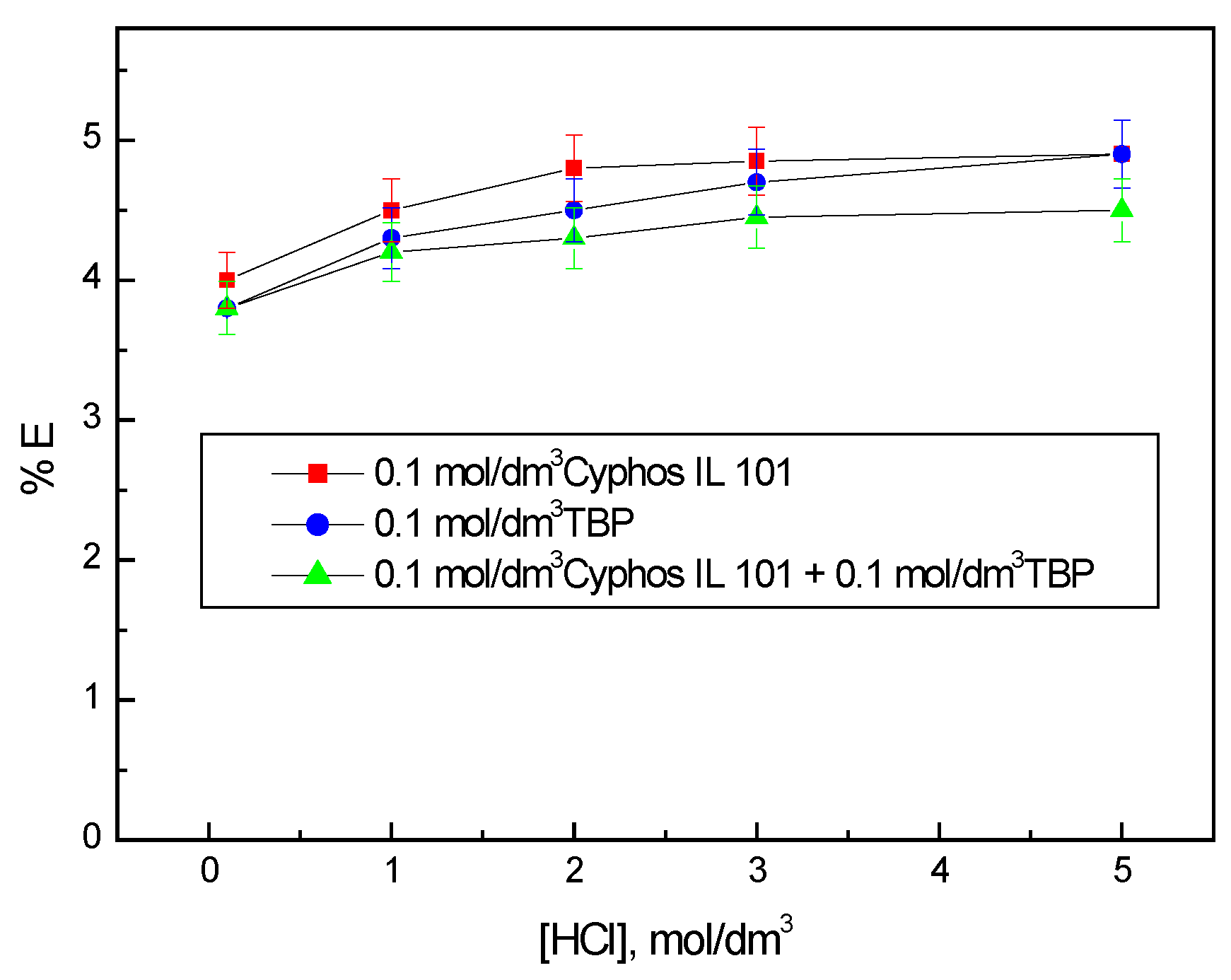
At first, the extraction of Co(II) and Li(I) with 0.1 mol∙dm−3 Cyphos IL 101 and 0.1 mol∙dm−3 TBP, and with their equimolar mixture, was investigated depending on the concentration of hydrochloric acid in the aqueous phase. The acid concentration in the aqueous phase was varied from 0.1 mol∙dm−3 to 5 mol∙dm−3. Figure 1 and Figure 2 show the obtained results for the extraction of Co(II) and Li(I), respectively.

3.2. Selectivity of Co(II) and Li(I) Extraction with 0.1 M Cyphos IL 101 and 0.1 M TBP

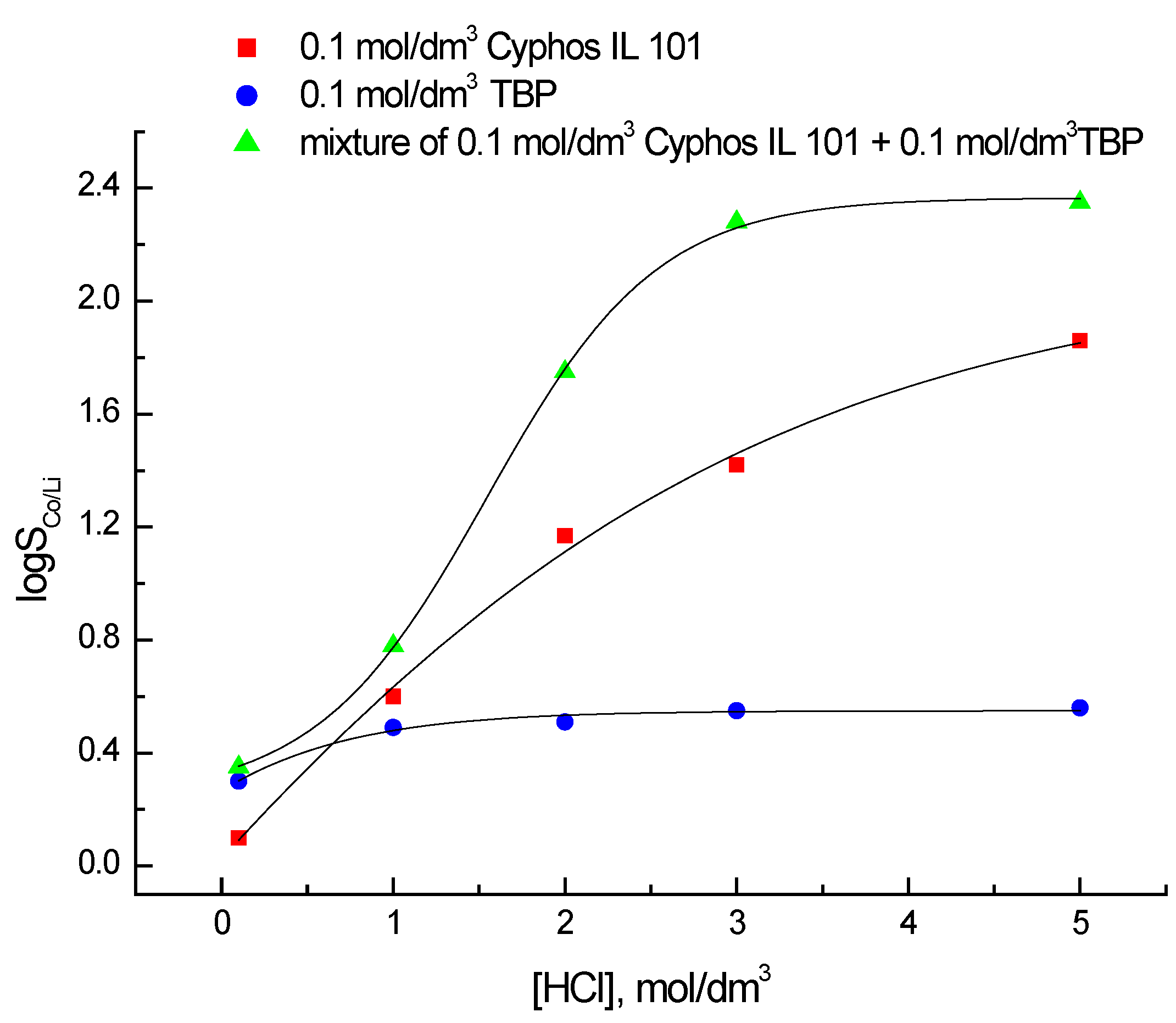
Based on the distribution ratio (D) for individual metals, the logarithm of selectivity coefficients (logSCo/Li) for each extraction systems depending on HCl concentration in the aqueous phase was calculated. The obtained results are presented in Figure 3.

3.3. Stripping of Co(II) from Organic Phase

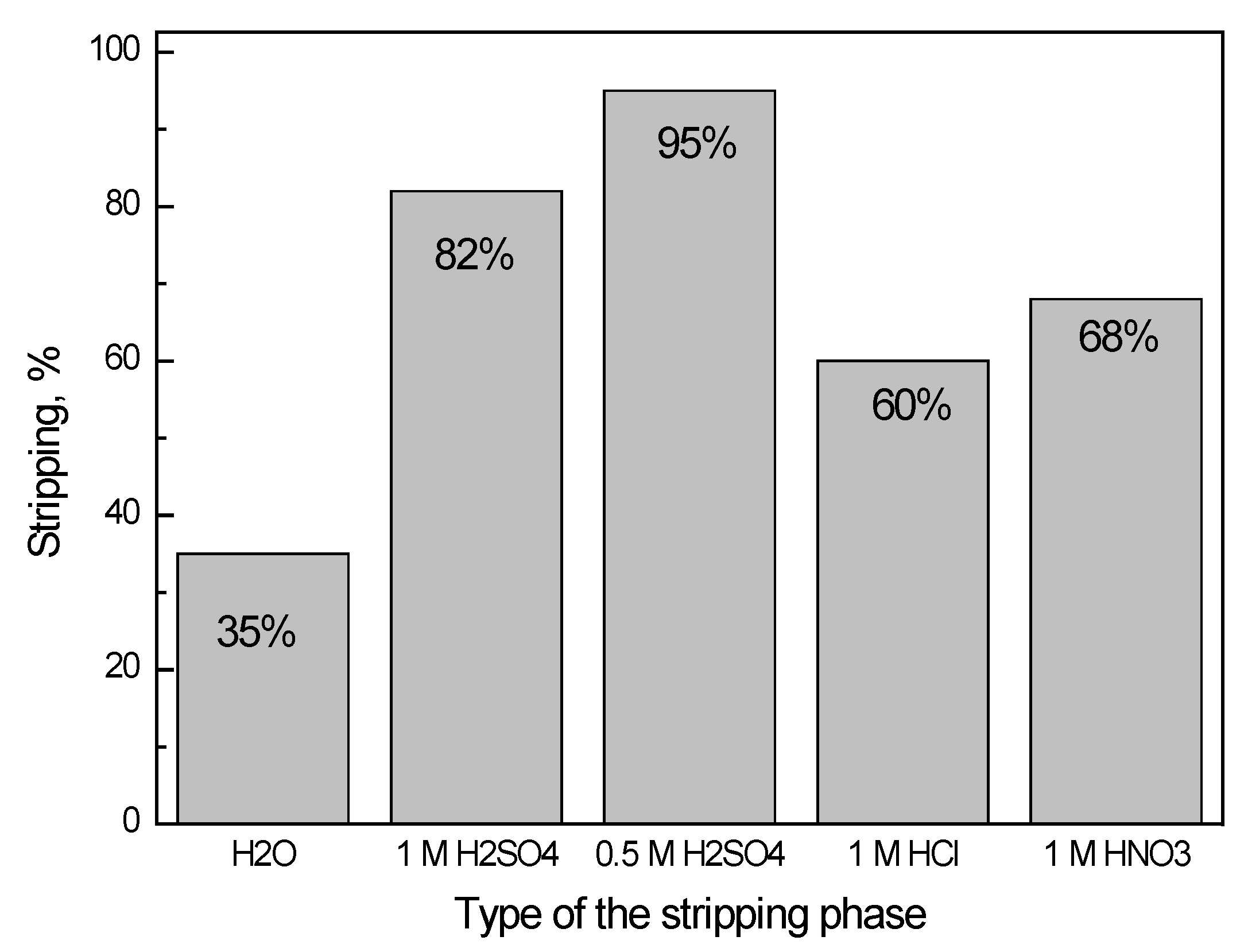
Water, 1 mol∙dm−3 hydrochloric acid, 0.5 mol∙dm−3 and 1 mol∙dm−3 sulfuric acid, as well as 1 mol∙dm−3 nitric acid, were used as the stripping solution (H2O, HCl, HNO3, H2SO4) from the loaded organic phases at phase-volume ratio O:A = 1. The results are shown in Figure 4.

4. Discussion

Figure 1 shows the effect of HCl concentration in the aqueous phase on the extraction efficiency (%E) of Co(II) and Li(I) with 0.1 mol∙dm−3 Cyphos IL 101 in kerosene, 0.1 mol∙dm−3 TBP in kerosene and with mixture of 0.1 mol∙dm−3 Cyphos IL 101 and 0.1 mol∙dm−3 TBP in kerosene. In this case, the mixture of Cyphos IL 101 and TBP proved to be a very effective and selective extractant of Co(II) from HCl solutions at high acid concentration (>1 M). Synergism is a significant increase in metal (M) extraction efficiency under the influence of a synergistic agent present alongside the actual extractant. This synergism is caused by the presence of mixed complexes in the organic phase, which are more stable and more hydrophobic than single complexes. Cyphos IL 101 for Co(II) extraction is usually not sufficient at a low concentration of chloride ions, because this chemical compound extracts mainly anionic metal complexes. Lithium does not form stable chloride complexes in aqueous solutions. The Li(I) cation has a very small ionic radius (approximately 0.076 nm) and a high specific charge, meaning that it strongly attracts water molecules. A very stable aqueous complex forms around the Li(I)—most often [Li(H2O)4]+ or [Li(H2O)6]+. For lithium to pass into the organic phase, it would have to break these strong ion–dipole bonds with water, which is energetically very unfavorable. The hydration enthalpy of Li(I) is the lowest (most negative) among the alkali metal cations [30]. Unlike transition metals (e.g., Co(II)), lithium does not possess empty d orbitals that would favor complex formation.
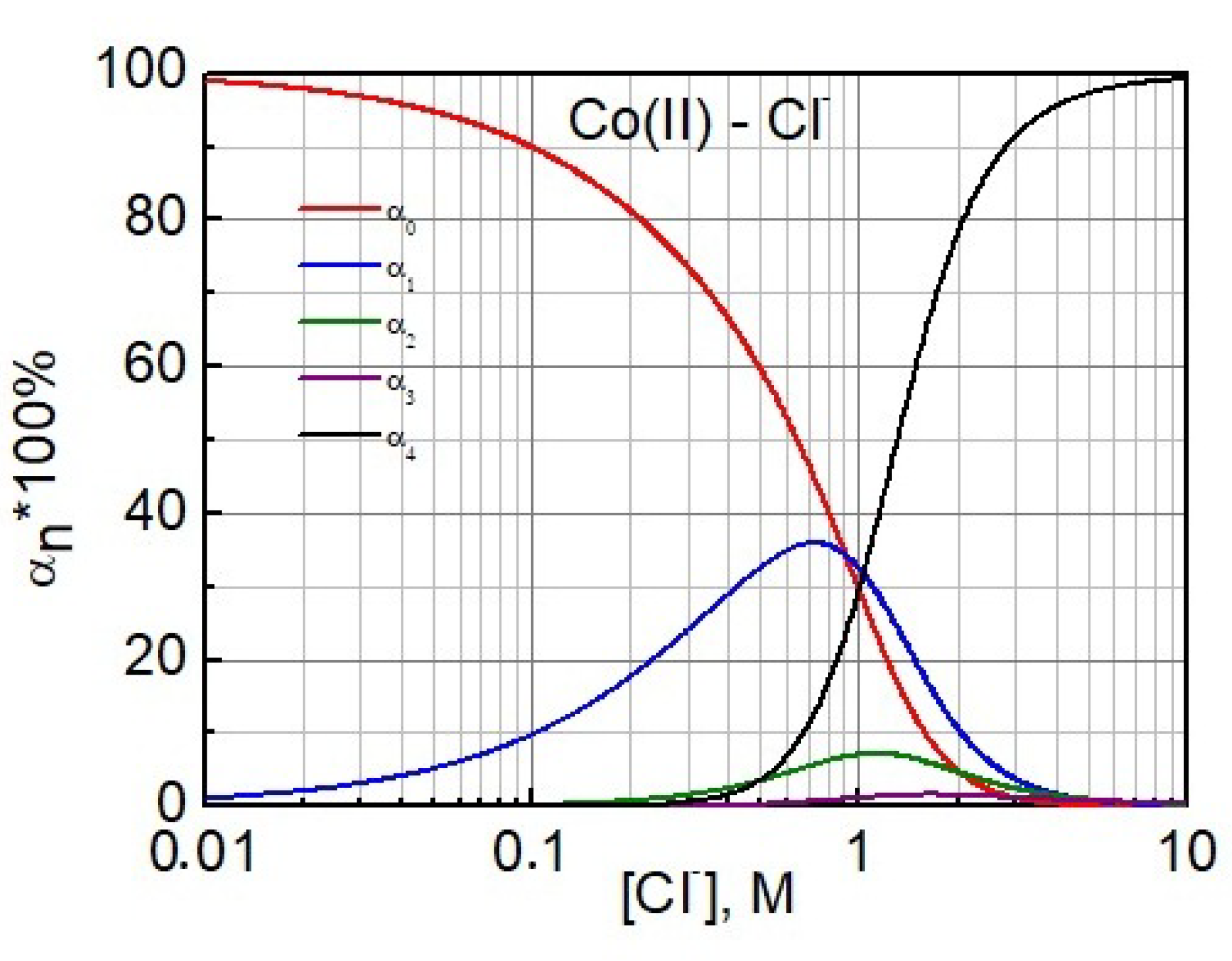
As mentioned, at high HCl concentration, Co(II) ions form in the aqueous-phase tetrahedral anionic complexes. Figure 5 and Table 4 shows the percent molar contributions of chloride complex species for Co(II) at various chloride ion concentrations.
Table 4 is a theoretical speciation model. As the fact that only cobalt(II) ions form anionic chloro complexes, unlike lithium, it presents the chance to separate them using an ionic liquid such as Cyphos IL 101. In the case of high anion concentrations, extraction occurs by the ion exchange reactions, e.g.,
C o C l 4 2 ( aq ) + 2 [ R 4 PCl ] ( o ) ( [ R 4 P ] ) 2 CoCl 4 ( o ) + 2 C l ( aq )
TBP as the solvating extractants replace water molecules in the first hydration region, forming a metal–extractant complex. The extraction of neutral complexes is carried out according to Equation (5), and the extraction of anionic complexes is conducted according to reaction Equation (6) [15,31,32]:
MXp(H2O)aq. + qSo⇄MXpSq,o + qH2O
HMX p ( H 2 O ) ( n + 1 ) aq . + xS o HS x + M X ( n + 1 ) o + H 2 O
Factors influencing the degree of extraction include the concentration and nature of anionic ligands, the degree of hydration of the complex in the aqueous phase, and the strength of the metal–water and metal–extractant bonds [30].
The ionic strength and composition of the aqueous solution play a significant role in extraction using solvating extractants. In this system, the addition of TBP to Cyphos IL 101 resulted in an increase in the extraction efficiency as well as the selectivity of cobalt(II) extraction relative to lithium(I), as shown in Figure 3, especially at high acid concentrations (>1 mol∙dm−3). The selectivity coefficients of Co(II) over Li(I) (CCo/Li) during their solvent extraction from 5 mol∙dm−3 HCl with 0.1 mol∙dm−3 Cyphos IL 101, 0.1 mol∙dm−3 TBP, and their equimolar mixture were found to be equal to 73.1, 3.7 and 225.5, respectively. Pianowska et al. [29] also confirmed the effectiveness of an extraction system containing Cyphos IL 101 and TBP for the extraction of ReO4 anions with the organic phase containing 5% (v/v) Cyphos IL 101 and 20% (v/v) TBP in the Exxsol D80 as diluent. The authors reported that the extraction efficiency of Re was higher than 99.9%.
During the solvent extraction, metal stripping from the organic phase is crucial. Water, 1 mol∙dm−3 hydrochloric acid, 0.5 mol∙dm−3 and 1 mol∙dm−3 sulfuric acid, as well as 1 mol∙dm−3 nitric acid, were used as the stripping solutions from the loaded mixture of 0.1 mol∙dm−3 Cyphos IL 101 and 0.1 mol∙dm−3 TBP in kerosene. As can be seen from Figure 4, the most efficient stripping solution was 0.5 mol∙dm−3 H2SO4. Co(II) ions were removed from the loaded organic phase with a high efficiency. The percentage stripping of Co(II) from the loaded mixture exceeds 90% in one stripping stage. Sulfuric acid is a better stripping phase of metals from the organic phase compared to water, nitric acid and hydrochloric acid. It has a stronger re-extractor effect, leading to faster and more efficient dissolution of metals. Sulfuric acid reacts with the metal, displacing it from the organic phase, which is crucial in industrial processes. With water and other acids, especially hydrochloric acid, these reactions are less effective because these chemical compounds are not as strong as sulfuric acid for this extraction system under these process conditions. A similar results were observed during the re-extraction of Co(II) [20] and Zn(II) [33] from the loaded phase of Cyphos IL 101 using sulfuric acid. It is a cheap and effective extraction agent.

5. Conclusions

Single Cyphos Il 101 or TBP could not extract Co(II) and Li(I) selectively and effectively, but the mixture of Cyphos IL 101 and TBP together in the organic phase created the synergistic effect and extracted Co(II) efficiently. The mixture of Cyphos IL 101 and TBP did not practically extract Li(I) ions (%E < 5%) from hydrochloric solutions, thus demonstrating the potential of this mixture for the separation of Co(II) from Li(I).
However, it should be noted that the presented research results are preliminary and do not address many limitations that can occur in real lithium-ion battery leaching solutions. The high selectivity in basic studies was obtained at high acid concentrations and the absence of other competing metal ions.

Funding

This research received no external funding.

Data Availability Statement

The original contributions presented in this study are included in the article. Further inquiries can be directed to the corresponding author.

Conflicts of Interest

The authors declare no conflict of interest.

Abbreviations

The following abbreviations are used in this manuscript:
Cyphos IL 104Trihexyl(tetradecyl)phosphonium bis-2,4,4(trimethylpentyl)phosphinate
Cyphos IL 101Trihexyl(tetradecyl)phosphonium chloride
ILsIonic liquids
LIBs Lithium-ion batteries
SXSolvent extraction
TBPTributylphosphate

References

  1. Dalini, F.A.; Karimi, G.H.; Goodarzi, M. A Review on environmental, economic and hydrometallurgical processes of recycling spent lithium-ion batteries. Miner. Process. Extr. Metall. Rev. 2021, 42, 451–471. [Google Scholar] [CrossRef]
  2. Satyawirawan, S.A.; Catrall, R.W.; Kolev, S.; Ines, M.; Almeida, G.S. Improving Co(II) separation from Ni(II) by solvent extraction using phosphonium-based ionic liquids. J. Mol. Liq. 2023, 386, 121764. [Google Scholar] [CrossRef]
  3. Chagnes, A.; Pospiech, B. A brief review on hydrometallurgical technologies for recycling spent lithium ion batteries. J. Chem. Technol. Biotechnol. 2013, 88, 1191–1199. [Google Scholar] [CrossRef]
  4. Giza, K.; Pospiech, B.; Gega, J. Future technologies for recycling spent lithium-ion batteries (libs) from electric vehicles—Overview of latest trends and challenges. Energies 2023, 16, 5777. [Google Scholar] [CrossRef]
  5. Mandl, M.M.; Lerchbammer, R.; Gerold, E. Bioleaching of lithium-ion battery black mass: A comparative study on gluconobacter oxydans and acidithiobacillus thiooxidans. Metals 2025, 15, 1112. [Google Scholar] [CrossRef]
  6. Brožová, S.; Lisińska, M.; Saternus, M.; Gajda, B.; Martynková, G.S.; Slíva, A. Hydrometallurgical recycling process for mobile phone printed circuit boards using ozone. Metals 2021, 11, 820. [Google Scholar] [CrossRef]
  7. Regel-Rosocka, M.; Alguacil, F.J. Recent trends in metals extraction. Rev. Metal. 2013, 49, 292–316. [Google Scholar] [CrossRef]
  8. Kang, J.; Senanayake, G.; Sohn, J.; Shin, S.M. Recovery of cobalt sulfate from spent lithium ion batteries by reductive leaching and solvent extraction with Cyanex 272. Hydrometallurgy 2010, 100, 168–171. [Google Scholar] [CrossRef]
  9. Olushola, S.A.; Folahan, A.A.; Alafara, A.B.; Bhekumusa, J.X.; Olalekan, S.F. Application of Cyanex extractant in cobalt/nickel separation process by solvent extraction. Int. J. Phys. Sci. 2023, 8, 89–97. [Google Scholar] [CrossRef]
  10. Parhi, P.K.; Panigrahi, S.; Sarangi, K.; Nathsarma, K.C. Separation of cobalt and nickel from ammoniacal sulphate solution using Cyanex 272. Sep. Purif. Technol. 2008, 59, 310–317. [Google Scholar] [CrossRef]
  11. Park, K.H.; Mohapatra, D. Process for cobalt separation and recovery in the presence of nickel from sulphate solutions by Cyanex 272. Met. Mater. Int. 2006, 12, 441–446. [Google Scholar] [CrossRef]
  12. Gandhi, M.N.; Deorkar, N.V.; Khopkar, S.M. Solvent extraction separation of cobalt(II) from nickel(II) and other metals with Cyanex 272. Talanta 1993, 40, 1535–1539. [Google Scholar] [CrossRef]
  13. Tait, B.K. Cobalt-nickel separation: The extraction of cobalt(II) and nickel(II) by Cyanex 301, Cyanex 302 and Cyanex 272. Hydrometallurgy 1993, 32, 365–372. [Google Scholar] [CrossRef]
  14. Rickelton, W.A. Novel uses for thiophosphinic acids in solvent-extraction. JOM 1992, 44, 52–54. [Google Scholar] [CrossRef]
  15. Preston, J.S. Solvent extraction of cobalt and nickel by organophosphorus acids. Comparison of phosphoric, phosphonic and phosphinic acid systems. Hydrometallurgy 1982, 9, 115–133. [Google Scholar] [CrossRef]
  16. Dreisinger, D.B.; Cooper, W.C. The solvent-extraction separation of cobalt and nickel using 2-ethylhexylphosphonic acid mono-2-ethylhexyl ester. Hydrometallurgy 1984, 12, 1–20. [Google Scholar] [CrossRef]
  17. Meshram, P.; Agarwal, N.; Abhilash. A review on assessment of ionic liquids in extraction of lithium, nickel, and cobalt vis-a-vis conventional methods. RSC Adv. 2025, 15, 8321. [Google Scholar] [CrossRef]
  18. Singh, M.P.; Singh, R.K.; Chandra, S. Ionic liquids confined in porous matrices: Physicochemical properties and applications. Prog. Mater. Sci. 2024, 64, 73–120. [Google Scholar] [CrossRef]
  19. Pospiech, B.; Kujawski, W. Ionic liquids as selective extractants and ion carriers of heavy metal ions from aqueous solutions utilized in extraction and membrane separation. Rev. Chem. Eng. 2015, 31, 179–191. [Google Scholar] [CrossRef]
  20. Rybka, P.; Regel-Rosocka, M. Nickel(II) and cobalt(II) extraction from chloride solutions with quaternary phosphonium salts. Sep. Sci. Technol. 2012, 47, 1296–1302. [Google Scholar] [CrossRef]
  21. Janiszewska, M.; Markiewicz, A.; Regel-Rosocka, M. Hydrometallurgical separation of Co(II) from Ni(II) from model and real waste solutions. J. Clean. Prod. 2019, 228, 746–754. [Google Scholar] [CrossRef]
  22. Xu, L.; Chen, C.; Fu, M.L. Separation of cobalt and lithium from spent lithium-ion battery leach liquors by ionic liquid extraction using Cyphos IL-101. Hydrometallurgy 2020, 197, 105439. [Google Scholar] [CrossRef]
  23. Pospiech, B.; Chagnes, A. Highly selective solvent extraction of Zn(II) and Cu(II) from acidic aqueous chloride solutions with mixture of Cyanex 272 and Aliquat 336. Sep. Sci. Technol. 2015, 50, 1302–1309. [Google Scholar] [CrossRef]
  24. Cholico-Gonzales, D.; Chagnes, A.; Cote, G.; Avila-Rodriguez, M. Separation of Co(II) and Ni(II) from aqueous solutions by bis(2,4,4,-trimethylpentyl)phosphinic acid (Cyanex 272) using trihexyl(tetradecyl)phosphonium chloride (Cyphos IL 101) as solvent. J. Mol. Liq. 2015, 209, 203–208. [Google Scholar] [CrossRef]
  25. Pospiech, B. Synergistic solvent extraction of Co(II) and Li(I) from aqueous chloride solutions with mixture of Cyanex 272 and TBP. Physicochem. Probl. Miner. Process. 2016, 52, 353–364. [Google Scholar] [CrossRef]
  26. Sarangi, K.; Reddy, B.R.; Das, R.P. Extraction studies of cobalt(II) and nickel(II) from chloride solutions using Na-Cyanex 272. Separation of Co(II)/Ni(II) by the sodium salts of D2EHPA, PC88A and Cyanex 272 and their mixtures. Hydrometallurgy 1999, 52, 253–265. [Google Scholar] [CrossRef]
  27. Zhang, P.; Yokoyama, T.; Suzuki, T.M.; Inoue, K. The synergistic extraction of nickel and cobalt with a mixture of di(2-ethylhexyl) phosphoric acid and 5-dodecylsalicylaldoxyme. Hydrometallurgy 2001, 61, 223–227. [Google Scholar] [CrossRef]
  28. Devi, N.B.; Nathsarma, K.C.; Chakravortty, V. Sodium salts of D2EHPA, PC-88A and Cyanex 272 and their mixtures as extractants for cobalt(II). Hydrometallurgy 1994, 34, 331–342. [Google Scholar] [CrossRef]
  29. Pianowska, K.; Benke, G.; Goc, K.; Malarz, J.; Kowalik, P.; Leszczynska-Sejda, K.; Kopyto, D. Production of perrhenic acid by solvent extraction. Separations 2024, 11, 224. [Google Scholar] [CrossRef]
  30. Mahler, J.; Perrson, I. A study of the hydration of the alkali metal ions in aqueous solution. Inorg. Chem. 2012, 51, 425–438. [Google Scholar] [CrossRef]
  31. Hu, Z.; Zhang, T.; Lv, L.; Chen, Y.; Zhong, B.; Tang, S. Extraction performance and mechanism of TBP in the separation of Fe3+ from wet-processing phosphoric acid. Sep. Purif. Technol. 2021, 272, 118822. [Google Scholar] [CrossRef]
  32. Thornton, J.D.; Cox, M. Science and Practice of Liquid-Liquid Extraction; Clarendon Press: Oxford, UK, 1992; Volume 2. [Google Scholar]
  33. Regel-Rosocka, M. Extractive removal of zinc(II) from chloride liquors with phosphonium ionic liquids/toluene mixtures as novel extractants. Sep. Purif. Technol. 2009, 66, 19–24. [Google Scholar] [CrossRef]
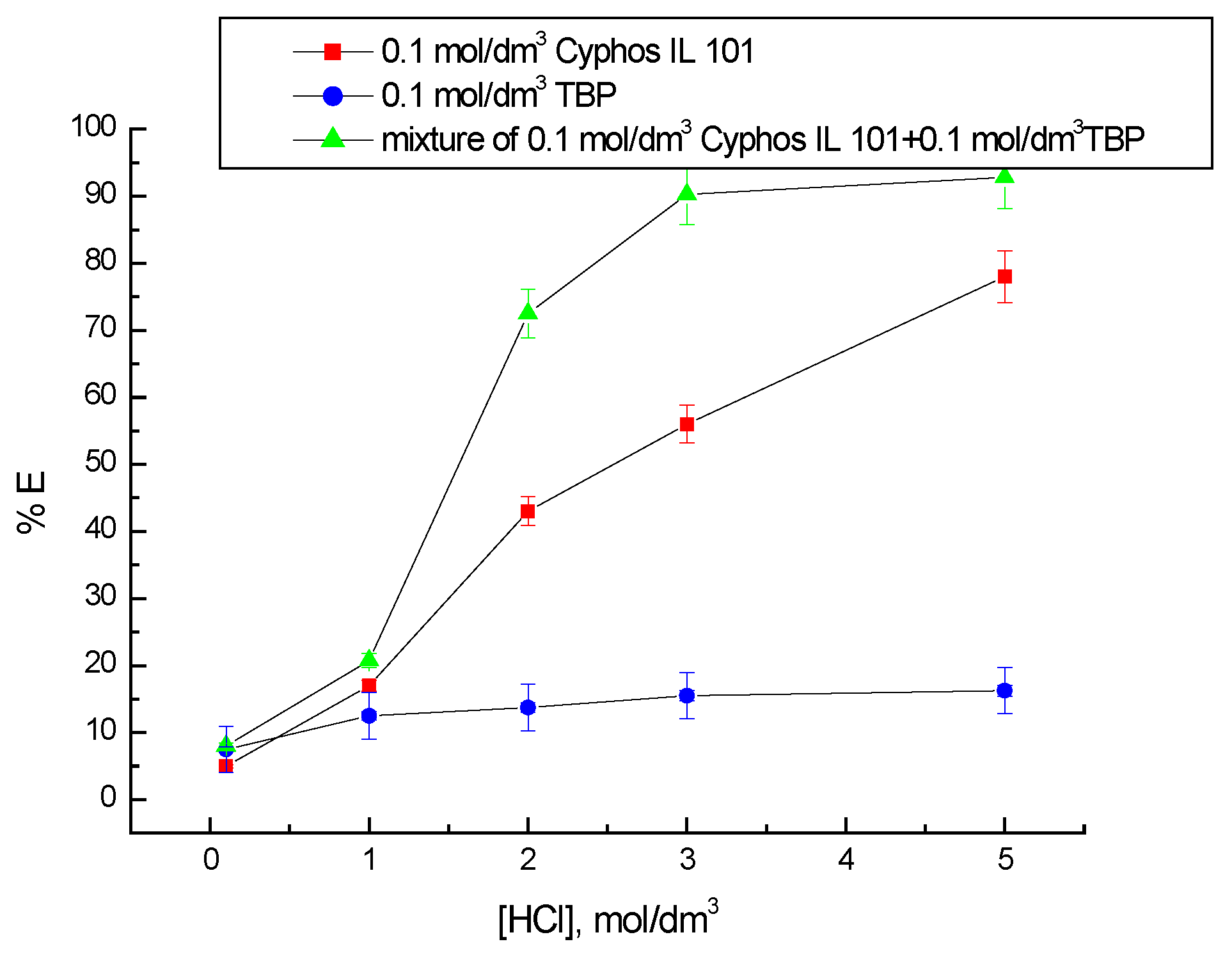
Figure 1. Effect of HCl concentration on the extraction of Co(II) with 0.1 mol∙dm−3 Cyphos IL 101 in kerosene, 0.1 mol∙dm−3 TBP in kerosene and with a mixture of 0.1 mol∙dm−3 Cyphos IL 101 and 0.1 mol∙dm−3 TBP in kerosene.
Metals 16 00165 g001
Figure 2. Effect of HCl concentration on the extraction of Li(I) with 0.1 mol∙dm−3 Cyphos IL 101 in kerosene, 0.1 mol∙dm−3 TBP in kerosene and with a mixture of 0.1 mol∙dm−3 Cyphos IL 101 and 0.1 mol∙dm−3 TBP in kerosene.
Metals 16 00165 g002
Figure 3. Logarithm of the selectivity coefficient (logSCo/Li) vs. HCl concentration. The organic phase: 0.1 mol∙dm−3 Cyphos IL 101 in kerosene, 0.1 mol∙dm−3 TBP in kerosene and with a mixture of 0.1 mol∙dm−3 Cyphos IL 101 and 0.1 mol∙dm−3 TBP in kerosene.
Metals 16 00165 g003
Figure 4. Stripping of Co(II) from the loaded mixture of 0.1 mol∙dm−3 Cyphos IL 101 and 0.1 mol∙dm−3 TBP in kerosene with various stripping solutions.
Metals 16 00165 g004
Figure 5. Percent molar contributions (αn ×100%) of chloride complex species for Co(II) vs. chloride concentration, where α0 C o 2 + , α1 C o C l + , α2 C o C l 2 , α3 C o C l 3 , α4 C o C l 4 2 .
Metals 16 00165 g005
Table 1. Examples of the extractants used for the separation of Co(II) from aqueous solutions.
Extractant Full Chemical NameRefs.
Cyanex 272(bis(2,4,4,-trimethylpentyl)phosphinic acid)[8,9,10,11,12,13,14]
Cyanex 301 (bis(2,4,4,-trimethylpentyl)dithiophosphinic acid[12,13,14]
Cyanex 302((bis(2,4,4,-trimethylpentyl)monothiophosphinic acid[12,13,14]
D2EHPA(di-(2-ethylhexyl)phosphoric acid[15]
PC 88A(2-ethylhexyl) phosphonic acid mono-2-ethylhexyl ester[16]
Table 2. Structures of extractants used for extraction and separation of Co(II) [13,14,15].
Name of CompoundAbbreviation Structural Formula
bis(2,4,4,-trimethylpentyl)phosphinic acidCyanex 272Metals 16 00165 i001
bis(2,4,4,-trimethylpentyl)dithiophosphinic acidCyanex 301Metals 16 00165 i002
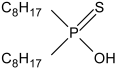
bis(2,4,4,-trimethylpentyl)monothiophosphinic acidCyanex 302Metals 16 00165 i003
di-(2-ethylhexyl)phosphoric acid D2EHPAMetals 16 00165 i004
2-ethylhexyl phosphonic acid mono-2-ethylhexyl ester PC88AMetals 16 00165 i005
Table 3. Examples of commercial ILs used as extractants for the separation of Co(II) ions from aqueous solutions.
ILs Full Chemical NameRefs.
Cyphos IL 101trihexyl(tetradecyl)phosphonium chloride [R4PCl],[14,15,17]
Cyphos IL 104 trihexyl(tetradecyl)phosphonium bis 2,4,4(trimethylpentyl)phosphinate[R4PA][14,15]
Table 4. The percent molar contributions of chloride complex species for Co(II) at various chloride ion concentrations.
[Cl], mol∙dm−3 Co2+ CoCl+ CoCl2 C o C l 3 C o C l 4 2
1.027.433.06.971.3331.30
2.04.2810.44.281.9079.14
4.00.00.461.421.9696.16
5.00.10.10.100.5299.18
Disclaimer/Publisher’s Note: The statements, opinions and data contained in all publications are solely those of the individual author(s) and contributor(s) and not of MDPI and/or the editor(s). MDPI and/or the editor(s) disclaim responsibility for any injury to people or property resulting from any ideas, methods, instructions or products referred to in the content.