Abstract
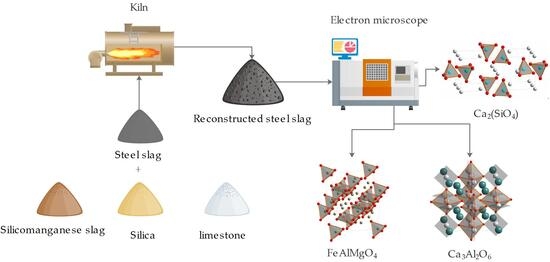
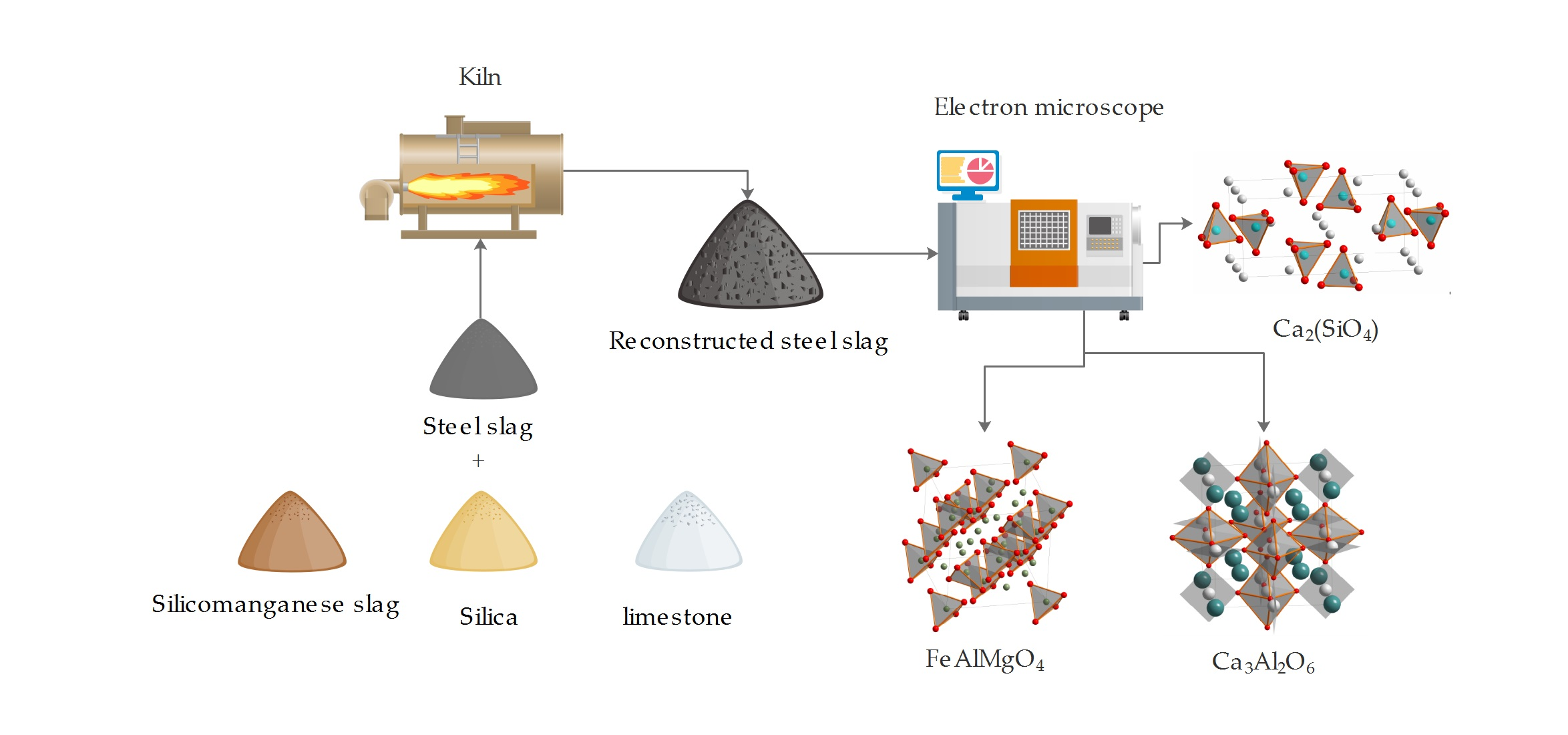
The chemical composition, mineral composition, and mineral distribution characteristics of steel slag were characterized through petrographic analysis, X-ray diffraction (XRD), and particle size analysis. Limestone, silica, and silicomanganese slag were blended with converter steel slag to fabricate a reconstructed steel slag. Through burden calculation, the chemical composition ratio of this reconstructed steel slag approximated the silicate phase region. The high-temperature reconstruction process outside the furnace was simulated through reheating. The composition, structure, and cementitious characteristics of the reconstructed steel slag were investigated through X-ray diffraction (XRD), FactSage software (FactSage version 7.0 (GTT-Technologies, Aachen, Germany, 2015))analysis, scanning electron microscopy–energy dispersive spectroscopy (SEM–EDS) analysis, setting time determination, compressive strength measurement, and thermodynamic computation. The findings indicated that the primary mineral compositions of the reconstructed steel slag were predominantly silicates, such as Ca3Al2O6, Ca2SiO4, Ca2MgSi2O7, Ca2Al(AlSiO7), Ca2(SiO4), and FeAlMgO4. In comparison with the original steel slag, these compositions underwent substantial alterations. The α′-C2S phase appears at 1100 K and gradually transforms into α-C2S at 1650 K. The liquid phase begins to precipitate at approximately 1550 K. Spinel exists in the temperature range from 1300 to 1700 K, and Ca3MgSi2O8 melts into the liquid phase at 1400 K. As the temperature increases to 1600 K, the minerals C2AF, Ca2Fe2O5, and Ca2Al2O5 gradually melt into the liquid phase. Melilite melts into the liquid phase at 1700 K. It was observed that the initial and final setting times of the reconstructed steel slag exhibited reductions of 7 and 43 min, respectively, in comparison to those of the original steel slag. In comparison with steel slag, the compressive strength of the reconstructed steel slag exhibited an increase of 0.6 MPa at the 3-day strength stage, 1.6 MPa at the 7-day strength stage, and 3.4 MPa at the 28-day strength stage. The reduction in setting time and the enhancement in compressive strength verified the improved cementitious activity of the reconstructed steel slag. Thermodynamic calculations of the principal reactions of the reconstructed steel slag at elevated temperatures verified that the primary reaction at 1748 K is thermodynamically favorable.
1. Introduction
Steel slag, a solid waste primarily composed of silicate and ferrite, is generated during the separation of molten steel from impurities in steel-making furnaces [1,2]. In 2024, China’s crude steel production reached approximately 1.005 billion tons, resulting in the generation of over 120 million tons of steel slag. Moreover, the cumulative stockpile of steel slag tailings exceeded 1.8 billion tons [3,4]. The accumulation of steel slag not only occupies precious land resources but also pollutes the environment [5,6]. The generation of converter steel slag bears resemblance to the calcination process for cement clinker production, as the slagging material employed in steelmaking is analogous to the primary raw material utilized in cement clinker manufacturing [7,8,9]. The primary mineral constituents of steel slag are as follows: 3CaO·SiO2, 2CaO·SiO2, RO(Bivalent metallic oxide solid solution), CaO·MgO·SiO2, and 3CaO·MgO·2SiO2 [10,11]. Consequently, steel slag is also referred to as over-burned Portland cement clinker [12]. Its chemical composition, mineral phase composition, hydration process, and hydration products exhibit similarities to those of cement clinker, rendering it applicable as an admixture for cement and concrete [13,14,15]. Nevertheless, the utilization of steel slag encounters challenges including variable composition [16,17], low cementitious reactivity, and suboptimal volume stability [18,19], thereby making it a less-favorable substitute for Portland cement clinker [20,21,22]. The primary reasons lie in the fact that the elevated steel-making temperature (ranging from 1550 °C to 1650 °C) surpasses the maximum calcination temperature (1450 °C) of silicate cement clinker [23,24]. This excessive burning leads to the formation of well-developed and coarse tricalcium silicate (C3S) grains, which impedes their activation via grinding in the subsequent stage [25]. The hydration rate of tricalcium silicate (C3S) in steel slag is significantly lower compared to that in qualified cement clinker [26,27,28]. Furthermore, all minerals within steel slag exhibit well-developed structures, are in an optimal crystallization state, possess large crystal sizes, and display low activity [29,30,31]. In the absence of quenching, tricalcium silicate (C3S) undergoes partial decomposition into dicalcium silicate (C2S) and secondary free calcium oxide (CaO), thereby diminishing its hydraulic reactivity [32]. Slow cooling leads to the partial conversion of β-C2S into γ-C2S, which exhibits nearly no hydraulicity [32]. Phosphorus in the molten steel is first oxidized to P2O5, which preferentially reacts with CaO and SiO2 to form 7CaO·P2O5·2SiO2 with no gelling activity [33].
Li Zaibo et al. [34] found that the appropriate mix ratio of converter slag, electric arc furnace steel slag, and coal bottom ash in MSS (modified steel slag), i.e., 85:12.75:2.25, could reduce free CaO content of MSS for the pilot production line and considerably improve its cementitious properties. Li Jianxin et al. [35] used lime, electric furnace reduction slag, slag, cinder, and fly ash to reconstruct and modify steel slag, and found that calcium-regulating materials can promote the formation of A and B minerals in reconstructed steel slag.
This research intends to utilize lime, silica, and silicomanganese slag to reconstruct steel slag at high temperatures, modifying its chemical and mineral composition to stabilize its properties and improve its cementitious activity. Moreover, the enthalpy of molten steel slag discharged from converter steelmaking reaches as high as 1.670 MJ/t. Leveraging the enthalpy of molten steel slag, which amounts to 1.670 MJ/t for reconstruction, can facilitate waste-heat recovery and yield steel slag with favorable composition and performance, thereby attaining energy conservation and environmental protection. To enhance the early gelatinization of the reconstructed steel slag and the formation conditions of the steel slag during the cooling process, it is essential to add a certain amount of Al2O3 to regulate the melting range and viscosity. Therefore, incorporating materials with high CaO and SiO2 content and moderate Al2O3 content during the high-temperature reconstruction process of steel slag is advantageous. This addition promotes the mineralization of f-CaO in steel slag, consequently reducing its content and guaranteeing the volume stability of the composite cementitious materials composed of steel slag and cement.
2. Materials and Methods
2.1. Raw Materials
2.1.1. Chemical Composition Analysis of Raw Materials
The four raw materials employed in this study were all procured from the Portland cement clinker manufacturing enterprises (Baotou, China). Limestone and silica are both natural mineral raw materials. Steel slag is the waste residue generated during the steel-making process in a converter, and silicomanganese slag is the waste residue produced during the smelting of silicon-manganese iron alloy in submerged arc furnaces. Table 1 presents the chemical composition analysis results of the four raw materials obtained by XRF (X-ray fluorescence).
Table 1.
Chemical composition of raw materials (wt,%).
2.1.2. Analysis of the Mineral Composition of Steel Slag
The converter slag employed in the experiment is a non-magnetic powder. It is derived from the hot steel slag discharged during the steelmaking process, which undergoes a series of treatments including water-cooling, subsequent crushing, magnetic separation, screening, and grinding. The XRD analysis depicted the primary mineral composition of the steel slag in Figure 1 and Table 2.
Figure 1.
XRD analysis of steel slag.
Table 2.
The primary mineral composition of the steel slag.
2.1.3. Phase Equilibrium Calculation of Steel Slag
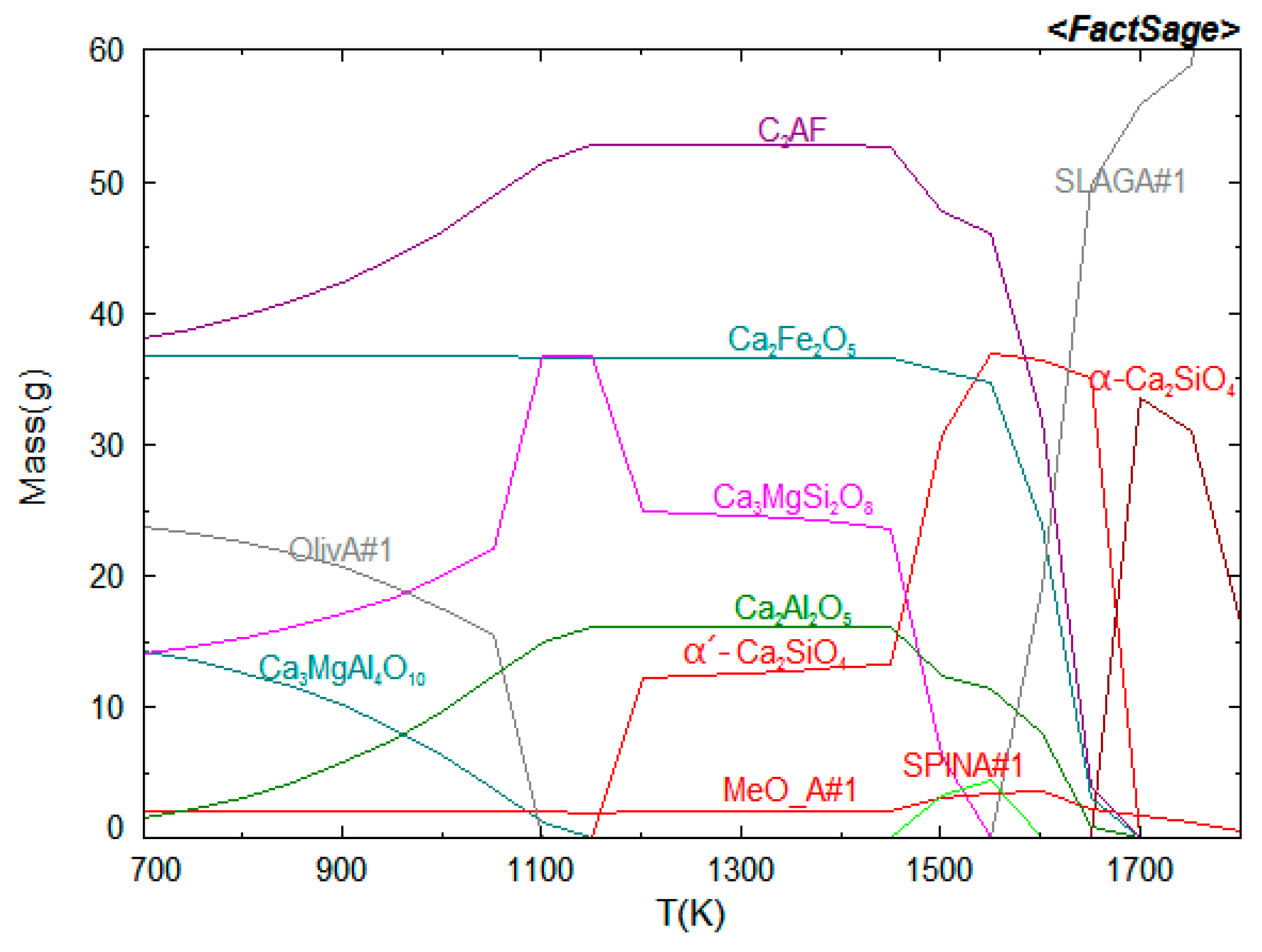
The Equilib module within the FactSage software(FactSage version 7.0 (GTT-Technologies, Aachen, Germany, 2015))was employed to compute the equilibrium phase alterations of the tested steel slag in relation to temperature under an air atmosphere. This approach minimizes the Gibbs free energy of the entire system to determine the state of a specified element or compound system upon attaining chemical equilibrium under certain conditions, encompassing the concentration of each mineral. The ambient atmospheric pressure was set at 1 atmosphere, with an oxygen partial pressure of 0.21 atmosphere, and the reaction temperature spanned from 700 to 1800 Kelvin. The components utilized in the thermodynamic calculation were based on the chemical composition analysis results presented in Table 1.
As shown in the thermodynamic calculation results presented in Figure 2, the main mineral phases olivine, Ca3MgAl4O10, C2AF, Ca3MgSi2O8, Ca2Fe2O5, Ca2Al2O5 exist in the lower temperature range of 700–1100 K. The olivine phase disappeared at 1100 K, and the α′-C2S phase began to appear at approximately 1150 K, and gradually transformed into α-C2S at 1650 K. The RO phase exists from low to high-temperature regions, and the spinel phase exists at 1450–1600 K. The liquid phase began to precipitate at 1550 K. With the increase in temperature, the mineral phase containing Fe and Al and Ca3MgSi2O8 phase gradually integrated into the liquid phase, and disappeared completely at 1700 K.
Figure 2.
Phase equilibrium calculation of steel slag. phase diagram construction were performed using FactSage version 7.0 (GTT-Technologies, Aachen, Germany, 2015).
2.1.4. Petrographic Examination of Steel Slag
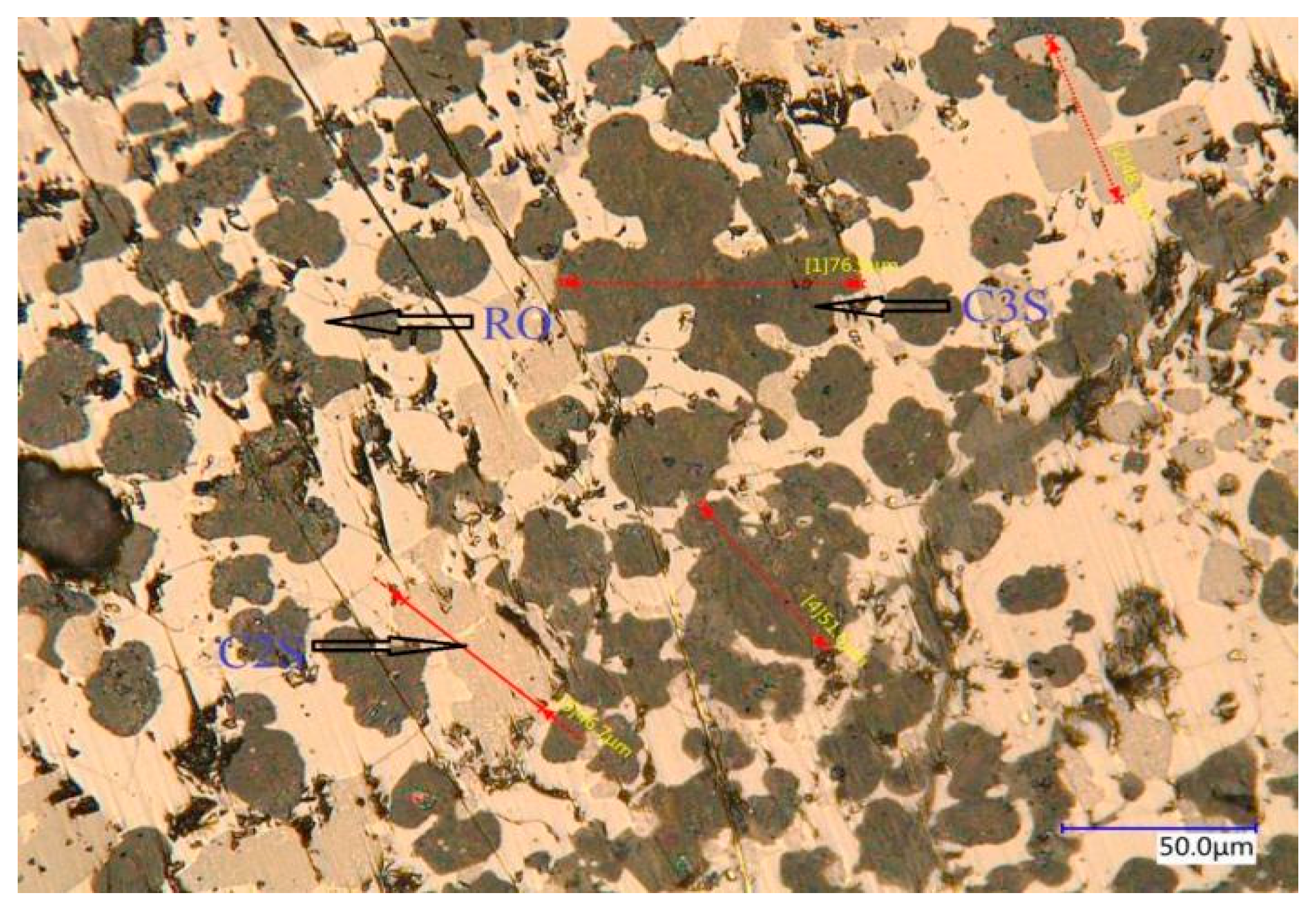
The surface of steel slag was subjected to erosion by a 1% NH4Cl solution, and subsequent observations were conducted under a reflective microscope. As depicted in Figure 3, the A-mineral exhibits a blue coloration, the B-mineral presents a brownish-yellow hue, and the RO phase appears white.
Figure 3.
Petrographic analysis of steel slag.
2.1.5. Particle Size Analysis of Raw Materials
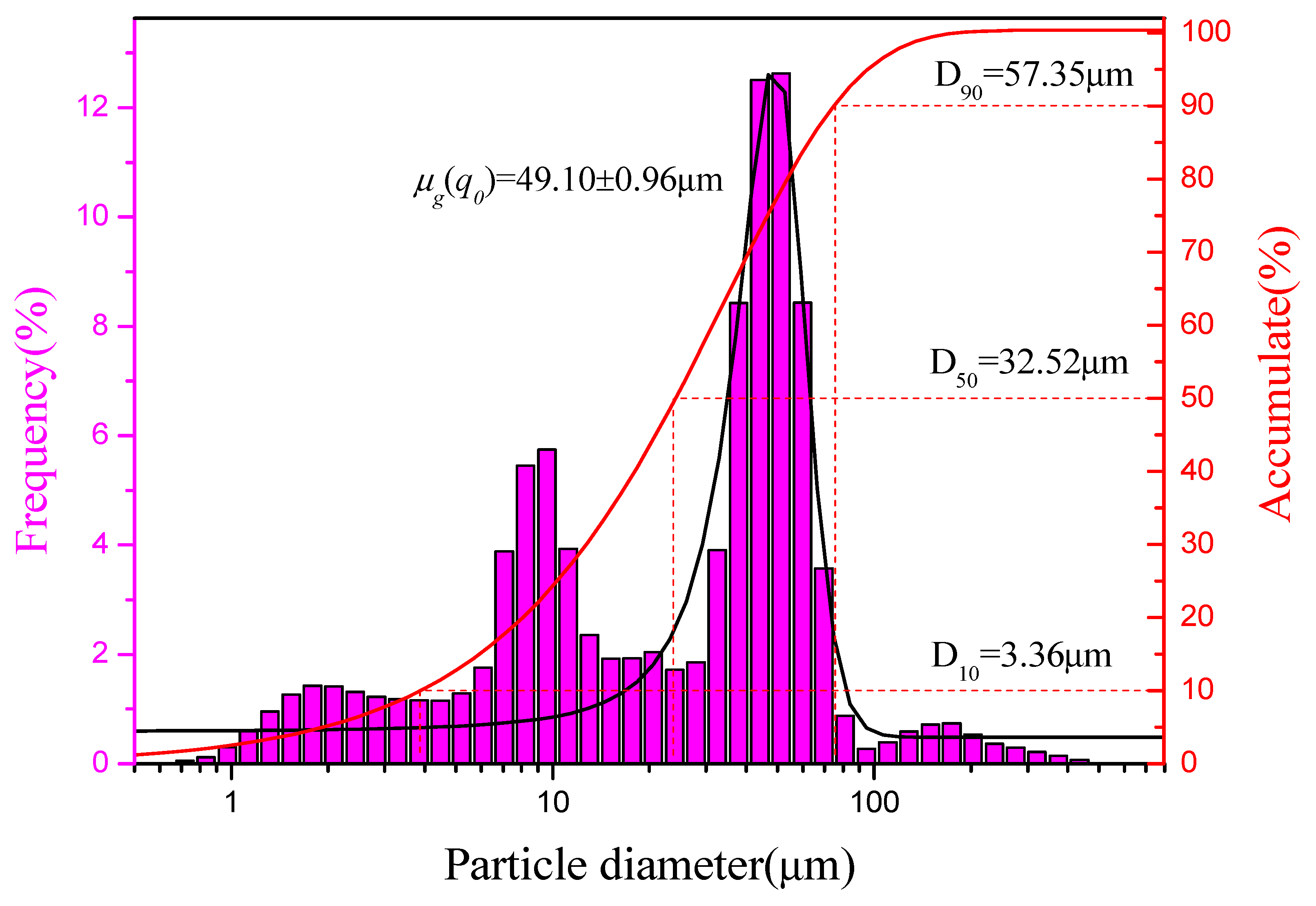
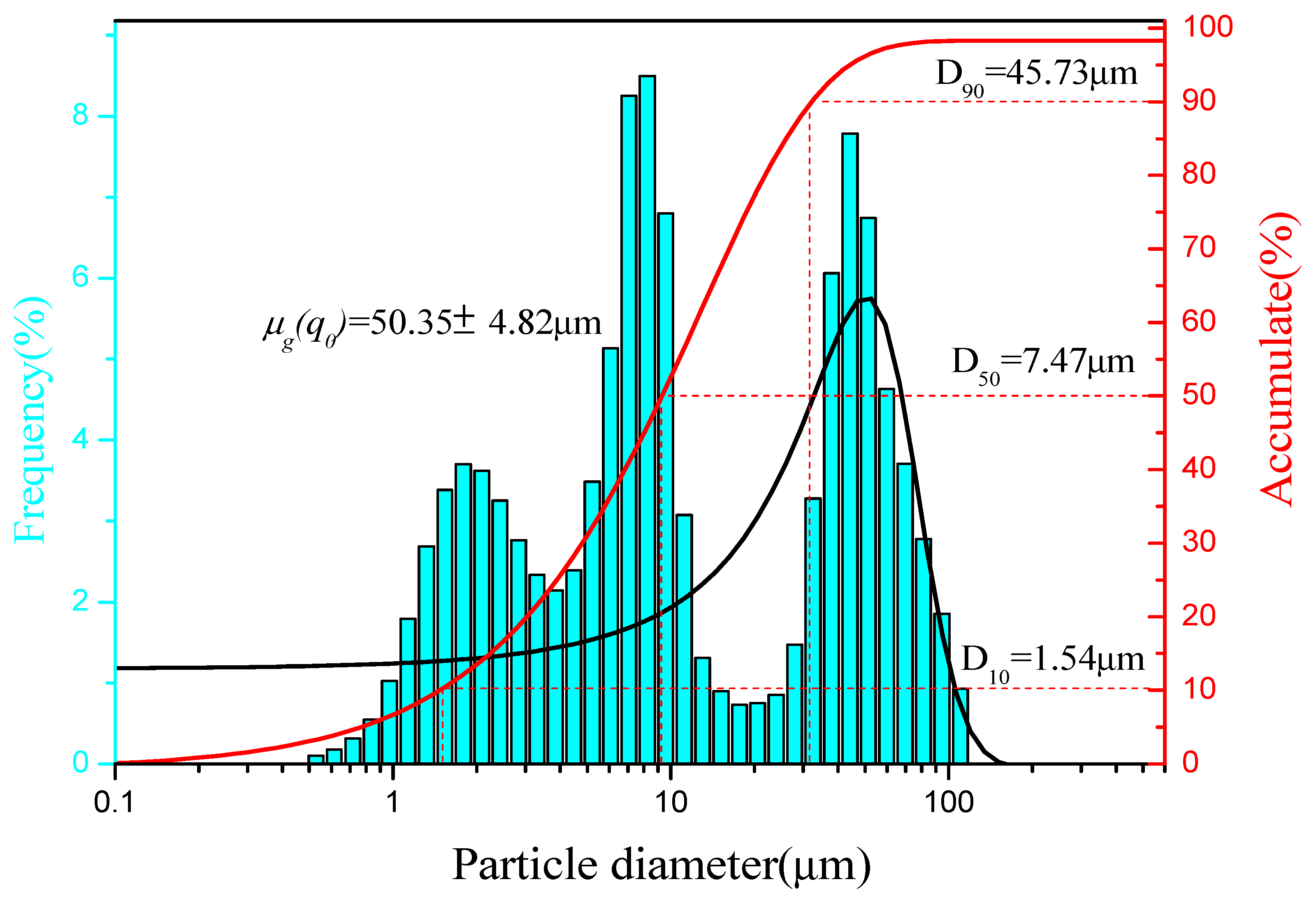
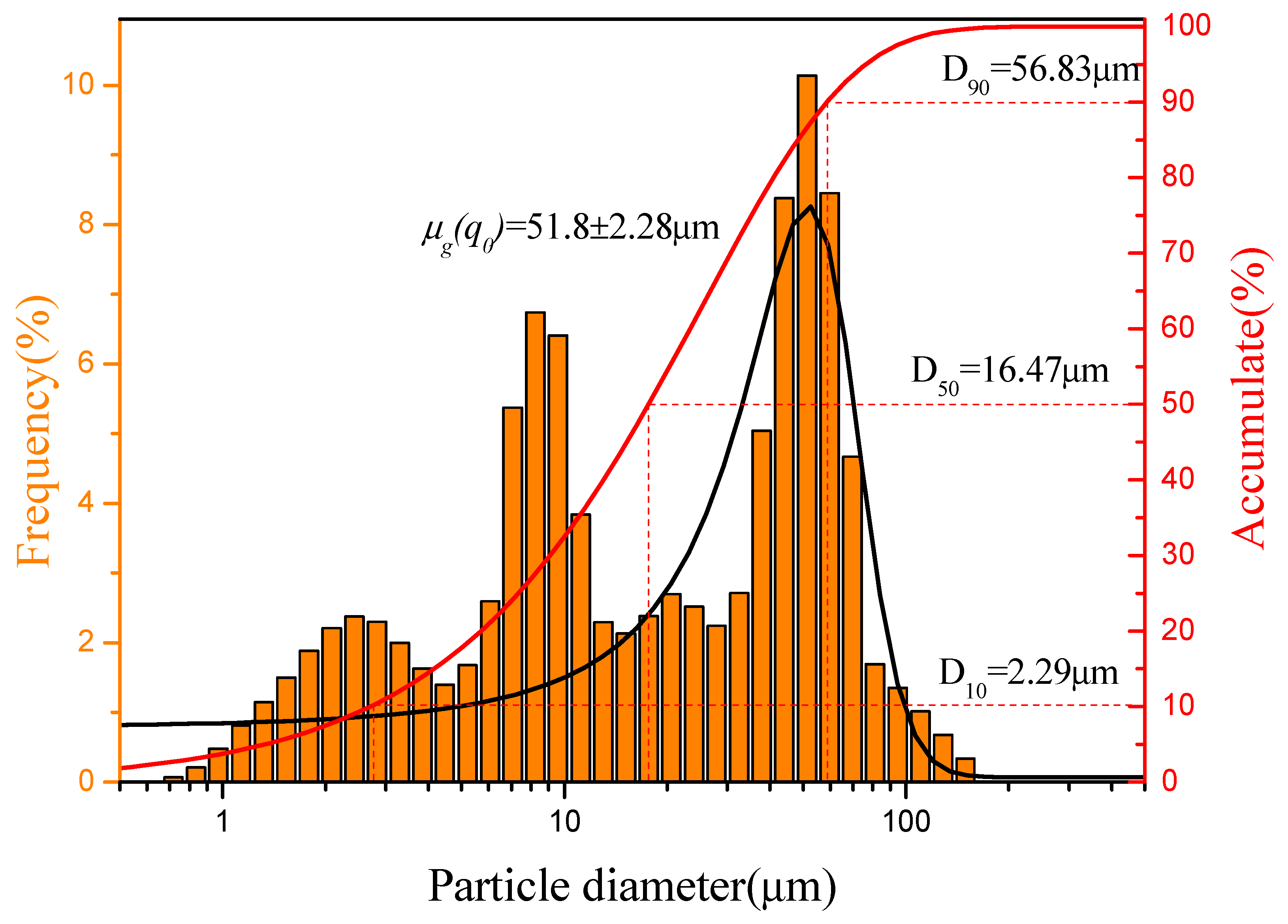
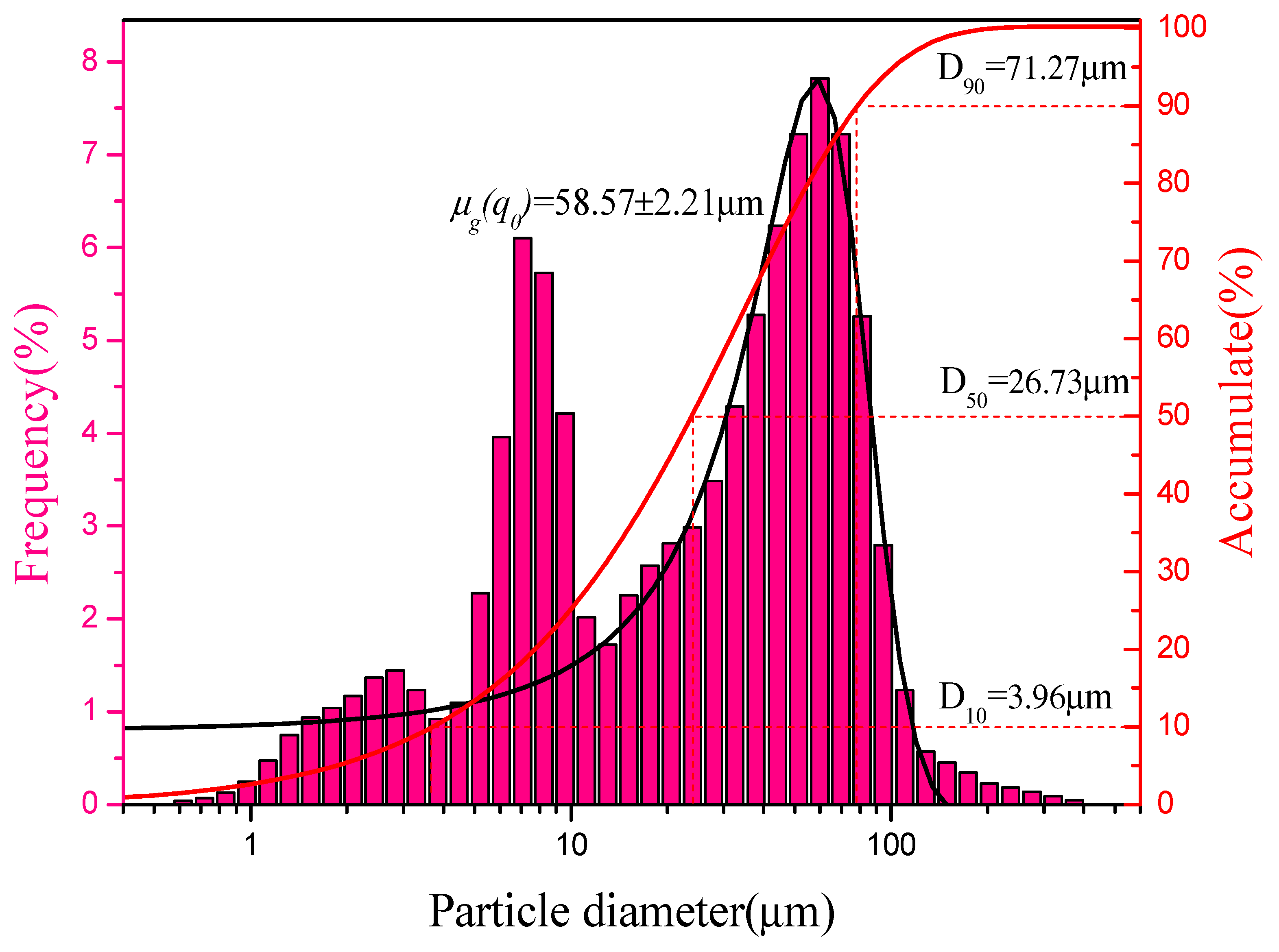
Particle size analysis of the raw materials was performed, the red curve depicts the cumulative frequency distribution, whereas the black curve represents the fitted curve, specifically the geometric mean μg(q0). Figure 4 shows the particle size analysis results of steel slag, D10 = 3.36 μ m, D50 = 32.52 μm, D90 = 57.35 μm. Figure 5 shows the particle size analysis results of limestone, D10 = 1.54 μm, D50 = 7.47 μm, D90 = 45.73 μm. Figure 6 shows the particle size analysis results of silica, D10 = 2.29 μm, D50 = 16.47 μm, D90 = 56.83 μm. Figure 7 shows the particle size analysis results of silicomanganese slag, D10 = 3.96 μm, D50 = 26.73 μm, D90 = 71.27 μm.
Figure 4.
Particle size analysis of steel slag.
Figure 5.
Particle size analysis of limestone.
Figure 6.
Particle size analysis of silica.
Figure 7.
Particle size analysis of silicomanganese slag.
2.2. Experimental Methods
An X-ray diffractometer (Rigaku, Tokyo, Japan, SMARTLAB (9)) is utilized, featuring a test scanning speed ranging from 8°/min to 10°/min, a scanning range spanning from 10° to 90°, a maximum high-frequency generator power of 9 kW, a maximum rated current of 200 mA, a rated tube voltage of 45 kV for the diffractometer, and Cu serving as the target material.
An X-ray fluorescence spectrometer (PANalytical B.V., Almelo, The Netherlands, AxiosmAX) is applicable for the analysis of all elements between B(5) and U(92), excluding N(7), with an analytical range from ppm to 100%.
A scanning electron microscope (Carl Zeiss, Oberkochen, Germany, ZEISS EVO 18), with an accelerating voltage of 0.2–30 kV, a magnification of 5–1,000,000 times, and a probe current of 0.5 pA–5 μA, is used.
A reflective microscope (Keyence, Osaka, Japan, VHX-5000) with 54 million pixels is also employed.
Further, a laser particle size analyzer (Jinan Winner Particle Instrument Stock Co., Ltd., Jinan, China, Winner2008) is employed with the following conditions: measurement range, 0.01–2000 mm; power of He–Ne laser, >2 mW; wavelength, 632.8 nm; ultrasonic machine power, 40 W; frequency, 40 kHz; and focal length, 50 mm.
2.3. High-Temperature Reconstruction Test of Steel Slag
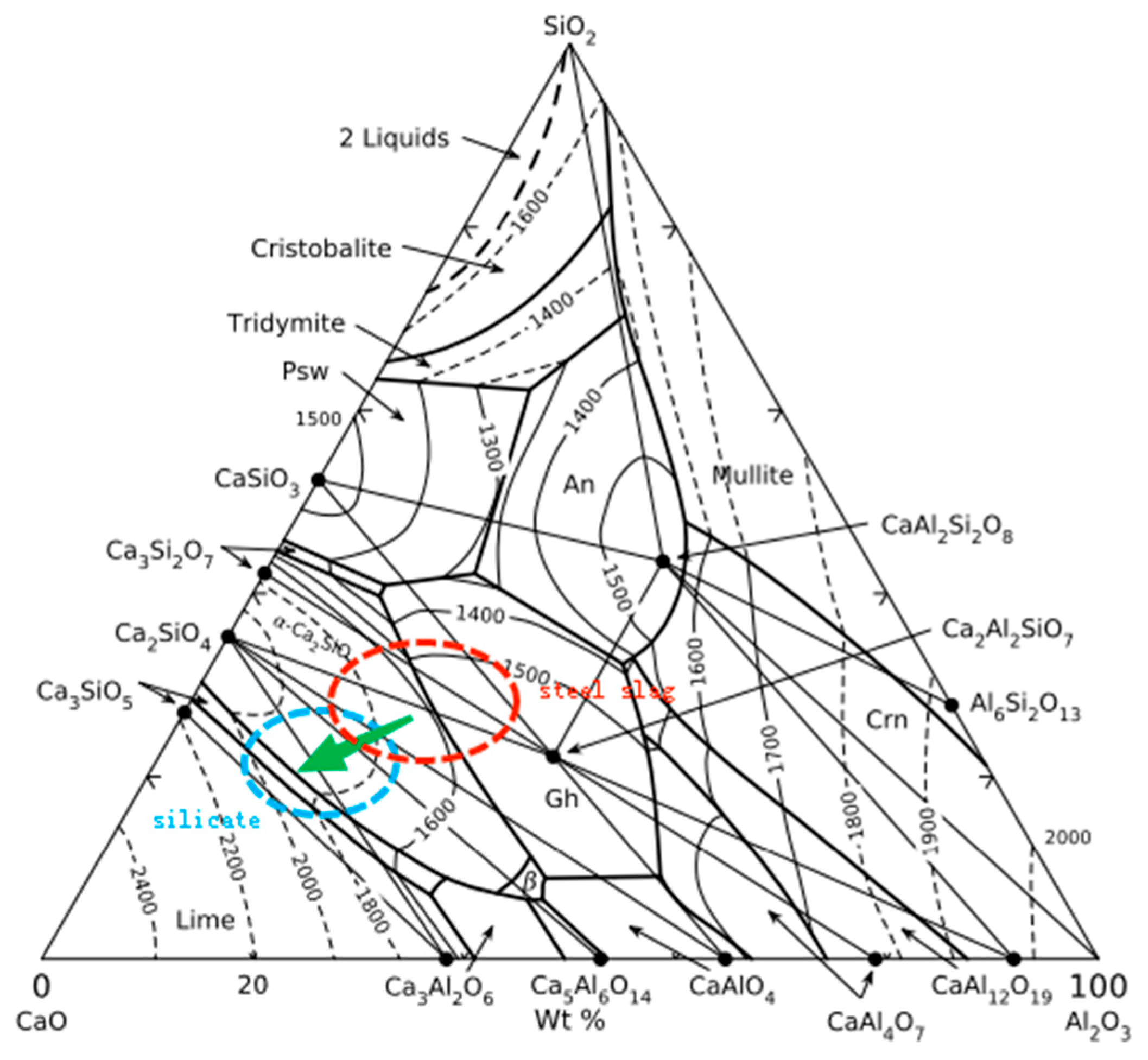
The chemical composition of steel slag is distinguished by a relatively lower content of CaO and SiO2, along with a relatively higher content of Fe2O3 and Al2O3. The mineral composition has low C3S and C2S content. To enhance the cementitious activity of steel slag, it is imperative to regulate the chemical and mineral composition of steel slag. In this research, limestone, silica, and silicomanganese slag were incorporated to alter the proportion of CaO–SiO2–Al2O3 components from the steel slag region to the Portland cement clinker region (Figure 8). The proportion of raw materials is presented in Table 3. The content of active minerals, such as A-mineral and B-mineral, in steel slag is augmented by elevating the content of CaO and SiO2 in steel slag and the molar ratio of calcium to silicon (C/S).
Figure 8.
The target phase region of reconstruction steel slag.
Table 3.
Experimental mix proportion (wt,%).
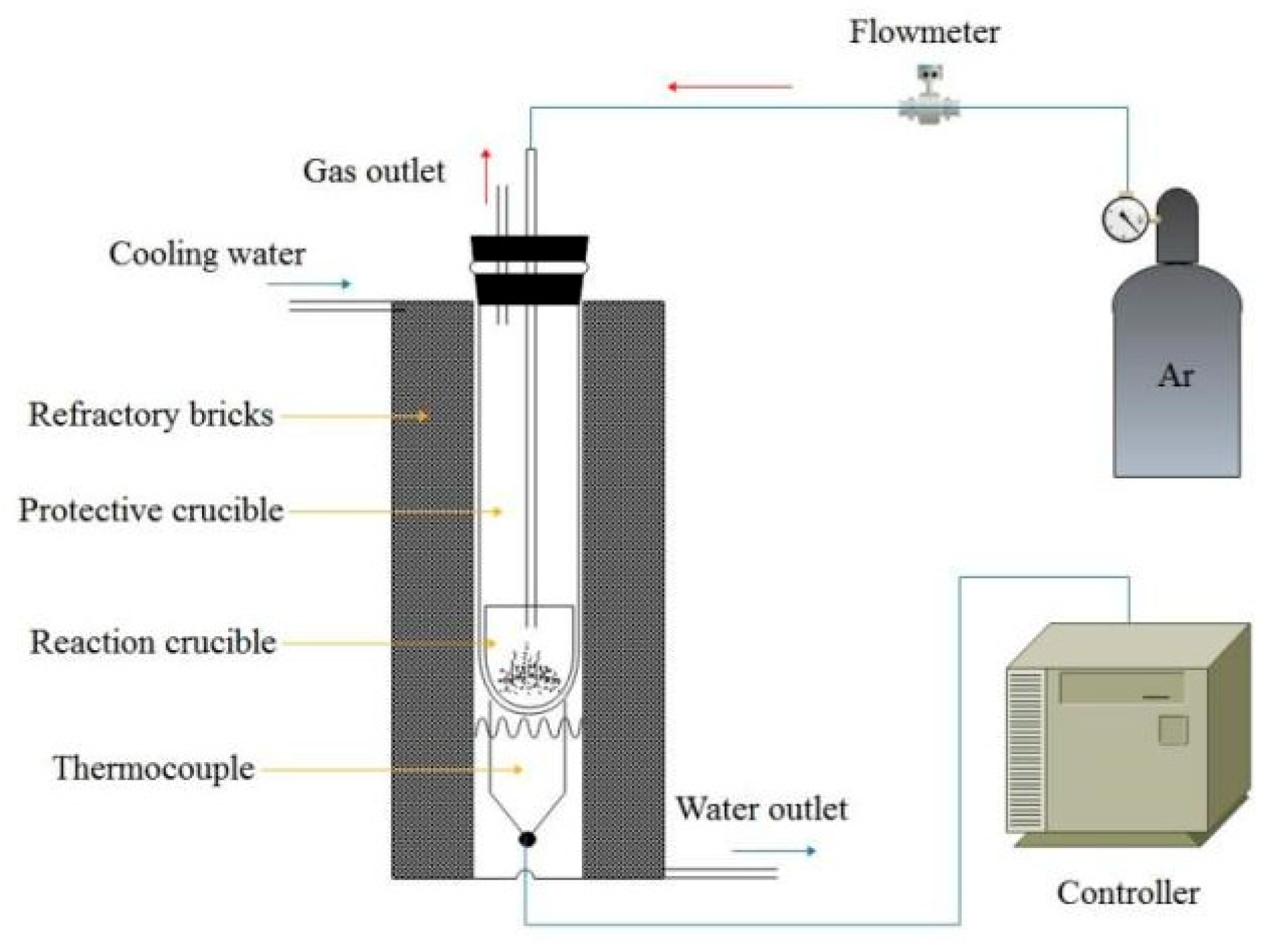
The apparatus utilized in the experiment is depicted in Figure 9, primarily encompassing the heating furnace body, argon protection device, and controller. During the calcination process, the heating rate from 0 °C to 900 °C was set at 10 °C/min, and from 900 °C to the target temperature, it was adjusted to 5 °C/min. The calcination temperature was maintained at 1450 °C, with a holding duration of 20 min. Subsequently, the reconstructed steel slag was cooled via a rapid air-cooling approach to facilitate the formation of the glass phase.
Figure 9.
The device employed in the test.
2.4. Calculation of Gibbs Free Energy of Chemical Reaction in the Process of Steel Slag Reconstruction
According to Kirchhoff’s formula:
Because:
Among, , ,
Substituting Equation (2) into Equation (1), we get:
According to the Gibbs–Helmholtz equation:
For the chemical reaction under standard conditions, the Gibbs–Helmholtz equation is expressed as:
The algebraic sum of Equation (5) with respect to B is obtained:
Perform an indefinite integral on Equation (6):
Substituting Equation (3) into Equation (7):
For each chemical reaction, at standard conditions (298 K), in Equation (8) can be calculated from thermodynamic data by consulting the thermodynamic data booklet. Further calculations for , , and at standard conditions led to I.
Further, the thermodynamic data manual was consulted to obtain the basic thermodynamic data for the reactants and products, and ,, and at the corresponding reaction temperature were calculated. According to Equation (8), the of chemical reactions at the corresponding reaction temperatures were determined, indicating whether the chemical reaction can be carried out at a certain temperature.
3. Results and Discussion
3.1. Chemical Composition and Mineral Composition of Reconstructed Steel Slag
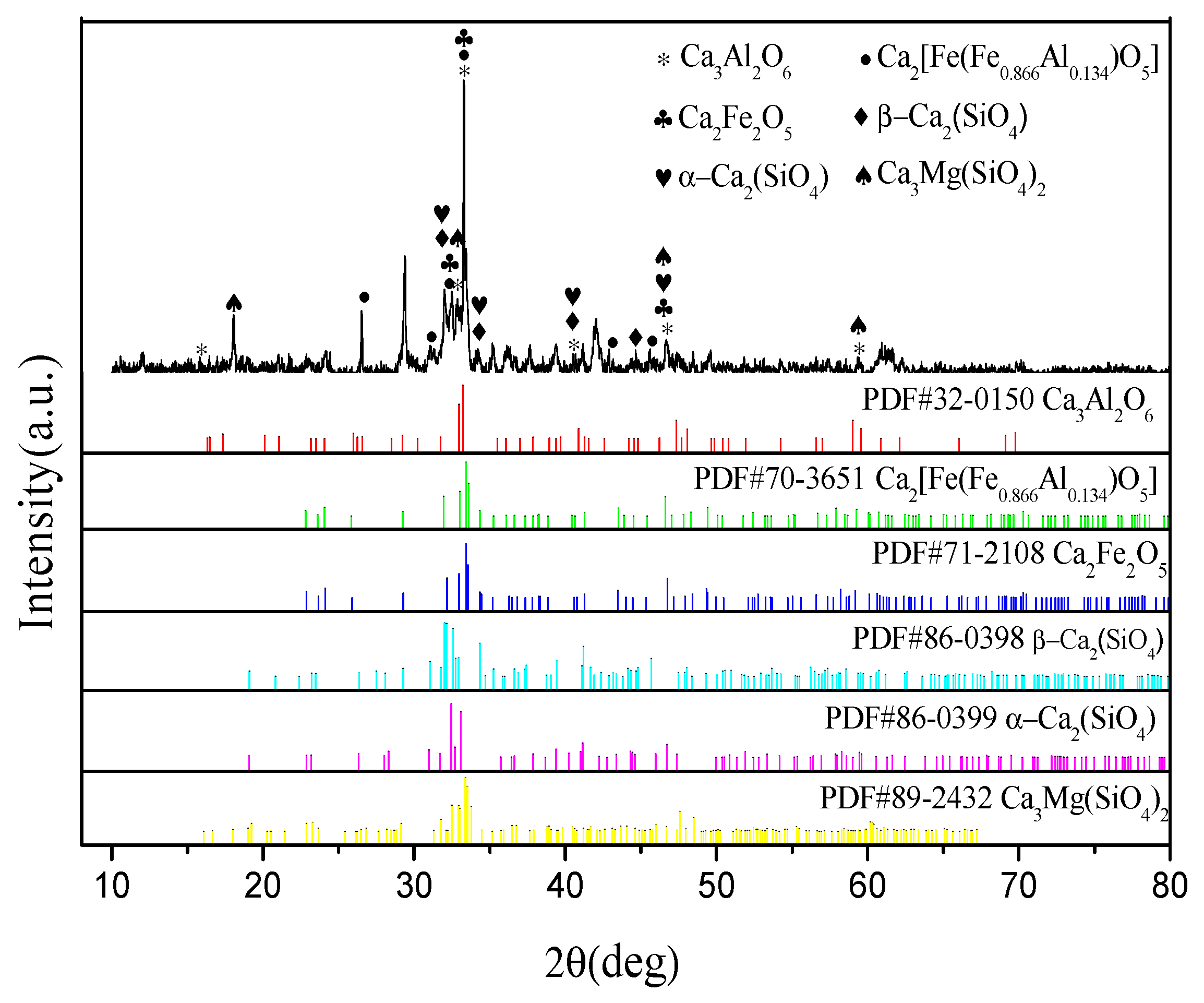
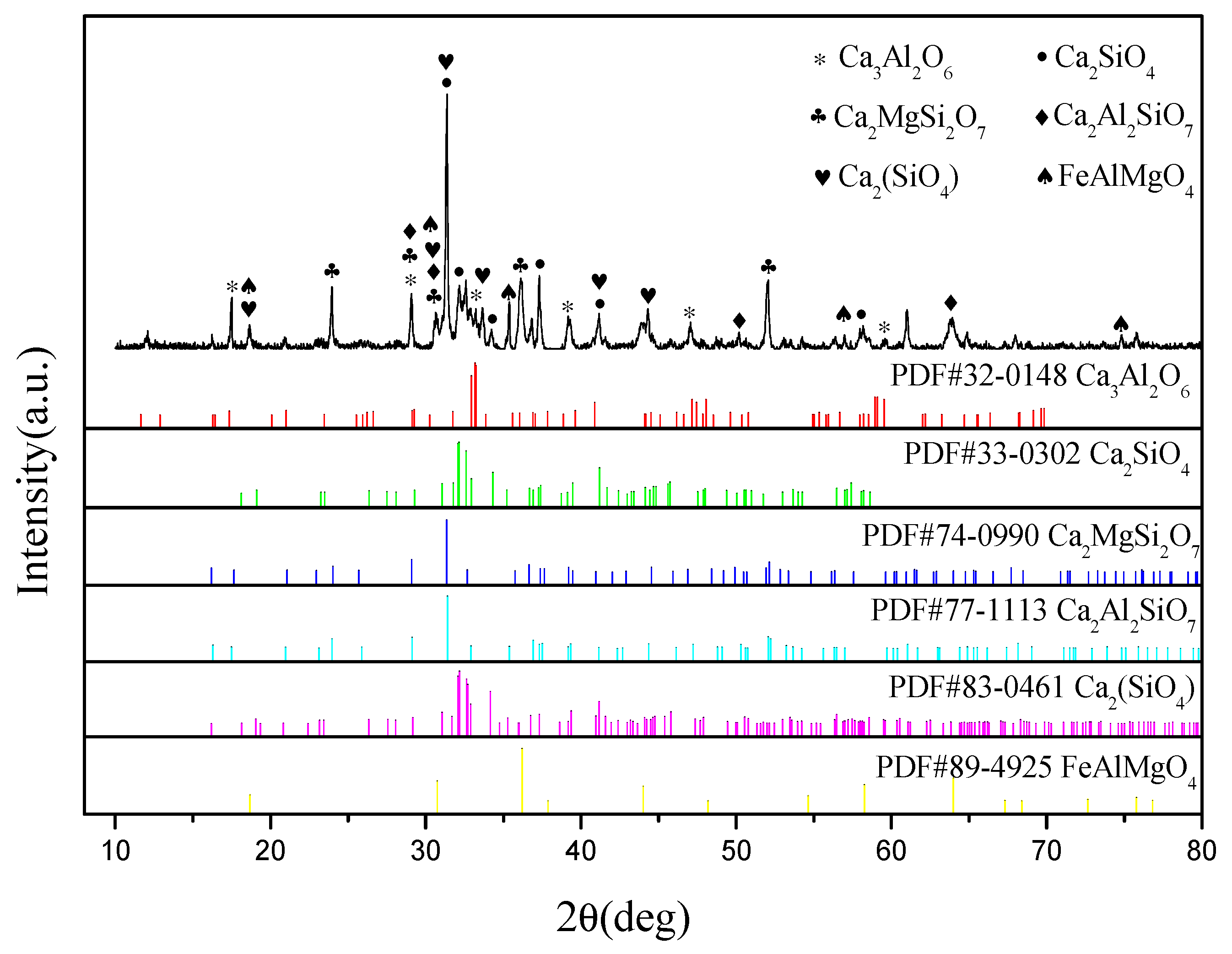
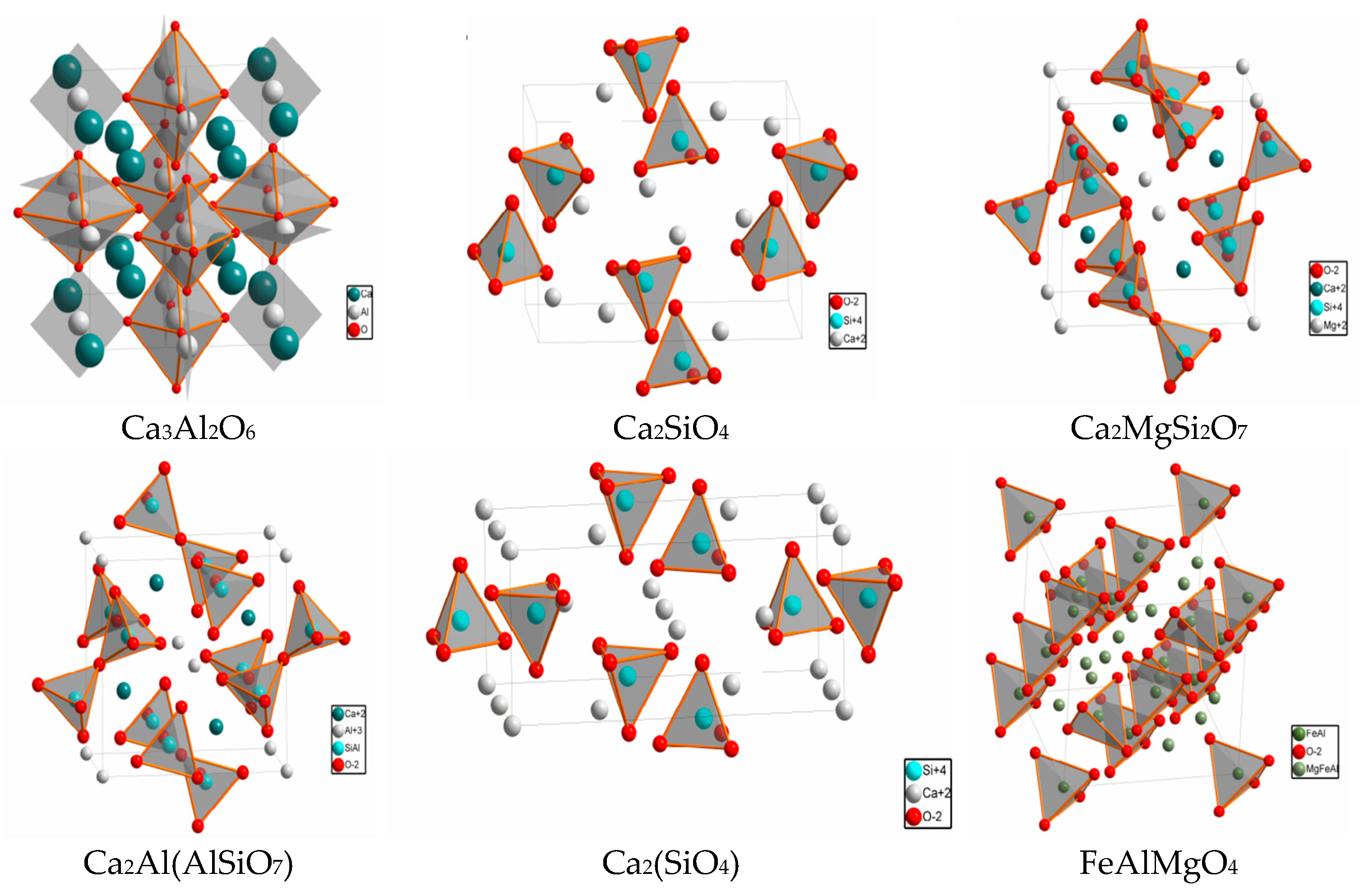
XRF was used to examine the chemical composition of the air-cooled reconstructed steel slag, and the results are shown in Table 4. The mineral composition of the reconstructed steel slag was analyzed using XRD (Figure 10). The main ones are Ca3Al2O6 (COD ID: 9014359) cubic crystal system and space group Pm-3m(221), Ca2SiO4 (COD ID: 1535815) monoclinic crystal system, space group P121/n1(14), Ca2MgSi2O7 (COD ID: 2106179) tetragonal crystal system, space group P-421m (113), Ca2Al(AlSiO7) (COD ID: 1000048) tetragonal crystal system, space group P-421m (113), Ca2(SiO4) (COD ID: 1546025) orthorhombic crystal system, spatial group Pbnm (62), FeAlMgO4 (COD ID: 2310729) cubic crystal system, space group Fd-3m (227). The above crystal structure was plotted using Diamond software(Diamond version 3.2k (Crystal Impact GbR, Bonn, Germany, 2014)) as shown in Figure 11.
Table 4.
Chemical composition of reconstructed steel slag.
Figure 10.
Mineral composition of reconstructed steel slag.
Figure 11.
The spatial structure of the main minerals in steel slag. Crystal structure visualization was performed using Diamond version 3.2k (Crystal Impact GbR, Bonn, Germany, 2014).
3.2. Phase Equilibrium Calculation of Reconstructed Steel Slag
The Equilib module within the FactSage software was employed to compute the temperature dependency of the equilibrium phase in reconstituted steel slag within an air atmosphere. Through the minimization of the Gibbs free energy of the entire system, the chemical equilibrium state of a specified element or compound system under particular conditions, including the concentration of each mineral, was ascertained. The ambient atmospheric pressure was set at 1 atm, with an oxygen partial pressure of 0.21 atm, and the reaction temperature spanned from 700 to 1800 K. The components utilized in the thermodynamic calculation were based on the chemical composition analysis results presented in Table 3.
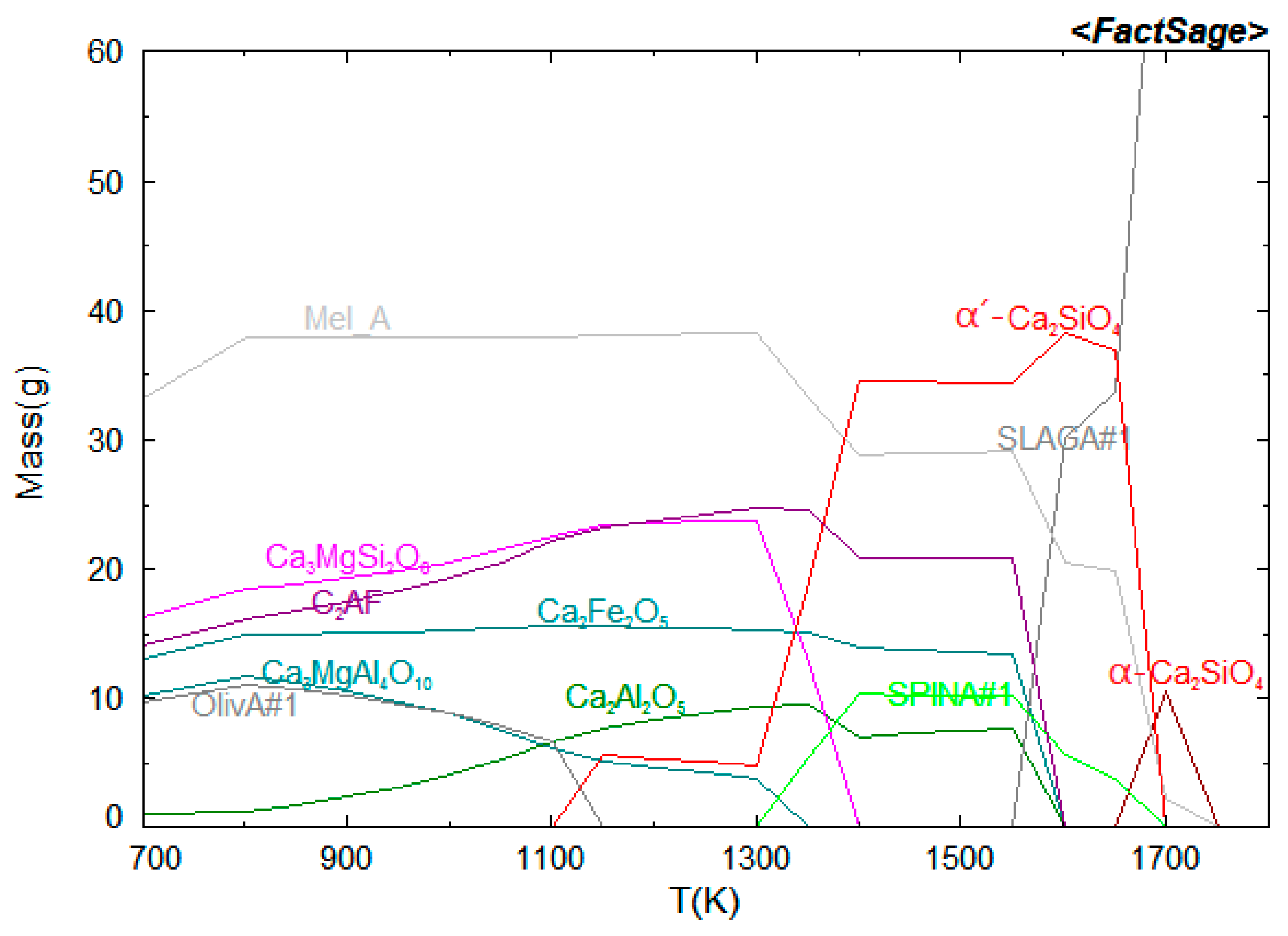
From the phase equilibrium calculation results shown in Figure 12, the main mineral phases C2AF, Ca2Fe2O5, olivine, Melilite, Ca3MgSi2O8, Ca3MgAl4O10, Ca2Al2O5 exist in the lower temperature range of 700–1100 K. The α′-C2S phase appears at 1100 K and gradually transforms into α-C2S at 1650 K. The liquid phase begins to precipitate at approximately 1550 K. Spinel exists in the temperature range from 1300 to 1700 K, and Ca3MgSi2O8 melts into the liquid phase at 1400 K. As the temperature increases to 1600 K, the minerals C2AF, Ca2Fe2O5, and Ca2Al2O5 gradually melt into the liquid phase. Melilite melts into the liquid phase at 1700 K.
Figure 12.
Phase equilibrium of reconstructed steel slag. Phase diagram construction was performed using FactSage version 7.0 (GTT-Technologies, Aachen, Germany, 2015).
3.3. Micro-Morphology and Elemental Analysis of Reconstructed Steel Slag
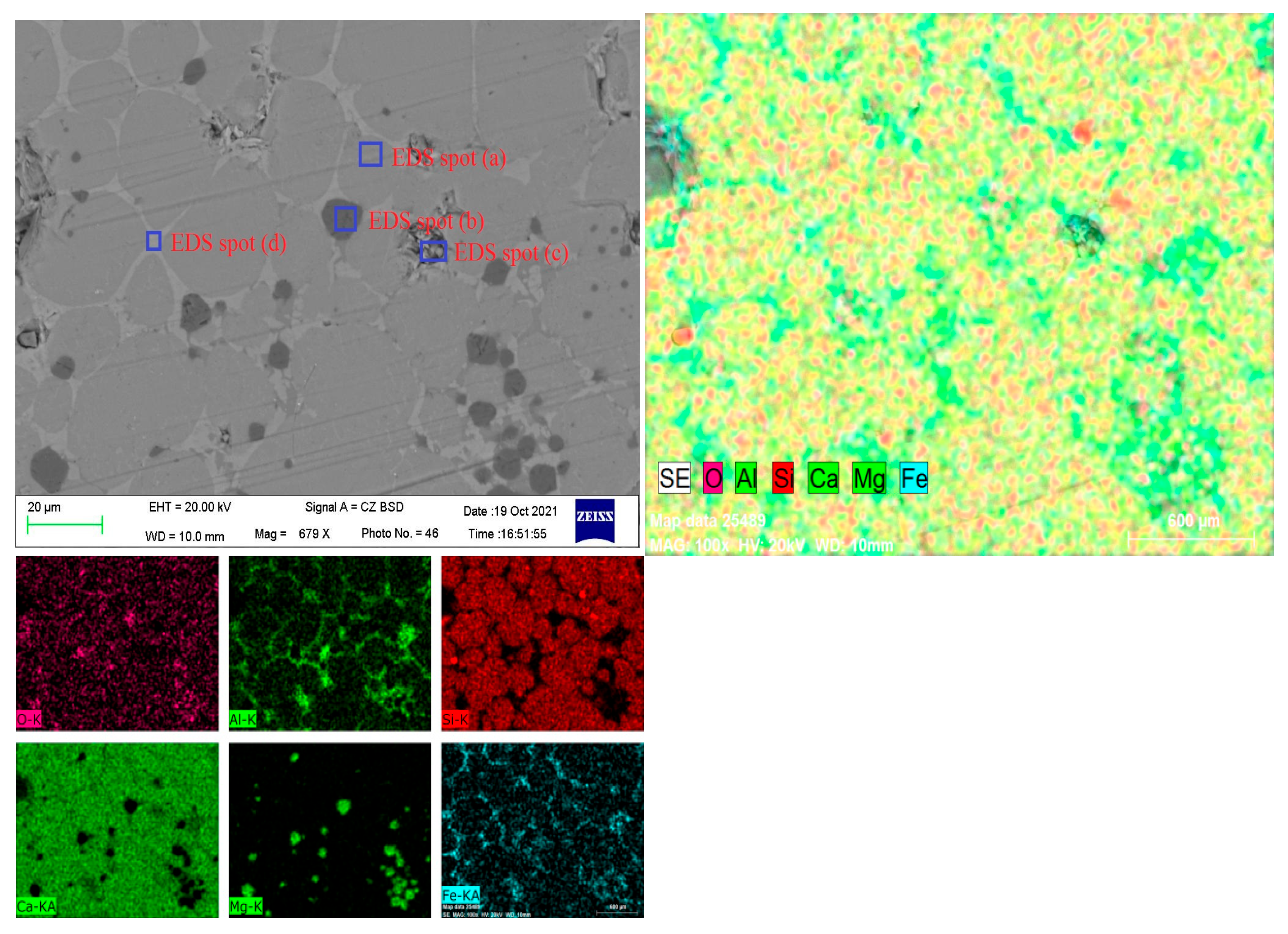
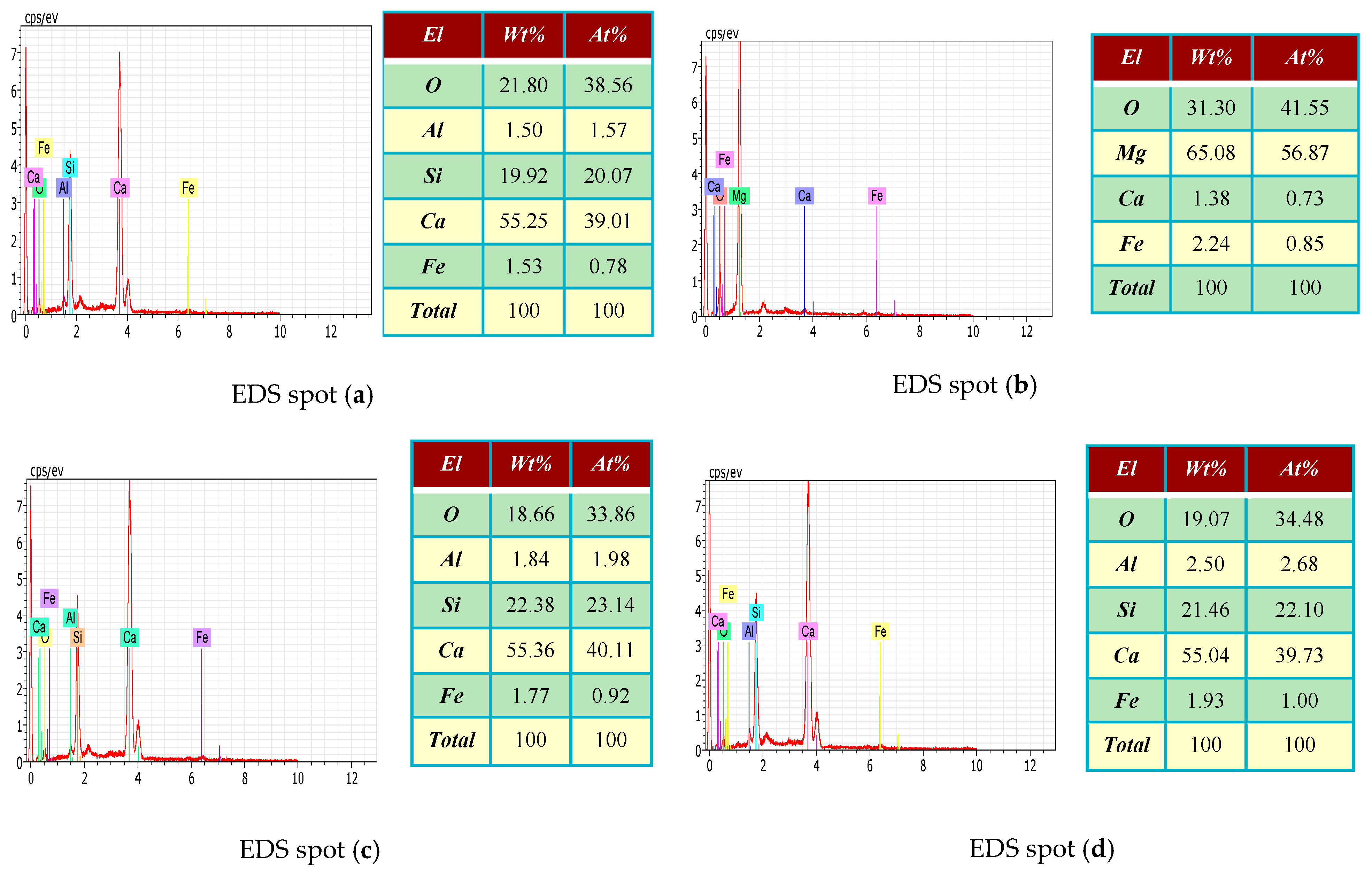
The morphology and microzone elemental composition of the reconstructed steel slag were analyzed using scanning electron microscopy combined with energy spectrum analysis. Figure 13 shows the morphology and the occurrence area of O, Al, Si, Ca, Fe and Mg. The energy spectrum analysis results are shown in Figure 14. According to the molar ratio, microzone (a) is mainly silicate (C3S or C2S), microzone (b) contains a small amount of calcium magnesium ferrite and a large amount of unreacted MgO, microzone (c) is mainly silicate, with small amounts of Fe and Al salts, and microzone (d), which is lighter color in the image and shows obvious grain boundaries, is a solid solution of the silicate phase with small amounts of Fe and Al salts.
Figure 13.
SEM–EDS analysis of reconstructed steel slag.
Figure 14.
The energy spectrum analysis.
3.4. Setting Time
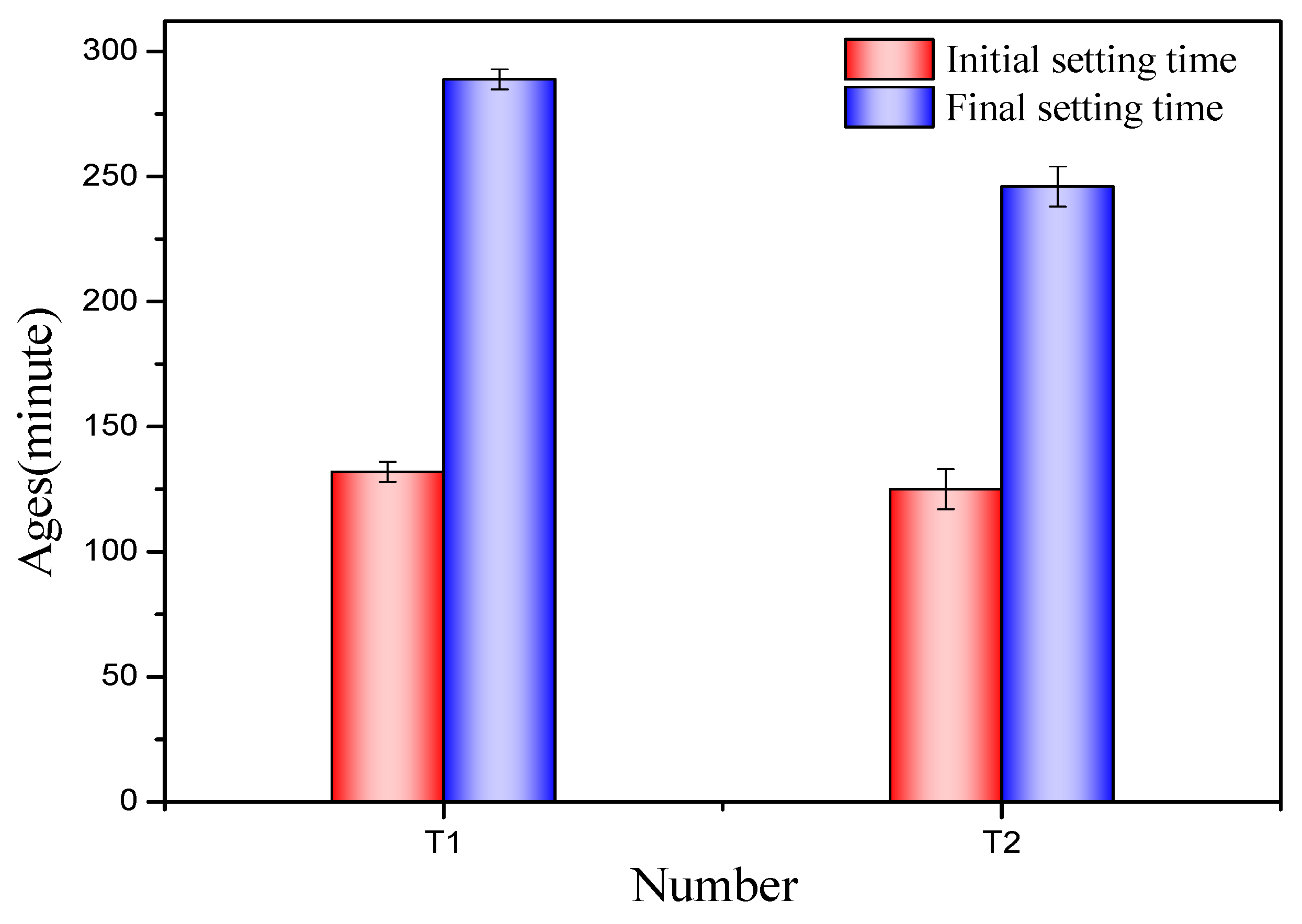
The setting time was ascertained by grinding the reconstructed steel slag and gypsum dihydrate to a specific surface area of 350 ± 10 m2/kg, with the residue on the 80 mm sieve being less than 4%, for the purpose of preparing P·I type silicate cement. In accordance with GB/T 1346-2011 [36] “Test Methods for Water Requirement of Normal Consistency, Setting Time and Soundness of the Portland Cement”, the test results are presented in Figure 15. The test was conducted with a mixture of 30% steel slag T1 (or reconstructed steel slag T2) and 70% Portland cement. In comparison with the original steel slag, the initial setting time of the reconstructed steel slag was shortened by 7 min, and the final setting time was shortened by 43 min.
Figure 15.
Setting time of reconstructed steel slag.
3.5. Compressive Strength
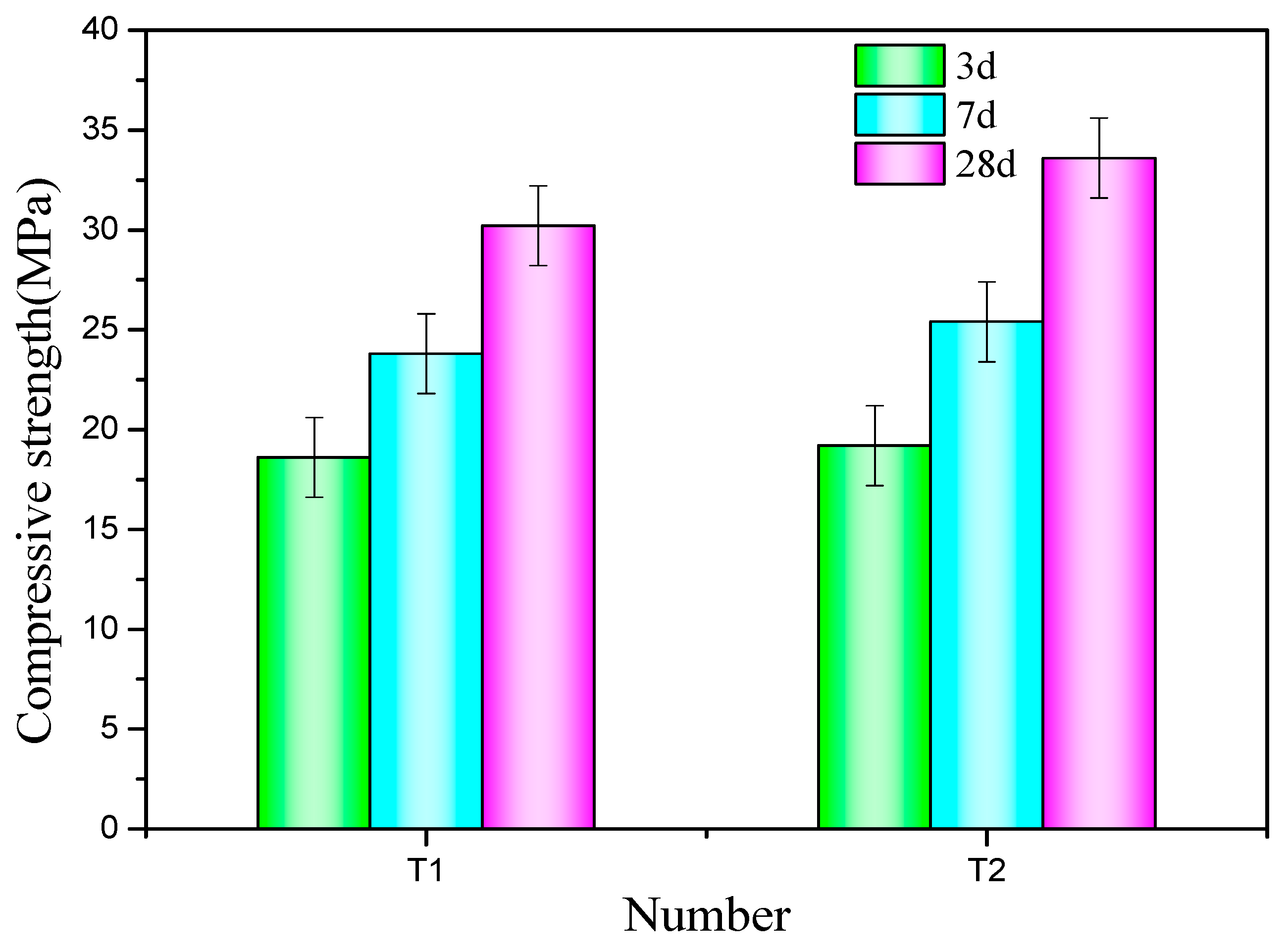
For the determination of compressive strength, the reconstructed steel slag and dihydrate gypsum were pulverized to a specific surface area of 350 ± 10 m2/kg, with a residue on an 80 mm sieve of <less than 4%, to produce P·I Portland cement. The compressive strength was measured in accordance with the GB/T 17671-2021 [37] Test Method of Cement Mortar Strength (ISO method), and the test results are presented in Figure 16. The test was conducted by blending 30% steel slag T1 (or reconstructed steel slag T2) with 70% Portland cement. In comparison with the steel slag, the reconstructed steel slag exhibited an increment in compressive strength of 0.6 MPa at 3 days, 1.6 MPa at 7 days, and 3.4 MPa at 28 days.
Figure 16.
Compressive strength of reconstructed steel slag.
3.6. Calculation of Gibbs Free Energy of Chemical Reaction in Reconstructed Steel Slag
Main chemical reactions:
C + S = CS
2C + S = β-C2S
3C + S = C3S
β-C2S + C = C3S
3C + α-A = C3A
2C + CA = C3A
2C + F = C2F
The thermodynamic parameters of the main minerals are shown in Table 5, and the calculation results are shown in Table 6. The of above reactions are all < 0 at 1748 K, confirming that these reactions can occur positively from a thermodynamic perspective.
Table 5.
Thermodynamic parameters of main minerals.
Table 6.
The calculation results.
4. Conclusions
The experimental findings indicate that the cementitious activity of the reconstructed steel slag can be enhanced by utilizing limestone, silica, and silicomanganese slag to reconstruct the converter steel slag at high temperatures in conjunction with rapid cooling. All raw materials were ground to a particle size where D90 = 45–75 μm, and the proportion of the reconstructed steel slag was adjusted to be close to the silicate phase region through ingredient calculations. XRD analysis was employed to reconstruct the principal mineral composition of steel slag, which mainly consisted of silicates, such as Ca3Al2O6, Ca2SiO4, Ca2MgSi2O7, Ca2Al(AlSiO7), Ca2(SiO4), and FeAlMgO4. This composition demonstrated substantial modifications when compared to that of the original steel slag. The Diamond software(Diamond version 3.2k (Crystal Impact GbR, Bonn, Germany, 2014)) was employed to map the crystal structure of the minerals. By utilizing the Equilib module in the FactSage software, the equilibrium phase variations with temperature in the reconstructed steel slag under an air atmosphere were computed. The main mineral phases C2AF, Ca2Fe2O5, olivine, Melilite, Ca3MgSi2O8, Ca3MgAl4O10, Ca2Al2O5 exist in the lower temperature range of 700–1100 K. The α′-C2S phase appears at 1100 K and gradually transforms into α-C2S at 1650 K. The liquid phase begins to precipitate at approximately 1550 K. Spinel exists in the temperature range from 1300 to 1700 K, and Ca3MgSi2O8 melts into the liquid phase at 1400 K. As the temperature increases to 1600 K, the minerals C2AF, Ca2Fe2O5, and Ca2Al2O5 gradually melt into the liquid phase. Melilite melts into the liquid phase at 1700 K. The test was conducted with 30% steel slag and 70% Portland cement. Compared with steel slag, the initial setting time of the reconstructed steel slag was shortened by 7 min, and the final setting time was shortened by 43 min. In terms of compressive strength, the 3-day compressive strength of the reconstructed steel slag was 0.6 MPa higher than that of the steel slag, the 7-day compressive strength was 1.6 MPa higher, and the 28-day compressive strength was 3.4 MPa higher. These enhancements in setting time and compressive strength corroborate the elevated cementitious activity of the reconstructed steel slag. Thermodynamic calculations of the main reactions of the reconstructed steel slag at high temperatures suggest that the main reactions at 1748 K can occur favorably from a thermodynamic standpoint.
To tackle the problems of low cementitious activity and poor volume stability of steel slag, it is advisable to select appropriate modifying materials according to the compositional characteristics of steel slag from different iron and steel enterprises to reconstruct the chemical composition and mineral composition of steel slag during the slag discharge or treatment process. This method can broaden the application of steel slag in the concrete industry and increase the blending ratio of steel slag powder.
Author Contributions
Conceptualization, Z.X.; Methodology, X.H.; Validation, X.H.; Investigation, Z.X.; Resources, Z.X.; Data curation, Z.X. and X.H.; Writing—original draft, Z.X.; Writing—review & editing, X.H.; Visualization, X.H.; Supervision, X.H.; Project administration, X.H. All authors have read and agreed to the published version of the manuscript.
Funding
This work is financially supported by State Key Laboratory of Advanced Metallurgy, University of Science and Technology Beijing (Grant No. 41620024).
Data Availability Statement
The raw data supporting the conclusions of this article will be made available by the authors on request.
Conflicts of Interest
Author Z.X. was employed by the company Baotou Iron and Steel (Group) Co., Ltd. The remaining authors declare that the research was conducted in the absence of any commercial or financial relationships that could be construed as a potential conflict of interest.
References
- Shekhar Samanta, N.; Das, P.P.; Dhara, S.; Purkait, M.K. An Overview of Precious Metal Recovery from Steel Industry Slag: Recovery Strategy and Utilization. Ind. Eng. Chem. Res. 2023, 62, 9006–9031. [Google Scholar] [CrossRef]
- Das, P.P.; Mondal, P.; Anweshan; Sinha, A.; Biswas, P.; Sarkar, S.; Purkait, M.K. Treatment of steel plant generated biological oxidation treated (BOT) wastewater by hybrid process. Sep. Purif. Technol. 2021, 258, 118013. [Google Scholar] [CrossRef]
- Ma, C.; Zhang, S.; Li, K.; Zhao, T.; Meng, Q.; Guan, D.; Zhang, A. Stainable Utilization Strategies for Basic Oxygen Furnace Slag: Properties, Processing, and Future Directions. Metals 2025, 15, 537. [Google Scholar] [CrossRef]
- Gao, L.; Zhao, H.; Guo, N.; Jiang, X.; Zhang, Y. Mechanical and Environmental Properties of Cemented Paste Backfill Prepared with Bayer Red Mud as an Alkali-Activator Substitute. Materials 2025, 18, 4712. [Google Scholar] [CrossRef] [PubMed]
- Reddy, K.R.; Gopakumar, A.; Chetri, J.K. Critical review of applications of iron and steel slags for carbon sequestration and environmental remediation. Rev. Environ. Sci. Bio/Technol. 2019, 18, 127–152. [Google Scholar] [CrossRef]
- O’Connor, J.; Nguyen, T.B.T.; Honeyands, T.; Monaghan, B.; O’Dea, D.; Rinklebe, J.; Vinu, A.; Hoang, S.A.; Singh, G.; Kirkham, M.B.; et al. Production, characterisation, utilisation, and beneficial soil application of steel slag: A review. J. Hazard. Mater. 2021, 419, 126478. [Google Scholar] [CrossRef]
- Gao, T.; Dai, T.; Shen, L.; Jiang, L. Benefits of using steel slag in cement clinker production for environmental conservation and economic revenue generation. J. Clean. Prod. 2021, 282, 124538. [Google Scholar] [CrossRef]
- Cao, L.; Shen, W.; Huang, J.; Yang, Y.; Zhang, D.; Huang, X.; Lv, Z.; Ji, X. Process to utilize crushed steel slag in cement industry directly: Multi-phased clinker sintering technology. J. Clean. Prod. 2019, 217, 520–529. [Google Scholar] [CrossRef]
- Xu, P.; Fan, J.; Liu, R.; Chen, P.; Wei, J.; Yang, Y.; Tang, X. Effect of thermochemical high-temperature reconstruction on mechanical properties and activity of stainless steel slag. Adv. Cem. Res. 2024, 36, 547–556. [Google Scholar] [CrossRef]
- Ji, K.; Shi, C.; Jiang, J.; Tian, Y.; Zhou, X.; Xiong, R. Determining the Long-Term Skid Resistance of Steel Slag Asphalt Mixture Based on the Mineral Composition of Aggregates. Polymers 2023, 15, 807. [Google Scholar] [CrossRef]
- Hao, S.; Luo, G.; Lu, Y.; An, S.; Chai, Y.; Song, W. Thermodynamic Analysis of Mineral Phase Composition of Steel Slag System. Minerals 2023, 13, 643. [Google Scholar] [CrossRef]
- Li, J.; Li, B.; Yuan, B.; Yang, K.; Chen, W. Effect of Fe2O3 content on clinkerization of low calcium carbonatable belite-rankinite clinker. Constr. Build. Mater. 2025, 463, 140078. [Google Scholar] [CrossRef]
- Xu, C.; Ni, W.; Li, K.; Zhang, S.; Li, Y.; Xu, D. Hydration mechanism and orthogonal optimisation of mix proportion for steel slag–slag-based clinker-free prefabricated concrete. Constr. Build. Mater. 2019, 228, 117036. [Google Scholar] [CrossRef]
- Chen, Z.; Li, R.; Liu, J. Preparation and properties of carbonated steel slag used in cement cementitious materials. Constr. Build. Mater. 2021, 283, 122667. [Google Scholar] [CrossRef]
- Zhang, S.; Niu, D. Hydration and mechanical properties of cement-steel slag system incorporating different activators. Constr. Build. Mater. 2023, 363, 129981. [Google Scholar] [CrossRef]
- Zhang, T.; Qiu, G.; Wang, H.; Guo, M.; Cheng, F.; Zhang, M. In-Suit Industrial Tests of the Highly Efficient Recovery of Waste Heat and Reutilization of the Hot Steel Slag. ACS Sustain. Chem. Eng. 2021, 9, 3955–3962. [Google Scholar] [CrossRef]
- Baalamurugan, J.; Kumar, V.G.; Padmapriya, R.; Raja, V.K.B. Recent applications of steel slag in construction industry. Environ. Dev. Sustain. 2024, 26, 2865–2896. [Google Scholar] [CrossRef]
- Baalamurugan, J.; Ganesh Kumar, V.; Naveen Prasad, B.S.N.; Padmapriya, R.; Karthick, V.; Govindaraju, K. Recycling of induction furnace steel slag in concrete for marine environmental applications towards ocean acidification studies. Int. J. Environ. Sci. Technol. 2022, 19, 5039–5048. [Google Scholar] [CrossRef]
- Liu, X.; Zhang, C.; Yu, H.; Qian, G.; Zheng, X.; Zhou, H.; Huang, L.; Zhang, F.; Zhong, Y. Research on the Properties of Steel Slag with Different Preparation Processes. Materials 2024, 17, 1555. [Google Scholar] [CrossRef]
- Cai, X.; Cao, Z.; Sun, J.; Wang, H.; Wu, S. Influence of Steel Slag on Properties of Cement-Based Materials: A Review. Buildings 2024, 14, 2985. [Google Scholar] [CrossRef]
- Liu, Y.; Su, Y.; Xu, G.; Chen, Y.; You, G. Research Progress on Controlled Low-Strength Materials: Metallurgical Waste Slag as Cementitious Materials. Materials 2022, 15, 727. [Google Scholar] [CrossRef]
- Vashistha, P.; Park, S.; Pyo, S. A Review on Sustainable Fabrication of Futuristic Cementitious Binders Based on Application of Waste Concrete Powder, Steel Slags, and Coal Bottom Ash. Int. J. Concr. Struct. Mater. 2022, 16, 51. [Google Scholar] [CrossRef]
- Ma, Z.; Yao, Y.; Liu, Z.; Wu, B.; Wen, Z. Effect of calcination and cooling conditions on mineral compositions and properties of high-magnesia and low-heat Portland cement clinker. Constr. Build. Mater. 2020, 260, 119907. [Google Scholar] [CrossRef]
- Zhang, S.; Ghouleh, Z.; Mucci, A.; Bahn, O.; Provençal, R.; Shao, Y. Production of cleaner high-strength cementing material using steel slag under elevated-temperature carbonation. J. Clean. Prod. 2022, 342, 130948. [Google Scholar] [CrossRef]
- Li, Z.; Li, J.; Spooner, S.; Seetharaman, S. Basic Oxygen Steelmaking Slag: Formation, Reaction, and Energy and Material Recovery. Steel Res. Int. 2022, 93, 2100167. [Google Scholar] [CrossRef]
- Wang, S.; Wang, C.; Wang, Q.; Liu, Z.; Qian, W.; Jin, C.; Chen, L.; Li, L. Study on Cementitious Properties and Hydration Characteristics of Steel Slag. Pol. J. Environ. Stud. 2018, 27, 357–364. [Google Scholar] [CrossRef]
- Ju, J.; Zhang, Q.; Luo, N.; Guo, W.; Cao, H.; Wang, Y. Study on the hydration characteristics of steel slag cement. Constr. Build. Mater. 2024, 420, 135605. [Google Scholar] [CrossRef]
- Mu, X.; Zhang, S.; Ni, W.; Xu, D.; Li, J.; Du, H.; Wei, X.; Li, Y. Performance optimization and hydration mechanism of a clinker-free ultra-high performance concrete with solid waste based binder and steel slag aggregate. J. Build. Eng. 2023, 63, 105479. [Google Scholar] [CrossRef]
- Wang, Y.; Tao, M.; Li, J.; Zhang, J.; Qin, S.; Liu, S.; Peng, L.; Zhang, X.; Zhang, X.; Zeng, Y. A review of use of metallurgical slag for its carbonation products: Processes, crystallization behavior, and application status. J. Iron Steel Res. Int. 2023, 30, 2341–2365. [Google Scholar] [CrossRef]
- Biskri, Y.; Achoura, D.; Chelghoum, N.; Mouret, M. Mechanical and durability characteristics of High Performance Concrete containing steel slag and crystalized slag as aggregates. Constr. Build. Mater. 2017, 150, 167–178. [Google Scholar] [CrossRef]
- Sun, J.; Zhang, Z.; Zhuang, S.; He, W. Hydration properties and microstructure characteristics of alkali–activated steel slag. Constr. Build. Mater. 2020, 241, 118141. [Google Scholar] [CrossRef]
- Wei, T.; Xiao, J.; Cheng, X.; Gong, P.; Mei, K.; Hou, Z.; Wu, X. Improving the mechanical properties of cement-based materials under high temperature: Reducing the C3S/C2S ratio. Constr. Build. Mater. 2024, 421, 135741. [Google Scholar] [CrossRef]
- Assis, A.N.; Tayeb, M.A.; Sridhar, S.; Fruehan, R.J. Phosphorus Equilibrium Between Liquid Iron and CaO-SiO2-MgO-Al2O3-FeO-P2O5 Slag Part 1: Literature Review, Methodology, and BOF Slags. Metall. Mater. Trans. B Process Metall. Mater. Process. Sci. 2015, 46, 2255–2263. [Google Scholar] [CrossRef]
- Li, Z.; Zhao, S.; Zhao, X.; He, T. Cementitious property modification of basic oxygen furnace steel slag. Constr. Build. Mater. 2013, 48, 575–579. [Google Scholar] [CrossRef]
- Li, J.; Yu, Q.; Wei, J.; Zhang, T. Structural characteristics and hydration kinetics of modified steel slag. Cem. Concr. Res. 2011, 41, 324–329. [Google Scholar] [CrossRef]
- GB/T 1346—2011; Test Methods for Water Requirement of Standard Consistency, Setting Time and Soundness of the Portland Cement. China Standards Press: Beijing, China, 2011.
- GB/T 17671—2021; Test Method of Cement Mortar Strength (ISO Method). China Standards Press: Beijing, China, 2021.
Disclaimer/Publisher’s Note: The statements, opinions and data contained in all publications are solely those of the individual author(s) and contributor(s) and not of MDPI and/or the editor(s). MDPI and/or the editor(s) disclaim responsibility for any injury to people or property resulting from any ideas, methods, instructions or products referred to in the content. |
© 2026 by the authors. Licensee MDPI, Basel, Switzerland. This article is an open access article distributed under the terms and conditions of the Creative Commons Attribution (CC BY) license.