Article

Effect of Dissolved Oxygen and Amino Acid Corrosion Inhibitor on Corrosion of Carbon Steel Firewater Pipeline

1
Metrology and Inspection Center, Suzhou Nuclear Power Research Institute, Suzhou 215004, China
2
National Engineering Research Center for Nuclear Power Plant Safety & Reliability, Suzhou 215004, China
3
School of Materials Science and Engineering, Jiangsu University of Science and Technology, Zhenjiang 212003, China
*
Authors to whom correspondence should be addressed.
Metals 2026, 16(1), 72; https://doi.org/10.3390/met16010072
Submission received: 3 December 2025 / Revised: 30 December 2025 / Accepted: 4 January 2026 / Published: 8 January 2026

Abstract

This paper investigates the effects of dissolved oxygen and an amino acid corrosion inhibitor on the corrosion of 20# carbon steel in tap water and deionized water. The corrosion behavior was systematically analyzed using electrochemical impedance spectroscopy (EIS), potentiodynamic polarization, weight loss measurements, and scanning electron microscopy (SEM). The results show that deoxygenation is the most effective way to inhibit the carbon steel corrosion in two media, and the increase in dissolved oxygen concentration will make the carbon steel in the tap water corrosion resistance decline, but additional oxygen will enhance its corrosion resistance compared with the natural state without deoxygenation and oxygen addition in deionized water. Moreover, the effectiveness of the corrosion inhibitor in inhibiting carbon steel corrosion in tap water is significantly lower than that in deionized water. These results offer valuable insights for the operation of carbon steel firewater pipelines in media containing dissolved oxygen and serve as a practical guide to enhancing their service life.

1. Introduction

As an important safety system of the nuclear power plant, the firefighting water system undertakes the key firefighting tasks. Within this system, the firewater pipeline plays a pivotal role in transporting firewater and ensuring the seamless operation of the entire firefighting mechanism [1,2,3,4,5]. However, as nuclear power units age, corrosion issues in firewater pipelines become inevitable. These issues include valve jamming caused by corrosion products on the pipeline’s inner wall [6], pipe wall thinning [7,8], pipeline clogging [3,4,8], and localized corrosion-induced perforation failures, all of which pose safety risks and degrade the performance of firewater system [3,4,5,7,9,10], ultimately impacting safe operation on the nuclear power plant. The occurrence of various corrosion problems in firewater pipelines is influenced by the nature of the pipeline materials and their service environment, which are fundamental in determining the corrosion rate and severity [11,12,13,14,15,16]. Currently, 20# carbon steel, is widely used in firewater pipelines due to its low cost, ease of processing, and moderate mechanical and corrosion-resistant properties [17]. As for environmental factors, the primary water source for nuclear power plant firewater systems is tap water. Researchers have observed variations in the dissolved oxygen concentration of firewater during usage [4,5]. Initially, when water is injected into the system, the dissolved oxygen concentration is high. However, as the water stagnates, metal corrosion consumes the oxygen, leading to an oxygen-deficient state. These changes in dissolved oxygen concentration can significantly impact the corrosion behavior of firewater pipelines.
To address corrosion in firewater pipelines, some nuclear power plants employ the cyclone method to remove corrosion products from pipeline walls and apply coatings [18,19]. Recently, the addition of corrosion inhibitors to the media has gained widespread attention due to its effectiveness in managing corrosion in pipelines like firewater systems in nuclear power plants [20,21,22,23,24]. Organophosphate-based corrosion inhibitors are commonly used in neutral media environments but can pose environmental hazards, leading to water source eutrophication and red tides when discharged into rivers and lakes. In response to environmental protection requirements and the availability of amino acid corrosion inhibitors, which are cost-effective, non-toxic, and biodegradable, these inhibitors have been widely adopted and have achieved remarkable results [25,26,27,28]. Among the amino acids, L-cysteine (Cys) has been extensively applied as corrosion inhibitor of variety of metals and alloys such as copper [29], mild steel, iron [30], bronze [31], and Pb-Ca-Sn alloy. Moreover, some Cys derivatives were synthesized and tested as potential corrosion inhibitors [32,33,34,35,36]. For example, Ismail investigated the efficiency of cysteine green as a non-toxic corrosion inhibitor for copper in neutral and acidic solutions by electrochemical methods, and found that cysteine can significantly increase the impedance of the material and reduce the corrosion current, and the corrosion inhibition efficiency can reach 84% [37]. In addition, the latest nuclear power technology has replaced the water source of firewater system with demineralized water to mitigate corrosion. However, the issue of dissolved oxygen, which affects firewater pipeline material corrosion, still requires study, and corrosion inhibitors remain necessary for pipeline protection.
In this paper, we investigate the corrosion behavior of 20# carbon steel in tap water with varying dissolved oxygen and amino acid corrosion inhibitor concentrations, and then expand our analysis to demineralized water, used in the new generation of firewater systems, by using deionized water as the simulated demineralized water. Electrochemical impedance spectroscopy (EIS), potentiodynamic polarization, weightlessness test, and the scanning electron microscope (SEM) are employed to assess the corrosion resistance and characterize the corrosion product layer of 20# carbon steel.

2. Materials and Methods

2.1. Materials and Solution

The 20# carbon steel with a chemical composition (wt.%) of C 0.14, Si 0.23, P 0.015, S 0.0031, Cr 0.22, Cu 0.14, Ni 0.073, and Fe balance was used in this study. For experimental 20# steel, the standard followed is GB/T 699-2015 [38] of China, corresponding to ASTM 1020 [39] in the United States, and the implementation standard is ASTM A29/A29M-23 [39], whose requirements for each component are shown in Table 1. The electrochemical samples and immersion samples were prepared as 10 mm × 10 mm × 5 mm and 40 mm × 15 mm × 3 mm cubes by wire-cutting, respectively. The electrodes used for electrochemical tests were prepared by first soldering copper wires to one side of the samples and then embedding in epoxy using a cylindrical mold, leaving one exposed working surface with an area of 1 cm2. Prior to each test, the sample surface was mechanically abraded with a series of silicon carbide papers (240#, 400#, 600#, 800# and 1200#) in sequence (immersion sample surface was only abraded to 800#), and then rinsed with deionized water and ethanol.
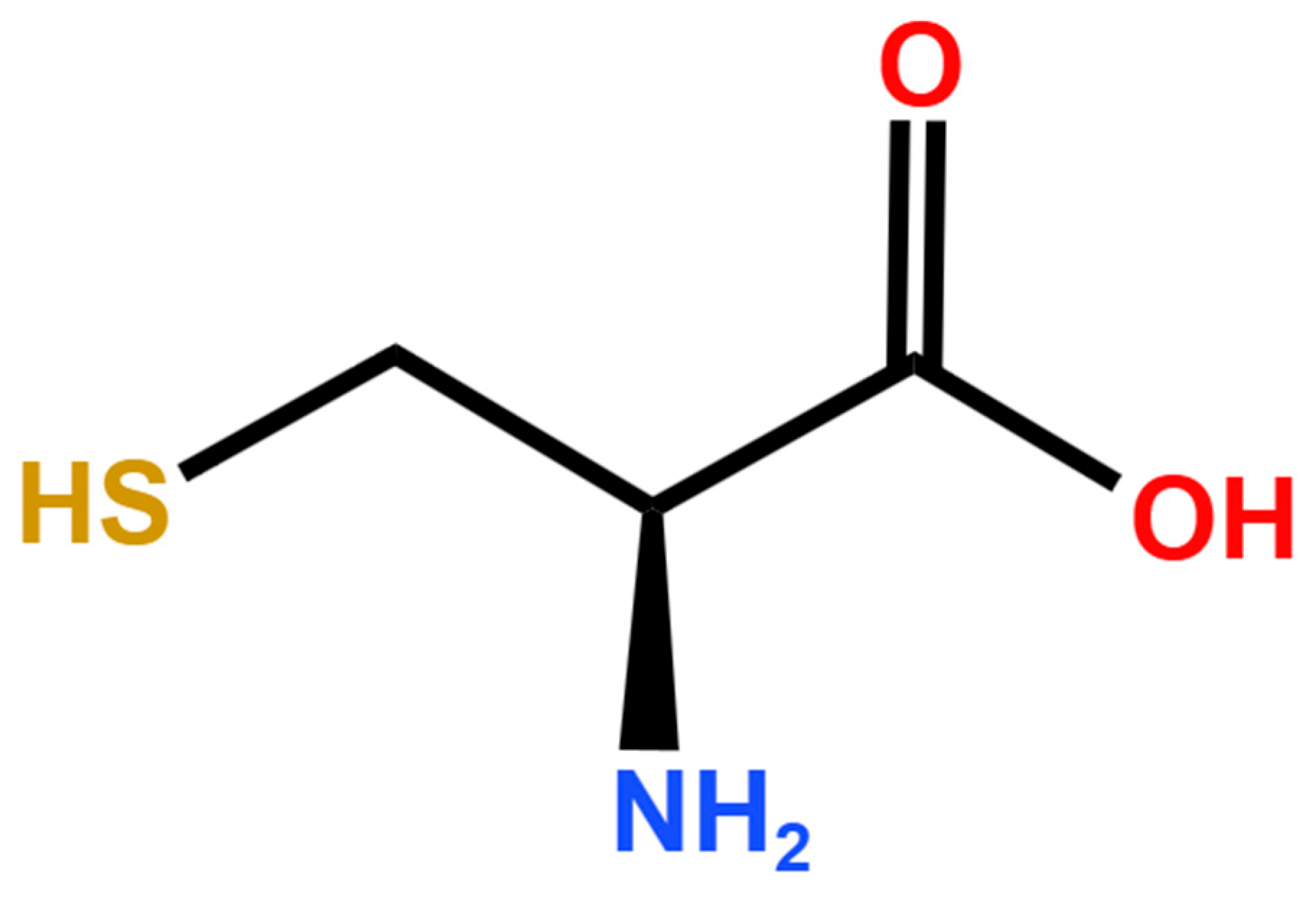
Tap water and deionized water were the test media used to study the effect of oxygen concentration on the corrosion of 20# carbon steel. In this work, tap water and deionized water were subjected to three different treatments: physical deoxygenation by argon for 30 min, oxygenation by filling oxygen for 30 min, and no deoxygenation so that they were in three different ambient states of dissolved oxygen, respectively, and four concentrations of amino acid corrosion inhibitor: 0 ppm, 15 ppm, 30 ppm and 60 ppm. The amino acid corrosion inhibitor used in this study is L-cysteine (Sinopharm Chemical Reagent Co., Ltd., Shanghai, China), the structure of which is shown in Figure 1. In addition, the dissolved oxygen concentrations in the deoxygenated, non-deoxygenated, and oxygenated solutions are 0.5 ± 0.05 ppm, 9.1 ± 0.20 ppm and 11.2 ± 0.10 ppm, respectively, and the main composition of tap water is shown in the Table 2. The pH of tap water was measured to be 7.5 ± 0.2, while that of deionized water was 6.8–7.0, which slightly decreased to 6.5–6.8 after exposure to air. The temperature was maintained at 25 ± 1 °C during all tests.

2.2. Electrochemical Measurements

The open circuit potential (OCP), EIS, and potentiodynamic polarizaion of 20# carbon steel in tap water and deionized water media with three oxygen concentrations and four concentrations of amino acid corrosion inhibitor were tested using the electrochemical workstation (CS3108, Corrtest, Wuhan, China). During the test, a 30 min OCP test was performed first to ensure that the system was close to steady state, and then the EIS test was performed under OCP with a frequency range of 100 kHz to 10 mHz and applying a sinusoidal potential disturbance with an amplitude of 10 mV, and then using the following equation to calculate the inhibiting efficiency derived from EIS [37]:
η R = R ct R ct 0 R ct × 100 %
where R ct and R ct 0 are the charge transfer resistance terms in the presence and absence of the inhibitors. The scan rate of the potentiodynamic polarization test was 0.67 mV/s, and the potential scan range was −200 mV~+300 mV (vs. OCP). In addition, the pitting corrosion was tested by anodically polarized with a potential scanning rate of 0.33 mV/s until the current density reached 500 μA/cm2 or more after the samples were immersed for 10 min. Equation (2) was then used to calculate the electrochemical corrosion inhibition rate [12,21,40,41,42]:
η eq = I corr 0 I corr 1 I corr 0 × 100 %
where η eq   is the electrochemical corrosion inhibition rate (%), I corr 0 is the corrosion current density of the sample in a solution without corrosion inhibitor (μA/cm2), I corr 1 is the corrosion current density of the sample in a solution with corrosion inhibitor (μA/cm2). A three-electrode system is used for all electrochemical testing, with the test alloy as the working electrode, a platinum sheet as the counter electrode, and a saturated calomel electrode (SCE) as the reference electrode, which is connected to the test solution by a salt bridge with a Luggin capillary during the test. All the experiments were repeated at least three times under identical conditions to ensure the reproducibility.

2.3. Weight Loss Measurements

For the weightlessness test, the mounted samples of 20# carbon steel were immersed in tap water and deionized water media with three oxygen concentrations for 24 h, 72 h, and 120 h, respectively, and then the surface of the samples was rinsed with deionized water and ethanol. The samples were weighed (m0) before immersion and rinsed with deionized water and ethanol, blown dry and weighed (m1) after immersion. The following equation was used to calculate the corrosion rate [43,44,45,46,47,48]:
R = m 1 m 0 S × T
where R is the corrosion rate (g/m2·h), S is the surface area of the sample (m2), T is the test time (h). Three parallel samples were set up for each group of samples to ensure the reliability of the experimental results. The weightlessness test mainly refers to ASTM G31-21 [49], but also to the Chinese standard JB/T 7901-2023 (Laboratory immersion test method for uniform corrosion of metals) [50].

2.4. Characterization of Corrosion Morphology

The mounted samples after immersion in tap water and deionized water media with three oxygen concentrations for 24 h, 72 h, and 120 h were characterized by ordinary magnification photography and scanning electron microscope (SEM, ZEISS Sigma 300, Oberkochen, Germany) to observe the macroscopic and microscopic morphologies. After being taken out, the samples were soaked in high-purity deionized water for 30 s, and then dried. In addition, the samples, after being anodically polarized in two media, were also characterized by an ultra-depth-of-field 3D microscope (VHS-1000E, Keyence, Osaka, Japan) to observe the degree of general and pitting corrosion on the sample surface.

3. Results and Discussion

3.1. Electrochemical Performance

3.1.1. EIS Spectra

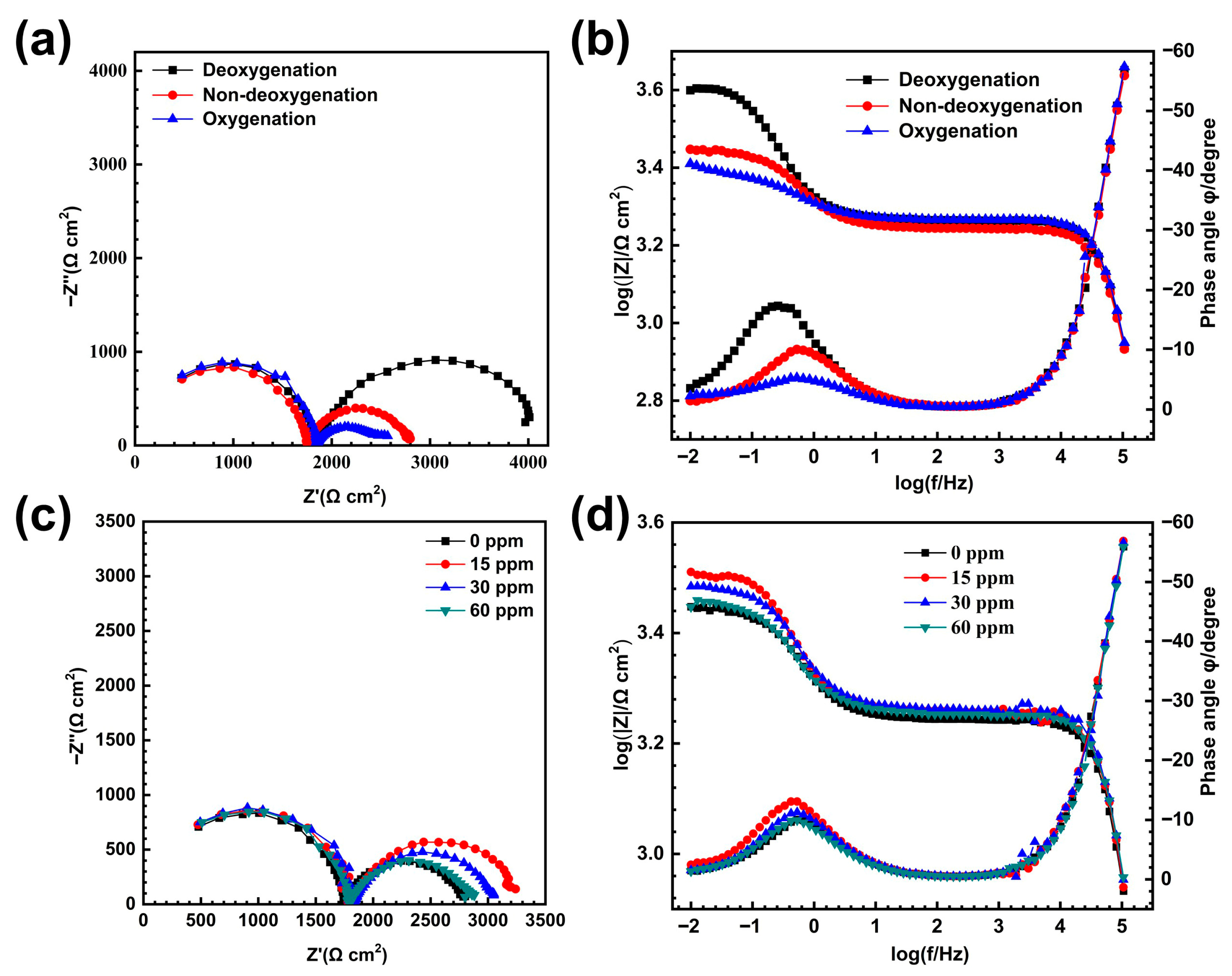
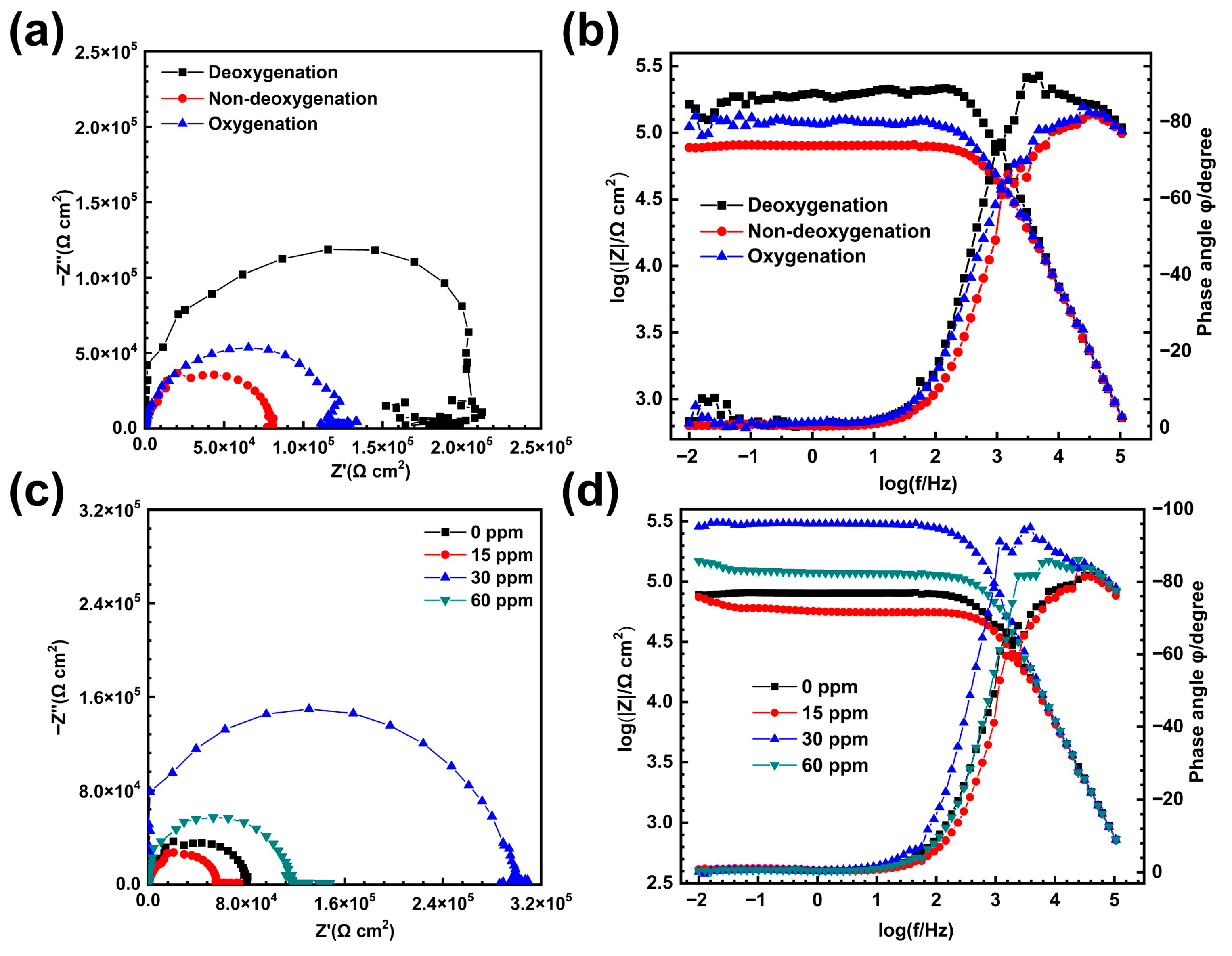
In order to explore the effect of varying oxygen and amino acid corrosion inhibitor concentrations on the corrosion resistance of 20# carbon steel in both tap water and deionized water media, EIS measurements were performed to obtain the polarization resistance (Rp), which is the widely used electrochemical factor assessing the corrosion resistance [51,52,53]. The EIS results and fitted curves of samples in tap water media and deionized water media are shown in Figure 2 and Figure 3, respectively.
In the Nyquist plots, the radius of capacitance arc of samples in tap water media decreases with increasing oxygen concentration. Conversely, in the presence of amino acid corrosion inhibitors, the capacitance arc radius initially expands with increasing concentration, peaks at 15 ppm, and then decreases. For samples in deionized water, the capacitance arc radius exhibits an inverse trend with oxygen concentration, initially decreasing, then reaching a minimum before increasing and peaking at 30 ppm.
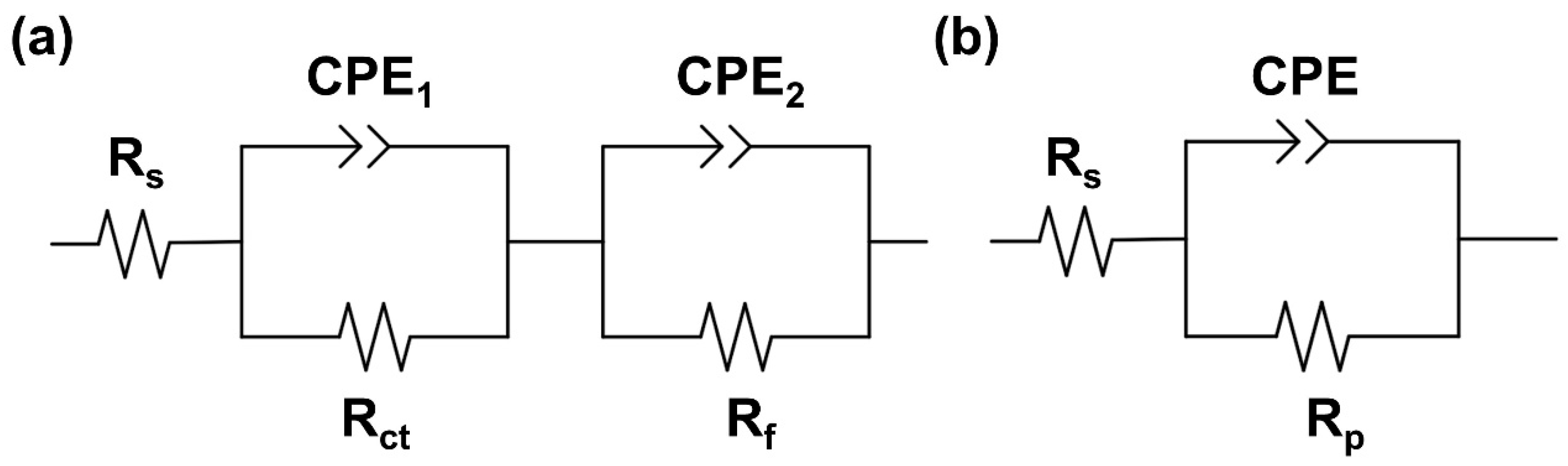
The Rp can be generally obtained by fitting EIS spectra using the equivalent circuit. In this study, the equivalent circuits of samples in tap water and deionized water shown in Figure 4a,b are employed, respectively. In Figure 4a, Rs is the solution resistance, CPE1 is the double layer capacitance, CPE2 is the capacitance of the corrosion products film layer, Rct and Rf are the charge transfer resistance and the film resistance [54,55]. In Figure 4b, CPE is the double-layer capacitance, and Rp is the polarization resistance (a composite of charge transfer resistance and thin film resistance) [55,56]. The fitted EIS parameters are given in Table 3 and Table 4. In general, for the tap water media, the Rp values decrease with increasing oxygen concentration, but increase with increasing amino acid corrosion inhibitor concentration within 15 ppm, i.e., the oxygen is detrimental to the corrosion resistance of the 20# carbon steel but appropriate corrosion inhibitor helps protect the material from corrosion. In the context of deionized water, the relationship between Rp values and oxygen concentration is more nuanced. Initially, an increase in oxygen concentration decreases the Rp values; however, when the oxygen concentration is increased to a certain level, an increase in the Rp values is observed, suggesting that an additional amount of oxygen in the deionized water actually protects the 20# carbon steel from corrosion. Notably, the Rp value peaks at a concentration of 30 ppm for the amino acid corrosion inhibitor, indicating optimal protection at this concentration. From Table 3 and Table 4, the highest efficiency of corrosion inhibitor obtained by Rct is found in tap water at 15 ppm, while in deionized water the concentration is 30 ppm. It should be noted that the corrosion inhibition efficiency was not calculated at this time because the impedance decreased when 15 ppm of corrosion inhibitor was added to the deionized water. This may be due to the fact that the adsorption of the corrosion inhibitor for a short period of time is less than the increasing effect on the conductivity of the solution thereby decreasing the Rct. And the results may be useful in improving the service time of firewater pipelines in demineralized water media.

3.1.2. Potentiodynamic Polarization

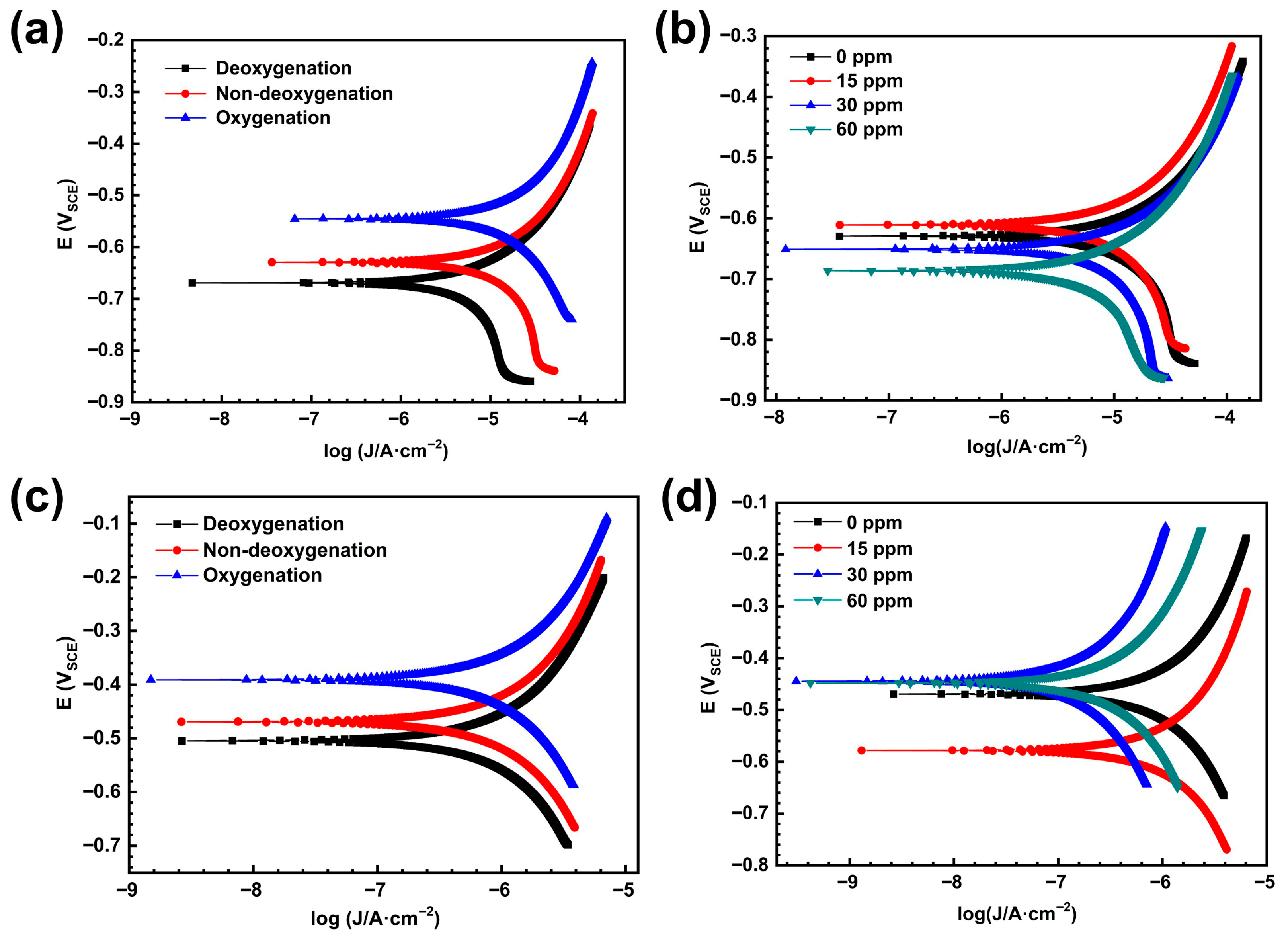
The potentiodynamic polarization curves of 20# carbon steel in tap water and deionized water media with three oxygen concentrations and four amino acid corrosion inhibitor concentrations are shown in Figure 5. Parameters of Tafel fitting are shown in Table 5 and Table 6. From the table, it can be seen that the corrosion current density (Icorr) of 20# carbon steel increases with increasing oxygen concentration which also indicated that the presence of dissolved oxygen has a facilitating effect on the corrosion process. In parallel, the corrosion potential (Ecorr) also increases, which suggested that the 20# carbon steel has a larger corrosion trend with increasing oxygen concentration. The presence of L-cysteine was observed to cause a change in Ecorr values compared to Ecorr values in solutions without the addition of corrosion inhibitors. The addition of L-cysteine corrosion inhibitor in this study favored the shift of the Ecorr to a more favorable potential, indicating that L-cysteine is probably an anodic-type corrosion inhibitor that controls the oxidation reaction.
In tap water, both βa and βc increase with increasing oxygen concentration, from 168.0 mV/dec and −240.1 mV/dec in the natural state to 229.6 mV/dec and −248.5 mV/dec, respectively, indicating that dissolved oxygen accelerates the cathodic reaction of oxygen and the anodic activation reaction. In deionized water, however, increasing the dissolved oxygen concentration actually decreases βa and βc from 234.9 mV/dec and −247.8 mV/dec in the natural state to 211.3 mV/dec and −210.7 mV/dec, respectively, indicating that it suppresses the anodic and cathodic reactions. Moreover, after adding the corrosion inhibitor to tap water, βa only decreases slightly, while in deionized water, adding the corrosion inhibitor significantly reduces βa.
Meanwhile, the Icorr of 20# carbon steel in tap water with amino acid corrosion inhibitors of 0, 15 ppm, 30 ppm and 60 ppm is 10.02 μA/cm2, 6.45 μA/cm2, 6.61 μA/cm2 and 6.22 μA/cm2, respectively, and the ηeq of three kinds of solutions with corrosion inhibitor calculated by Icorr are 36%, 34%, and 38%. Therefore, the effect of adding different concentrations of corrosion inhibitor is almost the same, but 15 ppm has the best cost performance.
For the deionized water media, the Icorr of 20# carbon steel in solutions with physical deoxygenation, oxygenation and no deoxygenation is 0.60 μA/cm2, 0.68 μA/cm2 and 0.78 μA/cm2, respectively, which means increasing a certain concentration of dissolved oxygen will instead reduce the corrosion rate of the 20# carbon steel, and this result is also contrary to that obtained in tap water media. Moreover, the Icorr with increasing corrosion inhibitor concentrations are 0.78 μA/cm2, 0.36 μA/cm2, 0.21 μA/cm2 and 0.27 μA/cm2, respectively, and the ηeq of three kinds of solutions with corrosion inhibitor calculated by Icorr are 54%, 73%, and 66%, which is also demonstrated that the addition of corrosion inhibitor can slow down the corrosion rate of 20# carbon steel in deionized water media and adding 30 ppm corrosion inhibitor gives the best result. In summary, the corrosion inhibitor has a poor corrosion inhibition effect in tap water on the carbon steel material used in the experiment, which is much lower than the general corrosion inhibition efficiency of this type of corrosion inhibitor. For deionized water, the corrosion inhibition efficiency results obtained by Rct and Icorr, although not excellent, are in line with normal levels, suggesting that the corrosion inhibitor could be an option as it shows some promise for use in nuclear power firewater.

3.1.3. Pitting Corrosion Test

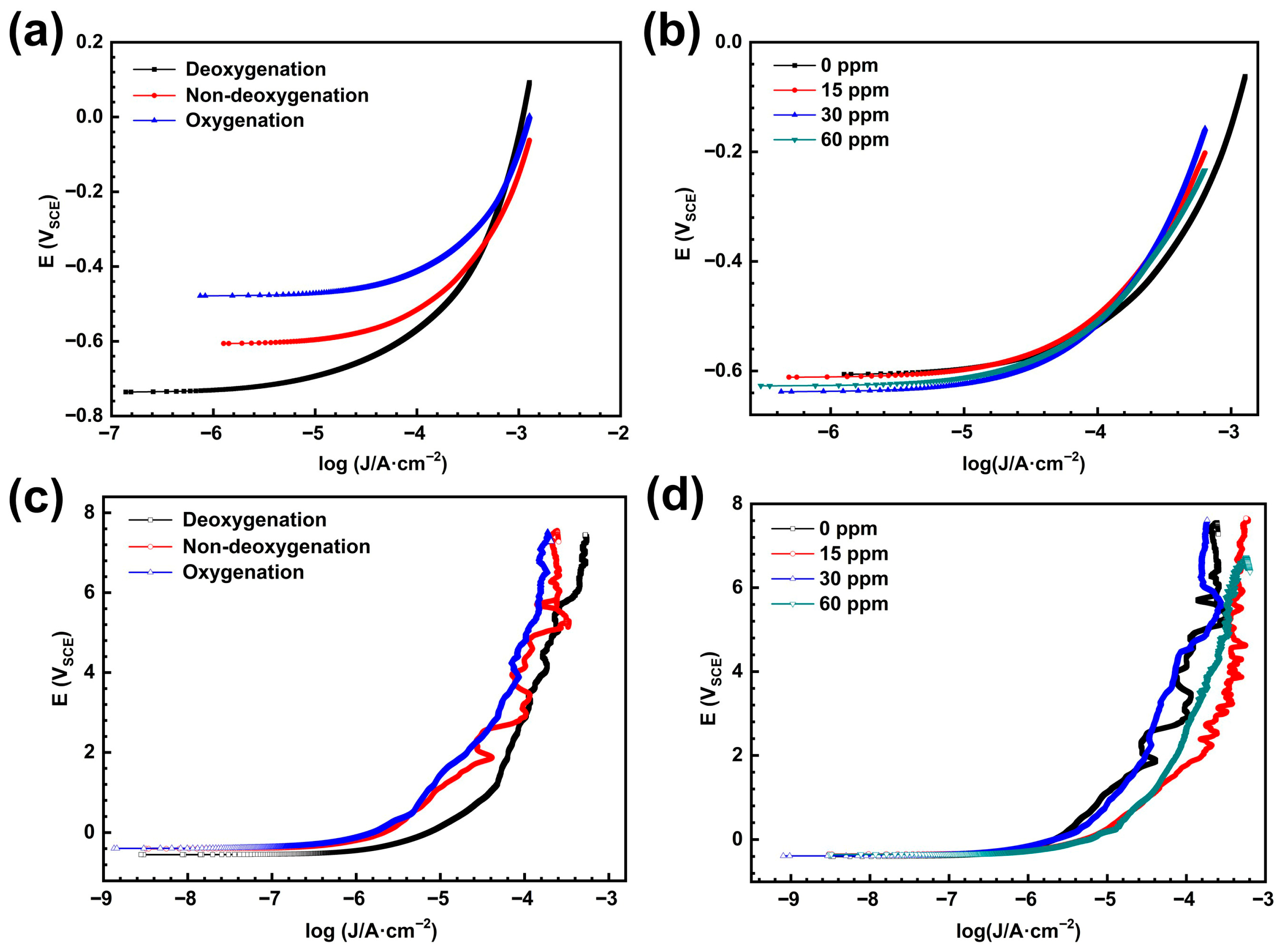
Pitting corrosion often occurs during the service of firewater pipelines, so it is necessary to conduct pitting corrosion tests on carbon steel in two media [57,58,59,60]. Figure 6 shows the anodic polarization curves of 20# carbon steel in both media with different concentrations of oxygen and amino acid corrosion inhibitor. In this work, the potentials at Icorr of 10 μA/cm2 and 100 μA/cm2 are used as the pitting potentials, namely Eb10 and Eb100.
In tap water, there was no tendency for pitting to occur from polarization curves, and the potential increases with increasing oxygen concentration, which may be the result of corrosion product accumulation and inhibit corrosion. This potential reaches its peak at 15 ppm of amino acid corrosion inhibitor when the Icorr is 10 μA/cm2 and 100 μA/cm2. In contrast, the polarization curves in deionized water show significant fluctuations and an abrupt increase in current density. Under the oxygenated condition, the potentials corresponding to these sudden current increases are notably higher than those in non-oxygenated conditions. This suggests that an increase in dissolved oxygen concentration enhances the passivation properties of 20# carbon steel, thereby improving its resistance to pitting corrosion. The maximum potential is observed at an amino acid corrosion inhibitor concentration of 30 ppm in deionized water. The specific values of Eb10 and Eb100 obtained in deionized water are shown in Table 7.
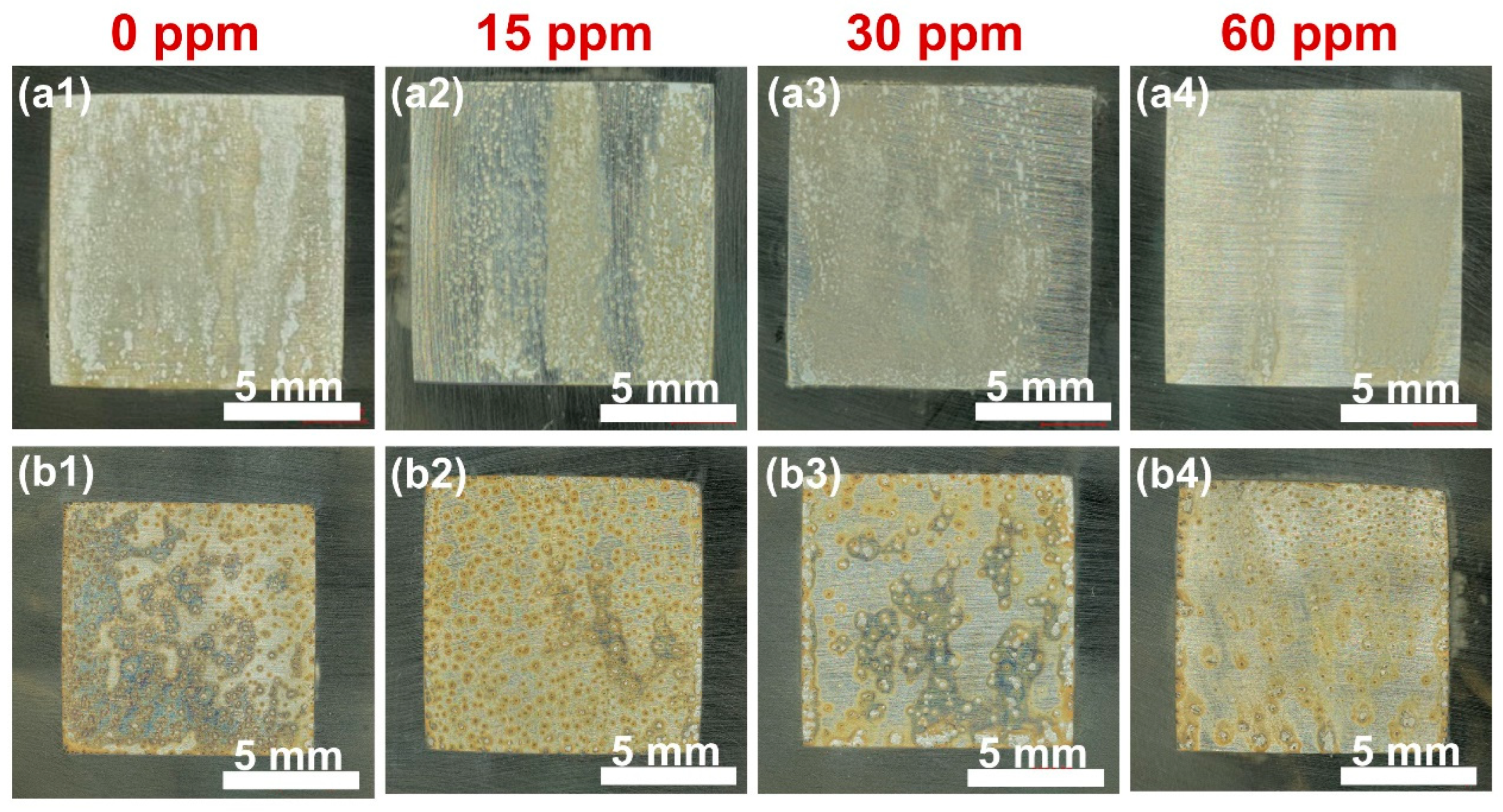
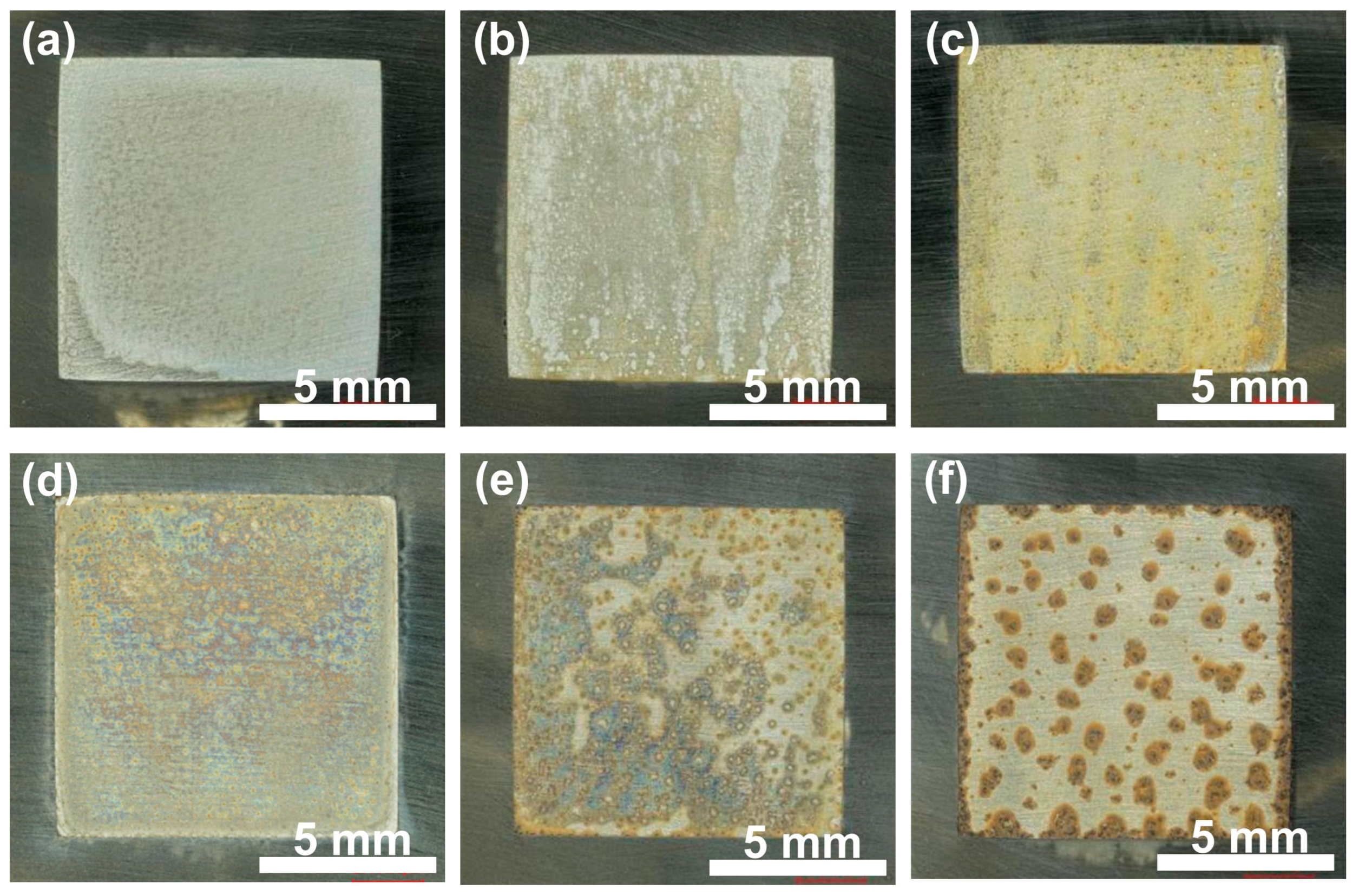
In order to further verify these two opposite results of the two media with dissolved oxygen, macroscopic morphological observations are made on the samples after anodic polarization mentioned above, as shown in Figure 7.
The surface of the samples tested in tap water shows the large areas of uniform corrosion, and the higher the concentration of dissolved oxygen in the tap water, the greater the degree of corrosion.
As shown in Figure 8(a1–a4), there is still no obvious pitting morphology of samples in the tap water with added corrosion inhibitor, and the degree of corrosion is significantly reduced with the adding of amino acid corrosion inhibitor and the best effect is obtained at 15 ppm. However, as the dissolved oxygen concentration increases, the number of corrosion pits decreases significantly, and consequently, the area occupied by corrosion pits per unit surface area also diminishes. Additionally, the amino acid corrosion inhibitor has the best corrosion inhibiting effect when the concentration is 30 ppm, as shown in Figure 8(b1–b4).
As a result, 20# carbon steel may be able to form a corrosion products film with better corrosion resistance in deionized water, while an increase in dissolved oxygen concentration contributes to the formation of this corrosion products film. This phenomenon contributes to the study of the corrosion resistance of firewater pipelines in a new generation of nuclear power plants where the media is demineralized water.

3.2. Weightlessness Test

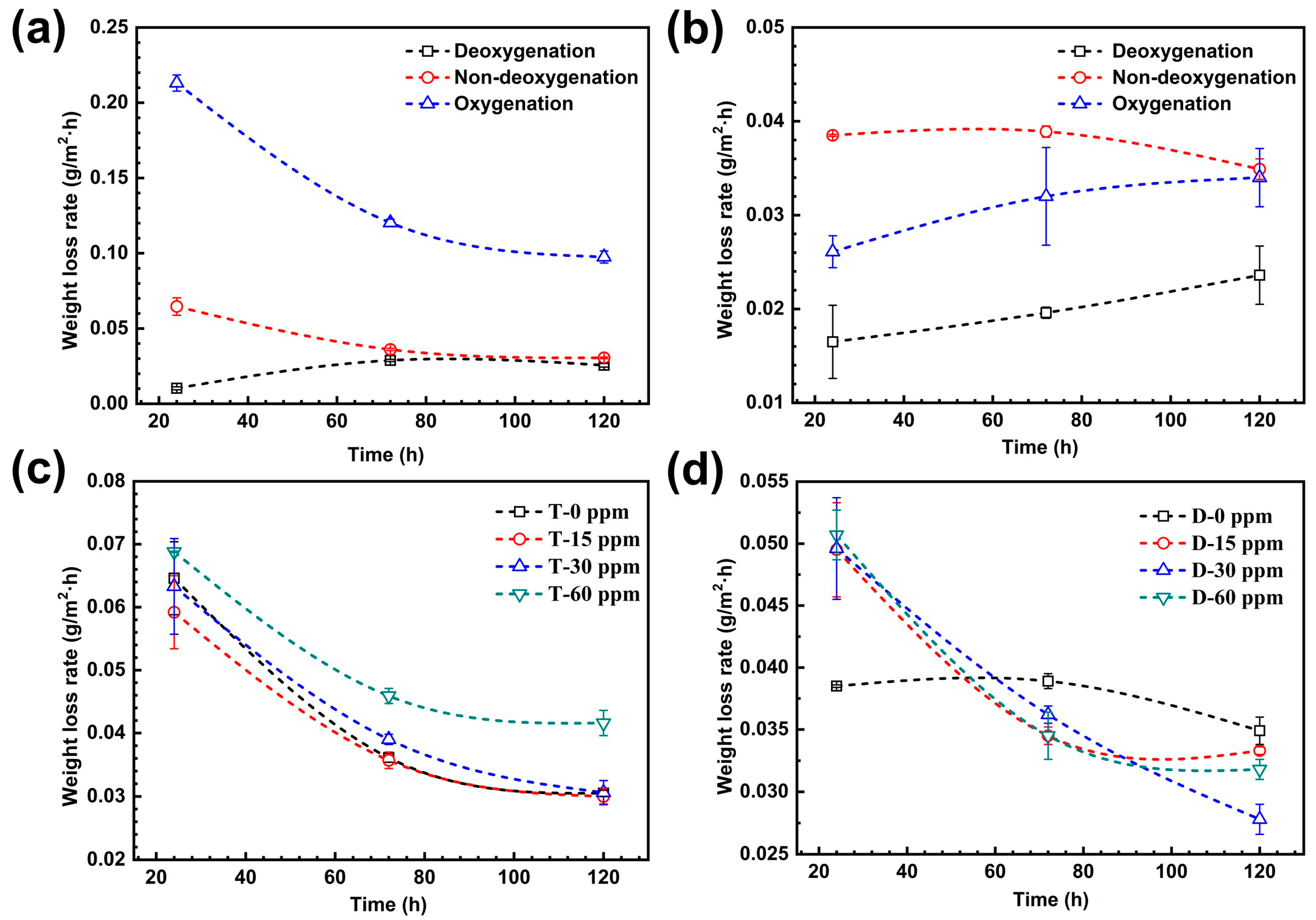
In order to further verify the phenomenon that 20# carbon steel exhibits different corrosion resistance with increasing dissolved oxygen concentration in tap water and deionized water media, weightlessness tests are conducted. Figure 9 and Table 8 show the weight loss rates of samples in two media with three oxygen concentrations after immersion for 24 h, 72 h, and 120 h.
For the tap water media, the weight loss rate of the sample increases with the increasing oxygen concentration, which indicates that dissolved oxygen in the medium will accelerate the corrosion of 20# carbon steel. In addition, when oxygen is present, the rate of weight loss of the samples will decrease as the immersion time increases, which is attributed to the fact that prolonged oxygen consumption reduces the amount of depolarizing agent, as shown in the following reaction equation:
O 2 + 2 H 2 O + 4 e 4 OH
For the deionized water media, when oxygen is added, the rate of weight loss of the samples was significantly less than the situation of no deoxygenation in only 24 h, which may be an indication of the formation of protective corrosion products in a short period of time. Furthermore, the decrease in dissolved oxygen concentration after prolonged immersion may not be sufficient to maintain the process of formation of corrosion products with protective property, thus accelerating the rate of weight loss. The results of the weightlessness tests are also consistent with the results of the aforementioned electrochemical tests.

3.3. Surface Morphology

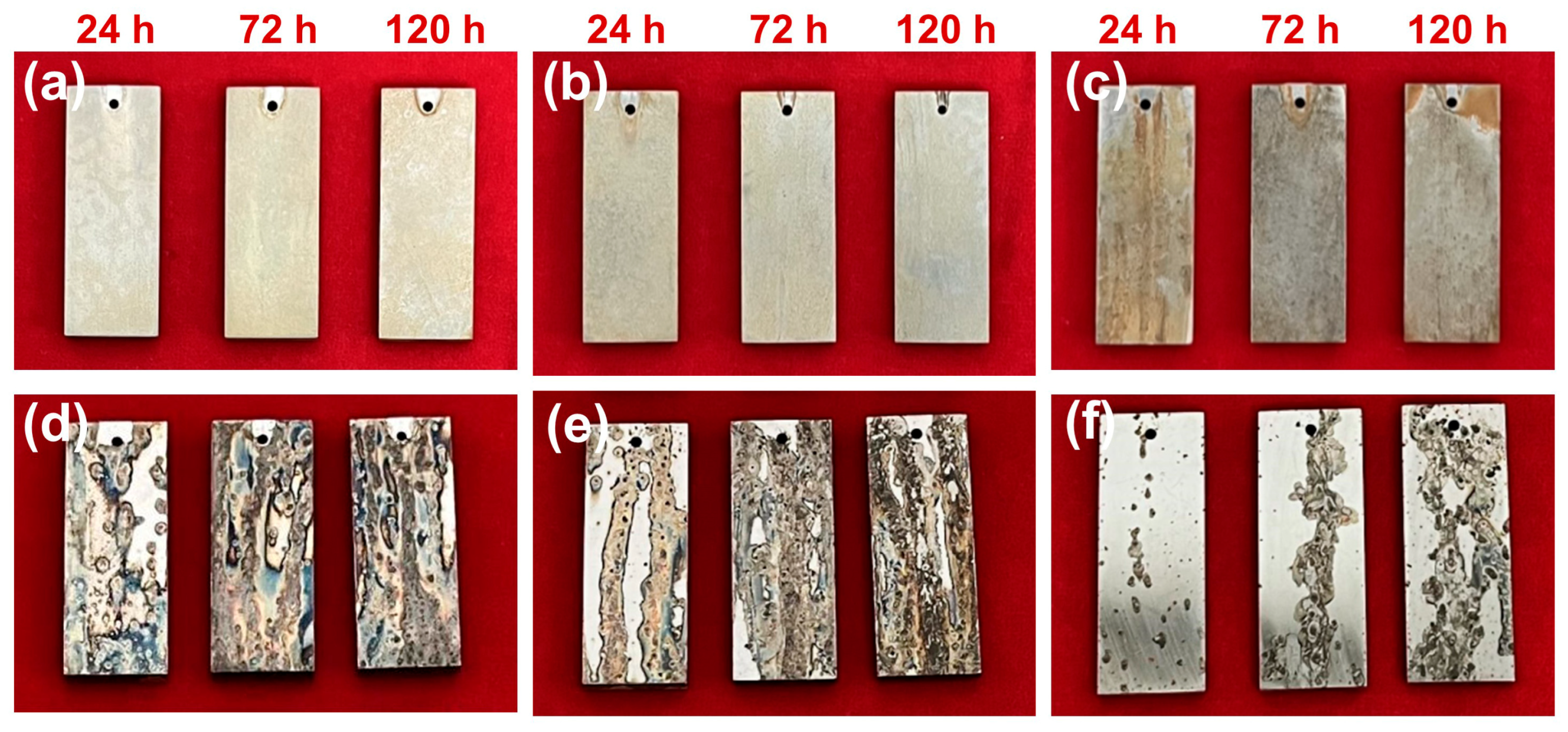
Figure 10 shows the macro-morphologies of samples in two media with three oxygen concentrations after immersion for 24 h, 72 h, and 120 h. In deoxygenated and non-deoxygenated tap water, the surface of the sample shows grey corrosion products, while in oxygenated tap water it shows yellow–brown corrosion products, and the corrosion products are readily detachable and primarily exhibit a uniform corrosion pattern, as can be seen in Figure 10a–c. The corrosion level of all three kinds of samples increases to various degrees with increasing immersion time, especially in the oxygenated media.
By contrast, corrosion products on the surface of the samples after immersion in deionized water appears black in color, aggregating in the form of pitting corrosion, and are denser and more difficult to remove, as can be seen in Figure 10d–f. It is worth noting that, despite the fact that the level of corrosion intensifies as the immersion duration increases for all three types of samples, the degree of corrosion is notably lesser in oxygenated media. This observation is also consistent with the results obtained from the weightlessness test.
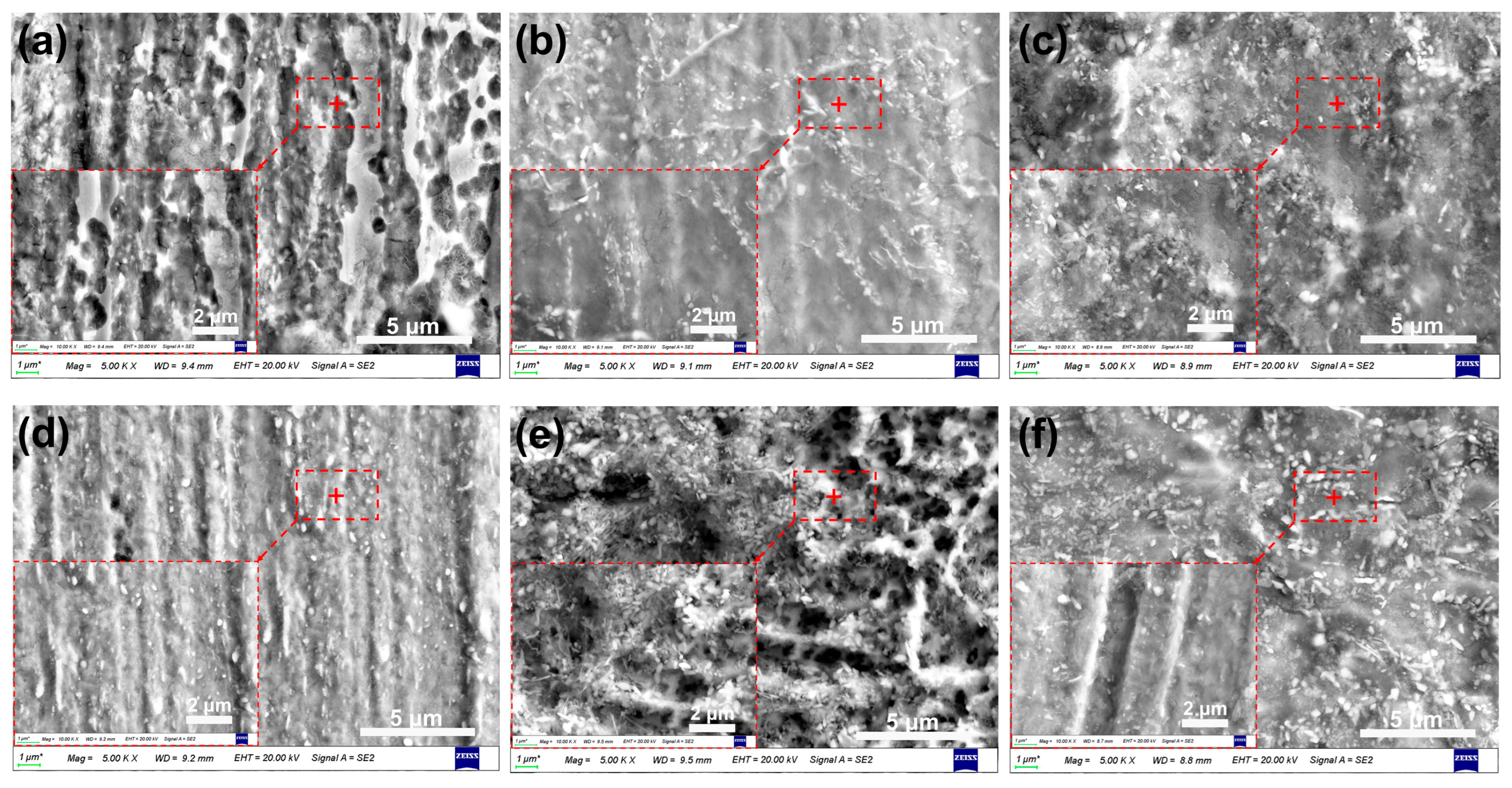
As mentioned earlier, dissolved oxygen in tap water adversely affects the corrosion resistance of 20# carbon steel, whereas proper-dissolved oxygen in deionized water is beneficial. In order to further validate the phenomenon, micro morphologies of samples in two media with three oxygen concentrations after immersion for 24 h are characterized, as can be seen from the Figure 11. The degree of corrosion in tap water increases as the dissolved oxygen concentration rises, but the resulting corrosion product layer is relatively loose.
Conversely, in deionized water, the corrosion products are denser, and a more complete layer forms within 24 h under oxygenated condition. This suggests that a moderate amount of dissolved oxygen enhances the passivation process of carbon steel in deionized water, thereby slowing down its corrosion rate.
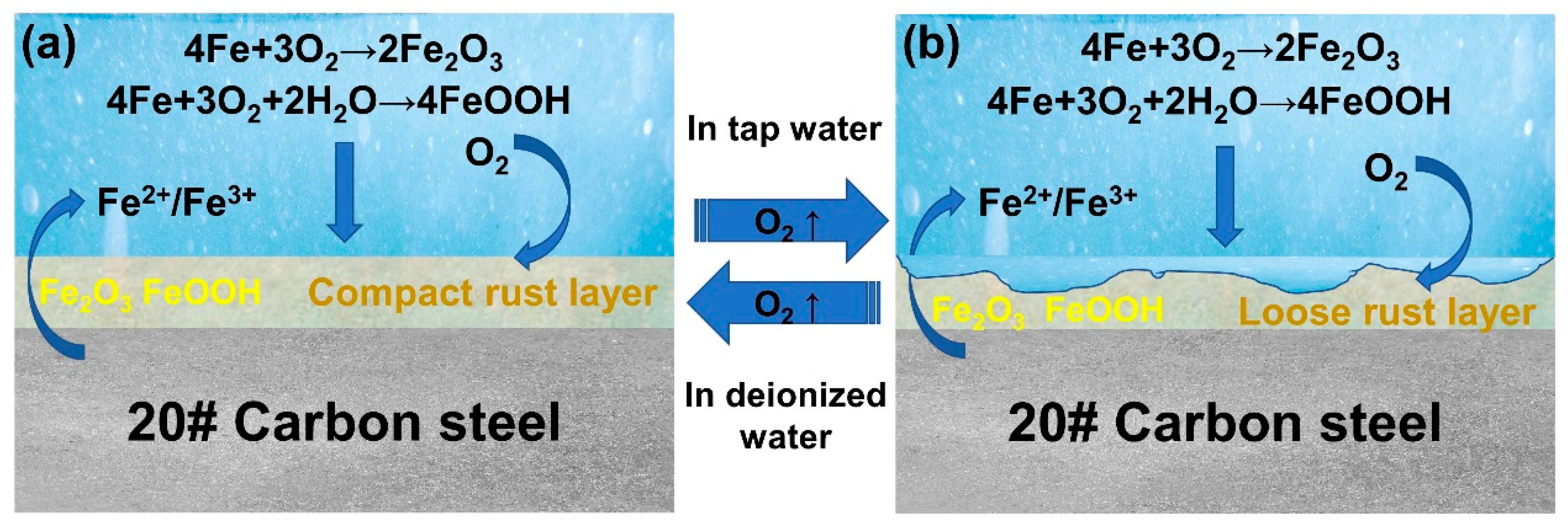
Due to the nature of carbon steel itself, the corrosion products film formed on its surface to a certain extent, especially at the beginning of corrosion has a certain degree of protective, relatively dense; however, with the corrosion continues to carry out or corrosion rate increases, the film layer will become looser (especially relative to stainless steel and other materials). That is, the film layer is a first dense and then loose process. Therefore, in the oxygenated tap water, carbon steel surface layer densification almost reached the upper limit, increasing the concentration of dissolved oxygen leads to a decrease in the densification of the membrane layer, resulting in the formation of a looser membrane layer, the phenomenon of reduced corrosion resistance [27,28]. On the contrary, due to the lower conductivity of oxygenated deionized water, carbon steel corrosion reaction is more difficult to carry out, increasing the concentration of dissolved oxygen will accelerate the rate of corrosion translation, because of its densification has not reached the upper limit, so increase the concentration of dissolved oxygen can promote the formation of more dense corrosion product film, thus increasing its corrosion resistance.
Therefore, the ability of a material to promote the formation of a denser layer of corrosion products in the presence of increasing dissolved oxygen concentration is crucial in determining whether the conditions are favorable or unfavorable for corrosion, as illustrated in Figure 12. For tap water, which is currently the most widely used firewater in nuclear power plants, minimizing its dissolved oxygen concentration is an effective strategy to enhance the corrosion resistance of carbon steel and extend its service life. In the case of new-generation nuclear power plants that use demineralized water as firewater, if deoxygenation is not feasible, a moderate increase in the dissolved oxygen concentration of the media can also mitigate the corrosion of carbon steel to a certain extent. Additionally, incorporating an appropriate amount of amino acid corrosion inhibitors into deionized water can significantly reduce the corrosion rate of firewater pipelines.

4. Conclusions

This paper examines the influence of dissolved oxygen and amino acid corrosion inhibitor concentrations on the corrosion resistance of 20# carbon steel in both tap water and deionized water environments. The research reveals that, in tap water, the corrosion resistance of 20# carbon steel decreases as the dissolved oxygen concentration rises. However, within a certain range (up to 15 ppm), an increase in the concentration of corrosion inhibitors enhances the corrosion resistance of carbon steel. On the other hand, in deionized water, where deoxygenation may not be feasible, a moderate increase in dissolved oxygen concentration can effectively improve the corrosion resistance of 20# carbon steel. The best results are obtained when the corrosion inhibitor concentration is 30 ppm. Furthermore, the study suggests that the differing effects of dissolved oxygen in the two media may be due to its role in promoting the formation of a dense layer of corrosion products on the surface of 20# carbon steel.

Author Contributions

K.F.: Methodology, Investigation, Data curation, Formal analysis, Validation, Writing—original draft. Y.L. (Yan Liu): Methodology, Writing—review and editing, Verification, Supervision. H.L.: Conceptualization, Writing—review and editing. J.S.: Methodology, Validation. J.C.: Conceptualization, Validation. J.L.: Conceptualization, Methodology, Formal analysis, Writing—review and editing, Validation. Y.L. (Yuan Li) and E.X.: Investigation, validation and data curation. Y.Q.: Conceptualization, methodology and writing—review and editing. All authors have read and agreed to the published version of the manuscript.

Funding

This research was supported by the National Key Research and Development Program of China (No. 2016YFB0700404) and Natural Science Foundation of China (No. 51375182).

Data Availability Statement

The original contributions presented in this study are included in the article. Further inquiries can be directed to the corresponding authors.

Conflicts of Interest

The authors declare no conflict of interest.

References

  1. Regulatory Guide. Standard Format and Content of Safety Analysis Reports for Nuclear Power Plants. Us Nuclear Regulatory Commission 1978 11. Part I—Regulatory Guide 1.70, Revision 3, Standard Format and Content of Safety Analysis Reports for Nuclear Power Plants, LWR Edition. Available online: https://www.nrc.gov (accessed on 26 September 2024).
  2. Eckert, T. Guideline for the Evaluation and Treatment of Corrosion and Fouling in Fire Protection Systems; Report TR-109633; EPRI: Palo Alto, CA, USA, 1999. [Google Scholar]
  3. Piri, B.; Amini, R.; Asadinia, E.; Vardak, S.; Mehdilouee, R.; Mojarrad, A. Investigation of failure mechanisms and remaining life prediction of firewater pipelines used in industrial applications. Eng. Fail. Anal. 2021, 124, 105301. [Google Scholar] [CrossRef]
  4. Liu, X.Z.; Li, N.N.; Zhang, J.; Liu, W.F.; Wang, Y.H.; Song, Y.W.; Dong, K.H.; Cai, Y.; Han, E.H. Failure analysis of leaking firefighting pipeline used in nuclear power plant: Corrosion development process and key influence factors. Eng. Fail. Anal. 2024, 161, 108341. [Google Scholar] [CrossRef]
  5. Balamurugan, P.; Prashanth, K.; Rao, T.S. Control of fouling bacteria in freshwater used for the firewater system of a power plant by chemical biocides—An in vitro study. Indian J. Mar. Sci. 2014, 43, 2085–2093. [Google Scholar]
  6. Karan, S. Safety and Reliability Improvements of Valves and Actuators for the Offshore Oil and Gas Industry Through Optimized Design; NO-4036 Stavanger; University of Stavanger: Stavanger, Norway, 2021. [Google Scholar] [CrossRef]
  7. Subramanian, C. Localized pitting corrosion of API 5L grade A pipe used in industrial fire water piping applications. Eng. Fail. Anal. 2018, 92, 405–417. [Google Scholar] [CrossRef]
  8. Palaniappan, B.; Toleti, S.R. Characterization of microfouling and corrosive bacterial community of a firewater distribution system. J. Biosci. Bioeng. 2016, 121, 435–441. [Google Scholar] [CrossRef]
  9. Peterka, P.; Hagarová, M.; Krešák, J.; Vojtko, M.; Baranová, G. Failure analysis of the industrial water piping system leakage. Eng. Fail. Anal. 2022, 131, 105843. [Google Scholar] [CrossRef]
  10. Husain, A.; Al-Abkal, F. Root cause analysis of corrosion failure of a firefighting pipeline. Eng. Fail. Anal. 2024, 164, 108635. [Google Scholar] [CrossRef]
  11. Xu, D.; Chen, T.X.; Yang, G.M.; Sun, L.; Xu, C.W.; Liu, C.; Liu, Z.Y.; Du, C.W.; Li, X.G. Insight into the effect of oxygen content on the corrosion behavior of X70 pipeline steel in a typical simulated soil solution by dissolution-diffusion-deposition model. Corros. Sci. 2024, 240, 112478. [Google Scholar] [CrossRef]
  12. Song, J.; Zhang, J.; Wang, C.K.; Ge, M.Y. Study on the inhibition mechanism of corrosion under inert deposit-covered X65 steel by three corrosion inhibitors. Surf. Coat. Technol. 2024, 484, 130805. [Google Scholar] [CrossRef]
  13. Farh, H.M.H.; Ben, S.M.E.A.; Zayed, T. A comprehensive review of corrosion protection and control techniques for metallic pipelines. Eng. Fail. Anal. 2023, 143, 106885. [Google Scholar] [CrossRef]
  14. Chen, T.Q.; Sun, L.; Li, Q.; Liu, C.; Liu, Z.Y.; Cheng, X.Q.; Li, X.G. Comprehensive analysis of corrosion failure of blast furnace gas pipeline in a steel plant. Eng. Fail. Anal. 2023, 154, 107651. [Google Scholar] [CrossRef]
  15. Ghelloudj, O.; Zelmati, D.; Ramoul, C.E.; Gharbi, A.; Ayad, A.; Aoun, I.D.; Saad, A.; Bachiri, A. Reliability assessment of pipeline steel uner corrosion defect. Mater. Today Proc. 2023. [Google Scholar] [CrossRef]
  16. Zhang, P.J.; Ma, L.; Zhou, P.J.; Yang, L.L.; Emori, W.; Qiao, Y.X. Cavitation erosion-corrosion behavior of Co–6Ti–11V–9Cr superalloy in 3.5% NaCl solution. J. Iron Steel Res. Int. 2025, 32, 4440–4453. [Google Scholar]
  17. Dwivedi, D.; Lepková, K.; Becker, T. Carbon steel corrosion: A review of key surface properties and characterization methods. RSC Adv. 2017, 7, 4580–4610. [Google Scholar] [CrossRef]
  18. Fan, L.; Reis, S.; Chen, G.D.; Koenigstein, M. Corrosion Resistance of Pipeline Steel with Damaged Enamel Coating and Cathodic Protection. Coatings 2018, 8, 185. [Google Scholar] [CrossRef]
  19. Byrnes, T.; Saudi, A.; Dhahran. Pipeline coatings. In Trends in Oil and Gas Corrosion Research and Technologies; Byrnes, T., Ed.; Elsevier: Amsterdam, The Netherlands, 2017; pp. 563–591. [Google Scholar] [CrossRef]
  20. Anandkumar, B.; Krishna, N.G.; Solomon, R.V. Synergistic enhancement of corrosion protection of carbon steels using corrosion inhibitors and biocides: Molecular adsorption studies, DFT calculations and long-term corrosion performance evaluation. J. Environ. Chem. Eng. 2023, 11, 109842. [Google Scholar] [CrossRef]
  21. Zhang, Q.H.; Li, Y.Y.; Lei, Y.; Wang, X.; Liu, H.F.; Zhang, G.A. Comparison of the synergistic inhibition mechanism of two eco-friendly amino acids combined corrosion inhibitors for carbon steel pipelines in oil and gas production. Appl. Surf. Sci. 2022, 583, 152559. [Google Scholar] [CrossRef]
  22. Kumar, A.M.; Rajesh, T.; Obot, I.B.; Bin, S.; Abdulhamid, M.A. Water-soluble chitosan salt as ecofriendly corrosion inhibitor for N80 pipeline steel in artificial sea water: Experimental and theoretical approach. Int. J. Biol. Macromol. 2024, 254, 127697. [Google Scholar] [CrossRef]
  23. Askari, M.; Aliofkhazraei, M.; Ghaffari, S.; Hajizadeh, A. Film former corrosion inhibitors for oil and gas pipelines—A technical review. J. Nat. Gas. Sci. Eng. 2018, 58, 92–114. [Google Scholar] [CrossRef]
  24. Km, S.; Praveen, B.M.; Devendra, B.K. A review on corrosion inhibitors: Types, mechanisms, electrochemical analysis, corrosion rate and efficiency of corrosion inhibitors on mild steel in an acidic environment. Results Surf. Interfaces 2024, 16, 100258. [Google Scholar] [CrossRef]
  25. Ibrahimi, B.E.; Jmiai, A.; Bazzi, L.; Issami, S.I. Amino acids and their derivatives as corrosion inhibitors for metals and alloys. Arab. J. Chem. 2020, 13, 740–771. [Google Scholar] [CrossRef]
  26. Hamadi, L.; Mansouri, S.; Oulmi, K.; Kareche, A. The use of amino acids as corrosion inhibitors for metals: A review. Egypt. J. Pet. 2018, 27, 1157–1165. [Google Scholar] [CrossRef]
  27. Zeng, X.Q.; Jiang, Z.N.; Duan, J.M. Developing a novel amino acid derivative as high-efficient green corrosion inhibitor for mild steel in acidic solution: Experiments and first-principles calculations. Ind. Crops Prod. 2024, 210, 118032. [Google Scholar] [CrossRef]
  28. Li, E.T.; Liu, S.L.; Luo, F. Amino acid imidazole ionic liquids as green corrosion inhibitors for mild steel in neutral media: Synthesis, electrochemistry, surface analysis and theoretical calculations. J. Electroanal. Chem. 2023, 944, 117650. [Google Scholar] [CrossRef]
  29. Petrović, M.B.; Radovanović, M.B.; Simonović, A.T.; Milić, S.M.; Antonijević, M.M. The Effect of Cysteine on the Behaviour of Copper in Neutral and Alkaline Sulphate Solutions. Int. J. Electrochem. Sci. 2021, 7, 9043–9057. [Google Scholar] [CrossRef]
  30. Amin, M.A.; Khaled, K.F.; Mohsen, Q.; Arida, H.A. A study of the inhibition of iron corrosion in HCl solutions by some amino acids. Corros. Sci. 2010, 52, 1684–1695. [Google Scholar] [CrossRef]
  31. Wang, T.R.; Wang, J.L.; Wu, Y.Q. The inhibition effect and mechanism of l-cysteine on the corrosion of bronze covered with a CuCl patina. Corros. Sci. 2015, 97, 89–99. [Google Scholar] [CrossRef]
  32. Zhu, Y.; Sun, Q.Q.; Wang, Y.; Tang, J.; Wang, Y.Y.; Wang, H. Molecular dynamic simulation and experimental investigation on the synergistic mechanism and synergistic effect of oleic acid imidazoline and l-cysteine corrosion inhibitors. Corro. Sci. 2021, 185, 109414. [Google Scholar] [CrossRef]
  33. Yang, J.; Zhao, J.S.; Guo, X.; Ran, Y.M.; Fu, Z.H.; Qian, H.C.; Ma, L.W.; Keil, P.; Mol, A.; Zhang, Q.W. Combinatorial discovery and investigation of the synergism of green amino acid corrosion inhibitors: Integrating high-throughput experiments and interpretable machine learning approach. Corro. Sci. 2025, 245, 112675. [Google Scholar] [CrossRef]
  34. Farahati, R.; Mousavi, K.; Ghaffarinejad, A.; Behzadi, H. Experimental and computational study of penicillamine drug and cysteine as water-soluble green corrosion inhibitors of mild steel. Prog. Org. Coat. 2020, 142, 105567. [Google Scholar] [CrossRef]
  35. Abubakr, H.M.C.; Ghaith, M.E.; El-Sherif, A.A.; El-Deab, M.S. Influence of metal ions on cysteine as a corrosion inhibitor for low carbon steel in sulfuric acid: Polarization, EIS, XPS, and DFT analysis. Int. J. Electrochem. Sci. 2024, 19, 100620. [Google Scholar] [CrossRef]
  36. Ismail, K.M. Evaluation of cysteine as environmentally friendly corrosion inhibitor for copper in neutral and acidic chloride solutions. Electrochim. Acta 2007, 52, 7811–7819. [Google Scholar] [CrossRef]
  37. Pan, J.; He, X.; Cao, K. Electrochemical and theoretical studies of two amino acid ionic liquids as corrosion inhibitors for mild steel in 3.5 wt% NaCl solution. Int. J. Electrochem. Sci. 2025, 20, 100916. [Google Scholar] [CrossRef]
  38. GB/T 699-2015; Quality Carbon Structure Steels. China lron and Steel Association: Beijing, China, 2015.
  39. ASTM A29/A29M-23; Standard Specification for General Requirements for Steel Bars, Carbon and Alloy, Hot-Wrought. American Society for Testing Materials: West Conshohocken, PA, USA, 2023.
  40. Sun, A.; Cui, G.D.; Liu, Q.W. Capsule corrosion inhibitor loaded with hyperbranched chitosan: Carbon dioxide corrosion protection for downhole pipelines in oil fields. Colloid Surf. A 2023, 664, 131106. [Google Scholar] [CrossRef]
  41. Farhadian, A.; Go, W.; Yun, S.; Rahimi, A.; Reza, N.M.; Iravani, D.; Seo, Y. Efficient dual-function inhibitors for prevention of gas hydrate formation and CO2/H2S corrosion inside oil and gas pipelines. Chem. Eng. J. 2022, 431, 134098. [Google Scholar] [CrossRef]
  42. Tetyana, K.; Liubomyr, P.; Pavlo, P.; Yurii, R.; Oleg, K.; Poberezhnaa, L. Evaluation of the green inhibitor effect on the corrosion of pipeline steel in NS4 medium. Procedia Struct. Integr. 2022, 36, 313–317. [Google Scholar] [CrossRef]
  43. Alia, N.; Ahmad, S.; Syaida, S.; Nadia, E.; Sharif, I.; Nadia, N. Synthesis and corrosion inhibitory mechanism study of butyltin (IV) dithiocarbamate in 1M HCl: Weight loss, electrochemical, langmuir isotherm, surface and DFT analysis. Polyhedron 2024, 252, 116857. [Google Scholar] [CrossRef]
  44. Kumar, A.; Das, C. A novel eco-friendly inhibitor of chayote fruit extract for mild steel corrosion in 1 M HCl: Electrochemical, weight loss studies, and the effect of temperature. Sustain. Chem. Pharm. 2023, 36, 101261. [Google Scholar] [CrossRef]
  45. Haruna, K.; Saleh, T.A. Dopamine functionalized graphene oxide (DGO) as a corrosion inhibitor against X60 carbon steel corrosion in a simulated acidizing environment; An electrochemical, weight loss, SERS, and computational study. Surf. Interfaces 2024, 44, 103688. [Google Scholar] [CrossRef]
  46. Haruna, K.; Saleh, T.A.; Lawal, A. Acrylic acid modified indapamide-based polymer as an effective inhibitor against carbon steel corrosion in CO2-saturated NaCl with variable H2S levels: An electrochemical, weight loss and machine learning study. Sur. Interfaces 2024, 53, 105065. [Google Scholar] [CrossRef]
  47. Hamood, A.F.; Habeeb, H.M.; Abdulhussein, B.A.; Mustafa, A.M.; Sayyid, F.F.; Hanoon, M.M.; Gaaz, T.S.; Hameed, L.A.; Alamiery, A. Weight loss, electrochemical measurements and DFT studies on corrosion inhibition by 7-mercapto-4-methylcoumarin. Results Eng. 2024, 23, 102677. [Google Scholar] [CrossRef]
  48. Li, L.; Nie, S.J.; Li, C.T.; Chen, X.; Qiao, Y.X.; Ma, R.Y.; Chen, Z.L.; Zhang, L.M.; Cui, J. Study on cavitation erosion-corrosion behavior of CoCrFeNiMoCu (0.1) high entropy alloy in 3.5 wt% NaCl solution. Ultrason. Sonochem. 2024, 110, 107021. [Google Scholar] [CrossRef]
  49. ASTM G31-21; Standard Guide for Laboratory Immersion Corrosion Testing of Metals. American Society for Testing Materials: West Conshohocken,PA, USA, 2023.
  50. JB/T 7901-2023; Laboratory Immersion Test Method for Uniform Corrosion of Metals. Ministry of industry and Information Technology of the People’s Republic of China: Beijing, China, 2023.
  51. Ma, A.L.; Jiang, S.L.; Zheng, Y.G.; Ke, W. Corrosion product film formed on the 90/10 copper-nickel tube in natural seawater: Composition/structure and formation mechanism. Corros. Sci. 2015, 91, 245–261. [Google Scholar] [CrossRef]
  52. Shao, G.S.; Gao, Y.; Wu, J.Y.; Liu, P.; Zhang, K.; Li, W.; Ma, F.; Zhou, H.L.; Chen, X.H. Effect of Fe/Mn content on mechanical and corrosion properties of 90/10 copper-nickel alloy. Corros. Mater. 2022, 73, 1085–1098. [Google Scholar] [CrossRef]
  53. Wang, Z.B.; Hu, H.X.; Zheng, Y.G.; Ke, W.; Qiao, Y.X. Comparison of the corrosion behavior of pure titanium and its alloys in fluoride-containing sulfuric acid. Corros. Sci. 2016, 103, 50–65. [Google Scholar] [CrossRef]
  54. Wang, T.Y.; Li, C.T.; Song, L.J.; Cai, X.; Chen, J.; Chen, Z.L.; Qiao, Y.X. Effect of temperature on corrosion behaviors of copper in high-level nuclear waste disposal environment. J. Mater. Res. Technol. 2025, 36, 5717–5726. [Google Scholar] [CrossRef]
  55. Li, C.T.; Song, L.J.; Liu, Z.; Liu, H.Q.; Wan, J.; Zhang, S.G.; Li, Q.W. Effect of Cl and SO42– concentration in bicarbonate solutions on corrosion behavior of Cu. J. Iron Steel Res. Int. 2025, 32, 3046–3057. [Google Scholar] [CrossRef]
  56. Zhu, H.J.; Han, J.Y.; Fang, K.W.; Zheng, Z.B.; Zhou, H.L.; Yang, L.L.; Qiao, Y.X. Corrosion behavior of CoCrCu0.1FeMoNi high entropy alloy in 0.5 mol/ L NaOH solution. J. Iron Steel Res. Int. 2025, 32, 1163–1175. [Google Scholar] [CrossRef]
  57. Mehri, S.F.; Tacq, J.; Elahi, S.A.; Chaudhuri, S.; De, W. A hybrid probabilistic-deterministic framework for prediction of characteristic size of corrosion pits in low-carbon steel following long-term seawater exposure. Corros. Sci. 2024, 232, 112039. [Google Scholar] [CrossRef]
  58. Navas, S.V.; Moraes, C.V.; Mea, L.G.D.; Souto, L.B.; Atz-Dick, P.; Kelly, R.G.; Dick, L.P.F. Hydrogen permeation due to uniform, pitting, and crevice corrosion of carbon steel in concrete simulated media. Electrochim. Acta 2023, 465, 142999. [Google Scholar] [CrossRef]
  59. Wang, X.; Melchers, R.E. Long-term under-deposit pitting corrosion of carbon steel pipes. Ocean Eng. 2017, 133, 231–243. [Google Scholar] [CrossRef]
  60. Wang, Y.D.; Zhou, X.D.; Kong, Z.Y.; Xu, S.H. Effects of corrosion pits on the combined hardening behavior of low-carbon steel. Const. Build. Mater. 2024, 447, 138058. [Google Scholar] [CrossRef]
Figure 1. The chemical structure of L-cysteine.
Metals 16 00072 g001
Figure 2. (a,c) Nyquist and (b,d) bode plots of 20# carbon steel in tap water with different concentrations of (a,b) dissolved oxygen and (c,d) amino acid corrosion inhibitor.
Metals 16 00072 g002
Figure 3. (a,c) Nyquist and (b,d) bode plots of 20# carbon steel in deionized water with different concentrations of (a,b) dissolved oxygen and (c,d) amino acid corrosion inhibitor.
Metals 16 00072 g003
Figure 4. Equivalent circuit used for fitting EIS spectra in (a) tap water and (b) deionized water.
Metals 16 00072 g004
Figure 5. Potentiodynamic polarization curves of 20# carbon steel in (a,b) tap water and (c,d) deionized water, with different concentrations of (a,c) dissolved oxygen and (b,d) amino acid corrosion inhibitor.
Metals 16 00072 g005
Figure 6. Anodic polarization curves of 20# carbon steel in (a,b) tap water and (c,d) deionized water, with different concentrations of (a,c) dissolved oxygen and (b,d) amino acid corrosion inhibitor.
Metals 16 00072 g006
Figure 7. Macro-morphologies of 20# carbon steel in (ac) tap water and (df) deionized water with (a,d) deoxygenation, (b,e) non-deoxygenation and (c,f) oxygenation after anodic polarization.
Metals 16 00072 g007
Figure 8. Macro-morphologies of 20# carbon steel in (a1a4) tap water and (b1b4) deionized water with different concentration of amino acid corrosion inhibitor after anodic polarization.
Metals 16 00072 g008
Figure 9. Weightlessness rates of 20# carbon steel in (a,c) tap water and (b,d) deionized water with different concentrations of (a,b) dissolved oxygen and (c,d) corrosion inhibitor after immersion for 24 h, 72 h and 120 h.
Metals 16 00072 g009
Figure 10. Macro-morphologies of 20# carbon steel in (ac) tap water and (df) deionized water with (a,d) deoxygenation, (b,e) non-deoxygenation and (c,f) oxygenation after anodic polarization after for immersion 24 h, 72 h and 120 h.
Metals 16 00072 g010
Figure 11. Micro-morphologies of 20# carbon steel in (ac) tap water and (df) deionized water with (a,d) deoxygenation, (b,e) non-deoxygenation and (c,f) oxygenation after immersion for 24 h.
Metals 16 00072 g011
Figure 12. Schematic diagram of the corrosion product deposition of the (a) compact rust layer and (b) loose rust layer.
Metals 16 00072 g012
Table 1. Requirements (wt.%) for each component of ASTM 1020 steel.
CSiMnSPCrNiCu
0.18–0.230.15–0.350.30–0.60≤0.050≤0.040≤0.25≤0.25≤0.25
Table 2. Quality parameters of the tap water used the experiment.
DO Concentration
(mg/L)
Ca2+
(mg/L)
Residual Chlorine (mg/L)Cl
(mg/L)
SO42−
(mg/L)
Total Iron (mg/L)
9.1 ± 0.248 ± 20.015 ± 0.00193 ± 353 ± 20.1 ± 0.002
Table 3. Electrochemical parameters obtained by fitting the EIS spectra shown in Figure 2.
Tap WaterRS
Ω·cm2
CPE1
Y0−1·sn·cm−2
n1Rct
Ω·cm2
CPE2
Y0−1·sn·cm−2
n2Rf
Ω·cm2
ηR
%
Deoxygenation742 ± 434.00 ± 0.69 × 10−90.82 ± 0.022674 ± 3321.79 ± 0.20 × 10−40.97 ± 0.011763 ± 66/
Oxygenation660 ± 141.56 ± 0.07 × 10−90.98 ± 0.011692 ± 768.93 ± 0.88 × 10−40.64 ± 0.03723 ± 39/
Non-deoxygenation
(0 ppm)
73 ± 171.92 ± 0.15 × 10−80.98 ± 0.011782 ± 893.94 ± 0.42 × 10−40.78 ± 0.021115 ± 79/
15 ppm46 ± 91.98 ± 0.11 × 10−90.97 ± 0.013330 ± 807.56 ± 0.28 × 10−50.82 ± 0.023783 ± 33046.5%
30 ppm33 ± 41.91 ± 0.17 × 10−90.98 ± 0.012579 ± 313.73 ± 0.35 × 10−40.81 ± 0.021268 ± 17330.9%
60 ppm60 ± 91.72 ± 0.53 × 10−80.98 ± 0.012392 ± 364.23 ± 0.44 × 10−40.79 ± 0.031235 ± 4525.5%
Table 4. Electrochemical parameters obtained by fitting the EIS spectra shown in Figure 3.
Deionized WaterRS
Ω·cm2
CPE
Y0−1·sn·cm−2
nRp
Ω·cm2
ηR
%
Deoxygenation162 ± 502.06 ± 0.23 × 10−90.98 ± 0.012.04 ± 0.36 × 10⁵/
Oxygenation31 ± 35.67 ± 0.38 × 10−90.92 ± 0.021.14 ± 0.11 × 10⁵/
Non-deoxygenation
(0 ppm)
73 ± 44.93 ± 0.33 × 10−90.93 ± 0.018.07 ± 0.06 × 10⁴/
15 ppm158 ± 304.38 ± 0.28 × 10−90.93 ± 0.024.95 ± 0.83 × 10⁴/
30 ppm214 ± 421.97 ± 0.15 × 10−90.95 ± 0.012.87 ± 0.12 × 10571.9%
60 ppm196 ± 392.15 ± 0.13 × 10−90.95 ± 0.011.70 ± 0.09 × 10552.5%
Table 5. Electrochemical parameters obtained from the fitting of the polarization curves shown in Figure 5a,c.
MediaIcorr
(A·cm−2)
Ecorr
(V)
βa
(mV·dec−1)
βc
(mV·dec−1)
Tap waterDeoxygenation4.008 × 10−6−0.672113.3−204.0
Non-deoxygenation1.002 × 10−5−0.632168.0−240.1
Oxygenation1.529 × 10−5−0.546229.6−248.5
Deionized waterDeoxygenation5.970 × 10−7−0.506194.6−203.8
Non-deoxygenation7.760 × 10−7−0.468234.9−247.8
Oxygenation6.829 × 10−7−0.394211.3−210.7
Table 6. Electrochemical parameters obtained from the fitting of the polarization curves shown in Figure 5b,d.
MediaConcentration
(ppm)
Ecorr
(V)
Icorr
(A·cm−2)
βa
(mV·dec−1)
βc
(mV·dec−1)
ηeq
%
Tap water0−6321.002 × 10−5168.0−240.1/
15−6126.447 × 10−6136.6−174.936%
30−6546.606 × 10−6137.5−233.534%
60−6886.217 × 10−6160.6−313.138%
Deionized water0−0.4687.760 × 10−7234.9−247.8/
15−0.5783.569 × 10−7410.7−379.654%
30−0.4312.125 × 10−795.9−217.873%
60−0.4482.664 × 10−784.2−117.766%
Table 7. Pitting potential obtained from the anodic polarization curve shown in Figure 6c,d.
Deionized
Water
DeoxygenationOxygenationNon-Deoxygenation
(0 ppm)
15 ppm30 ppm60 ppm
Eb10 (v)0.145 ± 0.0071.459 ± 0.1251.117 ± 0.1020.257 ± 0.0110.897 ± 0.0280.205 ± 0.009
Eb100 (v)2.757 ± 0.3314.496 ± 0.3402.586 ± 0.2841.664 ± 0.1864.306 ± 0.2882.385 ± 0.178
Table 8. Weightlessness rates (g/m2·h) of 20# carbon steel in tap water and deionized water with dissolved oxygen after immersion for different time.
MediaTime24 h72 h120 h
Tap
water
Deoxygenation0.0103 ± 0.00100.0288 ± 0.00070.0256 ± 0.0012
Oxygenation0.2131 ± 0.00540.1203 ± 0.00240.0975 ± 0.0040
Non-deoxygenation
(0 ppm)
0.0646 ± 0.06460.0361 ± 0.00070.0305 ± 0.0005
15 ppm0.0592 ± 0.00580.0357 ± 0.00130.0300 ± 0.0012
30 ppm0.0633 ± 0.00760.0390 ± 0.00080.0306 ± 0.0019
60 ppm0.0688 ± 0.00010.0459 ± 0.00120.0416 ± 0.0020
Deionized waterDeoxygenation0.0165 ± 0.00390.0196 ± 0.00060.0236 ± 0.0031
Oxygenation0.0261 ± 0.00170.0320 ± 0.00520.0340 ± 0.0031
Non-deoxygenation
(0 ppm)
0.0385 ± 0.00010.0389 ± 0.00060.0349 ± 0.0011
15 ppm0.0495 ± 0.00380.0345 ± 0.00070.0333 ± 0.0003
30 ppm0.0496 ± 0.00410.0362 ± 0.00070.0278 ± 0.0012
60 ppm0.0507 ± 0.00200.0345 ± 0.00190.0318 ± 0.0008
Disclaimer/Publisher’s Note: The statements, opinions and data contained in all publications are solely those of the individual author(s) and contributor(s) and not of MDPI and/or the editor(s). MDPI and/or the editor(s) disclaim responsibility for any injury to people or property resulting from any ideas, methods, instructions or products referred to in the content.