Article

The Combined Influence of the Detonator Position and Anvil Type on the Weld Quality of Explosively Welded A1050/AZ31 Joints


by
Bir Bahadur Sherpa
1,*,
Shu Harada
2,
Saravanan Somasundaram
1,3,
Shigeru Tanaka
1 and
Kazuyuki Hokamoto
1,*
1
Institute of Industrial Nanomaterials (IINa), Kumamoto University, Kumamoto 860-8555, Japan
2
Faculty of Engineering, Kumamoto University, Kumamoto 860-8555, Japan
3
Department of Mechanical Engineering, Annamalai University, Annamalainagar 608002, Tamilnadu, India
*
Authors to whom correspondence should be addressed.
Metals 2026, 16(1), 128; https://doi.org/10.3390/met16010128
Submission received: 19 December 2025 / Revised: 12 January 2026 / Accepted: 16 January 2026 / Published: 22 January 2026

Abstract

The present study systematically investigates, for the first time, the combined influences of detonator position (top-edge and bottom-edge initiations) and anvil material (steel and sand) on the interfacial microstructure and mechanical performance of explosively welded A1050/AZ31 dissimilar joints. When welding was conducted using a steel anvil with the detonator positioned at the top edge, significant cracking occurred both at the surface and along the weld interface. In contrast, placing the detonator at the bottom edge noticeably reduced these defects. Moreover, the use of a sand anvil nullified these defects by damping the reflecting shockwaves and minimizing vibrations. Hardness measurements revealed substantial increase at the interface under all the conditions, with the highest value observed with the steel anvil. Welds subjected to top-edge detonation showed higher hardness values compared to those of welds subjected to bottom-edge detonation. Overall, the results suggest that sand anvils with bottom-edge detonation provide the optimal weld quality. The rigid steel anvil reflects the shockwave, generating high pressure and velocity at the interface, whereas the sand anvil absorbs a part of the shock energy, suppressing high-magnitude reflections. The position of the detonator influences the propagation dynamics of the detonation wave and the resulting collision velocity, which in turn, affect the interfacial morphology and overall quality of the weld.

1. Introduction

The scientific advancements in material-joining technologies and the increasing demand for materials with tailored properties have encouraged researchers across the world to explore the possibility of joining dissimilar materials/alloys with contrasting characteristics [1]. Among these, aluminum and magnesium alloys form a prominent combination for applications demanding lightweight materials along with corrosion resistance [2]. Commercially pure aluminum offers high ductility, thermal conductivity, and formability, while AZ31 magnesium alloy provides superior strength and is extensively used in automotive and aerospace components. However, the large differences in the densities, melting temperatures, and acoustic impedances between aluminum and magnesium make their welding challenging. Several conventional and solid-state welding methods have been attempted to join aluminum and magnesium alloys [3,4,5]. However, fusion-based techniques often result in the formation of brittle intermetallic compounds at the interface, leading to weaker joints. To address these limitations, solid-state welding methods, especially explosive welding, have gained attention due to their ability to join materials rapidly and over large surface areas without significant distortion.
Past studies have explored various explosive welding parameters, such as the explosive thickness, standoff distance, and initial angle, to evaluate their influences on the joint quality and interfacial morphology. Ghaderi et al. [6] reported enhanced bonding strength with increasing explosive thickness (from 15 mm to 35 mm) and standoff distance (from 1 mm to 6 mm). Chen et al. [7] highlighted the role of the interlayer thickness in improving Al/steel weld characteristics. Similar trends were observed in aluminum–cast iron welds, where an increase in the explosive thickness leads to a thicker molten layer at the interface [8]. However, for low-density metal combinations, such as Al/Mg, the use of excessive explosive energy is detrimental. Su et al. [9] reported interfacial delamination at higher explosive thicknesses due to excessive impact velocity, while subsequent studies demonstrated that the employment of interlayers, reinforcements, or controlled ambiences mitigated the interfacial defects [10,11].
Beyond these conventional explosive welding parameters, the detonator position and anvil type play critical roles in dictating detonation wave propagation, pressure distribution, and flyer plate kinetics. Mojżeszko et al. [12] numerically studied the effect of the detonator position (top, middle, and bottom edges) on the flyer plate velocity and reported negligible variation. However, their study did not include microstructural or mechanical characterization. Moreover, most experimental studies on dissimilar explosive welding have employed top-edge detonator positioning with rigid anvils and have often used thin layers of high-detonation-velocity explosives [13,14]. The influence of the detonator position (top edge or bottom edge) becomes increasingly significant at higher explosive thicknesses, where sustained pressure duration can alter collision conditions along the weld interface.
From a mechanical perspective, the anvil’s stiffness governs the shockwave reflection and energy dissipation, while the detonator position dictates the direction and uniformity of the detonation wave travel. In the case of sand anvils, partial energy absorption and reduced wave reflection are expected to lower peak interfacial stresses, whereas rigid steel anvils promote higher reflected pressures. When combined with different detonator positions, these effects influence the jetting, wave formation, and occurrence of defects, specifically in Al/Mg combinations. Despite their importance, the combined experimental investigation of the detonator position and anvil type for A1050/AZ31 explosively welded joints remains largely unexplored. Therefore, the present study systematically investigates the effects of two detonator positions (top and bottom edges) and two anvil types (steel and sand) on the interfacial microstructure and hardness distribution of explosively welded A1050/AZ31 weld joints, while maintaining a constant explosive thickness and standoff distance. This approach provides new insights into parameter interaction effects and contributes to the practical optimization of explosive welding for lightweight Al/Mg structures.

2. Materials and Methods

In this study, explosive welding was performed using a parallel plate configuration, with A1050 as the flyer plate and AZ31 as the base plate. Both plates measured 90 mm × 50 mm × 5 mm and were ground with emery paper prior to welding to ensure uniform surface conditions. To provide a clearer overview of the experimental workflow and investigation steps, a schematic is shown in Figure 1a. A uniform standoff distance of 5 mm was maintained between the plates. The explosive used was ANFO-A (ammonium nitrate mixed with fuel oil), having a density of 530 kg/m3 and a detonation velocity in the range of 2000–2400 m/s. Based on preliminary trials and literature recommendations, an explosive thickness of 47 mm was selected, and the explosive was placed directly above the flyer plate. A prototype setup was used, in which the explosive charge thickness was set at approximately half the plate length, to replicate the welding condition of a larger plate area. To evaluate the effect of the initiation position, the electric detonator was placed at two different locations: the top edge and the bottom edge of the explosive layer, as illustrated in Figure 1b,c. Each configuration was tested using two types of anvils: steel and sand, as shown in Figure 1b–e. The complete set of experimental conditions is summarized in Table 1.
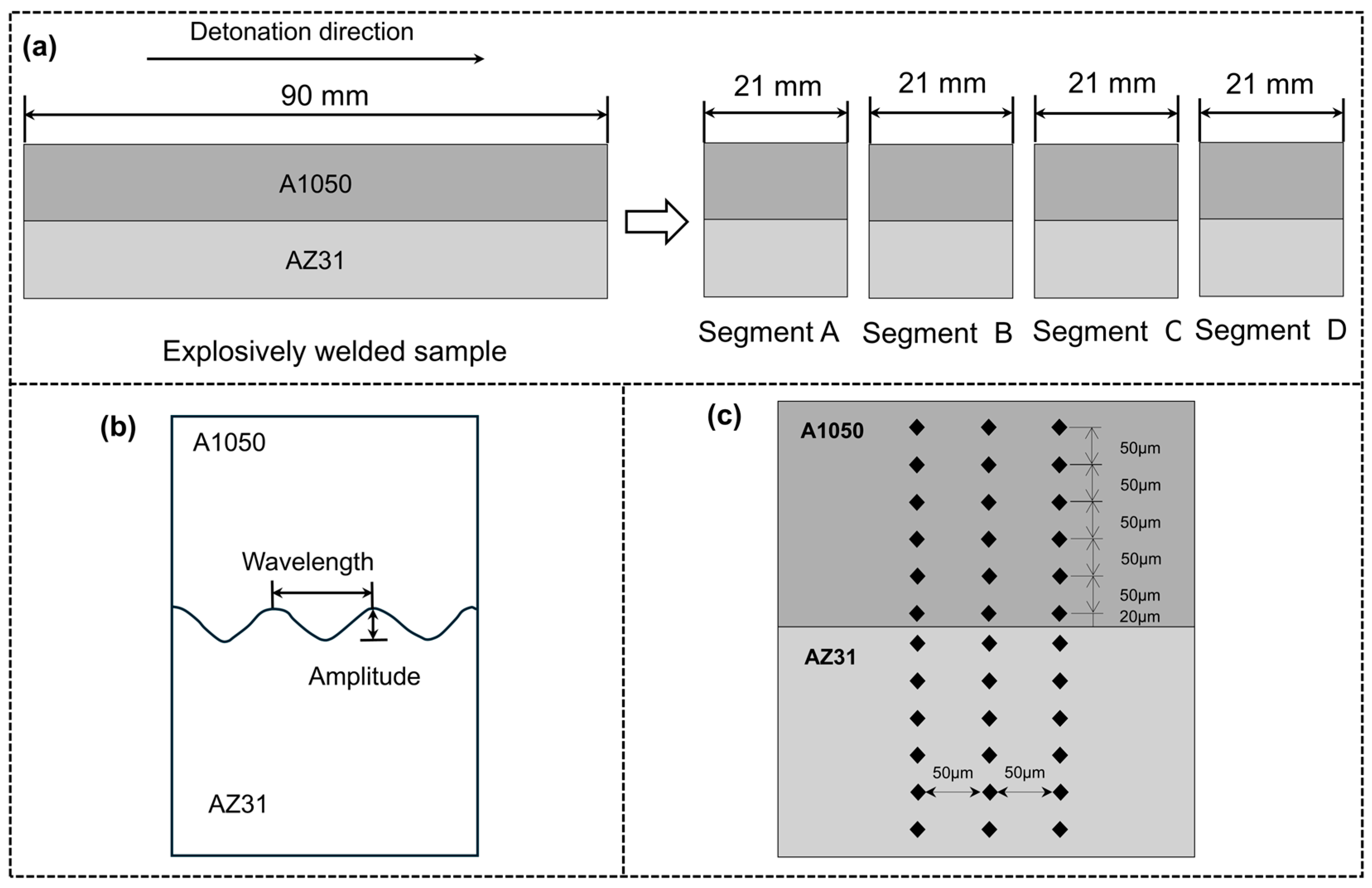
Upon detonation, the explosive energy accelerated the aluminum flyer plate toward the magnesium base plate, initiating a high-velocity collision that generated the explosively welded joint. After welding, peripheral sections were trimmed, and the welded samples were divided into four equal segments, labeled A, B, C, and D (see Figure 2a). Each segment was prepared for metallographic examination by polishing with different emery papers ranging from 100 to 1200, followed by fine polishing using diamond slurries on a grinder–polisher (MetaServ™ 250 Grinder-Polisher, Buehler, Lake Bluff, IL, USA) The microstructures of the polished samples were examined using an optical microscope (Measurescope UM-2, Nikon, Tokyo, Japan). The wavelength and amplitude were measured along the welding direction (Figure 2b). The analysis was performed on different segments, designated from A to D, and measurements were taken along each segment where wave formation was observed. Subsequently, the measured wavelength and amplitude data from all the segments were combined to analyze the overall interfacial wave pattern. For hardness evaluations, a microhardness tester (HM-200, Mitutoyo Corporation, Kawasaki, Japan) was employed using a 0.02 kgf load and a 15 s dwell time. Hardness profiles were recorded along lines perpendicular to the weld interface, covering both aluminum and magnesium regions (Figure 2c).

3. Results and Discussion

Successful welds of A1050 and AZ31 were achieved under all the attempted welding conditions. However, the resulting interfacial microstructures varied significantly with process parameters. The interfacial morphologies across the A1050/AZ31 explosively welded joints display distinct characteristics, ranging from straight to wavy, reflecting differences in collision conditions governed by the detonator position and anvil usage.
The position of the detonator influences the detonation wave propagation and, consequently, the flyer plate velocity. The relationship among the flyer plate velocity (Vp), collision point velocity (Vc), collision angle (β), and detonation velocity (Vd) is given by [15].
V p   = 2 V c sin β   2 = 2 V d sin β   2
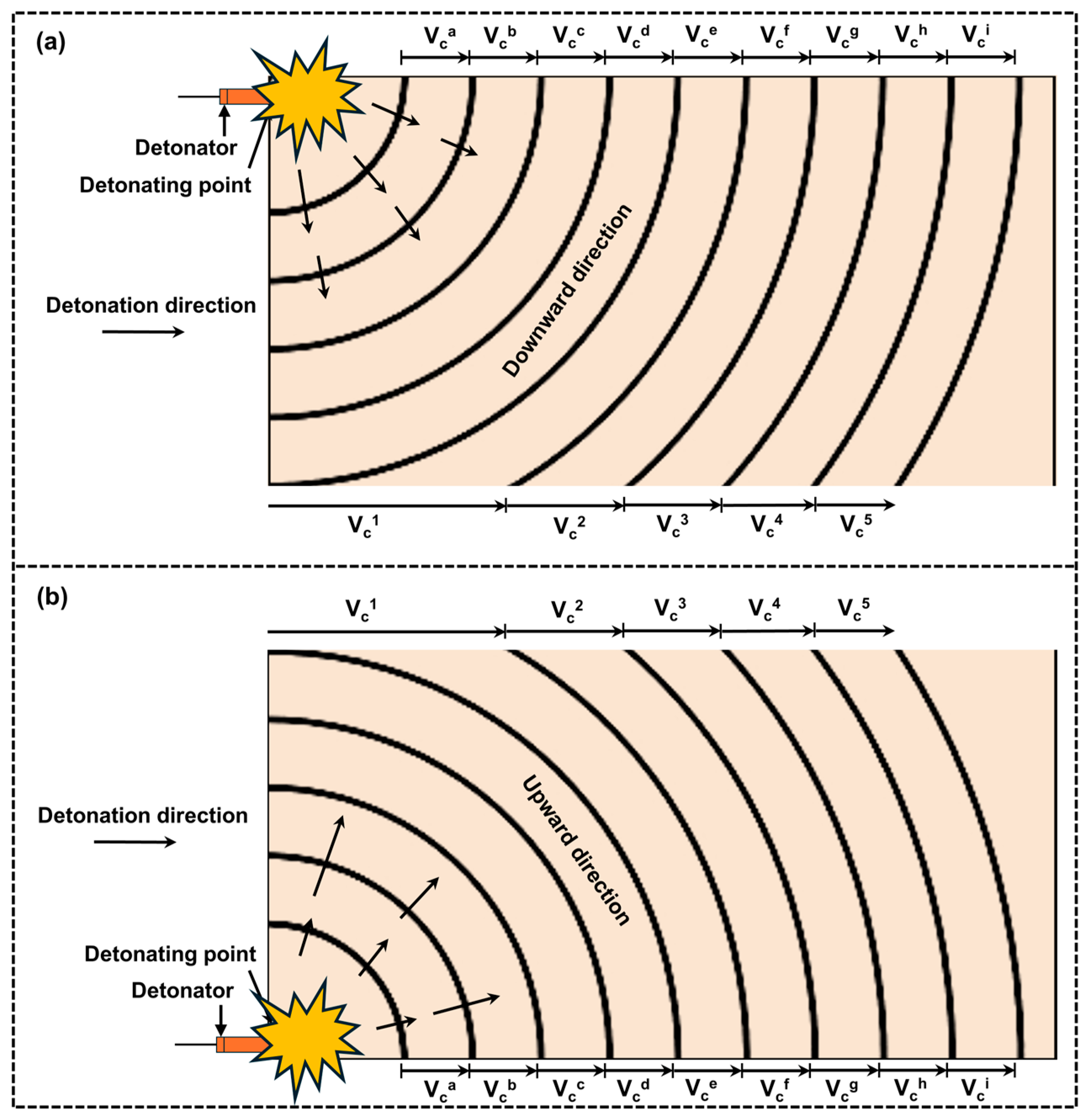
In a parallel welding configuration, the collision point velocity (Vc) is equal to the detonation velocity (Vd). When the detonator is placed at the top edge of the explosive layer (Figure 3a), the detonation waves propagate downward through the explosive thickness and longitudinally along the explosive length. The horizontal collision velocity near the detonator front propagates at the same velocity. However, the collision velocity interacting with the flyer plate varies along the interface, i.e., it is higher near the initiation point and gradually decreases as the wave travels forward. As a result, higher interfacial turbulence and localized melting are more likely to be near the initiation region.
In contrast, when the detonator is placed at the bottom edge of the explosive, which is closer to the flyer plate (Figure 3b), the detonation wave propagates upward through the explosive thickness while simultaneously advancing along its length. This configuration promotes a more stable and nearly constant collision angle along the interface, resulting in a comparatively uniform collision velocity along the welding direction. Consequently, noticeable changes in the weld structure and surface morphology were observed between the two configurations.
In general, top-edge initiation is widely adopted and is well suited for materials with good ductility [16], where the materials can handle localized high strains and are devoid of failure. However, when welding materials with lower ductility, such as AZ31 magnesium alloy plates, severe plastic deformation near the initiation region leads to surface and internal cracking, as observed in the present study. To overcome these challenges, bottom-edge detonation was employed, which is expected to facilitate a more gradual and uniform energy transfer to the flyer plate, thereby reducing peak stress concentrations and improving the weld integrity. In addition, the roles of the anvil in modifying the impact conditions and interfacial deformations were examined. The presence of the anvil alters the boundary constraints and energy dissipation during collisions, which further influence the interfacial morphology and hardness distribution. A detailed discussion of the effects of the anvil is presented in the subsequent sections.

3.1. The Influence of the Detonator Position on the Surface Morphology When Using the Steel Anvil

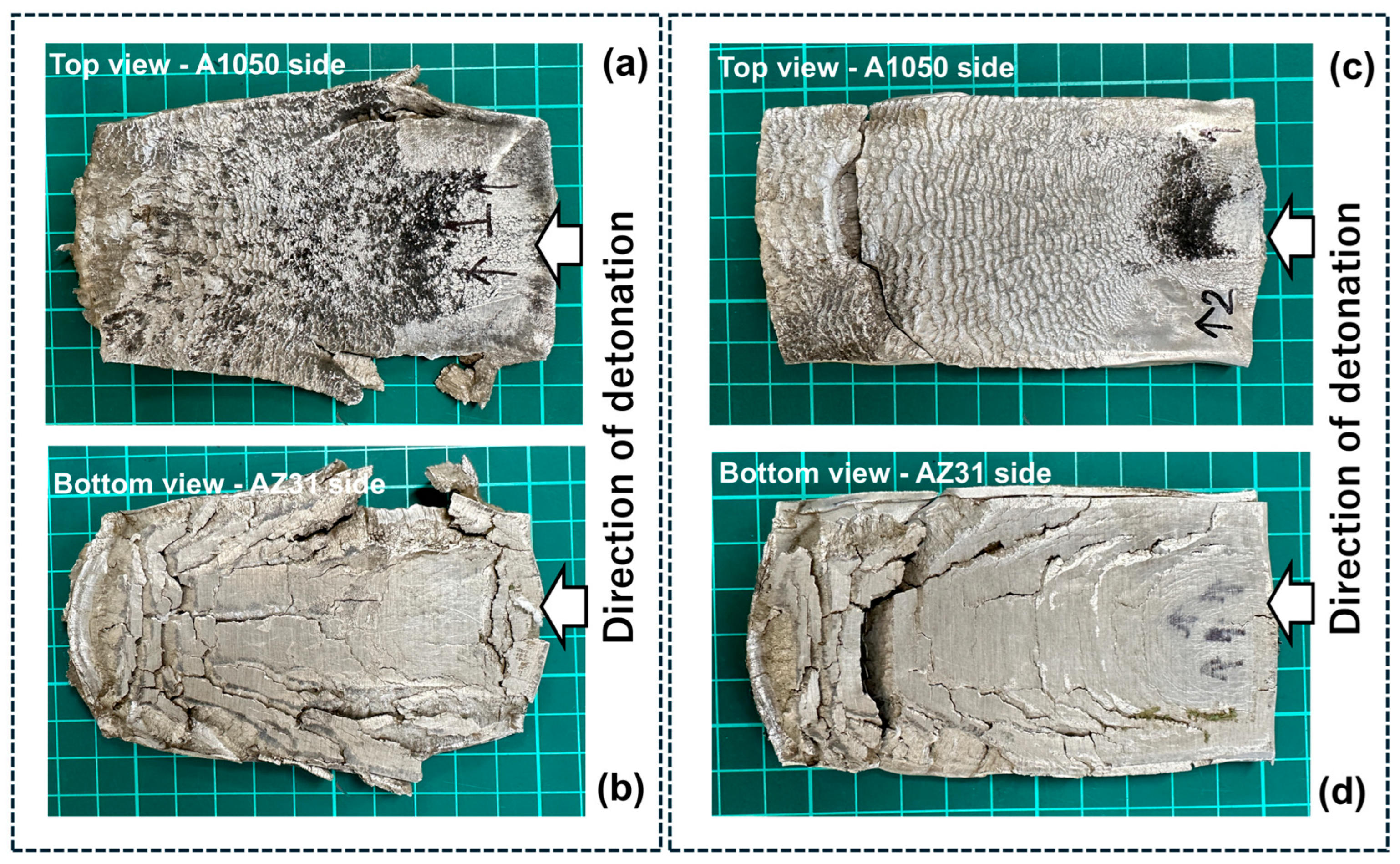
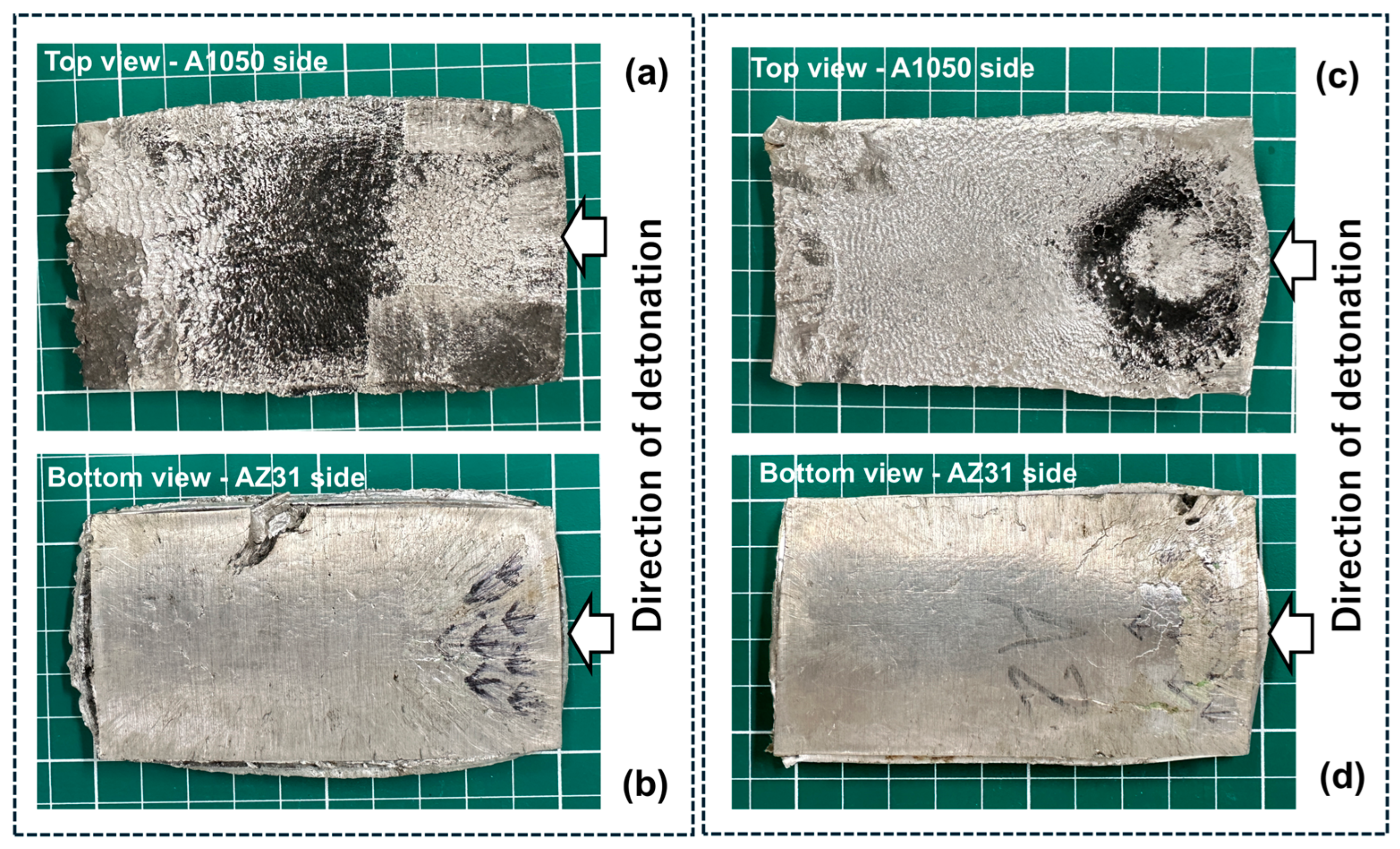
Figure 4a–d shows the actual photos of the samples subjected to top- and bottom-edge detonations using the steel anvil. It was observed that the detonator position (the top or bottom edges of the explosive pack) has a decisive influence. Weld joints subjected to top-edge detonation (Figure 4a,b) exhibited greater deformation than those where the detonator was positioned at the bottom edge (Figure 4c,d). Additionally, the AZ31 alloy experienced more damage than the A1050 alloy due to its weaker properties, consistent with the findings of Atifeh et al. [17].
When the detonator is positioned at the top edge of the explosive pack, the detonation front propagates downward, imparting a strong and immediate shockwave onto the flyer plate (A1050). Subsequently, flyer plate accelerates rapidly, causing excessive turbulence in the magnesium alloy, which is more sensitive to thermal and mechanical shocks, resulting in localized overheating and crack formation. Top-edge detonation leads to nonuniform bonding near the detonator due to the sudden high strain and insufficient time for the flyer plate to achieve a steady collision angle [18]. In contrast, bottom-end detonation allows the shockwave to propagate upward through the explosive layer, providing a more gradual energy transfer to the flyer plate.

3.2. The Effect of the Detonator Position on the Interfacial Microstructure (Steel Anvil)

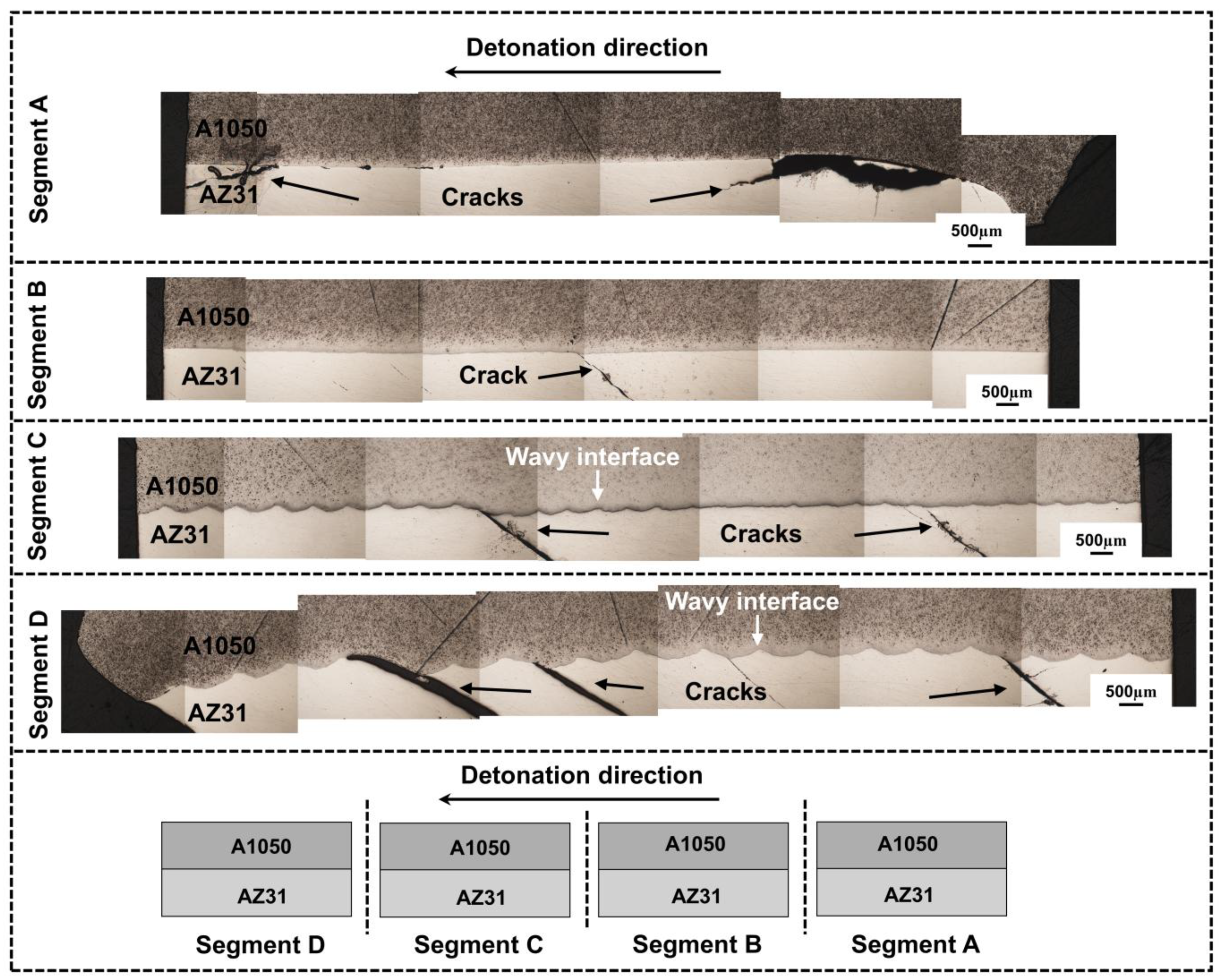
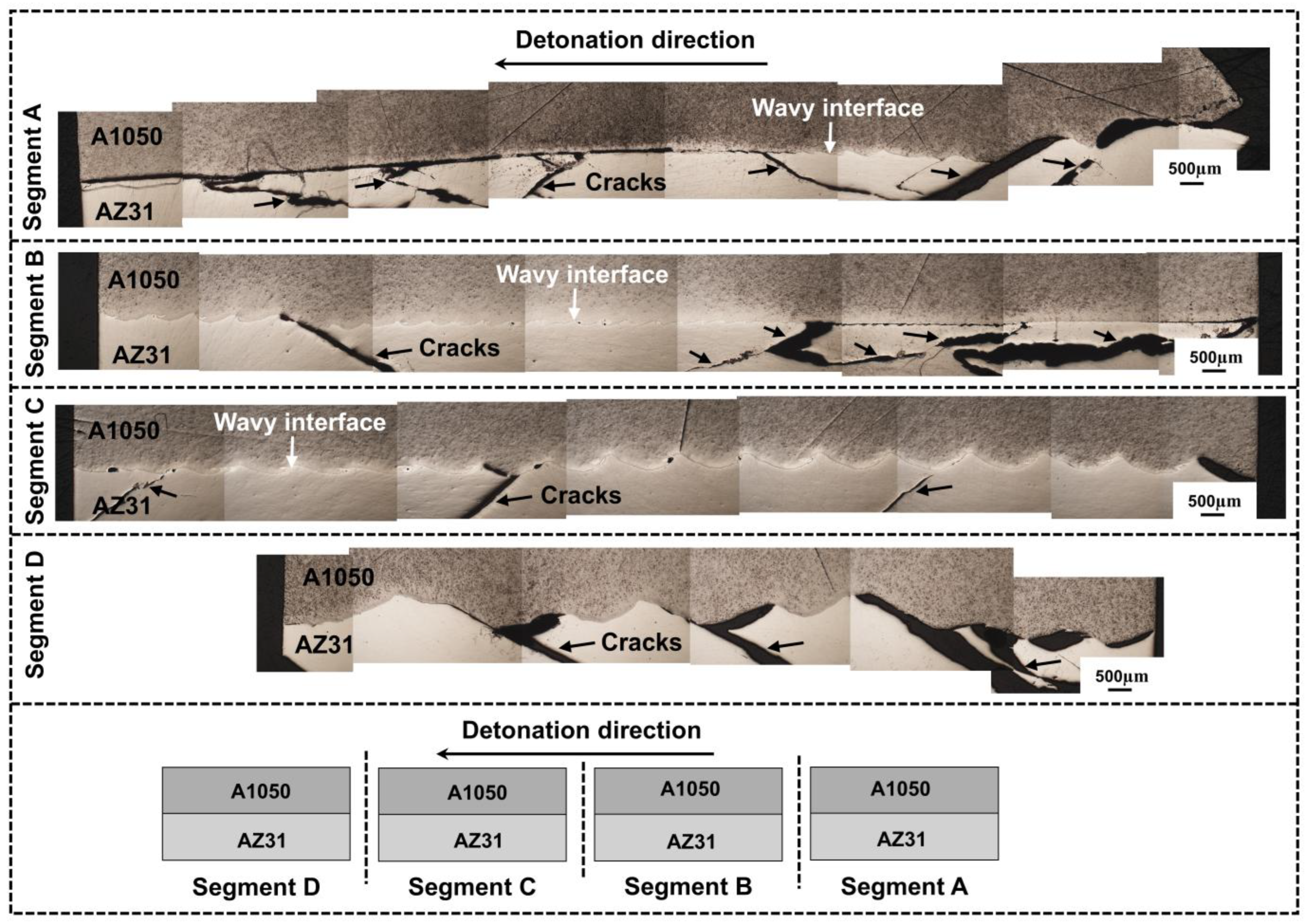
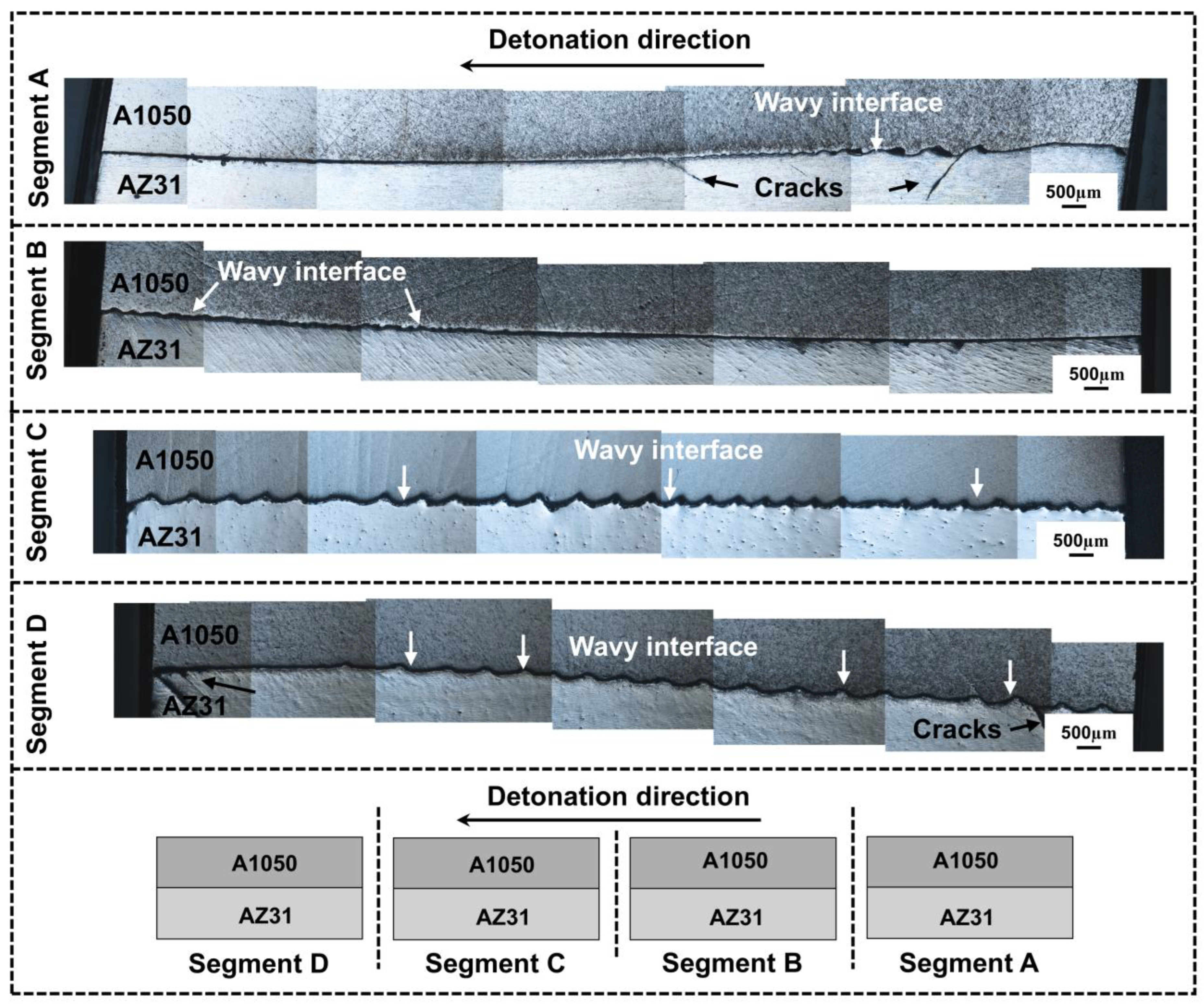
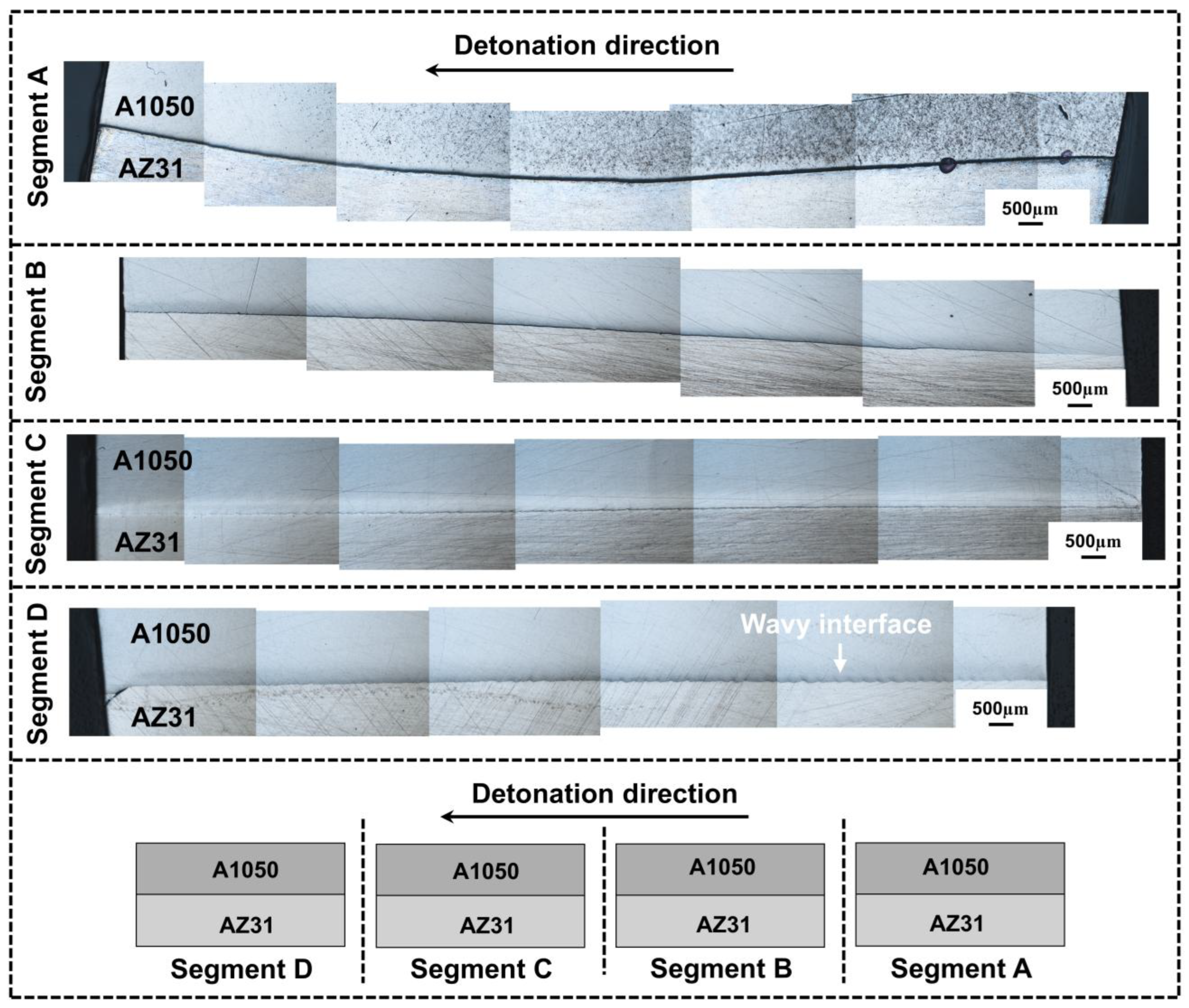
The interfacial microstructures of the A1050/AZ31 explosively welded joints subjected to top- and bottom-edge detonations are shown in Figure 5 and Figure 6, respectively. At both detonation positions, a reaction zone with weak or partial bonding was observed at the detonation initiation point (segment A). This region is characterized by the absence of pronounced interfacial waves and limited evidence of jetting-induced material flow, indicating that the initial kinetic energy and collision conditions were insufficient to promote jetting and oxide layer removal at the interface [19]. As a result, bonding in this zone is likely dominated by mechanical contact with localized metallurgical discontinuities rather than a fully developed metallurgical bond.
No continuous melting was observed in segment A at the magnifications examined, suggesting that the weak bonding emerges primarily from inadequate plastic deformation and interfacial cleaning rather than deleterious phase formation. In the top-edge-detonated weld (Figure 5), segments A and B show pronounced surface deformation and multiple cracks, reflecting severe localized strains and nonuniform collision conditions. In contrast, the weld formed by bottom-edge detonation (Figure 6) exhibits comparatively improved interfacial quality. In contrast, segment B (Figure 6) from the bottom-edge-detonated specimen reveals a crack-free, more uniform, and straight interface, whereas the corresponding segment in the top-edge configuration (Figure 5) still features distorted base metal and occasional waves. These differences are attributed to the more uniform collision velocity and reduced stress concentration associated with bottom-edge detonation.
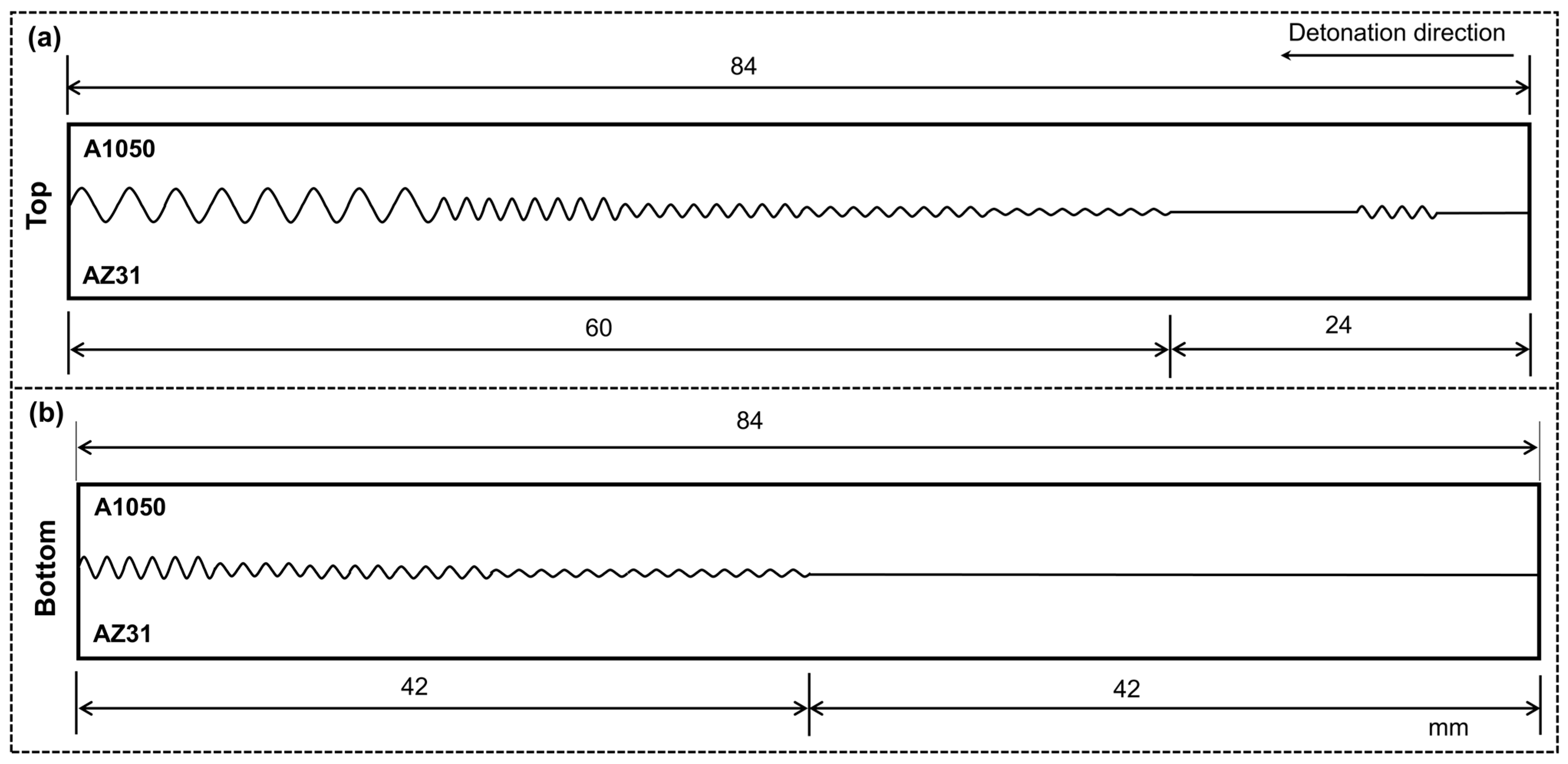
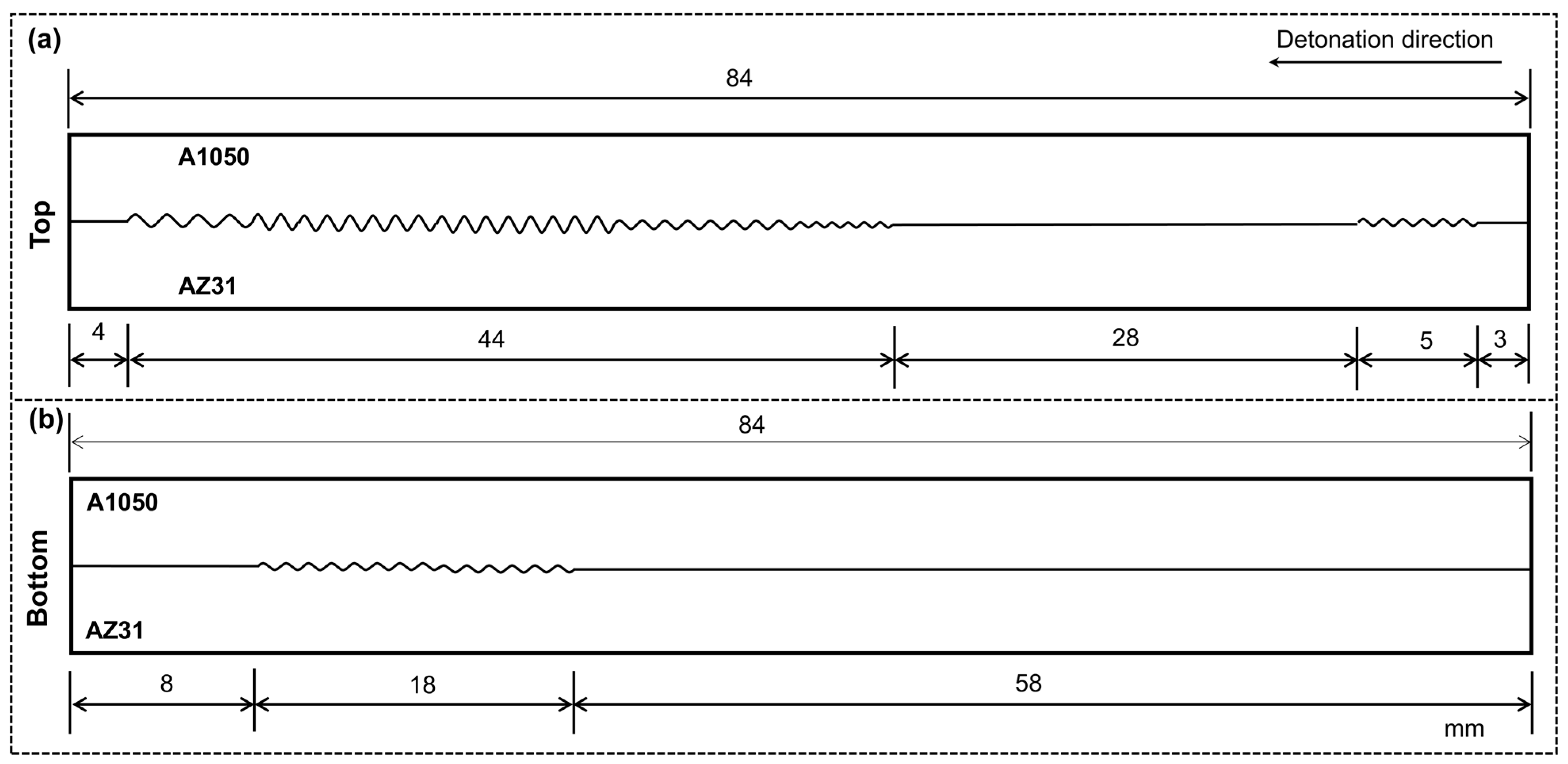
As the weld progresses into segments C and D, both configurations display the characteristic wavy interface associated with explosive welding. These waves arise from hydrodynamic instability and intense plastic flow at the interface, promoting mechanical interlocking and localized metallurgical bonding. Segment C in Figure 5 exhibits a periodic wave structure with clear evidence of interfacial flow and minimal void formation, indicating enhanced bond integrity. Similarly, segment D in Figure 6 demonstrates a comparable wavy morphology, confirming the establishment of stable welding conditions. The schematic in Figure 7 illustrates the transition from a near-planar interface in the initiation zone to a regular wavy structure along the weld length, with the bottom-edge detonation condition (Figure 7b) showing a more uniform and gradual evolution compared to that of the top-edge configuration (Figure 7a).
The variation in the wave morphology across different weld segments can be attributed to differences in detonation dynamics. When the detonator is positioned at the top edge of the explosive, the horizontal collision velocity between the detonation front and the flyer plate varies along the interface: It is higher near the initiation point and gradually decreases as the detonation wave propagates forward. The higher collision velocity near the initial point produces a lower initial collision angle, which progressively increases with increasing propagation, leading to a noticeable enhancement in wave formation (Figure 7a). In contrast, when the detonator is positioned at the bottom edge of the explosive, in proximity to the flyer plate, the horizontal collision velocity remains more uniform along the welding direction, resulting in a relatively consistent wave formation (Figure 7b).

3.3. Interfacial Amplitude and Wavelength with the Steel Anvil

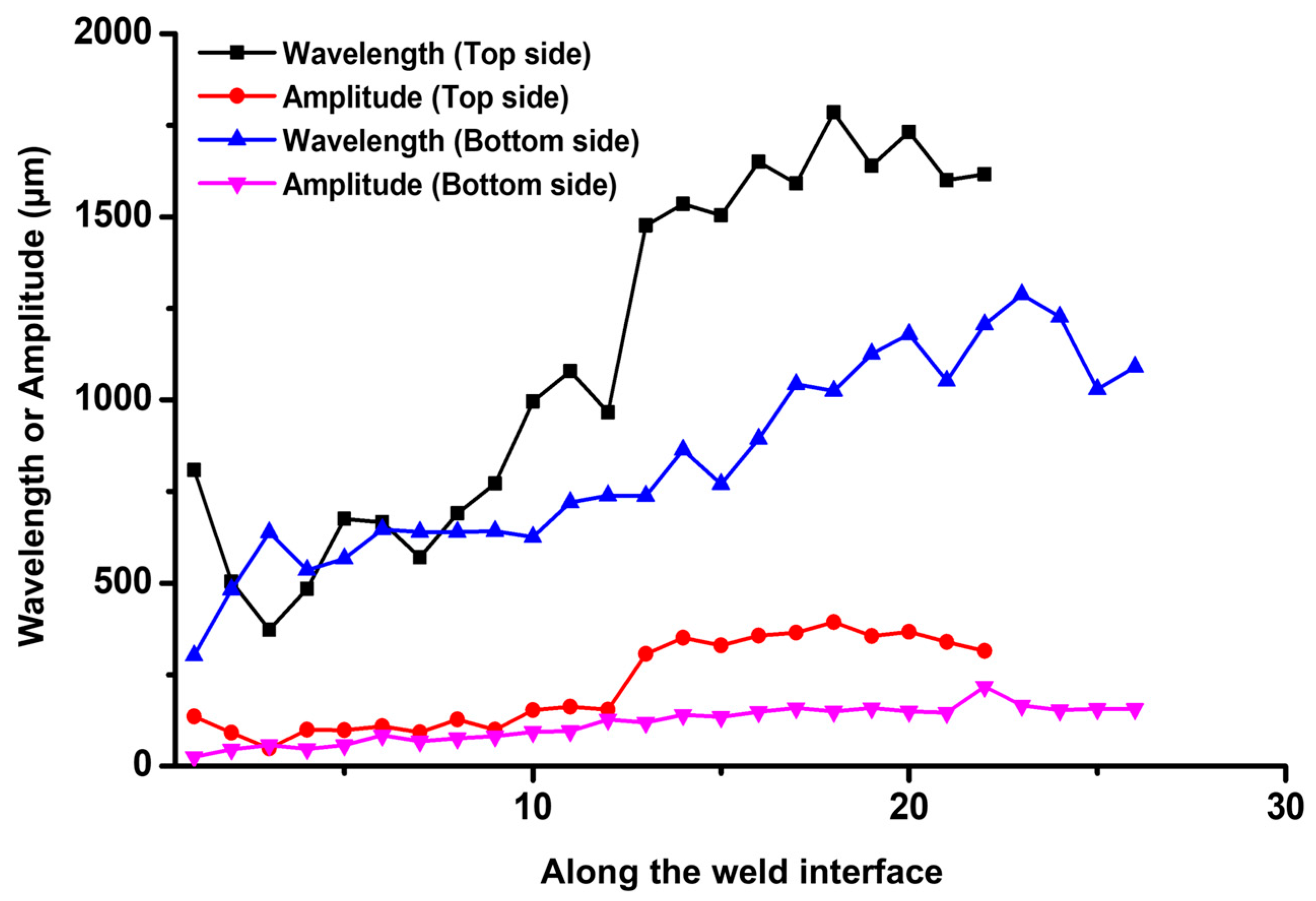
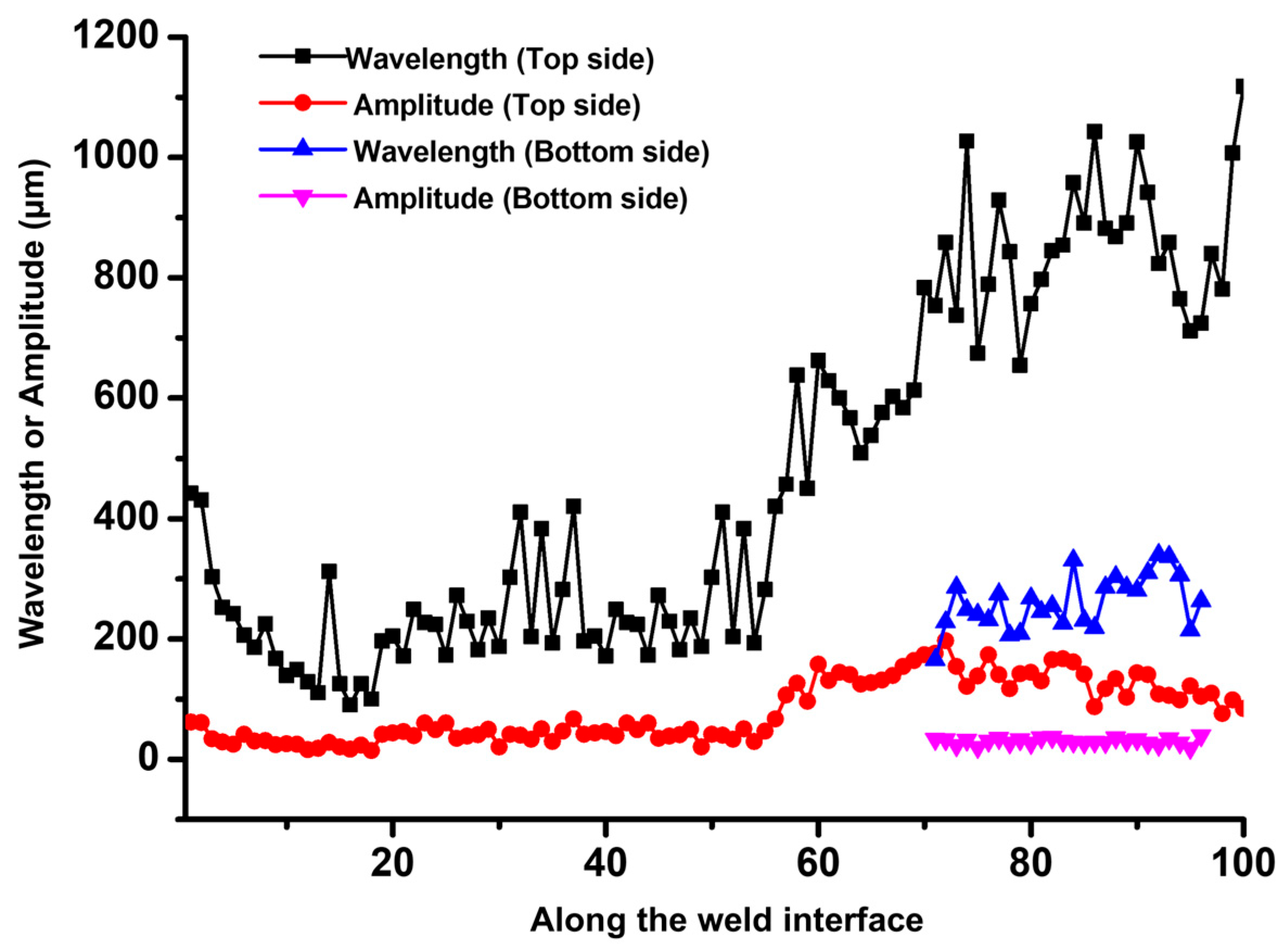
The effects of the detonator position on the interfacial wavelength (λ) and amplitude (A) of the resulting A1050/AZ31 explosively welded joints are shown in Figure 8. Along the welding direction, an increase in both the wavelength and amplitude was observed for both the top and bottom detonation cases. However, compared to the joints subjected to top detonation, joints subjected to bottom-side detonation exhibited more linear increase in wavelength and amplitude, demonstrating the stable progression of the weld front and consistent energy dissipation. In segment C, the wave amplitude increased progressively from 130 μm to 300 μm, and the wavelength increased from 750 μm to 1500 μm across the detonation direction, indicating a stable and well-developed wavy interface. Similar observations by Feng et al. [20] revealed that wave development could be attributed to effective shockwave reflection in rigid anvils.

3.4. The Influence of the Detonator Position on the Surface Morphology When Using the Sand Anvil

Figure 9a–d shows the actual photos of the samples subjected to top- and bottom-edge detonations using the sand anvil. It can be observed that a large variation was witnessed compared to the samples obtained using the steel anvil (as discussed in the previous section). Minimal signs of tears or cracks are visible. The differences between the samples (in Figure 4 and Figure 9) suggest a strong correlation between the anvil’s stiffness and interfacial wave development. Rigid steel anvils reflect the shockwave generated during detonation, reinforcing the dynamic pressure and velocity at the collision front. In contrast, the sand anvil absorbs a part of the shock energy, suppressing high-magnitude reflections that occur with the rigid steel anvil. This helps to control the flyer plate’s velocity, avoiding extreme impacts that can lead to localized melting, cracks, or jetting instabilities when welding lower-melting-point alloys, like aluminum and magnesium.
Similarly, the effect of the detonator position is evident. The specimens subjected to top-edge detonation (Figure 9a,b) exhibited surface roughness and jetting residues on the A1050 side. The bottom views of AZ31 show regions with good bonding, devoid of defects and localized cracks. In contrast, samples detonated from the bottom edge (Figure 9c,d) show more uniform surfaces with less visible damage or fewer jetting marks, indicating more stable welding. Additionally, in comparing the deformation of the flyer plate (A1050), greater deformation was observed in the case of top-edge detonation compared to bottom-edge detonation. A similar behavior was observed for top-edge detonation when the steel anvil was used. It is observed that the combined use of the sand anvil and bottom-edge detonation provides a better surface morphology, minimizing excessive deformation and defect formation in the A1050/AZ31 explosively welded joints.

3.5. The Effect of the Detonator Position on the Interfacial Microstructure (Sand Anvil)

Figure 10 and Figure 11 present the weld morphologies of A1050/AZ31 explosively welded joints subjected to top- and bottom-edge detonations using the sand anvil. Different interfacial morphologies were observed across segments A to D, depending on the detonation position. In Figure 10, segment A exhibits a bonded interface with some micro-cracks at the starting point with a few wave patterns. In segment B, as the flyer plate moves along the welding direction, a similar straight interface is observed at the initial stage. However, at the end of the segment, the formation of an initial small wavy interface was observed, with no defects, such as cracks. In segments C and D, taken from regions further along the detonation path, the interface becomes more regular and continuously wavy, indicating the stabilization of welding parameters due to the absorption of reflected shockwaves by the sand.
In comparison, the bottom-edge-detonated samples (Figure 11) demonstrate a smaller wavy interface in segment C, with minimal defects and uniform bonding, indicating a favorable energy distribution and impact angle at the collision front. The well-formed wavy interfaces indicates that the optimal collision angle and velocity have been achieved, as reported by Greenberg et al. [21]. In contrast, segments A and B showed a straight weld interface. Saravanan et al. [22] opined that straight interfaces also produce acceptable joints, and this is detailed in the next section. The variation in the nature of the interface across the weld during top- and bottom-edge detonations using the sand anvil is schematically presented in Figure 12. When comparing the weld interfaces formed with steel and sand anvils, it was observed that larger waves developed with the steel anvil than with the sand anvil. This can be attributed to the fact that steel has a higher density and acoustic impedance [23]. As a result, the steel anvil reflects much of the compressive energy back into the base plate, leading to higher interfacial pressure and the formation of larger waves than those in the case of the sand anvil.

3.6. Interfacial Amplitude and Wavelength with the Sand Anvil

In the top-edge-detonated samples, the initial regions show long, irregular, or no waveforms due to high initial pressures. As the mid-region of the weld approaches, wavy interfaces begin to form. As the weld reaches the tail region, the wave size reduces. In contrast, the bottom-edge-detonated samples show a straight interface with an occasional waviness owing to the absorption of the energy by the sand. The interfacial amplitude and wavelength data (Figure 13) provide further insight into the effects of the sand anvil. The interfacial amplitude is lower, irrespective of whether top or bottom detonation is used, due to the damping nature of the granular medium, which absorbs a significant portion of the shock energy. The wavelengths of the interfacial waves (Figure 10) are shorter in the initial regions of the weld (segments A and B) and lengthen with increasing distance from the detonator position (segments C and D). Wave initiation occurs earlier and grows more consistently under the steel anvil condition (as detailed in the previous section), whereas under the sand anvil condition, wave formation is delayed and more irregular. Therefore, it is suggested to use the sand anvils, as they offer superior joint characteristics, evident in reduced cracking, more regular wave formation, and uniform bonding, making them preferable for welding Al and Mg alloys.

3.7. Mechanical Study

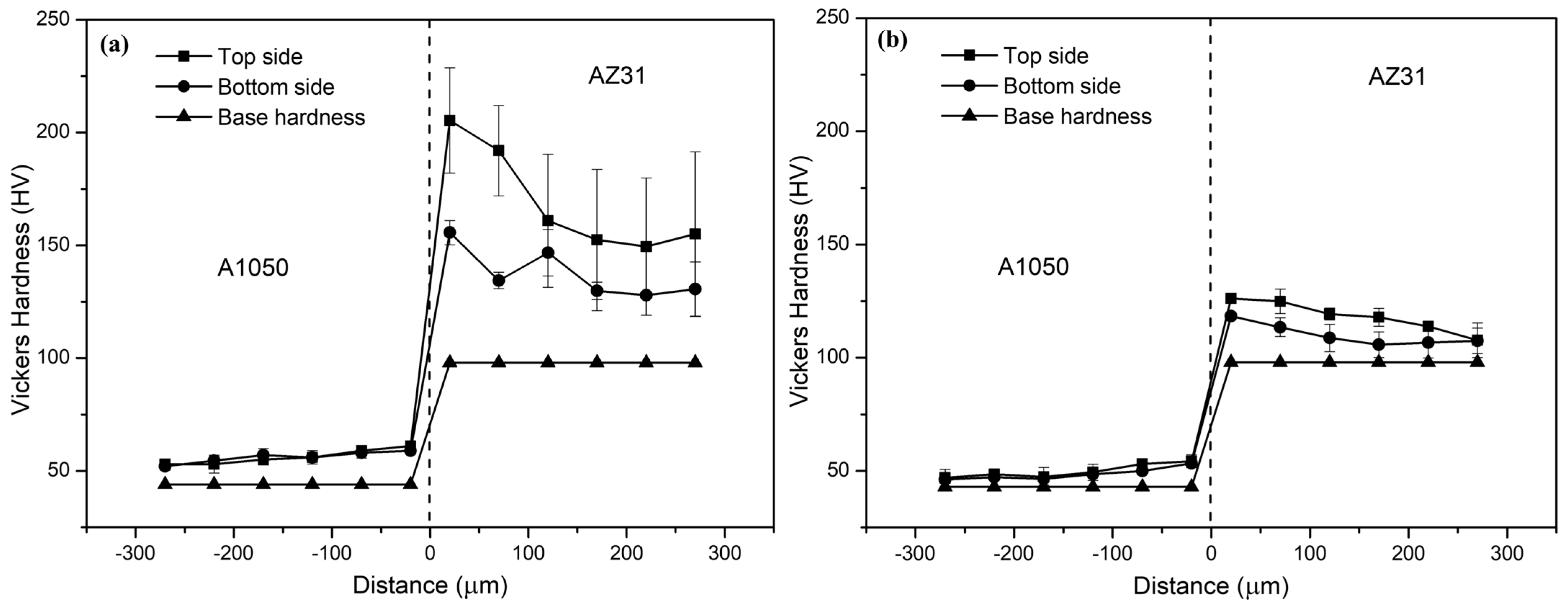
Figure 14 presents the microhardness distributions across A1050–AZ31 explosively welded interfaces subjected to top- and bottom-edge detonations with steel and sand anvils. Significant variations were observed based on the welding conditions. After explosive welding, increase in hardness was observed on both sides of the interface. However, when comparing the two sides, a higher increase was witnessed on the AZ31 side than on the A1050 side. Similar behavior was also reported by Ghaderi et al. [6], who observed a higher increase in hardness on the AZ31 side compared to that on the Al side. They suggested that the high pressure and strain rate in the impact area cause localized deformation and adiabatic shear band formation in the magnesium alloy near the weld interface, leading to ultrafine grain refinement and increased hardness. Regarding the anvil material, the use of the steel anvil resulted in higher hardness compared to the use of the sand anvil. This significant rise in hardness is attributed to work hardening induced by severe plastic deformation during the explosive impact and the shockwaves reflecting from the steel anvil [24].
On the AZ31 side, in the top-detonated samples with the steel anvil, the hardness increased from a base value of 98 HV to a peak of 205 HV at 20 µm and then gradually returned to approximately 150 HV beyond 220 µm. When the steel anvil was changed to the sand anvil, the peak hardness was reduced to 126 HV. A similar trend was observed in the bottom-edge-detonated sample, with the peak values reaching 155 HV and 118 HV for the steel and sand anvils, respectively, at 20 µm. This indicates increase in hardness of 62.7% for top-edge and 31.4% for bottom-edge detonations when the steel anvil was employed. The hardness enhancement near the weld interface reflects localized work hardening and grain refinement induced by the high strain rate during explosive welding [25]. The gradual return to base hardness values beyond ~220 µm indicates that the deformation and thermal effects are confined to the immediate vicinity of the interface. In contrast, the lower-energy conditions associated with the sand anvil suppress excessive interfacial plastic deformation, thereby promoting good metallurgical bonding across the interface.
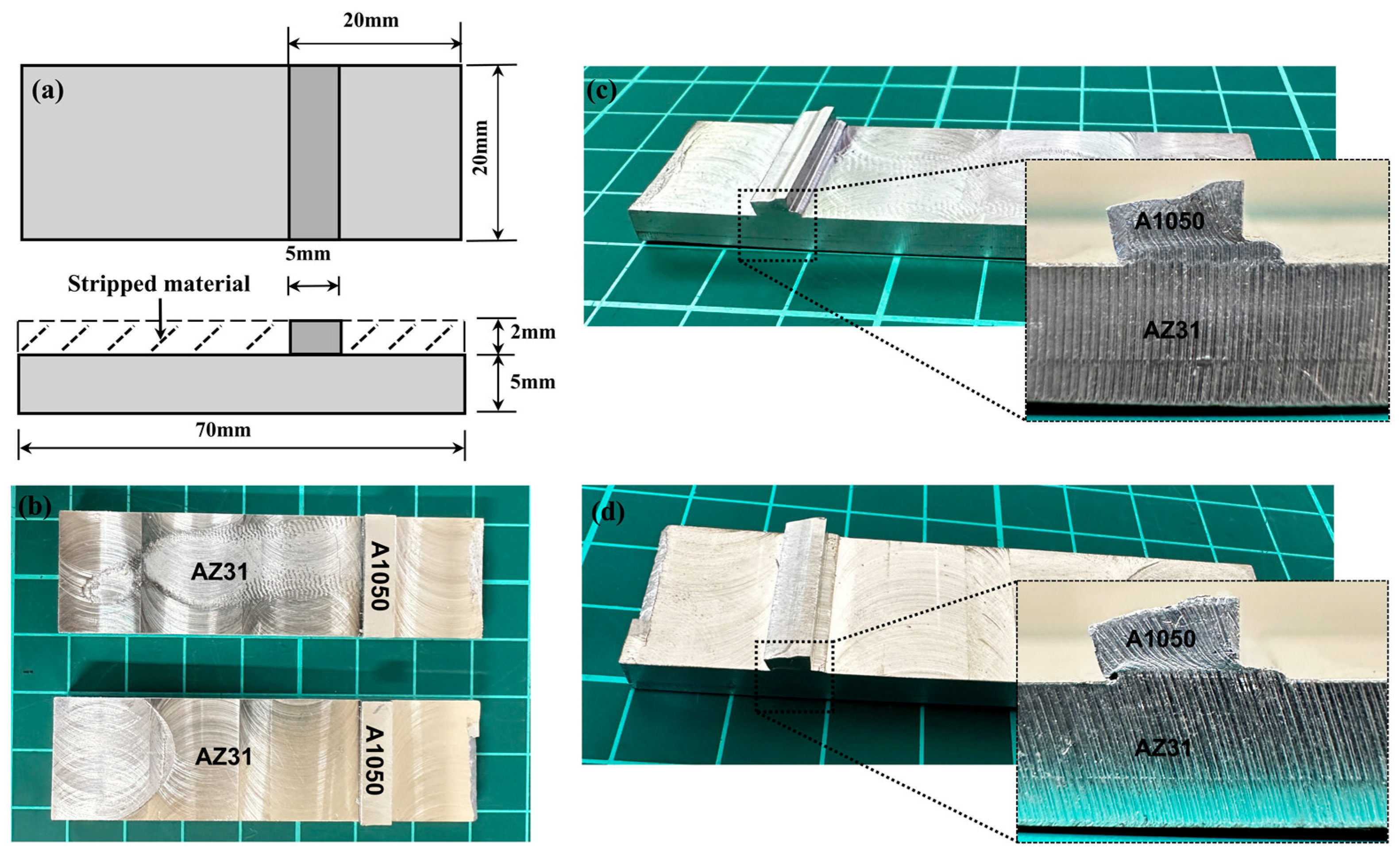
Shear strength is well known for evaluating the quality of the bond strength in welded samples. Due to severe cracking in the steel anvil welds, specimens suitable for shear testing could not be extracted; therefore, shear tests were limited to welds produced using the sand anvil. The shear tests were performed as shown in Figure 15. Figure 15a shows the schematic representation of the shear specimen with its dimensions, while Figure 15b presents the actual samples. The shear tests were carried out for samples welded using the sand anvil. The tests were conducted at a crosshead speed of 1 mm/min. The obtained shear strengths were in the range of 70–74 MPa, with slightly higher values observed in the top-edge-detonated composite compared to the bottom-edge-detonated one. This can be attributed to the wavy interface formed in the top-edge-detonated sample. Similar results have also been reported by Ghaderi et al. [6], who observed that specimens with wavy interfaces exhibited slightly higher shear strengths due to the increased interfacial contact area. The post-test samples are shown in Figure 15c,d. It can be clearly observed that failure occurred on the A1050 side and not at the weld interface. This indicates that when force was applied during the shear test, the interface was able to withstand the load, confirming a sound weld [26].

4. Conclusions

The explosive welding of pure aluminum (A1050) and magnesium (AZ31) alloy was successfully achieved under all the attempted conditions, including variations in the detonator position and anvil type. The results clearly demonstrated that both parameters play critical roles in controlling the detonation wave propagation, collision velocity, and energy dissipation, which, in turn, govern the surface quality, interfacial morphology, and defect formation, particularly when joining materials with limited ductility, such as AZ31. Top-edge detonation resulted in higher localized deformation and more cracking, predominantly on the AZ31 side, due to nonuniform collision conditions and stronger impacts near the detonation zone. These effects were more pronounced when a rigid steel anvil was employed, owing to strong shockwave reflection and increased interfacial pressure. Although the use of the sand anvil in top-edge detonation reduced the magnitude of the defects by absorbing the reflected shock energy, surface roughness and jetting residues still prevailed. In contrast, bottom-edge detonation produced more stable welding conditions. When combined with the sand anvil, this configuration yielded the most favorable results, such as a uniform surface morphology, reduced flyer plate deformation, minimal cracking, and well-developed interfacial waves. The sand anvil effectively attenuated shock reflections, while bottom-edge initiation promoted a more uniform collision velocity and impact angle along the weld length. As a result, superior surface integrity and consistent interfacial bonding were achieved using this configuration compared to those achieved using all the other configurations studied. Hardness measurements revealed significant work hardening on both sides of the weld, with a greater increase on the AZ31 side. When the steel anvil was employed, the hardness increased by 62.7% for top-edge and by 31.4% for bottom-edge detonations compared with the hardness values when the sand anvil was employed. While the steel anvil produced higher peak hardness values due to stronger confinement, they were accompanied by increased defect formation. Therefore, in considering both interfacial integrity and surface quality, bottom-edge detonation using the sand anvil is recommended as the most suitable configuration for welding A1050/AZ31 joints.

Constraints, Limitations, and Future Work

The present study is limited to a specific explosive, flyer plate thickness combination, and standoff distance, and the conclusions are drawn based on microstructural, surface, and hardness evaluations. Future studies on developing a weldability window, numerical modeling, and extensive mechanical and corrosion behavior evaluations can be explored in order to establish the reliability of the explosively welded joints.

Author Contributions

Conceptualization, B.B.S. and K.H.; methodology, B.B.S., S.T. and K.H.; validation, B.B.S., S.H. and S.S.; formal analysis, B.B.S., S.H. and S.S.; investigation, B.B.S., S.H. and S.S.; resources, S.T. and K.H.; data curation, B.B.S. and S.H.; writing—original draft preparation, B.B.S. and S.S.; writing—review and editing, S.T. and K.H.; visualization, B.B.S., S.H. and S.S.; supervision, S.T. and K.H.; project administration, S.T. and K.H.; funding acquisition, S.T. and K.H. All authors have read and agreed to the published version of the manuscript.

Funding

This research did not receive any specific grant from funding agencies in the public, commercial, or not-for-profit sectors.

Data Availability Statement

The original contributions presented in this study are included in the article. Further inquiries can be directed to the corresponding authors.

Conflicts of Interest

The authors have no competing interests or conflicts of interest to declare that are relevant to the contents of this article.

References

  1. Liu, Y.; Yu, D.; Zhang, Y.; Zhou, J.; Sun, D.; Li, H. Research advances on weldability of Mg alloy and other metals worldwide in recent 20 years. J. Mater. Res. Technol. 2023, 25, 3458–3481. [Google Scholar] [CrossRef]
  2. Chen, H.; Zhu, Z.; Zhu, Y.; Sun, L.; Guo, Y. Solid-State Welding of Aluminum to Magnesium Alloys: A Review. Metals 2023, 13, 1410. [Google Scholar] [CrossRef]
  3. Zhu, C.; Xu, S.; Gao, W.; Meng, Y.; Lin, S.; Dai, L. Microstructure characteristics and mechanical properties of Al/Mg joints manufactured by magnetic pulse welding. J. Magnes. Alloys 2023, 11, 2366–2375. [Google Scholar] [CrossRef]
  4. Varmazyar, J.; Khodaei, M. Diffusion bonding of aluminum-magnesium using cold rolled copper interlayer. J. Alloys Compd. 2019, 773, 838–843. [Google Scholar] [CrossRef]
  5. Kumar, S.; Wu, C. Eliminating intermetallic compounds via Ni interlayer during friction stir welding of dissimilar Mg/Al alloys. J. Mater. Res. Technol. 2021, 15, 4353–4369. [Google Scholar] [CrossRef]
  6. Ghaderi, S.H.; Mori, A.; Hokamoto, K. Analysis of Explosively Welded Aluminum–AZ31 Magnesium Alloy Joints. Mater. Trans. 2008, 49, 1142–1147. [Google Scholar] [CrossRef]
  7. Chen, X.; Inao, D.; Tanaka, S.; Mori, A.; Li, X.; Hokamoto, K. Explosive welding of Al alloys and high strength duplex stainless steel by controlling energetic conditions. J. Manuf. Process 2020, 58, 1318–1333. [Google Scholar] [CrossRef]
  8. Sherpa, B.B.; Yu, M.; Inao, D.; Tanaka, S.; Hokamoto, K. Explosive Welding of Aluminum and Cast Iron for Potential Transportation and Structural Applications. Adv. Eng. Mater. 2024, 26, 2301389. [Google Scholar] [CrossRef]
  9. Su, Z.; Masaki, M.; Nishida, M.; Kawase, M.; Hokamoto, K.; Inao, D. Characteristics of ejecta resulting from hypervelocity impact on Al/Mg explosive welding clad materials. Int. J. Impact Eng. 2024, 186, 104869. [Google Scholar] [CrossRef]
  10. Kumar, P.; Ghosh, S.K.; Saravanan, S.; Barma, J.D.; Meitei, R.K.B. Effects of reinforcements in Al 5052 and AZ31B explosively weld composites. Arch. Civ. Mech. Eng. 2024, 24, 133. [Google Scholar] [CrossRef]
  11. Zeng, X.-y.; Wang, Y.-x.; Li, X.-q.; Li, X.-j.; Zhao, T.-j. Effect of inert gas-shielding on the interface and mechanical properties of Mg/Al explosive welding composite plate. J. Manuf. Process 2019, 45, 166–175. [Google Scholar] [CrossRef]
  12. Mojżeszko, M.; Miszczyk, M.; Paul, H.; Setty, M.; Madej, Ł. Direct consideration of the explosive material role in the explosive welding simulations with qualitative and quantitative validation. Int. J. Mater. Form. 2025, 18, 14. [Google Scholar] [CrossRef]
  13. Saravanan, S.; Raghukandan, K. Effect of silicon carbide and wire-mesh reinforcements in dissimilar grade aluminium explosive clad composites. Defence Technol. 2020, 16, 1160–1166. [Google Scholar] [CrossRef]
  14. Acarer, M.; Gülenç, B.; Findik, F. Investigation of explosive welding parameters and their effects on microhardness and shear strength. Mater. Des. 2003, 24, 659–664. [Google Scholar] [CrossRef]
  15. Wang, Y.; Beom, H.; Sun, M.; Lin, S. Numerical simulation of explosive welding using the material point method. Int. J. Impact Eng. 2011, 38, 51–60. [Google Scholar] [CrossRef]
  16. Wang, Q.; Li, X.; Shi, B.; Wu, Y. Experimental and Numerical Studies on Preparation of Thin AZ31B/AA5052 Composite Plates Using Improved Explosive Welding Technique. Metals 2020, 10, 1023. [Google Scholar] [CrossRef]
  17. Atifeh, S.M.; Rouzbeh, A.; Hashemi, R.; Sedighi, M. Effect of annealing on formability and mechanical properties of AA1050/Mg-AZ31B bilayer sheets fabricated by explosive welding method. Int. J. Adv. Manuf. Technol. 2022, 118, 775–784. [Google Scholar] [CrossRef]
  18. Sherpa, B.B.; Saravanan, S. Review of the weldability window in explosive welding processes. J. Alloys Metall. Syst. 2025, 9, 100150. [Google Scholar] [CrossRef]
  19. Chauhan, S.; Rani, N.; Singh, D.; Bisht, N. Microstructural Control and Heat Treatment Effects in Explosion Welding. In Advanced Welding Technologies; Wiley: Hoboken, NJ, USA, 2025; pp. 155–176. [Google Scholar]
  20. Feng, J.R.; Chen, P.W.; Dai, K.D.; An, E.F.; Yuan, Y. Numerical Study on the Influence of Different Anvils on Explosive Welding. Mater. Sci. Forum 2014, 767, 114–119. [Google Scholar] [CrossRef]
  21. Greenberg, B.; Ivanov, M.; Kuzmin, S.; Lysak, V. Explosive Welding: Processes and Structures; CRC Press: Boca Raton, FL, USA, 2019. [Google Scholar]
  22. Saravanan, S.; Gajalakshmi, K. Soft computing approaches for comparative prediction of ram tensile and shear strength in aluminium–stainless steel explosive cladding. Arch. Civ. Mech. Eng. 2022, 22, 42. [Google Scholar] [CrossRef]
  23. Beamish, S.; Reddyhoff, T.; Hunter, A.; Dwyer-Joyce, R. A method to determine acoustic properties of solids and its application to measuring oil film thickness in bearing shells of unknown composition. Measurement 2022, 195, 111176. [Google Scholar] [CrossRef]
  24. Sherpa, B.B.; Kumar, P.D.; Upadhyay, A.; Kumar, S.; Agarwal, A.; Tyagi, S. Effect of explosive welding parameters on Al/LCS interface cladded by low velocity of detonation explosive welding (LVEW) process. Int. J. Adv. Manuf. Technol. 2021, 113, 3303–3317. [Google Scholar] [CrossRef]
  25. Sherpa, B.B.; Kuroda, M.; Ikeda, T.; Kawamura, K.; Inao, D.; Tanaka, S.; Hokamoto, K. Investigation of interfacial microstructure and mechanical characteristics of Ti/SS316 clads fabricated by explosive welding process. Int. J. Adv. Manuf. Technol. 2023, 128, 1403–1418. [Google Scholar] [CrossRef]
  26. Lu, Y.; Li, H.; Liang, X.; Chen, Z.; Zeng, Z.; Zhao, M.-C.; Atrens, A. Insight on Interfacial Microstructure and Corrosion Characteristics of Mg/Al Explosive Welded Composite Plates. Adv. Eng. Mater. 2024, 26, 2400754. [Google Scholar] [CrossRef]
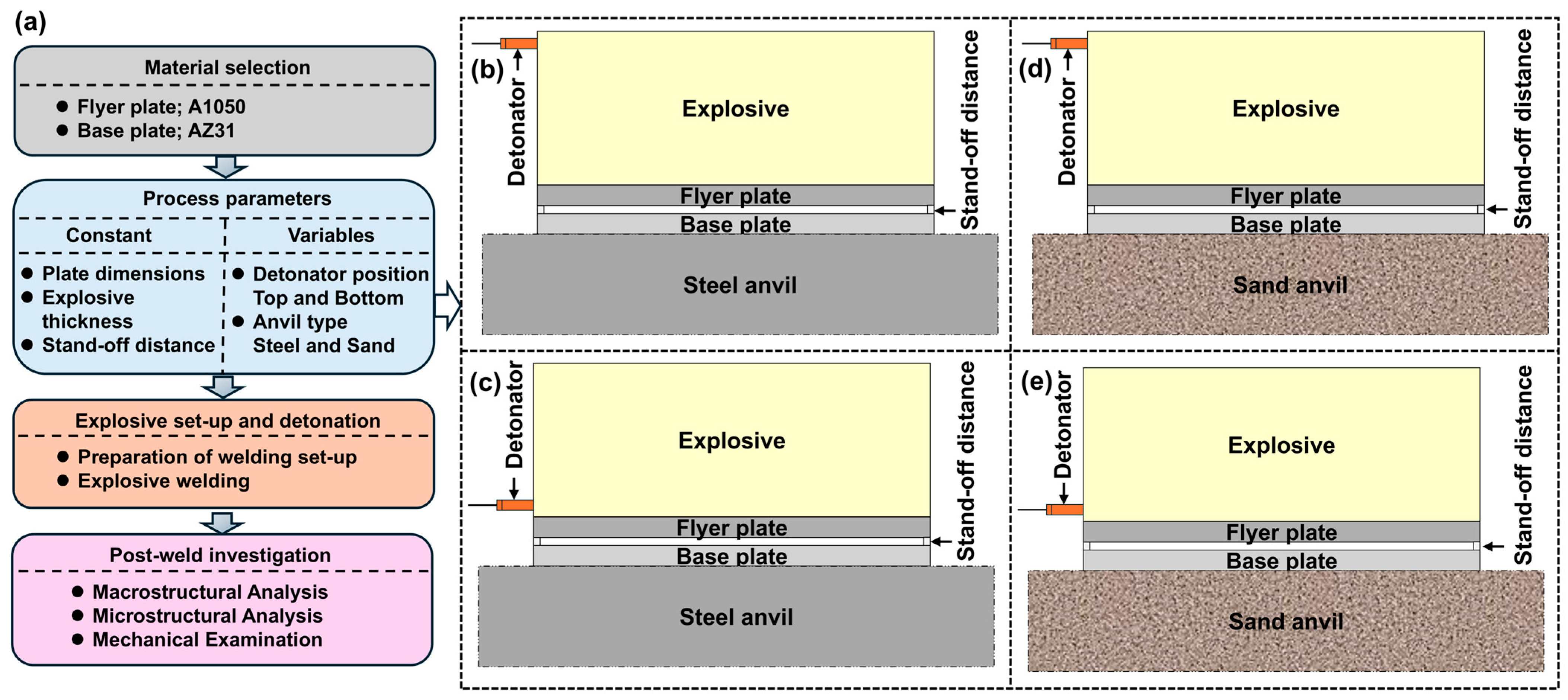
Figure 1. (a) The methodological framework. (be) Schematic representations of the explosive welding setup, showing detonator positions and anvil types: (b) the top detonator with the steel anvil; (c) the bottom detonator with the steel anvil; (d) the top detonator with the sand anvil; (e) the bottom detonator with the sand anvil.
Metals 16 00128 g001
Figure 2. Specimen diagrams: (a) microstructural analysis; (b) wavelength and amplitude; (c) Vickers hardness test locations.
Metals 16 00128 g002
Figure 3. Shockwave behaviors at different detonation positions: (a) top detonation; (b) bottom detonation.
Metals 16 00128 g003
Figure 4. Explosively welded A1050/AZ31 samples with the steel anvil: (a) the A1050 side after top-edge detonation; (b) the AZ31 side after top-edge detonation; (c) the A1050 side after bottom-edge detonation; (d) the AZ31 side after bottom-edge detonation.
Metals 16 00128 g004
Figure 5. Microstructure of the A1050/AZ31 explosively welded interface subjected to top-edge detonation.
Metals 16 00128 g005
Figure 6. The microstructure of A1050/AZ31 subjected to bottom-edge detonation.
Metals 16 00128 g006
Figure 7. The schematic diagram of the explosively welded A1050/AZ31 composite in the detonation direction with the steel anvil: (a) top-edge detonation; (b) bottom-edge detonation.
Metals 16 00128 g007
Figure 8. Variation in the amplitude and wavelength across the clad with the steel anvil.
Metals 16 00128 g008
Figure 9. Explosively welded A1050/AZ31 samples with the sand anvil: (a) the A1050 side after top-edge detonation; (b) the AZ31 side after top-edge detonation; (c) the A1050 side after bottom-edge detonation; (d) the AZ31 side after bottom-edge detonation.
Metals 16 00128 g009
Figure 10. The microstructure of the A1050/AZ31 weld produced with top-edge detonation and the sand anvil.
Metals 16 00128 g010
Figure 11. The microstructure of the A1050/AZ31 weld produced with bottom-edge detonation and the sand anvil.
Metals 16 00128 g011
Figure 12. Schematic diagram of the explosively welded A1050/AZ31 composite in the detonation direction with the sand anvil: (a) top-edge detonation; (b) bottom-edge detonation.
Metals 16 00128 g012
Figure 13. Amplitudes and wavelengths across the dissimilar weld detonated with the sand anvil.
Metals 16 00128 g013
Figure 14. Vickers hardness variations (a) with the steel anvil and (b) with the sand anvil.
Metals 16 00128 g014
Figure 15. Shear test: (a) the dimensions of the samples; (b) actual samples before the test; (c) the top sample after the test; (d) the bottom sample after the test.
Metals 16 00128 g015
Table 1. Experimental parameters used in this study.
ExperimentFlyer Plate/Dimensions (mm)Base Plate/Dimensions
(mm)
Standoff Distance (mm)ExplosiveExplosive Thickness
(mm)
Type of AnvilDetonator Direction
1A1050
90 × 50 × 5
AZ31
90 × 50 × 5
5ANFO-A47SteelTop
2A1050
90 × 50 × 5
AZ31
90 × 50 × 5
5ANFO-A47SteelBottom
3A1050
90 × 50 × 5
AZ31
90 × 50 × 5
5ANFO-A47SandTop
4A1050
90 × 50 × 5
AZ31
90 × 50 × 5
5ANFO-A47SandBottom
Disclaimer/Publisher’s Note: The statements, opinions and data contained in all publications are solely those of the individual author(s) and contributor(s) and not of MDPI and/or the editor(s). MDPI and/or the editor(s) disclaim responsibility for any injury to people or property resulting from any ideas, methods, instructions or products referred to in the content.