Article

Research on the Shear Forces and Fracture Behavior of Self-Riveting Friction Stir Lap Welding Joints with Medium-Thick Aluminum/Steel Plates


1
School of Materials Science and Engineering, Jiangsu University of Science and Technology, Zhenjiang 212003, China
2
Nanjing Research Institute of Electronics Technology, Nanjing 210039, China
3
School of Intelligent Manufacturing, Shazhou Professional Institute of Technology, Suzhou 215600, China
4
E.O. Paton Electric Welding Institute, 03150 Kyiv, Ukraine
*
Authors to whom correspondence should be addressed.
Metals 2026, 16(1), 127; https://doi.org/10.3390/met16010127 (registering DOI)
Submission received: 12 October 2025 / Revised: 9 January 2026 / Accepted: 13 January 2026 / Published: 22 January 2026
(This article belongs to the Special Issue Properties and Residual Stresses of Welded Alloys)

Abstract

The self-riveting friction stir lap welding (SRFSLW) method was utilized to improve the bonding strength of lap welding joints with medium-thick aluminum/steel plates and to realize structural lightweighting. The effect of plunge depth on the shear force and the microstructure of the joint was studied, and the influence of groove structure (rectangular groove and dovetail groove) on the failure behavior of the joint under shear load was obtained, simultaneously. The EBSD results indicate that the aluminum alloy grains in the stir zone (SZ) of groove joints have been refined compared to the non-groove joint. Meanwhile, due to the presence of grooves, the proportion of high-angle grain boundaries of the SZ is increased, and more dynamic recrystallization has emerged; thus, the KAM value of the SZ is reduced to a certain extent. The non-groove joint exhibits {111}//ND fiber texture, while the groove joint shows F-plate texture. In self-riveting joints, due to the increased metallurgical bonding area and the weakened effect of external loads, the failure of metallurgical bonding in the joint requires higher external load, and the separation of the self-riveted structure from the groove requires greater bending moment, thereby improving the strength of the joint.

1. Introduction

The importance of realizing lightweight design of structures and energy conservation has become a consensus in the global manufacturing industry [1]. Composite structures made of aluminum and steel are commonly utilized in the shipbuilding and automotive industries, attributed to the advantageous characteristics that arise from the combination of these two metals [2,3,4,5]. Aluminum and steel exhibit notable disparities in their physical and chemical characteristics, including their melting point, linear expansion coefficient, and thermal conductivity. Additionally, the low solubility of Al in Fe results in the formation of brittle intermetallic compounds (IMCs) during the welding process, making it difficult to achieve effective connection of aluminum/steel joints using traditional welding methods [6]. Realizing efficient welding of aluminum/steel dissimilar metals, especially improving the quality of the thick plate connections, has emerged as one of the most pressing challenges in the current manufacturing industry [7,8,9].
Friction Stir Welding (FSW) avoids various defects caused by differences in physical properties between dissimilar metals in other welding methods; thus, it has significant advantages in connecting different metals, especially aluminum/steel [10,11,12,13]. The joining mechanism of aluminum/steel dissimilar material FSW joints involves the synergistic effect of metallurgical bonding and mechanical bonding. The formation of IMCs at the interface is controlled by welding heat input, and the type, as well as the thickness, of IMC directly determines the metallurgical bonding strength. Due to the metallurgical incompatibility between aluminum and steel, IMCs such as FeAl, Fe3Al, Fe2Al5, and Fe4Al13 are prone to form during the welding process [14,15,16]. Researchers continuously control the type and thickness of IMC by adjusting process parameters (rotational speed, welding speed, plunge depth, etc.) and adding interlayer metals, thereby achieving reliable joint connections [17,18,19]. Dong et al. [20] added a Zn interlayer at the interface between Al-Mg-Si aluminum alloy and 301L stainless steel and thus formed a mixed layer composed of Fe-Al and Fe-Zn phase, as well as an Al-Zn eutectic structure at the interface, which inhibited the formation of Fe-Al IMCs, thus significantly improving the mechanical properties of dissimilar joints. Myśliwiec et al. [21] studied the feasibility of FSW for joining Alclad AA2024-T3 aluminum alloy and DC04 steel in a lap configuration and found that the Alclad layer was coated on the AA2024-T3 aluminum alloy, effectively suppressing the formation of brittle Fe-Al IMCs at the interface while preserving corrosion resistance. Laska et al. [22] simulated the FSW process for joining AA6082 aluminum alloy with the use of the computational fluid dynamics method and used complex pins to increase the temperature during the welding process, resulting in a more efficient recrystallization process and grain refinement in the Stir Zone (SZ). Liu et al. [23] developed a new arc and friction stir hybrid welding process to join aluminum to steel and reduced the thickness of the brittle intermetallic compound layer to within 1.5 μm by optimizing the BC-MIG welding process parameters.
Current research on aluminum/steel dissimilar metal joints mainly focuses on thin plates, with little research on the joining of medium or thick plates. For the joining of aluminum/steel dissimilar metals in medium and thick plates, simply enhancing the metallurgical bonding strength is insufficient to significantly improve the mechanical properties of the joint [24,25]. In recent years, a novel method of self-riveting friction stir lap welding (SRFSLW) has been proposed to improve the joint strength, an innovative approach that synergistically combines mechanical riveting with metallurgical bonding mechanisms [26,27,28]. Md. Reza-E Rabby et al. [29] obtained a 13 mm aluminum-plate-to-steel-plate lap joint with a groove on the lower steel plate, whose shear strength was significantly improved, and the joint fracture occurred on the aluminum substrate side rather than the aluminum steel interface. Huang et al. [30] obtained aluminum/steel SRFSLW joints through prefabricated holes on steel plates and found that both the mechanical bonding from riveting and the metallurgical bonding at the Al/Fe interface contribute to enhancing the strength of the lap joint. Meng et al. [31] proposed the extrinsic riveting friction stir lap welding (ERFSLW) technique, which combines pre-drilled holes on steel/aluminum plates with SiC-reinforced aluminum matrix composite rods. During the welding process, these rods are combined with the aluminum substrate to form composite rivets, enhancing mechanical interlocking. Shan et al. [32] utilized a semi-hollow steel rivet to join AA6061-T6 aluminum alloy and DP600 steel, forming a hybrid joint via mechanical interlocking and solid-phase welding. Compared with the traditional FSW method, this method successfully avoids thick IMC layers and reduces weight, but the interface inclusions generated by aluminum overflow limit the mechanical properties of the joint.
In summary, there is comparatively limited research on SFSLW; thus, additional studies are necessary to explore the impact of various riveting structures on the microstructure and fracture behavior of joints. In this study, the SRFSLW method was employed to enhance the bonding strength of lap-welded joints in medium-thick aluminum/steel plates, and the effect of groove structure on the shear force and fracture behavior of the aluminum/steel joints under different plunge depths was researched. Furthermore, the influence of groove structure on the microstructure of the SZ was investigated.

2. Materials and Methods

As base materials, 6061-T6 with the size of 160 × 100 × 7 mm and Q355D steel with the size of 160 × 100 × 8 mm were used. The chemical compositions of the two plates are shown in Table 1 and Table 2, respectively, and the main mechanical properties are shown in Table 3.
The stirring tool consists of a supporting part made of H13 steel and a pin made of tungsten rhenium alloy, as shown in Figures S1 and S2, respectively, and the thread direction of the stirring needle is left-handed.
Before welding, the rectangular groove and dovetail groove need to be pre-machined on the surface of the steel plate, and the depth and width of the groove should be designed in coordination with the length and width of the stirring tool and pin, respectively. Excessive plunge depth can cause significant flash and result in a thick IMC layer, while a small plunge depth may cause insufficient filling of grooves and defects such as tunnels, resulting in insufficient metallurgical interconnection and weakening the mechanical property. If the width of the groove is too small, the pin will destroy the edge of the groove, while if the width of the groove is too large, too much material will flow into the groove, resulting in defects such as tunnels. Based on previous research, a groove with a depth of 1 mm and a width of 9 mm was selected, with the groove located at the center of the overlapping area, as shown in Figure 1.
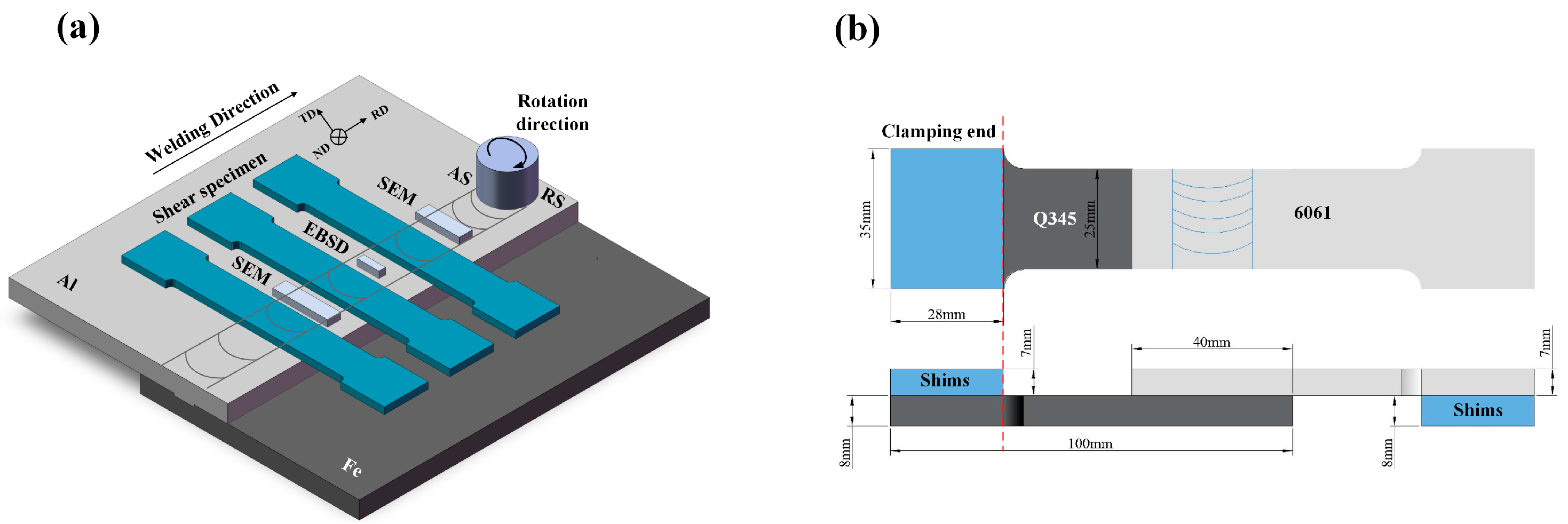
Before welding, clean the surface oxides of steel plates and aluminum plates by mechanical polishing, and then remove oil stains by ultrasonic cleaning with acetone. The overlap method with aluminum alloy on top and steel on the bottom was used, with an overlap width of 40 mm, as shown in Figure 2a. Based on the previous research, the stirring head was determined to rotate clockwise, and other process parameters are shown in Table 4.
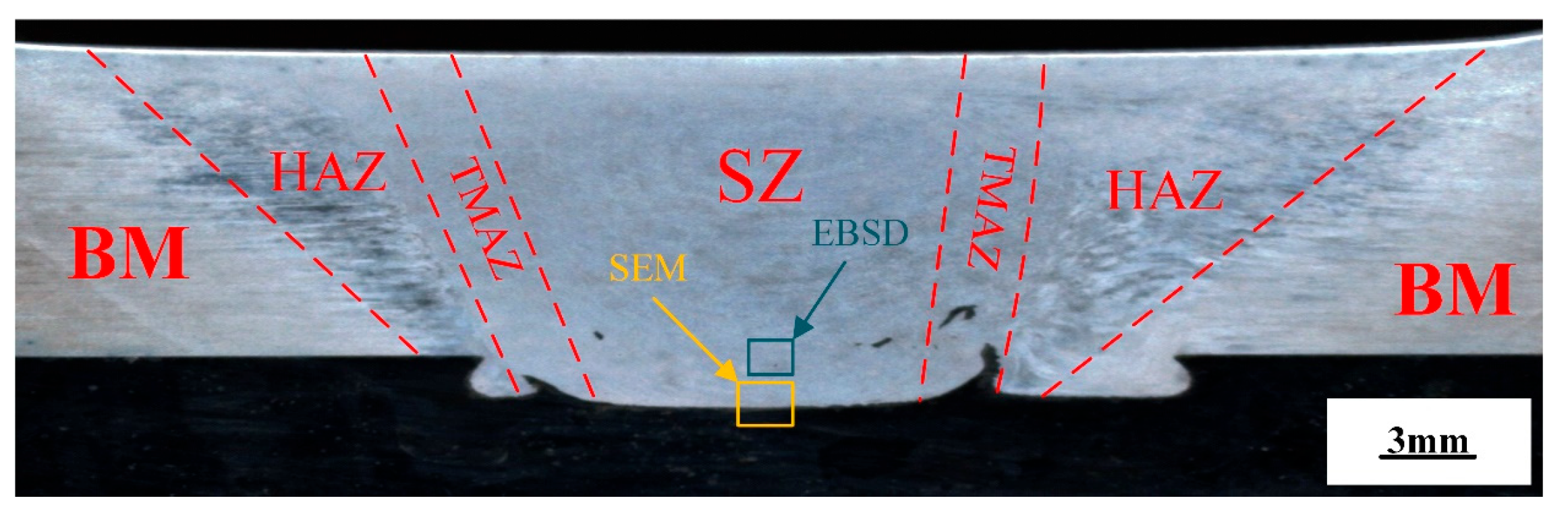
After welding, observation samples were prepared along the cross-section of the weld (as shown in Figure 2a). The microstructure and composition of the aluminum/steel interface were analyzed using scanning electron microscopy (SEM) (JEOL Co., Ltd., Tokyo, Japan) and an energy-dispersive spectrometer (EDS) (Oxford Instruments plc, Oxon, UK). Five random vertical line segments were selected from the top (aluminum side) to the bottom (steel side) of the IMC layer for EDS line analysis. The atomic percentage changes of Al and Fe elements at the interface were used to determine the thickness of the IMC at the interface, and the average IMC thickness was obtained from five measurements. The microstructure of the SZ was analyzed using electron backscatter diffraction (EBSD) to inverse pole figure (IPF), grain boundary character distribution (GBCD), kernel average misorientation (KAM) maps, and pole figures (PFs) to analyze the microstructural changes in the joint. The observation area is shown in Figure 3. The shear samples were taken along the cross-section of the weld, as shown in Figure 2b. The shear test was carried out with a shear rate of 2.5 mm/min, with 3 specimens for each testing condition, and then the morphology of shear fracture was analyzed by SEM and EDS.

3. Results and Discussion

3.1. Weld Appearance

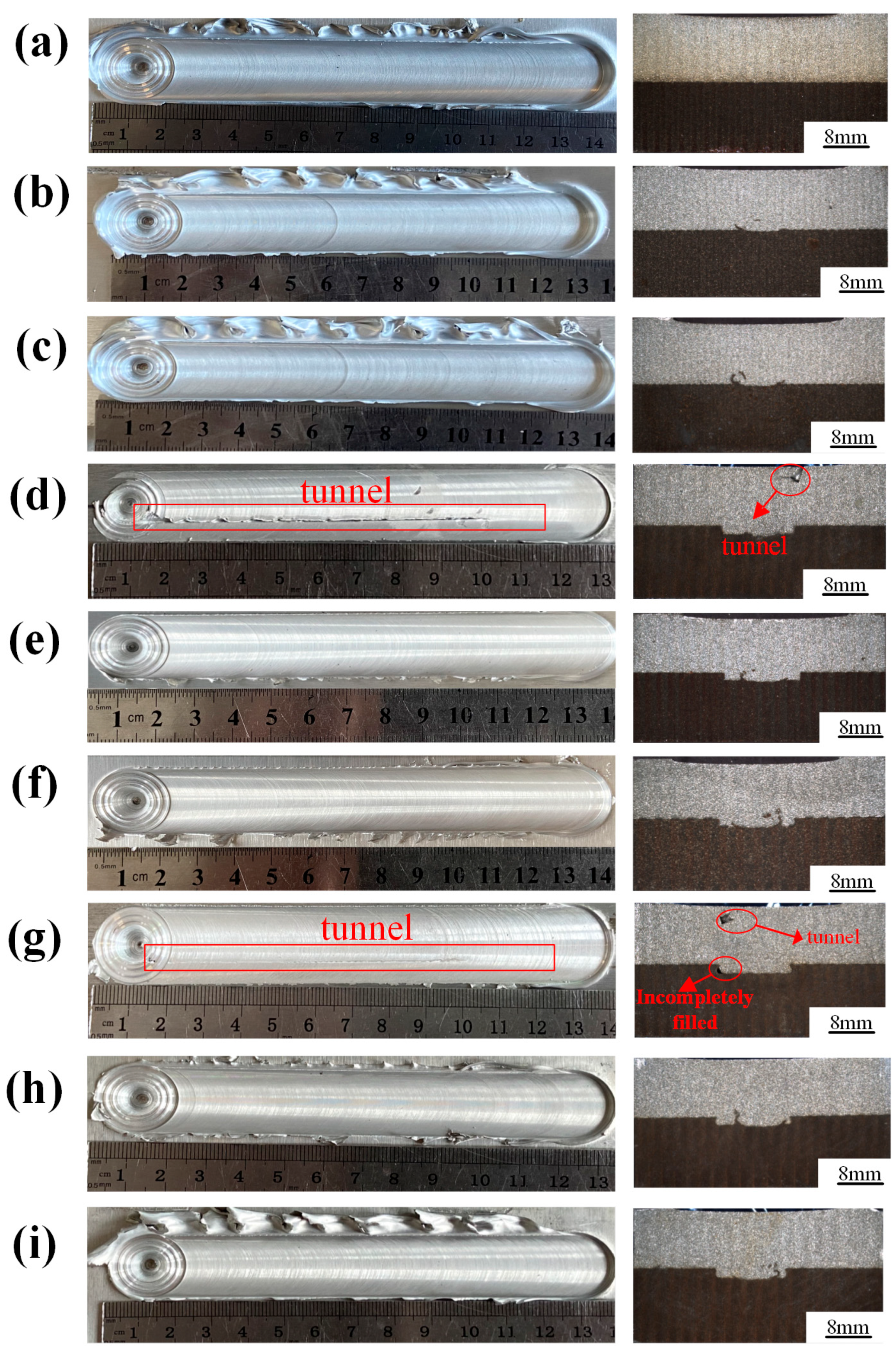
A macroscopic view of the weld seam and cross-section view of the dovetail groove, rectangular groove, and non-groove weld seam are shown in Figure 4. With the increase in the plunge depth, the flash on the weld surface becomes more serious, but the flash of joints with rectangular groove and dovetail groove is always smaller than that of joints without a groove. This is due to the presence of the groove; the plastic flow of aluminum in the FSW process enters the groove under the guiding effect of the tool pin, thereby reducing the flash formation on the weld surface. Nevertheless, when the plunge depth is 0.1 mm, the insufficient downward pressure provided by the shoulder causes incomplete plastic flow of aluminum into the groove, resulting in tunnel defects on the weld surface. In addition, an unfilled area was observed at the bottom side of the dovetail groove, as the two oblique edges of the dovetail groove suppressed the “suction compression” motion of the plastic flow of aluminum [33] during the FSW, resulting in an unsmooth movement of the plastic flow of aluminum and incomplete filling of the groove.

3.2. Microstructure Evolution of SRFSLW Joint

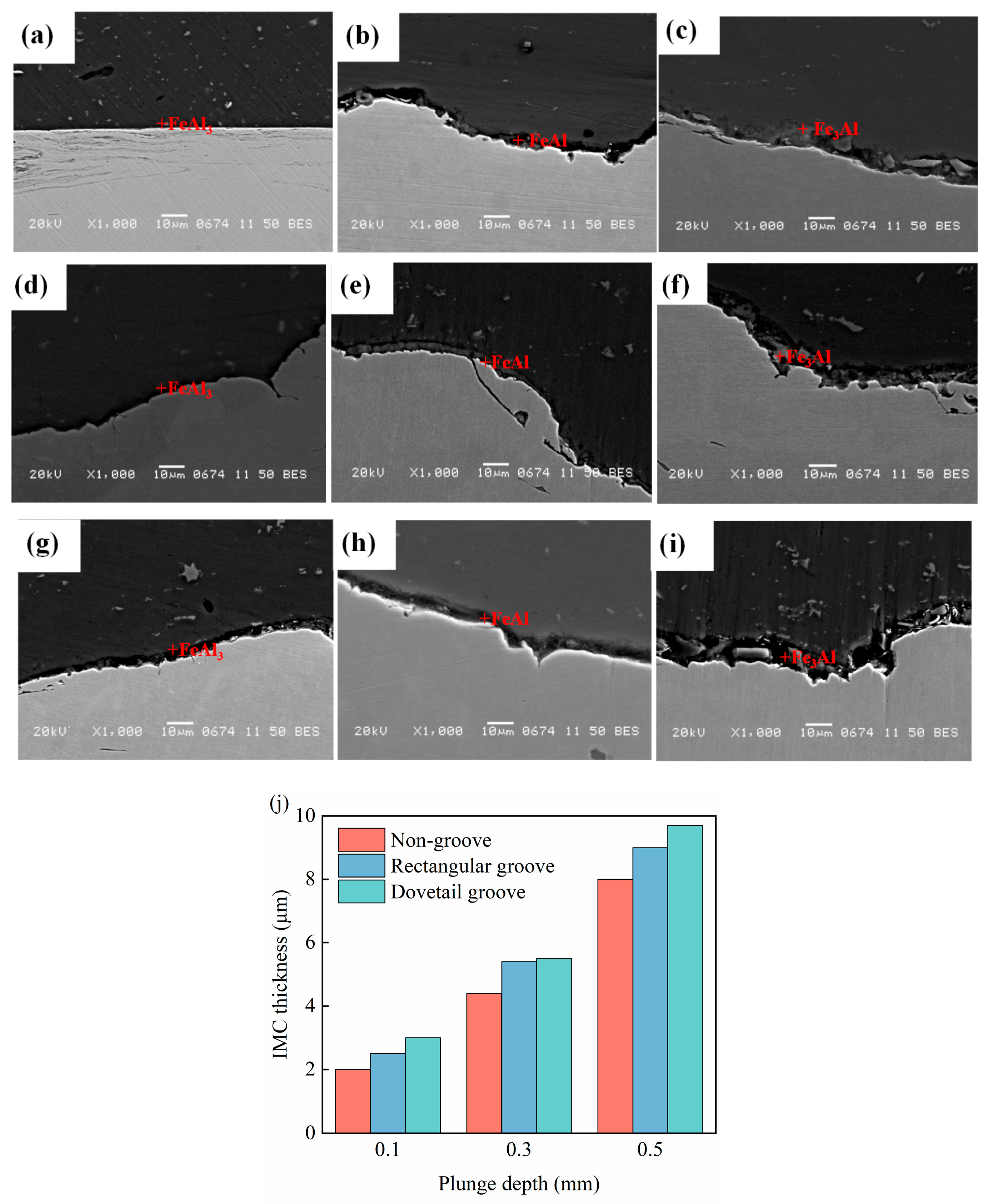
Figure 5 shows the interfacial microstructure of joints under different plunge depths. The thickness of IMC layer gradually increases with the increase in plunge depth. When the plunge depth is 0.1 mm, the IMC composition is mainly composed of the brittle Al-rich phase FeAl3. Under lower plunge depth conditions, less heat is generated by friction, resulting in insufficient diffusion of Al/Fe atoms at the interface and a thinner thickness of the IMCs layer. As the plunge depth increases, the depth of the tool pin entering the base material increases, and the mechanical stirring effect is enhanced, with more heat generated by friction. More broken steel particles enter the aluminum alloy, forming a thicker IMC layer through the reaction between Al and Fe. When the plunge depth is 0.3 and 0.5 mm, the composition of the interfacial IMC is FeAl and Fe3Al, respectively. Previous studies [34] reported that Fe-rich intermetallic phases may be associated with improved interfacial mechanical performance in aluminum/steel joints. Fracture toughness was not evaluated in the present work; thus, the present results are discussed in terms of interfacial phase constitution and its possible influence on shear resistance.
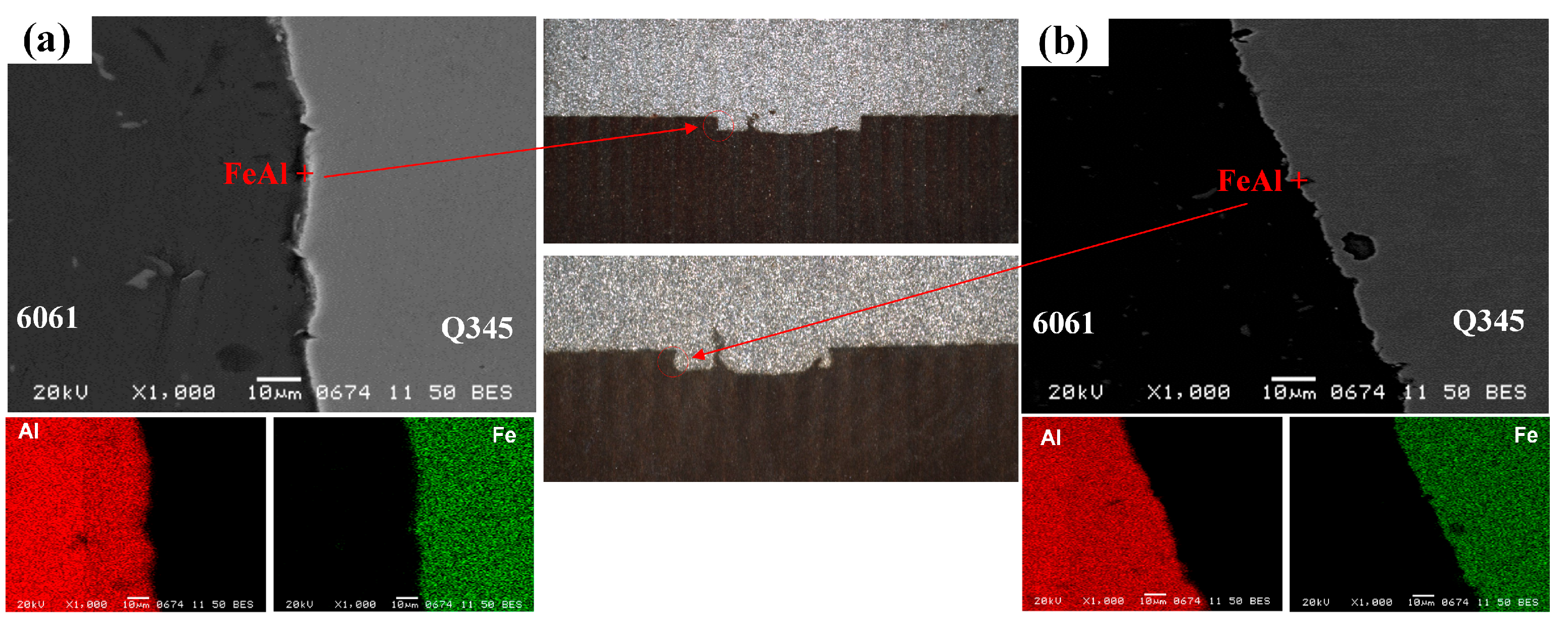
Figure 6 shows the EDS analysis results of the side edge interfaces of the rectangular groove and the dovetail groove with a plunge depth of 0.3 mm. The results indicate that the diffusion of elements on the side edge of the groove leads to metallurgical reactions between Al and Fe, thus increasing the metallurgical bonding area compared to joints without a groove and improving the shear forces of the joint to a certain extent.
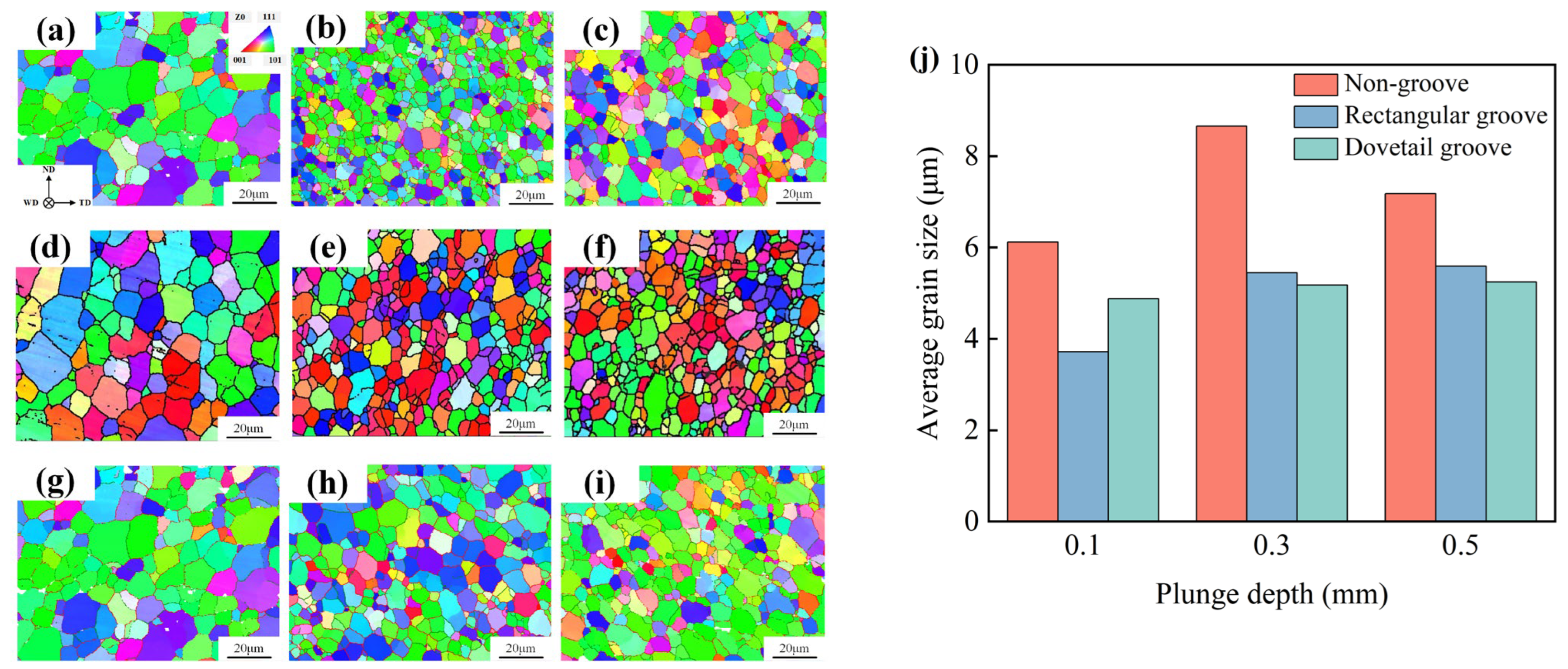
The IPF map and average grain size of SZ in different joints are shown in Figure 7. All joints form fine equiaxed grains in the SZ, with SRFSLW joints showing smaller grains than the non-groove joints. This grain refinement is due to groove structures constraining plastic flow of aluminum, which enhances the mechanical fragmentation of coarse grains. All joints exhibit gradual grain coarsening as the plunge depth increases due to the increase in heat input. At the same time, grain refinement is observed in the non-groove joint at a plunge depth of 0.5 mm. The grain size of SZ in FSW is synergistically influenced by mechanical force and thermal input [35,36]. In the non-groove joints, grain growth is predominantly thermally driven at plunge depths below 0.3 mm, while mechanical stirring becomes predominant above this threshold. Conversely, SRFSLW joints maintain a mechanically dominant regime throughout processing, attributed to the persistent confinement of plastic flow by groove structures.
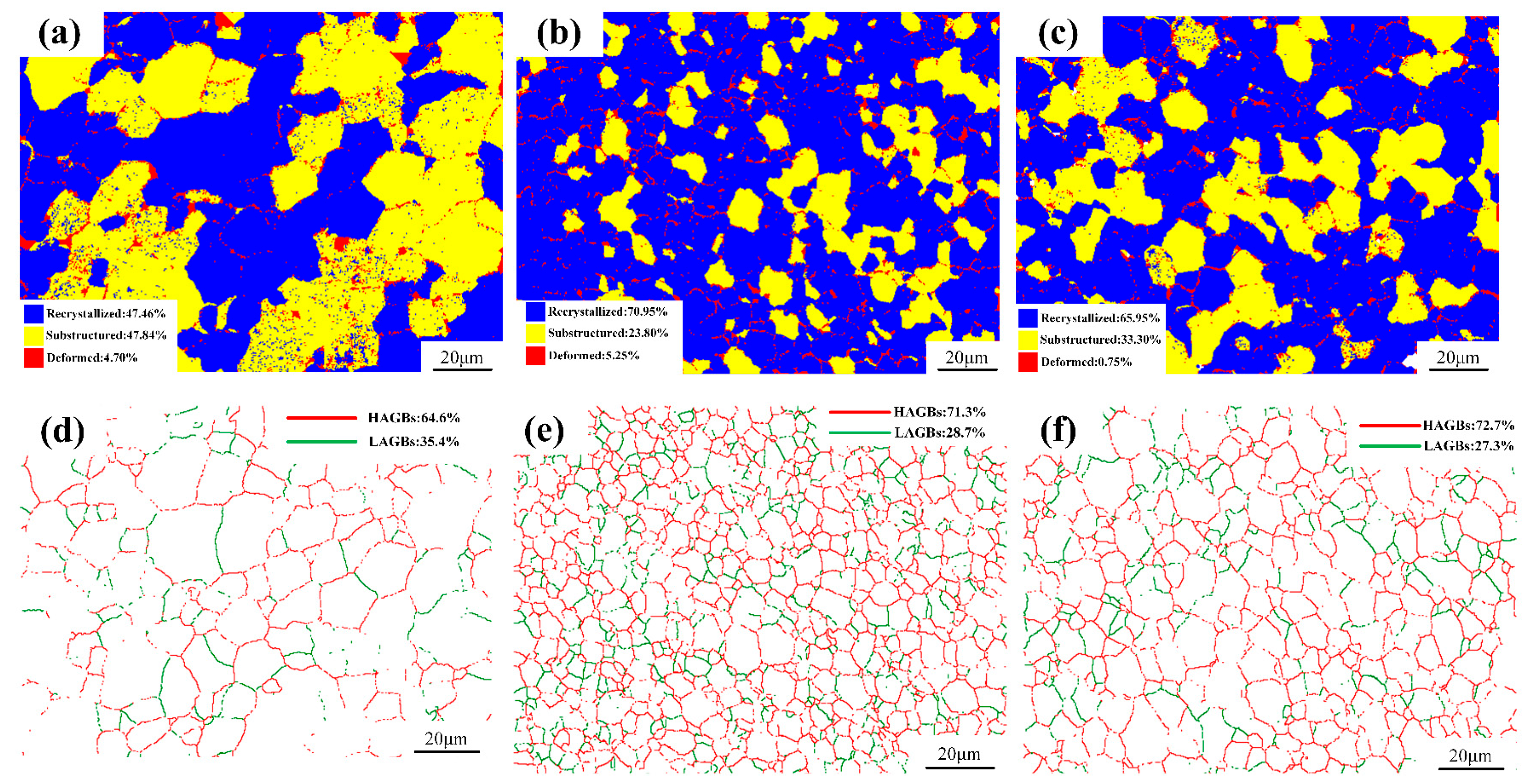
Figure 8 illustrates the grain characteristics and grain boundary distribution of the SZ of each groove joint when the plunge depth is 0.1 mm (the red line indicates a high-angle grain boundary with >15°, and the green line indicates a low-angle grain boundary with 2–15°). Figure 8a–c illustrate that pre-grooving on the steel side can markedly alter the grain characteristics. In the SZ of the joint without a groove, the proportion of recrystallized grains is 47.46%, while in the SZ of the dovetail groove and rectangular groove joints, the majority of grains are recrystallized, accounting for 65.95% and 70.95%, respectively. Due to the limited space inside the groove, the mechanical stirring of the groove joint is more intense, intensifying grain deformation and providing greater driving force for dynamic recovery and dynamic recrystallization [37], thereby promoting the formation of small equiaxed grains (as shown in Figure 7) and significantly improving the microstructure of SZ.
At the same time, Figure 8d–f show that the proportion of high-angle grain boundaries (HAGBs) in the SZ of each joint is 64.6% for A1, 71.3% for B1, and 72.7% for C1, indicating that pre-grooving on the steel side can change the grain boundary distribution in the SZ. During the SRFSLW process, the orientation angle of the low-angle grain boundary gradually increases by continuously absorbing dislocations, forming a high-angle grain boundary. The reduced fluidity of the plasticized metal in the groove leads to stronger grain deformation, resulting in a large number of high-density deformed grains. These deformed grains provide the necessary conditions for the formation of high-angle grain boundaries, which is consistent with the definition of dynamic recrystallization [38,39].
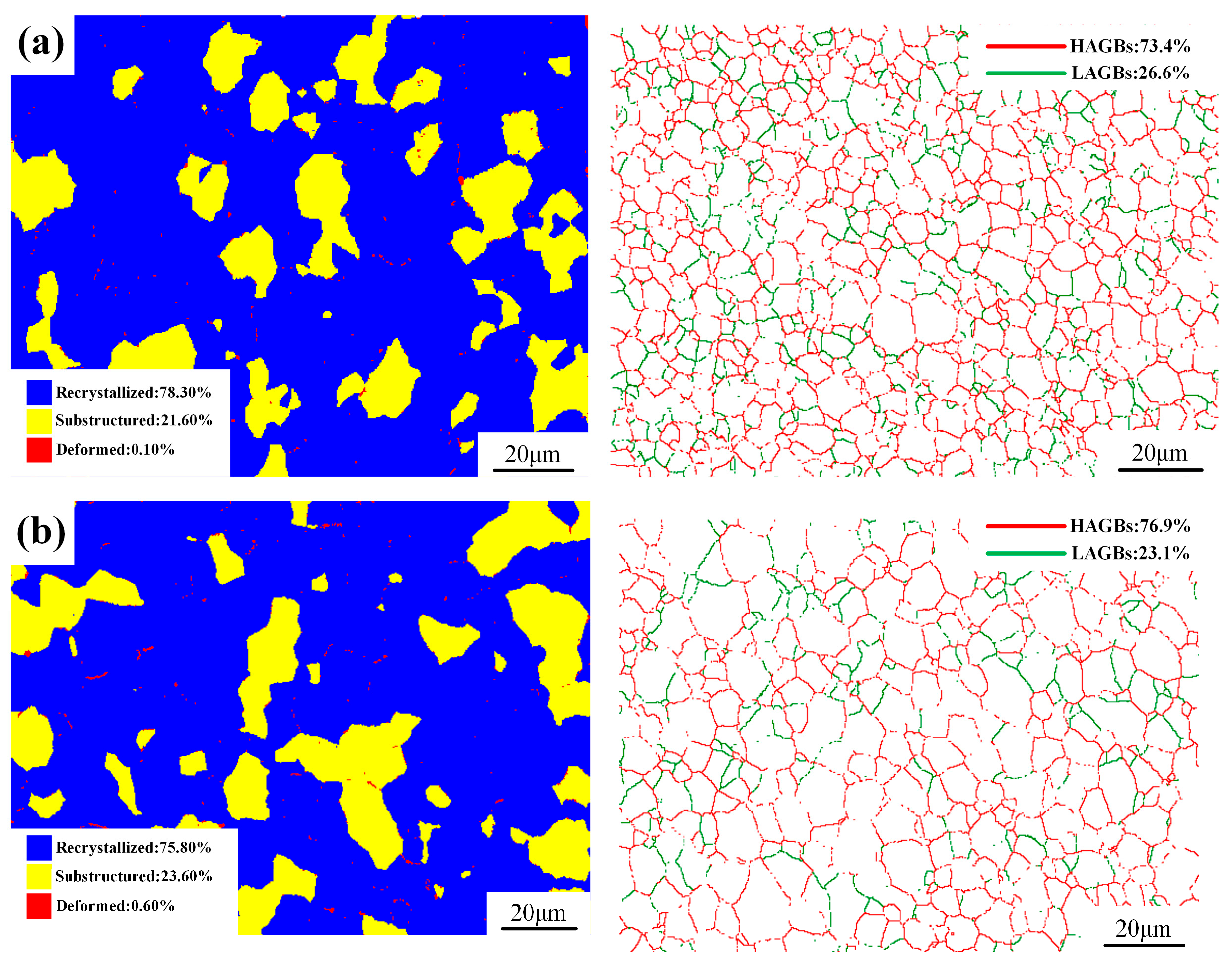
In order to study the effect of plunge depth on recrystallization in the SZ, the grain characteristics and grain boundary distribution of rectangular groove joints under different plunge depths are analyzed, as shown in Figure 9.
Combining Figure 8 with the increase in plunge depth, the proportion of recrystallized grains and high-angle grain boundaries in the SZ increases further, and the deformed grains almost disappear. This may be due to the increased plunge depth of the pin on the steel side, which intensifies grain deformation in the SZ. Additionally, the increased plunge depth leads to a higher overall heat input during welding, so the driving force for dynamic recrystallization increases under these conditions, resulting in a more pronounced dynamic recrystallization process.
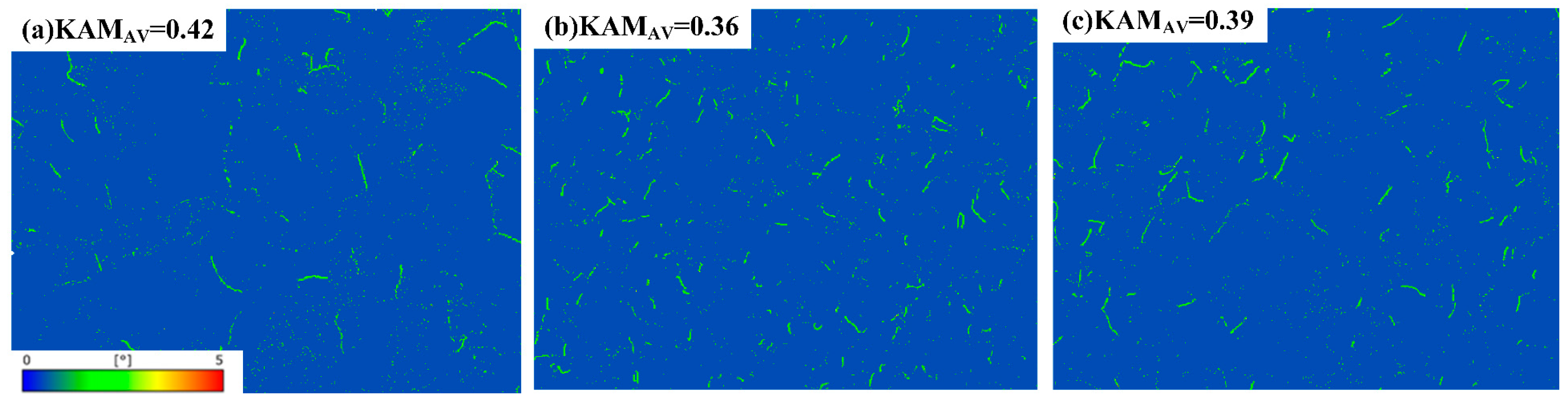
The Kernel average misorientation (KAM) value of materials is a key indicator for measuring dislocation density and the uniformity of plastic deformation, which reflects the stress state of the microstructure within the material. An increase in KAM value usually indicates higher dislocation density and strain levels [40]. In order to investigate the impact of varying groove structures on the KAM value of the SZ, a statistical analysis of the KAM value with a plunge depth of 0.3 mm was conducted, as presented in Figure 10.
It can be observed that the SZ of the groove joint exhibits a lower KAM value compared to non-groove joint. A lower KAM value indicates smaller grain orientation differences, lower dislocation density, lower stress concentration, and a more stable microstructure. Due to the mechanical stirring effect, the SZ with groove structure undergoes a more intense dynamic recrystallization process.
The SZ of A2 joint exhibits a higher KAM value, indicating that its dynamic recrystallization process is not sufficient, and there is stronger local plastic deformation and strain gradient inside the joint, especially near the interface, with larger residual stresses inside. In addition, the interface of the A2 joint is composed of brittle Al-rich phase, which will be detrimental to the shear force of the joint.
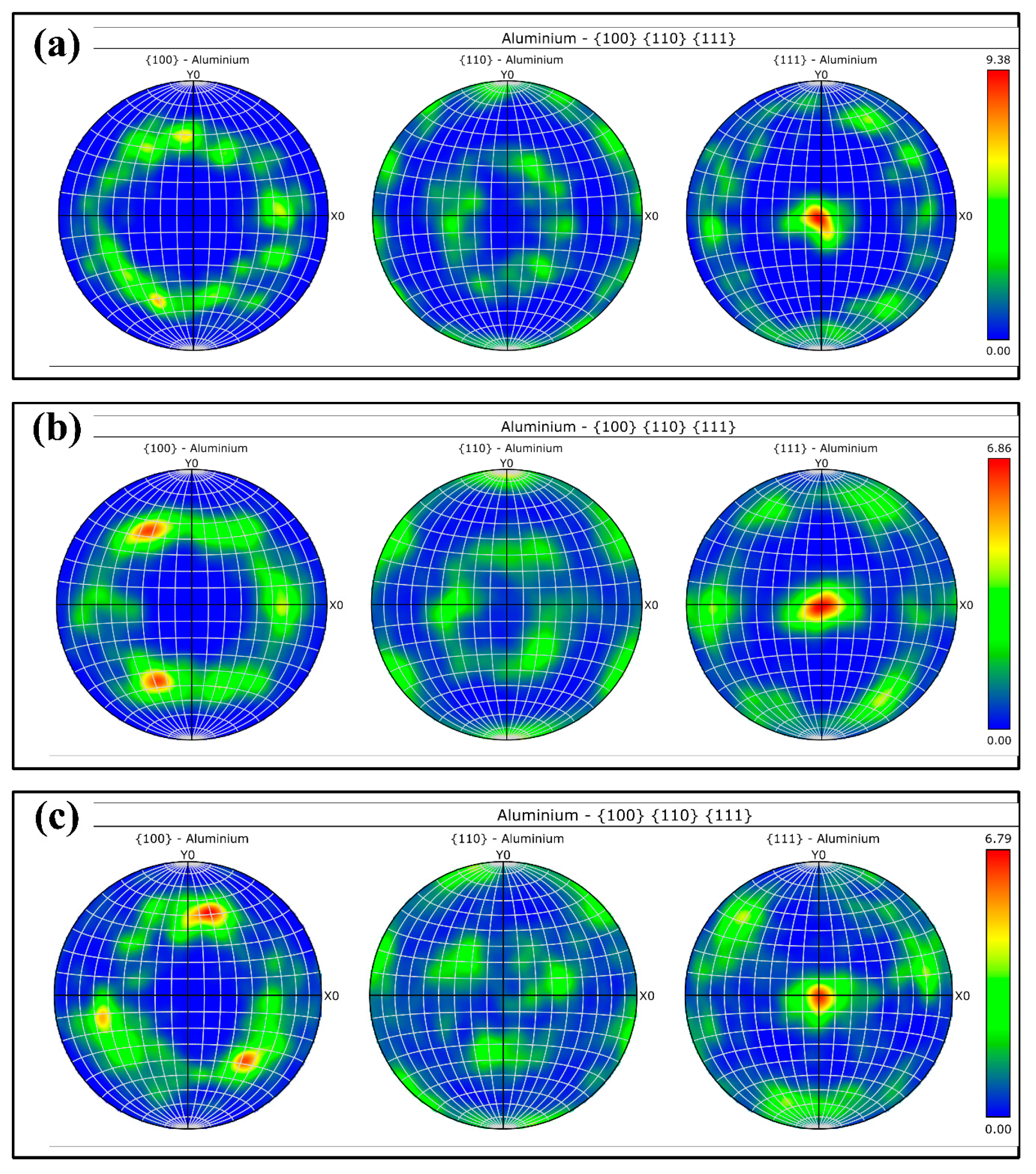
Through the pole map of Figure 11, the influence of different groove structures on the micro-texture of the SZ is further analyzed. As shown in Figure 11a, there is a fiber texture of {111}//ND in the non-groove joint SZ, and the maximum pole density is 9.38. However, the rectangular and dovetail grooves exert a reaction force on the plasticized metal due to the presence of the groove side edge, which alters the SZ micro-texture. The micro-texture is dominated by a plate texture in SZ. In the rectangular groove, the texture is {111} <112> with a maximum pole density value of 6.86, while in the dovetail groove, the texture is {111} <−211> with a maximum pole density value of 6.79. Both textures are F-type, as illustrated in Figure 11b,c.

3.3. Shear Forces of SRFSLW Joint

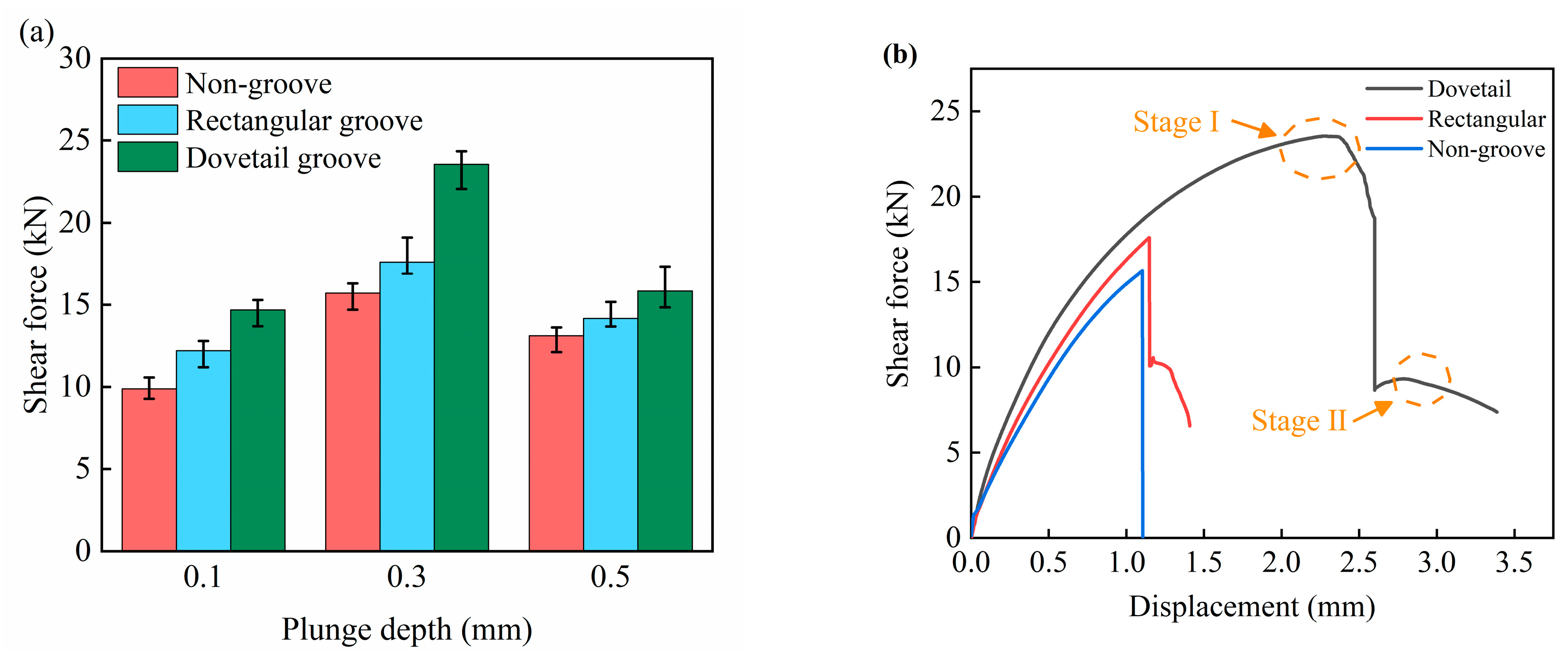
During the shear test of lap joints, the bending moment has an impact on the shear test due to the fact that the forces acting on both sides of the metal are not on the same straight line. Especially in this study, due to the thickness of the 7 mm aluminum plate and 8 mm steel plate, the bending moment effect should be considered. As shown in Figure 12a, the shear force of the joint shows a trend of first increasing and then decreasing with the plunge depth increasing from 0.1 to 0.5 mm, and the shear force of the joint with a groove has been improved to some extent. When the plunge depth is 0.3 mm, the shear force of the joint with a rectangular groove is about 12% higher than that of the joint without grooves, while the shear force of the joint with a dovetail groove is about 50% higher. Compared with the non-groove joint, the failure curve of SRFSLW joints shows significant secondary failure characteristics, corresponding to the stage of mechanical riveting structure failure, as shown in Figure 12b.
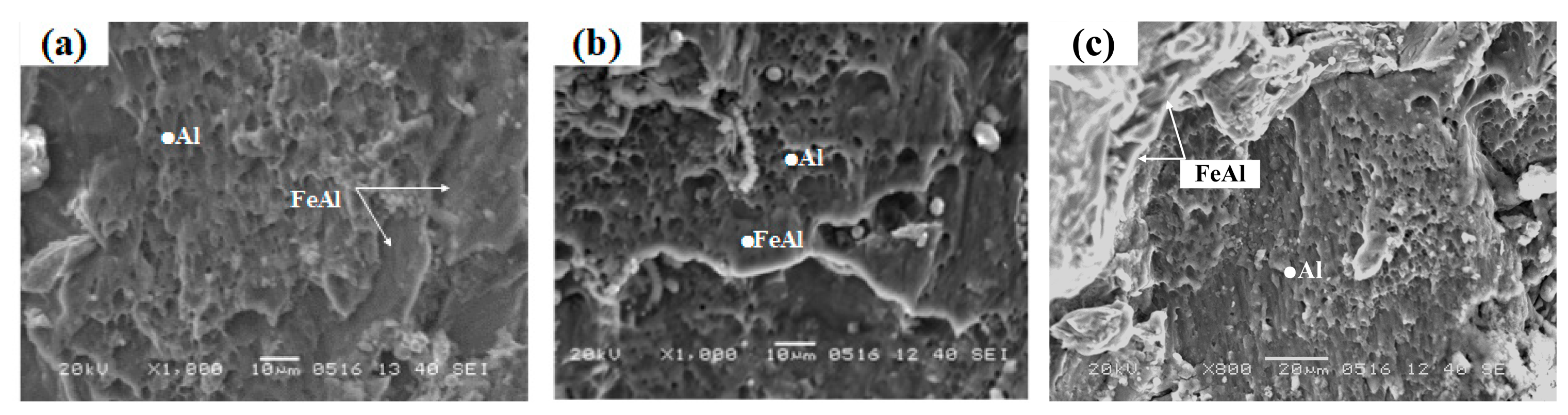
The fracture morphology of the aluminum side in the A2 joint and the fracture morphology of the aluminum side at the bottom of the groove in B2 joint and C2 joint are shown in Figure 13. According to EDS analysis, the aluminum side fractures of A2, B2, and C2 joints are all composed of FeAl compounds and aluminum matrix. Due to the same plunge depth of 0.3 mm, the intermetallic compounds generated at the Al/steel interface of the three joints are the same.

3.4. Mechanism of Joint Strengthening

In this study, the strengthening mechanism of the SRFSLW joint originated from the special groove structure, which utilizes the constraint effect of geometric structure to reduce the influence of external load and improve the type and thickness of interface IMC to achieve synchronous strengthening of “metallurgical bonding + mechanical bonding” of the joint. The composition and thickness of the IMC layer affect the shear performance of the joint. A thin IMC layer with a brittle interfacial phase significantly weakens shear strength. In contrast, an optimized IMC thickness with a ductile phase enhances performance by improving stress distribution and suppressing crack propagation. In addition, even with a ductile phase in an excessively thick IMC layer, residual stresses promote crack propagation along grain boundaries, reducing shear strength [41,42].
When the plunge depth is 0.1 mm, the heat generated by friction is relatively low, and the diffusion between Al and Fe atoms at the interface is insufficient. Currently, the IMC layer generated is relatively thin, mainly composed of the brittle Al-rich phase FeAl3. With the increase in plunge depth, the heat generated by friction increases, and more Al and Fe atoms participate in the reaction. When the plunge depth is 0.3 and 0.5 mm, the composition of the interfacial IMC is FeAl and Fe3Al, respectively, avoiding severe deterioration of the joint by Al-rich IMC. On the other hand, when the plunge depth further increases, excessive frictional heat will lead to an excessive thickness of the interfacial IMC, which is detrimental to the mechanical properties of the joint.
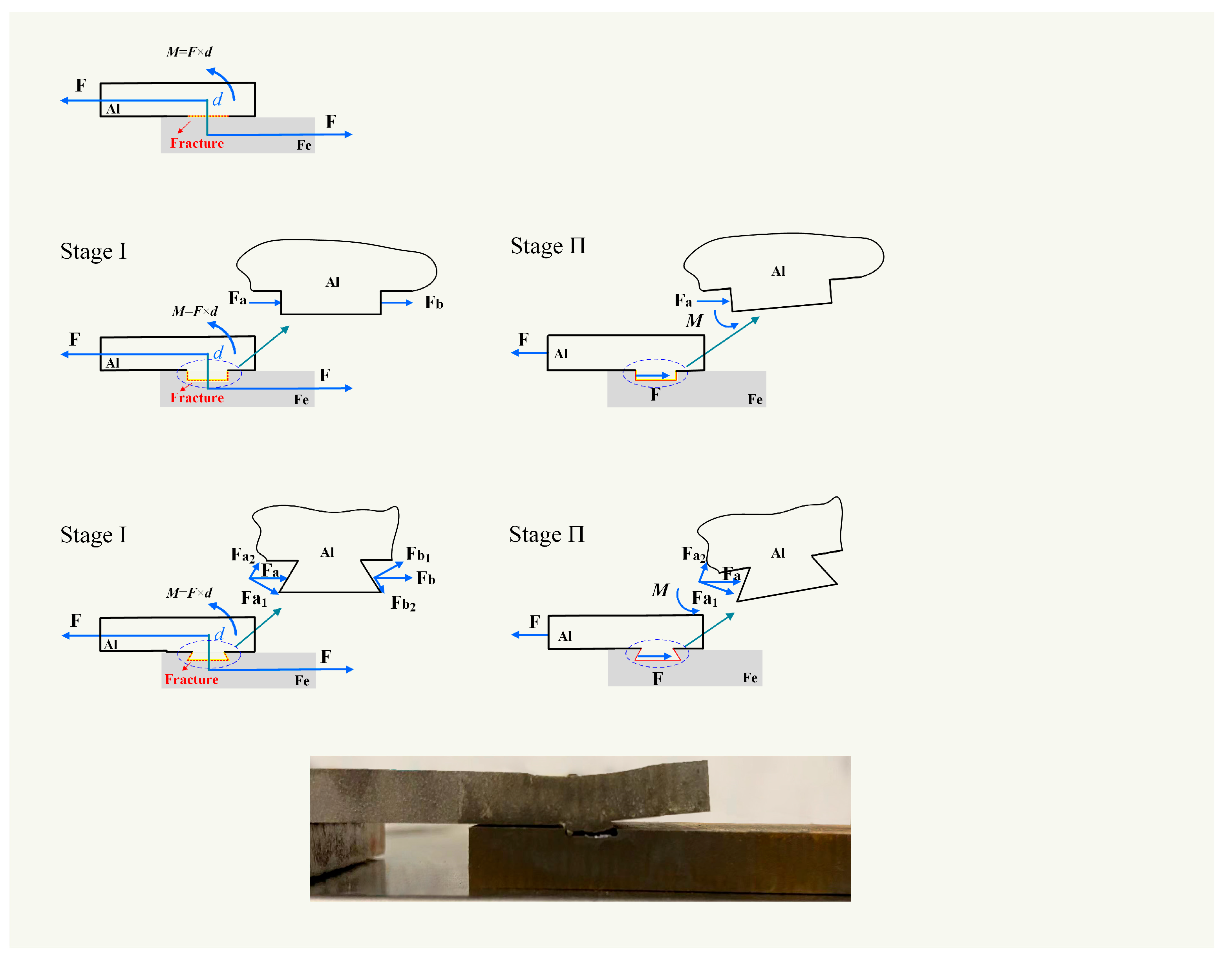
The stress conditions of the three types of joints during the shearing process are summarized in Figure 14. Due to the thickness of the aluminum plate and steel plate in this study, the bending moment (M = F × d) effect should be considered. During stage I of the shear test process, d in the bending moment is equal to half of the total thickness of the aluminum plate and steel plate for all the joints.
In stage I, while the horizontal interface between aluminum and steel is subjected to shear force, the left side of the aluminum alloy in the rectangular groove is subjected to compressive force Fa from the sidewall of the groove, and the right side is subjected to tensile force Fb from the sidewall of the groove (Fa and Fb are opposite in direction and equal in value). Besides the damage of metallurgical bonding at the bottom interface, the metallurgical bonding on the right side of the sidewall is gradually destroyed under tension and ultimately fails, while the metallurgical bonding on the left side is continuously broken under pressure, causing the IMC at the interface to break. The connection area between aluminum alloy and steel has been increased due to the metallurgical bonding at the side walls, resulting in the 8–24% increase in shear force for rectangular groove joints.
For dovetail groove joints, due to the 60° angle between the side wall and the bottom of the groove, the pressure Fa from the side wall on the left can be decomposed into a vertical side wall pressure Fa1 and a force Fa2 along the side wall, while the tension Fb from the side wall on the right can be decomposed into a vertical side wall tension Fb1 and a force Fb2 along the side wall. Due to the presence of Fa2 and Fb2, the shear force on the self-riveting structure is reduced, resulting in a 12–34% increase in shear force for dovetail groove joints compared to rectangular groove joints.
When the metallurgical bonding between the aluminum and steel in the groove joint is completely broken, there is no metallurgical bonding between aluminum and steel, only the riveting structure. According to the force analysis of aluminum plates with riveted structures, the difference in the force situation in Stage II is that the value of d in the bending moment becomes half of the sum of the thickness of the aluminum plate and the depth of the groove. The aluminum plate with a riveted structure undergoes a certain degree of warping deformation under the action of the bending moment and eventually separates from the groove of the steel plate.
Due to the different angles between the side and bottom edges of the two grooves, the displacement required for the aluminum plate to separate from the dovetail groove is greater than that from the rectangular groove. This is why the displacement of the dovetail groove joint in stage II is greater than that of the rectangular groove joint in Figure 12b.

4. Conclusions

In this study, the SRFSLW method was adopted to improve the bonding strength of lap welding joints with medium-thick aluminum/steel plates. The effect of groove structure on the shear force and fracture behavior of aluminum/steel joints under different plunge depths, as well as the influence of groove structure on the microstructure of the SZ, were investigated, respectively. The conclusions are summarized as follows:
(1) The presence of grooves promotes grain refinement and intensifies dynamic recrystallization in the SZ. Dovetail and rectangular groove joints exhibit higher proportions of recrystallized grains and HAGBs compared to the non-groove joints, accompanied by reduced KAM values.
(2) As the plunge depth increases, the thickness of the IMC layer increases, and the type of IMC changes from Al-rich FeAl3 to Fe-rich FeAl and Fe3Al. Additionally, metallurgical reactions also occur at the side edges of the grooves.
(3) The metallurgical bonding area of the aluminum/steel interface in the groove joint has been increased, and the actual shear load on the dovetail groove joint has been weakened due to the angle formed between the groove side and the groove bottom. Subsequently, the failure of metallurgical bonding in the joint requires a higher external load, and the separation of the self-riveted structure from the groove requires a greater bending moment, thereby improving the strength of the joint.
For future research, we recommend evaluating other mechanical properties of SRFSLW joints, including microhardness mapping and detailed temperature history measurements of the joints, which are not included in the present research work.

Supplementary Materials

The following supporting information can be downloaded at https://www.mdpi.com/article/10.3390/met16010127/s1, Figure S1: Schematic diagram of the pin; Figure S2: Schematic diagram of the shoulder of the stirring tool.

Author Contributions

Conceptualization, X.T. and J.W.; Data curation, X.T.; Formal analysis, X.T. and C.Z.; Funding acquisition, J.W. and S.C.; Investigation, X.T., J.W. and C.Z.; Methodology, X.T., J.W. and S.M.; Project administration, J.W.; Resources, X.T., J.W. and C.Z.; Software, X.T. and Y.H.; Supervision, X.T., S.C., Y.J., R.Y. and S.M.; Validation, X.T., S.C., Y.J. and R.Y.; Visualization, X.T. and Y.H.; Writing—original draft, X.T. All authors have read and agreed to the published version of the manuscript.

Funding

This work was supported by the National Natural Science Foundation of China (52275339) and International Science and Technology Cooperation Project of Zhenjiang (GJ2021014).

Data Availability Statement

The original contributions presented in this study are included in the article/Supplementary Material. Further inquiries can be directed to the corresponding authors.

Conflicts of Interest

The authors declare that they have no known competing financial interests or personal relationships that could have appeared to influence the work reported in this paper.

References

  1. Li, M.; Tao, W.; Zhang, J.; Wang, Y.; Yang, S. Hybrid Resistance-Laser Spot Welding of Aluminum to Steel Dissimilar Materials: Microstructure and Mechanical Properties. Mater. Des. 2022, 221, 111022. [Google Scholar] [CrossRef]
  2. Chen, X.; Lu, Z.; Chen, S.; Gao, Y.; Tian, X.; Duan, R.; Liu, Z.; Dong, J. A Novel Method for Improving the Plastic Flow and Mechanical Properties of Spray-Formed 7055-T76 (Sc-Added) Aluminum Alloy FSW Joint by Rotating Magnetic Field. J. Alloys Compd. 2025, 1010, 178219. [Google Scholar] [CrossRef]
  3. Wan, L.; Huang, Y. Friction Stir Welding of Dissimilar Aluminum Alloys and Steels: A Review. Int. J. Adv. Manuf. Technol. 2018, 99, 1781–1811. [Google Scholar] [CrossRef]
  4. Zhang, W.; Xu, J. Advanced Lightweight Materials for Automobiles: A Review. Mater. Des. 2022, 221, 110994. [Google Scholar] [CrossRef]
  5. Zhang, Y.; Lai, X.; Zhu, P.; Wang, W. Lightweight Design of Automobile Component Using High Strength Steel Based on Dent Resistance. Mater. Des. 2006, 27, 64–68. [Google Scholar] [CrossRef]
  6. Suzuki, K.T.; Omura, S.; Tokita, S.; Sato, Y.S.; Tatsumi, Y. Drastic Improvement in Dissimilar Aluminum-to-Steel Joint Strength by Combining Positive Roles of Silicon and Nickel Additions. Mater. Des. 2023, 225, 111444. [Google Scholar] [CrossRef]
  7. Tang, J.; Shen, Y. Effects of Preheating Treatment on Temperature Distribution and Material Flow of Aluminum Alloy and Steel Friction Stir Welds. J. Manuf. Process. 2017, 29, 29–40. [Google Scholar] [CrossRef]
  8. Meschut, G.; Janzen, V.; Olfermann, T. Innovative and Highly Productive Joining Technologies for Multi-Material Lightweight Car Body Structures. J. Mater. Eng. Perform. 2014, 23, 1515–1523. [Google Scholar] [CrossRef]
  9. Narsimhachary, D.; Dutta, K.; Shariff, S.M.; Padmanabham, G.; Basu, A. Mechanical and Microstructural Characterization of Laser Weld-Brazed AA6082-Galvanized Steel Joint. J. Mater. Process. Technol. 2019, 263, 21–32. [Google Scholar] [CrossRef]
  10. Wang, T.; Sidhar, H.; Mishra, R.S.; Hovanski, Y.; Upadhyay, P.; Carlson, B. Evaluation of Intermetallic Compound Layer at Aluminum/Steel Interface Joined by Friction Stir Scribe Technology. Mater. Des. 2019, 174, 107795. [Google Scholar] [CrossRef]
  11. Wang, H.; Qin, G.; Geng, P.; Ma, X. Interfacial Microstructures and Mechanical Properties of Friction Welded Al/Steel Dissimilar Joints. J. Manuf. Process. 2020, 49, 18–25. [Google Scholar] [CrossRef]
  12. Chen, K.; Liu, X.; Ni, J. A Review of Friction Stir–Based Processes for Joining Dissimilar Materials. Int. J. Adv. Manuf. Technol. 2019, 104, 1709–1731. [Google Scholar] [CrossRef]
  13. Anaman, S.Y.; Cho, H.-H.; Das, H.; Lee, J.-S.; Hong, S.-T. Microstructure and Mechanical/Electrochemical Properties of Friction Stir Butt Welded Joint of Dissimilar Aluminum and Steel Alloys. Mater. Charact. 2019, 154, 67–79. [Google Scholar] [CrossRef]
  14. Jabraeili, R.; Jafarian, H.R.; Khajeh, R.; Park, N.; Kim, Y.; Heidarzadeh, A.; Eivani, A.R. Effect of FSW Process Parameters on Microstructure and Mechanical Properties of the Dissimilar AA2024 Al Alloy and 304 Stainless Steel Joints. Mater. Sci. Eng. A 2021, 814, 140981. [Google Scholar] [CrossRef]
  15. Geng, P.; Morimura, M.; Ma, H.; Ma, Y.; Ma, N.; Liu, H.; Aoki, Y.; Fujii, H.; Qin, G. Elucidation of Intermetallic Compounds and Mechanical Properties of Dissimilar Friction Stir Lap Welded 5052 Al Alloy and DP590 Steel. J. Alloys Compd. 2022, 906, 164381. [Google Scholar] [CrossRef]
  16. Sahu, M.; Ganguly, S. Distribution of Intermetallic Compounds in Dissimilar Joint Interface of AA 5083 and HSLA Steel Welded by FSW Technique. Intermetallics 2022, 151, 107734. [Google Scholar] [CrossRef]
  17. Chen, S.; Zhang, J.; Wang, D.; Wang, J.; Li, R. Study on Low Axial Load Friction Stir Lap Joining of 6061-T6 and Zinc-Coated Steel. Metall. Mater. Trans. A 2019, 50, 4642–4651. [Google Scholar] [CrossRef]
  18. Pérez-Medina, G.; Lopez, H.; Miranda-Pérez, A.; Hurtado-Delgado, E. Effect of Grain Recrystallization on Stir Zone and Mechanical Property Behavior of TRIP 780 Steel. J. Iron Steel Res. Int. 2020, 27, 188–196. [Google Scholar] [CrossRef]
  19. Shen, Z.; Chen, Y.; Haghshenas, M.; Gerlich, A.P. Role of Welding Parameters on Interfacial Bonding in Dissimilar Steel/Aluminum Friction Stir Welds. Eng. Sci. Technol. Int. J. 2015, 18, 270–277. [Google Scholar] [CrossRef]
  20. Dong, J.-H.; Liu, H.; Ji, S.-D.; Yan, D.-J.; Zhao, H.-X. Diffusion Bonding of Al-Mg-Si Alloy and 301L Stainless Steel by Friction Stir Lap Welding Using a Zn Interlayer. Materials 2022, 15, 696. [Google Scholar] [CrossRef]
  21. Myśliwiec, P.; Kubit, A.; Derazkola, H.A.; Szawara, P.; Slota, J. Feasibility Study on Dissimilar Joint between Alclad AA2024–T3 and DC04 Steel by Friction Stir Welding. Mater. Today Commun. 2024, 38, 108167. [Google Scholar] [CrossRef]
  22. Laska, A.; Sadeghi, B.; Sadeghian, B.; Taherizadeh, A.; Szkodo, M.; Cavaliere, P. Temperature Evolution, Material Flow, and Resulting Mechanical Properties as a Function of Tool Geometry during Friction Stir Welding of AA6082. J. Mater. Eng. Perform. 2023, 32, 10655–10668. [Google Scholar] [CrossRef]
  23. Liu, J.; Wu, B.; Wang, Z.; Li, C.; Chen, G.; Miao, Y. Microstructure and Mechanical Properties of Aluminum-Steel Dissimilar Metal Welded Using Arc and Friction Stir Hybrid Welding. Mater. Des. 2023, 225, 111520. [Google Scholar] [CrossRef]
  24. Zhang, T.; Hao, Z.; Wang, K.; Qiao, K.; Xue, K.; Liu, Q.; Han, P.; Wang, W.; Zheng, P. Effect of Ni Interlayer on Interfacial Microstructure and Fatigue Behavior of Friction Stir Lap Welded 6061 Aluminum Alloy and QP1180 Steel. Int. J. Fatigue 2024, 180, 108096. [Google Scholar] [CrossRef]
  25. Torabi, K.; Beygi, R.; Alikhani, A.; Marques, E.A.S.; Khalfallah, A.; da Silva, L.F.M. Study on Friction Stir Diffusion Bonding of Aluminum to Zinc-Coated Steel: A Comparison to Weld-Brazing. Mater. Today Commun. 2025, 43, 111833. [Google Scholar] [CrossRef]
  26. Liu, X.; Lim, Y.C.; Li, Y.; Tang, W.; Ma, Y.; Feng, Z.; Ni, J. Effects of Process Parameters on Friction Self-Piercing Riveting of Dissimilar Materials. J. Mater. Process. Technol. 2016, 237, 19–30. [Google Scholar] [CrossRef]
  27. Huang, Y.; Wang, J.; Wan, L.; Meng, X.; Liu, H.; Li, H. Self-Riveting Friction Stir Lap Welding of Aluminum Alloy to Steel. Mater. Lett. 2016, 185, 181–184. [Google Scholar] [CrossRef]
  28. Ma, Y.; Shan, H.; Niu, S.; Li, Y.; Lin, Z.; Ma, N. A Comparative Study of Friction Self-Piercing Riveting and Self-Piercing Riveting of Aluminum Alloy AA5182-O. Engineering 2021, 7, 1741–1750. [Google Scholar] [CrossRef]
  29. Reza-E-Rabby, M.; Ross, K.; Overman, N.R.; Olszta, M.J.; McDonnell, M.; Whalen, S.A. Joining Thick Section Aluminum to Steel with Suppressed FeAl Intermetallic Formation via Friction Stir Dovetailing. Scr. Mater. 2018, 148, 63–67. [Google Scholar] [CrossRef]
  30. Huang, Y.; Huang, T.; Wan, L.; Meng, X.; Zhou, L. Material Flow and Mechanical Properties of Aluminum-to-Steel Self-Riveting Friction Stir Lap Joints. J. Mater. Process. Technol. 2019, 263, 129–137. [Google Scholar] [CrossRef]
  31. Meng, X.; Gao, J.; Xie, Y.; Huang, T.; Dong, J.; Ma, X.; Wang, N.; Huang, Y. Extrinsic-Riveting Friction Stir Lap Welding of Al/Steel Dissimilar Materials. Materials 2024, 17, 1830. [Google Scholar] [CrossRef] [PubMed]
  32. Shan, H.; Ma, Y.; Niu, S.; Yang, B.; Lou, M.; Li, Y.; Lin, Z. Friction Stir Riveting (FSR) of AA6061-T6 Aluminum Alloy and DP600 Steel. J. Mater. Process. Technol. 2021, 295, 117156. [Google Scholar] [CrossRef]
  33. Naveen Kumar, P.; Jayakumar, K.; Senthur Vaishnavan, S. FSW on AA5083 H-111 and AA5754 H-111 Dissimilar Plates with Scandium Intermetallic Layer. Mater. Today Proc. 2023, 72, 2294–2299. [Google Scholar] [CrossRef]
  34. Haghshenas, M.; Abdel-Gwad, A.; Omran, A.M.; Gökçe, B.; Sahraeinejad, S.; Gerlich, A.P. Friction Stir Weld Assisted Diffusion Bonding of 5754 Aluminum Alloy to Coated High Strength Steels. Mater. Des. 2014, 55, 442–449. [Google Scholar] [CrossRef]
  35. Han, W.; Kimura, A.; Tsuda, N.; Serizawa, H.; Chen, D.; Je, H.; Fujii, H.; Ha, Y.; Morisada, Y.; Noto, H. Effects of Mechanical Force on Grain Structures of Friction Stir Welded Oxide Dispersion Strengthened Ferritic Steel. J. Nucl. Mater. 2014, 455, 46–50. [Google Scholar] [CrossRef]
  36. Wei, L.; Nelson, T.W. Influence of Heat Input on Post Weld Microstructure and Mechanical Properties of Friction Stir Welded HSLA-65 Steel. Mater. Sci. Eng. A 2012, 556, 51–59. [Google Scholar] [CrossRef]
  37. Huang, K.; Logé, R.E. A Review of Dynamic Recrystallization Phenomena in Metallic Materials. Mater. Des. 2016, 111, 548–574. [Google Scholar] [CrossRef]
  38. Gourdet, S.; Montheillet, F. A Model of Continuous Dynamic Recrystallization. Acta Mater. 2003, 51, 2685–2699. [Google Scholar] [CrossRef]
  39. Sakai, T.; Belyakov, A.; Kaibyshev, R.; Miura, H.; Jonas, J.J. Dynamic and Post-Dynamic Recrystallization under Hot, Cold and Severe Plastic Deformation Conditions. Prog. Mater. Sci. 2014, 60, 130–207. [Google Scholar] [CrossRef]
  40. Wu, C.; Gao, S.; Yin, Q.; Shi, L.; Kumar, S.; Zhao, W. Research on the Mechanical Properties and Fracture Mechanism of Ultrasonic Vibration Enhanced Friction Stir Welded Aluminum/Steel Joint. Mater. Charact. 2024, 207, 113534. [Google Scholar] [CrossRef]
  41. Picot, F.; Gueydan, A.; Martinez, M.; Moisy, F.; Hug, E. A Correlation between the Ultimate Shear Stress and the Thickness Affected by Intermetallic Compounds in Friction Stir Welding of Dissimilar Aluminum Alloy–Stainless Steel Joints. Metals 2018, 8, 179. [Google Scholar] [CrossRef]
  42. Pourali, M.; Abdollah-zadeh, A.; Saeid, T.; Kargar, F. Influence of Welding Parameters on Intermetallic Compounds Formation in Dissimilar Steel/Aluminum Friction Stir Welds. J. Alloys Compd. 2017, 715, 1–8. [Google Scholar] [CrossRef]
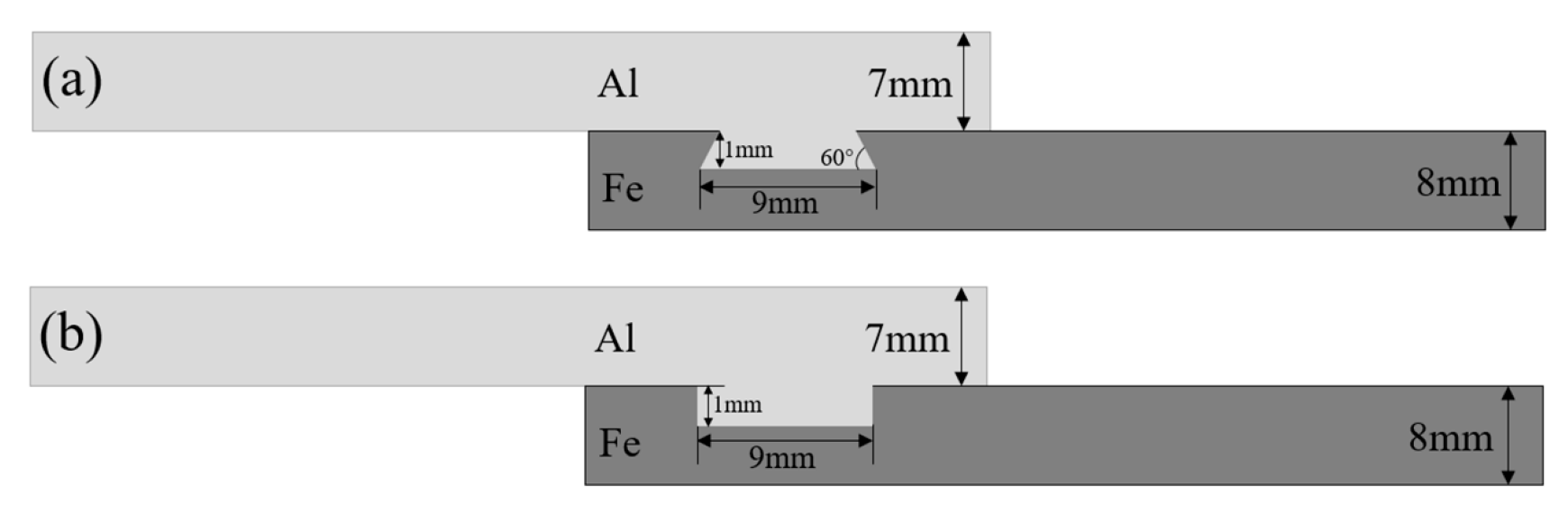
Figure 1. Dimensions of joints: (a) dovetail groove joint; (b) rectangular groove joint.
Metals 16 00127 g001
Figure 2. Schematic diagram: (a) SEM and EBSD specimen; (b) shear specimen.
Metals 16 00127 g002
Figure 3. Weld cross-section specimen.
Metals 16 00127 g003
Figure 4. Macroscopic morphology of weld seam and weld cross-section with different joints: (ac) A1–A3; (df) B1–B3; (gi) C1–C3.
Metals 16 00127 g004
Figure 5. Interfacial microstructure of joints under different plunge depths: (ac) A1–A3; (df) B1–B3, (gi) C1–C3, and (j) the thickness of the IMC layer of joints.
Metals 16 00127 g005
Figure 6. Microstructure of side edge interfaces: (a) B2; (b) C2.
Metals 16 00127 g006
Figure 7. IPF maps of (ac) A1, B1, C1, (df) A2, B2, C2, (gi) A3, B3, C3, and (j) histogram of average grain diameter.
Metals 16 00127 g007
Figure 8. Grain characteristics and grain boundary distribution diagrams of (a,d) A1, (b,e) B1, and (c,f) C1.
Metals 16 00127 g008
Figure 9. Grain characteristics and grain boundary distribution diagrams of (a) B2 and (b) B3.
Metals 16 00127 g009
Figure 10. KAM map: (a) A2; (b) B2; (c) C2.
Metals 16 00127 g010
Figure 11. Pole diagrams and texture components: (a) A2; (b) B2; (c) C2.
Metals 16 00127 g011
Figure 12. (a) Shear force of each joint with different plunge depths; (b) shear force and displacement curves with 0.3 mm plunge depth.
Metals 16 00127 g012
Figure 13. The fracture morphologies of (a) A2, (b) B2, and (c) C2.
Metals 16 00127 g013
Figure 14. Influence mechanism of groove structure on the fracture behavior of joints.
Metals 16 00127 g014
Table 1. Chemical compositions of 6061 (wt.%).
MgSiCuMnZnFeCrTiAl
0.8~1.20.4~0.80.15~0.4≤0.15≤0.25≤0.700.04~0.35≤0.15Bal.
Table 2. Chemical compositions of Q355D (wt.%).
CSiMnPSNiCrCuFe
0.200.551.600.0250.0250.300.300.40Bal.
Table 3. Mechanical properties of 6061 and Q355D.
Yield Strength (MPa)Tensile Strength (MPa)Elongation After Fracture (%)
6061-T6≥240≥290≥10
Q355D≥355470~630≥22
Table 4. Welding process parameters.
GroupPlunge Depth (mm)Groove TypeRotation Speed (rpm)Welding Speed (mm/min)Spindle Inclination Angle (°)
A10.1Non-groove6001002.5
A20.3
A30.5
B10.1Rectangular groove
B20.3
B30.5
C10.1Dovetail groove
C20.3
C30.5
Disclaimer/Publisher’s Note: The statements, opinions and data contained in all publications are solely those of the individual author(s) and contributor(s) and not of MDPI and/or the editor(s). MDPI and/or the editor(s) disclaim responsibility for any injury to people or property resulting from any ideas, methods, instructions or products referred to in the content.