Article

The Effect of Ultrasonic Vibration Assistance During Laser Lap Welding on the Microstructure and Properties of Galvanized Steel/Mg Joints


1
School of Materials Science and Engineering, Jiangsu University, Zhenjiang 212013, China
2
College of Materials Science and Engineering, Hohai University, Changzhou 213022, China
*
Author to whom correspondence should be addressed.
Metals 2026, 16(1), 120; https://doi.org/10.3390/met16010120
Submission received: 19 December 2025 / Revised: 15 January 2026 / Accepted: 15 January 2026 / Published: 20 January 2026

Abstract

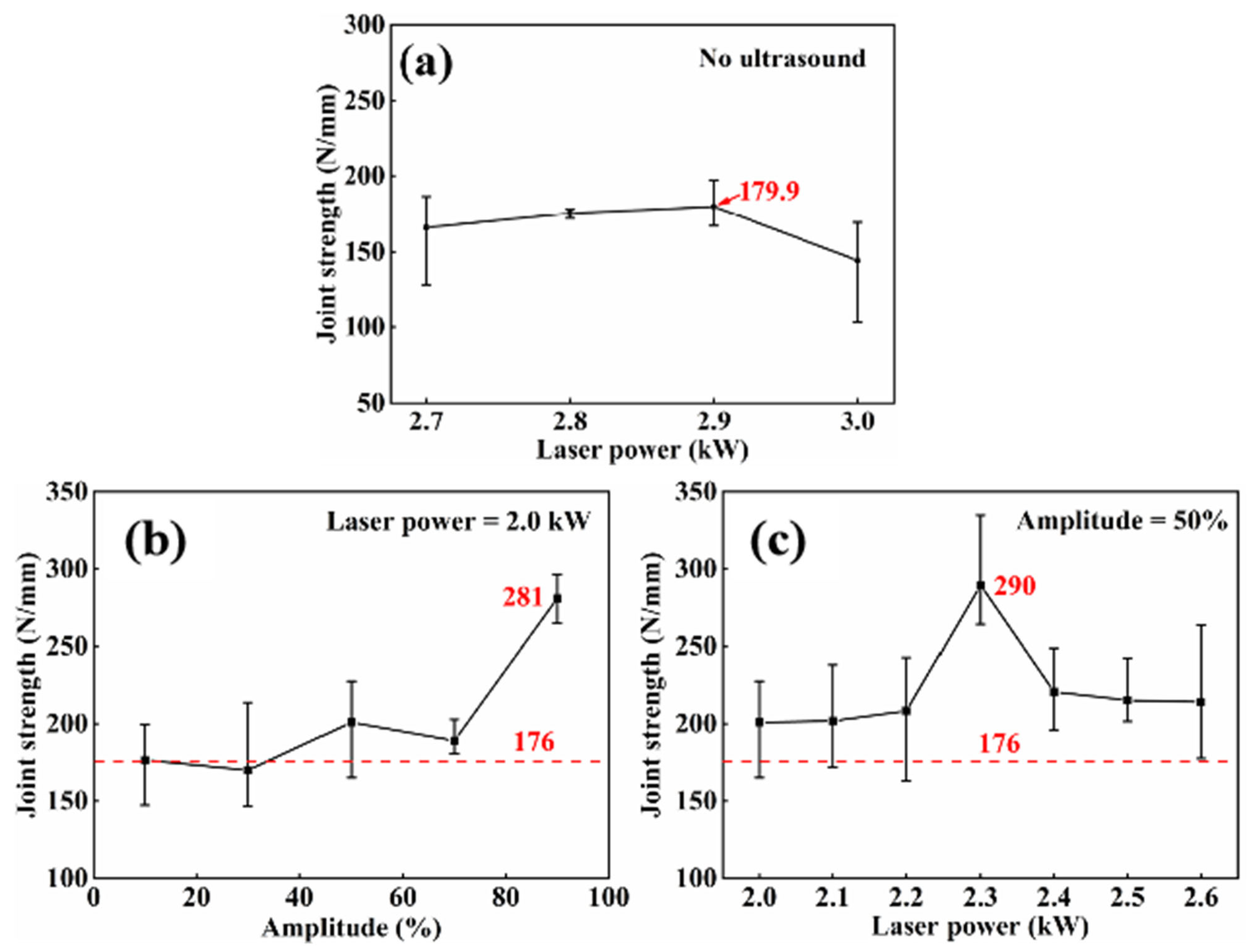
In this work, a laser lap-welded joint of galvanized steel/Mg and a laser lap-welded joint of galvanized steel/Mg assisted by ultrasonic vibration were compared. By adjusting the laser beam power and ultrasonic amplitude, the appropriate welding process parameters were obtained. The weld formation, microstructure and mechanical properties were studied and analyzed. The results indicated that the addition of ultrasonic vibration generated an excitation force with a certain frequency and amplitude on the weldment, making the molten metal in the molten pool produce ultrasonic forced vibration, and producing the effects of cavitation, acoustic streaming, mechanical stirring and heat, thus reducing welding residual stress and welding-deformation, porosity and incomplete-fusion defects. In addition, it can make the fusion zone transition evenly, improve the wettability, refine the weld grain, and reduce the average grain area from 583 μm2 to 324 μm2. Moreover, the distribution of Mg-Zn reinforcing phase at the interface was more uniform and denser, and the maximum tensile shear strength increased from 179.9 N/mm to 290 N/mm, indicating that the addition of ultrasonic vibration was conducive to improving the comprehensive mechanical properties of the joint.

1. Introduction

Magnesium alloy and steel have very broad application prospects in the automobile and aerospace industries; however, there are great differences in their physical, chemical and metallurgical properties, causing problems such as cracks, pores, residual stress and other welding defects during the welding of dissimilar Mg/steel dissimilar [1]. Ultrasonic vibration (UV) technology has the effects of cavitation, acoustic streaming, mechanical stirring and heat, which can promote the discharge of bubbles in the molten pool, improve the interfacial wettability, break dendrites and refine grains, allowing it to significantly enhance the comprehensive mechanical properties of the joint [2,3,4]. In addition, ultrasonic welding is also widely used in industrial manufacturing, machining and other fields, including ultrasonic spot welding (USW), ultrasonic-vibration-assisted tungsten inert gas welding (UV-TIG), ultrasonic-vibration-assisted friction stir welding (UV-FSW) and ultrasonic-vibration-assisted laser welding (UV-LW).
Patel et al. [5,6,7] used galvanized steel and magnesium alloy in the USW process. The plastic deformation caused by the UV was conducive to enhancing the substrate texture. Therefore, a large number of Mg-Zn intermetallic compound (IMC) layers were generated between Mg and the Zn coating, while no IMC was produced between steel and the Zn coating. After comparing the failure modes and fatigue behavior of ultrasonic spot-welded, bonded and welded joints, Lai et al. [8] demonstrated that USW did not seem to provide additional strength for the lap shear-welded specimen under quasi-static and cyclic loading conditions. Chen et al. [9] found that under a higher welding energy, the whole Zn coating was transformed into a Mg-Zn reaction layer, and there was no gap at the interface, which could lead to better lap shear strength.
Yang et al. [10,11] investigated the microstructure and mechanical properties of the Mg/steel joint welded using UV-TIG (YC-300WP5HGN). They found that, under the combined effects of cavitation and acoustic streaming, ultrasonic vibration could improve the wettability of the weld interface, reduce or eliminate defects such as pores and residual stress, refine the grains in the fusion zone, and significantly enhance the hardness and strength of the joint. The UV-FSW was mostly used for the connection of Mg and Al. Ji et al. [12] found that ultrasonic vibration could promote the upward flow of lower Al alloy, increase the width of the stirring zone and refine the grains in the stirring zone. Moreover, the IMC, with a different composition from the conventional friction stir spot welding (FSSW) joint interface, was formed in the stirring zone of the Al/Mg joint under UV. UV also has an important impact on the thickness of the IMC layer. Wu et al. [13] proved that the application of UV could reduce the IMC thickness in the whole weld, so that the peak value of the IMC thickness appeared on the upper and lower horizontal planes of the weld close to the outlet hole, which minimized the impact of the IMC on the strength and toughness of the joint.
Lei et al. [14,15] proposed that the introduction of UV in laser welding could reduce the porosity in a Mg molten pool from 4.3% to 0.9%. The pore size was reduced significantly, while the width of columnar crystals near the fusion line was also reduced. And the average area of equiaxed crystals was reduced from 359.9 μm2 to 213.7 μm2 in the center of the molten pool. The strength and elongation of the joint were improved significantly based on the above results. Ma et al. [16] pointed out that in the laser welding of dissimilar Ni-based alloy and austenitic stainless steel, there were still problems such as the unmixed zone, the second phase and the uneven distribution of elements. Through the cavitation and acoustic-streaming effects of ultrasonic vibration (UV), convection and elemental diffusion in the molten pool were enhanced, thereby reducing the width of the unmixed zone and the amount/number of the second-phase particles. In addition, with the increase in ultrasonic intensity, the macro-distribution of elements in the weld became more and more uniform.
Thus, in order to reduce defects and improve the microstructure and properties of the joint, this work employs laser welding with and without ultrasonic vibration to weld galvanized steel (the upper plate) and magnesium alloy (the lower plate). The microstructure is characterized and the improved mechanical properties of the joint are clarified. It is found that a sound welded joint can be obtained mainly by changing the ultrasonic amplitude and laser beam power.

2. Materials and Methods

The materials used in the experiment are DP780 galvanized steel (80 × 80 × 1.5 mm3) and AZ31B magnesium alloy (80 × 80 × 3 mm3), and the thickness of the galvanized layer is about 10 μm. The chemical compositions of the two materials are shown in Table 1 and Table 2, respectively.
Figure 1 shows a schematic diagram of ultrasonic-vibration-assisted laser heat conduction lap-welded steel/Mg and the size of the tensile–shear specimen. The ultrasonic vibration was applied to the bottom of the fixture and transmitted to the weldment. The ultrasonic intensity was adjusted by changing the ultrasonic amplitude. Throughout the whole welding process, the laser head moved, while the ultrasonic head remained fixed. A 6002 disk-type Nd:YAG laser (TRUMPF TruDisk 6002, Ditzingen, Germany), with a maximum output power of 6.0 kW, was used as the laser welding heat source. Before welding, the surface of the plates was polished with sandpaper to remove the oxide film, and then degreased with acetone. Afterwards, the cleaned plates were fixed and clamped, with the steel plate on the top and Mg plate on the bottom. During welding, the laser beam power was set to 2.0 kW, 2.1 kW, 2.2 kW, 2.3 kW, 2.4 kW, 2.5 kW and 2.6 kW; the ultrasonic amplitude was set to 10%, 30%, 50%, 70% and 90%; the welding speed was 6 mm/s; the laser inclination angle was 15°; and the defocused distance was +20 mm. Moreover, argon gas with a purity of 99.99% and a gas flow rate of 20 L/min was used to protect the weld in real time.
For conventional laser lap welding (LW, without ultrasonic vibration), the laser beam power was selected as the primary variable, while the other parameters were kept constant (Table 3). For ultrasonic-vibration-assisted laser lap welding (UV-LW), the ultrasonic amplitude was set to 10–90%, and the laser beam power was adjusted to identify a stable, defect-free processing window with the remaining parameters unchanged (Table 4). It should be noted that a direct comparison at an identical laser beam power is not feasible in the present setup: preliminary trials showed that applying ultrasonic vibration at the same laser power as that used for LW resulted in consistent burn-through (full/partial penetration) and unstable weld formation. Therefore, the laser power for UV-LW was reduced, and the comparison between LW and UV-LW was performed using sound welds obtained within their respective stable processing ranges.
After welding, the specimens were cut from the workpiece for microstructure characterization and tensile-property testing of the welded joint. After the cross-section of the joint was polished, the specimen was etched with 4% nitric acid solution (96 mL distilled water +4 mL nitric acid) for 5–7 s. A horizontal metallographic microscope was used to observe the metallographic structure of the weld cross-section. The microstructure of the joint interface was analyzed by a scanning electron microscope (SEM) (FEI Nova NanoSEM 450, Hillsboro, OR, USA) equipped with an energy-dispersive spectrometer (EDS) (EDAX Octane Plus, Mahwah, NJ, USA) analysis system. The grain size was characterized by electron backscatter diffraction (EBSD) (Oxford Instruments C-Nano, Abingdon, Oxfordshire, UK). An X-ray diffractometer (XRD) (RIGAKU SmartLab, Tokyo, Japan), was employed to confirm the main phases on the fracture surface of the tensile–shear specimens. The hardness of the joint was measured via Vickers hardness measurement (FM-ARS900, Kawasaki, Japan). The measured load was set to 50 gf on the Mg side and 200 gf on the steel side, each with the same loading time of 15 s. The tensile–shear test was carried out at room temperature with a universal testing machine. Shims (DDL100, DOLI company, Munich, Germany) were added at both ends of the specimen to ensure that the joint interface was parallel to the load direction. The width of the tensile specimen was 25 mm and the tensile speed was 0.5 mm/min. The tensile–shear strength (N/mm) was the maximum breaking load divided by the specimen width, and the average joint strength was calculated based on at least three tensile–shear tests.

3. Results

3.1. Weld Appearance

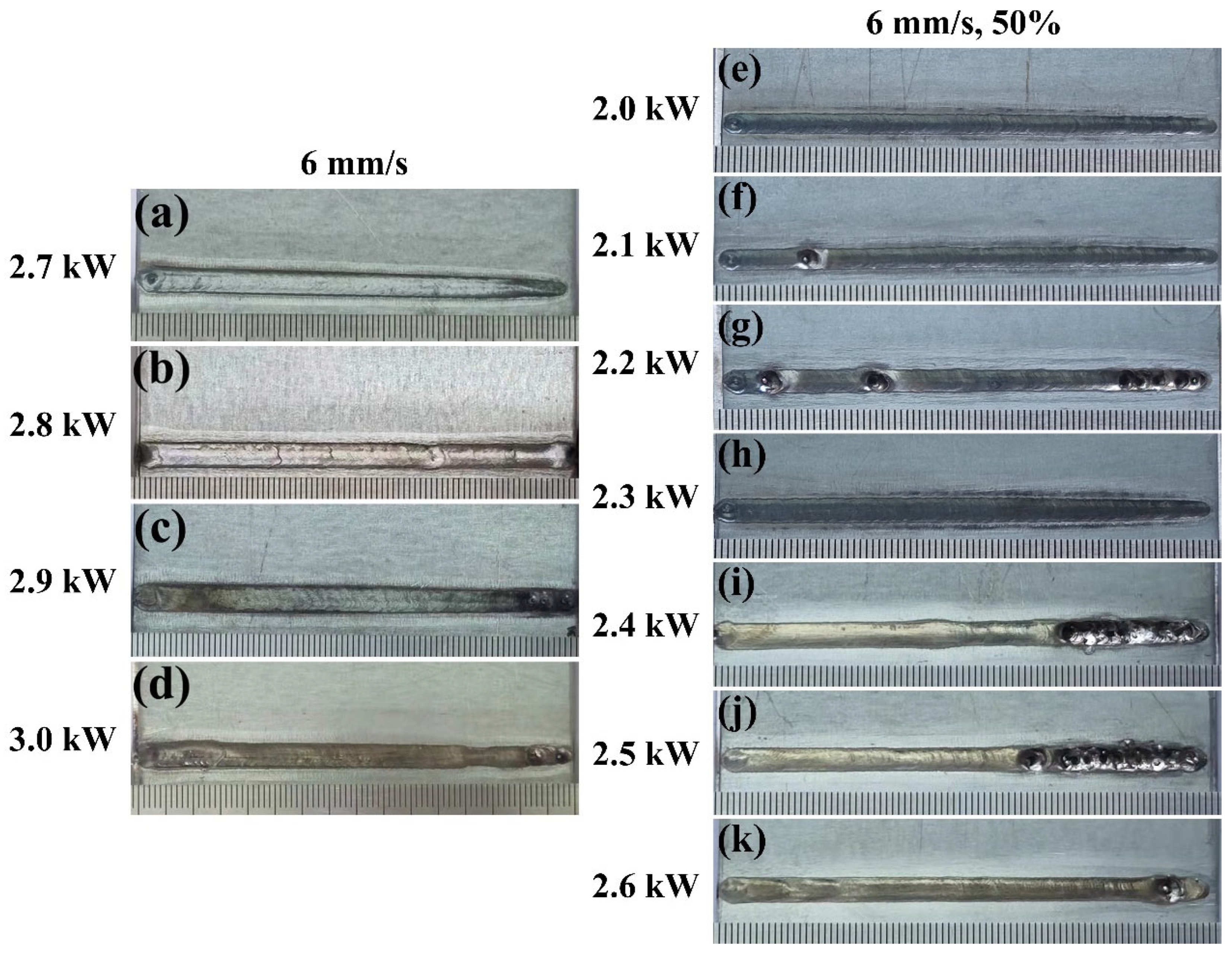
Figure 2 shows a macro-morphological comparison of the laser lap-welded joints without and with ultrasonic vibration. In general, with the increase in laser beam power, the weld width of the steel plate increased gradually, while spatter occurred when the power was high. Compared with LW, ultrasonic assistance shifts the stable (defect-free) processing window toward lower laser power; therefore, UV-LW was investigated at 2.0–2.6 kW (ΔP = 0.6 kW), whereas LW was conducted at 2.7–3.0 kW (ΔP = 0.3 kW). Only from the surface morphology was the weld formation without ultrasonic vibration more uniform than that with ultrasonic vibration, because the latter has splashing. At low power, the spatter was mostly generated at the tail of the weld. The reason might be that the welding temperature continued to rise with the movement of the laser beam. When the second half of the process was carried out, the accumulated heat exceeded the boiling point of Mg and Zn, and the vapor of Mg and Zn was accelerated to escape from the molten pool under the action of the UV, resulting in splashing. On the contrary, spatter mostly occurred in the first half of the weld at high power. The reason was that the initial heat input generated at high power was already sufficient to vaporize Mg and Zn out of the molten pool, which produced severe splashing. The splashed liquid metal contaminated the protective lens, which weakened the laser intensity radiated on the steel plate; that is, the heat input in the latter half of the weld was less than the value of the theoretical design. Therefore, it was in the latter half of the weld that an appropriate heat input was obtained, resulting in metallurgical bonding. It is worth mentioning that the weld formation was good, without splashing and other defects, when the laser beam power was 2.3 kW.
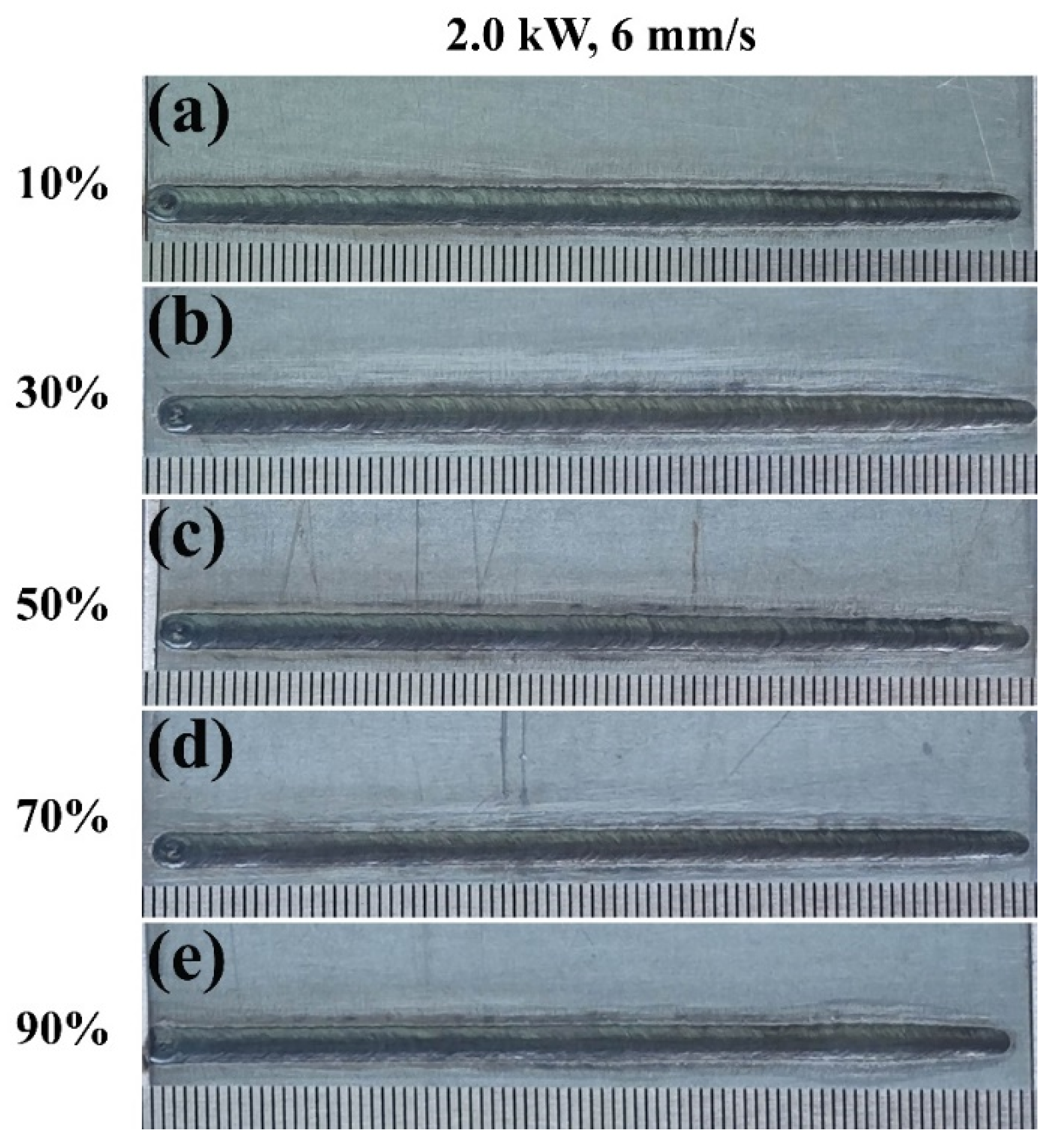
Figure 3 shows the macro-morphology of the UV-LW joints under different ultrasonic amplitudes. When the laser beam power was 2.0 kW and the welding speed was 6 mm/s, a well-formed and excellent welded joint could be obtained by changing the ultrasonic amplitude. From the weld surface morphology, there were no spatters, pores or other defects. Compared with the welded joint without ultrasonic vibration, the introduction of UV in the welding process significantly improved defects such as pores and cracks at the steel/Mg interface, which was mainly caused by the comprehensive effects of cavitation, acoustic streaming, and mechanical and thermal stress. However, the weld width changed little with the increase in ultrasonic amplitude, since the thermal effect produced by ultrasonic vibration was extremely limited, and was not enough to have a significant impact on the weld width at a given laser beam power and welding speed.
In conclusion, the UV-LW process can reduce the porosity by increasing the flow of liquid metal and delaying the cooling rate of the molten pool, thus improving the formation of weldments and enhancing the performance of joints.

3.2. Microstructure on AZ31B Side

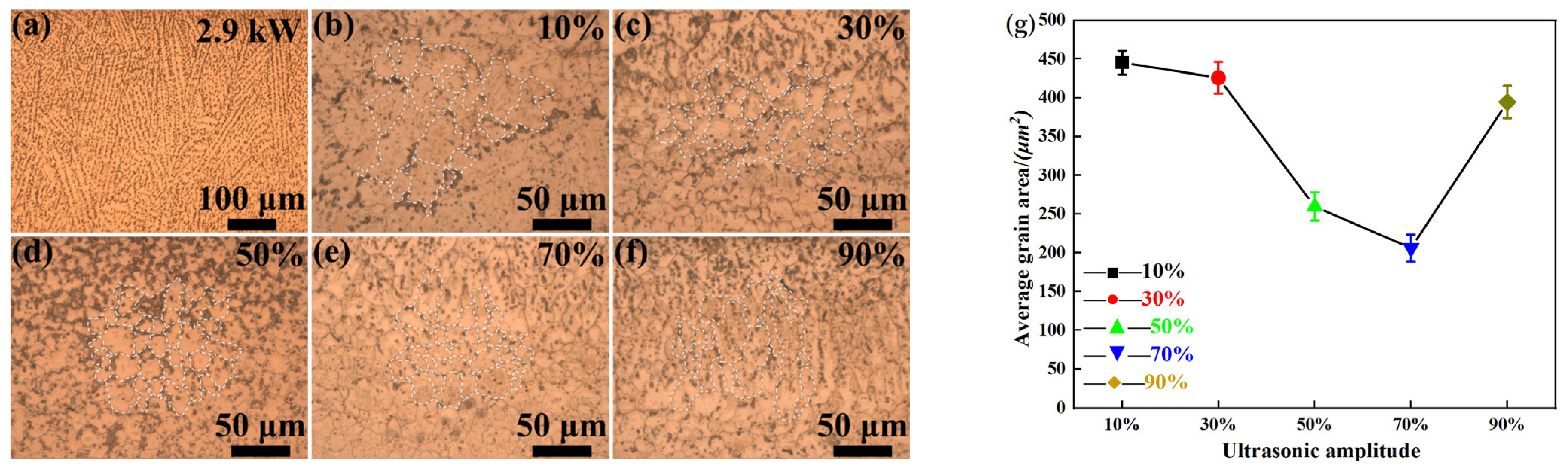
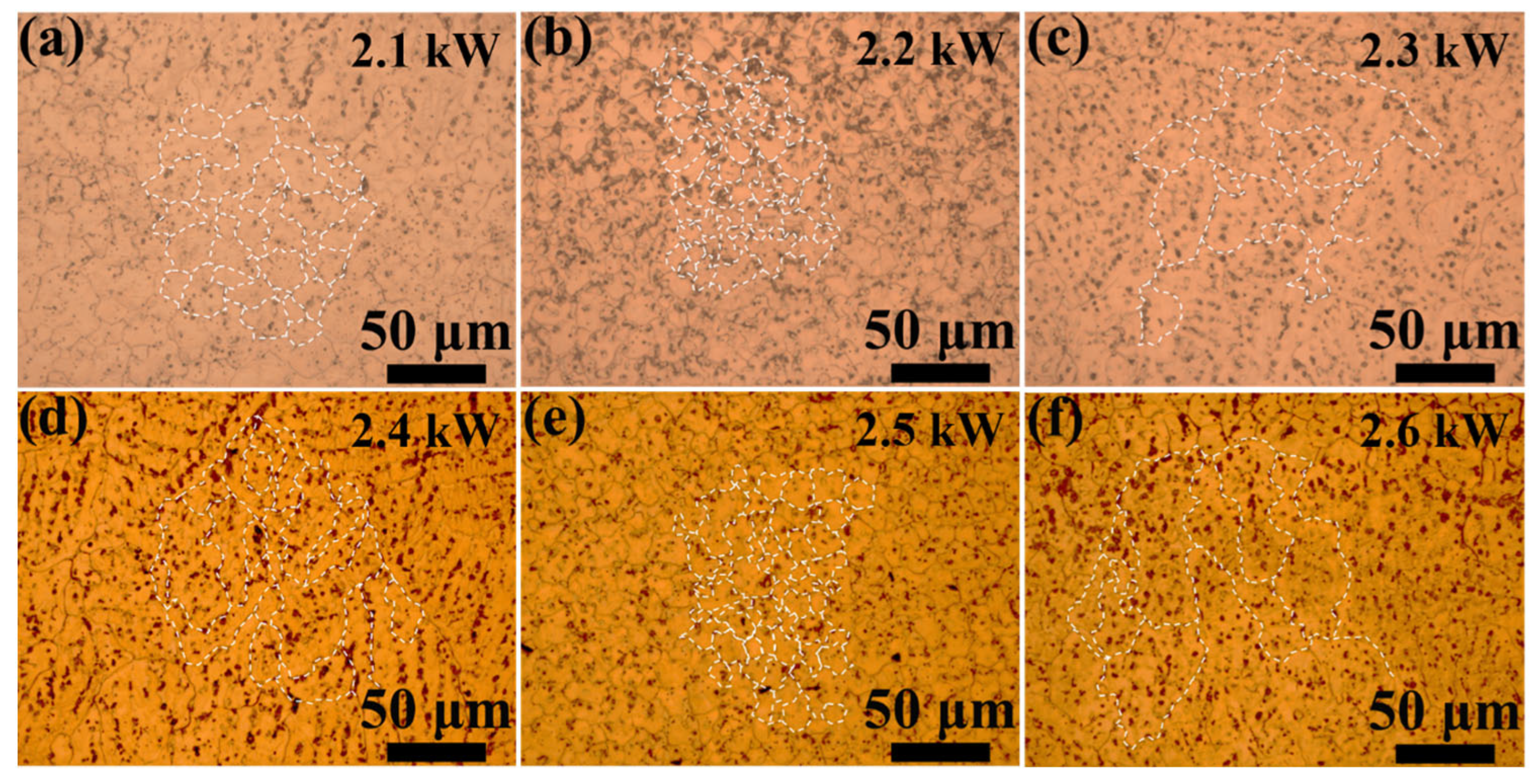
In order to further determine the formation of the interfacial structure, the metallographic microstructure of the joint cross-section under different ultrasonic amplitudes and laser beam powers was examined, as shown in Figure 4 and Figure 5. Compared with the joint produced without ultrasonics, the weld microstructure changed from uniformly distributed slender columnar crystals (Figure 4a) to predominantly equiaxed crystals (Figure 4b–f). Moreover, the grain refinement became increasingly evident with increasing ultrasonic amplitude. As quantitatively confirmed by the grain-size statistics in Figure 4g, the average grain area decreases markedly when the amplitude is increased to 50%, and remains at a low level within the range of 50–70%, indicating that effective grain refinement is achieved mainly in this amplitude window. When the amplitude is further increased to 90%, the average grain area increases again, suggesting that excessive amplitude weakens the refinement effect [17,18].
When the ultrasonic amplitude was kept constant at 50%, the weld microstructure obtained under different laser powers was predominantly composed of equiaxed grains. With ultrasonic vibration (UV) assistance, the average grain size showed an overall tendency to increase with laser power; however, the grain-size evolution was not strictly monotonic and exhibited some fluctuations. This behavior can be understood as the result of the competition between heat-input–controlled solidification conditions and ultrasonic-induced melt agitation. With other parameters kept constant, increasing laser power increases the nominal heat input (P/v), which has been widely reported to enlarge the molten pool and prolong the thermal/solidification cycle, thereby increasing the tendency for grain growth/coarsening under otherwise comparable conditions [19]. On the other hand, UV introduces acoustic streaming and cavitation, which intensify convection in the molten pool and can promote dendrite/columnar-structure fragmentation and heterogeneous nucleation, thus favoring the formation of equiaxed grains and mitigating the development of columnar grains that are commonly associated with high heat input and strong thermal gradients [15]. Therefore, even at relatively high laser powers, UV can help maintain an equiaxed grain morphology; meanwhile, the prolonged thermal/solidification cycle at higher heat input provides more time for post-nucleation grain growth, so the net outcome is an equiaxed structure with a slight overall coarsening trend. In addition, previous studies on Mg/Al alloys have also reported that increasing the cooling rate generally refines solidification microstructures by enhancing undercooling and suppressing grain growth, which is consistent with the above heat-input–thermal-cycle interpretation [20].
In general, UV can refine the grains mainly through the following aspects: (1) Cavitation effect: The ultrasonic vibration acting on the weldment can produce cavitation bubbles in the molten pool. When the cavitation bubbles grow and collapse, they can generate instantaneous high temperature and high pressure locally in the vicinity of the collapsing bubbles; as a result, the primary crystals/dendrites; as a result, the primary crystals in the molten pool are broken to increase the heterogeneous nucleation rate. (2) Acoustic streaming effect: The sound pressure gradient formed by the propagation of ultrasonic waves in the melted metal promotes melt flow; as a result, the nucleation particles broken by cavitation effect are more evenly dispersed to all parts of the molten pool, which greatly improves the probability of equiaxed-crystal nucleation and significantly refines the grains. (3) Mechanical effect: The ultrasonic mechanical stirring can also break the dendrites, increase the nucleation particles and refine the microstructure.
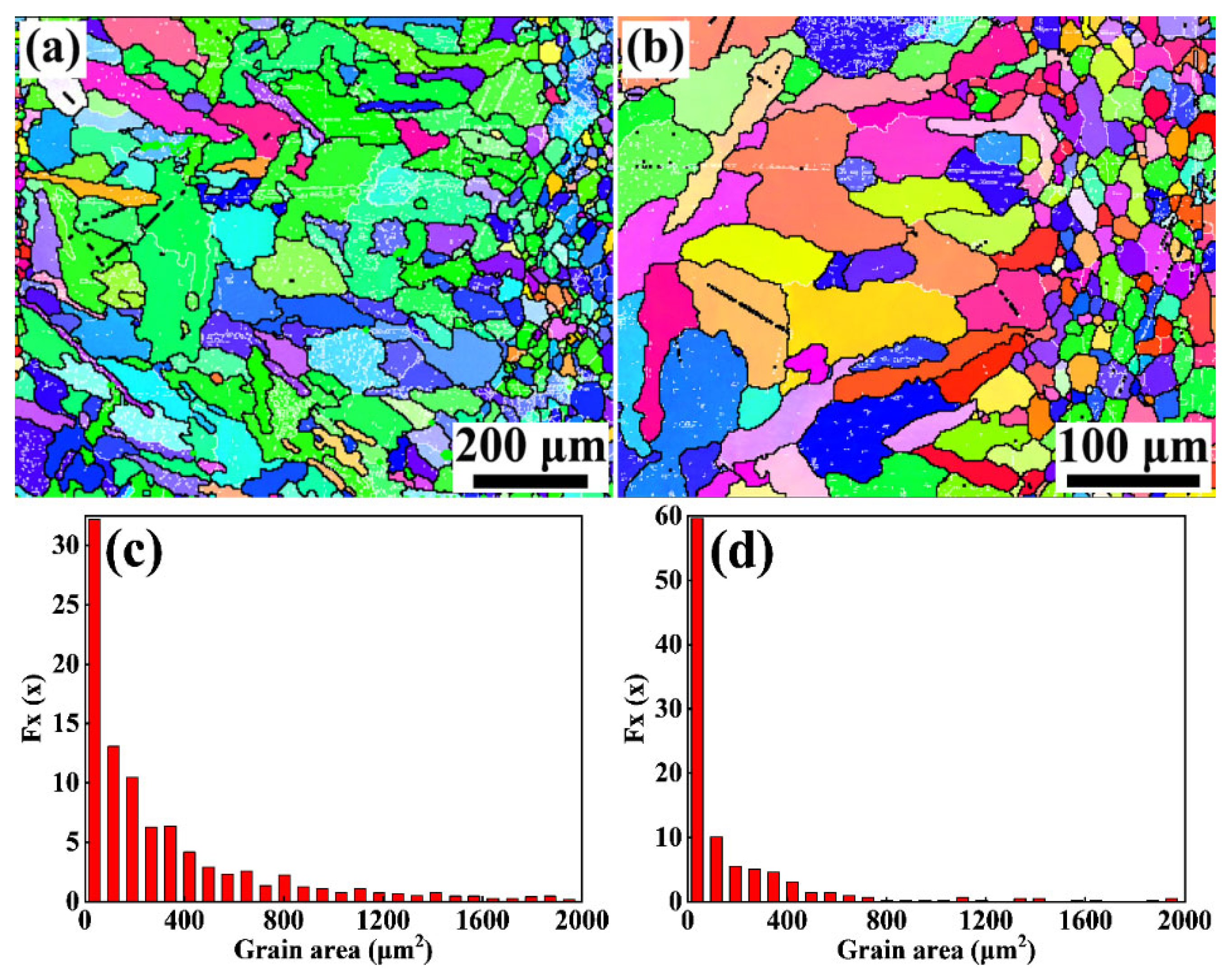
The microstructure and grain size of the central area of the weld on the Mg side are shown in Figure 6. The microstructure in the central area of the laser-welded joint is mostly columnar crystals and equiaxed dendrites with an average grain area of 583 μm2, and there are almost no recrystallized grains. Due to the low stacking fault energy, large grain boundary diffusion and small slip activation energy, the number of non-uniform nucleation particles increased during UV-LW and recrystallization occurred in the solidification process of the nugget zone on the Mg side [21]. As a result, the central area of the weld was mostly fine equiaxed crystals with an average grain area of 324 μm2, which was 44.40% smaller than that resulting from laser welding. Yang et al. [11] also pointed out that the rupture of cavitation bubbles can break up the growing dendrites to increase the number of nucleation particles. Consequently, both undercooling nucleation and dendrite fracture can improve the nucleation rate and refine the microstructure of the fusion zone.

3.3. Interfacial Microstructure

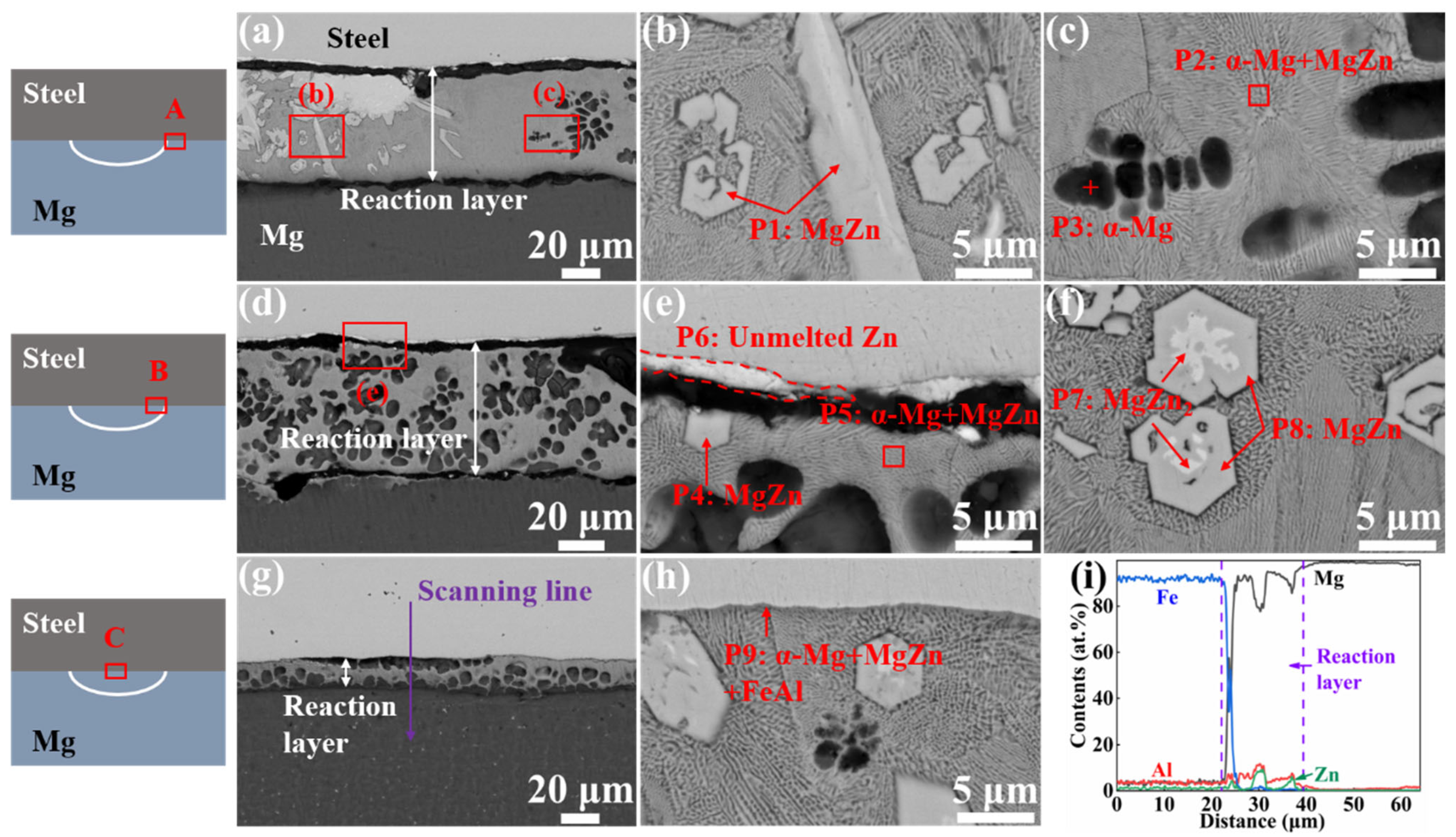
Figure 7 shows the microstructure and EDS analysis results of the galvanized steel/Mg laser lap-welded joint interface. The three zones at the interface were studied and labelled A, B and C, as shown in Figure 7. A shows the microstructure of the reaction layer outside but near the weld edge, where the reaction layer is about 54 μm thick and is mainly composed of continuous and uniform layered structures, bright polygonal and rod-shaped structures and dark black structures. However, there are obvious cracks between the reaction layer at this position and steel or Mg. B shows the microstructure of the reaction layer at the weld edge, and its reaction layer thickness was measured to be about 60 μm, which is close to that in A. The overall morphology of this position is similar than that of the former, but its main components are layered structures and dark circular structures. C shows the microstructure at the central interface of the weld, with a thickness of about 16 μm. The thickness of the reaction layer at this position is obviously reduced, and the microstructure is similar to that at the edge, but there are no crack defects between it and steel or Mg.
To further determine the composition of the structure in the reaction layer, EDS spot scanning analysis was carried out, as shown in Table 5. P1 was mainly composed of Mg and Zn, with a small amount of Al., and the atomic ratio of Mg and Zn was about 1:1, so it was speculated that bright polygon- and rod-shaped structures were MgZn phase. This phase also existed at P4 and P8 in region B (Figure 7e,f). P2 was a layered structure with an atomic composition of 65.22 at.% Mg, 2.52 at.% Al, and 32.26 at.% Zn, so it was speculated to be (α-Mg + MgZn) eutectic phase, which had the same characteristics as the lamellar eutectic structure at P5. P3 was the darkest structure in the reaction layer, and was similar in color to magnesium alloy matrix, indicating that it was an α-Mg solid solution. A fully bright structure (P6) was attached to the steel side interface at the edge of the weld. It was judged to be an unmelted galvanized layer according to the scanning results. There was a petaloid structure in some polygonal MgZn phases of region B. Since it was brighter than MgZn phase, the content of the Zn element was higher than that of the MgZn phase. Combined with the scanning results, it was speculated that P7 was MgZn2 phase. In addition, a high content of Al was found at the interface (P9) between the reaction layer in the center of the weld and the steel, indicating that Al diffused from the magnesium alloy to the steel interface during the welding process, so FeAl phase may be formed at the interface. Tan et al. [22,23] also found the formation of FeAl phase during laser welding–brazing of a magnesium alloy to steel, and pointed out that atomic diffusion was caused by a reduction in interfacial chemical potential. Miao et al. [24] also found that FeAl phase and Fe4Al13 phase were formed at the Mg/steel interface during laser fusion brazing of Mg/steel. It could be seen from the line scanning results that the layered structure in the reaction layer mainly contained Mg and Zn elements, and the content of the Mg element was much more than that of the Zn element, showing that the reaction layer was a Mg-Zn eutectic reaction layer, which was consistent with the spot scanning results.
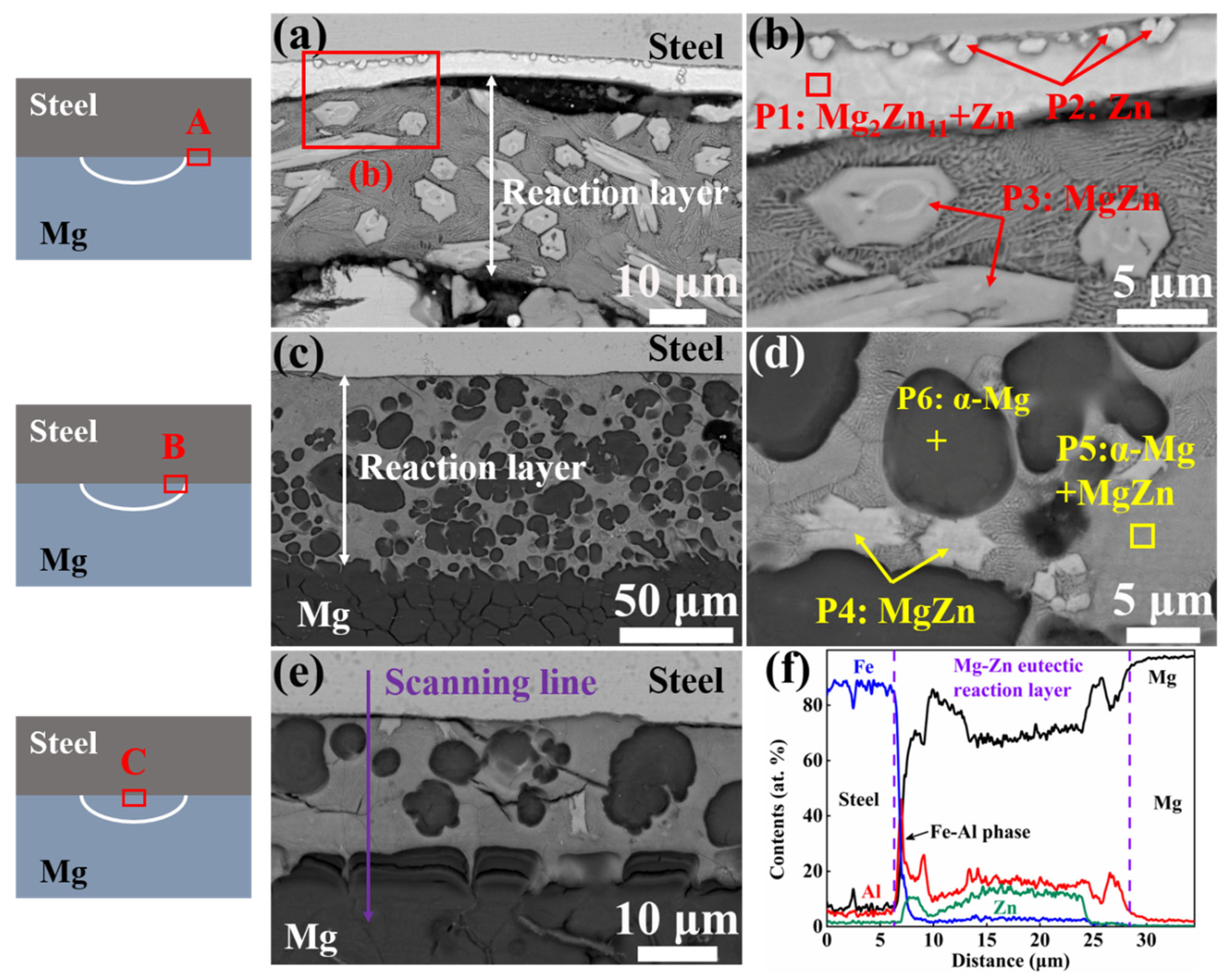
Figure 8 shows the SEM morphology and EDS line scanning analysis results of the interface of the UV-LW galvanized steel/Mg joint. The three regions are marked in red with A, B and C, corresponding to the outer edge, the side and the center of the Mg molten pool, respectively, as shown in the schematic in Figure 8. On the outer edge of the Mg molten pool, the reaction layer was about 32 μm thick and was composed of polygonal, rod-like and layered structures. Simultaneously, there was still a layer of long-strip bright material at the steel interface, on which there were many fine particles, as shown in Figure 8a. On the side of the Mg molten pool, the reaction layer was about 89 μm thick, and was in close contact with the molten magnesium alloy. With the assistance of UV, a large amount of Mg moved to the steel interface and reacted with the solid steel interface to produce metallurgical bonding, as shown in Figure 8c. The center of the Mg molten pool was still composed of layered structure, dark phase and a small amount of bright structure, and the reaction layer thickness in region C was measured to be about 20 μm; meanwhile, the cracks at the steel interface were greatly reduced, as shown in Figure 8e.
In order to find out whether these structures have an impact on the mechanical properties of the joint, EDS scanning analysis was carried out, as shown in Table 6. P1 and P2 had the highest contrast and brightest color, confirming that the Zn content in these two positions was relatively high. Simultaneously, combined with the results of energy spectrum analysis, it was characterized that P1 was (Mg2Zn11 + Zn) and P2 was unmelted Zn. The EDS results of those polygonal and rod-like structures showed that they mainly contained Mg and Zn and a small amount of the Al element, and the atomic ratio of Mg to Zn was about 1:1, confirming that they were hard/brittle MgZn phase. Similarly, MgZn phase was also observed in B (P4); however, it was petal-shaped, and the content of Zn element was lower than that in A. In region B (the side of the Mg molten pool), ultrasonic cavitation/acoustic streaming intensifies melt convection, which facilitates the transport, wetting and spreading of the Zn-rich liquid along the steel/Mg interface, thereby increasing the lateral extent (interfacial coverage) of the Zn-enriched reaction products, as evidenced by EDS mapping [11,15]. Accordingly, the distribution of Zn in the Mg molten pool was wider and more uniform. The temperature of A was low, so the amount of Mg that melted at the interface was less. Combined with the extrusion of the fixture on the weldment, Combined with the compressive force of the fixture on the weldment, the molten Zn at the center of the interface was squeezed into Region A, forming a Zn-rich zone. As a consequence, the phases produced by different Zn contents in the two regions were also different, or the element content in the same phase was slightly different. There were relatively distinct characteristics of P5 and P6; that is, P5 was a layered eutectic structure (α-Mg + MgZn), and P6 was a dark α-Mg solid solution. In addition, the line scanning analysis results of C showed that the thickness of the (α-Mg + MgZn) eutectic reaction layer was about 20 μm, which was greater than that of the non-ultrasonic reaction layer. This indicated that ultrasonic vibration was conducive to promoting the upward diffusion of Mg and the downward diffusion of Zn, enabling them to fully react and form more continuous and denser eutectic reaction layers.
Figure 7a and Figure 8a illustrate the morphological evolution of MgZn phases at the weld edge under ultrasonic assistance. Without ultrasound (Figure 7a), the MgZn constituents exhibit a quasi-continuous, island-like morphology, appearing as irregular polygonal agglomerates and thus forming locally connected brittle constituents. With ultrasound (Figure 8a), these MgZn-containing constituents are fragmented and refined into smaller irregular polygonal particles that are discretely distributed, indicating that the MgZn phase becomes more discontinuous. This morphology change is relevant to joint reliability because Mg-Zn reaction products (e.g., MgZn and MgZn2) are commonly reported to be hard/brittle, and an increased continuity/coverage can provide a preferential path for crack initiation and propagation [25,26]. In Mg-to-Zn-coated steel joints, prior studies have shown that fracture is often dominated by interfacial cracking, where cracks propagate along the Mg-Zn reaction layer and/or adjacent interfacial phases due to weak bonding. Moreover, microcracks within a continuous Mg–Zn eutectic/reaction layer have been reported to directly reduce joint strength, indicating that excessive/over-developed reaction products can be detrimental to joint toughness and fracture resistance [27].

3.4. Hardness

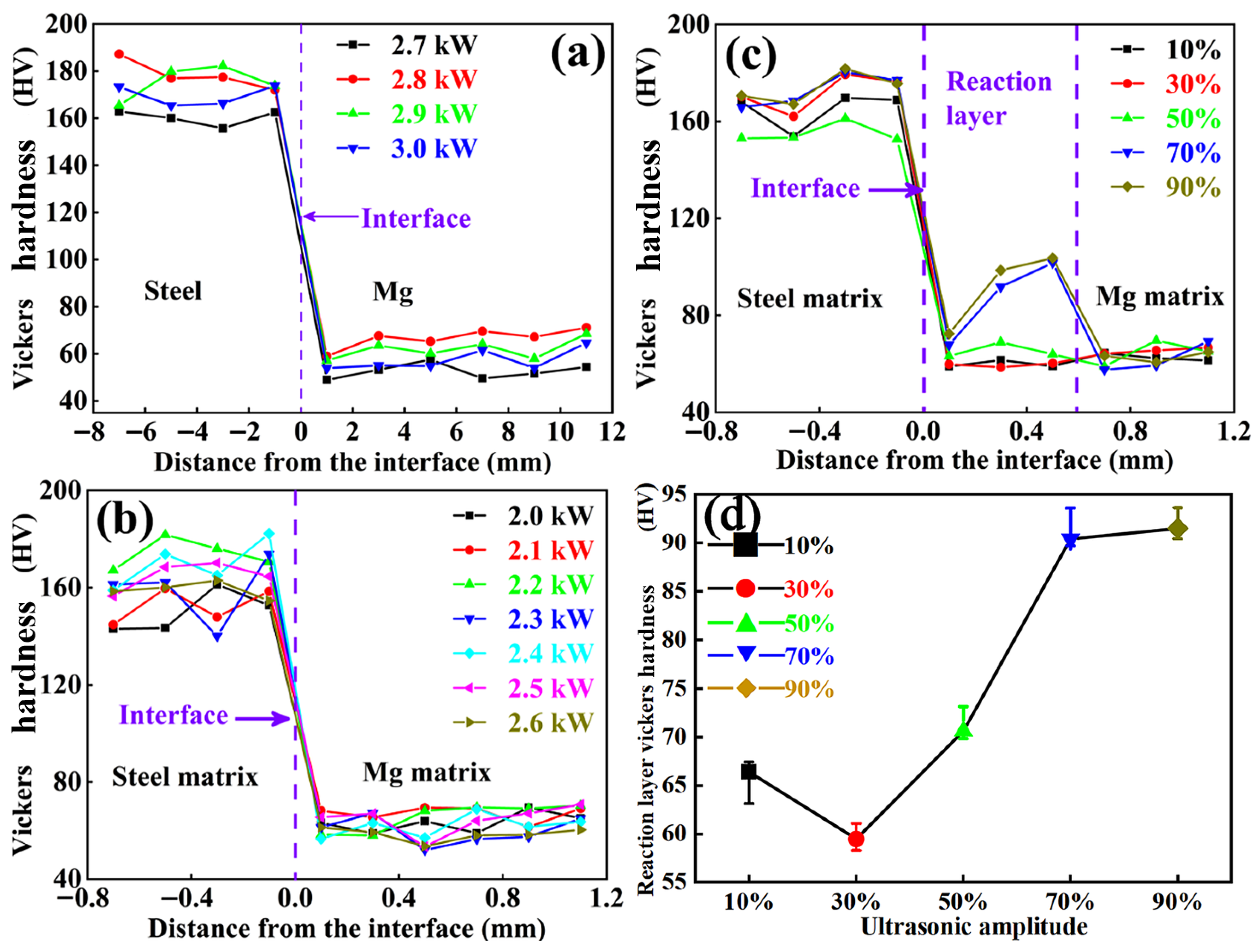
Figure 9 shows the hardness distribution at the interface of the laser lap-welded galvanized steel/Mg joint under different welding processes. It is observed that the hardness of the steel side is about 160–180 HV and that of the Mg side is about 60 HV without ultrasonic vibration. The hardness of the fusion zone near the interface decreases slightly, which is due to the diffusion of Al in the liquid magnesium alloy to the steel side, resulting in a reduction in precipitation of Mg17Al12 reinforcing phase [28]. Since the size of the hard/brittle phase in the reaction layer is too small to be accurately measured, the hardness of the reaction layer did not change significantly. However, when the laser beam power was 2.8 kW and 2.9 kW, the hardness of the reaction layer was generally higher than at 2.7 kW and 3.0 kW (Figure 9a), indicating that more IMCs or hard/brittle phases were produced in the reaction layer within this power range. When ultrasonic vibration with an amplitude of 50% was added, the average hardness on the steel side fluctuated around 160 HV, and the average hardness on the Mg side was about 60 HV. With an increase in laser beam power, the hardness of the reaction layer on the Mg side did not change significantly, as shown in Figure 9b. Paradoxically, when the laser beam power remained unchanged at 2.0 kW, the hardness of the reaction layer on the Mg side first increased slowly with an increase in ultrasonic amplitude. As shown in Figure 9d, when the amplitude increased from 50% to 70%, the hardness of the reaction layer increased sharply, and the maximum value was able to reach 103.6 HV, as shown in Figure 9c. The hardness increase in the reaction layer was attributed to the formation of Mg-Zn eutectic phase and MgZn2 hard/brittle phase, which corresponded to the previous SEM and EDS analysis results.

3.5. Tensile–Shear Strength

Figure 10 shows the tensile–shear strength variation in laser lap-welded galvanized steel/Mg joints under different welding processes. As shown in Figure 10a, without ultrasound, the joint strength increased slowly with increasing laser power, with an average tensile–shear strength of 176 N/mm and a maximum value of 179.9 N/mm at 2.9 kW, and then decreased as the laser power continued to increase. The reason is that the further increase in heat input led to the burning loss and evaporation of magnesium alloy and the Zn coating, and the interface bonding was not continuous and dense, so the joint strength was reduced. According to Figure 10b, when the laser beam power was constant, the joint strength increased with an increase in ultrasonic amplitude, and the maximum value (about 281 N/mm) was obtained at 90%. The greater the ultrasonic amplitude, the more obvious the gain effect on the joint strength. However, the amplitude was too large to carry out a stable welding process, which was not conducive to obtaining a continuous and uniform weld. The strength of the UV-LW joint was higher than that of the laser welding joint. While keeping the ultrasonic amplitude unchanged at 50%, the strength gradually increased with an increase in laser beam power. The strength increased sharply to the maximum (about 290 N/mm) at 2.3 kW (Figure 10c), and then the intensity decreased with a continuous increase in laser beam power. It is worth noting that ultrasonic assistance significantly increased the peak tensile–shear strength from 179.9 N/mm (without ultrasound) to 290 N/mm (with ultrasonic assistance), corresponding to an improvement of 61.2%.

3.6. Fracture Analysis

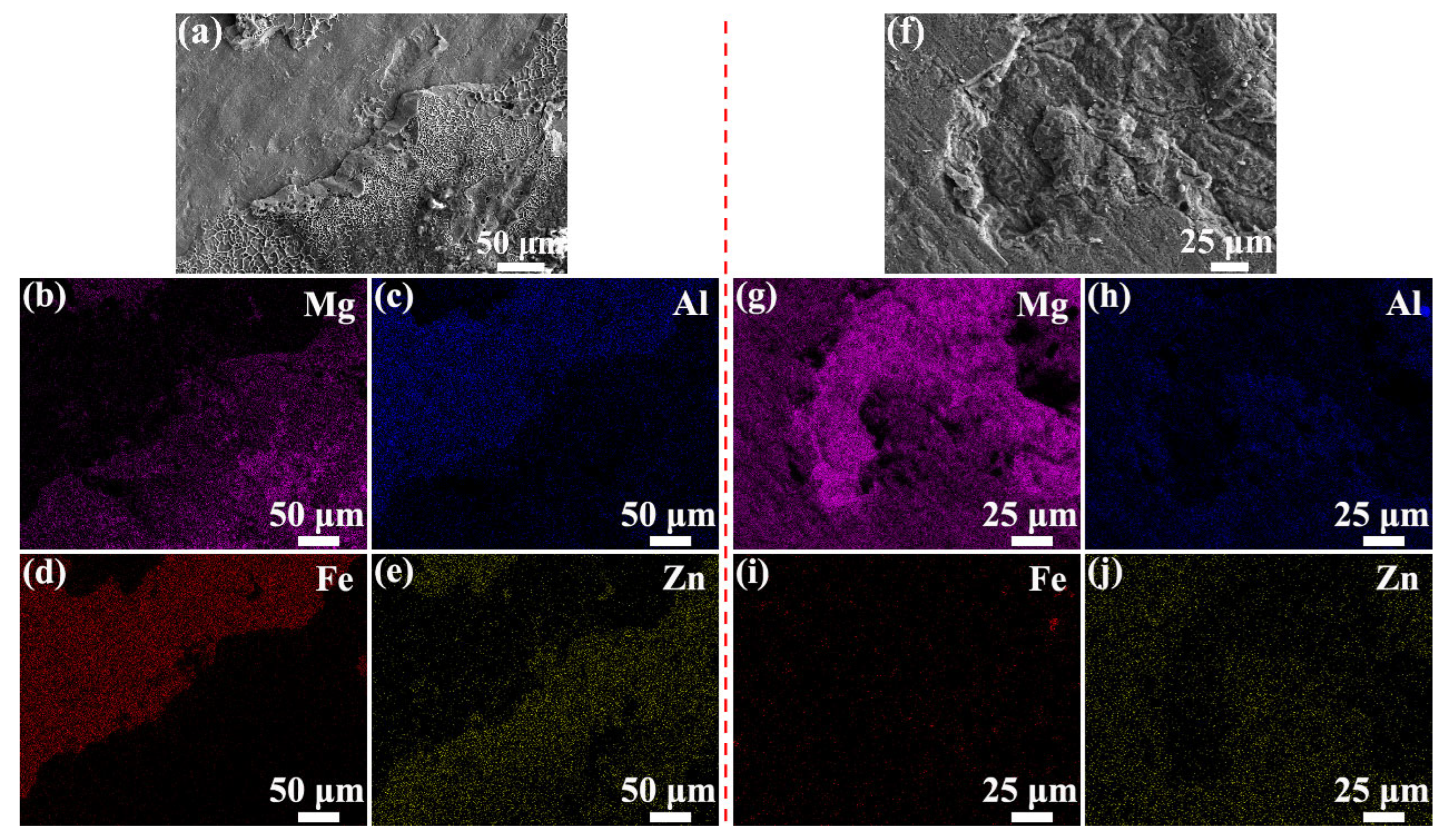
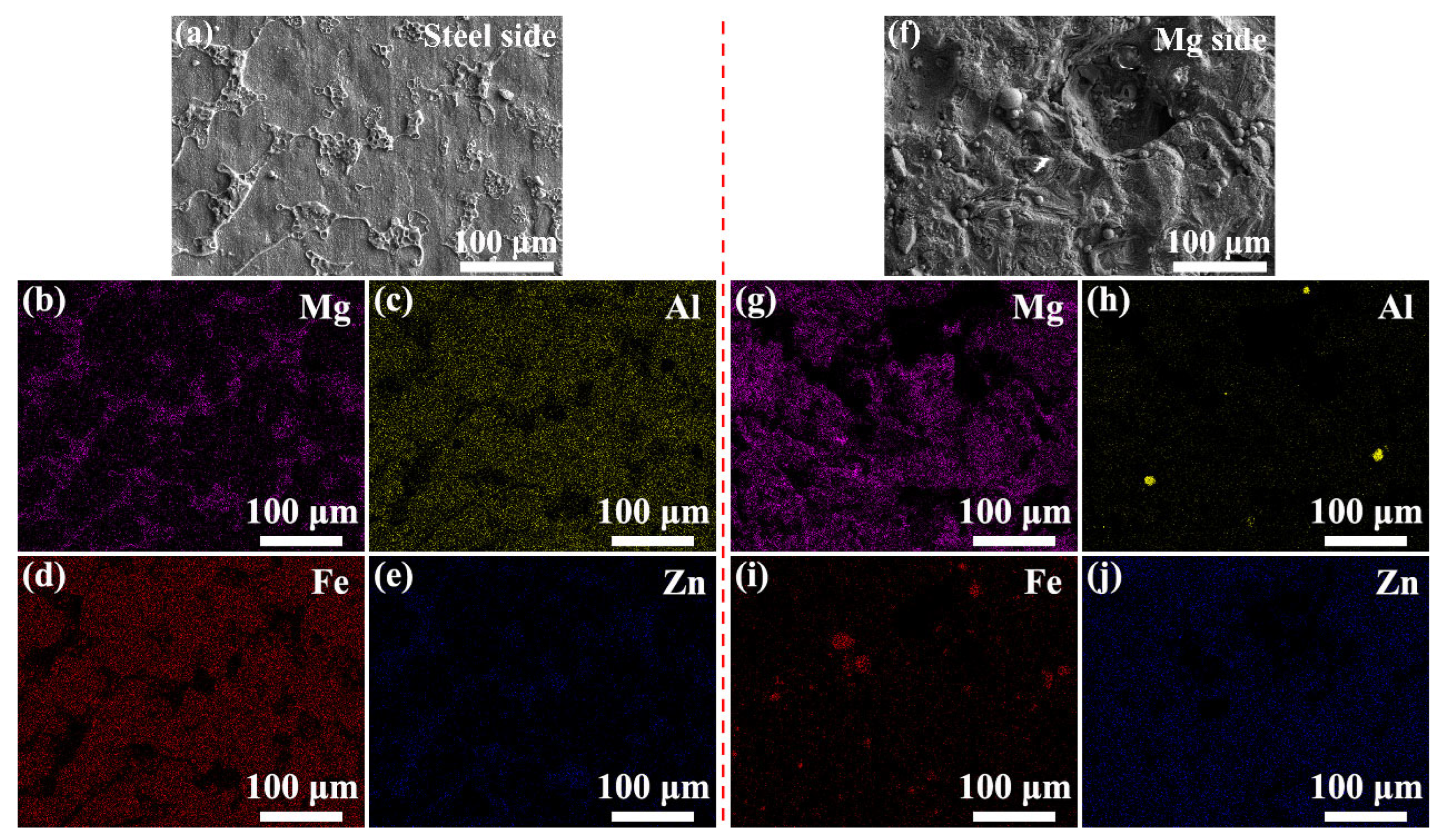
Figure 11 and Figure 12 show the fracture morphologies and map scanning analysis results of the laser welding and UV-LW joints, respectively. The fracture on the steel side of the joint without ultrasonic vibration had quasi-cleavage fracture characteristics and no dimples. There was a large area of tear pit on the Mg side. There was a Mg-Zn eutectic reaction layer at the lower right of the fracture on the steel side (Figure 11a), as shown in Figure 11b,e, while there was a layer of Fe-Al phase on the upper left of the fracture on the steel side, as shown in Figure 11c,d. It is shown in Figure 11g that the fracture occurred between the reaction layer and Mg matrix, while there was more Al and Zn at the flat fracture, which again showed that Fe-Al phase was formed at the steel interface. In short, the fracture of the joint was mainly divided into two cases. On the one hand, there was a flat fracture between the steel interface and the reaction layer, and on the other hand, there was a ductile fracture between the reaction layer and the Mg matrix. The fracture surface on the steel side was relatively flat with ultrasonic vibration, and the surface combined a lot of mesh structures, while the fracture surface on the Mg side was very irregular. According to the EDS map scanning results, it was found that these mesh structures were rich in Mg and Zn elements, while the flat section was rich in Fe and Al elements, indicating that the joints could also be divided into two types: plastic fracture in the Mg-Zn eutectic reaction layer, and ductile fracture at the interface between steel and Mg. Moreover, the map scanning analysis of fracture elements on the Mg side also showed that there were many gaps in the Mg-Zn eutectic reaction layer, which also proved that the fracture occurred in the eutectic reaction layer. To sum up, ultrasonic vibration can not only reduce defects, but also refine the Mg-Zn reinforcing phase generated at the steel–Mg interface, promoting the metallurgical combination of the two.
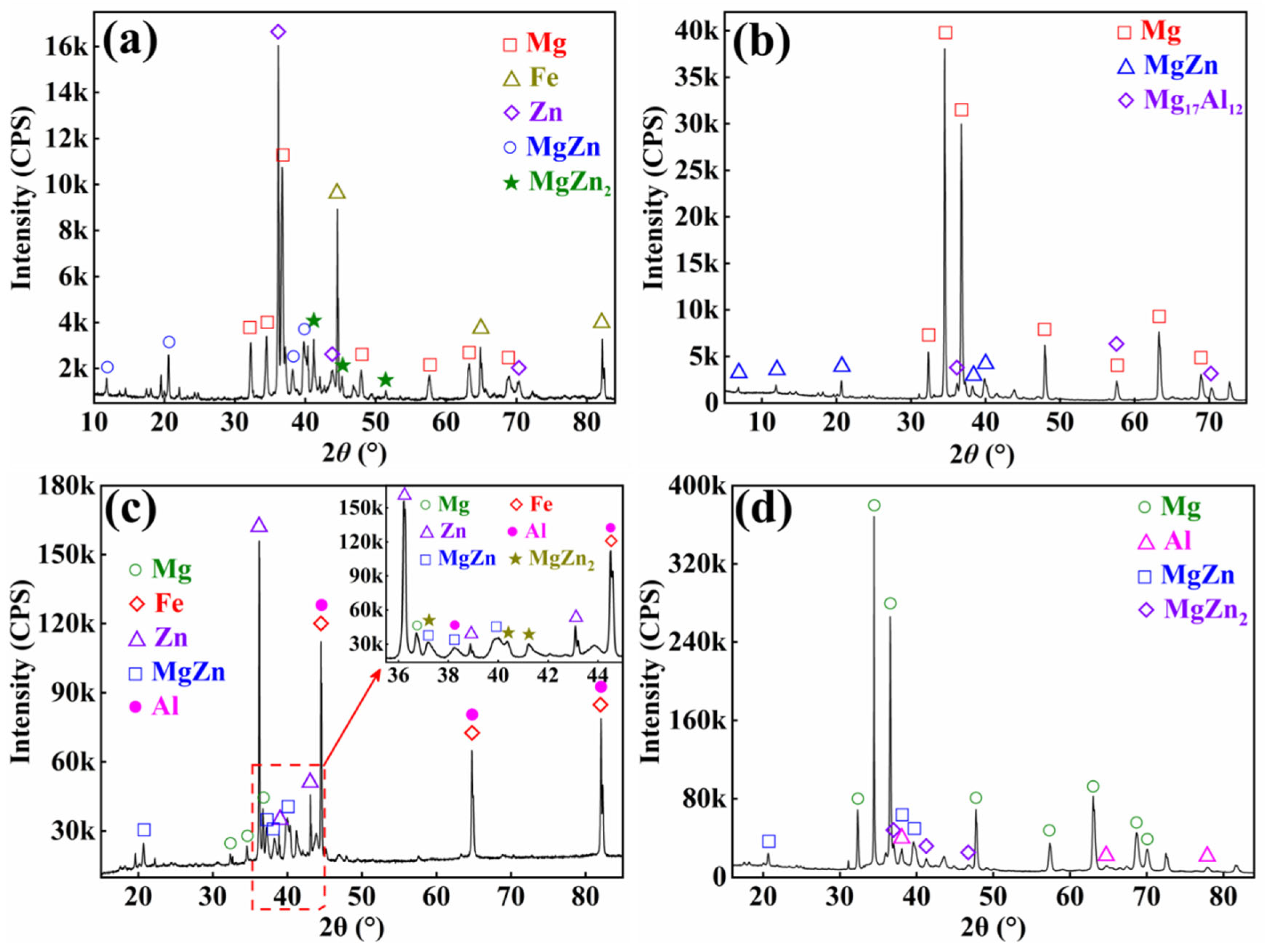
The fracture of the galvanized steel/Mg joint under different welding processes was detected by XRD to further determine the phase compositions in the interface reaction layer, as shown in Figure 13. MgZn phase was detected in the fracture of the joint without ultrasonic vibration, while MgZn2 and Mg17Al12 phase mainly appeared at the fracture of the steel side. Unlike the former, MgZn2 phase also existed in the fracture of the Mg side with ultrasonic vibration. It is worth mentioning that the diffraction peak of Al also appeared on the ultrasonic fracture. The reason was that Al atoms in Mg molten pool were enriched at the steel interface under the action of UV, while the steel interface was still in a solid state and could not react with Al. Therefore, the diffraction peak of elemental Al was detected.

4. Conclusions

In this work, laser welding and UV-LW joints were compared. The effects of the UV on the weld formation, microstructure and mechanical properties of lap-welded joints were studied by adjusting the laser beam power and ultrasonic amplitude. The main conclusions were as follows:
(1)
With UV, the joint microstructure exhibited an evident transition from slender columnar grains with an average grain area of 583 μm2 to fine equiaxed grains with an average grain area of 324 μm2, compared with LW under the respective sound welding conditions. The grain-refinement effect became more pronounced as the UV amplitude increased, but further refinement was limited beyond a certain amplitude range. At a fixed UV amplitude, the grains remained equiaxed, while the grain size increased slightly with increasing laser beam power.
(2)
UV promoted the metallurgical reaction between Mg and Zn, leading to the formation of hard and brittle MgZn/MgZn2 phases together with the α-Mg solid solution at the steel/Mg interface. Quantitatively, the reaction layer thicknesses were 54 μm (A), 60 μm (B) and 16 μm (C) without UV, and 32 μm (A), 89 μm (B) and 20 μm (C) with UV assistance. In addition, the Zn-enriched reaction products exhibited a greater lateral extent (interfacial coverage) along the steel/Mg interface, as evidenced by EDS mapping.
(3)
The Mg–Zn eutectic phase and MgZn2 hard/brittle phase produced by UV increased the hardness of the reaction layer on the Mg side, and the maximum value reached 103.6 HV. The peak tensile–shear strength increased from 179.9 N/mm (without ultrasound) to 290 N/mm (with ultrasonic assistance), corresponding to an improvement of 61.2%. Compared with laser lap welding, UV reduced interfacial defects and refined grains, thereby improving the joint strength.

Author Contributions

Conceptualization, D.W., H.L. and D.Z.; methodology, H.L. and D.Z.; data curation, C.Z. and J.G.; visualization, N.X., X.Z. and K.H.; software, X.Z. and K.H.; validation, N.X., X.Z., K.H. and Z.W.; formal analysis, N.X., X.Z., K.H. and Z.W.; investigation, N.X., X.Z., K.H. and Z.W.; resources, N.X. and X.Z.; writing—original draft preparation, C.Z. and J.G.; writing—review and editing, D.W., C.Z., J.G., N.X., X.Z., K.H. and Z.W.; project administration, X.Z., K.H. and Z.W.; supervision, D.W. All authors have read and agreed to the published version of the manuscript.

Funding

This research was funded by the National Natural Science Foundation of China (Grant No. 52475461) and Postgraduate Research and Practice Innovation Program of Jiangsu Province (Grant No. SJCX24_2416).

Data Availability Statement

The original contributions presented in this study are included in the article. Further inquiries can be directed to the corresponding author.

Conflicts of Interest

The authors declare no conflicts of interest.

References

  1. Cheng, J.H.; Hu, X.H.; Sun, X.; Vivek, A.; Daehn, G.; Cullen, D. Multi-scale characterization and simulation of impact welding between immiscible Mg/steel alloys. J. Mater. Sci. Technol. 2020, 59, 149–163. [Google Scholar] [CrossRef]
  2. Huang, H.; Chen, J.; Cheng, J.H.; Lim, Y.C.; Hu, X.H.; Feng, Z.L.; Sun, X. Surface engineering to enhance heat generation and joint strength in dissimilar materials AZ31 and DP590 ultrasonic welding. Int. J. Adv. Manuf. Technol. 2020, 111, 3095–3109. [Google Scholar] [CrossRef]
  3. Huang, L.R.; Ding, X.N.; Dai, C.H.; Ma, H.L. Changes in the structure and dissociation of soybean protein isolate induced by ultrasound-assisted acid pretreatment. Food Chem. 2017, 232, 727–732. [Google Scholar] [CrossRef]
  4. Liang, Q.; Ren, X.; Ma, H.; Li, S.; Xu, K.; Oladejo, A.O. Effect of Low-Frequency Ultrasonic-Assisted Enzymolysis on the Physicochemical and Antioxidant Properties of Corn Protein Hydrolysates. J. Food Qual. 2017, 2017, 2784146. [Google Scholar] [CrossRef]
  5. Patel, V.K.; Bhole, S.D.; Chen, D.L. Formation of zinc interlayer texture during dissimilar ultrasonic spot welding of magnesium and high strength low alloy steel. Mater. Des. 2013, 45, 236–240. [Google Scholar] [CrossRef]
  6. Patel, V.K.; Bhole, S.D.; Chen, D.L. Characterization of ultrasonic spot welded joints of Mg-to-galvanized and ungalvanized steel with a tin interlayer. J. Mater. Process. Technol. 2014, 214, 811–817. [Google Scholar] [CrossRef]
  7. Patel, V.K.; Chen, D.L.; Bhole, S.D. Dissimilar ultrasonic spot welding of Mg-Al and Mg-high strength low alloy steel. Theor. Appl. Mech. Lett. 2014, 4, 041005. [Google Scholar] [CrossRef]
  8. Lai, W.J.; Pan, J.; Feng, Z.L.; Santella, M.; Pan, T.-Y. Failure Mode and Fatigue Behavior of Ultrasonic Spot Welds with Adhesive in Lap-Shear Specimens of Magnesium and Steel Sheets. SAE Int. J. Mater. Manuf. 2013, 6, 279–285. [Google Scholar] [CrossRef]
  9. Chen, J.; Lim, Y.C.; Leonard, D.; Huang, H.; Feng, Z.; Sun, X. In Situ and Post-Mortem Characterizations of Ultrasonic Spot Welded AZ31B and Coated Dual Phase 590 Steel Joints. Metals 2020, 10, 899. [Google Scholar] [CrossRef]
  10. Yang, F.Z.; Zhou, J.; Ding, R.R. Ultrasonic vibration assisted tungsten inert gas welding of dissimilar magnesium alloys. J. Mater. Sci. Technol. 2018, 34, 2240–2245. [Google Scholar] [CrossRef]
  11. Yang, F.Z.; Liu, B. Microstructure Evolution and Strengthening Mechanism of Galvanized Steel/Mg Alloy Joint Obtained by Ultrasonic Vibration-Assisted Welding Process. Materials 2021, 14, 1674. [Google Scholar] [CrossRef]
  12. Ji, S.D.; Li, Z.W.; Ma, L.; Yue, Y.M.; Gao, S.S. Investigation of Ultrasonic Assisted Friction Stir Spot Welding of Magnesium Alloy to Aluminum Alloy. Strength Mater. 2016, 48, 2–7. [Google Scholar] [CrossRef]
  13. Zhao, J.J.; Wu, C.S.; Su, H. Ultrasonic effect on thickness variations of intermetallic compound layers in friction stir welding of aluminium/magnesium alloys. J. Manuf. Process. 2021, 62, 388–402. [Google Scholar] [CrossRef]
  14. Lei, Z.L.; Bi, J.; Li, P.; Guo, T.; Zhao, Y.B.; Zhang, D.M. Analysis on welding characteristics of ultrasonic assisted laser welding of AZ31B magnesium alloy. Opt. Laser Technol. 2018, 105, 15–22. [Google Scholar] [CrossRef]
  15. Lei, Z.L.; Bi, J.; Li, P.; Li, Q.; Chen, Y.B.; Zhang, D.M. Melt flow and grain refining in ultrasonic vibration assisted laser welding process of AZ31B magnesium alloy. Opt. Laser Technol. 2018, 108, 409–417. [Google Scholar] [CrossRef]
  16. Zhou, S.Y.; Ma, G.Y.; Wu, D.J.; Chai, D.S.; Lei, M.K. Ultrasonic vibration assisted laser welding of nickel-based alloy and Austenite stainless steel. J. Manuf. Process. 2018, 31, 759–767. [Google Scholar] [CrossRef]
  17. Yang, K.; Yang, W.; He, F.; Yang, H.; Chen, H.; Lin, X. CMT-WAAM processing of AZ31 magnesium alloy assisted with ultrasound: Evolution of arc, melt pool and microstructure. J. Manuf. Process. 2025, 148, 442–458. [Google Scholar] [CrossRef]
  18. Zhang, J.; Xing, Y.; Zhang, J.; Cao, J.; Yang, F.; Zhang, X. Effects of In-Process Ultrasonic Vibration on Weld Formation and Grain Size of Wire and Arc Additive Manufactured Parts. Materials 2022, 15, 5168. [Google Scholar] [CrossRef]
  19. Cui, S.; Mo, G.; Li, H.; Liu, X.; Yang, C. Melt pool morphology, microstructure evolution, and mechanical properties of dissimilar aluminum alloy butt laser welding joints under different heat input. Weld. World 2025, 69, 3509–3521. [Google Scholar] [CrossRef]
  20. Cai, H.; Zhang, N.; Liu, L.; Su, J.; Li, Y.; Kang, Y.; Guo, F. Effects of cooling rate on the microstructure and properties of magnesium alloy-a review. J. Magnes. Alloys 2024, 12, 3094–3114. [Google Scholar] [CrossRef]
  21. Tilahun, S.; Vijayakumar, M.D.; Ramesh Kannan, C.; Manivannan, S.; Vairamuthu, J.; Manoj Kumar, K.P. A Review On Ultrasonic Welding of Various Materials and Their Mechanical Properties. IOP Conf. Ser. Mater. Sci. Eng. 2020, 988, 012113. [Google Scholar] [CrossRef]
  22. Li, L.Q.; Tan, C.W.; Chen, Y.B.; Guo, W.; Song, F. Comparative study on microstructure and mechanical properties of laser welded–brazed Mg/mild steel and Mg/stainless steel joints. Mater. Des. 2013, 43, 59–65. [Google Scholar] [CrossRef]
  23. Li, L.Q.; Tan, C.W.; Chen, Y.B.; Guo, W.; Mei, C.X. CO2 laser welding–brazing characteristics of dissimilar metals AZ31B Mg alloy to Zn coated dual phase steel with Mg based filler. J. Mater. Process. Technol. 2013, 213, 361–375. [Google Scholar] [CrossRef]
  24. Miao, Y.G.; Han, D.F.; Xu, X.F.; Wu, B.T. Phase constitution in the interfacial region of laser penetration brazed magnesium–steel joints. Mater. Charact. 2014, 93, 87–93. [Google Scholar] [CrossRef]
  25. Tan, C.; Li, L.; Chen, Y.; Mei, C.; Guo, W. Interfacial microstructure and fracture behavior of laser welded–brazed Mg alloys to Zn-coated steel. Int. J. Adv. Manuf. Technol. 2013, 68, 1179–1188. [Google Scholar] [CrossRef]
  26. Li, L.; Tan, C.; Chen, Y.; Guo, W.; Hu, X. Influence of Zn coating on interfacial reactions and mechanical properties during laser welding-brazing of Mg to steel. Metall. Mater. Trans. A 2012, 43, 4740–4754. [Google Scholar] [CrossRef]
  27. Gao, J.-M.; Wang, D.; Zhuang, D.-D.; Zhao, X.-Y.; Lei, Y.-C. Effect of laser power on microstructure and mechanical properties of laser heat conduction lap welded joint between AZ31B magnesium alloy and DP780 galvanized steel. J. Cent. South Univ. 2022, 29, 3463–3475. [Google Scholar] [CrossRef]
  28. Tan, C.W.; Xiao, L.Y.; Liu, F.Y.; Chen, B.; Song, X.G.; Li, L.Q.; Feng, J.C. Influence of Laser Power on the Microstructure and Mechanical Properties of a Laser Welded-Brazed Mg Alloy/Ni-Coated Steel Dissimilar Joint. J. Mater. Eng. Perform. 2017, 26, 2983–2997. [Google Scholar] [CrossRef]
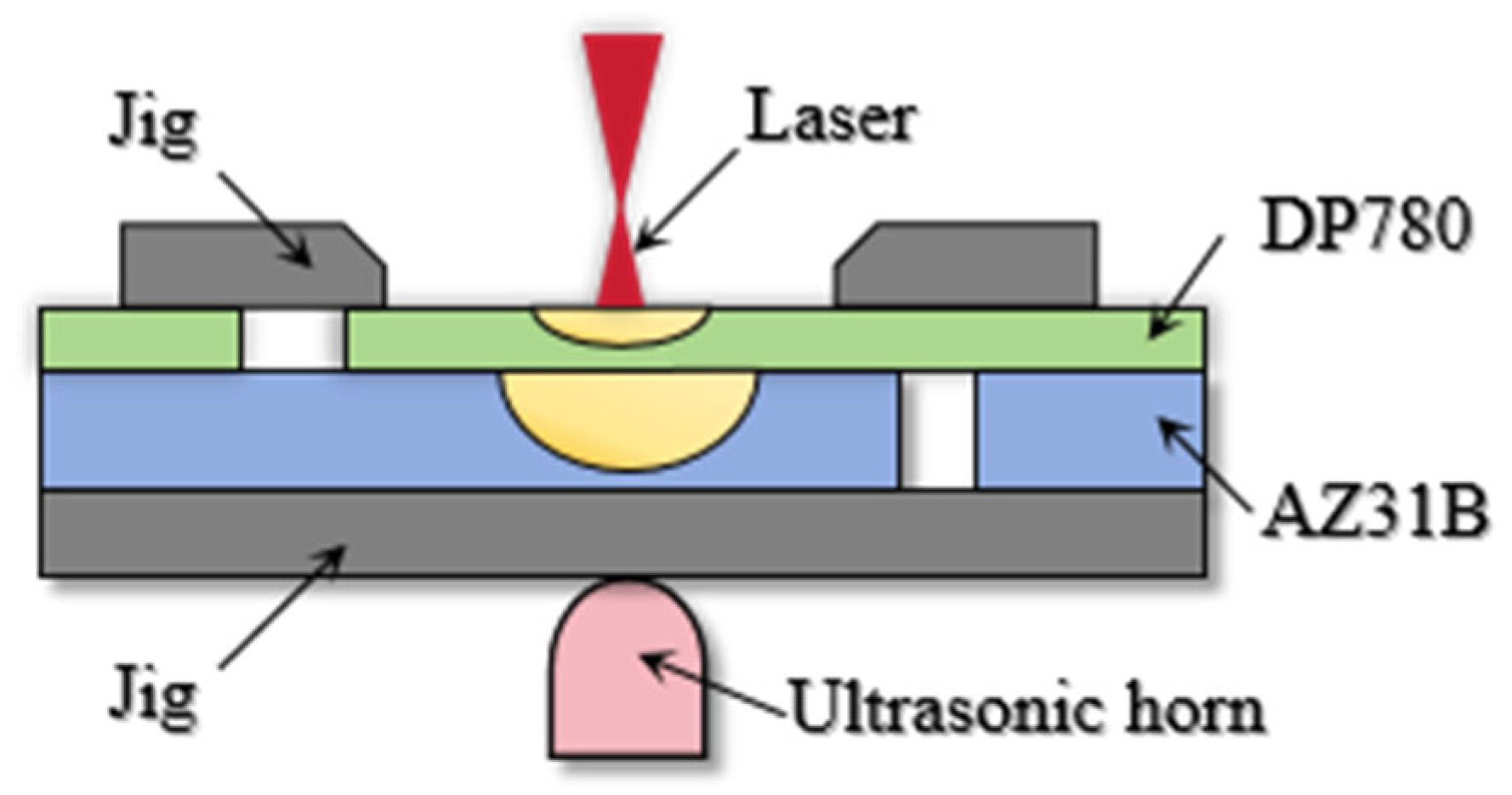
Figure 1. Schematic diagram of ultrasonic-vibration-assisted laser heat conduction lap welding.
Metals 16 00120 g001
Figure 2. The weld morphology of the laser lap-welded joint: (ad) without ultrasonic vibration; (ek) with ultrasonic vibration.
Metals 16 00120 g002
Figure 3. The weld morphology of the UV-LW joint under different amplitudes: (ae) 10%, 30%, 50%, 70%, 90%.
Metals 16 00120 g003
Figure 4. The metallographic structure under different parameters: (a) without ultrasonic vibration; (bf) 10%, 30%, 50%, 70%, 90%. (g) Variation curve of average grain size with ultrasonic vibration.
Metals 16 00120 g004
Figure 5. The metallographic structure under different laser beam powers: (af) 2.1 kW, 2.2 kW, 2.3 kW, 2.4 kW, 2.5 kW, 2.6 kW.
Metals 16 00120 g005
Figure 6. Grain structure determined by EBSD upon using different welding technologies: (a,c) laser welding; (b,d) UV-LW.
Metals 16 00120 g006
Figure 7. Microstructure evolution at the interface of the laser-welded galvanized steel/Mg joint: (a) outside the weld edge; (b,c) magnified views of the regions marked in (a); (d) inside the weld edge; (e) magnified view of the region marked in (d); (f) microstructure at the weld edge; (g) weld center; (h) microstructure at the weld center; (i) EDS line-scan across the reaction layer in (g).
Metals 16 00120 g007
Figure 8. The SEM morphology of the UV-LW galvanized steel/Mg joint at 2.3 kW and 50%: (a) outside the weld edge, with the region marked (b) enlarged in (b); (b) higher magnification of rectangle b in (a); (c) the edge of the Mg molten pool; (d) higher-magnification view of (c); (e) the center of the Mg molten pool; (f) the line scanning analysis results.
Metals 16 00120 g008
Figure 9. Hardness variation in the joints with different welding processes: (a) joint hardness versus laser beam power without ultrasonic vibration; (b,c) joint hardness versus laser beam power and amplitude with ultrasonic vibration; (d) variation in the average hardness of the reaction layer.
Metals 16 00120 g009
Figure 10. Tensile–shear strength variation in the joints with different welding processes: (a) joint strength versus laser beam power without ultrasonic vibration; (b,c) joint strength versus laser beam power and amplitude with ultrasonic vibration.
Metals 16 00120 g010
Figure 11. The fracture morphology of the laser welding joint: (a,f) the fracture of the steel side and Mg side; (be) and (gj) Mg, Al, Fe, Zn.
Metals 16 00120 g011
Figure 12. The fracture morphology of the UV-LW joint: (a,f) the fracture of the steel side and Mg side; (be) and (gj) Mg, Al, Fe, Zn.
Metals 16 00120 g012
Figure 13. The fracture XRD of the laser welding and UV-LW galvanized steel/Mg joint: (a,b) the steel-side and Mg-side fractures without ultrasonic vibration; (c,d) the steel-side and Mg-side fractures with ultrasonic vibration.
Metals 16 00120 g013
Table 1. Chemical composition (wt.%) of DP780 galvanized steel.
CSiMnCrPSAlFe
0.160.422.070.10.010.0010.05Bal.
Table 2. Chemical composition (wt.%) of AZ31B magnesium alloy.
AlZnMnSiFeCuNiMg
2.960.650.310.080.0030.0060.001Bal.
Table 3. The process parameters of the laser lap welding.
Laser Beam Power
(kW)
Traveling Speed
(mm/s)
Defocused Distance
(mm)
Gas Flow Rate
(L/min)
Laser Offset Angle
(°)
2.7
2.8
2.9
3.0
6+202015
Table 4. The process parameters of the ultrasonic-vibration-assisted laser lap welding.
Ultrasonic Amplitude
(%)
Laser Beam Power
(kW)
Traveling Speed
(mm/s)
Defocused Distance
(mm)
Gas Flow Rate
(L/min)
Laser Offset Angle
(°)
10
30
50
70
90
2.0
2.1
2.2
2.3
2.4
2.5
2.6
6+202015
Table 5. EDS spot scanning results at marked positions in Figure 7 (at.%).
PositionMgAlFeZnPossible Phases
P152.022.58 45.40MgZn
P265.222.52 32.26α-Mg + MgZn
P395.571.69 2.74α-Mg
P449.895.521.9742.62MgZn
P554.494.621.3839.51α-Mg + MgZn
P63.860.307.4788.37unmelted Zn
P736.891.28 61.83MgZn2
P846.402.74 50.86MgZn
P942.6817.6421.5218.16α-Mg + MgZn + FeAl
Table 6. The EDS spot scanning results at marked positions in Figure 8 (at.%).
PositionMgAlFeZnPossible Phases
P12.971.163.1492.74Mg2Zn11 + Zn
P2-0.674.195.23Zn
P350.873.911.343.92MgZn
P453.847.02-39.14MgZn
P563.416.37-30.22α-Mg + MgZn
P696.933.07--α-Mg
Disclaimer/Publisher’s Note: The statements, opinions and data contained in all publications are solely those of the individual author(s) and contributor(s) and not of MDPI and/or the editor(s). MDPI and/or the editor(s) disclaim responsibility for any injury to people or property resulting from any ideas, methods, instructions or products referred to in the content.