1. Introduction
The current structure of blast furnace feed in China predominantly consists of high-alkalinity sinters and acidic pellets, with a relatively small proportion of lump ore being utilized [
1,
2]. Traditional ironmaking theory posits that a “high sintered ratio” (comprising sintered ore and pellets) exerts a positive influence on the blast furnace smelting process. This high ratio facilitates indirect reduction in the upper part of the blast furnace, thereby reducing the fuel ratio. Additionally, it enhances the softening and melting characteristics of iron-containing feed in the lower part of the blast furnace, improving permeability and fluidity [
3,
4]. However, pellets, as one of the “sintered materials”, are significantly more expensive than natural lump ore. Furthermore, the production processes for sinters and pellets are characterized by high energy consumption, environmental pollution, and substantial carbon emissions [
5,
6,
7].
Lump ore, which is directly derived from mining, represents a zero-carbon-emission blast furnace burden. Utilizing lump ore to partially replace sinter and pellets for optimizing the blast furnace burden structure is an important strategy to achieve carbon emission reductions in ironmaking [
8]. Clearly, from the perspectives of equipment investment, energy consumption, resource security, and environmental protection, it is advantageous for blast furnaces to employ a higher proportion of high-grade natural lump ore [
9].
With the rapid advancement of the ironmaking industry in China, the technological level of blast furnace ironmaking has made significant progress, one manifestation of which is the increasing proportion of natural lump ore in the burden structure [
10,
11,
12,
13,
14,
15,
16,
17,
18]. Numerous production practices have demonstrated that natural lump ore has both advantages and disadvantages in blast furnace smelting. The advantages include the following: some types of lump ore can enhance the furnace feed grade and reduce agglomeration costs; lump ore possesses a significant price advantage compared to pellets; natural lump ore does not generate pollutants during the iron ore powder agglomeration process; certain types of lump ore exhibit good indirect reducibility within the furnace, leading to a high utilization rate of furnace top gas, which is conducive to reducing the coke ratio. However, there are also some adverse effects associated with the use of lump ore [
19,
20,
21,
22,
23]: lump ore can produce a substantial amount of powder after long-distance transportation, transfer, and friction; some lump ore is challenging to screen; the thermal bursting of lump ore in the furnace can generate a considerable amount of powder; certain types of lump ore are more compact and have slightly inferior reducibility; the softening and melting performance of a single type of lump ore is suboptimal, and excessive use can significantly impact the soft-melting and dripping performance of the lower part of the blast furnace. Therefore, it is crucial to investigate the performance of blast furnace smelting under a high proportion of lump ore to ensure the smooth operation of the blast furnace.
As shown in
Table 1, several major steel companies in China have successfully increased their lump ore ratio through industrial trials, achieving favorable operational results.
AnSteel’s trials demonstrated that lump ore with a medium-to-high metallurgical value can serve as an effective auxiliary ironmaking material. Its use correlated with an increase in the blast furnace utilization coefficient and a decrease in the fuel ratio [
15]. Similarly, ShaoSteel raised its lump ore proportion to substitute for more expensive pellets. This was achieved by enhancing raw material quality for process stability and closely monitoring key operational parameters, such as pressure differential and furnace thermal load. Through continuous optimization, ShaoSteel increased the lump ore proportion in the burden from 15% to over 23%, securing significant economic benefits [
11]. HanSteel addressed the specific challenges of lump ore smelting by implementing measures including strategic selection of lump ore varieties, control of the slag’s MgO/Al
2O
3 ratio, installation of lump ore drying equipment, and adjustments to the charging and blast systems. Consequently, the company achieved an average lump ore proportion of 21.5% [
24].
Increasing the lump ore ratio is now recognized as a significant measure for energy conservation, emission reduction, environmental protection, and cost reduction [
9,
25,
26,
27]. However, a high lump ore ratio substantially influences burden distribution in the stack, the characteristics of the solid-state charge, and the properties of the softening–melting zone. As blast furnace operation requires a stable slag system, any increase in lump ore usage must maintain this stability [
28,
29,
30].
Therefore, this study systematically investigates the following under high-lump-ore conditions: (1) the evolution of lump ore in the solid-state zone, (2) its softening and dripping behavior in the cohesive zone, and (3) the optimization of the overall burden structure. The objective is to clarify the appropriate operational system for blast furnaces employing high lump ore burdens and to develop corresponding technologies for low-carbon and efficient smelting.
Author Contributions
Conceptualization, Y.G. and S.W.; methodology, Y.X., F.C., and S.W.; validation, Y.X. and F.C.; formal analysis, L.Y. and L.F.; investigation, Y.X. and H.J.; resources, L.F. and H.J.; data curation, S.W., L.Y. and H.J.; writing—original draft preparation, S.W., Y.X. and H.J.; writing—review and editing, Y.G., L.F., and F.C.; supervision, Y.G. and S.W.; project administration, S.W. and L.F.; funding acquisition, Y.G. All authors have read and agreed to the published version of the manuscript.
Funding
This research received no external funding.
Data Availability Statement
The original contributions presented in this study are included in the article. Further inquiries can be directed to the corresponding author.
Conflicts of Interest
Authors Lei Fang and Heming Ju were employed by the company Nanjing Steel Group Co., Ltd. The remaining authors declare that the research was conducted in the absence of any commercial or financial relationships that could be construed as a potential conflict of interest.
References
- Peacey, J.G.; Davenport, W.G. The Iron Blast Furnace: Theory and Practice; Elsevier: Amsterdam, The Netherlands, 2016. [Google Scholar]
- Guo, Y.; Zhang, Y.; Chen, F.; Wang, S.; Yang, L.; Xie, Y.; Xia, X. Optimizing high-Al2O3 limonite pellet performance: The critical role of basicity in consolidation and reduction. Metals 2025, 15, 801. [Google Scholar] [CrossRef]
- Pan, Y.; Zuo, H.; Wang, J.; Xue, Q.; Wang, G.; She, X. Review on improving gas permeability of blast furnace. J. Iron Steel Res. Int. 2020, 27, 121–131. [Google Scholar] [CrossRef]
- Loo, C.E.; Matthews, L.T.; O’dea, D.P. Lump ore and sinter behaviour during softening and melting. ISIJ Int. 2011, 51, 930–938. [Google Scholar] [CrossRef]
- Wang, Y.-Z.; Zhang, J.-L.; Liu, Z.-J.; Du, C.-B. Recent advances and research status in energy conservation of iron ore sintering in China. Jom 2017, 69, 2404–2411. [Google Scholar] [CrossRef]
- Fernández-González, D.; Ruiz-Bustinza, Í.; Mochón, J.; González-Gasca, C.; Verdeja, L.F. Iron ore sintering: Process. Miner. Process. Extr. Metall. Rev. 2017, 38, 215–227. [Google Scholar] [CrossRef]
- Li, Z.; Fan, X.; Yang, G.; Wei, J.; Sun, Y.; Wang, M. Life cycle assessment of iron ore sintering process. J. Iron Steel Res. Int. 2015, 22, 473–477. [Google Scholar] [CrossRef]
- Zhu, D.; Jiang, Y.; Pan, J.; Yang, C. Study of mineralogy and metallurgical properties of lump ores. Metals 2022, 12, 1805. [Google Scholar] [CrossRef]
- Wu, S.-L.; Xu, H.-F.; Tian, Y.-Q. Evaluation of lump ores for use in modern blast furnaces as part of mixed burden practice. Ironmak. Steelmak. 2009, 36, 19–23. [Google Scholar] [CrossRef]
- Wu, S.; Han, H.; Xu, H.; Wang, H.; Liu, X. Increasing lump ores proportion in blast furnace based on the high-temperature interactivity of iron bearing materials. ISIJ Int. 2010, 50, 686–694. [Google Scholar] [CrossRef]
- Liu, L.G.; Chen, L.S. The practice of improving ratio of lump ore for BF#6 at SGIS. South. Met. 2019, 5, 37–39+49. [Google Scholar]
- Ma, Y.; Tang, L.; Zhang, Y. Experimental research and applization of the utilization ratio of lump ore in blast furrnace of Anyang Steel. Henan Metall. 2020, 28, 4–5+42. [Google Scholar]
- Sun, B.; Zhou, X.; An, Y.; Yu, X. Analysis of metallurgical properties of Qingdao special steel blast furnace block ore. Shandong Metall. 2020, 42, 45–47. [Google Scholar]
- Li, Y.F.; He, Z.J.; Zhan, W.L.; Kong, W.G.; Han, P.; Zhang, J.H.; Pang, Q.H. Relationship and mechanism analysis of soft-melt dropping properties and primary-slag formation behaviors of the mixed burden in increasing lump ore ratio. Metals 2020, 10, 1254. [Google Scholar] [CrossRef]
- Zhang, H.; Tang, J.; Zhou, M.S.; Xia, T.Y.; Liu, J.; Zhai, L.W.; Xu, L.B. Study on types and proportion of lump ore charged into blast furnace in Ansteel. Angang Technol. 2022, 15–19+30. [Google Scholar]
- Kong, Y.D.; Chen, Y.C.; Hu, L.C. Industrial test of higher lump ore percentage in Zhongtian Steel No.3 BF. Ironmaking 2024, 43, 25–30. [Google Scholar]
- Li, W.; Tang, Y.; Ma, X. Production practice of increasing the consumption of steel blast furnace. Shanxi Metall. 2024, 47, 151–154. [Google Scholar]
- Wang, Y.; Xia, W. Measures to increase lump ore ratio in Handan Steel No. 1 blast furnace. Ironmaking 2024, 43, 19–23. [Google Scholar]
- Wang, Q.; Wang, J.; Zhang, X.; Fen, Z. Process trial of crushing, screening, and dry pre-selection for a certain iron ore. Mod. Min. 2024, 40, 139–144. [Google Scholar]
- Faria, G.L.; Tenório, J.A.S.; Jannotti, N.; Araújo, F.G.d.S. Disintegration on heating of a Brazilian manganese lump ore. Int. J. Miner. Process. 2013, 124, 132–137. [Google Scholar] [CrossRef]
- Zhao, Q.; Xiao, H.; Wei, J.; Yi, L.; Ma, Z.; Zhang, N.; Hu, C. Study on the physicochemical properties and thermal cracking behavior of typical PB lump ore. Sinter. Pelletizing 2021, 46, 72–77. [Google Scholar]
- Zhao, H.; Sun, Y.; Wang, Y.; Gao, L.; Zhang, F.; He, Z.; Zhang, J. Influencing factors and reaction mechanism of thermal bursting of blast furnace lump ore. Energy Metall. Ind. 2025, 44, 26–32. [Google Scholar]
- Yi, L.; Hao, H.; Shen, X.; Shu, Y.; Xiao, H.; Zhong, Q.; Zhang, X. Thermal decrepitation of Pilbara (PB) lump ore: Characteristic, mechanism, and inhibitory strategy. Powder Technol. 2023, 430, 119016. [Google Scholar] [CrossRef]
- Song, S.; Zhao, Z. High lump iron ore proportion production practice of Hanbao Iron. Gansu Metall. 2021, 43, 11–13. [Google Scholar]
- Zhang, H.; Chen, L.; Shi, Z. Production practice of high-block ore in Xingcheng blast furnace compared to smelting. In Proceedings of the 14th China Iron and Steel Annual Conference, Chongqing, China, 25–26 October 2023; p. 6. [Google Scholar]
- Li, Y.; Xie, S.; Liu, X.; Wang, D.; She, X. Research on measures to increase the proportion of lump ore in blast furnace. Shanxi Metall. 2024, 47, 177–180. [Google Scholar]
- Zeng, Z.; She, X.; Guo, Z.; Chen, W.; Li, Q.; Wang, J.; Wang, D. Optimization of the proportion of lump ores based on the basic properties and interaction reactions of iron-bearing materials. ISIJ Int. 2025, 65, 1803–1811. [Google Scholar] [CrossRef]
- Heikkilä, A.; Iljana, M.; Bartusch, H.; Fabritius, T. Reduction of iron ore pellets, sinter, and lump ore under simulated blast furnace conditions. Steel Res. Int. 2020, 91, 2000047. [Google Scholar] [CrossRef]
- Lu, L.; Holmes, R.; Manuel, J.; Edenton, A.; Adam, M.; Smyth, R.; Hapugoda, S. Lump ore characteristics and their impact on blast furnace operation. In Proceedings of the Iron Ore Conference, Perth, WA, Australia, 27–29 July 2009. [Google Scholar]
- Zhang, J.; Hao, L.; Liu, Z.; Feng, B.; Niu, L.; Li, S.; Li, Z.; Wang, Y. The Temperature of Pretreatment on Microstructure Change of Lump Ore and Improvement of Metallurgical Properties. Steel Res. Int. 2024, 95, 2400074. [Google Scholar] [CrossRef]
- GB/T 1361-2024; General Rules and Regulations for Analysis of Iron Ores. Standards Press of China: Beijing, China, 2024.
- GB/T 10322.6-2022; Iron Ores for Blast Furnace Feedstocks—Determination of the Decrepitation Index. Standards Press of China: Beijing, China, 2022.
- GB/T 34211-2017; Iron Ores—Method for Determination of Iron Reduction Softening Drippinger Performance Under Load. Standards Press of China: Beijing, China, 2017.
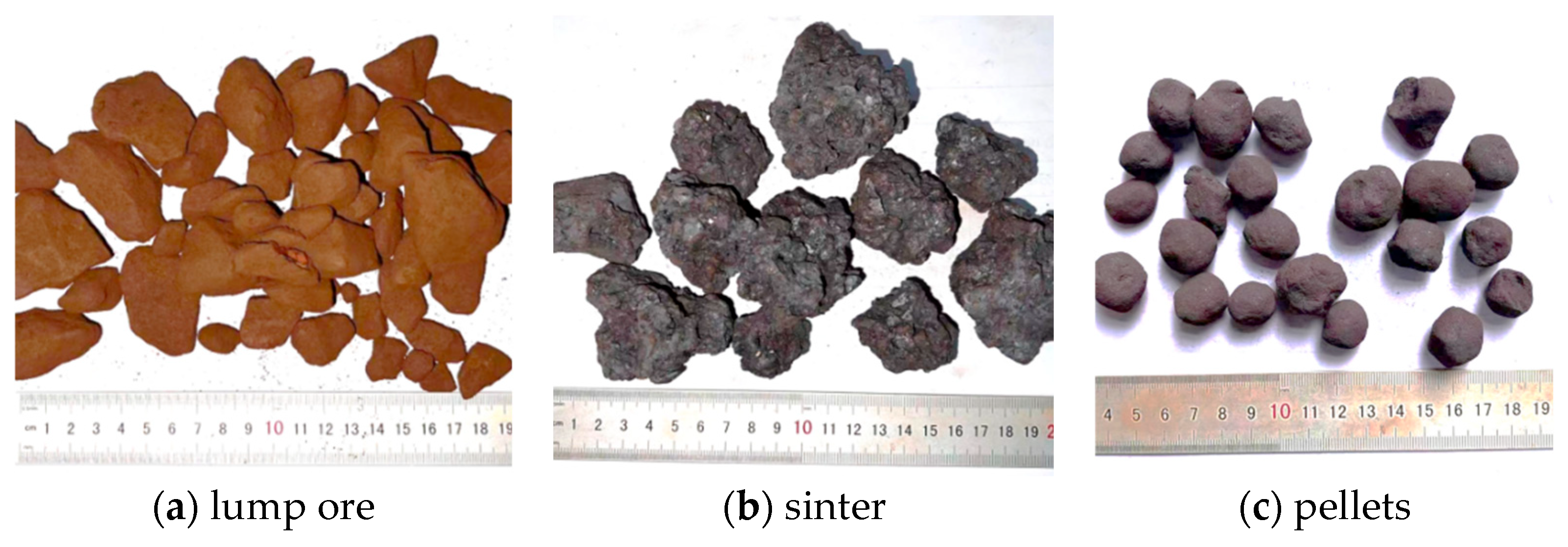
Figure 1.
Appearance and morphology of different blast furnace feeds.
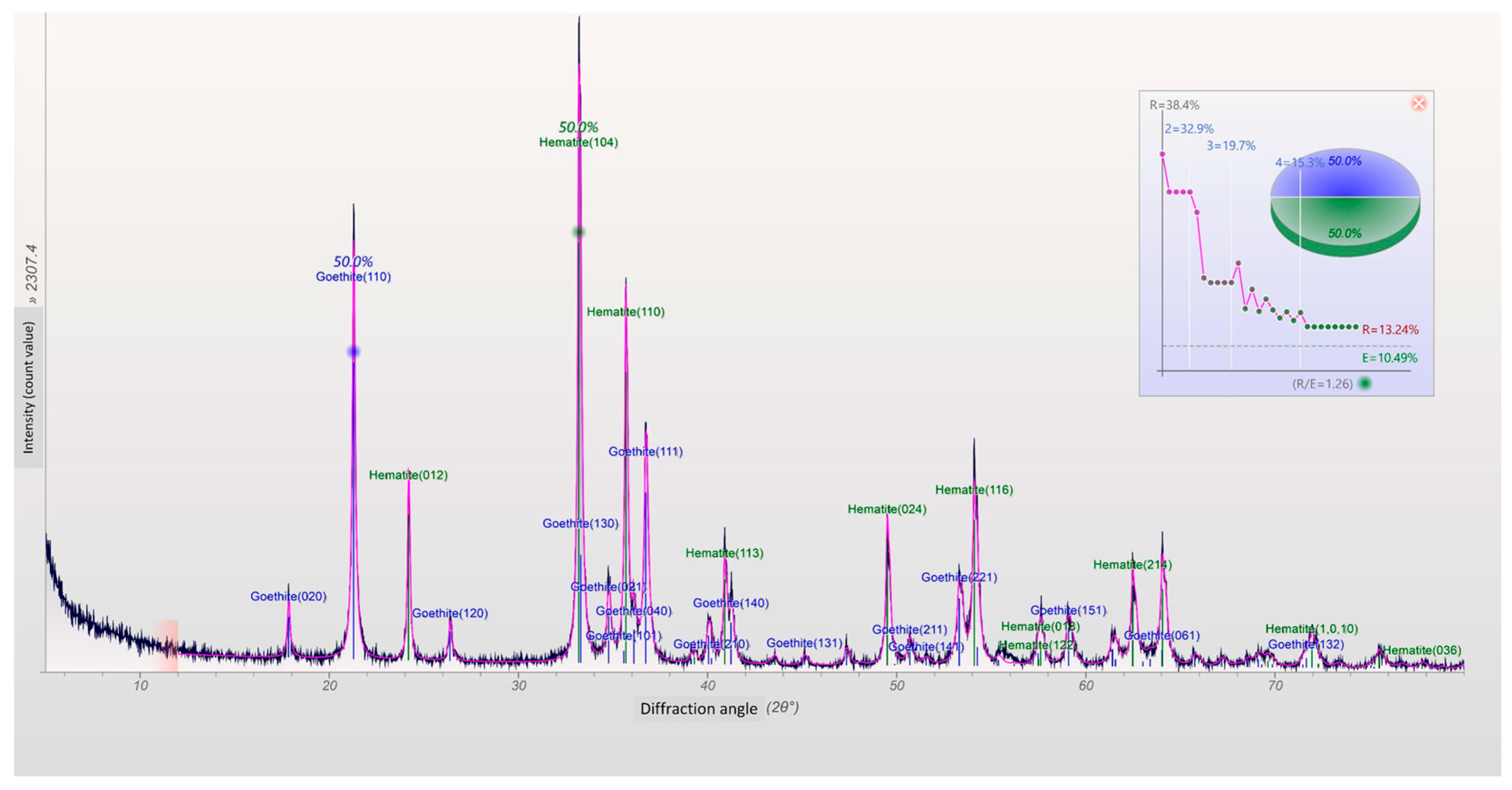
Figure 2.
The XRD patterns of lump ore. R stands for Rwp (Weighted Profile R-factor), while 2, 3, and 4 represent the number of fitting iterations, essentially indicating the process of optimizing the R.
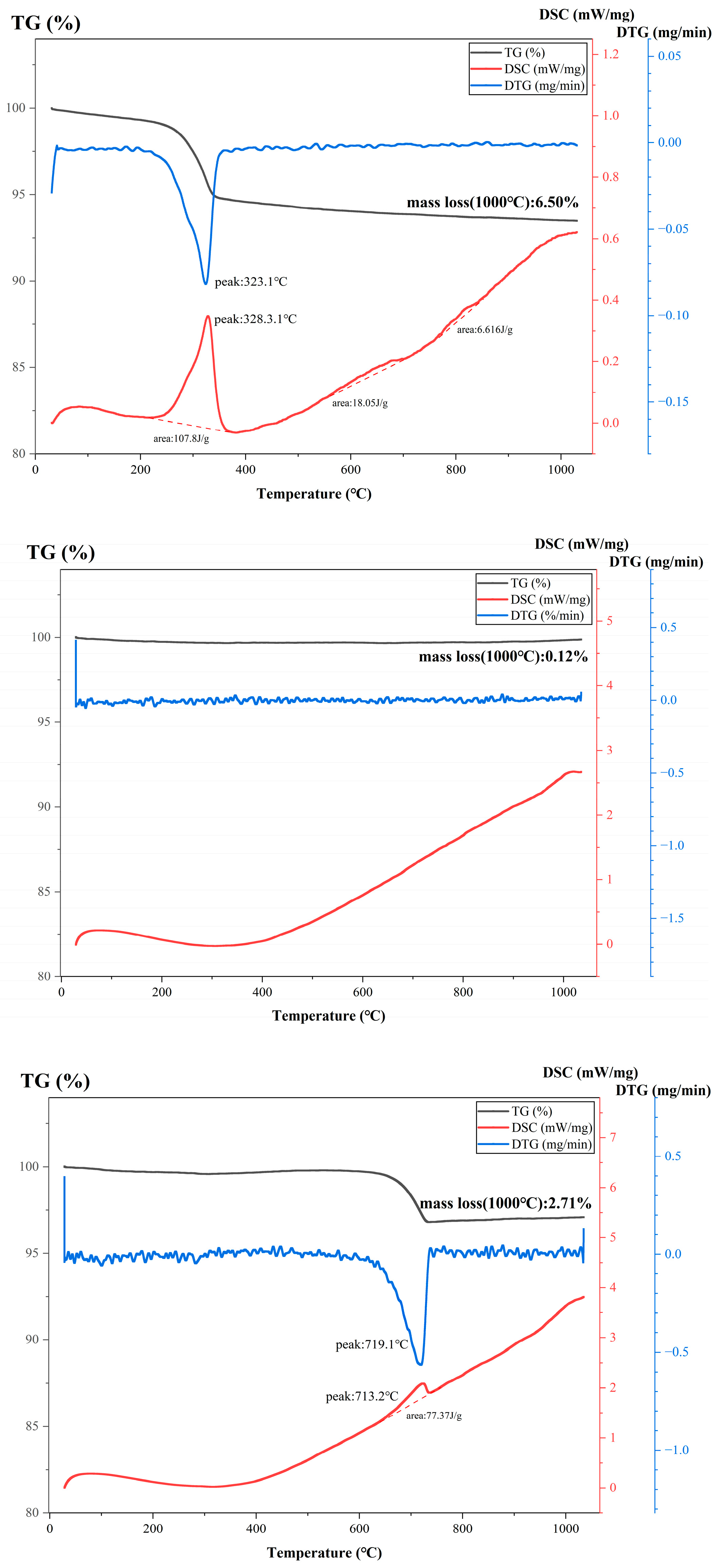
Figure 3.
TG-DSC curves of the lump ore (PB) (a), TG-DSC curves of the pellets (b), and TG-DSC curves of the sinter (c).
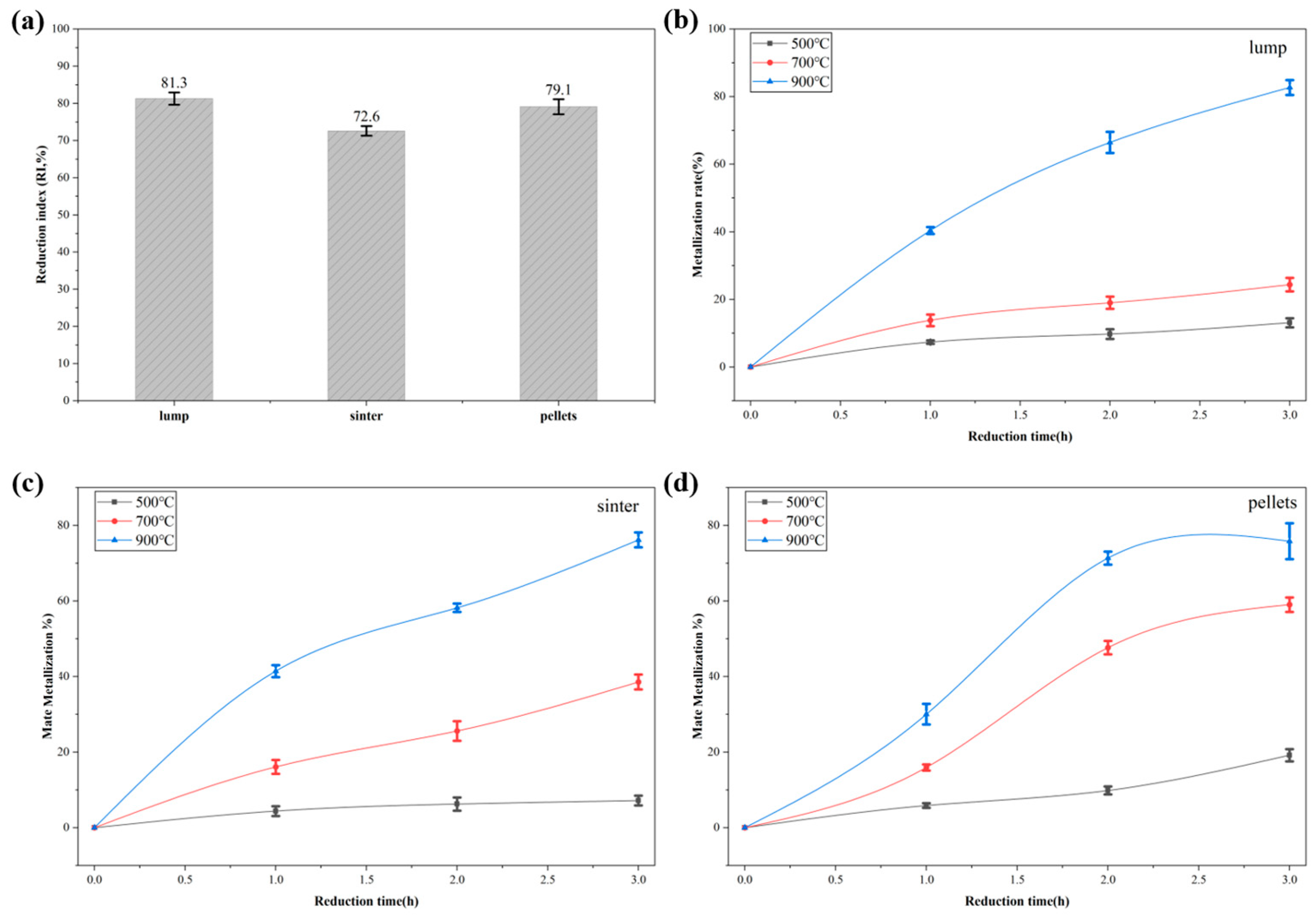
Figure 4.
Reduction index (RI) of different blast furnace burdens (lump, pellets, sinter) (a), reduction behavior of lump ore at 500 °C, 700 °C, and 900 °C (b), reduction behavior of sinter at different temperatures (c), reduction behavior of pellets at different temperatures (d).
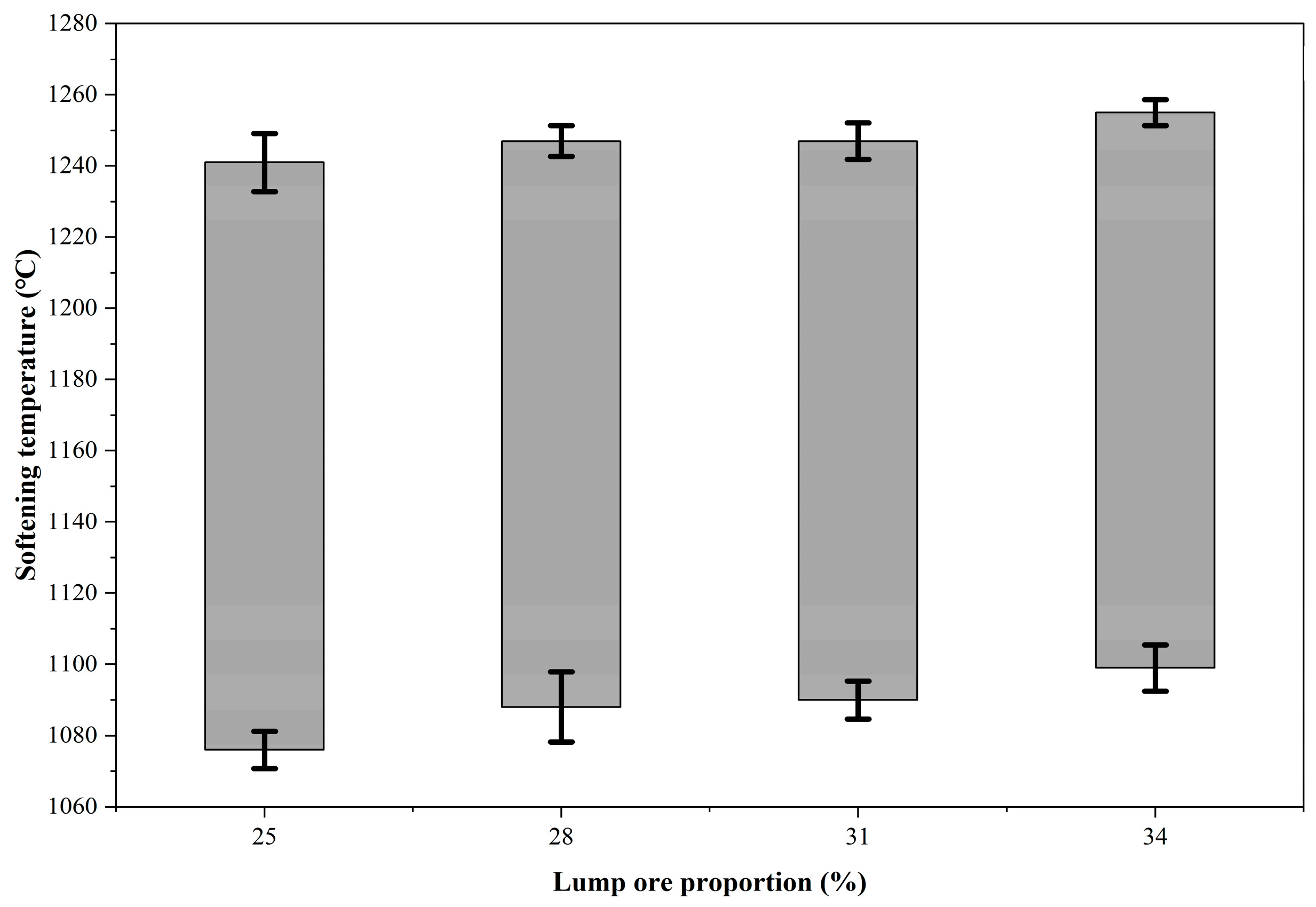
Figure 5.
Impact of lump ore proportion (PB) on the softening temperature range of mixed burdens.
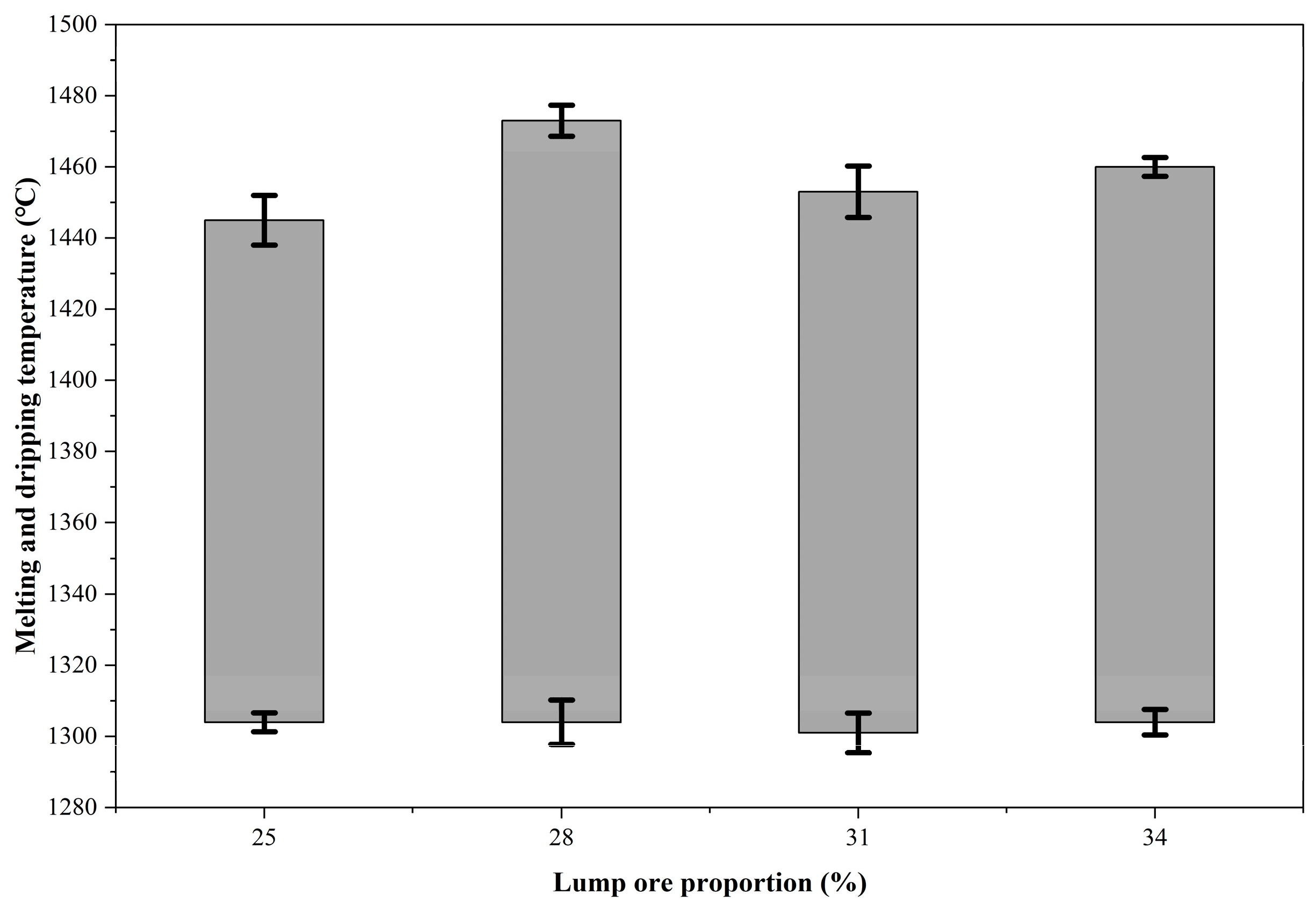
Figure 6.
Impact of lump ore proportion (PB) on the melting and dripping temperature range of mixed burdens.
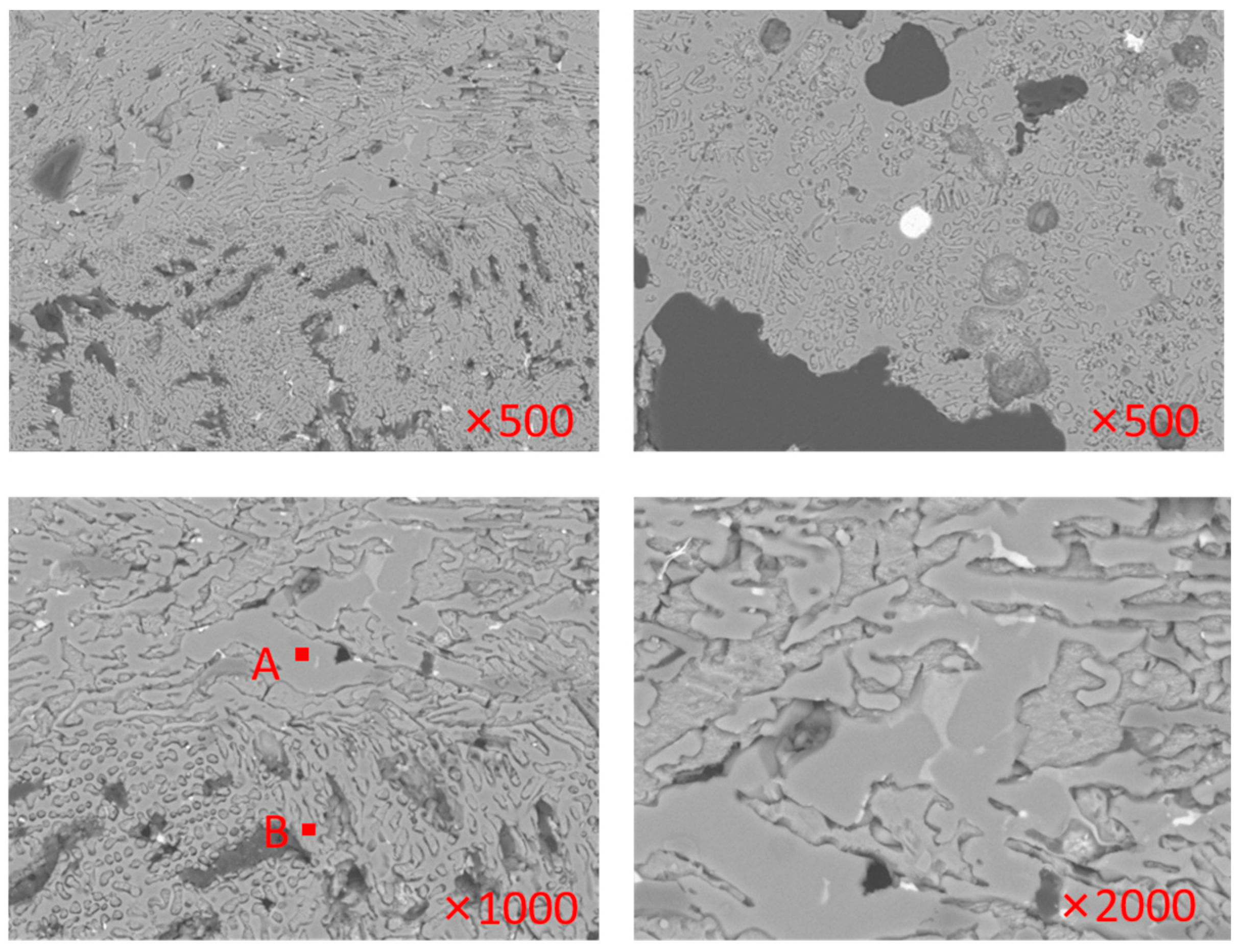
Figure 7.
The SEM images of the samples dripped during the furnace charge melting and dripping experiment.
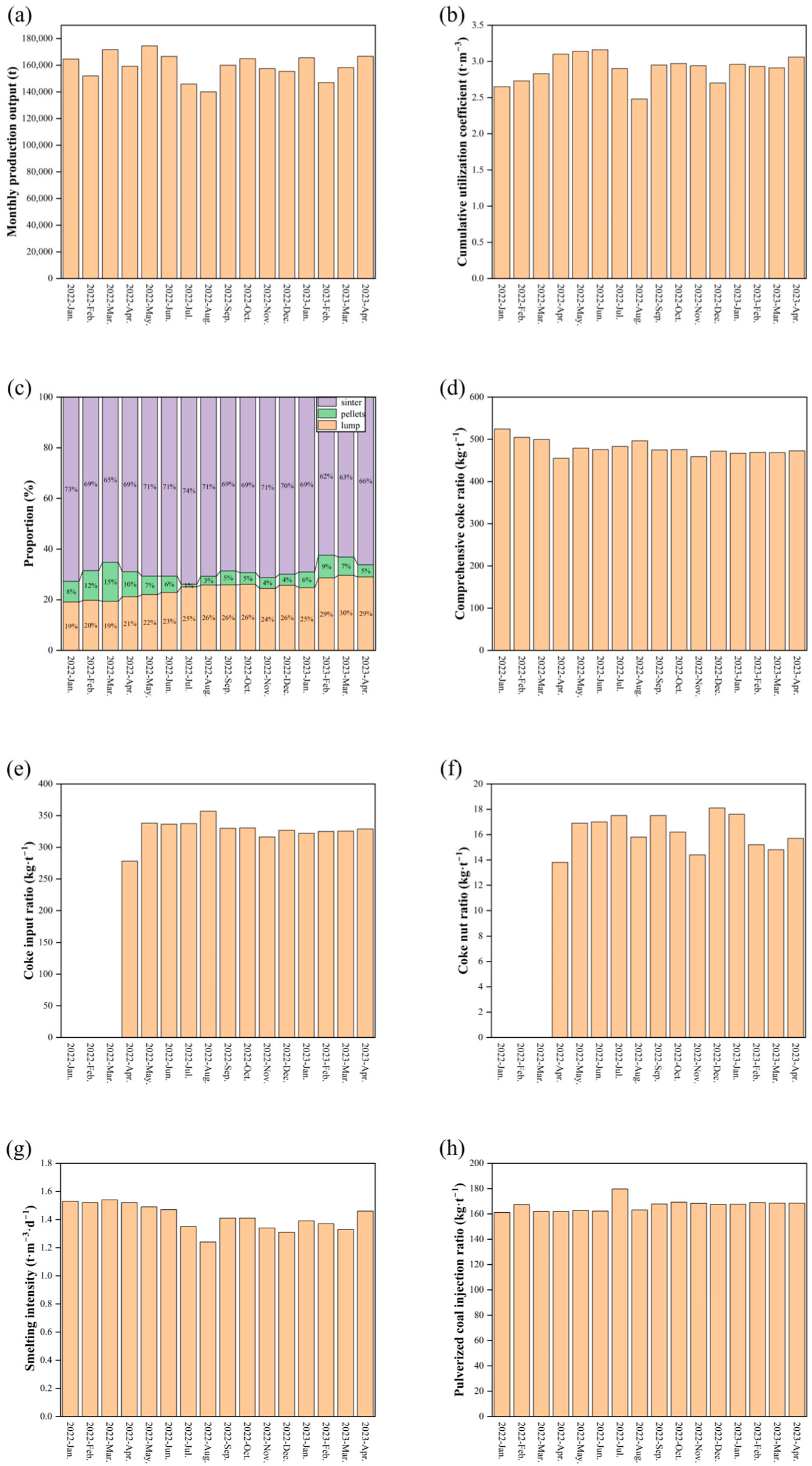
Figure 8.
(a) Monthly output of the Ironmaking Plant (January 2022–April 2023); (b) Cumulative utilization coefficient of the Ironmaking Plant (January 2022–April 2023); (c) Monthly burden proportion of blast furnace in the Ironmaking Plant (January 2022–April 2023); (d) Monthly comprehensive coke ratio of the Ironmaking Plant (January 2022–April 2023); (e) Monthly coke input ratio of the Ironmaking Plant(April 2022–April 2023); (f) Monthly coke nut ratio of the Ironmaking Plant (April 2022–April 2023); (g) Monthly smelting intensity of the Ironmaking Plant (January 2022–April 2023); (h) Monthly Pulverized coal injection ratio of the Ironmaking Plant (January 2022–April 2023).
Table 1.
Some industrial practices to increase the proportion of lump ore in China.
| Steel Company | Lump Ore Proportion/% | References |
|---|
| AnSteel | 17.5 | [15] |
| HanSteel | 21.5 | [24] |
| ShaoSteel | 23 | [11] |
| Xingcheng Steel | 18–20 | [25] |
| Delong Steel | 17–20 | [26] |
| Xinyu Steel | 15.4 | [17] |
Table 2.
Chemical compositions of raw materials (wt%).
| Kinds | TFe | FeO | SiO2 | CaO | MgO | Al2O3 | LOI |
|---|
| Lump ore | 62.69 | 1.01 | 2.38 | 0.16 | 0.14 | 1.58 | 5.99 |
| Pellets | 62.27 | 0.30 | 6.29 | 1.80 | 0.77 | 1.62 | / |
| Sinter | 54.63 | 9.13 | 5.53 | 11.50 | 2.16 | 2.53 | / |
Table 3.
Particle size distribution of lump ore (wt%).
| −10 mm | 10~16 mm | 16~25 mm | 25~40 mm |
|---|
| 8.01 | 19.09 | 51.93 | 20.97 |
Table 4.
Burst index of the lump ore.
| Lump Ore | DI−6.3 (%) | DI−3.15 (%) | DI−0.5 (%) |
|---|
| Burst index | 13.9 | 7.4 | 0.8 |
Table 5.
The low-temperature reduction and pulverization properties of different blast furnace burdens.
| Kind | Low-Temperature Reduction Disintegration Performance/% |
|---|
| RDI+6.3mm | RDI+3.15mm | RDI−0.5mm |
|---|
| Lump ore | 76.60 | 86.90 | 6.10 |
| Pellets | 97.70 | 97.90 | 2.10 |
| Sinter | 51.50 | 76.80 | 6.60 |
Table 6.
The load softening properties of different blast furnace burdens.
| Kind | Load Softening Properties/°C |
|---|
| T10 | T40 | T40 − T10 |
|---|
| Lump ore | 922 | 1144 | 222 |
| Pellets | 1056 | 1135 | 79 |
| Sinter | 1170 | 1262 | 92 |
Table 7.
The melting and dripping properties of different blast furnace burdens.
| Kind | Melting and Dripping Properties/°C |
|---|
| Ts | Td | Td − Ts |
|---|
| Lump ore | 1217 | 1366 | 149 |
| Pellets | 1162 | 1418 | 256 |
| Sinter | 1294 | 1535 | 241 |
Table 8.
Impact of lump ore proportion (PB) on the softening temperature range of mixed burdens.
| Blast Furnace Charge Structure | Load-Softening Performance/°C |
|---|
| T10 | T40 | T40 − T10 |
|---|
| Sinter 60% + Pellets 15% + Lump ore 25% | 1076 | 1241 | 164 |
| Sinter 60% + Pellets 12% + Lump ore 28% | 1088 | 1247 | 159 |
| Sinter 60% + Pellets 9% + Lump ore 31% | 1090 | 1247 | 157 |
| Sinter 60% + Pellets 6% + Lump ore 34% | 1099 | 1255 | 156 |
Table 9.
Impact of lump ore proportion (PB) on the melting and dripping temperature range of mixed burdens.
| Blast Furnace Charge Structure | Melting and Dripping Performance/°C |
|---|
| Ts | Td | Td − Ts | ∆Pmax KP |
|---|
| Sinter 60% + Pellets 15% + Lump ore 25% | 1304 | 1445 | 141 | 9.8 |
| Sinter 60% + Pellets 12% + Lump ore 28% | 1304 | 1473 | 169 | 3.3 |
| Sinter 60% + Pellets 9% + Lump ore 31% | 1301 | 1453 | 152 | 12.1 |
| Sinter 60% + Pellets 6% + Lump ore 34% | 1304 | 1460 | 156 | 12.1 |
Table 10.
EDS analysis of the samples dripped during the furnace charge melting and dripping experiment.
| Element (At, %) | A | B |
|---|
| O | 50.12 | 49.07 |
| Mg | 4.21 | 12.09 |
| Al | 12.67 | 12.6 |
| Si | 14.5 | 10.75 |
| Ca | 18.49 | 15.49 |
| Disclaimer/Publisher’s Note: The statements, opinions and data contained in all publications are solely those of the individual author(s) and contributor(s) and not of MDPI and/or the editor(s). MDPI and/or the editor(s) disclaim responsibility for any injury to people or property resulting from any ideas, methods, instructions or products referred to in the content. |






 ,
,