Article

Effect of Solution and Aging Treatment on the Microstructure and Properties of LAZ931 Mg-Li Alloy by Friction Stir Processing


1
School of Materials Electronics and Energy Storage, Zhongyuan University of Technology, Zhengzhou 451191, China
2
School of Materials Science and Engineering, Zhengzhou University, Zhengzhou 450001, China
*
Authors to whom correspondence should be addressed.
Metals 2025, 15(3), 314; https://doi.org/10.3390/met15030314
Submission received: 10 February 2025 / Revised: 9 March 2025 / Accepted: 10 March 2025 / Published: 13 March 2025
(This article belongs to the Special Issue Advances in Welding Processes of Metallic Materials)

Abstract

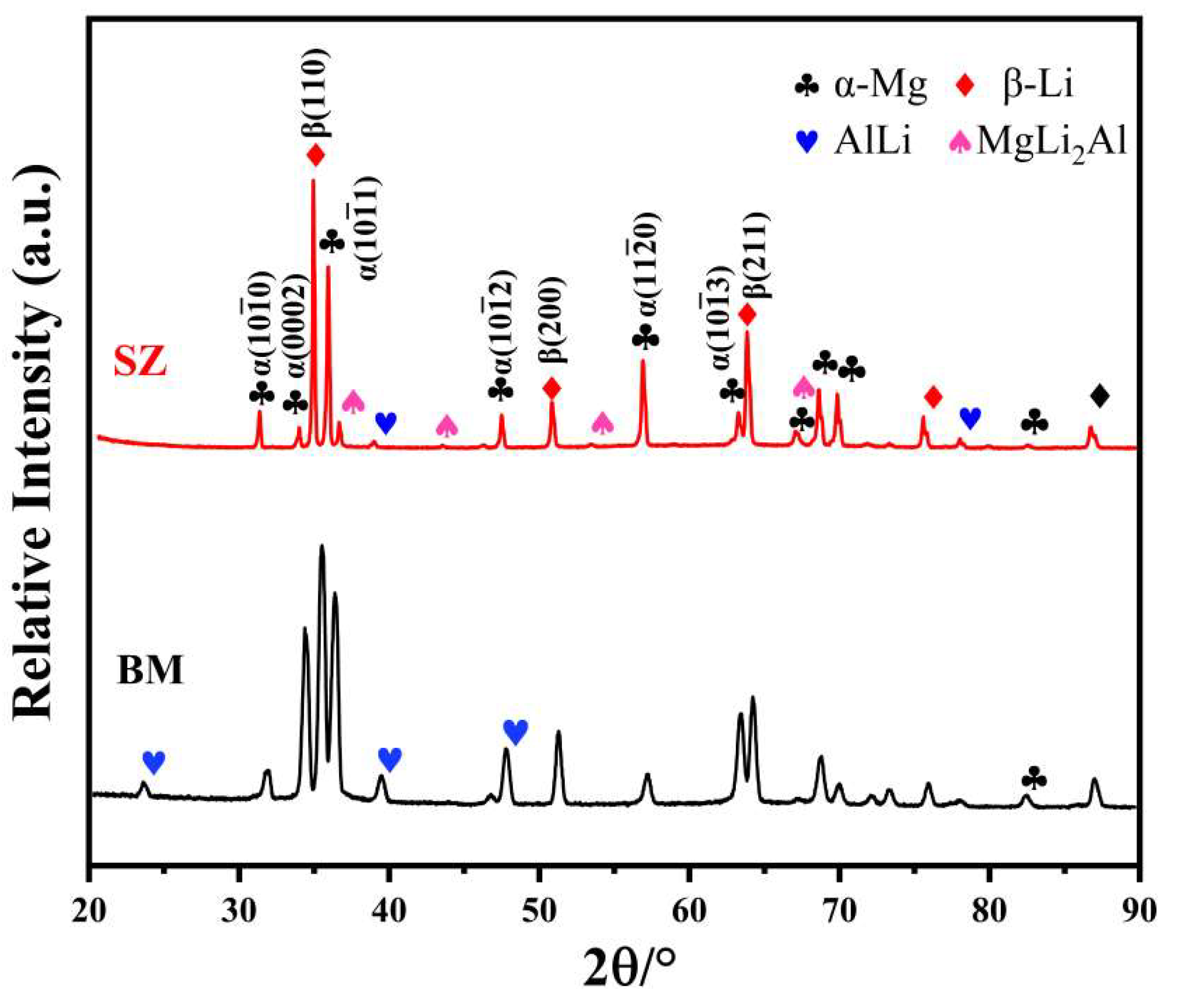
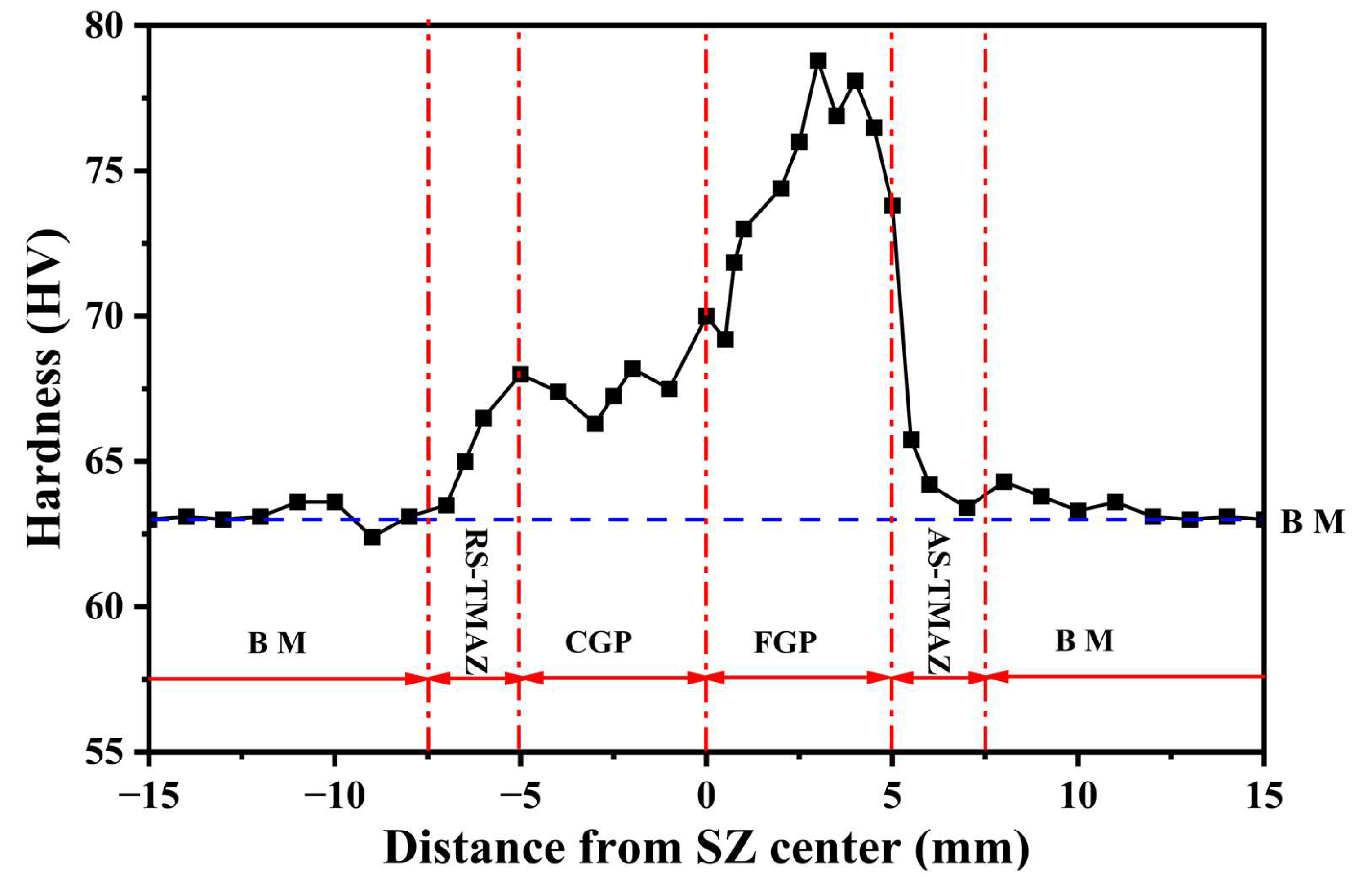
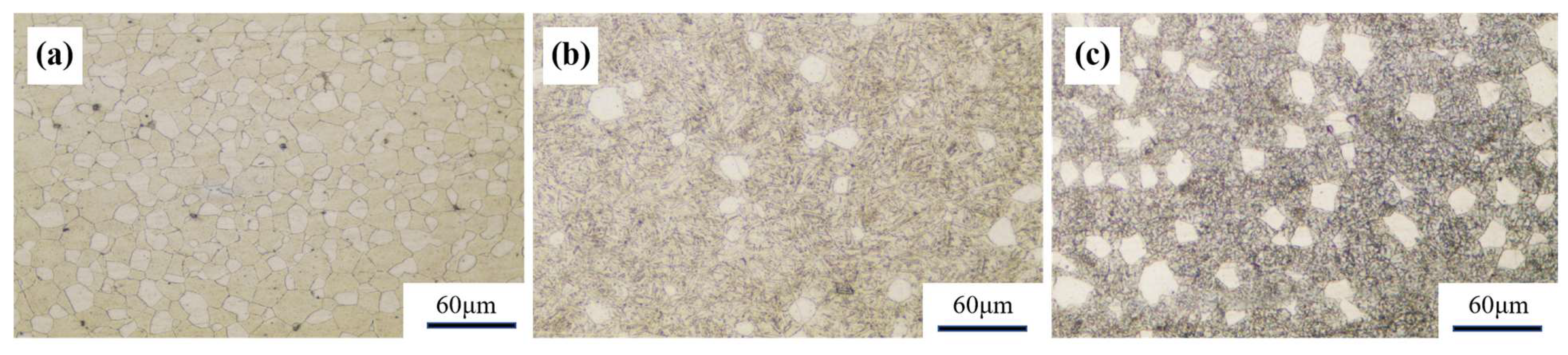
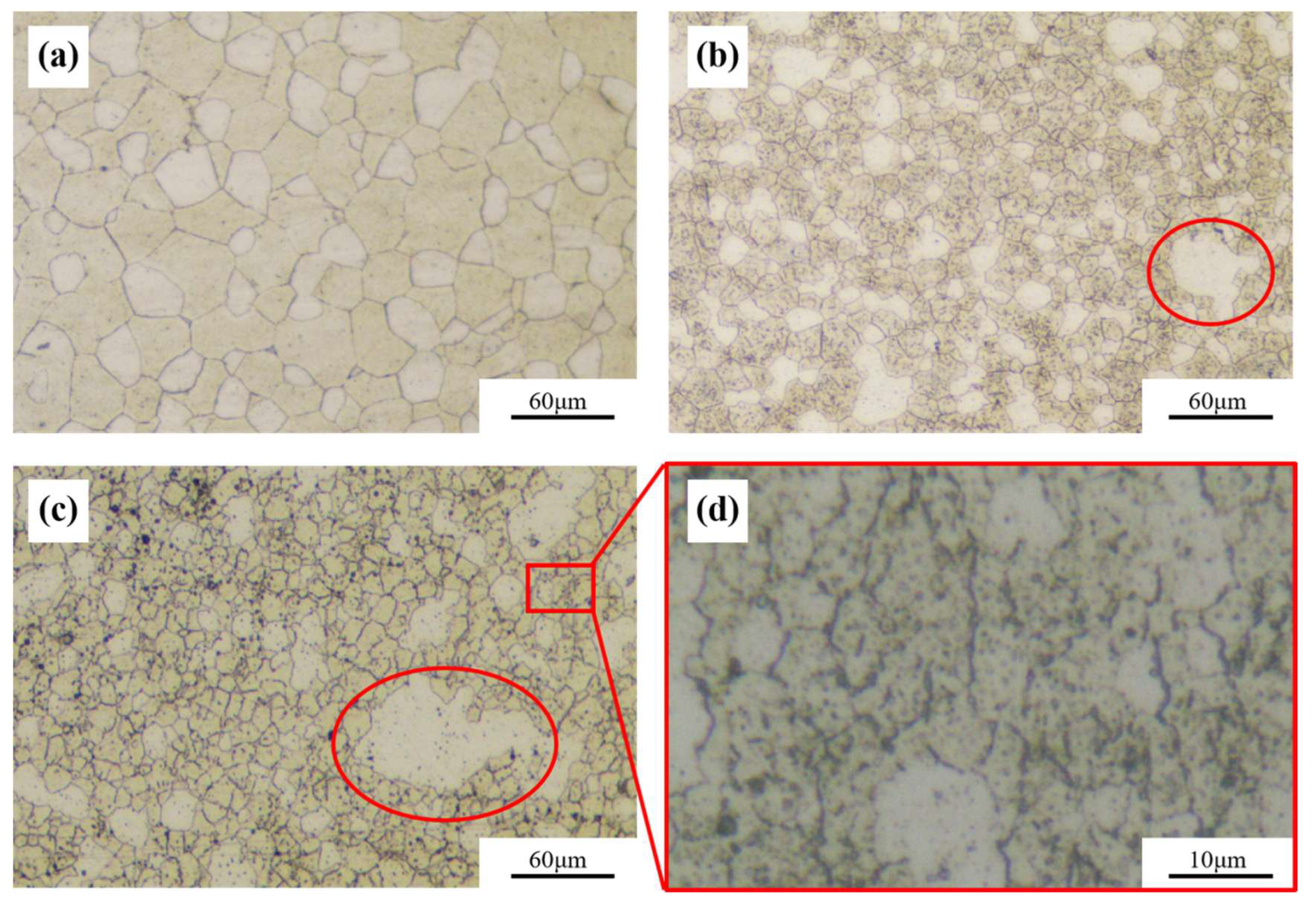
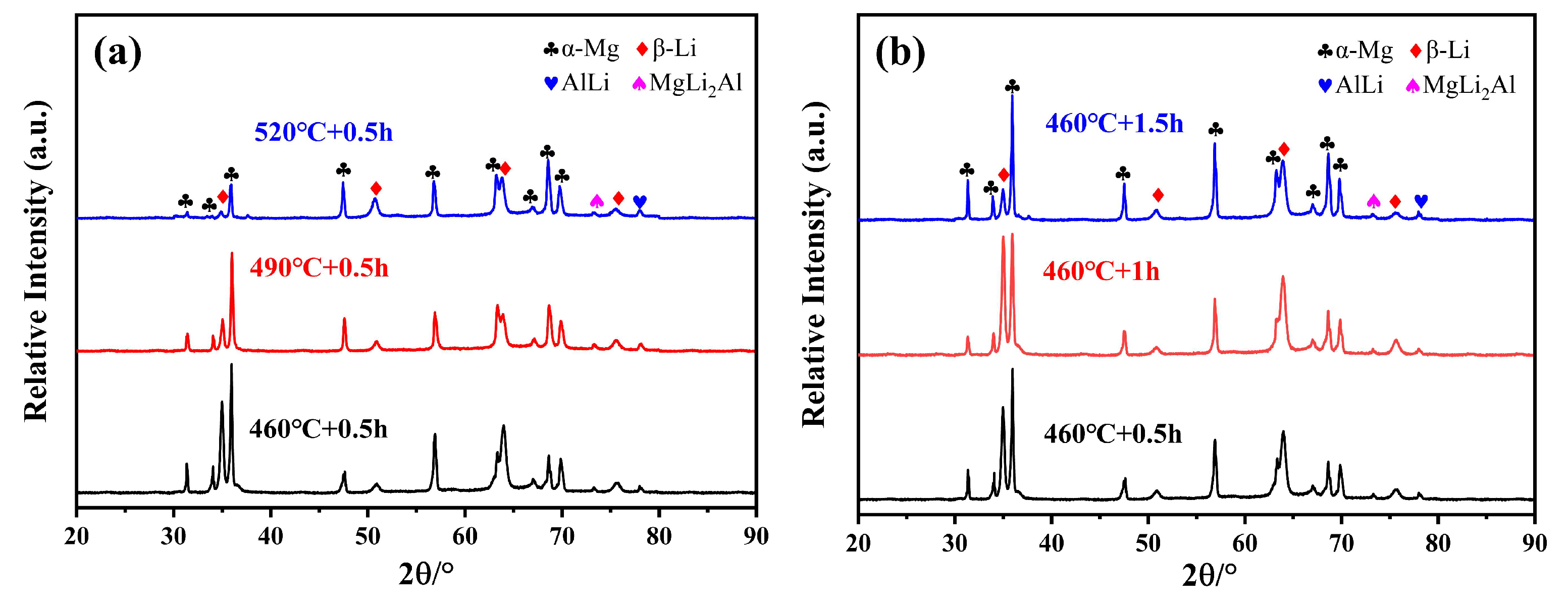
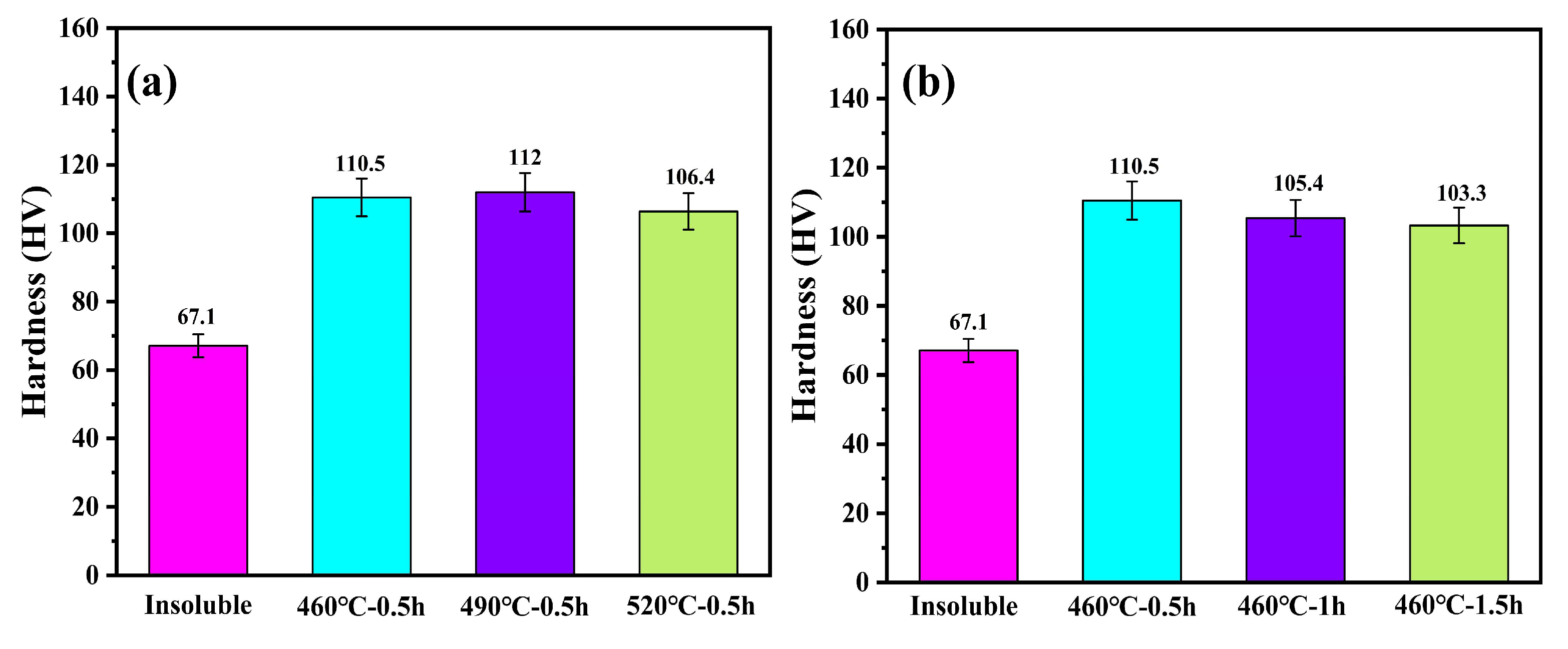
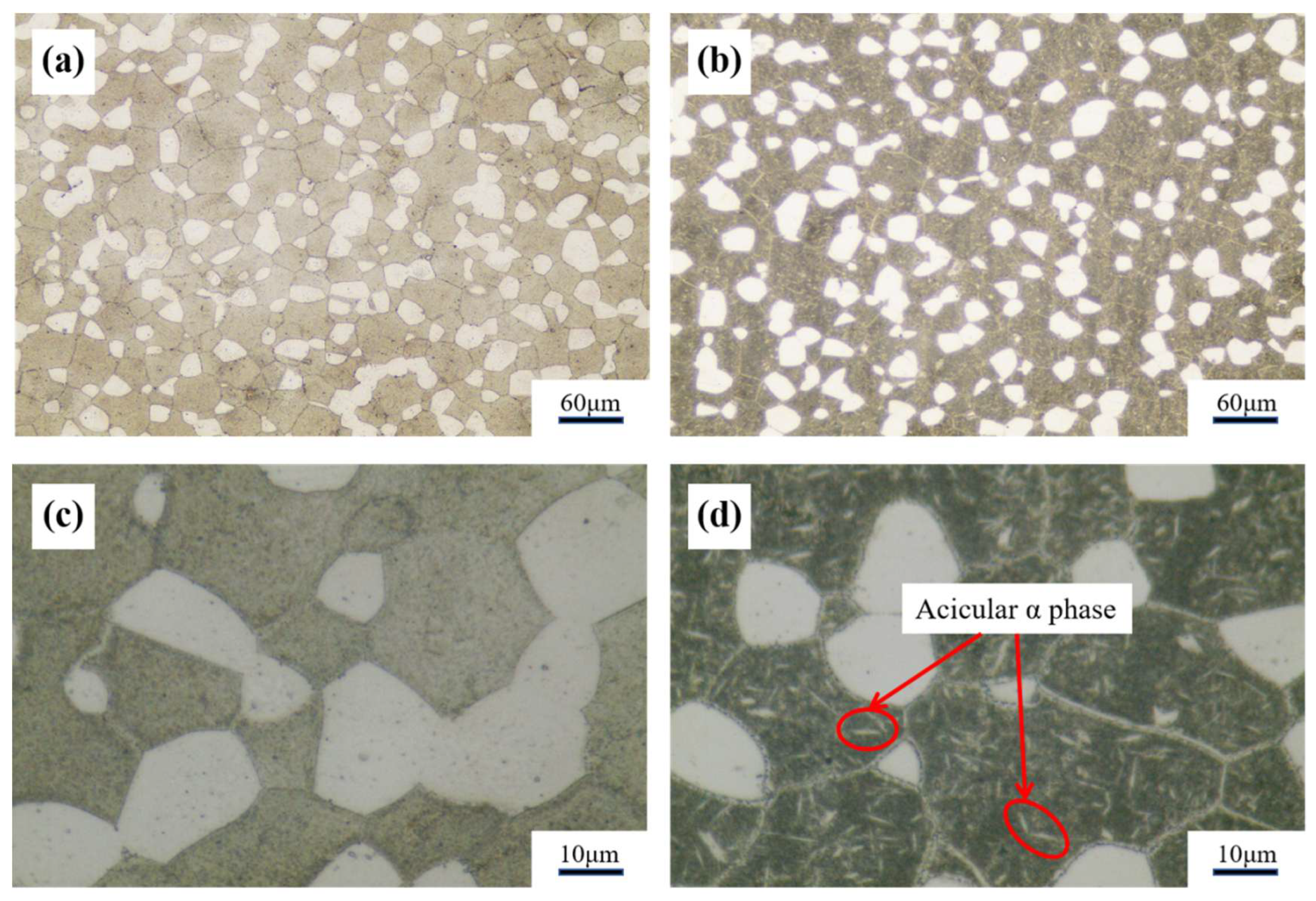
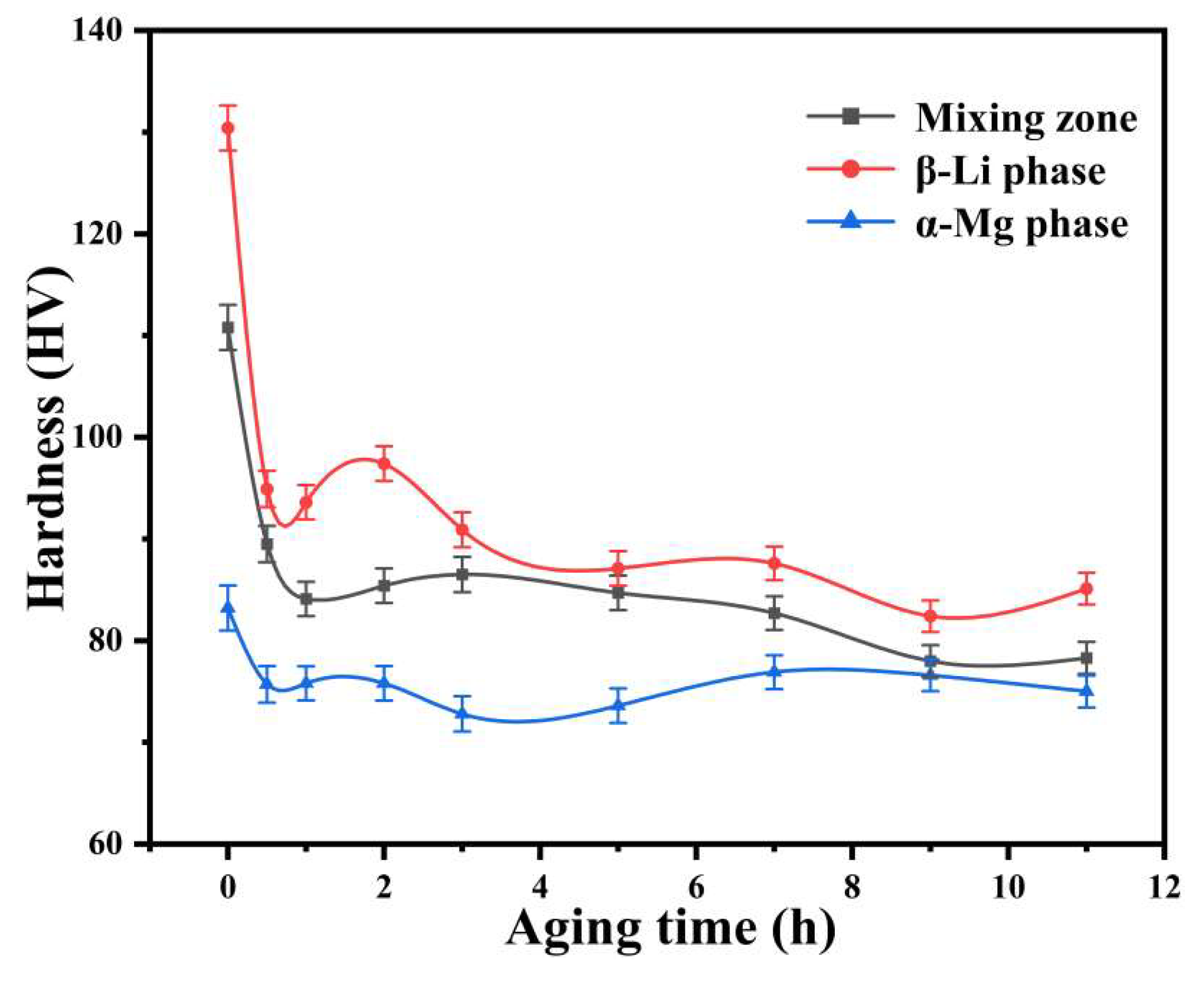
Heat treatment processes play a pivotal role in optimizing the microstructure and mechanical properties of Mg-Li alloys, thereby enhancing their performance and expanding their potential applications in structural and lightweight engineering fields. In this study, the influence of solution and aging treatments on the microstructure, phase transformation, and microhardness of friction-stir-processed (FSPed) LAZ931 Mg-Li alloy was investigated to obtain the optimal solution treatment temperature and time. An optimal solution treatment at 460 °C for 0.5 h under an Ar gas atmosphere facilitated complete α-phase dissolution with subsequent aging at 125 °C, triggering precipitation-mediated hardening. An X-ray diffraction (XRD) analysis identified a new MgLi2Al phase in the stirring zone (SZ) in addition to the α, β, and AlLi phases. Aging kinetics at 125 °C showed that SZ hardness increased to 110.5 HV after solution treatment, which was 5.3% higher than the base metal (BM). After 3 h of aging, microhardness peaked at 86.5 HV before decreasing due to the decomposition of the metastable MgLi2Al phase into the stable AlLi phase. The microhardness stabilized at around 78 HV, which was 16.2% higher than that of the original SZ. These experimental results provide a fundamental understanding of property structure for meeting the growing demand for lightweight materials and improving material properties.
Keywords: LAZ931 Mg-Li alloy; friction stir processing; solution aging treatment; microstructure; microhardness LAZ931 Mg-Li alloy; friction stir processing; solution aging treatment; microstructure; microhardness