Article

Effect of Cr and Al on Elastic Constants of FeCrAl Alloys Investigated by Molecular Dynamics Method

1
Institute of Frontier and Interdisciplinary Science and Key Laboratory of Particle Physics and Particle Irradiation (MOE), Shandong University, Qingdao 266237, China
2
Pacific Northwest National Laboratory, Richland, WA 99352, USA
3
Institute of Modern Physics, Chinese Academy of Sciences, Lanzhou 730000, China
*
Author to whom correspondence should be addressed.
Metals 2022, 12(4), 558; https://doi.org/10.3390/met12040558
Submission received: 18 January 2022 / Revised: 19 March 2022 / Accepted: 22 March 2022 / Published: 25 March 2022
(This article belongs to the Special Issue Numerical Modeling of Materials under Extreme Conditions)

Abstract

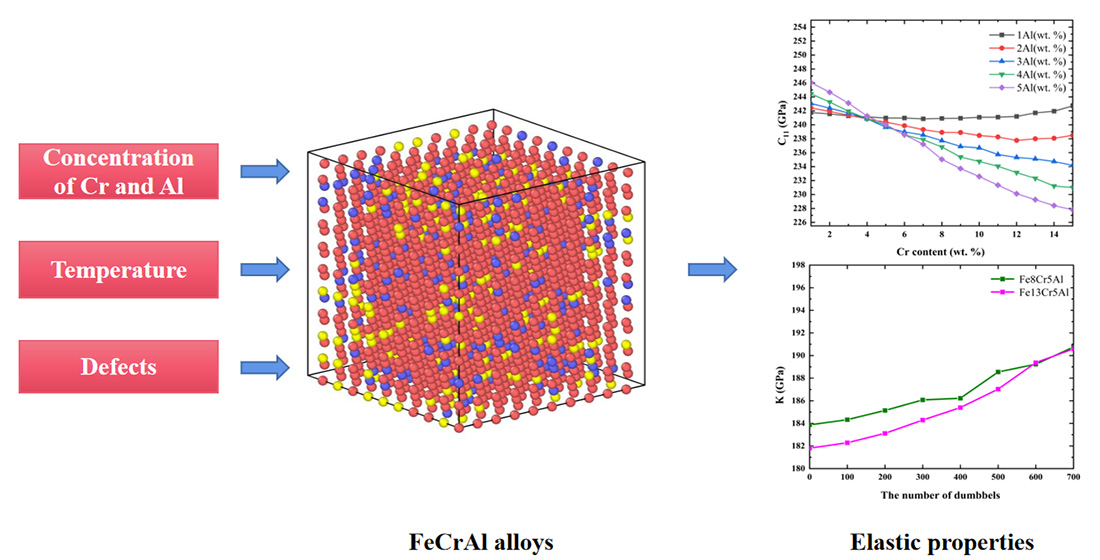
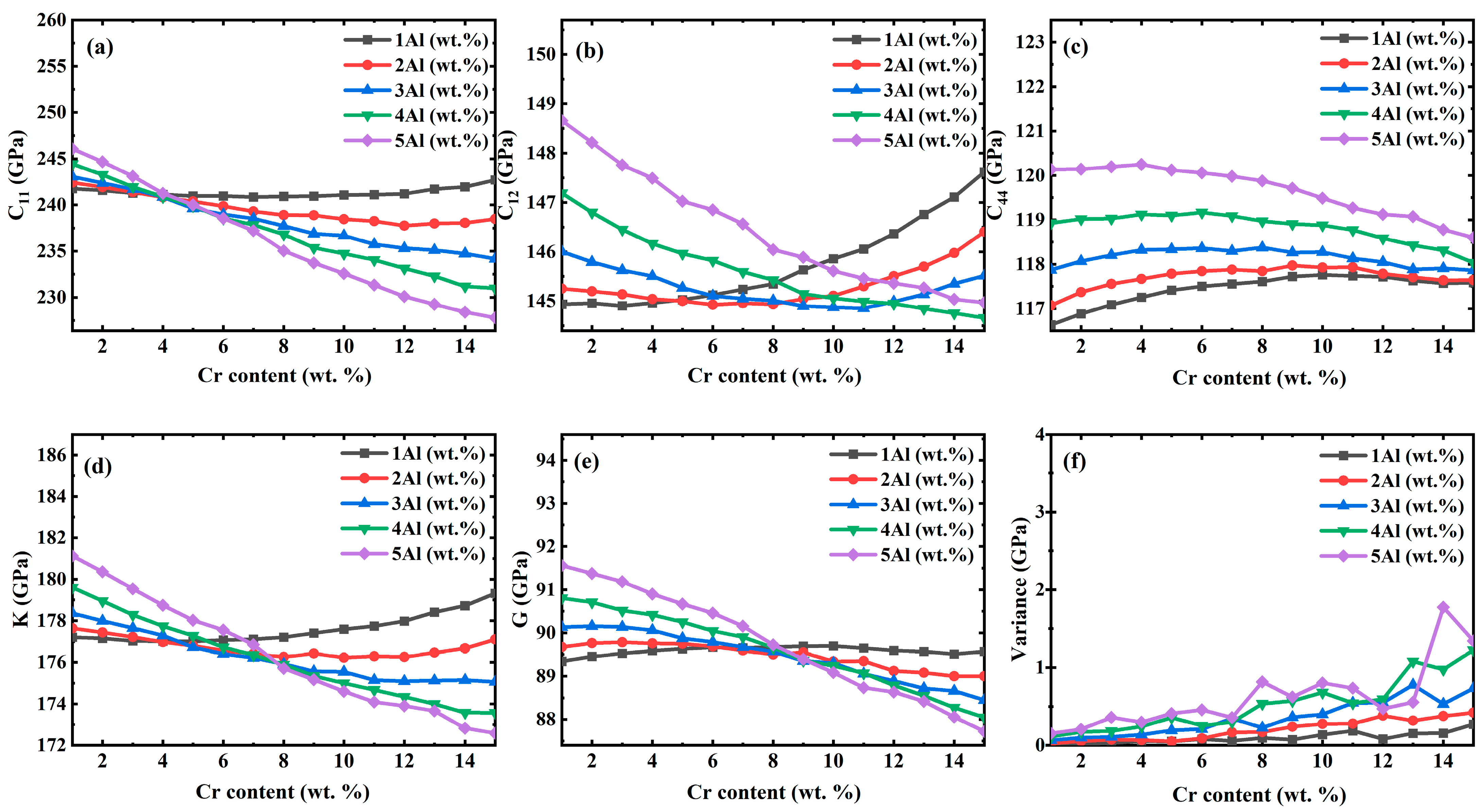
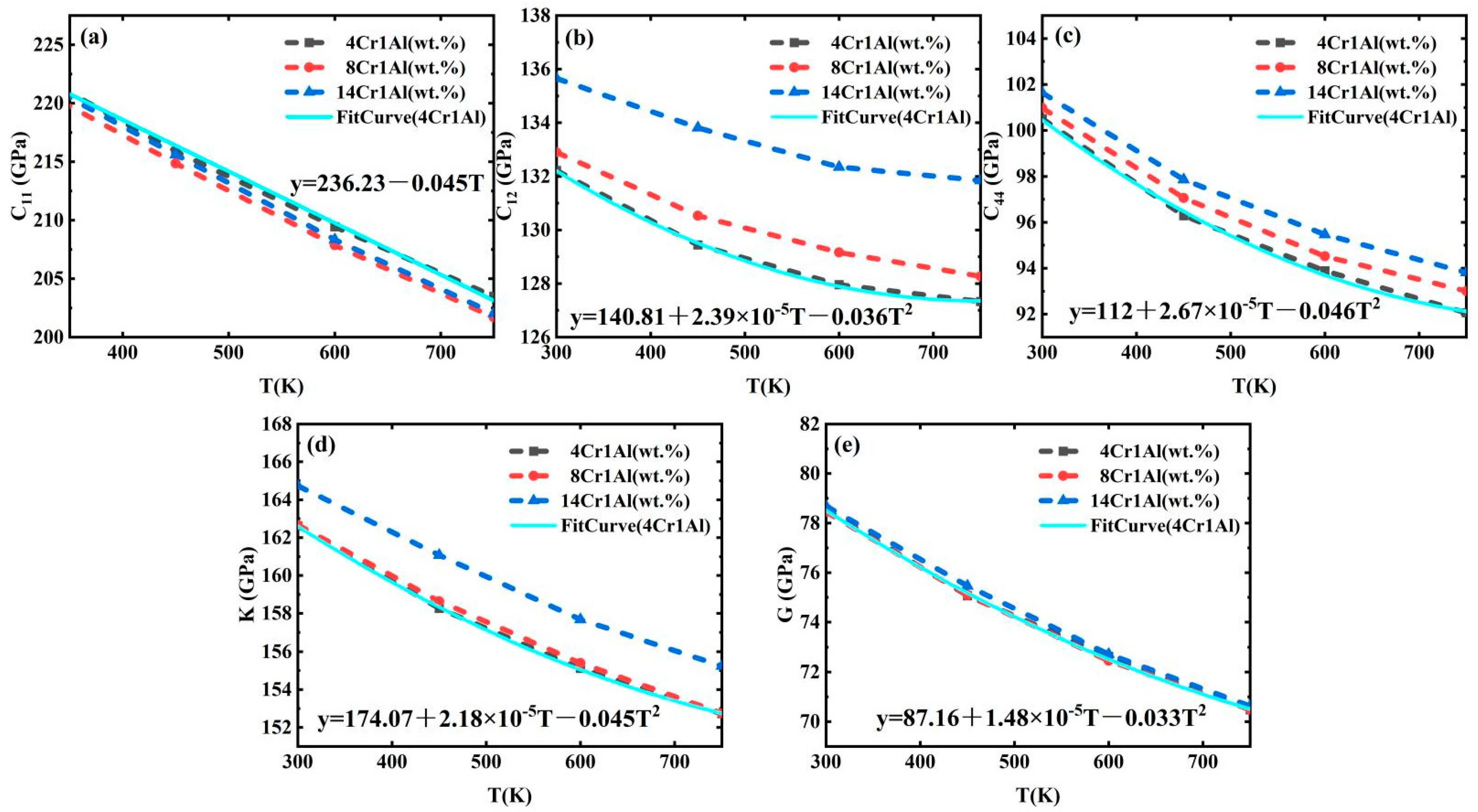
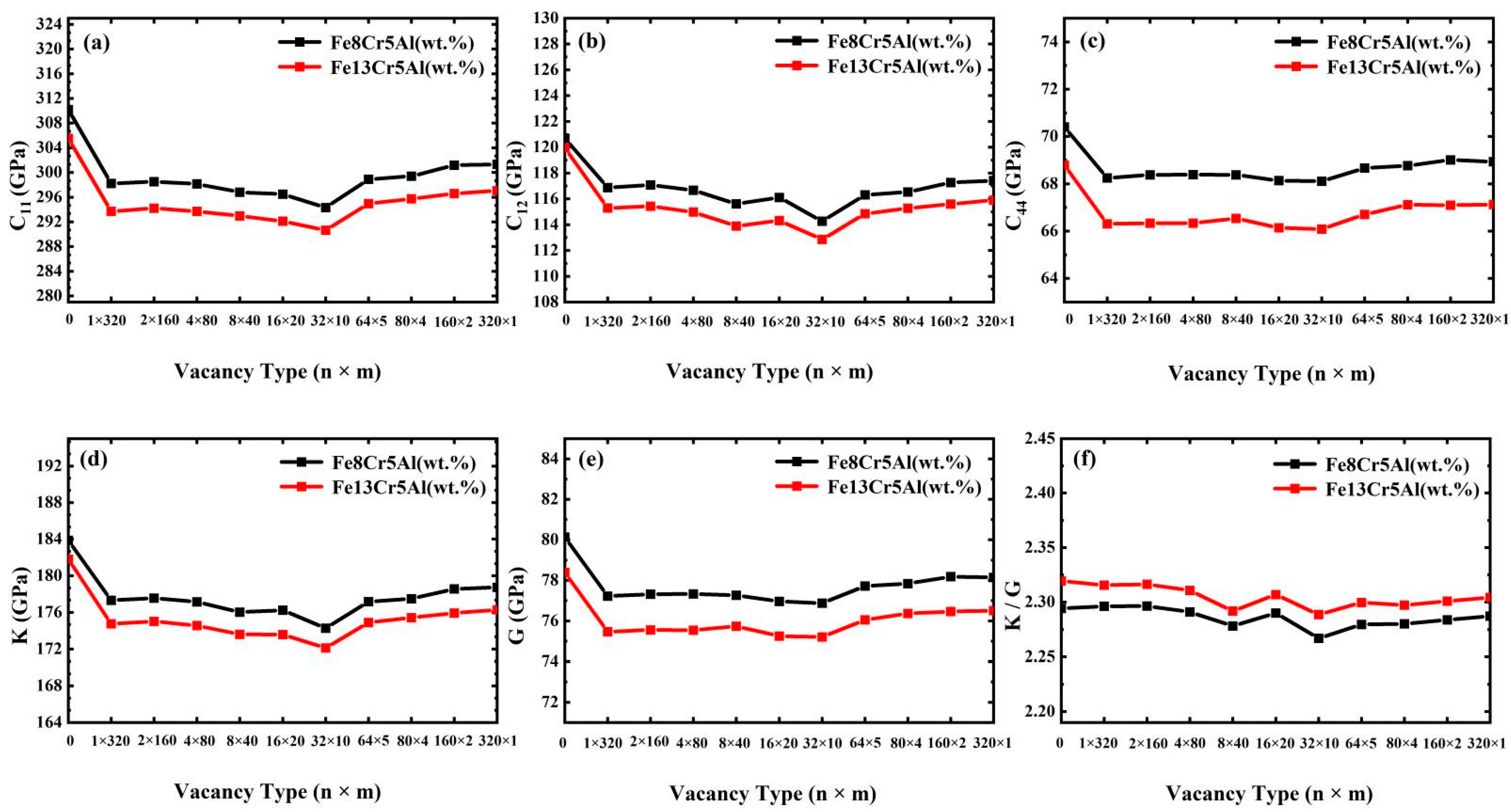
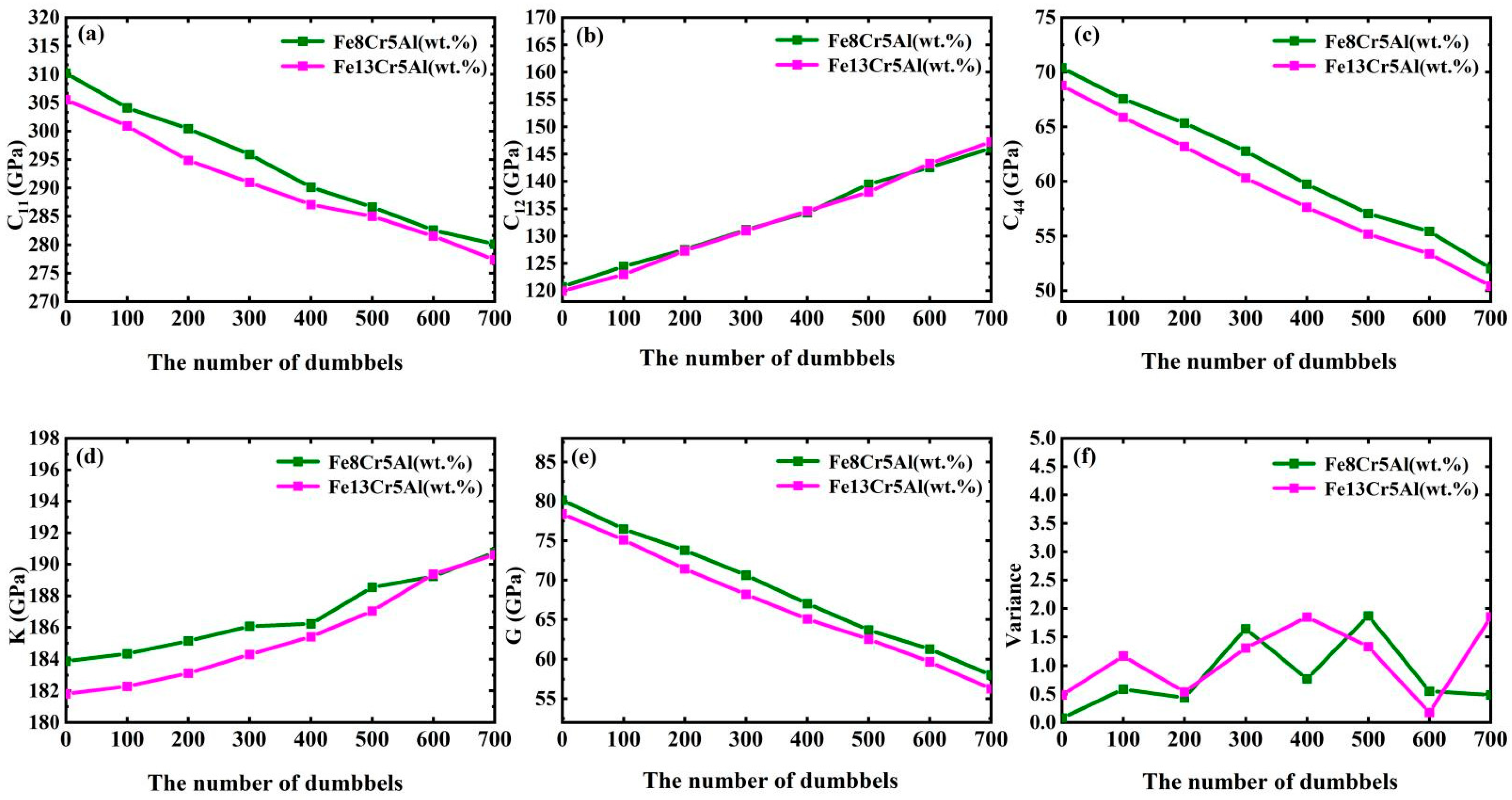
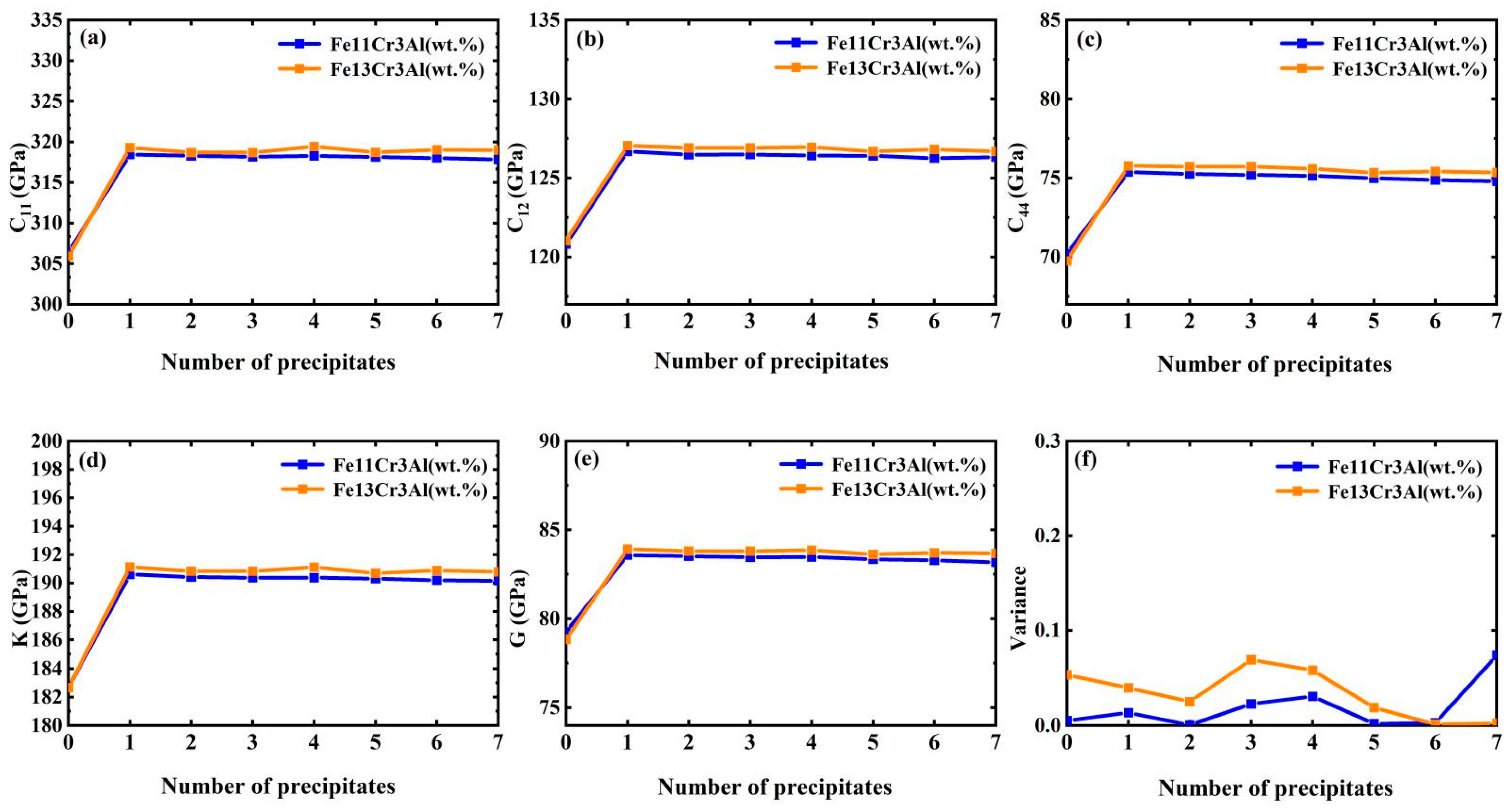
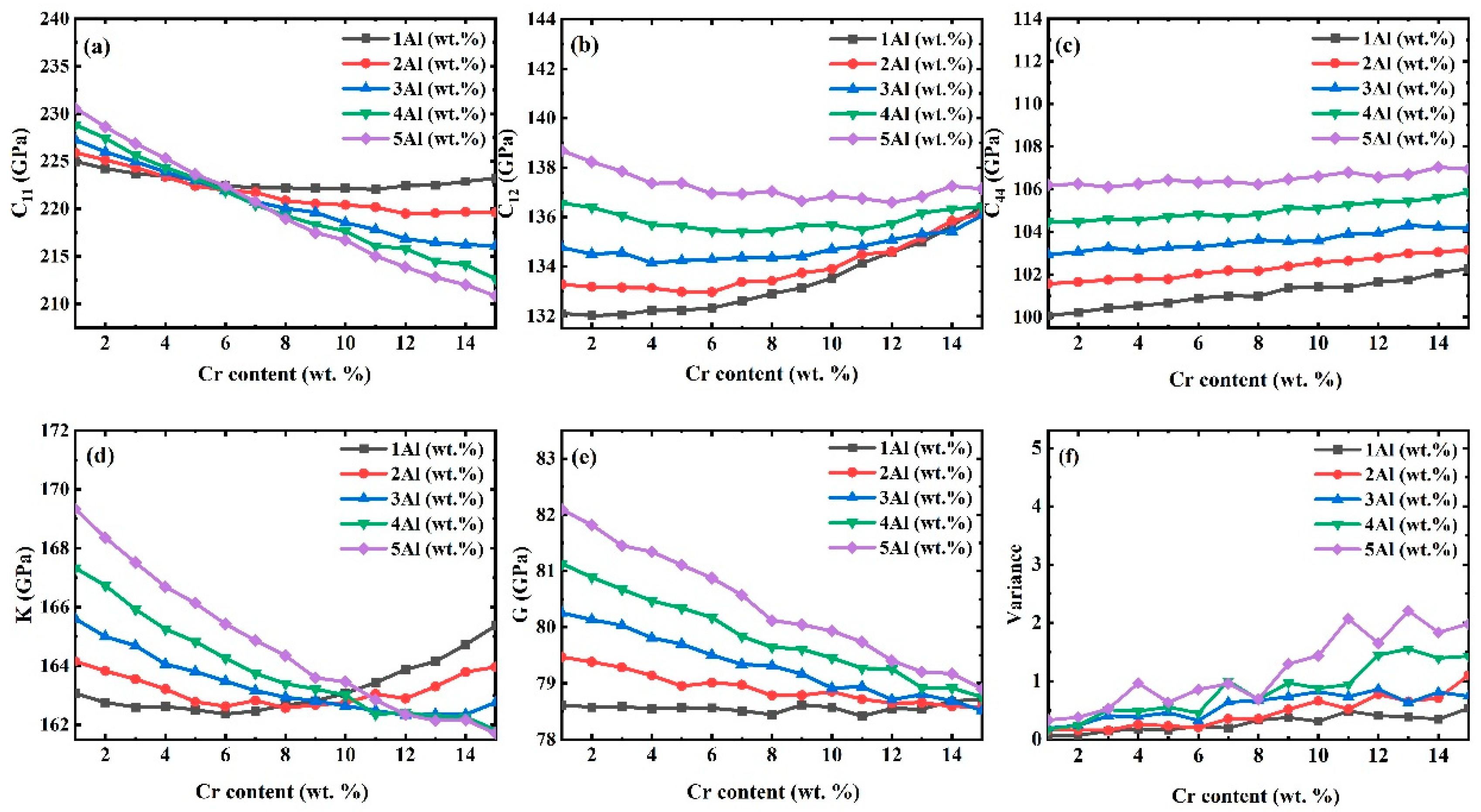
The FeCrAl alloy system is recognized as one of the candidate materials for accident-tolerant fuel (ATF) cladding in the nuclear power industry due to its high oxidation resistance under irradiation and high-temperature environments. The concentrations of Cr and Al have a significant effect on elastic properties of the FeCrAl alloy. In this work, elastic constants C11, C12, C44, bulk modulus and shear modulus of FeCrAl alloy were calculated with molecular dynamics methods. We explored compositions with 1–15 wt.% Cr and 1–5 wt.% Al at temperatures from 0 K to 750 K. The results show that the concentrations of Al and Cr have different effects on the elastic constants. When the concentration of Al was fixed, a decrease in bulk modulus and shear modulus with increasing Cr content was observed, consistent with previous experimental results. The dependence of elastic constants on temperature was also the same as in the experiments. Investigations into elastic properties of defect-containing alloys have shown that vacancies, voids, interstitials and Cr-rich precipitations have different effects on elastic properties of FeCrAl alloys. Investigations of elastic properties of defect-containing alloys have shown that vacancies, void, interstitials and Cr-rich precipitations have different effects on elastic properties of FeCrAl alloys. Therefore, the present results indicate that both the Cr and Al concentrations and radiation defects should be considered to develop and apply the FeCrAl alloy in ATF design.
Keywords: FeCrAl; elastic properties; temperature effect; molecular dynamics FeCrAl; elastic properties; temperature effect; molecular dynamics
Graphical Abstract