Article

The Influence of the Tool Tilt Angle on the Heat Generation and the Material Behavior in Friction Stir Welding (FSW)


1
BKL B.V., Collse Heide 1, 5674 VM Nuenen, The Netherlands
2
Department of Mechanical Engineering, Faculty of Engineering Technology and Built Environment, UCSI University, Taman Connaught, Kuala Lumpur 56000, Malaysia
3
Mechanical Engineering Department, Universiti Teknologi Petronas, Seri Iskandar 32610, Malaysia
*
Authors to whom correspondence should be addressed.
Metals 2022, 12(11), 1837; https://doi.org/10.3390/met12111837
Submission received: 11 October 2022 / Revised: 21 October 2022 / Accepted: 24 October 2022 / Published: 28 October 2022
(This article belongs to the Special Issue Numerical Simulation of Metals Welding Process)

Abstract

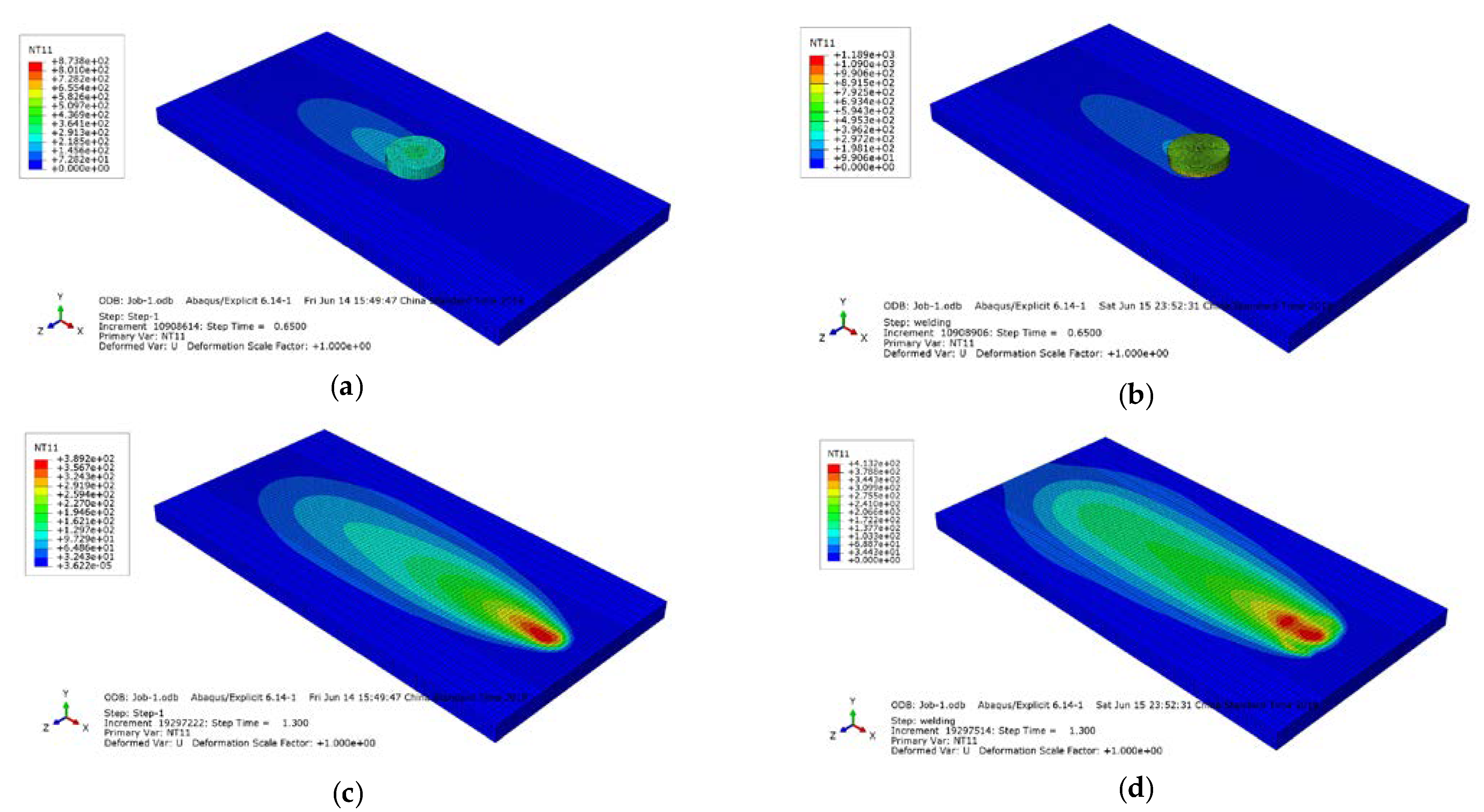
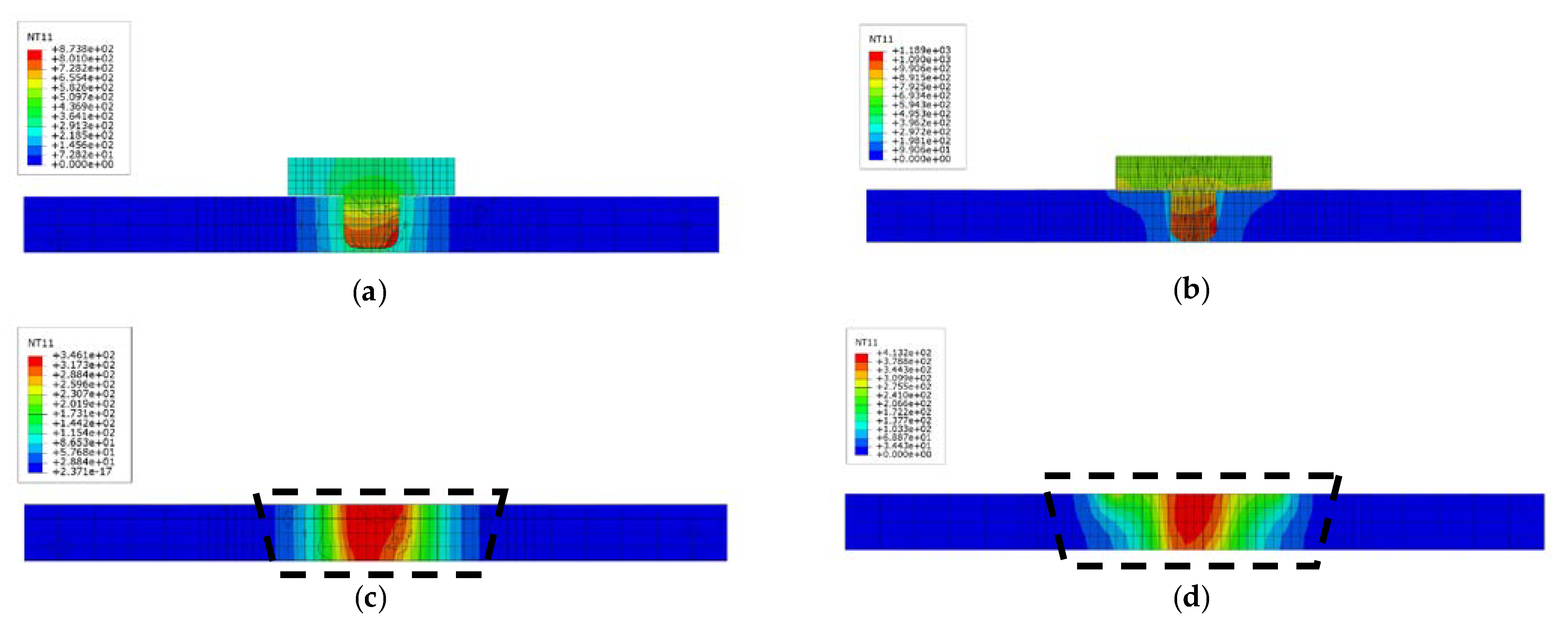
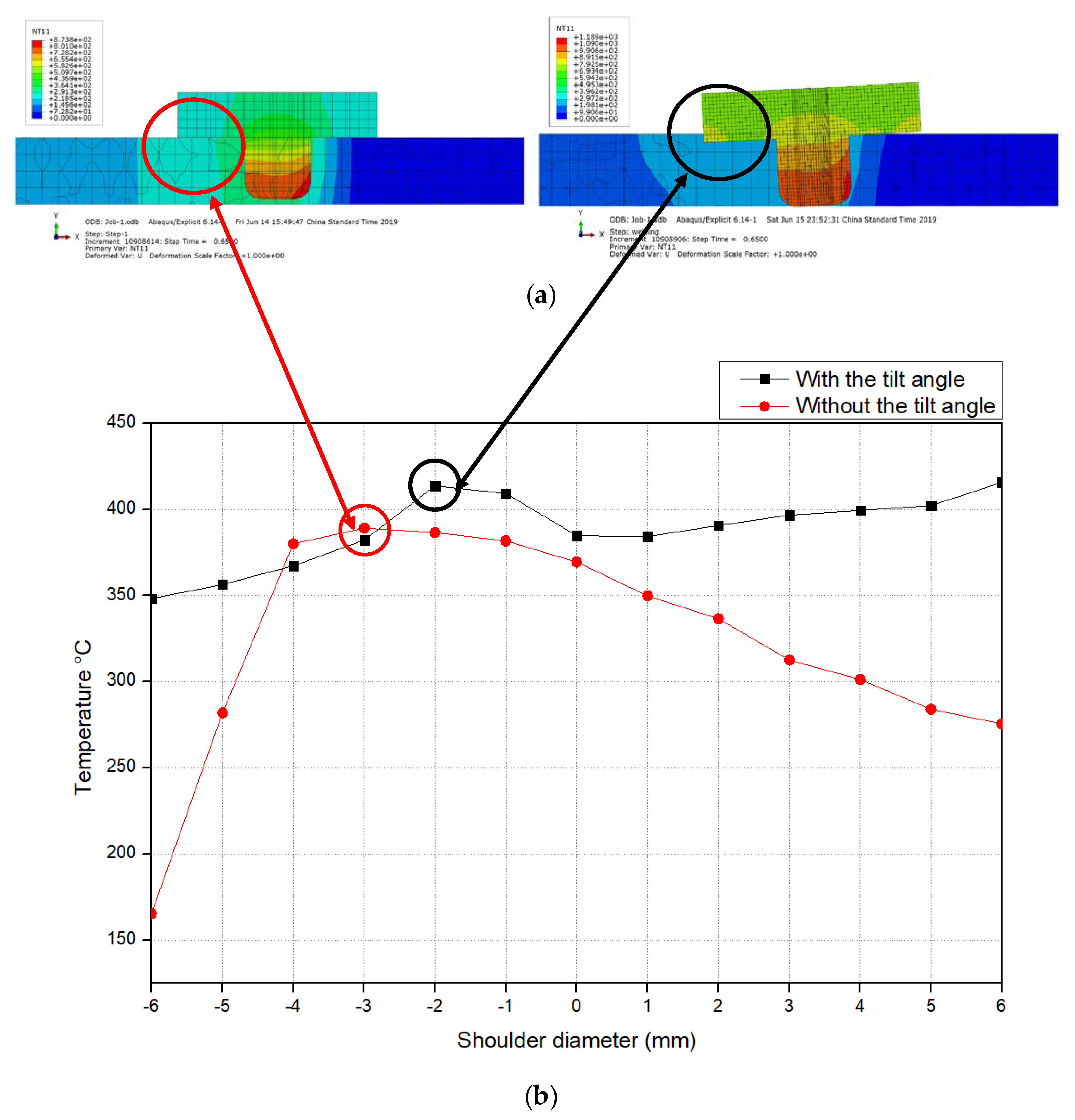
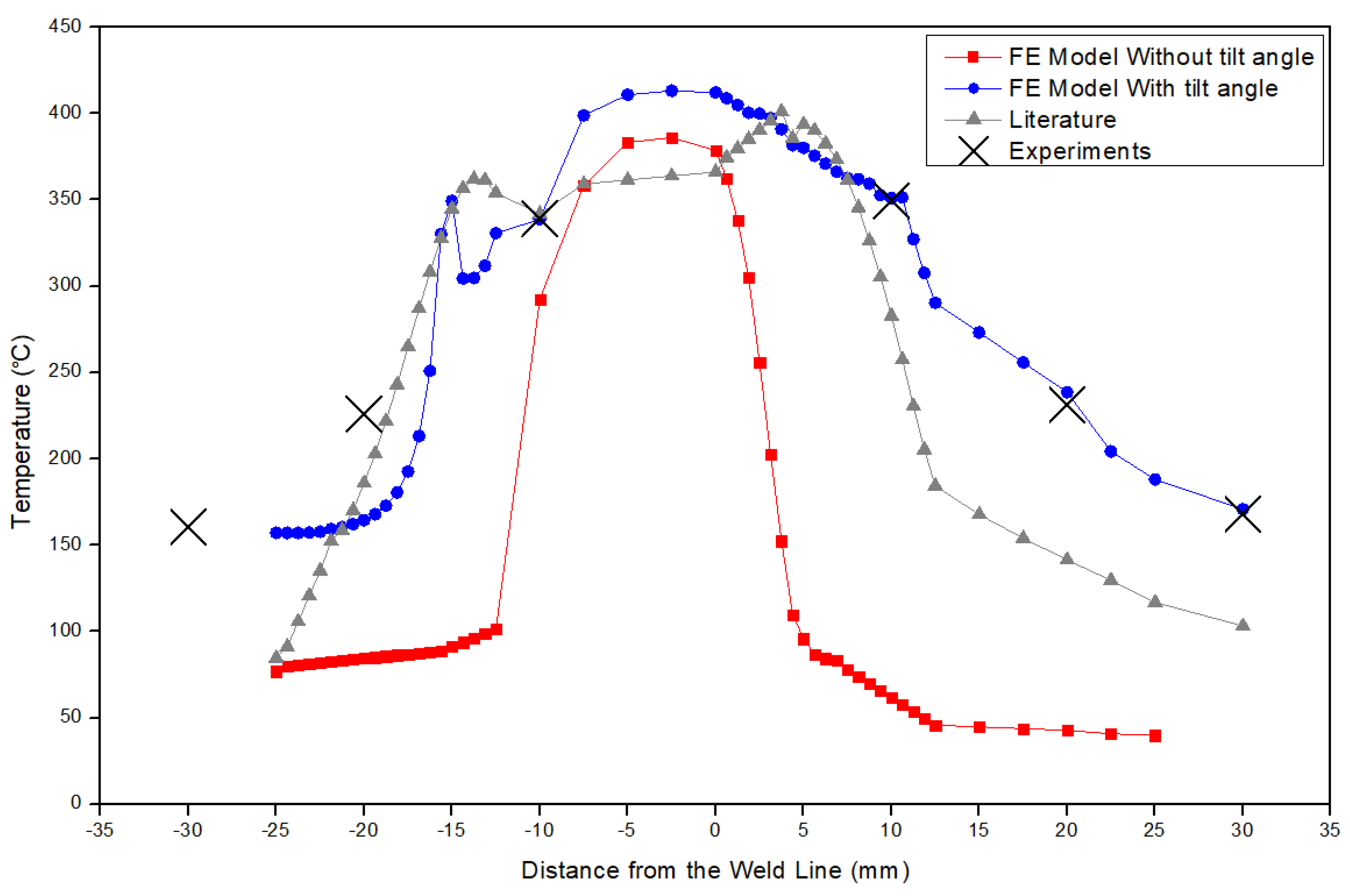
To improve the accuracy of numerical simulation of friction stir welding (FSW) process, the tool tilt angle must be considered as a significant parameter. In this study, specific considerations for mechanical boundary conditions in Eulerian domain is employed to investigate the tool tilt angle influence on the thermomechanical behavior in FSW. Aluminum 6061-T6 with a thickness of 6 mm under a rotational speed of 800 RPM, a transverse speed of 120 mm/min, and a plunging depth of 0.1 mm were employed for the simulations. Results showed an almost symmetric temperature profile predicted by the model without considering the tool tilt angle, while after incorporating the tool tilt angle, the peak temperature point is moved to the tool backside (around 400 °C), resulting in better material bonding, enhancing the weld joint quality. Without accounting for the tool tilt angle, the highest temperature of 389 °C is observed, while with the tilt angle the maximum temperature of 413 °C is achieved. The temperature variations at different points of the leading (around 360 °C) and the trailing sides (around 400 °C) of the welding tool were measured. It was observed that, after considering the tilt angle, as the tool moves, a smooth and quick increase for the temperature at the tool trailing side is achieved. This smooth and quick increasing of the temperature at the trailing side results in reducing the possibility of the formation of defects, cracks, and voids. Finally, comparisons showed that the model computational time is acceptable, and using Eulerian formulation leads to achieving a remarkable accuracy.
Keywords: tilt angle; Friction Stir Welding (FSW); shear layer; heat generation; material flow; finite element model; eulerian; thermomechanical; temperature tilt angle; Friction Stir Welding (FSW); shear layer; heat generation; material flow; finite element model; eulerian; thermomechanical; temperature