1. Introduction
In the contemporary educational landscape, secondary education faces the complex challenge of fostering key 21st-century competencies, such as creativity, digital literacy, and critical thinking, while ensuring the ethical, inclusive, and pedagogically grounded integration of emerging technologies. Within this context, artificial intelligence (AI), social media, and digital platforms are increasingly reshaping teaching and learning processes by enabling adaptive instructional personalization, formative feedback, and expanded access to context-sensitive learning experiences [
1,
2,
3,
4]. International educational frameworks have consistently emphasized the importance of developing digital competencies and creative capacities as central components of contemporary education [
2,
3]. UNESCO highlights the role of emerging technologies in fostering digital literacy, creativity, and critical thinking within inclusive and equitable learning environments. Similarly, the United Nations Sustainable Development Goals, particularly SDG 4 (Quality Education), underscore the need to ensure equitable access to quality education and promote lifelong learning opportunities supported by digital innovation and technological inclusion.
Despite the growing academic attention devoted to these technologies and their widely acknowledged transformative potential, empirical evidence that systematically examines their impact on the development of creative and media-related competencies among secondary education students remains limited [
4]. This limitation is particularly pronounced in Global South contexts, where persistent digital divides, uneven technological infrastructures, and structural educational inequalities continue to restrict equitable access to meaningful and pedagogically intentional technological innovation [
5,
6]. As a result, there is a critical need for contextually grounded empirical studies that move beyond technical adoption and examine how AI-mediated and digitally enriched pedagogies can support creative agency, ethical awareness, and cultural participation within diverse secondary education settings.
Despite the growing academic attention devoted to artificial intelligence, social media, and digital platforms in education, empirical evidence that systematically examines their combined impact on the development of creativity, digital competencies, and cultural participation in secondary education remains limited [
4]. This limitation is particularly evident in Global South contexts, where persistent digital divides, infrastructural constraints, and structural educational inequalities continue to shape students’ opportunities for meaningful technological engagement [
5,
6].
Furthermore, while recent studies have highlighted the relevance of AI literacy and digital competencies as multidimensional constructs that extend beyond technical skills to include ethical, cultural, and critical dimensions [
4,
7,
8], there is still a lack of integrative research that explicitly examines how these competencies interact to foster creativity and culturally situated learning processes in secondary education.
In addition, much of the existing literature has focused either on higher education settings or on isolated technological interventions, often overlooking the pedagogical integration of AI, social media, and web platforms as a combined ecosystem of learning [
4,
5,
6]. As a result, there is a need for contextually grounded empirical research that not only evaluates the effectiveness of these technologies but also explores their role as mediators of creative expression, critical engagement, and cultural participation in diverse educational contexts.
AI literacy and digital literacy are increasingly understood as interrelated and multidimensional competencies that extend beyond technical proficiency to include ethical reasoning, cultural awareness, and socially situated forms of technological knowledge [
4,
7,
8]. Within this framework, recent research indicates that artificial intelligence can enhance creativity when it is deliberately positioned as a cognitive and expressive mediator that supports human thinking and reflective processes, rather than as a substitute for them [
9]. However, empirical research that systematically examines these dynamics within secondary education settings remains limited. Much of the existing evidence has been produced in Global North contexts or within higher education environments, leaving critical gaps in understanding how AI and digital technologies can be integrated in ways that are pedagogically intentional, ethically grounded, and culturally responsive across diverse school systems [
5,
6]. This limitation is particularly significant in contexts marked by social and economic inequality, where unequal access to digital resources and institutional support continues to shape students’ opportunities for meaningful technological appropriation [
5,
10].
Moreover, an expanding body of critical scholarship has increasingly warned against technocentric and solutionist approaches to educational innovation that conceptualize AI as an inherently neutral or universally beneficial tool. When implemented without clear pedagogical intentionality, ethical oversight, or cultural sensitivity, AI-driven educational models risk reproducing existing social inequalities, privileging standardized and decontextualized forms of knowledge production, and marginalizing local epistemologies particularly in Global South contexts marked by persistent asymmetries in access, infrastructure, and digital capital [
5,
10].
In addition, the uncritical incorporation of AI and social media into school practices may reorient educational priorities toward efficiency, automation, and performance optimization, often at the expense of creativity, ethical deliberation, and student agency. These tensions highlight the need for empirical research that moves beyond instrumental evaluations of whether AI “works” in educational settings and instead examines how AI is pedagogically enacted, under what conditions it supports meaningful learning, and with what ethical, cultural, and social implications it is integrated into everyday teaching and learning practices. The present study is also informed by culturally responsive pedagogy, understood as an approach that connects teaching and learning processes with students’ cultural identities, lived experiences, and community contexts [
1,
4]. From this perspective, educational innovation should not be limited to technological access or technical skill development, but should also foster meaningful, context-sensitive, and inclusive learning experiences. This conceptual lens is particularly relevant in Global South settings, where pedagogical interventions must respond not only to digital inequalities but also to sociocultural diversity and local forms of meaning-making.
In response to these challenges, recent research has increasingly emphasized the relevance of hybrid pedagogical approaches that deliberately combine face-to-face instruction with technology-mediated learning environments. Such models have been shown to foster student autonomy, collaborative learning, and active cultural participation, while simultaneously supporting more inclusive, dialogical, and participatory forms of education [
11,
12,
13]. Rather than treating digital technologies as auxiliary tools, these approaches position them as pedagogical mediators that shape how students engage with knowledge, peers, and their sociocultural contexts.
From this perspective, the pedagogical integration of AI and social media extends beyond enhancing instructional efficiency to creating spaces for creative expression, critical engagement, and meaningful participation in digital culture. This dimension is particularly significant in Latin American and other Global South contexts, where the contextualized and ethically grounded use of AI and digital platforms holds potential to mitigate digital inequalities, strengthen media and AI literacy, and promote educational innovation oriented toward equity, cultural relevance, and sustainable development [
2,
14]. When embedded within culturally responsive pedagogical frameworks, hybrid AI-mediated models may thus contribute not only to improved learning outcomes but also to broader processes of social inclusion and educational justice.
In this study, hybrid AI-mediated learning environments are conceptualized as educational settings that intentionally integrate face-to-face instruction with digitally supported learning experiences. The “hybrid” nature of the intervention refers to the structured combination of in-person classroom activities and online learning modalities, including asynchronous platforms, social media, and digital content creation tools. This integration enables students to participate in both synchronous and flexible learning processes, promoting continuity, accessibility, and extended engagement beyond the physical classroom.
Within this framework, AI tools act as mediators of the learning process rather than as substitutes for human instruction. Specifically, AI is used to support content generation, provide immediate feedback, facilitate idea development, and enhance students’ reflective and creative processes. In this sense, AI is conceptualized as a cognitive and expressive scaffold that strengthens students’ capacities for problem-solving, creativity, and critical thinking. Recent research has increasingly emphasized the role of artificial intelligence not only as a technological tool but as an active mediator in learning processes through human–AI interaction. In this context, AI literacy frameworks highlight the importance of enabling learners to understand, critically evaluate, and effectively collaborate with AI systems [
15]. From a pedagogical perspective, AI is being reconceptualized as a cognitive partner that supports co-creation, adaptive feedback, and personalized learning pathways [
16]. This shift moves beyond instrumental uses of technology toward a more relational and interactive understanding of AI in education. Emerging studies have explored how human–AI collaboration can enhance creativity, problem-solving, and digital competencies, particularly in contexts where students actively engage with generative AI tools [
17]. These interactions are not merely functional; they involve processes of negotiation, interpretation, and co-construction of knowledge between learners and intelligent systems. Furthermore, recent evidence suggests that AI-mediated learning environments can foster higher levels of engagement and creative production when students are positioned as active agents in the interaction with AI systems [
18]. This perspective aligns with constructivist and sociocultural approaches, where learning emerges through interaction, collaboration, and contextualized meaning-making. In this sense, the present study is situated within the emerging field of AI-mediated learning, emphasizing the role of human–AI collaboration as a key mechanism for the development of creativity, digital literacy, and critical engagement in secondary education.
This approach differs from conventional forms of technology-supported teaching, where digital tools are typically used for content delivery or task automation. In contrast, the proposed model positions AI and digital platforms as active pedagogical agents that promote interaction, co-creation, personalization, and critical engagement with digital culture. As a result, technology is not merely an auxiliary resource but a central component in shaping how students construct knowledge, express ideas, and participate in learning environments. The pedagogical orientation of this research draws on social reconstructionist and humanistic educational perspectives, which emphasize collaborative learning, critical reflection, and the transformative role of education in addressing contemporary social challenges. These perspectives support pedagogical practices that encourage student agency, creativity, and meaningful engagement with digital culture. In addition, the study is conceptually informed by the principles of Universal Design for Learning (UDL), which promote inclusive learning environments through multiple means of engagement, representation, and expression.
Despite the growing body of research on artificial intelligence in education, there is still limited empirical evidence examining how AI, social media, and web platforms can be pedagogically integrated to foster creativity and engagement with cultural participation in secondary education, particularly in Global South contexts. Furthermore, existing studies have largely focused on higher education or Global North settings, leaving a gap in understanding how these technologies can be implemented in culturally diverse and resource-constrained educational environments.
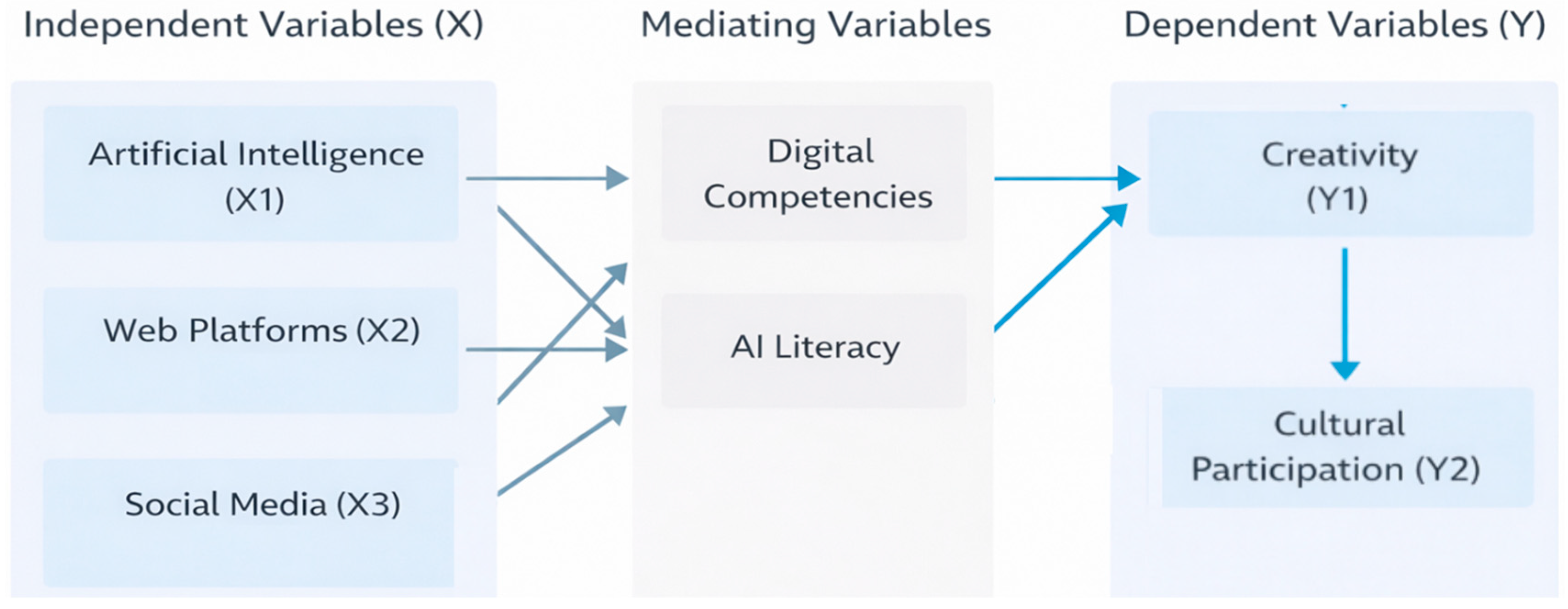
Figure 1 presents the conceptual framework guiding this study, outlining the relationships among the independent variables (artificial intelligence, web platforms, and social media), the mediating variables (digital competencies and AI literacy), and the dependent variables (creativity and cultural participation). The arrows from the independent variables to the mediating variables indicate that engagement with AI, web platforms, and social media contributes to the development of individuals’ digital competencies and AI literacy. The paths from the mediating variables to creativity (Y1) suggest that these competencies enhance individuals’ creative capacities. Furthermore, the directional relationship between creativity (Y1) and cultural participation (Y2) indicates that higher levels of creativity are associated with increased involvement in cultural activities. Overall, the model proposes a mediating mechanism in which digital competencies and AI literacy transmit the effects of digital technologies on creativity, which in turn influences cultural participation.
To address this research gap, the study is guided by the following research question:
To what extent does a pedagogical intervention integrating AI, web platforms, and social media influence students’ creativity and cultural participation in a secondary education context? In addition to this research question, the study is guided by the following hypotheses:
H1. The pedagogical integration of artificial intelligence, web platforms, and social media significantly enhances students’ creativity.
H2. The pedagogical integration of artificial intelligence, web platforms, and social media enhances students’ engagement with cultural participation.
H3. The implementation of a hybrid AI-mediated intervention produces statistically significant improvements in students’ digital competencies and AI literacy.
The main objective of this study is to evaluate the impact of a hybrid AI-mediated pedagogical intervention on students’ creativity and engagement with cultural participation in secondary education in Ecuador.
Against this backdrop, the present study investigates the effects of a three-month pedagogical intervention implemented in a public secondary education institution in northern Ecuador. The intervention integrated AI tools, social media, and digital design practices with the objective of strengthening students’ creativity, media literacy, and cultural empowerment. Grounded in a mixed-methods action research design, the study enables a systematic examination of both measurable changes in students’ digital competencies and the subjective processes of technological appropriation, ethical reflection, and cultural participation [
19,
20].
2. Materials and Methods
2.1. Study Design
This study adopted an action research design with a mixed-methods approach, which is particularly suitable for examining complex educational phenomena that require the systematic integration of quantitative and qualitative data, as well as the continuous improvement of pedagogical practices in real educational contexts [
21,
22]. Specifically, the action research was grounded in the classic cyclical action research model proposed by Lewin, structured into four iterative phases—planning, action, observation, and reflection—which enabled a coherent articulation between the implementation of the pedagogical intervention and a reflective, systematic process of contextualized knowledge generation [
23].
Each phase facilitated continuous feedback between the pedagogical intervention and the generation of contextualized knowledge, promoting systematic reflection on educational practice. This methodological approach is consistent with recent research highlighting the effectiveness of action research and collaborative pedagogical designs in promoting educational innovation and the critical appropriation of emerging technologies in school settings [
22,
23].
In this study, Lewin’s four-phase action research was operationalized through the following phases: (1) planning involved the design of the pedagogical intervention, the preparation of instructional materials, and the development of data collection instruments; (2) action consisted of the implementation of the three-month educational program with secondary education students; (3) observation included the systematic collection of quantitative and qualitative data through pre- and post-test surveys, interviews, digital records, and student-produced artifacts; (4) reflection involved the analysis and interpretation of the results in order to assess the pedagogical impact of the intervention and identify implications for future educational practice.
The research design of this study is further structured around clearly defined independent and dependent variables. Artificial intelligence (X1), web platforms (X2), and social media (X3) are conceptualized as independent variables, as they constitute the main components of the pedagogical intervention. In contrast, creativity (Y1) and cultural participation (Y2) are conceptualized as dependent variables, as they represent the primary educational and socio-cultural outcomes examined in the study. This structure strengthens the analytical clarity of the study, allowing the intervention to be understood as a pedagogically integrated model in which digital tools and platforms function as mediating factors that influence students’ creative development and their engagement in culturally meaningful digital practices.
2.2. Participants and Context
The pedagogical intervention was implemented in a public secondary education institution located in northern Ecuador. A total of 61 students (42 males and 19 females), with a mean age of 17 years (SD = 0.74), were enrolled in the second and third years of upper secondary education.
The use of purposive sampling is consistent with the action research design, which prioritizes contextual relevance and the selection of information-rich cases over statistical representativeness. Participants were selected based on their direct involvement in the intervention and their potential to provide meaningful insights into the pedagogical process. This approach enables an in-depth understanding of the phenomenon within its natural educational setting.
The sample was selected using a purposive sampling strategy, as participants were chosen based on their direct involvement in the pedagogical intervention, their availability, and the institutional context in which the study was conducted. This approach is consistent with action research methodologies, which prioritize contextual relevance and practical implementation over probabilistic representativeness.
The sample size (n = 61) corresponds to the total number of students enrolled in the selected educational setting who participated in the intervention. Therefore, it represents the accessible population within this context. Given the mixed-methods action research design of the study, this sample size is considered appropriate for capturing both measurable changes and in-depth qualitative insights related to the pedagogical process.
Additionally, 31 undergraduate students from Universidad Técnica del Norte participated as pedagogical facilitators and co-designers of the training program, supporting instructional activities related to AI, social media, and digital design. Finally, a full-time Language and Literature teacher acted as a co-researcher, ensuring curricular relevance and providing ethical oversight throughout the process.
All underage participants and their legal guardians signed a written informed consent form, ensuring voluntary participation and informed consent, the confidentiality of the information, and the right to withdraw from the study at any time without any academic consequences.
Likewise, the study was conducted in accordance with the ethical principles established in the Declaration of Helsinki and the Code of Ethics of Universidad Técnica del Norte (UTN). The research was approved by the Honorable Governing Council of the Faculty of Education, Science, and Technology of Universidad Técnica del Norte (Approval No. HCD-SE-44-No.0590-2023) on 1 November 2023, ensuring the confidentiality, anonymity, and protection of participants’ rights throughout the study. All research procedures complied with institutional ethical guidelines for research involving minors, ensuring the protection of participants’ rights, privacy, and academic integrity throughout the study.
2.3. Educational Intervention
The intervention was conducted over a three-month period (March–May 2025) using a hybrid approach (face-to-face and asynchronous online modalities). The training program, entitled Mentes Creativas, integrated AI, social media, and digital design tools across three sequential modules:
Digital communication: fundamentals of communication in digital environments, oral expression, and audiovisual production.
Multimedia content: creation of materials using Canva (version 2026), CapCut (version 12.5), and Photoshop (version 25.0) to strengthen expressive creativity.
Professional profile with AI: use of ChatGPT (version GPT-4), DALL·E (version DALL·E 3), and other generative AI tools to design digital professional profiles and visual narratives.
Each module combined face-to-face sessions, asynchronous forums, self-assessment exercises, and online tutoring. The instructional content was hosted on a bilingual (Spanish–English) digital platform, accessible via mobile devices or institutional computers.
2.4. Data Collection Instruments
Multiple data collection techniques were employed and integrated under a convergent mixed-methods design:
(1) Pre- and post-test surveys, specifically designed to measure digital literacy, creativity, and AI literacy. The instrument consisted of 20 items organized into these dimensions, all measured using a 5-point Likert-type scale (1 = strongly disagree to 5 = strongly agree). Each dimension was operationalized through specific indicators: digital literacy included items related to the use of digital tools and technological self-efficacy; creativity was assessed through items measuring idea generation, originality, and digital content creation; and AI literacy included items related to the understanding, use, and critical evaluation of artificial intelligence tools. In addition, several items explored students’ cultural participation through digital expression and engagement with their community context. However, cultural participation was primarily examined through qualitative data, as the study aimed to capture context-sensitive, experiential, and culturally embedded dimensions that are not fully measurable through standardized instruments. Sample items included: “I feel confident using digital tools to create content” (digital literacy), “I can generate original ideas using digital platforms” (creativity), and “I understand how AI tools support my learning process” (AI literacy). The instrument was adapted from previous validated studies, contextualized for the educational setting, and validated through expert judgment and internal consistency analysis using Cronbach’s alpha (α = 0.83). A full version of the questionnaire is provided in
Appendix A to enhance transparency and replicability.
To ensure construct validity, the instrument was developed based on established theoretical frameworks of digital literacy, creativity, and AI literacy, and adapted from previously validated scales. Expert judgment was employed to assess content relevance, clarity, and alignment with the constructs under study. Additionally, internal consistency analysis yielded a Cronbach’s alpha coefficient of 0.83, indicating acceptable reliability and supporting the adequacy of the instrument to capture the intended constructs.
(2) Semi-structured interviews with 14 students, with an average duration of approximately 45 min, conducted to explore perceptions of AI, social media, creativity, and cultural expression. Participants were selected through a purposive sampling strategy aimed at selecting information-rich cases and ensuring diversity of perspectives. Selection criteria included participants’ level of engagement in the intervention, variation in their digital production processes, and their voluntary willingness to participate. The aim was not to achieve statistical representativeness, but analytical depth and heterogeneity of experiences within the pedagogical process.
(3) Digital activity records including connection time, progress, and participation within the MOOC platform.
(4) Analysis of digital products (videos, posts, and professional profiles), evaluated using an analytical rubric assessing creativity and communicative coherence. The analytical rubric used to assess students’ digital products was reviewed by expert judges prior to its implementation to ensure content relevance, clarity of criteria, and alignment with the dimensions of creativity and communicative coherence addressed in the study.
All instruments were theoretically and empirically validated and administered under standardized conditions to ensure reliability and consistency.
2.5. Analysis Procedures
Quantitative data were analyzed using IBM SPSS Statistics v28, applying paired-samples Student’s t-tests (α = 0.05) to compare pre- and post-test scores, as well as estimating effect sizes using Cohen’s d coefficient. Given the pre–post design without a control group, this study does not aim to establish causal relationships between the intervention and the observed outcomes. Instead, the analysis focuses on identifying changes associated with the intervention within the sample. Therefore, the findings should be interpreted as indicative of potential relationships rather than definitive causal effects.
The selection of statistical methods was aligned with the pre–post design of the study. Specifically, paired-samples t-tests were employed to compare pre- and post-intervention scores, as it is appropriate for analyzing within-group differences over time among the same participants measured at two time points. In addition, effect sizes were calculated using Cohen’s d to assess the magnitude of the observed changes, allowing for a more comprehensive interpretation of the results beyond statistical significance.
Qualitative analysis was conducted through a thematic analysis approach, following the six-phase procedure proposed by Braun and Clarke: data familiarization, initial coding, theme searching, theme review, definition and naming of themes, and report production [
20]. In addition, principles of reflexive thematic analysis were considered to strengthen the rigor and interpretative depth of the qualitative analysis [
24]. To enhance analytical transparency, the qualitative analysis followed a systematic procedure in which interview transcripts were transcribed verbatim and subsequently reviewed repeatedly to ensure thorough data familiarization. Subsequently, open coding was carried out to identify meaningful units of information related to digital literacy, creativity, and AI appropriation. These initial codes were then iteratively grouped into broader themes through a process of constant comparison and conceptual refinement. Finally, themes were reviewed, defined, and validated through collaborative discussions among the research team to ensure internal consistency, coherence, and alignment with the study objectives. Coding was independently performed by two researchers, achieving a high level of inter-rater agreement (Cohen’s κ = 0.87), indicating strong agreement, which enhances the reliability and analytical consistency of the qualitative analysis.
Finally, quantitative and qualitative results were integrated through a convergent mixed-methods triangulation (weaving) strategy, which enabled both sources of evidence to be integrated into a single analytical narrative, ensuring a comprehensive, coherent, and methodologically rigorous interpretation of the pedagogical impact of the intervention [
25,
26].
2.6. Research Quality and Trustworthiness
To ensure methodological rigor and the quality of the collected data, several strategies were implemented. Quantitative reliability was assessed using Cronbach’s alpha coefficient (α = 0.83), indicating acceptable internal consistency of the survey instrument. In the qualitative component, trustworthiness was ensured through methodological triangulation across interviews, survey data, and digital artifacts produced by students. Additionally, inter-rater reliability was established through independent coding by two researchers, achieving substantial agreement (Cohen’s κ = 0.87).
Participant validation procedures were also applied by discussing preliminary interpretations with selected participants to confirm the accuracy of the analytical interpretations. These strategies contribute to strengthening the credibility, confirmability, and analytical reliability of the mixed-methods design.
2.7. Data and Materials Availability
All data collection instruments, analysis protocols, and instructional materials used in this study are publicly available on the Figshare platform. The complete set of materials can be accessed via the following permanent DOI link:
https://doi.org/10.6084/m9.figshare.31164631.
The anonymized quantitative and qualitative data supporting the findings of this study are available from the corresponding author upon reasonable request, in order to ensure participant confidentiality and compliance with the ethical principles established for educational research involving minors.
2.8. Use of Generative Artificial Intelligence (GenAI)
In accordance with MDPI Societies guidelines on transparency in the use of generative AI, it is declared that AI tools (ChatGPT (OpenAI, San Francisco, CA, USA; version GPT-5.3, 2026) and Grammarly (Grammarly Inc., San Francisco, CA, USA; cloud-based writing assistant, accessed in 2026; no fixed version number provided by the developer)) were used exclusively for linguistic editing, academic style standardization, and grammatical verification of the manuscript. No AI tools were used to generate data, interpret results, or write substantive sections of the study.
4. Discussion
The findings of this study confirm that emerging technologies—particularly AI, social media, and web-based platforms—can function as powerful pedagogical mediators in the development of digital competencies, creativity, and cultural participation in secondary education. Within this framework, digital competencies and AI literacy are understood as enabling conditions that support the development of creativity (Y1), while cultural participation is understood as an expression of engagement within cultural industries (Y2). These results are consistent with previous research highlighting the role of AI in supporting personalized learning, automated feedback and assessment, the development of critical skills, and enhanced student engagement in technology-mediated educational environments [
1,
2,
3,
4,
27].
However, this study moves beyond a predominantly instrumental understanding of AI by demonstrating that its educational impact extends beyond cognitive or technical outcomes to encompass cultural, ethical, and participatory dimensions of learning. This contribution is particularly relevant given the persistent underrepresentation of Global South contexts in the international literature on AI-driven educational innovation, especially at the secondary education level [
18].
Alternative explanations should also be considered when interpreting the results. Improvements observed in digital competencies and creativity may be partially influenced by factors such as increased familiarity with digital tools over time, repeated exposure to the assessment instrument, or general maturation processes unrelated to the intervention.
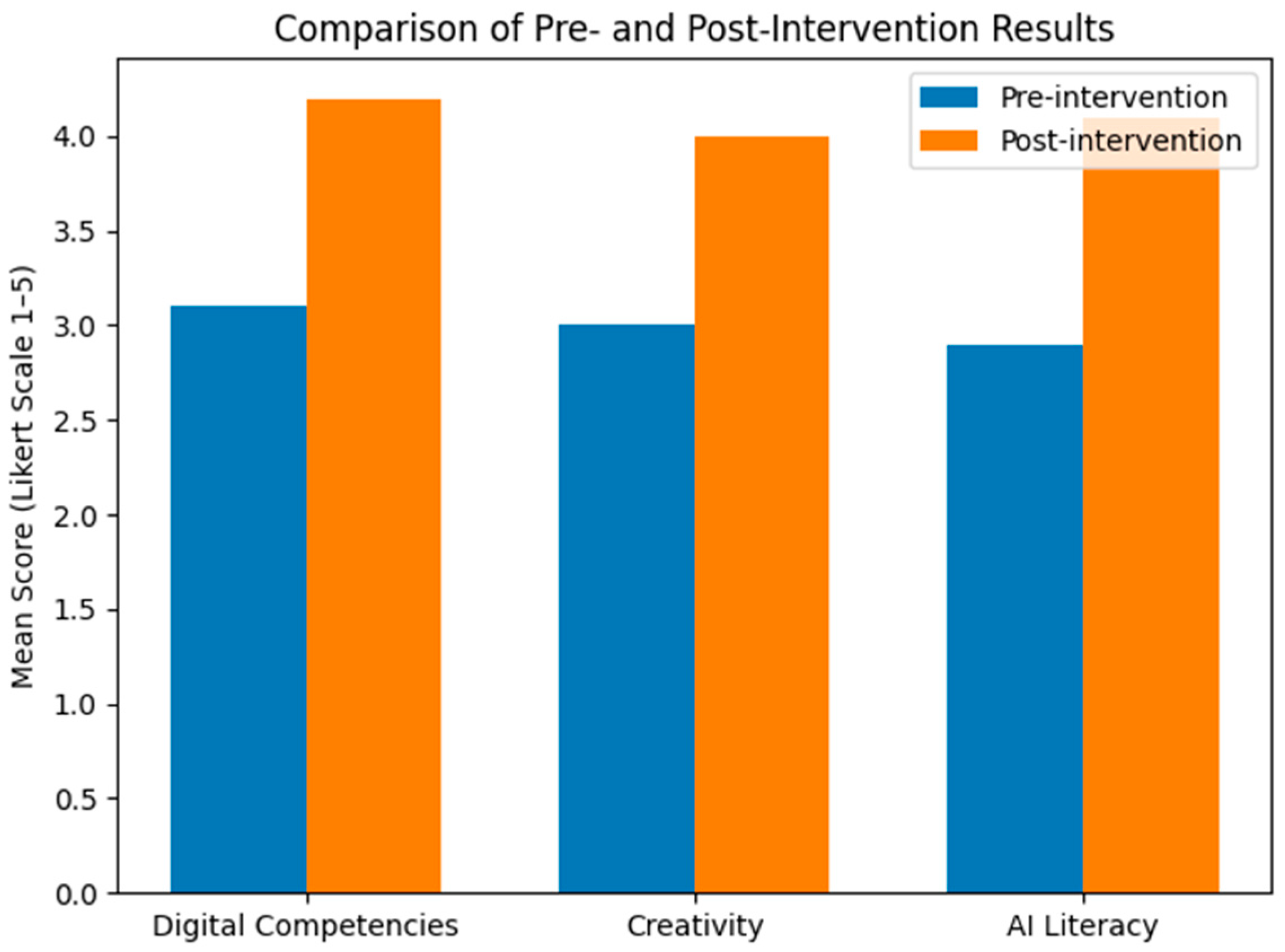
From an empirical perspective, the substantial gains observed in digital competencies and creativity reflected in large effect sizes (Cohen’s d ≥ 1.00) suggest a level of pedagogical effectiveness that exceeds the mere acquisition of technical skills. Rather than positioning AI as a neutral or efficiency-oriented tool, the intervention appears to have fostered reflective practices, creative expression, and forms of cultural agency within the specific context of the study. However, these findings should be interpreted as indicative rather than conclusive, given the exploratory nature of the intervention and the characteristics of the sample. In this sense, the results align with critical perspectives that conceptualize digital technologies as spaces for symbolic production, meaning-making, and cultural participation, rather than solely as instructional or administrative resources [
15,
28].
Although the quantitative findings indicate statistically significant improvements across all measured variables, it is important to interpret these results with caution. The pre–post design based on paired t-tests allows for the identification of changes within the sample; however, the absence of a control group limits the ability to attribute these changes exclusively to the intervention. In addition to the limitations related to sample size, it is important to consider the constraints associated with the design of the intervention.
While the findings suggest positive outcomes, it is important to critically acknowledge that AI-mediated interventions are not inherently beneficial. Without clear pedagogical intentionality, ethical guidance, and contextual adaptation, such approaches may reproduce existing inequalities, reinforce technocentric practices, or promote superficial engagement with technology.
The three-month duration of the program may not be sufficient to assess long-term learning outcomes or the sustainability of the observed effects. Furthermore, the absence of a control group limits the ability to establish causal relationships between the intervention and the measured outcomes. Finally, the implementation within a single institutional context may introduce contextual factors that influence the results. Therefore, the findings should be interpreted with caution, and future research is encouraged to adopt longitudinal designs and comparative approaches to strengthen the robustness of the evidence.
In this sense, the observed improvements may also be influenced by external factors such as general learning progression over time, increased familiarity with the survey instrument, or other contextual variables not controlled within the study design. Therefore, the results should be interpreted as indicative of associations between the intervention and the observed outcomes, rather than as definitive causal effects.
These findings are further reinforced by evidence indicating that artificial intelligence can act as a cognitive and creative mediator when its use is embedded within pedagogically intentional learning environments. Prior research suggests that students perceive AI not merely as a technological artifact, but as a resource capable of stimulating creative thinking, idea generation, and reflective engagement when human agency remains central to the learning process [
29,
30].
Similar conclusions were reported by Marrone et al. [
29], whose qualitative study with secondary school students revealed that learners perceive AI as a catalyst for idea generation and reflection, while consistently affirming that human creativity cannot be fully replicated by artificial systems.
The qualitative findings of the present study provide additional insight into these dynamics by revealing that students developed a critical and ethical understanding of artificial intelligence, conceptualizing it as a support for human thinking rather than as a replacement for creativity or authorship. This distinction is particularly relevant within contemporary debates on AI solutionism in education, where concerns have been raised regarding the delegation of cognitive and creative processes to automated systems. In line with recent reviews on AI literacy in secondary education [
5,
31], the study underscores the importance of integrating ethical awareness, algorithmic transparency, and reflective judgment into AI-mediated learning experiences, thereby challenging reductive models of AI literacy that prioritize technical proficiency while neglecting ethical and critical dimensions.
Students’ confidence and perceptions of competence also emerged as key factors shaping meaningful engagement with AI-mediated learning environments. Previous studies have demonstrated that self-confidence is a significant predictor of digital skills development, influencing students’ willingness to experiment, take creative risks, and engage critically with digital tools [
32]. The qualitative evidence from this study resonates with these findings, as students increasingly reported greater autonomy, confidence, and ownership over their creative processes following sustained exposure to AI-supported pedagogical practices.
Trust in AI systems further plays a decisive role in students’ willingness to adopt and meaningfully use generative technologies in educational contexts. Recent research indicates that trust is closely associated with transparency, perceived usefulness, and alignment between AI tools and pedagogical objectives [
33]. When these conditions are met, students are more likely to integrate AI into their learning practices in ways that support creativity and critical engagement, rather than passive consumption or uncritical reliance on automated outputs.
From an instructional standpoint, the role of teachers remains central in mediating students’ interactions with AI technologies. Evidence suggests that teacher professional development significantly influences the quality and depth of digital instructional integration, particularly in contexts where emerging technologies are introduced into secondary education settings [
34]. In the present study, structured pedagogical guidance contributed to positioning AI as a tool for exploration, reflection, and creative production, rather than as a purely instrumental or efficiency-driven resource.
Another significant contribution of this research lies in its exploration of the relationship between creativity, culture, and technology. The qualitative data indicate that digital content production enabled students to articulate local identities, strengthen their sense of belonging, and actively participate in digital cultural ecosystems. While previous studies have documented the potential of digital storytelling and AI-supported creative practices to foster narrative and expressive competencies [
19,
35], such research has predominantly been conducted in Global North contexts. By contrast, the present study provides empirical evidence from a Latin American educational setting, highlighting AI as a form of cultural and symbolic mediation that supports situated creativity and locally meaningful knowledge production rather than acting as a homogenizing technological force.
The transformation observed in students’ perceptions of learning and their roles within the educational process further aligns with pedagogical frameworks that emphasize active, collaborative, and project-based learning [
16,
36]. Importantly, this shift was not merely methodological but epistemic: students assumed greater responsibility in the design, development, and evaluation of their learning processes, thereby reconfiguring traditional power relations between teachers, learners, and technology. Such findings resonate with critical educational perspectives that view participation and agency as central to meaningful learning in digitally mediated environments.
While a growing body of research has emphasized the benefits of AI for learning personalization and adaptive assessment [
2], the present study extends this discussion by demonstrating that AI-mediated interventions can also enhance students’ cultural agency and socio-educational engagement. The integration of AI and social media within the Mentes Creativas project facilitated the construction of learning experiences grounded in local contexts and cultural relevance, addressing a key challenge identified in Global South scholarship: the need for educational models that reconcile technological innovation with digital justice and social equity [
19].
Finally, the findings invite critical reflection on the ethical and political implications of implementing artificial intelligence in educational systems. In line with international policy frameworks and guidelines [
14,
34,
36,
37], the study underscores the necessity of inclusive policies, equitable access to digital resources, and sustained teacher professional development as prerequisites for the ethical and sustainable adoption of AI in education. The Ecuadorian experience documented here suggests that AI, when embedded within a critical and context-sensitive pedagogical framework, can function as a driver of cognitive and cultural democratization rather than as a mechanism of exclusion or technological dependency.
Although the findings provide valuable insights, they are based on a relatively small sample (n = 61) from a single institution. Therefore, the results are not intended to be statistically generalizable but rather analytically transferable to similar contexts. Future research should expand the scope of analysis through larger and more diverse samples.
Overall, this study contributes to ongoing debates on artificial intelligence as a tool for educational innovation and digital justice by demonstrating that hybrid interventions combining AI and social media can meaningfully transform secondary education in Global South contexts. Although the findings of this study suggest the potential relevance of the proposed pedagogical model for comparable educational contexts, they should be interpreted within the sociocultural and institutional specificity of the setting in which the intervention was implemented. Accordingly, any broader application or scalability of the model requires careful contextual adaptation rather than direct generalization.
By fostering digital competencies, creativity, ethical literacy, critical thinking, and cultural participation, the proposed model offers a theoretically grounded and empirically supported framework for future research and for the development of public policies aimed at promoting technological equity and culturally responsive education.
5. Conclusions
This study provides empirical evidence suggesting that the pedagogical integration of AI, social media, and web platforms can contribute to the development of digital competencies, creativity, and critical literacy as a transversal dimension associated with ethical and reflective engagement in AI-mediated learning environments among secondary education students. However, these findings should be interpreted within the scope of a pilot educational intervention conducted in a specific sociocultural context.
The results indicate that, when AI is implemented through an ethical, participatory, and culturally contextualized approach, it may function as a cognitive and expressive mediator capable of enhancing students’ autonomy, reflection, and active participation.
In theoretical terms, the research contributes to expanding the understanding of the role of AI in education by positioning it not only as a technical tool but also as a symbolic and cultural resource that may support student agency and creative production. This approach supports recent frameworks on AI literacy and digital culture, emphasizing the need to integrate ethical and critical dimensions into teaching–learning processes.
Methodologically, the study supports the relevance of mixed-methods approaches and action research design for evaluating educational interventions in real-world contexts. The triangulation of quantitative and qualitative results allowed for the identification of both measurable effects and subjective transformations in perceptions of learning and in the appropriation of technology.
At the practical level, the findings suggest that hybrid interventions mediated by AI have the potential to contribute to closing digital divides and strengthening cultural and creative industries at the secondary education level. This model, implemented in a Global South context, offers context-specific and exploratory evidence that may inform the design of educational policies oriented toward technological equity and the development of 21st-century competencies.
The results should therefore be understood as exploratory and context-dependent, offering preliminary insights into the potential of AI-mediated pedagogical models rather than definitive or generalizable conclusions. Future research with larger samples, longitudinal designs, and comparative groups is required to validate and extend these findings.
The study suggests that AI, when integrated in a critical and pedagogically grounded manner, can potentially function as a tool for cognitive and cultural democratization, contributing to more inclusive, creative, and socially sustainable educational practices.
Limitations and Future Research Directions
This study provides valuable insights into the educational potential of artificial intelligence in secondary education contexts; however, several limitations should be considered. First, the sample size (n = 61) and the localized nature of the intervention limit the generalizability of the findings to other sociocultural contexts. Second, the duration of the intervention (three months) does not allow for the assessment of long-term learning outcomes or the sustainability of the observed effects.
Additionally, the absence of a control or comparison group limits the ability to establish causal relationships between the intervention and the observed outcomes. Although pre- and post-intervention measurements provide relevant information about changes within the sample, the results should be interpreted as indicative rather than definitive.
The observed improvements in digital competencies, creativity, and AI literacy may also be influenced by external factors, such as natural learning progression, increased familiarity with the assessment instruments, or other contextual variables not controlled within the study.
Future research should expand the geographic and demographic scope by including diverse educational contexts (e.g., rural, urban, and intercultural settings) and by conducting comparative studies across different types of institutions. The incorporation of control groups or quasi-experimental designs would strengthen causal inference and enhance the robustness of the findings.
Furthermore, future studies may explore emerging variables such as algorithmic literacy, trust in AI systems, and the emotional dimensions of AI-mediated learning. Longitudinal and collaborative research at a regional level is also recommended to support the development of a Latin American framework for pedagogical innovation with artificial intelligence, oriented toward digital equity, educational sustainability, and the strengthening of cultural and creative industries.




 ,
,