Article

Digital Detox Intention Among Indonesian Generation Z: The Role of Eudaimonic Values, Subjective Norms, Perceived Information Overload, and Self-Efficacy


by
Sabrina Oktaria Sihombing
1,* and
Juliana Juliana
2
1
Department of Management, Faculty of Economics and Business, Universitas Pelita Harapan, Tangerang 15811, Indonesia
2
Department of Hospitality Management, Faculty of Hospitality and Tourism, Universitas Pelita Harapan, Tangerang 15811, Indonesia
*
Author to whom correspondence should be addressed.
Societies 2026, 16(2), 54; https://doi.org/10.3390/soc16020054
Submission received: 4 January 2026 / Revised: 1 February 2026 / Accepted: 5 February 2026 / Published: 10 February 2026
(This article belongs to the Section The Social Nature of Health and Well-Being)

Abstract

Digital detox has emerged as a response to the growing intensity of social media use among young adults. This study examines digital detox intention among Indonesian Generation Z by situating disengagement from social media within social and informational contexts. Drawing on the Theory of Planned Behavior and the Value–Attitude–Behavior perspective, the study investigates how eudaimonic values, perceived information overload, and subjective norms are associated with intentions to reduce social media use, with self-efficacy conceptualized as a mediating expression of individual agency. A quantitative cross-sectional survey was conducted among Indonesian university students who actively use multiple social media platforms. Data were collected through an online questionnaire and analyzed using Partial Least Squares Structural Equation Modeling. The results show that self-efficacy constitutes the main pathway through which subjective norms influence digital detox intention. Eudaimonic values and perceived information overload are also positively related to digital detox intention, indicating that both value-driven motives and cognitive strain contribute to disengagement. These findings suggest that digital detox reflects a socially embedded practice shaped by the interaction of social expectations and individual agency. The study contributes to discussions on digital practices and generational change by highlighting the social dimensions of intentional disengagement.

1. Introduction

1.1. Background

The internet and social media have become embedded in everyday social life, shaping how people interact, communicate, and organize daily activities. As of early 2025, there are 5.56 billion internet users worldwide (67.9% of the global population) and 5.24 billion social media identities (63.9%), indicating the normalization of digital connectivity in contemporary societies. Over the previous year, the number of internet users increased by 2.5 percent (+136 million), while social media users grew by 4.1 percent (+206 million) [1]. In Indonesia, where the population reaches 285 million, 212 million people use the internet (74.4%) and 143 million are active on social media (50.2%). Mobile connectivity is particularly extensive, with 356 million cellular connections, representing a 125 percent penetration rate, which suggests the routine use of multiple digital devices. Indonesians spend an average of 7 h and 22 min online each day, including 4 h and 38 min on mobile phones, positioning the country among the most digitally active societies globally [1]. Beyond individual usage patterns, social media platforms increasingly function as structured environments in which agency, visibility, and participation are shaped by platform logics and communication norms, as highlighted in prior social media research [2].
While such pervasive connectivity offers convenience, it also introduces new forms of strain, particularly among younger generations. Surveys indicate that a substantial proportion of Indonesian Generation Z experience mental exhaustion associated with prolonged digital exposure [3,4,5]. Similar patterns have been observed globally, where younger users report burnout, confusion, and disengagement from dense online information environments [6,7]. Rather than being solely individual psychological outcomes, these experiences can be understood as social responses to intensified informational demands and expectations of constant digital presence. In this context, digital detox has gained attention as an intentional practice of temporarily reducing digital engagement in order to regain balance in everyday life [8,9,10]. Related studies further demonstrate how digital environments may amplify agenda-setting effects even within high-quality media systems, suggesting that individual agency operates within broader structural constraints [11].
Despite growing scholarly attention, research on digital detox remains fragmented. Existing studies have primarily emphasized motivational and behavioral factors such as self-efficacy and perceived personal control [12,13]. In contrast, value-based orientations have received considerably less attention. In particular, eudaimonic values, which emphasize meaning, authenticity, and personal growth, remain underexplored in studies of digital disengagement [14,15]. This gap is notable, as such values may shape how individuals interpret digital engagement and justify intentional withdrawal from digitally saturated environments.
Perceived information overload, defined as the subjective experience of being overwhelmed by the volume and complexity of online information [16], has been widely associated with technostress and digital fatigue [17,18]. However, its role as a direct cognitive antecedent of digital detox intention has received limited empirical attention. Similarly, subjective norms, understood as perceived social expectations surrounding digital participation, are recognized predictors of behavior. Yet few studies examine how these social influences operate through individual agency. In this context, self-efficacy can be understood as an expression of individual agency, reflecting individuals’ perceived capacity to regulate their digital practices. Despite its relevance, the mediating role of self-efficacy in linking subjective norms to intentional digital disengagement remains insufficiently examined.
Beyond individual self-regulation, emerging research suggests that self-efficacy also functions as a critical gatekeeping mechanism in digital practices more broadly. For example, recent work demonstrates that perceived technological efficacy shapes individuals’ willingness to participate in digitally mediated research environments, effectively determining who remains engaged and who withdraws [19]. This perspective reinforces the view that self-efficacy is not merely an internal belief, but a socially consequential mechanism that conditions participation, agency, and intentional disengagement within complex digital systems.
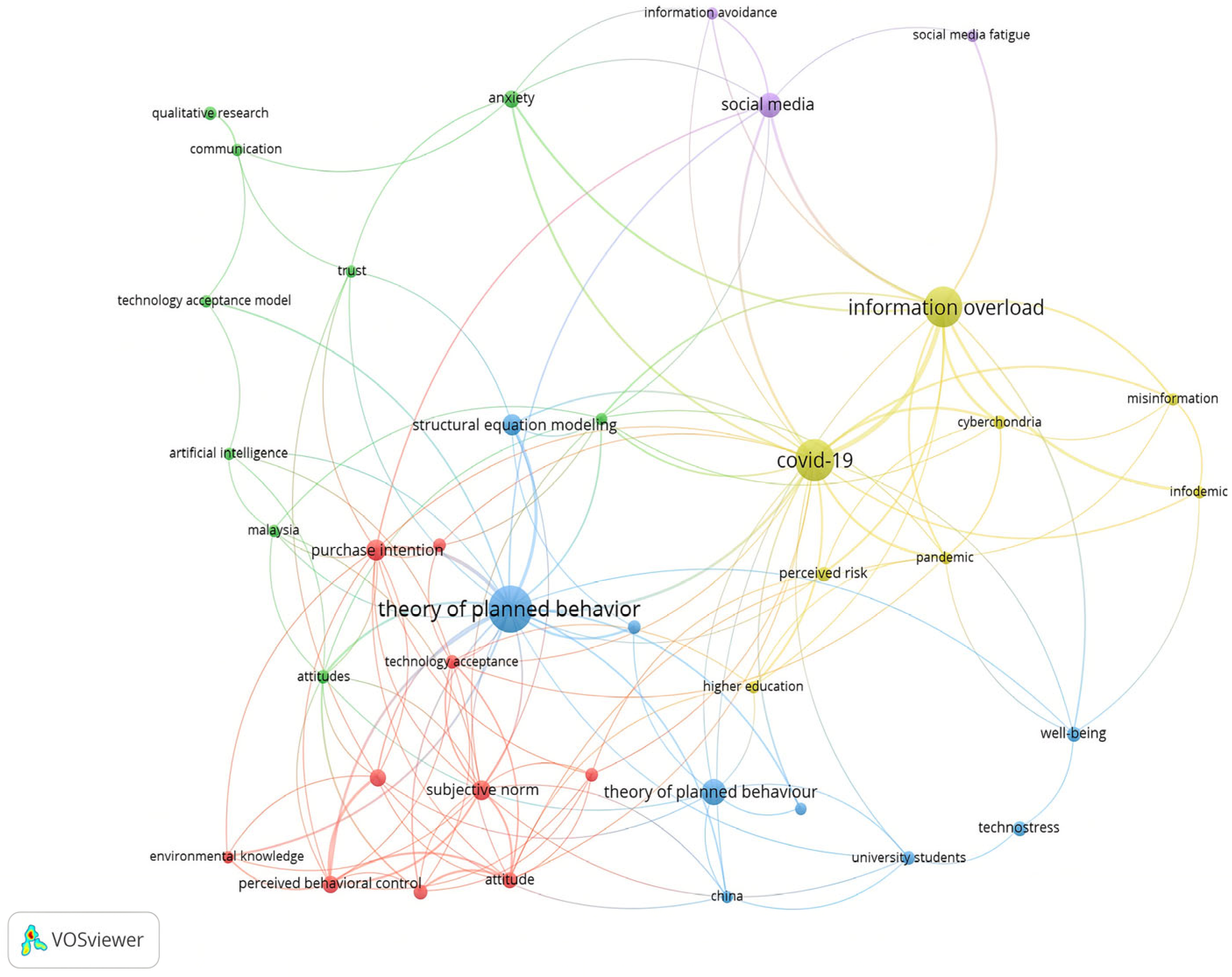
A bibliometric analysis conducted using VOSviewer version 1.6.2 (Figure 1) provides additional insight into the structure of the existing literature on digital behavior. The mapping suggests that research on digital detox is distributed across several thematic clusters, with limited integration between them. In particular, the presence of eudaimonic values within studies on digital disengagement appears marginal. Similarly, information overload is more frequently examined in relation to technostress and digital fatigue than as a direct motivator of intentional disengagement. The mapping also indicates that while subjective norms are widely discussed, their indirect role through self-efficacy within explanatory models of digital detox remains relatively underexplored.
A closer look at the bibliometric map suggests that the Theory of Planned Behavior constitutes a prominent cluster linking subjective norms, attitudes, and behavioral intention. However, relatively few studies extend this stream by examining self-efficacy as a mechanism through which social expectations are translated into intentional disengagement. The mapping also indicates that eudaimonic values remain peripheral in digital detox research, while perceived information overload is more often discussed as a stress outcome than as an antecedent of detox intention. These patterns point to a need for an integrated model that connects value orientations, cognitive strain, and socially embedded influences to explain why young people intentionally step back from social media.
This study contributes to the literature by conceptualizing digital detox not merely as an individual self-regulation strategy, but as a socially embedded practice shaped by internalized norms and perceived agency. By positioning self-efficacy as a mediating mechanism between subjective norms and digital detox intention, the study extends the Theory of Planned Behavior by illustrating how social expectations are translated into intentional disengagement among Generation Z.
Building on these observations, this study examines how eudaimonic values, perceived information overload, and subjective norms jointly shape digital detox intention, with self-efficacy conceptualized as a mediating expression of perceived agency within everyday digital practices. Focusing on Indonesian university students, the study proposes an integrated framework that brings together value-based orientations, cognitive pressures, and social expectations to explain intentional digital disengagement. This approach offers a more comprehensive understanding of how digital detox emerges as a socially situated practice among Indonesian Generation Z. Beyond its theoretical contribution, the study reflects the everyday digital conditions faced by young people in Indonesia and provides insights into how more balanced digital practices may be supported within higher education contexts.

1.2. Theoretical Background and Hypotheses Development

To understand the drivers of digital detox intention, this study draws upon two complementary theoretical frameworks: the Theory of Planned Behavior (TPB) and the Value–Attitude–Behavior (VAB) model. TPB posits that behavioral intention is shaped by attitudes, subjective norms, and perceived behavioral control [20]. However, in this study, only subjective norms and perceived behavioral control are incorporated from the TPB framework, as they are considered the most relevant social and cognitive determinants of digital detox intention. While attitudes are a central component of the Theory of Planned Behavior, the present study intentionally focuses on subjective norms and perceived behavioral control to examine how socially embedded influences and perceived capability directly shape digital detox intentions. The role of attitudes is therefore treated as a potential extension rather than a core mechanism in the current model. Subjective norms refer to individuals’ perceptions of social expectations from important others, which can influence their confidence to perform a behavior when such expectations are supportive. In addition, perceived behavioral control is represented through self-efficacy, which reflects individuals’ beliefs in their capability to regulate and manage their digital media use [20].
Alongside TPB, the VAB model provides insight into how core personal values influence behavior. These values may exert their influence directly or indirectly through attitudinal processes [21]. Accordingly, eudaimonic values are examined as a direct predictor of digital detox intention, based on the assumption that digital disengagement can be a self-congruent, value-driven act. By integrating TPB and VAB, this study proposes a focused yet comprehensive model that incorporates value-based, social, and cognitive mechanisms. The combined framework also allows exploration of whether subjective norms influence intention directly or primarily through self-efficacy as a mediating mechanism.

1.2.1. Digital Detox Intention

Digital detox intention refers to a deliberate break from using digital devices, including smartphones and computers, aimed at promoting relaxation and reducing psychological strain [22]. According to Radtke et al. [8], digital detox represents a voluntary and intentional timeout from the use of electronic devices, particularly smartphones, with the purpose of reducing stress and improving the quality of real-world social interactions. This action reflects a form of self-regulation against excessive digital habits and is driven by an awareness of the negative effects of technology use on mental health, performance, and social relationships. In this sense, digital detox does not necessarily mean complete abstinence but can involve restricting certain types of applications, such as social media or instant messaging, and is typically conducted within a specific and temporary duration. Furthermore, Marx et al. [23] emphasize that digital detox is an intentional corrective behavior motivated by individuals’ desire to reduce the adverse consequences of leisure information and communication technology (ICT) use. Their integrated definition highlights that digital detox involves a deliberately set period during which individuals limit their use of one or more digital devices and/or applications to foster a healthier and more balanced relationship with technology.

1.2.2. Self-Efficacy

Self-efficacy refers to an individual’s belief in their ability to perform actions necessary to achieve desired outcomes [24]. It reflects confidence in organizing and executing goal-directed efforts, particularly when facing challenges. This belief influences how individuals think, feel, and act across situations, shaping persistence, resilience, and self-regulation. In the context of digital detox, self-efficacy enables individuals to manage impulses related to excessive digital use by strengthening their confidence in maintaining control over digital habits. Individuals with higher self-efficacy are more capable of setting boundaries, adhering to self-imposed limits, and engaging in restorative offline activities, which are central to effective digital detox practices [23].
Beyond its direct role, self-efficacy functions as a key mechanism linking motivation and behavioral outcomes. Prior studies show that self-efficacy acts as a significant mediator between problematic smartphone use and adaptive behaviors, such as physical activity, among university students [12]. Extending this mechanism to digital detox behavior, individuals with higher self-efficacy are more likely to intentionally disengage from technology, sustain detox efforts, and reduce psychological strain. Accordingly, self-efficacy supports individuals’ capacity to regulate digital engagement and maintain balance within digitally intensive environments [12].

1.2.3. Subjective Norms

Subjective norms refer to the perceived social pressure an individual feels to perform or not perform a particular behavior [20]. Within the framework of the Theory of Planned Behavior (TPB), subjective norms arise from normative beliefs, that is, an individual’s perception of whether important referent groups such as family, friends, or colleagues approve or disapprove of a given behavior [20]. These beliefs reflect internalized social expectations that guide behavioral intentions through the desire for social conformity and acceptance. A person is more likely to engage in a behavior if they believe significant others think they should do so. For example, in the context of technology use or digital detox, subjective norms influence whether individuals feel compelled to reduce screen time when peers or family members express concern about excessive device usage.
Recent studies show that the influence of subjective norms depends on the level of control individuals believe they have. Subjective norms are also context dependent and interact with perceived behavioral control, showing that strong control beliefs may weaken the effect of social pressure on behavioral intention [25]. Conversely, when individuals perceive low control, social norms tend to exert greater influence on their decisions. A study shows that normative beliefs continue to play a crucial role across behavioral domains including health, environmental behavior, and political participation, emphasizing how collective expectations shape personal intentions [26]. In sum, subjective norms act as a social compass that directs behavioral decisions through internalized approval or disapproval from relevant social circles.

1.2.4. Eudaimonic Values

Eudaimonic values reflect an orientation toward living a meaningful and fulfilling life, shaped by motivations for personal growth, authenticity, and contributing to others [27,28,29]. Unlike hedonic pursuits that emphasize immediate pleasure, these values are associated with a sustained commitment to realizing one’s potential and engaging in intrinsically meaningful goals [27,28]. Within the framework of Self-Determination Theory, eudaimonic values are closely linked to the fulfillment of basic psychological needs, including autonomy, competence, and relatedness, which are central to long-term well-being and human flourishing [28].
In contemporary hyperconnected societies, the relevance of eudaimonic values becomes particularly salient. While these values emphasize reflective engagement, authenticity, and purposeful use of time, social media environments are often shaped by different priorities. Many platforms are designed to sustain attention and rapid interaction, encouraging continuous consumption, comparison, and surface-level engagement. As a result, such environments may conflict with individuals’ aspirations for sustained learning, self-development, and self-congruent digital practices.
For individuals who prioritize eudaimonic goals, prolonged engagement with algorithm-driven platforms may create a sense of misalignment between their digital practices and personal values. Instead of supporting personal growth or meaningful engagement, social media use may be experienced as fragmenting attention and undermining authenticity. In this context, digital detox can be understood not simply as a response to overload, but as a deliberate, value-driven effort to realign digital behavior with longer-term goals and personal priorities. Prior research further indicates that eudaimonic well-being is strengthened when individuals intentionally devote time to offline activities that reflect intrinsically meaningful pursuits [29,30]. Accordingly, incorporating eudaimonic values into the study of digital detox intention is both theoretically justified and practically relevant.

1.2.5. Perceived Information Overload

Perceived information overload refers to a condition in which the volume and complexity of information exceed individuals’ capacity to process and interpret it effectively [31]. In the digital era, continuous exposure to online platforms and social media often generates dense and unfiltered information flows, making it difficult to prioritize, evaluate, and make sense of available content. When cognitive resources are insufficient to manage this flow, individuals may experience confusion, distraction, and reduced decision quality. As part of broader social media overload, perceived information overload also functions as a stress-inducing condition that contributes to exhaustion, weakened self-regulation, and mental fatigue [19].
Within digital environments, perceived information overload has been linked to avoidance-oriented responses, including disengagement and digital fatigue. Empirical evidence shows that higher levels of information overload increase cognitive strain and encourage withdrawal from digital content, particularly when individuals struggle to distinguish relevant or credible information from misinformation [32]. In contrast, stronger information literacy is associated with lower perceptions of overload, as it enables more effective navigation and evaluation of digital content [32]. These patterns suggest that perceived information overload not only undermines cognitive clarity but also plays a meaningful role in motivating intentional disengagement from digital media.

1.3. Hypotheses Development

1.3.1. The Effect Eudaimonic Values on Digital Detox Intention

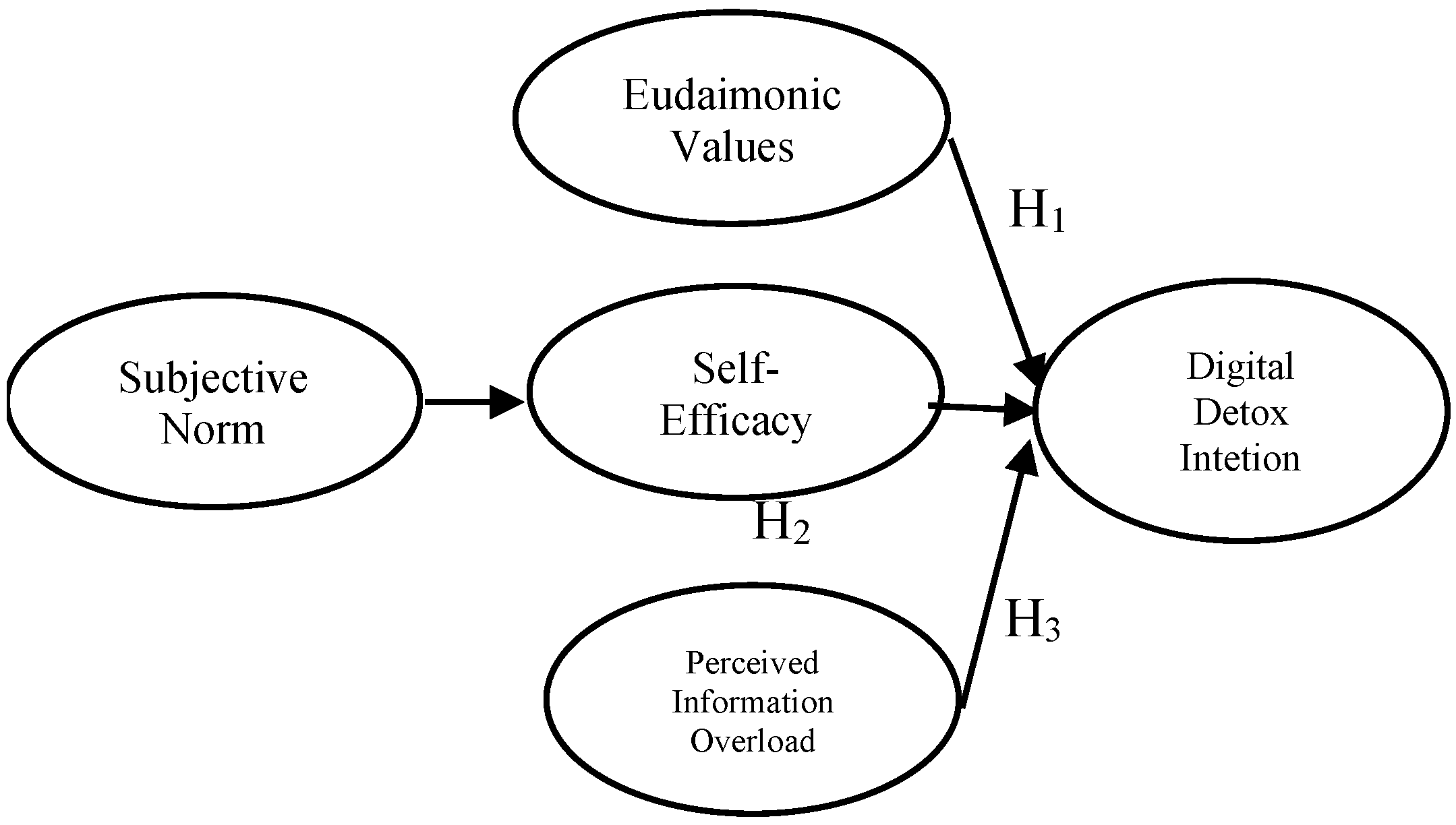
Individuals who prioritize personal growth, purpose, and authenticity tend to pursue behaviors that support long-term well-being, even when this requires sacrificing short-term pleasure [33,34]. Within digital contexts, excessive engagement with social media may be perceived as a distraction from activities that are experienced as meaningful, leading individuals to reassess and reduce their digital use [14]. Those with a strong eudaimonic orientation are more likely to reflect critically on their digital habits and to disengage from digital media when such engagement conflicts with their sense of self or broader life goals [14,35]. In this regard, digital detox practices align with eudaimonic values, as they involve deliberate efforts to regain control over time, attention, and personal autonomy [10]. Accordingly, the following hypothesis is proposed:
H1. 
Eudaimonic values positively influence digital detox intention.

1.3.2. The Mediating Role of Self Efficacy in the Effect of Subjective Norms on Digital Detox Intention

Subjective norms reflect individuals’ perceptions of social expectations from important referent groups. While the Theory of Planned Behavior (TPB) typically treats subjective norms and perceived behavioral control as parallel predictors of behavioral intention, this study advances an alternative pathway in which subjective norms influence intention indirectly through self-efficacy. This proposition is grounded in the idea that social expectations can shape individuals’ beliefs about their own capacity to perform a behavior. The pathway is particularly relevant in collectivist or high-context cultures such as Indonesia, where personal agency is often constructed through relational influence and social affirmation [36]. In such contexts, encouragement from significant others, including family members, peers, or influential figures, may not exert direct pressure to reduce digital use. Instead, these social cues may strengthen individuals’ confidence in their ability to regulate their digital behavior. Accordingly, self-efficacy functions as a mechanism through which social expectations are internalized and translated into intentional efforts to disengage from digital media. Based on this reasoning, the following hypothesis is proposed:
H2. 
Self-efficacy mediates the positive relationship between subjective norms and digital detox intention.

1.3.3. The Effect of Perceived Information Overload on Digital Detox Intention

Increasing exposure to large volumes of digital information can place significant demands on individuals’ cognitive resources. Perceived information overload has been associated with fatigue, avoidance behaviors, and diminished well-being, which may prompt individuals to reconsider their patterns of digital engagement [37,38]. Prior studies indicate that when individuals experience information overload, they are more likely to adopt coping strategies aimed at reducing cognitive strain and restoring a sense of control [39,40]. One such response is digital detox, which involves intentionally disengaging from digital environments to regain mental clarity. As information overload becomes more persistent and intrusive, the tendency to form intentions to disconnect from digital media is likely to increase [41]. Based on this reasoning, the following hypothesis is proposed:
H3. 
Perceived information overload positively influences digital detox intention.
The proposed hypotheses form an integrated model in which digital detox intention is shaped by value-based orientations, cognitive pressures, and social influences. Specifically, eudaimonic values and perceived information overload are modeled as direct predictors, while subjective norms influence intention indirectly through self-efficacy as an expression of individual agency (Figure 2). The hypotheses are grounded in established theoretical frameworks and prior empirical evidence.

2. Materials and Methods

2.1. Research Design

This study adopts a quantitative, cross-sectional survey design to examine relationships among the study variables at a single point in time.

2.2. Sampling and Sample Size

Purposive sampling was employed to target Generation Z individuals who own at least three active social media accounts. This criterion was applied to ensure sufficient digital exposure, as multiple account ownership reflects active engagement across platforms and increases the likelihood of experiencing information overload and related digital fatigue. A total of 198 valid responses were collected and included in the analysis. This sample size is considered adequate for Partial Least Squares Structural Equation Modeling (PLS-SEM), which is commonly applied in exploratory and predictive research with complex models and modest sample sizes, and exceeds common minimum thresholds based on indicator-to-construct ratios used in PLS-SEM [42].

2.3. Measurement

The questionnaire was developed using measurement items adapted from previously validated scales. Each construct was represented by several indicators. For example, an item for eudaimonic values is “I feel satisfied when I succeed in developing new skills” [43]. An item for perceived information overload is “I often feel overwhelmed by the number of notifications I receive on my social media platforms” [16]. For subjective norms, an example item is “My parents believe that doing a social media detox is a good idea” [44]. Self-efficacy was measured with items such as “I am able to achieve most of the goals I have set in managing my social media use” [45]. Digital detox intention was assessed using items like “If there is an opportunity, I intend to do a social media detox” [46]. All items were measured on a five-point Likert scale ranging from strongly disagree to strongly agree.

2.4. Data Collection

Primary data were collected using a structured questionnaire comprising four main sections: informed consent, screening questions, demographic information, and measurement items for the study constructs. The screening questions were used to ensure that respondents were university students who actively engaged with digital media, including regular use of social media and ownership of at least three active social media accounts. Only respondents who met these criteria were included in the analysis. The questionnaire was distributed online via email, messaging applications, and social media platforms, which was appropriate given the high level of digital literacy among the target population. Participation was voluntary, and respondents were informed of their right to withdraw at any stage without consequence. Confidentiality and anonymity of responses were assured prior to data collection. Ethical approval for the study was obtained from Pelita Harapan University (037/DRM/EC/IX/2025).

2.5. Pre-Test

A pretest involving 30 respondents from the target population was conducted to assess the clarity and reliability of the measurement instrument. Feedback from the pretest resulted in minor refinements to item wording. The results indicated satisfactory reliability and validity, with Cronbach’s alpha ranging from 0.810 to 0.953, composite reliability from 0.871 to 0.959, and average variance extracted (AVE) values between 0.634 and 0.833, all exceeding recommended thresholds. Convergent validity was supported by AVE values above the minimum criterion of 0.50. Discriminant validity was also established, as heterotrait–monotrait (HTMT) ratios were below the 0.90 threshold [47], and the Fornell–Larcker criterion was met, with the square root of each construct’s AVE exceeding its correlations with other constructs. Overall, the results indicate that the measurement scales are reliable and valid for subsequent analysis.

2.6. Data Analysis

Data was analyzed using Partial Least Squares Structural Equation Modeling (PLS-SEM) with SmartPLS version 4.1.1.6. The analysis followed a two-stage procedure. In the first stage, the measurement model was evaluated to assess reliability as well as convergent and discriminant validity. In the second stage, the structural model was examined to test the hypothesized relationships, estimate path coefficients, and evaluate the model’s explanatory and predictive capability [42].

3. Results

3.1. Respondents Profile

Table 1 shows profile of the respondents. Specifically, the majority of respondents were aged 21–23 years, representing university students in early adulthood who are typically highly engaged with digital media. All respondents resided in the Greater Jakarta (Jabodetabek) area, with the largest proportion living in Jakarta, reflecting an urban context characterized by intensive exposure to digital information environments.
The sample was dominated by female respondents, and all participants reported active use of social media. Most respondents indicated high levels of daily engagement, with social media use commonly exceeding four hours per day. Such sustained exposure suggests that digital media play a central role in students’ everyday routines, reinforcing the relevance of investigating digital detox intention as a response to prolonged and intensive digital interaction.

3.2. Measurement Model

The measurement model assessment indicated that all constructs demonstrated satisfactory reliability and validity (Table 2). Cronbach’s alpha values ranged from 0.746 to 0.947, exceeding commonly accepted thresholds for internal consistency. Composite reliability values were also above the recommended level [42], confirming construct reliability. The average variance extracted (AVE) ranged from 0.558 to 0.720, exceeding the minimum criterion of 0.50 and supporting convergent validity. Discriminant validity was further established, as heterotrait–monotrait (HTMT) ratios were below the conservative cut-off value of 0.90 [47], and each construct exhibited a higher square root of AVE than its correlations with other constructs. Overall, these findings confirm that the measurement items are reliable and valid for subsequent structural model analysis.
Table 3 reports the Heterotrait–Monotrait (HTMT) ratios used to assess discriminant validity among the study constructs. The ratios represent pairwise comparisons between latent variables, with lower values indicating greater conceptual distinctiveness. All HTMT values are below the recommended cut-off, indicating that discriminant validity is satisfactorily established for the measurement model.
Table 4 presents the Fornell–Larcker criterion for assessing discriminant validity among the constructs. The diagonal elements (in bold and italics) represent the square roots of the Average Variance Extracted (AVE) for each construct, while the off-diagonal elements represent inter-construct correlations. The results show that the square root of each construct’s AVE exceeds its correlations with other constructs, indicating adequate empirical distinction among constructs. These findings confirm that discriminant validity is established for the measurement model.

3.3. Structural Model

Table 5 presents the structural model results, indicating support for all hypothesized relationships. Eudaimonic values (β = 0.408, t = 11.546, p < 0.001) and perceived information overload (β = 0.336, t = 9.441, p < 0.001) both exhibit significant positive effects on digital detox intention. The mediation analysis further shows that self-efficacy significantly mediates the relationship between subjective norms and digital detox intention, with a positive and statistically significant indirect effect (β = 0.420, t = 12.078, p < 0.001). The direct effect of subjective norms on digital detox intention also remains significant, indicating a complementary mediation pattern. The model demonstrates adequate explanatory power, with R2 values of 0.558 for digital detox intention and 0.576 for self-efficacy.

4. Discussion

The empirical results provide consistent support for the proposed hypotheses. The findings confirm that eudaimonic values have a significant positive effect on digital detox intention, supporting the first hypothesis. In addition, the results demonstrate that the influence of subjective norms on digital detox intention operates indirectly through self-efficacy, lending support to the second hypothesis. Finally, information overload is found to have a significant positive effect on digital detox intention, consistent with the third hypothesis.
Building on these results, this study offers insights into the factors shaping digital detox intention by integrating self-efficacy, eudaimonic values, perceived information overload, and subjective norms within a unified framework. The findings highlight self-efficacy as a central mechanism influencing digital detox intention among Indonesian Generation Z. Consistent with the Theory of Planned Behavior, this underscores the importance of perceived capability in regulating technology-related behaviors. In the context of social media use, individuals who believe they can manage their digital engagement are more inclined to adopt detox practices and reduce their dependence on online platforms. These insights should be interpreted as analytically grounded within a digitally intensive university context, rather than as claims representing the full heterogeneity of Generation Z experiences in Indonesia.
Eudaimonic values also emerge as a significant antecedent of digital detox intention, emphasizing the role of long-term well-being, authenticity, and personal growth in shaping digital behavior. Individuals who prioritize meaningful experiences appear more willing to distance themselves from excessive social media use when such engagement is perceived as misaligned with their broader life goals. Similarly, perceived information overload plays an important role, as continuous exposure to dense and demanding online content often prompts individuals to withdraw in order to regain cognitive clarity and balance.
To further interpret this relationship, it is important to consider how information overload may shift from a stress condition to a motivational trigger for intentional disengagement. Although perceived information overload is often discussed as a stress-related outcome of excessive digital exposure, it can also function as a direct motivator under certain conditions. When informational demands consistently exceed individuals’ capacity to filter, prioritize, and integrate content, cognitive strain may accumulate to a point where continued engagement no longer serves functional or instrumental purposes. At this stage, users experience a loss of cognitive clarity, reflected in reduced sense-making, diminished attention control, and difficulty aligning digital activity with intended goals.
This cognitive clarity threshold marks a qualitative shift in experience. At this point, cognitive pressure is no longer merely tolerated or managed, but reinterpreted as a signal that withdrawal is necessary. Rather than continuing to cope within the digital environment, individuals may form intentional decisions to disengage as a means of restoring cognitive clarity and perceived control. From this perspective, digital detox intention emerges not simply as a reaction to stress, but as a deliberate corrective response aimed at re-establishing clarity, coherence, and manageable information boundaries.
These findings contribute to the literature by extending existing discussions of technology use beyond hedonic motivations. By demonstrating that value orientations centered on purpose and fulfillment can motivate intentional disengagement, this study adds nuance to current understandings of well-being-oriented consumer behavior. At the same time, the positive association between information overload and digital detox intention reinforces prior evidence that cognitive strain can serve as a catalyst for behavioral change, particularly in digitally saturated environments.
A key theoretical contribution of this study lies in clarifying the role of self-efficacy as a linking mechanism between subjective norms and digital detox intention. The results indicate that social expectations surrounding healthier digital practices do not merely exert direct pressure to disconnect. Instead, they strengthen individuals’ confidence in their ability to regulate digital behavior, which in turn increases their intention to engage in digital detox. This finding helps explain how social influence operates through perceived agency rather than coercion, offering a grounded account of how collective expectations are translated into personal behavioral decisions.
The mediating role of self-efficacy identified in this study is also reflected in findings from other digitally intensive contexts, where perceived capability functions as a gatekeeping mechanism for participation and engagement. Prior research shows that individuals’ confidence in navigating technologically mediated environments determines whether social expectations translate into actual participation [19]. Viewed together, these findings suggest that self-efficacy plays a broader role in digital life, operating as a mechanism through which social cues, expectations, and structural demands are converted into perceived agency and intentional action.
Beyond individual motivations, the findings further suggest that digital detox among Generation Z should be understood as a socially situated practice rather than a purely private decision. The influence of subjective norms, operating through self-efficacy, indicates that decisions to disengage from social media are shaped by shared expectations about what constitutes appropriate or healthy digital behavior. In highly connected environments where constant online presence is normalized, choosing to disconnect may represent a negotiated response to competing social pressures rather than simple withdrawal. From this perspective, digital detox can be understood as part of an emerging social pattern in which young people actively redefine the boundaries of digital participation in relation to well-being, productivity, and social belonging.
From a practical perspective, the findings suggest that higher education institutions can play an important role in promoting healthier digital practices by prioritizing the development of students’ self-efficacy. Universities may foster supportive norms by signaling that managing digital overload is a legitimate and desirable academic practice, rather than implicitly equating constant connectivity with academic commitment. In addition, digital literacy initiatives should move beyond technical competencies to address students’ confidence in regulating academic-related digital demands. Curricular activities, workshops, or learning support programs that focus on attention management, selective information engagement, and reflective use of digital platforms may strengthen students’ perceived capability to manage their digital environments. By aligning institutional norms, peer support, and perceived control, universities can create learning contexts that encourage more sustainable and intentional disengagement from digital media.
From a theoretical perspective, this study contributes to the digital detox literature by clarifying how values, cognitive pressure, and socially embedded agency interact within a single explanatory framework. By positioning self-efficacy as a mediating mechanism rather than a direct antecedent, the findings advance current understanding of how intentional disengagement emerges in digitally saturated environments. This integration enriches existing models that have often examined these factors in isolation and underscores the importance of perceived agency in explaining voluntary digital withdrawal.

5. Conclusions

This study demonstrates that self-efficacy functions as a key mechanism linking social encouragement to Generation Z’s intention to engage in digital detox. Eudaimonic values and perceived information overload also contribute to this intention, indicating that both value-driven motivations and cognitive strain play important roles in prompting intentional disengagement from digital media. The indirect influence of subjective norms through self-efficacy suggests that supportive social messages strengthen individuals’ confidence in managing their digital habits, which in turn increases their willingness to disconnect. Together, these findings provide insight into how more intentional and balanced digital practices may be fostered among young people in digitally intensive environments.
Despite these contributions, several limitations should be acknowledged. First, the cross-sectional design limits the ability to capture how digital detox intention develops or changes over time. Second, reliance on self-reported measures may not fully reflect actual digital behavior. Third, although the sampling strategy ensured relevance by focusing on active social media users, the findings are situated within a specific university context and do not capture the full diversity of Generation Z experiences.
Building on these limitations, future research may extend the present study in several directions. Longitudinal designs could examine how digital detox intentions evolve and whether they translate into sustained behavioral change. Integrating behavioral or digital trace data, such as screen time records, may provide a closer link between intentional disengagement and observed digital practices. Qualitative approaches could further clarify how socially embedded influences shape self-efficacy, particularly within collectivist contexts where agency is negotiated through relational processes. Future studies may also incorporate attitudinal mechanisms to explore how value-based orientations and social influences are translated into digital detox intention. Expanding the research context beyond university settings may help clarify how digital detox intention operates across different life domains and professional environments.

Author Contributions

Conceptualization, S.O.S. and J.J.; methodology, S.O.S.; software, J.J.; validation, S.O.S. and J.J.; formal analysis, S.O.S.; investigation, S.O.S.; resources, J.J.; data curation, J.J.; writing—original draft preparation, S.O.S.; writing—review and editing, S.O.S.; visualization, J.J.; supervision, S.O.S.; project administration, S.O.S. All authors have read and agreed to the published version of the manuscript.

Funding

This research received no external funding.

Institutional Review Board Statement

This study received ethical approval from the Scientific Committee of Universitas Pelita Harapan (Letter no. 037/DRM/EC/IX/2025, date 5 September 2025). The research involved an anonymous, minimal-risk online survey.

Informed Consent Statement

Informed consent was obtained from all subjects involved in the study.

Data Availability Statement

The data presented in this study is available on request from the corresponding author.

Acknowledgments

During the preparation of this manuscript, the authors used ChatGPT (OpenAI, GPT-5.2) to support language editing, clarity improvement, and refinement of academic writing. The authors reviewed and edited all generated content and took full responsibility for the accuracy, interpretation, and integrity of the final manuscript.

Conflicts of Interest

The authors declare no conflicts of interest.

References

  1. We Are Social; Meltwater. Digital 2025: The Essential Guide to the Global State of Digital; We Are Social: London, UK, 2025. [Google Scholar]
  2. Klein, A.D.; Funta, R. The role of social networks in the creation of democratic opinion. Online J. Model. New Eur. 2025, 47, 27–45. [Google Scholar] [CrossRef]
  3. Jakmin. Gen Z, Generasi Yang Paling Banyak Mengalami Gangguan Kesehatan Mental. Jakpat Respondent Info. 2023. Available online: https://jakpat.net/info/gen-z-generasi-yang-paling-banyak-merasa-terkena-gangguan-kesehatan-mental/ (accessed on 1 August 2025).
  4. Sabarky, M.; Karyanta, N.; Anggarani, F. Information overload as a mediator in the relationship between Instagram social media use intensity and social media fatigue in emerging adulthood. J. ASPIKOM 2023, 8, 305–318. [Google Scholar] [CrossRef]
  5. Wijaya, F.V.; Gobai, F.A.; Suciawan, A.G.; Biondy, M.; Ardyan, E. View of digital fatigue in the age of social media: Information overload, anxiety, and fear of missing out. J. Online Manag. ELPEI 2025, 5, 1271–1285. Available online: https://jurnal.stim-lpi.ac.id/index.php/Jomel/article/view/344/332 (accessed on 1 November 2025).
  6. The Media Insight Project. Fatigue, Traditionalism, and Engagement: The News Habits of Gen Z and Millennials; American Press Institute: Arlington, VA, USA, 2022. [Google Scholar]
  7. Travers, M. Three Reasons Why Gen Z is Burning Out Fast. Forbes. 31 March 2025. Available online: https://www.forbes.com/sites/traversmark/2025/03/31/3-reasons-why-gen-z-is-burning-out-fast---by-a-psychologist/ (accessed on 1 January 2026).
  8. Radtke, T.; Apel, T.; Schenkel, K.; Keller, J.; von Lindern, E. Digital detox in the smartphone era: A systematic literature review. Mob. Media Commun. 2022, 10, 190–215. [Google Scholar] [CrossRef]
  9. Mirbabaie, M.; Stieglitz, S.; Marx, J. Digital detox. Bus. Inf. Syst. Eng. 2022, 64, 239–246. [Google Scholar] [CrossRef]
  10. Li, X.; Wu, Y.; Wong, C. Digital detox and mental well being: A phenomenological analysis. Stud. Media Commun. 2025, 13, 1–14. [Google Scholar] [CrossRef]
  11. Zakharchenko, A.; Peracek, T.; Fedushko, S.; Syerov, Y.; Trach, O. When fact-checking and “BBC standards” are helpless: “fake newsworthy event” manipulation and the reaction of the “high-quality media” on it. Sustainability 2021, 13, 573. [Google Scholar] [CrossRef]
  12. Lin, B.; Teo, E.W.; Yan, T. Smartphone addiction and physical activity: The role of motivation and self efficacy. Psychol. Res. Behav. Manag. 2022, 15, 2273–2290. [Google Scholar] [CrossRef]
  13. Vaghefi, I.; Turel, O. Digital Detox? A Mixed-Method Examination of Hedonic IT Abstinence Maintenance and its Effects on Productivity and Moderation of Use. Commun. Assoc. Inf. Syst. 2025, 56, 557–593. [Google Scholar] [CrossRef]
  14. Kolhe, P.; Naik, S. Digital detox and eudaimonic well being: A systematic review. Front. Hum. Dyn. 2025, 7, 1572587. [Google Scholar] [CrossRef]
  15. Anderson, L. The anti consumption journey: Unplugging for well being. J. Consum. Behav. 2024, 23, 345–360. [Google Scholar] [CrossRef]
  16. Karr Wisniewski, P.; Lu, Y. When more is too much: Technology overload. Comput. Hum. Behav. 2010, 26, 1061–1072. [Google Scholar] [CrossRef]
  17. Fu, W.; Li, Y.; Xu, X.; Zheng, B. Social media overload and its outcomes. Inf. Syst. Front. 2020, 22, 1409–1423. [Google Scholar]
  18. Tyrväinen, O.; Pirkkalainen, H.; Salo, M.; Karjaluoto, H. Outcomes of social media overload: A meta analysis. Telemat. Inform. 2025, 98, 102247. [Google Scholar] [CrossRef]
  19. Olijo, I.I. Gender disparities in research return rates: The moderating influence of AI self-efficacy and methodological design. Verlumun J. AI Gend. Cult. Stud. 2025, 1, 90–100. [Google Scholar] [CrossRef]
  20. Ajzen, I. The theory of planned behavior. Organ. Behav. Hum. Decis. Process. 1991, 50, 179–211. [Google Scholar] [CrossRef]
  21. Homer, P.M.; Kahle, L.R. Value attitude behavior hierarchy. J. Pers. Soc. Psychol. 1988, 54, 638–646. [Google Scholar] [CrossRef]
  22. Oxford Learner’s Dictionaries. Digital Detox. Available online: https://www.oxfordlearnersdictionaries.com (accessed on 30 October 2025).
  23. Marx, J.; Mirbabaie, M.; Turel, O. Digital detox framework and future research. Inf. Manag. 2025, 62, 104068. [Google Scholar] [CrossRef]
  24. Wolff, S.M.; Hilpert, J.C.; Vongkulluksn, V.W.; Bernacki, M.L.; Greene, J.A. Self efficacy inertia. Contemp. Educ. Psychol. 2024, 79, 102315. [Google Scholar] [CrossRef]
  25. La Barbera, F.; Ajzen, I. Control Interactions in the Theory of Planned Behavior: Rethinking the Role of Subjective Norm. Eur. J. Psychol. 2020, 16, 401–417. [Google Scholar] [CrossRef]
  26. Bosnjak, M.; Ajzen, I.; Schmidt, P. The Theory of Planned Behavior: Selected Recent Advances and Applications. Eur. J. Psychol. 2020, 16, 352–356. [Google Scholar] [CrossRef] [PubMed]
  27. Huta, V.; Ryan, R.M. Hedonic and eudaimonic motives. J. Happiness Stud. 2010, 11, 735–762. [Google Scholar] [CrossRef]
  28. Ryan, R.M.; Deci, E.L. Self determination theory. Am. Psychol. 2000, 55, 68–78. [Google Scholar] [CrossRef] [PubMed]
  29. Martela, F.; Sheldon, K.M. Meaning in life. Rev. Gen. Psychol. 2019, 23, 458–474. [Google Scholar] [CrossRef]
  30. Gish, J.J.; Guedes, M.J.; Silva, B.G.; Patel, P.C. Eudaimonic well being profiles. J. Bus. Ventur. Insights 2022, 17, e00293. [Google Scholar] [CrossRef]
  31. Shahrzadi, L.; Mansouri, A.; Alavi, M.; Shabani, A. Causes, consequences, and strategies to deal with information overload: A scoping review. Int. J. Inf. Manag. Data Insights 2024, 4, 100261. [Google Scholar] [CrossRef]
  32. Heiss, R.; Nanz, A.; Matthes, J. Social media information literacy. Comput. Hum. Behav. 2023, 148, 107908. [Google Scholar] [CrossRef]
  33. Jyung, M.; Lee, S.H.; Choi, I. Predictors of eudaimonic well being. J. Happiness Stud. 2024, 25, 85. [Google Scholar] [CrossRef]
  34. Lengieza, M.L. Eudaimonic self expansion. J. Environ. Psychol. 2024, 94, 102231. [Google Scholar] [CrossRef]
  35. Meier, A.; Reinecke, L. Social media and eudaimonic well being. In Emotions in the Digital World; Nabi, R.L., Myrick, J.G., Eds.; Oxford University Press: Oxford, UK, 2023. [Google Scholar]
  36. Hofstede, G. Culture’s consequences. Int. J. Cross Cult. Manag. 2001, 1, 11–17. [Google Scholar] [CrossRef]
  37. Bawden, D.; Robinson, L. The dark side of information. J. Inf. Sci. 2009, 35, 180–191. [Google Scholar] [CrossRef]
  38. Weil, M.M.; Rosen, L.D. Technostress; Wiley: Hoboken, NJ, USA, 1997. [Google Scholar]
  39. Umasankar, M.; Boopathy, S.; Padmavathy, S.; Fukey, L.N.; Singh, R. Disconnect to Reconnect: Employee Wellbeing through Digital Detoxing. J. Posit. Sch. Psychol. 2022, 6, 4663–4673. [Google Scholar]
  40. Brockmeier, L.C.; Keller, J.; Dingler, T.; Paduszynska, N.; Luszczynska, A.; Radtke, T. Planning a digital detox. Comput. Hum. Behav. 2025, 168, 108624. [Google Scholar] [CrossRef]
  41. Schraggeová, M.; Bisaha, D. Digital minimalism and detox. Comput. Hum. Behav. Rep. 2025, 18, 100699. [Google Scholar] [CrossRef]
  42. Hair, J.F.; Risher, J.J.; Sarstedt, M.; Ringle, C.M. When to use and how to report the results of PLS-SEM. Eur. Bus. Rev. 2019, 31, 2–24. [Google Scholar] [CrossRef]
  43. Shin, S.; van Riper, C.J.; Stedman, R.C.; Suski, C.D. Value of eudaimonia. J. Environ. Psychol. 2022, 80, 101778. [Google Scholar] [CrossRef]
  44. Ajzen, I. Constructing a Theory of Planned Behavior Questionnaire; University of Massachusetts: Amherst, MA, USA, 2006. [Google Scholar]
  45. Chen, G.; Gully, S.M.; Eden, D. General self efficacy scale. Organ. Res. Methods 2001, 4, 62–83. [Google Scholar] [CrossRef]
  46. Peña-García, N.; Gil-Saura, I.; Rodríguez-Orejuela, A.; Siqueira-Junio, J.R. Purchase Intention and Purchase Behavior Online: A Cross-Cultural Approach. Heliyon 2020, 6, e04284. [Google Scholar] [CrossRef]
  47. Henseler, J.; Ringle, C.M.; Sarstedt, M. Assessing discriminant validity in PLS SEM. J. Acad. Mark. Sci. 2015, 43, 115–135. [Google Scholar] [CrossRef]
Figure 1. Bibliometric network visualization of digital detox related research (VOSviewer). Colors represent thematic clusters in the literature.
Societies 16 00054 g001
Figure 2. The Research Model.
Societies 16 00054 g002
Table 1. Demographic Characteristics of Respondents.
CharacteristicCategoryFrequency (n)Percentage (%)
Age18–20 years6432.3
21–23 years10251.5
≥24 years3216.2
Total198100.0
Domicile (Greater Jakarta Area)Jakarta7839.4
Bogor3417.2
Depok2914.6
Tangerang3718.7
Bekasi2010.1
Total198100.0
GenderMale7638.4
Female12261.6
Total198100.0
Daily Social Media UsageLess than 2 h189.1
2–4 h5628.3
4–6 h7236.4
More than 6 h5226.2
Total198100.0
Table 2. Reliability and Validity of the Constructs.
ConstructItemOuter LoadingCronbach’s AlphaComposite ReliabilityAVE
Digital
Detox
Intention
  • If there is an opportunity, I intend to do a social media detox.
0.7840.7460.8340.558
2.
If given the chance, I can estimate when I should do a social media detox.
0.762
3.
I am most likely to start a social media detox soon.
0.724
4.
I plan to do a social media detox.
0.715
Self-efficacy
  • I am able to achieve most of the goals I have set in managing my social media use.
0.7900.8560.8900.576
2.
I am able to overcome many challenges related to my social media habits
0.779
3.
Even when situations are difficult, I can manage my social media use well.
0.782
4.
When facing challenges in reducing or controlling social media use, I am confident that I can handle them.
0.734
5.
I am confident that I can use social media effectively in various situations.
0.714
6.
I am confident that I can use social media in a balanced way in various situations.
0.750
Subjective Norms
  • My parents believe that doing a social media detox is a good idea.
0.8010.8040.8850.720
2.
My friends believe that doing a social media detox is a good idea.
0.916
3.
People whom I consider important believe that doing a social media detox is a good idea.
0.825
Perceived Information Overload
  • I often feel overwhelmed by the number of notifications I receive on my social media platforms.
0.7970.7660.8500.586
2.
Filtering all the information on my social media platforms takes up too much of my time.
0.794
3.
I am often distracted by the excessive amount of information on my social media.
0.758
4.
I receive too many recommended videos from social media applications.
0.711
Eudaimonic Values
  • I feel satisfied when I succeed in developing new skills.
0.8330.9470.9550.702
2.
I enjoy the process of personal learning.
0.844
3.
I value experiences that provide me with new insights or understanding.
0.843
4.
I strive to become the best version of myself.
0.828
5.
I feel it is important to determine the direction of my own future.
0.827
6.
I strive to live my life according to my personal values.
0.854
7.
I seek to find deep meaning in everything I do.
0.844
8.
I value activities that align with my personal values.
0.830
9.
I look for connections between what I do and contributions to society or the wider world.
0.837
Table 3. HTMT.
Table 3. HTMT.
ConstructEVDDIPIOSESN
Eudaimonic Values (EV)
Digital Detox Intention (DDI)0.463
Perceived Information Overload (PIO)0.0750.460
Self-Efficacy (SE)0.0970.6010.082
Subjective Norms (SN)0.0900.5580.0870.868
Table 4. Fornell-Larcker Criterion.
ConstructEVDDIPIOSESN
Eudaimonic Values (EV)0.838
Digital Detox Intention (DDI)0.3820.747
Perceived Information Overload (PIO)0.0290.3590.766
Self-Efficacy (SE)−0.0640.5420.0190.759
Subjective Norms (SN)−0.0690.4750.0030.7480.849
Table 5. Results of Hypothesis Testing.
HypothesisOriginal SampleSample MeanStandard DeviationT-Statisticsp ValueResults
H1: EV → DDI0.4080.4100.03511.5460.000Supported
H2: SN → SE → DDI0.4200.4200.03512.0780.000Supported
H3: PIO → DDI0.3360.3370.0369.4410.000Supported
Disclaimer/Publisher’s Note: The statements, opinions and data contained in all publications are solely those of the individual author(s) and contributor(s) and not of MDPI and/or the editor(s). MDPI and/or the editor(s) disclaim responsibility for any injury to people or property resulting from any ideas, methods, instructions or products referred to in the content.