Abstract
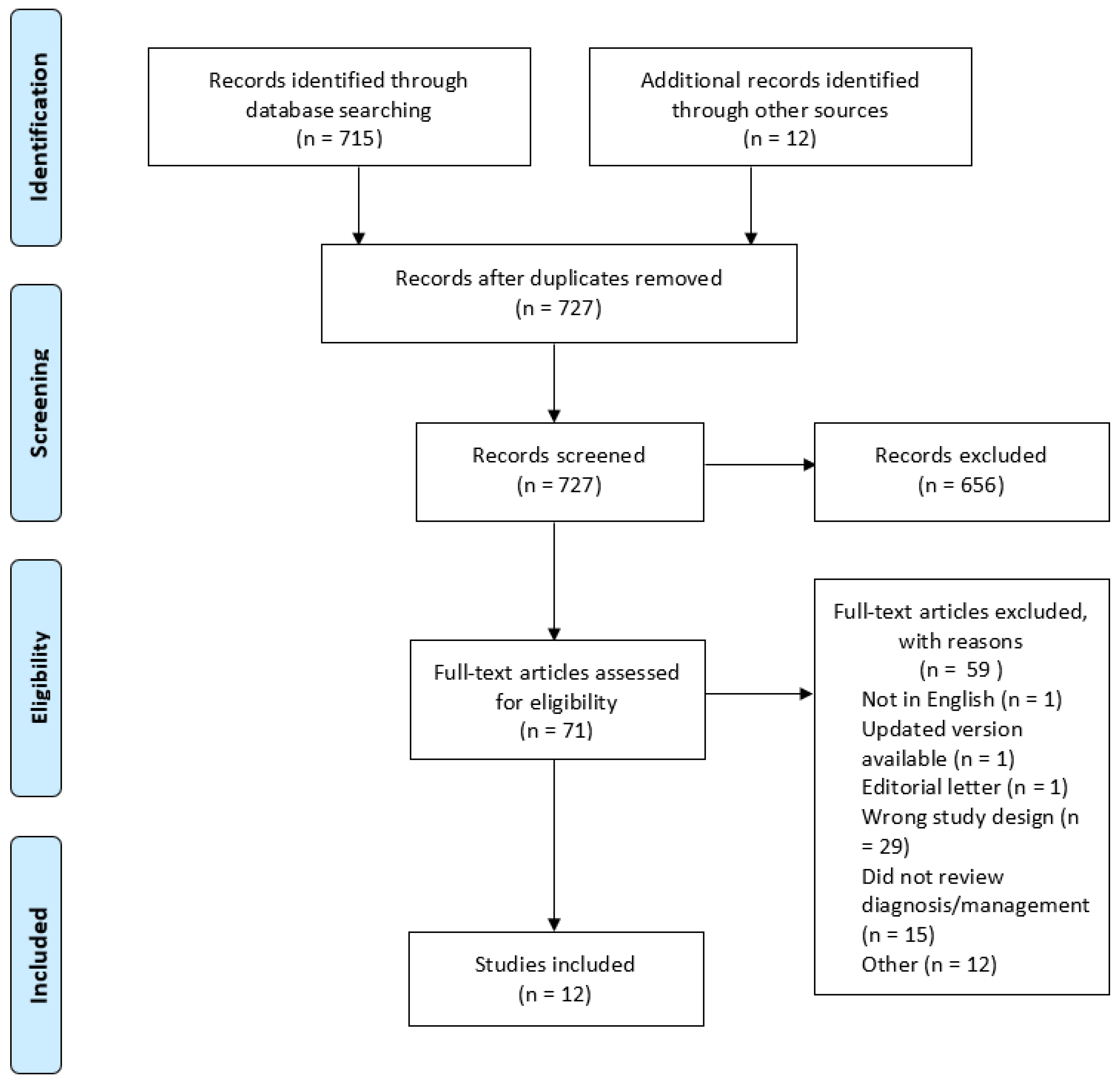
Background: The UK Department for Digital, Culture, Media, and Sport (DCMS) grassroots concussion guidance, May 2023, advised that all community-based sport-related concussions (SRCs) be diagnosed by a healthcare practitioner. This may require that general practitioners (GPs) diagnose and manage SRCs. Diagnosing SRCs in primary care settings in the United Kingdom (UK) presents significant challenges, primarily due to the lack of validated tools specifically designed for general practitioners (GPs). This scoping review aims to identify diagnostic and management tools for SRCs in grassroots sports and primary care settings. Aims: To identify tools that can be used by GPs to diagnose and manage concussions in primary care, both adult and paediatric populations. Design and Methods: A scoping review was conducted in accordance with the Preferred Reporting Items for Systematic Reviews and Meta-Analyses extension for Scoping Reviews (PRISMA-ScRs). Five databases (MEDLINE, EMBASE, CINAHL, Cochrane Library, Google Scholar) were searched from 1946 to April 2025. Search terms included “concussion”, “primary care”, and “diagnosis”. Studies that discussed SRCs in community or primary care settings were included. Those that exclusively discussed secondary care and elite sports were excluded, as well as non-English studies. Two reviewers independently screened titles, abstracts, and full texts, with a third resolving any disagreements. Data were extracted into Microsoft Excel. Studies were assessed for quality using the Joanna Briggs critical appraisal tools and AGREE II checklist. Results: Of 727 studies, 12 met the inclusion criteria. Identified tools included Sport Concussion Assessment Tool 6 (SCAT6, 10–15 min, adolescent/adults), Sport Concussion Office Assessment Tool 6 (SCOAT6, 45–60 min, multidisciplinary), the Buffalo Concussion Physical Examination (BCPE, 5–6 min, adolescent-focused), and the Brain Injury Screening Tool (BIST, 6 min, ages 8+). As part of BCPE, a separate Telehealth version was developed for remote consultations. SCAT6 and SCOAT6 are designed for healthcare professionals, including GPs, but require additional training and time beyond typical UK consultation lengths (9.2 min). BIST and BCPE show promise but require UK validation. Conclusions: SCAT6, SCOAT6, BIST, and BCPE could enhance SRC care, but their feasibility in UK primary care requires adaptation (e.g., integration with GP IT systems and alignment with NICE guidelines). Further research is required to validate these tools and assess additional training needs.