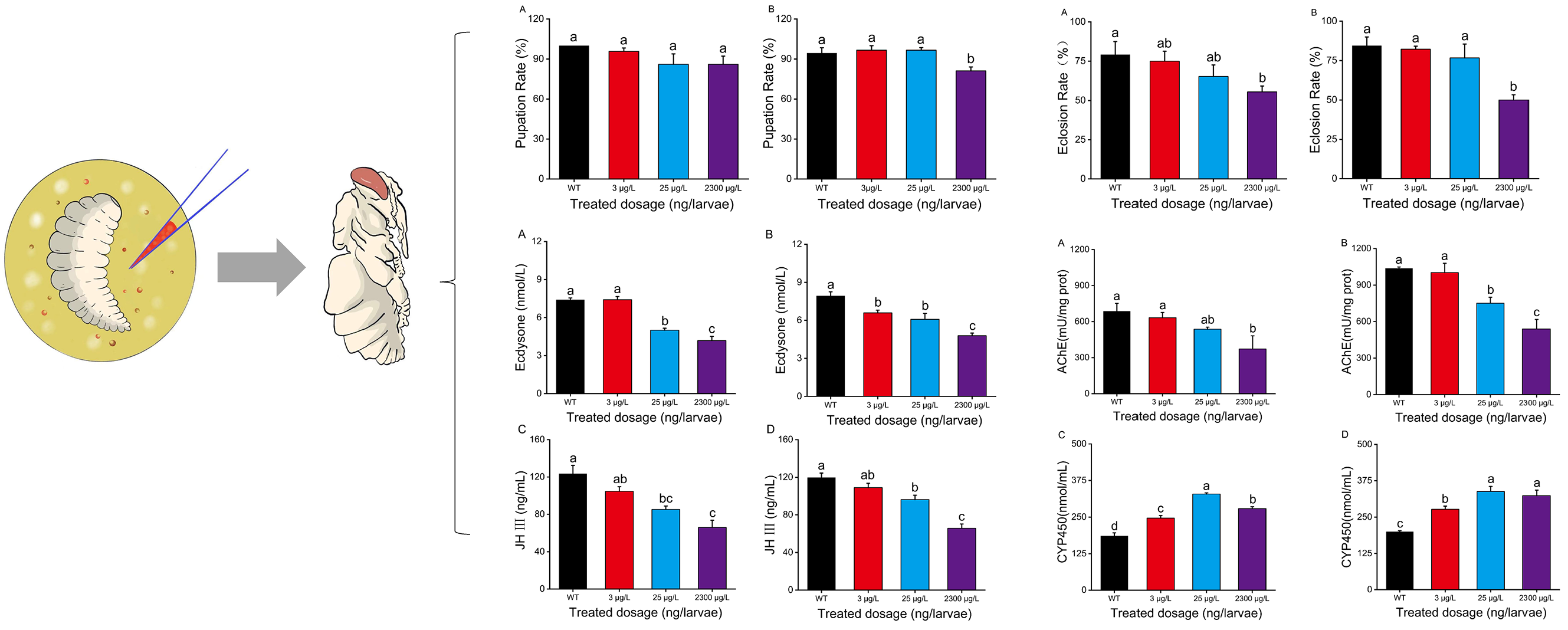
Systemic Assessment of Chronic Toxicity of Thiamethoxam on Honeybees (Apis mellifera)

 , ,
, ,
Simple Summary
Abstract
1. Introduction
2. Materials and Methods
2.1. Breeding and Collection of Larvae
2.2. In Vitro Larval Feeding
2.3. Chemicals and Standards
2.4. Chronic Toxicity Assays
2.5. Assessment of Enzyme Activity and Ecdysteroid Titer
2.6. Statistical Analysis
3. Results
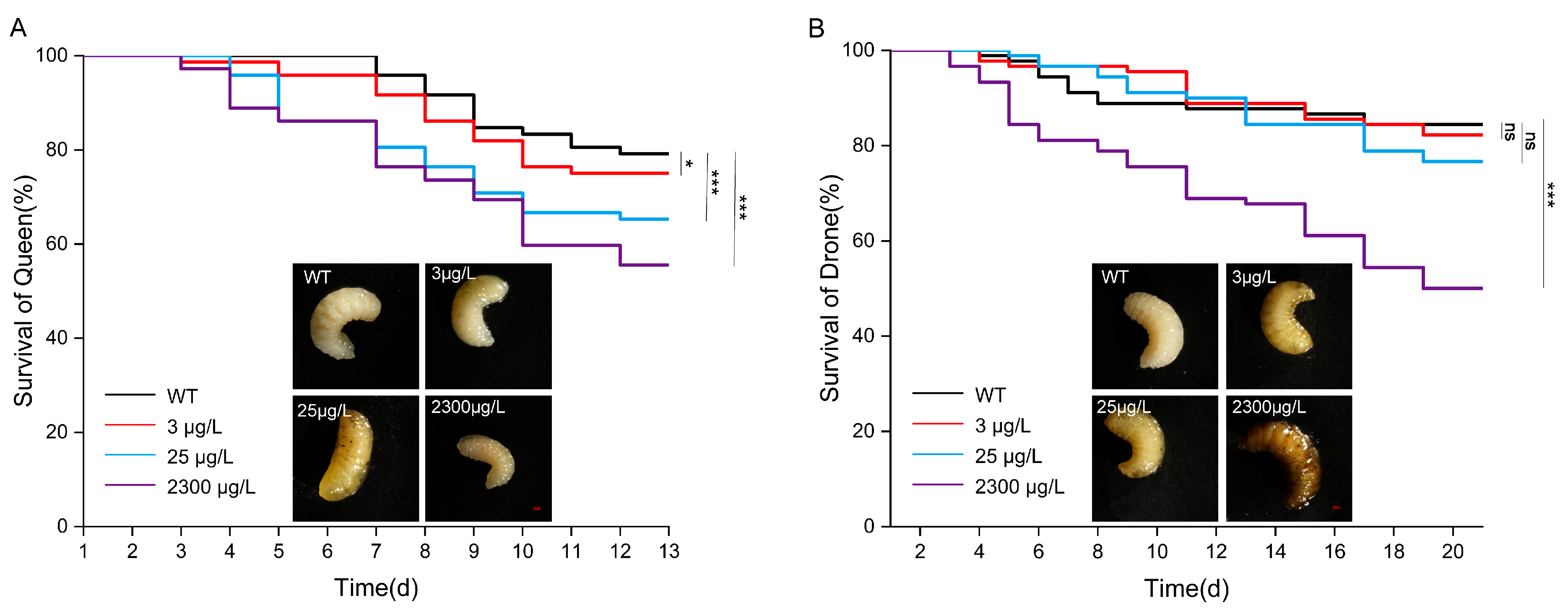
3.1. Survival Bioassay of Bee Larvae
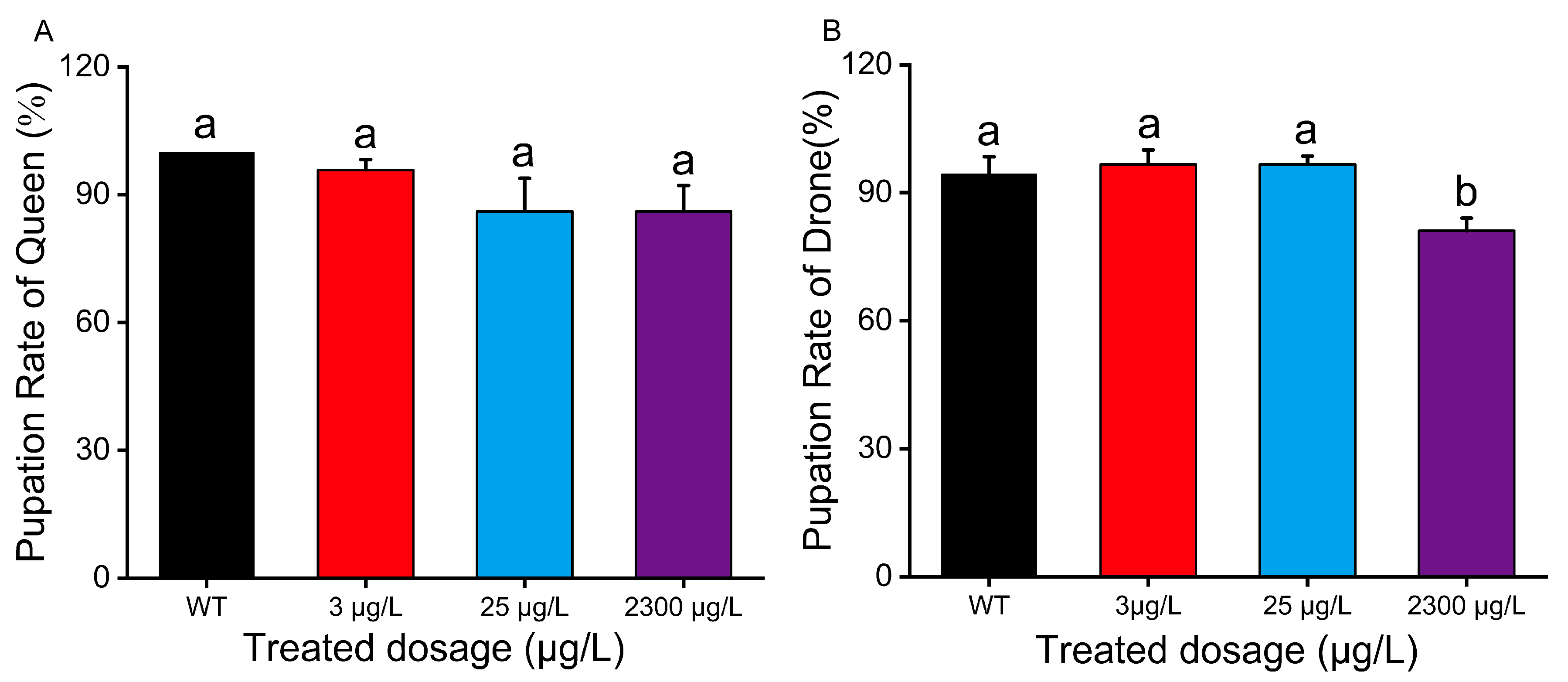
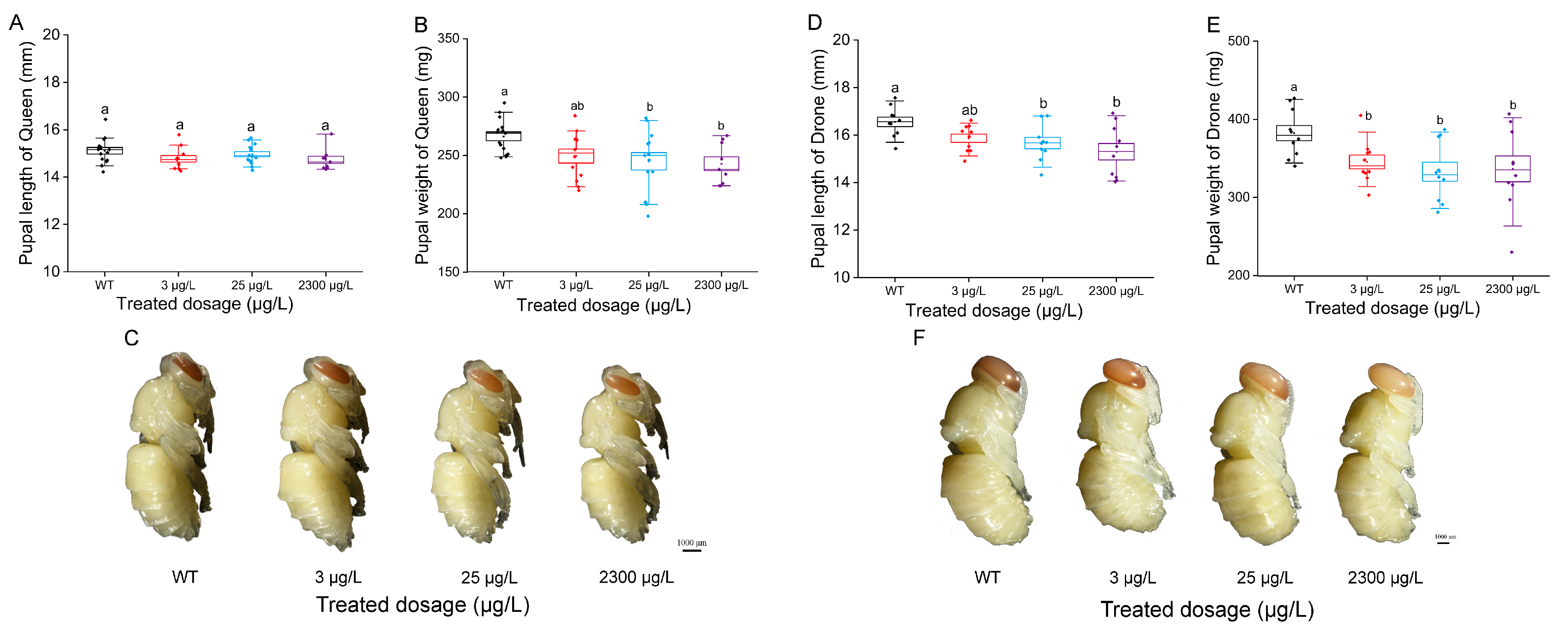
3.2. Effects of Oral Exposure to Thiamethoxam on the Bee Pupae
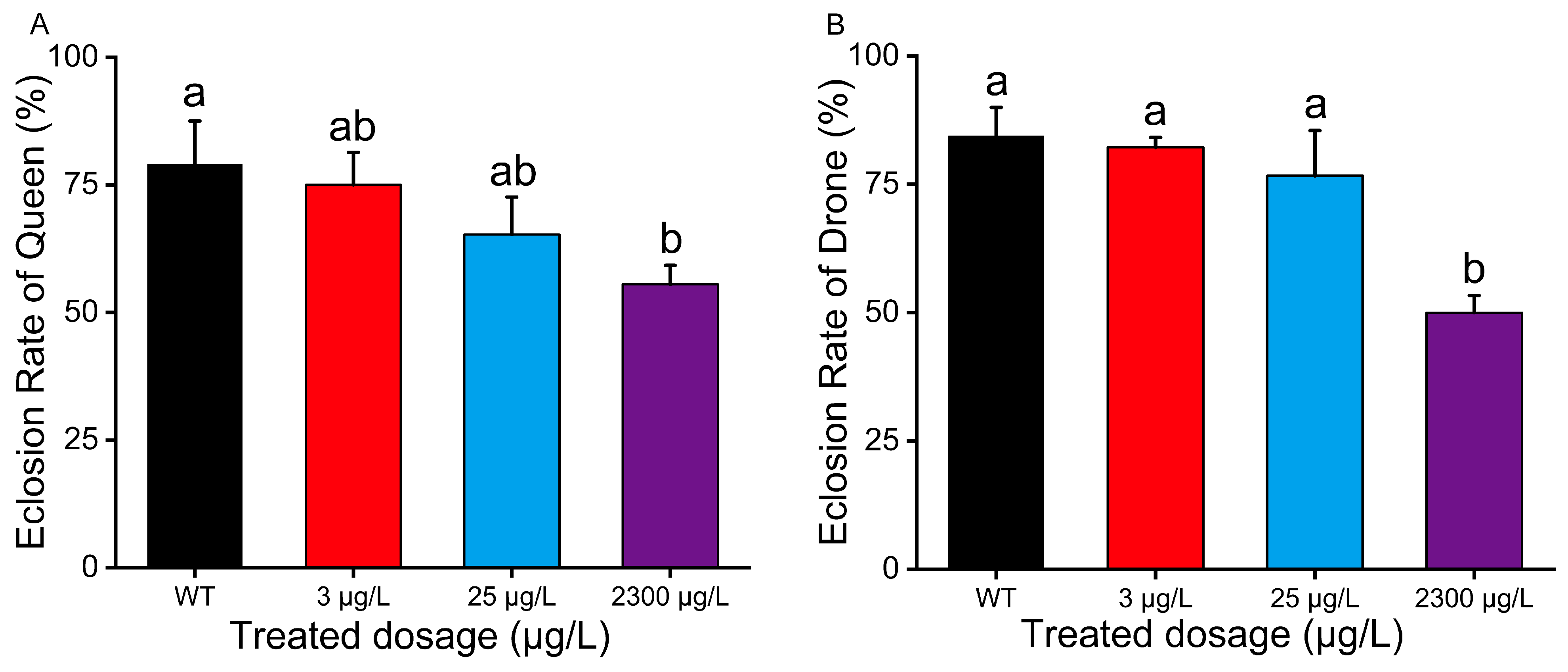
3.3. Effects of Oral Exposure to Thiamethoxam on the Eclosion Rate of Bees
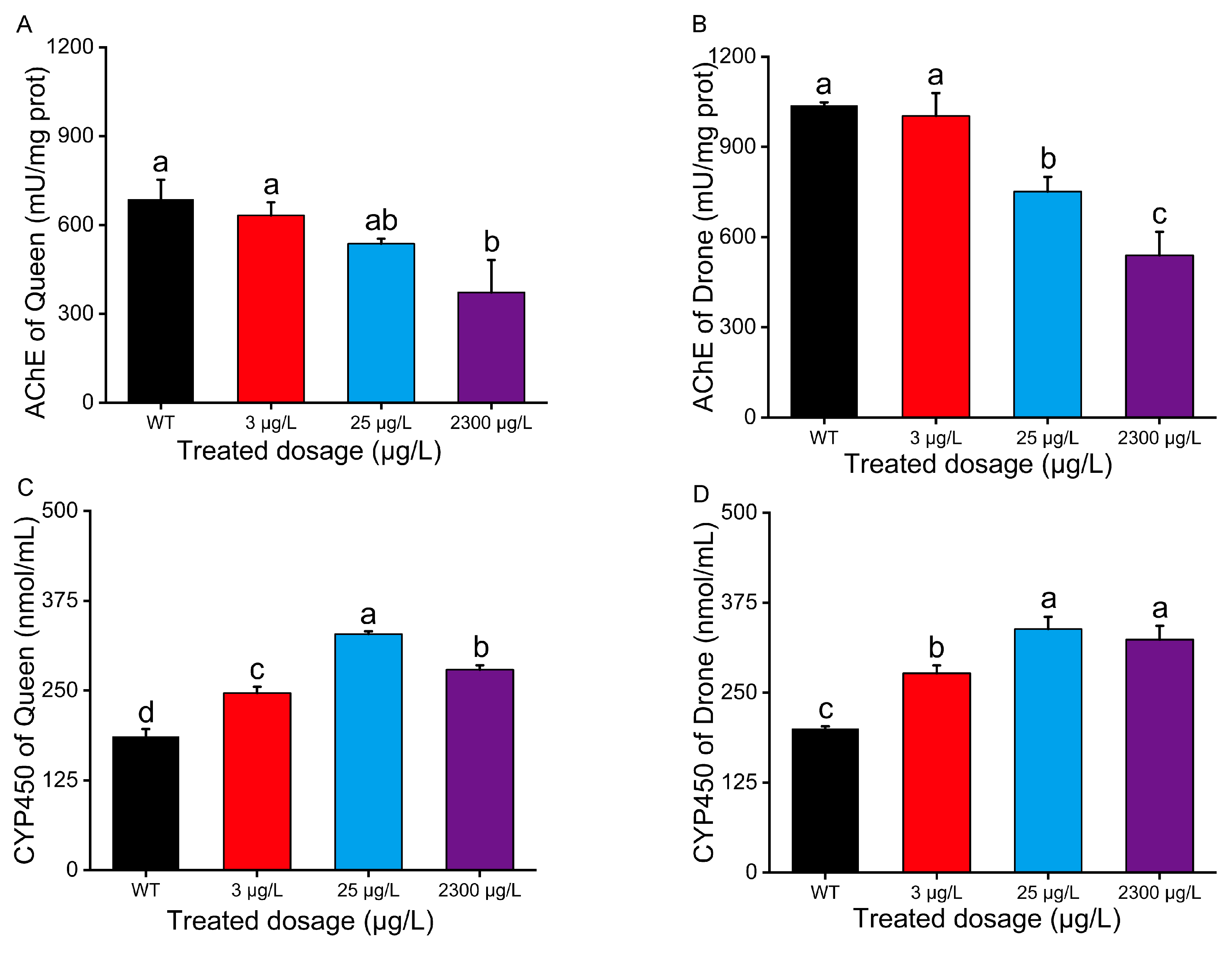
3.4. Enzymatic Activity
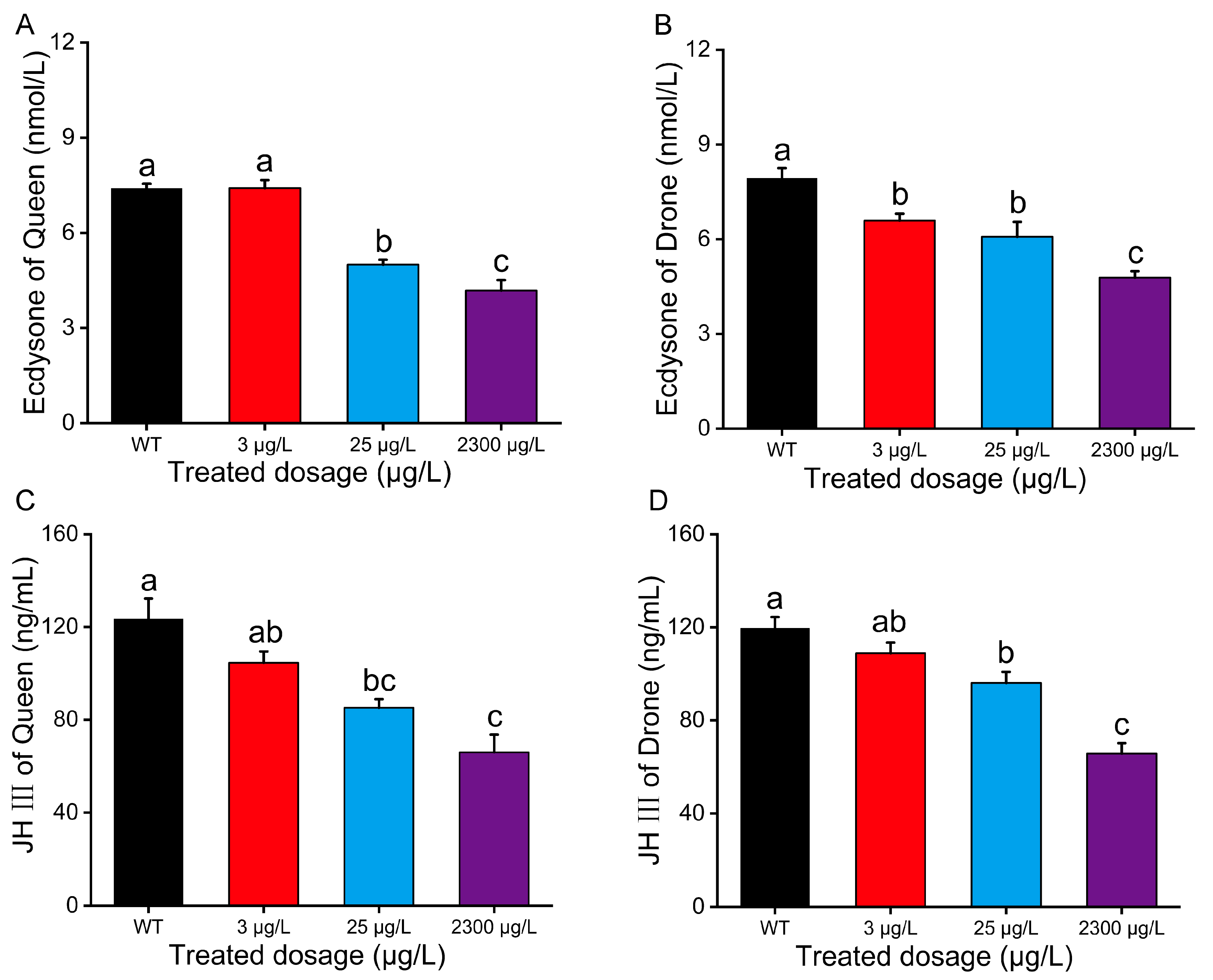
3.5. Hormone Titer
4. Discussion
5. Conclusions
Author Contributions
Funding
Data Availability Statement
Acknowledgments
Conflicts of Interest
References
- Nicholson, C.C.; Egan, P.A. Natural hazard threats to pollinators and pollination. Glob. Change Biol. 2020, 26, 380–391. [Google Scholar] [CrossRef] [Scilit] [PubMed]
- Requier, F.; Pérez-Méndez, N.; Andersson, G.K.S.; Blareau, E.; Merle, I.; Garibaldi, L.A. Bee and non-bee pollinator importance for local food security. Trends Ecol. Evol. 2023, 38, 196–205. [Google Scholar] [CrossRef] [Scilit]
- Cox-Foster, D.L.; Conlan, S.; Holmes, E.C.; Palacios, G.; Evans, J.D.; Moran, N.A. A Metagenomic Survey of Microbes in Honey Bee Colony Collapse Disorder. Science 2007, 5848, 283–287. [Google Scholar] [CrossRef] [Scilit]
- Goulson, D.; Nicholls, E.; Botías, C.; Rotheray, E.L. Bee declines driven by combined stress from parasites, pesticides, and lack of flowers. Science 2015, 347, 1255957. [Google Scholar] [CrossRef] [Scilit] [PubMed]
- Van Espen, M.; Williams, J.H.; Alves, F.; Hung, Y.; de Graaf, D.C.; Verbeke, W. Beekeeping in Europe facing climate change: A mixed methods study on perceived impacts and the need to adapt according to stakeholders and beekeepers. Sci. Total Environ. 2023, 888, 164255. [Google Scholar] [CrossRef] [Scilit]
- Albacete, S.; Sancho, G.; Azpiazu, C.; Rodrigo, A.; Molowny-Horas, R.; Sgolastra, F.; Bosch, J. Bees exposed to climate change are more sensitive to pesticides. Glob. Change Biol. 2023, 29, 6248–6260. [Google Scholar] [CrossRef] [Scilit]
- Zioga, E.; White, B.; Stout, J.C. Pesticide mixtures detected in crop and non-target wild plant pollen and nectar. Sci. Total Environ. 2023, 879, 162971. [Google Scholar] [CrossRef] [Scilit]
- Topping, C.J.; Brown, M.; Chetcuti, J.; de Miranda, J.R.; Nazzi, F.; Neumann, P.; Paxton, R.J.; Rundlöf, M.; Stout, J.C. Holistic environmental risk assessment for bees. Science 2021, 371, 897. [Google Scholar] [CrossRef] [Scilit] [PubMed]
- Wilmart, O.; Legrève, A.; Scippo, M.L.; Reybroeck, W.; Urbain, B.; de Graaf, D.C.; Spanoghe, P.; Delahaut, P.; Saegerman, C. Honey bee exposure scenarios to selected residues through contaminated beeswax. Sci. Total Environ. 2021, 772, 145533. [Google Scholar] [CrossRef] [Scilit]
- Bonmatin, J.M.; Giorio, C.; Girolami, V.; Goulson, D.; Kreutzweiser, D.P.; Krupke, C.; Liess, M.; Long, E.; Marzaro, M.; Mitchell, E.A.D.; et al. Environmental fate and exposure; neonicotinoids and fipronil. Environ. Sci. Pollut. Res. Int. 2015, 22, 35–67. [Google Scholar] [CrossRef] [Scilit]
- Morales, M.M.; Ramos, M.J.G.; Vázquez, P.P.; Galiano, F.J.D.; Valverde, M.G.; López, V.G.; Flores, J.M.; Fernández-Alba, A.R. Distribution of chemical residues in the beehive compartments and their transfer to the honeybee brood. Sci. Total Environ. 2020, 710, 136288. [Google Scholar] [CrossRef] [Scilit]
- Kairo, G.; Provost, B.; Tchamitchian, S.; Ben Abdelkader, F.; Bonnet, M.; Cousin, M. Drone Exposure to the Systemic Insecticide Fipronil Indirectly Impairs Queen Reproductive Potential. Sci. Rep. 2016, 6, 31904. [Google Scholar] [CrossRef] [Scilit]
- Gooley, Z.C.; Gooley, A.C.; Fell, R.D. Relationship of Landscape Type on Neonicotinoid Insecticide Exposure Risks to Honey Bee Colonies: A Statewide Survey. J. Econ. Entomol. 2018, 111, 2505–2512. [Google Scholar] [CrossRef] [Scilit]
- Belsky, J.E.; Camp, A.A.; Lehmann, D.M. The Importance of Males to Bumble Bee (Bombus Species) Nest Development and Colony Viability. Insects 2020, 11, 506. [Google Scholar] [CrossRef] [Scilit] [PubMed]
- Gregorc, A.; Silva-Zacarin, E.C.M.; Carvalho, S.M.; Kramberger, D.; Teixeira, E.W.; Malaspina, O. Effects of Nosema Ceranae and Thiametoxam in Apis mellifera: A Comparative Study in Africanized and Carniolan Honey Bees. Chemosphere 2016, 147, 328–336. [Google Scholar] [CrossRef] [Scilit]
- Chandrakumara, K.; Archana, B.R.; Muralimohan, K. Impact of Neonicotinoid Insecticide Exposure on the Survival and Foraging Activity of Honey Bee. Apis Cerana. Pure Appl. Chem. 2025. [Google Scholar] [CrossRef] [Scilit]
- Mattila, H.R.; Seeley, T.D. Genetic diversity in honey bee colonies enhances productivity and fitness. Science 2007, 317, 362–364. [Google Scholar] [CrossRef] [Scilit] [PubMed]
- Omholt, S.W.; Adnoy, T. Effects of various breeding strategies on diploid drone frequency and quantitative traits in a honey bee population. TAG. Theoretical and applied genetics. Theor. Appl. Genet. 1994, 89, 687–692. [Google Scholar] [CrossRef] [Scilit]
- Zhao, H.Y.; Mashilingi, S.K.; Liu, Y.J.; An, J.D. Factors Influencing the Reproductive Ability of Male Bees: Current Knowledge and Further Directions. Insects 2021, 12, 529. [Google Scholar] [CrossRef] [Scilit]
- Niño, E.L.; Jasper, W.C. Improving the future of honey bee breeding programs by employing recent scientific advances. Curr. Opin. Insect Sci. 2015, 10, 163–169. [Google Scholar] [CrossRef] [Scilit]
- Wei, J.; Wang, X.Y.; Tu, C.; Long, T.; Bu, Y.Q.; Wang, H.L.; Jeyakumar, P.; Jiang, J.L.; Deng, S.P. Remediation technologies for neonicotinoids in contaminated environments: Current state and future prospects. Environ. Int. 2023, 178, 108044. [Google Scholar] [CrossRef] [Scilit] [PubMed]
- Jeschke, P.; Nauen, R.; Schindler, M.; Elbert, A. Overview of the Status and Global Strategy for Neonicotinoids. J. Agric. Food Chem. 2011, 59, 2897–2908. [Google Scholar] [CrossRef] [Scilit] [PubMed]
- Bass, C.; Denholm, I.; Williamson, M.S.; Nauen, R. The global status of insect resistance to neonicotinoid insecticides. Pestic. Biochem. Physiol. 2015, 121, 78–87. [Google Scholar] [CrossRef] [Scilit]
- Feyereisen, R. Toxicology: Bee P450s Take the Sting out of Cyanoamidine Neonicotinoids. Curr. Biol. 2018, 28, R560–R562. [Google Scholar] [CrossRef] [Scilit]
- Decourtye, A.; Henry, M.; Desneux, N. Overhaul pesticide testing on bees. Nature 2013, 497, 188. [Google Scholar] [CrossRef] [Scilit] [PubMed]
- Maienfisch, P.; Angst, M.; Brandl, F.; Fischer, W.; Hofer, D.; Kayser, H.; Kobel, W.; Rindlisbacher, A.; Senn, R.; Steinemann, A.; et al. Chemistry and biology of thiamethoxam: A second generation neonicotinoid. Pest Manag. Sci. 2001, 57, 906–913. [Google Scholar] [CrossRef] [Scilit]
- Ludicke, J.C.; Nieh, J.C. Thiamethoxam impairs honey bee visual learning, alters decision times, and increases abnormal behaviors. Ecotoxicol. Environ. Saf. 2020, 193, 110367. [Google Scholar] [CrossRef] [Scilit]
- Niño, E.L.; Malka, O.; Hefetz, A.; Tarpy, D.R.; Grozinger, C.M. Chemical Profiles of Two Pheromone Glands Are Differentially Regulated by Distinct Mating Factors in Honey Bee Queens (Apis mellifera L.). PLoS ONE 2013, 8, 78637. [Google Scholar] [CrossRef] [Scilit]
- Richard, F.J.; Tarpy, D.R.; Grozinger, C.M. Effects of Insemination Quantity on Honey Bee Queen Physiology. PLoS ONE 2007, 2, e980. [Google Scholar] [CrossRef] [Scilit]
- Dai, P.L.; Yan, Z.X.; Ma, S.L.; Yang, Y.; Wang, Q.; Hou, C.S.; Wu, Y.Y.; Liu, Y.J.; Diao, Q.Y. The Herbicide Glyphosate Negatively Affects Midgut Bacterial Communities and Survival of Honey Bee during Larvae Reared in Vitro. J. Agric. Food Chem. 2018, 66, 7786–7793. [Google Scholar] [CrossRef] [Scilit]
- He, Q.B.; Zhang, S.Y.; Yin, F.; Liu, Q.Q.; Gao, Q.; Xiao, J.J.; Huang, Y.; Yu, L.S.; Cao, H.Q. Risk assessment of honeybee larvae exposure to pyrethroid insecticides in beebread and honey. Ecotoxicol. Environ. Saf. 2023, 267, 115591. [Google Scholar] [CrossRef] [Scilit]
- Kablau, A.; Eckert, J.H.; Pistorius, J.; Sharbati, S.; Einspanier, R. Effects of selected insecticidal substances on mRNA transcriptome in larvae of Apis mellifera. Pestic. Biochem. Physiol. 2020, 170, 104703. [Google Scholar] [CrossRef] [Scilit]
- He, Q.B.; Wu, Y.C.; Wei, Y.; Yang, Q.; Wang, Y.H.; Gao, Q.; Xiao, J.J.; Yu, L.S.; Cao, H.Q. Does the use of chlorantraniliprole during queen development adversely impact health and viability? Pestic. Biochem. Physiol. 2024, 202, 105920. [Google Scholar] [CrossRef] [Scilit]
- Dai, P.L.; Jack, C.J.; Mortensen, A.N.; Ellis, J.D. Acute toxicity of five pesticides to Apis mellifera larvae reared in vitro. Pest Manag. Sci. 2017, 73, 2282–2286. [Google Scholar] [CrossRef] [Scilit]
- Tong, Z.; Duan, J.S.; Wu, Y.C.; Liu, Q.Q.; He, Q.B.; Shi, Y.H.; Yu, L.S.; Cao, H.Q. A Survey of Multiple Pesticide Residues in Pollen and Beebread Collected in China. Sci. Total Environ. 2018, 640, 1578–1586. [Google Scholar] [CrossRef] [Scilit]
- Blacquière, T.; Smagghe, G.; van Gestel, C.A.M.; Mommaerts, V. Neonicotinoids in Bees: A Review on Concentrations, Side-Effects and Risk Assessment. Ecotoxicology 2012, 21, 973–992. [Google Scholar] [CrossRef] [Scilit]
- Krupke, C.H.; Hunt, G.J.; Eitzer, B.D.; Andino, G.; Given, K. Multiple Routes of Pesticide Exposure for Honey Bees Living near Agricultural Fields. PLoS ONE 2012, 7, e29268. [Google Scholar] [CrossRef] [Scilit]
- Stoner, K.A.; Eitzer, B.D. Movement of Soil-Applied Imidacloprid and Thiamethoxam into Nectar and Pollen of Squash (Cucurbita pepo). PLoS ONE 2012, 7, e39114. [Google Scholar] [CrossRef] [Scilit]
- Mullin, C.A.; Frazier, M.; Frazier, J.L.; Ashcraft, S.; Simonds, R.; van Engelsdorp, D.; Pettis, J.S. High Levels of Miticides and Agrochemicals in North American Apiaries: Implications for Honey Bee Health. PLoS ONE 2010, 5, e9754. [Google Scholar] [CrossRef] [Scilit]
- Giroud, B.; Vauchez, A.; Vulliet, E.; Wiest, L.; Buleté, A. Trace Level Determination of Pyrethroid and Neonicotinoid Insecticides in Beebread Using Acetonitrile-Based Extraction Followed by Analysis with Ultra-High-Performance Liquid Chromatography-Tandem Mass Spectrometry. J. Chromatogr. A 2013, 1316, 53–61. [Google Scholar] [CrossRef] [Scilit]
- Pilling, E.; Campbell, P.; Coulson, M.; Ruddle, N.; Tornier, I. A Four-Year Field Program Investigating Long-Term Effects of Repeated Exposure of Honey Bee Colonies to Flowering Crops Treated with Thiamethoxam. PLoS ONE 2013, 8, e77193. [Google Scholar] [CrossRef] [Scilit]
- Tong, Z.; Duan, J.S.; Wu, Y.C.; Liu, Q.Q.; He, Q.B.; Shi, Y.H.; Yu, L.S.; Cao, H.Q. Evaluation of Highly Detectable Pesticides Sprayed in Brassica napu L.: Degradation Behavior and Risk Assessment for Honeybees. Molecules 2018, 23, 2482. [Google Scholar] [CrossRef] [Scilit]
- Tavares, D.A.; Roat, T.C.; Carvalho, S.M.; Silva-Zacarin, E.C.M.; Malaspina, O. In Vitro Effects of Thiamethoxam on Larvae of Africanized Honey Bee Apis mellifera (Hymenoptera: Apidae). Chemosphere 2015, 135, 370–378. [Google Scholar] [CrossRef] [Scilit]
- Hall, D.M.; Martins, D.J. Human dimensions of insect pollinator conservation. Curr. Opin. Insect Sci. 2020, 38, 107–114. [Google Scholar] [CrossRef] [Scilit]
- Steinhauer, N.; Kulhanek, K.; Antúnez, K.; Human, H.; Chantawannakul, P.; Chauzat, M.P.; vanEngelsdorp, D. Drivers of colony losses. Curr. Opin. Insect Sci. 2018, 26, 142–148. [Google Scholar] [CrossRef] [Scilit] [PubMed]
- McAfee, A.; Metz, B.N.; Milone, J.P.; Foster, L.J.; Tarpy, D.R. Drone honey bees are disproportionately sensitive to abiotic stressors despite expressing high levels of stress response proteins. Commun. Biol. 2022, 5, 141. [Google Scholar] [CrossRef] [Scilit]
- Parejo, M.; Talenti, A.; Richardson, M.; Vignal, A.; Barnett, M.; Wragg, D. AmelHap: Leveraging drone whole-genome sequence data to create a honey bee HapMap. Sci. Data 2023, 10, 198. [Google Scholar] [CrossRef] [Scilit]
- Phokasem, P.; Wang, L.H.; Panjad, P.; Tang, Y.J.; Li, J.L.; Chantawannakul, P. Differential Viral Distribution Patterns in Reproductive Tissues of Apis mellifera and Apis cerana Drones. Front. Vet. Sci. 2021, 8, 608700. [Google Scholar] [CrossRef] [Scilit]
- Yániz, J.; Toquet, M.; Santolaria, P.; Silvestre, M.A.; Toledo-Perona, R.; Gómez-Martiín, A. Microbiota Analysis of Ejaculated Honey Bee Drone Semen and the Effect of Semen Collection Method on Bacterial Loads. Insects 2024, 15, 377. [Google Scholar] [CrossRef] [Scilit]
- Gajger, I.T.; Sakac, M.; Gregorc, A. Impact of Thiamethoxam on Honey Bee Queen (Apis mellifera carnica) Reproductive Morphology and Physiology. Bull. Environ. Contam. Toxicol. 2017, 99, 297–302. [Google Scholar] [CrossRef] [Scilit]
- Tavares, D.A.; Dussaubat, C.; Kretzschmar, A.; Carvalho, S.M.; Silva-Zacarin, E.C.M.; Malaspina, O.; Bérail, G.; Brunet, J.L.; Belzunces, L.P. Exposure of larvae to thiamethoxam affects the survival and physiology of the honey bee at post-embryonic stages. Environ. Pollut. 2017, 229, 386–393. [Google Scholar] [CrossRef] [Scilit]
- Rosa, A.D.; Teixeira, J.S.G.; Vollet-Neto, A.; Queiroz, E.P.; Blochtein, B.; Pires, C.S.S.; Imperatriz-Fonseca, V.L. Consumption of the neonicotinoid thiamethoxam during the larval stage affects the survival and development of the stingless bee, Scaptotrigona aff. depilis. Apidologie 2016, 47, 729–738. [Google Scholar] [CrossRef] [Scilit]
- Barascou, L.; Requier, F.; Sené, D.; Crauser, D.; Le Conte, Y.; Alaux, C. Delayed effects of a single dose of a neurotoxic pesticide (sulfoxaflor) on honeybee foraging activity. Sci. Total Environ. 2022, 805, 150351. [Google Scholar] [CrossRef] [Scilit] [PubMed]
- Gill, R.J.; Ramos-Rodriguez, O.; Raine, N.E. Combined pesticide exposure severely affects individual- and colony-level traits in bees. Nature 2012, 49, U105–U119. [Google Scholar] [CrossRef] [Scilit] [PubMed]
- Overmyer, J.; Feken, M.; Ruddle, N.; Bocksch, S.; Hill, M.; Thompson, H. Thiamethoxam honey bee colony feeding study: Linking effects at the level of the individual to those at the colony level. Environ. Toxicol. Chem. 2018, 37, 816–828. [Google Scholar] [CrossRef] [Scilit]
- Du, Y.Z.; Scheibener, S.; Zhu, Y.C.; Portilla, M.; Reddy, G.V.P. Biochemical and molecular characterization of neonicotinoids resistance in the tarnished plant bug, Lygus lineolaris. Comp. Biochem. Phys. C 2024, 275, 109765. [Google Scholar] [CrossRef] [Scilit]
- Cang, T.; Lou, Y.C.; Zhu, Y.C.; Li, W.H.; Weng, H.B.; Lv, L.; Wang, Y.H. Mixture toxicities of tetrachlorantraniliprole and tebuconazole to honey bees (Apis mellifera L.) and the potential mechanism. Environ. Int. 2023, 172, 107764. [Google Scholar] [CrossRef] [Scilit]
- Zhang, H.H.; Chen, A.Q.; Shan, T.S.; Dong, W.Y.; Shi, X.Y.; Gao, X.W. Cross-resistance and Fitness Cost Analysis of Resistance to Thiamethoxam in Melon and Cotton Aphid (Hemiptera: Aphididae). J. Econ. Entomol. 2020, 113, 1946–1954. [Google Scholar] [CrossRef] [Scilit]


Disclaimer/Publisher’s Note: The statements, opinions and data contained in all publications are solely those of the individual author(s) and contributor(s) and not of MDPI and/or the editor(s). MDPI and/or the editor(s) disclaim responsibility for any injury to people or property resulting from any ideas, methods, instructions or products referred to in the content. |
© 2025 by the authors. Licensee MDPI, Basel, Switzerland. This article is an open access article distributed under the terms and conditions of the Creative Commons Attribution (CC BY) license (https://creativecommons.org/licenses/by/4.0/).
Share and Cite
Li, M.-J.; He, Q.-B.; Wu, Y.-F.; Gao, Q.; Wang, A.-L.; Xiao, J.-J.; Liao, M.; Huang, Y.; Wang, Y.-H.; Cao, H.-Q. Systemic Assessment of Chronic Toxicity of Thiamethoxam on Honeybees (Apis mellifera). Insects 2025, 16, 936. https://doi.org/10.3390/insects16090936
Li M-J, He Q-B, Wu Y-F, Gao Q, Wang A-L, Xiao J-J, Liao M, Huang Y, Wang Y-H, Cao H-Q. Systemic Assessment of Chronic Toxicity of Thiamethoxam on Honeybees (Apis mellifera). Insects. 2025; 16(9):936. https://doi.org/10.3390/insects16090936
Chicago/Turabian StyleLi, Meng-Jia, Qi-Bao He, Yi-Fan Wu, Quan Gao, A-Long Wang, Jin-Jing Xiao, Min Liao, Yong Huang, Yao-Hui Wang, and Hai-Qun Cao. 2025. "Systemic Assessment of Chronic Toxicity of Thiamethoxam on Honeybees (Apis mellifera)" Insects 16, no. 9: 936. https://doi.org/10.3390/insects16090936
APA StyleLi, M.-J., He, Q.-B., Wu, Y.-F., Gao, Q., Wang, A.-L., Xiao, J.-J., Liao, M., Huang, Y., Wang, Y.-H., & Cao, H.-Q. (2025). Systemic Assessment of Chronic Toxicity of Thiamethoxam on Honeybees (Apis mellifera). Insects, 16(9), 936. https://doi.org/10.3390/insects16090936