
Color and Attractant Preferences of the Black Fig Fly, Silba adipata: Implications for Monitoring and Mass Trapping of This Invasive Pest
by
 , , and
Ricardo Díaz-del-Castillo
1, 
Guadalupe Córdova-García
2,
Diana Pérez-Staples
3 ,
,
Andrea Birke
1,
Trevor Williams
1,* and
Rodrigo Lasa
1,* 1
Instituto de Ecología AC (INECOL), Xalapa 91073, Veracruz, Mexico
2
Instituto de Investigaciones en Inteligencia Artificial (IIIA), Universidad Veracruzana, Xalapa 91097, Veracruz, Mexico
3
Instituto de Biotechnological y Ecología Aplicada, Universidad Veracruzana, Xalapa 91090, Veracruz, Mexico
*
Authors to whom correspondence should be addressed.
Insects 2025, 16(7), 732; https://doi.org/10.3390/insects16070732
Submission received: 26 June 2025
/
Revised: 13 July 2025
/
Accepted: 16 July 2025
/
Published: 17 July 2025
(This article belongs to the Special Issue Surveillance and Management of Invasive Insects)
Simple Summary
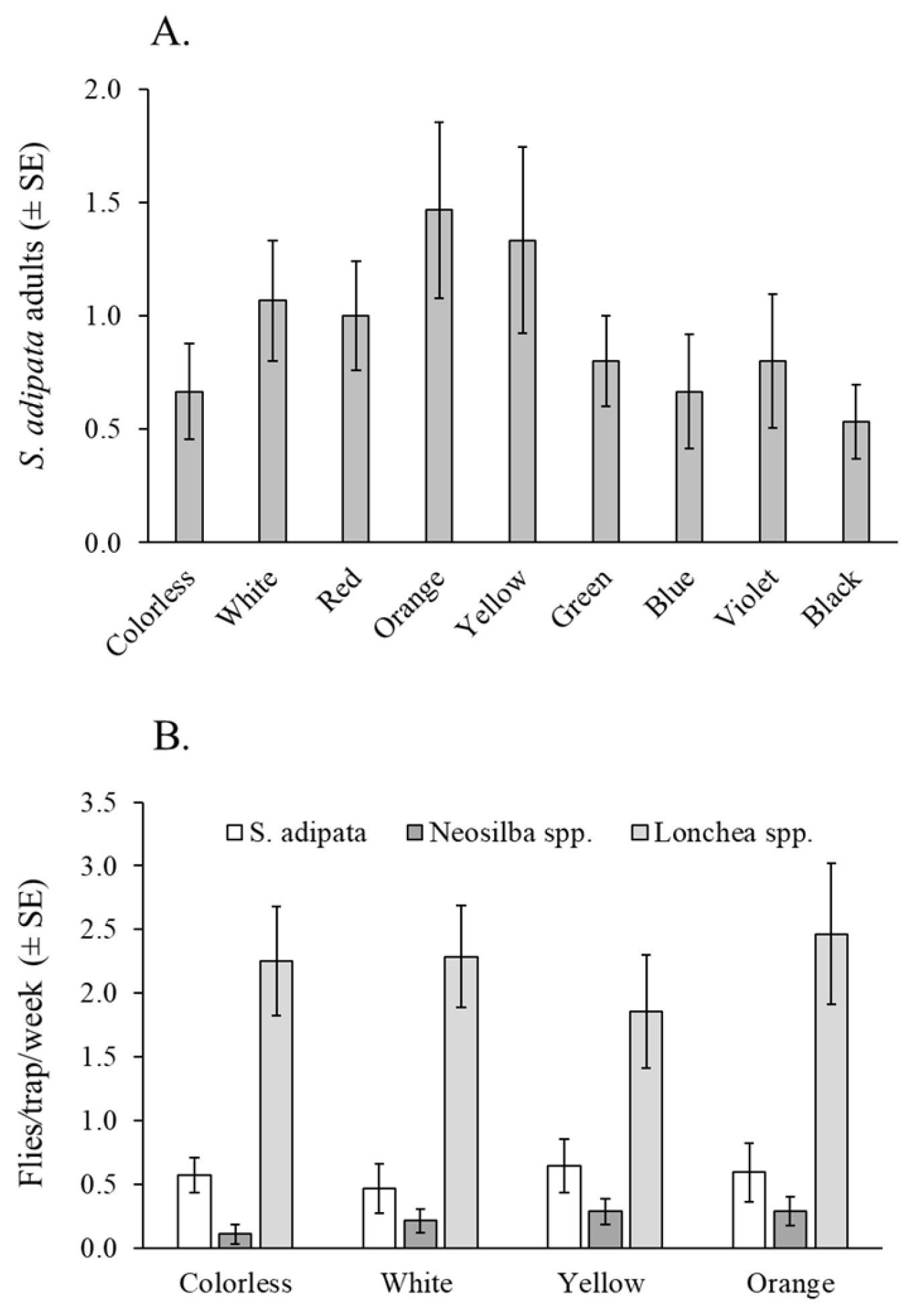
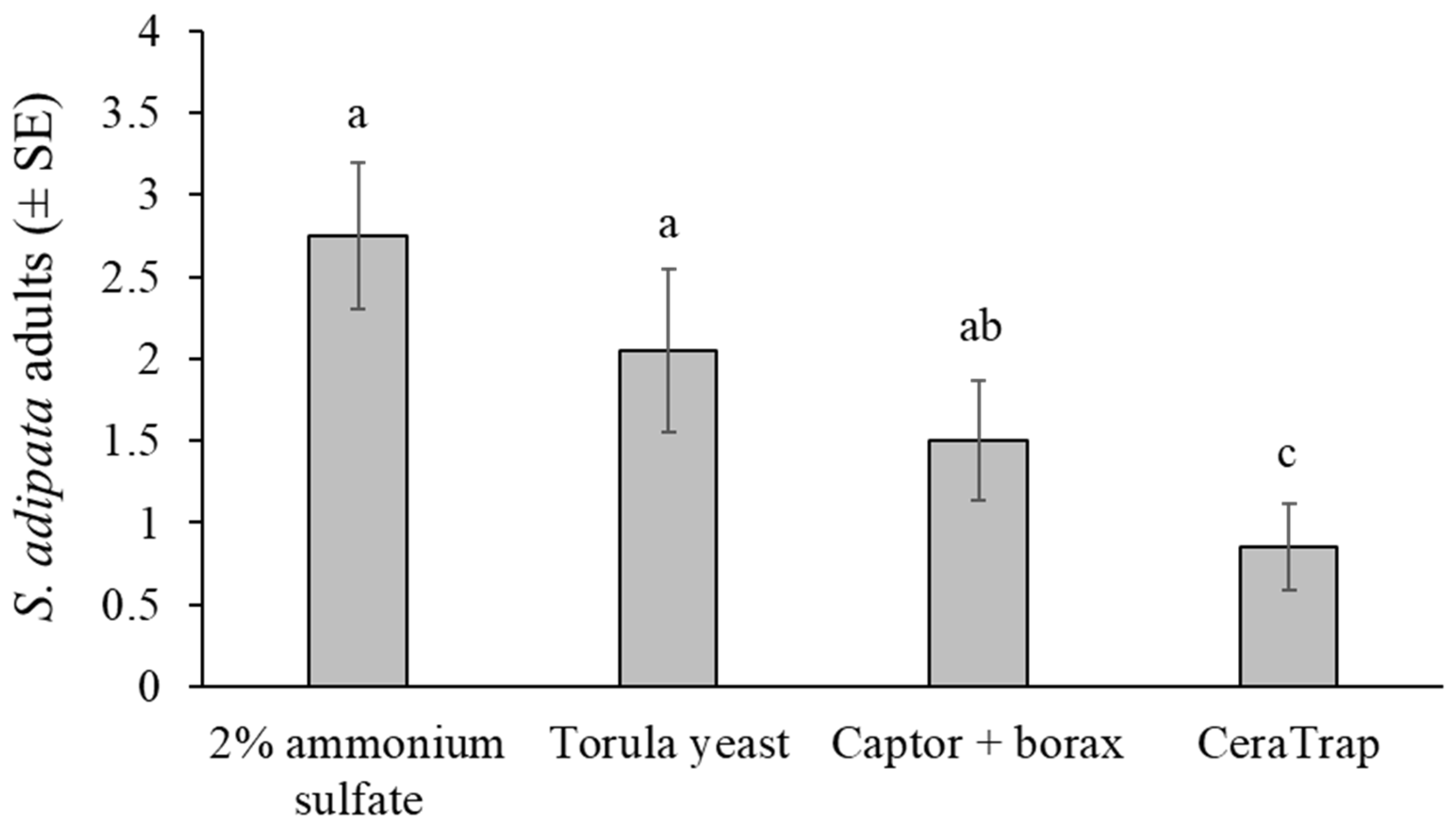
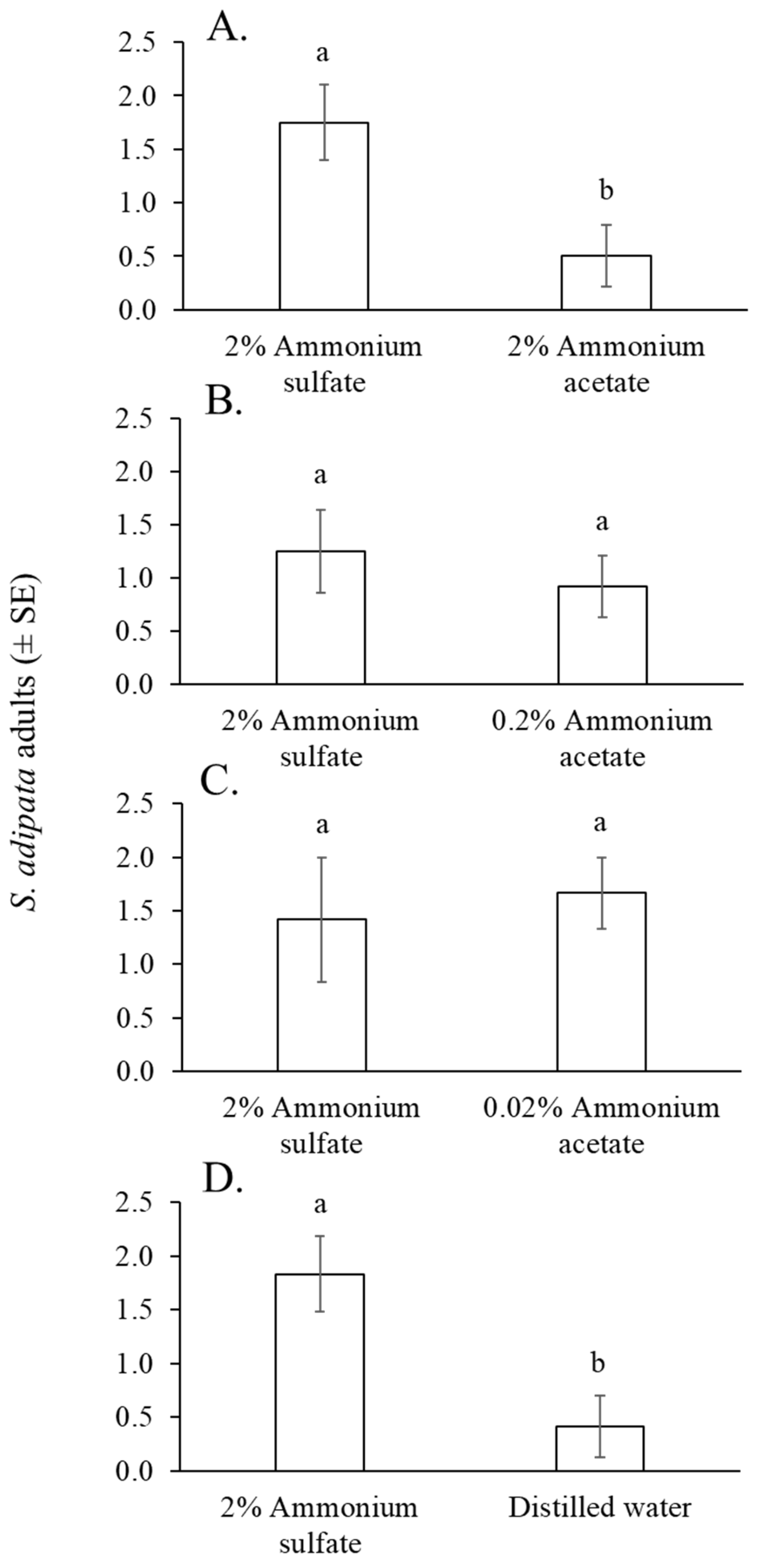
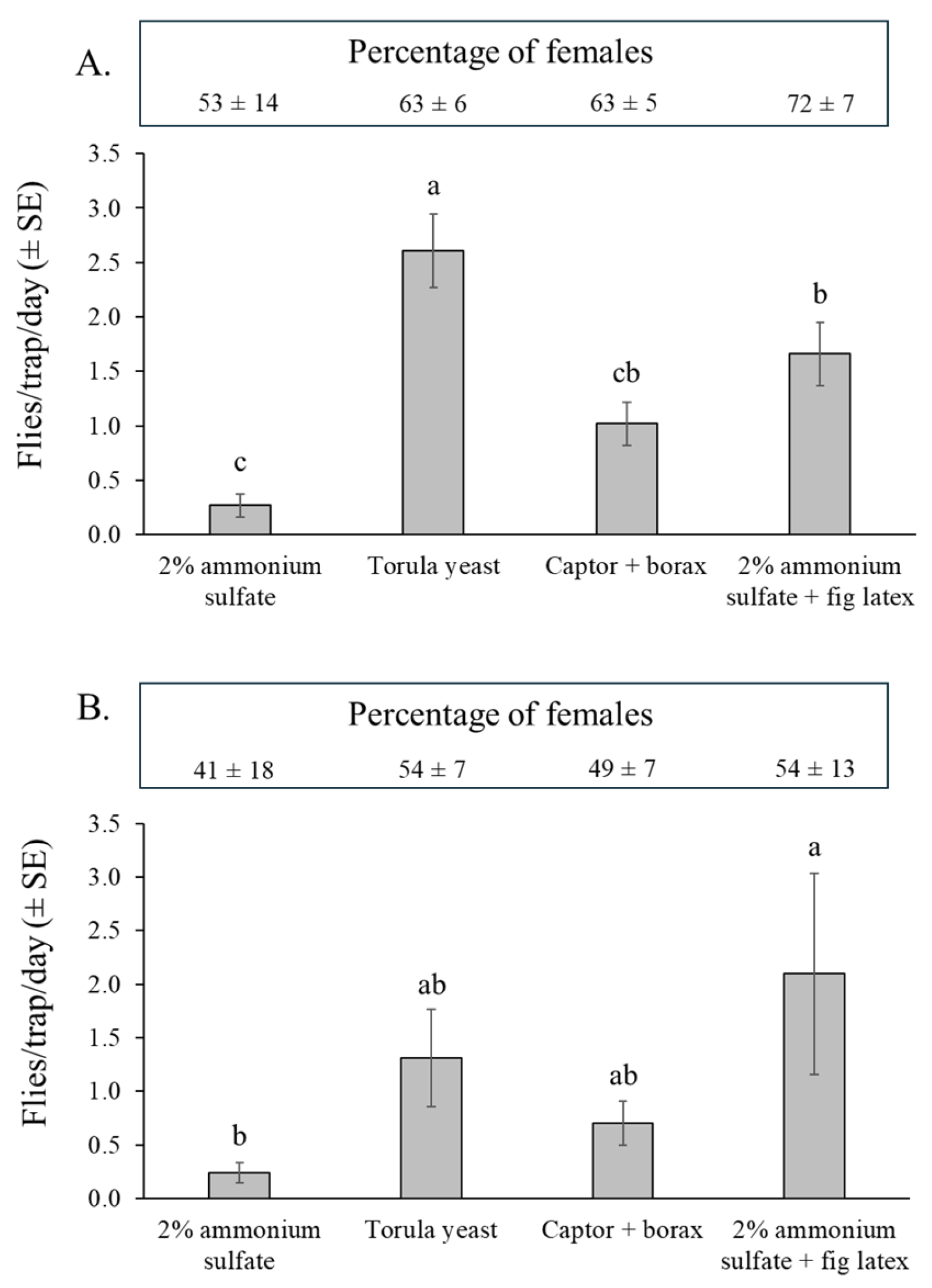
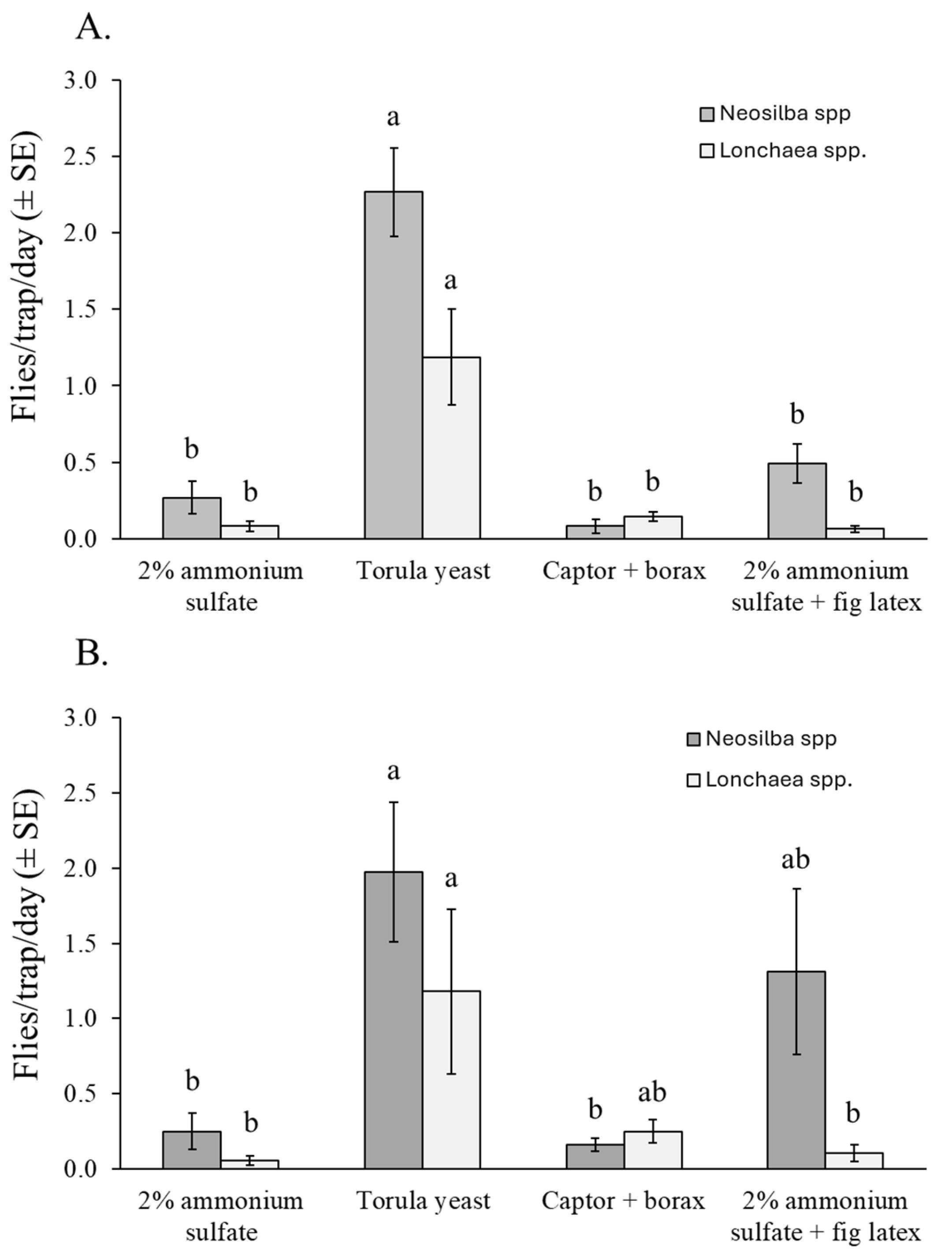
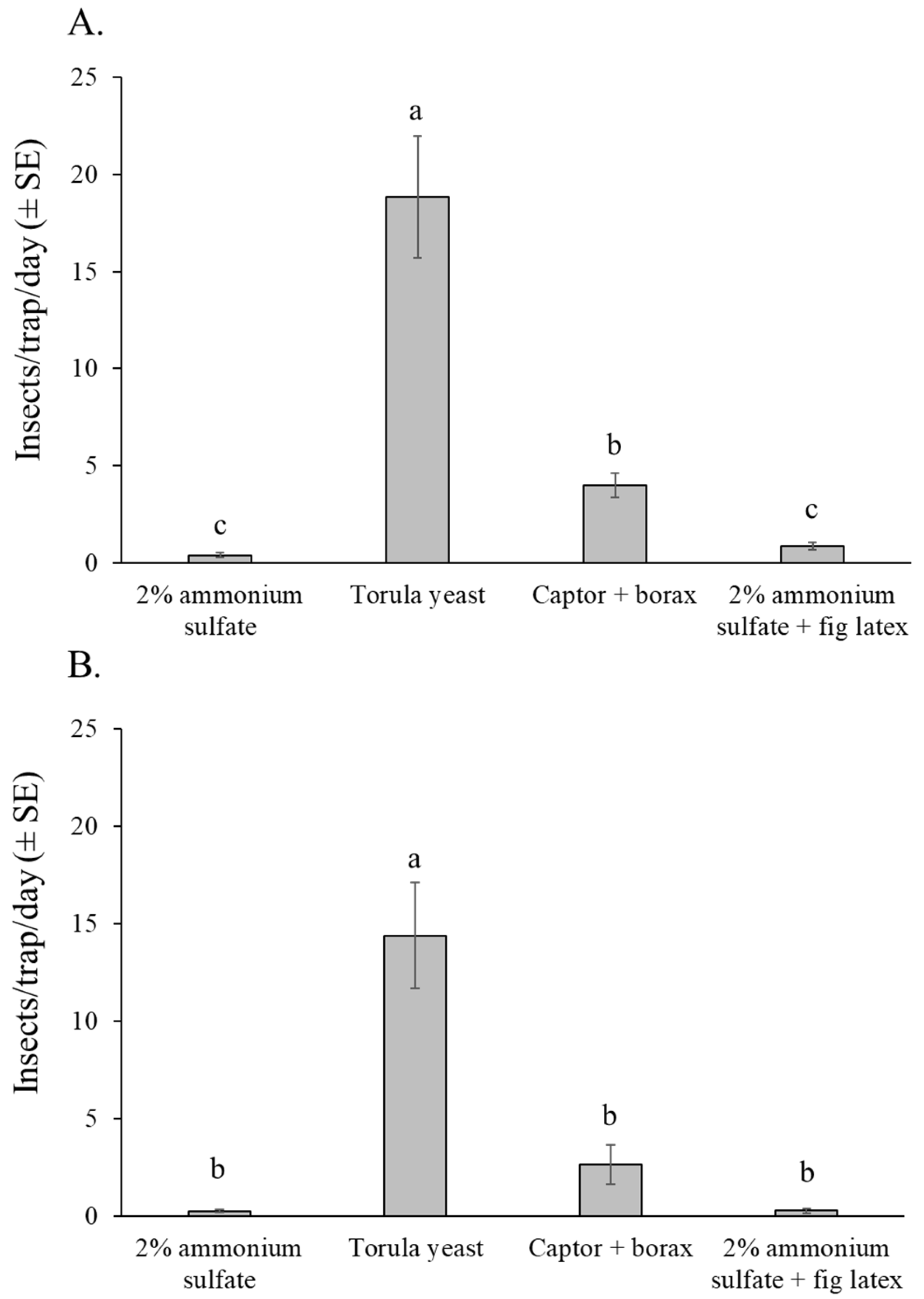
The black fig fly, Silba adipata, has recently invaded South Africa, California, USA and Mexico, where it is causing major loses in fig crop production. There are no established monitoring strategies for this pest. In the present study, we observed that flies of both sexes showed no clear preference for traps of different colors in laboratory cage tests or in traps placed in fig orchards. Testing of flies in laboratory cages indicated high attraction to the 2% ammonium sulfate solution and torula yeast + borax. Traps containing 2% ammonium sulfate solution were as attractive as 0.2% or 0.02% ammonium acetate solution, but more attractive than 2% ammonium acetate solution. Trials performed in fig orchards revealed that fly captures in traps containing 2% ammonium sulfate solution were increased if traps also contained small quantities of fig latex, although seasonal differences in fly captures were also observed. Many of the female flies captured were not sexually mature and may have been seeking sources of protein for their sexual development. Traps containing torula yeast + borax were less selective and captured higher numbers of non-target insects (mostly other flies) than traps containing 2% ammonium sulfate and fig latex. Future studies should evaluate fly attraction of these substances over crop cycle and seasons and also evaluate other ammonium compounds and attraction to volatile substances released from fig latex to develop additional tools to monitor populations of this invasive pest.
Abstract
The black fig fly, Silba adipata (Diptera: Lonchaeidae), is an invasive pest recently introduced to Mexico, where it has rapidly spread across fig-producing regions. Despite its economic importance, effective monitoring strategies remain poorly studied. The present study evaluated the response of S. adipata adults to visual (color) and olfactory (attractant) cues under laboratory and field conditions in fig orchards. No significant color preferences were observed in laboratory choice tests using nine colors or in field trials using traps of four different colors. In the laboratory, traps containing 2% ammonium sulfate solution, torula yeast + borax, or Captor + borax, captured similar numbers of flies, whereas CeraTrap® was less attractive. Traps containing 2% ammonium sulfate were more effective than 2% ammonium acetate, though attraction was comparable when ammonium acetate was diluted to 0.2% or 0.02%. In the field, torula yeast + borax and 2% ammonium sulfate mixed with fig latex outperformed the 2% ammonium sulfate solution alone, although seasonal variation influenced trap performance. A high proportion of field-captured females were sexually immature. Torula yeast + borax attracted high numbers of non-target insects and other lonchaeid species, which reduced its specificity. In contrast, traps containing fig latex mixtures showed higher selectivity, although some S. adipata adults could not be sexed due to specimen degradation. These findings highlight the value of torula yeast pellets and 2% ammonium sulfate plus fig latex for monitoring this pest, but merit validation in field studies performed over the entire crop cycle across both wet and dry seasons. Future studies should evaluate other proteins, ammonium salt combinations and fig latex volatiles in order to develop effective and selective monitoring or mass trapping tools targeted at this invasive pest.