
Identification and Characterization of Chemosensory Receptors in the Pheromone Gland-Ovipositor of Spodoptera frugiperda (J. E. Smith)

1
College of Horticulture and Plant Protection, Henan University of Science and Technology, Luoyang 471000, China
2
Institute of Plant Protection, Henan Academy of Agricultural Sciences, Zhengzhou 450002, China
*
Authors to whom correspondence should be addressed.
Insects 2022, 13(5), 481; https://doi.org/10.3390/insects13050481
Submission received: 21 April 2022
/
Revised: 17 May 2022
/
Accepted: 19 May 2022
/
Published: 21 May 2022
(This article belongs to the Special Issue Advance in Insect Chemosensory Receptors)
Simple Summary
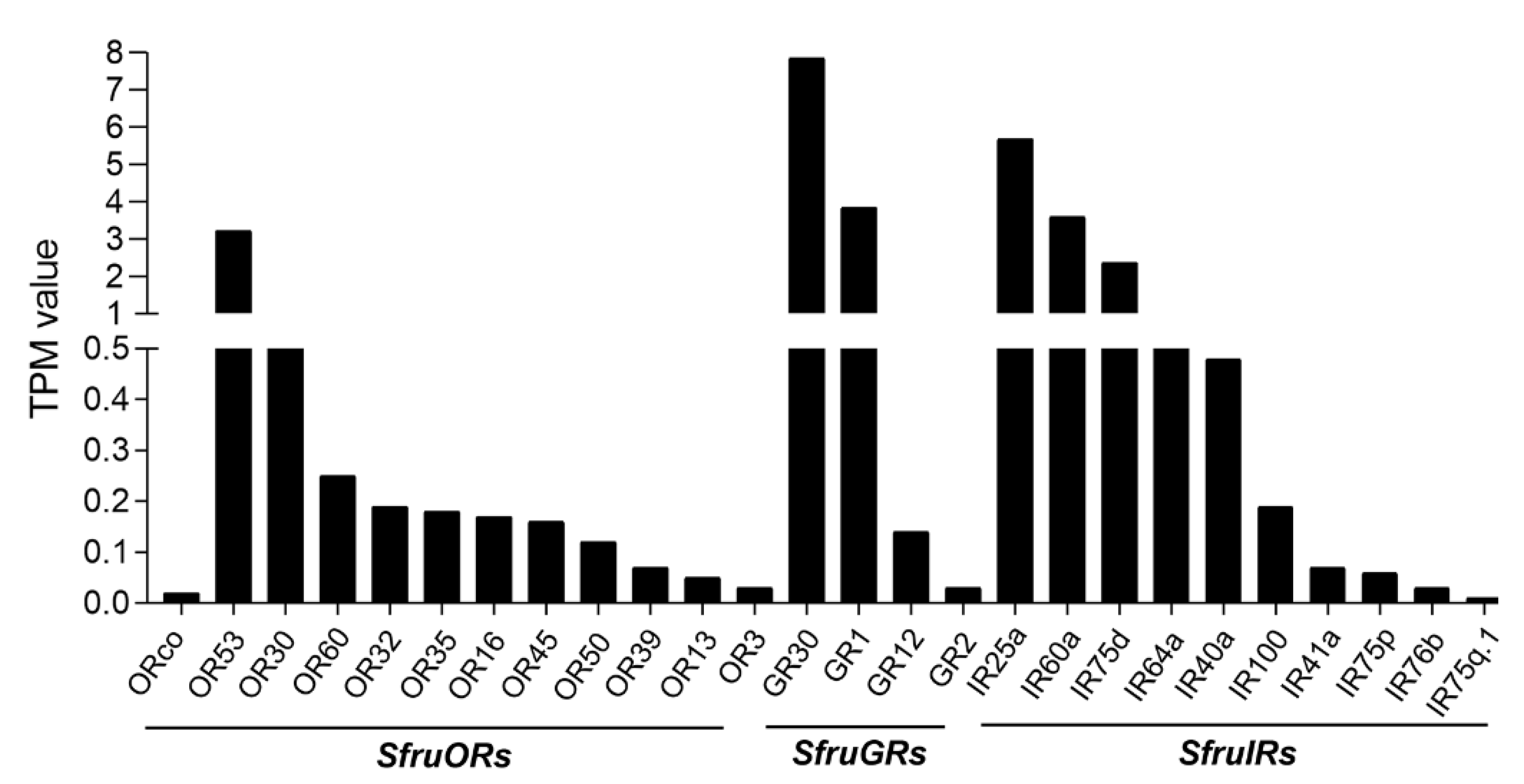
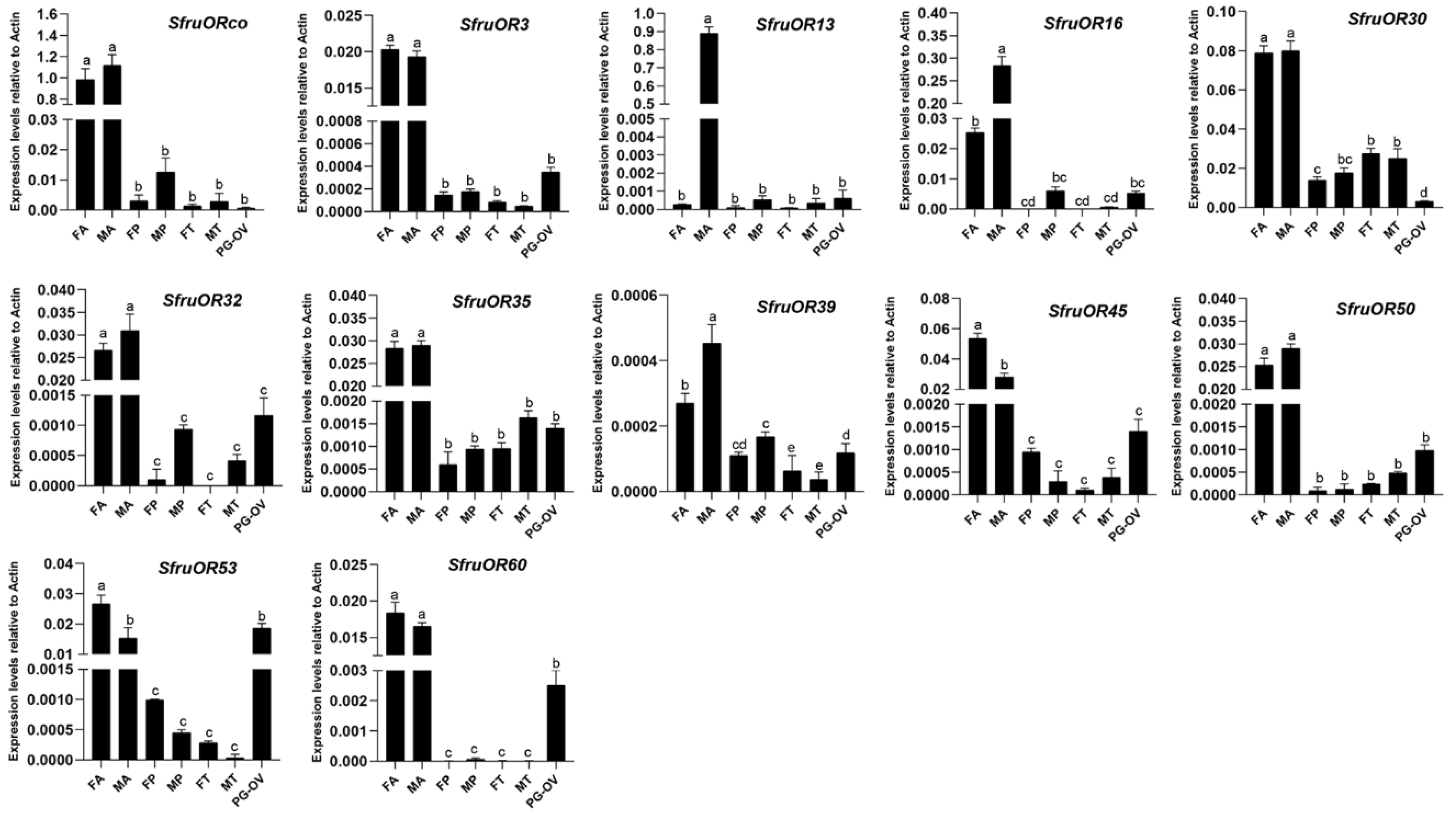
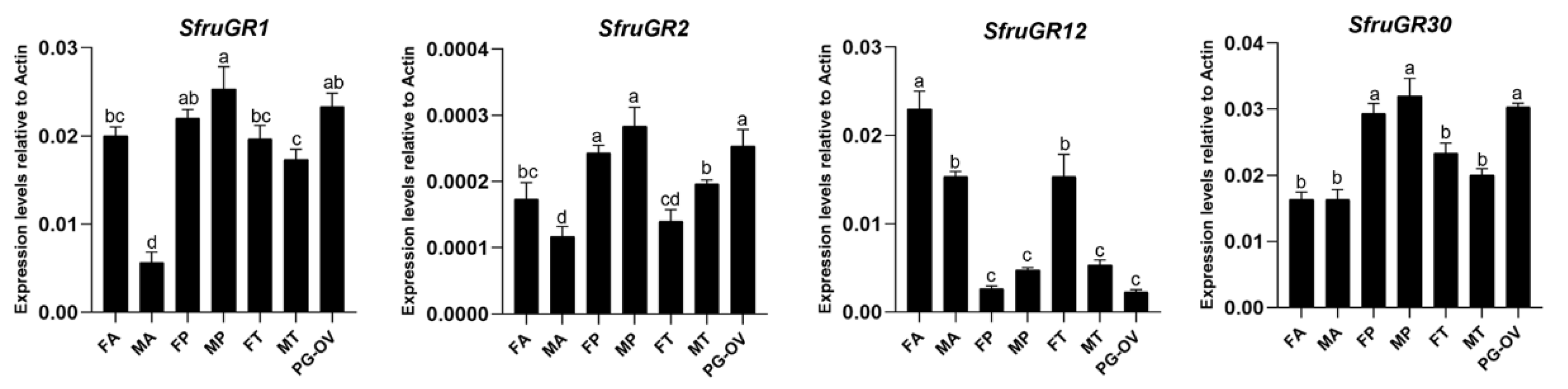
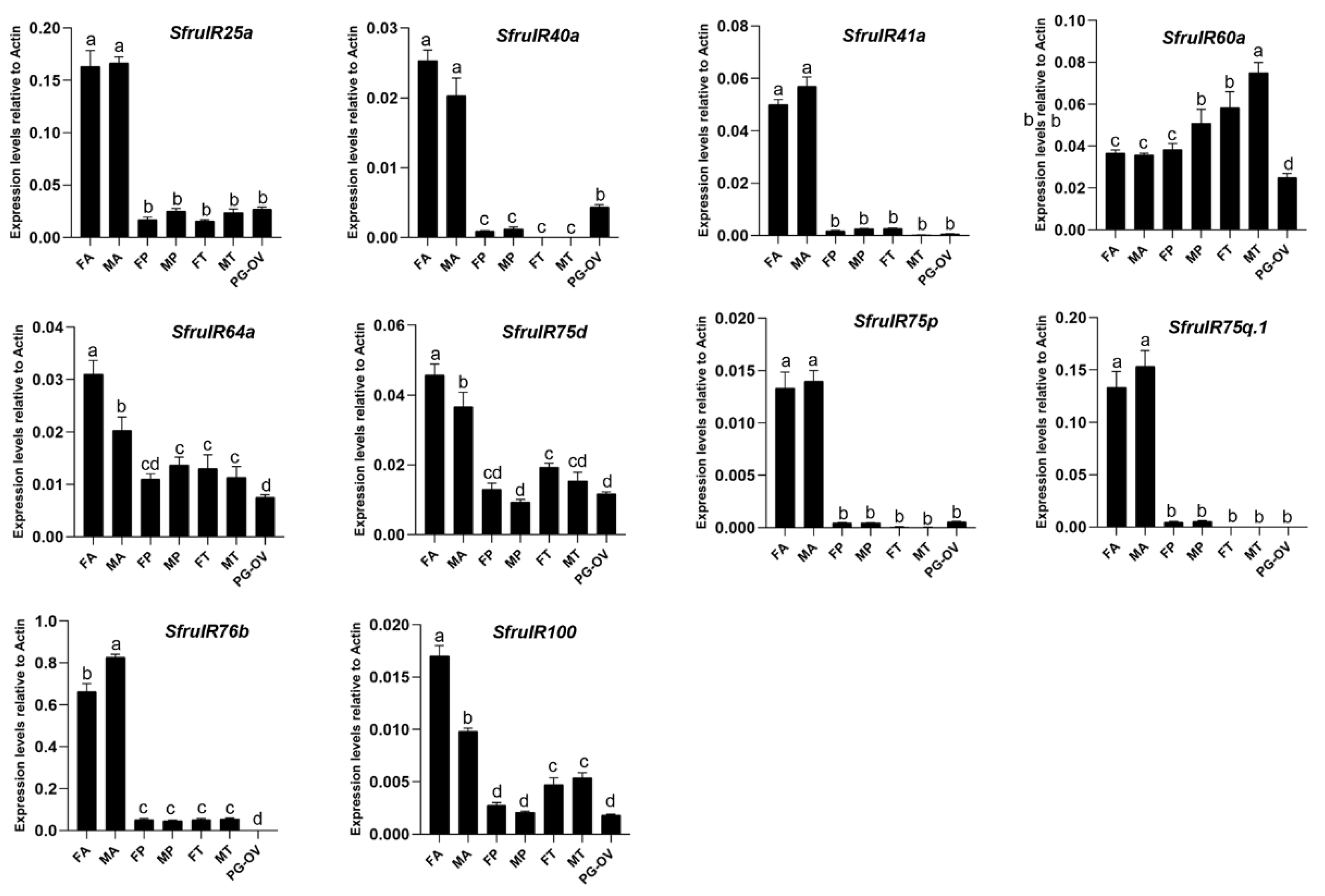
Chemical cues are generally thought to be primarily detected by the cephalic organ antennae, maxillary palps, and proboscises in insects. Although several recent studies have reported the chemosensory roles of ovipositors in some moth species, the expression of chemosensory receptors and their functions in the ovipositor remain largely unknown. Here, we systematically analyzed the pheromone gland-ovipositor (PG-OV) transcriptome of the fall armyworm, Spodoptera frugiperda (Lepidoptera: Noctuidae). A total of 26 candidate chemosensory receptor genes were revealed, including 12 odorant receptors (ORs), 4 gustatory receptors (GRs), and 10 ionotropic receptors (IRs). Specific genes including pheromone receptors, ORco, CO2 receptors, sugar receptors, and IR co-receptors were identified. Tissue expression profiling demonstrated that the annotated receptor genes were mainly expressed in the antennae (for ORs and IRs) or proboscis (for GRs), but two ORs, two GRs, and two IRs were also highly enriched in the PG-OV, with expression levels only slightly lower or even similar to those in the antennae/proboscis. This report provides the first large-scale description of chemosensory receptors in the PG-OV of S. frugiperda. It may inspire researchers to investigate how chemosensory receptors function in the ovipositor of S. frugiperda, as well as in the ovipositors of other moths.
Abstract
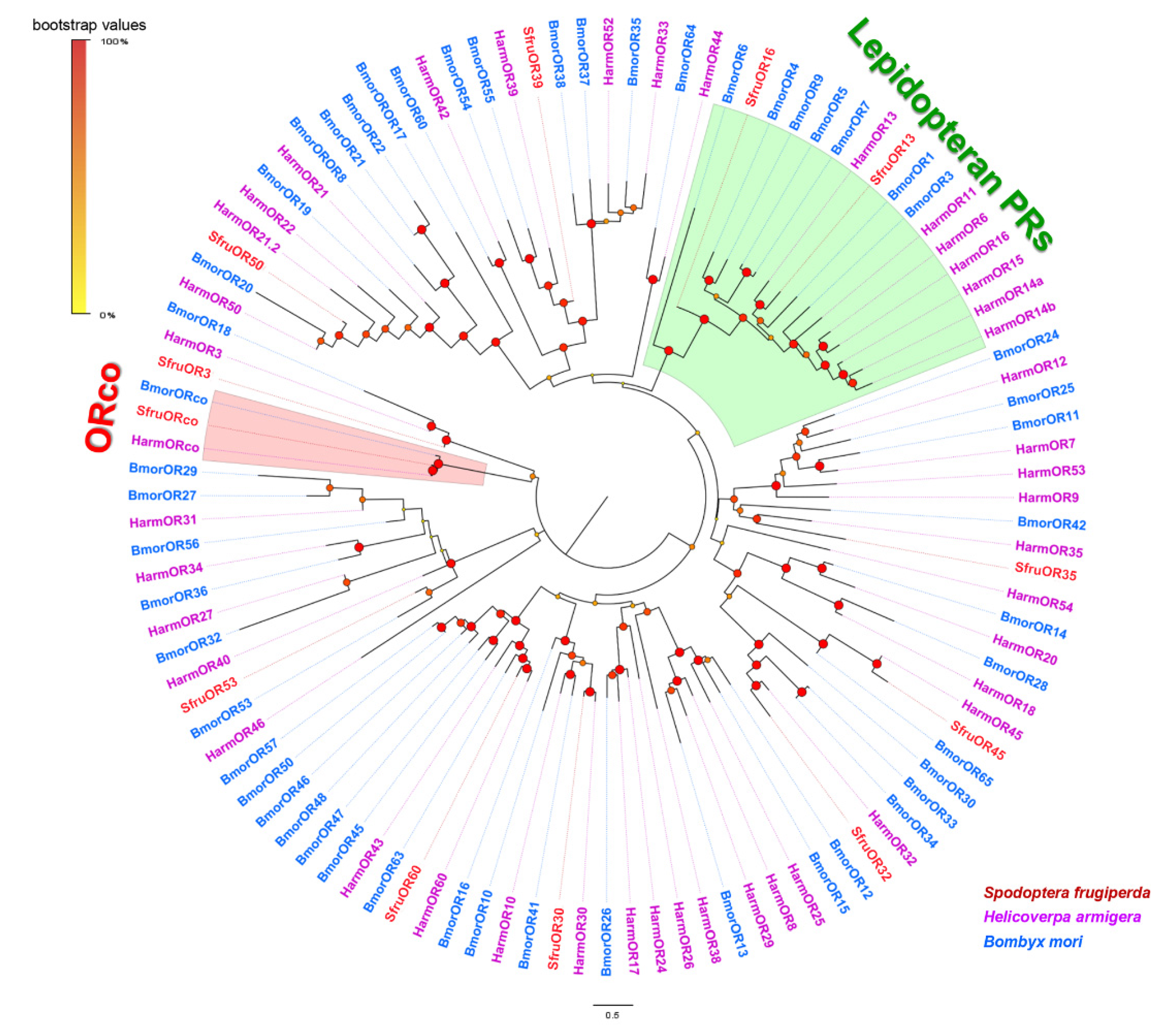
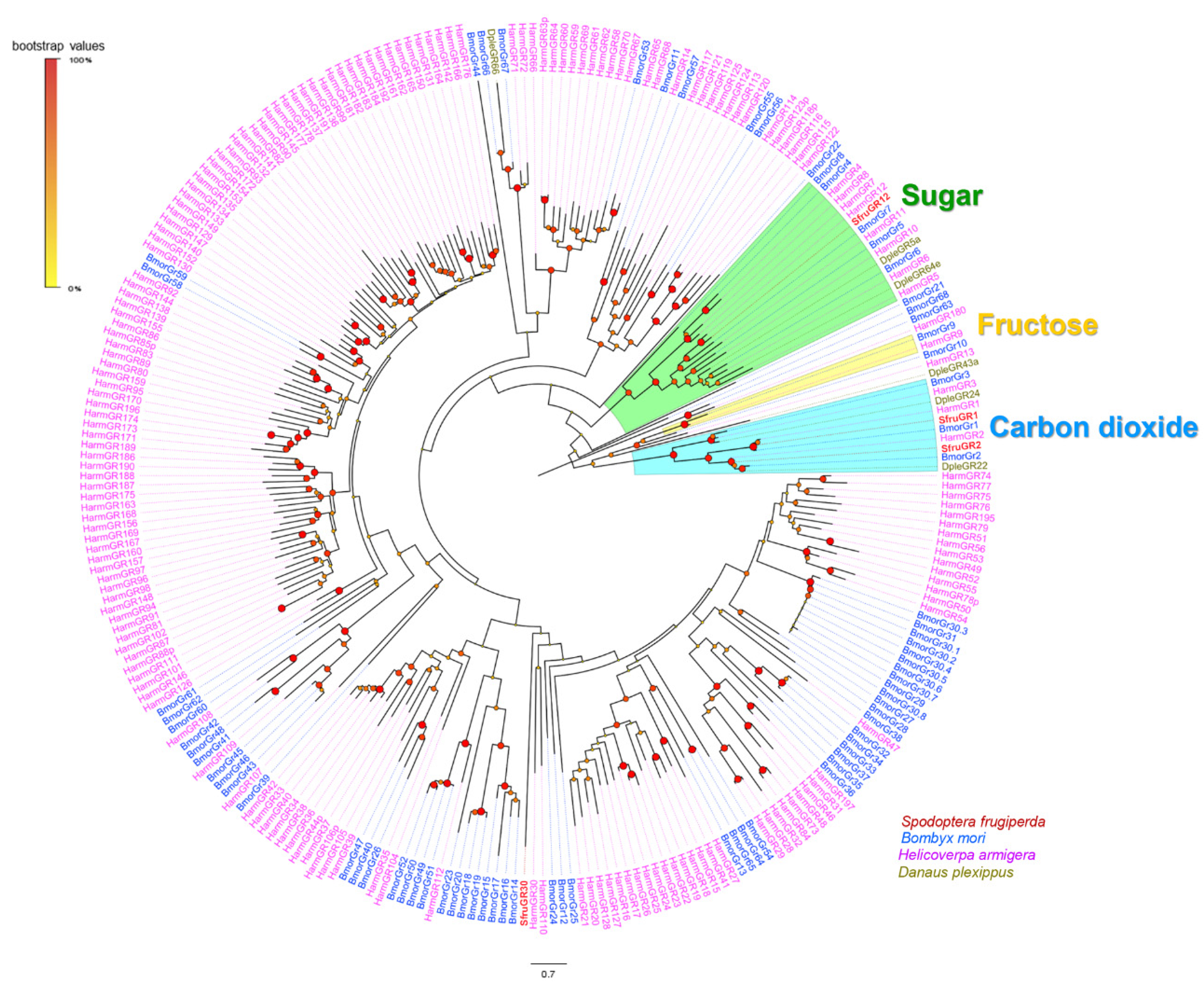
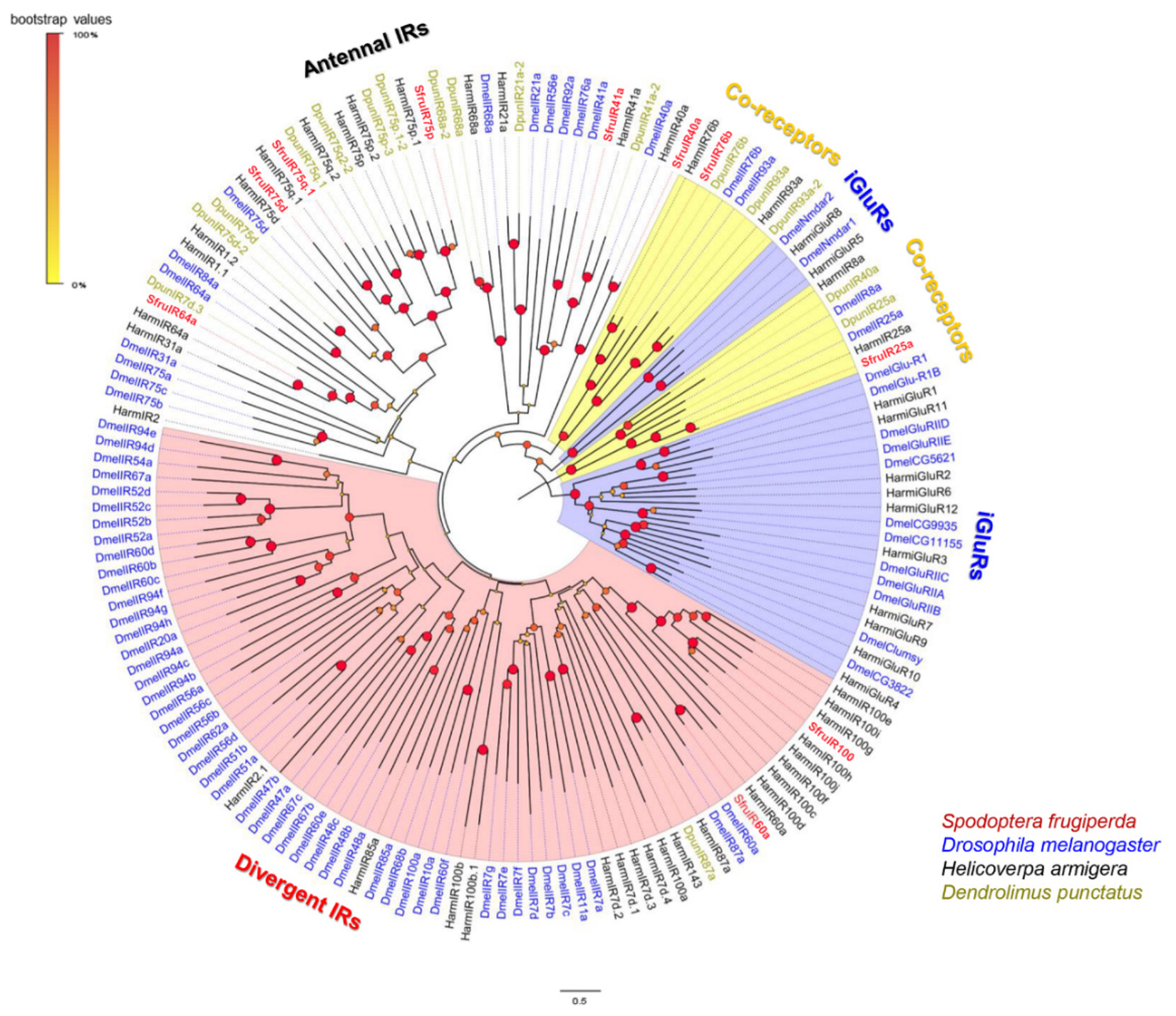
Chemoreception by moth ovipositors has long been suggested, but underlying molecular mechanisms are mostly unknown. To reveal such chemosensory systems in the current study, we sequenced and assembled the pheromone gland-ovipositor (PG-OV) transcriptome of females of the fall armyworm, Spodoptera frugiperda, a pest of many crops. We annotated a total of 26 candidate chemosensory receptor genes, including 12 odorant receptors (ORs), 4 gustatory receptors (GRs), and 10 ionotropic receptors (IRs). The relatedness of these chemosensory receptors with those from other insect species was predicted by phylogenetic analyses, and specific genes, including pheromone receptors, ORco, CO2 receptors, sugar receptors, and IR co-receptors, were reported. Although real-time quantitative-PCR analyses of annotated genes revealed that OR and IR genes were mainly expressed in S. frugiperda antennae, two ORs and two IRs expressed in antennae were also highly expressed in the PG-OV. Similarly, GR genes were mainly expressed in the proboscis, but two were also highly expressed in the PG-OV. Our study provides the first large-scale description of chemosensory receptors in the PG-OV of S. frugiperda and provides a foundation for exploring the chemoreception mechanisms of PG-OV in S. frugiperda and in other moth species.