The Development and Evaluation of Insect Traps for the Asian Citrus Psyllid, Diaphorina citri (Hemiptera: Psyllidae), Vector of Citrus Huanglongbing
by
 ,
,
James Snyder
1, 
Katrina L. Dickens
1,
Susan E. Halbert
1,
Stefanie Dowling
1,
Dyrana Russell
1,
Ruth Henderson
2,
Eric Rohrig
1 and
Chandrika Ramadugu
3,* 1
Florida Department of Agriculture and Consumer Services, Division of Plant Industry, Gainesville, FL 32608, USA
2
USDA APHIS PPQ S&T, Salinas, CA 93905, USA
3
Department of Botany and Plant Sciences, University of California Riverside, Riverside, CA 92521, USA
*
Author to whom correspondence should be addressed.
Insects 2022, 13(3), 295; https://doi.org/10.3390/insects13030295
Submission received: 1 February 2022
/
Revised: 14 March 2022
/
Accepted: 14 March 2022
/
Published: 16 March 2022
(This article belongs to the Collection Psyllid Vectors: From Genetics to Pest Integrated Management)
Simple Summary
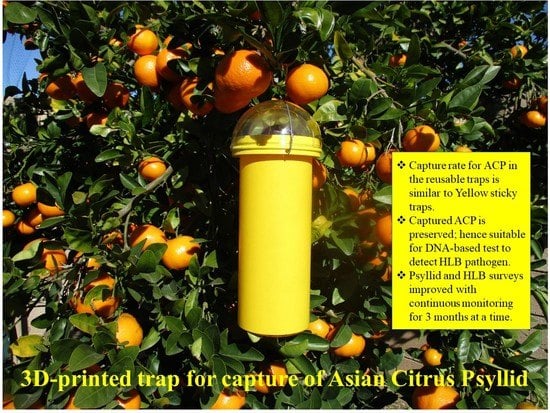
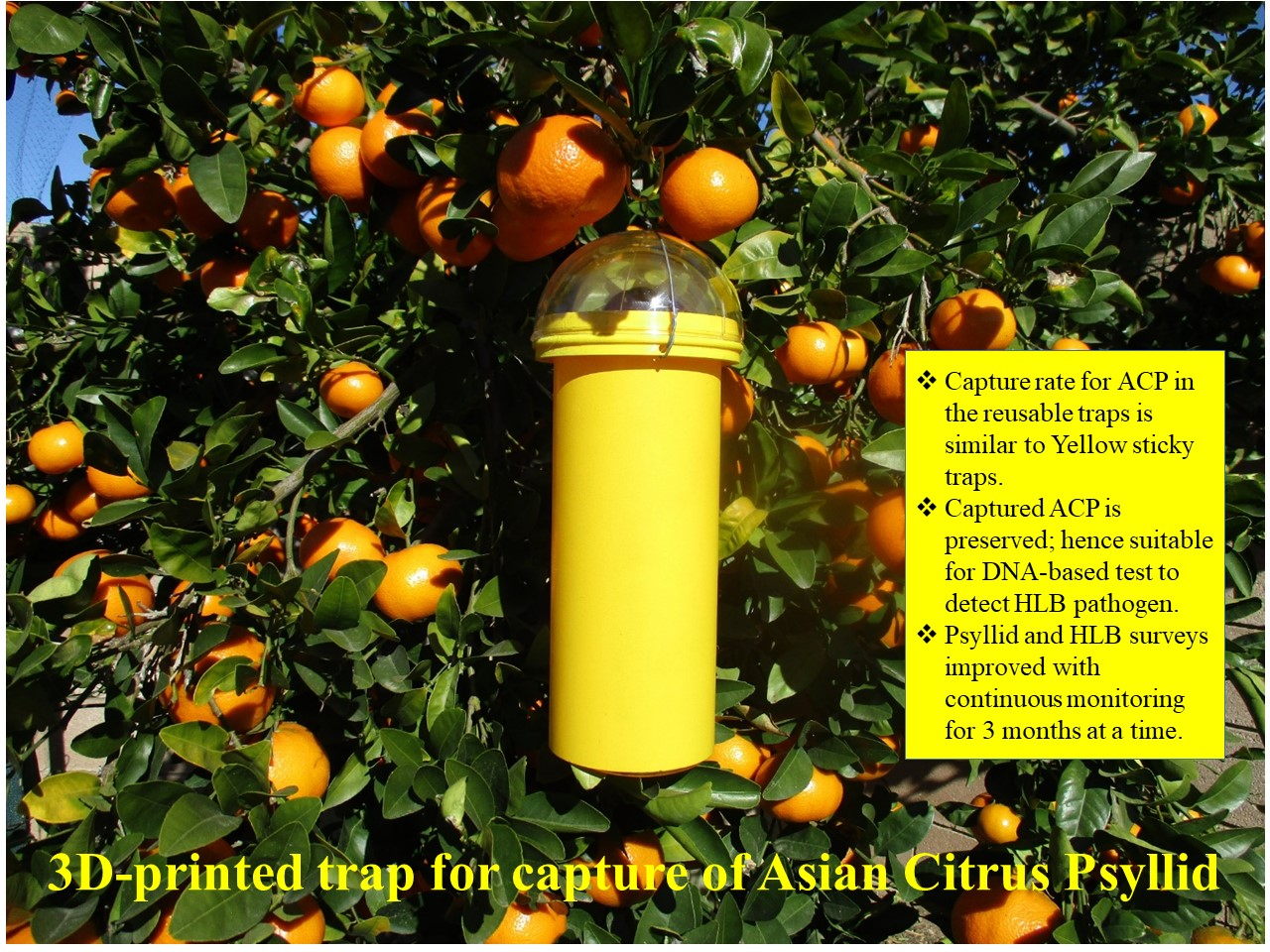
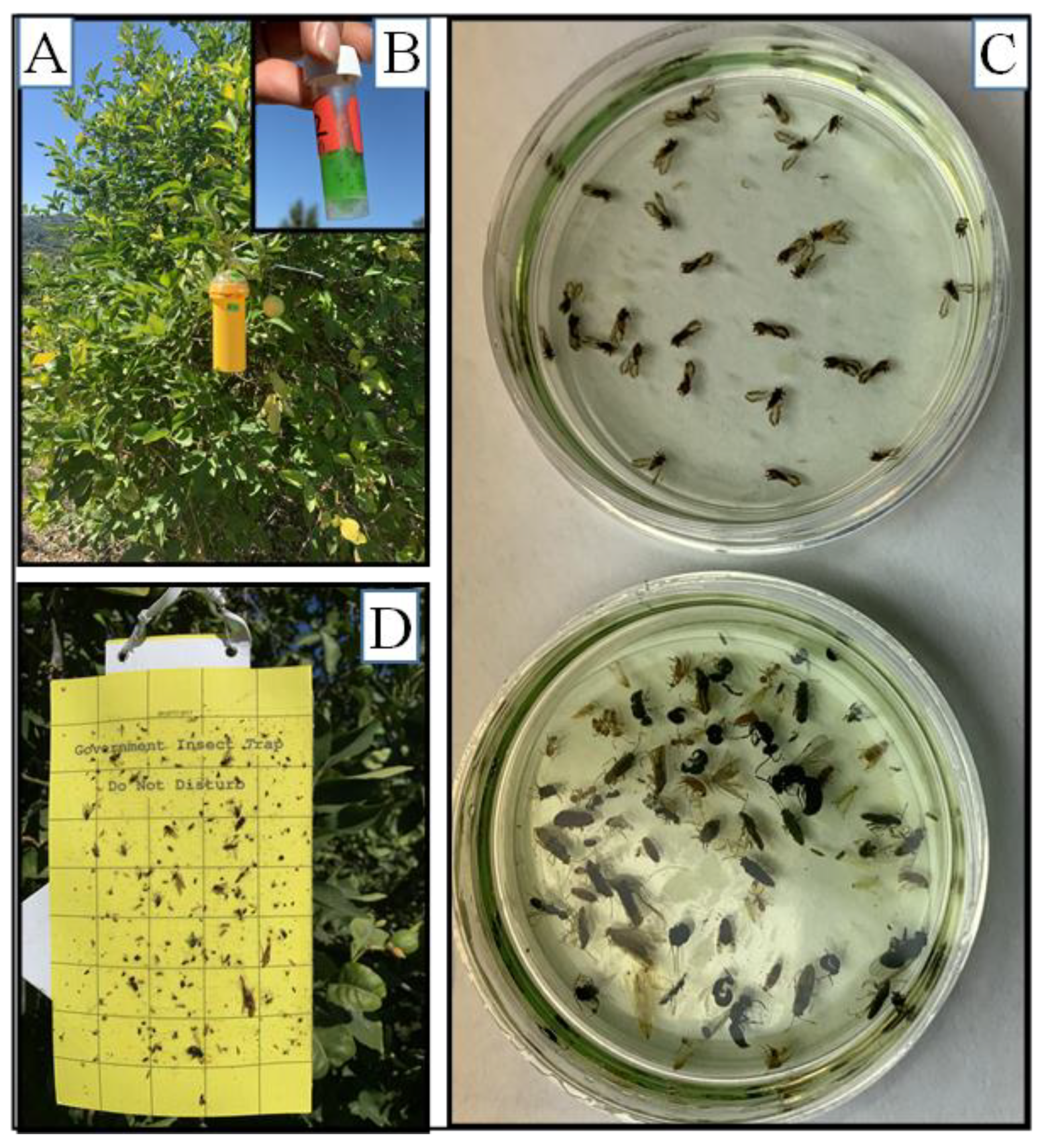
Citrus cultivation is affected in many parts of the world because of a devastating disease, huanglongbing (HLB) or citrus greening. In Florida, nearly all commercial citrus is compromised due to HLB, and the disease has spread to other citrus-growing regions of the United States, California and Texas. In California, testing Asian citrus psyllids (ACPs) for the HLB pathogen has been an essential part of integrated pest management. ACP and HLB surveys are essential for disease management in areas where HLB is not widespread. We developed improved ACP traps that can be deployed in the field along with the standard yellow sticky traps. The reusable traps were designed with Rhinoceros computer software and a 3D printer. These traps can be deployed for several months and provide a dynamic sampling mechanism for an improved disease survey strategy. In the present study, ACPs from the 3D-printed traps are collected in a preservative and appear suitable for HLB testing. The evaluation of traps in Florida and California under laboratory, greenhouse, and field conditions indicates that the 3D-printed traps can capture ACPs with about the same efficiency as the sticky traps. They are easy to handle and provide an important field tool for HLB management.
Abstract
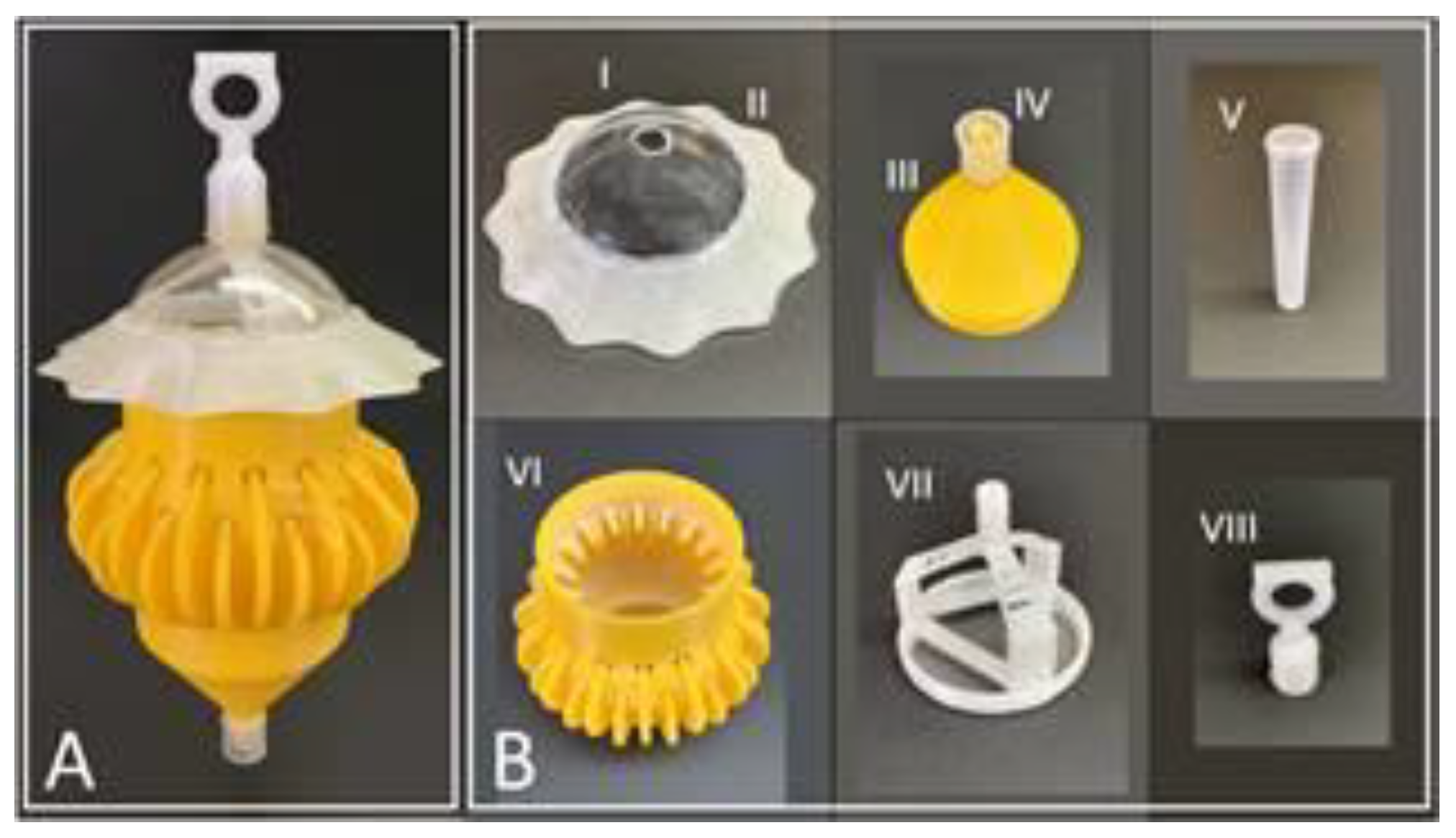
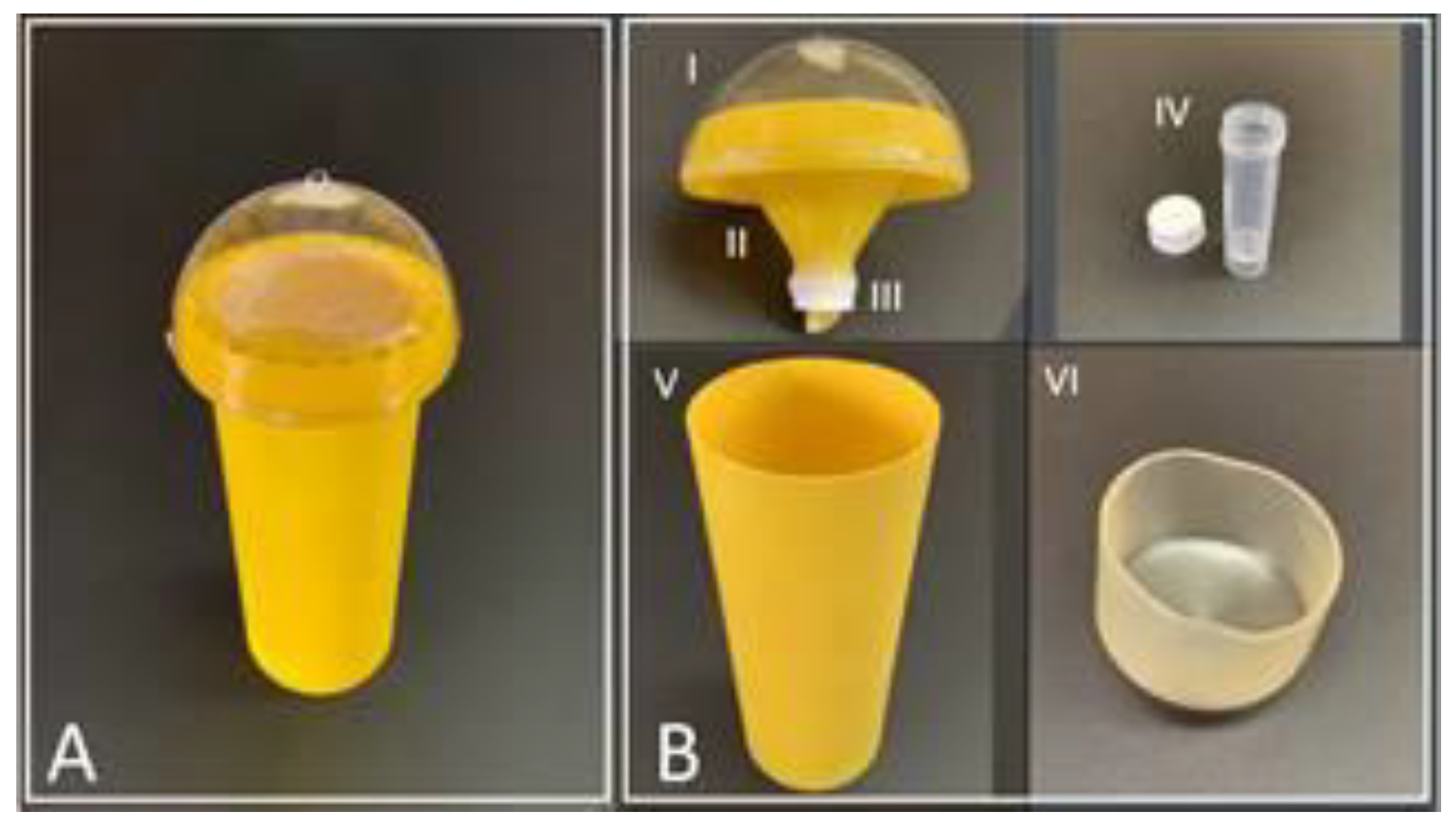
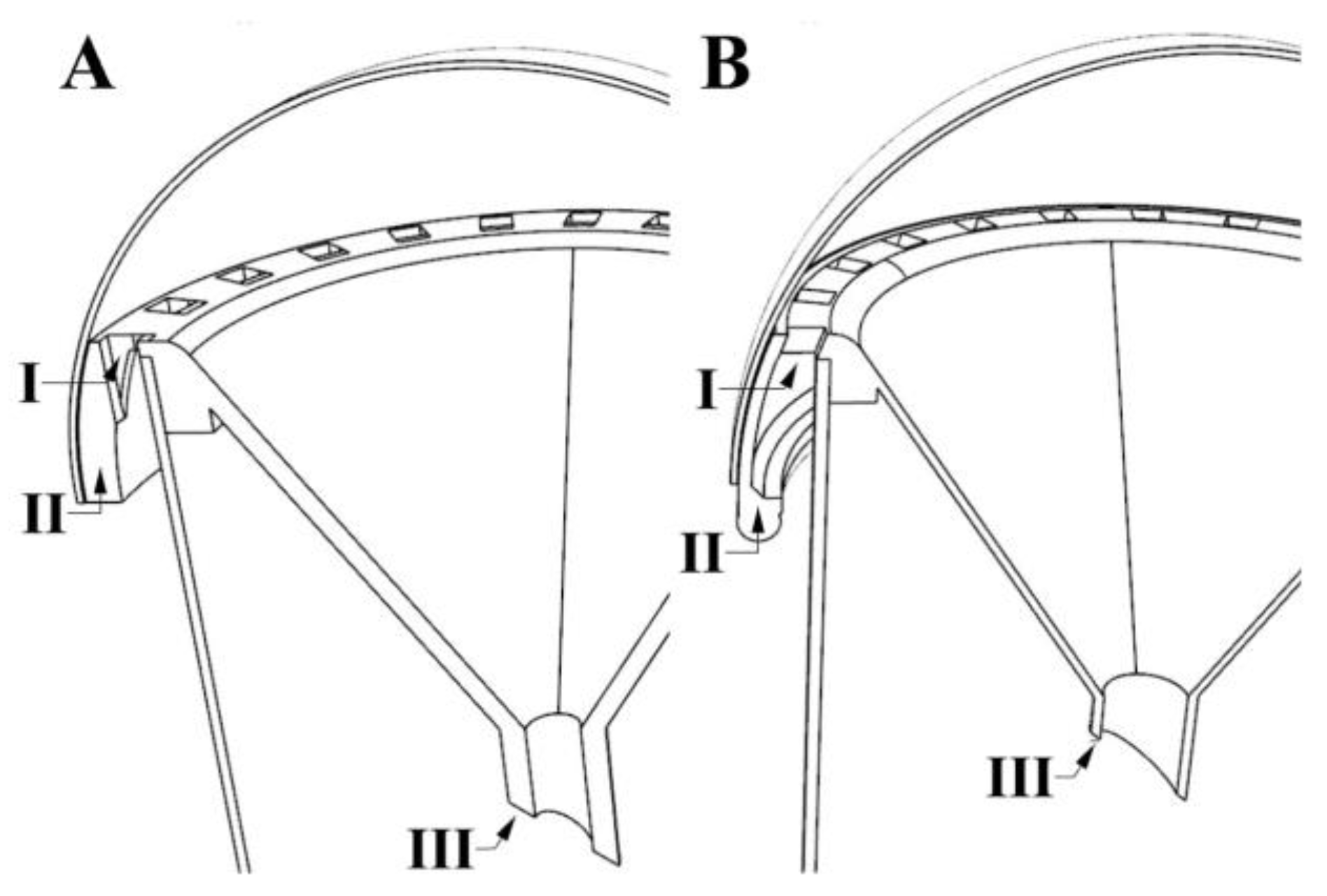
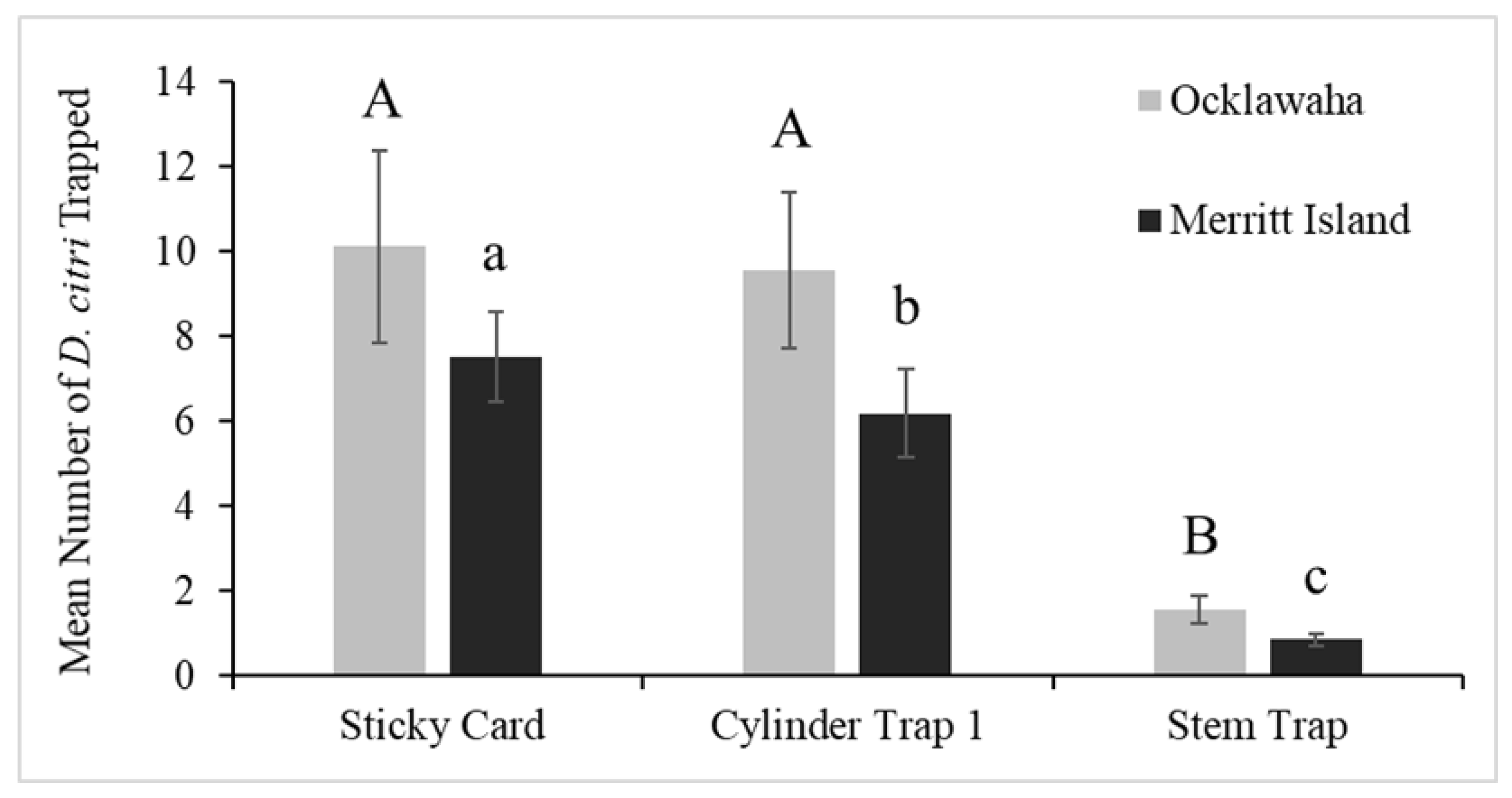
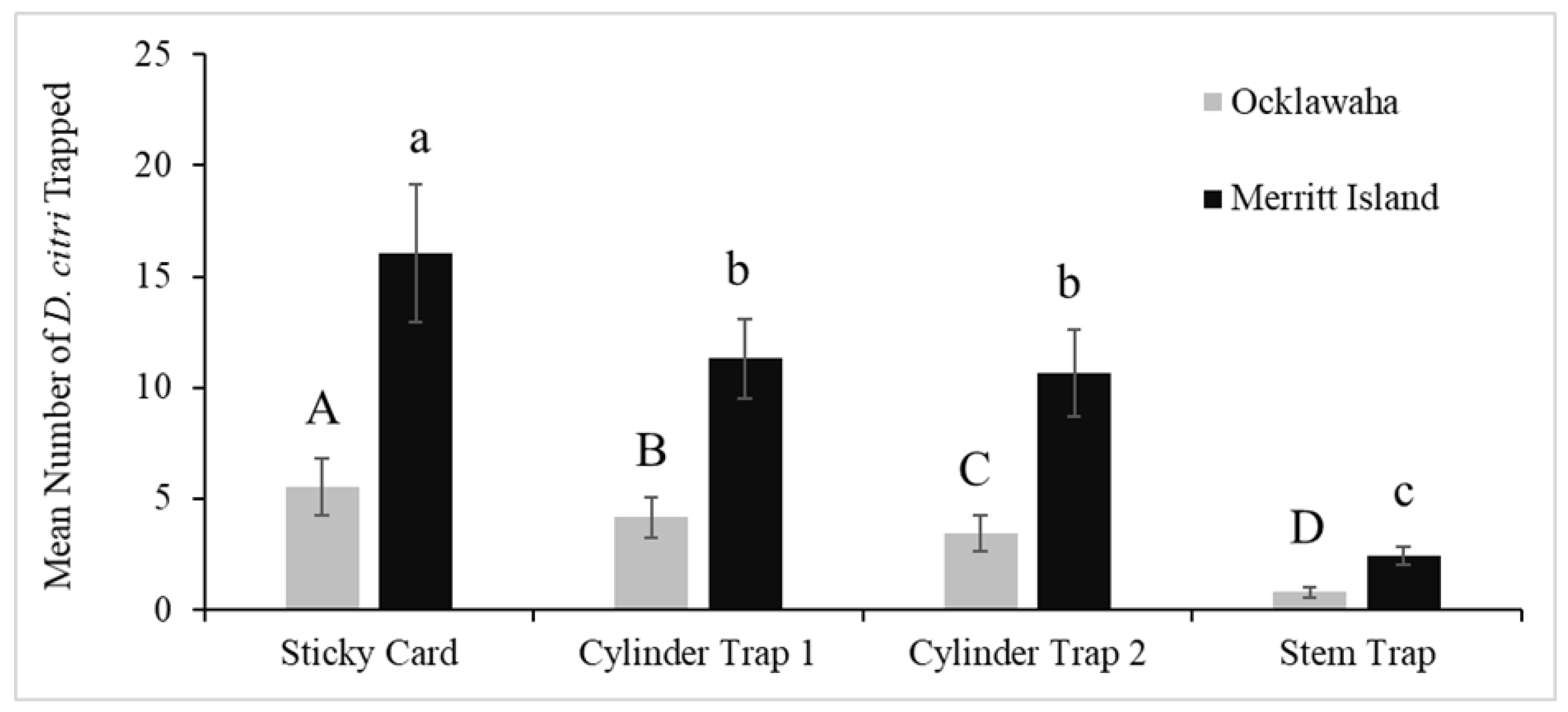
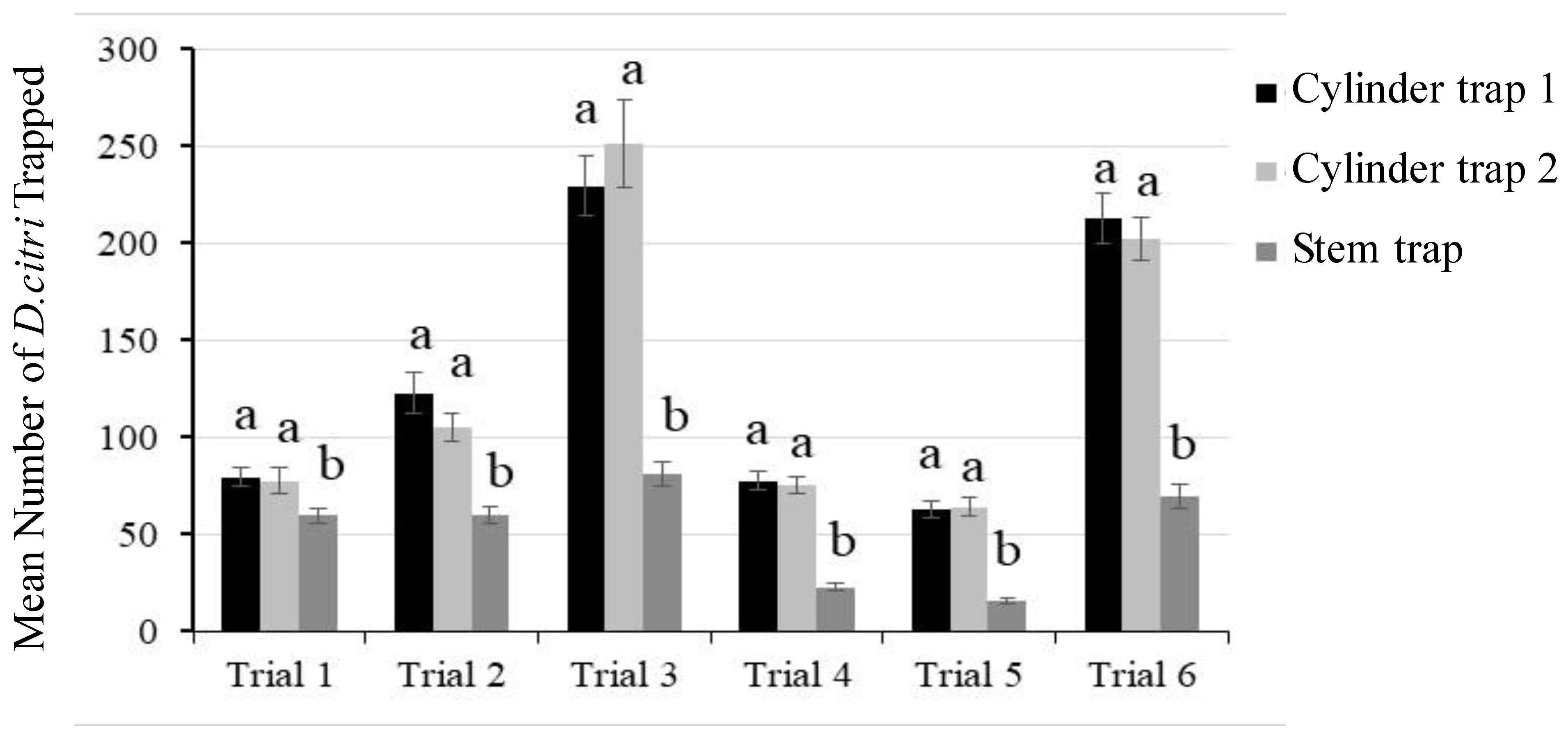
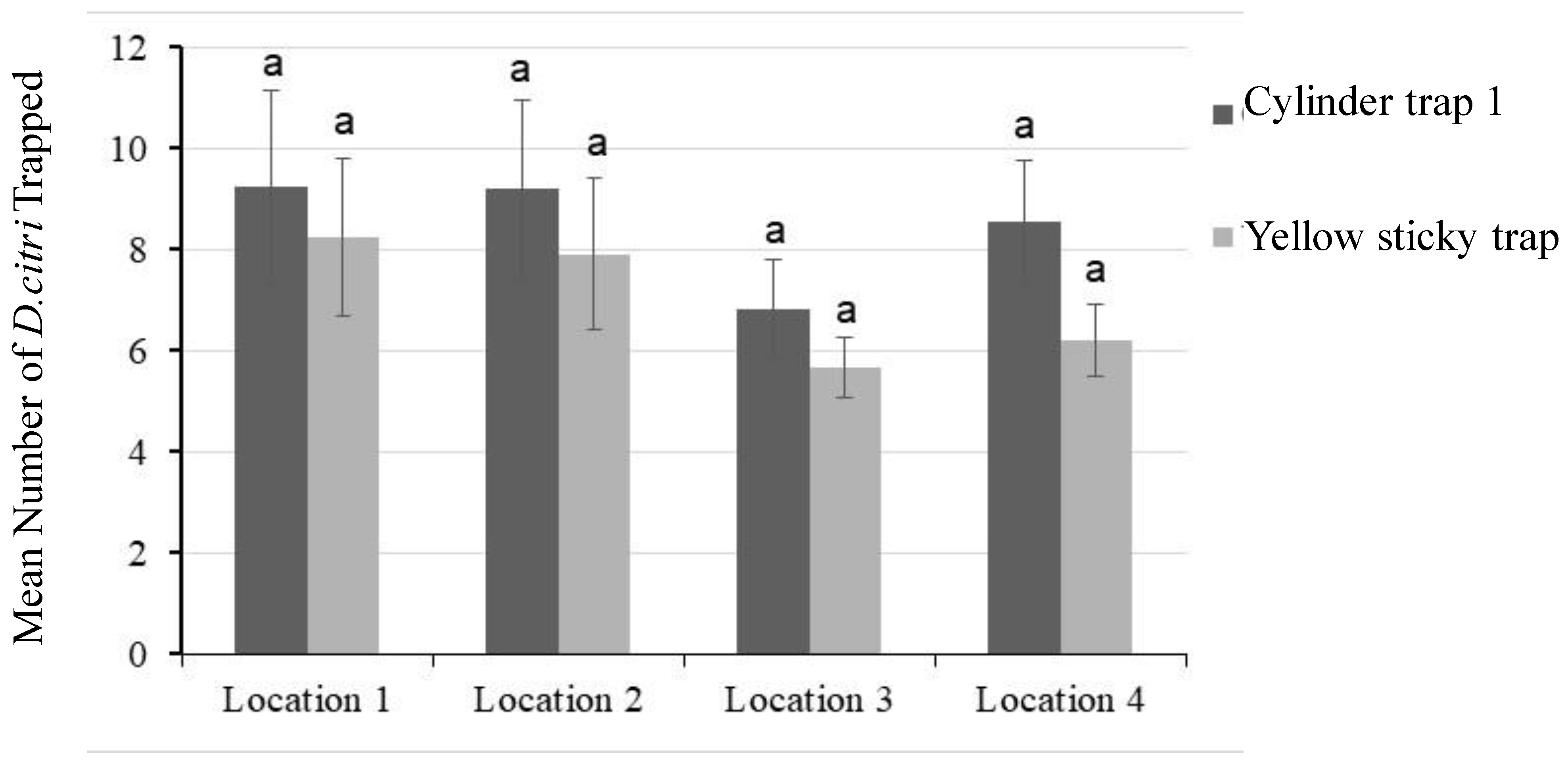
Citrus huanglongbing (HLB) is a severe problem for citrus cultivation. The disease management programs benefit from improved field tools suitable for surveying the ACP vector (Asian citrus psyllid, Diaphorina citri Kuwayama (Hemiptera: Psyllidae)) and the associated pathogen. In the present study, we utilize three-dimensional (3D) printers and design tools to develop traps that can capture and preserve ACPs. Three novel, 3D-printed traps were designed and evaluated: stem trap, and cylinder traps 1 and 2. The traps and yellow sticky cards were deployed weekly for 8 months in 2 non-commercial citrus groves in Florida; in California, the traps were evaluated for 12 months in field cages and 4 citrus groves. The stem traps captured lower numbers of ACPs at all experimental sites compared to the cylinder traps. Capture rates in the cylinder traps were comparable to the sticky trap, making the device a viable tool for monitoring field ACPs. The two main advantages of using the reusable 3D traps over standard methods of ACP and HLB surveys include dynamic sampling that can be conducted year-round and the capture of ACPs that can be preserved and tested. Improved trapping may facilitate quick management decisions and mitigate HLB.
Keywords:
psyllid trap; 3D printing; ACP; vector monitoring; huanglongbing; greening; citrus