Article

Tribological Investigation of Wear-Resistant Friction Pairs for Miniature Linear Ultrasonic Motors


1
Department of Mechanical and Electrical Technology, School of Mechanical and Electrical Engineering, Beijing Polytechnic University, Beijing 100176, China
2
Beijing Engineering Research Center of Precision Measurement Technology and Instruments, Beijing University of Technology, Beijing 100124, China
*
Author to whom correspondence should be addressed.
Lubricants 2026, 14(7), 251; https://doi.org/10.3390/lubricants14070251 (registering DOI)
Submission received: 7 June 2026 / Revised: 17 June 2026 / Accepted: 22 June 2026 / Published: 24 June 2026

Abstract

To solve the drawbacks of conventional long-cycle wear tests for miniature standing- wave linear ultrasonic motors, an accelerated equivalent wear model and test system were proposed in this work. After primary screening of multiple pair materials, graphite and Al2O3 were adopted to modify epoxy films. The optimal friction pair is composed of 6061 hard anodic oxidation film and ECA105 composite film. The matched pair exhibits excellent driving stability and low wear loss, with fatigue wear as the main wear form. Graphite and Al2O3 exert synergistic anti-wear and load-bearing effects via forming a stable transfer film on the friction interface. Experimental results confirm that the accelerated test is equivalent to a full-life durability test. The presented method and optimized friction pair can effectively guide the development of high-performance ultrasonic motors.

1. Introduction

Friction material is a critical factor affecting the performance of ultrasonic motors [1,2,3,4,5], which directly determines the output driving force and wear life of friction pairs [6]. At present, five types of friction pairs, including polymer–ceramic [7,8], polymer–metal [9], metal–metal [10,11], metal–ceramic [12,13], and hard-coated ceramic–ceramic pairs [14], are applicable to standing-wave linear ultrasonic motors [15,16,17]. Tokyo Institute of Technology [7] fabricated modified polymer sliders via 3D printing and matched them with ceramic counterparts to investigate the regulation law of surface micro-texture on interfacial friction coefficient, with the friction coefficient improved by 45.5%. Nanjing University of Aeronautics and Astronautics (NUAA) [8] adopted multi-filler modified polyimide (PI) as the stator friction layer paired with micro-arc aluminum alloy, and explored the influence of molybdenum disulfide content on the tribological performance of PI composites. Worcester Polytechnic Institute [9] configured friction pairs consisting of Ultem-PTFE against Cu–Al alloy. Experimental results reveal that the friction coefficient and surface roughness exert remarkable effects on the motor output torque. NUAA and University Teknology Malaysia [10] employed textured phosphor bronze paired with hard aluminum alloy to study the action mechanism of groove textures. Another research group from NUAA [11] selected beryllium bronze matched with hardened alumina; the friction coefficient was increased via interface modification, raising the motor efficiency from 36.8% to 46.3%. A collaborative research by Beihang University and Jiangsu University [12] studied the tribological behaviors of Al2O3 ceramic–aluminum alloy friction pairs, indicating that preload and contact stiffness can change interfacial work consumption and material wear loss. Israel’s Nanomotion Ltd. [13] developed ultrasonic motors using Al2O3–Al2O3 all-ceramic friction pairs, achieving a service life of 20,000 h, driving force of 4 N, and moving speed of 250 mm/s. Researchers at NUAA [14] prepared coatings containing 4 wt% CeO2 on the surface of stator driving feet by atmospheric plasma spraying, and the obtained coatings possess excellent wear resistance. Taking V-type ultrasonic motors as research objects, Harbin Institute of Technology (HIT) verified that the silicon nitride–alumina combination delivers a minimum wear coefficient [18,19,20,21]. The dominant wear mechanisms of materials include micro-fracture, surface fatigue, and abrasive wear. Most standing-wave ultrasonic motors adopt friction pairs matched by ceramics and hard metals, which cannot simultaneously satisfy the requirements of lightweight design, ultrasonic driving performance, and long wear life.
Ultrasonic vibration contact differs fundamentally from conventional steady sliding contact. Conventional sliding features constant contact pressure and simple thermal energy dissipation, with stable transfer films formed via unidirectional slip. In contrast, ultrasonic vibration triggers periodic fluctuating contact stress, multi-path energy loss from micro-impact and plastic deformation, and distinct transfer film evolution under coupled reciprocating slip and micro-impact, making conventional tribology theories inapplicable. Due to the complex tribological behaviors at ultrasonic contact interfaces and unique component proportions of friction materials, existing theoretical studies [21,22,23,24,25] and test approaches [26,27,28] have limited reference value. Hence, wear experiments are essential to reveal wear evolution rules and improve the stability and service life of ultrasonic motors. Scholars worldwide have developed various simulative test rigs based on longitudinal-bending vibrators to support the research of friction materials. Yamaguchi [29] adopted a standing-wave linear ultrasonic motor as the simulation driving system and obtained the optimal preload for mild wear on the motor driving foot. P. Rehbein [30,31] developed a slider–Langevin transducer tribometer, proposed an evaluation method for friction pairs under high-frequency vibration, and characterized the tribological properties of polymer–steel and ceramic–ceramic mating pairs. J. Padgurskas [32] built a test bench for ultrasonic piezoelectric actuators to explore how pair combinations affect the tribological features of standing-wave motors and evaluate component wear severity. Yao [33] developed a dedicated tribological tester for standing-wave linear ultrasonic motors, clarified the variation law of stator foot wear rate with preload and relative sliding speed, and analyzed interfacial friction and wear characteristics. Qu [21,34,35] developed multiple simulative test devices capable of reproducing practical operating conditions to investigate the influences of external load, operating parameters, and rotor friction materials on driving and tribological performances. Sujeet [36] and Cheng [37] designed high-frequency friction simulation setups for tribology research and pair screening, whereas the effect of ultrasonic vibration frequency was not involved in their work.
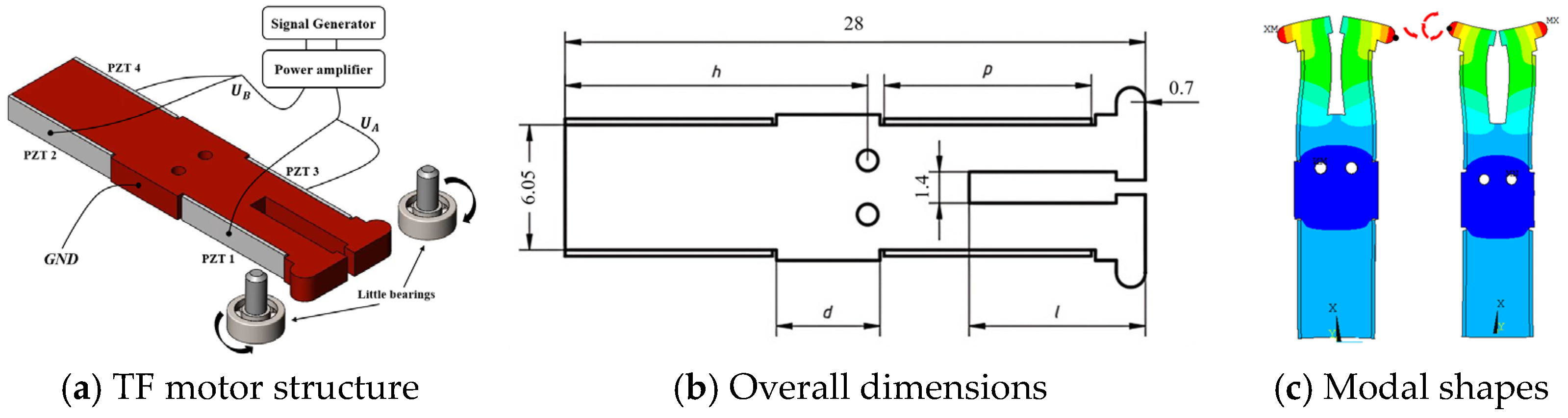
The research object of this paper is a miniature longitudinal-bending composite tuning-fork ultrasonic motor [38] operating under low-order vibration modes, as shown in Figure 1. Designed for integration inside mobile phone camera modules, its driving foot has a tiny radius of r = 0.7 mm. Benefiting from the extremely small contact zone between stator and rotor, experiments simulating practical working conditions feature long test cycles, high costs, and poor repeatability, which makes such methods unsuitable for pair screening. Most existing test equipment is customized for standard-size structures and fails to satisfy the test requirements of miniaturized friction pairs with low-order vibration. In addition, several existing platforms ignore the impact of ultrasonic excitation frequency [36,37] and cannot meet the test demands for miniature friction pairs. In view of the above problems, an equivalent wear model of miniature friction pairs for ultrasonic motors centered on friction work equivalence is established in this work, and an accelerated equivalent tester is accordingly developed. Comparative screening tests are completed for 20 groups of friction pairs, and scanning electron microscopy (SEM) tests are carried out on specimens with modified EP films. Eventually, a transfer-film-based anti-wear theory is put forward. The research outcomes provide theoretical support and technical references for high-efficiency screening and long-life design of friction pairs for standing-wave linear ultrasonic motors.
In accordance with the test requirements of TF motors, three key issues are found in ultrasonic vibration, friction, and wear tests. Firstly, miniature ultrasonic motors have a tiny contact region and operate under special high-frequency vibration. Their full-life tests are long-cycle, high-cost, and low-reproducible, and no efficient method is available for the rapid screening of friction pairs. Secondly, traditional tribological devices are developed for standard-sized motors and cannot adapt to miniature friction pairs with low-frequency vibration modes, while the effect of ultrasonic excitation frequency on friction and wear is rarely considered. Thirdly, distinct differences exist in wear mechanisms, and the evolution of interfacial transfer films between ultrasonic vibration friction and conventional sliding friction, and related research is still insufficient. This paper addresses the above problems based on the actual demands of the research project.

2. Wear Model of Friction Pair

The TF motor investigated in this paper features compact dimensions, whereas the friction pairs of the equivalent test (ET) machine are relatively large. To screen out friction pairs matching the requirements of the TF motor via the tester, an equivalent wear model together with constraint conditions needs to be established.
Frictional work parameter μpυ is one of the key indices affecting wear performance, where p denotes contact pressure, υ is the relative velocity of contact surfaces, and μ represents the friction coefficient. Since the screening criteria for the ET machine need to be more stringent, p2υ2 > p1υ1 needs to be constrained. According to the operating principle of the TF motor, the most severe wear occurs when the rotor is blocked. Under this condition, the relative sliding velocity equals the linear velocity of particles on the rotor surface, and υ is expressed as Equation (1).
υ = ωA = 2πfA
The operating frequency of the TF motor is f1 = 80–100 kHz, the amplitude A1 = 0.2–0.3 μm, and the contact pressure p1 = 5 MPa. Theoretically, the operating frequency f2, amplitude A2, and contact pressure p2 of the ET machine should all exceed the above values to screen for larger frictional work under harsher working conditions.
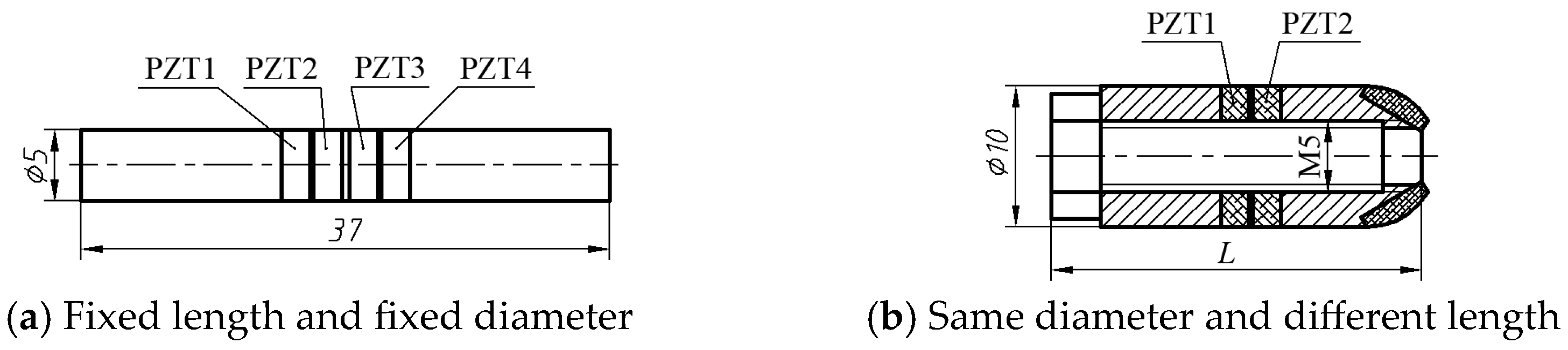
Nevertheless, the driving foot radius of the TF motor is only r = 0.7 mm, while the rotor radius Rs of the ET machine is no less than 5 mm. Based on the empirical rule that larger structural size corresponds to lower vibration frequency and amplitude, it is difficult to satisfy f2 > f1. To enable the equivalent tester equipped with a large-size rotor operating at low-frequency f2 to screen specimens matching the wear requirement of the small-size and high-frequency TF motor, the ET machine must output higher vibration energy. To verify the hypothesis of the frictional work constraint, two types of Langevin transducers are fabricated for wear experiments, shown in Figure 2.
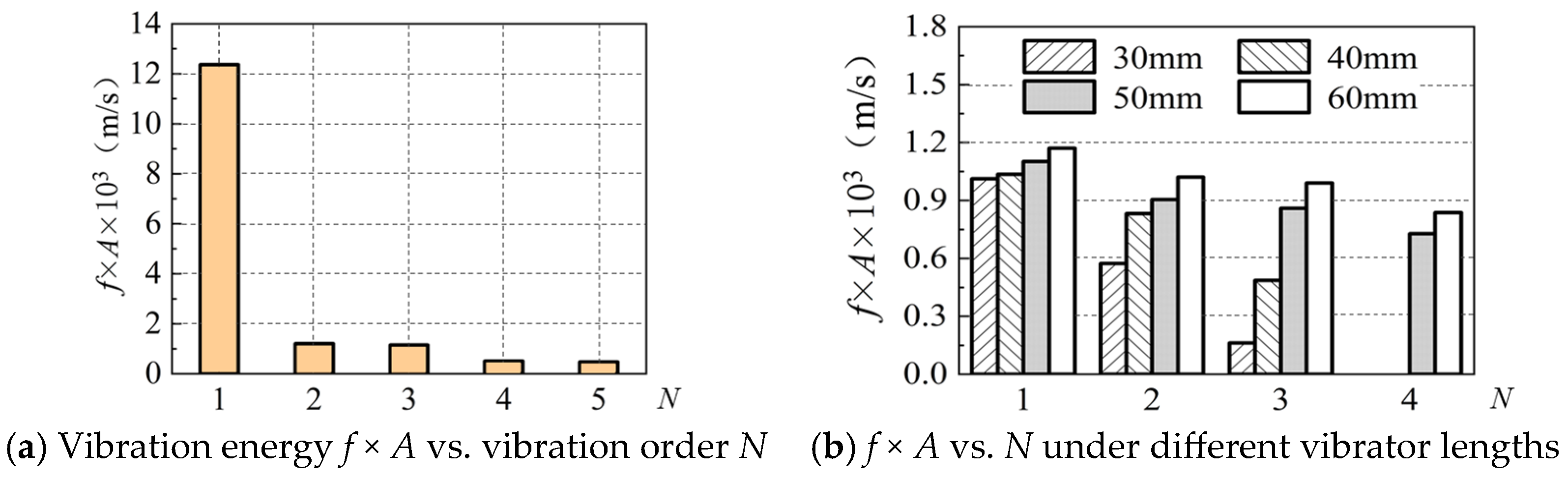
Figure 3a reveals that the vibration energy f × A decreases with the increase in vibration order N. Modal and harmonic response analyses indicate that a higher frequency leads to lower vibration energy, as presented in Figure 3b. In addition, the influence of transducer length L on f × A decreases progressively at lower N.
Both the TF motor and ET machine operate based on the first-order longitudinal bulk vibration and second-order local bending vibration. Accordingly, increasing either the length or diameter of the transducer improves vibration energy and frictional work, thereby accelerating material wear. Consequently, the equivalent tester produces more severe wear under stricter screening conditions and is applicable for screening tests.
Driving force Fd is one of the critical indicators characterizing the driving performance of ultrasonic motors. The maximum Fd of the TF motor is 30 mN, with a corresponding maximum preload of Fc = 0.3 N. However, the Fd of the ET machine is far higher, and the minimum friction coefficient μumin is adopted for the equivalent evaluation of driving performance. Based on Equation (2), the constraint condition μu > 0.10 is obtained.
μ umin = F d F c = 30 × 10 3 0.3 = 0.10

3. Equivalent Test (ET) Machine and Operating Parameters

3.1. Structural Principle

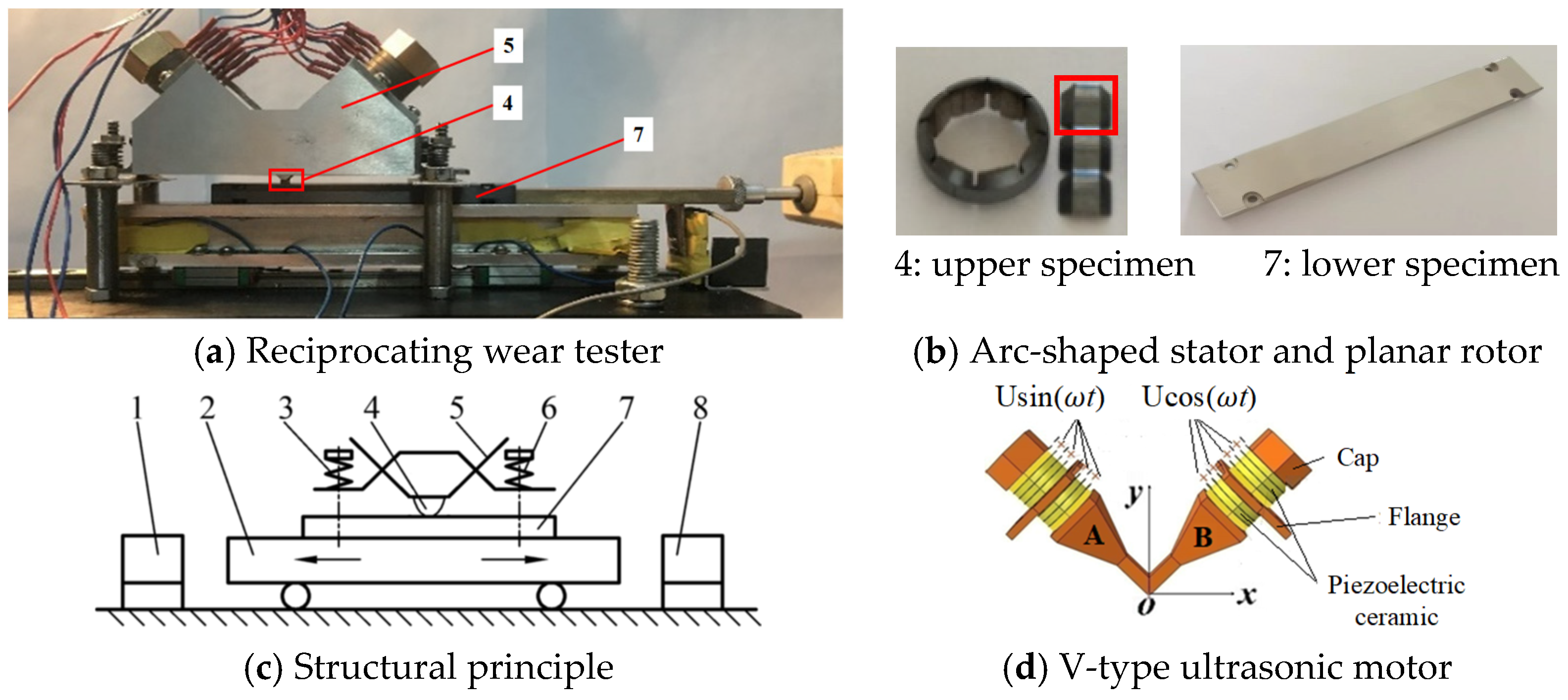
As shown in Figure 4, a reciprocating wear tester is developed as an equivalent tester. To approximate the contact wear of the TF motor, an arc-shaped stator is used as the upper specimen (No. 4), and a planar rotor serves as the lower specimen (No. 7). Line contact is adopted between the stator and slider, which is consistent with the contact state of the TF motor. The lower specimen is mounted on the low-friction guide rail (No. 2), with reversing switches (No. 1 and 8) arranged on both sides. The upper specimen is fixed on the driving end of the V-type ultrasonic motor (No. 5), and spring assemblies (No. 3 and 6) are employed to apply preload to the V-type motor.

3.2. Parameter Configuration

To accelerate specimen wear and shorten experiment duration, the contact load of ET is set to 15 times the operating load of the TF motor, which satisfies the equivalence requirement of frictional work. The original contact load of TF is F1 = 0.3 N with a total sliding distance L1 = 2000 m, while the accelerated test load of matched specimens on the screening tester is specified as F2 = 4.5 N. According to Equation (3), the total sliding distance L2 of ET can be solved to achieve an identical wear volume as the friction pair of the TF motor. Given the single-stroke sliding distance S2 = 70 mm, the corresponding reciprocating cycle number N2 is further calculated.
L 2 = F 1 F 2 L 1 = 0.3 4.6 × 2000 = 130
N 2 = L 2 S 2 = 130 70 × 10 - 3 = 1857
Considering the reliability and technical feasibility of screening, N2 is fixed at 2000. Under the contact condition between cylinder and flat plane, the wear rate ωs of the driving foot can be expressed by the volume of the bow-shaped body, as shown in Equation (5).
ω s = R s 2 arcos 2 R s 2 b s 2 2 R s 2 b s R s 2 0.5 b s 2 H s 2 F 2 L 2
where ωs denotes the wear rate of the driving foot, Rs is the curvature radius of the stator of ET, bs represents the wear scar width of the upper specimen, Hs is the wear scar length, F2 stands for preload, and L2 denotes sliding distance.
The working conditions of the screening test are specified as follows: ωs = 5 × 10⁻⁶ mm3/Nm, Hs = 2 mm, Rs = 5 mm, F2 = 4.5 N, L2 = 130 m. Equation (5) is adopted to calculate b = 0.787 mm.
Given that anodic oxidation is employed to enhance wear resistance, let the oxide film thickness be δ. The critical wear scar width bsA at the moment the oxide film is completely worn through can be calculated by Equation (6).
b sA = 2 2 δ R s
Substituting δ = 15 μm into Equation (6) yields bsA = 0.775 mm.
Therefore, the above-configured parameters ensure bbsA. Specimens with and without anodic oxide films are evaluated under a unified assessment system, which consists of four evaluation indicators: average velocity υ, stall force Fd, wear scar width bs, and friction coefficient μu.

3.3. Primary Screening of Friction Pairs

Two types of aluminum alloys, 6061 and 2A12, were treated via hard anodic oxidation and denoted as 6061HAO and 2A12HAO, respectively, which served as upper specimens in experiments. All upper specimens were polished, with a surface roughness of Ra = 0.4. The HAO film had a total thickness of 40 μm with a 20 μm-thick effective wear-resistant layer. A total of 20 groups of friction pairs were configured by matching the above upper with lower specimens, including hard-coated stainless steel, non-ferrous metals, ceramics, epoxy polymer (EP), and modified films, listed in Table 1. All lower samples were ground uniformly using 2000-grit sandpaper to Ra = 0.2. A hard film with a thickness of 3 μm was deposited on the stainless steel substrate via coating technology. For epoxy polymer (EP) and modified films, polyimide limiting films were attached to the substrate periphery. Mixed fillers were coated to a height above the films, followed by pressure curing and surface polishing. Three pairs of friction samples were tested for each friction pair.
An optical measurement system was used to obtain the transverse wear scar width, and averaging over repeated tests was carried out to reduce measurement deviations.
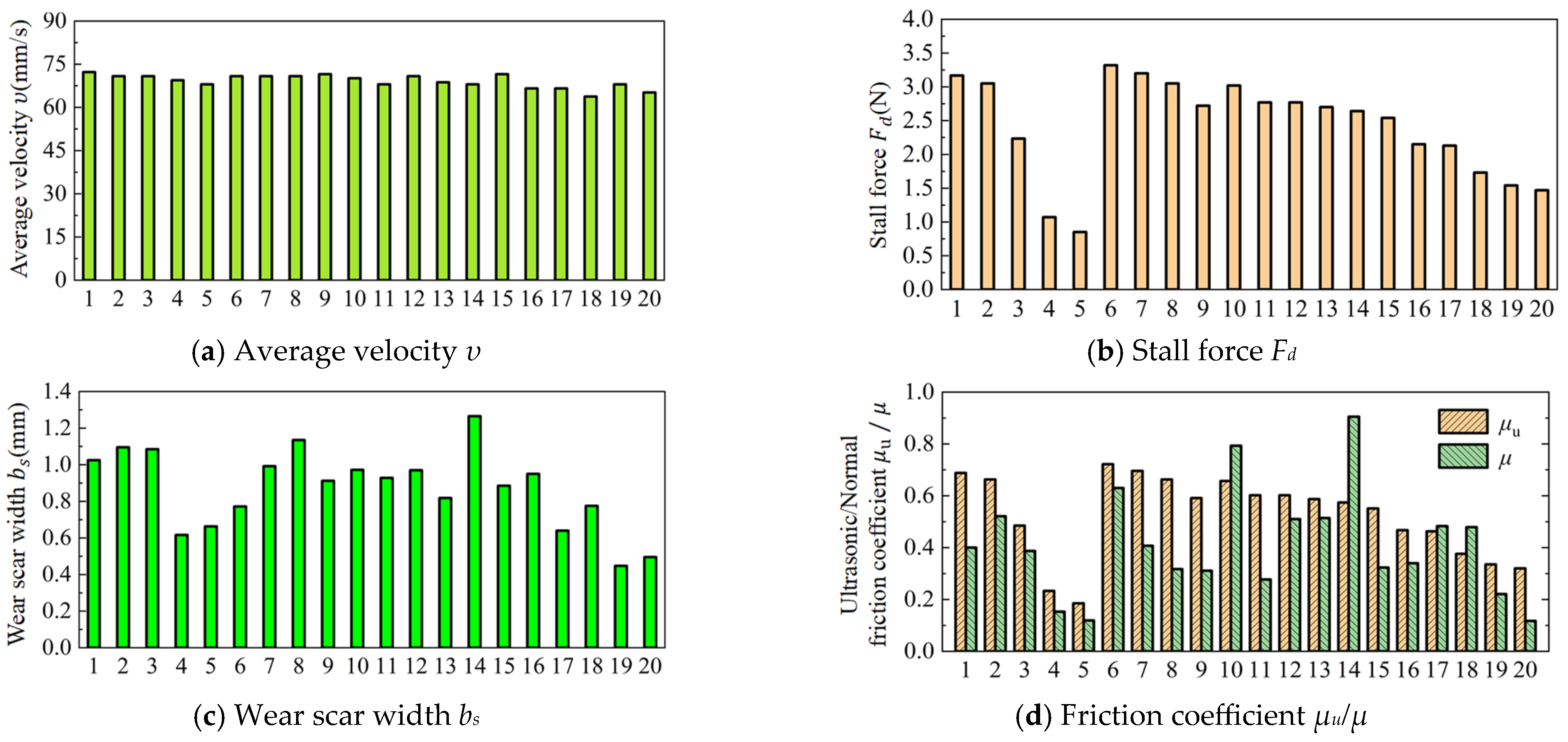
The comparative experimental results are shown in Figure 5. Excluding the wear scar width bs, combinations of high-hardness ceramics or metals paired with HAO coatings deliver a larger stall force Fd. From the perspective of comprehensive wear resistance, the optimal friction coefficient μ ranges from 0.2 to 0.3. Lower μ will cause insufficient Fd, and higher μ deteriorates the wear resistance of friction pairs, accompanied by an increase in bs.
It can be concluded from the above experimental results that the three rotor friction materials with high stall force Fd (hard coating, bulk ceramic, and non-ferrous metal) induce severe wear bs on the stator oxide film, resulting in poor wear resistance for Groups 1–16. To simultaneously improve the driving performance of linear ultrasonic motors and the wear resistance of friction pairs, further investigations are required on the friction pairs composed of hard anodized aluminum alloy and EP films with varied compositions, corresponding to Groups 17–20.

4. Modification Test of Modified EP Film

4.1. Effects of Self-Lubricating Fillers

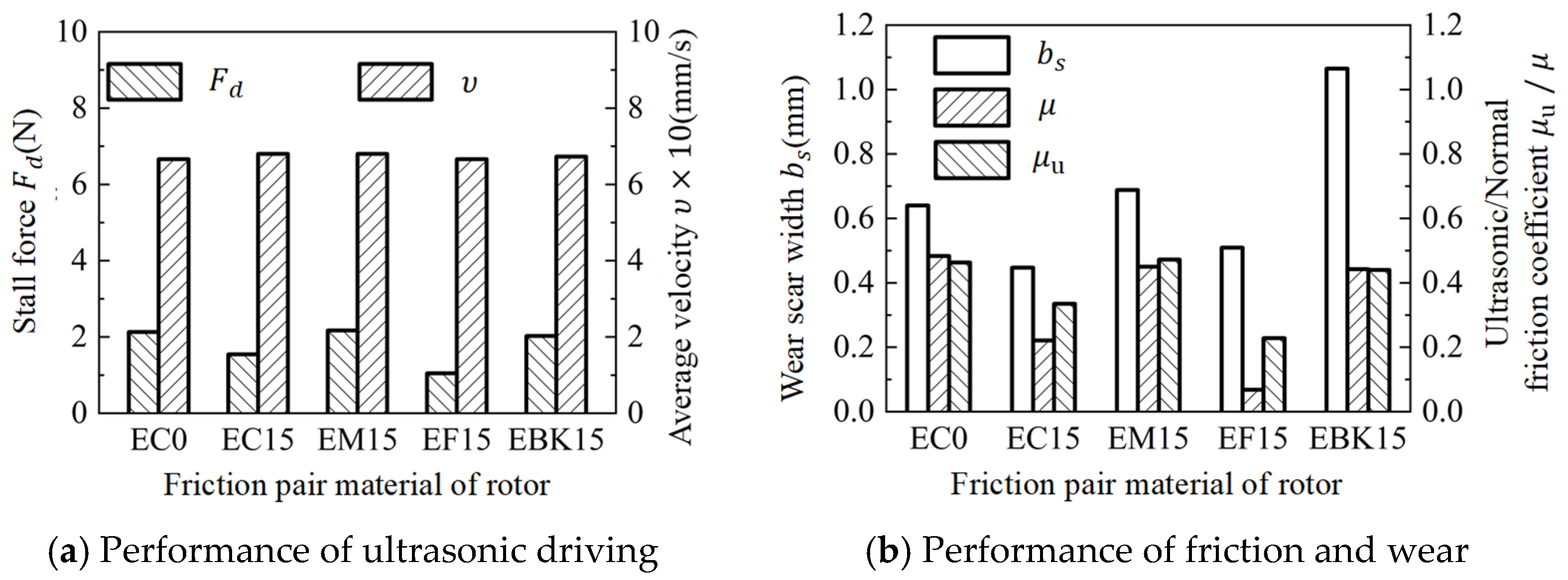
Four kinds of powder, graphite, molybdenum disulfide, PTFE, and potassium borate, are selected as fillers for EP films. Modified epoxy films are prepared with the filler dosage fixed at 15 wt% of epoxy resin, designated as EC15, EM15, EF15, and EBK15, respectively, and all powders are controlled at a micron particle size. After the epoxy adhesive is thoroughly blended with different additives, the mixture is coated onto the surface of stainless-steel lower specimens to form EP films. Screening experiments are carried out under identical other conditions, and the test results are presented in Figure 6.
The results reveal that incorporating the four types of solid lubricants into EP films leads to a slight rise in stall force Fd, while the average velocity υ barely changes. Among all combinations, the pairing of 6061HAO film and EC15 yields the minimum wear scar width bs of the HAO film, with a lowest value of only 0.447 mm and scarce wear debris along the scar edges; meanwhile, Fd reaches 1.542 N, ranking at a relatively high level among the four filler-modified specimens. Further experimental data indicate that μ exceeds 0.2 of the matching pair with 6061 anodic oxide film, satisfying the material selection criteria. It is demonstrated that graphite powder filled into EP films effectively improves the wear resistance of friction pairs, yet the ultrasonic driving force is marginally insufficient, which requires further optimization research.

4.2. EP-Film Friction Pairs by Graphite Fillers

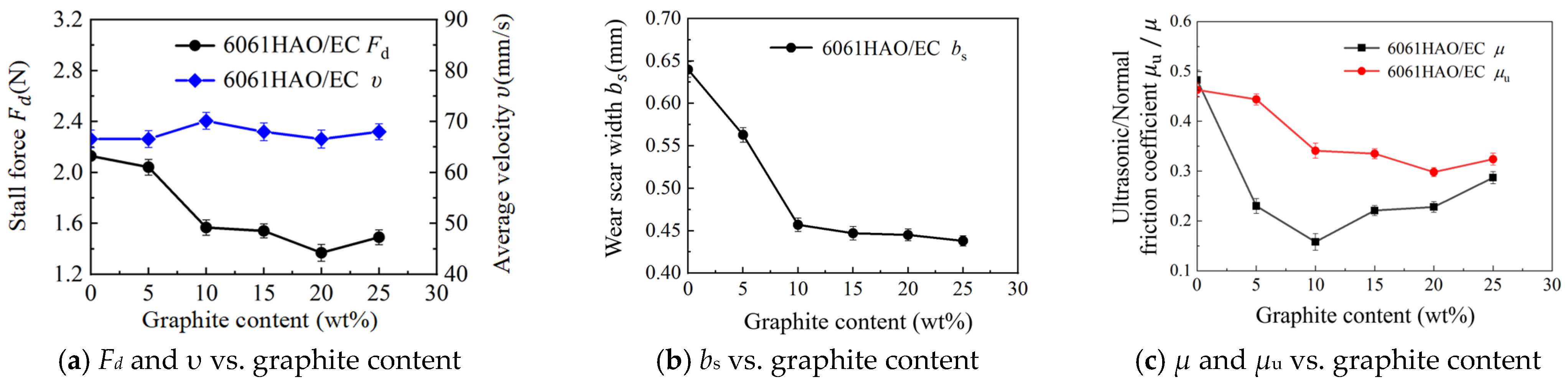
Five groups of graphite-modified EP friction specimens, denoted as ECX, were fabricated via identical preparation processes, where X stands for the mass fraction of graphite powder blended into the EP matrix. These specimens were paired with 6061HAO films to assemble friction pairs, and the experimental results are displayed in Figure 7.
Figure 7a reveals that Fd declines with rising graphite loading in EC films, yet the decreasing rate slows down once graphite content exceeds 10%. υ varies mildly against graphite fraction and reaches a prominent peak at approximately 10% graphite addition. Figure 7b reveals that the bs of upper HAO specimens decreases markedly with increased graphite dosage following a trend similar to stall force, with a reduced declining rate after the 10% threshold. Figure 7c reveals that μ falls first and then rises to present a minimum value at 10% graphite content, whereas the μu decreases progressively and its descending tendency becomes gentle above 10% loading.
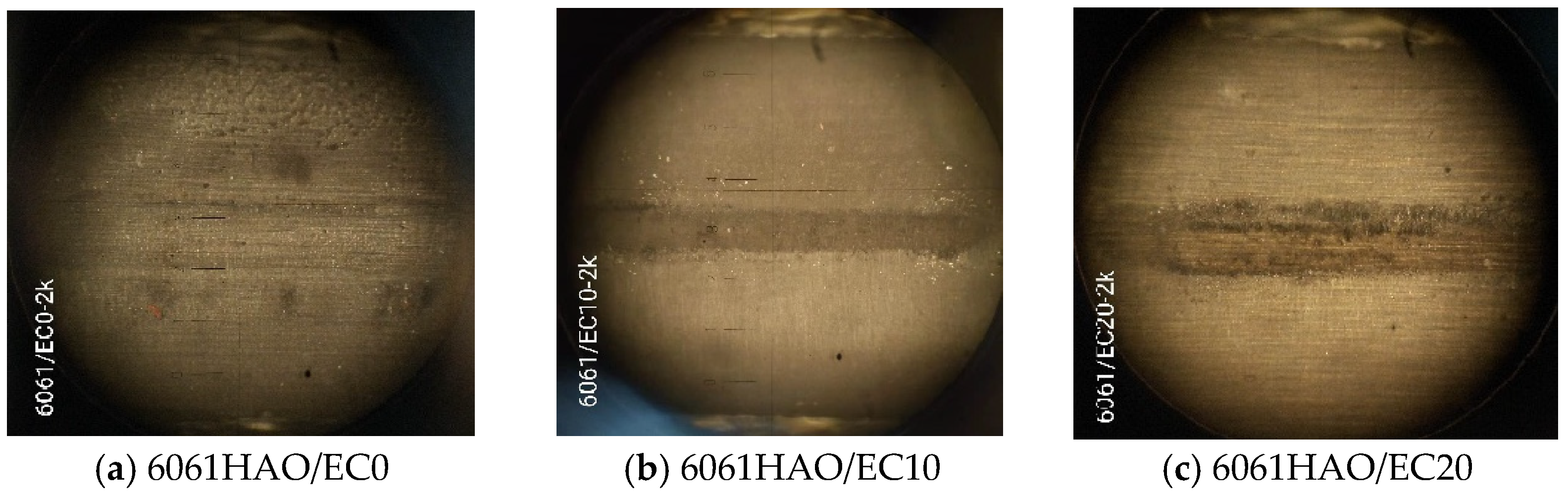
Wear morphology images of upper oxide films are shown in Figure 8. It reveals that wear tracks on HAO films shrink obviously as graphite filler content increases. The unfilled HAO counterpart suffers severe abrasion with abundant wear debris accumulated along scar edges. Incorporation of 5% graphite leads to a remarkable reduction in wear scar width, and further graphite addition beyond 10% generates a negligible difference.
It can be concluded from the above results that it is difficult to simultaneously optimize both the ultrasonic driving performance and the wear resistance of friction pairs. Therefore, the graphite content should be determined to achieve favorable wear resistance on the premise of guaranteeing acceptable driving performance. From the perspective of ultrasonic driving performance and manufacturing process, stall force declines and the epoxy slurry becomes excessively viscous for uniform coating once graphite loading exceeds 25 wt%. Accordingly, incorporating graphite at 10 wt% into the epoxy matrix is the optimal formulation. Such an EP composite film possesses superior self-lubricating capacity and effectively alleviates the wear of hard anodic oxidation films, yet it sacrifices ultrasonic driving output to a certain extent, which requires further improvement in follow-up research.

4.3. EP-Film Friction Pairs by Al2O3 Fillers

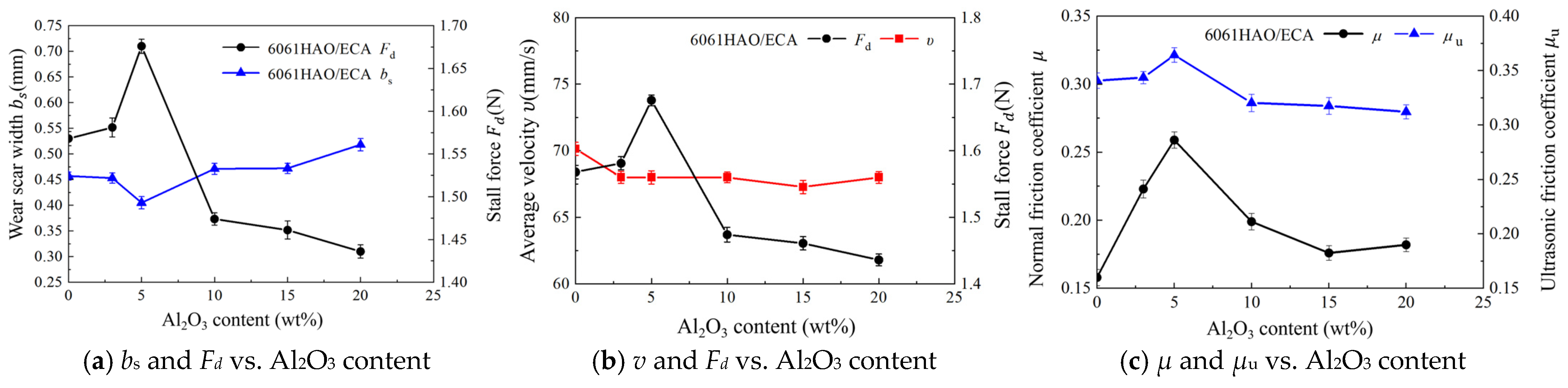
Existing studies have demonstrated that Al2O3 ceramic friction pairs can deliver high friction force. Table 2 illustrates that the incorporation of Al2O3 powder with varied mass fractions into EC films imposes a noticeable effect on the hardness of graphite-filled epoxy matrix. The wear test results are presented in Figure 9.
Figure 9a reveals that the bs of the HAO film first decreases with rising Al2O3 content and reaches its minimum at 5 wt% Al2O3 with a reduction of approximately 3%, followed by a slow increase. It indicates that the addition of Al2O3 barely contributes to the wear reduction in the anodic oxide film. In contrast, Fd rises initially and then declines as Al2O3 increases, peaking at 5 wt% with an increment of around 8% relative to EC10, which demonstrates that Al2O3 can improve the ultrasonic driving force.
Figure 9b reveals that υ drops after Al2O3 is incorporated into EC10, yet it remains nearly constant upon further filler addition. The optimal improvement in stall force is achieved at the filler content of 5 wt%.
Figure 9c reveals that Al2O3 markedly elevates μ of EC10 and exerts a moderate effect on μu. At 5 wt% Al2O3, the μ is enhanced by about 64%, while the ultrasonic-driven μu rises by roughly 8%. Both coefficients decline slightly with further Al2O3 addition, yet the μu remains higher than μ. Consequently, the improved stall force after Al2O3 filling is attributed to the increased μu of the friction pair.
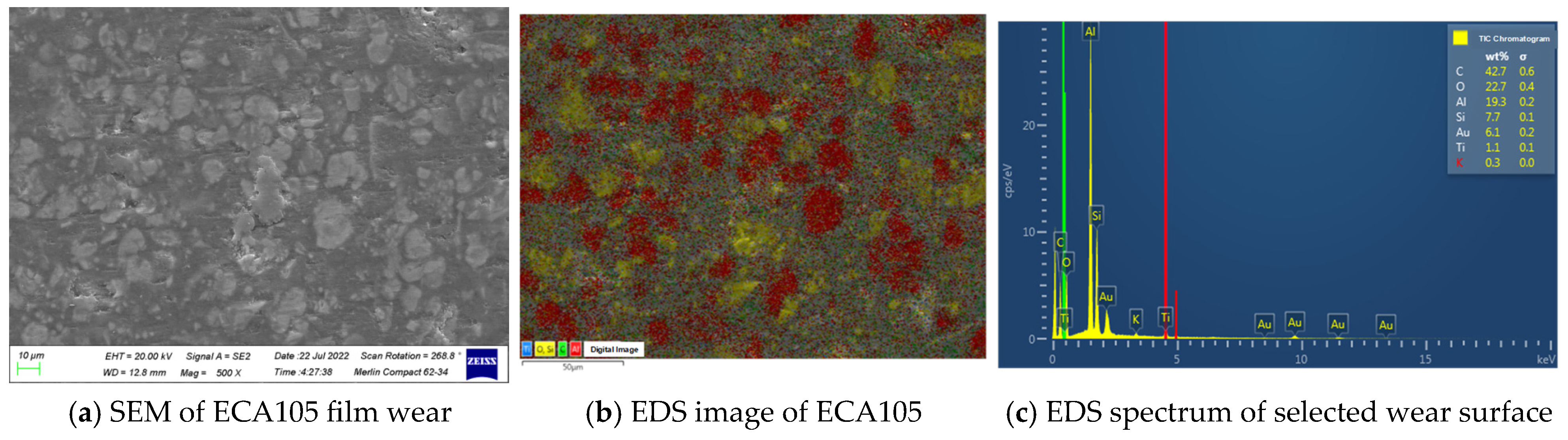
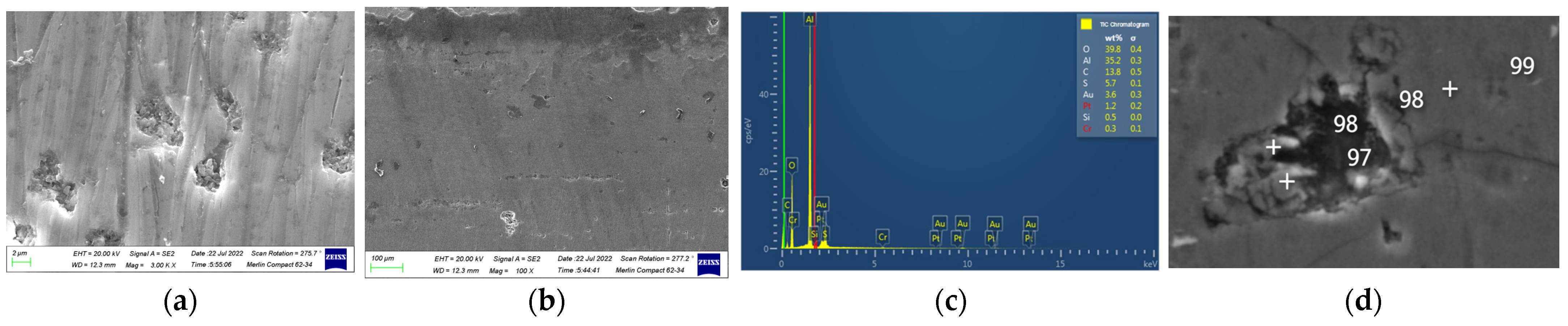
To further verify the above conclusion, scanning electron microscopy (SEM) characterization was carried out. Figure 10a presents the SEM morphology of the worn surface of the ECA105 film. The worn surface is smooth with scarce scratches and clearly distributed filler particles. According to the layered EDS mapping analysis shown in Figure 10b,c, abundant C, O, Al, and Si elements are detected on the contact surface, whereas Au originates from the gold-sprayed conductive coating for SEM testing. It can be deduced that Al2O3 particles and substantial graphite accumulate on the worn track of the ECA105 film. The high carbon content is derived partially from the epoxy resin matrix and partially from the incorporated graphite powder. During friction against the 6061 HAO counterpart, embedded Al2O3 particles in ECA105 preferentially bear the applied load and rub against Al2O3 within the anodic oxide film, which raises the friction coefficient and accordingly enhances the ultrasonic driving force. Meanwhile, lamellar graphite with intrinsic self-lubricating property encapsulates partial Al2O3 grains and effectively restrains severe abrasive and adhesive wear on contact interfaces. Consequently, fatigue wear becomes the dominant wear mechanism, leading to reduced material loss of the friction pair.

5. Analysis and Discussion

5.1. Anti-Wear Mechanism of Filler-Modified EP Films

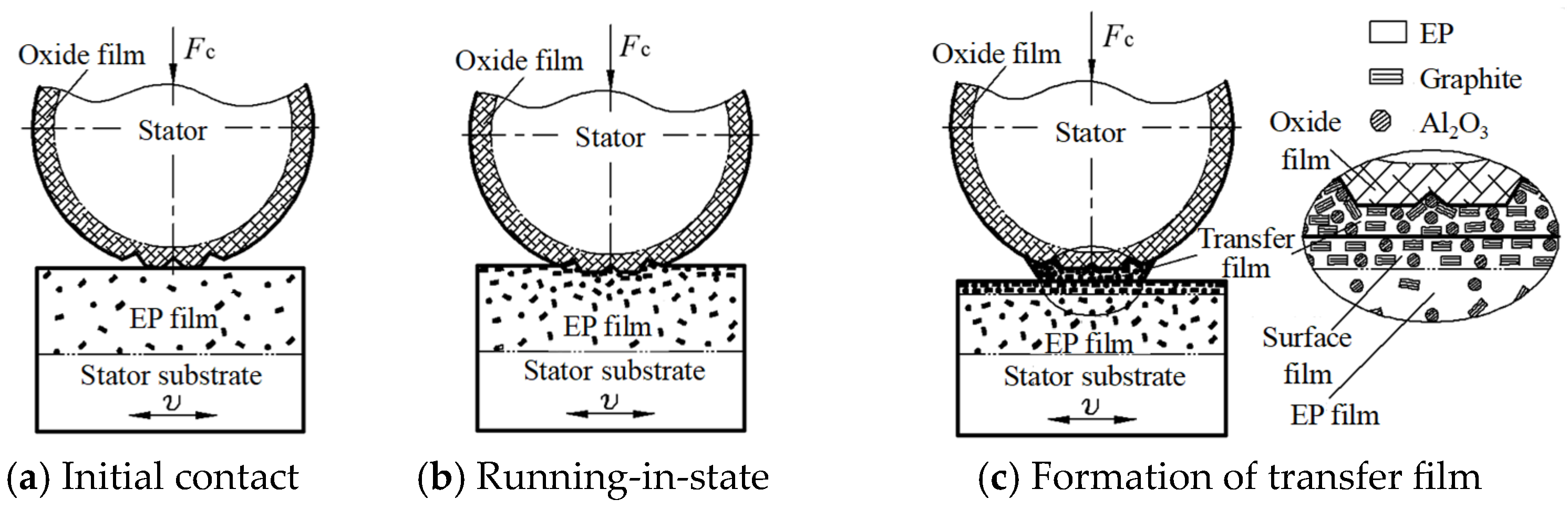
It can be concluded from the above analysis that the addition of appropriate content of graphite into epoxy films mitigates the wear of the mating pair composed of HAO film and EP film, yet slightly reduces Fd. To address this issue, 5 wt% Al2O3 was incorporated into EC10 film to prepare ECA105 composite film. When paired with 6061 HAO film, the friction pair achieved improved Fd and further reduced wear scar width on the upper anodic oxide specimen. The synergistic modification mechanism of EP films filled with graphite and Al2O3 is illustrated in Figure 11.
The friction and wear process between the stator and rotor can be divided into three stages. Figure 11a shows the initial contact stage. The contact surface of the stator is 6061HAO film, which is covered with pores with a diameter of approximately 5–10 μm. The conical pits represent these surface pores. Figure 11b presents the running-in-state stage. A small amount of wear occurs on the asperities of the stator HAO film. Graphite on the mover EP film gradually aligns along the sliding direction and partially penetrates into the pores of the hard anodic oxidation film. Meanwhile, part of Al2O3 fills the pores, and the rest protrudes from the EP film surface. Figure 11c depicts the steady wear stage. The pores on the stator hard anodic oxidation film are gradually filled with the composite of epoxy resin, graphite, and Al2O3, forming a thin transfer film on the stator surface. A concentrated layer of graphite and Al2O3 is also formed on the friction surface of the mover and distributed along the sliding direction. At this stage, friction takes place between the transfer film on the stator and the oriented composite layer on the mover EP film. This structure inhibits further wear of both the stator and EP film, and maintains a stable friction state.
To verify the above-mentioned wear model, supplementary SEM observations and EDS elemental analysis of surface pores were conducted, as shown in Figure 12.
Figure 12a displays the morphology of the non-friction region, where micro-pores formed during hard anodization can be clearly observed with a size of approximately 5–10 μm. Such a porous surface enables the embedding of micron-sized graphite and Al2O3 particles during friction with ECA105 film. As presented in Figure 12b, a continuous covering film forms on the wear scar of the anodic oxide film, which protects the substrate from further abrasion. EDS results in Figure 12c confirm that the worn surface contains abundant carbon, aluminum, and oxygen elements. The upper specimen contains no carbon in its intrinsic composition. The large amount of carbon detected by EDS on the wear scar verifies the interfacial material transfer from the slider. It should be noted that EDS cannot distinguish carbon originating from graphite, epoxy degradation products, or extrinsic surface carbon contamination. Combined with the material formula and variation laws of filler properties, it is confirmed that the transfer film is mainly composed of graphite mixed with a small quantity of epoxy degradation products, forming a stable composite film. Figure 12d shows the point-scanning elemental analysis inside the pores in another wear scar area.

5.2. Durability Test of Wear-Resistant Friction Pairs

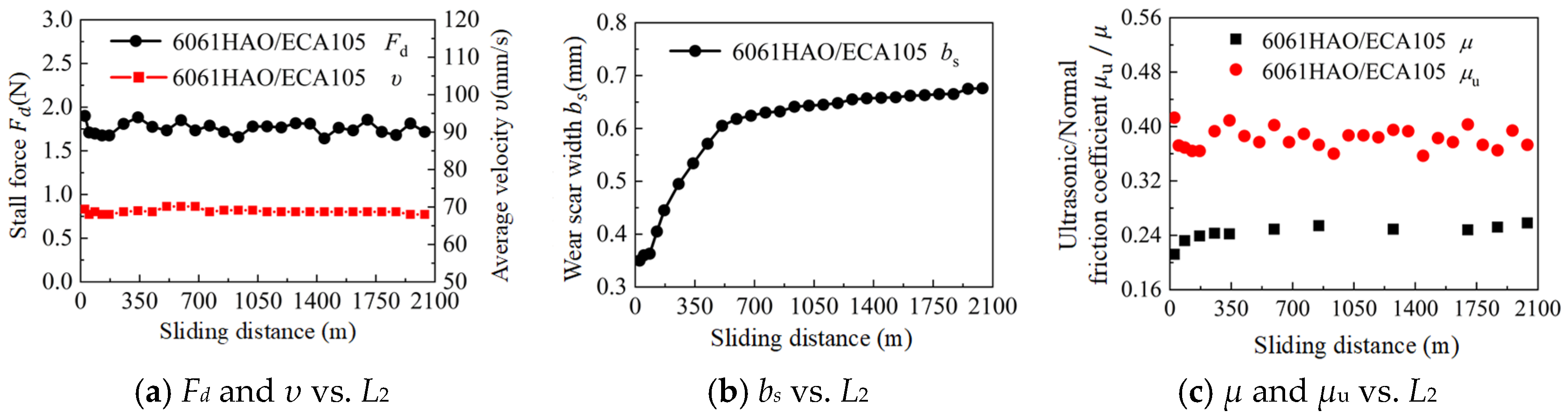
The wear-resistant friction pair consists of 6061HAO and ECA105 film. Its driving performance and wear life were investigated, and the results are shown in Figure 13.
Figure 13a indicates that υ remains stable during operation, ranging from 67.72 mm/s to 70.13 mm/s. The Fd also keeps steady, varying between 1.616 N and 1.89 N.
Figure 13b indicates that the friction pair undergoes a running-in stage followed by steady-state wear without severe abrasion. bs increases rapidly within the sliding distance of 0 to 500 m and then enters the steady wear stage. bs rises slowly with increasing sliding distance, reaching 0.676 mm at 2040 m. The calculated wear rate per unit load and sliding distance is 2.88 × 10⁻⁶ mm3/Nm. In terms of wear resistance, this friction pair meets the required service life.
Figure 13c indicates that μu fluctuates slightly and stays around 0.38. The μ also maintains a stable value of approximately 0.24. The results prove that the friction state remains reliable over the total sliding distance of 2000 m, and the pair satisfies the requirements for friction and driving performance.
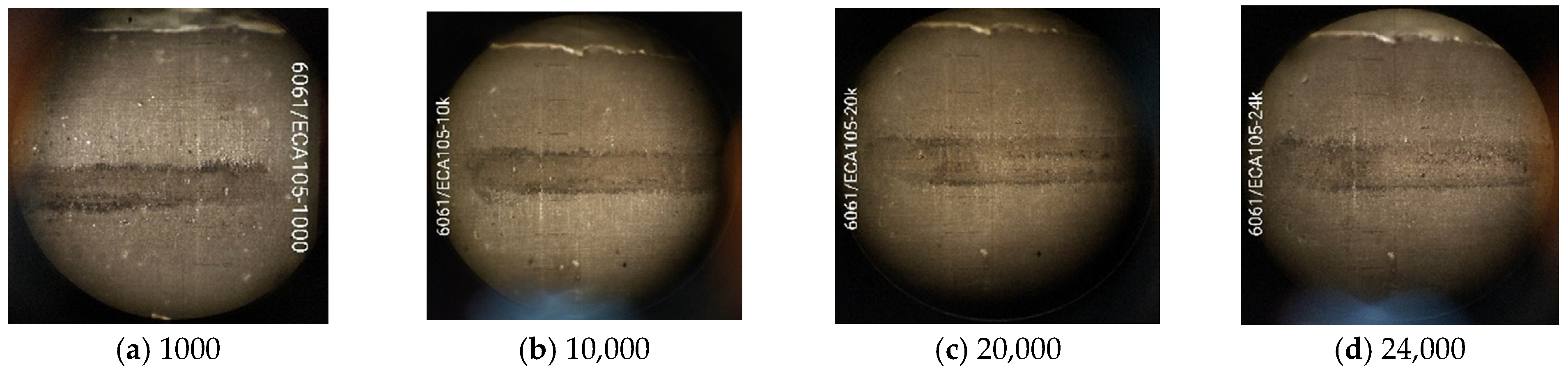
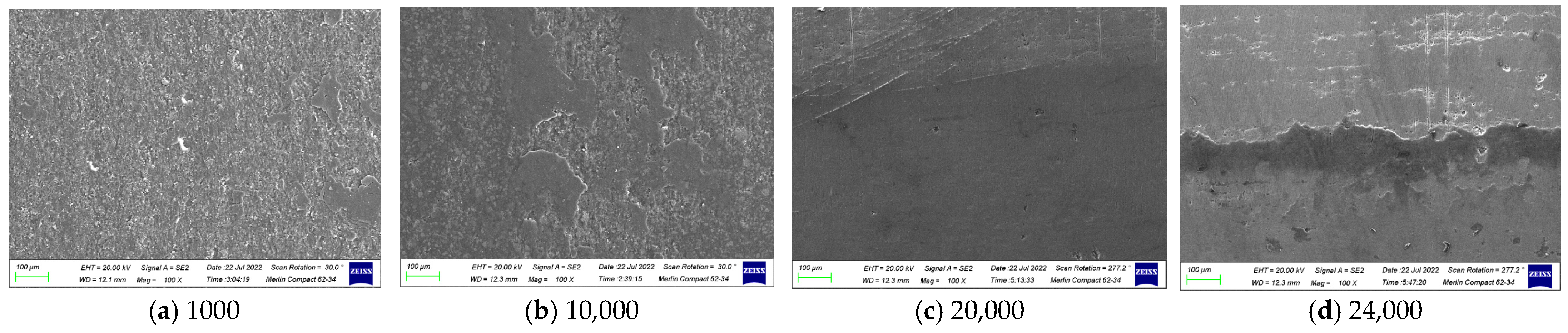
Figure 14 presents the wear scar micrographs of the upper specimen in the wear-resistant friction pair. The results show that after 24,000 cycles, the bs of the HAO film on the upper specimen changes slightly. The wear surface is smooth, and its color is close to that of the non-contact area. Meanwhile, only a small amount of wear debris accumulates on both sides of the wear scar.
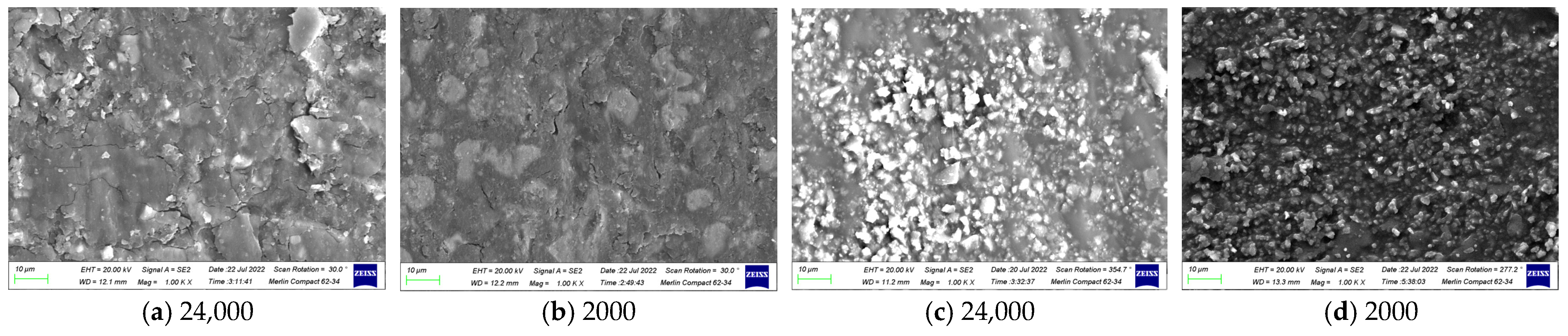
Figure 15 shows low-magnification SEM images of wear scars on the upper and lower specimens of the wear-resistant friction pair under different cycle numbers. As seen in Figure 15a,b, the wear morphology of the lower ECA105 film after 24,000 cycles is similar to that after 2000 cycles at low magnification. Both surfaces are smooth, with a discontinuous surface film formed, with no adhesion or plowing wear. Figure 15c,d reveal that the wear scar surfaces of the upper anodic oxide film remain smooth after both 2000 and 24,000 cycles. The pores generated during hard anodization are barely visible, and no plowing marks can be found. Combined with the analysis in Section 5.1, it can be concluded that the pores on the oxide film are covered by transferred substances from the ECA105 film, forming a transfer film within the wear region.
High-magnification SEM images were captured to further verify the formation of transfer films, as displayed in Figure 16. As shown in Figure 16a,b, microcracks perpendicular to the sliding direction can be observed on the ECA105 film surface after 2000 and 24,000 cycles under high magnification, which are typical characteristics of fatigue wear. On one hand, it indicates that friction occurs between the transfer film and the surface film of the ECA105 film. The anodic oxide film is well protected against abrasion, and only mild fatigue wear takes place on the ECA105 film with slight material loss overall. On the other hand, the wear mechanisms of the friction pair in the 2000-cycle accelerated screening test are highly consistent with those in the 24,000-cycle long-term life test, both dominated by fatigue wear. This demonstrates that the screening test with low cycle numbers does not alter the wear mechanism and can be equivalent to the long-cycle life test. The proposed accelerated equivalent screening method is effective for friction-pair material selection.
Figure 16c,d presents the morphology of wear debris generated by the friction pair consisting of hard anodic oxide film and ECA105 film under two different cycle numbers. The debris appears as tiny flaky particles with a size of several micrometers, and the size of agglomerated debris is less than 10 μm. This further confirms the similarity of wear mechanisms. EDS analysis reveals that the debris is mainly composed of C, O, and Al, indicating that it primarily originates from the worn ECA105 film, with a small portion derived from the upper anodic oxide specimen.

6. Conclusions

In this study, a design model for the friction pair of standing-wave linear ultrasonic motors is established, and a selection principle for the stator–rotor friction pair combination is proposed. Specifically, the stator material should possess higher hardness than the rotor, while the rotor material is required to have appropriate hardness and excellent self-lubricating performance. Such a matching design can effectively improve the tribological properties of the friction pair and satisfy the driving performance requirements of standing-wave linear ultrasonic motors.
An accelerated equivalent test method is further proposed for the rapid screening of friction pairs for standing-wave linear ultrasonic motors. Wear mechanism analysis verifies that the mover exhibits identical wear characteristics under both short-cycle accelerated tests and long-cycle life tests, dominated by fatigue wear. The results confirm the validity and feasibility of the proposed accelerated equivalent method, which provides a theoretical basis for the efficient selection and performance evaluation of ultrasonic motor friction pairs.
A high-performance wear-resistant friction pair consisting of a 6061 hard anodic oxidation (HAO) stator film and an Al2O3/graphite synergistically modified epoxy (ECA105) rotor film is successfully developed. The assembled ultrasonic motor achieves excellent comprehensive performance in terms of driving stability and wear resistance. After a sliding distance of 2040 m, the wear scar width of the stator specimen is only 0.676 mm, and the corresponding wear rate is calculated as 2.88 × 10⁻⁶ mm3/(N·m), which fully meets the structural and service-life design requirements for the motor.
The superior tribological performance of the optimized friction pair is attributed to the synergistic anti-wear effect of graphite and Al2O3 fillers in the ECA105 composite film. During the friction process, graphite components transfer from the rotor surface to the stator HAO film and form a uniform protective transfer film, while residual graphite on the rotor surface constructs a self-lubricating surface layer. Meanwhile, dispersed Al2O3 particles act as load-bearing skeletons to stabilize the ultrasonic driving force. The cooperative effect of self-lubricating graphite and load-supporting Al2O3 particles changes the dominant wear mode to mild fatigue wear, effectively inhibiting severe abrasive and adhesive wear and significantly improving the long-term service stability of the friction pair.

7. Future Work

In future research, we will further explore the tribological performance of the optimized 6061 hard anodic oxidation (HAO) film and ECA105 composite film friction pair under variable temperature and vacuum environments to expand its application scenarios. Moreover, we will optimize the component ratio of composite fillers and combine surface texture technology to further improve the load-bearing capacity and long-term service life of friction pairs. On the basis of the established accelerated equivalent test method, we also plan to build a life prediction model for ultrasonic motor friction pairs, so as to realize rapid performance evaluation of new friction materials for miniature linear ultrasonic motors. In addition, we will conduct systematic characterization on the cross-sectional microstructure of worn specimens and investigate the generation and evolution of subsurface damage, so as to acquire more comprehensive evidence to reveal the inherent wear mechanism of the friction pair.

Author Contributions

Conceptualization, H.Q.; methodology, H.Q.; validation, M.L.; data curation, M.L.; writing—original draft preparation, H.Q.; writing—review and editing, Z.W.; project administration, Z.W.; funding acquisition, H.Q. All authors have read and agreed to the published version of the manuscript.

Funding

The research was funded by the R&D Program of the Beijing Municipal Education Commission, grant number 2024Z004-KWY-T.

Data Availability Statement

The data presented in this study are available on request from the corresponding author.

Conflicts of Interest

The authors declare no conflicts of interest.

References

  1. Wang, G.; Yin, T.; Liu, Y.; Han, J.H.; Jung, Y.C.; Yang, T.; Kim, D.E.; Ma, C.; Zhao, G. Reduction of adhesive wear and improvement of long-term stability in ultrasonic motors via DLC coating. Tribol. Int. 2025, 211, 110838. [Google Scholar] [CrossRef]
  2. Qu, J.; Guo, W.; Wang, Y. Effects of Wear of Friction Material on Performance of Ultrasonic Motor. Proc. Inst. Mech. Eng. Part J J. Eng. Tribol. 2013, 227, 362–372. [Google Scholar]
  3. Song, F.; Yang, Z.; Zhao, G.; Wang, Q.; Zhang, X.; Wang, T. Tribological Performance of Filled PTFE-based Friction Material for Ultrasonic Motor under Different Temperature and Vacuum Degrees. J. Appl. Polym. Sci. 2017, 134, 45358. [Google Scholar]
  4. Zhu, Y.Y.; Qu, H.J.; Luo, M.; He, C.; Qu, J. Dry friction and wear properties of several hard coating combinations. Wear 2020, 456–457, 203352. [Google Scholar] [CrossRef]
  5. Zeng, S.; Li, J.; Zhou, N.; Zhang, J.; Yu, A.; He, H. Improving the wear resistance of PTFE-based friction material used in ultrasonic motors by laser surface texturing. Tribol. Int. 2019, 141, 105910. [Google Scholar] [CrossRef]
  6. Qu, J.J.; Zhang, Y.H.; Tian, X.; Li, J.B. Wear Behavior of Filled Polymers for Ultrasonic Motor in Vacuum Environments. Wear 2015, 322/323, 108–116. [Google Scholar] [CrossRef]
  7. Wu, J.; Mizuno, Y.; Tabaru, M. A 3D printed sandwich-type piezoelectric motor with a surface texture. Rev. Sci. Instrum. 2022, 93, 105003. [Google Scholar] [CrossRef]
  8. Cao, X.X.; Zhao, G.; Li, X.M. Design and Research of Polyimide Friction Materials for Ultrasonic Motors. J. Vib. Meas. Diagn. 2025, 45, 791–796. [Google Scholar]
  9. Zhao, Z.; Wang, Y.; Bales, C. Finite Element Modeling of Surface Traveling Wave Friction Driven for Rotary Ultrasonic Motor. arXiv 2024, arXiv:2409.10707. [Google Scholar]
  10. Hua, X.; Puoza, J.C.; Zhang, P. The influence of laser surface texture on the tribological properties of friction layer materials in ultrasound motors. Proc. Inst. Mech. Eng. Part J J. Eng. Tribol. 2022, 236, 1123–1132. [Google Scholar]
  11. Chen, H.; Ji, H.; Qiu, J. Improvement of energy conversion efficiency in traveling wave rotary ultrasonic motor by increasing friction coefficient. J. Intell. Mater. Syst. Struct. 2024, 35, 861–872. [Google Scholar] [CrossRef]
  12. Zhang, B.; Yuan, X.; Zeng, Y.; Lang, L.; Liang, H.; Zhang, Y. Dahl friction model for driving characteristics of V-shape linear ultrasonic motors. Micromachines 2022, 13, 1407. [Google Scholar] [CrossRef] [PubMed]
  13. Zumeris, J. Ceramic Motor. U.S. Patent US08/618503, 1 April 1997. [Google Scholar]
  14. Zhang, A.H.; Ding, Q.J.; Zhao, G. Study on Tribological Properties of Cr2O3-TiO2 Coating and Its Application in Ultrasonic Motor. China Ceram. 2016, 52, 58–61. [Google Scholar]
  15. Zhang, Y.H.; Fu, Y.H.; Hua, X.J.; Quan, L.; Qu, J.J. Wear Debris of Friction Materials for Linear Standing-Wave Ultrasonic Motors: Theory and Experiments. Wear 2020, 448–449, 203216. [Google Scholar]
  16. Peng, Q.; Zhou, J.; Zhou, Y.; Fu, H.; Liang, H.; Ji, J.; Yang, Z.; Zhang, Y. Mechanical Characteristics Regulation of V-Shaped Standing-Wave Ultrasonic Motors with Minimal Quantity Lubrication. Tribol. Trans. 2023, 66, 223–237. [Google Scholar]
  17. Puoza, J.C.; Sakthivelsamy, R. Ultrasonic Motors Structural Design and Tribological Performance—A Review. Tribol. Online 2021, 16, 286–298. [Google Scholar]
  18. Zhang, Y.H.; Fu, Y.H.; Hua, X.J.; Quan, L.; Qu, J.J. Characteristics and Attenuation Mechanism of Linear Standing-Wave Piezoelectric Motors with Ceramics-Mated Friction Couples. Tribol. Int. 2021, 153, 106580. [Google Scholar]
  19. Zhang, Y.H.; Jin, X.D.; Yuan, X.H.; Zhou, Y.; Zhou, Y.; Han, L.; Li, J.; Ni, Z.; Wang, X. Measurement and Evaluation on Mechanical Performances of Standing-Wave Piezoelectric Motor of V-shaped Sandwich-Type Transducer Having Arc Tip. Measurement 2022, 190, 110766. [Google Scholar]
  20. Zhang, Y.H.; Qu, J.J.; Wang, H. Wear Characteristics of Metallic Counterparts under Elliptical-Locus Ultrasonic Vibration. Appl. Sci. 2016, 6, 289. [Google Scholar] [CrossRef]
  21. Zhang, Y.H.; Qu, J.J.; Li, J.B. Friction and Wear Behavior of Linear Standing-Wave Ultrasonic Motors with V-shape Transducers. Tribol. Int. 2016, 95, 95–108. [Google Scholar]
  22. Ishii, T.; Matsuo, E.; Nakamura, K.; Ueha, S.; Ohnishi, K. Characteristics of Ultrasonic Motors Driven in a Vacuum. Jpn. J. Appl. Phys. Part 1 1998, 37, 2956–2959. [Google Scholar] [CrossRef]
  23. Ishii, T.; Nakamura, K.; Ueha, S.; Ohnishi, K. A Wear Evaluation Chart of Friction Materials Used for Ultrasonic Motor. In Proceedings of the IEEE Ultrasonics Symposium, Sendai, Japan, 5–8 October 1998; pp. 699–702. [Google Scholar]
  24. Zhou, L.F.; Yao, Z.Y.; Dai, S.C.; He, Y.; Xu, H. Modeling and Verification of Life Prediction of a V-shaped Linear Ultrasonic Motor. Rev. Sci. Instrum. 2021, 92, 045003. [Google Scholar] [CrossRef] [PubMed]
  25. Zhou, L.F.; Yao, Z.Y.; Dai, S.C.; He, Y.; Li, X. Modeling and Validation of Preload Force Effect on Characteristics of a V-shaped Linear Ultrasonic Motor. J. Intell. Mater. Syst. Struct. 2022, 33, 863–872. [Google Scholar]
  26. Yang, L.; Wang, F.; Zhang, J.; Ren, W. Remaining Useful Life Prediction of Ultrasonic Motor Based on Elman Neural Network with Improved Particle Swarm Optimization. Measurement 2019, 143, 27–38. [Google Scholar] [CrossRef]
  27. Li, J.B.; Liu, S.; Qu, J.J.; Cui, Y.; Liu, Y. A Contact Model of Traveling-Wave Ultrasonic Motors Considering Preload and Load Torque Effects. Int. J. Appl. Electromagn. Mech. 2018, 56, 151–164. [Google Scholar] [CrossRef]
  28. Li, J.B.; Qu, J.J.; Zhang, Y.H.; Wang, J.X. Mechanical and Electrical Characteristics of Traveling Wave Ultrasonic Motors During the Whole Life of Friction Material. Proc. Inst. Mech. Eng. Part J J. Eng. Tribol. 2016, 230, 907–918. [Google Scholar]
  29. Yamaguchi, T.; Adachi, K.; Ishimine, Y.; Kato, K. Wear Mode Control of Drive Tip of Ultrasonic Motor for Precision Positioning. Wear 2004, 256, 145–152. [Google Scholar] [CrossRef]
  30. Rehbein, P.; Wallaschek, J.; Lhe, D. A Test Method to Investigate the Tribological Behaviour of Friction Materials under Ultrasonic Fretting Conditions. Tribotest 1999, 6, 3–16. [Google Scholar] [CrossRef]
  31. Rehbein, P.; Wallaschek, J. Friction and Wear Behaviour of Polymer/Steel and Alumina/Alumina under High-Frequency Fretting Conditions. Wear 1998, 216, 97–105. [Google Scholar]
  32. Padgurskas, J.; Zunda, A.; Andriusis, A.; Metrikaite, D.; Jankauskas, V.; Rukuiza, R.; Bansevicius, R. The Effect of Fluorine Oligomer Coatings on the Tribocontacts of a Piezoelectric Actuator. J. Frict. Wear 2014, 35, 1–6. [Google Scholar] [CrossRef]
  33. Zhang, J.; Yao, Z.Y. Friction and Wear Test Device of Linear Ultrasonic Motor and Experimental Studies. In Proceedings of the 2010 Symposium on Piezoelectricity, Acoustic Waves and Device Applications; IEEE: Piscataway, NJ, USA, 2010; pp. 72–77. [Google Scholar]
  34. Qu, Y.Y.; Zhang, Y.H.; Qu, J.J. Micro-Driving Behavior of Carbon-Fiber-Reinforced Epoxy Resin for Standing-Wave Ultrasonic Motor. Polym. Compos. 2016, 37, 2152–2159. [Google Scholar]
  35. Yan, C.; Ding, Q.J.; Xu, J.P.; Wang, H.X. Research on Durability Performance of Novel Double Solution Grouting Material with Metakaolin. Adv. Mater. Res. 2011, 250–253, 722–727. [Google Scholar]
  36. Sinha, S.K.; Thia, S.L.; Lim, L.C. A New Tribometer for Friction Drives. Wear 2007, 262, 55–63. [Google Scholar] [CrossRef]
  37. Cheung, C.K.; Shi, B.; Lau, C.S.; Shum, P.W.; Zhou, Z.F.; Li, K.Y. Investigating the Effect of Surface Coatings on the Wear Behaviour of the Friction Contact in Ultrasonic Motors. Proc. Inst. Mech. Eng. Part J J. Eng. Tribol. 2010, 224, 989–996. [Google Scholar] [CrossRef]
  38. Qu, H.; Liu, C.Y.; Zhang, L.; Qu, J.; Song, B. A Longitudinal-Bending Hybrid Linear Ultrasonic Motor and Its Driving Characteristic. Shock. Vib. 2022, 2022, 5701014. [Google Scholar] [CrossRef]
Figure 1. Longitudinal-bending composite tuning-fork ultrasonic motor (TF motor) [38].
Lubricants 14 00251 g001
Figure 2. Schematic diagram of two kinds of Langevin vibrator.
Lubricants 14 00251 g002
Figure 3. Vibration energy under different vibration orders and vibrator lengths.
Lubricants 14 00251 g003
Figure 4. Experimental principle, apparatus, and friction pairs structure.
Lubricants 14 00251 g004
Figure 5. Wear results of 20 groups of friction pair materials.
Lubricants 14 00251 g005
Figure 6. Modification effect of self-lubricating filler on EP film.
Lubricants 14 00251 g006
Figure 7. Influence of graphite content on friction properties.
Lubricants 14 00251 g007
Figure 8. Wear status of 6061HAO film and C-modified epoxy resin film.
Lubricants 14 00251 g008
Figure 9. Influence of Al2O3 content on friction properties.
Lubricants 14 00251 g009
Figure 10. SEM and EDS spectrum of Al2O3-modified EP film slider material.
Lubricants 14 00251 g010
Figure 11. Wear model of the stator and slider.
Lubricants 14 00251 g011
Figure 12. SEM and EDS analysis spectrum of the wear area and hole of the oxide film on the upper sample. (a) SEM of non-friction HAO surface, (b) SEM of HAO surface under friction, (c) EDS spectrum of selected wear surface on upper sample, and (d) location selection of oxide film wear scar.
Lubricants 14 00251 g012
Figure 13. Driving performance and wear life test of 6061HAO and ECA105 friction pairs.
Lubricants 14 00251 g013
Figure 14. Photos of wear scars of upper samples of the wearproof friction pair.
Lubricants 14 00251 g014
Figure 15. Low-magnification SEM images of wear scars.
Lubricants 14 00251 g015
Figure 16. High-magnification SEM and debris morphology under different cycles.
Lubricants 14 00251 g016
Table 1. The number of friction pairs between the HAO film and 20 kinds of slider materials.
NumberFriction PairsMaterial Types
12A12HAO–6061HAOHard anodic oxidation
vs.
Hard-coated or non-ferrous metals
26061HAO–CrN
36061HAO–TiN
46061HAO–DLC
52A12HAO–DLC
66061HAO–ZrO2Hard anodic oxidation
vs.
Ceramics
72A12HAO–ZrO2
82A12HAO–Al2O3
96061HAO–Al2O3
106061HAO–TAg0.1Hard anodic oxidation
vs.
epoxy resin coatings
116061HAO–C1990
126061HAO–C5191
136061HAO–925Ag
146061HAO–Sn&Ag&Cu
156061HAO–T663
166061HAO–99Ag
176061HAO–EC0Hard anodic oxidation
vs.
EP and modified films
182A12HAO–EC0
196061HAO–EC15
202A12HAO–EC15
Table 2. Composition and hardness of ECA film.
Friction PairsGraphite Fillers (wt%)Al2O3 Fillers (wt%)Hardness (HD)
EC1010084.2
ECA10310384.3
ECA10510585.1
ECA1010101084.9
ECA1015101584.8
ECA1020102083.8
Disclaimer/Publisher’s Note: The statements, opinions and data contained in all publications are solely those of the individual author(s) and contributor(s) and not of MDPI and/or the editor(s). MDPI and/or the editor(s) disclaim responsibility for any injury to people or property resulting from any ideas, methods, instructions or products referred to in the content.