Article

Lubrication Mechanisms of Core–Shell Ag@Cu Microparticles as Lubricant Additives in EHC-50 Base Oil


1
School of Materials Science and Engineering, Lanzhou Jiaotong University, Lanzhou 730070, China
2
School of Civil Engineering, Northwest Minzu University, Lanzhou 730030, China
3
Shandong Laboratory of Yantai Advanced Materials and Green Manufacturing, Yantai 264006, China
4
State Key Laboratory of Solid Lubrication, Lanzhou Institute of Chemical Physics, Chinese Academy of Sciences, Lanzhou 730000, China
5
Automotive and Tractors Engineering Department, Faculty of Engineering, Minia University, El-Minia 61519, Egypt
*
Authors to whom correspondence should be addressed.
Lubricants 2026, 14(5), 189; https://doi.org/10.3390/lubricants14050189
Submission received: 31 March 2026 / Revised: 22 April 2026 / Accepted: 27 April 2026 / Published: 28 April 2026
(This article belongs to the Special Issue Lubrication Challenges in Electric Vehicle Transmissions)

Abstract

Lubricant additives play a crucial role in improving the tribological performance of lubricating oils to reduce frictional energy losses and improve the durability and reliability of mechanical systems. In this study, soft metallic-based core–shell Ag@Cu microparticles were synthesized via an in-situ galvanic displacement method and incorporated into EHC-50 base oil with various concentrations. The tribological performance evaluations indicated that 0.3 wt% Ag@Cu significantly enhanced friction-reducing and anti-wear properties, achieving a stable friction coefficient of 0.12, a 45% reduction, and a wear volume reduction of 75% compared to the pristine oil. Additionally, the surface characterization techniques (SEM/EDS, XPS, XRD, and TOF-SIMS) were employed to explore the wear patterns and related lubrication mechanisms. The results indicated that the synergistic interaction between the micro-bearing effect, physical mending, and tribochemical reactions facilitated the formation of a robust tribofilm composed of metallic Ag, ternary CuFe3O2, and sulfides, which achieved higher lubrication performance. Ultimately, this research provides novel metallic micro-additives, offering a facile approach to formulating wear-resistant lubricants with significant potential for saving energy for mechanical tribosystems in industrial applications.

1. Introduction

The rapid evolution of modern mechanical systems has significantly intensified the operational requirements for moving components, where friction and wear remain the primary causes of energy dissipation and premature failure. It is estimated that approximately 23% of global primary energy consumption originates from tribological contacts [1,2,3]. In various industrial machines, the higher performance requirements of tribosystems often lead to traditional base oils failing to maintain a stable lubricating film, which results in severe boundary friction and component degradation [4,5]. To mitigate frictional losses, high-performance additives are required. However, traditional sulfur- and phosphorus-rich agents like zinc dialkyl dithiophosphate (ZDDP) face increasing scrutiny due to their environmental toxicity and catalyst poisoning effects in vehicles [6,7,8].
Nanotechnology has emerged as a transformative pathway for addressing these challenges through “green” and high-efficiency lubricant modifiers [9,10]. The nanoparticles and microparticles can easily penetrate the micro-gaps of friction surfaces to exert distinctive mechanisms, including the rolling ball-bearing effect, surface mending, and polishing effects [11,12]. Recent developments have highlighted the superiority of various nanomaterials, including metal oxides and hybrid structures, in diminishing the coefficient of friction (COF) and wear volume [13,14]. Soft metallic nanoparticles, such as copper (Cu) and silver (Ag), are especially interesting because they have low shear strength and high ductility [15,16,17]. Cu nanoparticles are highly valued for their exceptional self-repairing capabilities on worn steel surfaces [18]. However, their high surface activity leads to rapid oxidation into abrasive oxides, compromising long-term lubrication efficacy [19,20,21]. In this context, Ag nanoparticles possess superior chemical stability and superior thermal conductivity [18,22,23], but their high cost restricts large-scale engineering applications [24].
To leverage the strengths of both metals while mitigating their intrinsic drawbacks, core–shell architectures have been proposed as an ideal material design strategy [18,20]. Bimetallic Cu@Ag nanoparticles, consisting of a copper core and a silver shell, provide a robust solution by utilizing the silver layer as an electronic and physical barrier against core oxidation [18]. The synergistic interaction between the core and shell enhances structural stability under extreme shear stresses, achieving a “robust core/soft shell” configuration that balances load-carrying capacity and film-forming ability [25]. Recent theoretical simulations suggest that such heterostructures can better accommodate plastic strain and bolster the mechanical integrity of the resulting tribofilms [26,27,28]. Despite these promising attributes, several knowledge gaps hinder the optimization of Cu@Ag as oil additives. Specifically, the evolutionary transition and lubrication mechanisms of the core–shell architecture during the friction process and its dependence on shell thickness remain poorly understood. Furthermore, the most current investigations focus on monometallic additives or simple physical mixtures, leaving a critical gap regarding the precise bimetallic synergy in complex environments [29,30]. Regarding industrial applications, the dispersion stability of these nanoparticles in specific viscosity oils is essential for achieving ultra-low friction [7,31,32]. Hence, these tribological challenges require systematic exploration of structural–performance relationships to enhance machine efficiency and lifespan of tribosystems [33,34].
Considering the above research gaps, the novelty of this work lies in the ash-sulfur-free lubricant formulation. Herein, Cu@Ag core–shell microparticles with tunable dimensions were designed to explore their tribological properties for the AISI 52100 bearing steel. The lubrication performance of the Cu@Ag additive at different concentrations (from 0.1 to 1 wt%) was investigated using EHC-50 base stock as the reference oil to show the feasibility of this additive. The tribological properties were evaluated using an SRV-IV friction tester. After that, surface characterization techniques (SEM/EDS, XPS, XRD, and TOF-SIMS) were employed to reveal the wear modes and antiwear tribofilm mechanisms, providing new insights into the design of high-performance lubricant additives. This study innovatively employs a mild, room-temperature Ostwald ripening strategy to synthesize Cu@Ag with a bilayer architecture. The outer Ag shell provides oxidation resistance while synergizing with the inner Cu core to optimize load-bearing and film-forming properties, achieving superior tribological performance compared to metallic additives or physical mixtures. This work demonstrates the crucial role of protective barrier films in friction reduction and wear resistance.

2. Experimental Section

2.1. Materials and Chemical Reagents

Copper powder (Cu, purity ≥ 99.9%), silver nitrate (AgNO3, analytical reagent, AR), disodium ethylenediaminetetraacetate dihydrate (EDTA-Na2, AR), ammonia solution (NH3·H2O, 25 wt%), polyvinylpyrrolidone (PVP), polyethylene glycol-200 (PEG-200), absolute ethanol (C2H5OH, purity ≥ 99.5%), and dilute sulfuric acid (H2SO4, 10%) were commercially available and sourced from Sinopharm Chemical Reagent Co., Ltd. (Shanghai, China). Esterex™ EHC-50, a premium API Group II/II+ hydroprocessed base oil, was provided by ExxonMobil Corp (Shanghai, China). Furthermore, the deionized water (resistivity 18.2 MΩ·cm) was utilized for all aqueous solutions and washing procedures to prevent chloride-induced precipitation. All chemical reagents were used directly in their received condition without further purification.

2.2. Preparation of Ag@Cu Microparticle Additives

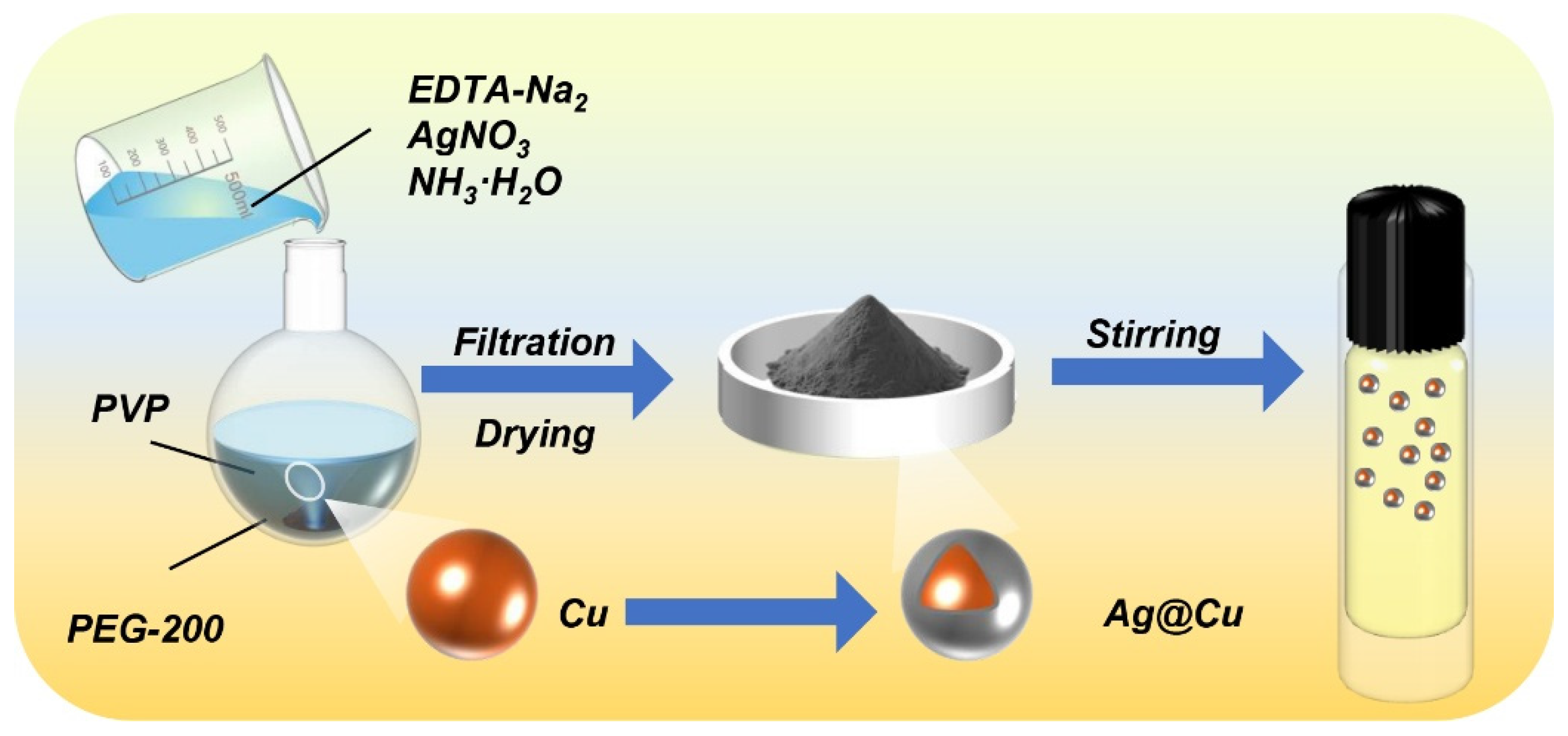
The Ag@Cu core–shell nanoparticles with a targeted 20 wt% Ag mass fraction were synthesized via a chemically controlled galvanic displacement method at room temperature. The detailed fabrication process is described as follows, based on the established methodologies [35,36]. The detailed fabrication procedure is illustrated in Figure 1. Initially, 50.0 g of high-purity Cu powder was immersed in a 10% dilute H2SO4 solution and mechanically stirred for 15 min to thoroughly remove the native oxide passivation layer. Notably, the copper powder requires two acid treatments for surface activation. The activated Cu powder was then vacuum-filtered and repeatedly washed with deionized water until the filtrate reached a neutral pH (~7.0). Simultaneously, a thermodynamically stable silver-plating precursor solution was prepared. Briefly, 40.0 g of EDTA-Na2 and 25.0 g of ammonia solution (25 wt%) were dissolved in 100.0 g of deionized water. Under continuous stirring, an aqueous solution containing 19.88 g of AgNO3 was slowly added dropwise into the buffer to form a dual-ligand [Ag(NH3)2]+ and Ag-EDTA complex solution. Subsequently, the freshly activated wet Cu powder was transferred into a reactor containing 700.0 g of deionized water, and 0.5 g of PVP, 10.0 g of PEG-200, and 10.0 g of ethanol were added. The mixture was vigorously stirred at 400 r/min to ensure homogeneous dispersion. The previously prepared silver-plating solution was then added dropwise into the base solution over a strictly controlled period of 20 min. After the addition was complete, the suspension was continuously stirred for an additional 30 min to allow for Ostwald ripening and the epitaxial growth of a dense Ag shell. To obtain a more uniform silver coating on microspheres, the procedure needs to be repeated. Finally, the resulting grey-silver slurry was vacuum-filtered, washed sequentially with hot deionized water and ethanol, and dried in a vacuum oven to a constant weight, yielding the final 20 wt% Ag@Cu bimetallic microparticles. Subsequently, Ag@Cu additives were dispersed in EHC-50 via ultrasonication to ensure high colloidal stability and prevent agglomeration according to the reference [37], and the dispersion quality directly dictates tribological efficacy.

2.3. Tribological Tests

To investigate the lubrication performance, the synthesized Ag@Cu microparticles with varying concentrations (0.1–1.0 wt%) were incorporated into the EHC-50 base stock. The tribological assessments were performed using an SRV-IV tribometer (Optimol Grease Company, Munich, Germany), employing a ball-on-disc contact configuration to simulate reciprocating sliding under boundary lubrication conditions. Both the upper ball and lower disc were fabricated from AISI 52100 bearing steel. The frictional parameters were standardized at a 100 N normal load, a frequency of 25 Hz, and a 1 mm displacement for a 30 min interval at room temperature. To ensure the reproducibility of the friction tests, each lubricant formulation underwent at least three trials under identical sliding conditions. The coefficient of friction (COF) behavior was monitored in real-time. After friction tests, the wear volume was accurately determined using a 3D non-contact optical surface profiler (Bruker NPFLEX, Bruker Corporation, Billerica, MA, USA) of the wear tracks. The mean COF was calculated and shown in the findings section, and the standard deviation was used as an error bar to show the experimental variability.

2.4. Worn Surface Analysis

The surface characterizations were conducted to clarify the wear resistance mechanisms of lubricated steel interfaces. Before microscopic inspection, the rubbing specimens were subjected to a two-step ultrasonic cleaning sequence with acetone and dried. This protocol was designed to eliminate oil residues or contaminants, ensuring that the detected signals originated solely from the worn surfaces. The morphology features and elemental maps of the wear scars were captured via scanning electron microscopy (SEM) and energy-dispersive X-ray spectroscopy (EDS). The crystalline phases formed on the worn surfaces were also confirmed through X-ray diffraction (XRD) analysis. To show the chemical nature of the tribofilm, X-ray photoelectron spectroscopy (XPS) was utilized to analyze the binding energy shifts in key elements such as C 1s, Fe 2p, and O 1s. Additionally, time-of-flight secondary ion mass spectrometry (TOF-SIMS) was employed to identify molecular-level fingerprints, including hydrocarbon clusters and metal–organic complexes, which provide evidence for the structural evolution of the protective tribofilm.

3. Results and Discussion

3.1. Characterization of Ag@Cu Additive

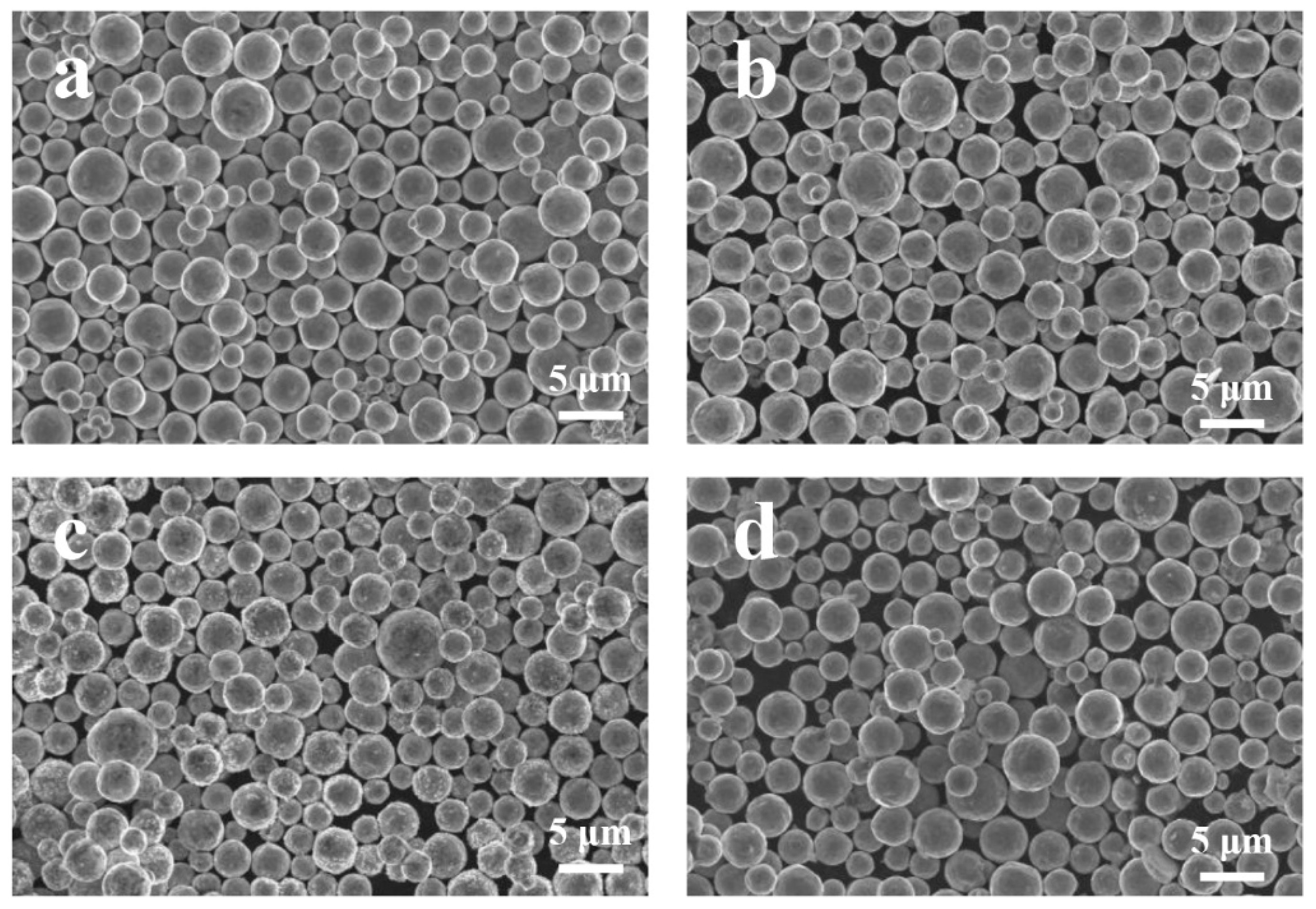
The morphological examination of the Ag@Cu additive was analyzed by SEM, as presented in Figure 2. As shown in Figure 2a,b, the pristine Cu particles subjected to single and double acid activation treatments maintain a generally spherical shape with relatively clean and smooth surfaces. The pre-treatment is critical for removing surface oxides and exposing fresh metallic copper, thereby providing high-activity nucleation sites for the subsequent silver coating. Upon the initial silver coating stage, the surface of the Cu microparticles exhibits numerous irregular protrusions and “bumps”, as shown in Figure 2c. This morphological change serves as direct evidence of the successful galvanic displacement reaction, where Ag ions in the solution were reduced and deposited onto the surface of the metallic Cu core. The reaction can be fundamentally described by the difference in electrochemical potential between the two metals. Following the second coating, the surface of the Ag@Cu microparticles becomes significantly smoother and more uniform compared to the once-coated version (Figure 2d), indicating that the metallic silver has completely encapsulated the copper core to form a robust, continuous, and high-purity silver shell.
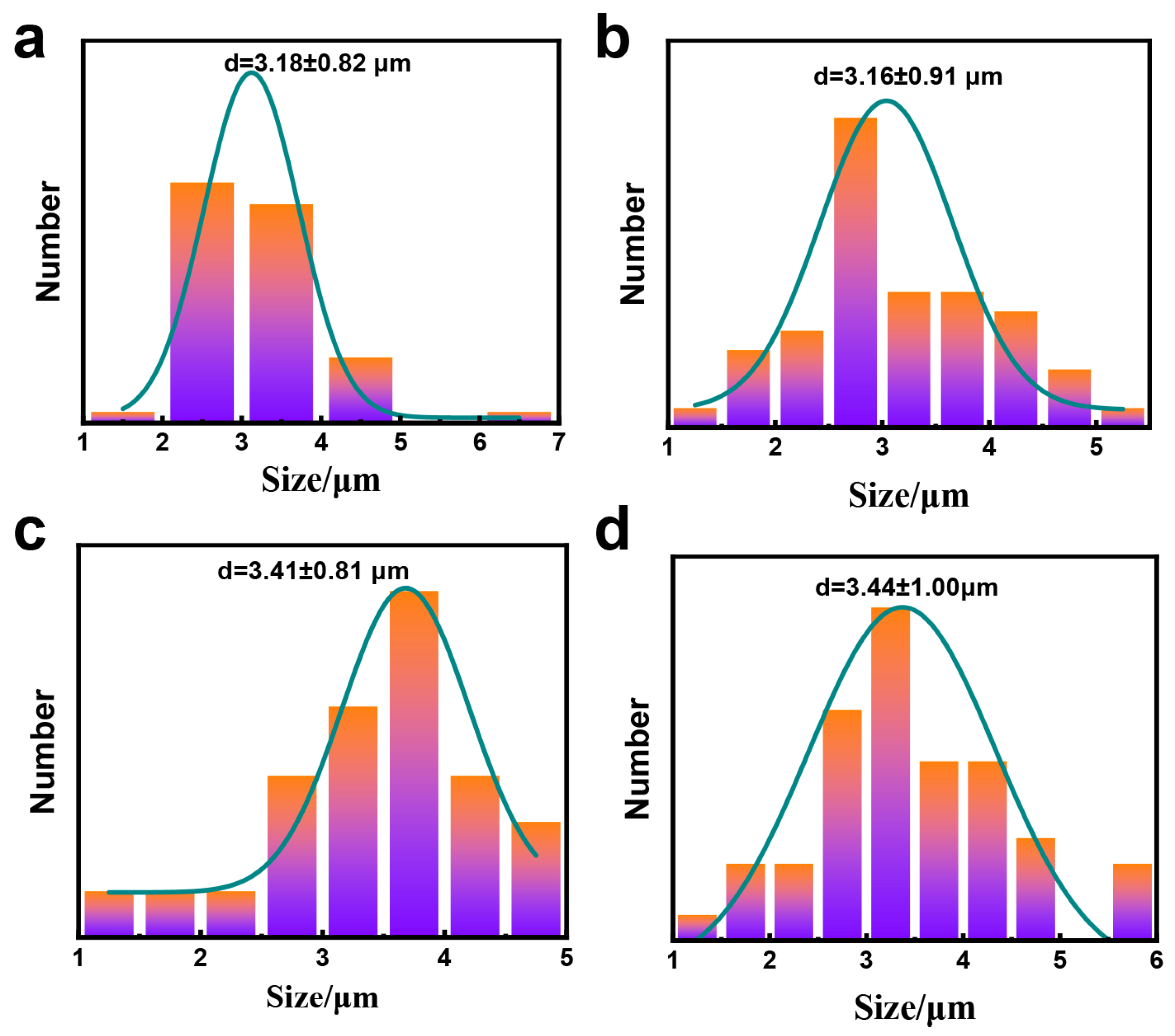
The particle size distribution histograms and the corresponding statistical mean diameters for each stage are provided in Figure 3. The mean diameters for all particles were found to be localized within a narrow range of 3.16 μm to 3.44 μm, as shown in Figure 3a–d. It is important to note that the apparent size discrepancy observed in the SEM images between the pristine and activated Cu particles is primarily attributed to sampling bias and the specific location of the microscopic observation, rather than a physical shrinkage of the particles. In fact, the dimensional stability, facilitated by the presence of PVP and PEG-200 as dispersants and stabilizers, is a critical factor for ensuring higher lubrication performance. The micrometer-scale dimensions (d ≈ 3.4 µm) ensure that these particles act as physical spacers or ‘micro-bearings’ between rubbing surfaces, rather than being fully entrained within the asperity surfaces, which is a mechanism fundamentally distinct from nanoparticle lubrication [26].

3.2. Tribological Performance and Morphology Analysis

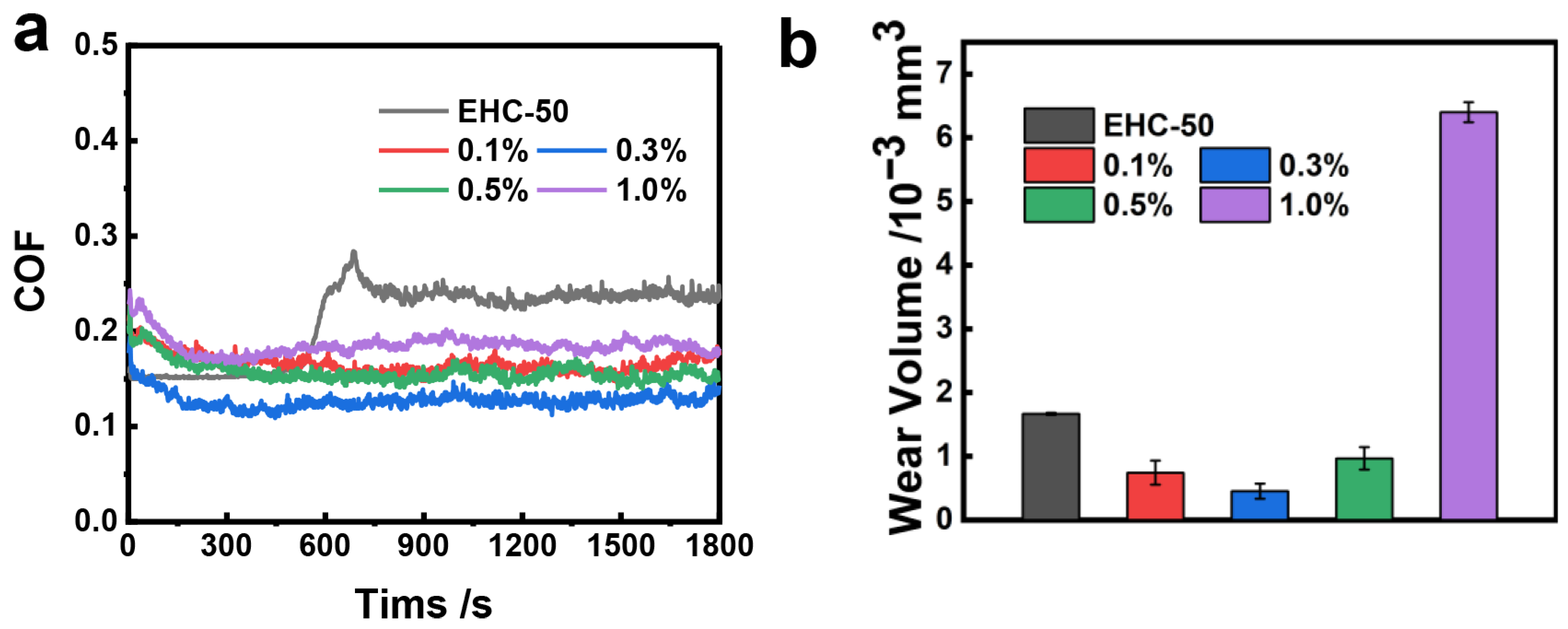
The friction behavior and antiwear properties of the Ag@Cu additive were illustrated in Figure 4. The COF curves indicated the base oil EHC-50 exhibits a distinct lubrication failure after approximately 600 s, where the COF abruptly spikes from 0.16 to over 0.28 before settling at a high steady-state value of ~0.24 in Figure 4a. This sudden increase signifies the rupture of the base oil’s boundary film, leading to direct metal-to-metal contact and severe asperity interlocking. In contrast, the incorporation of Ag@Cu microparticles significantly enhances the stability and durability of the lubrication system. All additive-containing formulations successfully reduced the COF, with the 0.3 wt% concentration possessing the highest performance, maintaining a stable and minimal COF of approximately 0.12 throughout the 1800 s duration of the friction process. Remarkably, the 1 wt% sample demonstrates a consistently lower COF compared to EHC-50, indicating higher lubrication performance (Figure 4a). This is likely due to the rolling effects and converts the sliding friction to rolling friction. However, Figure 4b shows that the wear volume of the 1 wt% sample is approximately three times higher than EHC-50. This behavior is attributed to competing mechanisms owing to the presence of detrimental abrasive wear and particle agglomeration at higher concentrations (1 wt%), which compromises wear resistance. Agglomerated particles act as abrasive agents, accelerating surface damage and material removal, as presented in the following section. Moreover, visual sedimentation observation (Figure S1) confirms that 0.3 wt% represents the optimal concentration where colloidal stability is maintained, avoiding both the insufficient coverage at lower concentrations and the agglomeration-induced abrasive wear at higher concentrations.
This reduction in COF was closely reflected in the wear resistance observed in Figure 4b. The wear volume of the EHC-50 base oil was recorded at 1.7 × 10⁻³ mm3. For 0.3 wt% Ag@Cu addition, the wear volume reached its lowest threshold at 0.4 × 10⁻³ mm3, representing a reduction of nearly 75% compared to the neat oil. Remarkably, a further increase in concentration to 1.0 wt% resulted in a paradoxical and drastic escalation of wear volume to 6.4 × 10⁻³ mm3. These results suggest that the moderate concentrations lower the friction and wear. While an excess of micrometer-sized metallic particles can lead to severe abrasive wear, these particles act as abrasive stimulators instead of providing a bearing effect between the rubbed interfaces. Additionally, the 0.3 wt% Ag@Cu formulation was evaluated at 75 °C and 100 °C (Figure S2). As shown in Figure S2a, the formulation stabilizes the COF at 0.18–0.20 and suppresses the 75 °C wear peak by ~77% (reducing wear volume from ~26 to 5.8 × 10⁻³ mm3). This efficacy confirms that Ag@Cu microparticles successfully mitigate the critical wear regime, where physical film rupture in the base oil is not yet compensated by tribochemical activation, by forming a robust, thermally stable tribofilm effective up to 100 °C.
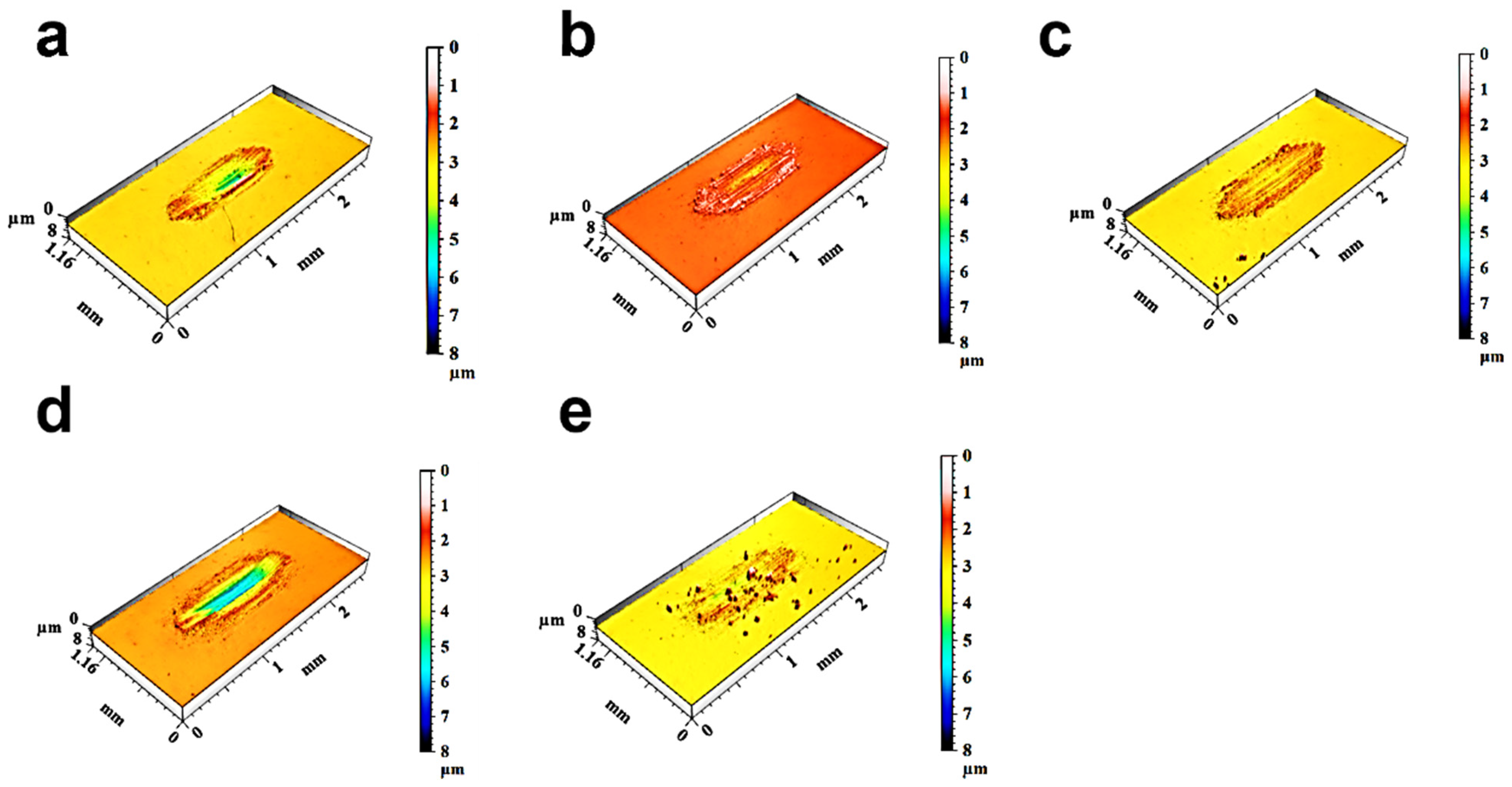
To illustrate the key features of rubbed surfaces, the 3D topographic images of the worn scars are presented in Figure 5. The wear track lubricated by pure EHC-50 is characterized by deep, wide furrows and significant material displacement, indicative of severe scuffing and adhesive wear (Figure 5a). In stark contrast, the lubricant containing 0.3 wt% Ag@Cu additive exhibits the smoothest surface with the minimum wear depth, confirming the formation of a highly effective protective layer (Figure 5c). As the concentration increases toward 1.0 wt%, the topography deteriorates again, revealing irregular pits and chaotic surface damage that align with the high wear volume (Figure 5e). The superior lubrication performance observed at the 0.3 wt% concentration can be attributed to the optimal balance between the “micro-bearing” effect and surface “mending” capability. At this concentration, the quantity of Ag@Cu microparticles is sufficient to adequately fill the gaps between the surface asperities, which provides the mending effect. Moreover, this concentration effectively converts sliding friction into partial rolling friction. Furthermore, the soft silver shell allows for easy deformation and “smearing” across the steel substrate, facilitating the construction of a continuous, low-shear-strength tribofilm [26]. However, the concentrations below 0.3 wt% fail to provide enough material to form a fully protective film, but concentrations above this limit trigger particle agglomeration and excessive abrasion. Accordingly, 0.3 wt% was the optimal concentration, maximising the synergistic benefits of the Ag@Cu additive between the frictional interfaces. The concentration of 0.3 wt% was selected as the optimal dosage based on a preliminary optimisation strategy. This value represents a compromise between maximizing lubrication performance and maintaining colloidal stability. Concentrations below this threshold showed insufficient friction reduction, whereas concentrations above this level were found to increase the risk of nanoparticle agglomeration, potentially leading to three-body abrasive wear. Additionally, this concentration ensures good dispersion stability, which is critical for the repeatability of tribological tests. Furthermore, the lubrication and anti-wear properties of this additive were compared with those of the popular additives, including pure metal Cu and MoS2. As Table S1 indicates, under similar test conditions, 0.3 wt% of this micro-particle bimetallic additive exhibited higher lubrication performance compared to the Cu and MoS2 additives in the nanoscale.
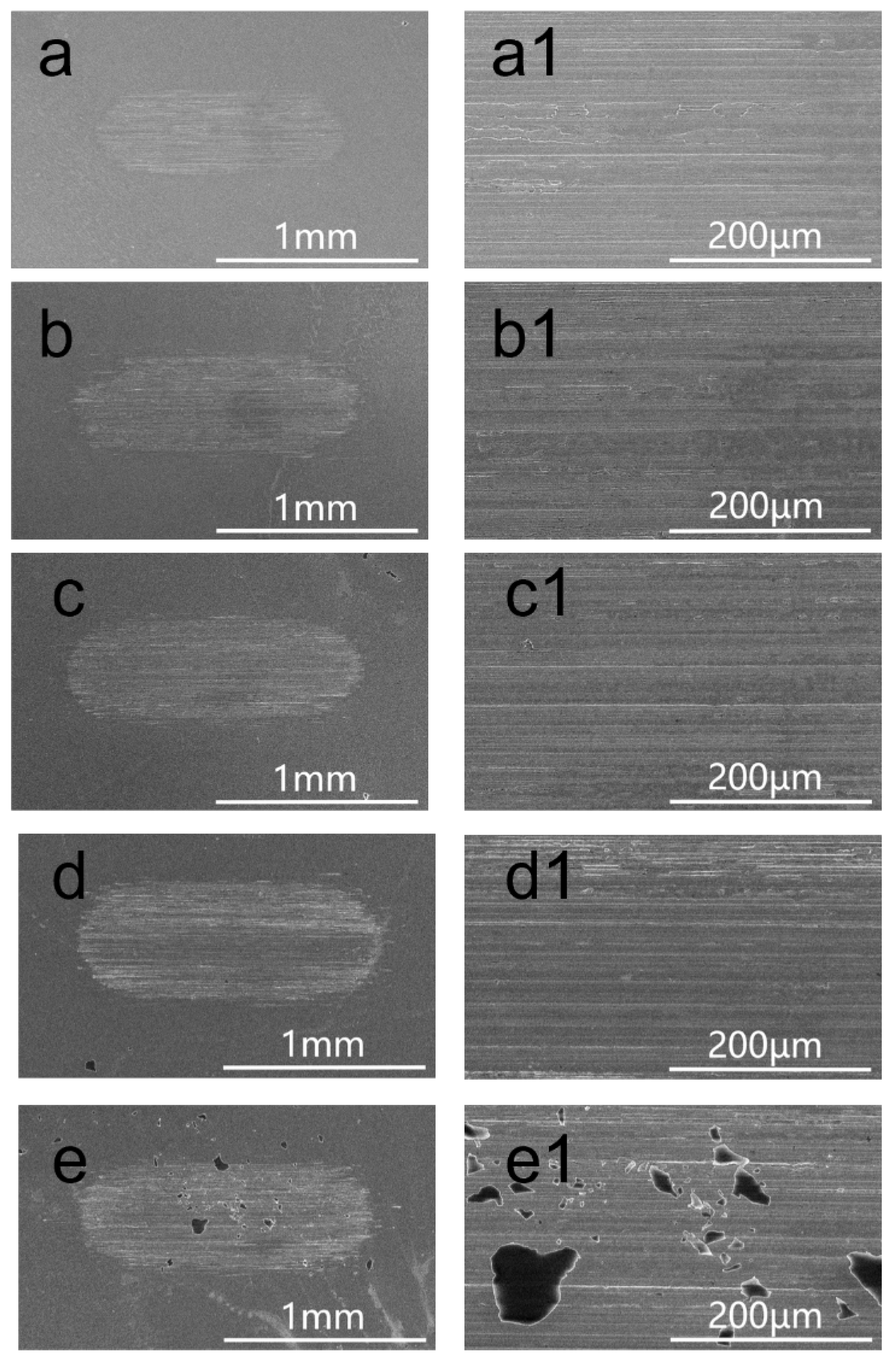
To reveal the dominant wear pattern under various concentrations of Ag@Cu additive, Figure 6 shows the SEM morphology of the rubbed surfaces oiled by EHC-50 base oil with and without Ag@Cu additive. For the EHC-50 base oil (Figure 6a,a1), the wear track is characterized by a high width and the presence of deep, continuous ploughing furrows. These features, alongside visible surface tearing, are symptomatic of severe adhesive and abrasive wear, indicating that the base oil alone cannot sustain a sufficiently robust boundary tribofilm. The lubrication by Ag@Cu microparticles severely limits surface damage, which is progressively mitigated. At a concentration of 0.1 wt% (Figure 6b,b1), the wear scar width contracts, and the grooves become notably shallower. Notably, the greatest improvement is observed at the 0.3 wt% concentration (Figure 6c,c1), which correlates with the optimal COF and wear volume data (Figure 4). In this event, the plowing marks are virtually eliminated, replaced by a remarkably smooth, “polished” topography. These observations confirm that the microparticles have effectively filled the surface asperities and facilitated the construction of a stable, low-shear-strength interface. However, further increasing the concentration to 0.5 wt% and 1.0 wt% results in a resurgence of surface deterioration. As shown in Figure 6e,e1, the higher concentration (1.0 wt%) exhibits abrasive marks with anomalous dark flakes adhered to the rub scar. These flakes often result from exfoliation of Ag@Cu microparticles. The ploughing is likely a consequence of particle agglomeration and excessive third-body abrasion, where surplus microparticles disrupt the continuity of the lubricating film and act as abrasive grits.

3.3. Wear Resistance Mechanism

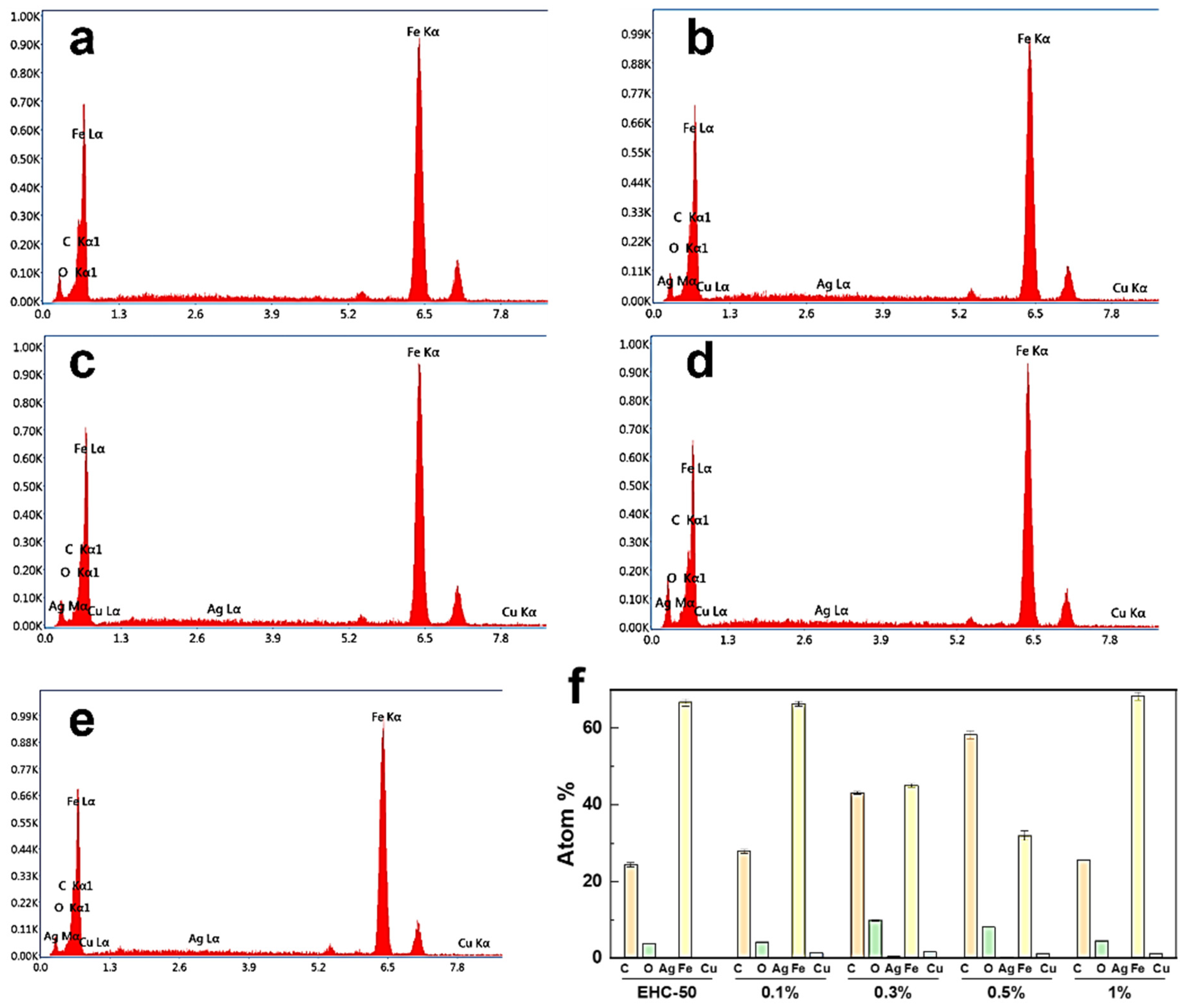
To show the elements deposited on the rubbed surfaces, Figure 7 presents the EDS spectra and corresponding elemental atomic percentages, which were obtained from the centre of the wear tracks. For the base oil, only the intrinsic elements of the steel substrate (Fe, C, and O) are detectable (Figure 7a). In contrast, all scars lubricated with Ag@Cu additive showed clear signals for Ag and Cu (Figure 7b,e), unequivocally proving the transfer and deposition of the Ag@Cu additive on the sliding contact. Quantitative atomic percentage data (Figure 7f) demonstrates a clear concentration-dependent trend, as the additive content in the oil increases, the detected amounts of Ag and Cu on the worn surface rise proportionally, while the relative signal from the Fe substrate decreases. This “shielding effect” confirms that the Ag@Cu additive is not merely transiently present but is actively involved in the formation of a physical barrier. The elevated oxygen (O) content across all additive-containing samples, compared to the base oil, suggests that the frictional heating during sliding triggers tribo-oxidation, leading to a complex organic-inorganic reaction film [23,26].
Briefly, the synergistic lubrication mechanism of Ag@Cu microparticles can thus be synthesized into three primary stages. Initially, the spherical micro-cores provide a “micro-bearing” effect, reducing the initial contact stress. Subsequently, the ductile silver shell undergoes plastic deformation under high pressure, “mending” the micro-cracks and valleys on the steel surface. Finally, as evidenced by the EDS data, the accumulation of Ag and Cu, combined with the tribo-degradation of the PEG/PVP stabilizers and EHC-50 base oil, results in the formation of a structurally integrated tribofilm [38]. At 0.3 wt%, this tribofilm achieves low shear strength and COF, providing a higher lubrication performance, as shown in Figure 4.
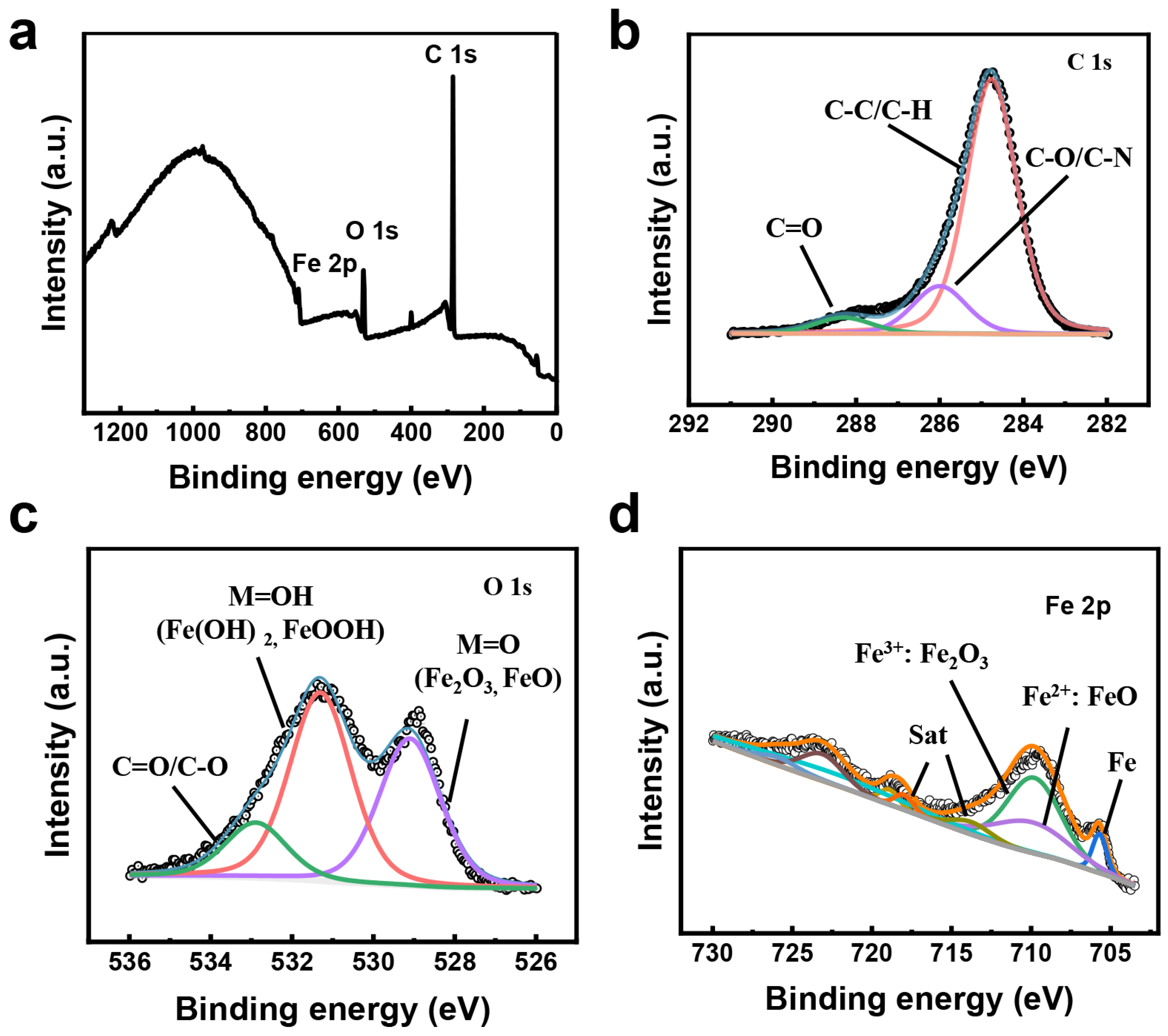
The chemical states of the characteristic elements within the worn scar oiled by a lubricant containing 0.3 wt% Ag@Cu addition contact area are elucidated in Figure 8. The survey spectrum confirms the concurrent presence of C, O, Fe, and the additive-specific Ag and Cu elements on the steel substrate (Figure 8a) [26]. In the high-resolution C 1s spectrum, the dominant peak at 284.8 eV is attributed to the C-C/C-H bonding from the EHC-50 base oil and the hydrocarbon of the dispersants. Notably, the sub-peak at 286.2 eV corresponds to the C-O/C-N environment, originating from the ether linkages in PEG-200 and the pyrrolidone ring of PVP. The emergence of a C=O peak at 288.4 eV reflects the tribo-oxidation of the organic components, indicating that these polymers do not merely serve as carriers but are chemically integrated into the organic-inorganic hybrid film (Figure 8b) [38,39].
For the O 1s deconvolution, the M=O peak (530.0 eV) indicates the presence of lattice oxygen in metallic oxides, and the M-OH peak (531.8 eV) points to the existence of hydrated species like FeOOH or Fe(OH)2 (Figure 8c,d) [40]. Further, corroboration comes from the Fe 2p spectrum, which exhibits a multi-component envelope characteristic of iron oxides and hydroxides. The peaks at 711.5 eV of Fe3+ and 709.5 eV of Fe2+, combined with the distinct satellite peaks at approximately 719 eV and 715 eV, signify the formation of a layered oxidation structure (Fe2O3 and FeO) on the steel surface (Figure 8d) [26,39]. The presence of these hydrated layers is particularly significant; their low shear strength and lamellar-like properties facilitate sliding and contribute to the overall reduction in the coefficient of friction [38,39].
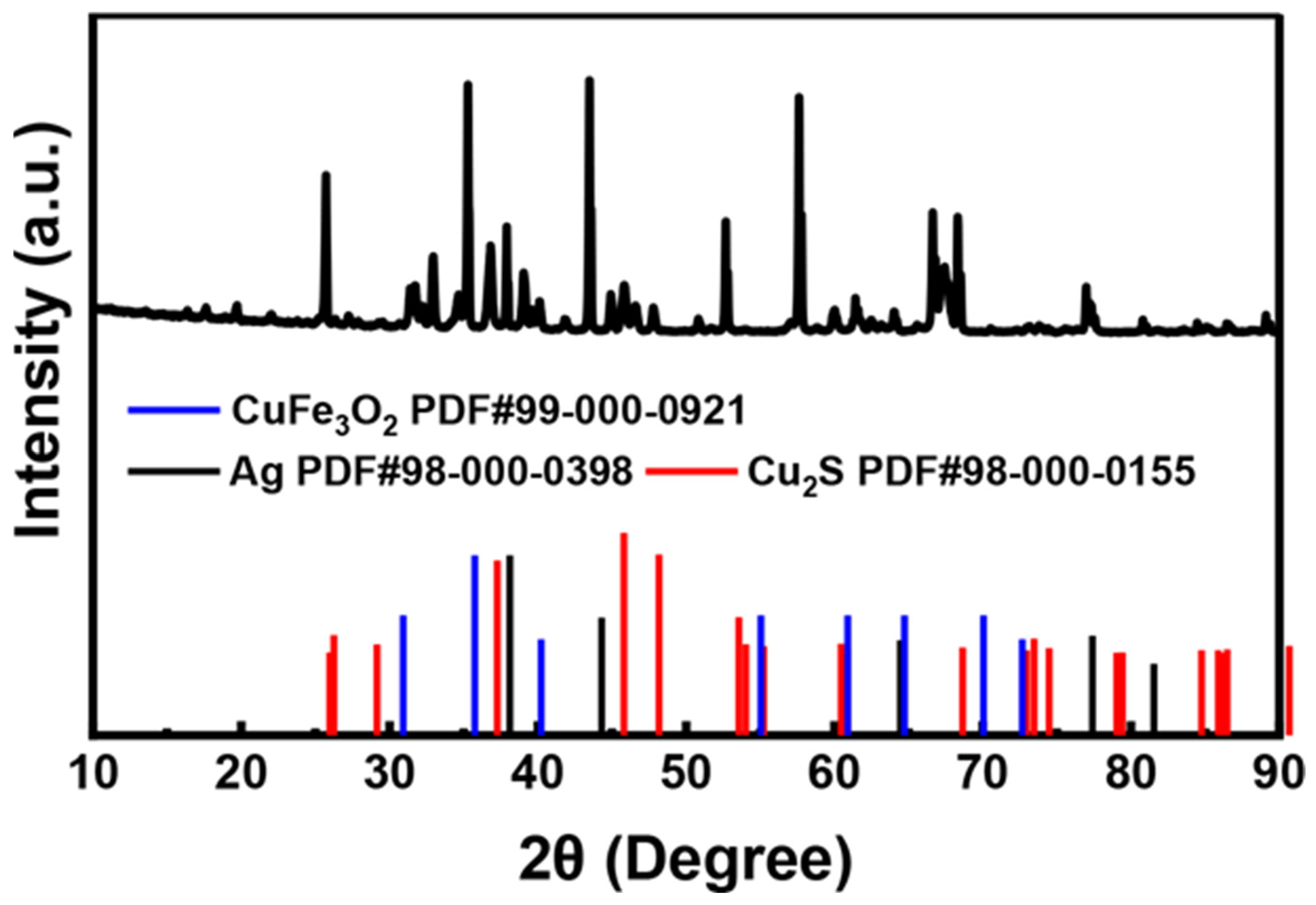
To illustrate the phase identity of the tribochemical products, the XRD spectrum of the worn scar was analyzed in Figure 9. XRD identification of ternary oxide CuFe3O2 (PDF#99-000-0921, ICDD reference database), metallic Ag (PDF#98-000-0398), and Cu2S (PDF#98-000-0155) provides definitive phase evidence for tribochemical reactions. The results showed that the Ag@Cu signals and the metallic Ag phase derived from the microparticle shells, and a series of distinct diffraction peaks corresponding to the ternary oxide CuFe3O2 were identified. The detection of ternary CuFe3O2 proves that the Ag shell is breached during friction, enabling Cu core–iron substrate interaction. While the Cu2S formation indicates sulfur incorporation from residual sulfate, enhancing extreme-pressure properties. Hence, the formation of this mixed-metal oxide is of critical mechanistic importance. It suggests that under the frictional heating and mechanical stresses of the boundary lubrication regime, the silver shell of the Ag@Cu microparticles is breached or plastically smeared, allowing the reactive copper core to interact chemically with the oxidized iron substrate. The CuFe3O2 phase, characterized by high thermal stability and load-bearing capacity, acts as a rigid framework within the tribofilm. Furthermore, the detection of trace Cu2S likely stems from in-situ reactions between the copper core and residual sulfate species from the preparation process, which serves to further enhance the extreme-pressure properties of the interface.
The collective evidence from Figure 8 and Figure 9 indicates that the 0.3 wt% Ag@Cu formulation achieves an optimized lubrication state through a “chemical-physical” synergy. At this concentration, the microparticles provide enough metallic Ag and Cu to the contact zone to facilitate the formation of a continuous, CuFe3O2-reinforced tribofilm that is both flexible (due to organic fragments) and mechanically robust. This mechanism can account for how lower concentrations fail to establish a complete barrier, while higher concentrations lead to detrimental abrasion. In essence, the Ag@Cu micro-additives do not merely fill surface voids but actively transform the sliding interface into a high-performance chemical reaction zone.
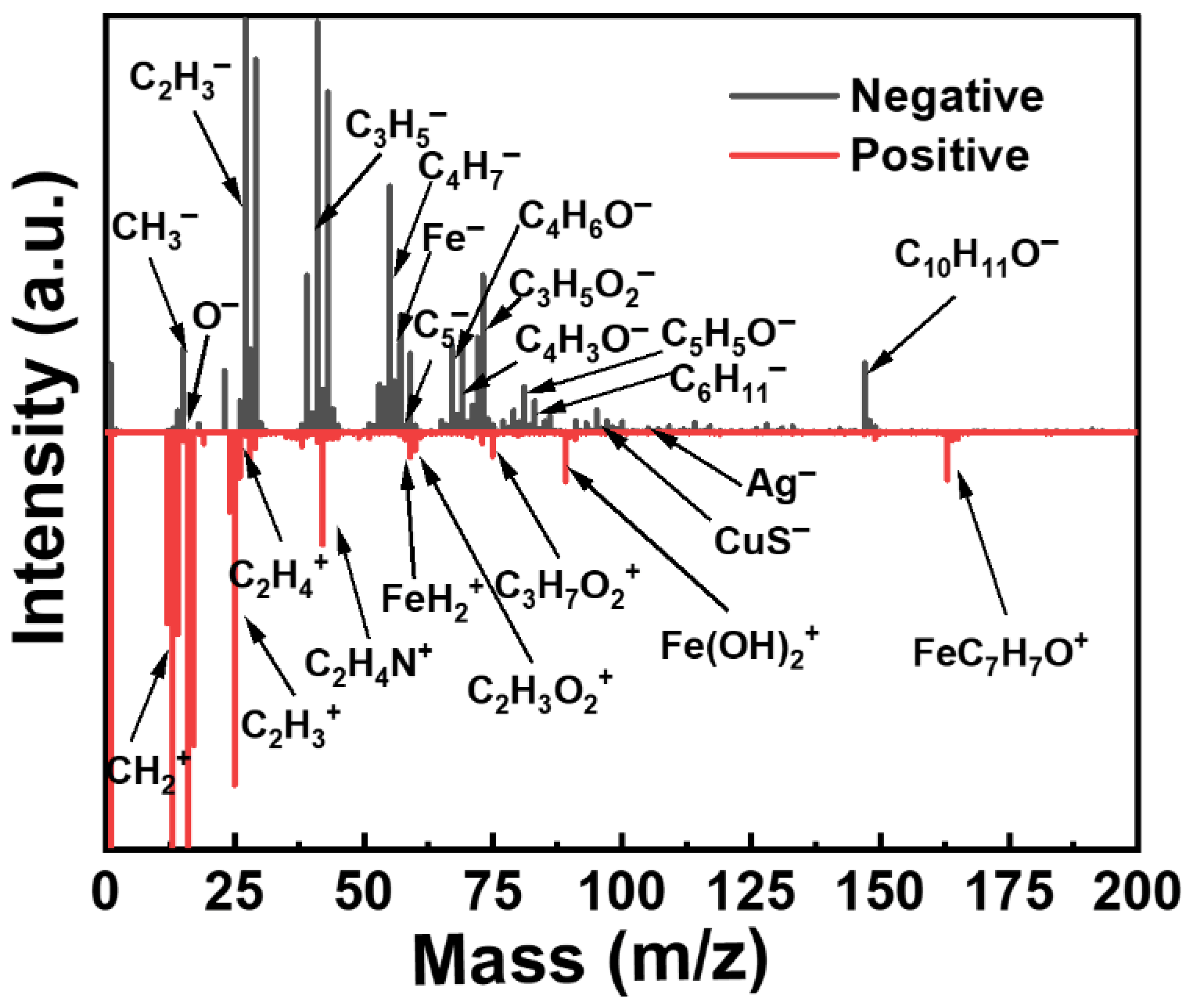
Additionally, the sliding interface was analyzed using TOF-SIMS in Figure 10 and Figure 11. The mass spectra presented a diverse array of characteristic ion fragments in both positive and negative modes, reflecting a complex chemical environment within the contact zone in Figure 10. In the positive ion spectrum, the detection of the C2H4N+ fragment (m/z 42) confirms the presence of the pyrrolidone ring from PVP, while the C3H7O2+ and C2H3O2+ signals verify the persistence of the PEG-200 dispersant within the interface [41]. Crucially, the presence of metal–organic reaction products is substantiated by the detection of Fe(OH)2+ (m/z 90) and FeC7H7O+ (m/z 163) clusters. These findings imply that the hydrated iron oxides (as identified by XPS) effectively coordinate with organic degradation fragments from the base oil and dispersants, constructing a structurally integrated organic-inorganic hybrid network [39].
In the negative ion mode, the spectrum captures characteristic signals of Ag and CuS (m/z 95), providing definitive evidence for the successful deposition of the micro-additives and their subsequent tribochemical transformation. The presence of HSO3 (m/z 81) fragments, combined with the XRD evidence of Cu2S, suggests that trace sulfate residues from the preparation process underwent in-situ reduction and reaction with the copper core under the high-pressure and high-temperature conditions of boundary lubrication. Additionally, the large-mass fragment C10H11O (m/z 147) and many fragments with a difference of 14 of m/z demonstrate the severe tribo-degradation and subsequent oxidative polymerization of the EHC-50 base oil, which likely serves as a flexible binder within the composite tribofilm [38].
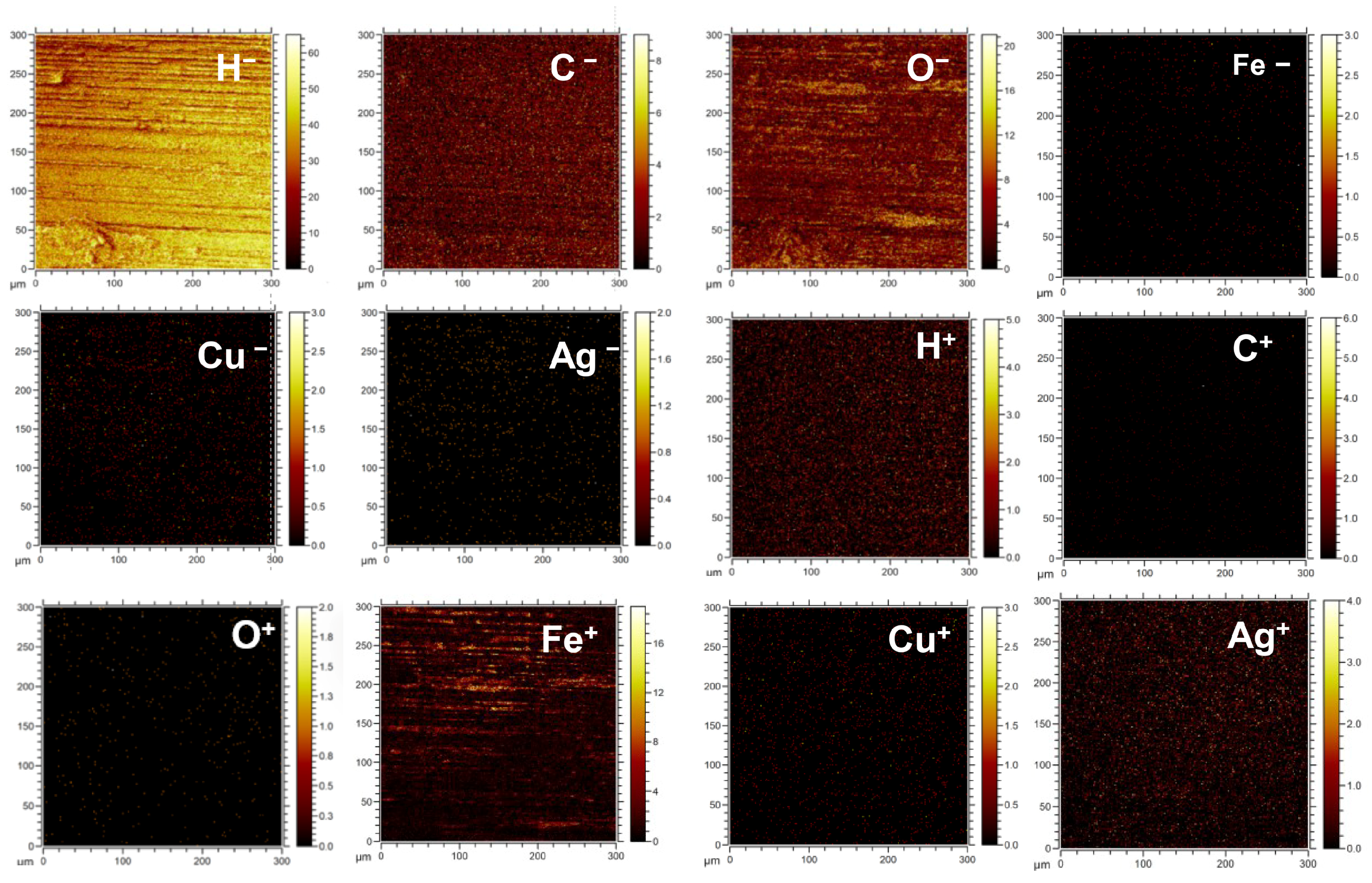
Figure 11 shows the 2D ion maps of these chemical species. The Fe signal originates ubiquitously from the underlying steel substrate, the signals for Ag, Cu, C, and O exhibit a highly correlated spatial distribution, concentrated predominantly within the wear track. The overlapping mapping results, particularly in the negative mode (H, C, O), confirm that the Ag@Cu microparticles do not exist as isolated units but are dynamically reorganized into a continuous and chemically integrated protective shield. This “shielding effect” isolates the friction pairs and transforms the sliding contact into a low-shear-strength reaction zone [23].
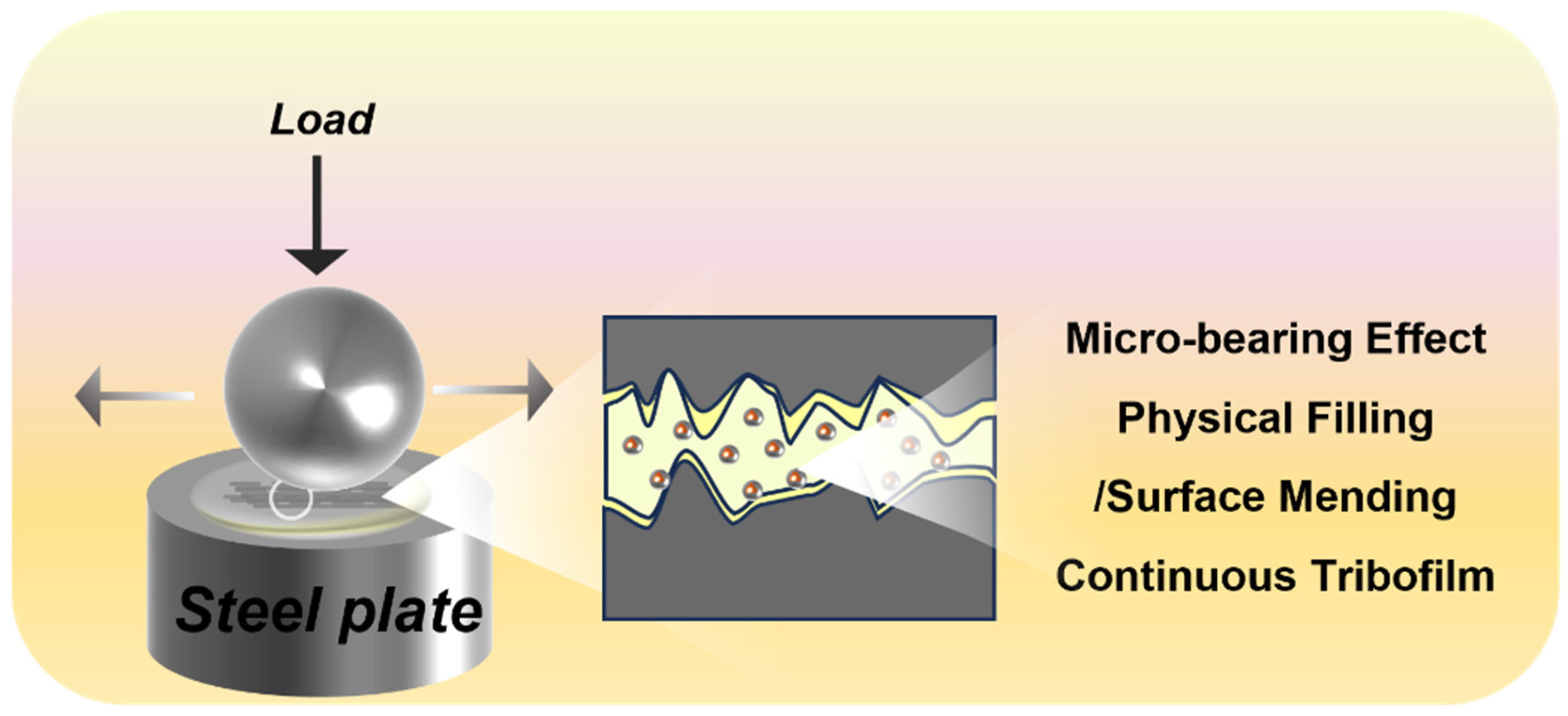
Based on the above characterization findings, the proposed synergistic lubrication mechanism of the Ag@Cu additive is illustrated in Figure 12. The higher tribological performance is fundamentally derived from a synergistic three-fold mechanism. Initially, the spherical micro-cores provide a “micro-bearing” effect, facilitating the transition from sliding to rolling friction and effectively alleviating contact stresses between the surface asperities [26]. Subsequently, the ductile metallic components undergo plastic deformation under high normal loads, filling surface defects and micro-pits in a “physical mending” process that restores interfacial integrity [17,26]. Most significantly, the tribosystem promotes the formation of an “antiwear tribofilm” through in-situ tribochemical reactions [38]. This process is initiated by the adsorption of polar organic fragments, which is facilitated by the coordination of delocalized π electrons from the polymer matrix with metallic orbitals and culminates in the construction of a robust, multi-component barrier composed of metallic Ag/Cu, ternary CuFe3O2, iron oxides, and sulfides (Cu2S) [39]. The optimization at 0.3 wt% establishes a critical equilibrium, providing sufficient material for effective surface restoration and chemical passivation while mitigating the detrimental abrasive wear and particle agglomeration prevalent at higher concentrations.

4. Conclusions

This work presents the synthesis of Ag@Cu core–shell additives and incorporates them into EHC-50 base oil to evaluate their tribological properties. The tribological results indicated that the lubricant containing 0.3 wt% Ag@Cu achieved an optimal balance between friction reduction and wear resistance. The 0.3 wt% Ag@Cu additive reduced the friction coefficient by 45% and the wear volume by 75% compared to the EHC-50 base oil. The morphological examinations of the wear scars showed that the abrasive wear mechanism was dominant. The outstanding tribological performances were attributed to the synergistic interaction between physical effects and the formation of a multi-component tribochemical reaction film. Initially, the spherical microparticles serve as “micro-bearings” to alleviate contact stress and physically mend surface asperities. Subsequently, the ductile metallic components undergo in-situ tribochemical reactions to develop robust tribofilms containing metallic Ag, ternary CuFe3O2, and sulfide (Cu2S) complexes. Furthermore, coordination between organic degradation products and inorganic metallic species also facilitates the construction of a cohesive protective barrier. Based on the aforementioned experiments and characterizations, we successfully constructed Ag@Cu, a novel core–shell structure via a mild synthesis method. This structure significantly “mends” the micro-cracks and valleys on the steel surface, enhancing the anti-wear properties. Moreover, the complex compounds formed on the worn surface through interaction with the steel block act as a protective barrier, thereby significantly boosting the overall tribological performance. This research demonstrates the significant potential of core–shell metallic micro-additives in boundary lubrication and offers a novel methodology for the development of high-performance industrial lubricants. To address concerns regarding the dispersion stability of the proposed additive, future work should focus on achieving long-term colloidal stability, thereby enhancing its chances of industrial application.

Supplementary Materials

The following supporting information can be downloaded at: https://www.mdpi.com/article/10.3390/lubricants14050189/s1, Figure S1: Optical photographs of the front and bottom sides of micron-sized particles; Figure S2: COF curves (a) and wear volume (b) of the base oil EHC-50 and lubricants with 0.3 wt% Ag@Cu additive of high temperature (75 °C and 100 °C); Table S1: Comparison of some nanoparticles and the current study. References [9,17,24,42] are cited in the Supplementary Materials.

Author Contributions

Conceptualization, L.L., C.Z. and M.K.A.A.; methodology, L.L. and J.Z.; formal analysis, J.Z. and L.F.; investigation, J.Z., M.Y., T.L. and Y.W.; resources, L.L. and C.Z.; data curation, J.Z.; writing—original draft preparation, J.Z.; writing—review and editing, L.L., C.Z. and M.K.A.A.; visualization, J.Z. and L.F.; supervision, L.L., C.Z. and M.K.A.A.; project administration, C.Z.; funding acquisition, J.Z., Y.W. and L.F. All authors have read and agreed to the published version of the manuscript.

Funding

This research was funded by Lanzhou Youth Science and Technology Talent Innovation Project (No. 2024-QN-185), Gansu Province Science and Technology Plan (No. 25JRRA147 and No. 25JRRA1168).

Data Availability Statement

Data is contained within the article or Supplementary Materials.

Conflicts of Interest

The authors declare no conflicts of interest.

References

  1. Zhang, Y.; Wu, H.; Li, H.; Wang, L.; Shi, J.; Hua, K.; Wang, H.; Zhou, F.; Liu, W. Robust high-temperature macroscale superlubricity enabled by interface engineering of boronized surfaces and hydroxyl-rich polyol lubricants. Sci. Bull. 2026, 71, 1132–1142. [Google Scholar] [CrossRef]
  2. Hofmann, S.; Björling, M.; Larsson, R.; Lohner, T.; Stahl, K. A comment on the review paper “Critical advances in superlubricity: From current challenges to sustainable development beyond laboratory” from a gear perspective. Friction 2026, 14, 9441208. [Google Scholar] [CrossRef]
  3. Holmberg, K.; Erdemir, A. Influence of tribology on global energy consumption, costs and emissions. Friction 2017, 5, 263–284. [Google Scholar] [CrossRef]
  4. Zhmud, B.; Pasalskiy, B. Nanomaterials in Lubricants: An Industrial Perspective on Current Research. Lubricants 2013, 1, 95–101. [Google Scholar] [CrossRef]
  5. Li, J. Novel Lubricant Additives in 2025. Lubricants 2026, 14, 52. [Google Scholar] [CrossRef]
  6. Ademi, K.; Wijanarko, W.; Espallargas, N. Toward Cost-Effective Environmentally Acceptable Lubricants: Influence of Synthetic Ester and Low-Viscosity Polyalphaolefin Blend Type on Additive Performance. Tribol. Lett. 2025, 73, 61. [Google Scholar] [CrossRef]
  7. Tang, H.; Deng, W.; Li, J.; He, J.; Chen, X. Critical advances in superlubricity: From current challenges to sustainable development beyond laboratory. Friction 2025, 13, 9441075. [Google Scholar] [CrossRef]
  8. Ali, M.K.A.; Xianjun, H.; Mai, L.; Qingping, C.; Turkson, R.F.; Bicheng, C. Improving the tribological characteristics of piston ring assembly in automotive engines using Al2O3 and TiO2 nanomaterials as nano-lubricant additives. Tribol. Int. 2016, 103, 540–554. [Google Scholar] [CrossRef]
  9. Jiang, H.; Hou, X.; Qian, Y.; Liu, H.; Ali, M.K.A.; Dearn, K.D. A tribological behavior assessment of steel contacting interface lubricated by engine oil introducing layered structural nanomaterials functionalized by oleic acid. Wear 2023, 524–525, 204675. [Google Scholar] [CrossRef]
  10. Ali, M.K.A.; Abdelkareem, M.A.A.; Elagouz, A.; Xianjun, H. Chapter 32—Nanolubricant additives. In Nanotechnology in the Automotive Industry; Song, H., Nguyen, T.A., Yasin, G., Singh, N.B., Gupta, R.K., Eds.; Elsevier: Amsterdam, The Netherlands, 2022; pp. 675–711. [Google Scholar]
  11. Gulzar, M.; Masjuki, H.H.; Kalam, M.A.; Varman, M.; Zulkifli, N.W.M.; Mufti, R.A.; Zahid, R. Tribological performance of nanoparticles as lubricating oil additives. J. Nanopart. Res. 2016, 18, 223. [Google Scholar] [CrossRef]
  12. Singh, A.P.; Dwivedi, R.K.; Suhane, A.; Chaurasiya, P.K.; Jain, P.K.; Sachan, K. Tribological performance of CuO nanoparticle-enhanced lubricants on AISI 52100 steel surfaces. Ind. Lubr. Tribol. 2025, 78, 115–122. [Google Scholar] [CrossRef]
  13. Yilmaz, A.C. Tribological Enhancement Features of Various Nanoparticles as Engine Lubricant Additives: An Experimental Study. Arab. J. Sci. Eng. 2020, 45, 1125–1134. [Google Scholar] [CrossRef]
  14. Peña-Parás, L.; Taha-Tijerina, J.; Garza, L.; Maldonado-Cortés, D.; Michalczewski, R.; Lapray, C. Effect of CuO and Al2O3 nanoparticle additives on the tribological behavior of fully formulated oils. Wear 2015, 332–333, 1256–1261. [Google Scholar] [CrossRef]
  15. Chen, H.; Zhang, L.; Li, M.; Xie, G. Synthesis of Core–Shell Micro/Nanoparticles and Their Tribological Application: A Review. Materials 2020, 13, 4590. [Google Scholar] [CrossRef]
  16. Bukvić, M.; Gajević, S.; Skulić, A.; Savić, S.; Ašonja, A.; Stojanović, B. Tribological Application of Nanocomposite Additives in Industrial Oils. Lubricants 2024, 12, 6. [Google Scholar] [CrossRef]
  17. Ali, M.K.A.; Hou, X.; Abdelkareem, M.A.A. Anti-wear properties evaluation of frictional sliding interfaces in automobile engines lubricated by copper/graphene nanolubricants. Friction 2020, 8, 905–916. [Google Scholar] [CrossRef]
  18. Huang, Y.; Wu, F.; Zhou, Z.; Zhou, L.; Liu, H. Fabrication of fully covered Cu–Ag core–shell nanoparticles by compound method and anti-oxidation performance. Nanotechnology 2020, 31, 175601. [Google Scholar] [CrossRef] [PubMed]
  19. Sun, Y.; Fang, Y.Q.; Shang, F.Q.; Zhang, J.; Liu, W.; Shen, H.Y.; Guo, B. Enhancing the tribological performance of Cu-WS2 composites with Ag-shell/Cu-core structure. Powder Technol. 2023, 422, 118453. [Google Scholar] [CrossRef]
  20. Yu, X.; Li, J.; Shi, T.; Cheng, C.; Liao, G.; Fan, J.; Li, T.; Tang, Z. A green approach of synthesizing of Cu-Ag core-shell nanoparticles and their sintering behavior for printed electronics. J. Alloys Compd. 2017, 724, 365–372. [Google Scholar] [CrossRef]
  21. Zhang, C.; Yang, Z.; Huang, Q.; Wang, X.; Yang, W.; Zhou, C.; Yu, B.; Yu, Q.; Cai, M.; Zhou, F. Lignin composite ionic liquid lubricants with excellent anti-corrosion, anti-oxidation, and tribological properties. Friction 2022, 11, 1240–1252. [Google Scholar] [CrossRef]
  22. Tang, G.; Su, F.; Xu, X.; Chu, P.K. 2D black phosphorus dotted with silver nanoparticles: An excellent lubricant additive for tribological applications. Chem. Eng. J. 2020, 392, 123631. [Google Scholar] [CrossRef]
  23. Kumara, C.; Luo, H.; Leonard, D.N.; Meyer, H.M.; Qu, J. Organic-Modified Silver Nanoparticles as Lubricant Additives. ACS Appl. Mater. Interfaces 2017, 9, 37227–37237. [Google Scholar] [CrossRef] [PubMed]
  24. Wang, L.; Gong, P.; Li, W.; Luo, T.; Cao, B. Mono-dispersed Ag/Graphene nanocomposite as lubricant additive to reduce friction and wear. Tribol. Int. 2020, 146, 106228. [Google Scholar] [CrossRef]
  25. Shang, S.; Kunwar, A.; Wang, Y.; Qi, X.; Ma, H.; Wang, Y. Synthesis of Cu@Ag core–shell nanoparticles for characterization of thermal stability and electric resistivity. Appl. Phys. A 2018, 124, 492. [Google Scholar] [CrossRef]
  26. Kumara, C.; Meyer, H.M., III; Qu, J. Synergistic Interactions Between Silver and Palladium Nanoparticles in Lubrication. ACS Appl. Nano Mater. 2019, 2, 5302–5309. [Google Scholar] [CrossRef]
  27. Tang, W.; Zhu, X.; Li, Y. Tribological performance of various metal-doped carbon dots as water-based lubricant additives and their potential application as additives of poly(ethylene glycol). Friction 2021, 10, 688–705. [Google Scholar] [CrossRef]
  28. Zhu, X.; Wang, X.; Liu, Y. Probing the Synergistic Lubrication Mechanism between Graphene Nanoparticles and Diamond-Like Carbon Films at Drill Pipe Joints: A Molecular Simulation Study. Langmuir 2025, 41, 17725–17740. [Google Scholar] [CrossRef]
  29. Htwe, Y.Z.N.; Al-Janabi, A.S.; Wadzer, Y.; Mamat, H. Review of tribological properties of nanoparticle-based lubricants and their hybrids and composites. Friction 2023, 12, 569–590. [Google Scholar] [CrossRef]
  30. Han, S.; Liu, S.; Wang, Y.; Zhou, X. Preparation; Characterization, and Tribological Evaluation of a Calcium Borate Embedded in an Oleic Acid Matrix. Ind. Eng. Chem. Res. 2012, 51, 13869–13874. [Google Scholar] [CrossRef]
  31. Waqas, M.; Zahid, R.; Bhutta, M.U.; Khan, Z.A.; Saeed, A. A Review of Friction Performance of Lubricants with Nano Additives. Materials 2021, 14, 6310. [Google Scholar] [CrossRef]
  32. Singh, A.; Chauhan, P.; Mamatha, T.G. A review on tribological performance of lubricants with nanoparticles additives. Mater. Today Proc. 2020, 25, 586–591. [Google Scholar] [CrossRef]
  33. Liu, X.; Yu, Q.; Cai, M.; Zhou, F.; Liu, W. Tailorable ionic liquids as advanced lubricant additives: From molecular design to engineering applications. Tribol. Int. 2026, 217, 111549. [Google Scholar] [CrossRef]
  34. Huang, Y.; Liu, J.; Liu, T.; Hong, Y.; Hu, X. Tribological Characteristics and Synergistic Lubrication Mechanisms of a Novel Additive Based on TiO2 Supported by Coal-to-Oil Soot Nanoparticles. Ind. Eng. Chem. Res. 2026, 65, 2752–2768. [Google Scholar] [CrossRef]
  35. Cao, X.; Zhang, H. Fabrication and performance of silver coated copper powder. Electron. Mater. Lett. 2012, 8, 467–470. [Google Scholar] [CrossRef]
  36. Han, F.; Cao, M.; Lin, J.; Liu, T.; Zhu, X.; Zhang, Y. Selection of dispersant and dispersion mechanism of PVP on copper powders. Colloid Polym. Sci. 2024, 302, 355–362. [Google Scholar] [CrossRef]
  37. Nugroho, A.; Mamat, R.; Bo, Z.; Hamzah, W.A.W.; Yusaf, T.; Ghazali, M.F.; Khoerunnisa, F. A comprehensive investigation of low proportion TiO2-POE nanolubricant stability for residential air conditioning system application. In Proceedings of the 2nd Energy Security and Chemical Engineering Congress: Selected Articles from ESChE 2021, Malaysia; Springer Nature: Singapore, 2022; pp. 147–163. [Google Scholar]
  38. Zhang, J.; Zhang, C.; Liu, Y.; Feng, L.; Yang, W.; Pei, X.; Yu, Q. The Tribological Properties of Novel Sulfoximine Derivatives as Lubricant Additives. Materials 2024, 17, 4145. [Google Scholar] [CrossRef]
  39. Yi, M.; Qin, J.; Wang, Y.; Chen, Q.; Sun, X.; Guo, P.; Liu, X.; Cai, M.; Zhou, F. Construction of efficiency protection film for harsh conditions achieved by novel multi-functional polymeric ionic liquids. Chem. Eng. J. 2025, 523, 168021. [Google Scholar] [CrossRef]
  40. Biesinger, M.C.; Payne, B.P.; Grosvenor, A.P.; Lau, L.W.M.; Gerson, A.R.; Smart, R.S.C. Resolving surface chemical states in XPS analysis of first row transition metals, oxides and hydroxides: Cr, Mn, Fe, Co and Ni. Appl. Surf. Sci. 2011, 257, 2717–2730. [Google Scholar] [CrossRef]
  41. Shen, Y.; Sui, X.; Yu, X.-Y. Review: Recent advances of ToF-SIMS for environmental analysis and imaging. Anal. Chim. Acta 2025, 1374, 344412. [Google Scholar] [CrossRef]
  42. Xie, H.; Jiang, B.; He, J.; Xia, X.; Pan, F. Lubrication performance of MoS2 and SiO2 nanoparticles as lubricant additives in magnesium alloy-steel contacts. Tribol. Int. 2016, 93, 63–70. [Google Scholar] [CrossRef]
Figure 1. Schematic diagram of the synthetic route for the Ag@Cu bimetallic microparticles as additives in EHC-50 oil.
Lubricants 14 00189 g001
Figure 2. SEM images of pristine Cu particles treated once (a) and twice with acid (b) for surface activation, and SEM of Ag@Cu microparticles coated with one (c) and two layers of silver (d).
Lubricants 14 00189 g002
Figure 3. Particle size distribution histograms and the corresponding mean diameters of pristine Cu particles treated (a) once and (b) twice with acid, and Ag@Cu microparticles coated with one (c) and (d) two layers of silver.
Lubricants 14 00189 g003
Figure 4. COF curves (a) and wear volume (b) of the base oil EHC-50 and lubricants containing various concentrations (0.1, 0.3, 0.5, and 1.0 wt%) of Ag@Cu additive.
Lubricants 14 00189 g004
Figure 5. 3D topographic images of the worn scars lubricated by (a) base oil, (b) 0.1 wt%, (c) 0.3 wt%, (d) 0.5 wt%, and (e) 1.0 wt% Ag@Cu additive.
Lubricants 14 00189 g005
Figure 6. SEM images (ae) and the corresponding high-magnification images (a1e1) of the worn scars on the steel disc lubricated by (a) base oil, (b) 0.1 wt%, (c) 0.3 wt%, (d) 0.5 wt%, and (e) 1.0 wt% Ag@Cu additive.
Lubricants 14 00189 g006
Figure 7. EDS spectra of the worn scars on the steel disc lubricated by (a) base oil, (b) 0.1 wt%, (c) 0.3 wt%, (d) 0.5 wt%, and (e) 1.0 wt% Ag@Cu additive. and (f) the corresponding atomic percentage statistics of characteristic elements (C, O, Fe, Ag, and Cu) on the worn scars.
Lubricants 14 00189 g007
Figure 8. XPS analysis of the worn scar lubricated with a lubricant containing 0.3 wt% Ag@Cu microparticles. (a) survey spectrum, high-resolution spectrum of (b) C 1s, (c) O 1s and (d) Fe 2p.
Lubricants 14 00189 g008
Figure 9. XRD spectrum of the worn surface lubricated with 0.3 wt% Ag@Cu microparticles. The PDF was Powder Diffraction File, International Centre for Diffraction Data (ICDD); numbers indicate standard reference codes for crystalline phase identification.
Lubricants 14 00189 g009
Figure 10. TOF-SIMS mass spectrometry of positive and negative ion fragments generated on the worn surface lubricated with 0.3 wt% Ag@Cu microparticles.
Lubricants 14 00189 g010
Figure 11. TOF-SIMS two-dimensional (2D) ion mapping of characteristic ion fragments (H, C, O, Fe, Cu, and Ag) in both positive and negative modes on the worn surface lubricated with 0.3 wt% Ag@Cu microparticles.
Lubricants 14 00189 g011
Figure 12. Schematic diagram illustrating the lubrication mechanism of Ag@Cu additive, highlighting the micro-bearing effect, physical filling, and the formation of protective tribofilm.
Lubricants 14 00189 g012
Disclaimer/Publisher’s Note: The statements, opinions and data contained in all publications are solely those of the individual author(s) and contributor(s) and not of MDPI and/or the editor(s). MDPI and/or the editor(s) disclaim responsibility for any injury to people or property resulting from any ideas, methods, instructions or products referred to in the content.