Article

Friction Performance and Wear Emissions of Coated and Uncoated Brake Rotor Materials

1
MBDA, Stevenage SG1 2DA, UK
2
Audi AG, 85057 Ingolstadt, Germany
3
Faculties of Engineering and Physical Sciences and Environment, University of Leeds, Leeds LS2 9JT, UK
*
Author to whom correspondence should be addressed.
Lubricants 2026, 14(3), 123; https://doi.org/10.3390/lubricants14030123
Submission received: 3 February 2026 / Revised: 2 March 2026 / Accepted: 8 March 2026 / Published: 13 March 2026
(This article belongs to the Special Issue Recent Advancements in Friction Research for Disc Brake Systems)

Abstract

The impending Euro 7 regulation will impose strict limits on brake particulate matter (PM) emissions from new light-duty vehicles, driving manufacturers to explore alternative rotor materials and/or surface treatments. This paper evaluates the friction and wear emission performance of both a laser-clad grey cast iron (GCI) rotor surface and a plasma electrolytic oxidation (PEO) treated aluminium surface compared to that of an uncoated GCI. Tests were conducted on a small-scale tribometer rig, which was specially adapted to measure airborne emissions while emulating the standard Worldwide harmonised Light vehicle Test Procedure (WLTP). The laser-clad coating was applied via extreme high-speed laser cladding to form an initial 430 L stainless steel layer, followed by a topcoat of 80/20 vol% 430L steel/TiC, both layers being c.100 micron thick. The PEO treatment applies a c.50 micron alumina coating to both a wrought and cast alloy, the latter being more suitable for the manufacture of full-size vented brake rotors. Results show that all rotor materials achieved a satisfactory coefficient of friction (CoF) against suitable low-metallic pad material, although the CoF for the wrought PEO-Al alloy was significantly higher at c.0.65 compared with c.0.50 for the other materials. The gravimetric wear of all the coated rotor surfaces after 8 WLTP cycles was almost undetectable, and pad wear was also significantly reduced. This improved wear resistance led to significant reductions in PM emissions, with the PM10 levels of the uncoated GCI reduced by around 75% for the laser-clad GCI and PEO wrought Al alloy, and by about 60% for the PEO cast Al alloy. When extrapolated to a full-sized passenger vehicle, the results indicated that both the laser-clad GCI and PEO-treated surfaces have the potential to meet the current Euro 7 emissions targets.

1. Introduction

For decades, the material of choice for brake rotors has been grey cast iron (GCI) as a result of its cost-effective manufacture, excellent thermophysical properties and capability of withstanding the high operating temperatures of automotive brake systems. However, its poor corrosion and wear resistance have become a growing concern, particularly with the introduction of stricter regulations, such as the impending Euro 7 limits [1]. With an increasing adoption of electric vehicles (EVs) in Europe, PM10 emissions from non-exhaust emission (NEE) sources have surpassed those from exhaust emissions, with brake wear contributing to approximately one third of these PM emissions [2]. Airborne PM emissions, particularly ultrafine PM1 particles, pose serious health risks by penetrating deep into the lungs and entering the bloodstream. When entering the bloodstream, these ultrafine metal particles can increase heart rate variability, which can increase the frequency of premature supraventricular beats and elicit pro-inflammatory and prothrombotic responses, particularly affecting young people [3,4]. PM2.5 does not deposit as deeply as PM1, typically depositing in the lungs. This has been found to inhibit lung function due to heritable mutations, leading to increased susceptibility to the harmful effects of inhaled micro-organisms [5].
The impending Euro 7 legislation [1] aims to reduce brake PM emissions, prompting extensive research into alternative solutions to the current uncoated GCI rotors. One of the most promising approaches is the application of a wear-resistant surface coating to the standard GCI rotor [6]. Such hard coatings not only improve wear resistance but also require minimal changes to pre-existing manufacturing and disposal processes. Studies such as those conducted by Hesse et al. [7] have demonstrated that tungsten carbide (WC) coated GCI and carbon-ceramic rotors can reduce emissions by up to 70% due to their enhanced durability and reduced wear rate. Menapace et al. [8] also investigated WC- CoCr high-velocity oxygen fuel (HVOF) sprayed coatings and found a consistent reduction in particulate emissions, especially iron oxide particles, and only a few particles of WC, which was the major constituent (86%) of the coating. Lyu et al. [9] tested a laser-clad Fe-based coating against both non-asbestos organic (NAO) and low metallic friction materials on a pin-on-disc tribometer and again found a reduction in wear and particle emissions for the coated discs, especially when running against the NAO friction material. Zhang et al. [10] tested extreme high-speed laser-clad (EHLA) coatings on GCI rotors with a similar composition and processing technique to that used in the present study. The coatings consisted of a 316L stainless steel (SS) intermediate transition layer and a surface layer of 316L SS reinforced with 16% TiC particles. The gravimetric wear loss of the coated rotor was reduced by around 40% compared with the uncoated GCI. However, no wear emissions measurements were reported.
Lightweight alternative to the current GCI brake rotors, such as aluminium metal matrix composites (Al-MMC’s), have also been considered, as these can offer additional reductions in energy consumption and emissions from tyre-road damage due to a reduced unsprung mass. However, a drawback of Al-MMC is the low melting point of the Al alloy, which can cause the matrix to soften at high brake operating temperatures. This can expose the hard particles, increase surface roughness and enhance pad wear by causing grooves to form on the rotor’s surface, thereby disrupting the tribolayer [11,12,13]. Ghouri et al. [14] investigated such Al-MMC brake rotors and found that the wear rate and emissions significantly increased after a severe corrosion exposure.
An alternative lightweight solution is to apply a coating or surface treatment to protect an unreinforced alloy substrate. Shrestha et al. [15] investigated both solid and ventilated Al rotors treated by plasma electrolytic oxidation (PEO) to form a hard alumina coating on their rubbing surfaces. Under AK Master testing against standard low-metallic brake pads, they found that the friction and wear performance of the PEO Al discs were satisfactory up to an initial brake temperature (IBT) of 300 C. However, for an IBT of 400 C, some surface damage and cracking of the coating were observed. Gulden et al. [16] also investigated PEO-Al-treated brake rotors and found that their friction performance and corrosion resistance were satisfactory for standard passenger car applications. Ghouri [17] investigated different lightweight brake rotors and found that a PEO coating on a plain (unreinforced) Al alloy was more effective at reducing emissions compared with an uncoated Al-MMC, especially after both were subjected to severe corrosion exposure.
Whilst the potential emissions-reduction strategies highlighted above may offer environmental benefits during use, a concern surrounding these alternative brake rotor materials is that the addition of a coating process or other changes to the material specification may shift the environmental problem to the manufacture or disposal phases of the modified brake system. Life cycle assessment (LCA) is a useful tool for measuring the overall benefits of a material/product across its full life cycle. Olofsson et al. [18] found that recoating a used coated rotor by applying a further laser-clad Fe-based layer can reduce life cycle CO2 and energy consumption by 90% and 80%, respectively, compared with an uncoated GCI rotor. Gradin and Aström [19] found that a coated rotor increased resource requirement during manufacture, but this was offset by an extended lifespan as a result of the reduced wear rate. Currie [20] showed that lightweight coated rotor materials reduced impacts on global warming and fossil fuel scarcity during the use phase by about 60%, while over the whole life cycle, both laser-clad GCI and PEO-treated Al offered similar reductions in environmental impacts compared with the uncoated GCI.
The development of friction brakes has historically been driven by evolving performance demands, including higher friction stability, noise reduction, and, more recently, environmental sustainability. Electrification has further reshaped brake system requirements, necessitating corrosion-resistant and low-emission solutions. However, testing new brake designs is challenging due to the high cost, time constraints, and safety concerns associated with full-scale vehicle testing. To address these issues, a small-scale emissions test rig has been developed at Leeds, based on encapsulating a pin-on-disc setup within a ducting system and utilising a Dekati ELPI+ cascade impactor to measure the particulate emissions [21].
The present study investigates the friction and wear performance of a laser-clad GCI rotor and two different PEO-treated lightweight Al rotors (one wrought and one cast), utilising the Leeds small-scale test rig. The study aims to provide insight into the viability of the different coatings in meeting the impending Euro 7 regulations while maintaining effective braking performance. This paper does not set out to report a detailed tribological analysis of each friction pair but rather to summarise the comparative results in terms of friction, wear and emissions performance of the different coated rotors in comparison with uncoated GCI. Such comparative results are sparse in the literature, often due to industrial confidentiality issues.
The scaling approach and the operating details of the small-scale rig are first described below. This is followed by detailed descriptions of the coated rotor materials tested, namely laser-clad GCI and PEO-treated Al alloys, as well as of the pad friction materials used. Results are presented for each friction pair in terms of coefficient of friction (CoF), wear mass loss and particulate emissions over repeated WLTP braking cycles. Finally, the small-scale emissions results are extrapolated to represent a full-sized vehicle, and the predictions are compared with the current Euro 7 brake emissions limits.

2. Small-Scale Testing Equipment and Procedure

2.1. Scaling Approach

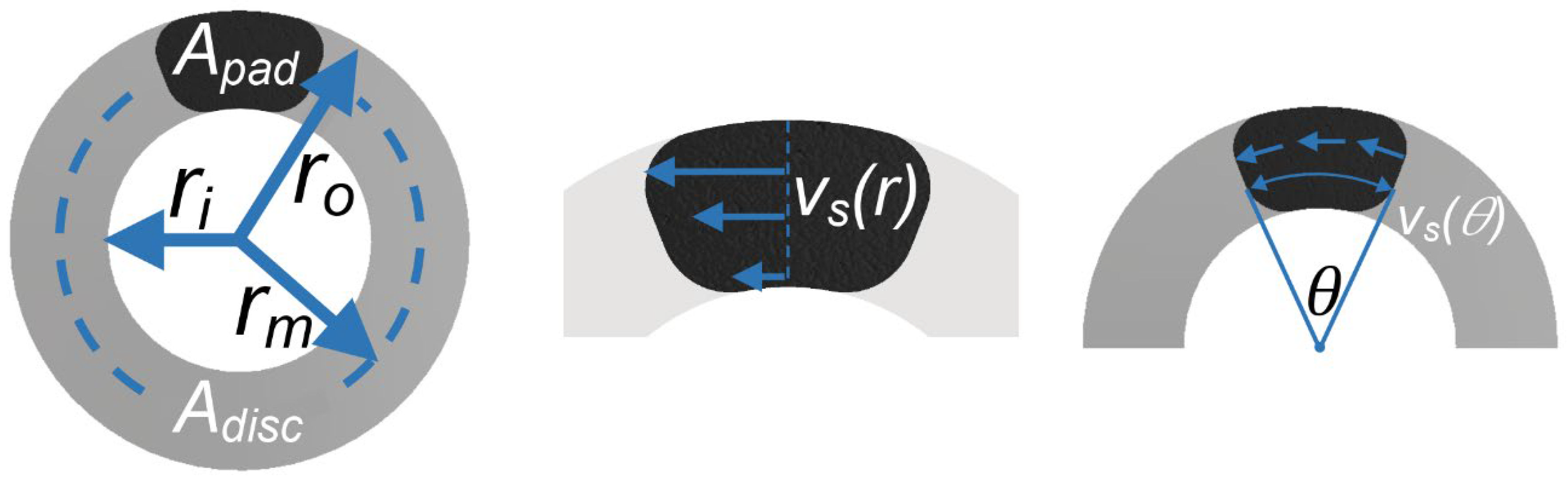
To accurately replicate full-size rotor test conditions at a reduced scale, the size and geometry of the small-scale friction couple require careful consideration [21]. The most accurate method used for scalable results, previously used by Preston and Forthofer [22], is a constant energy density (input energy per unit of nominal contact area). To ensure the full-scale operating conditions are replicated, the same friction phenomena must occur. This is achieved by replicating the sliding conditions defined by the three geometric parameters shown in Equations (1)–(3):
R A = A r o t o r A p a d
R v = r o r i
R p a d = P a d w P a d L
where RA is the ratio of frictional surface areas, Rv is the ratio of the sliding radii (outer sliding radius, ro, to inner radius, ri), and Rpad is the pad aspect ratio. With the pad width, Padw, defining the velocity gradient, vs(r), along the radial direction of the contact interface, the pad length, PadL, then determines the angular coverage, θ, of the pad over the disc friction track, see Figure 1. θ is an important parameter which affects the thermal and frictional performance of the system.
Dimensional similarity is imposed by ensuring that all three geometric parameters in the small-scale system have values typical of those for a full-size car brake, as detailed in Table 1. The mass of the small-scale GCI rotor was similarly scaled by adjusting its thickness to give roughly the same thermal inertia effects compared with a full-size rotor. Energy considerations enable a dimensionless scaling factor, f, to be defined, which is then used to scale other parameters. This factor is calculated as the ratio between the frictional area of a full-scale pad, Afp, and that of the equivalent small-scale pad, Asp, see Equation (4). Based on the configuration of the Leeds small-scale test bench, the scaling factor is estimated to lie between 11.7 and 17.2 for a mid-size passenger car brake system, dependent on the pad configuration.
f = A f p A s p

2.2. Experimental Setup

The pin-on-disc setup was implemented on a Bruker universal mechanical tester (UMT), with a rotating lower drive and upper bidirectional load cell. The rotating drive has speed capabilities of up to 5000 rpm, with a maximum torque capacity of 5 Nm at a speed of 100 rpm. The load cell measures both vertical (axial) and transverse (circumferential) forces, and hence, CoF can be calculated directly from the load cell results. The load cell enables vertical forces of up to 500 N to be applied during testing.
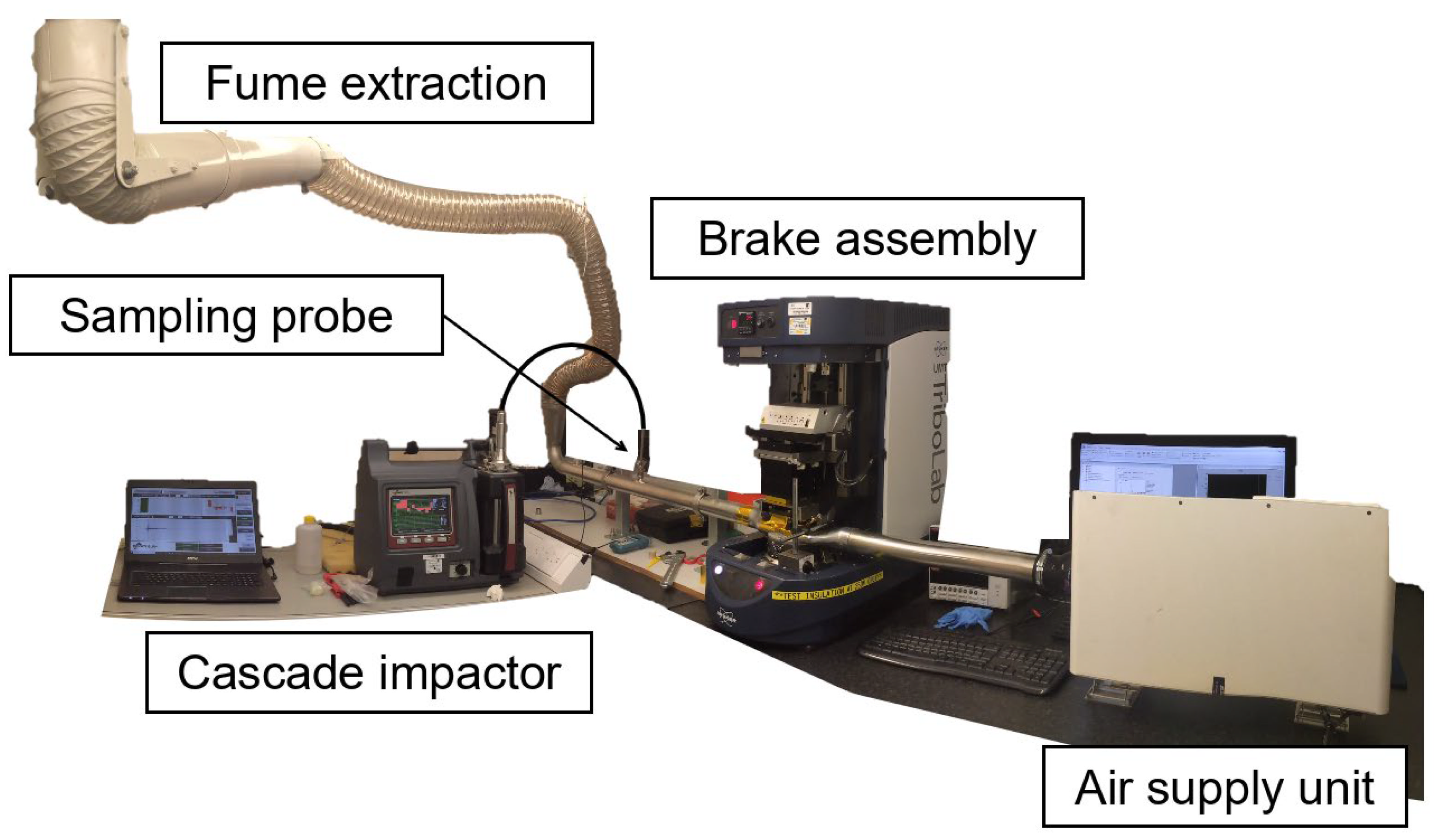
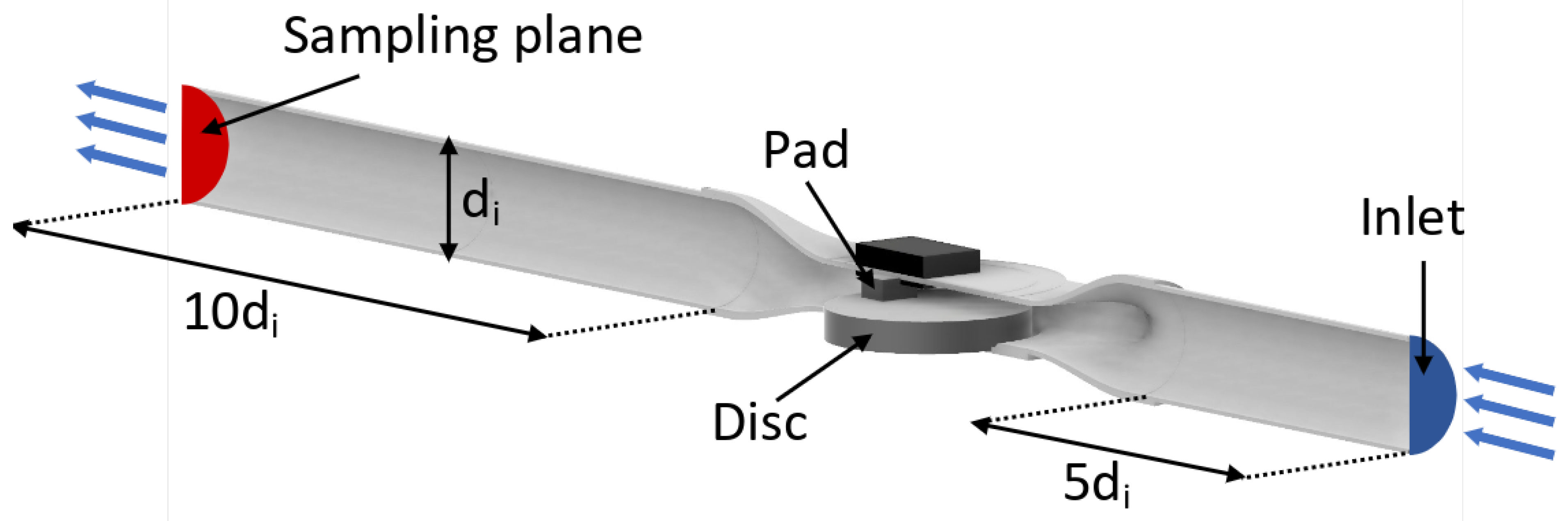
A duct system was designed by Limmer [23] to fully surround the small-scale brake rotor during testing, ensuring only clean air enters the system through a HEPA (high-efficiency particulate air) filter. The ventilation current ensures that the friction pair does not overheat, and there is sufficient mixing to remove wear debris before it is transported to the sampling probe. A 15-stage Dekati ELPI+ cascade impactor was utilised to sample the exhaust air through an isokinetic probe. The experimental setup is shown in Figure 2 and Figure 3.

2.3. Control and Implementation of WLTP Test Cycles

The Worldwide harmonised Light-duty vehicles Test Procedure (WLTP) was introduced in 2017 as the standard for type approval of CO2 emissions and fuel consumption of new passenger vehicles [24]. The associated WLTP-Brake duty cycle, derived by Mathissen et al. [25], is based on global driving data, representing 303 braking snubs and stops executed in a defined order. The WLTP brake test cycle is considered a realistic cycle for investigating different brake friction couples from a tribological standpoint [25].
Although the scaled friction couple replicates the sliding conditions of a full-scale brake system, its cooling characteristics are different, partly because the scaled disc cannot allow for the heat dissipation mechanisms of a full-scale ventilated rotor, but also because of the forced cooling from the ducted air. The braking events were therefore initiated when the initial temperature of the small-scale rotor, as measured by a rubbing thermocouple, was close to that for the same braking event imposed by a full-scale inertia-based dynamometer. The braking duration, initial and final speed all adhered to the WLTP brake test cycle specifications. The required friction forces to meet the deceleration requirements specified in the test cycle were derived and scaled as defined in [23].

2.4. Emissions Test Procedure

The testing procedure involved running 8 consecutive WLTP brake test cycles. The first 5 cycles served as a bedding-in phase, allowing a sufficient tribolayer to be developed on the small disc surface to give a stable CoF prior to emissions testing. Emissions data were then collected on WLTP cycles 6–8, effectively obtaining 3 independent repeat measurements. Each WLTP cycle was replicated using a 303-sequence computer script, representing the 303 unique brake events of the cycle. Each of these braking events was simulated using the following five stages:
Step 1: The brake disc stays at idle, the brake pad stays retracted, and the device will wait until the initial brake temperature (IBT) of the respective stop or snub is reached. For the first stop of the cycle, the requirement is that the temperature is below 40 °C.
Step 2: The brake disc is accelerated up to the required initial rotating speed of the respective stop or snub, and the brake pad stays retracted.
Step 3: The brake disc continues rotating at the initial rotating speed, and the brake pad is pressed against the brake disc until the required friction force of the respective stop or snub is reached.
Step 4: The brake disc is decelerated at a rate to reach the final rotational speed at the required braking time for the respective stop or snub. The brake pad is pressed against the disc, holding the required friction force at a constant level.
Step 5: The brake disc continues to rotate at the final rotating speed, and the brake pad is retracted from the disc.
A 15-stage Dekati ELPI+ cascade impactor was utilised to capture emissions data for WLTP cycles 6–8. Each stage of the Dekati collects particles within a specific range defined by the nominal cut-off size of the preceding stage. For example, the PM collected at stage 11 is within the size range 1.6 µm ≤ PM ≤ 2.5 µm. Table 2 details the nominal cut-off and mean diameters for each stage.
The mass of the particles collected at each stage was determined by weighing the impactor foils before and after each WLTP cycle. The collected particles can then be categorised into PM2.5 and PM10 emissions, aligning with Euro 7 thresholds, using Equations (5) and (6).
P M 2.5 = i = 2 i = 11 P M i
P M 10 = i = 2 i = 14 P M i

3. Test Materials

3.1. Laser-Clad Rotor Samples

Traditional laser cladding typically provides full metallurgical bonding for coating metals such as copper and nickel alloys [5]. Laser cladding is considered a low-heat input process compared with other thermal processes, such as arc weld overlay. However, in conventional laser cladding, most of the laser energy is still absorbed by the substrate/base material. Also, the slow processing speed of conventional laser cladding makes it unsuitable for mass production and high-volume applications, such as brake rotor coating. The extreme high-speed laser cladding process (known by its German acronym, EHLA), first developed by Fraunhofer ILT and Aachen University, has been further explored by TWI Ltd. and was successfully applied to the rubbing surfaces of a full-sized commercial vehicle GCI vented rotor, supplied by Cummins-Meritor. The EHLA process allows most of the laser energy to be absorbed by the powder gas jet stream in flight, reducing the size of the melt pool and, consequently, the extent of dilution. This is especially beneficial for coatings on GCI, since the carbon content on the cast-iron disc surface has a detrimental effect on the metallurgy of the transition zone between the substrate and the coating material. EHLA also improves the coating speeds drastically (+100 fold) whilst allowing a deposition of thin layers of coating material.
The EHLA coating for the current application was made up of a base layer consisting of 430L stainless steel. Metallographic images demonstrated that this homogeneous layer was well adhered to the GCI substrate without any cracks or porosities [26]. The c.100 µm thickness top layer consisted of an 80/20 composition by powder volume of a 430L stainless steel (SS) matrix and titanium carbide particles. This top coat is believed to have superior tribological properties compared with alternative coatings containing particles such as tungsten carbide and was applied at an initial thickness of 150 µm prior to postprocessing, grinding to achieve the desired surface finish on the rotor. A 16 kW diode laser from Laserline GmbH was used, taking approximately 5 min to apply each layer to the rubbing surfaces of the large Cummins–Meritor brake rotor.
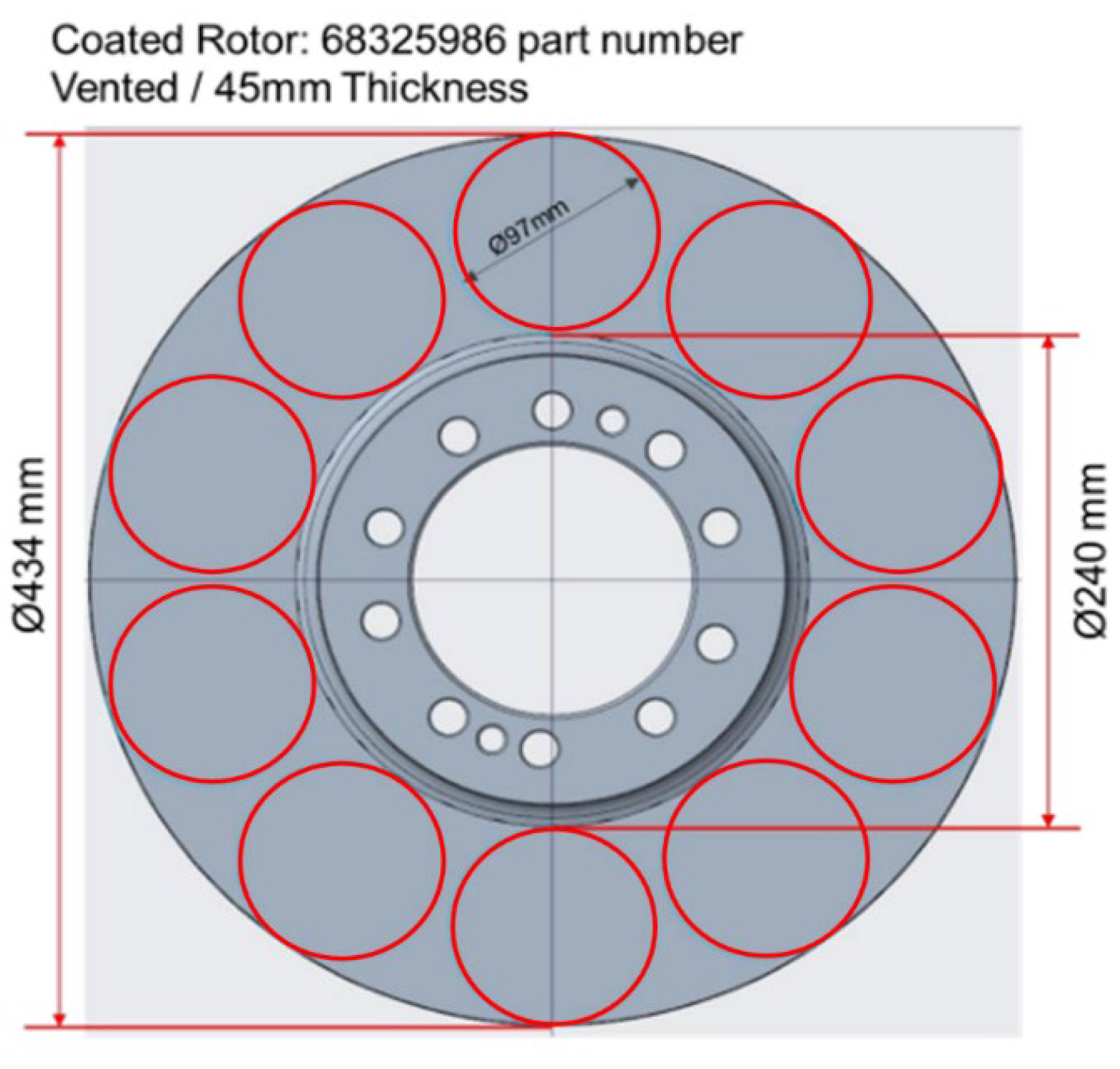
Small-scale cylindrical samples were cut from the cheek of this full-sized vented rotor, as indicated in Figure 4. To ensure preservation of the laser-clad coating, these samples were cut to a slightly larger diameter of 97 mm, compared to the 95.25 mm diameter of the uncoated GCI small-scale disc, which was used as a benchmark for comparison with the coated rotors. This was deemed to have a negligible effect on the results as the rubbing radius and pad contact area remained the same.
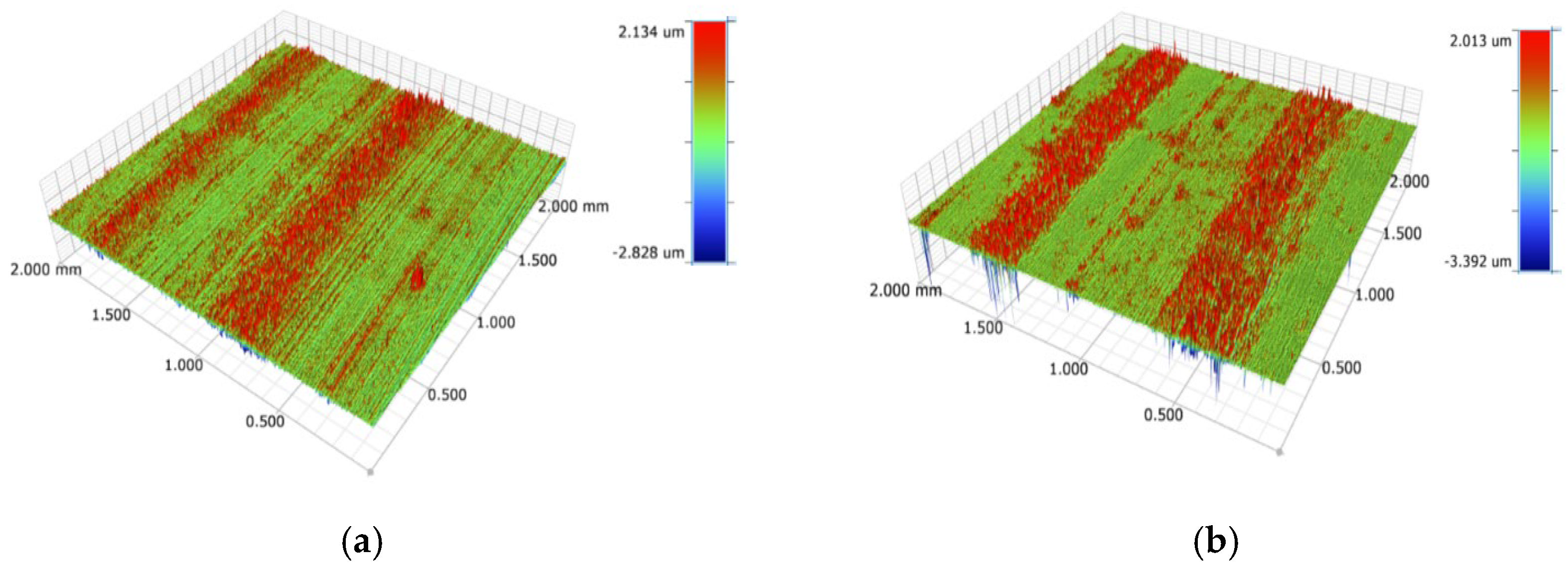
Figure 5 shows typical 3D surface profiles of the GCI before and after undergoing the laser cladding process, obtained using an NPFlex White Light Interferometer (WLI). The machining marks clearly distinguishable on the uncoated surface are still apparent after the laser cladding process. Surface parameters (Sa, Sz) shown in Table 3 were extracted from three non-overlapping 2 × 2 mm regions per material using Vision64 S-parameter analysis with consistent levelling and filtering settings. It is clear that the laser cladding process has not significantly changed these surface roughness parameters.
Table 4 summarises the elemental composition of the uncoated GCI and the 430L SS used as the matrix material for the laser-clad rotor. The 80% 430L SS matrix largely determines the friction response (but not the wear resistance) of the laser-clad surface. Also shown in Table 4 are the compositions of the wrought and cast Al alloys that were PEO-treated. The values shown were obtained from online material databases.

3.2. Plasma Electrolytic Oxidation (PEO) Rotor Samples

Recent studies have shown that Al alloys are a good alternative to conventional ferrous materials because of their excellent properties, such as low density, high specific heat and high thermal conductivity. Alnaqi et al. [27] indicated that the unsprung mass of a medium-sized passenger car can be reduced by around 20 kg through the use of an Al-alloy-based material in place of the standard GCI brake rotor. Despite the advantages of its light weight, an Al brake rotor possesses some major limitations because of its thermomechanical properties. Unreinforced alloys have low maximum operating temperatures and do not exhibit sufficient wear resistance. The function of the substrate material can be improved by applying some form of surface treatment process. For instance, it is possible to protect the rubbing surface of an Al rotor with high-temperature-resistant materials such as alumina (Al2O3) or silicon carbide (SiC) [22].
Plasma electrolytic oxidation (PEO) is one of the most promising surface treatments used to modify the substrate Al alloy surface to form an oxide layer with excellent wear and thermal resistant properties [15]. The PEO process is similar to anodising, except that much higher voltages are applied, producing coating layers with higher density, hardness and wear resistance as well as better adhesion to the substrate than anodising. Alnaqi et al. [27] reported that the PEO process improves both the thermal and frictional performance of a wrought Al brake rotor up to rubbing surface temperatures of at least 500 °C.
Two different lightweight alloys were considered in the present study, namely a wrought Al alloy (EN AW-6082) and a cast Al alloy (EN AC-42000). From the composition ranges for each alloy shown in Table 4, the main difference between the alloys lies in the higher silicon content (7%) of the cast alloy, which is required to improve the alloy’s fluidity during the casting process. The cast small disc samples were manufactured by lost wax investment casting using wax models made by additive manufacturing (fused filament fabrication), whereas the wrought samples were machined from a cylindrical wrought Al billet. Both the cast and wrought small discs were subject to the same PEO treatment on their upper rubbing surface only to produce an alumina surface layer of approximately 50 µm thickness [23].
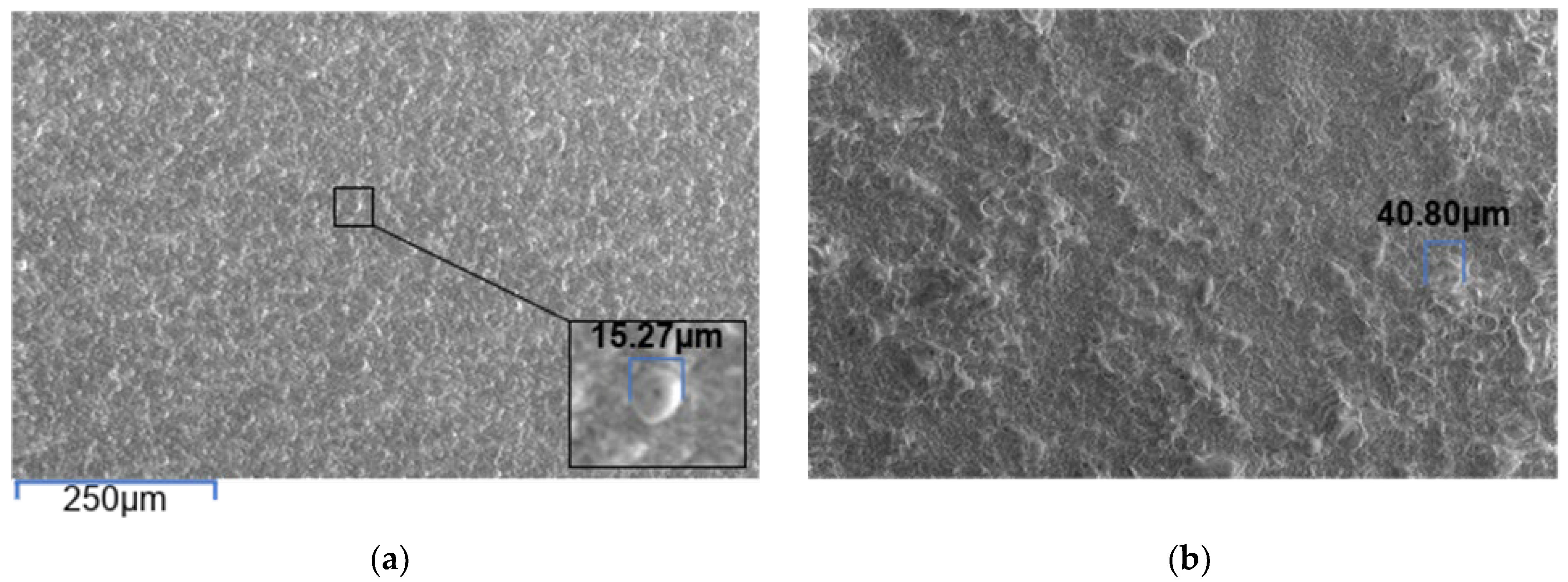
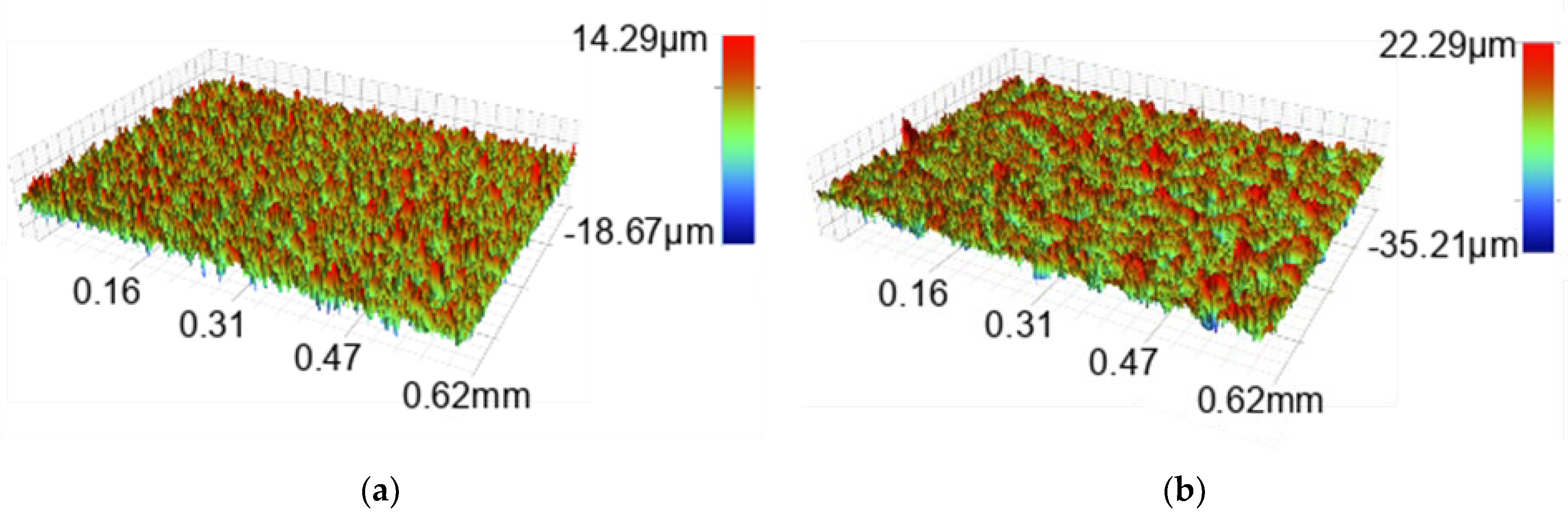
The PEO Al samples were used in the as-treated condition with no further surface finishing prior to testing. Figure 6 displays SEM images of the PEO-treated surfaces of the two alloy types prior to testing. It is clear that the surface of the cast sample appears less homogeneous and rougher than that of the wrought alloy. This is reflected in the surface profiles indicated in Figure 7, obtained using an NPFlex white light interferometer (WLI). The values for the arithmetic mean height, Sa, and maximum height, Sz, shown in Table 5, also indicate a rougher, less homogeneous surface topography for the PEO-treated cast Al sample, with the maximum asperity height roughly twice that of the wrought surface.

3.3. Friction (Pad) Materials

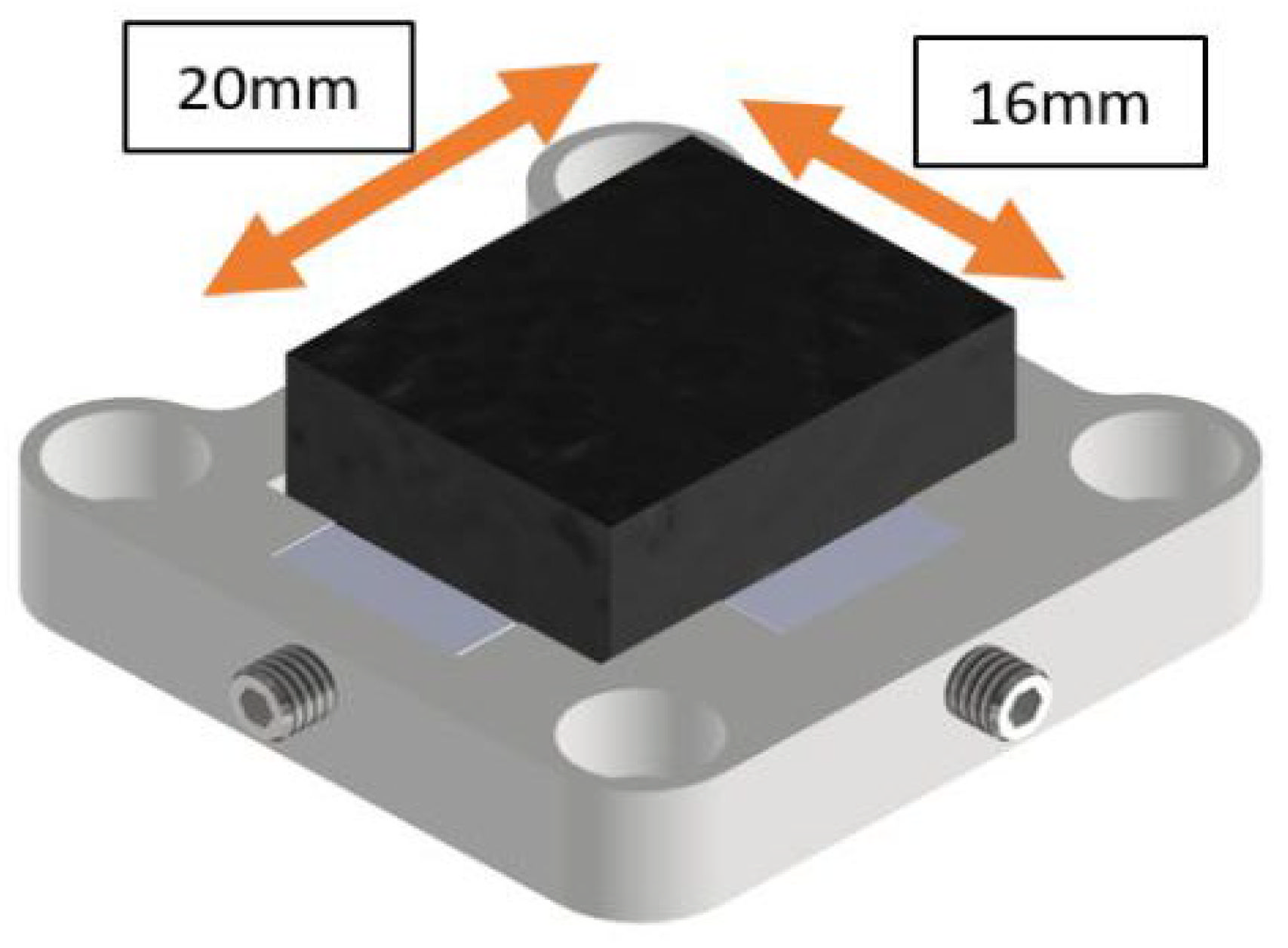
Small 20 × 16 mm rectangular samples of friction material were cut from full-size brake pads appropriate for the rotor material under test. A sample mounted on the specimen holder is shown in Figure 8. Both the laser-clad GCI rotor and the uncoated GCI rotor were paired with the same commercial low-metallic friction material, designated FM1. In contrast, both the PEO-treated cast and wrought Al rotors were tested against a non-commercial copper-free low-metallic friction material, designated FM5. The measured compositions of both pad materials, as determined by Energy Dispersive X-ray Spectroscopy (EDS), are shown in Table 6. Note that, although oxygen and carbon were present in both friction materials, these elements are indistinguishable by EDS. Note also the lack of Cu and Zn in friction material FM5, which was paired with the PEO surfaces.
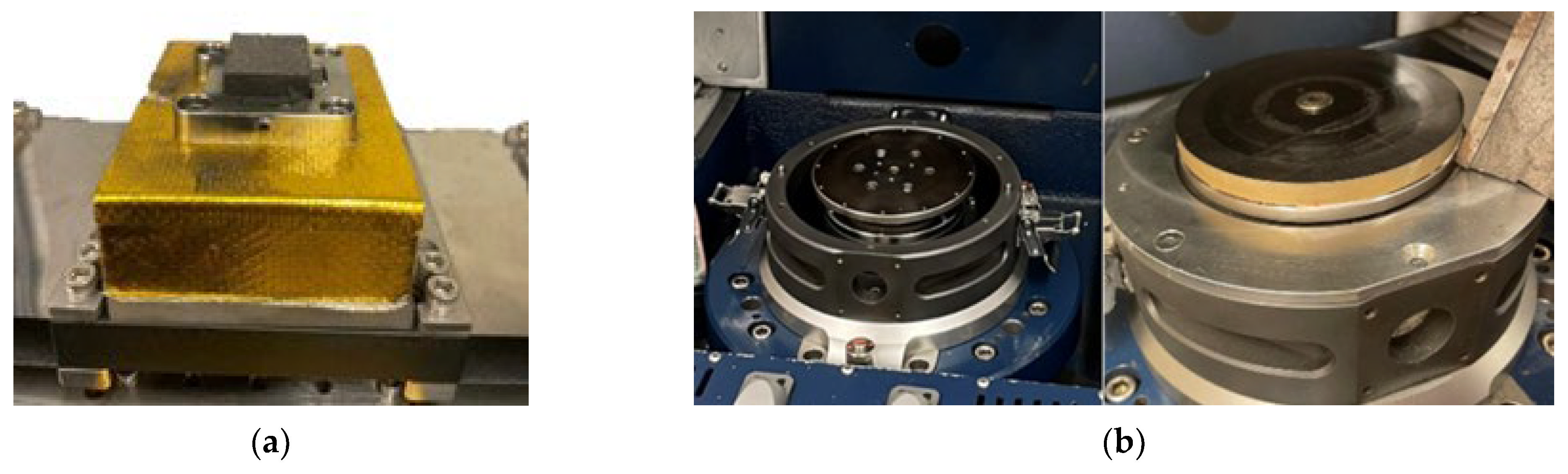
Figure 9a shows a pad sample mounted on the bidirectional Bruker load cell prior to assembly of the small-scale rig, whilst Figure 9b shows the Bruker rotating platform before and after a disc sample has been mounted. In the rightmost image, note the insulating layer under the sample disc to prevent excessive heat conduction and the alloy sealing ring to minimise air flow to the Bruker drive system below the rotating platform.

4. Results

4.1. Frictional Performance

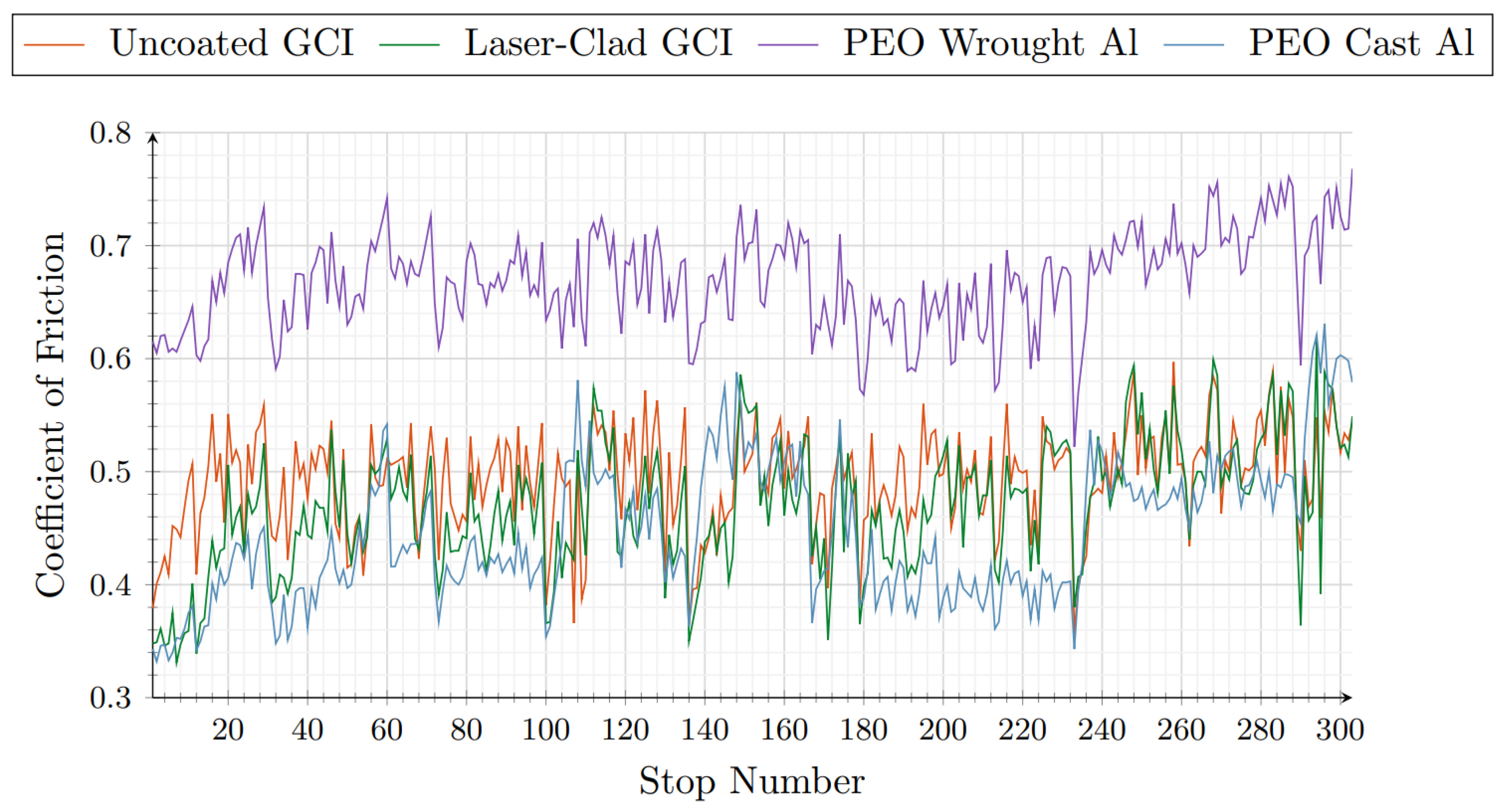
Real-time CoF results during all 303 stops of a typical WLTP-Brake emission cycle are shown in Figure 10 for all four test samples. As expected, the CoF varies continuously during the test cycle due to the different stop conditions. However, it is clear that the value for the PEO-treated wrought alloy is consistently higher than for the uncoated GCI and the other two coated rotors.
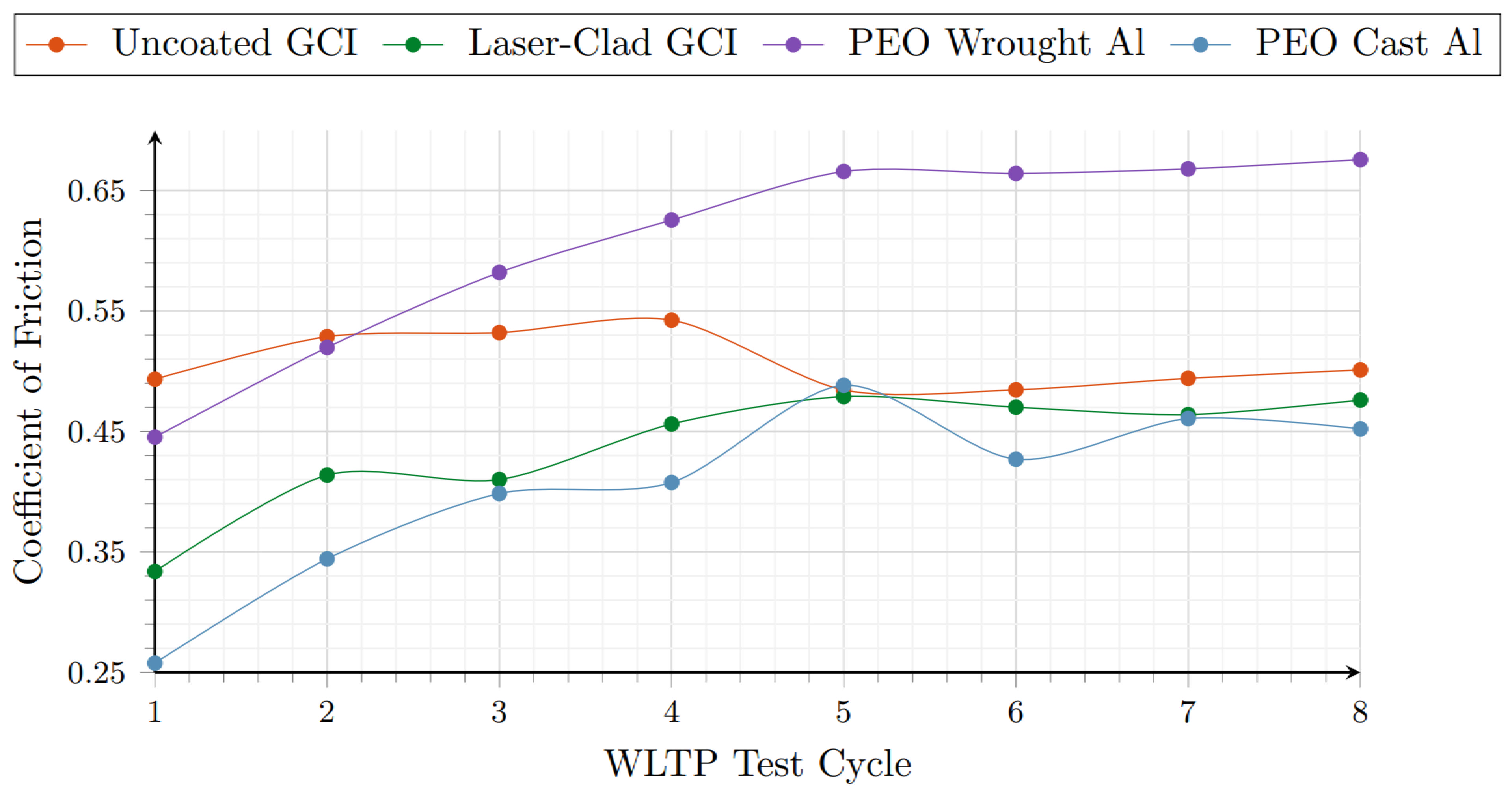
The time-averaged CoF during each of the eight WLTP cycles is shown in Figure 11. It can be seen that all three coated rotors took more cycles to attain a stable CoF than the uncoated GCI. This is likely due to the relatively slow formation of the tribolayer on these hard surfaces compared with the uncoated GCI. After the first four bedding-in cycles, the coated GCI attained an average CoF of around 0.5, which is close to that measured at elevated temperature for a very similar EHLA laser-clad coating (16/84 TiC/316L SS) [10]. The PEO-treated cast Al alloy rotor also reached a steady-state value slightly less than 0.5 after four WLTP cycles, which is somewhat higher than that measured on a similar full-size rotor by Shrestha et al. [15]. In contrast, the stable CoF for the PEO-treated wrought Al alloy rotor was significantly higher at about 0.65. Despite employing the same friction material and test conditions as for the cast alloy, the elevated CoF for the PEO wrought alloy rotor is attributed to its lower surface roughness, as indicated in Table 4. This smoother surface may lead to a greater degree of adhesive attraction between this surface and the friction material FM5, which may raise the CoF above that for the rougher surface of the cast alloy. It is worth noting that Lyu et al. [9] also measured a CoF of about 0.65 for a laser-clad GCI rotor rubbing against a similar low-metallic pad. However, here the Ra was much lower than for the current PEO-treated wrought Al alloy.

4.2. Wear Emissions

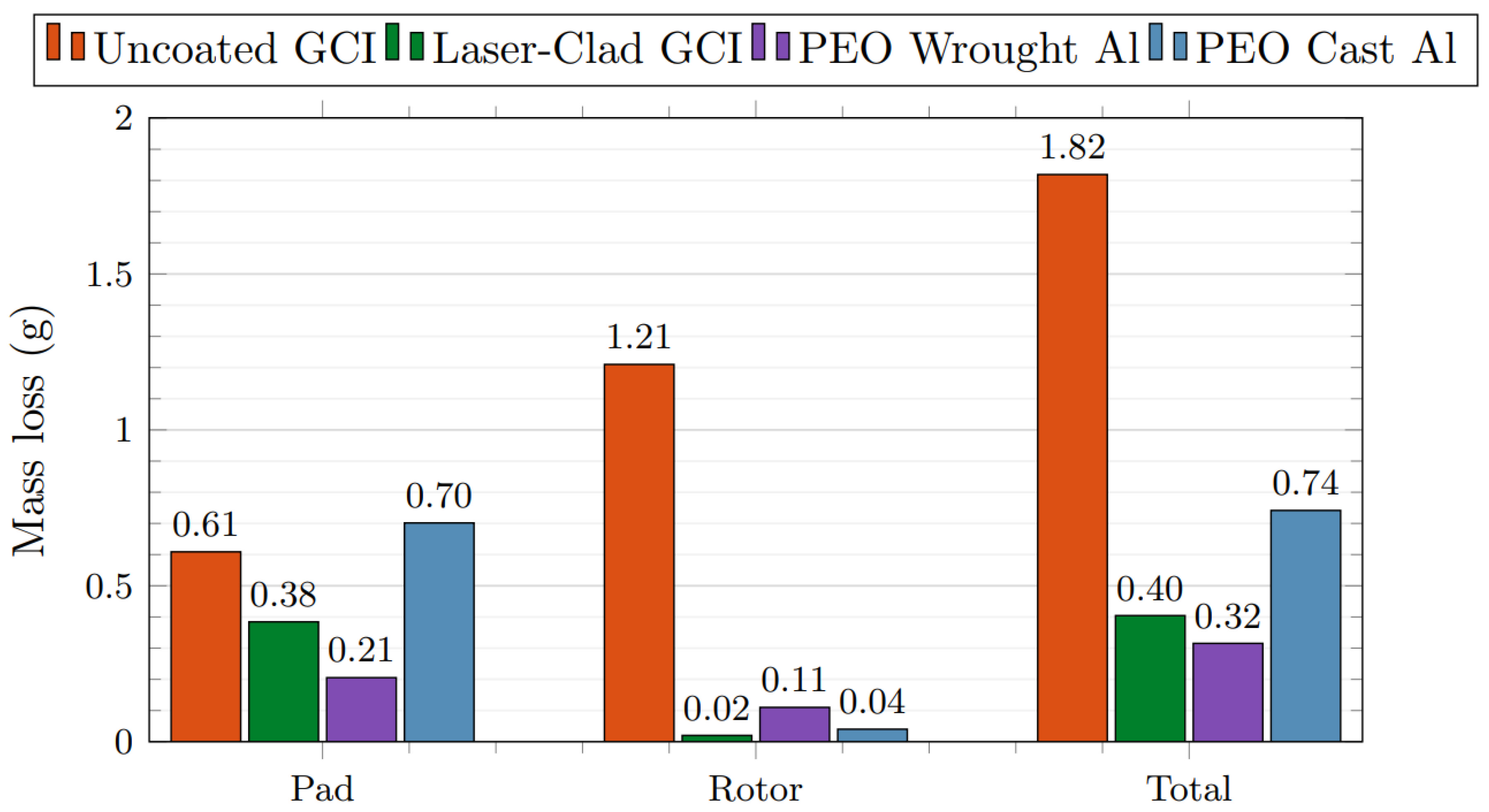
Figure 12 shows the average mass loss per WLTP cycle of both the frictional material and the small-scale brake rotors measured gravimetrically at the end of all eight WLTP test cycles. It can be seen that the pad mass loss was significantly reduced for both the laser-clad GCI and PEO-treated wrought Al rotors compared with the uncoated GCI, but this loss was somewhat increased for the cast Al rotor, perhaps due to its greater surface roughness. Most importantly, the rotor mass loss for all the coated rotors was dramatically reduced by a factor of at least 10 compared with the uncoated GCI. Figure 12 also indicates that most of the total mass loss for all three coated rotors originates from the friction material, with rotor wear accounting for a much smaller proportion of the total wear compared with the uncoated GCI. This is similar to the order-of-magnitude difference between the dimensional wear of the pad and that of the PEO-treated full-size Al rotor reported by Shrestha et al. [15]. Such a decrease in rotor wear will lead to a reduction in maintenance requirements and an increased lifespan of full-size rotors coated with such hard materials.
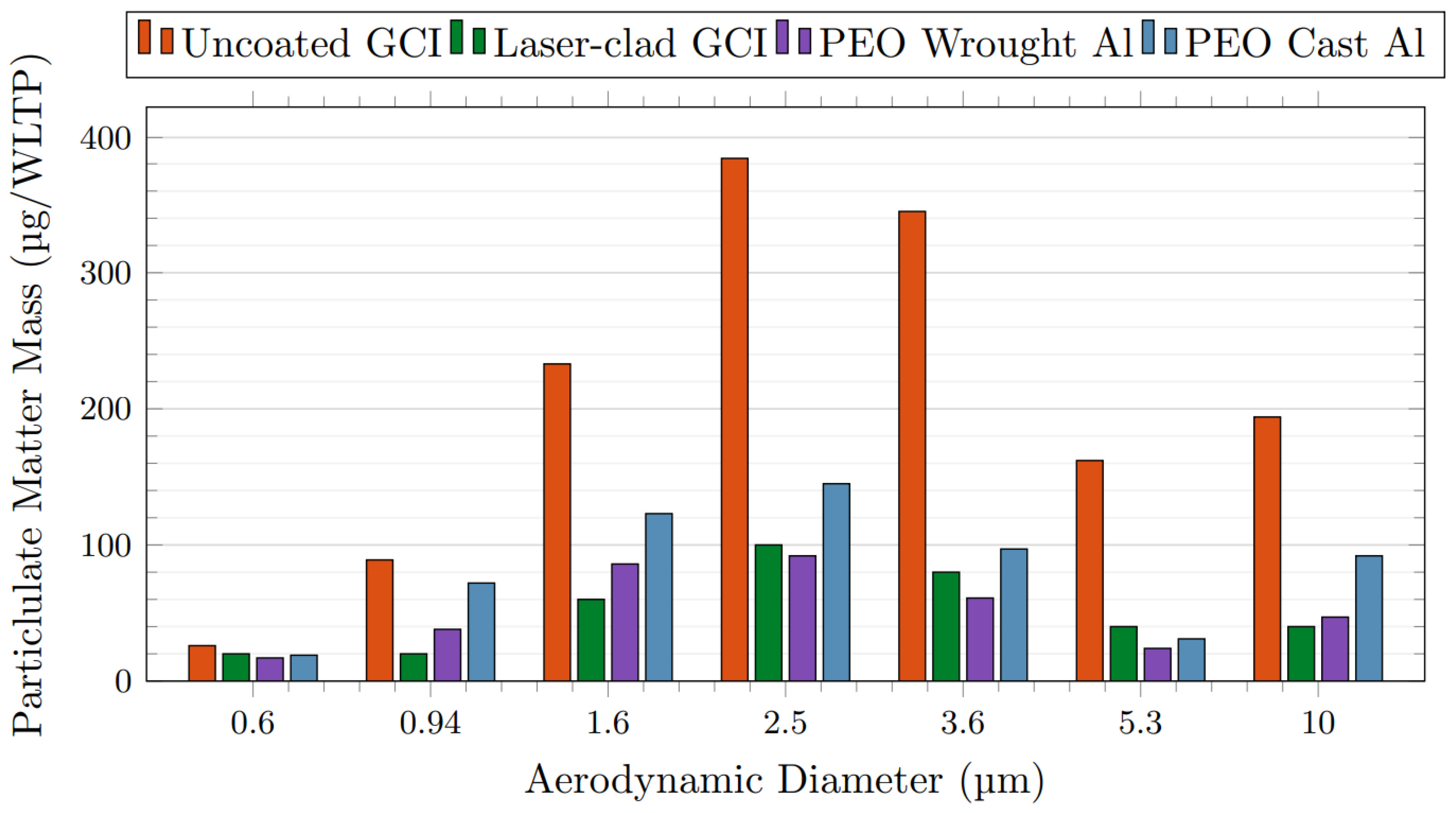
Figure 13 shows the PM masses collected within each stage of the Dekati ELPI+ averaged over WLTP cycles 6–8 for all four friction pairs tested. Note that, for all samples, insufficient mass was found to be deposited on the Dekati stage 1–8 foils (see Table 2) for accurate gravimetric measurement. It can be seen from Figure 13 that the uncoated GCI rotor produced the highest PM emissions in all size ranges. Of the coated rotors, the PEO-treated cast alloy produced the highest PM emissions in most size ranges, again possibly due to its greater surface roughness.
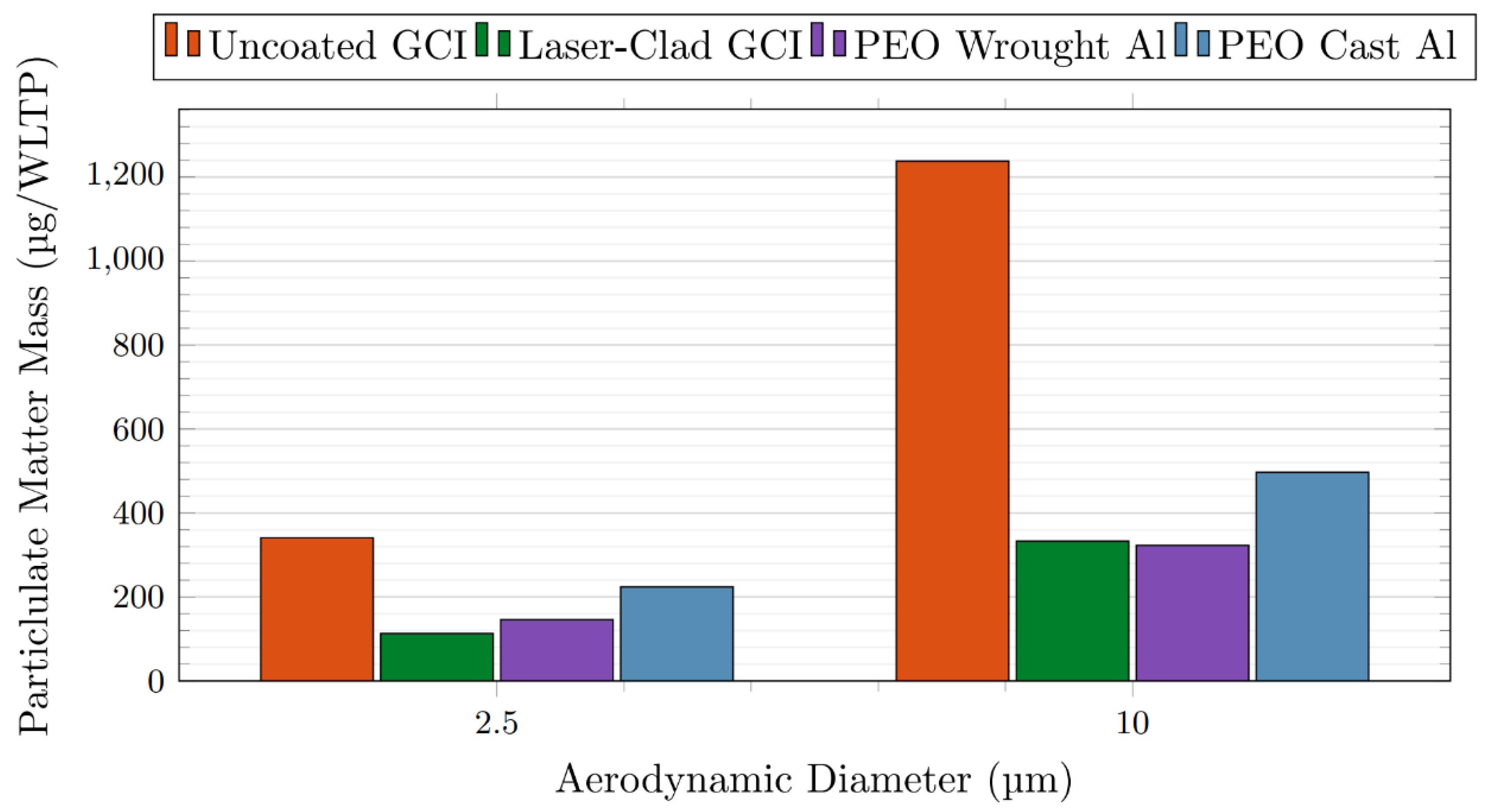
As expected, the average accumulated PM2.5 and PM10 emissions per WLTP cycle shown in Figure 14 follow the same trends as the gravimetric wear loss shown in Figure 12. For example, the laser-clad GCI rotor reduced PM2.5 and PM10 mass by 67% and 73%, respectively, compared to the uncoated GCI system. The emissions for the wrought Al alloy were similarly reduced by about 75%, but the cast Al alloy rotor produced noticeably higher emissions than the other two coated rotors in both size ranges. From comparison of Figure 12 and Figure 14, it is obvious that the reductions in PM emissions released during braking for the coated rotors are closely correlated with their respective total gravimetric wear rates. Thus, for example, the PEO-treated cast alloy sample produces the highest mass loss and PM2.5/PM10 emissions of the three coated rotors. Similar reductions in PM2.5 and PM10 emissions for a PEO-treated wrought Al full-size rotor compared with uncoated GCI were found by Ghouri [17]. This reduction in PM emissions was even greater after both rotors had been subjected to a severe corrosion cycle.

4.3. Discussion of Results and Comparison with Euro 7 Legislation

To accurately compare the PM emissions measured on the small-scale rig with the limits set out by Euro 7 legislation, the data from the Dekati ELPI+ must be scaled to estimate the total PM10 emissions for a whole vehicle. The vacuum pump connected to the Dekati was set to extract a sample of air from within the exhaust system under isokinetic conditions at a flow rate of 10 L/min. Firstly, the measured emissions for this air sample P M d e k a t i must be scaled up to give the PM emissions for the total air flow in the small-scale exhaust ducting P M s m a l l - s c a l e . Since the isokinetic sampling conditions give the same air velocities, the factor is simply the ratio of the areas of the full exhaust ducting A d u c t   t o   t h a t   o f the Dekati sampling probe A d e k a t i   a s   i n d i c a t e d   i n Equation (7):
P M s m a l l - s c a l e = P M d e k a t i × A d u c t A d e k a t i
The next step in the process is to scale the current emissions data to predict what would be expected for a full-scale brake. Limmer [23] determined that the energy-based scaling factor, f, defined in Equation (4) should lie between 11.72 and 17.22 based on the ratio between the small-scale and typical full-size pad contact areas. In practice, the size of a brake is specified by the diameter of the rotor rather than the dimensions of the pad (which are often varied depending on the particular application). Therefore, an alternative scaling factor was determined using the ratio between the rotor areas, as defined in Equation (8):
f = A r e a   o f   f u l l - s c a l e   r o t o r A r e a   o f   s m a l l - s c a l e   r o t o r
For the present case study, the diameter of a full-scale rotor for a standard passenger vehicle was assumed to be 350 mm. This compares with the 95 mm diameter of the small-scale rotor, providing a scaling factor f = 13.57 (square of the diameter ratio). This lies comfortably within the specified range of 11.72 to 17.22 based on typical pad areas (Equation (4)). Considering the fact that the small-scale setup only measures emissions from one side of the brake rotor, Equation (9) was then used to extrapolate the small-scale PM emissions per WLTP cycle to those for a full-scale brake of 350 mm rotor diameter:
P M f u l l - s c a l e = P M s m a l l - s c a l e × f × 2
Based on the 192 km duration of each WLTP cycle, it was estimated from the present small-scale test results shown in Figure 14 that 7.78 mg/km of PM10 would be released from a single full-scale uncoated GCI brake under WLTP driving conditions. This value is within the range of 1.7 to 7.9 mg/km for PM10 reported by Grigoratos et al. [28] based on interlaboratory full-scale dynamometer testing for a similar GCI rotor and low metallic pad pairing (designated Br1Fa in [28]). A similar comparison can be made for the estimated full-scale PM2.5 emissions, which were 2 mg/km from the small-scale rig compared with an average of 1.9 mg/km from the round-robin dynamometer testing [28]. These generally close comparisons validate the small-scale approach to emissions measurements as being representative of a full-size brake.
The final step in aligning the small-scale test results with the limits on PM10 emissions specified by Euro 7 legislation for a light-duty (assumed four-wheeled) vehicle is to multiply the calculated PM for the full-scale single brake by a factor of 4. This calculation assumes that all four brake rotors are identical in size and emit the same amount of PM emissions. However, due to load transfer during braking, the front brakes typically generate more braking force than the rear, leading to larger front brake rotors and higher emissions. For more precise estimation, the data could be separately scaled for the different-sized front and rear rotors. However, for the purpose of this study, this distinction was deemed unnecessary based on the assumption that the mean diameter of both front and rear rotors was 350 mm and that all four brakes were subject to the same braking duty.
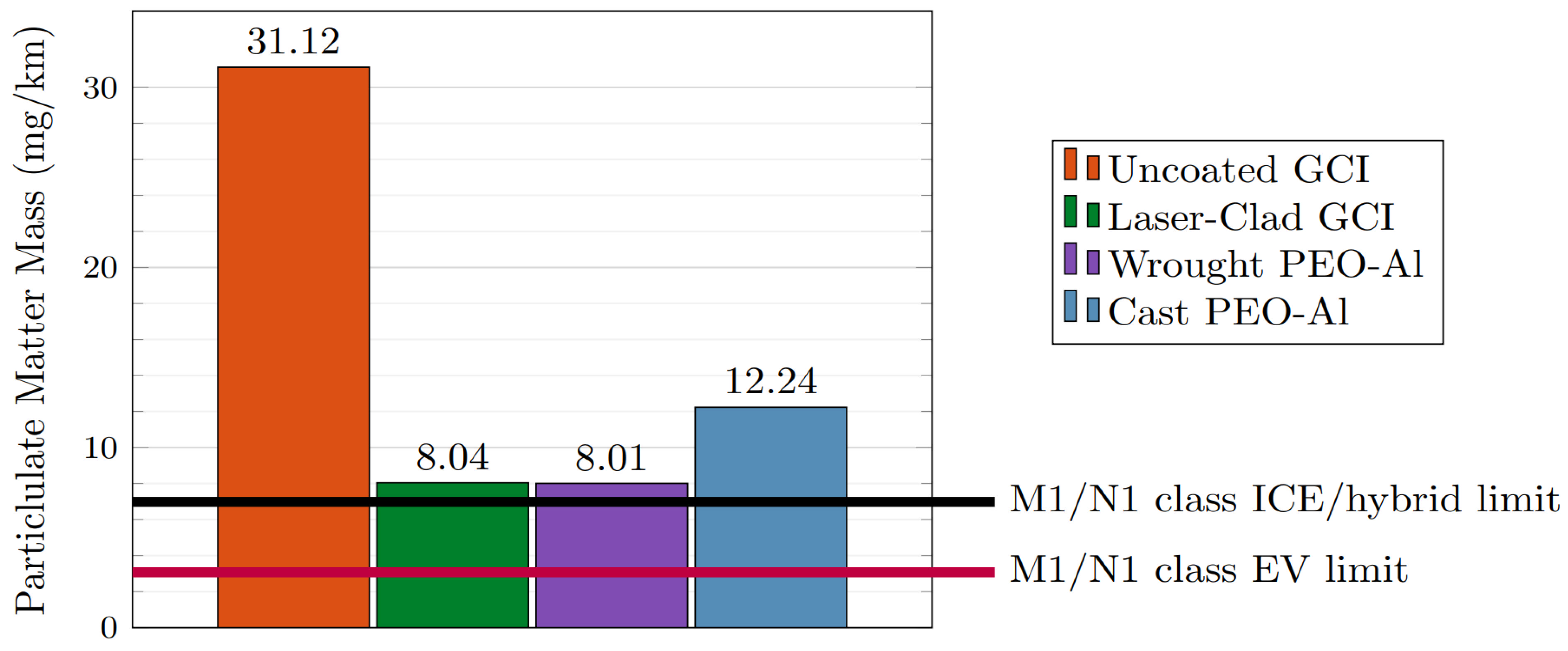
The resulting total PM10 emissions of 31.12 mg/km for a full-sized vehicle fitted with four uncoated GCI brakes are shown in Figure 15, alongside the corresponding values for the same vehicle fitted with each of the three coated rotors considered in this study. Also shown in Figure 15 are the emissions limits imposed by the Euro 7 regulations for light-duty internal combustion engine (ICE) vehicles (including hybrids) and battery-electric vehicles (EVs) from 2026 until at least 2030, when even tighter limits are planned.
As shown in Figure 15, Euro 7 limits the PM10 for battery EVs to 3 mg/km, while ICE/hybrid vehicles are limited to 7 mg/km. The WLTP brake cycle simulates driving conditions for ICE vehicles, and so the 7 mg/km threshold was most relevant to the present study. Figure 15 suggests that the uncoated GCI rotor would exceed this threshold by a factor of 4.5, while the laser-clad GCI rotor was estimated to exceed the threshold by a much smaller factor of only 1.2. Given that the friction material was not optimised to run against this particular coating, it is very likely that similar laser-clad GCI rotors would indeed be able to meet the higher Euro 7 limit of 7 mg/km for ICE/hybrid vehicles.
The same factor of about 1.2 with respect to the Euro7 ICE limits was predicted for the PEO-treated wrought rotor, but the cast alloy rotor exceeded the prescribed ICE limit by a factor of around 1.75. However, more recent experience with PEO treatment of a cast Al alloy rotor has indicated that a smoother surface finish can be obtained that could reduce the emissions from such a cast rotor to the level of the PEO-treated wrought alloy. Such a development would enable standard Al casting technology to be used to manufacture ventilated rotors, which could then be PEO-treated in a relatively cost-effective and environmentally friendly automated production process.
Coated Al rotors could not only reduce brake emissions but also, by minimising the unsprung mass of the vehicle, reduce the other main sources of non-exhaust emissions due to tyre wear and road damage. A further advantage of PEO-treated Al rotors is that recent work has demonstrated that emissions from such rotors are much less affected by corrosion as a result of adverse service conditions than either uncoated GCI or Al-MMC rotors [17].

5. Conclusions

The small-scale test rig with its unique emissions-capture facility has demonstrated that useful results can be generated not only on the friction and wear of novel brake friction pairs but also on airborne emissions for comparison with the limits set by the impending Euro 7 legislation. After extrapolating the results to allow for the actual air flow through the ducting system and scaling up the results for a full-size brake, the results are comparable to those from full-scale dynamometer tests.
This study demonstrated a clear need to replace the conventional uncoated GCI rotor currently used in the majority of passenger cars due to its poor wear resistance and high PM emissions. Specifically, the uncoated GCI rotor was predicted to exceed Euro 7 limits for an ICE vehicle by a factor of 4.5. In contrast, the laser-clad GCI rotor substantially reduced both total gravimetric wear rates and associated PM10 emissions by about 75% compared with the uncoated rotor. Once fully conditioned, the laser-clad GCI rotor was also found to maintain a stable CoF of around 0.5, which was very similar to that of the uncoated GCI. These results suggest that a laser-clad rotor can provide a reliable braking performance as well as reduced emissions without the need to alter the current design and casting technology used for conventional GCI brake rotors.
The PEO-treated Al rotors were also shown to have negligible wear and much reduced emissions. The wrought alloy was found to have a higher CoF of around 0.65, but still reduced PM10 emissions by about 75% compared with the uncoated GCI value. In contrast, the PEO-treated cast alloy gave a lower CoF of around 0.5 but a lower reduction of emissions of only 60% compared with the uncoated GCI value. This is thought to be due to the higher surface roughness of the PEO-treated cast alloy compared with the wrought material.


Author Contributions

Writing—original draft, M.C. and F.L.; Writing—review & editing, Y.H., C.A.G. and D.C.B.; Supervision, Y.H., C.A.G. and D.C.B. All authors have read and agreed to the published version of the manuscript.

Funding

This research received no external funding.

Data Availability Statement

The original contributions presented in the study are included in the article, further inquiries can be directed to the corresponding author.

Acknowledgments

We would like to thank Meritor Heavy Vehicle Braking Systems and TWI Ltd. for supplying the GCI rotor and laser-clad coating required to generate the laser-clad GCI test samples, as well as TMD Friction for supplying the friction material samples. Many thanks also to S. Shrestha of Curtiss-Wright (Keronite) for conducting the PEO treatment of the Al alloy samples and to F. Shaikh (Leeds University) for the surface analysis of the laser-clad GCI samples.

Conflicts of Interest

Author Matthew Currie is employed by MBDA and Author Fabian Limmer is employed by Audi AG. The remaining authors declare that the research was conducted in the absence of any commercial or financial relationships that could be construed as a potential conflict of interest.

Abbreviations

The following abbreviations are used in this manuscript:
Al-MMCAluminium Metal Matrix Composite
CoFCoefficient of Friction
EDSEnergy Dispersive X-ray Spectroscopy 
EVElectric Vehicle
GCIGrey Cast Iron
IBTInitial Brake Temperature
ICEInternal Combustion Engine
LCALife Cycle Assessment
NEENon-Exhaust Emissions
PEOPlasma Electrolytic Oxidation
PMParticulate Matter
SEMScanning Electron Microscopy
SSStainless Steel
UMTUniversal Mechanical Tester
WLIWhite Light Interferometry
WLTPWorldwide harmonised Light vehicle Test Procedure

References

  1. European Commission. Proposal for a Regulation of the European Parliament and of the Council on Type-Approval of Motor Vehicles and Engines and of Systems, Components and Separate Technical Units Intended for Such Vehicles, with Respect to Their Emissions and Battery Durability (Euro 7); European Commission: Brussels, Belgium, 2022. [Google Scholar]
  2. Van Der Gon, H.D.; Hulskotte, J.; Jozwicka, M.; Kranenburg, R.; Kuenen, J.; Visschedijk, A. European emission inventories and projections for road transport non-exhaust emissions: Analysis of consistency and gaps in emission inventories from EU member states. In Non-Exhaust Emissions; Elsevier: Amsterdam, The Netherlands, 2018; pp. 101–121. [Google Scholar]
  3. Riediker, M.; Devlin, R.B.; Griggs, T.R.; Herbst, M.C.; Bromberg, P.A.; Williams, R.W.; Cascio, W.E. Cardiovascular effects in patrol officers are associated with fine particulate matter from brake wear and engine emissions. Part. Fibre Toxicol. 2004, 1, 2. [Google Scholar] [CrossRef] [PubMed]
  4. Peikertova, P.; Filip, P. Influence of the Automotive Brake Wear Debris on the Environment—A Review of Recent Research. SAE Int. J. Mater. Manuf. 2016, 9, 133–146. [Google Scholar] [CrossRef]
  5. Aranke, O.; Algenaid, W.; Awe, S.; Joshi, S. Coatings for Automotive Gray Cast Iron Brake Discs: A Review. Coatings 2019, 9, 552. [Google Scholar] [CrossRef]
  6. Cai, R.; Zhang, J.; Nie, X.; Tjong, J.; Matthews, D.T.A. Wear mechanism evolution on brake discs for reduced wear and particulate emissions. Wear 2020, 452, 203283. [Google Scholar] [CrossRef]
  7. Hesse, D.; Hamatschek, C.; Augsburg, K.; Weigelt, T.; Prahst, A.; Gramstat, S. Testing of Alternative Disc Brakes and Friction Materials Regarding Brake Wear Particle Emissions and Temperature Behavior. Atmosphere 2021, 12, 436. [Google Scholar] [CrossRef]
  8. Menapace, C.; Mancini, A.; Federici, M.; Straffelini, G.; Gialanella, S. Characterization of airborne wear debris produced by brake pads pressed against HVOF-coated discs. Friction 2019, 8, 421–432. [Google Scholar] [CrossRef]
  9. Lyu, Y.; Leonardi, M.; Mancini, A.; Wahlström, J.; Olofsson, U. Tribolog and airborne paricle emission of laser-cladded Fe-based coains versus non-asbestos oranic and low-metallic brake materials. Metals 2021, 11, 1703. [Google Scholar] [CrossRef]
  10. Zhang, H.; Ma, X.; Tao, W. Microstructure and tribological behavoiur of exteme high-speed laser-cladded TiC coatings on gray cast iron brake disks. J. Them. Spray Tech. 2025, 34, 3294–3307. [Google Scholar] [CrossRef]
  11. Ahmad, F.; Lo, S.J.; Aslam, M.; Haziq, A. Tribology Behaviour of Alumina Particles Reinforced Aluminium Matrix Composites and Brake Disc Materials. Procedia Eng. 2013, 68, 674–680. [Google Scholar] [CrossRef]
  12. Oda, N.; Sugimoto, Y.; Higuchi, T.; Minesita, K. Development of Disk Brake Rotor Utilizing Aluminum Metal Matrix Composite; SAE Technical Paper; SAE International: Warrendale, PA, USA, 1997. [Google Scholar] [CrossRef]
  13. Wycliffe, P. Friction and Wear of Duralcan Reinforced Aluminum Composites in Automotive Braking Systems; SAE Technical Paper; SAE International: Warrendale, PA, USA, 1993. [Google Scholar] [CrossRef]
  14. Ghouri, I.; Barker, R.; Brooks, P.C.; Barton, D.C. Particle emissions from an aluminium metal matrix compsite brake otor before and after corrosion. In Proceedings of the EuroBrake 2023 Conference Proceedings, Barcelona, Spain, 12–14 September 2023. [Google Scholar]
  15. Shrestha, S.; Francis, R.; Smith, A. RELIAVBLE: Wear Resstent Lightweight Alummiun Brakes for Veicles. In Proceedings of the EuroBrake 2020 Conference Proceedings, Barcelona, Spain, 2–4 June 2020. [Google Scholar]
  16. Gulden, F.; Reinhold, B.; Gramstat, S.; Stich, A.; Tetzlaff, U.; Höppel, H. Investigation of the run-in and corrosion behavior of a PEO-coated aluminum brake disc. In 10th International Munich Chassis Symposium 2019; Springer: Berlin/Heidelberg, Germany, 2019; pp. 611–631. [Google Scholar]
  17. Ghouri, I. The impact of corrosion on the particle wear emissions generated from different brake rotor surfaces. In Proceedings of the SAE Braking Colloquium, Grand Rapids, MI, USA, 21–24 September 2025. [Google Scholar]
  18. Olofsson, U.; Lyu, Y.; Åström, A.H.; Wahlström, J.; Dizdar, S.; Nogueira, A.P.G.; Gialanella, S. Laser Cladding Treatment for Refurbishing Disc Brake Rotors: Environmental and Tribological Analysis. Tribol. Lett. 2021, 69, 57. [Google Scholar] [CrossRef]
  19. Gradin, K.T.; Åström, A.H. Comparative life cycle assessment of car disc brake systems—Case study results and method discussion about comparative LCAs. Int. J. Life Cycle Assess. 2020, 25, 350–362. [Google Scholar] [CrossRef]
  20. Currie, M. Comparative Life Cycle Assessment of Novel Environmentally Friendly Brake Rotors. Ph.D. Thesis, University of Leeds, Leeds, UK, 2025. [Google Scholar]
  21. Limmer, F.; Barton, D.; Brooks, P.; Gilkeson, C.; Kosarieh, S. Development of a Small-Scale Test Bench for Investigating the Tribology and Emission Behaviour of Novel Brake Friction Couples. In Proceedings of the EuroBrake 2021 Conference Proceedings, Virtual, 17–21 May 2021. [Google Scholar]
  22. Preston, J.; Forthofer, R. Correlation of Vehicle, Dynamometer and Other Laboratory Tests for Brake Friction Materials; SAE Technical Paper; SAE International: Warrendale, PA, USA, 1971. [Google Scholar] [CrossRef]
  23. Limmer, F. Tribology of Novel Friction Pairs for Environmentally Friendly Automotive Brakes. Ph.D. Thesis, University of Leeds, Leeds, UK, 2024. [Google Scholar]
  24. European Commission Regulation (EU) 2017/1151; European Commission: Brussels, Belgium, 2017.
  25. Mathissen, M.; Grochowicz, J.; Schmidt, C.; Vogt, R.; zum Hagen, F.H.F.; Grabiec, T.; Steven, H.; Grigoratos, T. A novel real-world braking cycle for studying brake wear particle emissions. Wear 2018, 414, 219–226. [Google Scholar] [CrossRef]
  26. Barras, J.; Wu, Y. Improving Brake Discs with Coatings Applied by Extreme High-Speed Laser Application. In Proceedings of the Eurobrake 2023, Barcelona, Spain, 12–14 September 2023. [Google Scholar]
  27. Alnaqi, A.A.; Kosarieh, S.; Barton, D.C.; Brooks, P.C.; Shrestha, S. Material characterisation of lightweight disc brake rotors. Proc. Inst. Mech. Eng. Part L J. Mater. Des. Appl. 2018, 232, 555–565. [Google Scholar]
  28. Grigoratos, T.; Mathissen, M.; Vedula, R.; Mamakos, A.; Agudelo, C.; Gramstat, S.; Giechaskiel, B. Interlaboratory Study on Brake Particle Emissions—Part I: Particulate Matter Mass Emissions. Atmosphere 2023, 14, 498. [Google Scholar] [CrossRef]
Figure 1. Parameters considered in designing a small-scale test bench.
Lubricants 14 00123 g001
Figure 2. Overview of small-scale test bench showing from right-to-left: air supply unit, brake assembly, cascade impactor with sampling probe, and final air exhaust to laboratory fume extraction.
Lubricants 14 00123 g002
Figure 3. Details of enclosure and ducting system fitted to the Bruker UMT, exhaust air is sampled by the Dekati ELPI+ with sampling probe at 10 pipe diameters, di, downstream from the enclosure.
Lubricants 14 00123 g003
Figure 4. Cutting diagram for small-scale samples machined from a full-size laser-clad brake rotor.
Lubricants 14 00123 g004
Figure 5. NPFlex WLI profiles of the GCI surface (a) before laser cladding, (b) after laser cladding.
Lubricants 14 00123 g005
Figure 6. SEM images of the PEO-treated surface for (a) wrought Al alloy, (b) cast Al alloy.
Lubricants 14 00123 g006
Figure 7. NPFlex WLI profiles of the PEO-treated surfaces (a) wrought alloy, (b) cast alloy.
Lubricants 14 00123 g007
Figure 8. Friction material sample within the holder. The 20 mm longer side is aligned with the circumferential rotating direction of the rotor.
Lubricants 14 00123 g008
Figure 9. (a) Friction material loaded into the inverted upper bidirectional 500 N load cell. (b) Bruker UMT rotational drive before and after installing a small-scale rotor.
Lubricants 14 00123 g009
Figure 10. Typical CoF versus time plot for WLTP cycle 6–8 after bedding in.
Lubricants 14 00123 g010
Figure 11. Mean CoF across all 8 WLTP cycles for the different brake rotor materials.
Lubricants 14 00123 g011
Figure 12. Mass loss of the frictional material and small-scale rotors over the eight WLTP test cycles.
Lubricants 14 00123 g012
Figure 13. Mean mass of particulate matter collected at each impactor stage over WLTP cycles 6–8.
Lubricants 14 00123 g013
Figure 14. PM2.5 and PM10 emissions from the four different brake rotors.
Lubricants 14 00123 g014
Figure 15. Predicted PM10 emissions released from the whole vehicle for each rotor material compared with Euro 7 limits for light-duty vehicles (7 mg/km for ICE/hybrids, 3 mg/km for battery EVs).
Lubricants 14 00123 g015
Table 1. Comparison of parameter values used for reduced-scale testing to those of the full-size brake.
ParameterFull-ScaleSmall-Scale
RA7.8–10.29.1
RV1.751.76
θ37–49°42°
Disc mass6.5 kg0.4 kg (for GCI)
Table 2. Aerodynamic particle sizes for different stages of Dekati ELPI+.
Dekati ELPI+ Impactor StageNominal Cut-Off Size (µm)Mean Diameter (µm)
1510-
145.37.3
133.64.4
122.53
111.62
100.941.2
90.60.75
80.380.48
70.250.31
60.150.19
50.0940.12
40.0540.071
30.030.04
20.0160.022
10.0060.01
Table 3. Arithmetical mean height, Sa, and maximum height, Sz, of the GCI surfaces before and after laser cladding (with standard deviations in parentheses).
Uncoated GCILaser-Clad GCI
Sa (µm)0.096 (0.004)0.108 (0.002)
Sz (µm)7.69 (1.98)8.44 (3.83)
Table 4. Elemental composition in percentage by weight for the different rotor/substrate materials (GCI = EN-GJL-250, 430L SS = EN 10088, Wrought Al = EN AW-6082, Cast Al = EN AC-42000).
ElementGCI430L SSWrought AlCast Al
Fe92–9478–800–0.50–0.55
Al--95.2–98.389.9–93.3
Cr-16–180–0.25-
C3.1–3.40.12--
Si2.5–2.81.00.7–1.36.5–7.5
Mn0.5–0.71.00.4–1.00–0.35
P0–0.90.040--
S0–0.150.03--
Mg--0.6–1.20.2–0.65
Zn--0–0.20–0.15
Ti--0–0.10.0.25
Cu--0–0.10–0.2
Ni---0–0.15
Pb---0–0.15
Sn---0–0.050
Table 5. Arithmetical mean height, Sa, and maximum height, Sz, of the PEO-treated wrought Al alloy and cast alloy surfaces (with standard deviations in parentheses).
PEO-Treated Wrought AlPEO-Treated Cast Al
Sa (µm)2.123 (0.178)2.763 (0.097)
Sz (µm)32.277 (2.303)60.480 (3.440)
Table 6. Percentage weight composition of the friction materials as determined by EDS (FM1 was used for uncoated GCI and laser-clad rotors, FM5 was used for the PEO-treated Al rotors).
ElementFM1FM5
Fe21.920.6
Cu9.5-
Al9.91.3
Zn6.7-
Sn6.35.7
Mg8.113.1
Si4.810.0
S3.95.0
Cr2.83.0
K1.80.7
Ca0.60.7
Ti0.4-
P-0.4
Ba-8.1
Bi-6.7
Disclaimer/Publisher’s Note: The statements, opinions and data contained in all publications are solely those of the individual author(s) and contributor(s) and not of MDPI and/or the editor(s). MDPI and/or the editor(s) disclaim responsibility for any injury to people or property resulting from any ideas, methods, instructions or products referred to in the content.