


Abstract
High-power clutches operating under high-frequency engagement–disengagement cycles demand piston ring seals with exceptional leakage control and tribological reliability. Conventional architectures often experience lubrication failure and severe adhesive wear during transient pressure fluctuations. This research proposes an autonomous intelligent sealing strategy leveraging fluid pressure-induced morphological evolution. By strategically integrating periodic macroscopic structural relief features on the non-sealing surface, the sealing interface transforms into a micron-scale wavy topography in response to hydraulic loading. This structurally embedded intelligence significantly improves fluid pressure distribution, facilitating a transition toward a more favorable lubrication regime. Furthermore, a “self-healing and positional stagnation” logic is elucidated: upon pressure dissipation, the induced waviness elastically recovers to a planar state to ensure sealing integrity, while the ring maintains its axial position due to the predominant frictional resistance of the secondary seal. This synergistic mechanism effectively precludes deleterious dry friction during the clutch disengagement phase. High-fidelity numerical investigations, benchmarked against established experimental data, identify the rectangular groove configuration as the optimal geometry for maximizing waviness amplitude (≈1.5 µm). This research provides a robust framework for developing responsive, zero-wear intelligent seals in advanced power transmissions.
1. Introduction
Piston ring seals serve as critical dynamic sealing components in rotating systems of advanced equipment such as aircraft and naval vessels, and their performance directly determines the reliability and stability of the entire system [1,2,3,4]. To adapt to complex operating conditions involving high pressure, high speed, and frequent start–stop cycles, constructing micron-scale circumferential waviness on the sealing end face has become an important approach to enhance hydrodynamic effects and improve the service life of seals [5,6]. The waviness structure can generate pumping and squeezing actions on the lubricant during relative motion, forming a periodic hydrodynamic pressure distribution at the sealing interface [7,8]. This strategic integration of surface waviness yields a substantial enhancement in interfacial film stiffness, thereby fortifying the seal’s resilience against transient impact loads and periodic axial run-out. This fundamental mechanism stems from the deterministic generation of a multi-peak hydrodynamic pressure field. Specifically, the circumferential wavy morphology creates a series of micro-scale convergent gaps; as the lubricant is entrained into these converging zones, the resulting ‘wedge effect’ triggers a sharp localized pressure escalation, which serves as a potent restorative force against film thickness perturbations. Consequently, this increased normal stiffness (dF/dh) optimizes the interfacial load-sharing capacity, expediting the transition from boundary lubrication to a more stable mixed or full-film regime, and effectively neutralizing the risks of localized thermal excitation and adhesive wear [9,10]. In practice, however, the waviness amplitude is typically only at the micron scale. Traditional grinding is limited by machine tool precision and wheel wear [11], while laser processing tends to cause surface damage [12]. Both methods struggle to achieve highly precise and controllable waviness structures.
However, recent studies on advanced sealing systems have revealed that conventional sealing designs often struggle with unintended dynamic constraints and structural rigidity. For instance, it has been demonstrated that excessive frictional coefficients and improper clearances can lead to the ‘locking’ of piston rings within their grooves, which severely compromises sealing and damping efficiency [13]. Furthermore, while innovative fixed architectures like sectorial labyrinth structures can improve leakage control, they remain essentially passive and cannot dynamically adjust to fluctuating operational loads [14]. These limitations underscore the need for a sealing interface that transcends static geometric optimization to achieve active, responsive adaptation.
To overcome these bottlenecks, this work distinguishes itself from existing passive designs by proposing a fundamentally different pre-deformation forming method based on fluid pressure induction [15,16]. Instead of relying on fixed geometries, this approach presents macroscopic structural relief features on the non-sealing surface of the ring to induce controllable elastic deformation under oil supply conditions, enabling high-precision and adaptive waviness formation [17,18]. Under high-pressure oil supply, the structure generates periodic waviness that significantly reduces the friction coefficient and wear rate [19,20], while the amplitude can be dynamically adjusted with oil pressure, achieving a level of responsive matching hydrodynamic effects that is difficult to attain with static structures [21,22].
In addition, the structure demonstrates a highly sensitive and reliable disengagement response in clutch operations: when oil supply is interrupted, the pressure-induced waviness rapidly dissipates, forming a stable clearance between the primary sealing surface and the shaft-groove end face to preemptively eliminate the risk of dry friction contact [23,24]. This rapid morphological recovery ensures that the seal can transit between operational and idle states with minimal mechanical interference. Conversely, when oil supply resumes during clutch engagement, the sealing surface quickly re-establishes its profile, reconstructing the sealing function within milliseconds [25,26]. This mechanism establishes an autonomous, self-adaptive sealing paradigm that effectively decouples high-performance sealing from the detrimental effects of transient operation [27]. It provides a robust and deterministic pathway for morphological evolution and functional recovery, ensuring the long-term integrity and operational agility of sealing systems under extreme, high-frequency duty cycles [28,29].
2. Materials and Methods
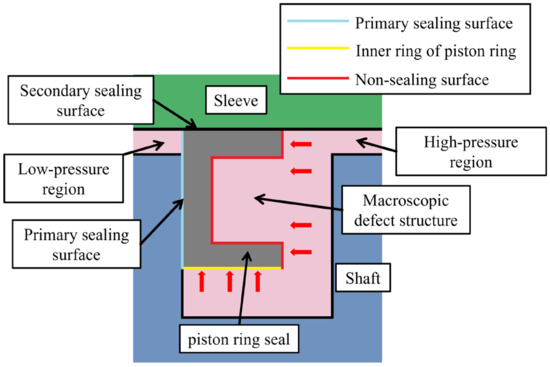
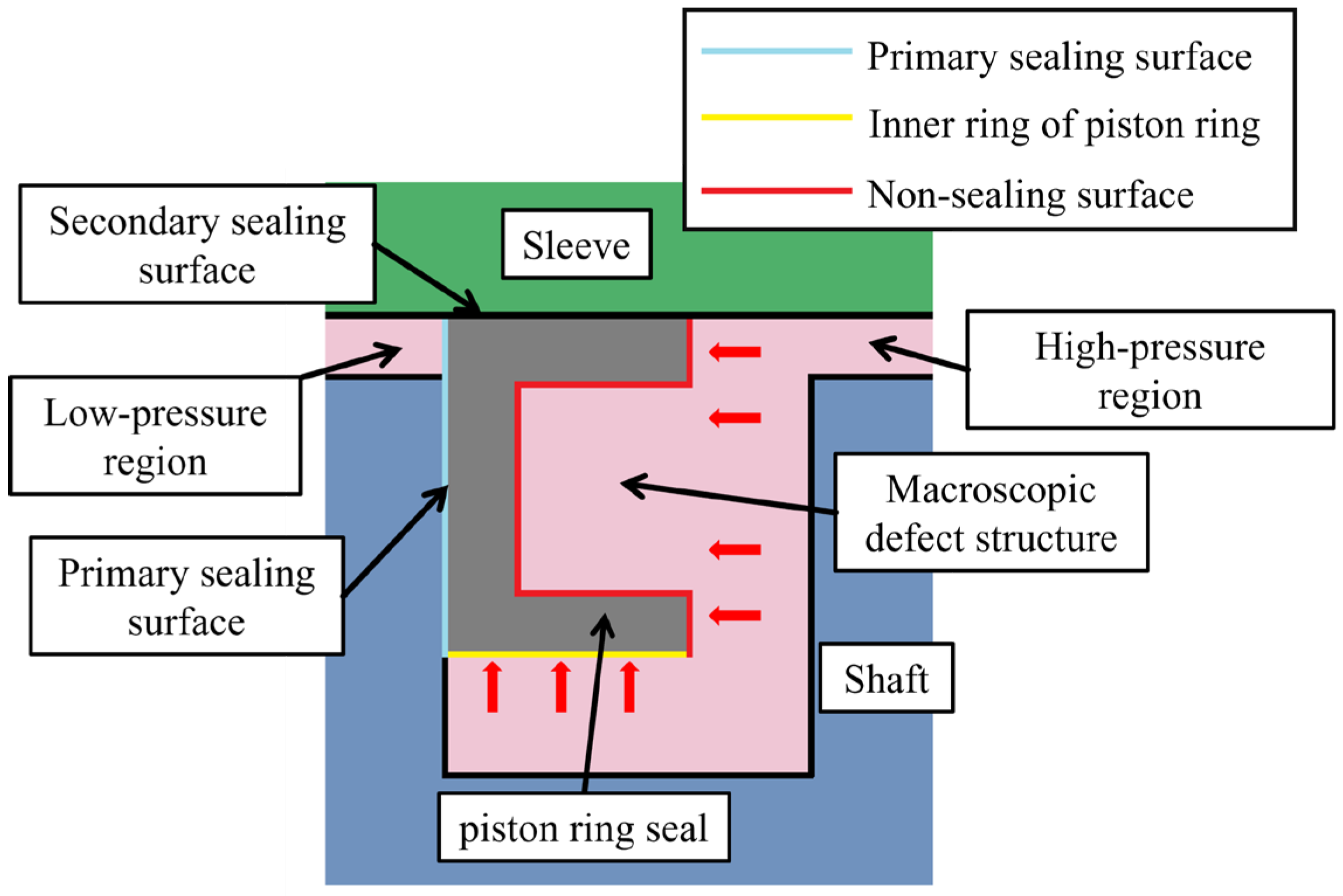
This research focuses on the reliability issues of clutch sealing systems under high-frequency start–stop and high-pressure operating conditions and proposes a fluid-pressure-induced waviness forming method for the primary sealing surface of piston ring seals. The research object is a piston ring seal ring made of CrMoCu alloy material AECC Shenyang Liming Aero-Engine Co., Ltd., Shenyang, China, with uniformly distributed macroscopic structural relief features designed on its non-sealing surface. These structures are intended to induce periodic deformation of the primary sealing surface under oil supply pressure. The operating principle under such conditions is illustrated in Figure 1.
Figure 1.
Working schematic of piston ring seal.
The sealing integrity of the piston ring is fundamentally maintained by the synergic contact at two interfaces. Under hydraulic loading, the fluid pressure acts on the top and back surfaces of the ring, axially pressing it against the groove flank to establish the primary sealing interface, which blocks the leakage path through the groove. Simultaneously, the initial elastic tension and the fluid pressure acting on the inner diameter force the ring radially against the cylinder wall, forming the secondary sealing interface. These contact pressures ensure a reliable static and dynamic seal by creating a high-impedance barrier to the fluid flow.
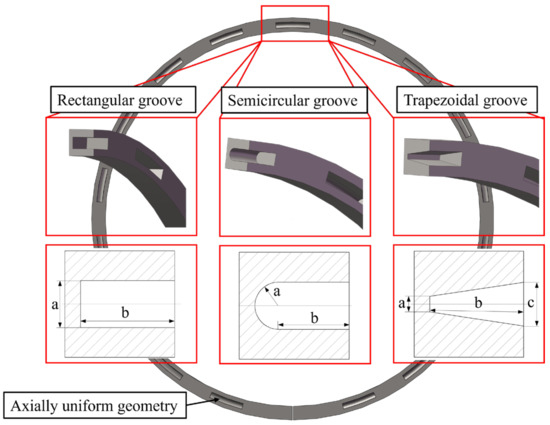
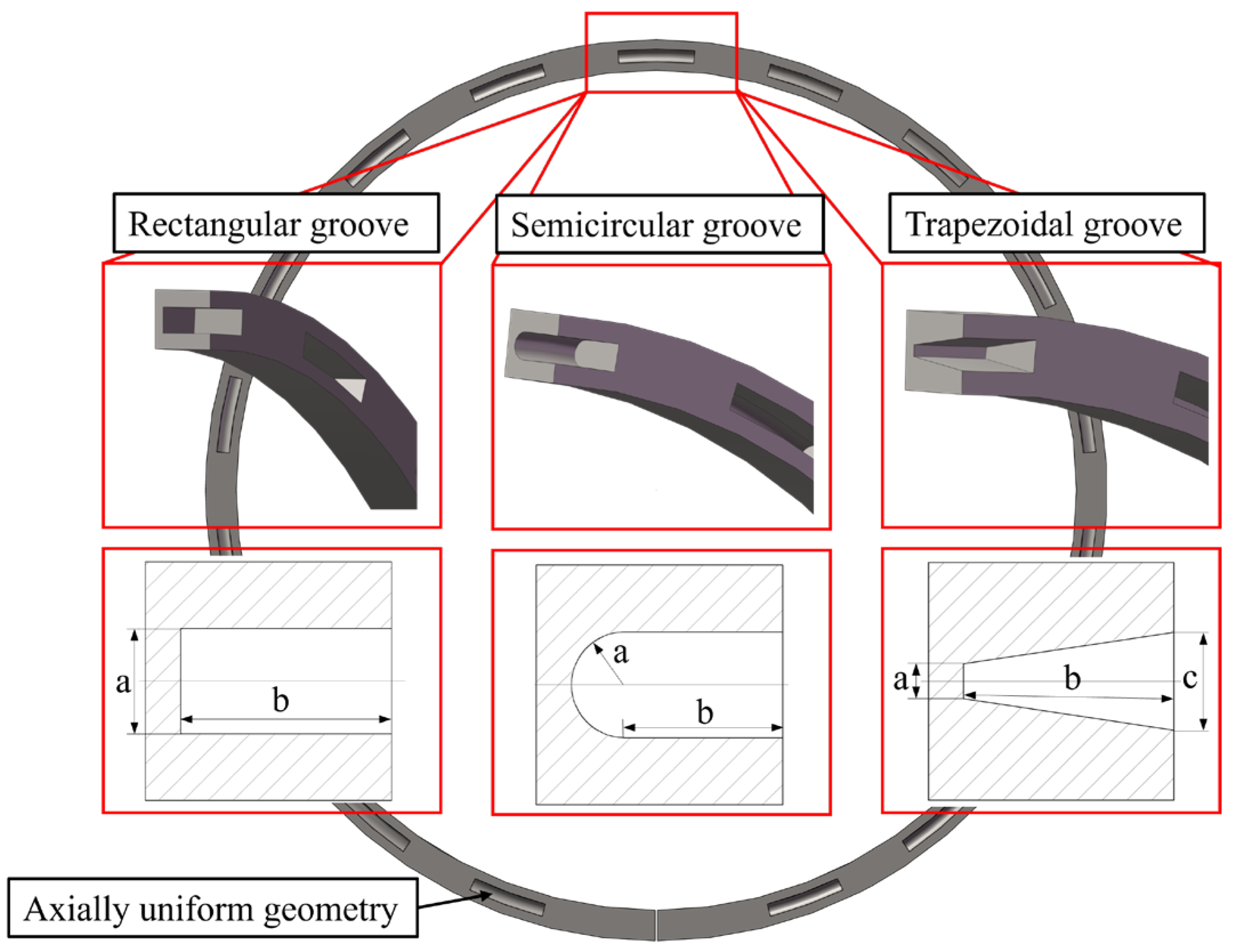
The piston ring seal ring has an outer diameter Ri = 50 mm, an inner diameter Ro = 46.6 mm, an axial height of 3.5 mm, and an opening clearance of 0.25 mm. On the back side of the primary sealing surface, i.e., the non-sealing surface, 17 uniformly distributed discontinuous macroscopic structural relief features are designed to induce periodic deformation of the sealing surface under fluid pressure loading, where the specific number (n = 17) is optimized to ensure a high-frequency hydrodynamic pressure distribution while maintaining structural rigidity and minimizing potential synchronous resonances. To investigate the influence of different macroscopic structural relief features on the sealing performance of the piston ring, three typical defect geometries are selected for comparative research: semicircular grooves, trapezoidal grooves, and rectangular grooves. The non-sealing surface structure of the piston ring seal ring and the three types of macroscopic structural relief features are shown in Figure 2.
Figure 2.
Three types of macroscopic structural relief features uniformly distributed on the non-sealing surface of piston ring seal.
The design parameters of the three macroscopic structural relief features on the non-sealing surface are listed in Table 1.
Table 1.
Table of design parameters for macroscopic structural relief features.
The three macroscopic structural relief features exhibit distinct differences in geometric characteristics, deformation response, and fluid film formation mechanisms, which directly determine the stability and reliability of the sealing ring under high-frequency start–stop operating conditions. By comparing key indicators such as maximum waviness amplitude (λ), end-face taper angle (α), and waviness number, the advantages and limitations of each structure can be revealed, providing a basis for subsequent optimization of macroscopic structural relief features.
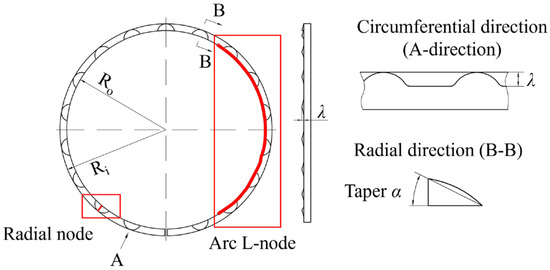
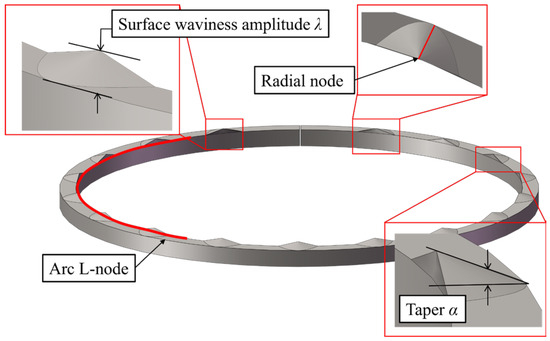
The values of the maximum periodic waviness amplitude (λ) and the end-face taper angle (α) were determined through a refined coupled analysis. Specifically, λ was obtained from the maximum axial deformation of the primary sealing interface calculated via ANSYS 2023R1 finite element simulation under the corresponding operating pressure. Subsequently, α was derived based on the geometric trigonometric relationship, using the calculated λ and the radial width of the piston ring seal (3.4 mm) as the catheti (tan α = λ/3.4).
Under fluid pressure loading, the primary sealing surface of the ring demonstrates a typical microscopic flexible response, forming a periodic waviness morphology induced by the macroscopic structural relief features. This waviness reflects the elastic deformation characteristics of the sealing material at the microscale and the dynamic regulation mechanism of the primary sealing surface under pressurized conditions. The specific deformation morphology is shown in Figure 3.
Figure 3.
Finite element analysis model deformation schematic.
To further elucidate the role of waviness structures in regulating sealing performance, this research conducts a coupled analysis of the maximum periodic waviness amplitude (λ) and the end-face taper angle (α). The waviness amplitude determines the hydrodynamic load-carrying capacity of the fluid film, while the taper angle influences the distribution of the sealing gap and the opening force. Together, these parameters govern the stability and reliability of the sealing system under high-frequency start–stop operating conditions. Their correlation and geometric schematic are illustrated in Figure 4.
Figure 4.
Geometric description of the microscopic protrusion structures on the primary sealing surface induced by fluid pressure.
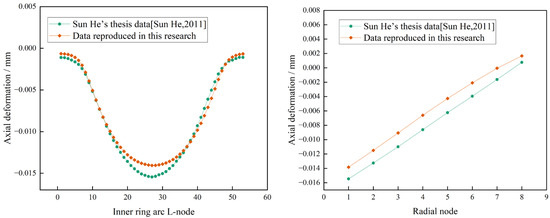
To ensure the scientific validity and reliability of the finite element modeling approach, a three-dimensional geometric model of the sealing ring was established and numerical calculations were performed. The experimental data published in Sun He’s work were selected as the basis for comparison [30,31]. That research conducted systematic experimental investigations on the hydrodynamic pressure distribution and sealing performance parameters of end-face circumferential waviness seals, providing representative and credible results that can serve as a benchmark reference for validating the present model. The comparison of calculation results is shown in Figure 5.
Figure 5.
Verification of numerical calculation results [30].
To verify the accuracy of the computational results, the displacement distribution of the primary sealing surface obtained from numerical simulations was compared with the experimental data reported in Sun He’s research. The results demonstrate a high degree of consistency in both trend and magnitude:
Hydrodynamic pressure distribution: The numerical results agree well with the experimental measurement curves in terms of overall variation, both showing a progressively enhanced hydrodynamic effect with increasing pressure loading.
Waviness amplitude (λ): The maximum waviness amplitude calculated in this research deviates from the experimental results by less than 10%, while the radial gradient distribution and the circumferential alternation of crests and troughs exhibit complete consistency.
Structural stability: Both simulation and experiment confirm that the waviness structure remains continuously stable during loading and unloading, with no abnormal deformation or instability observed.
These comparative results fully validate the correctness and effectiveness of the finite element modeling method and computational procedure employed in this work. Through cross-verification with Sun He’s experimental data, the developed model not only accurately reflects the deformation behavior of the sealing ring under pressure loading but also reliably predicts the generation and attenuation of micron-scale waviness on the primary sealing surface. This validation provides a solid theoretical and methodological foundation for further investigation into the mechanism of waviness formation.
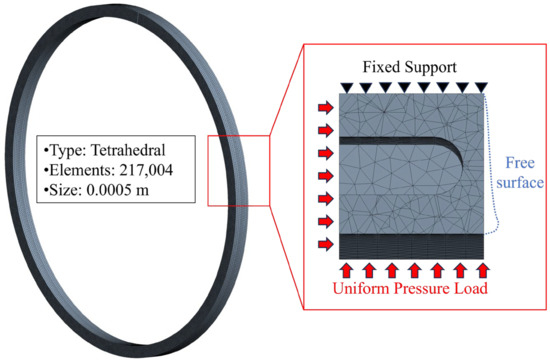
Following the validation of the computational method, this approach was applied to the specific structural design proposed in this paper. To further ensure the numerical precision for the configuration featuring 17 macroscopic structural relief features, a rigorous mesh independence study was conducted. The discretized mesh model of the seal ring is illustrated in Figure 6.
Figure 6.
Finite element mesh model of the seal ring.
It should be noted that a uniform pressure distribution is assumed across the loading surfaces in this model. While non-uniform loading may arise in practical operations due to thermal effects or manufacturing tolerances, the uniform assumption allows for a controlled investigation into the intrinsic relationship between groove topology and surface evolution. This approach provides a fundamental baseline for evaluating the structural effectiveness of the proposed adaptive sealing strategy under high-pressure hydraulic conditions.
To ensure the authenticity and reliability of the finite element analysis, the boundary conditions were established by referring to the methodology in refs. [30,31]. The mechanical constraints and loading conditions were defined as follows:
Mechanical Constraints: A fixed constraint was applied to the secondary sealing surface of the seal ring. This setup provides a stable reference for the calculation and represents the physical support of the seal ring in its housing.
Loading Conditions: To simulate the effect of the fluid medium in the high-pressure region, uniform pressure was applied to the non-sealing surfaces and the inner ring surface of the piston ring.
Deformation Policy: The primary sealing surface was defined as a free surface, allowing it to undergo free deformation according to the pressure distribution and structural stiffness. This ensures that the simulation can accurately capture the contact mechanics and the resulting stress distribution on the main sealing interface.
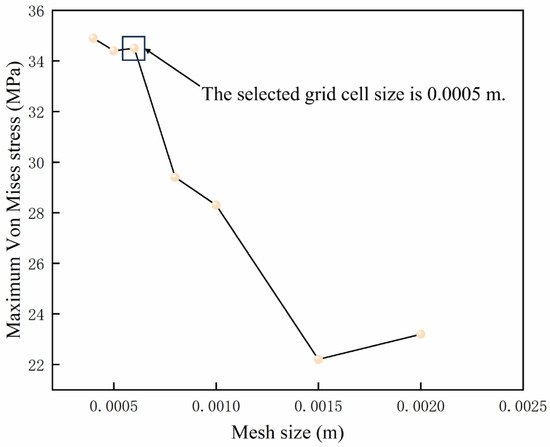
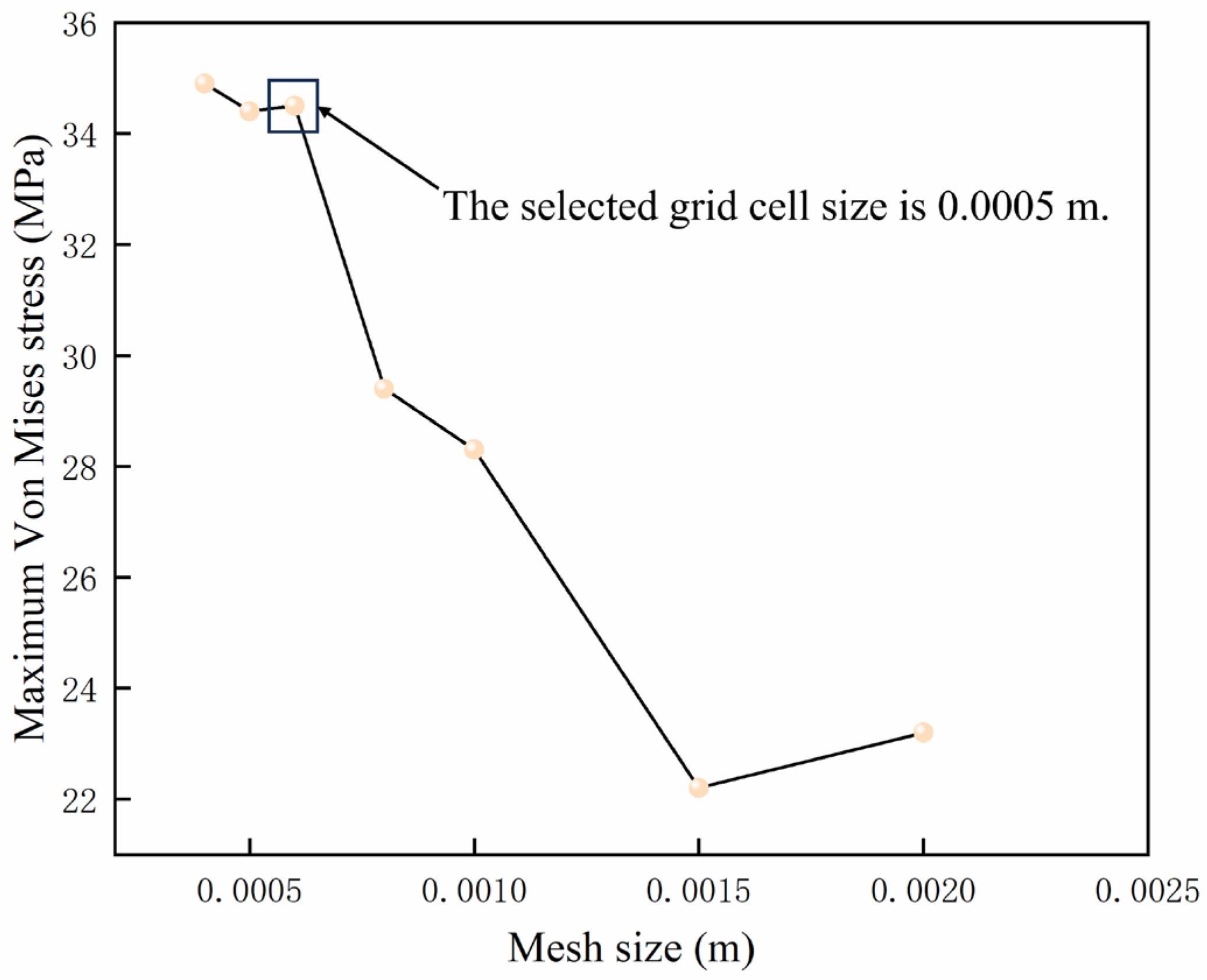
As shown in Table 2 and Figure 7, the maximum Von Mises stress was monitored across different grid cell sizes ranging from 0.002 m to 0.0004 m. The results indicate that the stress value gradually stabilizes as the grid size decreases. Specifically, the selected grid cell size is 0.0005 m (corresponding to 217,004 elements and 336,041 nodes), yielding a calculated maximum stress of 34.4 MPa. Further refinement to 0.0004 m results in a relative variation of only 1.45% in the maximum stress, suggesting that the numerical solution has reached sufficient convergence. Therefore, the 0.0005 m mesh was selected for all subsequent simulations of the proposed design to balance numerical precision and computational efficiency.
Table 2.
Mesh independence test results for the proposed seal ring design.
Figure 7.
Mesh independence study based on the variation in the maximum Von Mises stress with different grid cell sizes.
This research primarily focuses on the structural elastic response of the seal ring under operational pressure loads. To clearly isolate the influence of macroscopic relief features on the sealing surface morphology, the following simplifications were adopted:
- Focus on Structural Mechanics: The simulation evaluates the axial deformation and waviness formation driven by pressure, which serves as the geometric foundation for subsequent hydrodynamic effects.
- Static Pressure Loading: The fluid pressure is applied as a uniform boundary load to the structural model to investigate the resulting elastic deformation, without involving iterative fluid–structure interaction (FSI).
- Simplified Lubricant Influence: The lubricant’s role is treated as the source of external pressure, while its complex rheology and thermal effects are neglected to maintain focus on the geometry-driven deformation mechanism. This approach allows for a precise comparative analysis of how different groove designs (Rectangular, Semicircular, Trapezoidal) fundamentally alter the sealing interface’s micro-geometry.
3. Results
This section primarily elaborates on the numerical calculation and underlying mechanism of the microscopic waviness formed on the primary friction surface under the influence of non-sealing surface structural relief features, as well as the elastic characteristics of the primary sealing surface waviness and its pressure-release self-healing mechanism during clutch engagement–disengagement states.
In actual operations, the piston ring seal is subjected to periodic pressure fluctuations within its dynamic cycle. To effectively compare the three types of macroscopic relief features, this study utilizes representative steady-state conditions that coincide with the peak loading phase. The resulting pressure distribution and deformation profiles on the primary sealing surface provide a rigorous assessment of each structure’s ability to maintain a stable lubricant film under extreme conditions. By analyzing these typical states, the relative advantages of each design in enhancing hydrodynamic lubrication can be clearly distinguished, providing a reliable theoretical basis for seal performance throughout the cyclical operation.
3.1. Effect of Structural Relief Features on Microscopic Waviness Morphology of the Primary Sealing Surface
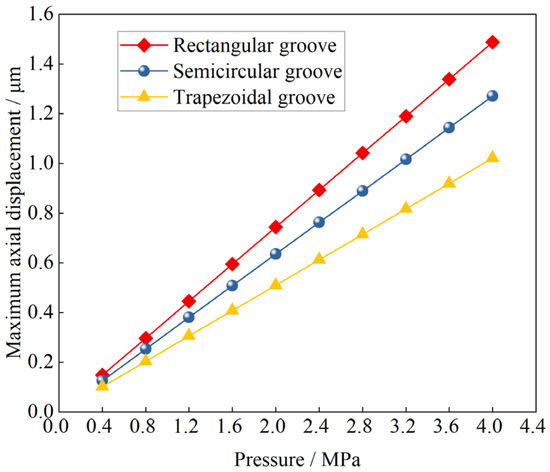
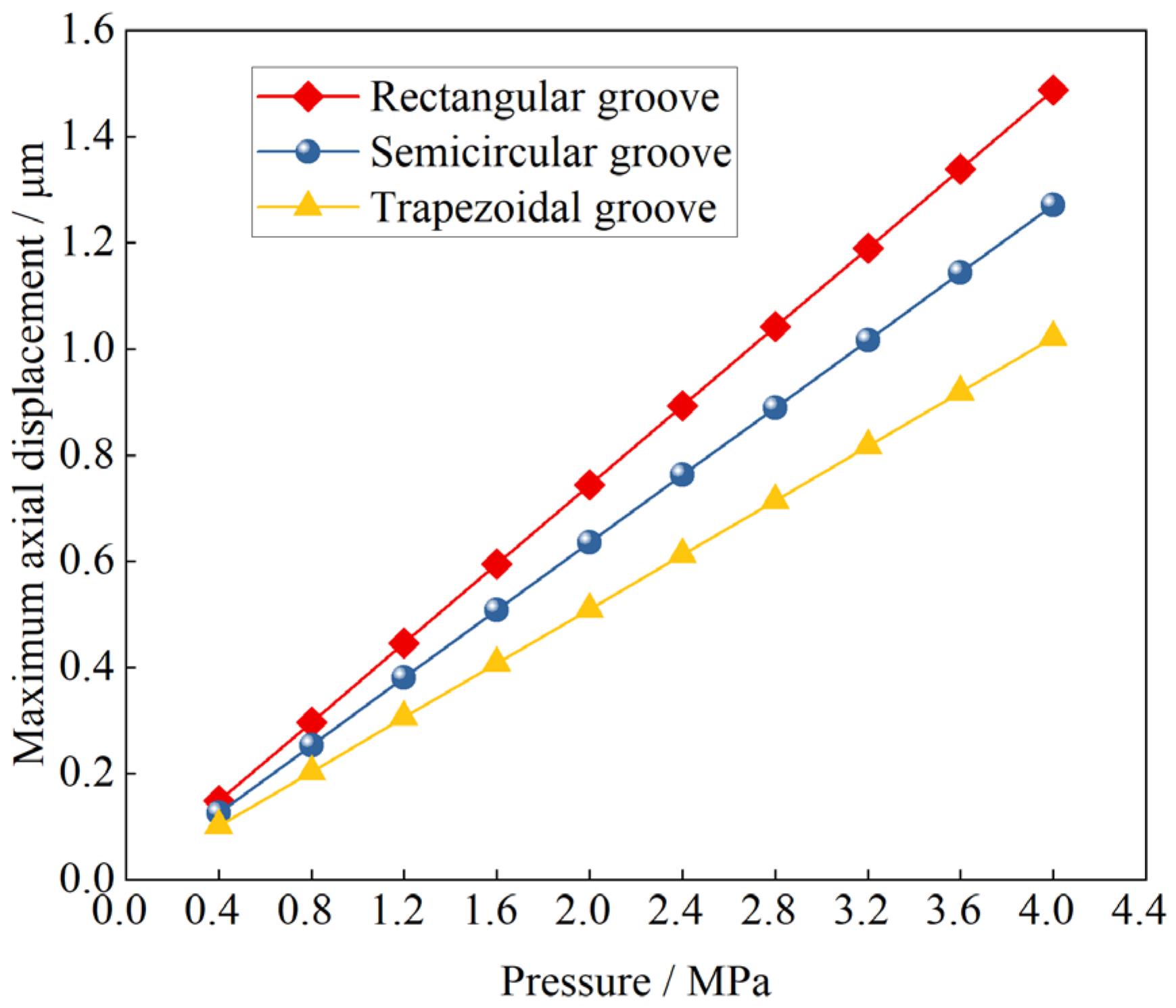
In ANSYS, the three-dimensional geometric model of the sealing ring was imported, and the elastic modulus and Poisson’s ratio of the CrMoCu material were assigned to the elements. A uniformly distributed load of 0.4–4 MPa was applied on the inner side of the piston ring and on the non-sealing surface, while a full displacement constraint was imposed on the secondary sealing surface. After all load and displacement boundary conditions were applied, the model was solved. The maximum displacement coordinates of the primary sealing surface under pressure loading were extracted from ANSYS, and the data were processed. The results are presented in Figure 8.
Figure 8.
Maximum deformation of primary sealing surface of piston ring seal with three macroscopic structural relief features under different pressures.
After comparing the maximum deformation of different macroscopic structural relief features under various pressure conditions, this research further investigates their comprehensive influence on sealing performance. Statistical comparisons of key parameters were conducted for the three structural relief features at different pressures, including the maximum periodic waviness amplitude (λ), the end-face taper angle (α), and the number of generated waviness cycles. These parameters jointly determine the load-carrying capacity of the fluid film and the stability of the sealing surface. The corresponding results are summarized in Table 3.
Table 3.
Comparison of λ, α, and wave number for different macroscopic structural relief features under different pressures.
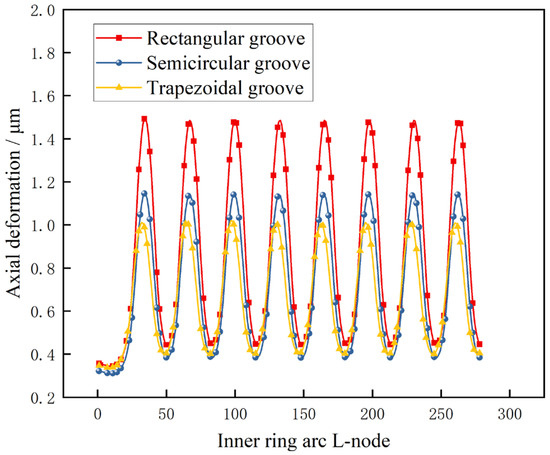
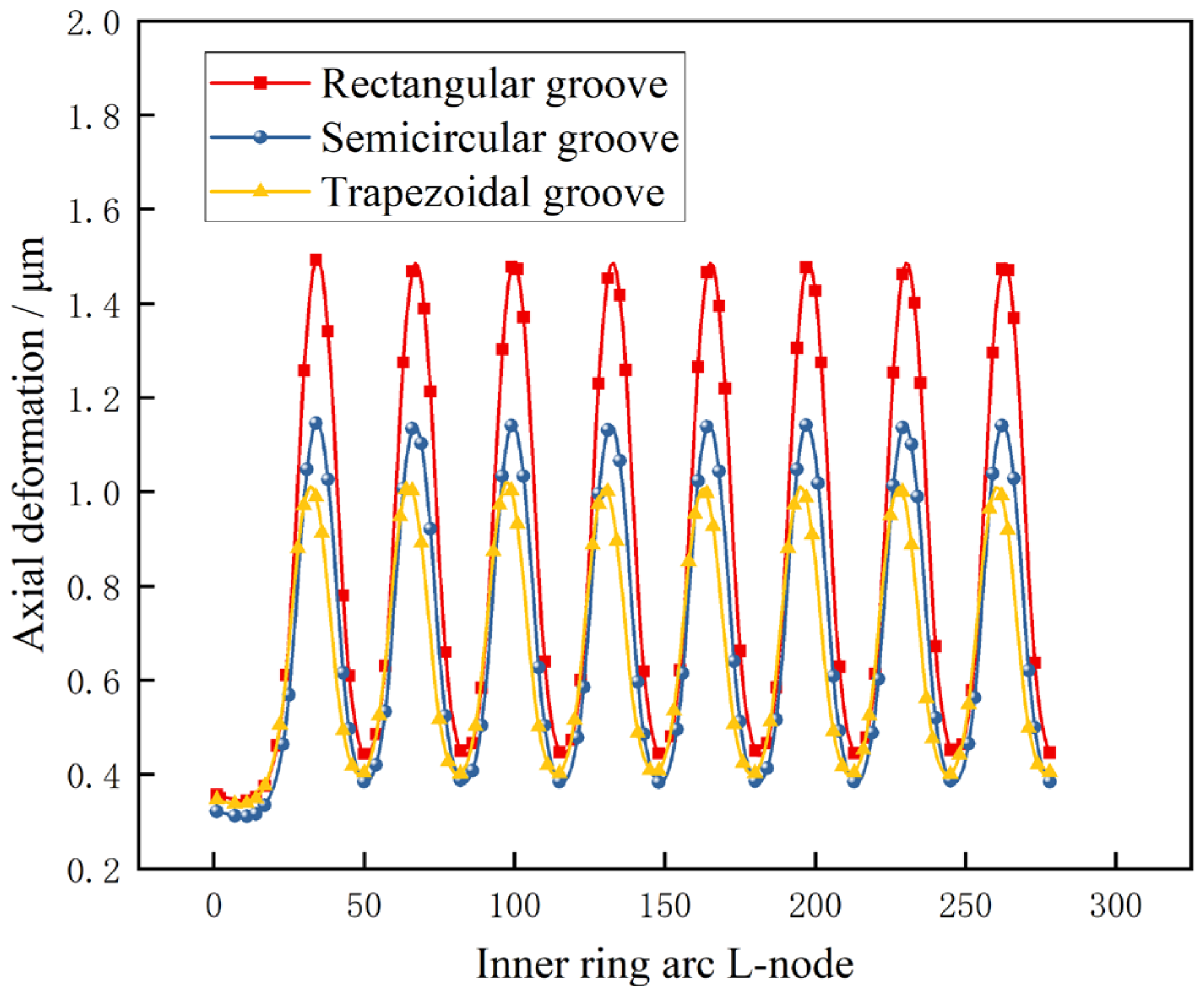
To further clarify the influence of macroscopic structural relief features on the local response of the sealing ring, the deformation behavior of three structural relief features at the inner-ring nodal arc was analyzed. Arc L serves as a critical position for waviness formation and pressure-release attenuation, and its deformation amplitude directly determines the efficiency of gap establishment and dissipation on the sealing surface. The comparative deformation results of the three macroscopic structural relief features at this location are shown in Figure 9.
Figure 9.
Comparison of deformation responses at inner ring node arc L for different macroscopic structural relief features.
The simulation results in Figure 9 indicate that under the maximum operating pressure of 4 MPa, the three macroscopic structural relief features induce significantly different elastic deformations on the primary sealing surface. Specifically, the deformation profiles extracted along the inner ring arc L provide direct evidence that a stable and continuous waviness is effectively established across the inner region of the primary sealing interface. Among the studied geometries, the rectangular groove structure exhibits the most pronounced axial deformation, with a peak amplitude of approximately 1.5 µm, which is markedly higher than that of the semicircular and trapezoidal grooves. This robust and continuous wave profile is particularly conducive to the formation of a stable hydrodynamic pressure zone, thereby significantly enhancing the seal’s load-carrying capacity under high-pressure conditions.
Further analysis reveals that the rectangular groove structure not only provides stronger hydrodynamic effects under high-pressure oil supply but also demonstrates superior disengagement response during clutch oil-release conditions. When system oil pressure is lost, the waviness on the primary sealing surface rapidly attenuates, and the surface rebounds to form a larger axial clearance. This effectively prevents dry frictional contact and significantly reduces wear risk. In contrast, the semicircular and trapezoidal grooves, due to their smaller deformation, generate insufficient clearance upon pressure loss, leading to potential contact wear hazards.
3.2. Flexible Waviness Response of Rectangular Groove Structures Under Clutch Conditions
To analyze the deformation behavior of the sealing ring under different pressure conditions, finite element simulations were conducted in ANSYS for high-pressure (4 MPa) and low-pressure (0.4 MPa) clutch operating states. In the simulations, identical pressures were applied to both the inner side of the piston ring and the non-sealing surface. Temperature effects were neglected, and a linear elastic material model was adopted.
3.2.1. Deformation Analysis Under High-Pressure Conditions
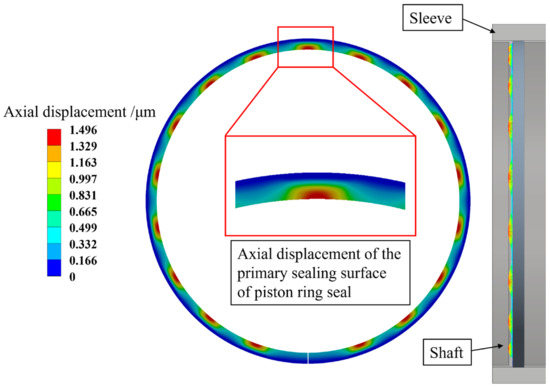
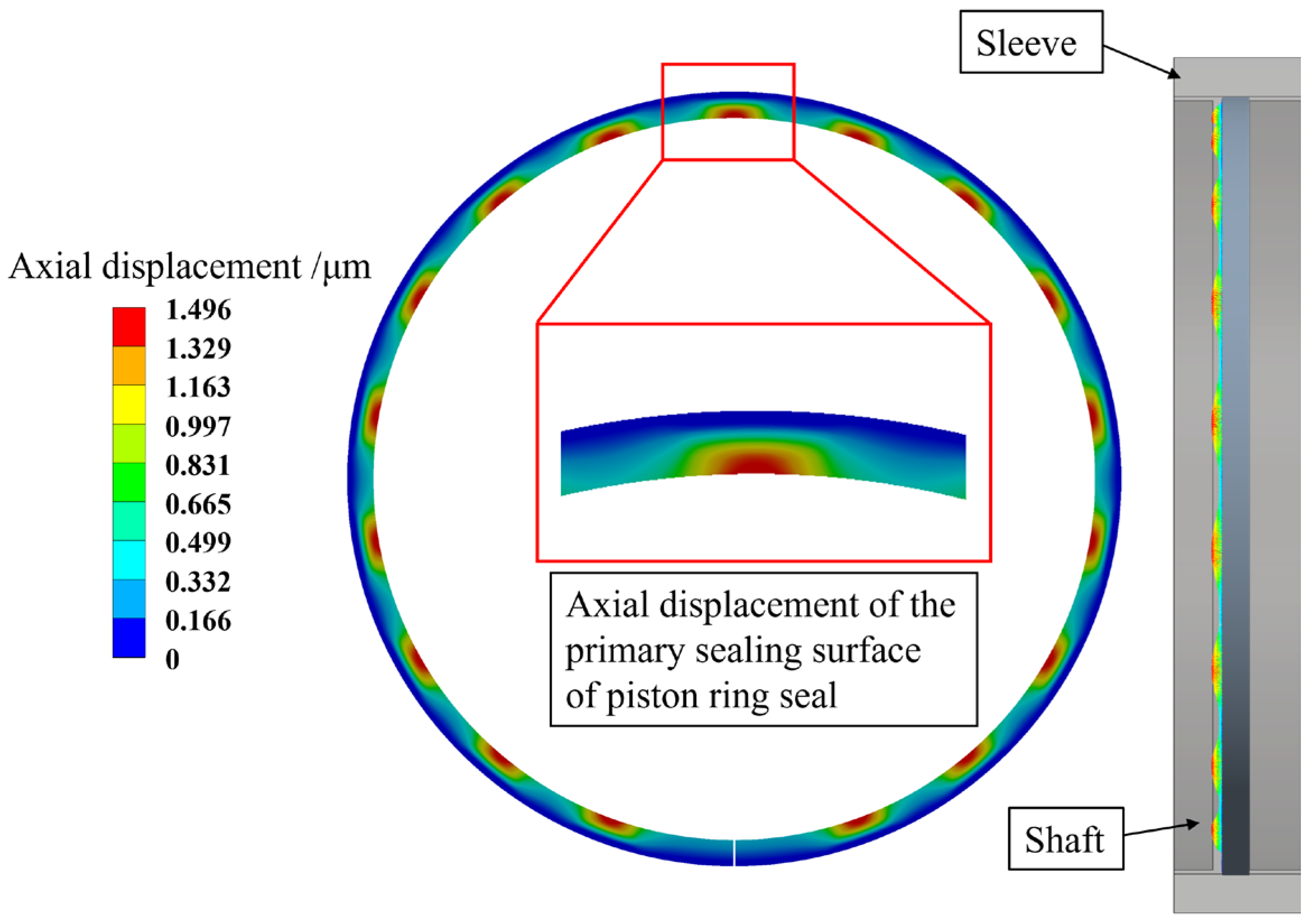
Under high-pressure operating conditions, a uniformly distributed load of 4 MPa was applied to the non-sealing surface of the sealing ring, causing the 17 discontinuous macroscopic structural relief features to exhibit pronounced elastic protrusions. As a result, the primary sealing surface developed a periodic crest morphology, as illustrated in Figure 10. Finite element analysis revealed 17 deformation zones corresponding to the defect positions, with a maximum axial deformation of 1.496 µm. The deformation distribution displayed a distinct circumferential waviness pattern, with groove regions deforming more than non-groove regions, thereby forming a continuous crest–trough structure that provides the geometric basis for establishing a non-contact sealing fluid film.
Figure 10.
Axial deformation contour of primary sealing surface under non-sealing surface pressure loading.
The deformation magnitude, at the micrometer scale, satisfies the requirements of waviness seals for hydrodynamic effects while avoiding material yielding or structural instability. This indicates that under high-pressure loading, the structure can achieve a stable waviness-forming effect. Furthermore, in the disengagement state, i.e., without working oil, the elastic waviness of the piston ring disappears. Influenced by the frictional force of the secondary sealing surface, a small clearance is generated between the piston ring and the shaft-groove end face, effectively preventing dry frictional contact and thereby reducing the risk of severe wear.
3.2.2. Deformation Analysis Under Low-Pressure Conditions
Under low-pressure operating conditions, the sealing ring surface was subjected to a uniformly distributed load of only 0.4 MPa. Finite element analysis results show that the overall deformation of the primary sealing surface was minimal, with a maximum axial displacement of merely 0.075 µm. The deformation difference between the groove and non-groove regions was insignificant, and no effective waviness structure was formed. Nevertheless, slight deformation of the primary sealing surface was observed, and upon pressure release, a small clearance remained between the sealing surface and the shaft-groove end face.
These findings indicate that under low-pressure conditions, the fluid pressure is insufficient to drive the sealing ring into significant elastic deformation, making formation of waviness unattainable. However, the residual clearance still prevents dry frictional contact, thereby extending the service life of the piston ring. Consequently, the fluid-pressure-assisted waviness-forming method must be implemented under high-pressure conditions to achieve the desired waviness morphology.
3.3. Deformation Mechanism of Rectangular-Groove-Induced Waviness on the Primary Sealing Surface
To further analyze the deformation characteristics of the rectangular groove structure under high-pressure operating conditions, finite element simulations of the piston ring sealing ring were conducted in ANSYS. Radial nodal displacement data of the primary sealing surface were extracted to evaluate the continuity and amplitude variation in waviness formation. In addition, axial displacement data at arc in the inner-ring region were selected to examine the local deformation response of the sealing ring.
3.3.1. Radial Pressure Response of Primary Sealing Surface Nodes
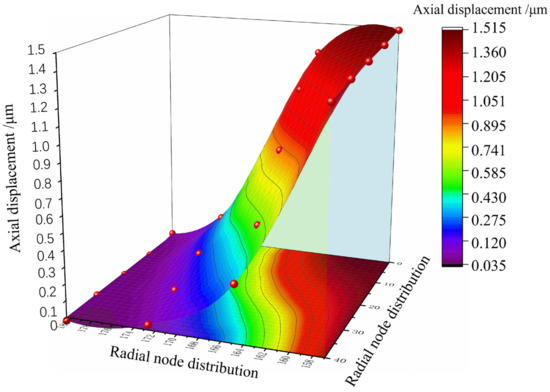
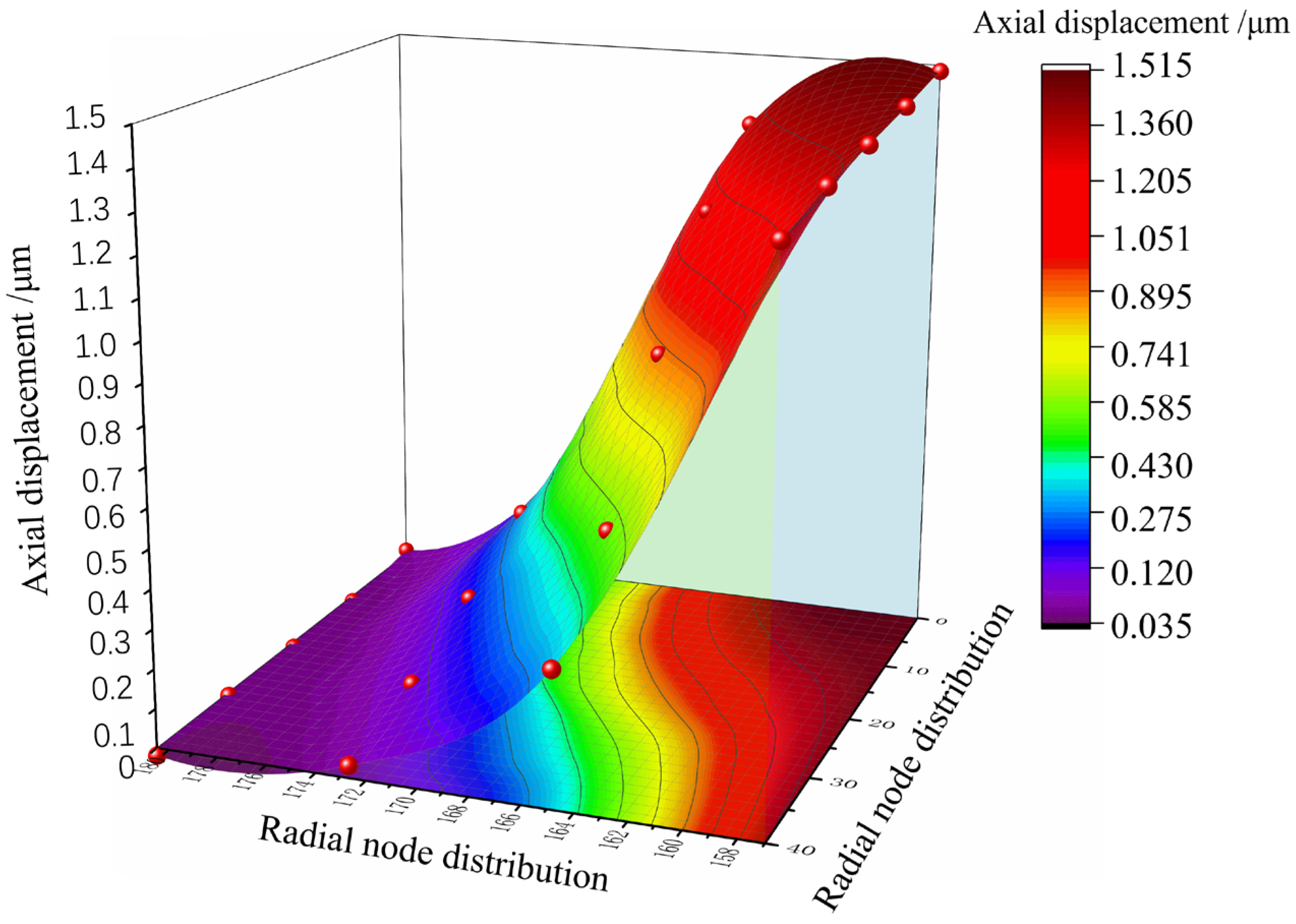
Finite element analysis was performed in ANSYS, and the radial deformation data of the nodal points on the primary sealing surface were extracted. The simulation results are presented in Figure 11.
Figure 11.
Axial displacement of radial nodes on primary sealing surface.
Figure 11 illustrates the axial deformation of radial nodes on the primary sealing surface under a loading condition of 4 MPa. The results show a decreasing trend of deformation along the radial direction: the nodes near the inner diameter of the sealing ring exhibit the largest deformation, approximately 1.5 µm, which gradually diminishes with increasing radial distance and reduces to about 0.1 µm at the outer diameter. This distribution characteristic indicates that, under the induction of the rectangular groove structure, the sealing surface develops a distinct radial gradient waviness morphology.
Such an inward-to-outward decreasing deformation pattern not only facilitates the establishment of a stable fluid-film thickness distribution on the sealing surface but also enhances the directional hydrodynamic effect, enabling stronger pumping action during rotation. The presence of a deformation gradient implies that the stiffness of the fluid film is advantageously distributed along the radial direction, thereby improving the sealing system’s disturbance resistance and axial stability under high-pressure and high-speed operating conditions. Moreover, this deformation feature provides a geometric basis for the precise control of subsequent waviness structures, confirming the effectiveness of the rectangular groove in waviness induction.
3.3.2. Pressure Response of Inner-Arc Nodes on the Primary Sealing Surface
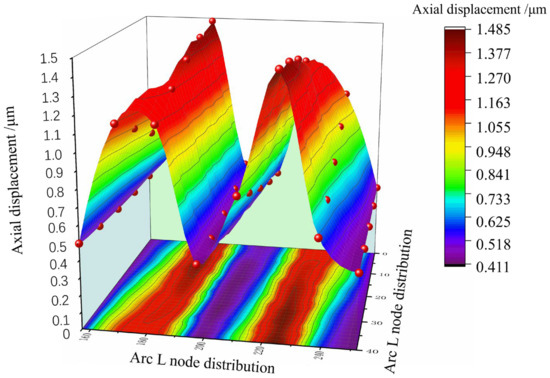
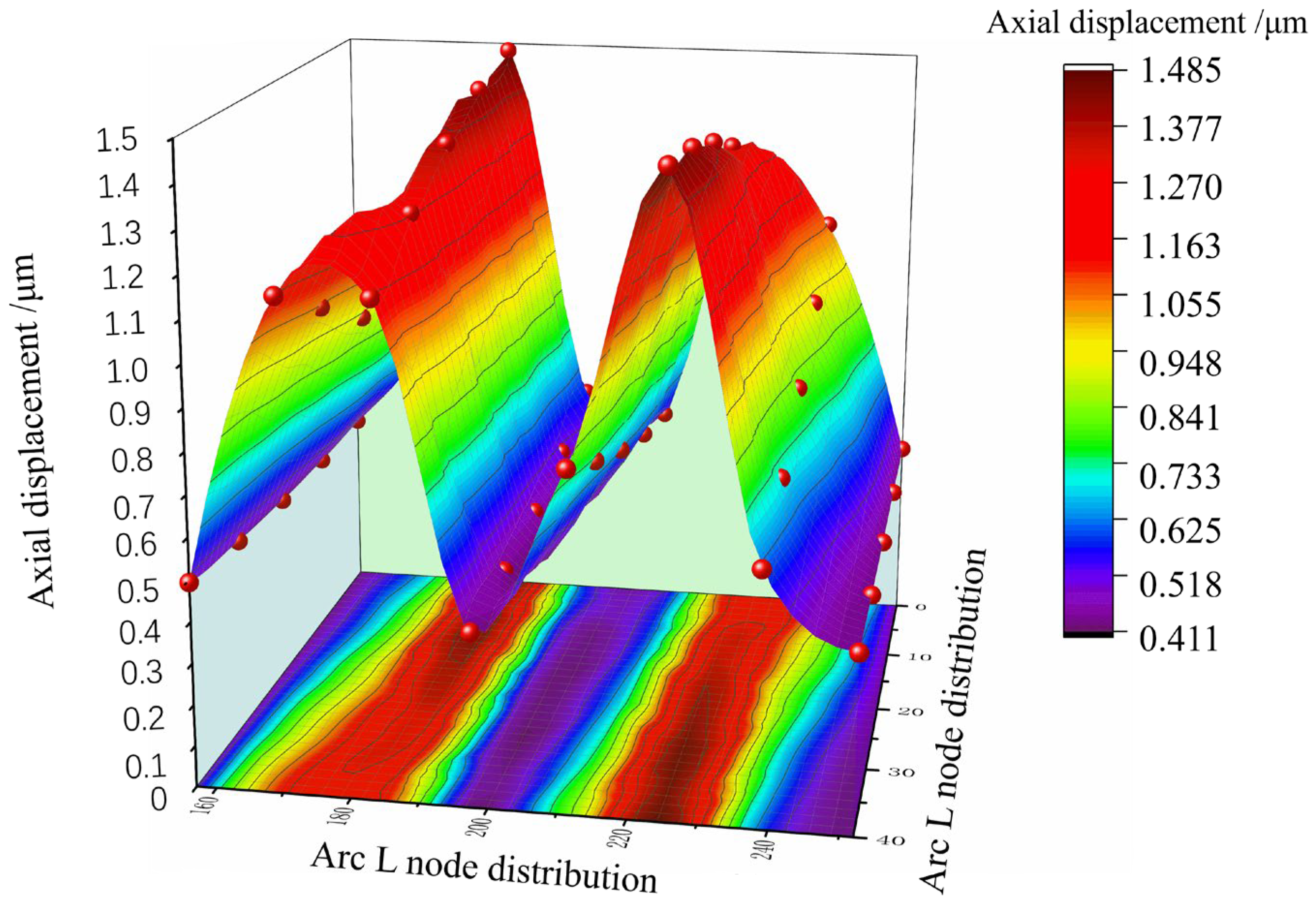
Finite element analysis was performed in ANSYS, and the axial displacement data of the nodal arc L on the piston ring sealing ring were extracted. The simulation results are presented in Figure 12.
Figure 12.
Axial displacement at arc L nodes of the inner ring on the primary sealing surface.
Figure 12 presents the axial displacement distribution of the nodal arc L on the primary sealing surface. The data exhibit a distinct periodic fluctuation, consistent with the deformation pattern induced by the uniformly distributed rectangular grooves on the back of the sealing ring. Alternating crests and troughs are observed, with the maximum axial displacement reaching approximately 1.5 µm and the minimum about 0.4 µm. The amplitude remains stable and the period uniform, indicating that a continuous and regular circumferential waviness structure has been established on the sealing surface.
This periodic waviness can significantly enhance the hydrodynamic effect during the sealing operation. Specifically, the crest regions compress the fluid during rotation, while the trough regions provide return channels, thereby generating a periodic pressure distribution across the sealing interface. Based on the simulation findings, such a structure is expected to improve the load-carrying capacity of the fluid film. Theoretically, this enhancement in lubrication performance contributes to the potential reduction in the friction coefficient and wear rate, which would be beneficial for extending the service life of the seal under practical conditions. However, the comprehensive impact of these structural features remains to be further validated through future experimental studies.
In the event of system depressurization or clutch oil-release, the waviness structure rapidly attenuates, and the sealing surface rebounds to form a small clearance, effectively preventing dry frictional contact. Compared with other groove structures, the rectangular groove exhibits more sensitive responsiveness in both waviness formation and attenuation, with superior controllability and repeatability, making it particularly suitable for sealing systems operating under high-frequency start–stop conditions.
3.3.3. Deformation Results and Data Analysis Overview
The overall simulation results demonstrate that, under high-pressure loading, the rectangular groove structure exhibits a highly coordinated deformation pattern. The primary sealing surface develops regular and functional microscopic waviness morphology in both radial and circumferential directions. Radially, the deformation shows a gradient distribution, reflecting the continuous response of the sealing structure to pressure transmission; circumferentially, it displays a periodic displacement rhythm, indicating the precise regulation of waviness formation by the macroscopic groove design.
To assess the physical significance of the calculated 1.5 μm waviness amplitude, a preliminary evaluation was conducted using the classical Lebeck waviness theory. According to the hydrodynamic model for wavy seals [32], the load-carrying capacity is optimized when the waviness amplitude (λ) is approximately 1–4 times the minimum film thickness (h0). Given that the typical operating clearance of clutch piston rings is 0.5–1.5 µm, the predicted λ/h0 ratio in this study falls within the “optimal hydrodynamic zone.” This suggests that the pressure-induced deformation captured in our simulation is of a sufficient order of magnitude to effectively enhance the lubrication regime in practical applications.
This bidirectionally coupled deformation characteristic not only verifies the effectiveness of the rectangular groove in geometric induction but also reveals its potential advantages in hydrodynamic regulation. The waviness formation is not an isolated local deformation, but rather the result of a coordinated structural response under pressure, characterized by good continuity and repeatability. More importantly, during depressurization, the structure can rapidly rebound, with a stable attenuation of waviness, thereby providing a reliable disengagement mechanism for the sealing system during start–stop transitions.
In summary, by constructing a controllable microscopic deformation field, the rectangular groove structure achieves a deep integration of sealing performance and dynamic responsiveness, offering a new structural paradigm and theoretical basis for seal design under high-frequency start–stop and high-pressure, high-speed operating conditions.
3.4. Analysis of Elastic Waviness Characteristics and Pressure-Release Self-Healing Mechanism of the Primary Sealing Surface Under Engagement–Disengagement Conditions
During the operation of the sealing system, the formation and attenuation of waviness on the primary sealing surface constitute the core response mechanism of the sealing ring under engagement and disengagement states. This waviness structure is induced by macroscopic defect features on the non-sealing surface, with its geometric characteristics and material elasticity jointly determining the amplitude and distribution of deformation. Taking the rectangular groove as an example, under the action of supply-oil pressure, localized stress concentration occurs in the defect regions of the non-sealing surface, inducing the primary sealing surface to form a periodic crest–trough structure in the axial direction. Such waviness not only enhances the hydrodynamic effect of the fluid but also drives the sealing ring as a whole to shift toward the shaft-groove end face, thereby generating an axial disengagement tendency.
Prior to installation, the piston ring seal is not a perfect circular ring. During installation, the sealing ring is forcibly pressed into the shaft groove and undergoes elastic deformation, resulting in a substantial pre-tightening contact force between the secondary sealing surface and the groove wall. This pre-tightening force causes the frictional resistance at the secondary sealing surface to be much greater than the residual oil pressure thrust available in the disengaged state when the supply oil is interrupted. Consequently, when the system loses hydraulic drive, the piston ring sealing ring does not displace due to the disappearance of oil pressure, but instead remains stably in place, ensuring the reliability of the sealing position and the stability of the system during start–stop transitions.
To facilitate the quantitative investigation of the pressure-release disengagement mechanism, a geometric parameter β is introduced. β is defined as the minimum distance from any point on the primary sealing surface to the end face of the shaft groove. This parameter provides a precise measure of the spatial constraint governing the interaction between the sealing surface and the groove boundary. By incorporating β into the numerical framework, the elastic evolution of the waviness during clutch engagement–disengagement can be rigorously characterized, and the self-healing behavior under pressure release can be quantitatively described.
3.4.1. Elastic Deformation Calculation
Under the system supply-pressure condition, the macroscopic structural relief features on the non-sealing surface of the sealing ring induce the primary sealing surface to generate a periodic waviness morphology. Assuming a loading pressure of 4 MPa, the maximum axial deformation is approximately , with the deformation length taken as the axial height of the sealing ring, . Accordingly, the strain can be obtained:
For the CrMoCu material, the elastic modulus is . Based on this value, stress can be calculated accordingly:
The calculated stress is far below the yield strength of CrMoCu, indicating that the waviness deformation of the primary sealing surface under pressure remains entirely within the elastic stage. Upon pressure release, the surface can rapidly rebound and recover its original morphology.
3.4.2. Investigation of the Pressure-Release Disengagement Mechanism of the Primary Sealing Surface Under Adaptive Clutch Conditions
The computational results indicate that the circumferential waviness structure generated on the primary sealing surface corresponds to a typical elastically reversible deformation mode, with stress levels far below the material yield strength. Consequently, under the dynamic operating conditions of clutch engagement and disengagement, the sealing surface can maintain a stable, flexible response. During pressure loading, the waviness morphology exhibits high structural stability, not only effectively supporting the formation and maintenance of the fluid film but also endowing the sealing interface with adaptive load-bearing capacity and intelligent regulation characteristics.
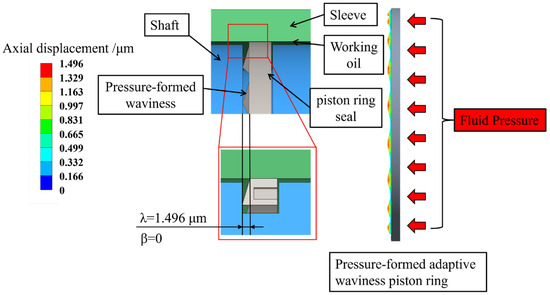
Accordingly, under complex start–stop and impact loading conditions, the primary sealing surface demonstrates a coupled mechanism of “engagement pressurization–flexible waviness–hydrodynamic effect,” as shown in Figure 13.
Figure 13.
Flexible waviness schematic of piston ring seal under clutch engagement pressure loading.
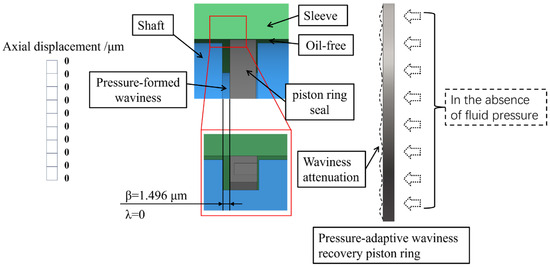
During the pressure-release stage, the non-sealing surface of the sealing ring loses the liquid pressure load, and the circumferential waviness structure formed on the primary sealing surface rapidly attenuates. The interface morphology rebounds and recovers to an approximately flat state, as shown in Figure 14. This process reflects the high responsiveness and controllable elastic recovery characteristics of the sealing structure, ensuring stable repositioning of the primary sealing surface under disengagement conditions and providing the essential physical basis for non-contact disengagement operation of the sealing system.
Figure 14.
Clearance schematic of piston ring seal morphology attenuation after clutch disengagement pressure release.
Accordingly, during the dynamic switching of clutch engagement and disengagement, the sealing ring exhibits an adaptive evolution mechanism of “pressure release–morphology attenuation–gap formation,” highlighting the reliability and engineering feasibility of intelligent sealing under complex operating conditions.
At the moment of pressure release, although the primary sealing surface exhibits a rebound tendency, the frictional constraint between the secondary sealing surface and the sleeve keeps the sealing ring as a whole in the loaded position, thereby avoiding unstable back movement. At this stage, a controlled clearance is maintained between the primary sealing surface and the shaft-groove end face, effectively preventing direct contact and wear risks. This response mechanism indicates that the waviness structure not only contributes to system stability during disengagement but also provides the foundation for adaptive sealing behavior.
Moreover, the bidirectional evolution of the waviness structure significantly improves lubrication conditions. During clutch engagement, pressurization drives the rapid formation of flexible waviness, which strengthens the hydrodynamic effect and stabilizes the fluid film. During clutch disengagement, depressurization attenuates the waviness into a controlled clearance, thereby avoiding dry friction and maintaining favorable lubrication states. This dual role ensures that the sealing system operates with reduced frictional heat generation and enhanced wear resistance under complex start–stop conditions.
In summary, the elastic characteristics of the primary sealing surface waviness and the pressure-release response process together constitute the core operational logic chain of the sealing system under clutch engagement–disengagement conditions. Its formation depends on the coupling of macroscopic structural relief features and material elasticity, while its attenuation relies on frictional constraints and interface recovery mechanisms. Through this bidirectional evolutionary process, the sealing structure achieves both stability and a low leakage rate while simultaneously maintaining improved lubrication performance under demanding operating environments.
4. Discussion
This research systematically investigates the reliability paradigms of piston ring seals within high-power clutches operating under rigorous hydraulic loading and high-frequency reciprocal cycles. An adaptive mechanofluidic intelligent sealing strategy is proposed and discussed, which aims to facilitate high-fidelity synchronization with clutch operational states through pressure-modulated surface evolution. The primary scientific contributions are delineated as follows:
- Pressure-Modulated Morphological Synthesis: By strategically architecting macroscopic structural relief features on the non-functional surface, the deterministic generation and elastic attenuation of micron-scale circumferential waviness are potentially modulated. The topology of the rectangular groove is identified as a promising structural precursor, consistently manifesting a radial-gradient wavy profile with a peak amplitude of λ ≈ 1.5 µm under a 4 MPa load within the tested conditions. Furthermore, we conducted a comparative quantitative analysis showing that the rectangular groove increases the maximum axial displacement by 17.7% and 46.5% compared to the semicircular and trapezoidal designs, respectively, at the same pressure level. This structural response is expected to bolster the hydrodynamic load-carrying capacity and contribute to the axial structural stiffness of the sealing interface.
- Transient Operational Synchronization: The seal’s tribological behavior exhibits a bidirectional evolutionary logic that is closely and inherently coupled with the hydraulic duty cycle. The onset of hydraulic pressurization functions as a deterministic stimulus, triggering a rapid, self-adaptive morphological transformation from a nominal flat interface to a precisely modulated wavy state, thereby supporting the intensification of hydrodynamic lubrication. Conversely, during disengagement, the dissipation of pressure prompts an elastic restoration of the interface. This dynamic adaptability promotes a stable interfacial regime under complex, non-steady-state start–stop sequences.
- Tribological Integrity and Stagnation Dynamics: The integration of the “positional stagnation” mechanism potentially decouples the seal from deleterious dry-friction contact during oil-starvation phases. Driven by the predominant frictional resistance of the secondary seal, the ring maintains precise axial position, facilitating reliable disengagement and stable repositioning. This architecture is designed to suppress asperity-level thermal excitation and minimize potential wear kinetics, providing a supportive theoretical and engineering framework for the development of high-performance, responsive sealing systems in advanced power transmissions.
Author Contributions
Conceptualization, X.J. and B.W.; methodology, X.J.; software, B.W.; validation, X.J., and B.W.; formal analysis, B.W., Q.B. and J.Q.; investigation, X.J., B.W. and J.Q.; resources, X.J. and Q.B.; data curation, B.W.; writing—original draft preparation, B.W.; writing—review and editing, X.J. and J.Q.; visualization, B.W.; supervision, X.J. and Q.B.; project administration, X.J. and Q.B.; funding acquisition, X.J. All authors have read and agreed to the published version of the manuscript.
Funding
Funding was provided by The National Natural Science Foundation of China (Grant No. 52305176) and The Fundamental Research Funds for Central Universities JD2523.
Data Availability Statement
The data presented in this study are available in this article.
Conflicts of Interest
The authors declare no conflicts of interest.
References
- Cesur, I.; Akgündüz, M.; Çelik, H.A.; Çay, Y.; Ergen, G. Tribological Analysis and Optimization of Ring-Cylinder Couple Coated with Different Materials. Arab. J. Sci. Eng. 2024, 49, 2553–2564. [Google Scholar] [CrossRef] [Scilit]
- Kamiński, W.; Michalska-Pożoga, I. Possibility of Marine Low-Speed Engine Piston Ring Wear Prediction during Real Operational Conditions. Energies 2023, 16, 1433. [Google Scholar] [CrossRef] [Scilit]
- Liu, C.; Yan, Z.; Dai, W.; He, L.; Jia, X.; Zhang, L. Experimental Research on Piston Rings with Different End Face Structures. Proc. Inst. Mech. Eng. Part J J. Eng. Tribol. 2022, 236, 171–182. [Google Scholar] [CrossRef] [Scilit]
- Ma, Z.; Huang, R.; Yuan, X.; Shen, Y.; Xu, J. Tribological Performance and Scuffing Behaviors of Several Automobile Piston Rings Mating with Chrome-Plated Cylinder Liner. Friction 2022, 10, 1245–1257. [Google Scholar] [CrossRef] [Scilit]
- Erdemir, A. Review of Engineered Tribological Interfaces for Improved Boundary Lubrication. Tribol. Int. 2005, 38, 249–256. [Google Scholar] [CrossRef] [Scilit]
- Ding, Y.; Li, P.; Xing, C.; Kang, X.; Lv, Y.; Du, X.; Gao, X.; Li, Y. Lifespan Prediction of the Piston Ring Set of Oil-Free Reciprocating Compressors Coupled with Pressure Distribution Variation. Eng. Fail. Anal. 2025, 171, 1350–1367. [Google Scholar] [CrossRef] [Scilit]
- He, T.; Zhang, Q.; Yan, Y.; Dong, J.; Zhou, P. Numerical Simulation of a New Designed Mechanical Seals with Spiral Groove Structures. Lubricants 2023, 11, 70. [Google Scholar] [CrossRef] [Scilit]
- Zhao, Y.; Hu, J.; Wei, C.; Li, X. Theoretical and Experimental Study of Cavitation Effects on the Dynamic Characteristic of Spiral-Groove Rotary Seals (SGRSs). Tribol. Lett. 2016, 64, 50. [Google Scholar] [CrossRef] [Scilit]
- Wang, X. Mechanism of Combined Coning and Waviness Mechanical Face Seal for Nuclear Reactor Coolant Pump. J. Mech. Eng. 2010, 24, 131–137. [Google Scholar] [CrossRef] [Scilit]
- Yu, B.; Hao, M.; Xinhui, S.; Wang, Z.; Fuyu, L.; Yongfan, L. Analysis of Dynamic Characteristics of Spiral Groove Liquid Film Seal Considering Taper and Waviness. Ind. Lubr. Tribol. 2016, 67, 5199–5207. [Google Scholar] [CrossRef] [Scilit]
- Feng, G.; Ma, X. Positioning Accuracy Determination of the Servo Axes for Grinding Wavy-Tilt-Dam Seals Using a Four-Axis Grinder. Micromachines 2021, 12, 388. [Google Scholar] [CrossRef] [Scilit]
- Shen, C.; Khonsari, M.M. The Effect of Laser Machined Pockets on the Lubrication of Piston Ring Prototypes. Tribol. Int. 2016, 101, 273–283. [Google Scholar] [CrossRef] [Scilit]
- Fan, T.; Behdinan, K. Investigation into the effect of piston ring seals on an integrated squeeze film damper model. J. Mech. Sci. Technol. 2019, 33, 559–569. [Google Scholar] [CrossRef] [Scilit]
- Le, M.; Shen, Y.; Su, H.; Su, N.; Qiu, N.; Zhou, W. Static and rotordynamic characteristics of a sectorial labyrinth seal for centrifugal pump. Tribol. Int. 2026, 214, 111375. [Google Scholar] [CrossRef] [Scilit]
- Zhou, P.; Dai, Z.; Jin, Z.; Wang, Y.; Kand, R. Analysis of Deformation in the Manufacturing Process of Seal Ring with Wavy Face Using the Pre-Deformation Plane Lapping Method. J. Mech. Eng. 2015, 51, 171–178. [Google Scholar] [CrossRef] [Scilit]
- Li, X.-Y.; Zh, Q.-X.; Ca, J.-N.; Li, S.-X. Numerical Simulation Research on Pressure Self-Adaptive Mechanical Seal. J. Mech. Electr. Eng. 2014, 31, 1002–1026. [Google Scholar]
- He, Z.; Jia, L.; Si, J.; Li, N.; Wang, H.; Li, B.; Guo, Y.; Zhao, S.; Luo, W. Research on the Sealing Performance of Segmented Annular Seals Based on Fluid–Solid–Thermal Coupling Model. Lubricants 2024, 12, 407. [Google Scholar] [CrossRef] [Scilit]
- Wang, Y.; Liu, Y.; Gao, Z.; Huang, W.; Wang, Y. Processing Methods and Predictive Model for Wavy-Tilt-Dam Mechanical Seal. Proc. 2nd Int. Braz. Conf. Tribol. 2014, 2, 3989–4001. [Google Scholar] [CrossRef] [Scilit]
- Liao, X.; Sun, L.; Zhao, Y.; Zhu, X. Multi-Objective Optimization of Wet Clutch Groove Structures Based on Response Surface Methodology and Engagement Thermal–Flow Analysis. Lubricant 2025, 13, 402. [Google Scholar] [CrossRef] [Scilit]
- Lebeck, A.O. A Mixed Friction Hydrostatic Mechanical Face Seal Model with Thermal Rotation and Wear. ASLE Trans. 1980, 23, 375–387. [Google Scholar] [CrossRef] [Scilit]
- Luo, X.; Qin, K.; Li, X. A Numerical Analysis of the Grooved Surface with Waviness and Taper Effect on Sealing Performance. Lubr. Eng. 2017, 42, 17–22. [Google Scholar] [CrossRef]
- Cochain, J.; Brunetière, N.; Parry, A.; Denoix, H.; Maoui, A. Experimental and Numerical Study of Wavy Mechanical Face Seals Operating under Pressure Inversions. Proc. Inst. Mech. Eng. Part J J. Eng. Tribol. 2020, 234, 247–260. [Google Scholar] [CrossRef] [Scilit]
- Zhou, M.; Green, I. Clearance Control of a Mechanical Face Seal. Tribol. Trans. 1999, 42, 535–540. [Google Scholar] [CrossRef] [Scilit]
- Groetsch, D.; Motzet, R.; Voelkel, K.; Pflaum, H.; Stahl, K. Analysis of Oil Distribution and Reduction of Axial Force Due to Oil Supply in a Multi-Plate Clutch. Tribol. Ind. 2022, 44, 268–282. [Google Scholar] [CrossRef] [Scilit]
- Wang, Q.; Ma, B.; Yu, L.; Chen, M.; Wang, G.; Zheng, L. Influence of Applied Pressure on the Tribological Behaviors of a Wet Multi-Disc Clutch during the Running-In Process. Ind. Lubr. Tribol. 2023, 75, 456–465. [Google Scholar] [CrossRef] [Scilit]
- Li, X.; Meng, X.; Liang, Y.; Jiang, J.; Peng, X. Mass Transfer of a Hybrid Porous T-Groove Mechanical Face Seal under EHD Model. Heat Mass Transf. 2025, 61, 50–62. [Google Scholar] [CrossRef] [Scilit]
- Bird, J.; Keogh, P.S.; Sangan, C.M.; Bowsher, A.A.; Crudgington, P.F.; Scobie, J.A. Dynamic Characterization of an Adaptive Film-Riding Seal. J. Eng. Gas Turbines Power 2024, 146, 011017. [Google Scholar] [CrossRef] [Scilit]
- Chen, J.; Lu, J.; Hou, Y.; Ding, X.; Zhang, W. Study on the Friction Behavior and Abnormal Conditions of Non-contact Mechanical Seal Based on Acoustic Emission. Tribol. Lett. 2024, 72, 71. [Google Scholar] [CrossRef] [Scilit]
- Zhao, W.; Jin, J.; Meng, X.; Peng, X. State of the Art and Development Trend of Mechanical Seal for Marine Equipment. Tribology 2019, 39, 792–802. [Google Scholar] [CrossRef]
- Sun, H. The Research on the Characteristic of Face Seal with Circumferential Waviness; Beijing University of Chemical Technology: Beijing, China, 2011. [Google Scholar]
- Sun, H.; Zhang, Q.X.; Cai, J.N.; Li, S.X. Numerical Simulation of Flow Field in End Face Seal with Circumferential Waviness. Lubr. Eng. 2011, 36, 63–67. [Google Scholar] [CrossRef]
- Lebeck, A.O. Principles and Design of Mechanical Face Seals; John Wiley & Sons: New York, NY, USA, 1991. [Google Scholar]

Disclaimer/Publisher’s Note: The statements, opinions and data contained in all publications are solely those of the individual author(s) and contributor(s) and not of MDPI and/or the editor(s). MDPI and/or the editor(s) disclaim responsibility for any injury to people or property resulting from any ideas, methods, instructions or products referred to in the content. |
© 2026 by the authors. Licensee MDPI, Basel, Switzerland. This article is an open access article distributed under the terms and conditions of the Creative Commons Attribution (CC BY) license.