
Lubricating Properties of Oil-Based Solutions Containing Graphene as Additive




Abstract
1. Introduction
2. Materials and Methods
2.1. Lubricants and Nanoparticles Additives
2.2. Tribotesting
2.2.1. Block-on-Ring Testing
- h0 is the minimum film thickness (m);
- R′ is the reduced radius of curvature (m);
- U is the entraining surface velocity (m/s), i.e., U = (UA + UB)/2, where the subscripts ‘A’ and ‘B’ refers to the velocities of bodies A & B respectively;
- W is the contact load (N);
- E′ is the reduced Young’s modulus (Pa);
- α is the pressure viscosity coefficient (m2/N);
- ƞ0 is the viscosity at atmospheric pressure and temperature (Pa·s);
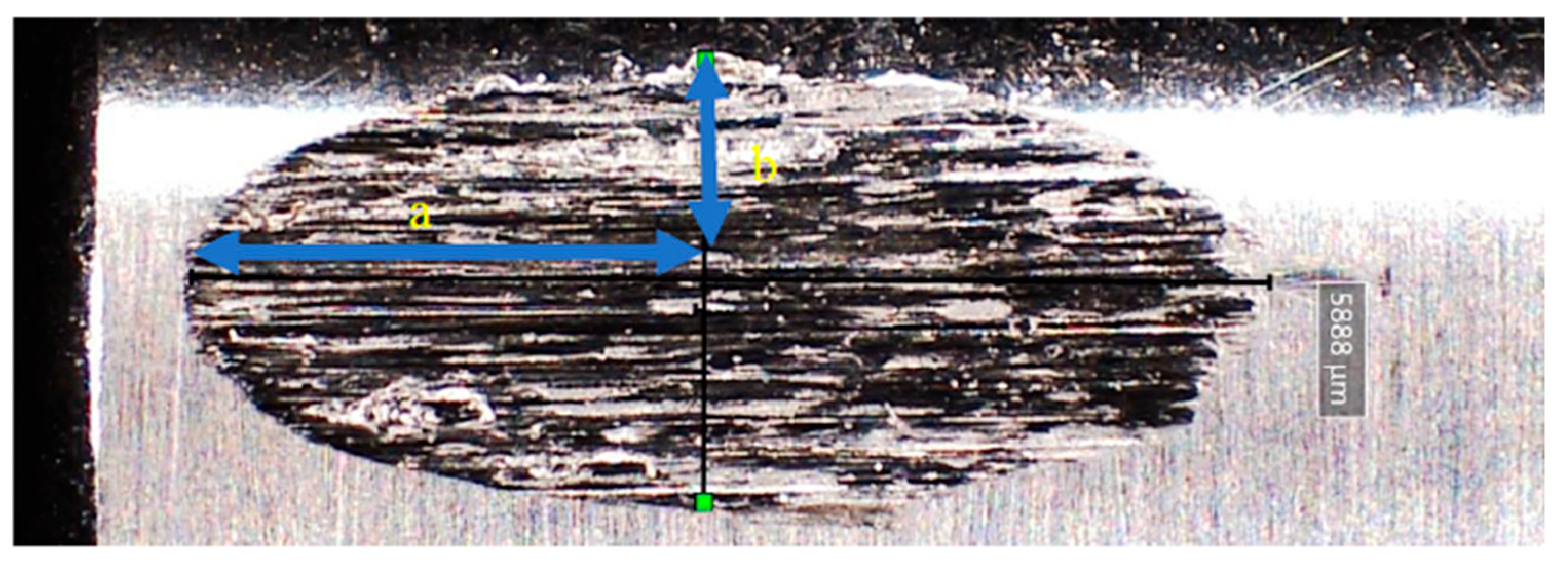
- k = elliptical parameter defined as k = (a/b), where ‘a’ is the semiaxis in the transverse direction and ‘b’ is the semi-axis in the direction of motion. For line contact, k = ∞.
- h0 is the minimum film thickness (m);
- σA is the root mean square surface roughness of body A (m);
- σB is the root mean square surface roughness of body B (m);
- λ = lambda ratio (ratio of minimum film thickness to composite surface roughness).
- Using the lambda ratio values, the lubrication regimes were classified into boundary, mixed, elastohydrodynamic and hydrodynamic regimes (λ < 1, Boundary Lubrication; 1 < λ < 3, Mixed Lubrication; 3 < λ < 5, Elastohydrodynamic lubrication; λ > 5, Hydrodynamic lubrication).
2.2.2. Reichert Wear Test Testing
3. Results and Discussion
3.1. Stribeck Curves
3.2. Reichert Wear Test
4. Conclusions
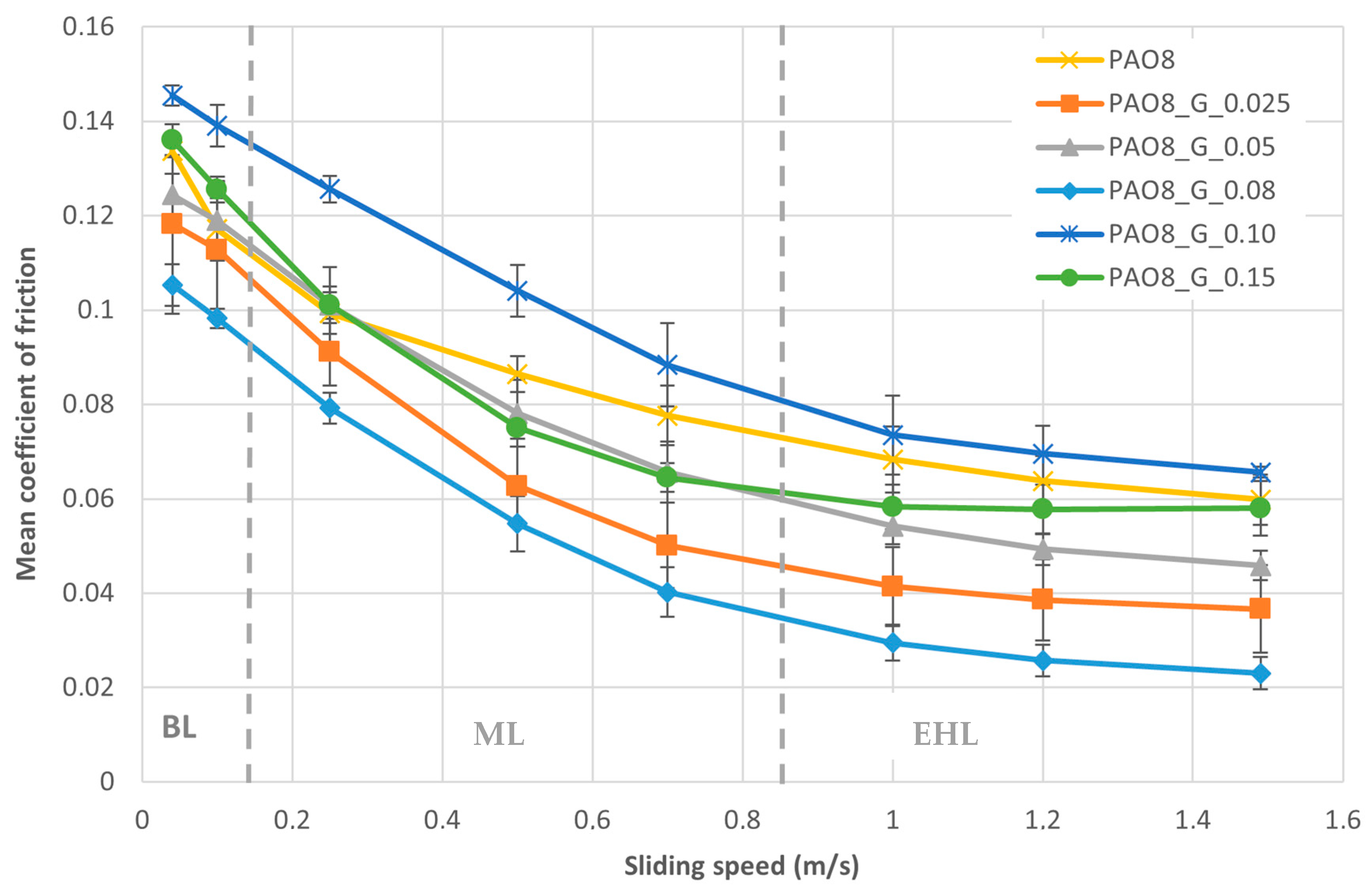
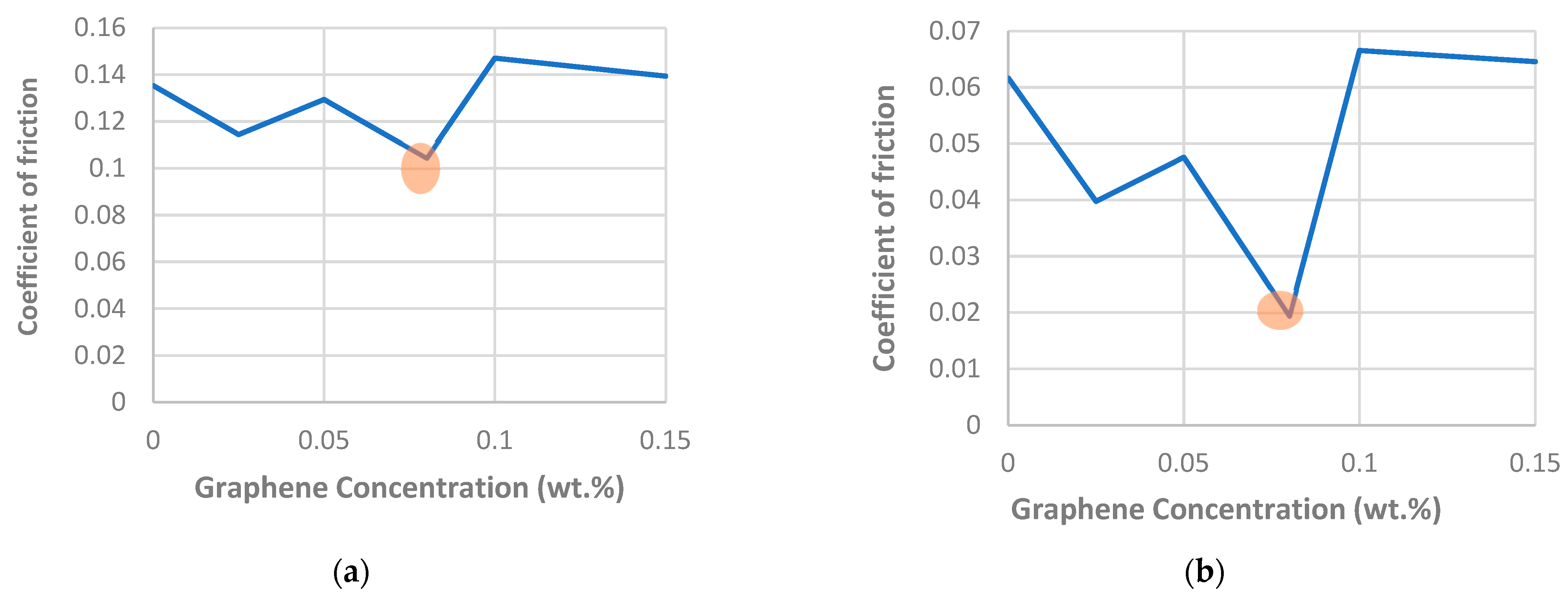
- The addition of 0.08 wt.% graphene nanoplatelets to PAO8 significantly reduced friction across all lubrication regimes, with an approximately 25% reduction observed in the boundary lubrication regime.
- In contrast, the addition of 0.10 wt.% graphene nanoplatelets to PAO8 resulted in increased friction across all lubrication regimes.
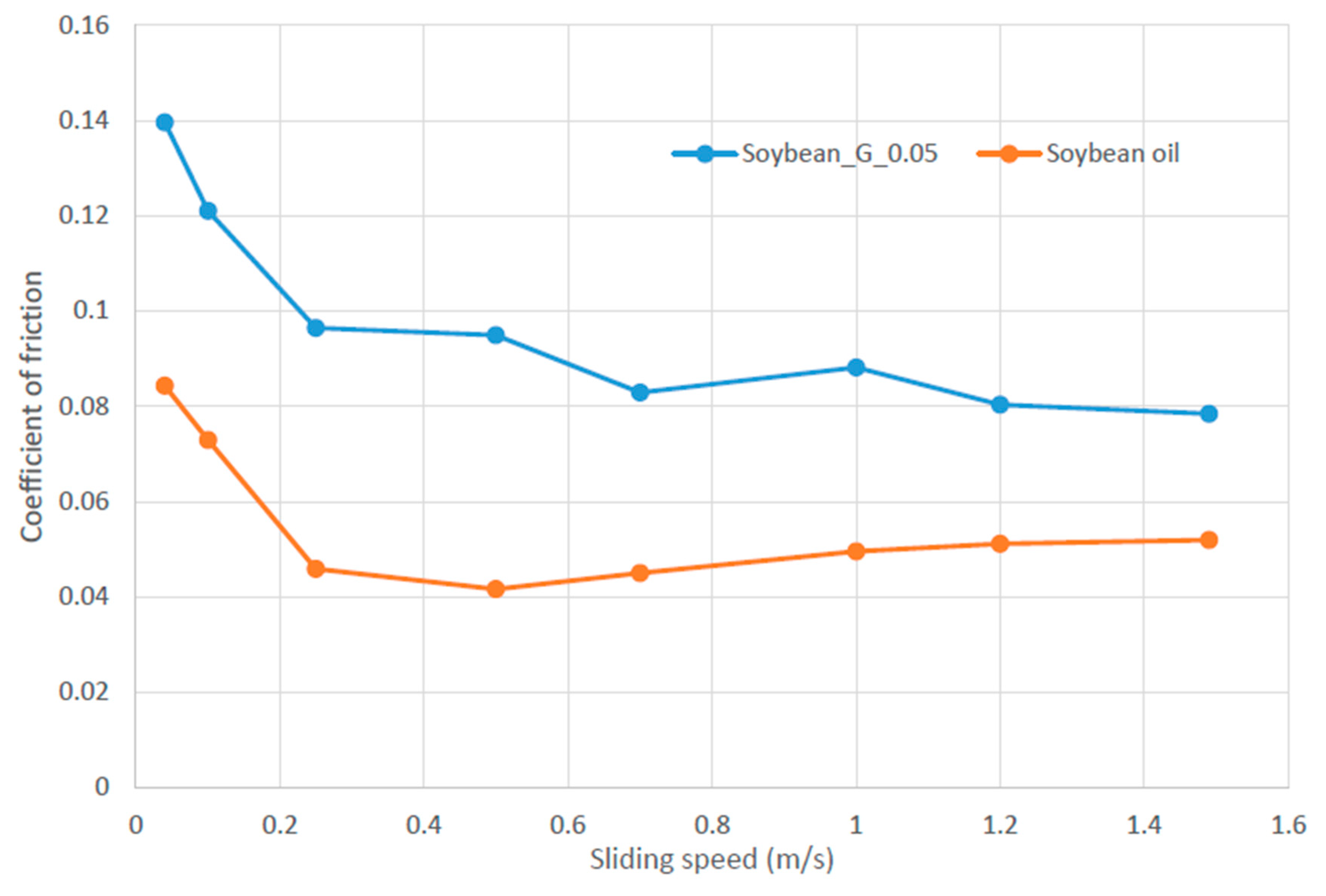
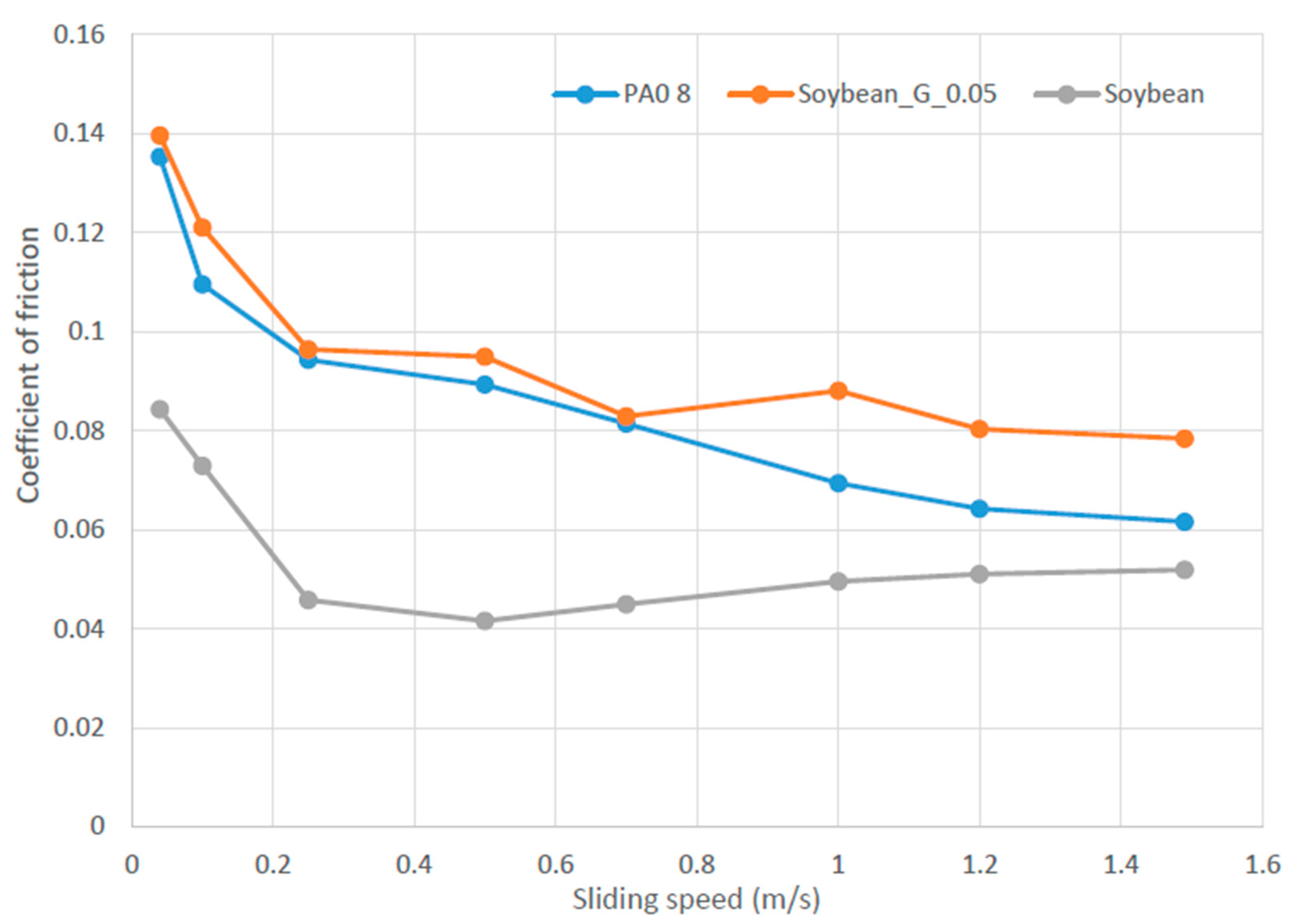
- Epoxidized soybean oil, even without additives, demonstrated comparable lubricating performance to PAO8. This behavior can be attributed to the reduction in the degree of unsaturation in soybean oil following epoxidation, which enhances its tribological performance.
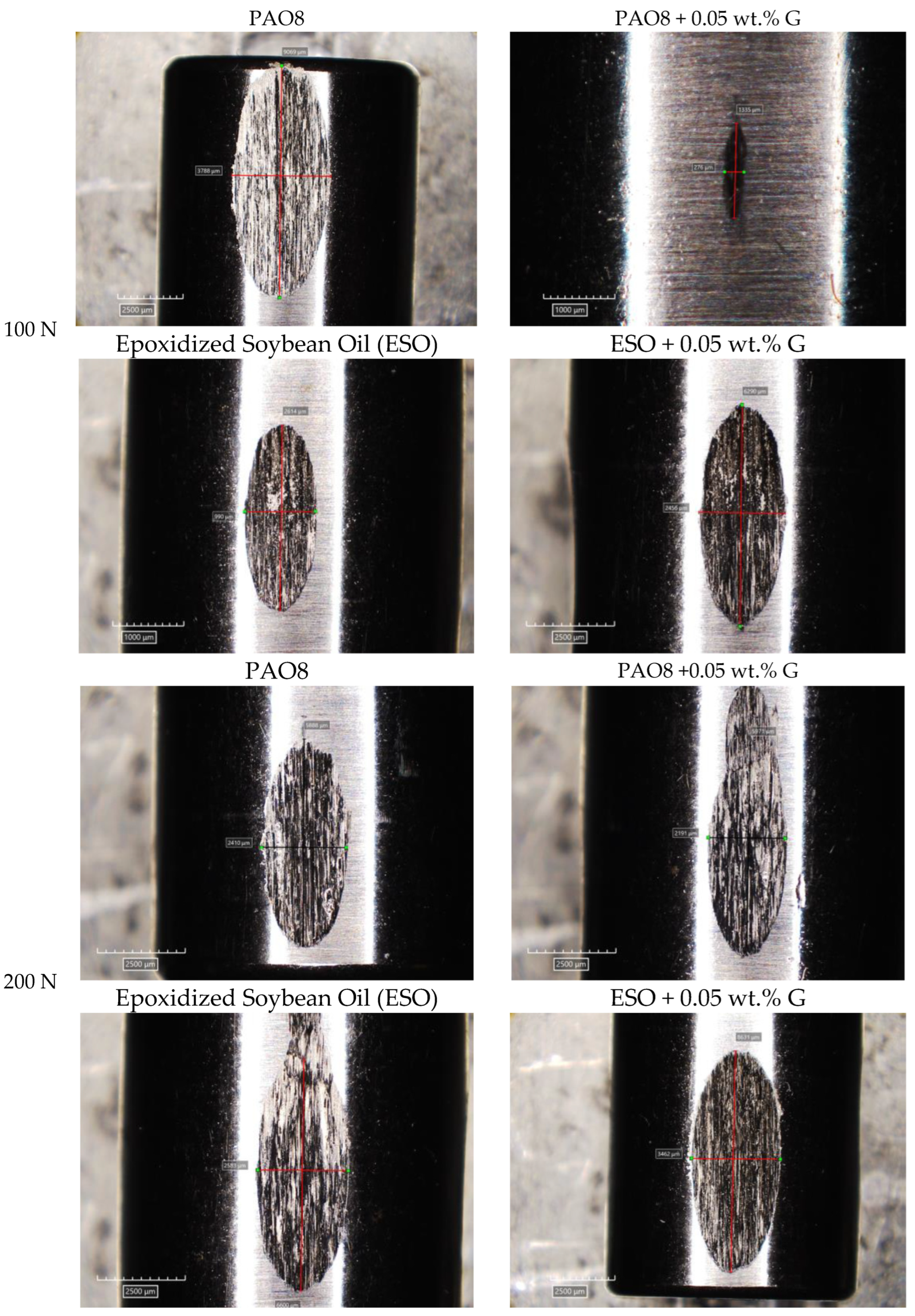
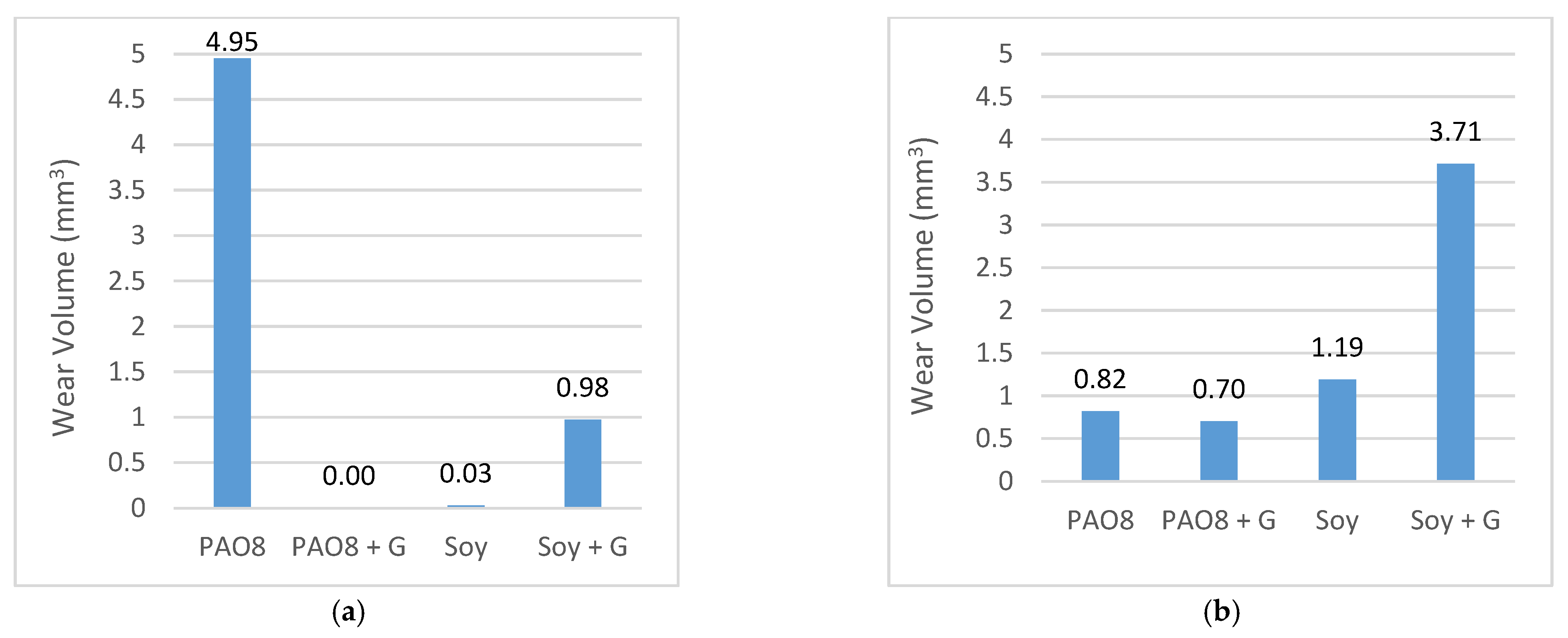
- The incorporation of 0.05 wt.% graphene nanoplatelets into the PAO8 base oil led to a significant reduction in wear, achieving a 14.3% decrease under a contact load of 200 N (1.6 GPa).
- Epoxidized soybean oil exhibited effective anti-wear performance without the need for additives, whereas the addition of graphene nanoplatelets did not lead to further wear reduction under the conditions investigated.
Author Contributions
Funding
Data Availability Statement
Conflicts of Interest
References
- Syahrullail, S.; Kamitani, S.; Shakirin, A. Performance of vegetable oil as lubricant in extreme pressure condition. Procedia Eng. 2013, 68, 172–177. [Google Scholar] [CrossRef]
- Soybean Oil: Lubricating Performance. Available online: http://www.soyconnection.com/newsletters (accessed on 14 July 2024).
- Schmitz, J.F.; Erhan, S.Z.; Sharma, B.K.; Johnson, L.A.; Myers, D.J. Biobased Products from Soybeans. In Soybeans: Chemistry, Production, Processing, and Utilization; Elsevier: Amsterdam, The Netherlands, 2008; pp. 539–612. [Google Scholar] [CrossRef]
- Srivastava, A.; Sahai, P. Vegetable oils as lube basestocks: A review. Afr. J. Biotechnol. 2013, 12, 880–891. [Google Scholar] [CrossRef]
- Van Rensselar, J. Biobased Lubricants: Gearing Up for a Green World. Tribol. Lubr. Technol. 2011, 66, 32. [Google Scholar]
- Liu, G.; Li, X.; Qin, B.; Xing, D.; Guo, Y.; Fan, R. Investigation of the mending effect and mechanism of copper nanoparticles on a tribologically stressed surface. Tribol. Lett. 2004, 17, 961–966. [Google Scholar] [CrossRef]
- Hernández Battez, A.; González, R.; Viesca, J.L.; Fernández, J.E.; Díaz Fernández, J.M.; Machado, A.; Chou, R.; Riba, J. CuO, ZrO2 and ZnO nanoparticles as antiwear additive in oil lubricants. Wear 2008, 265, 422–428. [Google Scholar] [CrossRef]
- Huang, H.D.; Tu, J.P.; Gan, L.P.; Li, C.Z. An investigation on tribological properties of graphite nanosheets as oil additive. Wear 2006, 261, 140–144. [Google Scholar] [CrossRef]
- Cizaire, L.; Vacher, B.; Le Mogne, T.; Martin, J.M.; Rapoport, L.; Margolin, A.; Tenne, R. Mechanisms of ultra-low friction by hollow inorganic fullerene-like MoS2 nanoparticles. Surf. Coat. Technol. 2002, 160, 282–287. [Google Scholar] [CrossRef]
- Schedin, F.; Geim, A.K.; Morozov, S.V.; Hill, E.W.; Blake, P.; Katsnelson, M.I.; Novoselov, K.S. Detection of individual gas molecules adsorbed on graphene. Nat. Mater. 2007, 6, 652–655. [Google Scholar] [CrossRef]
- Shahnazar, S.; Bagheri, S.; Abd Hamid, S.B. Enhancing lubricant properties by nanoparticle additives. Int. J. Hydrogen Energy 2016, 41, 3153–3170. [Google Scholar] [CrossRef]
- Zhang, W.; Zhou, M.; Zhu, H.; Tian, Y.; Wang, K.; Wei, J.; Ji, F.; Li, X.; Li, Z.; Zhang, P.; et al. Tribological properties of oleic acid-modified graphene as lubricant oil additives. J. Phys. D Appl. Phys. 2011, 44, 205303. [Google Scholar] [CrossRef]
- Azman, S.S.N.; Zulkifli, N.W.M.; Masjuki, H.; Gulzar, M.; Zahid, R. Study of tribological properties of lubricating oil blend added with graphene nanoplatelets. J. Mater. Res. 2016, 31, 1932–1938. [Google Scholar] [CrossRef]
- Li, Y.; Zhao, J.; Tang, C.; He, Y.; Wang, Y.; Chen, J.; Mao, J.; Zhou, Q.; Wang, B.; Wei, F.; et al. Highly exfoliated reduced graphite oxide powders as efficient lubricant oil additives. Adv. Mater. Interfaces 2016, 3, 1600700. [Google Scholar] [CrossRef]
- Dou, X.; Koltonow, A.R.; He, X.; Jang, H.D.; Wang, Q.; Chung, Y.W.; Huang, J. Self-dispersed crumpled graphene balls in oil for friction and wear reduction. Proc. Natl. Acad. Sci. USA 2016, 113, 1528–1533. [Google Scholar] [CrossRef] [PubMed]
- Guo, Y.B.; Zhang, S.W. The tribological properties of multi-layered graphene as additives of PAO2 oil in steel–steel contacts. Lubricants 2016, 4, 30. [Google Scholar] [CrossRef]
- Kogovšek, J.; Kalin, M. Comparison of graphene as an oil additive with conventional automotive additives for the lubrication of steel and DLC-coated surfaces. Tribol. Int. 2023, 180, 108220. [Google Scholar] [CrossRef]
- Vilhena, L.M.; Ramalho, A.; Cavaleiro, A. Grooved surface texturing by electrical discharge machining (EDM) under different lubrication regimes. Lubr. Sci. 2017, 29, 493–501. [Google Scholar] [CrossRef]
- Sharma, P.; Mahadeshwara, M.R.; Vilhena, L.; Richhariya, V.; Silva, F.; Ramalho, A.; Carvalho, S.; Cavaleiro, A. Synergic effect of TMD coating on textured steel using micro-EDM. Surf. Coat. Technol. 2023, 467, 129714. [Google Scholar] [CrossRef]
- Mahadeshwara, M.R.; Rosa, F.; Vuchkov, T.; Vilhena, L.; Ramalho, A.; Sharma, P.; Cavaleiro, A. Investigating the synergistic effect of electrochemical texturing and MoSeC coatings on the frictional behaviour of lubricated contacts. Coatings 2023, 13, 692. [Google Scholar] [CrossRef]
- Sadeghi, M.; Omiya, T.; Fernandes, F.; Vilhena, L.; Ramalho, A.; Ferreira, F. Tribological behavior of doped DLC coatings in the presence of ionic liquid additive under different lubrication regimes. Coatings 2023, 13, 891. [Google Scholar] [CrossRef]
- Sadeghi, M.; Omiya, T.; Fernandes, F.; Vilhena, L.; Ramalho, A.; Ferreira, F. Influence of 1-ethyl-3-methylimidazolium diethylphosphate ionic liquid on the performance of Eu- and Gd-doped diamond-like carbon coatings. Lubricants 2024, 12, 18. [Google Scholar] [CrossRef]
- Suresha, B.; Hemanth, G.; Rakesh, A.; Adarsh, K.M. Tribological behaviour of neem oil with and without graphene nanoplatelets using four-ball tester. Adv. Tribol. 2020, 2020, 1984931. [Google Scholar] [CrossRef]
- Kiu, S.S.K.; Yusup, S.; Soon, C.V.; Arpin, T.; Samion, S.; Kamil, R.N.M. Tribological investigation of graphene as lubricant additive in vegetable oil. J. Phys. Sci. 2017, 28, 257–267. [Google Scholar] [CrossRef]
- Cristea, G.C.; Georgescu, C.; Dima, D.; Deleanu, L. Influence of graphene as additive in soybean oil. IOP Conf. Ser. Mater. Sci. Eng. 2018, 444, 022012. [Google Scholar] [CrossRef]
- Georgescu, C. Stratul Superficial în Procesele de Frecare şi Uzură ale Unor Materiale Compozite cu Matrice de Polibutilentereftalat; Galaţi University Press: Galaţi, Romania, 2012. [Google Scholar]
- Characterization of Graphene. Available online: https://graphenest.com/ (accessed on 14 July 2024).
- Talib, N.; Nasir, R.M.; Rahim, E.A. Tribological behaviour of modified jatropha oil by mixing hexagonal boron nitride nanoparticles as a bio-based lubricant for machining processes. J. Clean. Prod. 2017, 147, 360–378. [Google Scholar] [CrossRef]
- Maynet, W.; Samsudin, E.M.; Soh, N.M.Z.N. Physical and mechanical properties of cement board made from oil palm empty fruit bunch fibre: A review. IOP Conf. Ser. Mater. Sci. Eng. 2021, 1143, 012008. [Google Scholar] [CrossRef]
- Nanoparticle Dispersion. Available online: https://www.sonicator.com/pages/nanoparticle-dispersion (accessed on 14 July 2024).
- Tallian, T.E. On competing failure modes in rolling contact. ASLE Trans. 1967, 10, 418–439. [Google Scholar] [CrossRef]
- Cai, Z.B.; Zhao, L.; Zhang, X.; Yue, W.; Zhu, M.H. Combined effect of textured patterns and graphene flake additives on tribological behavior under boundary lubrication. PLoS ONE 2016, 11, e0152143. [Google Scholar] [CrossRef]



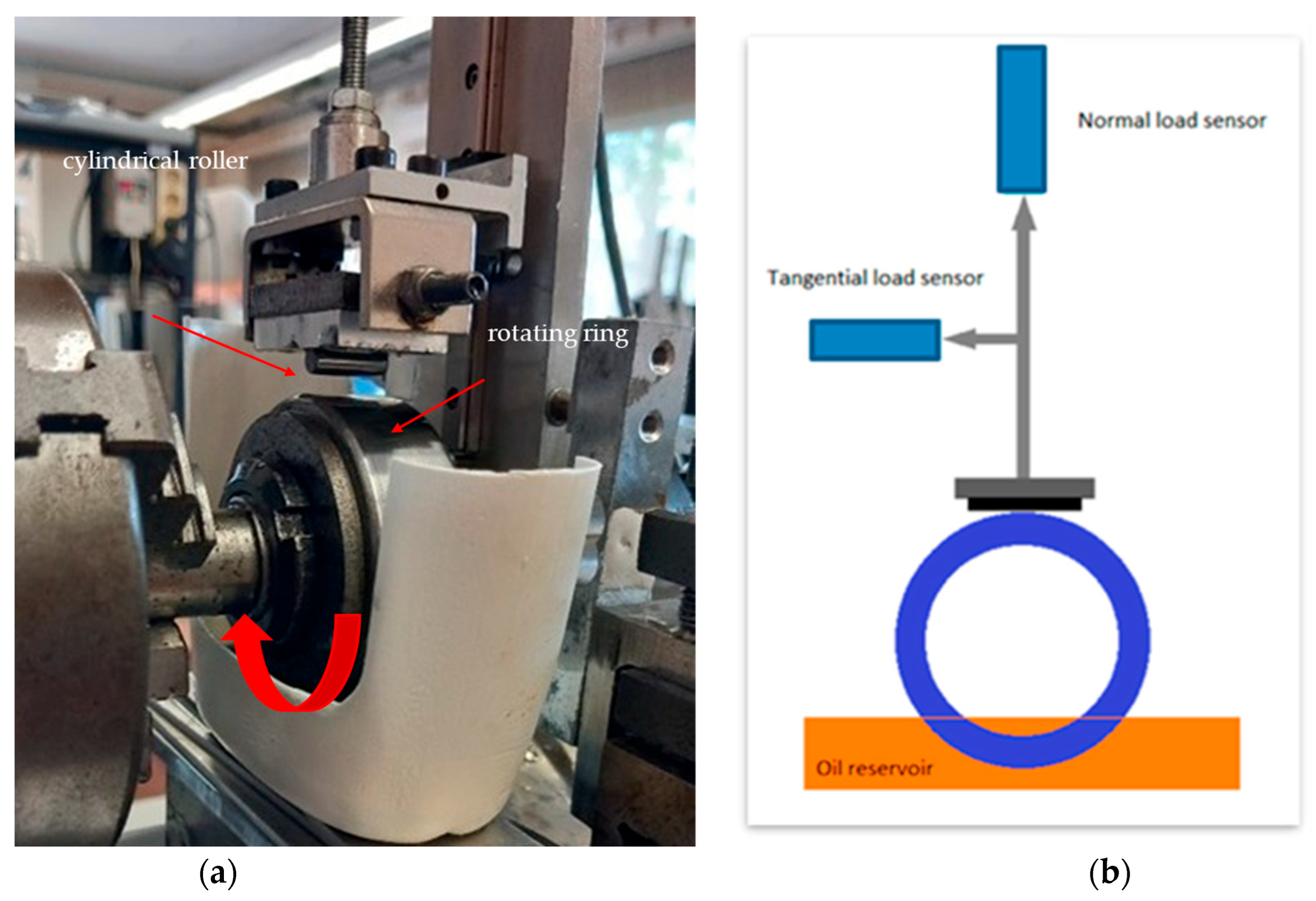
| Top Cylindrical Roller | Rotating Ring | |
|---|---|---|
| Type of material | Bearing steel (100Cr6) | Bearing steel (100Cr6) |
| Diameter (mm) | 5 | 60 |
| Length (mm) | 16 | - |
| Width (mm) | - | 20 |
| Young Modulus (GPa) | 210 | 210 |
| Poisson’s ratio | 0.3 | 0.3 |
| Surface Roughness (μm) | 0.02 | 0.04 |
| Test | Load (N) | Frequency (Hz) | Sliding Distance (m) | Sliding Speed (m/s) | Sliding Time (s) |
|---|---|---|---|---|---|
| 1 | 30 | 60 | 188 | 1.49 | 127 |
| 2 | 30 | 48.4 | 188 | 1.2 | 157 |
| 3 | 30 | 40.4 | 188 | 1 | 188 |
| 4 | 30 | 28.4 | 188 | 0.7 | 269 |
| 5 | 30 | 20.4 | 188 | 0.5 | 377 |
| 6 | 30 | 10.4 | 188 | 0.25 | 754 |
| 7 | 30 | 4.4 | 188 | 0.1 | 1885 |
| 8 | 30 | 2 | 188 | 0.04 | 4712 |
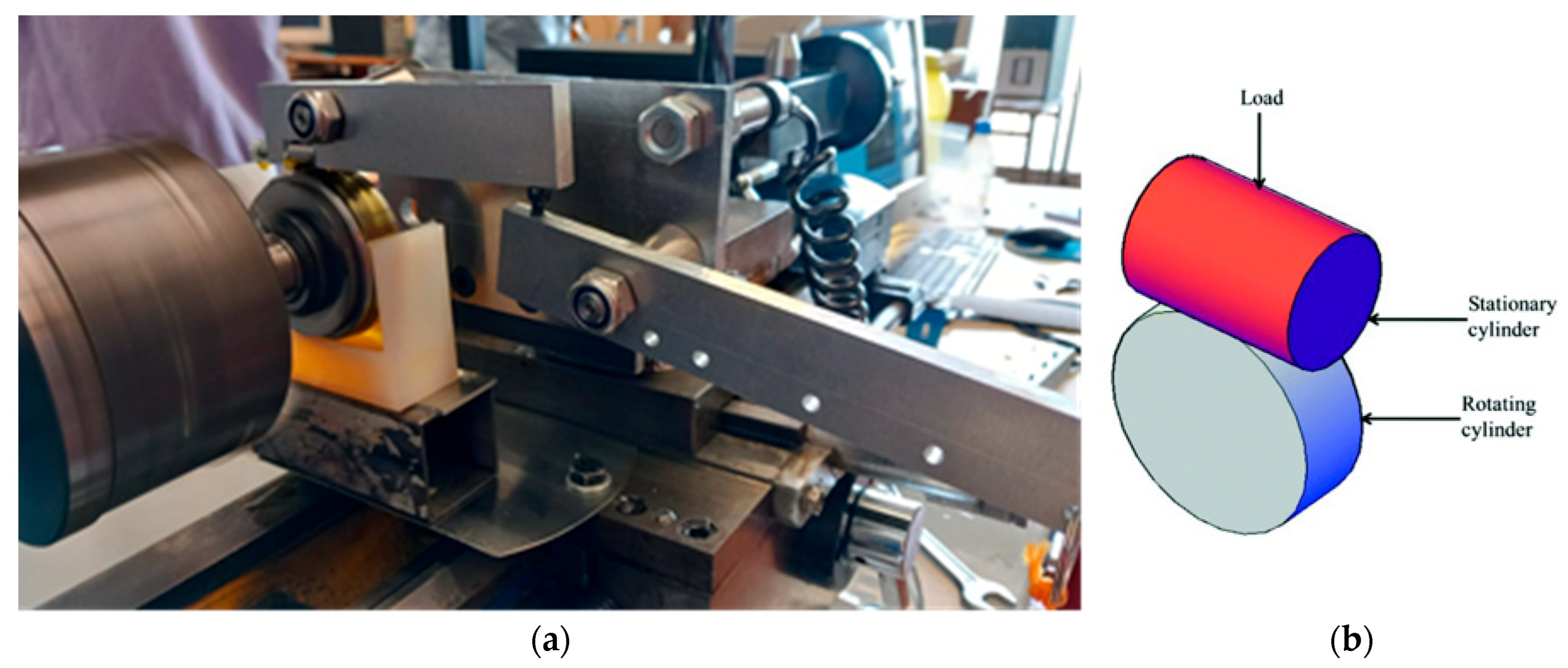
| Test Specimens | 100Cr6 Bearing Steel for Both the Test Roller (10 mm Diameter) and the Rotating Ring (60 mm Diameter) |
|---|---|
| Contact configuration | Cross cylinders |
| Type of contact | Unidirectional sliding |
| Lubricants | PAO8 and epoxidized soybean oil (ESO) |
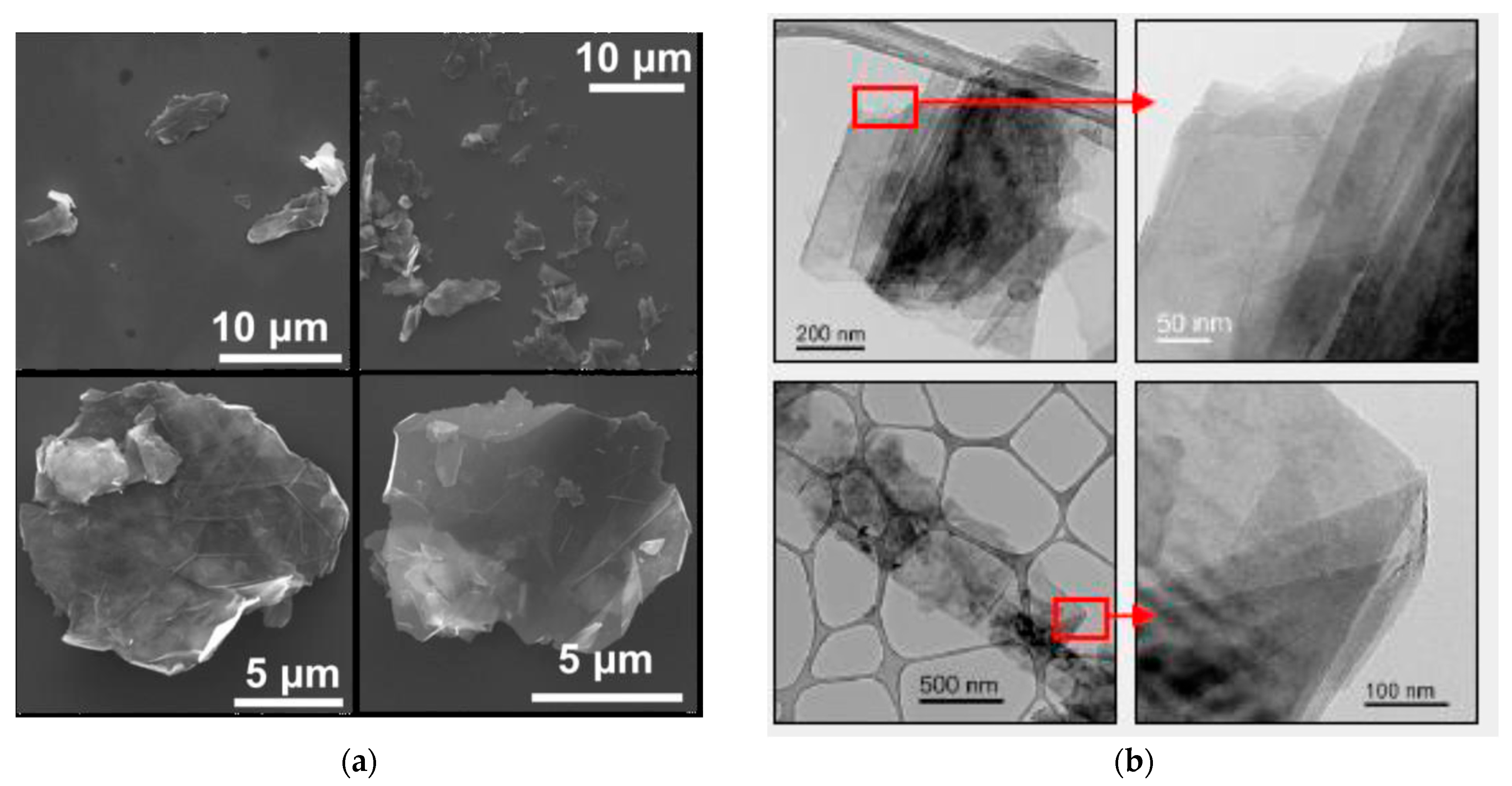
| Additives | Graphene nanoplatelets (0.05 wt.%) |
| Room conditions | T = 22 ± 3 °C |
| Contact load (contact pressure) | 100, 200 and 400 N (1.3, 1.6, 2.1 GPa) |
| Sliding speed | 1.67 m/s |
| Sliding distance | 100 m |
| µ (30°) (mm2/s) | u (m/s) | 0.04 | 0.1 | 0.25 | 0.5 | 0.70 | 1 | 1.2 | 1.49 | |
|---|---|---|---|---|---|---|---|---|---|---|
| PAO8 | 71.58 | h0 (m) | 6.04−8 | 1.13−7 | 2.10−7 | 3.37−7 | 4.23−7 | 5.39−7 | 6.11−7 | 7.07−7 |
| λ | 0.3 | 0.6 | 1.2 | 1.9 | 2.4 | 3.1 | 3.5 | 4.0 | ||
| PAO8 + 0.025G | 71.84 | h0 (m) | 6.06−8 | 1.13−7 | 2.11−7 | 3.37−7 | 4.24−7 | 5.41−7 | 6.12−7 | 7.09−7 |
| λ | 0.3 | 0.6 | 1.2 | 1.9 | 2.4 | 3.1 | 3.5 | 4.0 | ||
| PAO8 + 0.05G | 71.89 | h0 (m) | 6.06−8 | 1.13−7 | 2.11−7 | 3.38−7 | 4.24−7 | 5.41−7 | 6.12−7 | 7.09−7 |
| λ | 0.3 | 0.6 | 1.2 | 1.9 | 2.4 | 3.1 | 3.5 | 4.0 | ||
| PAO8 + 0.08G | 72.52 | h0 (m) | 6.10−8 | 1.14−7 | 2.12−7 | 3.40−7 | 4.27−7 | 5.44−7 | 6.16−7 | 7.14−7 |
| λ | 0.3 | 0.6 | 1.2 | 1.9 | 2.4 | 3.1 | 3.5 | 4.0 | ||
| PAO8 + 0.10G | 72.89 | h0 (m) | 6.12−8 | 1.14−7 | 2.13−7 | 3.41−7 | 4.28−7 | 5.46−7 | 6.18−7 | 7.16−7 |
| λ | 0.3 | 0.6 | 1.2 | 1.9 | 2.4 | 3.1 | 3.5 | 4.1 | ||
| PAO8 + 0.15G | 73.04 | h0 (m) | 6.18−8 | 1.15−7 | 2.15−7 | 3.44−7 | 4.33−7 | 5.51−7 | 6.24−7 | 7.23−7 |
| λ | 0.4 | 0.7 | 1.2 | 2.0 | 2.5 | 3.1 | 3.5 | 4.1 | ||
| BL | BL | ML | ML | ML | EHL | EHL | EHL |
Disclaimer/Publisher’s Note: The statements, opinions and data contained in all publications are solely those of the individual author(s) and contributor(s) and not of MDPI and/or the editor(s). MDPI and/or the editor(s) disclaim responsibility for any injury to people or property resulting from any ideas, methods, instructions or products referred to in the content. |
© 2026 by the authors. Licensee MDPI, Basel, Switzerland. This article is an open access article distributed under the terms and conditions of the Creative Commons Attribution (CC BY) license.
Share and Cite
Vilhena, L.; Erhabor, B.; Wangmo, T.; Figueiredo, B.; Ramalho, A. Lubricating Properties of Oil-Based Solutions Containing Graphene as Additive. Lubricants 2026, 14, 92. https://doi.org/10.3390/lubricants14020092
Vilhena L, Erhabor B, Wangmo T, Figueiredo B, Ramalho A. Lubricating Properties of Oil-Based Solutions Containing Graphene as Additive. Lubricants. 2026; 14(2):92. https://doi.org/10.3390/lubricants14020092
Chicago/Turabian StyleVilhena, Luís, Barnabas Erhabor, Tsering Wangmo, Bruno Figueiredo, and Amílcar Ramalho. 2026. "Lubricating Properties of Oil-Based Solutions Containing Graphene as Additive" Lubricants 14, no. 2: 92. https://doi.org/10.3390/lubricants14020092
APA StyleVilhena, L., Erhabor, B., Wangmo, T., Figueiredo, B., & Ramalho, A. (2026). Lubricating Properties of Oil-Based Solutions Containing Graphene as Additive. Lubricants, 14(2), 92. https://doi.org/10.3390/lubricants14020092