Article

Effect of TiO2 and SiO2 Nanoparticles on Traction, Wear, and High-Shear Viscosity of PAG Lubricants Under Elastohydrodynamic (EHL) Conditions for Refrigeration Systems


by
Mohd Zaki Sharif
1,2,*,
Mohd Syafiq Abd Aziz
1,3,
Mohd Farid Ismail
1,2,
Mohd Fadzli Bin Abdollah
1,2,
Abdul Aziz Mohamad Redhwan
4,
Nor Azazi Ngatiman
1,2 and
Anwar Ilmar Ramadhan
5
1
Fakulti Kejuruteraan Mekanikal, Universiti Teknikal Malaysia Melaka, Hang Tuah Jaya, Durian Tunggal 76100, Melaka, Malaysia
2
Centre for Advanced Research on Energy, Universiti Teknikal Malaysia Melaka, Hang Tuah Jaya, Durian Tunggal 76100, Melaka, Malaysia
3
Tribology Group, Department of Mechanical Engineering, Imperial College London, London SW7 2AZ, UK
4
Faculty of Engineering Technology, University College TATI, Chukai 24000, Terengganu, Malaysia
5
Department of Mechanical Engineering, Universitas Muhammadiyah Jakarta, Jakarta 10510, Indonesia
*
Author to whom correspondence should be addressed.
Lubricants 2026, 14(2), 78; https://doi.org/10.3390/lubricants14020078
Submission received: 11 December 2025 / Revised: 22 January 2026 / Accepted: 3 February 2026 / Published: 9 February 2026
(This article belongs to the Special Issue Tribological Behavior of Nanolubricants: Do We Know Enough?)

Abstract

This study tests TiO2 and SiO2 nanolubricants in PAG oil using a Mini Traction Machine and an Ultra Shear Viscometer. The loads were 20 N and 40 N. The entrainment speeds ranged from 2.5 to 500 mm/s. The slide-to-roll ratio (SRR) ranged from 25 to 150%. The nanoparticle concentrations were 0.01, 0.03, and 0.05%. The ball size was 19.05 mm, and the disc was 46 mm. All tests were run at 40 °C. Only the 0.05% concentration lowered traction compared with PAG at a fixed SRR. TiO2 at 0.05% showed the largest drop, up to 4.89% at 20 N and 2.99% at 40 N. However, lower concentrations increased traction. All the nanolubricants reduced wear. TiO2 at 0.03% gave the lowest wear, with a reduction of about 35 µm at 40 N. Nanolubricant samples stayed between 40.2 and 40.5 °C, while PAG reached about 41.0 °C. TiO2 produced slightly lower temperatures than SiO2. Ultra-shear tests from 40 to 100 °C showed shear thinning. In most conditions, TiO2 at 0.05% kept the highest viscosity at 40 and 60 °C, up to 12% above PAG. SiO2 showed smaller changes. TiO2 delivered better friction, wear, temperature, and viscosity performance. Overall, both nanolubricants at 0.03% are suitable when wear reduction and thermal stability are prioritised over traction reduction, such as in refrigeration applications, while the 0.05% suits high-load or high-shear use.

1. Introduction

Stable lubrication is essential for the reliable operation of bearings, gears, and compressors subjected to high load and speed. In refrigeration compressors, lubricant films must support rolling–sliding contacts in thrust bearings, scroll elements, and discharge-side interfaces. These contacts commonly operate under elastohydrodynamic lubrication conditions, where load is carried by a pressurised lubricant film, and friction is governed by high shear within the lubricant. Any reduction in film strength increases traction, accelerates wear, and raises local temperature, which reduces efficiency and may shorten compressor service life. Polyalkylene glycol lubricants are widely used in refrigeration systems because of their oxidation resistance and ability to maintain viscosity at elevated temperatures [1]. However, even with these advantages, PAG oils can experience increased friction, wear, and thermal stress when operating under boundary, mixed, or EHL regimes [2,3,4]. Increased traction intensifies shear heating and leads to a rise in local oil temperature [5].
Nanoparticle additives have been explored to enhance lubricant performance by strengthening the lubricant film, reducing friction, and improving heat transfer. Various nanoparticle types have been reported in the literature, including metal oxides, carbon-based nanoparticles, and layered solid lubricants. Among these, TiO2 and SiO2 nanoparticles are frequently studied because of their chemical stability and compatibility with refrigeration lubricants [6,7]. TiO2 and SiO2 nanoparticles also show good dispersion stability in refrigeration lubricants, which is a main criterion that helps prevent particle settling and ensures consistent lubrication performance during long-term refrigeration compressor operation [6,8]. Previous studies have shown that TiO2 nanoparticles can improve anti-wear performance through tribofilm formation and the filling of micro-scale surface defects [9]. SiO2 nanoparticles have also demonstrated the ability to stabilise sliding contacts and reduce friction, although their effect is generally smaller than that of TiO2 at comparable concentrations [10,11]. The performance of these nanolubricants depends strongly on particle concentration and dispersion quality. TiO2 nanocomposites have been reported to produce smoother steel surfaces under high-stress sliding due to asperity mending effects [12], while other studies reported increases in thermal conductivity and viscosity with TiO2 addition, contributing to improved film strength in refrigeration oils [8,13]. SiO2-based nanolubricants have also shown good temperature stability under static conditions [14]. Recent studies on nanolubricants under elastohydrodynamic lubrication conditions have reported that metal oxide nanoparticles such as TiO2 and ZnO can also influence friction and wear behaviour in rolling–sliding contacts and achieve consistent EHL performance [9,15]. Liu, Xu [16] showed that in SiO2 PAG nanofluids, smaller SiO2 nanoparticles reduce friction and wear much more effectively than larger particles under EHL conditions, supporting the use of nanoscale SiO2 in PAG-based EHL systems [16]. Wei, Dai [17] shows synergy between TiO2 and carbon nano-additives (graphene), suggesting that combinations can outperform single oxides in anti-wear under rolling/sliding. TiO2 and SiO2 nanoparticles also show good dispersion stability in PAG lubricants, which helps prevent particle settling and ensures consistent lubrication performance during long-term refrigeration compressor operation [6,8].
Many earlier tribological investigations employed four-ball or pin-on-disc tribometers. These test configurations primarily generate pure sliding contacts and do not accurately reproduce the rolling–sliding balance present in refrigeration compressor bearings and rotor interfaces. They also lack the independent control of rolling speed, sliding speed, and slide-to-roll ratio. In contrast, elastohydrodynamic lubrication governs load support in compressor bearings and scroll contacts [18,19]. Small variations in SRR significantly influence traction, film thickness, temperature rise, and energy consumption. In actual compressor operation, SRR varies continuously with speed and load changes, making controlled SRR testing essential for understanding lubricant behaviour. Despite this, only a limited number of studies have investigated TiO2 or SiO2 nanolubricants under controlled EHL conditions using a Mini Traction Machine. The direct comparison of both nanoparticle types in the same PAG base oil under identical rolling–sliding conditions remains scarce.
Furthermore, the combined influence of nanoparticle type and concentration on traction stability, Stribeck behaviour, temperature evolution, wear progression, and high-shear viscosity across a wide SRR range has not been fully established. This limits the understanding of how these nanolubricants perform in refrigeration compressor contacts, where film stability and heat control are critical.
This study addresses these gaps by systematically evaluating TiO2 and SiO2 nanolubricants at volume concentrations of 0.01, 0.03, and 0.05% in a PAG base oil using a Mini Traction Machine under controlled elastohydrodynamic lubrication conditions. Traction behaviours across varying SRR, wear progression, lubricant temperature stability, and high-shear viscosity are investigated. The results clarify how nanoparticle type and concentration influence friction, load support, thermal behaviour, and wear protection under EHL conditions relevant to refrigeration.

2. Materials and Methods

2.1. Ball-on-Disc Rig and Test Parameters

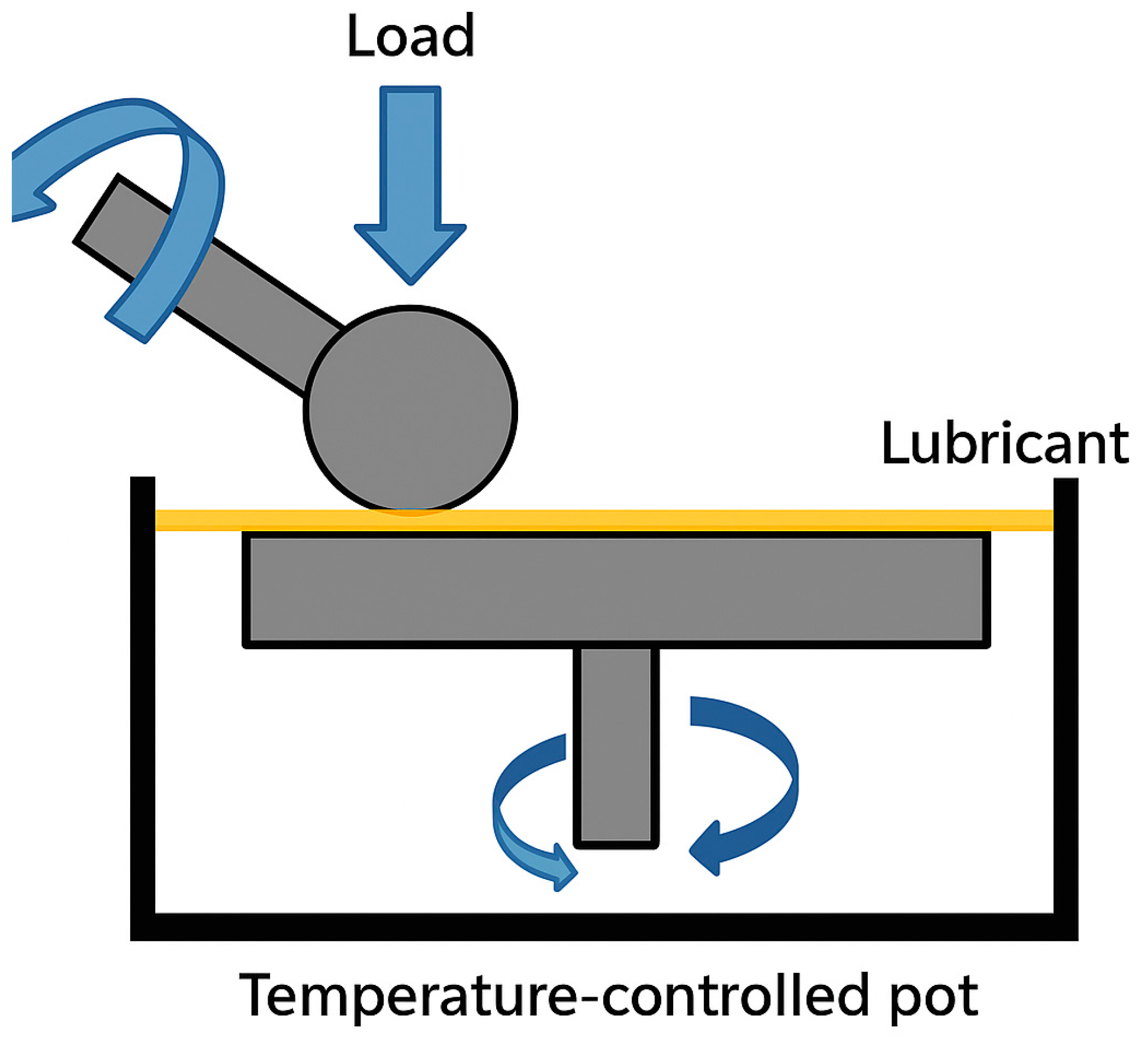
Tribological experiments were performed using a Mini Traction Machine (MTM2, PCS Instruments, Imperial College London, London, UK) in a ball-on-disc configuration (Figure 1). A steel ball contacted a rotating steel disc under a controlled normal load. Independent motors drove the ball and disc. This allowed for the direct control of rolling motion and sliding motion. The entrainment speed varied from 10 to 500 mm/s to capture boundary, mixed, and elastohydrodynamic (EHL) lubrication regimes. Each test was repeated three times to ensure reproducibility, and the contact area was fully submerged in a temperature-controlled oil bath maintained at 40 °C. Each component is driven by a separate motor, allowing for the independent control of both disc and ball speeds to produce a wide range of slide-to-roll ratio (SRR) conditions. The Mini Traction Machine tests were conducted following established elastohydrodynamic lubrication testing procedures consistent with rolling contact tribological principles described in ISO 14635-1 [20], together with the standard EHL testing protocols recommended by the MTM manufacturer. The SRR is calculated using the formula [21]:
S R R = U D i s k U B a l l U D i s k +   U B a l l 2 × 100 =   U e U s × 100
where
  • U e is the entrainment speed, which is the average speed of the two surfaces.
  • U s is the sliding speed, or the difference between them.
Figure 1. Ball-on-disc tribology test setup in MTM.
Lubricants 14 00078 g001
The traction coefficient was calculated using:
µ = F t F N
where
  • F t is the measured traction force.
  • F N is the applied normal load.
Wear was determined from the vertical displacement of the ball holder. Wear depth was calculated using:
Wear   depth   =   h initial h final
where
  • h i n i t i a l is the initial thickness.
  • h f i n a l is the final thickness.
The specimens were made from AISI 52100 chromium steel balls, selected for their hardness and wear resistance. The AISI 52100 chromium steel balls and discs were hardened bearing steel with a typical hardness of 60–64 HRC. The discs were 46 mm in diameter and 6 mm thick, while the balls measured 19.05 mm in diameter. All surfaces were polished to Sa = 6 nm and Sq = 20 nm, providing a smooth baseline for evaluating lubricant performance. No surface texturing was applied, ensuring that results reflected only lubricant formulation effects. The MTM recorded temperature using an internal sensor located in the lubricant bath. The traction curve test measured friction, wear, and temperature while the SRR changed. SRR was swept from low to high values during each run. The entrainment speed stayed constant. Loads of 20 N and 40 N were tested. The applied normal loads of 20 N and 40 N were selected to represent moderate and high Hertzian-contact-stress conditions relevant to rolling–sliding contacts in refrigeration compressor bearings and interfaces, which operate under mixed and elastohydrodynamic lubrication due to high contact pressures and oil–refrigerant dilution effects. A test duration of 500 s was selected to allow for meaningful comparison with previous tribological studies on refrigeration lubricants conducted under similar Mini Traction Machine conditions, while ensuring that traction, wear progression, and thermal behaviour reached a stable and representative state without inducing severe surface damage [22]. The MTM recorded traction force, wear displacement, and temperature throughout the test. This procedure produces traction curves against SRR, along with wear and temperature behaviour, under the same sliding conditions. The traction-curve EHL behaviour test measured traction under changing entrainment speed at fixed SRR. SRR was held constant at selected levels. The entrainment speed increased from low to high values. Loads of 20 N and 40 N were used. Only the traction force was recorded during this procedure. This allowed for the identification of changes in the lubrication regime without interference from wear accumulation. Wear progression data came from the traction curve tests. Each test ran for 500 s after the initial ramp. The vertical displacement data provided wear depth as a function of time. This produced wear curves that reflected the ability of each lubricant to protect the contacting surfaces. Temperature behaviour also came from the traction curve tests. The temperature sensor recorded oil temperature throughout the run. The data showed how each lubricant controlled frictional heat during rolling and sliding contact in each test. Traction tests were repeated three times at each condition. Due to the continuous nature of traction–SRR curves, statistical analysis was performed on traction coefficients extracted at selected SRR values (50% SRR at 300–500 mm/s). Mean values and standard deviations were calculated to quantify experimental variability. At 50% SRR under high-speed EHL conditions, PAG exhibited a mean traction coefficient of 0.0696 ± 0.0005 at 20 N and 0.0789 ± 0.0004 at 40 N. Increasing the applied load resulted in a statistically significant increase in traction coefficient, p = 0.0017, indicating enhanced shear stress within the lubricant film under higher contact load.

2.2. High-Shear Viscosity

The high-shear viscosity test was conducted to support the interpretation of traction behaviour. High-shear viscosity was measured separately using a PCS Ultra Shear Viscometer (PCS Instruments, Imperial College London, London, UK). The viscometer used a rotating Couette cell to generate high-shear rates. Shear rate increased up to 1,000,000 per second. Tests were conducted at 40, 60, 80, and 100 °C. The selected temperatures of 40, 60, 80, and 100 °C represent the typical operating temperature range of refrigeration compressor lubricants, spanning start-up conditions, normal operation, and elevated thermal states near discharge regions. This range enables the assessment of viscosity retention and shear-thinning behaviour under high-shear conditions relevant to refrigeration compressor lubrication, and is consistent with standard Ultra Shear Viscometer testing practice. Samples rested for five minutes at each temperature before measurement. Three readings were taken and averaged. This procedure produced viscosity curves across temperature and shear rate for each formulation. Viscosity was calculated using:
η   =   τ γ ·  
where
  • η is viscosity.
  • τ is shear stress.
  • γ · is the applied shear rate.

2.3. Nanolubricant Preparation and Stability

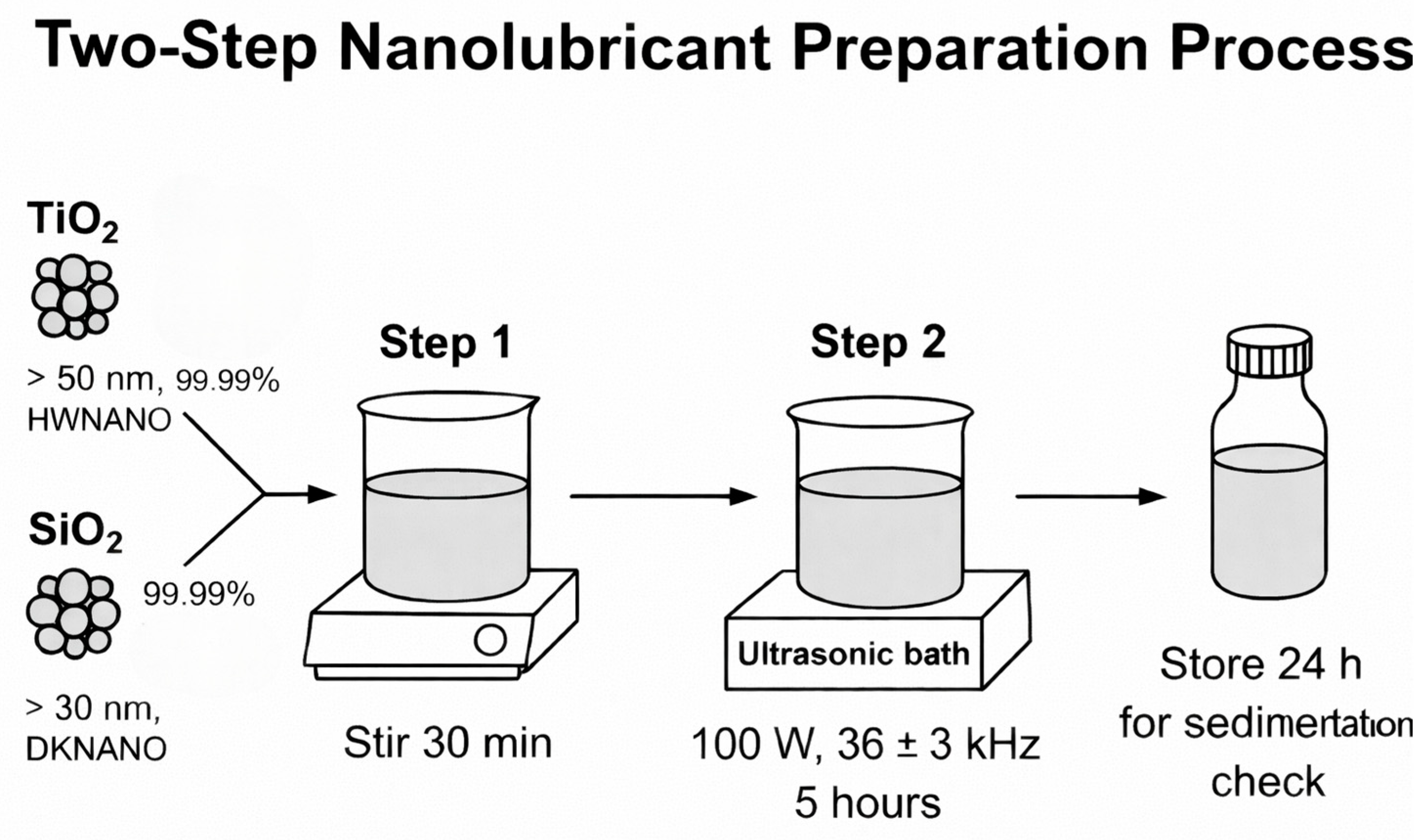
The base lubricant was polyalkylene glycol (PAG) oil. TiO2 and SiO2 nanoparticles were dispersed into PAG at concentrations of 0.01, 0.03, and 0.05 vol%. The selected nanoparticle volume fractions of 0.01, 0.03, and 0.05 vol% represent a low-concentration range commonly adopted in nanolubricant studies for refrigeration and elastohydrodynamic lubrication applications [23]. Metal oxide nanoparticles, TiO2 and SiO2, were used to prepare the PAG-based nanolubricants. The SiO2 nanoparticles were amorphous, with 99.9% purity, an average diameter of 30 nm, and spherical morphology. They were supplied by DKNANO (Beijing Deke Daojin Science and Technology Co., Ltd., Beijing, China). The TiO2 nanoparticles had 99.9% purity with a particle size of 30 to 50 nm and were obtained from HWNANO (Hongwu International Group Ltd., Guangzhou, China). In this study, TiO2 and SiO2 nanoparticles were obtained from commercial suppliers with certified purity, particle size, and phase information. X-ray diffraction analysis was not performed because the objective of the work was to evaluate tribological and rheological performance under elastohydrodynamic lubrication conditions rather than to characterise nanoparticle structure. Future studies may include XRD analysis to further examine nanoparticle phase stability after prolonged tribological testing. Transmission electron microscopy was used to verify particle size and shape. The key properties of both nanoparticles and the base lubricant used are presented in Table 1. All preparation steps were conducted with proper personal protective equipment. A two-step preparation method was used to disperse TiO2 and SiO2 nanoparticles into the PAG lubricant, as shown in Figure 2. The nanolubricants were prepared using a two-step method consisting of mechanical stirring for 30 min followed by ultrasonication for 5 h. These preparation parameters were selected based on the procedure suggested by [24], which demonstrated that this combination provides effective nanoparticle dispersion while minimising agglomeration and preserving the stability of refrigeration lubricants. This method improves dispersion quality and reduces particle agglomeration. Nanolubricants were prepared at 0.01, 0.03, and 0.05% volume concentrations based on previous optimisation trends reported for metal-oxide nanolubricants in refrigeration oils. The volume concentration was calculated using:
v o l   %   =   ( m p   /   ρ p )   [ ( m p   /   ρ p )   +   ( m L   /   ρ L ) ]     ×   10
where
  • v o l   % is the nanolubricant volume concentration.
  • m p is the nanoparticle mass.
  • m L is the PAG mass.
  • ρ L is the PAG density.
Table 1. The key properties of nanoparticles and the base lubricant used in the study.
PropertyPAGTiO2SiO2
Viscosity at 40 °C (cSt)66.6--
Viscosity at 100 °C (cSt)9.4--
Pour point (°C)−39--
Density at 20 °C (g/mL)0.99--
Flash point (°C)250--
Thermal conductivity (W/m·K)-8.41.4
Specific heat (J/kg·K)-692745
Density at 20 °C (kg/m3)-42302220
Molecular mass (g/mol)-79.8660.08
Average particle diameter (nm)-5030
Figure 2. Two-step nanolubricant preparation process.
Lubricants 14 00078 g002

2.4. Testing Conditions

The stability of the nanolubricant was observed using visual observation. Tests were carried out under applied loads of 20 N and 40 N. The MTM was calibrated prior to testing to ensure accuracy. Friction (traction coefficient), wear depth, and oil temperature were continuously recorded over a sliding duration of 500 s. Test conditions are summarised in Table 2.

3. Results

3.1. Visual Stability of Nanolubricant

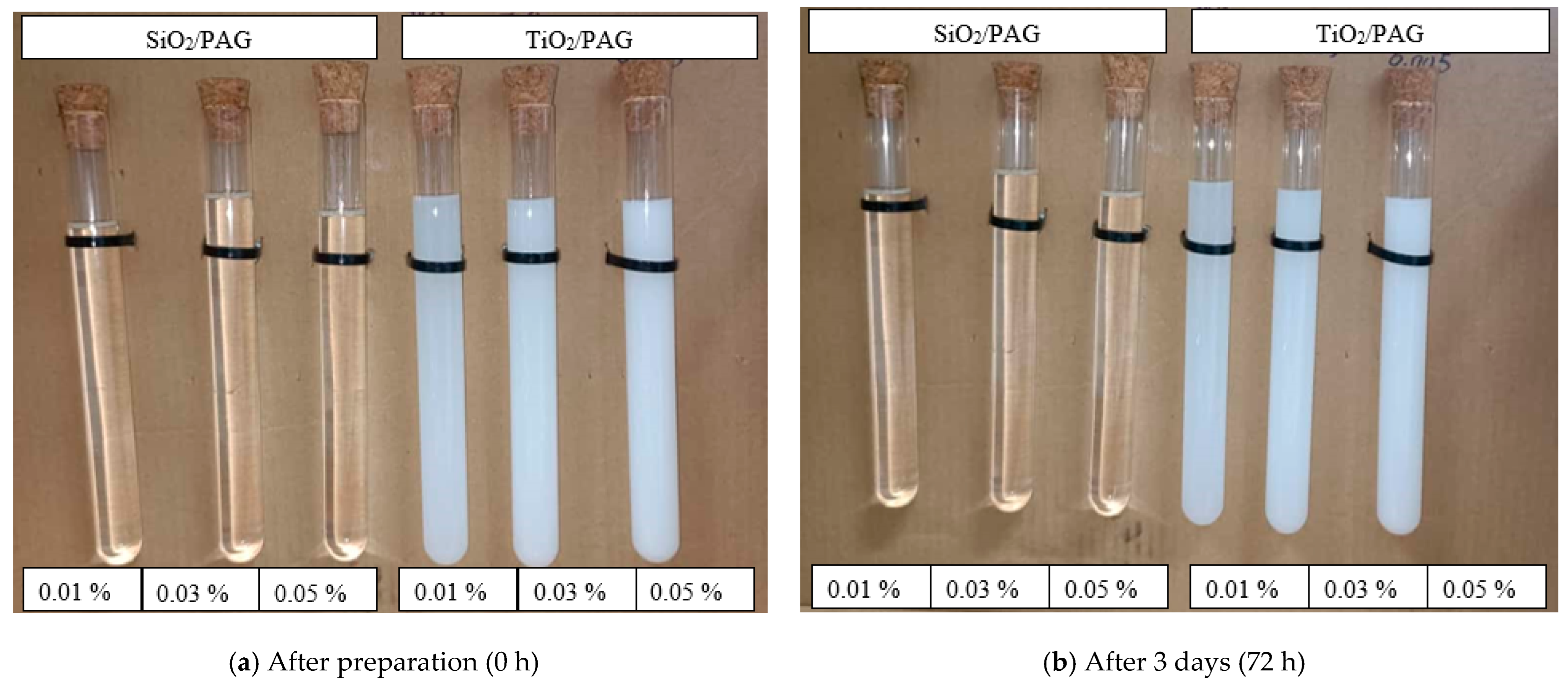
The ability of the nanolubricants to remain evenly dispersed in the base fluid is important for reliable performance. Visual observation is a common method to detect particle settling in nanolubricants. Each sample was placed in a test tube, and images were taken at specific time intervals to record any change in appearance, as shown in Figure 3. Any aggregation or settling indicates weak stability. In this study, images were taken immediately after preparation and again after three days. The results show that no sedimentation appeared in any sample. The colour and opacity of the TiO2/PAG nanolubricants remained unchanged, and no particle layer formed at the bottom of the tubes. Higher concentrations produced more opaque samples, but the appearance stayed consistent over time. These observations confirm that all nanolubricants maintained good static stability. The absence of settling indicates strong dispersion quality and supports their suitability for refrigeration and compressor applications where long-term suspension is required. The stability recorded here is comparable and, in some cases, better than the stability reported in earlier studies.

3.2. Traction–SRR Curve

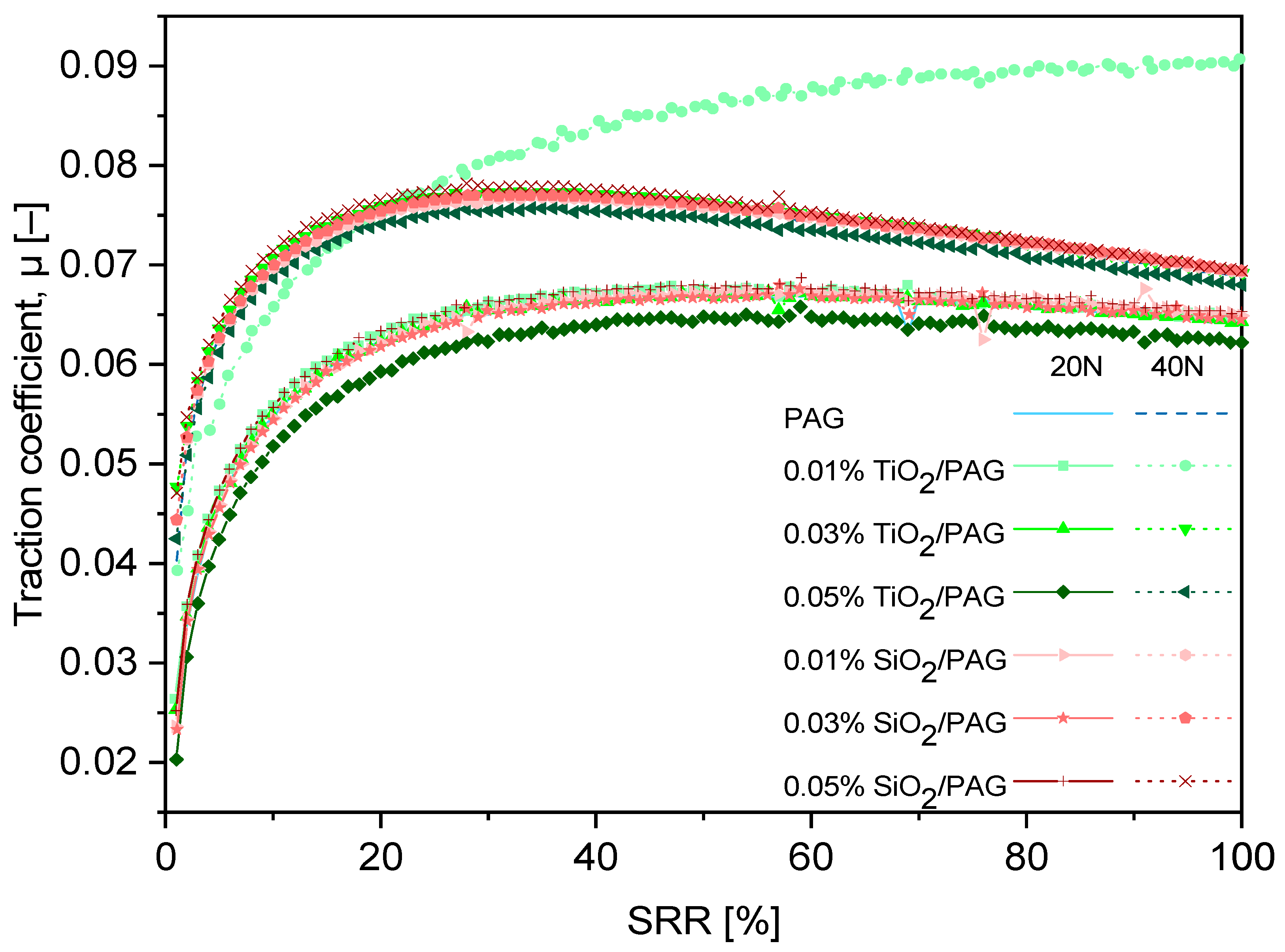
Figure 4 shows the traction behaviour of PAG, SiO2/PAG, and TiO2/PAG across the slide-to-roll ratio (SRR) range under both load levels and at different nanoparticle concentrations. The results show how nanoparticle type, concentration, and load affect traction under elastohydrodynamic lubrication conditions. Traction increased with SRR for all samples, which matches established EHL behaviour. At a low SRR, the lubricant operated in a full film state, where friction was dominated by viscous shearing within the lubricant film. As SRR increased, the amount of sliding between the surfaces rose, which increased shear rate and raised traction. Earlier studies reported the same rising trend up to a plateau region in traction tests using base oils without additives, as documented by Zhang, Tan [25] and Zhang and Spikes [26].
At 20 N, the traction coefficients for all samples were lower than those at 40 N. The lighter load promoted a thicker lubricant film and reduced asperity contact, which matched the observations of Sun, Bai [27]. Generally, both TiO2 and SiO2 nanolubricants with a higher concentration (0.05%) recorded lower traction than PAG, particularly below an SRR of 20%. The 0.05 vol% TiO2 and SiO2 blends gave the largest reductions, with about 1 to 4% improvement. These results indicate that nanoparticles reduce internal shear and strengthen the film. Reported mechanisms included rolling and mending actions of spherical particles, tribofilm formation, and the filling of micro-scale surface defects [28,29]. At 40 N, the traction values increased for all lubricants because of higher contact stress and thinner film thickness. Even so, the nanolubricants at a higher concentration (0.03% and 0.05%) maintained lower traction than PAG, which shows effective load support and film reinforcement. In most cases, TiO2 consistently performed better than SiO2, especially between SRRs of 20 and 50%. The 0.05 vol% TiO2 blend remains the most stable and consistent across the SRR range. This matches the findings of Cortés, Sánchez [10], who reported stronger performance from TiO2 than from SiO2. TiO2’s higher hardness, smaller particle size, and higher thermal conductivity contributed to better load-carrying ability and heat dissipation. SiO2 provided smoother interactions but did not achieve the same traction reduction.
The concentration effect followed a clear pattern. At 0.01%, the particle content was likely too low to influence the rheology or form a meaningful tribofilm. At 0.05%, the traction reduction was more evident, which indicated good dispersion and active interaction at the contact. Excessive concentration can lead to agglomeration, as reported by Yeap, Lim [30], which increases local shear resistance and film instability. The 0.03% blends showed intermediate behaviour, with moderate friction reduction and no signs of instability. Quantitatively, TiO2 at 0.05% produced up to 7% traction reduction at 20 N, depending on the SRR. At 40 N, the reduction narrowed to about 1 to 2%. These values fall within the range reported in earlier studies, where nanolubricants typically showed 5 to 20% reduction depending on base oil and test method [6]. The smaller improvements at higher load suggest that under severe EHL conditions, the benefit relied more on dispersion stability and heat dissipation than on concentration alone. The concentration-dependent traction behaviour highlights the uniqueness of the present EHL test design. At low concentrations (0.01–0.03 vol%), the nanoparticle population was insufficient to actively participate in load sharing or tribofilm formation, resulting in increased internal shear and higher traction compared with the base oil. Only at 0.05 vol% did the particle density become adequate to stabilise the lubricant film and reduce traction under EHL conditions. This behaviour differed from many sliding-contact studies that reported improvements at lower concentrations and demonstrated that concentration optimisation is strongly dependent on contact type and shear regime. The stronger traction reduction observed for TiO2 at 0.05 vol% was consistent with its higher hardness and ability to form more stable surface films, as reported in previous nanolubricant studies, but was confirmed herein under controlled rolling–sliding EHL conditions.

3.3. Elastohydrodynamic Lubrication Behaviour at Fixed SRR (150 to 25%)

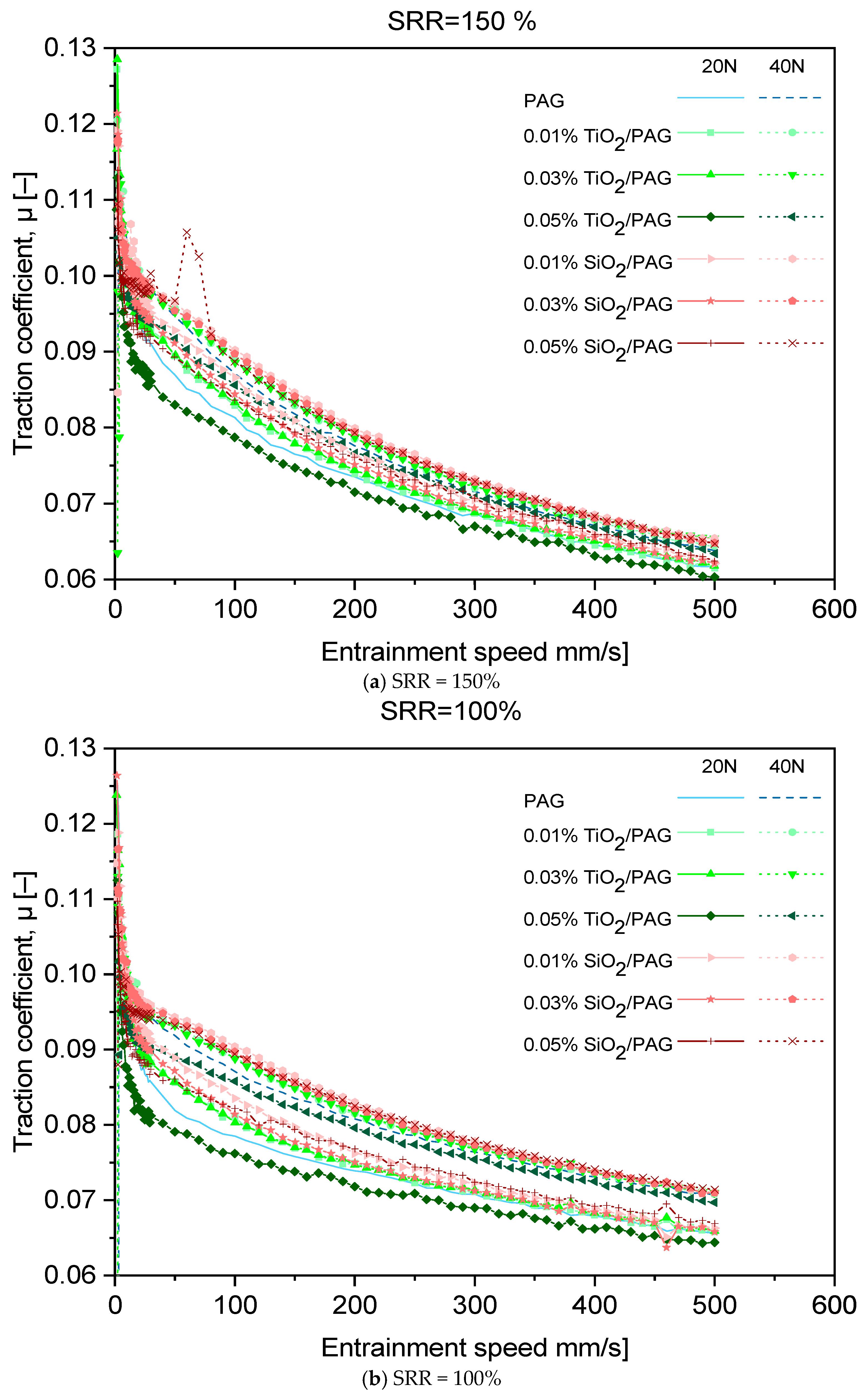
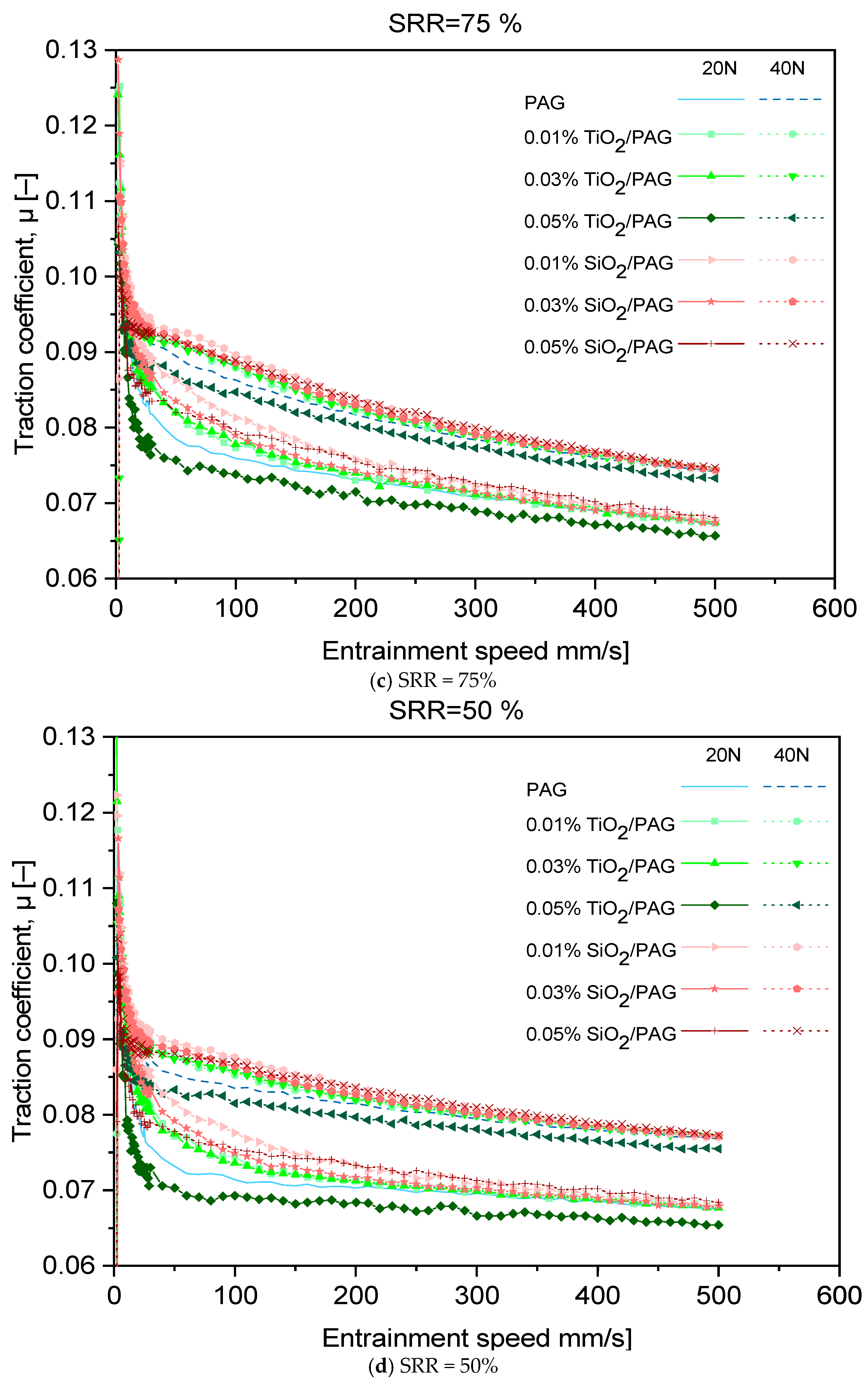
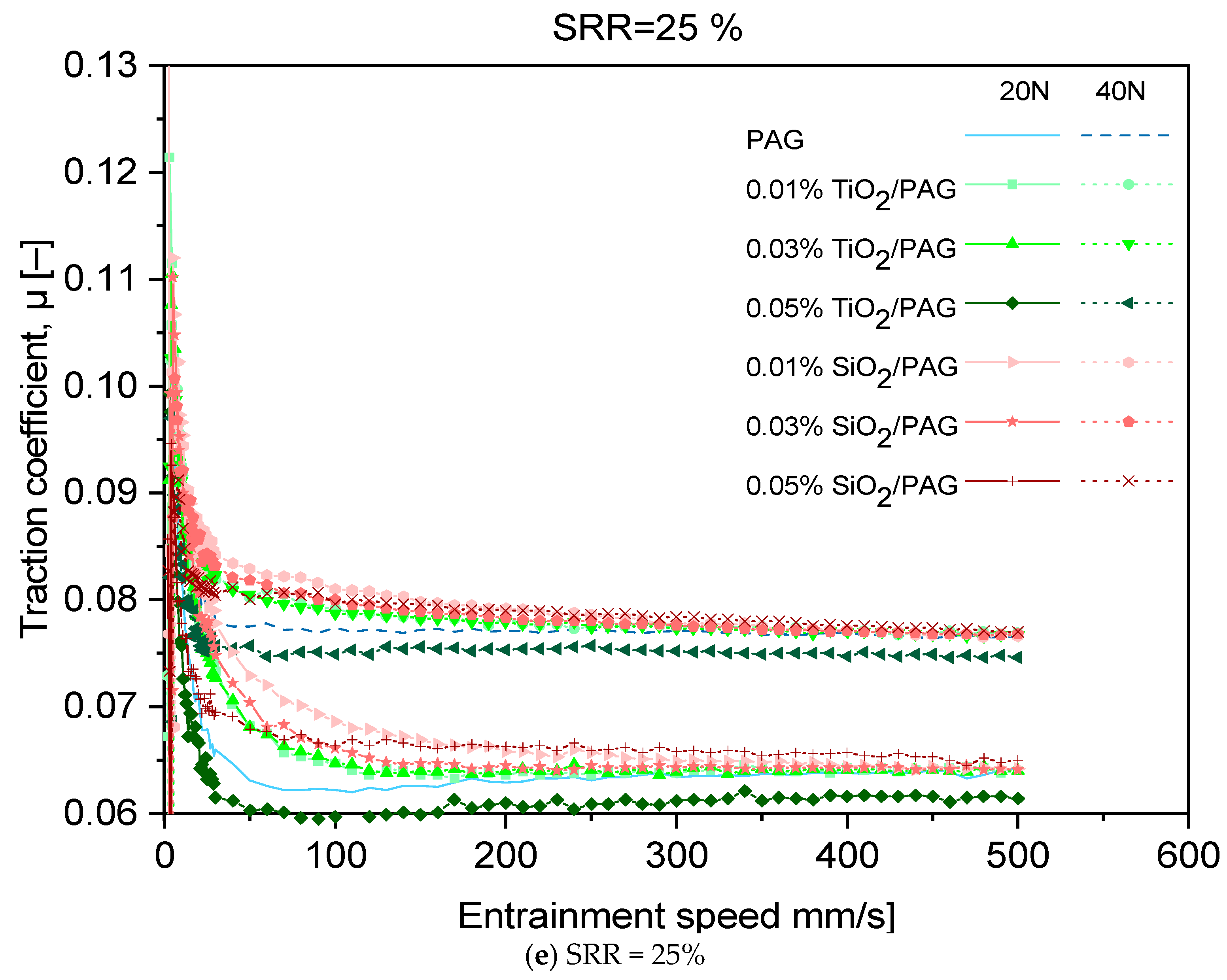
The traction against entrainment speed curves in Figure 5 for SRR values of 150, 100, 75, 50, and 25% show consistent trends across lubricant type, concentration, and load level. In a majority of SRR values, the nanolubricants record higher mean traction than PAG, and only the 0.05 vol% samples produce lower traction than the baseline. Normalising each sample to PAG shows improvements up to 4.89% for TiO2 at 0.05 vol% under 20 N and about 2.99% under 40 N. All other concentrations show negative improvement because their mean traction remains higher than PAG. When comparing SRR levels, the traction reductions are larger at 25 and 50% than at 150%. Lower SRR keeps the contact more strongly within the EHL regime, which allows for the nanoparticles to influence the film more effectively. Higher SRR increases shear and reduces this effect. With respect to load, the 20 N tests produce larger percentage reductions than those from the 40 N tests for the same formulation. The lower load allows for the particle-related mechanisms to act with less interference from contact stress and heat generation.
The concentration trend shows that only the 0.05 vol% samples reduce traction compared with PAG. All lower concentrations increase traction. This means that 0.01 and 0.03 vol% do not provide any improvement in this dataset. The higher traction at low concentration suggests that the particle content is not enough to support the contact or stabilise the film. The reduction at 0.05 vol% indicates that a higher particle loading is needed before any benefit appears. TiO2 at 0.05 vol% gives the strongest reduction under both loads. SiO2 follows the same pattern but with smaller reductions. These results differ from earlier studies that reported improvements at lower concentrations. This shows that the optimum concentration depends on the contact type and the shear conditions. In the present study, the EHL contact requires a higher particle population before any measurable improvement occurs.
TiO2 performs better than SiO2 at the same concentration and load, which matches findings reported in previous research [10]. This is linked to its higher hardness and stronger stability, which improve load support and film behaviour in EHL conditions. The traction results show that the benefit of nanolubricants appears only at the correct concentration. Low concentrations increase traction. High concentration at 0.05 vol% reduces traction. This highlights the need to match the concentration with operating conditions rather than assume that nanoparticle addition always improves performance.

3.4. Wear

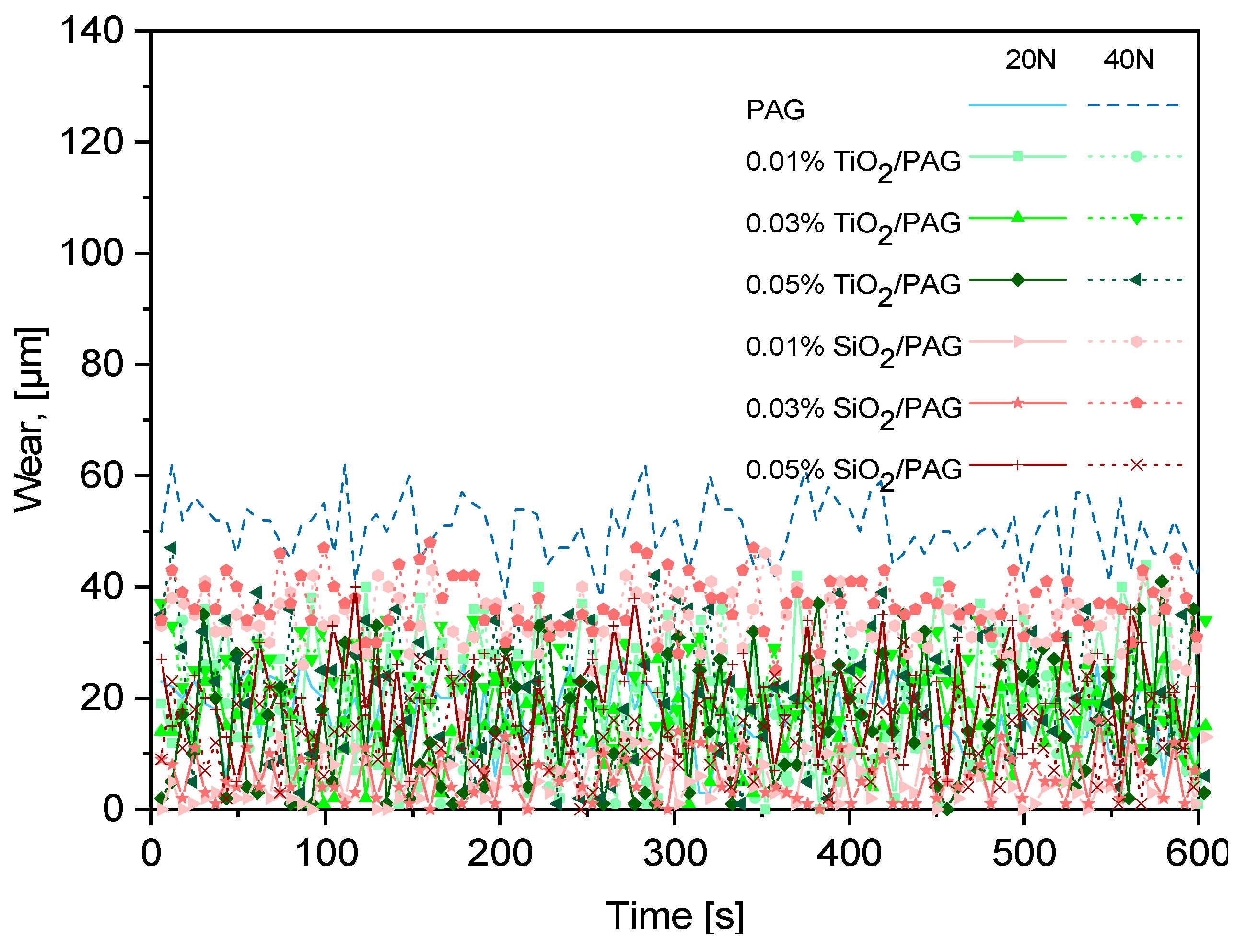
Figure 6 shows the wear on the steel ball over the specified test duration for each lubricant. The results clearly show that PAG produces the highest wear at both 20 N and 40 N. The addition of TiO2 or SiO2 reduces wear, which indicates stronger film formation and reduced asperity contact. TiO2-based nanolubricants consistently record lower peak wear than SiO2-based ones, showing a stronger protective effect. This agrees with published findings. Zhao, Huang [31] reported that nanoparticles improve tribofilm formation, micro-bearing effects, and self-repair actions. Birleanu, Pustan [32] also found that TiO2 increases load-carrying capacity and anti-wear behaviour in the base oil. At 20 N, the nanolubricants already provide improved wear resistance relative to PAG, showing that the nanoparticle film can protect moderately loaded contacts. When the load rises to 40 N, wear increases for all lubricants, but the improvement from nanoparticle addition remains. TiO2 at 0.03 vol% records the lowest peak wear under the higher load, which indicates strong film resilience under elevated contact stress. This behaviour matches earlier work on oxide nanoparticles. Wu, Zhao [33] reported that surface-modified TiO2 reduced wear under rough surfaces and oxide scale conditions. The results also show a clear concentration effect. At 0.01 vol%, the improvement is small. At 0.03 vol%, wear reaches the lowest level. At 0.05 vol%, wear begins to increase again, likely due to slight particle agglomeration at higher loading.
Between the two additives, TiO2 shows stronger anti-wear performance than SiO2. Comparative work by Cortés, Sánchez [10] reported that SiO2 reduced wear volume in sunflower oil by about 74.1%, while TiO2 achieved about 70.1%. Although the test medium and conditions differ from the present study, the qualitative ranking (TiO2 ≥ SiO2) is consistent. The superior performance of TiO2 is linked to its higher hardness, stronger adhesion to metal surfaces, and its ability to form more stable protective tribofilms during sliding contact, as supported by recent studies [31].

3.5. Temperature Stability

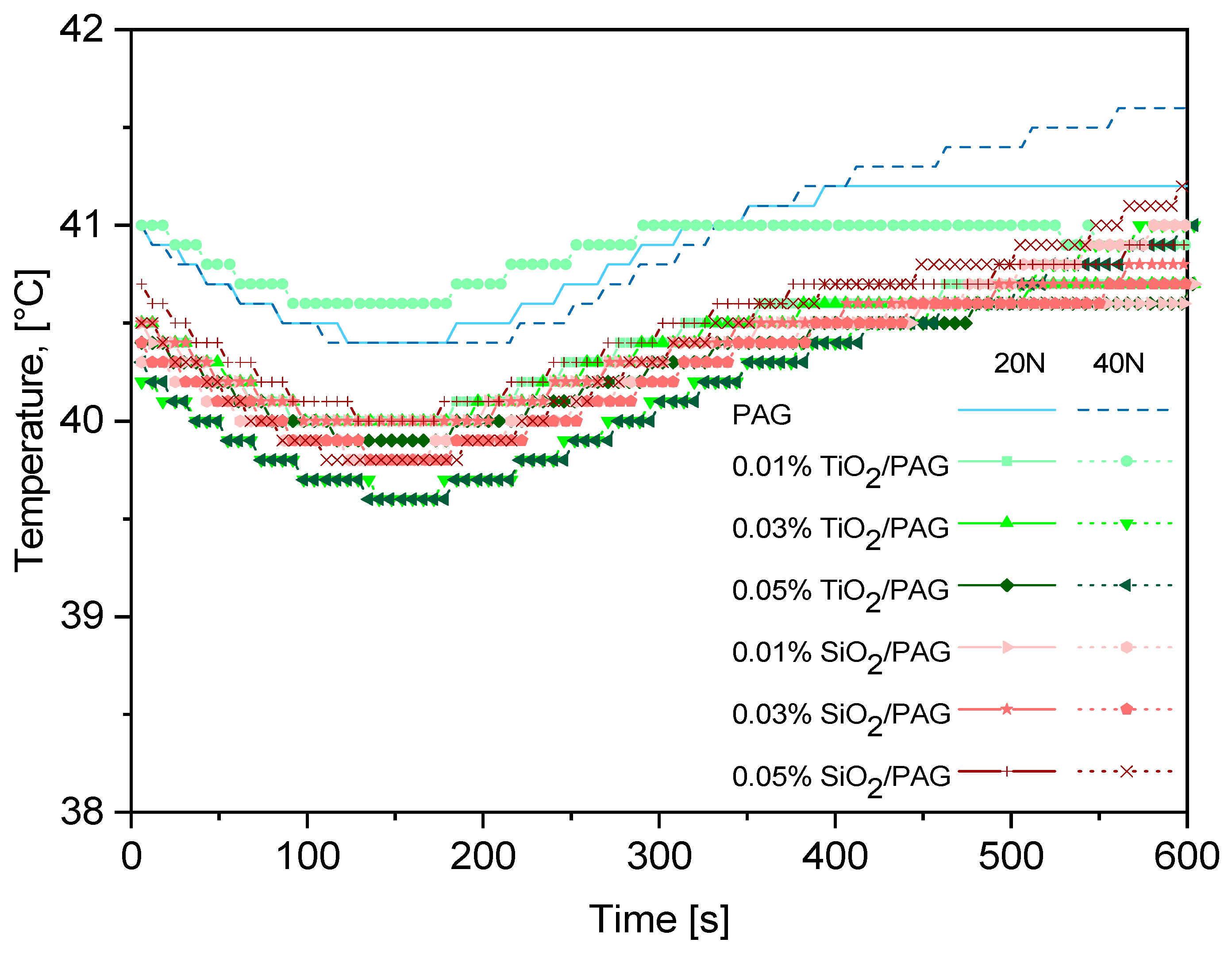
Figure 7 shows the temperature behaviour of PAG and the two nanolubricant types, TiO2/PAG and SiO2/PAG, at concentrations of 0.01, 0.03, and 0.05% under 20 N and 40 N. The results indicate how load, nanoparticle type, and concentration influence the lubricant’s ability to control heat during operation. The temperature remains stable for all samples across the full test duration. This shows that the lubricant film stayed in thermal balance, where the heat generated by friction was matched by the heat removed from the contact zone. Such stability reflects effective lubrication and consistent temperature regulation, both of which are important indicators of thermal reliability. All nanolubricants record lower temperatures than PAG. This agrees with earlier findings by Kim, Hyun [34], who reported that nanoparticle-enhanced lubricants maintain stable operating temperatures by improving heat transfer through the lubricant film.
When comparing loads, the temperature at 40 N is slightly higher than at 20 N. This increase is expected because higher loads produce greater contact pressure and more frictional heating. The rise is smaller for the nanolubricants than for PAG. This indicates that TiO2 and SiO2 help conduct heat away from the contact zone more efficiently. By keeping the temperature lower under heavy load, the nanolubricants help prevent thermal degradation, oxidation, and viscosity loss. These effects support longer lubricant life and stable performance. With respect to concentration, all nanolubricants perform better than PAG, with all concentrations showing a comparable temperature reduction. At low concentrations (0.01%, 0.03% and 0.05%), the particles are well dispersed and create effective heat conduction paths. At these concentrations, the particle content is able to influence heat transfer significantly. At higher than 0.05%, slight agglomeration may occur, which can reduce fluid uniformity and limit efficiency. These results show that concentration optimisation is important to achieve consistent thermal performance without affecting stability. When comparing nanoparticle types, TiO2-based lubricants consistently record slightly lower temperatures than SiO2-based ones across both loads and all concentrations. This is linked to the higher thermal conductivity of TiO2, about 8.4 W m−1 K−1, compared with SiO2, which was about 1.4 W m−1 K−1. TiO2 also shows better dispersion stability in polar oils such as PAG, which supports the formation of continuous conductive structures in the fluid. These trends match the findings of Madyira and Babarinde [7] and who reported that TiO2 nanolubricants provide better heat dissipation and improved energy efficiency in compressor systems. The present results confirm that TiO2 is more suitable for applications that require rapid heat transfer and stable temperature control.
Compared with PAG, both TiO2/PAG and SiO2/PAG show better thermal stability and lower operating temperature. The lower values indicate reduced frictional heat generation and more effective heat removal, which help limit oxidation and maintain viscosity. Luo, Yu [12] also noted that nanoparticles enhance interfacial heat conduction by forming microscale bridges within the film. This mechanism appears to be active here, as shown by the steady and lower temperature curves for the nanolubricants.

3.6. High-Shear Rate Viscosity Behaviour

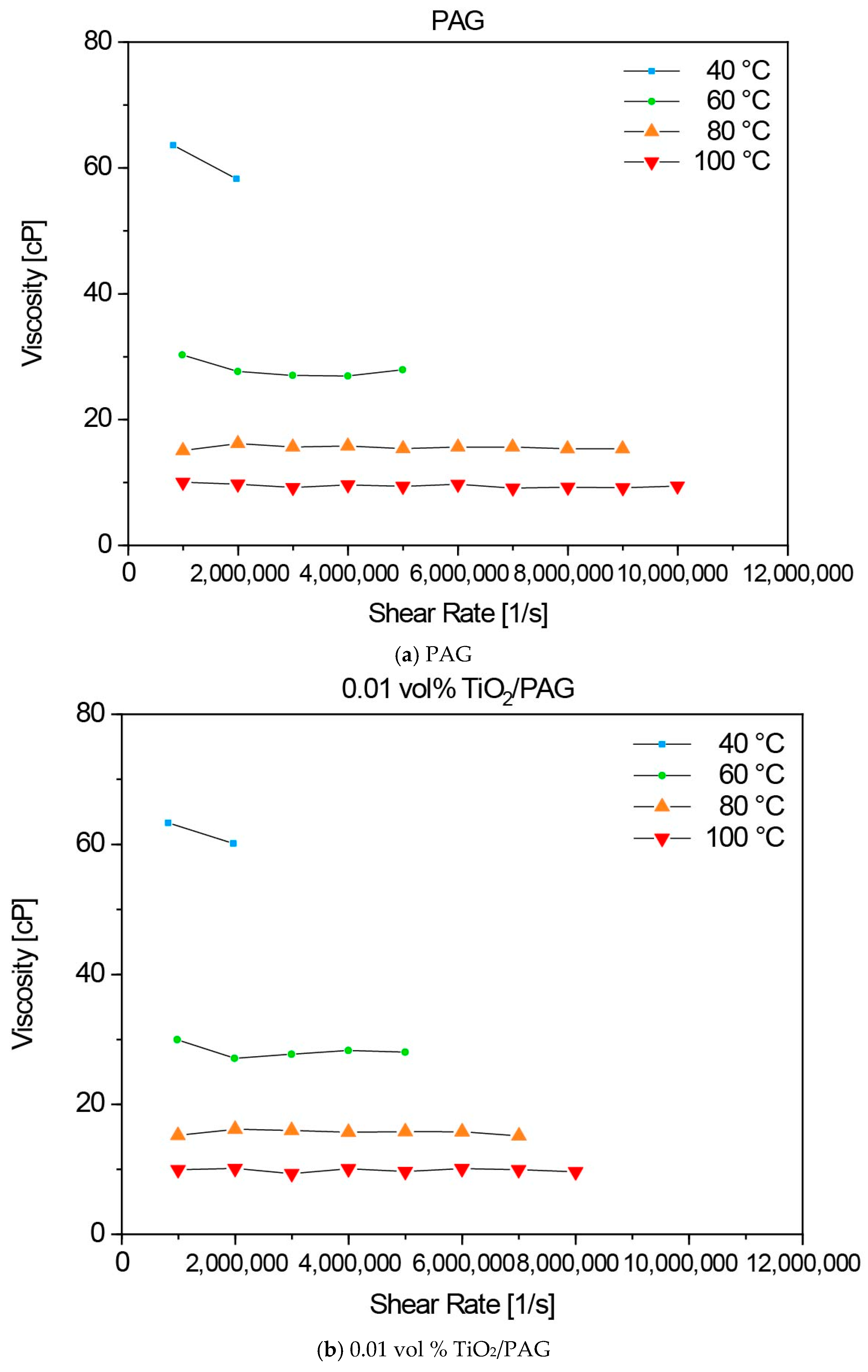
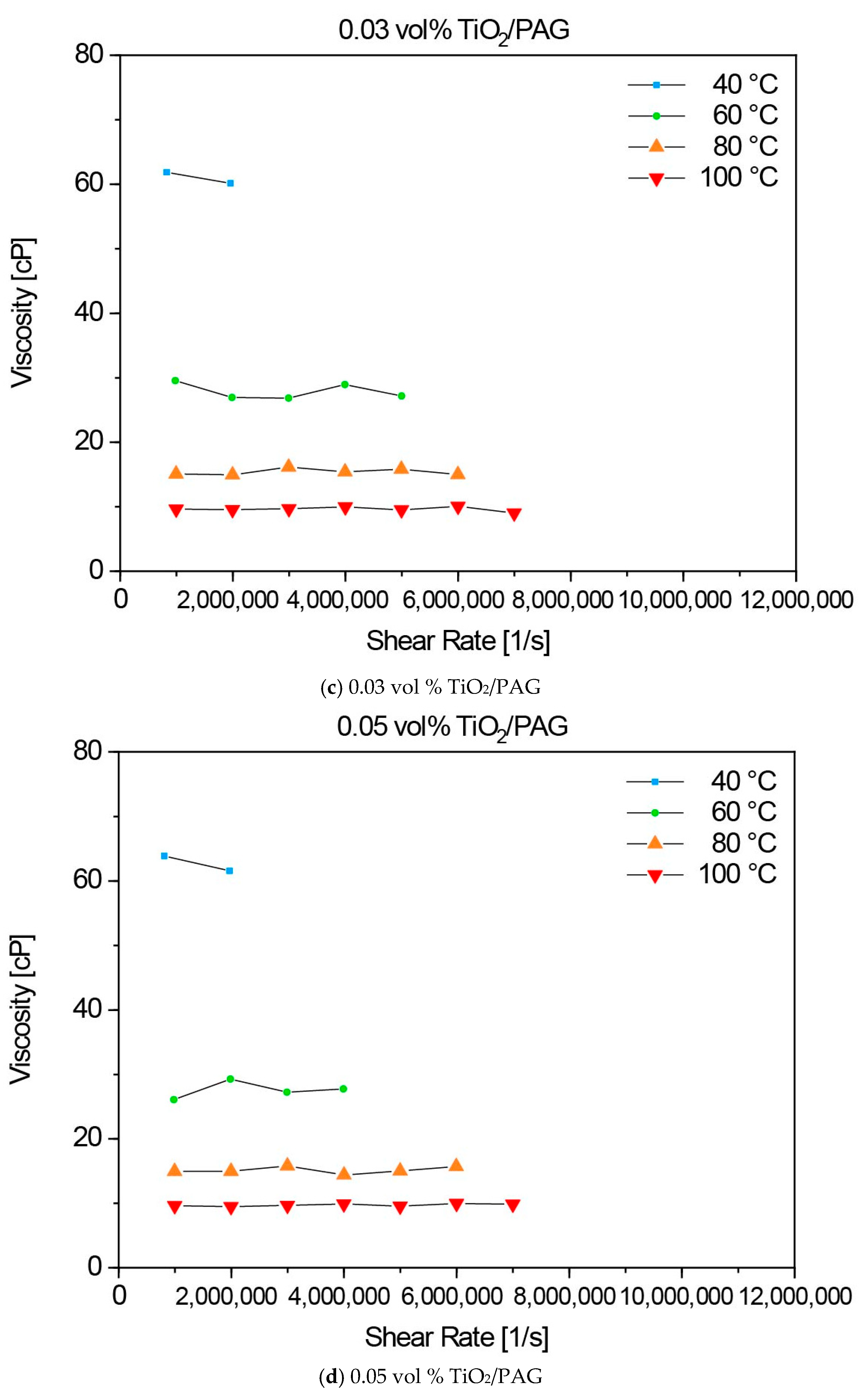
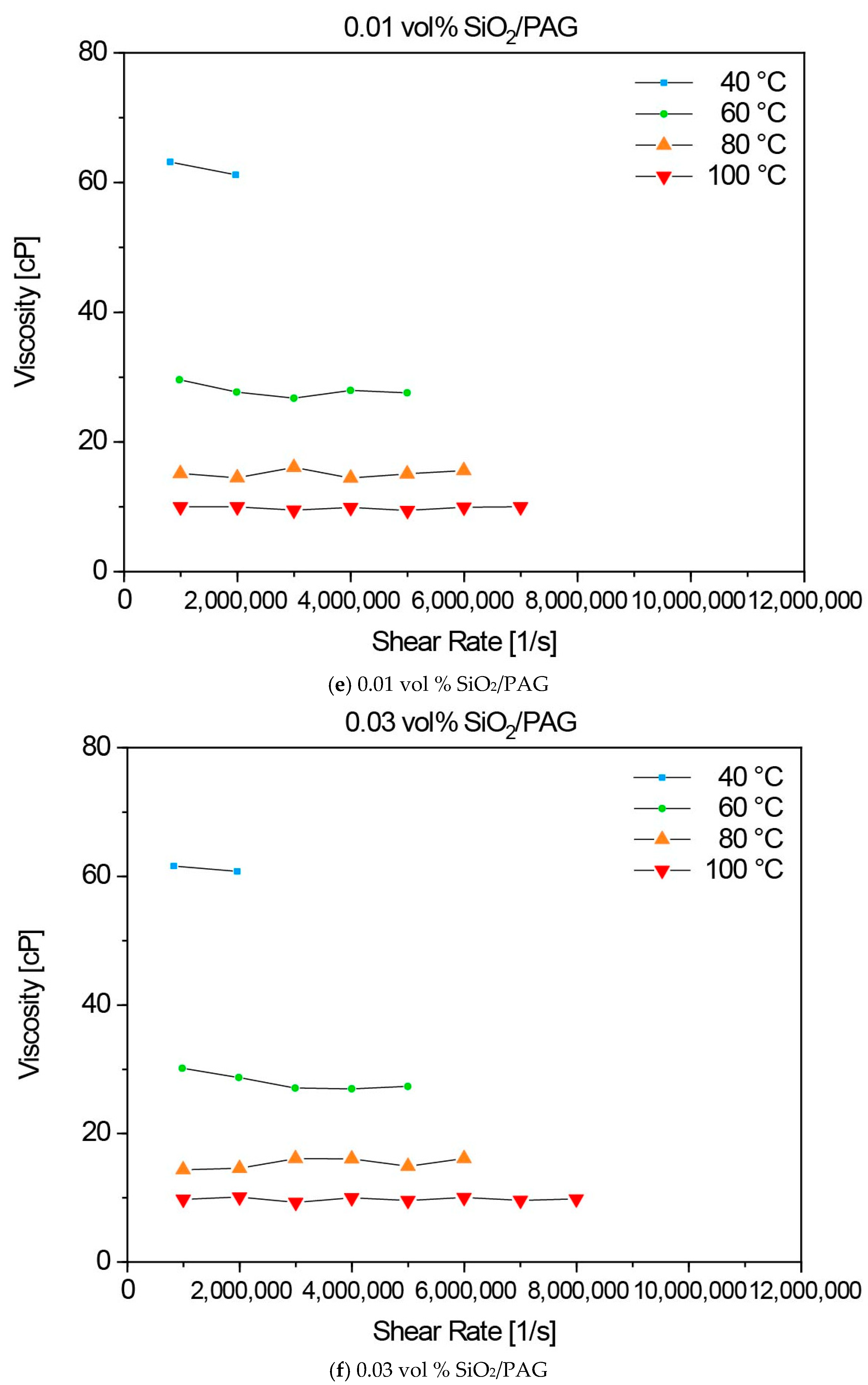
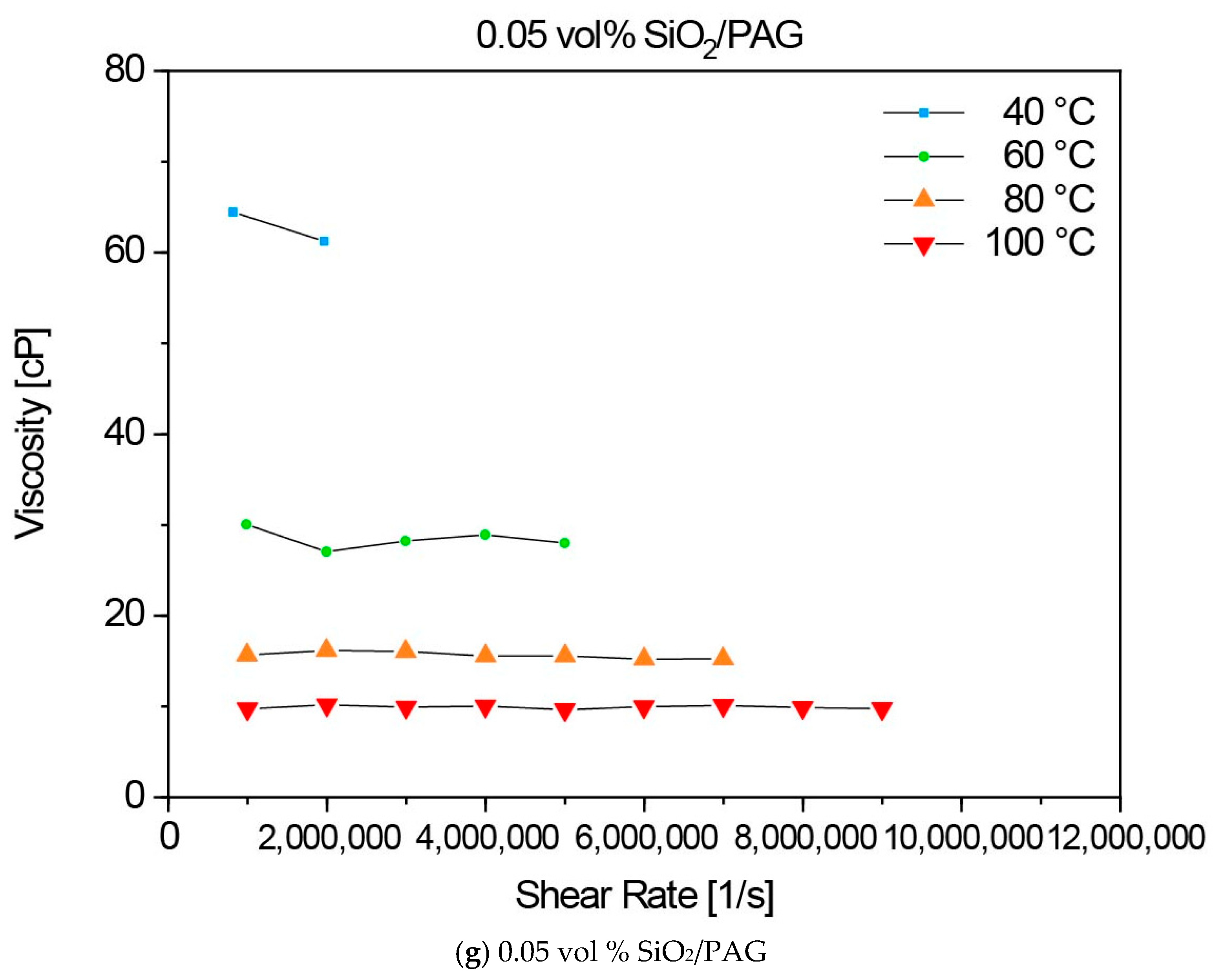
The viscosity curves in Figure 8 show consistent shear thinning for all formulations at 40, 60, 80, and 100 °C. Viscosity decreases as shear rate increases. This non-Newtonian behaviour matches previous reports on PAG-based nanolubricants, where higher shear rate accelerates structural breakdown in the fluid. Sanukrishna and Jose Prakash [13] reported the same trend for TiO2 dispersed in PAG for compressor lubrication and noted that the particle networks weaken under high shear and high temperature. Similar behaviour appears in studies on SiO2-based nanolubricants, where viscosity drops alongside shear due to particle alignment effects [35].
The viscosity of all lubricants decreases as temperature increases. The decline is strongest at high-shear rate, which indicates that thermal softening accelerates structural breakdown in the fluid. This matches the results reported by Sanukrishna and Jose Prakash [13] and Sandy Prayogo, Mamat [35], who showed that SiO2 and TiO2 nanolubricants lose viscosity more rapidly at high temperature when the base oil has limited thermal stability. Nanoparticle concentration influences the viscosity response. At 0.01%, both SiO2 and TiO2 remain close to the PAG baseline. At 0.03 and 0.05%, the differences become clearer. SiO2 shows smoother thinning, while TiO2 provides slightly higher viscosity retention at high-shear rate. This agrees with published findings, where TiO2 forms stronger load-bearing structures than SiO2, which improves viscosity retention and stability at high temperatures [32]. SiO2 effects are milder and produce smaller viscosity changes relative to the base oil at the same concentrations.
Comparisons within the percentage change dataset support these observations. Across the full shear rate range, TiO2 at 0.05% shows the highest positive deviation from PAG, especially at 40 and 60 °C. At 80 and 100 °C, the improvement decreases but remains higher than that of SiO2. SiO2 produces smaller viscosity increases and, in some conditions, slight reductions. This agrees with its weaker structural reinforcement behaviour. These viscosity trends have direct implications for refrigeration systems. Better viscosity retention at high shear improves film strength in compressor contacts, reduces wear, and increases efficiency in boundary-dominated regimes. TiO2 nanolubricants are more suitable when high-temperature stability is required. SiO2 may be preferable when only small viscosity changes are needed to avoid high pumping losses. The data also show that viscosity enhancement decreases at high temperature, so formulation choices must consider the operating thermal range.
Although the present study provides systematic insight into the EHL performance of TiO2 and SiO2 nanolubricants, several limitations should be noted. Long-term cyclic testing, including sedimentation behaviour and tribofilm durability under repeated start–stop conditions, was not conducted and should be addressed in future work to assess the service life in actual refrigeration compressors. In addition, the influence of nanoparticle addition on lubricant–refrigerant compatibility, particularly with refrigerants such as CO2 and R134a, was not examined in this study. Cost and scalability considerations are also important, as higher concentrations such as 0.05 vol% may increase material cost and pose challenges for industrial-scale preparation. These aspects will be explored in future investigations to further evaluate the industrial feasibility of nanolubricants for refrigeration systems. Table 3 consolidates the explicitly quantified performance improvements discussed in this study, highlighting only parameters that were directly calculated and reported in the Results and Discussion sections.

4. Conclusions

This study evaluated TiO2 and SiO2 PAG nanolubricants under controlled elastohydrodynamic conditions using a Mini Traction Machine. The results show that nanoparticle addition can improve film behaviour, reduce wear, and stabilise temperature when the concentration and operating conditions are matched correctly. TiO2 provided the greatest improvements across all measured responses.
The results show that nanoparticle type and concentration strongly influence lubricant performance. Only the 0.05 vol% formulations reduced traction compared with PAG under fixed SRR conditions, with TiO2 at 0.05 vol% achieving the highest reduction of up to 4.89% at 20 N and 2.99% at 40 N. Lower concentrations increased traction under the same conditions. All nanolubricants reduced wear relative to PAG, with TiO2 at 0.03 vol% producing the lowest wear, showing a reduction of approximately 35 µm at 40 N. The nanolubricant samples maintained lower and more stable operating temperatures than PAG, remaining between 40.2 and 40.5 °C, while PAG reached about 41.0 °C, indicating improved thermal control. High-shear viscosity measurements revealed shear-thinning behaviour for all lubricants, with TiO2 at 0.05 vol% retaining up to 12% higher viscosity than PAG at 40 and 60 °C. Overall, TiO2 nanolubricants demonstrated superior traction, wear, temperature, and viscosity performance compared with SiO2. The results indicate that 0.03 vol% is suitable when wear reduction and thermal stability are prioritised over traction reduction with minimal viscosity impact, such as in refrigeration, while 0.05 vol% is more suitable for high-load or high-shear operating conditions. Long-term cyclic testing, including sedimentation behaviour and tribofilm durability under repeated start–stop conditions, should be addressed in future work to assess the service life in actual refrigeration compressors. In addition, the influence of nanoparticle addition on lubricant–refrigerant compatibility, particularly with refrigerants, should be examined in future studies.

Author Contributions

Conceptualisation, M.Z.S. and M.S.A.A.; Methodology, M.Z.S.; Software, M.Z.S.; Validation, M.Z.S., M.S.A.A. and M.F.I.; Formal analysis, M.Z.S.; Investigation, M.Z.S.; Resources, M.F.I.; Data curation, A.I.R., M.Z.S.; Writing—original draft preparation, M.Z.S.; Writing—review and editing, M.S.A.A., M.F.B.A. and A.A.M.R.; Visualisation, M.Z.S.; Supervision, M.F.B.A.; Project administration, A.I.R., N.A.N.; Funding acquisition, M.Z.S. and M.S.A.A. All authors have read and agreed to the published version of the manuscript.

Funding

The authors acknowledge the usage of the facilities of the Universiti Teknikal Malaysia Melaka. This research is funded by a grant from the Universiti Teknikal Malaysia Melaka (Grant number: PJP/2024/FTKM/PERINTIS/S01989).

Data Availability Statement

Data supporting the findings of this study are available from the corresponding author upon reasonable request. No publicly archived datasets were generated or analysed. Data cannot be shared openly due to confidentiality requirements related to experimental facilities and proprietary materials used in the study.

Acknowledgments

The authors acknowledge the technical and administrative support provided by the Universiti Teknikal Malaysia Melaka and Imperial College London. The authors also thank the laboratory staff for assistance with equipment setup, sample preparation, and testing activities. This research is funded by a grant from the Universiti Teknikal Malaysia Melaka, Grant number PJP/2024/FTKM/PERINTIS/S01989. During the preparation of this manuscript, the authors used ChatGPT, version GPT 5.1, to support language refinement and document formatting. The authors reviewed and edited all generated output and take full responsibility for the content of this publication.

Conflicts of Interest

The authors declare no conflicts of interest. The funders had no role in the design of the study, in the collection, analyses, or interpretation of data, in the writing of the manuscript, or in the decision to publish the results.

Abbreviations

The following abbreviations are used in this manuscript:
SymbolAbbreviation Definition Unit
µTraction coefficient
F t Traction force, N
F N Normal load, N
SRRSlide-to-roll ratio, %
U e Entrainment speed, average speed of ball and disc, mm/s
U s Sliding speed, difference between disc and ball speeds, mm/s
U D i s k Disc surface speed, mm/s
U B a l l Ball surface speed, mm/s
η Dynamic viscosity Pa·s
τ Shear stress, Pa
γ · Shear rate s−1
h initial Initial ball holder height, mm
h final Final ball holder height mm
v o l   % Nanoparticle volume concentration, %
m p Nanoparticle mass, g
m l Lubricant mass, g
ρ L Lubricant density, kg/m3
EHLElastohydrodynamic lubrication
MTMMini Traction Machine
USVUltra Shear Viscometer
PAGPolyalkylene glycol lubricant
TiO2Titanium dioxide nanoparticles
SiO2Silicon dioxide nanoparticles

References

  1. Zaki, S.M.; Abd Aziz, M.S.; Ismail, M.F.; Abdollah, M.F.; Ramadhan, A.I.; Nugroho, A. Critical Properties of Refrigeration Lubricants in Modern Refrigeration System: A Review. J. Adv. Res. Fluid Mech. Therm. Sci. 2025, 131, 244262. [Google Scholar] [CrossRef]
  2. Gangopadhyay, A.; Cuthbert, J. Opportunities and Challenges with Polyalkylene Glycol for Engine Oil Application. Lubricants 2018, 6, 72. [Google Scholar] [CrossRef]
  3. Hofmann, S.; Lohner, T.; Stahl, K. Influence of water content on elastohydrodynamic friction and film thickness of water-containing polyalkylene glycols. Front. Mech. Eng. 2023, 9, 1128447. [Google Scholar] [CrossRef]
  4. Sanukrishna, S.S.; Vishnu, S.; Jose Prakash, M. Experimental investigation on thermal and rheological behaviour of PAG lubricant modified with SiO2 nanoparticles. J. Mol. Liq. 2018, 261, 411–422. [Google Scholar] [CrossRef]
  5. Ali, M.K.A.; Ezzat, F.M.H.; El–Gawwad, K.A.A.; Salem, M.M.M. Effect of Lubricant Contaminants on Tribological Characteristics During Boundary Lubrication Reciprocating Sliding. arXiv 2017, arXiv:1710.04448. [Google Scholar] [CrossRef]
  6. Hamisa, A.H.; Azmi, W.H.; Ismail, M.F.; Rahim, R.A.; Ali, H.M. Tribology Performance of Polyol-Ester Based TiO2, SiO2, and Their Hybrid Nanolubricants. Lubricants 2023, 11, 18. [Google Scholar] [CrossRef]
  7. Madyira, D.; Babarinde, T. TiO2, CNTs, and SiO2 nanolubricant: An approach to improving the efficiency of a domestic refrigerator. J. Phys. Conf. Ser. 2024, 2748, 012003. [Google Scholar] [CrossRef]
  8. Ismail, M.F.; Wan Hamzah, W.A. Tribological Performance Effect of SiO2 and TiO2 Nanoparticles as Lubricating Oil Additives. In Proceedings of the 2nd Energy Security and Chemical Engineering Congress; Lecture Notes in Mechanical Engineering; Springer: Singapore, 2023. [Google Scholar]
  9. Zeng, K.; Cheng, L.; Hu, W.; Li, J. Synthesis, Stability, and Tribological Performance of TiO2 Nanomaterials for Advanced Applications. Lubricants 2025, 13, 56. [Google Scholar] [CrossRef]
  10. Cortés, V.; Sánchez, K.; Gonzalez, R.; Alcoutlabi, M.; Ortega, J. The Performance of SiO2 and TiO2 Nanoparticles as Lubricant Additives in Sunflower Oil. Lubricants 2020, 8, 10. [Google Scholar] [CrossRef]
  11. Xie, H.; Jiang, B.; Hu, X.; Peng, C.; Guo, H.; Pan, F. Synergistic Effect of MoS2 and SiO2 Nanoparticles as Lubricant Additives for Magnesium Alloy–Steel Contacts. Nanomaterials 2017, 7, 154. [Google Scholar] [CrossRef]
  12. Luo, Z.; Yu, J.; Xu, Y.; Xi, H.; Cheng, G.; Yao, L.; Song, R.; Dearn, K. Surface characterization of steel/steel contact lubricated by PAO6 with novel black phosphorus nanocomposites. Friction 2020, 9, 723–733. [Google Scholar] [CrossRef]
  13. Sanukrishna, S.S.; Jose Prakash, M. Experimental studies on thermal and rheological behaviour of TiO2-PAG nanolubricant for refrigeration system. Int. J. Refrig. 2018, 86, 356–372. [Google Scholar] [CrossRef]
  14. Sharif, M.Z.; Azmi, W.H.; Ghazali, M.F.; Zawawi, N.N.; Ali, H.M. Viscosity and Friction Reduction of Double-End-Capped Polyalkylene Glycol Nanolubricants for Eco-Friendly Refrigerant. Lubricants 2023, 11, 129. [Google Scholar] [CrossRef]
  15. Ahmed Abdalglil Mustafa, W.; Dassenoy, F.; Sarno, M.; Senatore, A. A review on potentials and challenges of nanolubricants as promising lubricants for electric vehicles. Lubr. Sci. 2022, 34, 1–29. [Google Scholar] [CrossRef]
  16. Liu, X.; Xu, N.; Li, W.; Zhang, M.; Chen, L.; Lou, W.; Wang, X. Exploring the effect of nanoparticle size on the tribological properties of SiO2/polyalkylene glycol nanofluid under different lubrication conditions. Tribol. Int. 2017, 109, 467–472. [Google Scholar] [CrossRef]
  17. Wei, Y.-K.; Dai, L.-Y.; Zhong, H.-C.; Liao, H.-F.; Hou, X.-B. Preparation and Tribological Properties of a Multilayer Graphene-Reinforced TiO2 Composite Nanolubricant Additive. ACS Omega 2022, 7, 42242–42255. [Google Scholar] [CrossRef] [PubMed]
  18. Ishii, N.; Tsuji, T.; Oku, T.; Anami, K.; Morimoto, T. Elasto-Hydrodynamic Lubrication Effect in ThrustSlide Bearings of Scroll Compressors. In International Compressor Engineering Conference; Purdue University: West Lafayette, IN, USA, 2012. [Google Scholar]
  19. Wei, C.; Song, H.; Hu, Z.; Wang, W. Mixed Lubrication Analysis of Scrolls Lubricated With CO2/Oil Mixture Based on a Homogeneous Model. J. Tribol. 2023, 145, 112201. [Google Scholar] [CrossRef]
  20. ISO 14635-1; Gears-FZG Test Procedures-Part 1: FZG Test Method A/8,3/90 for Relative Scuffing Load-Carrying Capacity of Oils. International Organization for Standardization: Geneva, Switzerland, 2000; p. 1.
  21. Boidi, G.; Tertuliano, I.S.; Profito, F.J.; de Rossi, W.; Machado, I.F. Effect of laser surface texturing on friction behaviour in elastohydrodynamically lubricated point contacts under different sliding-rolling conditions. Tribol. Int. 2020, 149, 105613. [Google Scholar] [CrossRef]
  22. Morales-Espejel, G.E.; Hauleitner, R. Lubrication Quality of Compressor Rolling Bearings with Oil-Refrigerant Mixtures. Tribol. Online 2020, 15, 45–52. [Google Scholar] [CrossRef]
  23. Redhwan, A.A.M.; Azmi, W.H.; Najafi, G.; Sharif, M.Z.; Zawawi, N.N.M. Application of response surface methodology in optimization of automotive air-conditioning performance operating with SiO2/PAG nanolubricant. J. Therm. Anal. Calorim. 2019, 135, 1269–1283. [Google Scholar] [CrossRef]
  24. Hamisa, A.H.; Azmi, W.H.; Zawawi, N.N.M.; Yusof, T.M.; Aziah, A.N.; Syafiq, A.M. Assessment of the Stability of Nanolubricants for SiO2 and TiO2 Nanoparticles Suspended in Polyol-Ester Lubricant. In Proceedings of the 11th International Conference on Mechanical, Automotive and Materials Engineering; Lecture Notes in Mechanical Engineering; Springer: Singapore, 2026. [Google Scholar]
  25. Zhang, J.; Tan, A.; Spikes, H. Effect of Base Oil Structure on Elastohydrodynamic Friction. Tribol. Lett. 2017, 65, 13. [Google Scholar] [CrossRef]
  26. Zhang, J.; Spikes, H. Measurement of EHD Friction at Very High Contact Pressures. Tribol. Lett. 2020, 68, 42. [Google Scholar] [CrossRef]
  27. Sun, J.; Bai, L.; Guo, F.; Khan, Z. Experimental Study on the Effect of Micro-Texture on EHL Point-Contact Film Thickness Subject to Sliding Conditions. Materials 2022, 15, 7926. [Google Scholar] [CrossRef]
  28. Morshed, A.; Wu, H.; Ren, M.; Xing, Z.; Jiao, S.; Jiang, Z. A Study of Water-Based Nanolubricants Using Hexagonal Boron Nitride (hBN)-Based Nanocomposites as Lubricant Additives. Lubricants 2024, 12, 123. [Google Scholar] [CrossRef]
  29. Wang, C.; Sun, J.; He, J.; Ge, C. Friction-induced motion evolution of reduced graphene oxide-Al2O3 at contact interface to achieve superior lubrication performance. Appl. Surf. Sci. 2022, 604, 154479. [Google Scholar] [CrossRef]
  30. Yeap, S.P.; Lim, J.; Ooi, B.S.; Ahmad, A.L. Agglomeration, colloidal stability, and magnetic separation of magnetic nanoparticles: Collective influences on environmental engineering applications. J. Nanopart. Res. 2017, 19, 368. [Google Scholar] [CrossRef]
  31. Zhao, J.; Huang, Y.; He, Y.; Shi, Y. Nanolubricant additives: A review. Friction 2021, 9, 891–917. [Google Scholar] [CrossRef]
  32. Birleanu, C.; Pustan, M.; Cioaza, M.; Molea, A.; Popa, F.; Contiu, G. Effect of TiO2 nanoparticles on the tribological properties of lubricating oil: An experimental investigation. Sci. Rep. 2022, 12, 5201. [Google Scholar] [CrossRef]
  33. Wu, H.; Zhao, J.; Cheng, X.; Xia, W.; He, A.; Yun, J.-H.; Huang, S.; Wang, L.; Huang, H.; Jiao, S.; et al. Friction and wear characteristics of TiO2 nano-additive water-based lubricant on ferritic stainless steel. Tribol. Int. 2018, 117, 24–38. [Google Scholar] [CrossRef]
  34. Kim, B.; Hyun, J.; Kim, Y.; Ryu, J.; Segu, D.; Kang, S. Effect of Boundary Layer Modification and Enhanced Thermal Characteristics on Tribological Performance of Alumina Nanofluids Dispersed in Lubricant Oil. Exp. Tech. 2022, 47, 737–746. [Google Scholar] [CrossRef]
  35. Sandy Prayogo, G.; Mamat, R.; Ghazali, M.F.; Nugroho, A.; Ngurah Bagus Catrawedarma, I.G.; Muriban, J.; Zikri, M. A Bibliometric Review of the Research Progress and Trends in Nanolubricants for Refrigeration Systems (2003–2025). Int. J. Automot. Sci. Technol. 2025, 9, 353–373. [Google Scholar] [CrossRef]
Figure 3. Visual observation for the stability of TiO2/PAG and SiO2/PAG nanolubricants (0.01–0.05 vol%).
Lubricants 14 00078 g003
Figure 4. Traction–SRR curve for PAG, TiO2/PAG, and SiO2/PAG nanolubricants (0.01–0.05 vol%) at SRR 0 to 100% under 20 N and 40 N.
Lubricants 14 00078 g004
Figure 5. Traction coefficient vs. Entrainment speed for PAG, TiO2/PAG, and SiO2/PAG nanolubricants (0.01–0.05 vol%) at SRRs of 150 to 25% under 20 N and 40 N.
Lubricants 14 00078 g005aLubricants 14 00078 g005bLubricants 14 00078 g005c
Figure 6. Wear vs. time for PAG, TiO2/PAG, and SiO2/PAG nanolubricants (0.01–0.05 vol%) at SRR of 50% under 20 N and 40 N.
Lubricants 14 00078 g006
Figure 7. Lubricant temperature vs. time for PAG, TiO2/PAG, and SiO2/PAG nanolubricants (0.01–0.05 vol%) at SRR of 50% under 20 N and 40 N.
Lubricants 14 00078 g007
Figure 8. High-shear viscosity as a function of shear rate for PAG, TiO2/PAG, and SiO2/PAG nanolubricants at 40, 60, 80, and 100 °C.
Lubricants 14 00078 g008aLubricants 14 00078 g008bLubricants 14 00078 g008cLubricants 14 00078 g008d
Table 2. Summary of test condition.
ParameterDetails
Oil typesPAG, TiO2/PAG, SiO2/PAG
Concentrations0.01%, 0.03%, 0.05%
Loads20 N, 40 N
SRR range0 to 150%
Entrainment speeds10 to 500 mm/s
Bath temperature40 °C
Table 3. The summary of the key findings of the study.
FormulationLoadNet Traction Change vs. PAG (SRR 0 to 100%)Wear BehaviourEquilibrium TemperatureRelative High-Shear Viscosity vs. PAG
PAG20 NBaselineHighest wearAbout 41.0 °CBaseline
PAG40 NBaselineHighest wearAbout 41.0 °C
TiO2 0.01 vol%20 NIncrease of 1.2%Small wear reduction40.2–40.5 °CTiO2 at 0.01 vol% shows approximately equal to PAG
TiO2 0.01 vol%40 NIncrease of 0.1%Small wear reduction40.2–40.5 °C
TiO2 0.03 vol%20 NIncrease of 0.3%Clear wear reduction40.2–40.5 °CTiO2 at 0.03 vol% shows slight increase over PAG
TiO2 0.03 vol%40 NIncrease of 0.6%Lowest wear; about 35 µm reduction40.2–40.5 °C
TiO2 0.05 vol%20 NReduction of 4.02%Moderate wear; reduction slightly higher than 0.03%40.2–40.4 °CTiO2 at 0.05 vol% shows up to 12% higher at 40–60 °C
TiO2 0.05 vol%40 NReduction of 1.7%Moderate wear reduction40.3–40.5 °C
SiO2 0.01 vol%20 NReduction of 0.49%Small wear reduction40.3–40.5 °CSiO2 at 0.01 vol% shows approximately equal to PAG
SiO2 0.01 vol%40 NIncrease of 0.04%Small wear reduction40.3–40.5 °C
SiO2 0.03 vol%20 NIncrease of 0.06%Clear wear reduction40.3–40.5 °CSiO2 at 0.03 vol% shows slight increase over PAG
SiO2 0.03 vol%40 NReduction of 0.24%Moderate wear reduction; higher than TiO240.3–40.5 °C
SiO2 0.05 vol%20 NReduction of 1.7%Moderate wear reduction40.3–40.5 °CSiO2 at 0.05 vol% shows small viscosity increase
SiO2 0.05 vol%40 NReduction of 1.2%Moderate wear reduction40.3–40.5 °C
Disclaimer/Publisher’s Note: The statements, opinions and data contained in all publications are solely those of the individual author(s) and contributor(s) and not of MDPI and/or the editor(s). MDPI and/or the editor(s) disclaim responsibility for any injury to people or property resulting from any ideas, methods, instructions or products referred to in the content.