1. Introduction
Various approaches and methods for supporting and optimizing the design of bio-hybrid fuels have been developed within the Cluster of Excellence
The Fuel Science Center. These include methods for predicting combustion-relevant quantities such as ignition delay time, engine efficiency, and emissions, as well as environmental and economic indicators such as greenhouse warming potential and production costs [
1,
2,
3,
4,
5,
6].
Alongside experimental techniques, computational simulations have been employed; however, many of these methods are resource-intensive and require considerable computational time. One relevant aspect of fuel design is the estimation of diesel injection pump efficiency, which requires a profound understanding of the tribological piston-bushing contact within the pump. This tribological contact consists of two interacting surfaces separated by a fluid film exhibiting complex behavior arising from the interplay of fluid dynamics, material and fluid properties, and contact mechanics. In such piston-bushing contacts, the fluid pressure can reach up to 3000 bar and, depending on ambient conditions, the temperature at the pump inlet ranges from 20 to 60 °C. In the leakage flow between the piston and the bushing, the fuel can heat up to temperatures above 200 °C [
7]. These profound changes in pressure and temperature prevent accurate modeling if constant fluid parameters are assumed. Accurate characterization of these phenomena allows the quantification of losses due to internal leakage and friction at the piston–bushing contact and enables the optimization of pump efficiency, either through design methods such as those proposed by Heitzig [
8] or by identifying an optimal fuel mixture for an existing pump design. Since experiments are costly and time-consuming, an alternative approach is to implement simulation models. When the system is subjected to high pressures and significant temperature variations, purely hydrodynamic lubrication models are insufficient, as they fail to capture the correct fluid property behavior. Such a tribological system requires a thermo-elastohydrodynamic model that describes the fluid hydrodynamics coupled with the thermodynamic behavior and the deformation of the two contacts. Hofmeister et al. developed a thermo-hydrodynamic (THD) simulation model to investigate such systems. The simulation, based on the Reynolds equation, the energy equation, and an advanced fluid model, accurately captures the complex behavior of the piston-bushing contact [
9]. To identify an optimal mixture of existing fuels, the simulation must be run over a large number of fuel compositions, which substantially increases computational effort and is not feasible at this point. Traditional simulation models provide accurate solutions but are computationally inefficient, especially when high accuracy is required. In the case of Hofmeister, the simulation model neglects deformation effects, which, if included, would increase the required accuracy and computational cost, hindering the execution of a large number of simulations within a feasible time span and eventually necessitating an alternative approach with lower computational cost.
Machine learning has gained increasing importance in enhancing a wide range of industrial applications [
10,
11,
12]. In particular, physics-informed machine learning (PIML) has demonstrated significant advantages through its innovative class of hybrid models that combine data-driven and physics-based approaches and has been successfully applied in tribology [
13]. In particular, physics-informed neural networks (PINNs) have shown great potential as hybrid or even data-free surrogate models for modeling physical systems [
14,
15,
16,
17]. PINNs embed governing equations and physical constraints into the training procedure, thereby enhancing prediction accuracy while improving model interpretability and generalizability [
15]. One of the earliest works on PINNs was conducted by Lagaris and Hyuk [
18,
19] and was based on the universal approximation capability of neural networks (NNs) presented by Hornik and Cybenko, who demonstrated that sufficiently deep neural networks can approximate arbitrary continuous functions with prescribed accuracy [
20,
21]. Lagaris and Hyuk incorporated physical constraints into the NN training and, although the term physics-informed was not explicitly used at that time, these studies already embodied the idea of PINNs. In particular, Hyuk introduced the concept of augmenting the loss function with differential equation residuals. Due to limited computational capabilities, these approaches attracted only modest attention. Advances in automatic differentiation (AD) and the rapid increase in available computational power have since enabled a renewed interest in such methods. Approximately a decade ago, Owhadi revitalised physics-informed approaches by explicitly incorporating prior physical knowledge into neural network-based solution strategies. By formulating the solution of partial differential equations (PDEs) as Bayesian inference problems, he introduced a probabilistic framework that leverages problem-specific information to enhance computational efficiency and robustness [
22]. Building on this idea, Raissi et al. proposed probabilistic machine learning techniques based on Gaussian processes to solve linear differential equations, later extending these methods to integro-differential and partial differential equations [
23,
24]. Subsequent developments enabled the treatment of nonlinear PDEs within the same probabilistic framework [
25,
26]. A major breakthrough in this field was the formal introduction of PINNs. In contrast to classical finite element or finite volume solvers, PINNs recast the solution of PDEs as an optimization problem governed by a composite loss function [
14]. Raissi demonstrated that PINNs constitute a powerful class of hybrid solvers capable of addressing both forward and inverse PDE problems with high accuracy [
15,
16,
17]. Subsequent research by Antonelo et al. further expanded the PINN framework to include control-oriented applications by explicitly incorporating control inputs into the network architecture, thereby enabling the solution of PDE-constrained control problems [
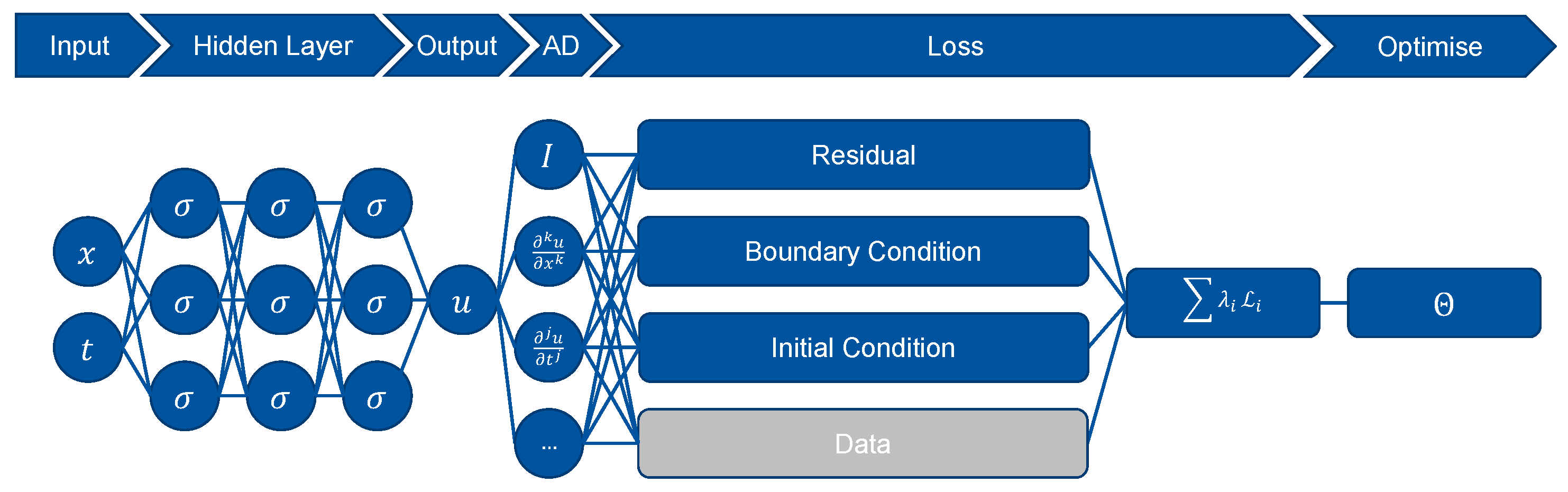
27]. A PINN is fundamentally an NN, as shown in
Figure 1, with inputs, hidden layers, and outputs.
The significant difference is the computation of the loss during training, which determines the network’s parameters, such as weights and biases. A data-driven NN uses precollected data, through experiments or simulation, to compute the loss, whereas the PINN uses AD to compute the gradients of specific outputs to specific inputs. The required gradients are provided by the investigated physical equations. The loss computation is now based on a residual with respect to a physical equation rather than a data point, making this loss unsupervised. In addition to the residual loss, PINNs require boundary conditions (BCs) or initial conditions (ICs) to satisfy the PDE. These losses are supervised and may also require the gradient of a specific parameter if, for example, a Neumann condition needs to be satisfied. Furthermore, an interesting development in PINNs is the emergence of parameterized PINNs, which are trained once and evaluated across multiple cases, thus enabling detailed parameter studies across various systems [
28,
29]. A main difference between PINNs and NNs is that data collection and preprocessing can be omitted, reducing overall training time. Since the architectures of PINNs and NNs are the same, PINNs benefit from rapid evaluation after training.
Several studies have been conducted on the implementation of PINNs for hydrodynamic problems, starting with the work of Almqvist in 2021, which presented a PINN that solved a simplified version of the Reynolds equation [
30]. Subsequent studies extended this approach to two-dimensional formulations of the Reynolds equation across a variety of lubrication-related applications [
31,
32,
33,
34,
35]. A notable milestone in this research direction was achieved by Rom, who developed a PINN capable of solving the stationary two-dimensional Reynolds equation while explicitly accounting for cavitation effects [
36]. Further contributions addressing stationary cavitation phenomena were presented by Cheng and Xi [
37,
38]. In addition, Rimon et al. explored the use of PINNs for elastohydrodynamic lubrication (EHL) simulations by considering a simplified stationary one-dimensional Reynolds equation. Their model neglected cavitation and incorporated linear pressure-dependent elastic deformation based on the Lamé formulation [
39]. More recently, Brumand-Poor et al. introduced a comprehensive framework for addressing EHL problems using PINNs [
40]. Within this framework, the hydrodynamic and deformation subproblems were examined separately in a series of studies. PINNs were successfully applied to solve the Reynolds equation in the presence of surface roughness [
41], as well as for transient cavitation scenarios [
42]. In more recent work, the framework was further extended to incorporate non-Newtonian lubricant behavior alongside stationary cavitation and surface roughness [
43]. In the field of THD-PINNs, Zhao et al. implemented a Reynolds-and-energy-coupled PINN predicting stationary pressure and temperature distribution in a single bearing case [
44]. Teng et al. developed a hybrid PINN solving a THD problem based on the stationary two-dimensional incompressible Navier–Stokes equation coupled with the energy equation for a final microchannel [
45]. To sum up, PINNs are a promising hybrid and even data-free approach to accelerating computational processes for hydrodynamic and THD problems. Currently developed PINNs primarily focus on solving a hydrodynamic problem, without accounting for thermodynamic effects. The PINNs for THD problems are limited to stationary issues, additional data usage, or even full data usage [
12].
This work presents a framework that closes the current research gap by investigating data-free PINNs for transient THD problems, thereby advancing the current state of the art by entirely omitting data during PINN training and accounting for time-dependent phenomena. Developing a purely physics-based PINN framework offers the benefit that no time- or computationally intensive data generation or processing is necessary, enabling a faster overall PINN training process. As data generation from available simulation or test rigs is timely and costly, it is therefore completely neglected. To be exact, the long-term objective is to develop a parametrized PINN that represents fluid properties using mixing rules and is trained over the entire range of possible fuel compositions. Such a parametrized PINN can solve parameter-dependent PDEs and identify an optimal fuel formulation with respect to injection pump efficiency for given fuel components at significantly reduced computational cost.
As a first step toward this objective, the present study introduces a PINN framework capable of predicting flow behavior at the piston–bushing contact for strongly varying fluid properties, as typically encountered in diesel injection pumps under high pressure and temperature gradients. To obtain an initial understanding of PINN performance for solving THD problems in such contacts, certain assumptions about the fuel are made, and a variant of the Reynolds equation and the energy equation is considered. Furthermore, each test case is solved by one PINN. This approach allows for validating the PINN with classical iterative THD solvers and, eventually, verifying it with measured data. In
Section 2, the investigated injection system and the underlying equations and assumptions are presented and, afterward, the iterative numerical THD simulation and the THD-PINN are described in detail. Afterward, the examined test cases are presented.
Section 3 presents the results of each PINN and the THD solver of each test case and
Section 4 provides a discussion of the obtained results by comparing the computed pressure and temperature field of both solutions with several metrics, like statistical error values and box plots, eventually comparing the computational cost and speed, which is especially relevant for the goal of a PINN, which could substitute a classical THD simulation.
Eventually,
Section 5 provides a conclusion and discusses future work.
2. Materials and Methods
The following introduces the tribological model system that serves as the basis for evaluating temperature- and pressure-dependent material properties using PINNs and a conventional THD simulation. The rationale for choosing a simplified reference domain is outlined first. This is followed by a detailed specification of the boundary conditions for pressure, velocity, and temperature, along with the geometric characteristics of the computational domain. The governing equations used to compute the pressure and temperature fields, along with the material models employed, are then presented. Subsequently, the numerical implementation of these equations within the defined domain is described for both the classical THD simulation and the PINN-based approach.
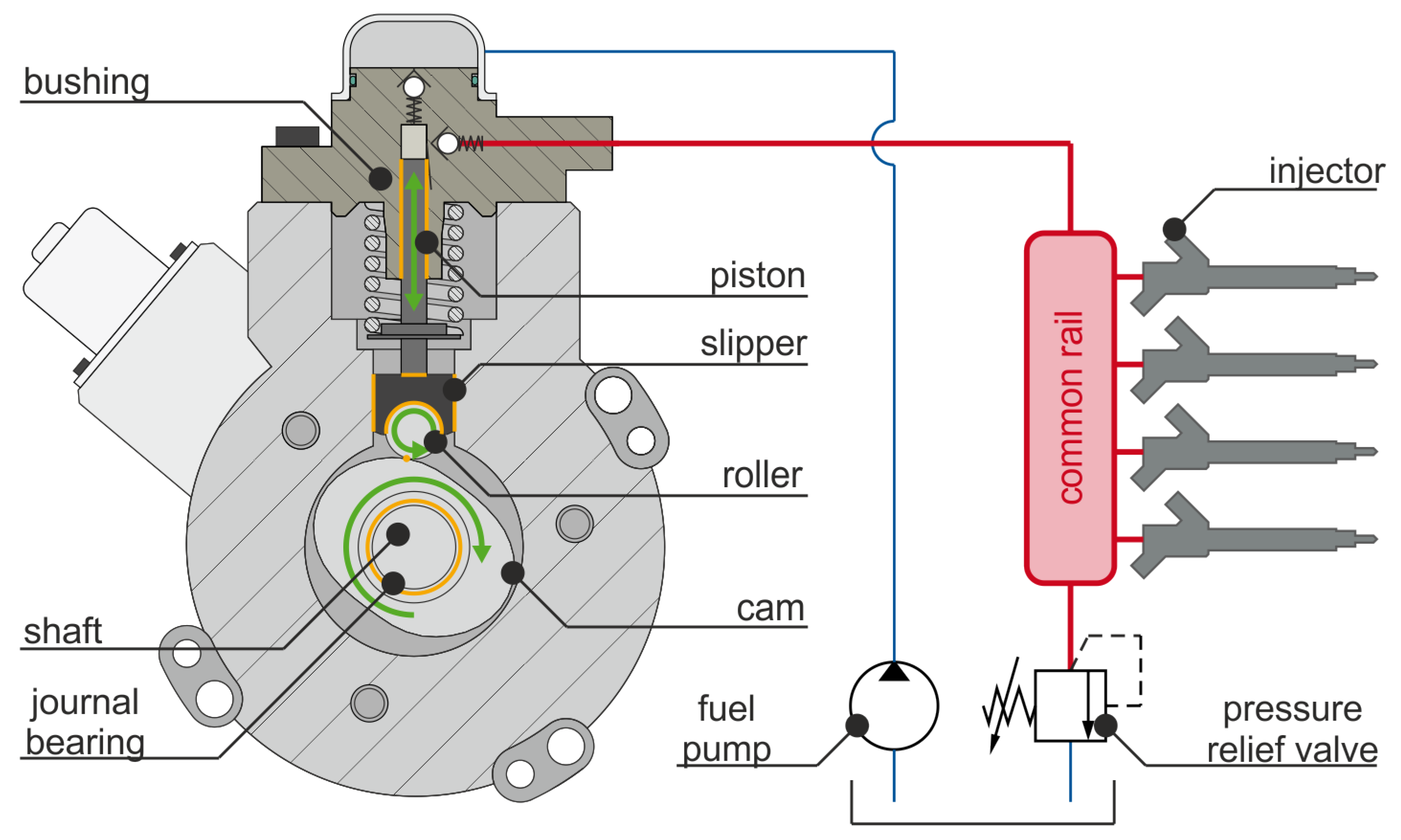
Spatially varying material properties become particularly important in tribological systems where steep pressure and temperature gradients arise. Typical examples include hydrodynamic journal bearings, rolling-element bearings, and other lubricated mechanical contacts. In this study, we focus on capturing material property variations induced by such gradients, as they occur in tribological interfaces representative of modern diesel injection systems (
Figure 2). Modern diesel injection systems operate at pressures of up to 3000 bar, as such high pressure levels promote intense atomization and thereby enable efficient combustion [
7].
To generate these pressures, injection pumps, such as the one illustrated in
Figure 2, are employed. The input energy, supplied in the form of rotational speed and torque, is converted into a linear piston motion by the cam–roller mechanism (green arrows). This piston motion compresses the fuel and delivers it to the common rail, where it is distributed to the injectors [
46].
The high operating pressures result in large forces acting on the tribological contacts (orange) within the pump. Among these, the piston–bushing interface is of particular interest, as it exhibits the highest leakage losses. For this reason, this contact is selected for further investigation in the present study [
47,
48].
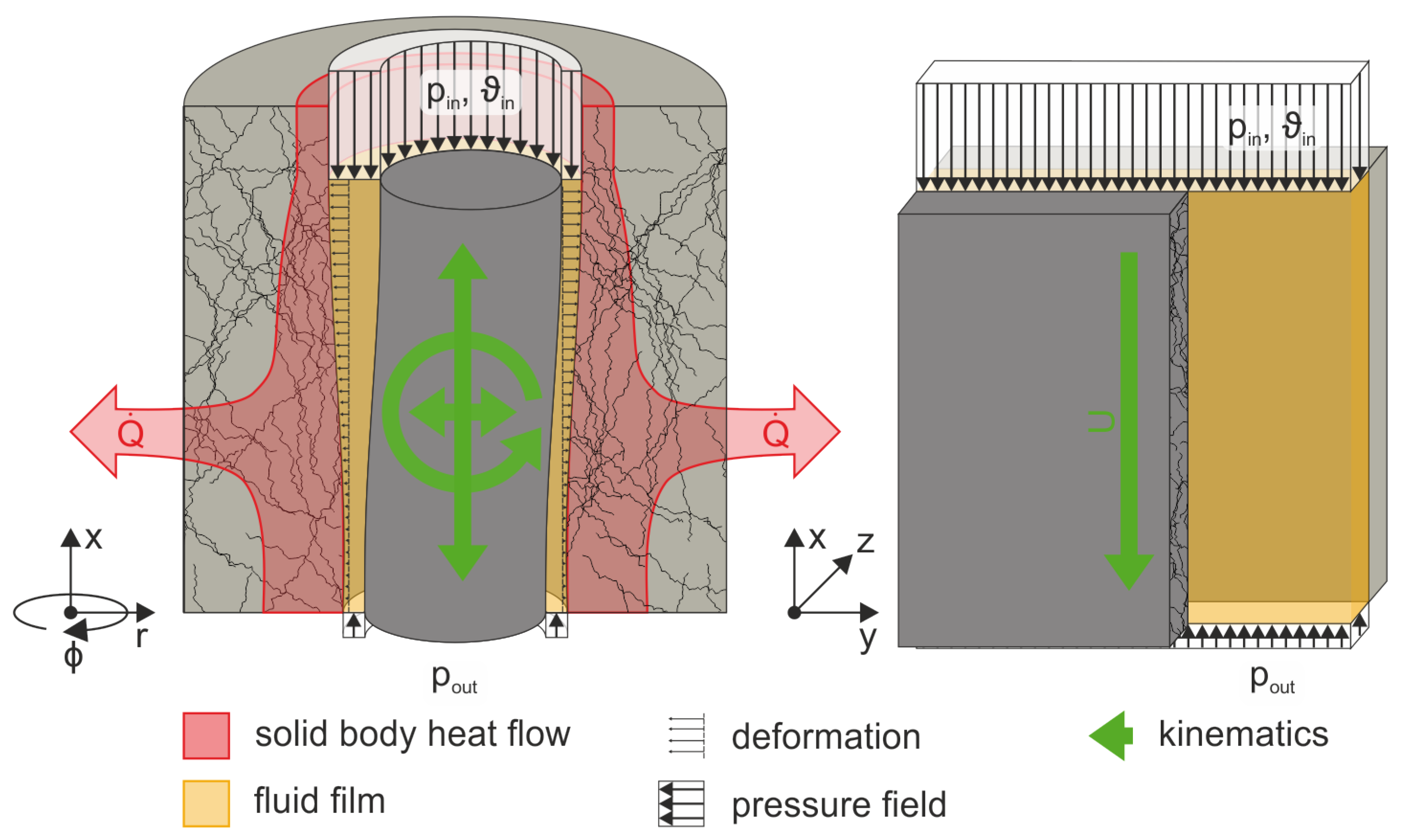
A detailed sketch of the piston–cylinder liner contact is shown on the left-hand side in
Figure 3. The gap is cylindrical, with pressure boundary conditions applied at the upper and lower boundaries, representing the chamber and housing pressures, respectively. During operation, the piston performs an oscillating up-and-down motion, which is additionally influenced by lateral displacement and tilting. Together with the solid deformation of non-negligible magnitude due to the high pressures and temperatures, this results in a time-dependent and spatially varying film thickness. In addition to convective and diffusive heat fluxes within the fluid, the temperature in the lubricant film is also affected by heat conduction into the surrounding solid bodies. As the gap size in injection pumps typically lies in the range of a few micrometers and solid contact may occur, surface roughness affects both the flow behavior and the contact mechanics.
Since this study primarily aims to investigate how PINNs can be used to represent strongly varying material properties, the computational domain is simplified to those influences essential for predicting the material properties.
For this reason, the cylindrical computational domain was transformed into a planar gap with constant gap height (
Figure 3, right). Movement of the solid surface is restricted to constant velocity in the flow direction only. Any other interactions with the solid body are neglected in the simplified gap, so the gap height remains constant, and heat transfer is allowed only within the fluid, not between the fluid and the solid. In the simplified contact model, the influence of surface roughness is neglected and an ideally smooth surface is assumed. The named simplifications are listed in
Table 1. It should be noted that the simplifications and assumptions listed above have no physical justification. Since these simplifications are introduced solely to facilitate the stepwise development of the THD-PINN, and the neglected effects will be incorporated in subsequent work, no estimate of the error resulting from these simplifications is provided here.
The pressure boundary conditions still correspond to those of the real contact. The chosen geometric dimensions are likewise based on the length, height, and circumference of a real piston. The previously mentioned parameters are listed in
Table 2.
To solve the pressure field, both the classical THD simulation and the THD-PINN solve the Reynolds equation (Equation (
1)) consisting of the Poiseuille term, the Couette term, and the time-dependent transient term [
49].
The temperature within the fluid film is calculated using the energy in Equation (
2), which accounts for heat transport via diffusion and convection, as well as heat production due to dissipation and compression [
49].
As outlined above, relative motion is restricted to the
x-direction, and the pressure gradient is likewise confined to this direction. Therefore, all terms involving
y-direction components in Equation (
1) vanish and can be omitted, as indicated by the grey color. Under these assumptions, the energy equation simplifies accordingly: all terms depending on
y and the velocity component
v can be neglected. In addition, the absence of heat exchange with the solid walls implies a zero temperature gradient in the
z-direction, such that this term is also omitted. Furthermore, energy production due to compression is neglected in this study.
The Reynolds equation and energy equation (Equations (
1) and (
2)) depend on the dynamic viscosity
, density
, heat capacity
, and thermal conductivity
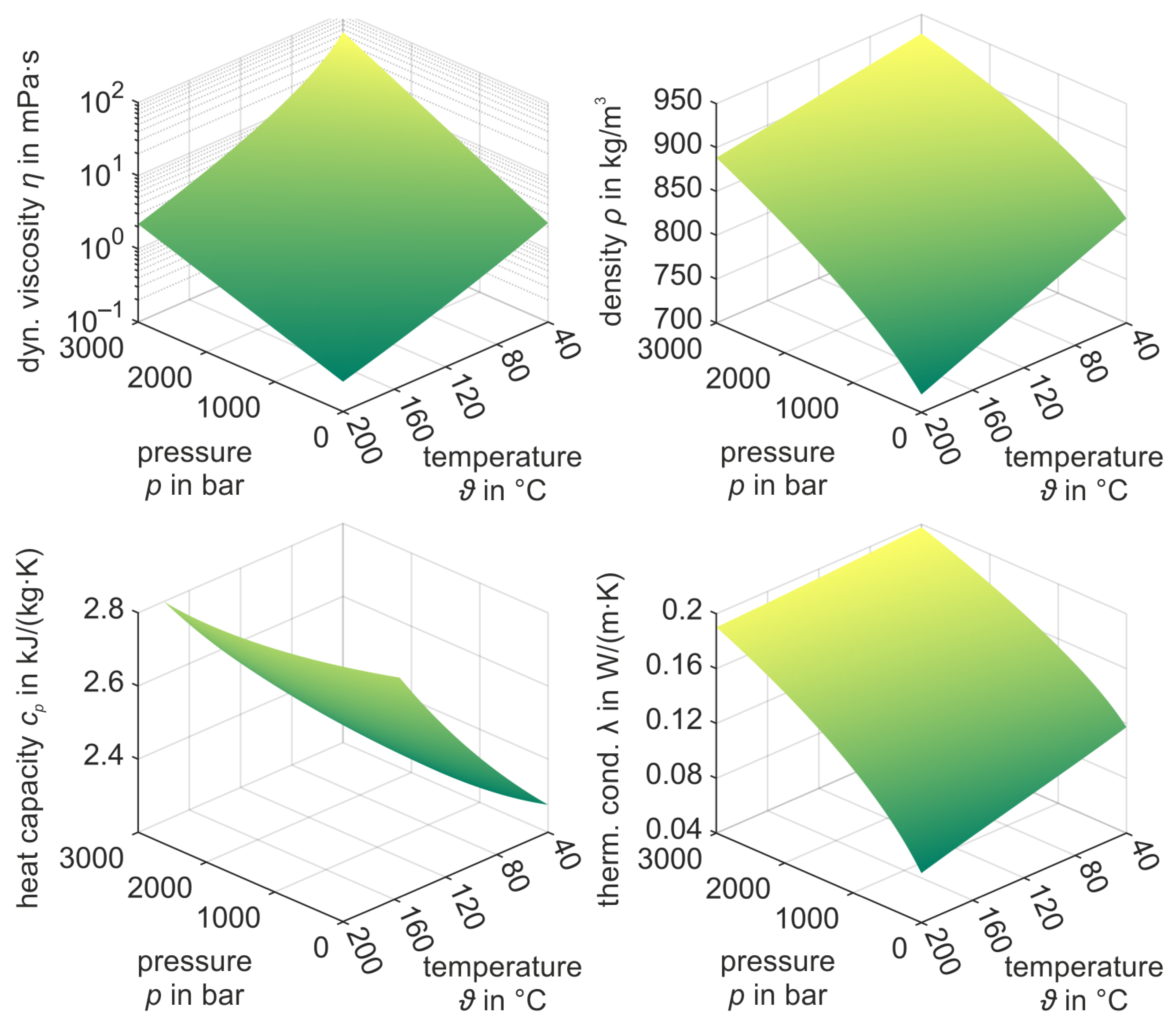
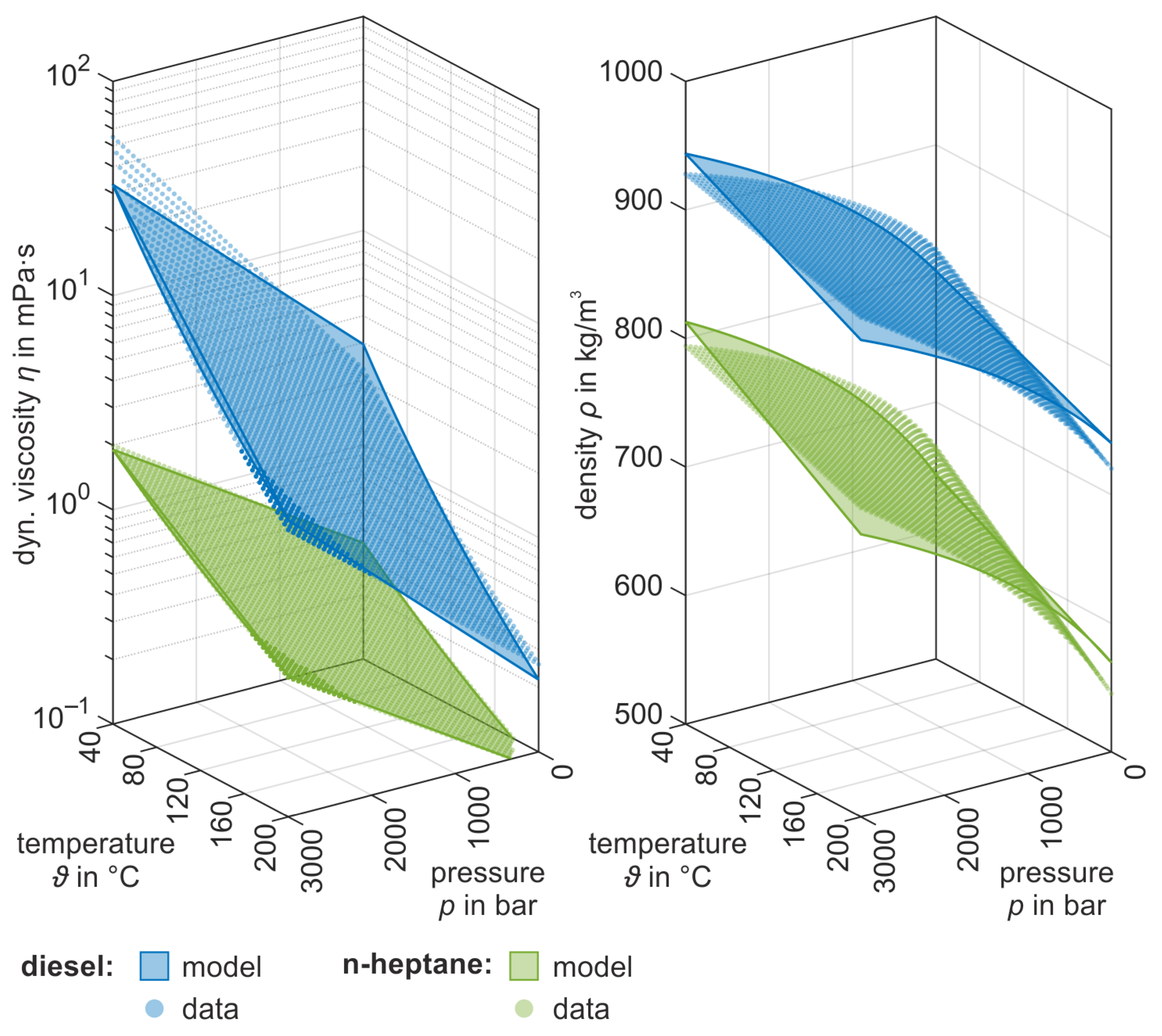
of the liquid. All properties showed a strong dependence on pressure and temperature for the described application, as illustrated in
Figure 4. For the diesel surrogate SRS calibration fluid, viscosity varied by more than 3 orders of magnitude over the pressure–temperature range relevant to the piston–bushing contact in an injection pump. Although viscosity showed the greatest variation, the other material properties were also highly sensitive to temperature and pressure. For instance, the density rose by about 30 percent from its lowest value to the maximum over the pressure and temperature range depicted [
50].
Various approaches have been proposed in the literature to describe the temperature- and pressure-dependent properties of fluids. In general, linear models are suitable for capturing the temperature dependence of fluid density. However, for high pressure differences, linear approaches are insufficient to represent the density behavior of liquids [
49] accurately. To incorporate pressure dependency of density, the Tait model can be used, which establishes a logarithmic relationship between pressure and density, thereby accounting for variable compressibility [
51]. For even higher pressures, the model by Dowson and Higginson allows the inclusion of nonlinear compressibility effects [
52]. Depending on the fluid, a distinction may be necessary beyond the yield pressure to capture discontinuities in the density–pressure behavior [
53]. The representation of density as a function of pressure and temperature can often be achieved by combining these models. Additional approaches to describe the pressure- and temperature-dependent density are based on, for example, free-volume theory, as proposed by Bode [
54].
In this study, the focus was on assessing the suitability of PINNs for capturing the pressure- and temperature-dependent behavior of fluid properties, rather than on identifying a model that best fits experimental data. Accordingly, basic fluid models were employed. The temperature dependence of the density in Equation (
3) was represented by a linear model with the thermal expansion coefficient
. In contrast, the pressure dependence was described by a power law function, based on a variant of the Tait equation and characterized by only three coefficients:
,
B, and
.
The temperature dependence of the viscosity can be described using polynomial or exponential approaches, as suggested by Poiseuille and Reynolds [
55]. In most cases, a very good agreement with experimental data can be achieved using only three parameters through the Vogel equation. Therefore, the Vogel model was also employed to represent the temperature dependence in Equation (
4) [
49].
The pressure dependence of the viscosity can be described by the Barus equation, which relates viscosity to the pressure–viscosity coefficient
b [
49]. Since
b itself is temperature-dependent, various exponential or polynomial correction methods have been proposed, such as the one by Roelands [
56]. For the model considered in this study, however, a constant value of
b was assumed to account for the pressure–viscosity effect.
The combined pressure- and temperature-dependence is represented by the product of the pressure- and temperature-dependent terms. Other approaches that account for both effects simultaneously, such as those by Roelands [
56], Rodermund [
57], and Bode [
54], involve a significantly larger number of coefficients and are therefore not considered in the present study due to their increased complexity.
Similar to the fluid properties of density and viscosity as well as heat conductivity
and thermal diffusivity
, there exists a dependence on pressure and temperature [
49]. Although these dependencies can be significant, as illustrated in
Figure 4 for the SRS calibration fluid, both measures were treated as constants in this study to reduce the number of influencing parameters (Equations (
5) and (
6)). Since the error caused by neglecting pressure and temperature effects was the same for the simulation and the PINN, a comparison between the two remains valid. Both effects will be included in future investigations.
Using Equations (
4)–(
6), two model fluids were developed with rheological and thermodynamic properties closely matching those of real fuels. Both models captured the most significant trends and dependencies of pressure and temperature and were used for both the THD simulation and the THD-PINN.
To generate reference data, viscosity and density values were obtained from advanced literature models for diesel (EN 590) and n-heptane derived by Drumm. The fluid models were evaluated on an equidistant grid of 50 temperature and 50 pressure points, spanning 0–3000 bar and 40–200 °C. A regression analysis based on these points and Equations (
3) and (
4) was performed. The comparison between the discrete data points indicated by dots and the resulting model fluid properties (filled area) is shown in
Figure 5.
The data points calculated with the Drumm model match well with those obtained from the regression analysis, capturing the most important trends. For both model fuels, the viscosity increased with rising pressure and decreased with increasing temperature, in agreement with the trends observed in the original data. The simplified viscosity model represented the pressure dependence solely through the exponent b, yielding a linear relationship in logarithmic space. Consequently, a temperature-dependent correction of the pressure influence could not be captured by this model formulation. This limitation was particularly pronounced for diesel fuel, where the simplified model failed to reproduce the behavior observed in the reference data fully. As a result, a compromise arose in which the pressure dependence of viscosity was overestimated at high temperatures and underestimated at low temperatures.
The simplified density model exhibited similar limitations and therefore could not fully capture the reference data calculated according to Drumm. However, the models captured the central trends in pressure and temperature, while some quantitative deviations persisted in diesel viscosity at extreme conditions. Nevertheless, an overall good agreement between the models and the reference data was achieved, as further supported by the high coefficient of determination
, as shown in
Table 3. For all fits,
exceeded
. Only the simplified viscosity model for diesel yielded a slightly lower value of
.
The derived parameter for the simplified models are listed in
Table 3 and were used to incorporate the fluid properties into the THD simulation and the THD-PINN.
2.1. THD Simulation
The following section discusses how the pressure and temperature field was solved for the computational domain (
Figure 3) and the specified boundary conditions using standard simulation approaches for tribological systems. The underlying equations (Reynolds equation, energy equation) were transformed into a discrete form using the finite volume method [
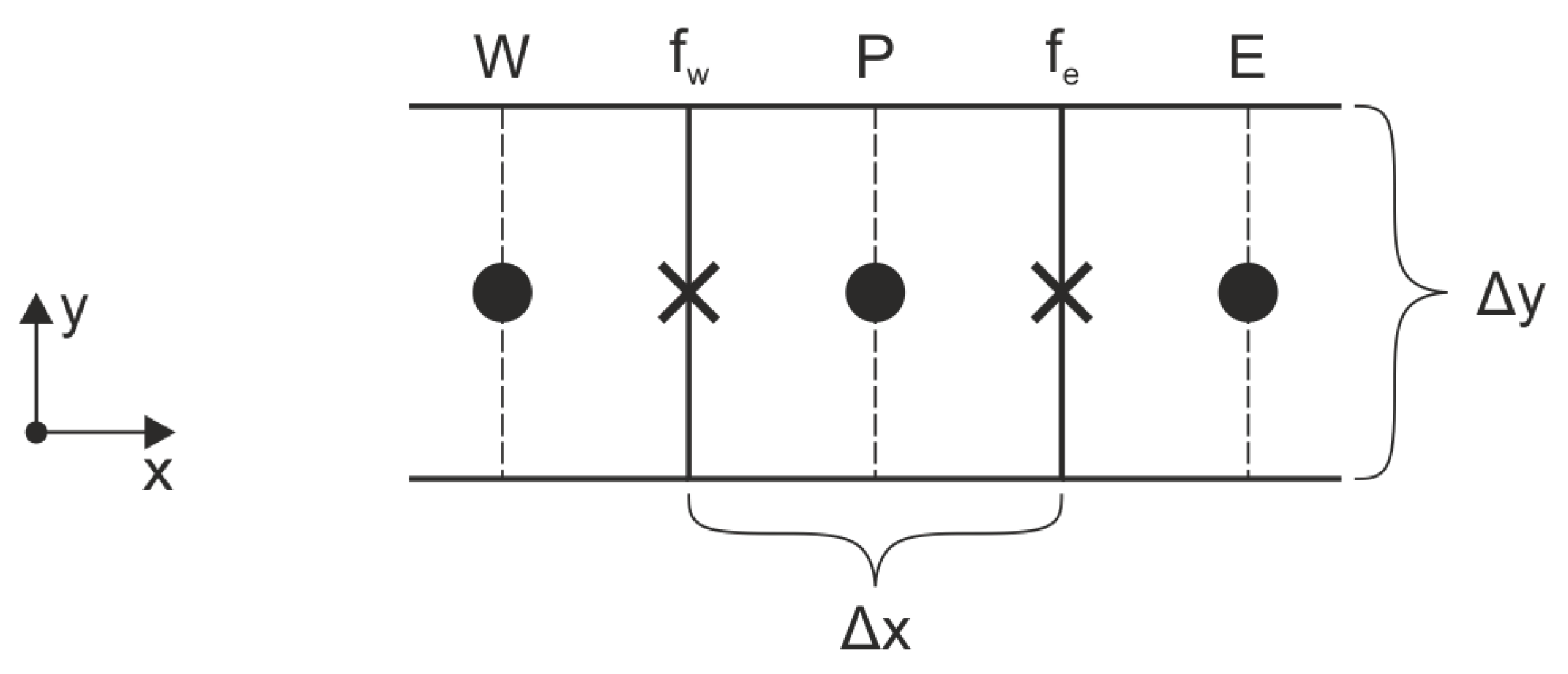
58]. For this purpose, the computational domain was divided into discrete control volumes, as illustrated in
Figure 6. Cell centers are represented by dots and capital letters, while cell faces
f are represented by crosses and lowercase letters. The neighbors of a given cell P are labeled according to their relative orientation using compass directions (west → W/w, east → E/e). Interpolated values located on the cell faces for fluid properties and velocities are indicated by the variable
.
Within the discrete finite volumes, the governing equations for mass and energy conservation were expressed in the form of the Reynolds and energy equations. By applying the divergence theorem from Equation (
7), the divergence terms in the PDEs could be cast as flux integrals over the faces
A of the finite volumes.
Applying the integral theorem to the Reynolds equation yielded expressions for the fluxes
, which could be divided into Poiseuille and Couette fluxes (
,
) and the source term
from Equation (
8).
Similarly, the diffusive and convective fluxes (
,
) in the energy equation, as well as the source terms associated with dissipation and the transient storage term (
,
), could be derived as shown in Equation (
9).
Local pressure and temperature derivatives appearing in Equations (
8) and (
9) were approximated using the central difference scheme. The resulting pressure and temperature differences depended on the state/local variables of the considered cell
P and the corresponding neighbor cell
, as shown in Equation (
10) [
59].
To avoid numerical instabilities, the convective fluxes in the Reynolds equation and the energy equation were discretized using an upwind scheme. Accordingly, the velocities
and
at the cell faces
f were evaluated using the values at the adjacent cell centers located upstream with respect to the local flow direction (Equation (
11)) [
58].
The numerical formulation of the case distinction is presented in Equation (
12). The hyperbolic tangent function was employed as an approximation of the sign function. A scaling factor
k was introduced to enforce a steep transition between the values
and
and was fixed to
throughout the present study.
The fluid properties necessary for solving the previous flux terms were first calculated at the cell centers (
P,
) and afterward interpolated to the cell faces
f. To prevent an overestimation of the fluxes over the cell faces, the fluid properties at the cell faces were calculated using the harmonic mean, as defined in Equation (
13) [
58].
Based on the fluxes from Equation (
8), and employing the discretization and interpolation techniques presented above (central differences, upwind scheme, and harmonic averaging), the mass balance for each cell in the computational domain was rewritten as in Equation (
14) using the coefficients
,
,
, and
.
Similarly, the energy balance could be expressed as in Equation (
15), involving the coefficients
,
,
,
, and
.
When these balances were enforced across all cells of the computational domain, the system of Equation (
16) was derived using the previously introduced coefficients.
Because density and viscosity depended on pressure and temperature, the two domains were coupled. This dependency is indicated by the diagonals in the upper-right and lower-left quadrants of the matrix. The system of equations from (
16) was solved in this simulation using the Newton–Raphson method [
52,
60].
As a stopping criterion, the following norm from Equation (
18) was employed, which compares the absolute relative changes between consecutive time steps n and n + 1:
If this norm fell below , the solver terminated and proceeded to compute the next time step. The consecutive time steps were solved using a fixed-step solver. For all simulations in this study, the time step size was set to . The computational domain was divided into 500 equally spaced cells for the solution of both the energy and Reynolds equations.
2.2. THD-PINN
The THD-PINN used to evaluate all test cases described in
Section 2.3 received the values of the current grid point
as inputs. It consisted of one linear layer that scaled input values; three hidden, fully connected Gaussian Error Linear Unit (
GELU) layers with 32 neurons each; and a linear output layer with one output for pressure (
p) and one for temperature (
).
GELU activation was chosen as it has some preferable properties over other activation functions that make it suitable for PINNs [
61]. Hyperparameter optimization including all activation functions could be performed in the future to potentially obtain even better results. For this work, no such optimization was carried out, as the chosen network structure yielded good results. The PINN output values were transformed to enforce boundary conditions in order to reduce the number of loss terms, enabling a more stable training process and faster convergence. Transformation functions were subject to current research. The transformations that were used here were chosen for their analytical simplicity. The transformation described in Equation (
19) was applied to the pressure output. The transformation described in Equation (
20) was applied to the temperature output. The function
described the pressure buildup on the left side of the simulation domain over time. The function is further described in
Section 2.3.
For
, Equation (
19) evaluates as
, indicating the pressure boundary condition of the left side of the domain. For
, it evaluated as
, indicating the pressure boundary condition of the right side of the domain. For
, it evaluated as
, as the left pressure boundary condition took the same value as the initial condition.
For , the above evaluated as , indicating the value of the initial condition for temperature, which was the same as the left boundary condition. For , the expression also evaluated as .
In both transformations, shown in Equations (
19) and (
20), the coordinates of the mesh points
were scaled by the inverse of their respective maxima to improve numerical stability.
2.2.1. Physics-Informed Loss
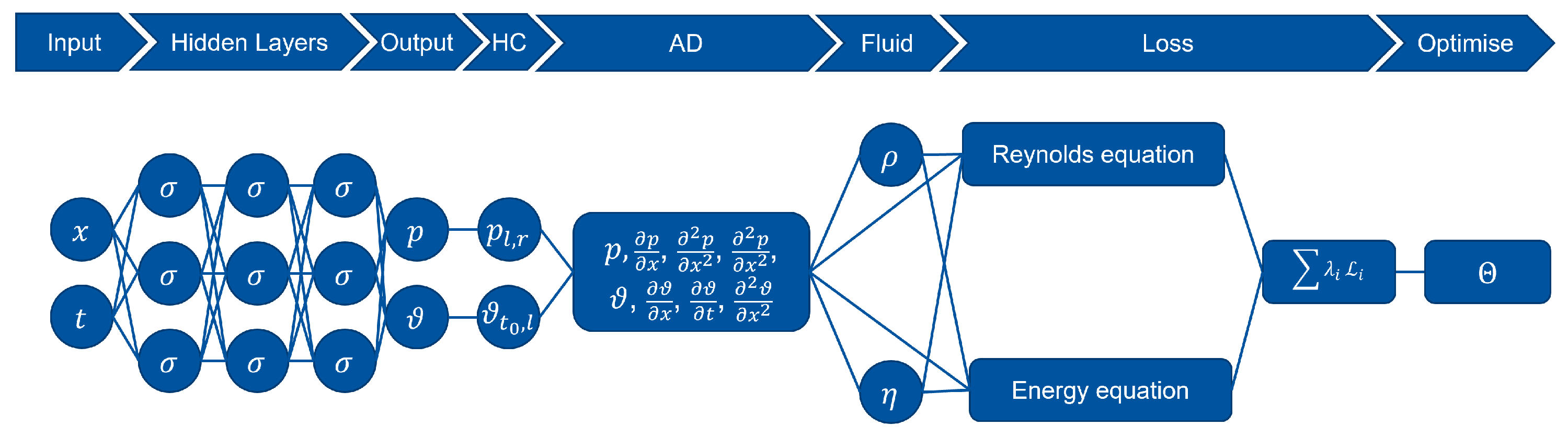
A simplified illustration of the PINN and the computational path from input to the optimization gradients is shown in
Figure 7. The fluid density
and viscosity
were calculated based on the hard-constrained outputs of the PINN. Opposed to the classical method, the PINN was trained to minimize Equations (
1) and (
2) directly based on residual values of the respective PDEs at individual grid points. As the boundary and initial conditions were all hard enforced, no further losses were needed.
2.2.2. Training Process
The PINN was trained using the Spike-Aware Adam with Momentum Reset
SPAM-Optimizer [
62]. The optimizer is a variant of the Adaptive Moment Estimation (ADAM) that detects gradient spikes during optimization. Additionally, it resets the optimizer’s momentum after a specified number of training epochs. The algorithm was developed for training large language models and has performed better than the regular ADAM optimizer. To handle the multi-objective optimization, two balancing algorithms were employed. The Relative Loss Balancing with Random Lookback
ReLoBRaLo-Algorithm developed by Bischof [
63] weighed individual losses and the Conflict-Free Inverse Gradients
ConFIG algorithm developed by Liu [
64] computed conflict-free gradients for descent. The
ConFIG algorithm could optionally take gradient weights as input. The
ReLoBRaLo-Algorithm was used to compute the weights for the
ConFIG algorithm. The
ConFIG algorithm was chosen because two losses needed to be optimized and the algorithm performs very well for two losses [
64]. The
ReLoBRaLo-Algorithm was chosen for dynamic loss weighting as an improvement over static factors that need to be set manually. The training duration was set to
epochs, yielding an average training time of
min. During training, the PINN was evaluated at every grid point on the
grid once per epoch. The optimizer then computed gradients based on the residual values of the differential equations. The optimizer did not receive gradient information about
and
during training, as this information would have led it to optimize density and viscosity, resulting in solutions with negative temperatures.
To ensure that most grid points were located where residual values were high, the
-Grid was adapted at each epoch based on the PDE residuals. New grid points were generated using the following logic. First, for every
x in the set of all
x values
X, the
t value with the highest residual value across all
t values for both PDEs was obtained, denoted by
∗.
All further steps were also computed for every
. Indices were left out for better readability. The central point
for the remeshing (the area where the point density would be the highest) was computed based on the mean value of the two
values that were obtained during the last step.
To obtain the same number of points on either side of the center,
was divided into two parts,
and
.
The points of either part were equally spaced between 0 and 1 in
and
.
The coordinates of the linspaced points were then warped, and both sets
and
were combined to obtain the points
T for the new grid.
Here, the exponent controlled the the strength of the warping. During the training, was chosen by trial and error.
2.3. Test Case
To evaluate the performance of the developed THD-PINN, several test cases were defined. Based on the four parameters fluid type, left pressure boundary condition, initial temperature, and velocity v of the piston, 16 test cases were defined to cover all combinations of minimal and maximal values. For every test case, one PINN was trained and evaluated against the simulation. The idea was to imagine the set of parameters as the vertices of a 4-dimensional hypercube. If individual PINNs with the same network topology could be trained with enough accuracy for these points, a single, parameter-dependent PINN could likely be trained that can make predictions for any parameter combination within the range of parameters.
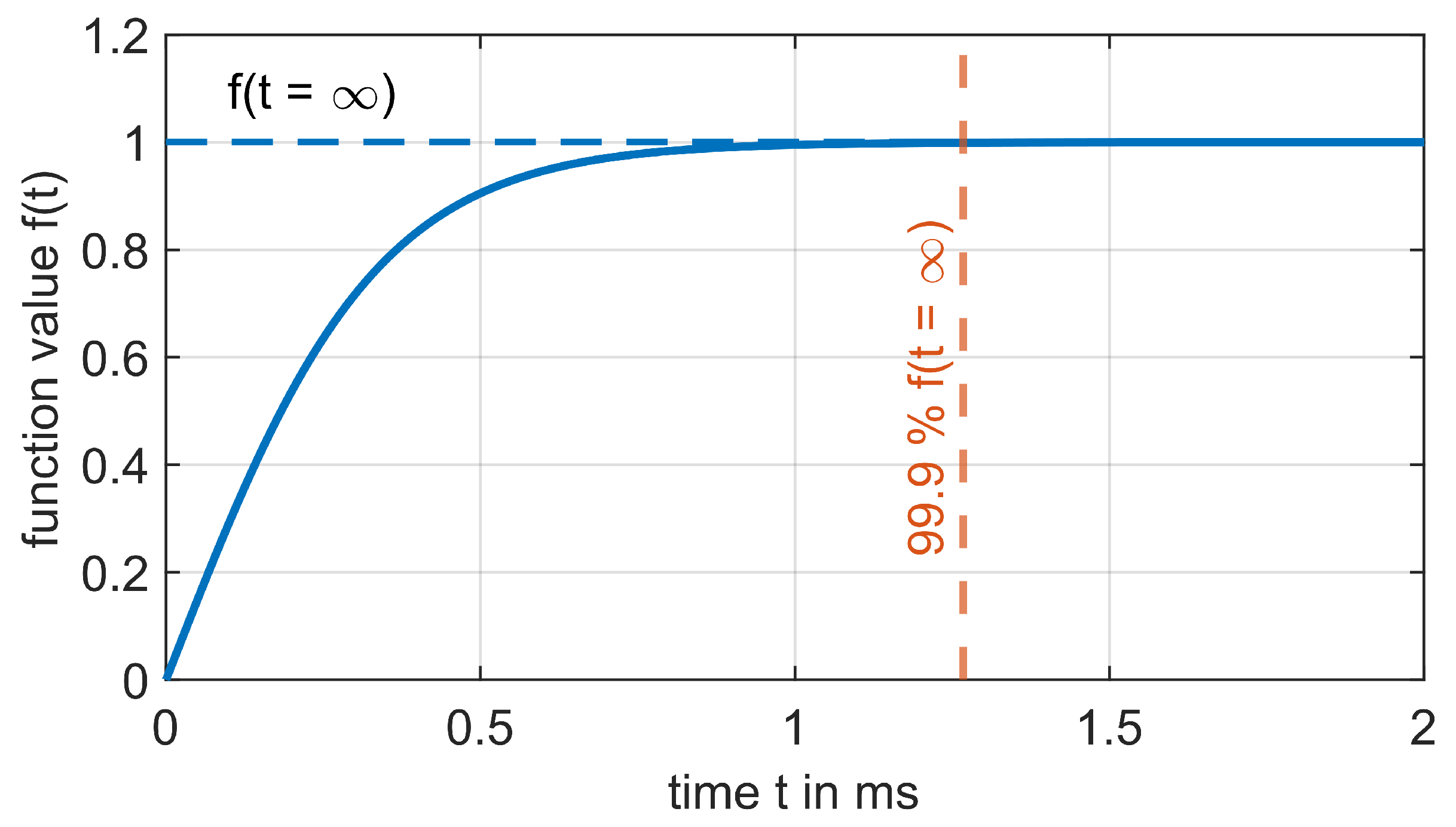
The pressure buildup over time on the left side of the simulation domain was modeled by the function
. The desired properties for the function were
when
and that it reached saturation after some point
:
. Here, it was modeled using a sigmoid function, as it had no discontinuities that could prevent gradient computation in the PINN. The factor 60 was chosen such that the sigmoid function was saturated for
. The function is shown in
Figure 8.
3. Results
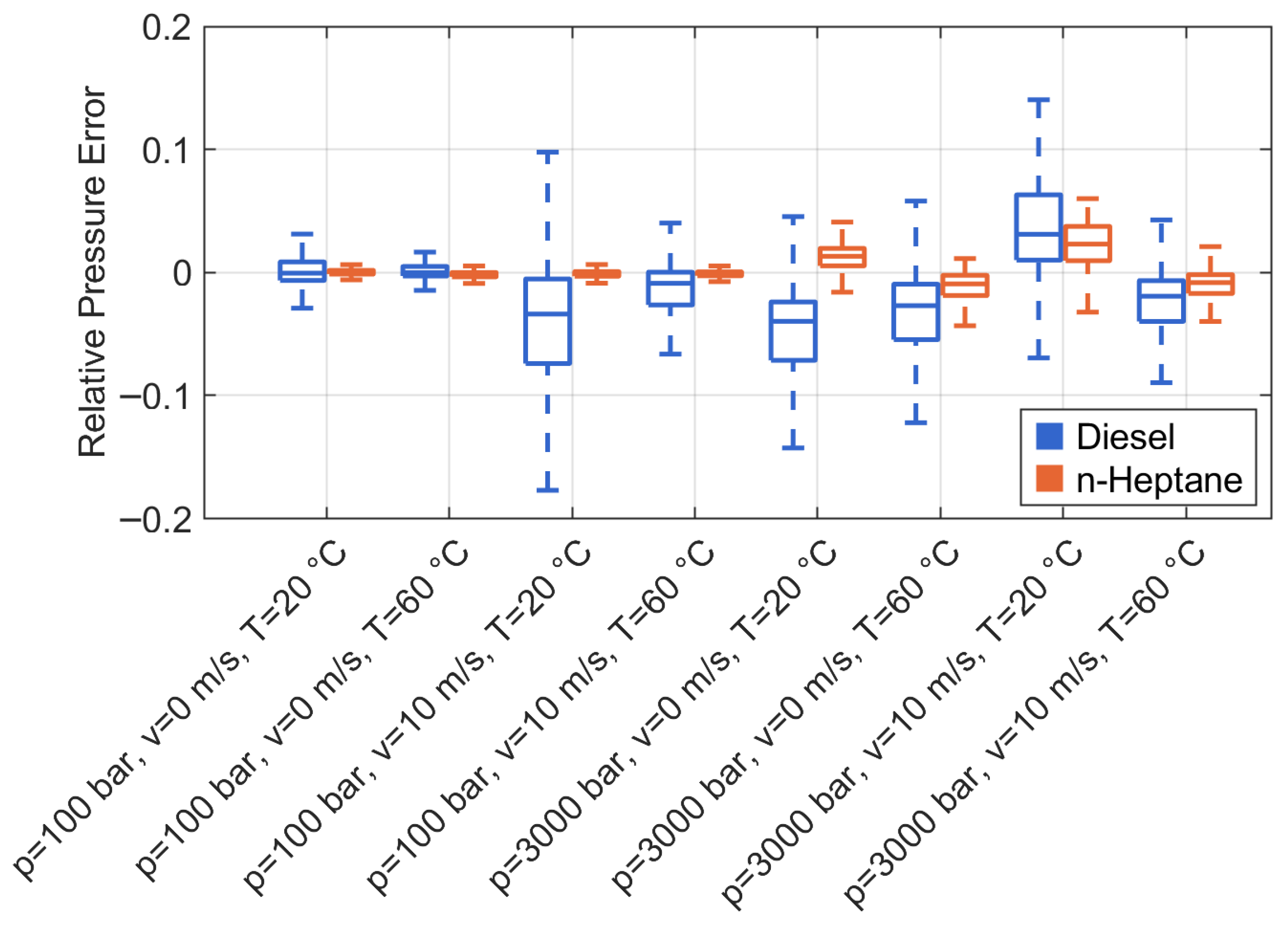
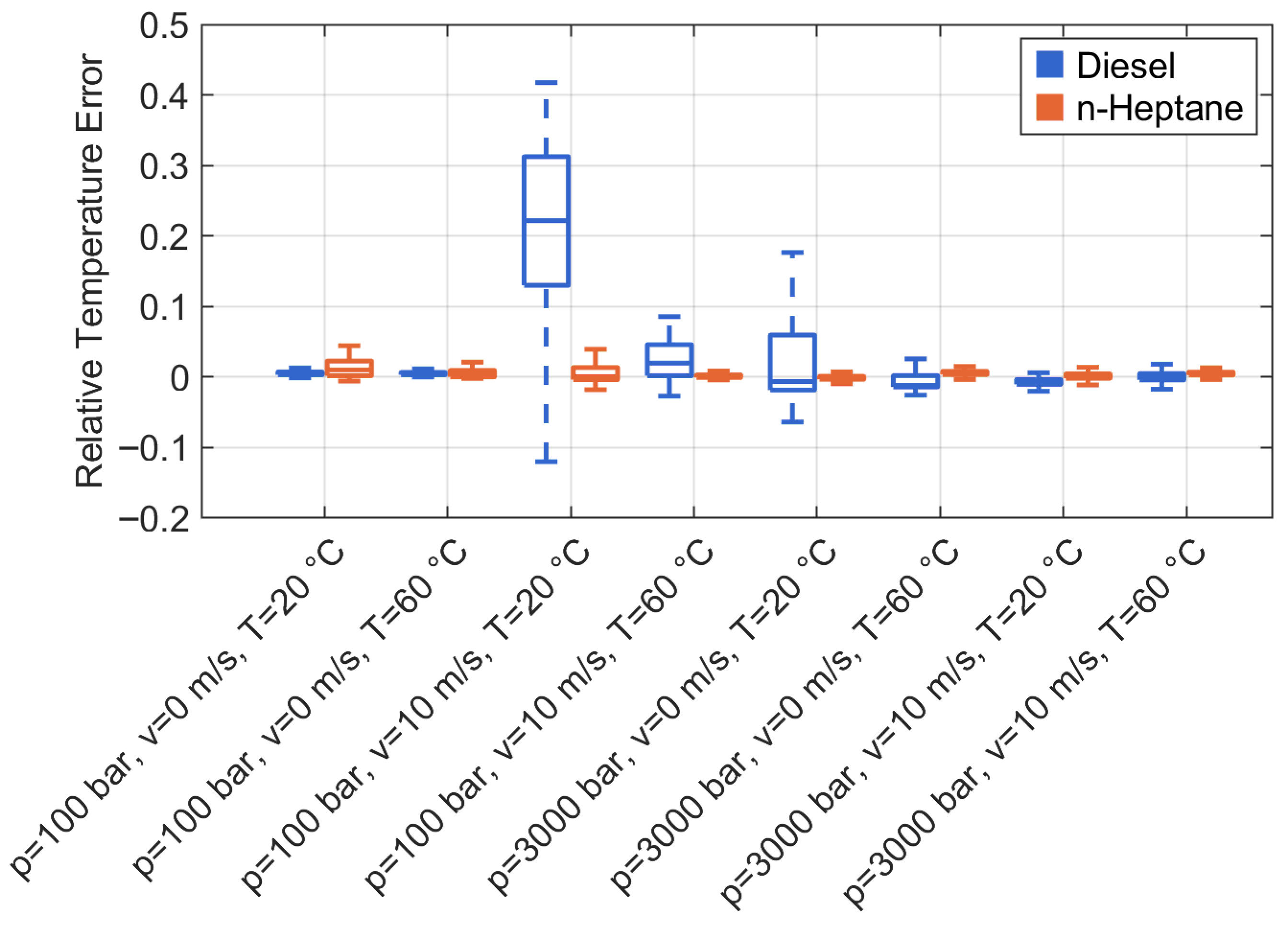
The results of the test cases are presented as box plots in
Figure 9 and
Figure 10 of the relative errors for pressure and temperature. Both models used the same set of underlying equations. Observed errors were a result of inaccuracies from the PINN predictions only.
For each parameter set, more than 500,000 points were evaluated in the simulation domain. Outliers are not shown here because the data contained several hundred outliers that would have made the boxes unrecognizable. The entire range of errors, including outliers, is instead given in
Table A1 and
Table A2 in
Appendix A.
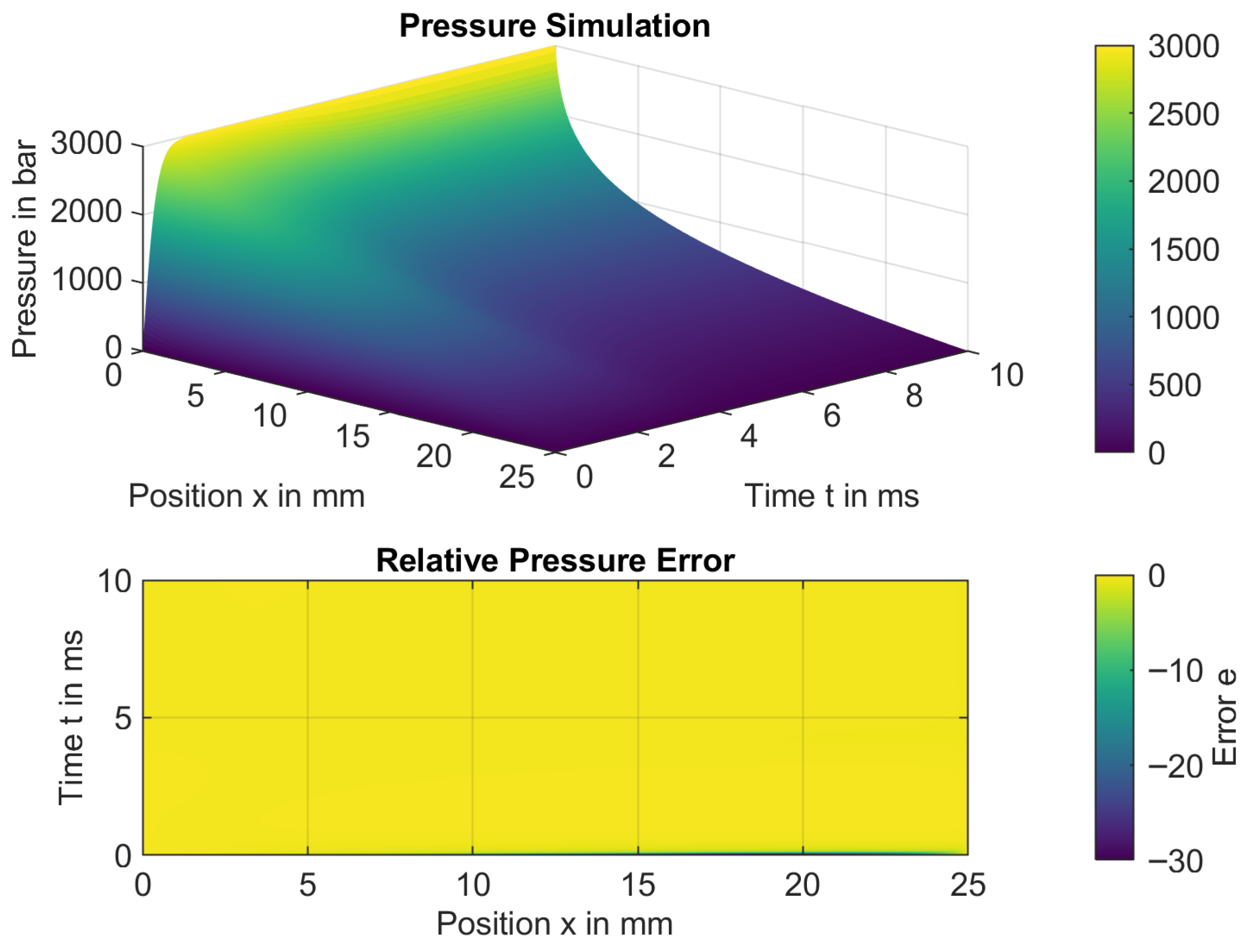
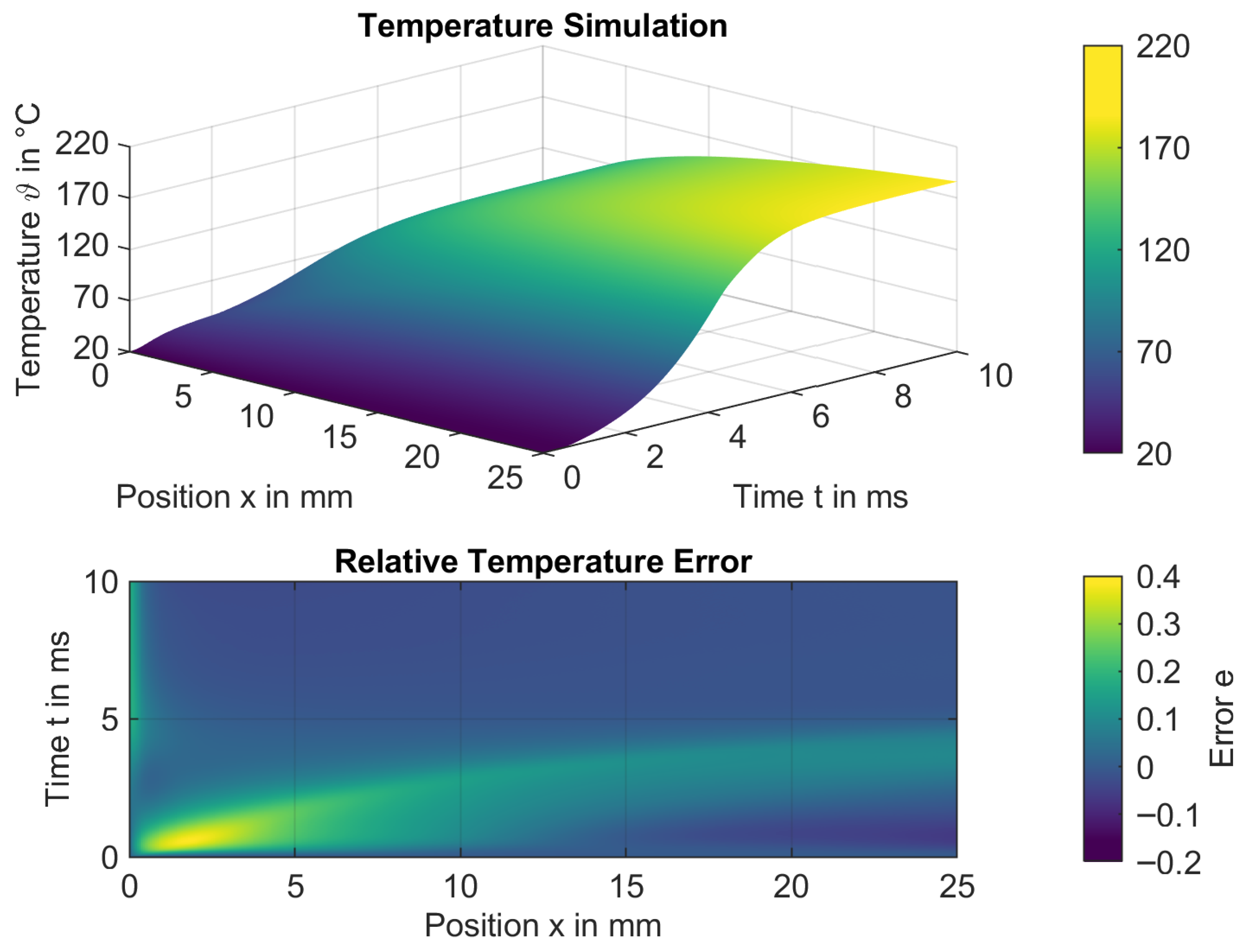
Figure 11 and
Figure 12 show the detailed results for one of the 16 test cases. The displayed test case was for the diesel fluid, with the left pressure boundary condition set to 3000 bar, the initial condition set to 20 °C, and a velocity of
.
Figure 11 shows the pressure computed by the simulation and the relative errors of the PINN’s prediction in relation to the simulation data. The PINN approximated the pressure very well overall. Some deviation from the simulation was observed near
. This was a result of hard enforcing the initial condition. Near the boundary, the PINN’s performance was limited by the transformation of its output.
Figure 12 shows the temperature computed by the simulation and the relative errors of the PINN’s prediction in relation to the simulation. The PINN also predicted the temperature mostly correctly. The most significant deviation from the simulation was observed near
on the left side of the domain. This again was mainly a result of the hard-enforced boundary and initial conditions, which limited the quality of the PINN’s predictions to some extent. The error then propagated through the simulation domain in both the temporal and spatial dimensions. The error magnitude decreased with the distance to the origin
.
A comparison of the different fluids revealed that the prediction errors were generally higher for diesel than for n-heptane. The most significant deviations occurred for the operating point characterized by p = 100 bar, v = 10 m/s, and °C. Overall, the highest absolute error values were observed in the temperature field. Nevertheless, across the domain, the temperature predictions were generally more accurate than the pressure predictions.
An important observation was the strong coupling between the temperature and pressure errors. If noticeable errors occurred in the temperature field, corresponding deviations in the pressure field were also present, reflecting the temperature-dependent viscosity in the Reynolds equation. However, the inverse relationship did not necessarily hold, as local inaccuracies in the pressure field could arise without significantly affecting the temperature prediction. This asymmetry highlights the dominant influence of the thermal field on the overall solution quality in thermohydrodynamic lubrication problems.
4. Discussion
The results presented in
Section 3 demonstrate that the proposed THD-PINN was capable of accurately capturing both the pressure and temperature fields in the piston-bushing contact. Across the investigated test cases, the predicted spatial distributions of pressure and temperature showed good agreement with the reference solutions of the THD simulation, indicating that the coupled thermohydrodynamic behavior was well represented by the PINN.
Furthermore,
Figure 11 and
Figure 12 indicate increased local errors near the domain boundaries. These deviations were most likely related to the chosen analytical transformations used to enforce the boundary conditions within the PINN formulation. In particular, for the temperature field, elevated errors were observed at the start of the simulation and near
. In this region, both transformation functions approached zero simultaneously and were multiplied by the network output, potentially locally suppressing the PINN’s prediction.
One main benefit of the THD-PINN was the ability to evaluate the pressure and temperature field, after training, nearly instantaneously.
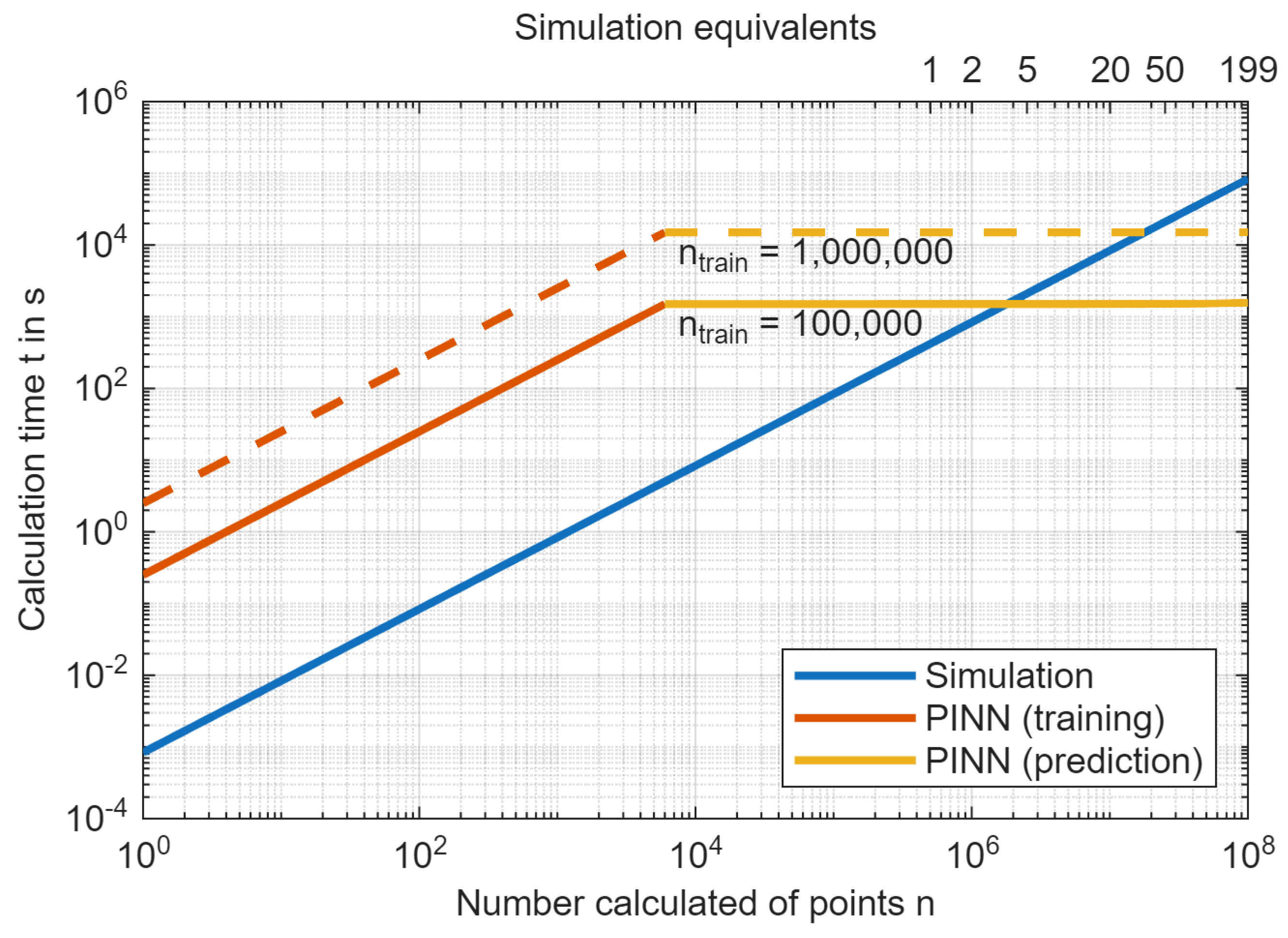
Figure 13 shows the required time for training and evaluating a PINN for a specific number of grid points. The upper
x-axis shows the equivalent in simulations. Here, one simulation could represent one fluid or one boundary condition. The PINN was trained for one test case for 100,000 epochs and then evaluated.
Figure 13 shows that the actual evaluation was computationally efficient (>1.7 × 10
6 grid points per second), so it did not significantly increase the calculation time. The calculation time for the THD simulation increased linearly and was around 7 min per simulation. If a PINN was trained for 100,000 epochs and evaluated across four simulations, the higher upfront training time was compensated for by the THD.
Table 4 shows numerical data for computation times. It can be observed that the computation time of the two PINNs did not seem to increase. This was because even for 50 simulations, the PINN only needed to predict
500,000 = 25
points, resulting in less than 25 s of prediction time needed.
In this work, 16 simulations were investigated, each with a separate PINN. Based on the results, a parametrized PINN that solves multiple cases and is thus only trained once should be investigated. Such a PINN might require more training epochs. For example, increasing the number to 1.000.000 epochs would increase the training time to 4.1 h. When at least 36 different test cases were evaluated, the longer training time compared to the THD simulation was compensated for by the nearly instantaneous prediction of the PINN. Noteworthy is that with just two fluids and three parameters varied between two values, the number of test cases rose to 16. The goal is to evaluate a greater number of fluids, mixtures, and parameter variations, thereby further underscoring the benefit of the computationally efficient THD-PINN.
5. Conclusions
This work demonstrates the ability of PINNs to determine the pressure and temperature field in a piston-bushing contact of an injection pump. For 16 different thermo-hydrodynamic test cases, a PINN was trained and compared to a classical THD simulation. The results show that the PINN is a promising alternative to traditional simulation approaches. The accuracy in 15 of the 16 test cases is high, and the PINN’s actual evaluation after training is rapid.
The THD-PINN can capture the transient interplay between the Reynolds equation and the energy equation, accounting for temperature- and pressure-dependent fluid viscosity and density. Generally, the PINN yields better results for n-heptane than diesel, but still achieves sufficient accuracy in comparison to the gained computational speed.
Future work will incorporate fewer simplifications of the governing equations; more advanced fluid models regarding density, dynamic viscosity, and variable heat; and also a wider range of parameter variation. Furthermore, the application of a single parametrized PINN across multiple test cases will be investigated, showcasing the ability of a PINN to generalize and enabling the identification of an optimal fluid mixture for diesel injection pumps in a feasible time. A parametrized model could generally be used to optimize parameter-dependent properties of a fluid, like the viscosity of a lubricant, for given operating conditions. The results achieved in this work, along with the investigation of training and evaluation times, indicate a very promising practical application of PINNs as surrogate models for parameter studies. The application of parametrized PINNs has already been shown successfully in hydrodynamic lubrication problems, which further emphasizes the feasibility [
41]. While the PINN itself cannot replace the simulation and is not as computationally efficient for single sets of parameters, the PINN’s given ability to interpolate can be leveraged to search parameter spaces efficiently.
The PINN’s analytic, gridless character in combination with auto-differentiation allows one to mathematically evaluate the sensitivity of the PINN’s predictions with respect to the fluid parameters, offering further possibilities for parameter analysis that are not available in classical methods.
In conclusion, this work demonstrates that PINNs can provide a computationally efficient surrogate model for dynamic THD problems. The developed model lays the foundation for a parametrized model that can be used for parameter optimization. This is particularly relevant for tribological design tasks involving lubricant selection, operating condition optimization, and sensitivity analysis, where many simulations are required. By enabling rapid, physics-consistent exploration of coupled thermo-hydrodynamic behavior, PINNs open new opportunities for lubricant development, contact optimization, and data-driven tribological modeling.
As a next step, the presented PINN will be extended to enable the computation of tribological contact behavior for different mixing ratios of various fuel components. Even without extending the PINN to include the simplifications listed in
Section 2—such as deformation, solid heat conduction, or surface roughness—the model could already be used in its current form for rapid screening of potential fuel candidates with respect to volumetric and frictional losses in the injection pump. Promising fuel mixtures can then be investigated in greater detail using a TEHD simulation that accounts for the effects neglected by the PINN. Given the large number of fuel candidates studied at the Fuel Science Center, and the even larger number of possible mixtures, this approach offers substantial potential for computational cost savings. In principle, incorporating the previously neglected effects directly into the PINN could even eliminate the need for subsequent TEHD analyses.