Mechanical and Wear Behaviour of Microwave Sintered Copper Composites Reinforced with Tungsten Carbide and Graphite Under Different Lubrication Conditions


Abstract
1. Introduction
2. Materials and Methods
2.1. Materials
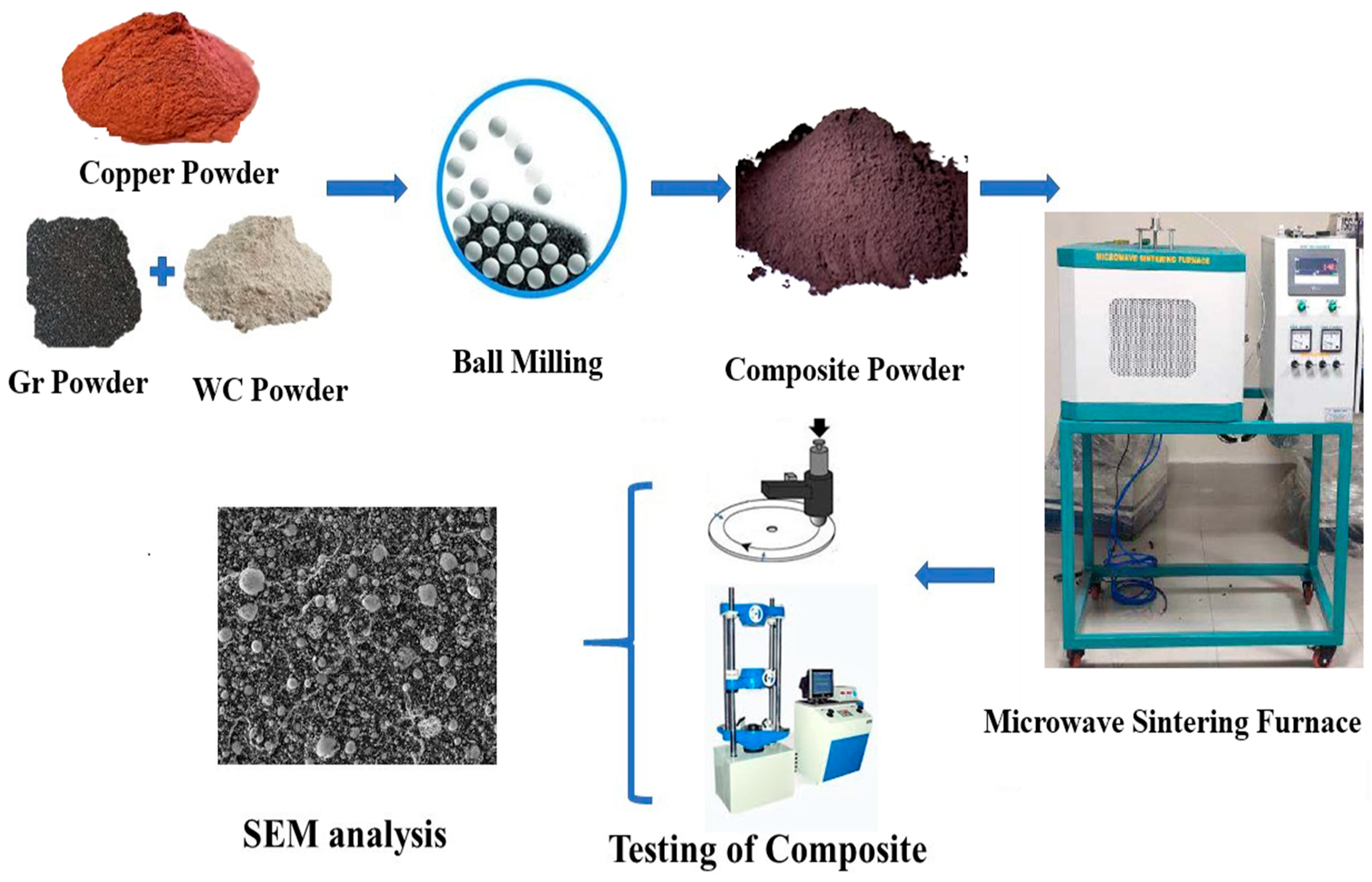
2.2. Fabrication of the Composite
3. Characterization Techniques
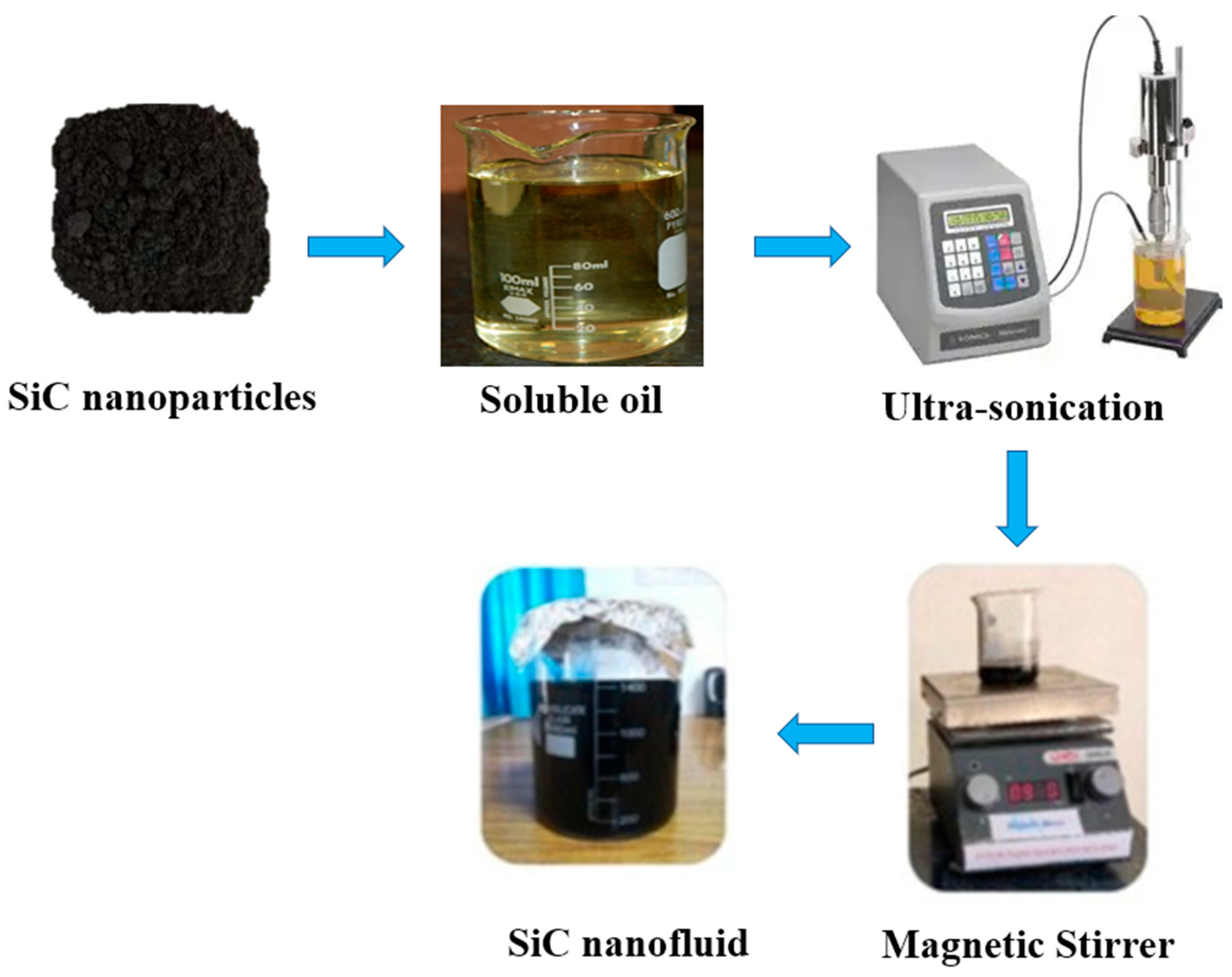
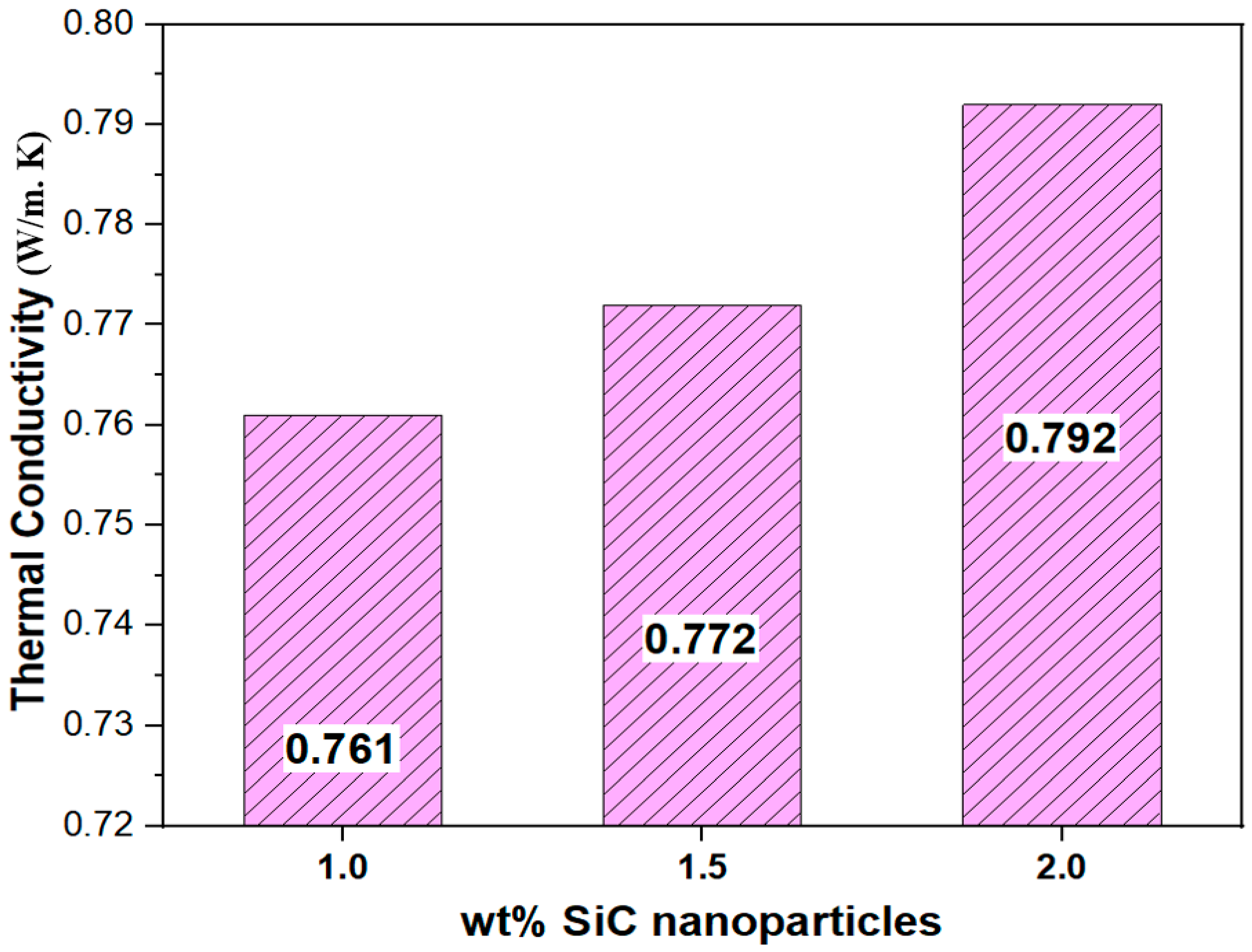
4. Preparation of SiC Nanofluids and Thermal Conductivity Measurement
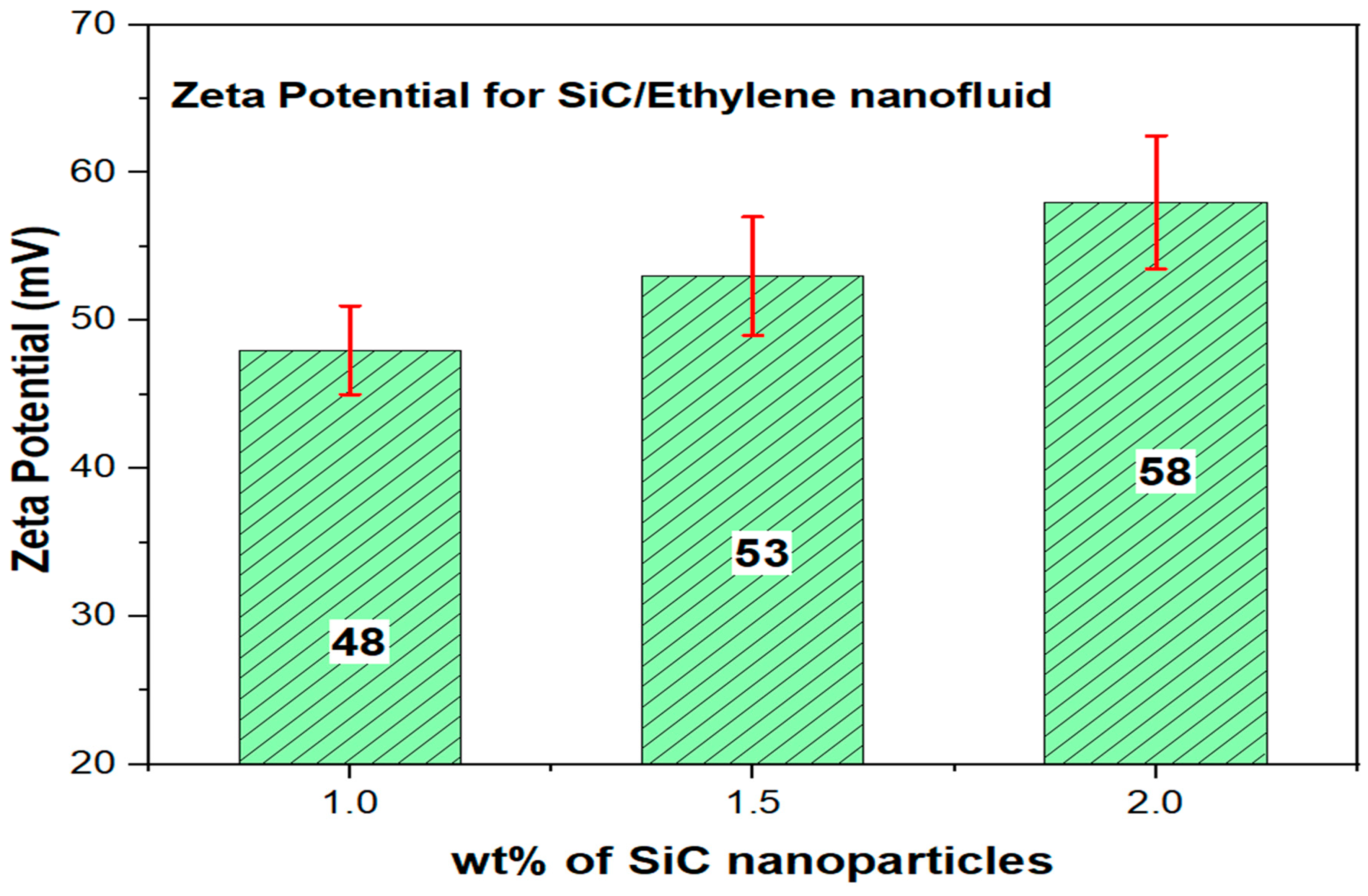
5. Stability Analysis of the SiC/Ethylene Glycol Nanofluids
6. Results and Discussion
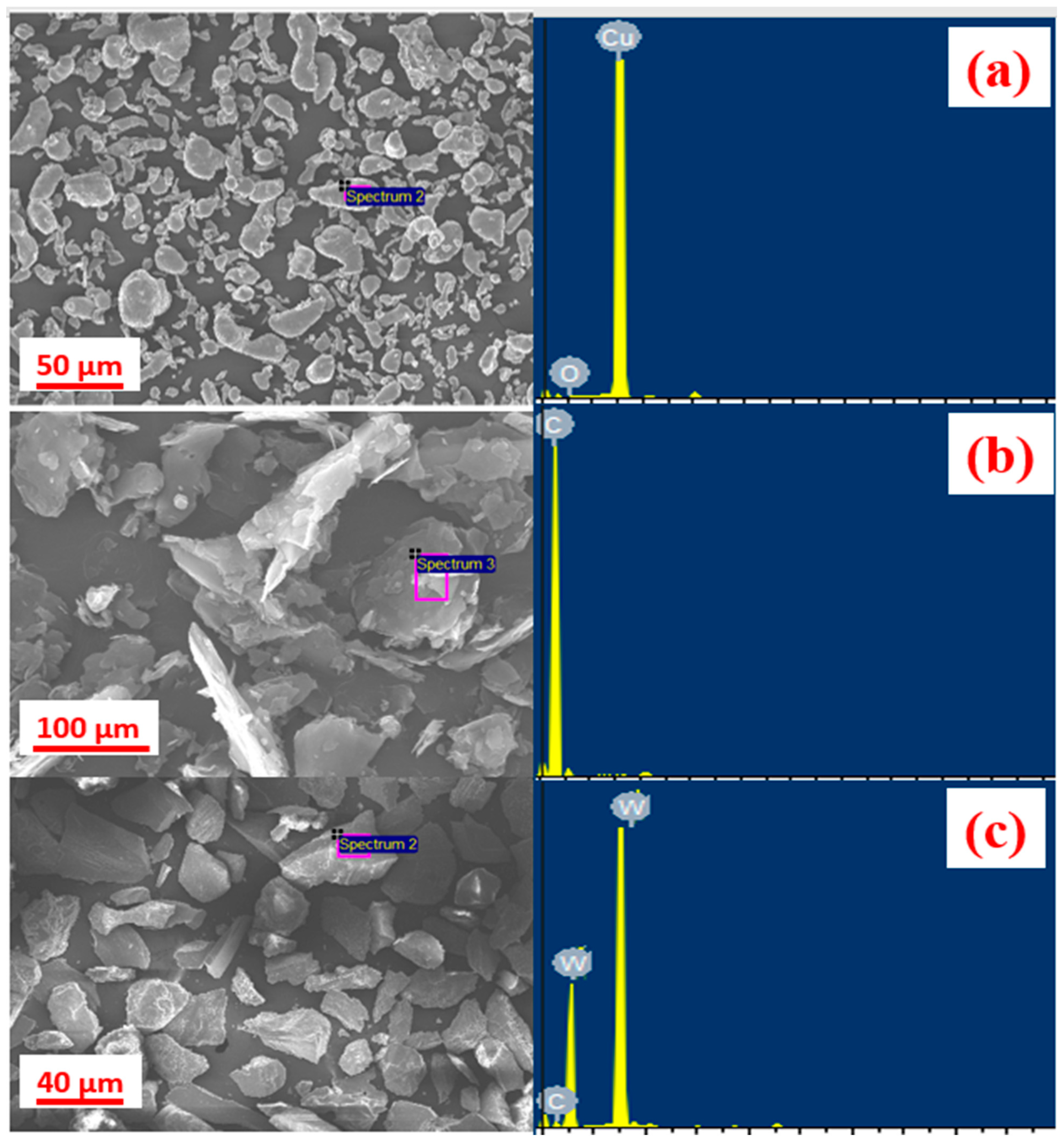
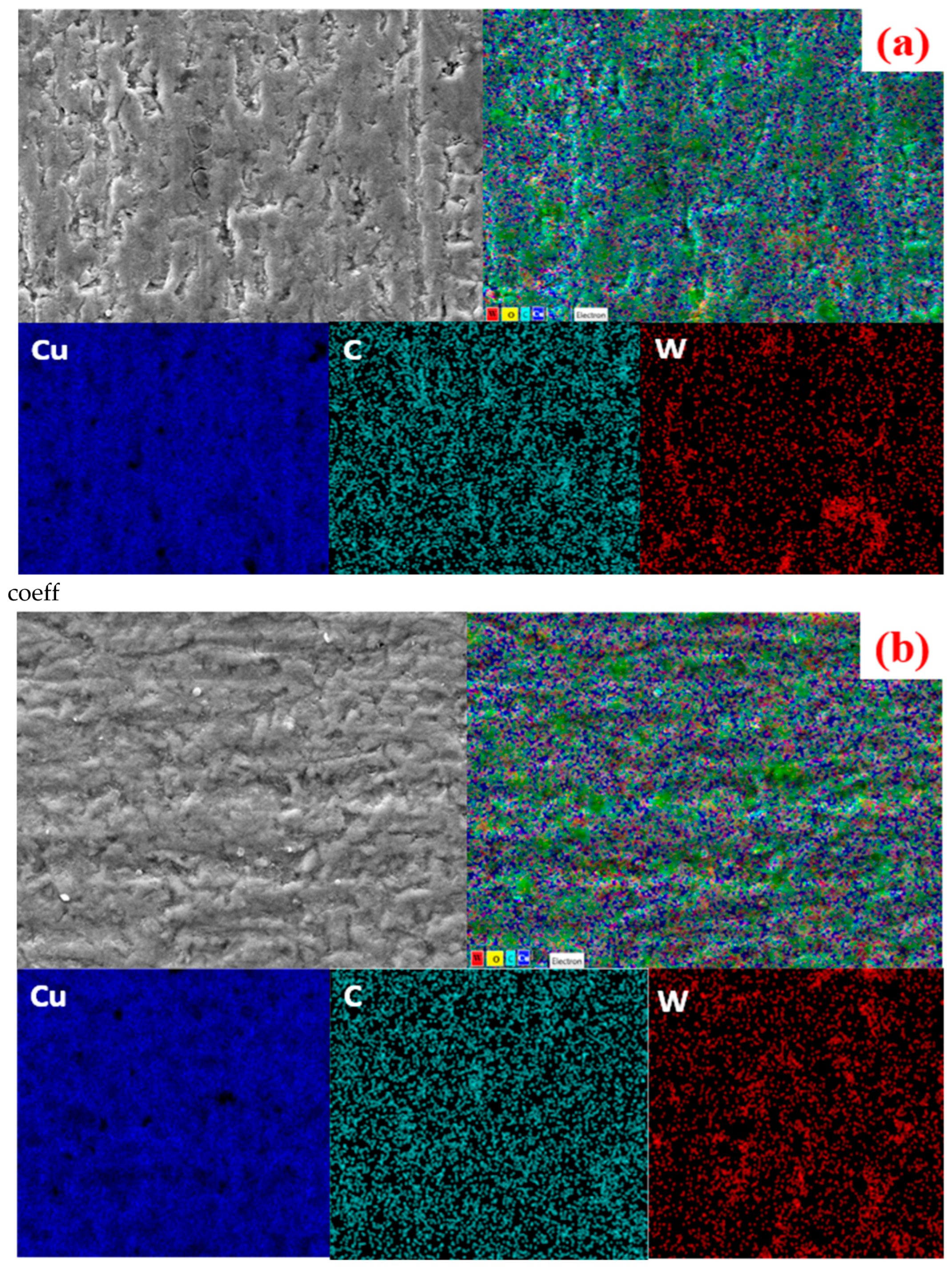
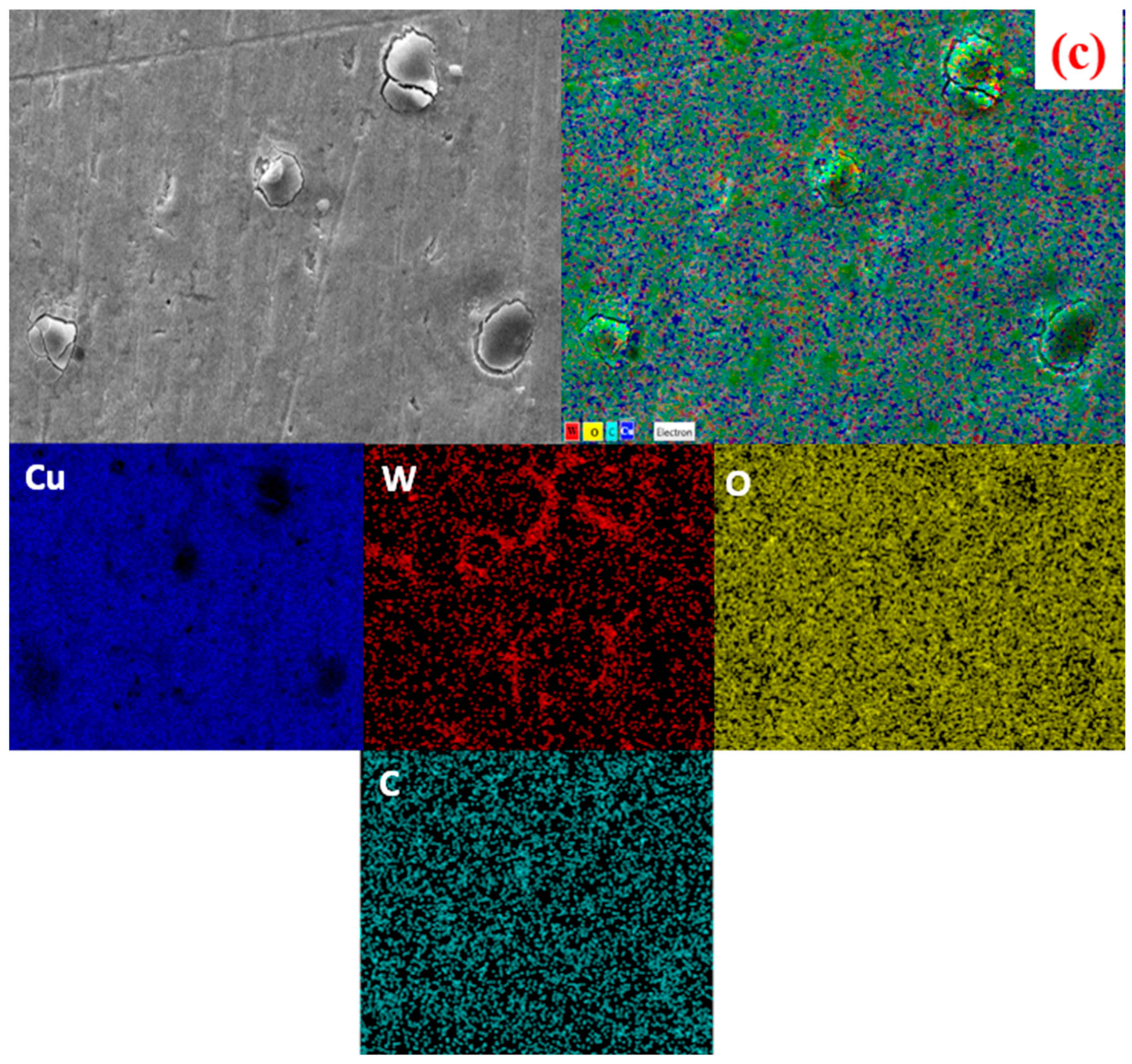
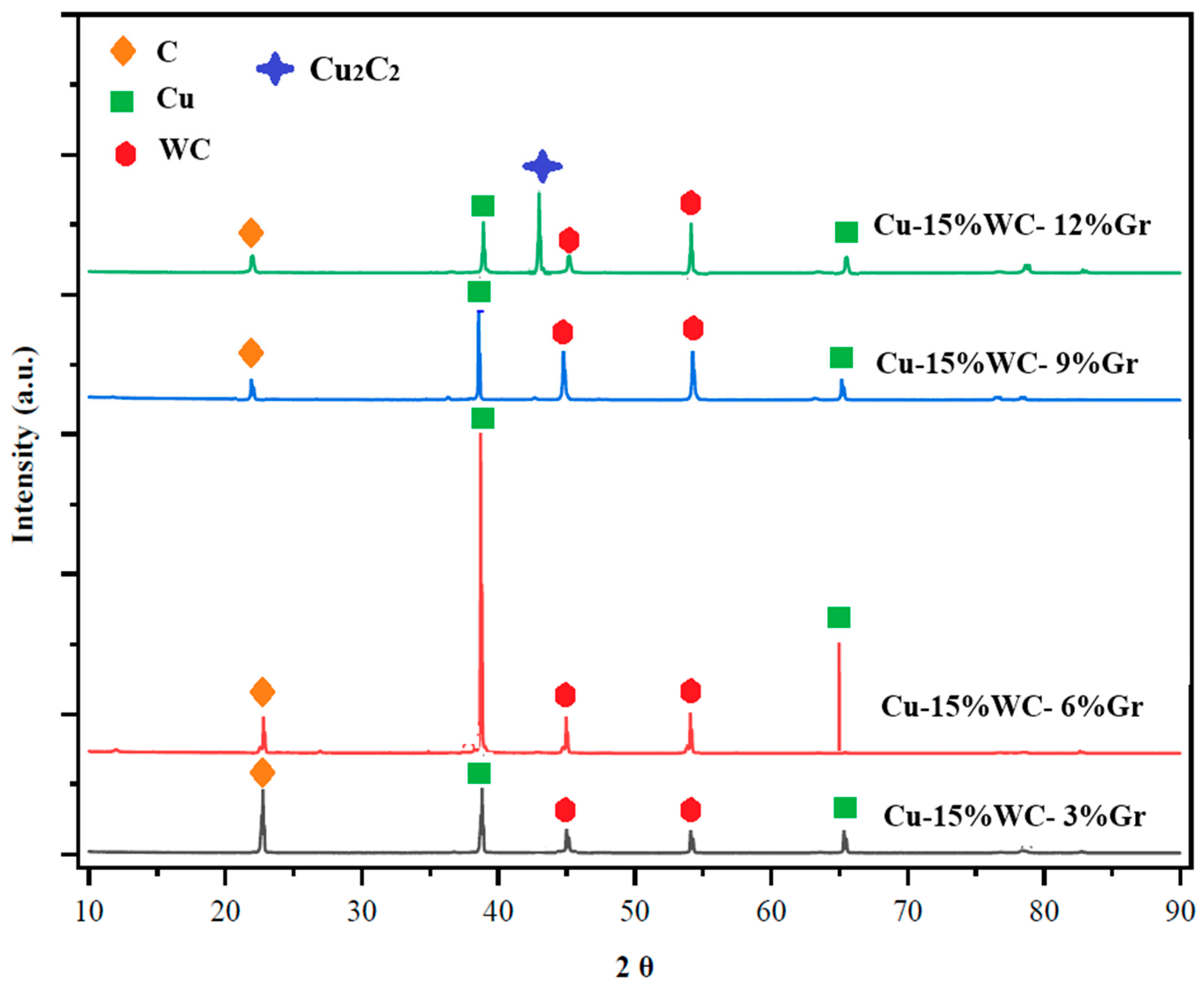
6.1. Morphological Study of the Cu-WC-Gr Composite
6.2. Mechanical Properties of the Synthesised Cu-WC-Gr Composite
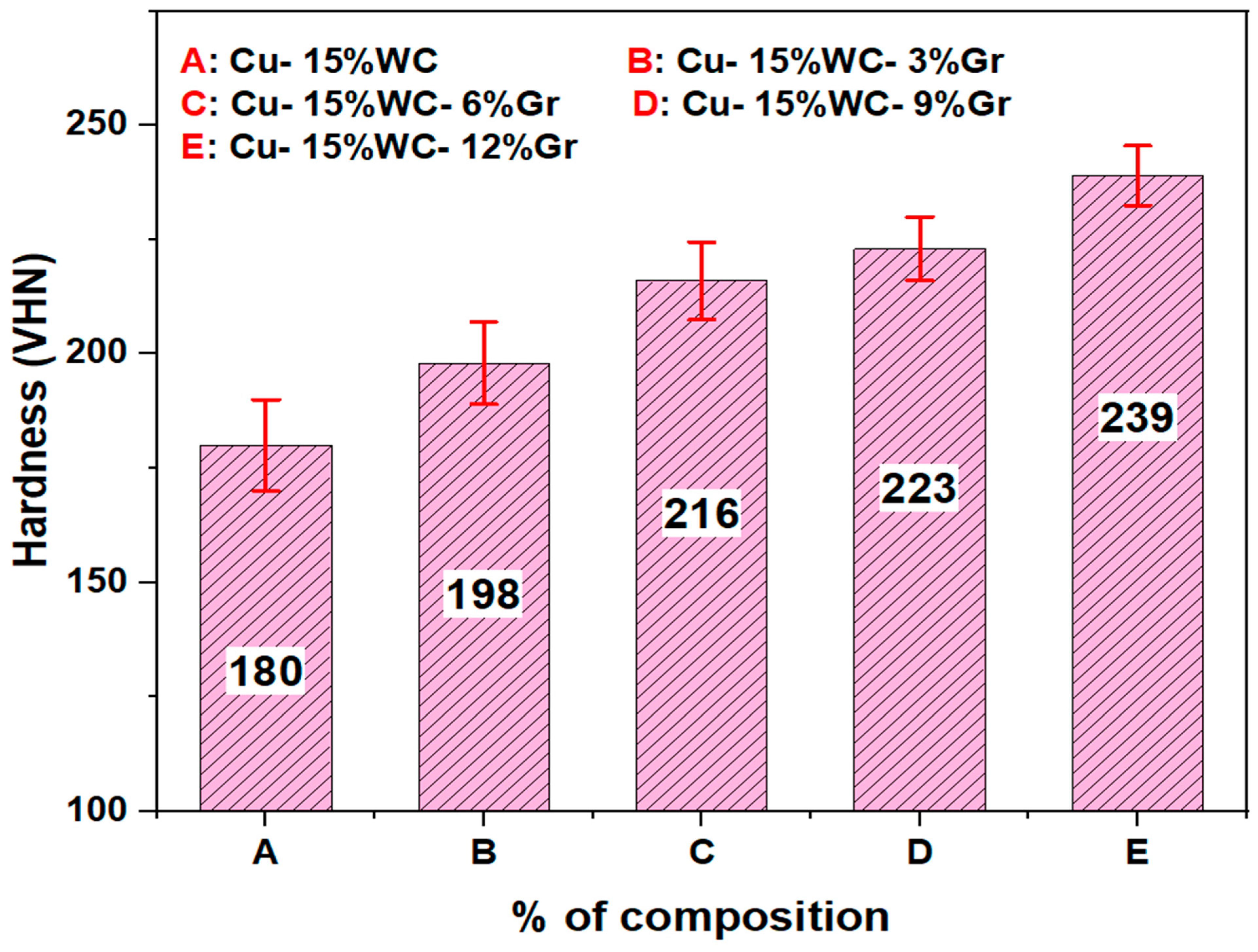
6.2.1. Hardness Result for the Cu-WC-Gr Composite
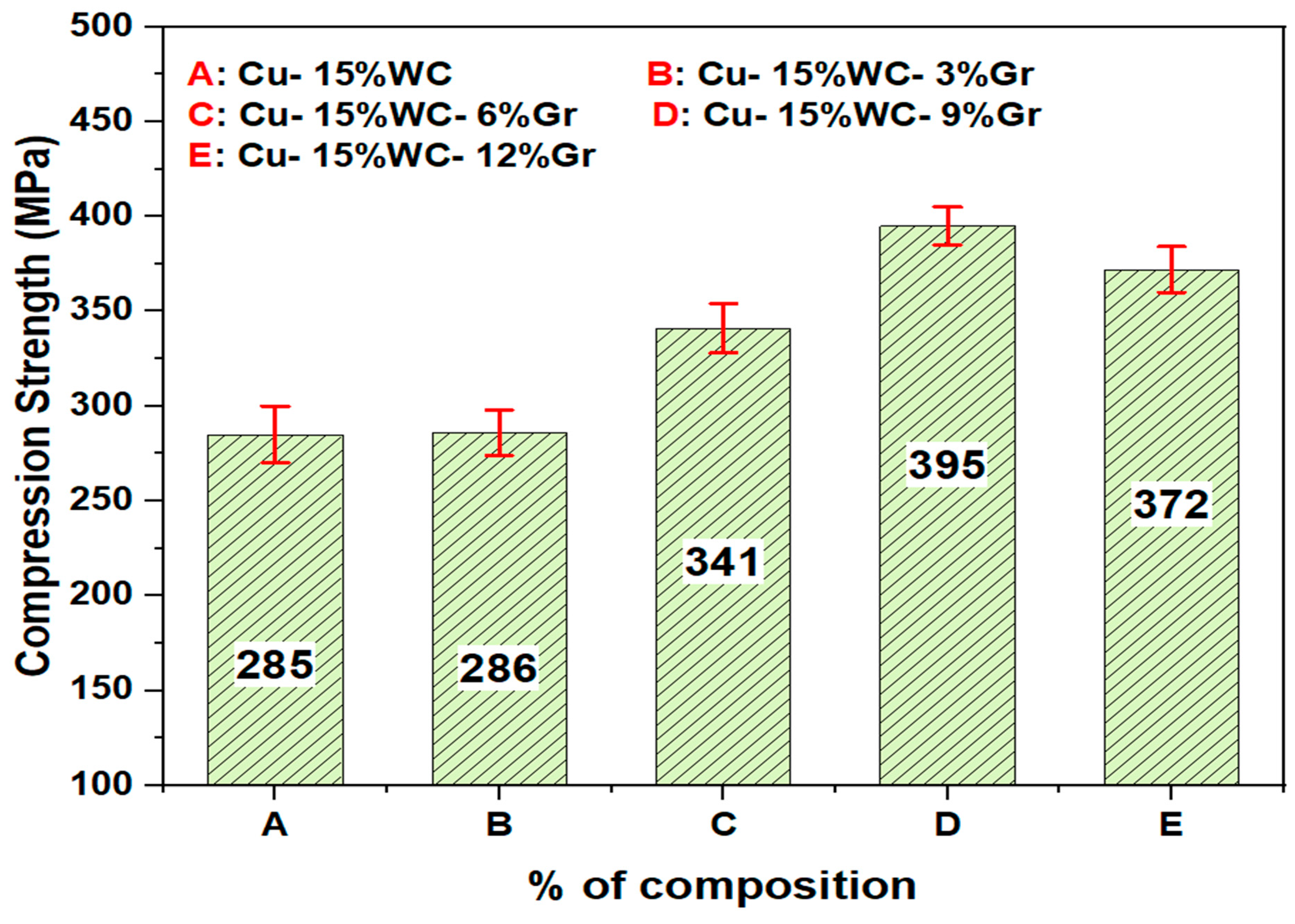
6.2.2. Compression Strength Analysis of the Synthesised Cu-WC-Gr Composite
6.3. Tribological Analysis
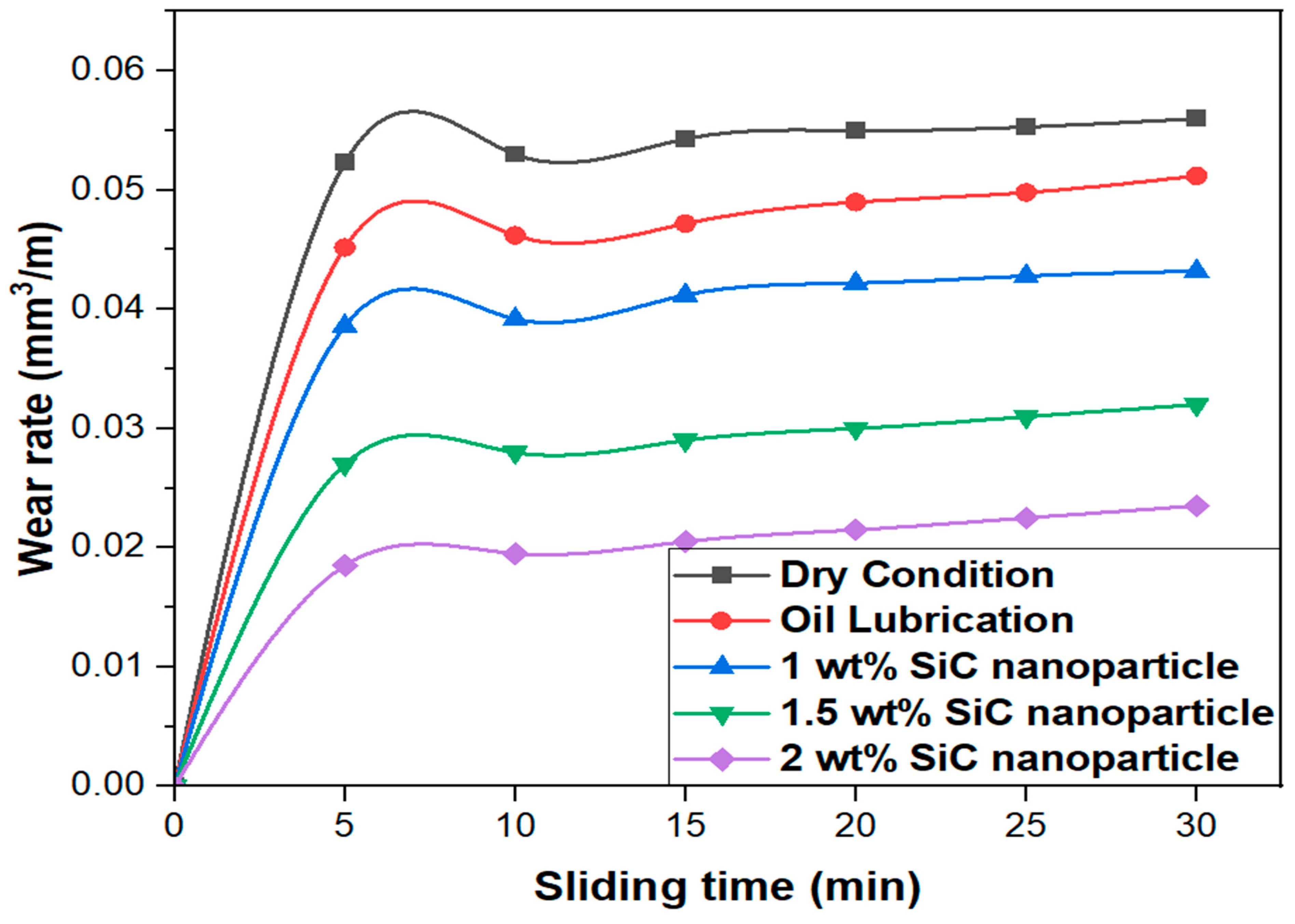
6.3.1. Wear Rate
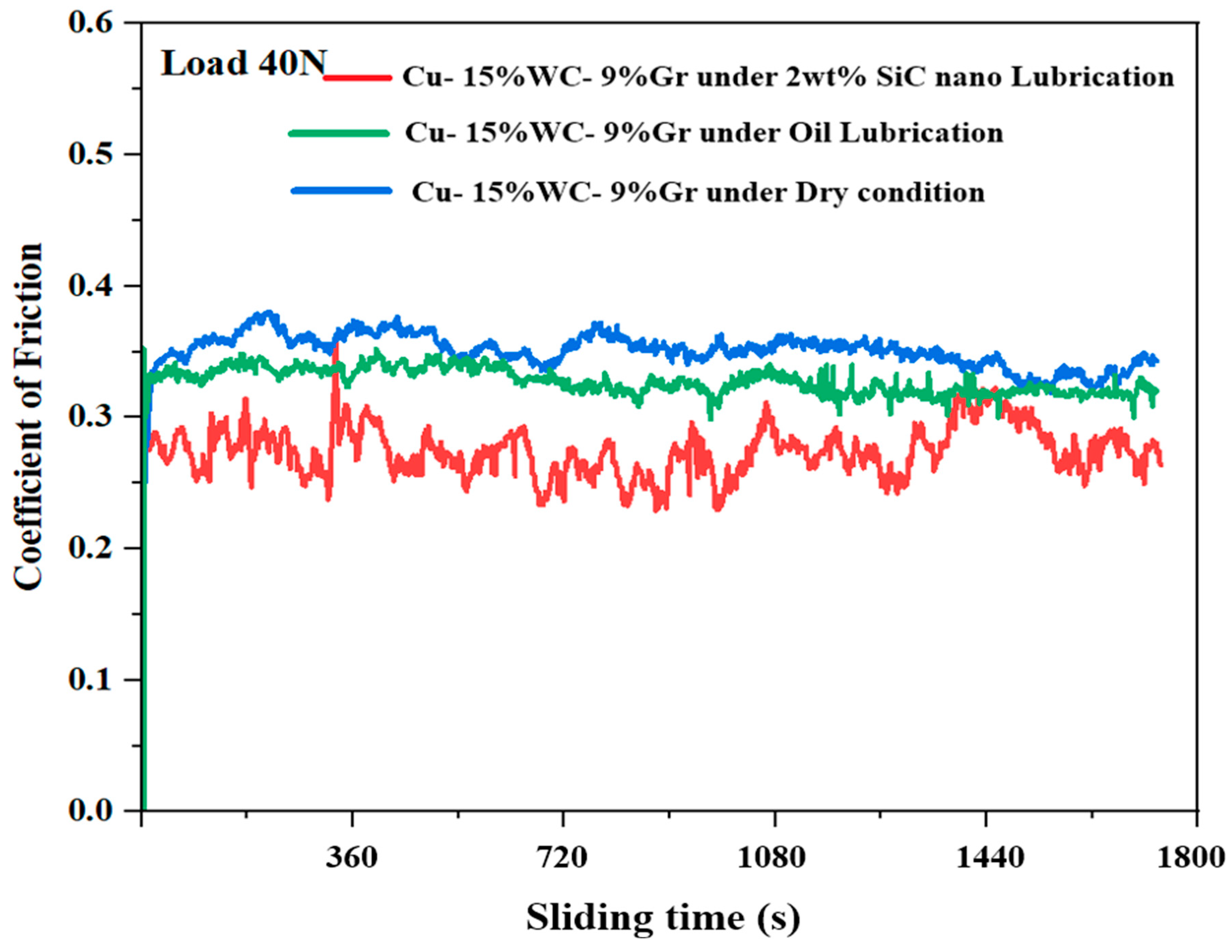
6.3.2. Coefficient of Friction
6.4. Worn Surface Morphology
7. Conclusions
- (1)
- Cu–15%WC–X%Gr composites fabricated through microwave sintering showed a uniform reinforcement dispersion up to 9 wt% Gr, while 12 wt% Gr caused Cu2C2 agglomeration and interfacial defects.
- (2)
- The hardness increased from 180 HV (Cu–15%WC) to 239 HV (Cu–15%WC–12%Gr), achieving a 32.7% improvement due to enhanced interfacial bonding and load transfer.
- (3)
- A maximum compression strength of 395 MPa was obtained for Cu–15%WC–9%Gr, representing a 38.59% increase over Cu–15%WC, attributed to grain boundary strengthening and dislocation blocking.
- (4)
- The tribological performance improved significantly under 2 wt% SiC nanofluid lubrication, yielding the lowest wear rate of 0.0235 mm3/m, with reductions of 53.18% and 58.7% compared to oil and dry conditions, respectively, while simultaneously reducing the C.O.F. from ~0.38 (dry) to ~0.28 due to tribofilm formation, nanoparticle rolling, and the lubricating action of graphite.
- (5)
- The Cu–15%WC–9%Gr composite exhibited a superior tribological performance when combined with 2 wt% SiC nanofluid lubrication, demonstrating a clear synergistic effect between the optimised material system and the lubrication condition.
- (6)
- The presence of graphite within the composite and uniformly dispersed SiC nanoparticles in the nanofluid promoted stable tribofilm formation, enhanced heat dissipation, and reduced direct asperity contact, resulting in the lowest wear rate of 0.0235 mm3 m−1 and a reduced C.O.F. of 0.28.
- (7)
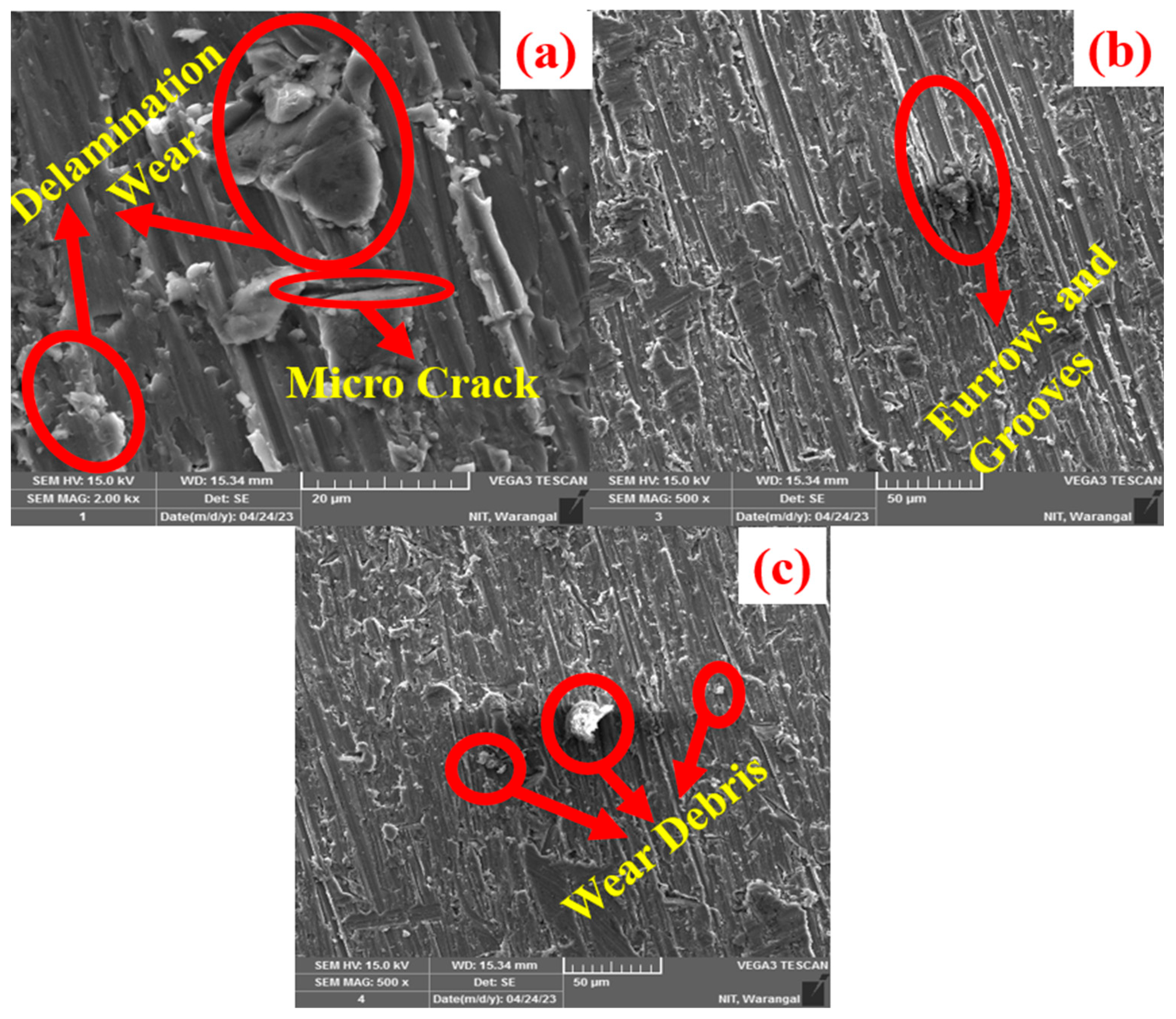
- Worn surface analysis revealed a severe delamination under dry sliding, moderate abrasion with oil, and smooth, crack-free surfaces under nanofluid lubrication due to rolling, polishing, and mending effects.
Author Contributions
Funding
Data Availability Statement
Conflicts of Interest
References
- Sakib-Uz-Zaman, C.; Khondoker, M.A.H. A Review on Extrusion Additive Manufacturing of Pure Copper. Metals 2023, 13, 859. [Google Scholar] [CrossRef]
- Kocich, R.; Opěla, P.; Marek, M. Influence of Structure Development on Performance of Copper Composites Processed via Intensive Plastic Deformation. Materials 2023, 16, 4780. [Google Scholar] [CrossRef]
- Zhai, Z.; Dong, H.; Li, D.; Wang, Z.; Sun, C.; Chen, C. Effect of TiC Particles on the Properties of Copper Matrix Composites. Inorganics 2024, 12, 120. [Google Scholar] [CrossRef]
- Kumar, N.; Bharti, A.; Dixit, M.; Nigam, A. Effect of Powder Metallurgy Process and its Parameters on the Mechanical and Electrical Properties of Copper-Based Materials: Literature Review. Powder Metall. Met. Ceram. 2020, 59, 401–410. [Google Scholar] [CrossRef]
- Yan, Y.F.; Kou, S.Q.; Yang, H.Y.; Shu, S.L.; Qiu, F.; Jiang, Q.C.; Zhang, L.C. Ceramic particles reinforced copper matrix composites manufactured by advanced powder metallurgy: Preparation, performance, and mechanisms. Int. J. Extreme Manuf. 2023, 5, 032006. [Google Scholar] [CrossRef]
- Long, X.; Chong, K.; Su, Y.; Du, L.; Zhang, G. Connecting the macroscopic and mesoscopic properties of sintered silver nanoparticles by crystal plasticity finite element method. Eng. Fract. Mech. 2023, 281, 109137. [Google Scholar] [CrossRef]
- Liu, K.; Shi, X.; Wang, D.; Feng, Y.; Jian, Y.; Li, W. A method for the dynamic characteristic analysis of a rotor-rolling bearing system influenced by elastohydrodynamic lubrication. J. Sound Vib. 2025, 608, 119075. [Google Scholar] [CrossRef]
- Bahador, A.; Umeda, J.; Hamzah, E.; Yusof, F.; Li, X.; Kondoh, K. Synergistic strengthening mechanisms of copper matrix composites with TiO2 nanoparticles. Mater. Sci. Eng. A 2020, 772, 138797. [Google Scholar] [CrossRef]
- El-Zaidia, M.M.; Zaki, M.Z.; Abomostafa, H.M.; Taha, M.A. Comprehensive studies for evaluating promising properties of Cu/graphene/fly ash nanocomposites. Sci. Rep. 2024, 14, 2236. [Google Scholar] [CrossRef]
- Samal, C.P.; Parihar, J.S.; Chaira, D. The effect of milling and sintering techniques on mechanical properties of Cu-graphite metal matrix composite prepared by powder metallurgy route. J. Alloys Compd. 2013, 569, 95–101. [Google Scholar] [CrossRef]
- Akbarpour, M.R.; Mousa Mirabad, H.; Alipour, S. Microstructural and mechanical characteristics of hybrid SiC/Cu composites with nano- and micro-sized SiC particles. Ceram. Int. 2019, 45, 3276–3283. [Google Scholar] [CrossRef]
- Manohar, G.; Pandey, K.M.; Maity, S.R. Effect of sintering mechanisms on mechanical properties of AA7075/B4C composite fabricated by powder metallurgy techniques. Ceram. Int. 2021, 47, 15147–15154. [Google Scholar] [CrossRef]
- Yang, Z.; Liu, J.; Liu, J.; Chen, X.; Yan, T.; Chen, Q. Investigation on physicochemical properties of graphene oxide/nano-hydroxyapatite composites and its biomedical applications. J. Aust. Ceram. Soc. 2021, 57, 625–633. [Google Scholar] [CrossRef]
- Wang, C.; Zhang, Z.; Jing, X.; Yang, Z.; Xu, W. Optimization of multistage femtosecond laser drilling process using machine learning coupled with molecular dynamics. Opt. Laser Technol. 2022, 156, 108442. [Google Scholar] [CrossRef]
- Ashwath, P.; Anthony Xavior, M. The effect of ball milling & reinforcement percentage on sintered samples of aluminium alloy metal matrix composites. Procedia Eng. 2014, 97, 1027–1032. [Google Scholar] [CrossRef]
- Venkatesh, V.S.S.; Deoghare, A.B. Effect of Sintering Mechanisms on the Mechanical Behaviour of SiC and Kaoline Reinforced Hybrid Aluminium Metal Matrix Composite Fabricated through Powder Metallurgy Technique. Silicon 2021, 14, 5481–5493. [Google Scholar] [CrossRef]
- Dey, D.; Bhowmik, A.; Biswas, A. Effect of SiC Content on Mechanical and Tribological Properties of Al2024-SiC Composites. Silicon 2020, 14, 1–11. [Google Scholar] [CrossRef]
- Liu, J.; Xiang, S.; Zhou, X.; Lin, S.; Dong, K.; Liu, Y.; He, D.; Fan, Y.; Liu, Y.; Xiong, B.; et al. Lubrication Performance Promotion of GTL Base Oil by BN Nanosheets via Cascade Centrifugation-Assisted Liquid-Phase Exfoliation. Lubricants 2025, 13, 281. [Google Scholar] [CrossRef]
- Poria, S.; Sahoo, P.; Sutradhar, G. Tribological Characterization of Stir-cast Aluminium-TiB2 Metal Matrix Composites. Silicon 2016, 8, 591–599. [Google Scholar] [CrossRef]
- Venkatesh, V.S.S.; Vundavilli, P.R. Mechanical Properties and Tribological Study of Bottom Pouring Stir-Cast A356 Alloy Reinforced with Graphite Solid Lubricant Extracted from Corn Stover. Lubricants 2024, 12, 341. [Google Scholar] [CrossRef]
- Kumar, A.; Patnaik, A.; Bhat, I.K. Tribology Analysis of Cobalt Particulate Filled Al 7075 Alloy for Gear Materials: A Comparative Study. Silicon 2019, 11, 1295–1311. [Google Scholar] [CrossRef]
- Yan, X.; Hu, J.; Zhang, X.; Xu, W. Obtaining superior low-temperature wear resistance in Q&P-processed medium Mn steel with a low initial hardness. Tribol. Int. 2022, 175, 107803. [Google Scholar] [CrossRef]
- Zhang, Z.; Liu, S.; Zhang, Y.; Wang, C.; Zhang, S.; Yang, Z.; Xu, W. Optimization of low-power femtosecond laser trepan drilling by machine learning and a high-throughput multi-objective genetic algorithm. Opt. Laser Technol. 2022, 148, 107688. [Google Scholar] [CrossRef]
- Zou, Y.; Tang, S.; Guo, S.; Song, X. Tool wear analysis in turning inconel-657 using various tool materials. Mater. Manuf. Process. 2024, 39, 1363–1368. [Google Scholar] [CrossRef]
- Zheng, K.; Min, Z.; Zhang, F.; Ren, Z.; Lin, Y. High Heat-fade Resistance, Metal-free Resin-based Brake Pads: A Step towards Replacing Copper by Using Andalusite. Chin. J. Mech. Eng. 2025, 38, 153. [Google Scholar] [CrossRef]
- Ramadhan, A.I.; Diniardi, E.; Basri, H.; Almanda, D.; Azmi, W.H. Thermal-Properties Correlation of Al2O3-TiO2-SiO2 Nanofluids in Water-Ethylene Glycol Mixture for Application Radiator Cooling System. Semarak Int. J. Mech. Precis. Eng. 2025, 1, 51–61. [Google Scholar] [CrossRef]
- Zeng, L.; Deng, X.; Li, F.; Dong, C.; Wang, S.; Yang, H.; Tang, C.; Li, Y. Study on dynamic wear evolution of modified gear rack considering the real-time variation of contact characteristics. Wear 2025, 571, 205845. [Google Scholar] [CrossRef]
- Ezekwem, C.; Dare, A. Thermal and electrical conductivity of silicon carbide nanofluids. Energy Sources Part A Recover. Util. Environ. Eff. 2020, 46, 11320–11338. [Google Scholar] [CrossRef]
- Choudhary, R.; Khurana, D.; Kumar, A.; Subudhi, S. Stability analysis of Al2O3/water nanofluids. J. Exp. Nanosci. 2017, 12, 140–151. [Google Scholar] [CrossRef]
- Wang, S.; Zhang, Z.; Sun, C.; Gong, L.; Zhang, X.; Gao, S.; Zhang, C.; Han, Q.; Yan, S. Multifunctional Tribovoltaic Coating for Self-Powered In Situ Sensing with Exceptional Tribological Robustness and Charge Transport. Adv. Funct. Mater. 2025, 14190. [Google Scholar] [CrossRef]
- Xiao, C.; Peng, J.; Jiao, Y.; Shen, Q.; Zhao, Y.; Zhao, F.; Li, H.; Song, Q. Strong and Tough Multilayer Heterogeneous Pyrocarbon Based Composites. Adv. Funct. Mater. 2024, 34, 2409881. [Google Scholar] [CrossRef]
- Manohar, G.; Pandey, K.M.; Maity, S.R. Effect of Variations in Microwave Processing Temperatures on Microstructural and Mechanical Properties of AA7075/SiC/Graphite Hybrid Composite Fabricated by Powder Metallurgy Techniques. Silicon 2022, 14, 7831–7847. [Google Scholar] [CrossRef]
- Yuan, F.; Han, Y.; Xiao, K.; Xiang, G.; Wang, Z.; Li, L.; Wang, C.; Chen, X. Spatial modification optimization methods for harmonic drives using a 3D non-uniform line-contact elastohydrodynamic lubrication model. Tribol. Int. 2026, 214, 111288. [Google Scholar] [CrossRef]
- Guo, J.; Han, Y.; Xiao, K. Evaluation of linear and nonlinear methods for predicting the dynamic behavior of plain and textured water-lubricated bearings. Phys. Fluids 2025, 37, 083621. [Google Scholar] [CrossRef]
- Zhou, S.; Lin, Z.; Tao, X.; Li, W.; Chen, B.; Li, F.; Li, Y.; Du, Y.; Jiang, Y.; Deng, Y. Sintering of Chang’e-5 high-fidelity lunar soil simulant for providing high-strength materials for lunar base construction. Sci. China Technol. Sci. 2025, 68, 1820602. [Google Scholar] [CrossRef]
- Manikandan, R.; Arjunan, T.V.; Akhil, A.R. Studies on micro structural characteristics, mechanical and tribological behaviours of boron carbide and cow dung ash reinforced aluminium (Al 7075) hybrid metal matrix composite. Compos. Part B Eng. 2020, 183, 107668. [Google Scholar] [CrossRef]
- Bhowmik, A.; Dey, D.; Biswas, A. Comparative Study of Microstructure, Physical and Mechanical Characterization of SiC/TiB2 Reinforced Aluminium Matrix Composite. Silicon 2020, 13, 2003–2010. [Google Scholar] [CrossRef]
- Wang, H.; Zhou, S.; Zhang, X.; Zhou, Q.; Jiang, Y.; Deng, Y.; Liu, J.; Lin, Z.; Li, F.; Zhang, C.; et al. Particle Morphology Controls the Bulk Mechanical Behavior of Far-Side Lunar Regolith from Chang ’ e-6 Samples and Deep Learning. Research 2026, 9, 1064. [Google Scholar] [CrossRef]
- Prasad Reddy, A.; Vamsi Krishna, P.; Rao, R.N. Tribological Behaviour of Al6061–2SiC-xGr Hybrid Metal Matrix Nanocomposites Fabricated through Ultrasonically Assisted Stir Casting Technique. Silicon 2019, 11, 2853–2871. [Google Scholar] [CrossRef]
- Hu, Y.; Chen, J.; Zhen, Y.; Han, Y.Z.; Yu, C.; Xiong, K.; Zhang, S. Study on the wettability, intermetallic compound growth, voids formation and mechanical properties of Cu/Sn joints with changes in substrate roughness for electronic packaging. J. Mater. Sci. Mater. Electron. 2025, 36, 851. [Google Scholar] [CrossRef]
- Xu, H.; Liu, M.; Hu, J.; Wang, Y. Enhanced electromagnetic wave absorption through in-situ mineralization constructed robust Fe3O4/PDA/Ti3C2Tx MXene composites with brick-and-mortar microstructure. Ceram. Int. 2026. [Google Scholar] [CrossRef]
- Wu, Y.Y.; Tsui, W.C.; Liu, T.C. Experimental analysis of tribological properties of lubricating oils with nanoparticle additives. Wear 2007, 262, 819–825. [Google Scholar] [CrossRef]
- Irfan Ul Haq, M.; Raina, A.; Anand, A.; Sharma, S.M.; Kumar, R. Elucidating the Effect of MoS2 on the Mechanical and Tribological Behavior of AA7075/Si3N4 Composite. J. Mater. Eng. Perform. 2020, 29, 7445–7455. [Google Scholar] [CrossRef]
- Siva, V.S.B.; Ganguly, R.I.; Srinivasa Rao, G.; Sahoo, K.L. Wear behaviour of novel Al based composite reinforced with ceramic composite (Al2O3-SiC-C) developed from colliery shale material. Tribol. Mater. Surfaces Interfaces 2014, 8, 117–124. [Google Scholar] [CrossRef]
- Venkatesh, V.S.S.; Deoghare, A.B. Modelling and Optimisation of Wear Parameters for Spark Plasma Sintered Al—SiC—Kaoline Hybrid Composite. Adv. Mater. Process. Technol. 2021, 8, 1286–1304. [Google Scholar] [CrossRef]
- Mukhopadhyay, A.; Duari, S.; Barman, T.K.; Sahoo, P. Tribological Performance Optimization of Electroless Ni–B Coating under Lubricated Condition using Hybrid Grey Fuzzy Logic. J. Inst. Eng. Ser. D 2016, 97, 215–231. [Google Scholar] [CrossRef]



| Material | Composition (wt%)/Purity |
|---|---|
| Copper matrix | 99.9% |
| Tungsten carbide | WC ≥ 99% |
| Graphite | C ≥ 99% |
| Composite material | Cu–15%WC–9%Gr |
| Nanofluid lubricant | Soluble oil + 2 SiC |
Disclaimer/Publisher’s Note: The statements, opinions and data contained in all publications are solely those of the individual author(s) and contributor(s) and not of MDPI and/or the editor(s). MDPI and/or the editor(s) disclaim responsibility for any injury to people or property resulting from any ideas, methods, instructions or products referred to in the content. |
© 2026 by the authors. Licensee MDPI, Basel, Switzerland. This article is an open access article distributed under the terms and conditions of the Creative Commons Attribution (CC BY) license.
Share and Cite
Venkatesh, V.S.S.; Surekha, B.; Vundavilli, P.R.; Mahapatra, M.M. Mechanical and Wear Behaviour of Microwave Sintered Copper Composites Reinforced with Tungsten Carbide and Graphite Under Different Lubrication Conditions. Lubricants 2026, 14, 54. https://doi.org/10.3390/lubricants14020054
Venkatesh VSS, Surekha B, Vundavilli PR, Mahapatra MM. Mechanical and Wear Behaviour of Microwave Sintered Copper Composites Reinforced with Tungsten Carbide and Graphite Under Different Lubrication Conditions. Lubricants. 2026; 14(2):54. https://doi.org/10.3390/lubricants14020054
Chicago/Turabian StyleVenkatesh, V. S. S., B. Surekha, Pandu Ranga Vundavilli, and Manas Mohan Mahapatra. 2026. "Mechanical and Wear Behaviour of Microwave Sintered Copper Composites Reinforced with Tungsten Carbide and Graphite Under Different Lubrication Conditions" Lubricants 14, no. 2: 54. https://doi.org/10.3390/lubricants14020054
APA StyleVenkatesh, V. S. S., Surekha, B., Vundavilli, P. R., & Mahapatra, M. M. (2026). Mechanical and Wear Behaviour of Microwave Sintered Copper Composites Reinforced with Tungsten Carbide and Graphite Under Different Lubrication Conditions. Lubricants, 14(2), 54. https://doi.org/10.3390/lubricants14020054