Article

Thermal Characteristics Analysis and Experimental Study of Magnetic Fluid in Sealing Gap

1
Key Laboratory of Fluid and Power Machinery, Ministry of Education, Xihua University, Chengdu 610039, China
2
College of Engineering, Qinghai Institute of Technology, Xining 810016, China
3
China Yangtze Power Co., Ltd., Yichang 443000, China
4
South-to-North Water Diversion East Route Jiangsu Water Source Co., Ltd., Nanjing 210029, China
*
Author to whom correspondence should be addressed.
Lubricants 2025, 13(1), 33; https://doi.org/10.3390/lubricants13010033

Submission received: 11 December 2024 / Revised: 9 January 2025 / Accepted: 10 January 2025 / Published: 13 January 2025
(This article belongs to the Special Issue Recent Advances in Sealing Technologies)

Abstract

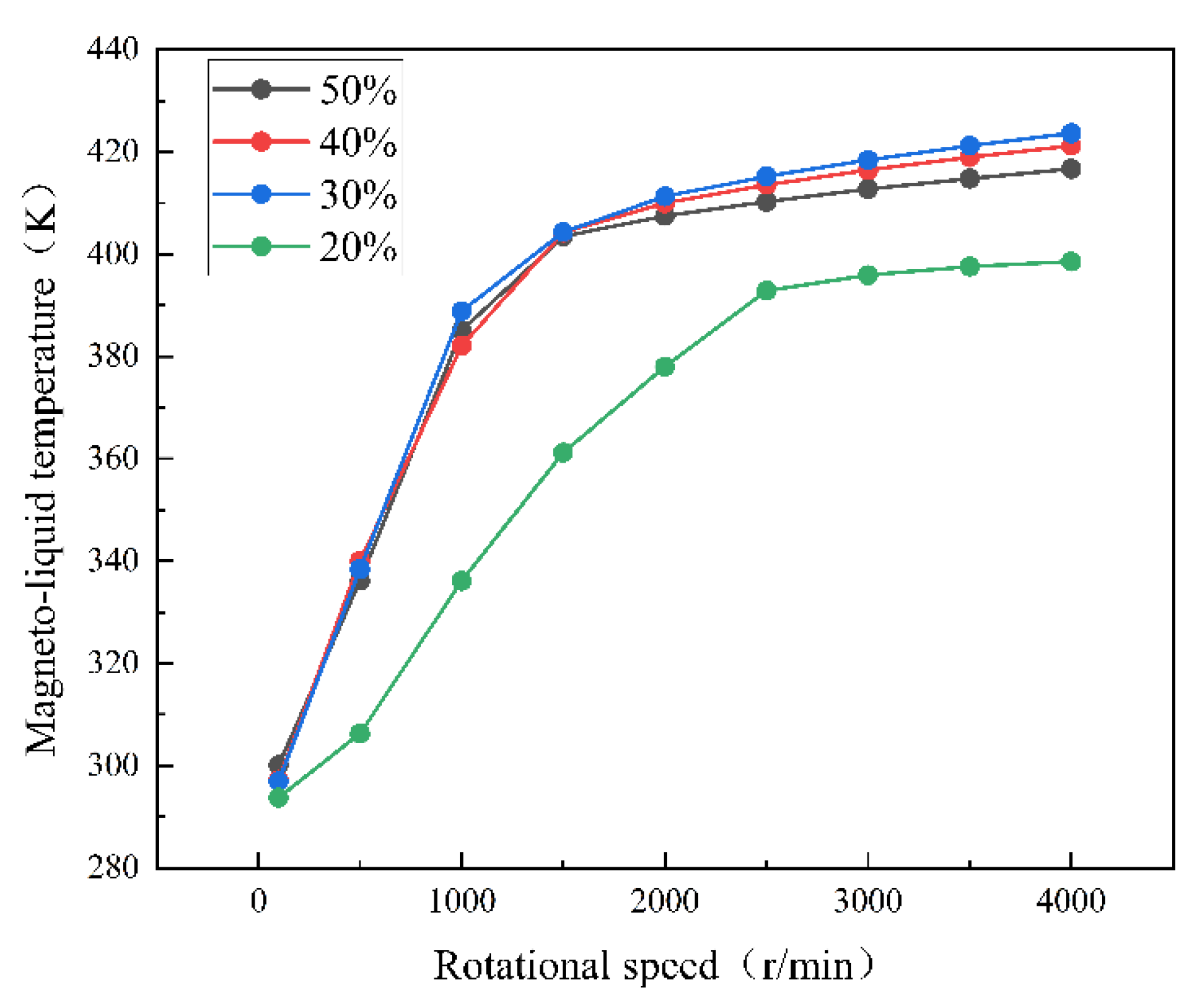
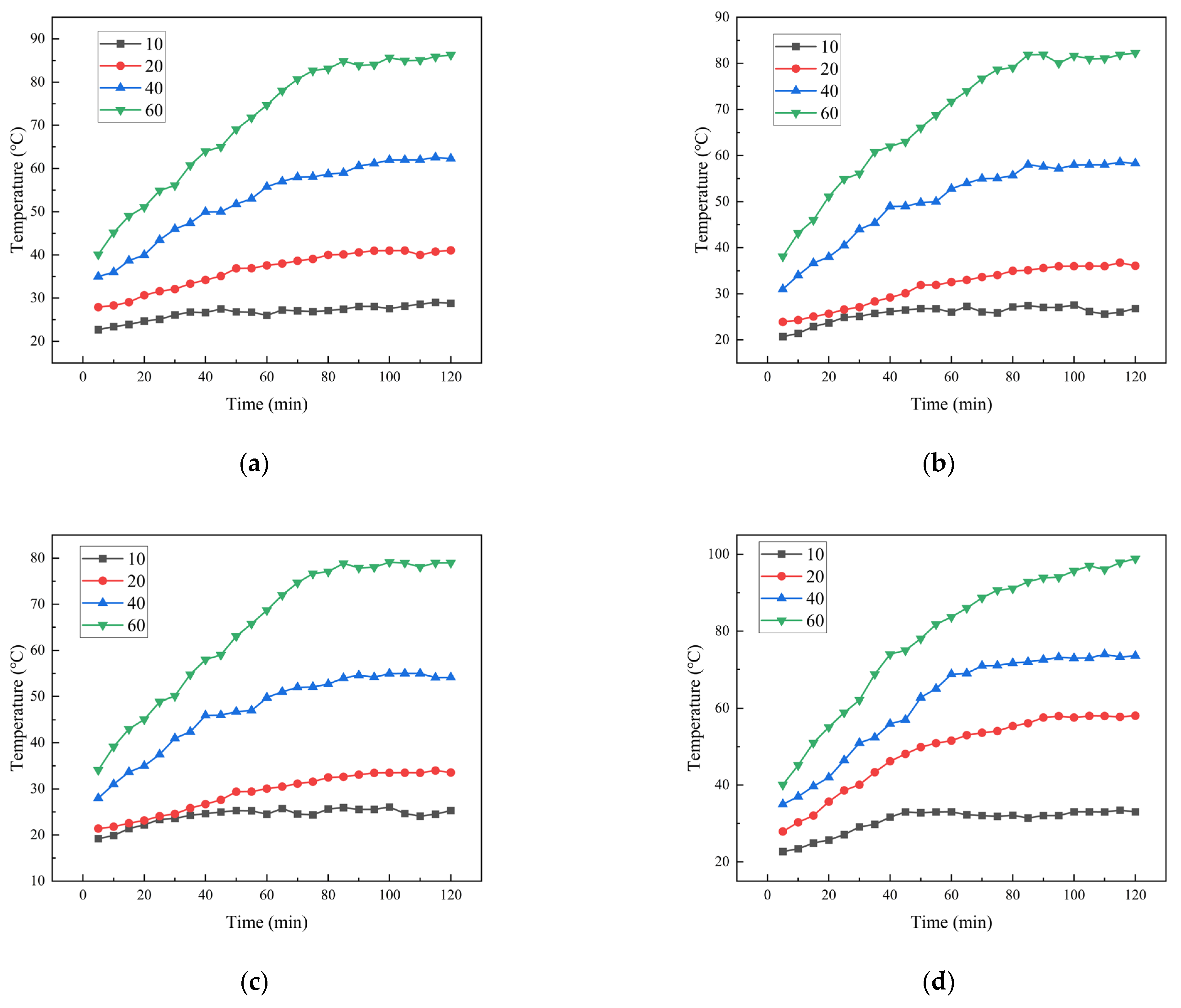
The widespread application of magnetic fluid seals in mechanical devices highlights the significant impact of temperature on the stability of these sealing systems. This paper investigates the magnetic field characteristics and thermal properties of magnetic fluid in sealing devices through both numerical simulations and experimental methods. The effects of rotational speed, magnetic fluid solid content, and heating power on the magnetic fluid temperature of the magnetic sealing device were analyzed. The numerical simulation findings indicate that the viscosity the of magnetic fluid significantly contributes to enhanced energy dissipation, while the temperature of the magnetic fluid rises with increasing rotational speed. The initial-phase transition point of the magnetic fluid and its correlation with phase transition volume relative to shaft rotational speed was determined. The experimental results show that the magnetic fluid temperature rises continuously and the time to reach stability increases with the increase in power, and the same is true for the magnetic fluid with a different solid content. Under the same power, the temperature variation is not large, and the magneto-liquid variation is consistent with that in the numerical simulation. This research provides theoretical insights for designing magnetic fluid sealing devices.
Keywords: magnetic fluid; phase transformation; magneto-liquid temperature; solid content; viscosity–temperature curve of magnetic fluid magnetic fluid; phase transformation; magneto-liquid temperature; solid content; viscosity–temperature curve of magnetic fluid