Article

On the Numerical Modeling of Friction Hysteresis of Conformal Rough Contacts


1
Department of Mechanical Engineering and Flanders Make@KU Leuven M&A, KU Leuven, Celestijnenlaan 300, 3000 Leuven, Belgium
2
Soete Laboratory, Department of Electromechanical, Systems & Metal Engineering, Faculty of Engineering and Architecture, Ghent University, Technologiepark 903, 9052 Zwijnaarde, Belgium
3
Flanders Make @ UGent—Core Lab MIRO, Ghent University, Technologiepark 903, 9052 Zwijnaarde, Belgium
*
Author to whom correspondence should be addressed.
Lubricants 2023, 11(8), 326; https://doi.org/10.3390/lubricants11080326

Submission received: 30 May 2023 / Revised: 20 July 2023 / Accepted: 27 July 2023 / Published: 1 August 2023

Abstract

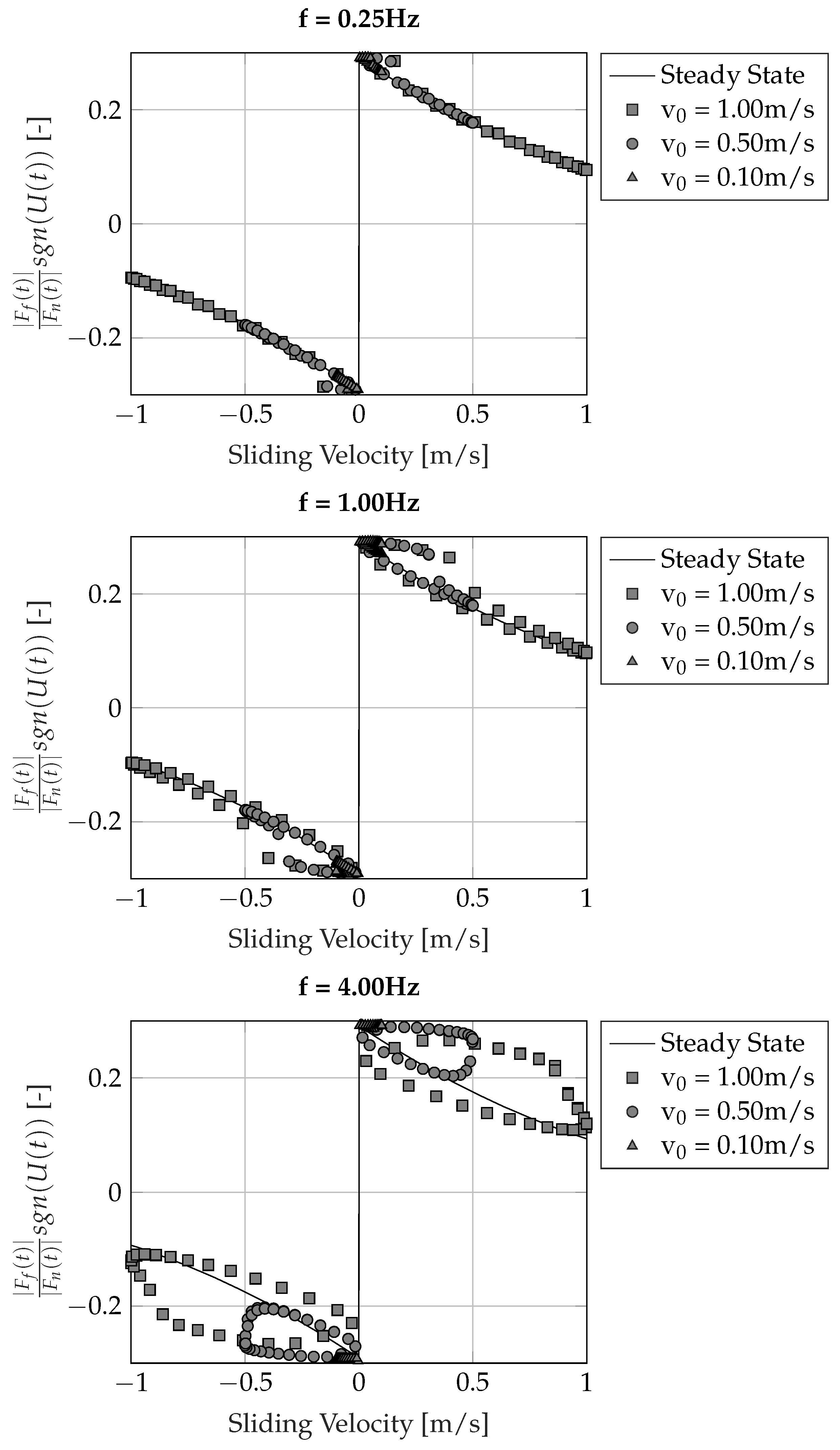
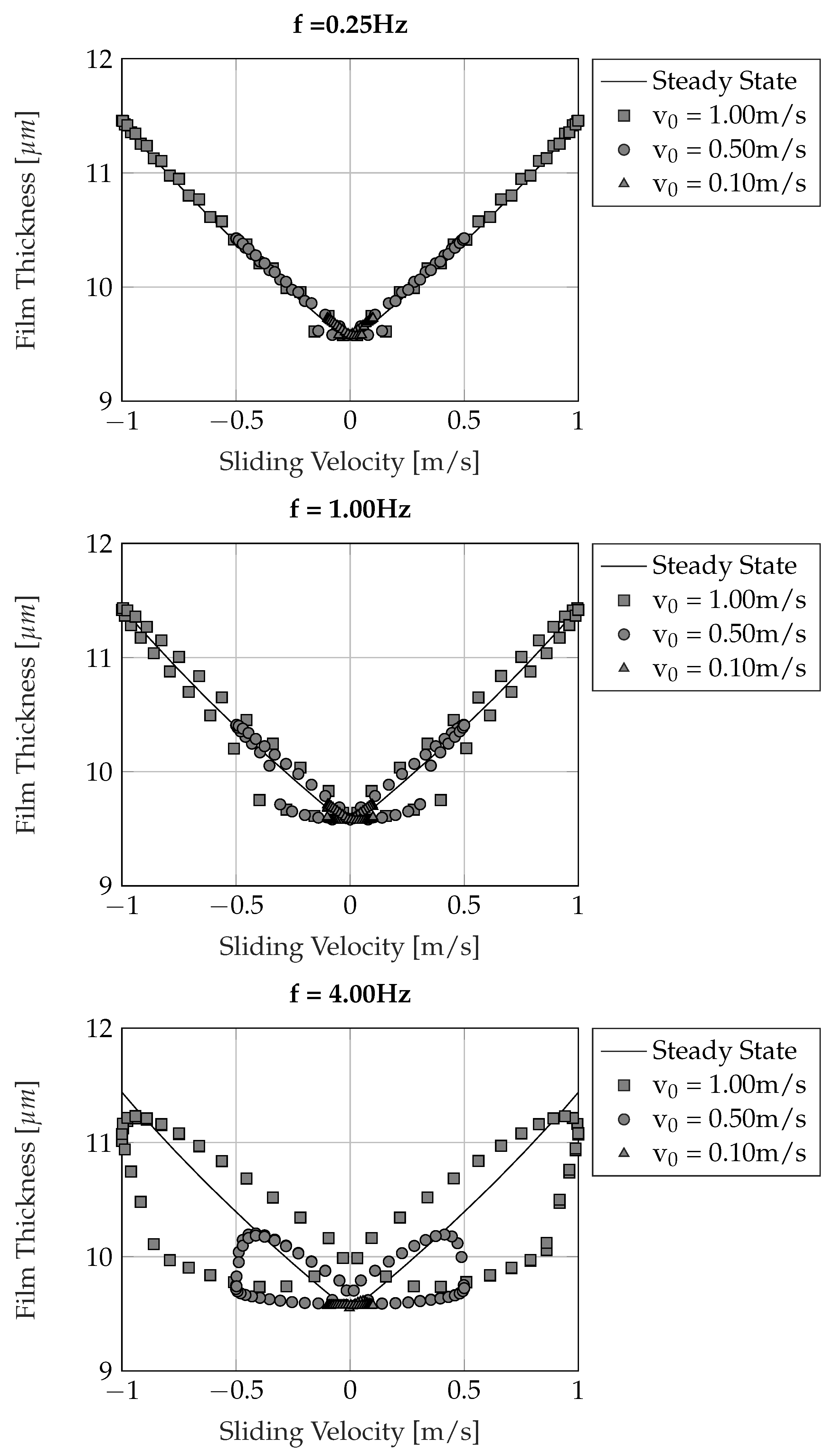
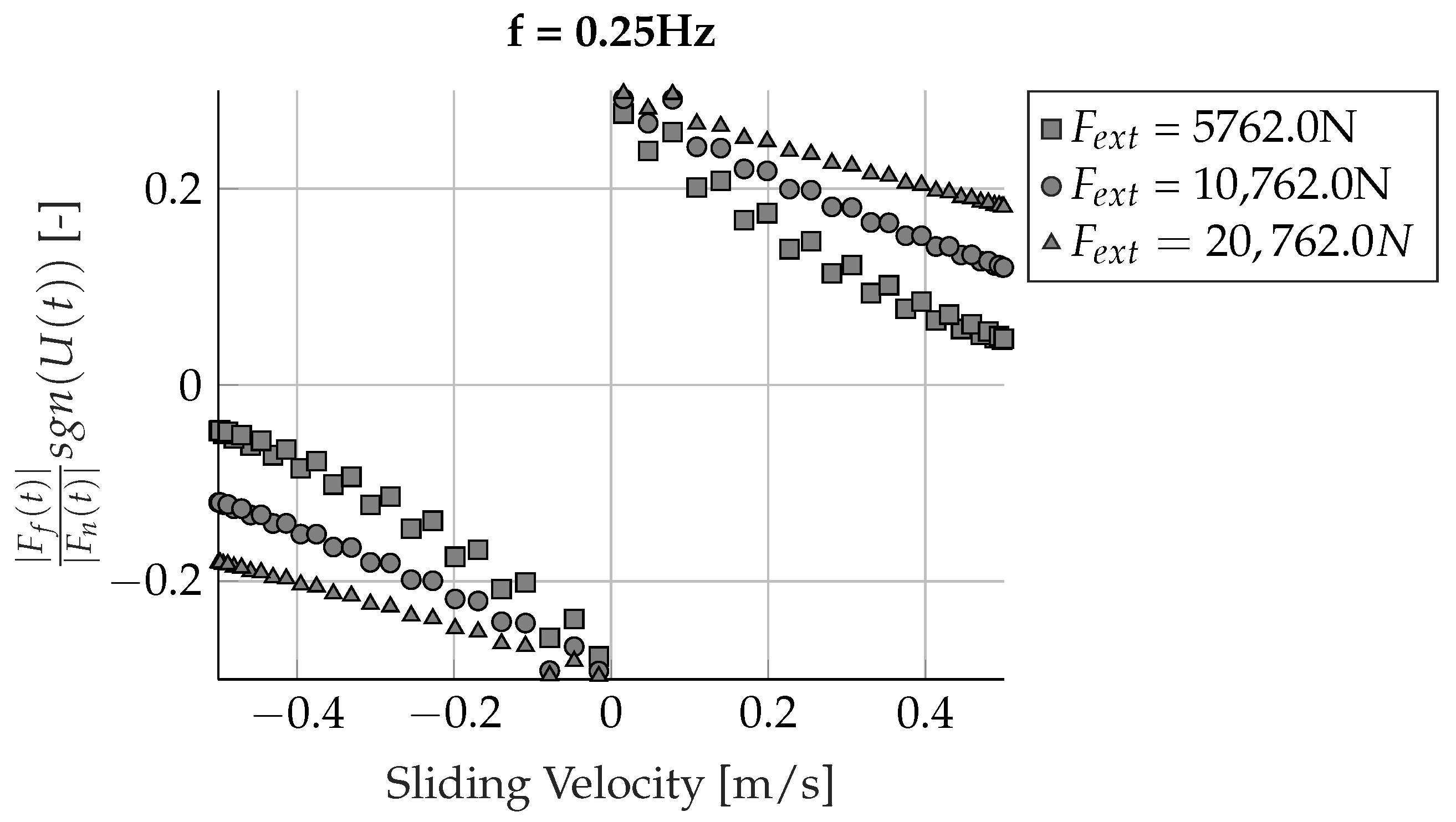
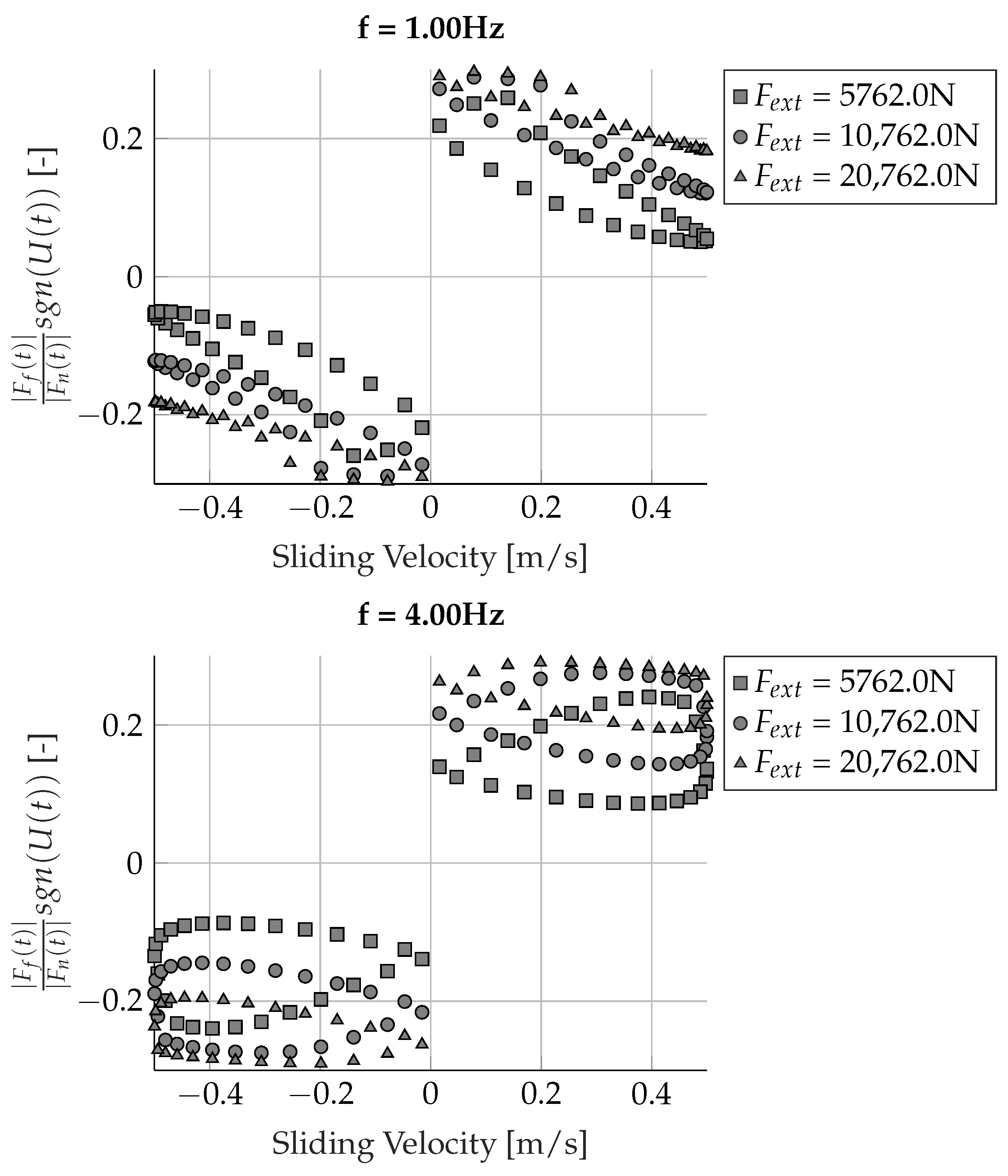
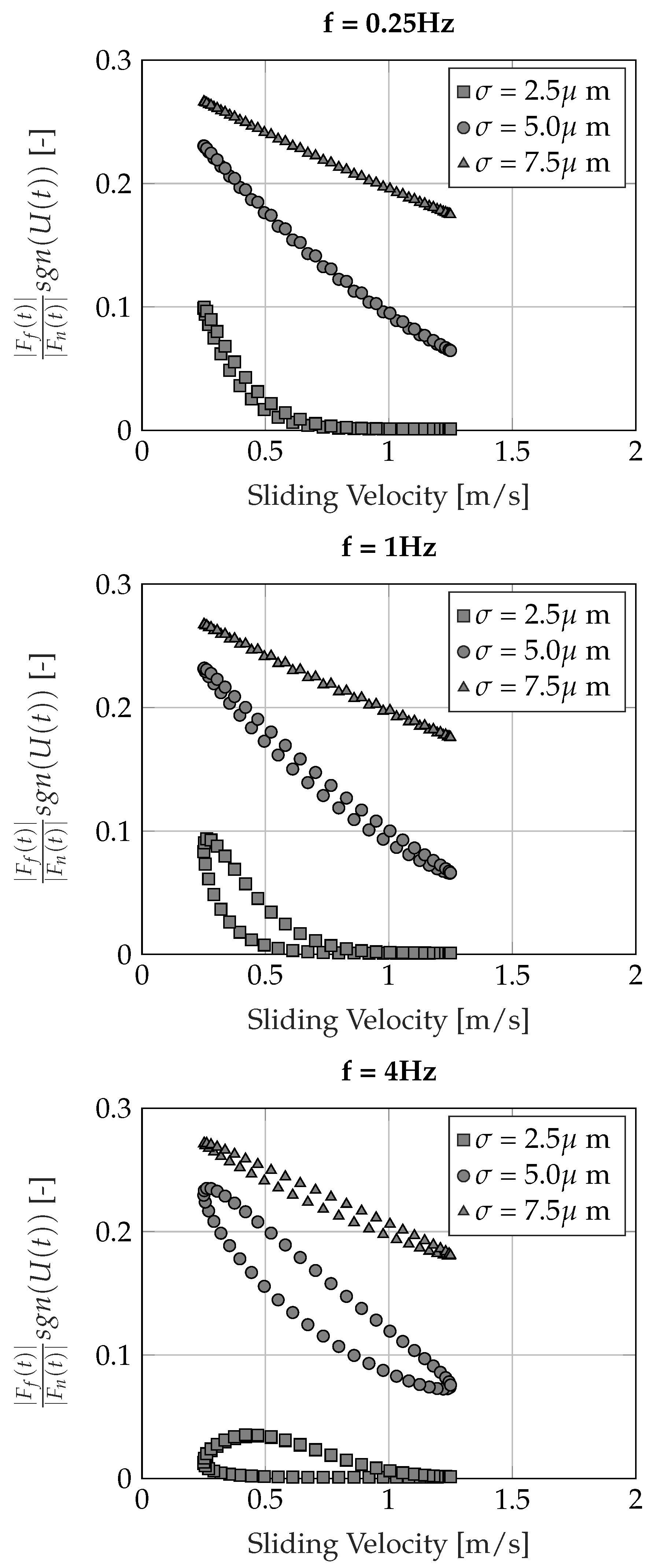
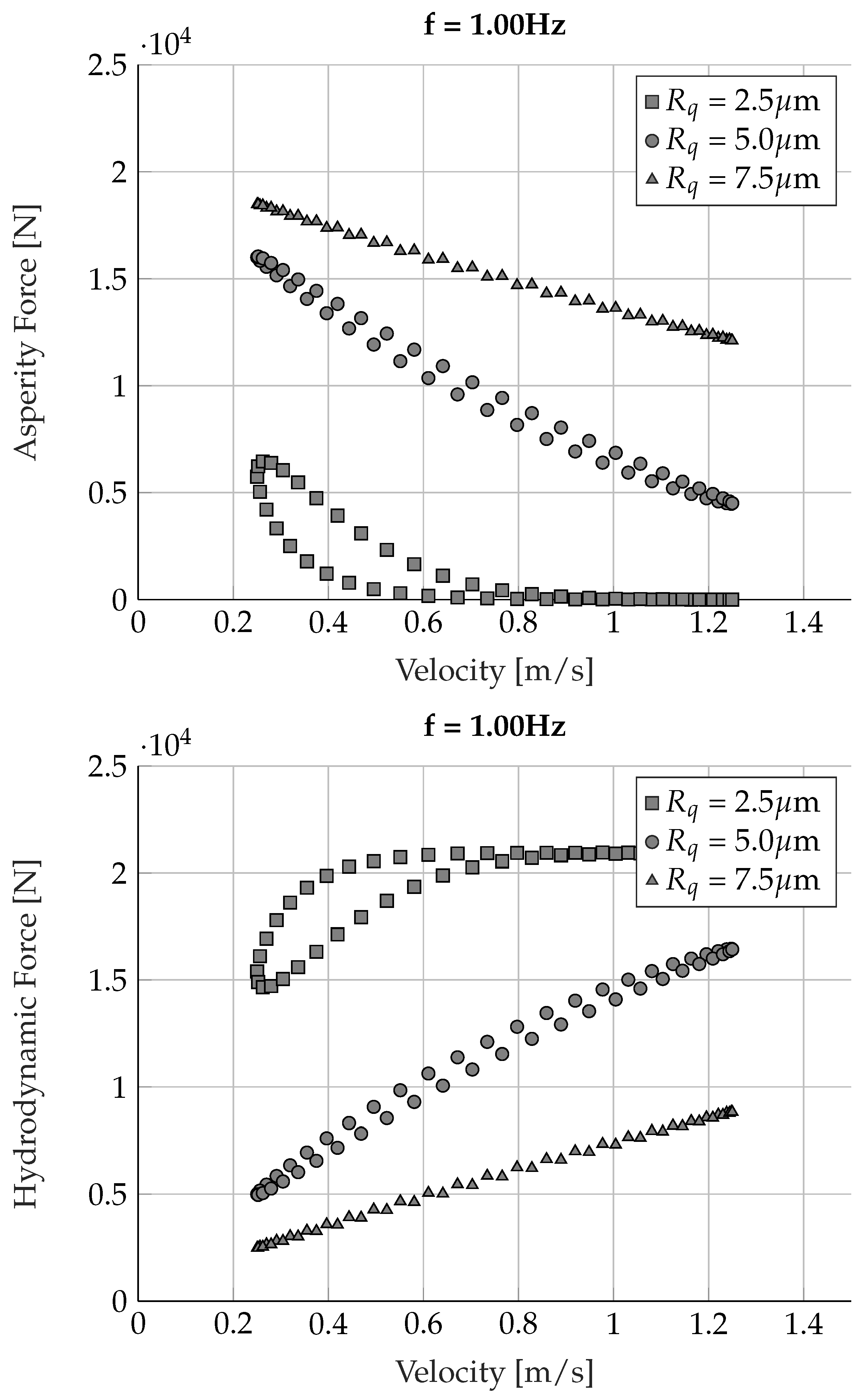
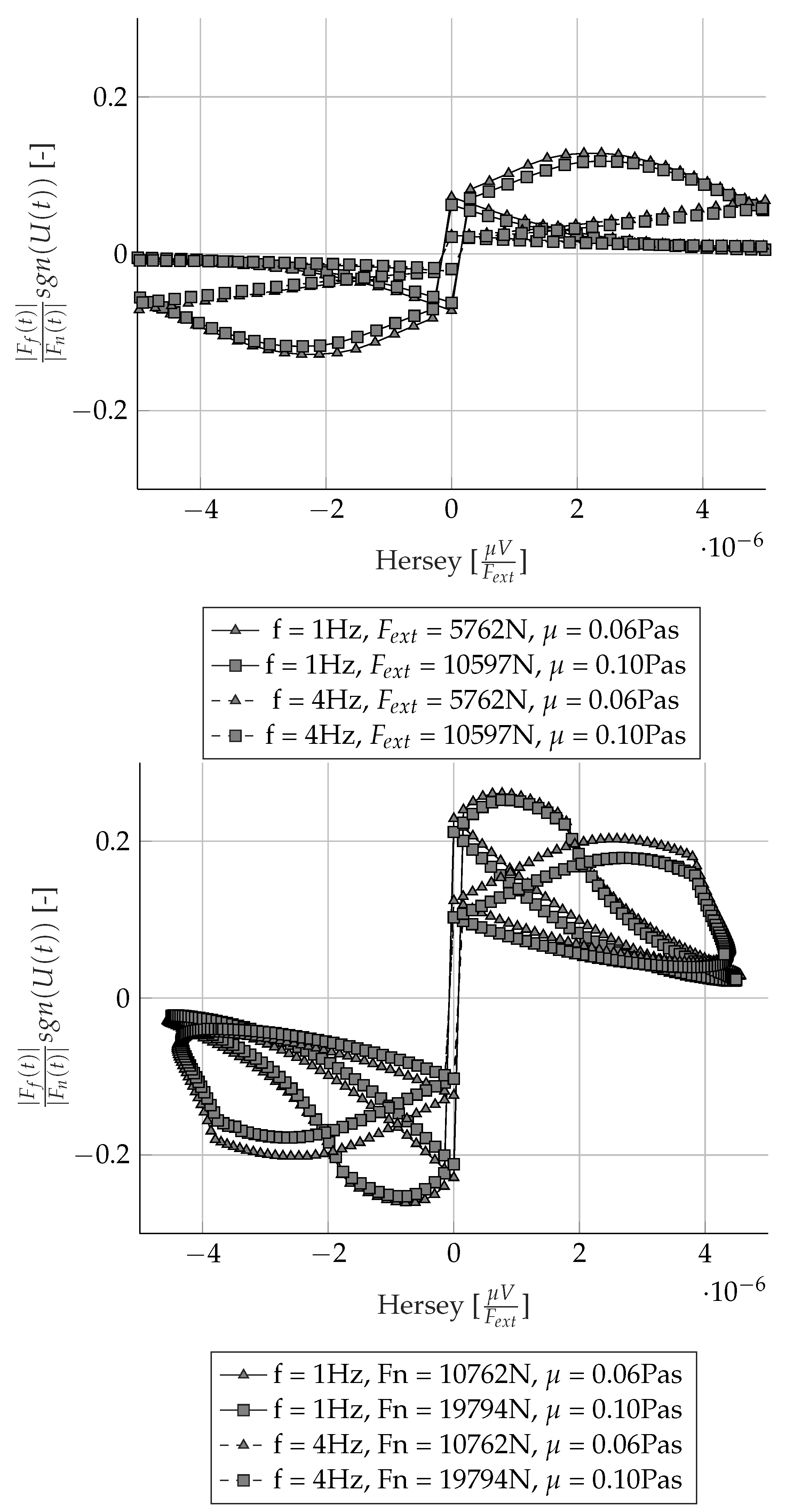
In this work, a numerical model simulating friction hysteresis for lubricated rough and textured surfaces in contact is presented. Friction hysteresis occurs in sliding contacts that are subjected to a non-constant (e.g., sinusoidal) motion. It refers to the phenomenon where the observed friction force during acceleration differs from that during deceleration. Besides the dynamics of the sliding system, a classic mixed friction model is adopted, in which the transient Reynolds equation for the description of the thin lubricant film is combined with a statistical Greenwood–Williamson model for the description of rough surface asperity contacts. The model enables the prediction of the friction hysteresis for predefined contact descriptions (i.e., surface profile and roughness, lubricant, etc.) and allows the study of the physics and parametric influences of dynamically sliding contacts. In this paper, it is shown that (i) friction hysteresis is captured by classic transient models for mixed lubrication; (ii) system parameters, such as roughness, applied load, viscosity and velocity, including the offset, amplitude and motion reversal, influence the shape and area of friction hysteresis; and (iii) the selection of the aforementioned parameters may minimize friction hysteresis.
Keywords: lubrication; modeling; friction hysteresis lubrication; modeling; friction hysteresis