Article

Different Behaviors of Friction in Open and Closed Forging Test Utilizing Palm Oil-Based Lubricants

by
Aiman Yahaya
*,
Syahrullail Samion
*,
Ummikalsom Abidin
and
Mohd Kameil Abdul Hamid
Faculty of Mechanical Engineering, Universiti Teknologi Malaysia, Skudai 81310, Johor, Malaysia
*
Authors to whom correspondence should be addressed.
Lubricants 2023, 11(3), 114; https://doi.org/10.3390/lubricants11030114

Submission received: 8 February 2023 / Revised: 25 February 2023 / Accepted: 27 February 2023 / Published: 6 March 2023
(This article belongs to the Special Issue Advances in Boundary Lubrication)

Abstract

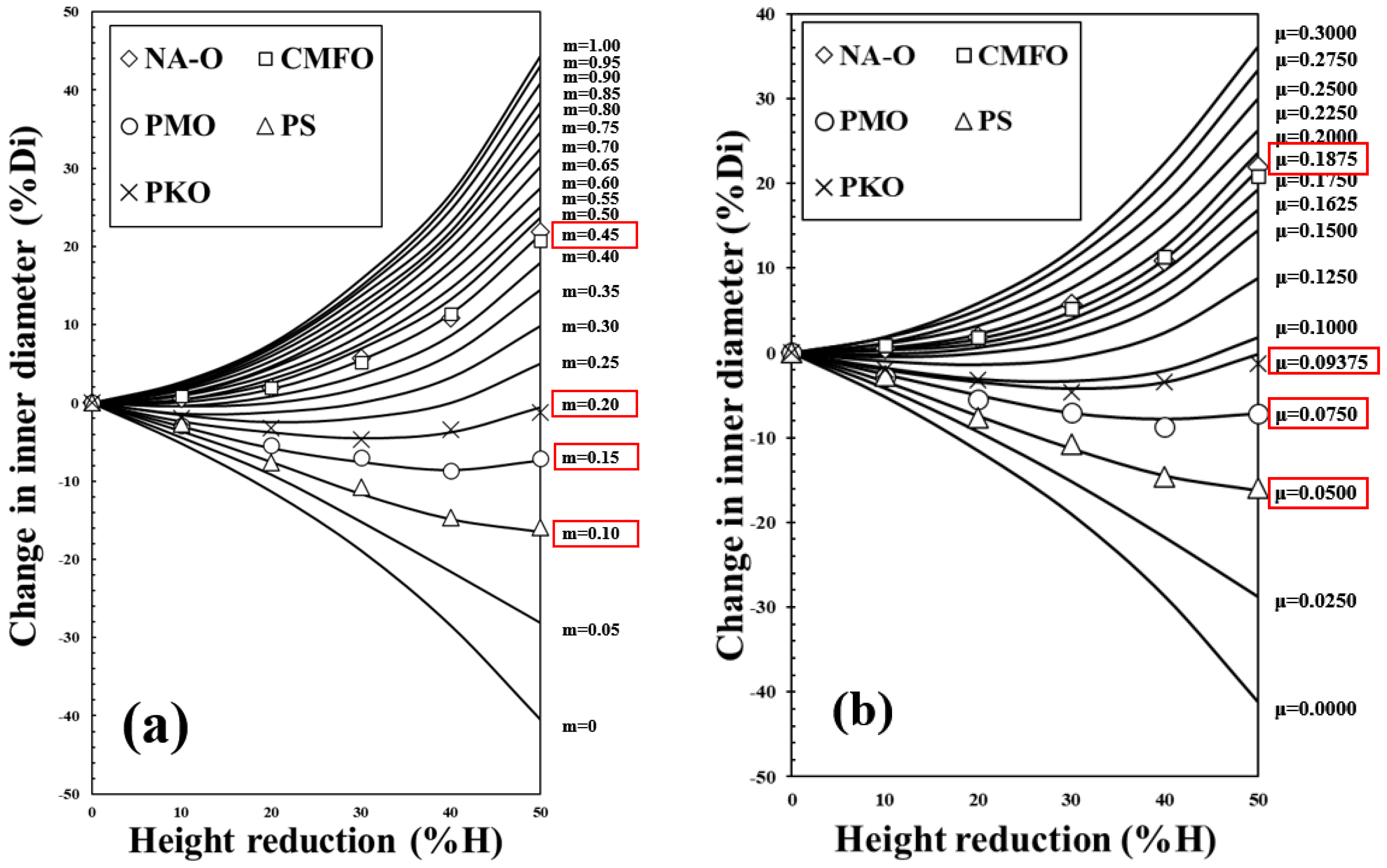
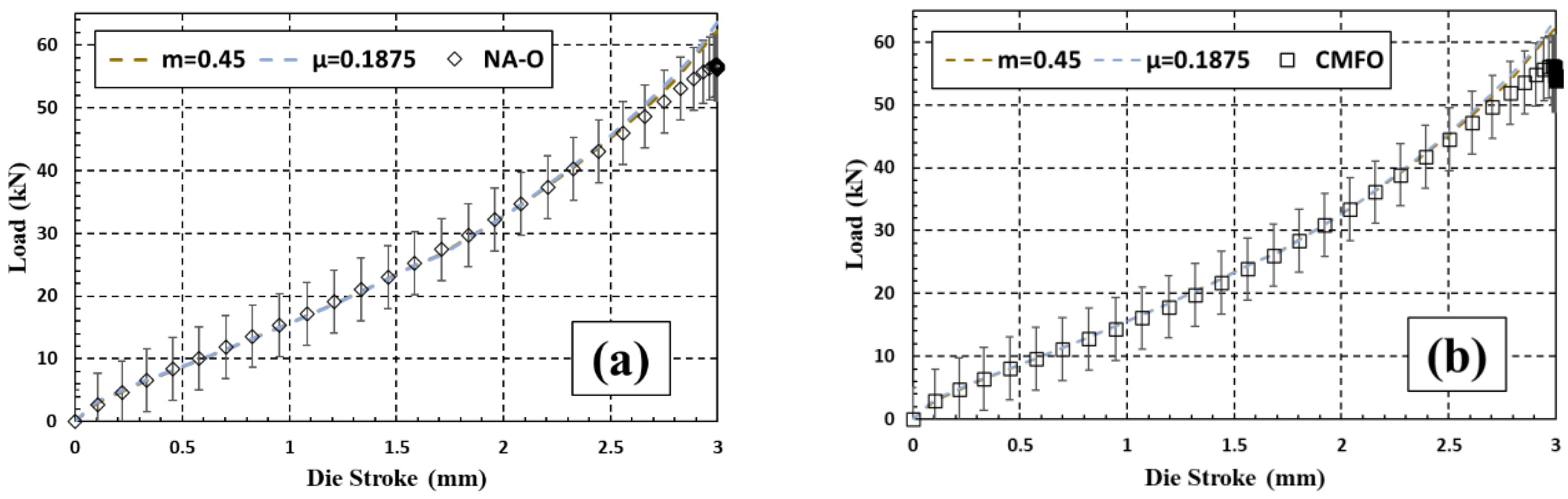
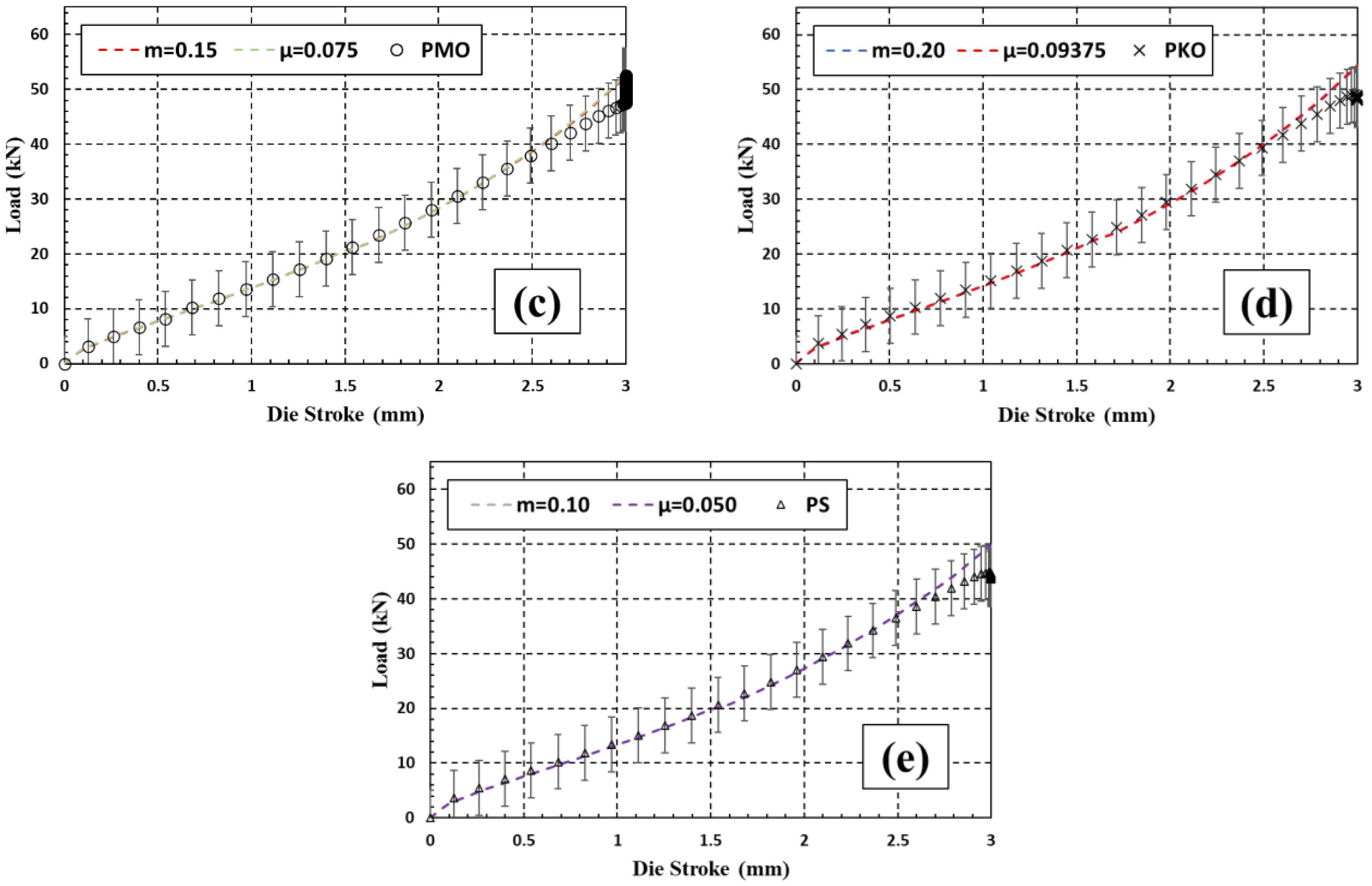
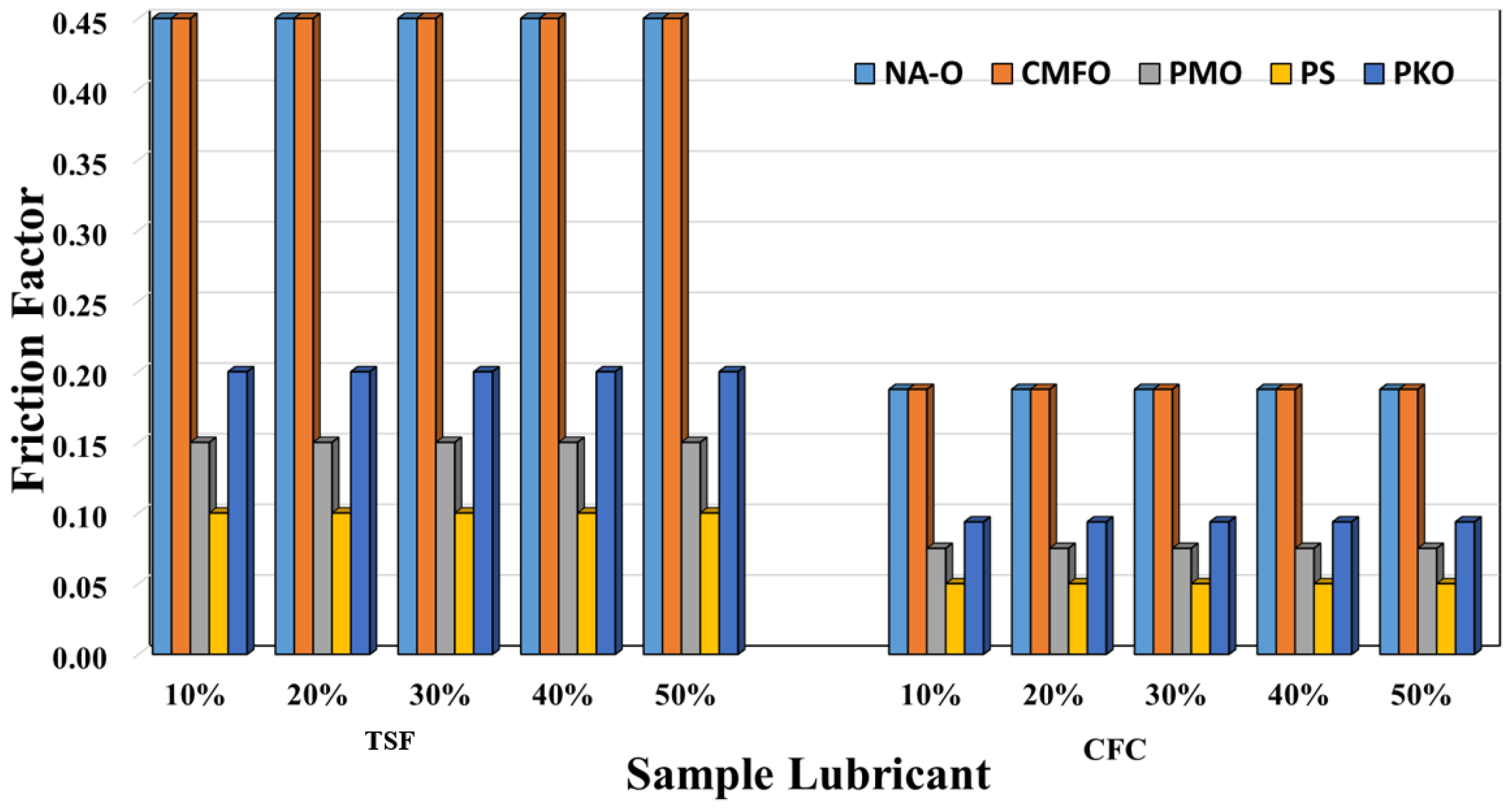
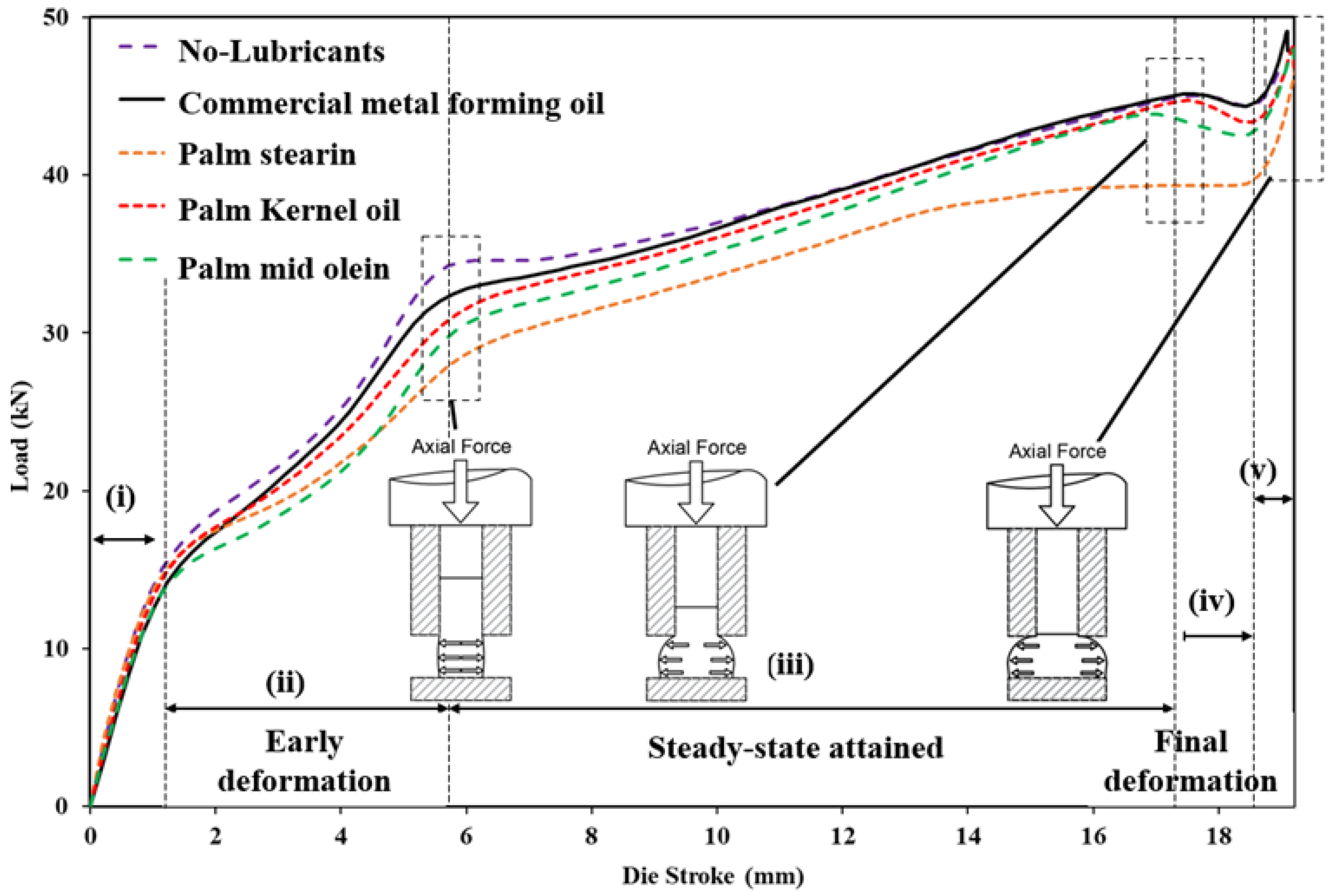
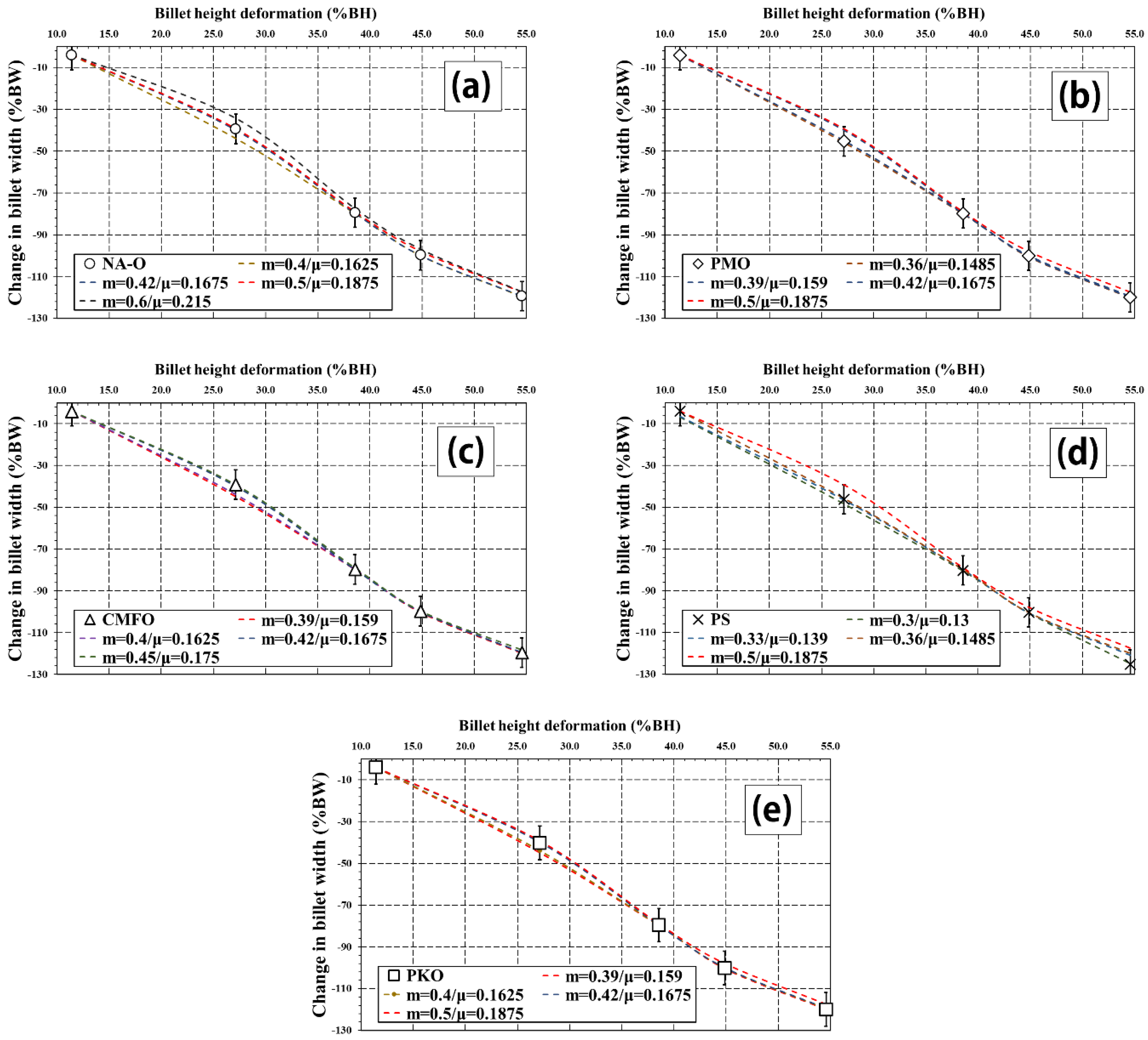
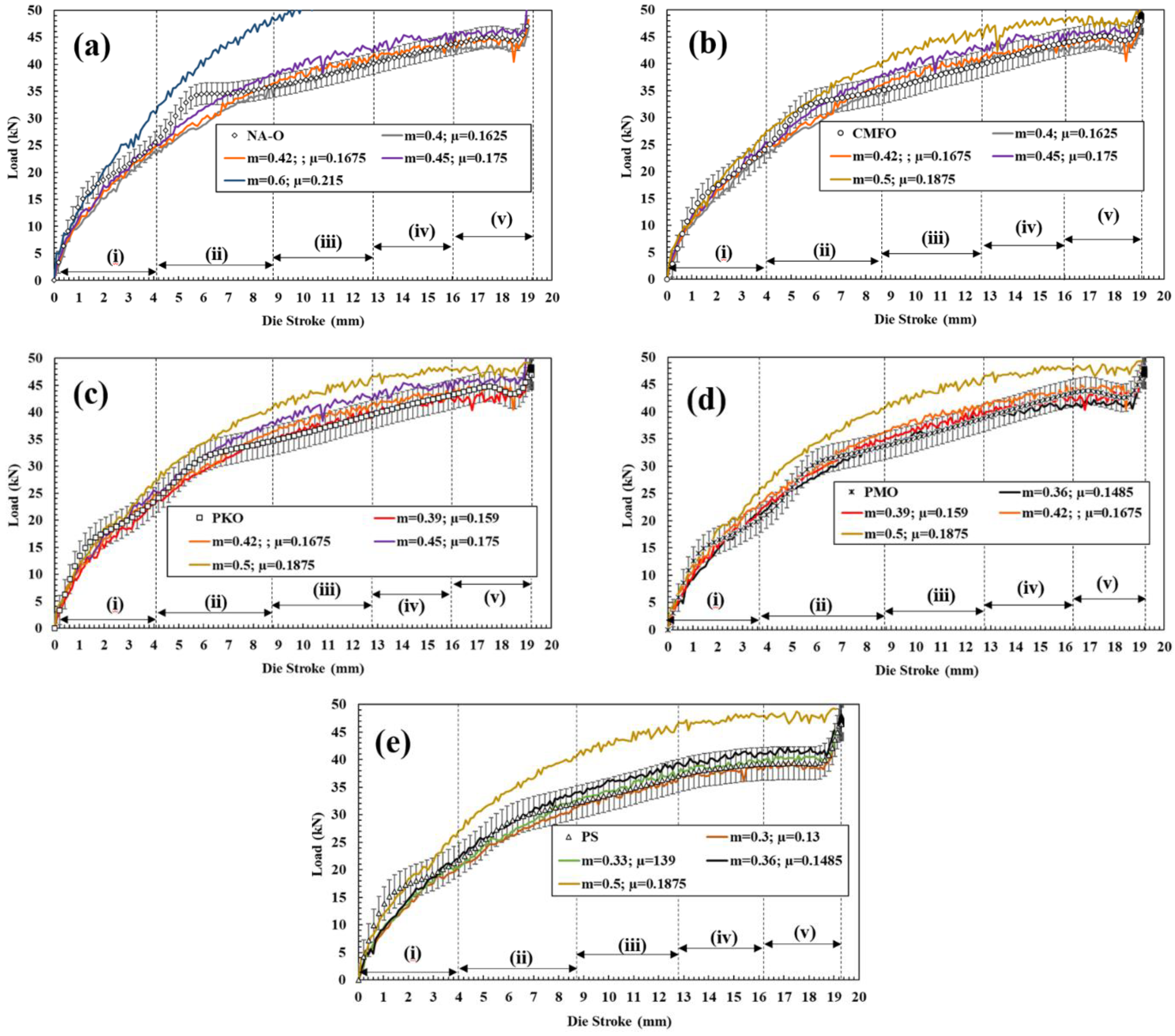
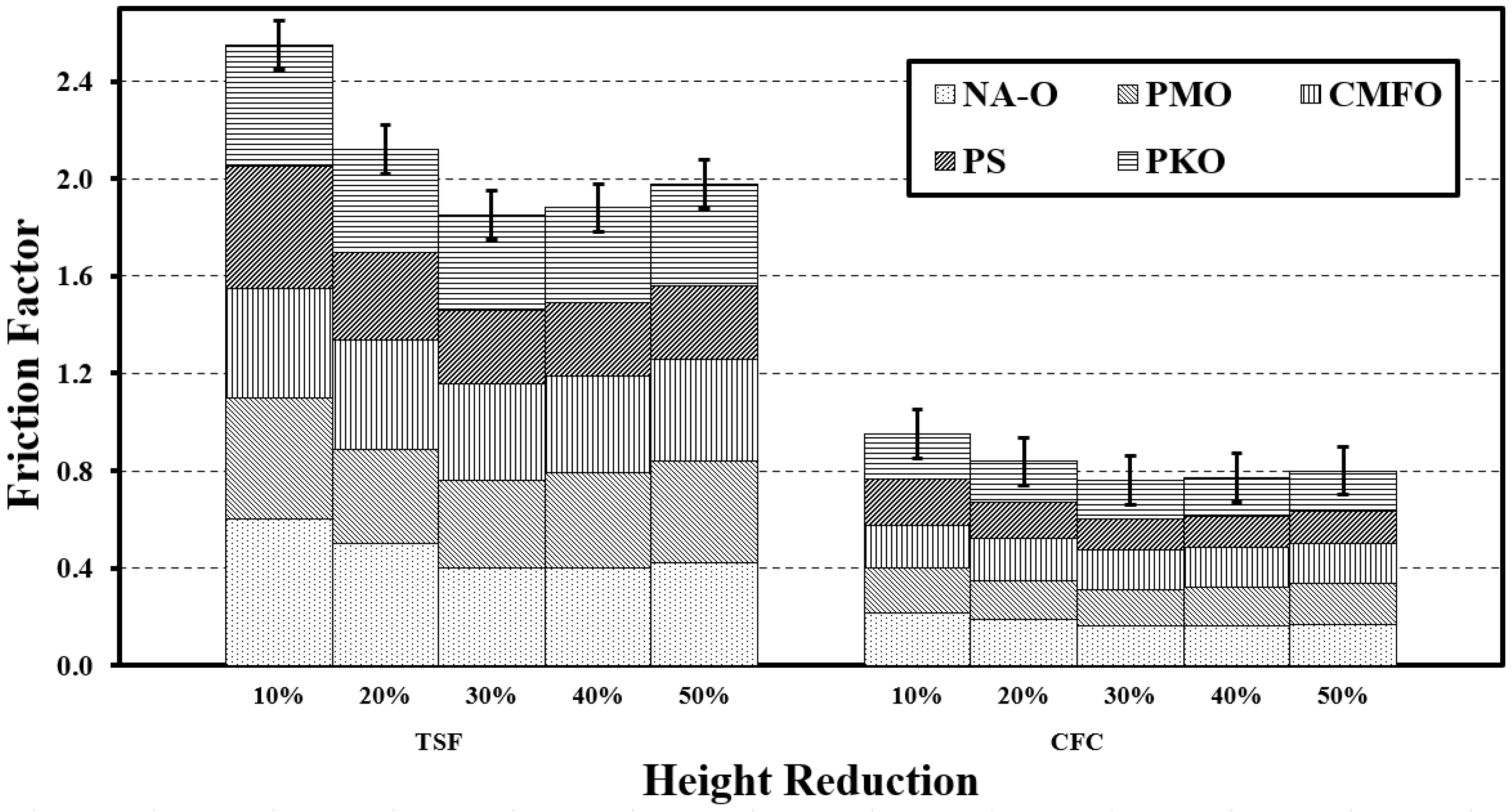
Increasing demand for manufactured goods in industries such as automobiles, electronics, construction, and aerospace has motivated researchers to develop sustainable manufacturing processes. Most metal-forming lubricants are not eco-friendly; they may cause substantial chemical emissions and constitute a community threat. Bio-oil lubricants are seen as possible replacements for mineral oil-based lubricants. Computational modelling of the forging process uses the finite element method to accelerate and improve design. This research intends to act as a case study and demonstrate how friction behaves differently in open-closed forging tests of different palm oil derivatives. The relationship between the different types of friction was studied using a cold forging test in conjunction with the development of a Coulomb–Tresca friction model. From the results, it can be shown that the friction behavior for the closed forging test (CFT) and the ring compression test (RCT) differs; the CFT exhibits a diversified friction adaptation, while the RCT exhibits a single friction adaptation. From both tests, palm stearin (PS) shows the lowest friction behavior where at RCT the friction is estimated at m = 0.10/μ = 0.05 and the CFT has a varied friction and the average friction is estimated at m = 0.352/μ = 0.1626. On the other hand, commercial metal-forming oil (CMFO) shows the highest lubrication sample in friction, where the value of friction is similar to the no lubricant sample (NA-O), which is (m = 0.45/μ = 0.1875) on the RCT test and (m = 0.424/μ = 0.1681) on the CFT test.
Keywords: open-closed forging; renewable material; Coulomb–Tresca friction; simulation; palm oil open-closed forging; renewable material; Coulomb–Tresca friction; simulation; palm oil