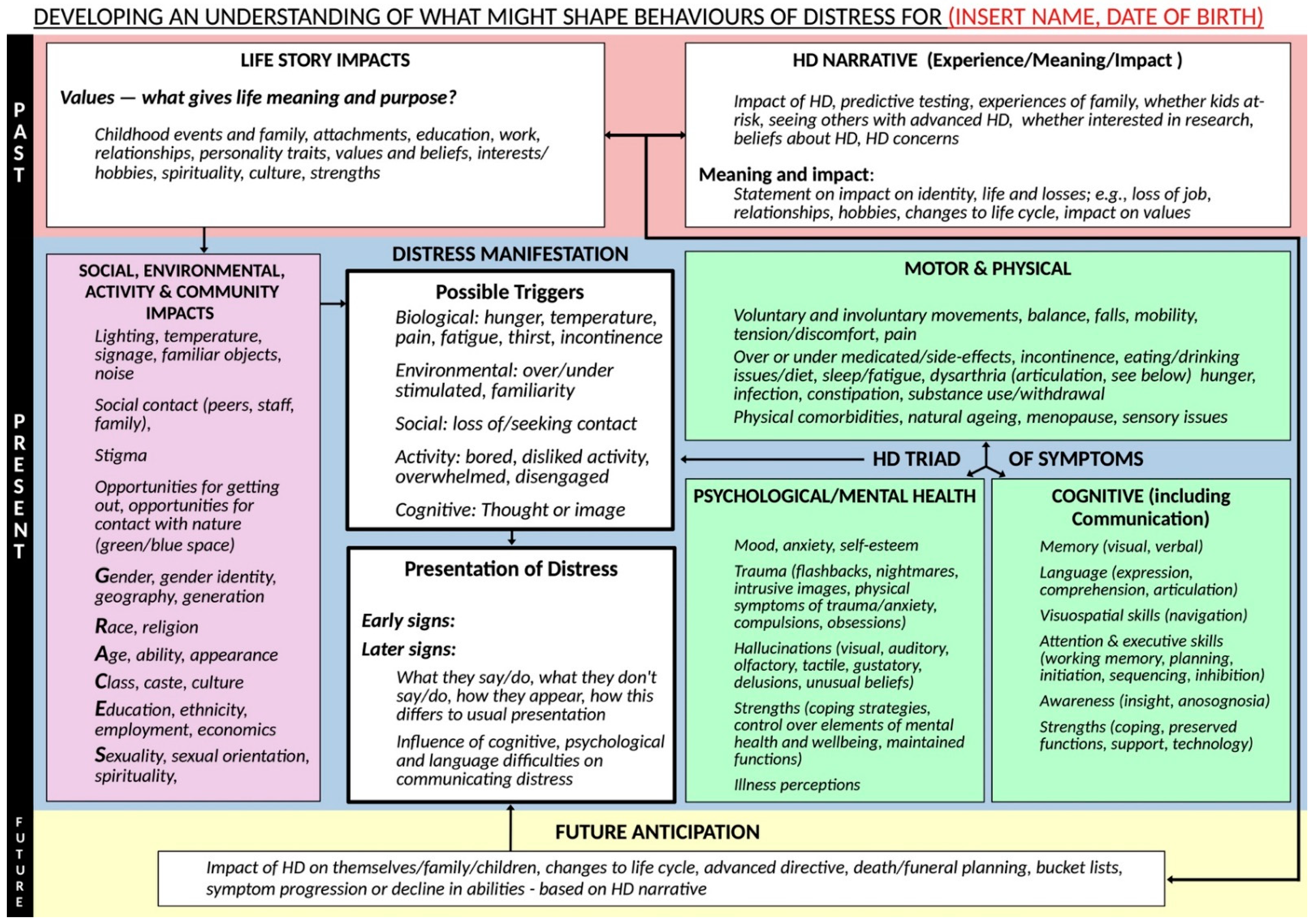
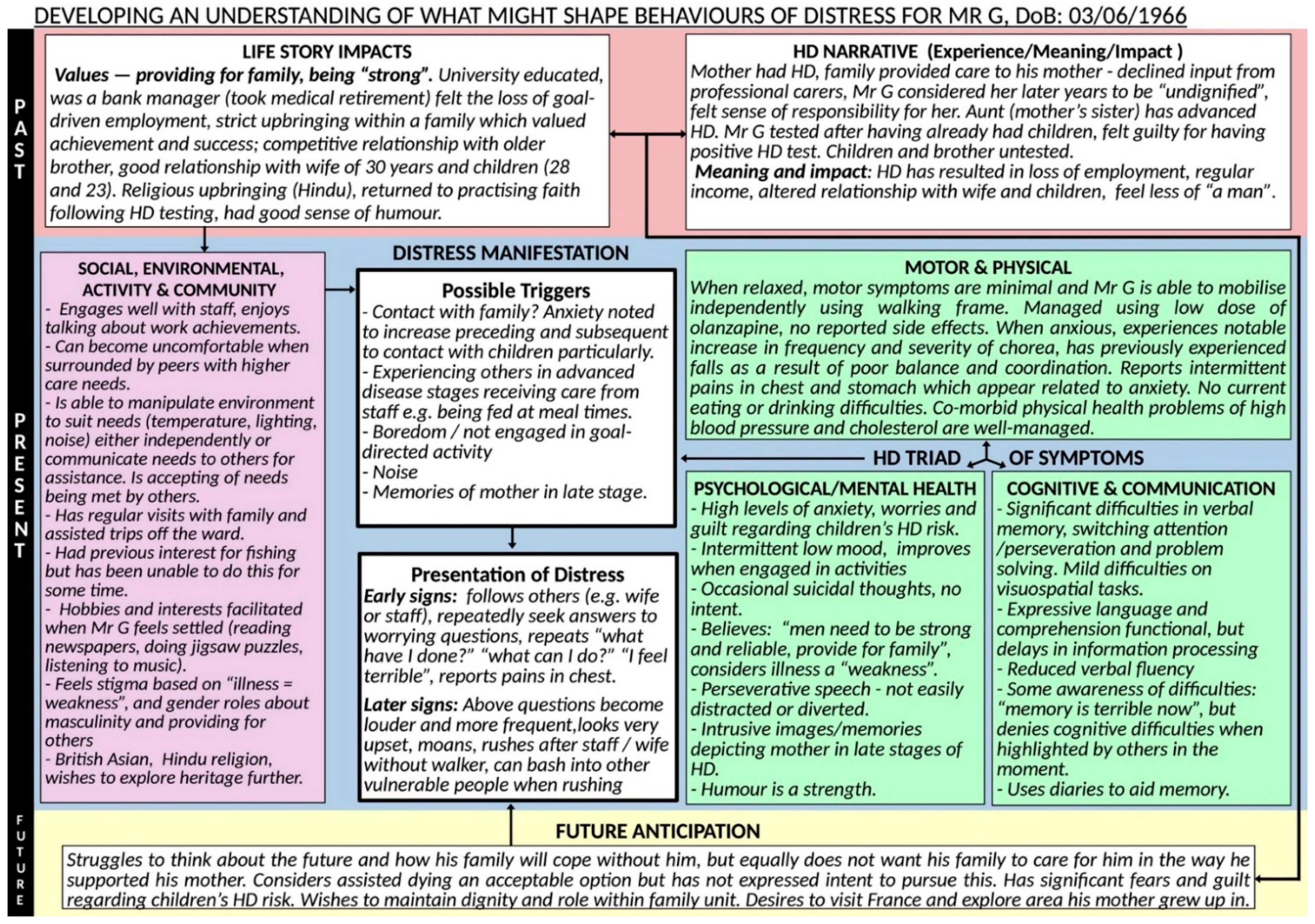
Using a Clinical Formulation to Understand Psychological Distress in People Affected by Huntington’s Disease: A Descriptive, Evidence-Based Model

 , , ,
, , , Abstract
Share and Cite
Dale, M.; Wood, A.; Zarotti, N.; Eccles, F.; Gunn, S.; Kiani, R.; Mobley, A.; Robertson, N.; Simpson, J. Using a Clinical Formulation to Understand Psychological Distress in People Affected by Huntington’s Disease: A Descriptive, Evidence-Based Model. J. Pers. Med. 2022, 12, 1222. https://doi.org/10.3390/jpm12081222
Dale M, Wood A, Zarotti N, Eccles F, Gunn S, Kiani R, Mobley A, Robertson N, Simpson J. Using a Clinical Formulation to Understand Psychological Distress in People Affected by Huntington’s Disease: A Descriptive, Evidence-Based Model. Journal of Personalized Medicine. 2022; 12(8):1222. https://doi.org/10.3390/jpm12081222
Chicago/Turabian StyleDale, Maria, Ashleigh Wood, Nicolò Zarotti, Fiona Eccles, Sarah Gunn, Reza Kiani, Amanda Mobley, Noelle Robertson, and Jane Simpson. 2022. "Using a Clinical Formulation to Understand Psychological Distress in People Affected by Huntington’s Disease: A Descriptive, Evidence-Based Model" Journal of Personalized Medicine 12, no. 8: 1222. https://doi.org/10.3390/jpm12081222
APA StyleDale, M., Wood, A., Zarotti, N., Eccles, F., Gunn, S., Kiani, R., Mobley, A., Robertson, N., & Simpson, J. (2022). Using a Clinical Formulation to Understand Psychological Distress in People Affected by Huntington’s Disease: A Descriptive, Evidence-Based Model. Journal of Personalized Medicine, 12(8), 1222. https://doi.org/10.3390/jpm12081222