Next Article in Journal
Impaired Humoral Immunity with Concomitant Preserved T Cell Reactivity in IBD Patients on Treatment with Infliximab 6 Month after Vaccination with the SARS-CoV-2 mRNA Vaccine BNT162b2: A Pilot Study
Next Article in Special Issue
The New Precision Stewards?
Previous Article in Journal
Association between Smoking Status and Incident Non-Cystic Fibrosis Bronchiectasis in Young Adults: A Nationwide Population-Based Study
 
 
Correction published on 22 February 2024, see J. Pers. Med. 2024, 14(3), 234.
Article

The Rise of Population Genomic Screening: Characteristics of Current Programs and the Need for Evidence Regarding Optimal Implementation


by
Kimberly S. Foss
1,*,
Julianne M. O’Daniel
1,
Jonathan S. Berg
1,
Sabrina N. Powell
1,
Rosemary Jean Cadigan
2,
Kristine J. Kuczynski
2,
Laura V. Milko
1,
Katherine W. Saylor
3,
Megan Roberts
4,
Karen Weck
1,5 and
Gail E. Henderson
2
1
Department of Genetics, University of North Carolina, Chapel Hill, NC 27599, USA
2
Department of Social Medicine, University of North Carolina, Chapel Hill, NC 27599, USA
3
Department of Public Policy, University of North Carolina, Chapel Hill, NC 27599, USA
4
Division of Pharmaceutical Outcomes and Policy, Eshelman School of Pharmacy, University of North Carolina, Chapel Hill, NC 27599, USA
5
Department of Pathology and Laboratory Medicine, University of North Carolina, Chapel Hill, NC 27599, USA
*
Author to whom correspondence should be addressed.
J. Pers. Med. 2022, 12(5), 692; https://doi.org/10.3390/jpm12050692
Submission received: 4 April 2022 / Revised: 20 April 2022 / Accepted: 21 April 2022 / Published: 26 April 2022 / Corrected: 22 February 2024
(This article belongs to the Special Issue Ethics in Expanding Precision Medicine to Population Health)

Abstract

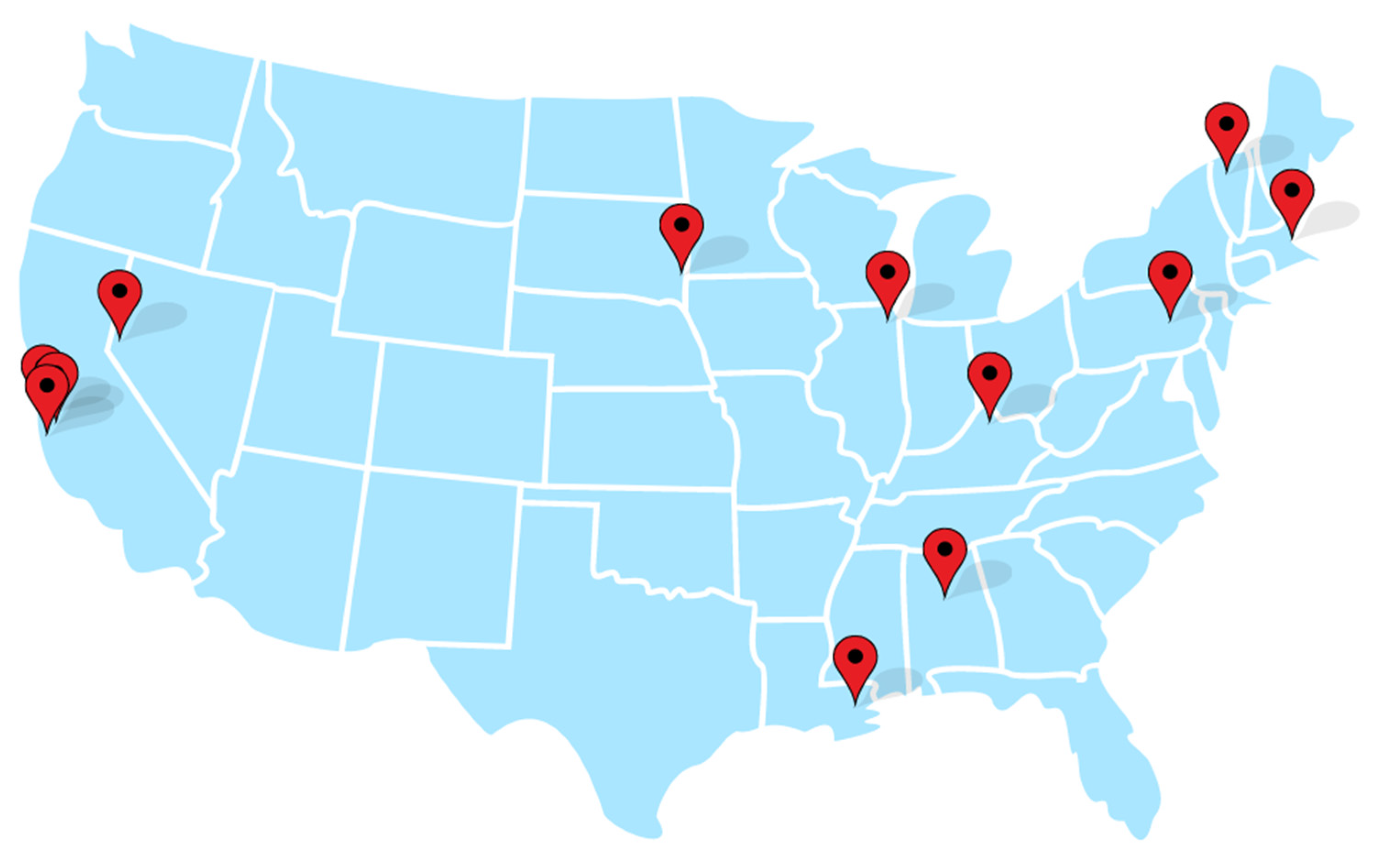
Purpose: Advances in clinical genomic sequencing capabilities, including reduced costs and knowledge gains, have bolstered the consideration of genomic screening in healthy adult populations. Yet, little is known about the existing landscape of genomic screening programs in the United States. It can be difficult to find information on current implementation efforts and best practices, particularly in light of critical questions about equity, cost, and benefit. Methods: In 2020, we searched publicly available information on the Internet and the scientific literature to identify programs and collect information, including: setting, program funding, targeted population, test offered, and patient cost. Program representatives were contacted throughout 2020 and 2021 to clarify, update, and supplement the publicly available information. Results: Twelve programs were identified. Information was available on key program features, such as setting, genes tested, and target populations. Data on costs, outcomes, or long-term sustainability plans were not always available. Most programs offered testing at no or significantly reduced cost due to generous pilot funding, although the sustainability of these programs remains unknown. Gene testing lists were diverse, ranging from 11 genes (CDC tier 1 genes) to 59 genes (ACMG secondary findings list v.2) to broad exome and genome sequencing. This diversity presents challenges for harmonized data collection and assessment of program outcomes. Conclusions: Early programs are exploring the logistics and utility of population genomic screening in various settings. Coordinated efforts are needed to take advantage of data collected about uptake, infrastructure, and intervention outcomes to inform future research, evaluation, and program development.
Keywords: population screening; genomic testing; sequencing programs population screening; genomic testing; sequencing programs