
Article

Design and Development of an Intelligent Clinical Decision Support System Applied to the Evaluation of Breast Cancer Risk


by
Manuel Casal-Guisande
1,2,3,*,
Alberto Comesaña-Campos
1,3,*,
Inês Dutra
2,3,
Jorge Cerqueiro-Pequeño
1,3 and
José-Benito Bouza-Rodríguez
1,3
1
Department of Design in Engineering, University of Vigo, 36208 Vigo, Spain
2
Department of Computer Sciences, Faculty of Sciences, University of Porto, 4169-007 Porto, Portugal
3
Center for Health Technologies and Information Systems Research–CINTESIS, Faculty of Medicine, University of Porto, 4200-450 Porto, Portugal
*
Authors to whom correspondence should be addressed.
J. Pers. Med. 2022, 12(2), 169; https://doi.org/10.3390/jpm12020169
Submission received: 18 November 2021 / Revised: 14 January 2022 / Accepted: 24 January 2022 / Published: 27 January 2022
(This article belongs to the Special Issue Application of Artificial Intelligence in Personalized Medicine)

Abstract

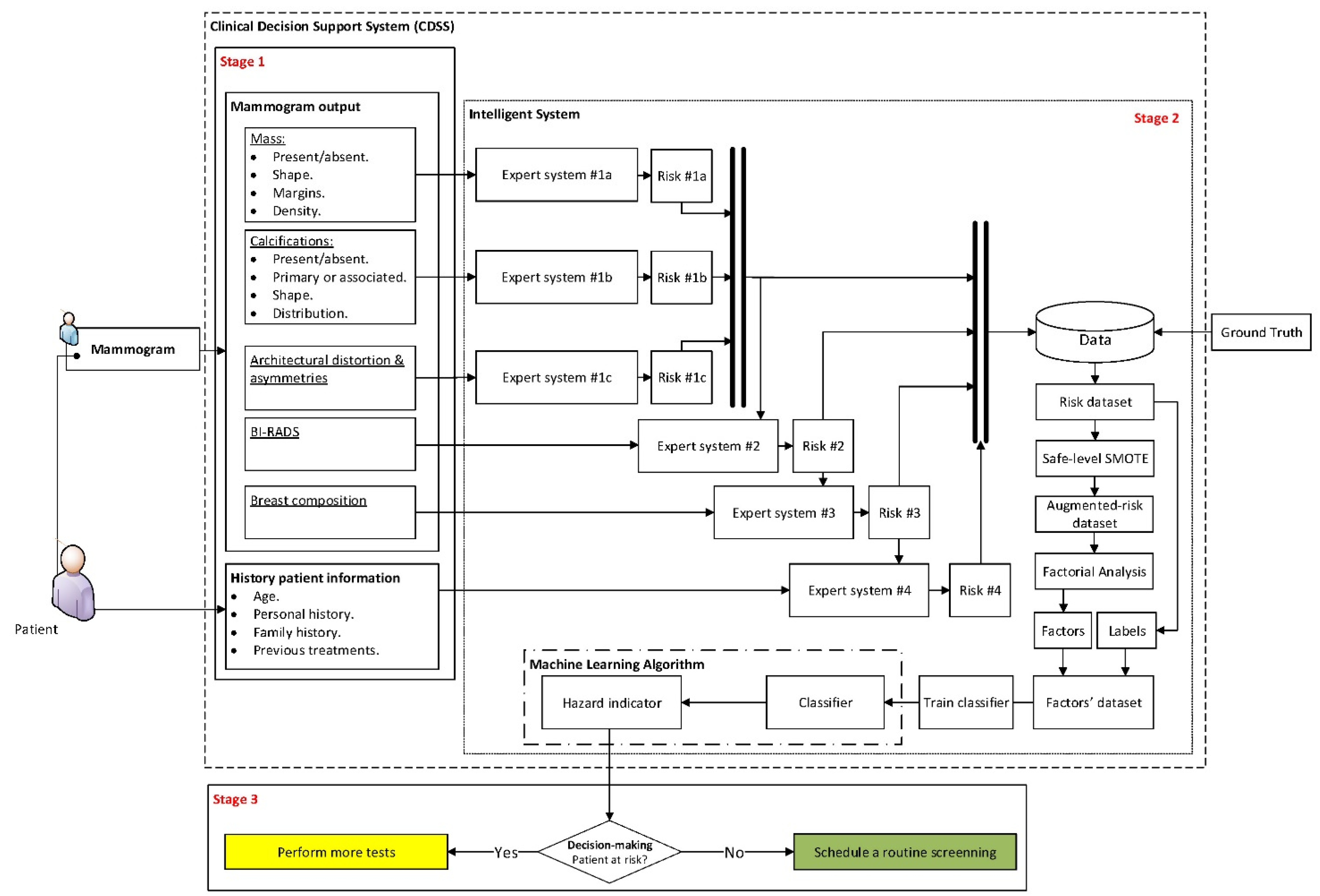
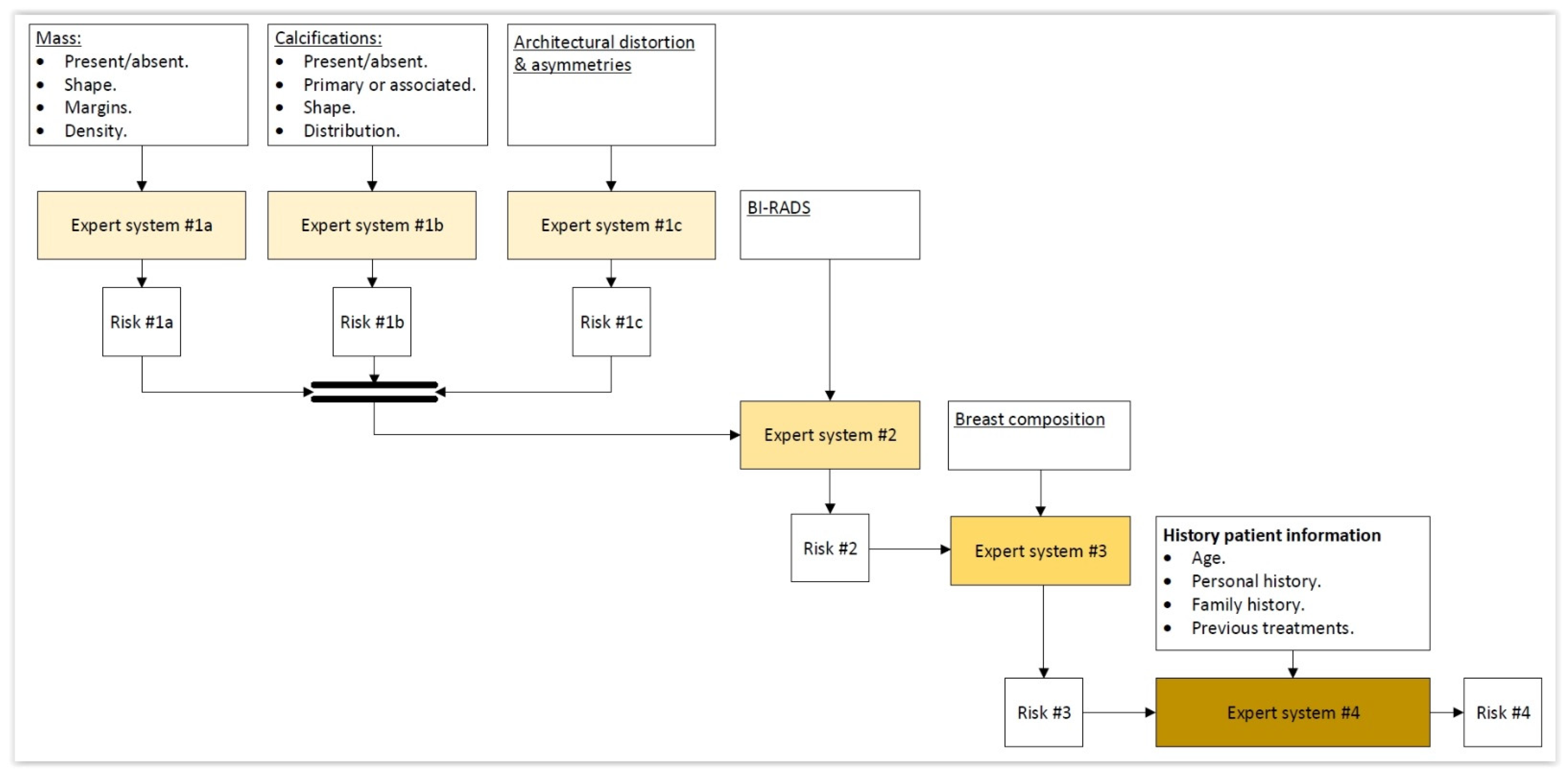
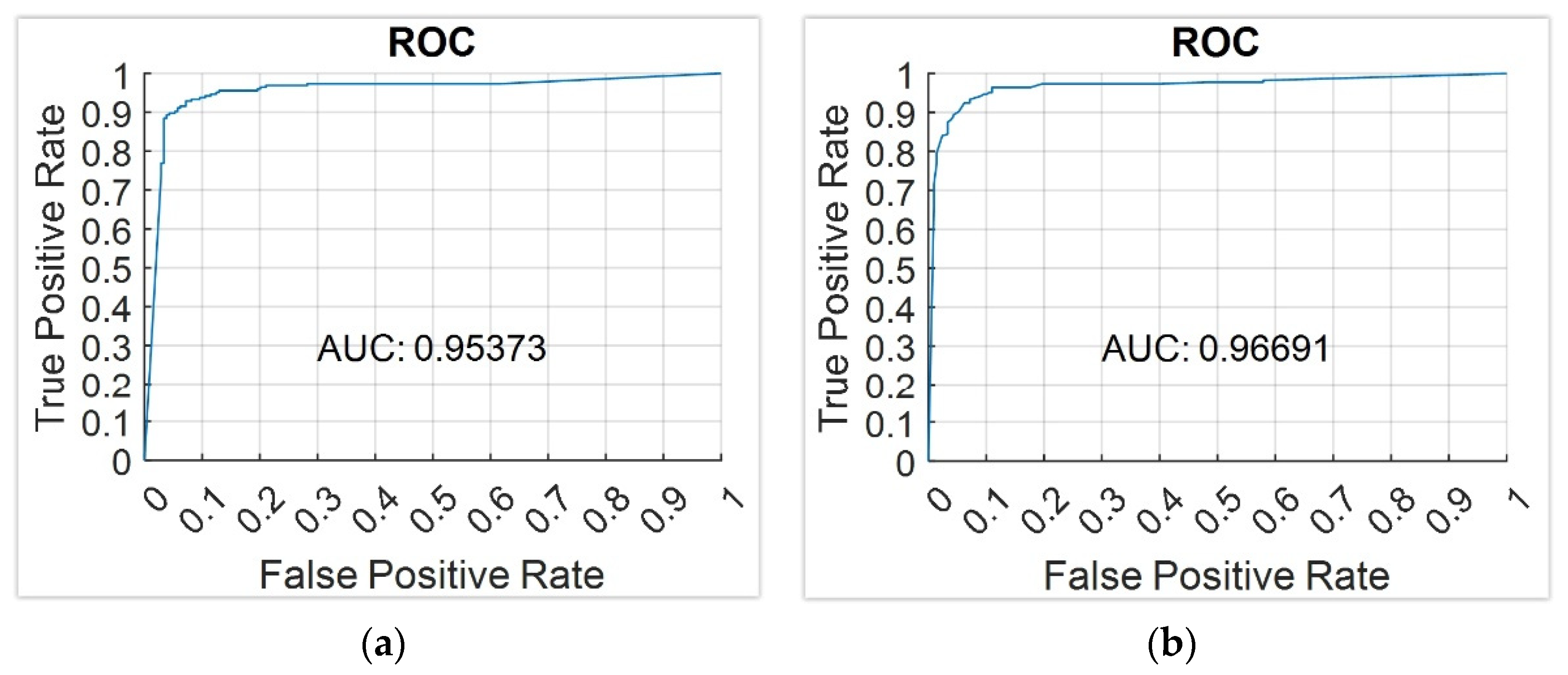
Breast cancer is currently one of the main causes of death and tumoral diseases in women. Even if early diagnosis processes have evolved in the last years thanks to the popularization of mammogram tests, nowadays, it is still a challenge to have available reliable diagnosis systems that are exempt of variability in their interpretation. To this end, in this work, the design and development of an intelligent clinical decision support system to be used in the preventive diagnosis of breast cancer is presented, aiming both to improve the accuracy in the evaluation and to reduce its uncertainty. Through the integration of expert systems (based on Mamdani-type fuzzy-logic inference engines) deployed in cascade, exploratory factorial analysis, data augmentation approaches, and classification algorithms such as k-neighbors and bagged trees, the system is able to learn and to interpret the patient’s medical-healthcare data, generating an alert level associated to the danger she has of suffering from cancer. For the system’s initial performance tests, a software implementation of it has been built that was used in the diagnosis of a series of patients contained into a 130-cases database provided by the School of Medicine and Public Health of the University of Wisconsin-Madison, which has been also used to create the knowledge base. The obtained results, characterized as areas under the ROC curves of 0.95–0.97 and high success rates, highlight the huge diagnosis and preventive potential of the developed system, and they allow forecasting, even when a detailed and contrasted validation is still pending, its relevance and applicability within the clinical field.
Keywords: breast cancer; expert systems; exploratory factorial analysis; data augmentation; machine learning; medical algorithm; clinical decision support system; design science research breast cancer; expert systems; exploratory factorial analysis; data augmentation; machine learning; medical algorithm; clinical decision support system; design science research