
Article

Evaluating, Filtering and Clustering Genetic Disease Cohorts Based on Human Phenotype Ontology Data with Cohort Analyzer

by
Elena Rojano
1,2,
José Córdoba-Caballero
1,
Fernando M. Jabato
2,3,4,
Diana Gallego
5,6,7,
Mercedes Serrano
5,8,
Belén Pérez
5,6,7,
Álvaro Parés-Aguilar
1,
James R. Perkins
1,2,5,*,
Juan A. G. Ranea
1,2,5,† and
Pedro Seoane-Zonjic
1,2,5,†
1
Department of Molecular Biology and Biochemistry, University of Málaga, 29071 Málaga, Spain
2
Institute of Biomedical Research in Málaga (IBIMA), 29010 Málaga, Spain
3
Supercomputation and Bioinformatics (SCBI), University of Malaga, 29071 Malaga, Spain
4
LifeWatch-ERIC, 41071 Seville, Spain
5
Centro de Investigación Biomédica en Red de Enfermedades Raras (CIBERER), [Madrid, Málaga, Barcelona], Instituto de Salud Carlos III, 28029 Madrid, Spain
6
Centro de Diagnóstico de Enfermedades Moleculares, Centro de Biología Molecular-SO UAM-CSIC, Campus de Cantoblanco, Universidad Autónoma de Madrid, 28049 Madrid, Spain
7
Instituto de Investigación Sanitaria idiPAZ, 28049 Madrid, Spain
8
Neuropediatric Department, Institut de Recerca Hospital Sant Joan de Déu, 08950 Barcelona, Spain
*
Author to whom correspondence should be addressed.
These authors contributed equally to this work.
J. Pers. Med. 2021, 11(8), 730; https://doi.org/10.3390/jpm11080730
Submission received: 5 June 2021 / Revised: 13 July 2021 / Accepted: 20 July 2021 / Published: 27 July 2021
(This article belongs to the Special Issue Computational Genomics in Disease and Wellness Genetics)

Abstract

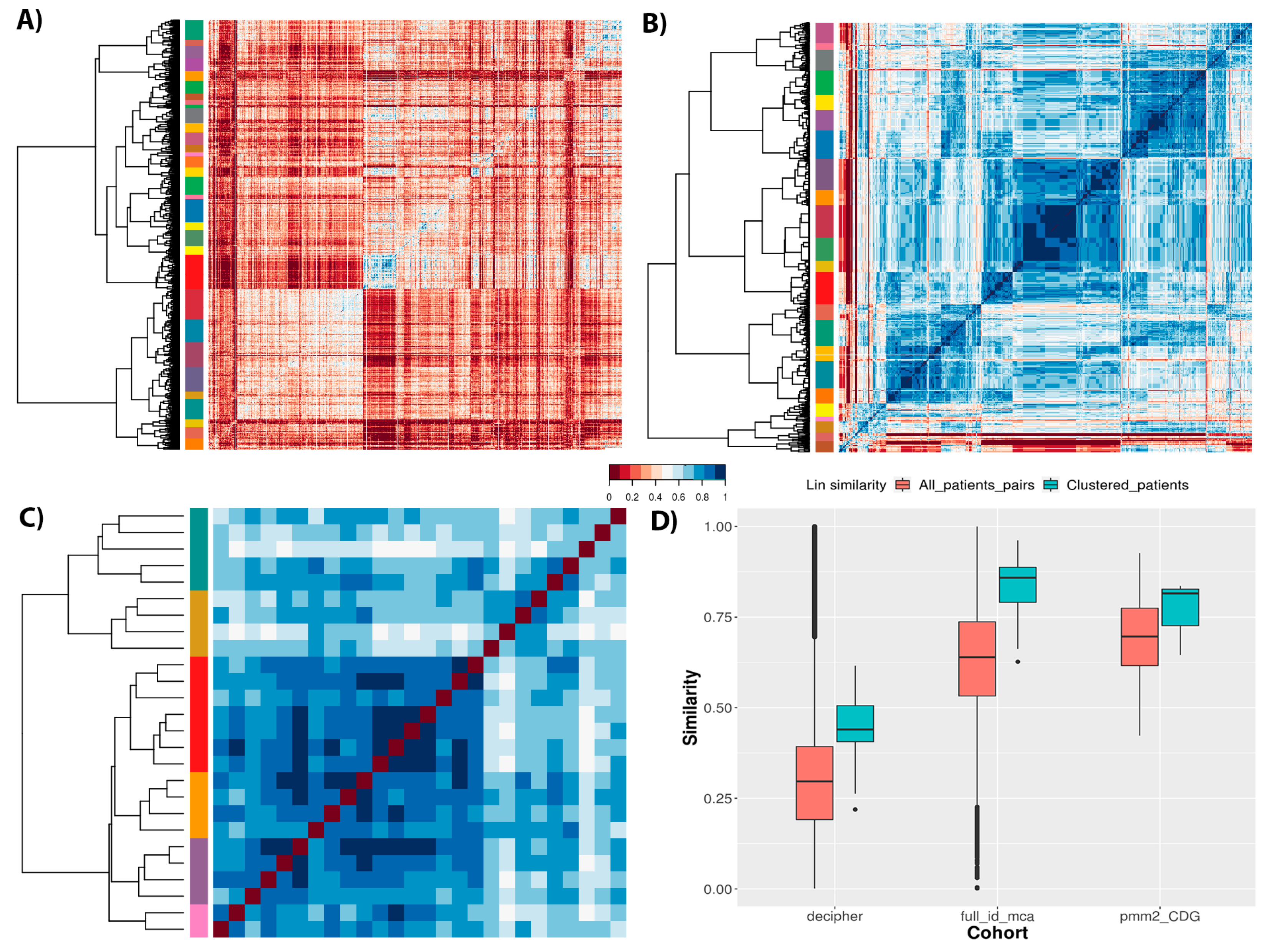
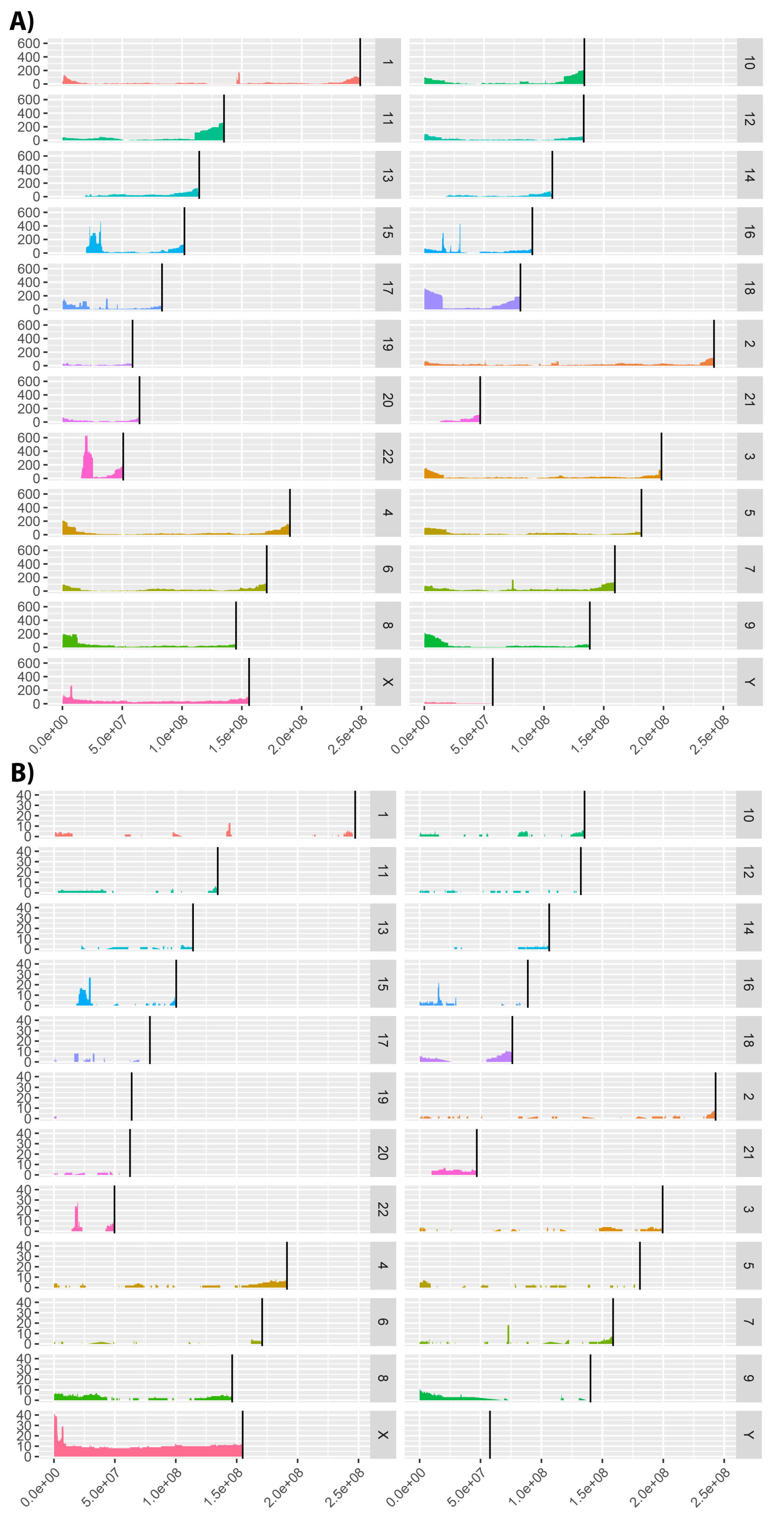
Exhaustive and comprehensive analysis of pathological traits is essential to understanding genetic diseases, performing precise diagnosis and prescribing personalized treatments. It is particularly important for disease cohorts, as thoroughly detailed phenotypic profiles allow patients to be compared and contrasted. However, many disease cohorts contain patients that have been ascribed low numbers of very general and relatively uninformative phenotypes. We present Cohort Analyzer, a tool that measures the phenotyping quality of patient cohorts. It calculates multiple statistics to give a general overview of the cohort status in terms of the depth and breadth of phenotyping, allowing us to detect less well-phenotyped patients for re-examining or excluding from further analyses. In addition, it performs clustering analysis to find subgroups of patients that share similar phenotypic profiles. We used it to analyse three cohorts of genetic diseases patients with very different properties. We found that cohorts with the most specific and complete phenotypic characterization give more potential insights into the disease than those that were less deeply characterised by forming more informative clusters. For two of the cohorts, we also analysed genomic data related to the patients, and linked the genomic data to the patient-subgroups by mapping shared variants to genes and functions. The work highlights the need for improved phenotyping in this era of personalized medicine. The tool itself is freely available alongside a workflow to allow the analyses shown in this work to be applied to other datasets.
Keywords: genetic diseases; cohort analyzer; human phenotype ontology; cluster analysis; phenotype quality assessment genetic diseases; cohort analyzer; human phenotype ontology; cluster analysis; phenotype quality assessment