Review

Biomarkers for Alzheimer’s Disease Early Diagnosis


Department of Optics, Pharmacology and Anatomy, University of Alicante, 03690 Alicante, Spain
*
Author to whom correspondence should be addressed.
J. Pers. Med. 2020, 10(3), 114; https://doi.org/10.3390/jpm10030114
Submission received: 8 July 2020 / Revised: 27 August 2020 / Accepted: 1 September 2020 / Published: 4 September 2020
(This article belongs to the Special Issue Novel Biomarkers in Alzheimer’s Disease)

Abstract

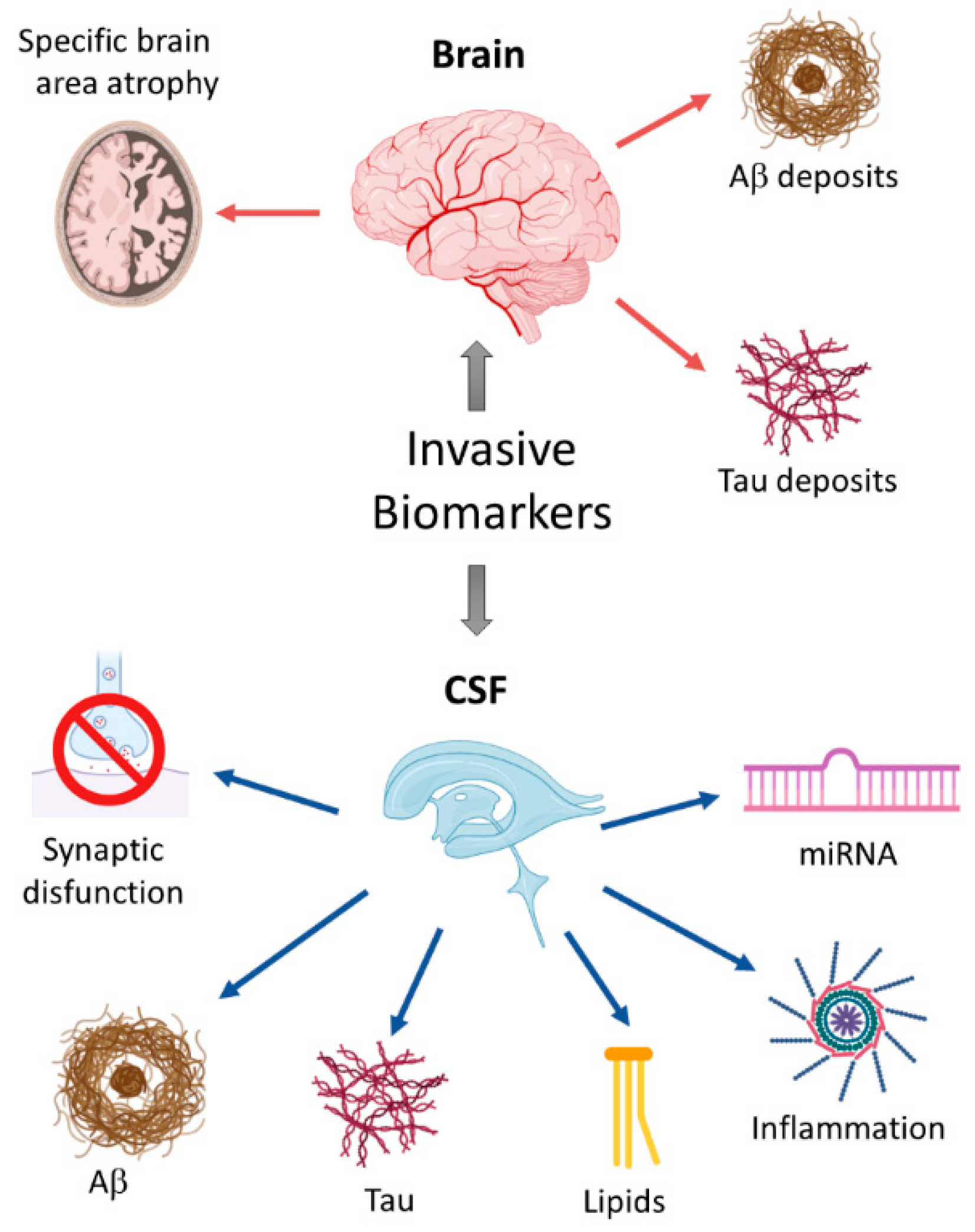
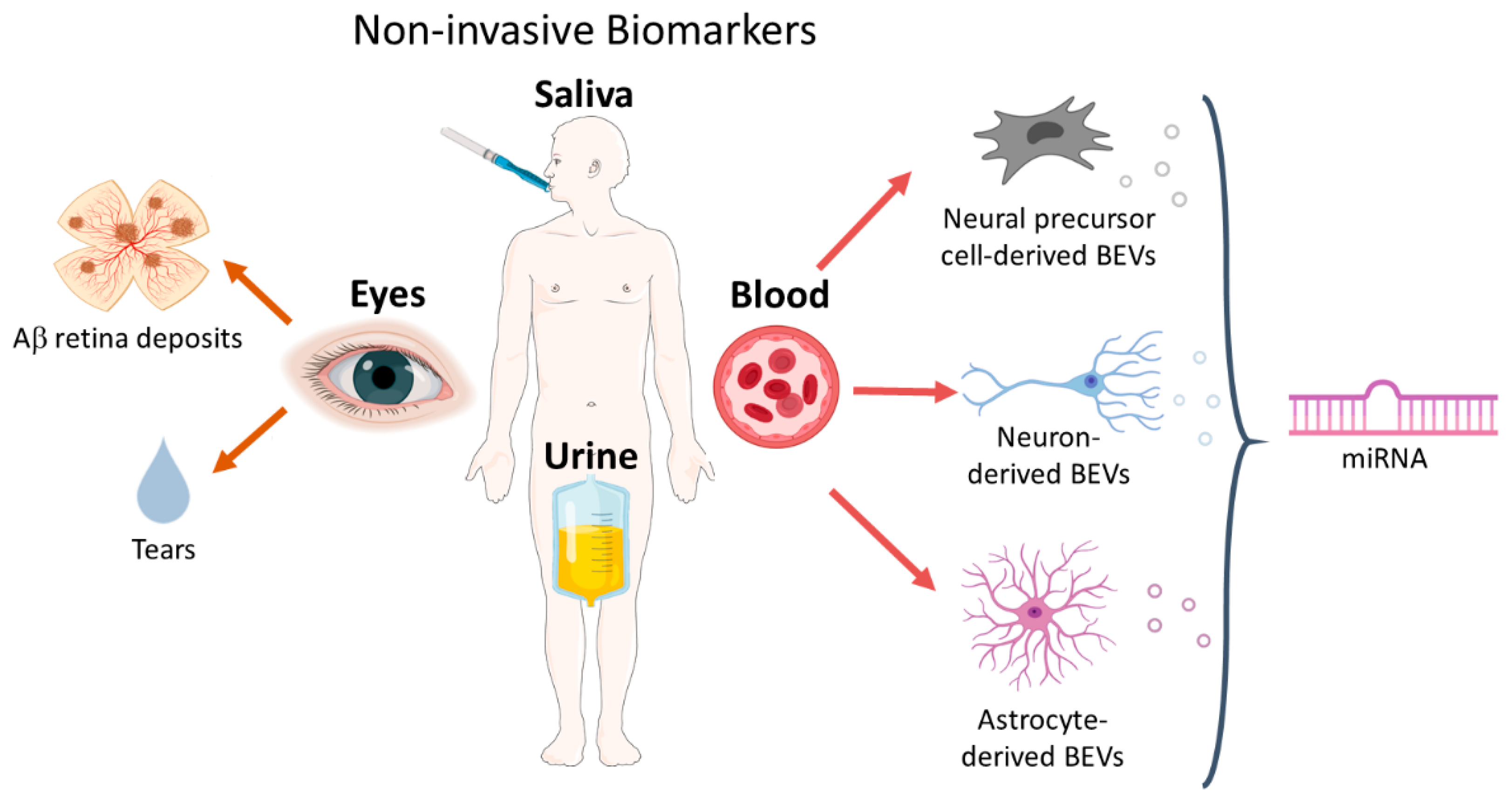
Alzheimer’s disease (AD) is the most common cause of dementia, affecting the central nervous system (CNS) through the accumulation of intraneuronal neurofibrillary tau tangles (NFTs) and β-amyloid plaques. By the time AD is clinically diagnosed, neuronal loss has already occurred in many brain and retinal regions. Therefore, the availability of early and reliable diagnosis markers of the disease would allow its detection and taking preventive measures to avoid neuronal loss. Current diagnostic tools in the brain, such as magnetic resonance imaging (MRI), positron emission tomography (PET) imaging, and cerebrospinal fluid (CSF) biomarkers (Aβ and tau) detection are invasive and expensive. Brain-secreted extracellular vesicles (BEVs) isolated from peripheral blood have emerged as novel strategies in the study of AD, with enormous potential as a diagnostic evaluation of therapeutics and treatment tools. In addition; similar mechanisms of neurodegeneration have been demonstrated in the brain and the eyes of AD patients. Since the eyes are more accessible than the brain, several eye tests that detect cellular and vascular changes in the retina have also been proposed as potential screening biomarkers. The aim of this study is to summarize and discuss several potential markers in the brain, eye, blood, and other accessible biofluids like saliva and urine, and correlate them with earlier diagnosis and prognosis to identify individuals with mild symptoms prior to dementia.
Keywords: Alzheimer’s disease; biomarkers; early diagnosis; biofluids Alzheimer’s disease; biomarkers; early diagnosis; biofluids