1. Introduction
The upper airways consist of the nasal cavities, pharynx and larynx. The pharynx, the region most prone to collapse, is divided into 3 parts: the nasopharynx, oropharynx, and hypopharynx. The nasopharynx begins in the choanae (posterior opening of the nasal cavities) and ends on the hard palate. The oropharynx ranges from the uvula to the epiglottis. The hypopharynx spans the area from the epiglottis to the vocal cords, where the trachea begins [
1]. Functions of the upper airway include air warming and humidification, pathways for olfaction, coordination of ventilation with swallowing and protection from aspiration of food, primary defense against infection, and especially for humans, speech [
2].
Traditionally, airway dimensions are assessed via lateral cephalograms [
3]. However, cephalometric measurements have severe limitations in assessing the airway, as only changes in the sagittal and vertical dimensions can be observed [
4]. Three-dimensional (3D) computed tomography (CT) and cone-beam CT (CBCT) are more promising techniques than lateral cephalograms for upper airway assessment [
5,
6]. With the advent of CBCT imaging, our understanding of airway morphology has been expanded to 3 dimensions to include the overall volume and, perhaps most physiologically relevant, the cross-sectional area perpendicular to the direction of air flow, as visualized in the axial plane [
7].
Volumetric analysis of the upper airway can aid in identifying conditions such as obstructive sleep apnea syndrome (OSAS), craniofacial abnormalities, and orthodontic or dentofacial deformities [
3,
8,
9,
10]. The segmentation process for CBCT records enables detailed monitoring of airway boundaries by removing surrounding anatomical structures. Segmentation can be performed via three different methods: manual, semiautomatic, and automatic [
11]. Manual segmentation, where an expert meticulously traces the airway slice-by-slice, is widely considered the gold standard reference method [
8,
12]. However, this process is time-consuming, tedious and expert-dependent, which negatively affects efficiency and accuracy and can lead to missed diagnoses of the disease; all of the above can have significant impacts on human health [
5,
13].
Recently, artificial intelligence (AI) and deep learning techniques, which employ computers or machines to imitate human logic and cognition to complete a series of intelligent tasks, have seen extensive use in medical imaging [
14]. Several studies have assessed the diagnostic performance of artificial intelligence integrated with CBCT imaging in relation to oral and maxillofacial anatomical landmarks and lesions [
10,
15,
16]. However, researchers have reported differing values of accuracy [
17]. In recent years, there has been a marked increase in the number of commercially available software solutions that utilize artificial intelligence. Examples of such AI platforms include CephX (CephX, Las Vegas, NV, USA) and Invivo (Anatomage, San Jose, CA, USA), both of which provide automated analyses of CBCT examinations, including cephalometric analyses and assessments of airway volume. However, their reliability—and consequently patient safety—is often untested or has, in certain applications, been recognized as unsatisfactory [
18,
19]. To the best of our knowledge, no previous study has evaluated the accuracy and efficacy of these two programs specifically for volumetric assessment of the upper airways.
Although multiple studies have investigated upper airway segmentation using CBCT, much of the existing literature focuses on research prototypes or on software platforms that differ from tools used routinely in dental and orthodontic workflows [
20,
21,
22]. In contrast, the present study provides an independent, clinically oriented validation of two commercially available and commonly used solutions—one fully AI-automated (CephX) and one semiautomated (Invivo 7)—against a manual digital reference standard (ITK-SNAP). Beyond agreement in total volume, we also evaluate the narrowest cross-sectional area, quantify time-efficiency, and document automated-processing failures observed in routine clinical CBCT data, which together address practical questions relevant to implementation and patient safety.
The primary purpose of this study was to compare three methods of measuring upper airway volumes and the duration of these measurements. Automatically using the AI—based program CephX, semiautomatically using the Invivo 7 program, and manually—digitally using the ITK SNAP program. This allowed us to verify whether the semi-automatic and automatic methods are as good as the reference method (manual measurement).
4. Discussion
The primary aim of this study was to evaluate the reliability and time efficiency of an AI-automated (CephX) and a semiautomated (INVIVO) method for upper airway segmentation against the manual digital approach (ITK-SNAP), which is considered the gold standard. Our findings demonstrate that both automated and semiautomated methods offer excellent reliability for measuring total airway volume compared with the manual reference. For the narrowest airway area, the automated method also showed excellent agreement, whereas the semiautomated method showed good agreement. Furthermore, all three methods exhibited high intrareader repeatability, underscoring their consistency. The most significant advantage of the AI-automated method was its profound time efficiency, reducing the analysis time from over five minutes for the manual method to less than 30 s.
AI stands as transformative power in today’s digital revolution, affecting various economic sectors by performing tasks that typically require human intelligence. Its introduction to dentistry is particularly notable, offering new and improved ways to enhance diagnostic imaging, plan treatments, and manage patient care [
24]. AI can perform tasks with greater precision and accuracy than humans [
25]. Moreover, AI can be continually trained and refined with extensive datasets, leading to increasingly accurate and reliable outcomes [
26]. As the integration of AI within dentistry continues to advance, it faces significant technical challenges that could impede its efficacy. However, integrating AI into clinical practice is accompanied by challenges, especially regarding the availability and quality of training datasets, which are critical for ensuring system accuracy [
27].
A key contribution of this work is that it evaluates commercial tools as deployed in routine clinical workflows, rather than a research-only algorithm under controlled conditions and available only for research teams. By integrating assessments of both volume and the narrowest area, alongside direct comparisons of workflow time and documentation of failures, this research provides a comprehensive evaluation of the efficacy of readily implementable AI tools in the real-world contexts of dental practices.
CBCT-based measurements of upper airway volume play a significant role in the diagnosis and evaluation of a wide range of diseases and disorders, especially within the fields of otolaryngology, orthodontics, and maxillofacial surgery. The application of AI in dental imaging also involves airway detection and volumetric measurements. Sin et al. [
28] evaluated a convolutional neural network (CNN) for the automatic segmentation of pharyngeal airway volumes on the basis of 306 CBCT images and achieved high performance. Similar results were reported by Cho et al. [
29], who also used a CNN-based model for the segmentation of these structures and confirmed its effectiveness. Despite these advancements, our study noted slightly lower precision with semiautomatic and automatic methods than with manual segmentation, particularly with respect to anatomical variability. Nevertheless, AI-driven platforms such as CephX offer rapid, reliable evaluations, substantially reducing the interoperator variability inherent to manual methods, and thus serve as valuable adjunctive tools rather than replacements for clinical expertise [
30].
Obstructive sleep apnea syndrome (OSAS) is a critical condition linked with airway dimensions. OSAS involves repeated episodes of partial or complete airway obstruction during sleep, significantly impacting patient health [
31]. OSA is defined as repeated episodes, greater than 5 per hour, of partial or total obstruction of the upper airways during sleep, leading to airway obstruction (apnea) or reduced airflow (hypopnea) [
1]. An apnea event, by definition, should last at least 10 s and is usually associated with sleep or microarousal fragmentation. Hypopnea can be defined as a reduction in ventilation (at least 50%) with an oxygen desaturation of ≥4% [
1]. OSA is a very common condition with significant adverse consequences. A narrow, floppy upper airway provides the pathophysiological basis for OSAS. The pharynx tends to collapse at inspiration due to Bernoulli’s effect, which results in partial or complete obstruction [
32]. The prevalence and health effects of OSAS are currently receiving increasing attention from dental professionals because of the multidisciplinary nature of the treatment options [
33].
Previous research has demonstrated a relationship between the upper airway and stomatognathic development [
4]. The volume of the upper airway is a critical factor in orthodontics because it is associated with craniofacial growth and development; it can be influenced by jaw positioning and, in turn, can dictate various treatment plans [
34]. When the upper airway is restricted or obstructed, breathing patterns may change, directly affecting normal craniofacial development and dental positioning [
35,
36,
37]. Optimal upper airway function depends on nasal breathing, and for many years, researchers have examined the impact of impaired nasal breathing on craniofacial development and dentition [
17].
The primary aim of this study was to assess the reliability of automated and semiautomated segmentation methods—using artificial intelligence—compared with the commonly employed manual segmentation technique for measuring upper airway volumes. A review of the literature revealed no consensus or standardized methodology for measuring the upper airway. However, recent software developments have facilitated rapid, automated analyses of upper airway volume that are accurate, reproducible, and practical. The simplicity and speed of these methods enable widespread adoption without requiring specialized expertise [
1]. A notable benefit of both examined software programs is their user-friendliness. In the case of CephX, once the CBCT scan was uploaded, the program produced a complete analysis without further user intervention. Similarly, in vivo, after the relevant anatomical region—with only a basic understanding of respiratory anatomy—is defined, the system automatically generates the necessary measurements.
Previous imaging studies in OSA patients using optical coherence tomography during wakefulness have shown that the retropalatal airway is narrower than the retroglossal airway is [
38]. Many studies have indicated that patients with OSAS have a narrowed cross-sectional area [
23]. Axial CBCT studies typically identify the smallest airway slice at the retropalatal level [
39]. The assessment protocol for CBCT described herein constitutes a valuable screening tool for OSAS, which allows clinicians to refer patients to the hospital for diagnostic confirmation [
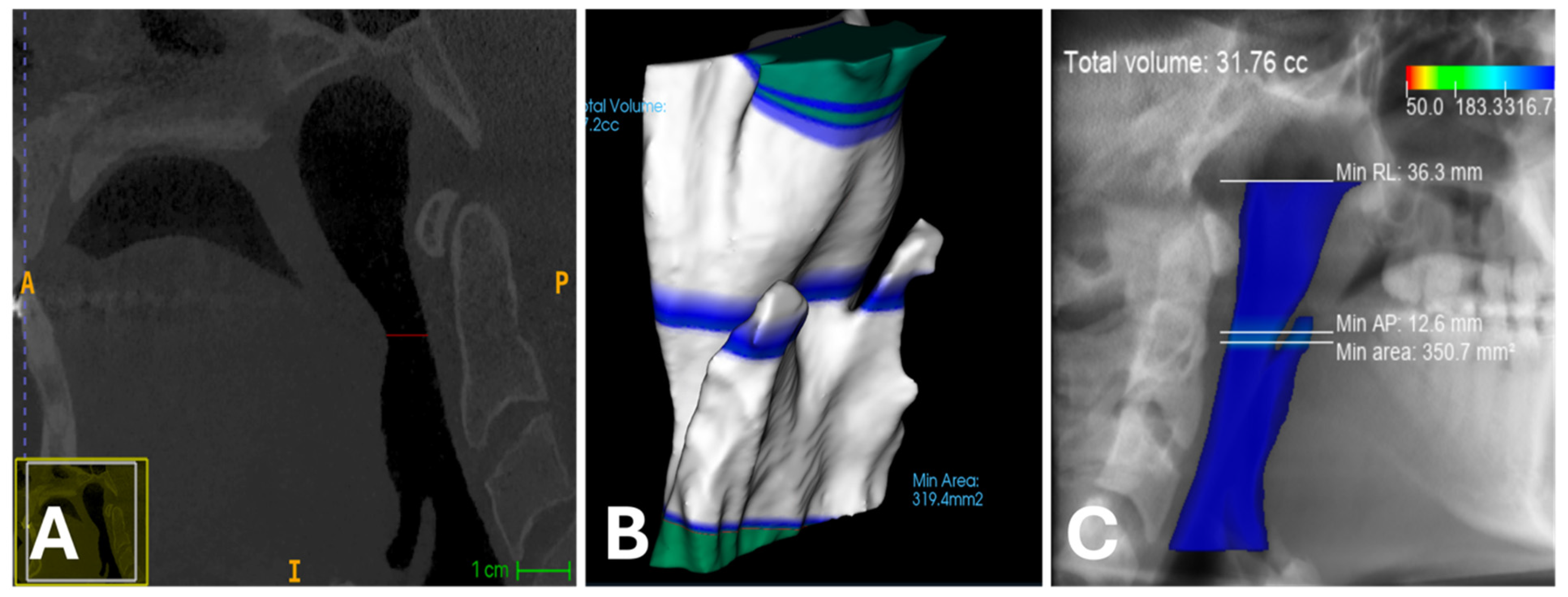
1]. Therefore, measuring the respiratory volume of the upper airways, supplemented with information about the narrowest point in the airways, can be an important element in diagnosing the severity of the disease (
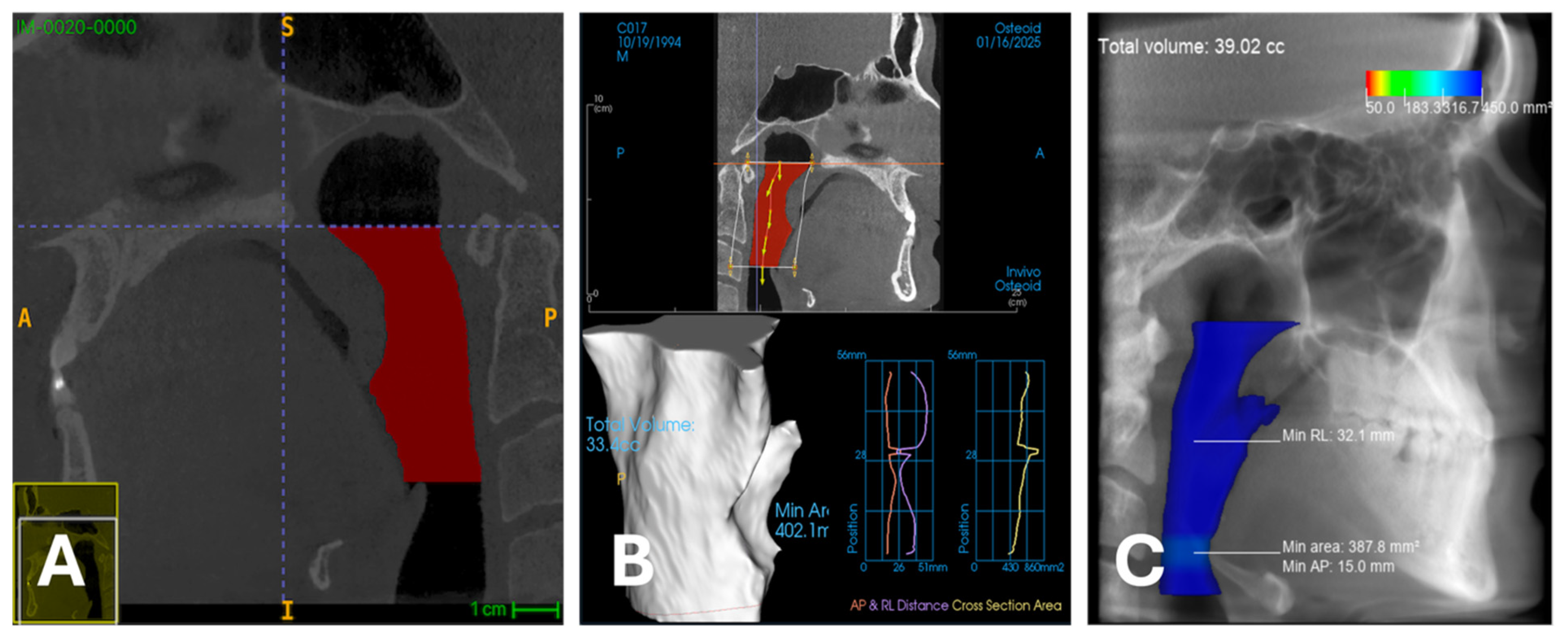
Figure 4). The parameter was always calculated via both CephX (AI-based) and Invivo 7 software. When the statistical data were analyzed, the results were almost identical to the manual measurements performed by both readers. This is a major advantage of both programs because, to identify and measure it manually, it is necessary to analyze the entire length of the airways and compare the surface areas of several places, selecting the narrowest one. Manual volumetry is both time-consuming and prone to errors. The time efficiency of AI-automated analysis offers a notable advantage, as the average duration required for manual volumetry―approximately 336.6 s―is nearly eleven times longer than that for AI-automated methods, which typically require fewer than 30 s.
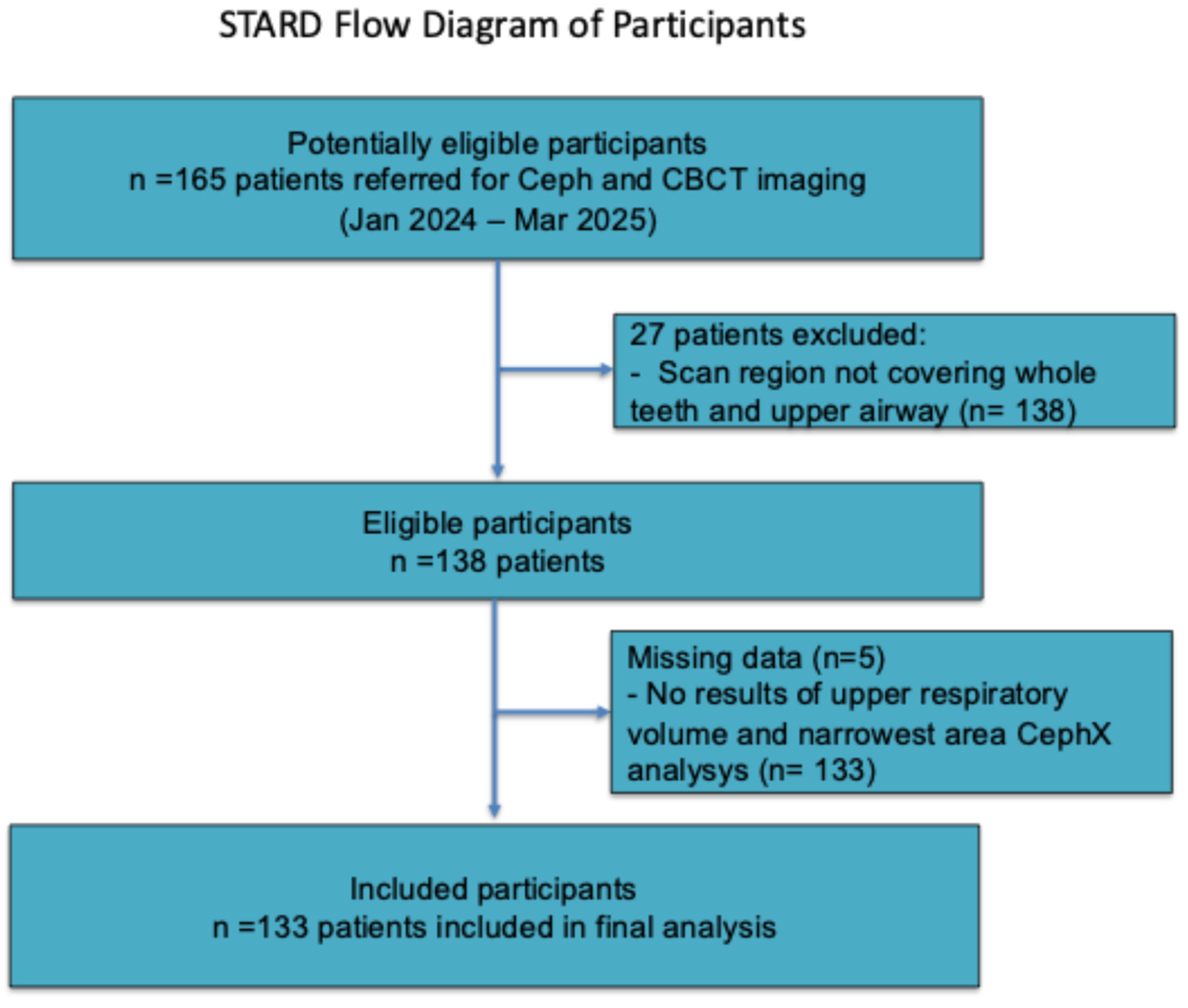
During the research conducted in this study, a technical issue prevented the CephX software from completing the segmentation process in a few cases. Consequently, 5 CBCT examinations were excluded from the study because the AI software incorrectly indicated an incomplete range of the upper respiratory tract. However, when both ITK SNAP and Invivo 7 were used, measurements could be performed without any problems. This is probably due to the continuous learning of the AI model, which needs a continuous flow of new data to ensure that its results are as close as possible to those of humans [
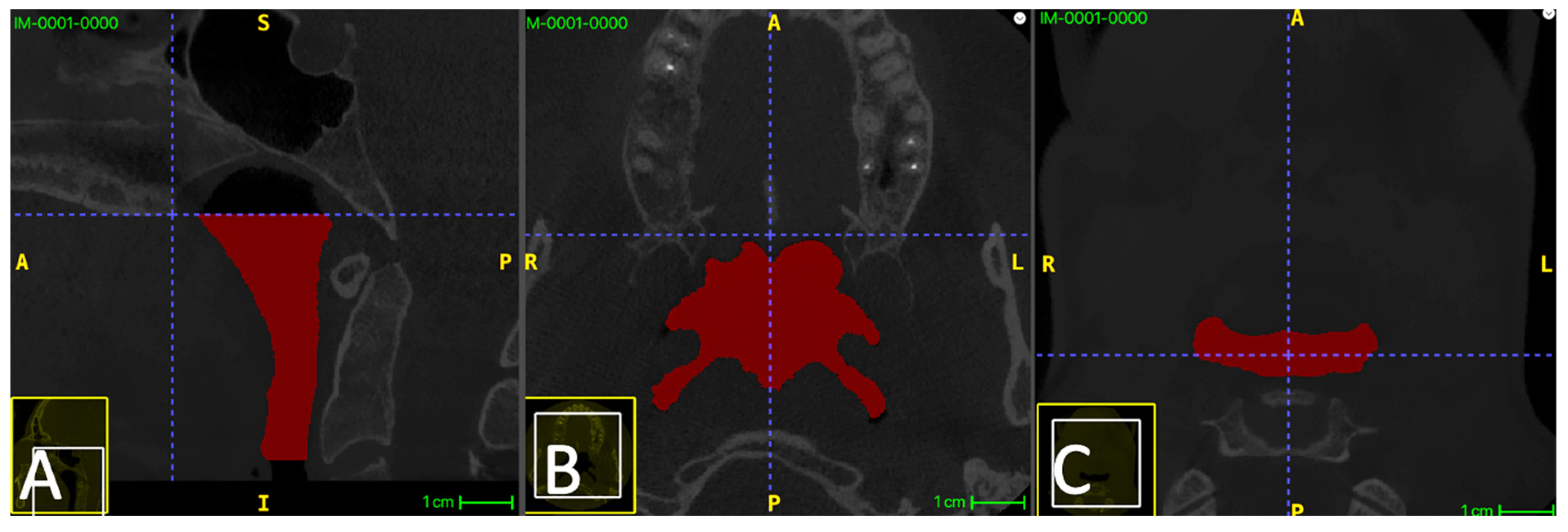
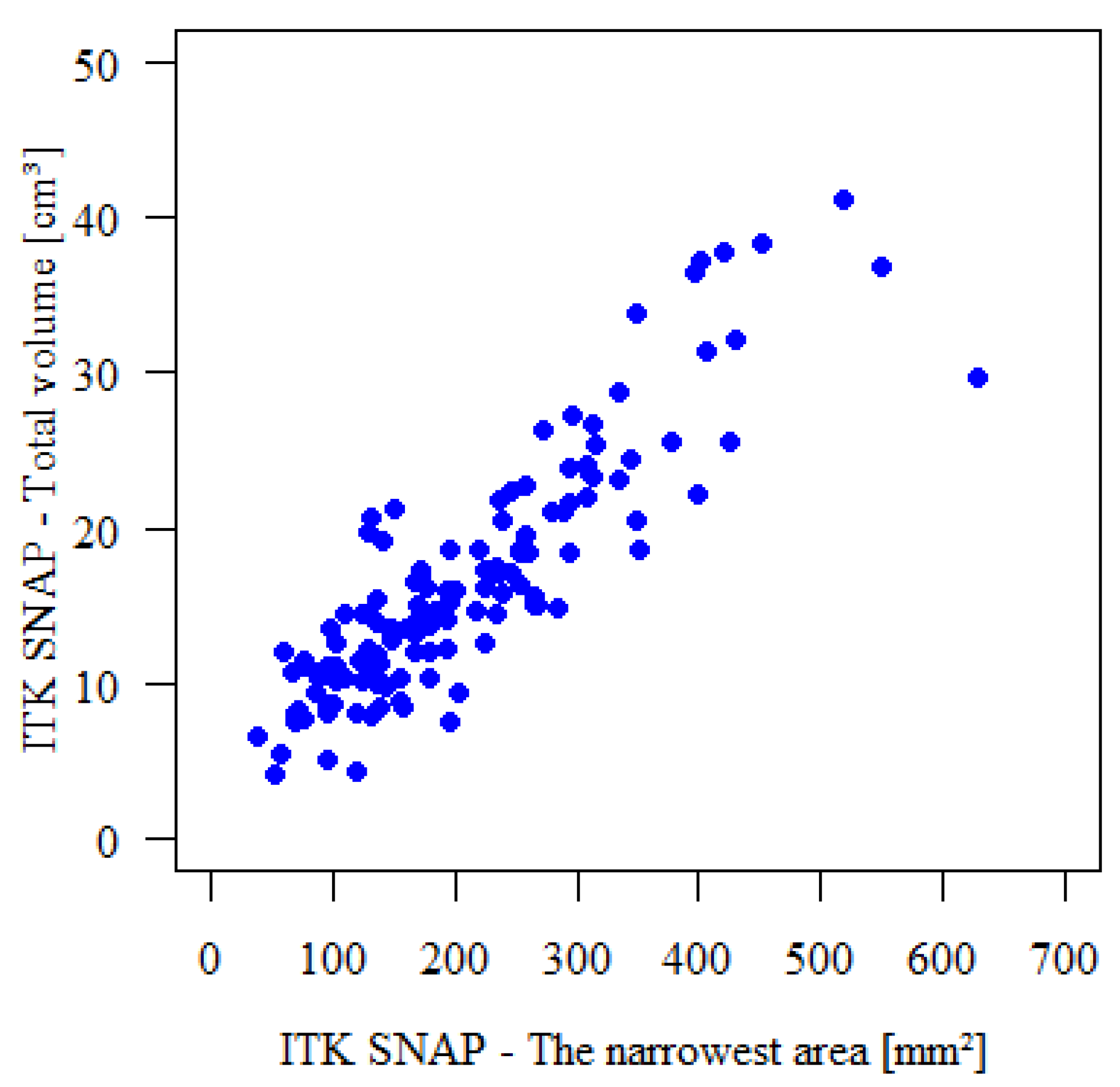
40]. The varied anatomical structure of the airways, including their shape, length, and cross-section, may have contributed to difficulties in precisely determining anatomical points, calculating volumes, and locating the narrowest point, which in turn may have led to discrepancies in the measurements obtained (
Figure 3 and
Figure 5). However, many articles have demonstrated the potential of artificial intelligence, which includes the ability to assist in diagnosis, suggest appropriate interventions, and, in particular, improve image analysis [
40,
41,
42,
43]. As an example of an AI-based system, the CephX program is a useful tool for analyzing the upper respiratory tract, offering significant time savings and high repeatability of measurements; however, in the case of anatomical variability, deviations that require verification by a specialist may exist [
44]. However, the recent literature shows highly promising results and encourages further research on the development of AI tools [
31].
Despite the demonstrated effectiveness of AI-based segmentation, several limitations should be acknowledged. The retrospective and single-center design may limit generalizability and introduce potential selection bias. Patient populations from a single dental center may not fully represent broader demographic or clinical variability. Additionally, the CBCT datasets were obtained for routine dental indications, and comprehensive medical histories were not consistently available. Therefore, systemic comorbidities potentially affecting upper airway morphology, such as obstructive sleep apnea, were not included in the analysis. Patients were also not stratified according to skeletal pattern or dental class, as the primary aim of this study was methodological validation rather than morphological comparison between subgroups. Future prospective studies incorporating detailed clinical data and skeletal classifications are warranted to further validate the clinical applicability of AI-based airway segmentation.
Despite these limitations, the current study provides important initial validation of AI-driven airway segmentation methods, establishing a foundation upon which future research can be conducted. Ongoing research, particularly prospective, multicenter studies incorporating broader patient demographics and direct clinical outcome measures, will be instrumental in fully evaluating the potential and limitations of AI integration into routine clinical practice.





 ,
,