Differentiation of Intracranial Dural Metastases and Meningiomas Using DSC Perfusion MRI and Machine Learning

Abstract
1. Introduction
2. Materials and Methods
2.1. Statistical Analysis
2.2. Patient Selection and Diagnostic Criteria
2.3. MRI Acquisition Protocol
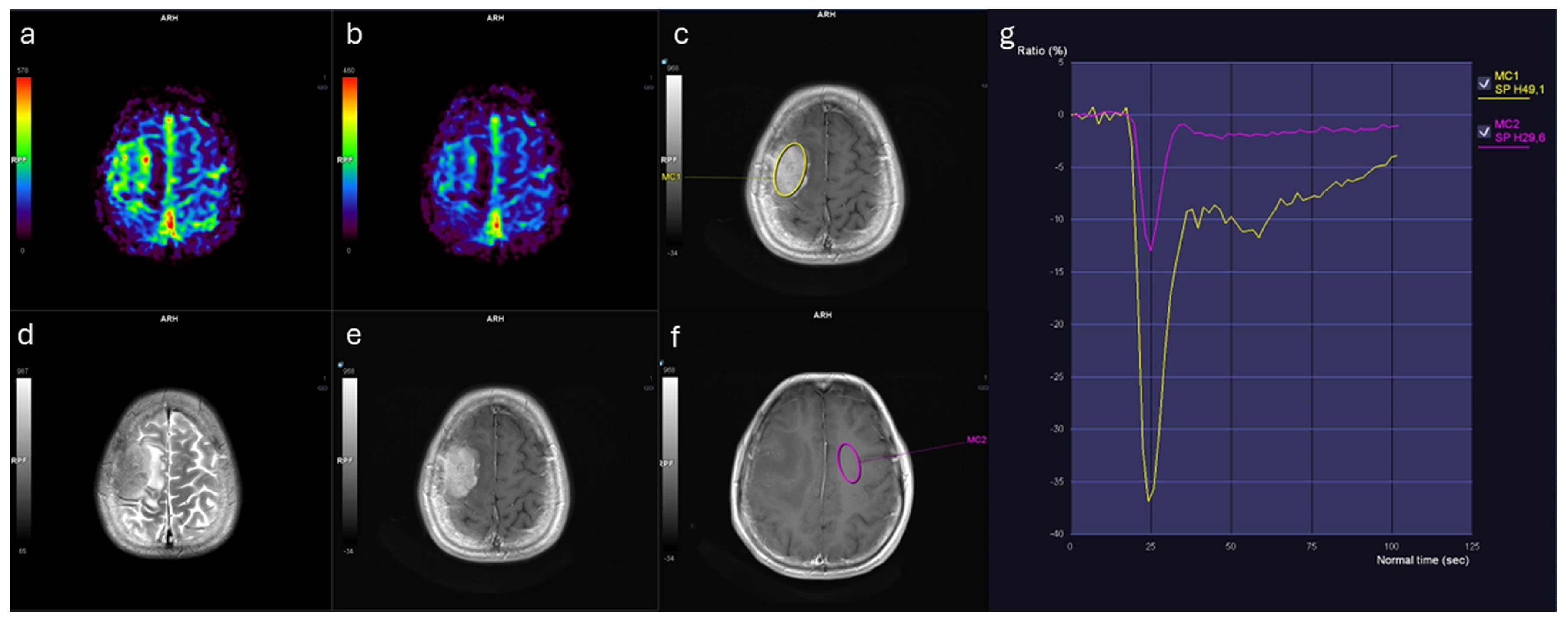
2.4. Image Evaluation and Perfusion Analysis
2.5. Machine Learning Models (LDA, L2 Logistic Regression, Linear SVM)
3. Results
3.1. Patient and Lesion Characteristics
3.2. Perfusion and Diffusion Parameters in IDMs and Meningiomas
3.3. Subgroup Analysis of IDM According to Primary Tumor Origin
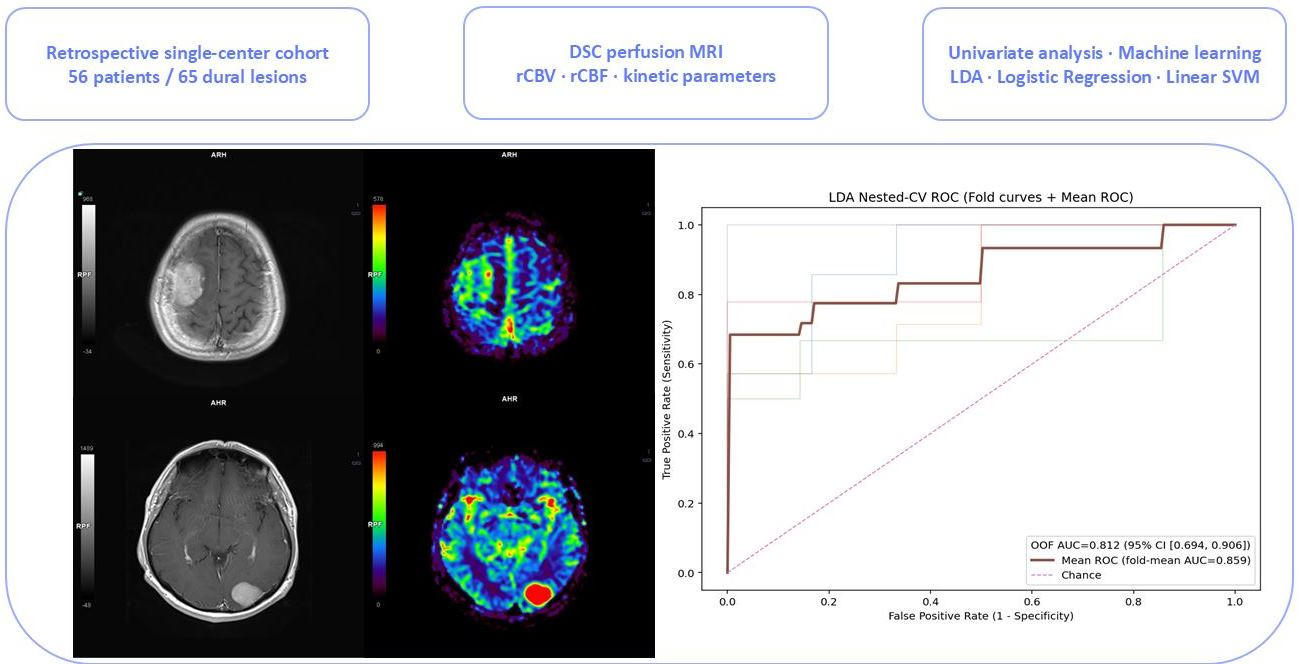
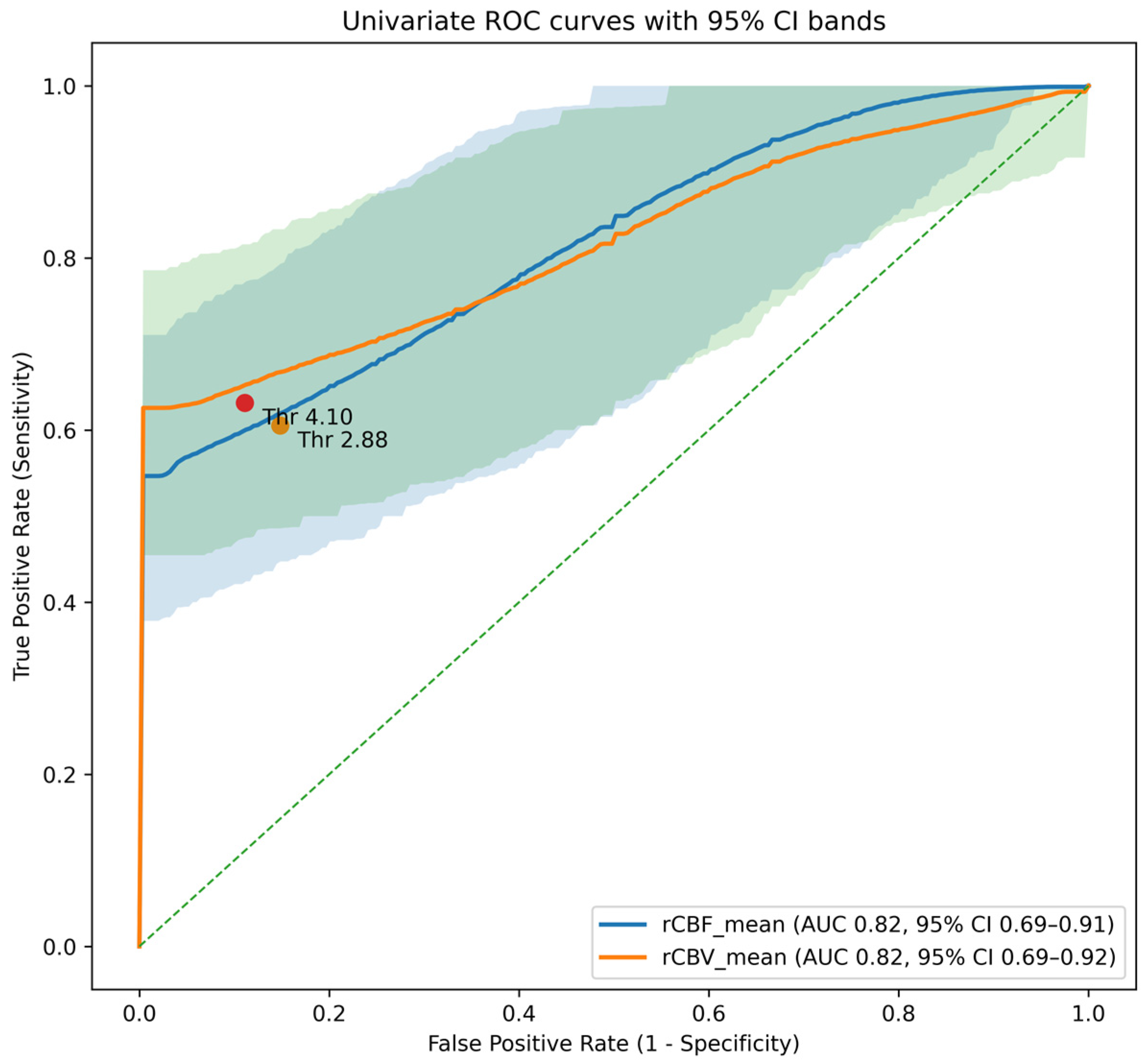
3.4. Diagnostic Performance of Perfusion Biomarkers and Machine Learning Models
4. Discussion
5. Conclusions
Author Contributions
Funding
Institutional Review Board Statement
Informed Consent Statement
Data Availability Statement
Conflicts of Interest
Abbreviations
| IDMs | Intracranial Dural Metastases |
| DSC | Dynamic Susceptibility Contrast |
| rCBV | relative Cerebral Blood Volume |
| rCBF | relative Cerebral Blood Flow |
| ADC | Apparent Diffusion Coefficient |
| ML | Machine Learning |
| PSR | Percentage Signal Recovery |
| ROIs | Regions of Interest |
| rWiT | relative Wash-in Time |
| LDA | Linear Discriminant Analysis |
| SVM | Support Vector Machine |
| ROC | Receiver Operating Characteristic Curve |
| AUC | Area Under the Curve |
| OOF | Out-of-Fold |
References
- Klingelhöfer, L.; Mucha, D.; Geiger, K.; Koch, R.; von Kummer, R. Prognostic Value of Conventional Magnetic Resonance Imaging for Adult Patients with Brain Tumors. Clin. Neuroradiol. 2015, 25, 281–289. [Google Scholar] [CrossRef] [Scilit] [PubMed]
- Zakhari, N.; Torres, C.; Castillo, M.; Nguyen, T.B. Uncommon Cranial Meningioma: Key Imaging Features on Conventional and Advanced Imaging. Clin. Neuroradiol. 2017, 27, 135–144. [Google Scholar] [CrossRef] [Scilit]
- Lui, Y.W.; Malhotra, A.; Farinhas, J.M.; Dasari, S.B.; Weidenheim, K.; Freeman, K.; LaSala, P.A. Dynamic perfusion MRI characteristics of dural metastases and meningiomas: A pilot study characterizing the first-pass wash-in phase beyond relative cerebral blood volume. Am. J. Roentgenol. 2011, 196, 886–890. [Google Scholar] [CrossRef] [Scilit]
- Galldiks, N.; Angenstein, F.; Werner, J.M.; Bauer, E.K.; Gutsche, R.; Fink, G.R.; Langen, K.J.; Lohmann, P. Use of advanced neuroimaging and artificial intelligence in meningiomas. Brain Pathol. 2022, 32, e13015. [Google Scholar] [CrossRef] [Scilit]
- Wu, H.; Beylerli, O.; Gareev, I.; Beilerli, A.; Ilyasova, T.; Talybov, R.; Sufianov, A.; Guo, X. Are there reliable multiparametric MRI criteria for differential diagnosis between intracranial meningiomas and solitary intracranial dural metastases? Oncol. Lett. 2023, 26, 350. [Google Scholar] [CrossRef] [Scilit]
- Matias, T.B.; Cordeiro, R.A.; Duarte, J.A.; de Jarry, V.M.; Appenzeller, S.; Villarinho, L.; Reis, F. Immune-Mediated Hypertrophic Pachymeningitis and Its Mimickers: Magnetic Resonance Imaging Findings. Acad. Radiol. 2023, 30, 2696–2706. [Google Scholar] [CrossRef] [Scilit]
- Alali, A.A.; Aljaafary, M.; AlBaker, K. A proposed imaging scoring system to differentiate dural-based metastasis from meningioma using MR and CT images. BMC Med. Imaging 2025, 25, 163. [Google Scholar] [CrossRef] [Scilit] [PubMed]
- Kremer, S.; Grand, S.; Rémy, C.; Pasquier, B.; Benabid, A.L.; Bracard, S.; Le Bas, J.F. Contribution of dynamic contrast MR imaging to the differentiation between dural metastasis and meningioma. Neuroradiology 2004, 46, 642–648. [Google Scholar] [CrossRef] [Scilit]
- Kremer, S.; Grand, S.; Remy, C.; Esteve, F.; Lefournier, V.; Pasquier, B.; Hoffmann, D.; Benabid, A.L.; Le Bas, J.F. Cerebral blood volume mapping by MR imaging in the initial evaluation of brain tumors. J. Neuroradiol. 2002, 29, 105–113. [Google Scholar] [PubMed]
- Hayashida, Y.; Hirai, T.; Morishita, S.; Kitajima, M.; Murakami, R.; Korogi, Y.; Makino, K.; Nakamura, H.; Ikushima, I.; Yamura, M.; et al. Diffusion-weighted imaging of metastatic brain tumors: Comparison with histologic type and tumor cellularity. Am. J. Neuroradiol. 2006, 27, 1419–1425. [Google Scholar]
- Louis, D.N.; Perry, A.; Wesseling, P.; Brat, D.J.; Cree, I.A.; Figarella-Branger, D.; Hawkins, C.; Ng, H.K.; Pfister, S.M.; Reifenberger, G.; et al. The 2021 WHO Classification of Tumors of the Central Nervous System: A summary. Neuro-Oncol. 2021, 23, 1231–1251. [Google Scholar] [CrossRef] [Scilit]
- Boulagnon-Rombi, C.; Fleury, C.; Fichel, C.; Lefour, S.; Marchal Bressenot, A.; Gauchotte, G. Immunohistochemical Approach to the Differential Diagnosis of Meningiomas and Their Mimics. J. Neuropathol. Exp. Neurol. 2017, 76, 289–298. [Google Scholar] [CrossRef] [Scilit]
- Shibuya, M. Pathology and molecular genetics of meningioma: Recent advances. Neurol. Med.-Chir. 2015, 55, 14–27. [Google Scholar] [CrossRef] [Scilit]
- Zeng, L.; Liang, P.; Jiao, J.; Chen, J.; Lei, T. Will an Asymptomatic Meningioma Grow or Not Grow? A Meta-Analysis. J. Neurol. Surg. Part A Cent. Eur. Neurosurg. 2015, 76, 341–347. [Google Scholar] [CrossRef] [Scilit]
- Talybov, R.; Beylerli, O.; Mochalov, V.; Prokopenko, A.; Ilyasova, T.; Trofimova, T.; Sufianov, A.; Guang, Y. Multiparametric MR Imaging Features of Primary CNS Lymphomas. Front. Surg. 2022, 9, 887249. [Google Scholar] [CrossRef] [Scilit] [PubMed]
- Laigle-Donadey, F.; Taillibert, S.; Mokhtari, K.; Hildebrand, J.; Delattre, J.Y. Dural metastases. J. Neuro-Oncol. 2005, 75, 57–61. [Google Scholar] [CrossRef] [Scilit] [PubMed]
- Lyndon, D.; Lansley, J.A.; Evanson, J.; Krishnan, A.S. Dural masses: Meningiomas and their mimics. Insights Imaging 2019, 10, 11. [Google Scholar] [CrossRef] [Scilit] [PubMed]
- Wallace, E.W. The dural tail sign. Radiology 2004, 233, 56–57. [Google Scholar] [CrossRef] [Scilit]
- Tagle, P.; Villanueva, P.; Torrealba, G.; Huete, I. Intracranial metastasis or meningioma? An uncommon clinical diagnostic dilemma. Surg. Neurol. 2002, 58, 241–245. [Google Scholar] [CrossRef] [Scilit]
- Laidlaw, J.D.; Kumar, A.; Chan, A. Dural metastases mimicking meningioma. Case report and review of the literature. J. Clin. Neurosci. 2004, 11, 780–783. [Google Scholar] [CrossRef] [Scilit]
- Shukla, S.; Karbhari, A.; Rastogi, S.; Agarwal, U.; Rai, P.; Mahajan, A. Bench-to-bedside imaging in brain metastases: A road to precision oncology. Clin. Radiol. 2024, 79, 485–500. [Google Scholar] [CrossRef] [Scilit]
- Zimny, A.; Sasiadek, M. Contribution of perfusion-weighted magnetic resonance imaging in the differentiation of meningiomas and other extra-axial tumors: Case reports and literature review. J. Neuro-Oncol. 2011, 103, 777–783. [Google Scholar] [CrossRef] [Scilit]
- Marciscano, A.E.; Stemmer-Rachamimov, A.O.; Niemierko, A.; Larvie, M.; Curry, W.T.; Barker, F.G., 2nd; Martuza, R.L.; McGuone, D.; Oh, K.S.; Loeffler, J.S.; et al. Benign meningiomas (WHO Grade I) with atypical histological features: Correlation of histopathological features with clinical outcomes. J. Neurosurg. 2016, 124, 106–114. [Google Scholar] [CrossRef] [Scilit]
- Toh, C.H.; Wei, K.C.; Chang, C.N.; Peng, Y.W.; Ng, S.H.; Wong, H.F.; Lin, C.P. Assessment of angiographic vascularity of meningiomas with dynamic susceptibility contrast-enhanced perfusion-weighted imaging and diffusion tensor imaging. Am. J. Neuroradiol. 2014, 35, 263–269. [Google Scholar] [CrossRef] [Scilit]
- Furtner, J.; Oth, I.; Schöpf, V.; Nenning, K.H.; Asenbaum, U.; Wöhrer, A.; Woitek, R.; Widhalm, G.; Kiesel, B.; Berghoff, A.S.; et al. Noninvasive Differentiation of Meningiomas and Dural Metastases Using Intratumoral Vascularity Obtained by Arterial Spin Labeling. Clin. Neuroradiol. 2020, 30, 599–605. [Google Scholar] [CrossRef] [Scilit] [PubMed]
- Nayak, L.; Abrey, L.E.; Iwamoto, F.M. Intracranial dural metastases. Cancer 2009, 115, 1947–1953. [Google Scholar] [CrossRef] [Scilit] [PubMed]
- Hakyemez, B.; Erdogan, C.; Bolca, N.; Yildirim, N.; Gokalp, G.; Parlak, M. Evaluation of different cerebral mass lesions by perfusion-weighted MR imaging. J. Magn. Reson. Imaging 2006, 24, 817–824. [Google Scholar] [CrossRef] [Scilit] [PubMed]
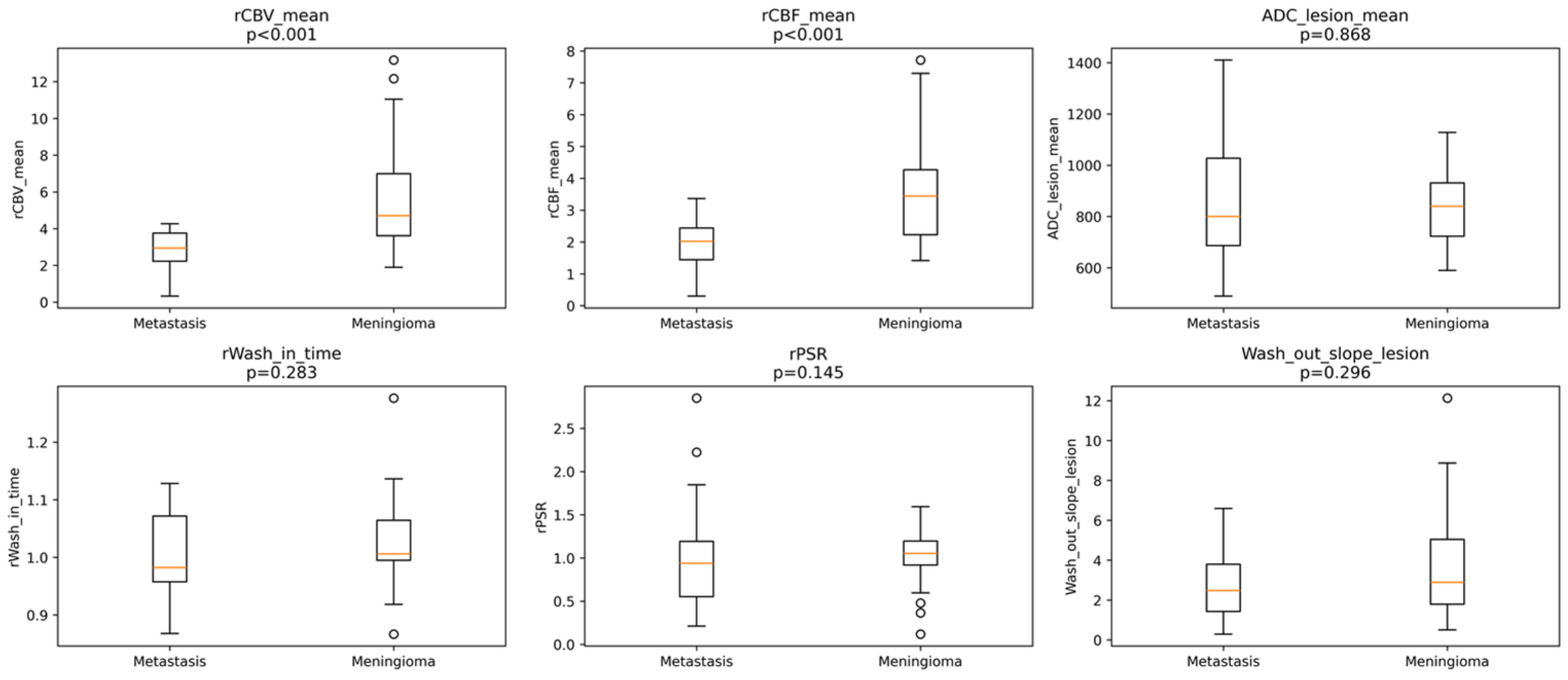

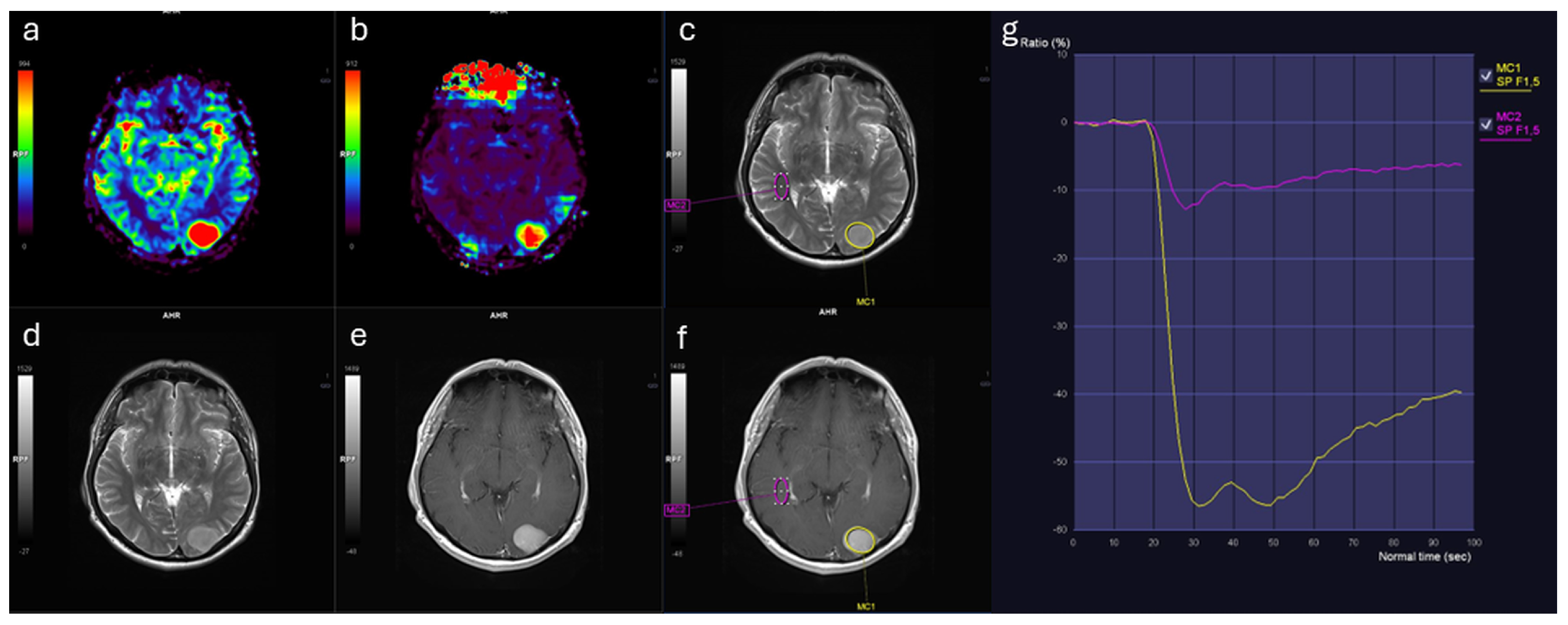


| Parameter | Dural Metastases (n = 27) Median (Q1–Q3) | Meningiomas (n = 38) Median (Q1–Q3) | Mann–Whitney U | p Value |
|---|---|---|---|---|
| rCBV_mean | 2.95 (2.22–3.75) | 4.71 (3.61–6.99) | 188 | <0.001 |
| rCBF_mean | 2.02 (1.44–2.44) | 3.44 (2.23–4.27) | 184 | <0.001 |
| ADC_lesion_mean | 800 (687–1027) | 840 (723–931) | 500 | 0.868 |
| rWash_in_time | 0.98 (0.96–1.07) | 1.01 (0.99–1.06) | 432 | 0.283 |
| rPSR | 0.94 (0.55–1.19) | 1.05 (0.92–1.20) | 403 | 0.145 |
| Wash_out_slope_lesion | 2.48 (1.43–3.79) | 2.89 (1.79–5.05) | 434 | 0.296 |
| Method | Threshold | ROC-AUC | Metastasis Sensitivity (Class 0) | Meningioma Sensitivity (Class 1) | Accuracy | Balanced Accuracy |
|---|---|---|---|---|---|---|
| rCBF_mean | 2.88 | 0.82 | 85.2% | 60.5% | 70.8% | n/a |
| rCBV_mean | 4.10 | 0.82 | 88.9% | 63.2% | 73.8% | n/a |
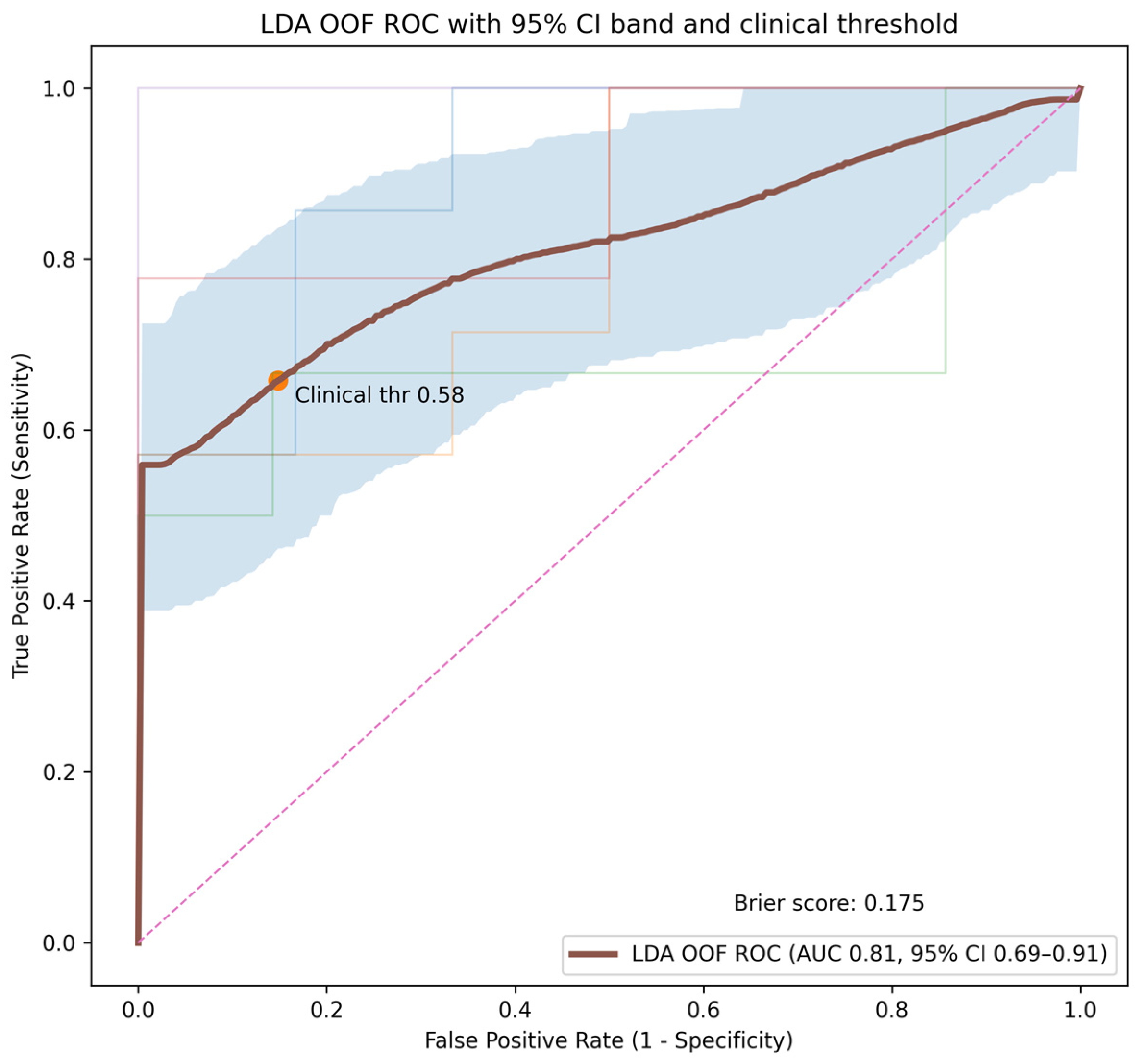
| LDA (2-feature) | 0.58 | 0.81 | 85.2% | 68.4% | 75.3% | 76.8% |
| Linear SVM (2-feature) | 0.66 | 0.80 | 85.2% | 63.2% | 72.3% | 74.2% |
| Logistic Regression L2 (2-feature) | 0.68 | 0.80 | 85.2% | 65.8% | 73.8% | 75.5% |
Disclaimer/Publisher’s Note: The statements, opinions and data contained in all publications are solely those of the individual author(s) and contributor(s) and not of MDPI and/or the editor(s). MDPI and/or the editor(s) disclaim responsibility for any injury to people or property resulting from any ideas, methods, instructions or products referred to in the content. |
© 2026 by the authors. Licensee MDPI, Basel, Switzerland. This article is an open access article distributed under the terms and conditions of the Creative Commons Attribution (CC BY) license.
Share and Cite
Erol, S.; Özer, H.; Baytok, A.; Arı, A.; Cebeci, H. Differentiation of Intracranial Dural Metastases and Meningiomas Using DSC Perfusion MRI and Machine Learning. Diagnostics 2026, 16, 781. https://doi.org/10.3390/diagnostics16050781
Erol S, Özer H, Baytok A, Arı A, Cebeci H. Differentiation of Intracranial Dural Metastases and Meningiomas Using DSC Perfusion MRI and Machine Learning. Diagnostics. 2026; 16(5):781. https://doi.org/10.3390/diagnostics16050781
Chicago/Turabian StyleErol, Seyit, Halil Özer, Ahmet Baytok, Ayşe Arı, and Hakan Cebeci. 2026. "Differentiation of Intracranial Dural Metastases and Meningiomas Using DSC Perfusion MRI and Machine Learning" Diagnostics 16, no. 5: 781. https://doi.org/10.3390/diagnostics16050781
APA StyleErol, S., Özer, H., Baytok, A., Arı, A., & Cebeci, H. (2026). Differentiation of Intracranial Dural Metastases and Meningiomas Using DSC Perfusion MRI and Machine Learning. Diagnostics, 16(5), 781. https://doi.org/10.3390/diagnostics16050781