A Reproducible Post-Valve-Replacement EHR Cohort for Comparative AI Studies
 , , , and
Abstract
1. Introduction
2. Related Work
3. Material and Methods
3.1. Baseline Dataset
3.1.1. Cohort Definition
3.1.2. General-Purpose VR Dataset
- Clinical-Technical Consensus Workflow for Feature Selection
- Step 1. Clinical Domain Scoping: A physician identified clinical parameters required to represent patient status and outcomes, guided by established cardiac surgery guidelines and relevant literature.
- Step 2. Mapping to MIMIC-IV Schema: These parameters were mapped to the respective concepts within the MIMIC-IV database.
- Step 3. Iterative Consensus Review: Parameters unavailable in the database were either substituted with clinically valid proxies or excluded. Additionally, the timing of measurements was medically reviewed to ensure clinical relevance.
3.2. Use Case: Postoperative Complication Risk Prognosis
3.2.1. Label Definition
3.2.2. Predictive Model Specifications
3.2.3. Benchmark VR Dataset
- 1.
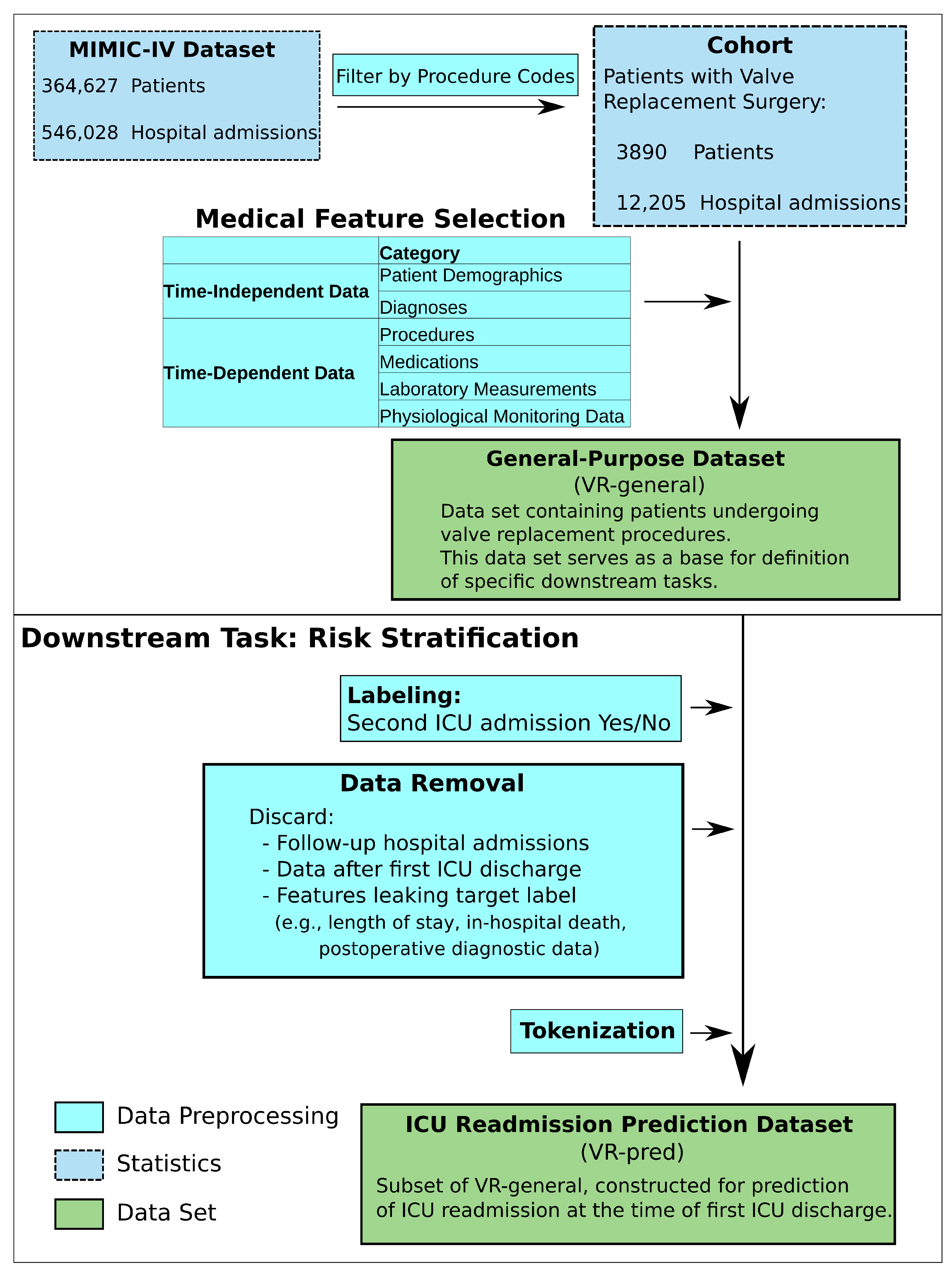
- Future Hospitalizations: We discarded all data associated with hospital admissions that occurred after VR hospitalization.
- 2.
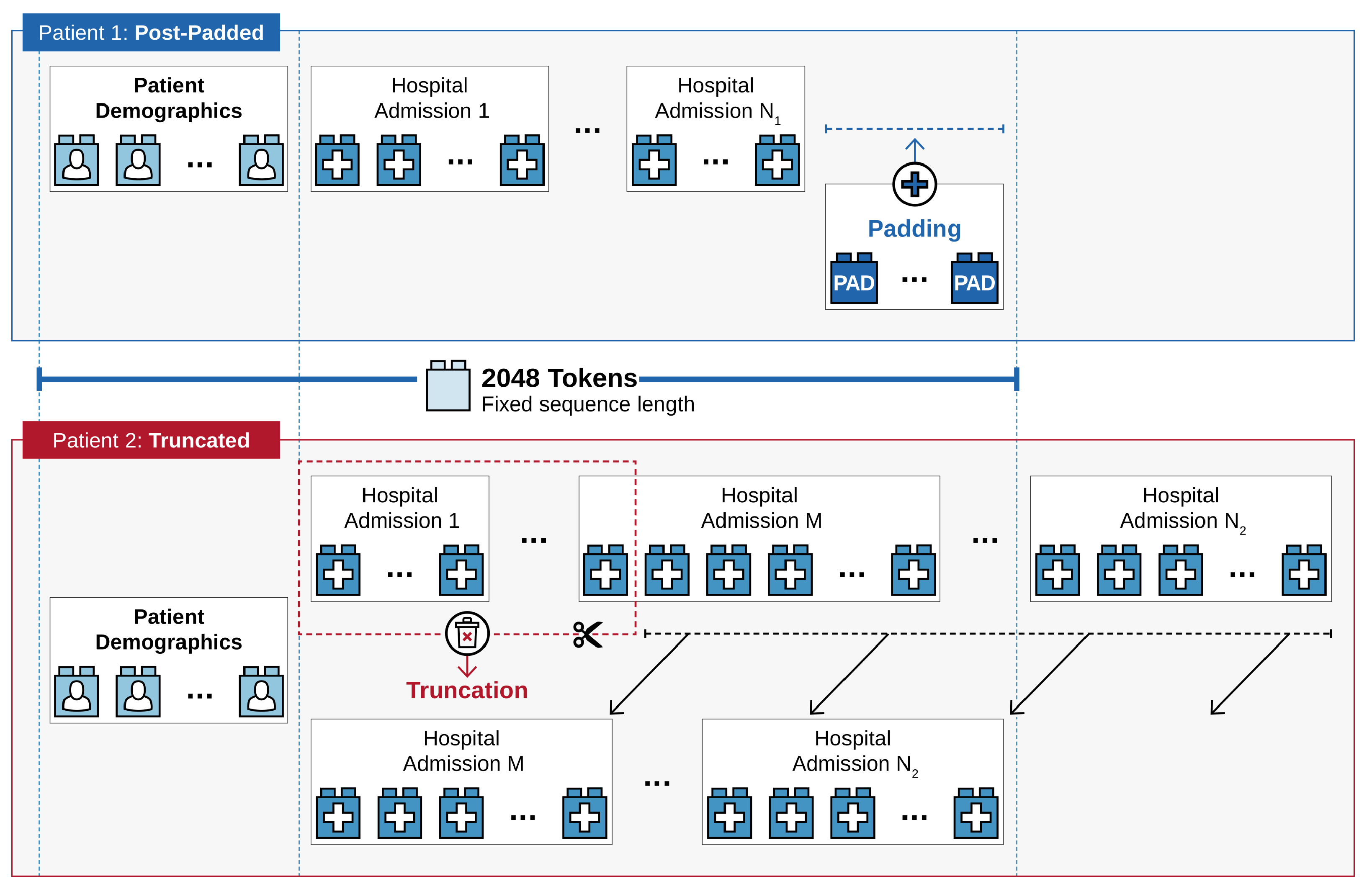
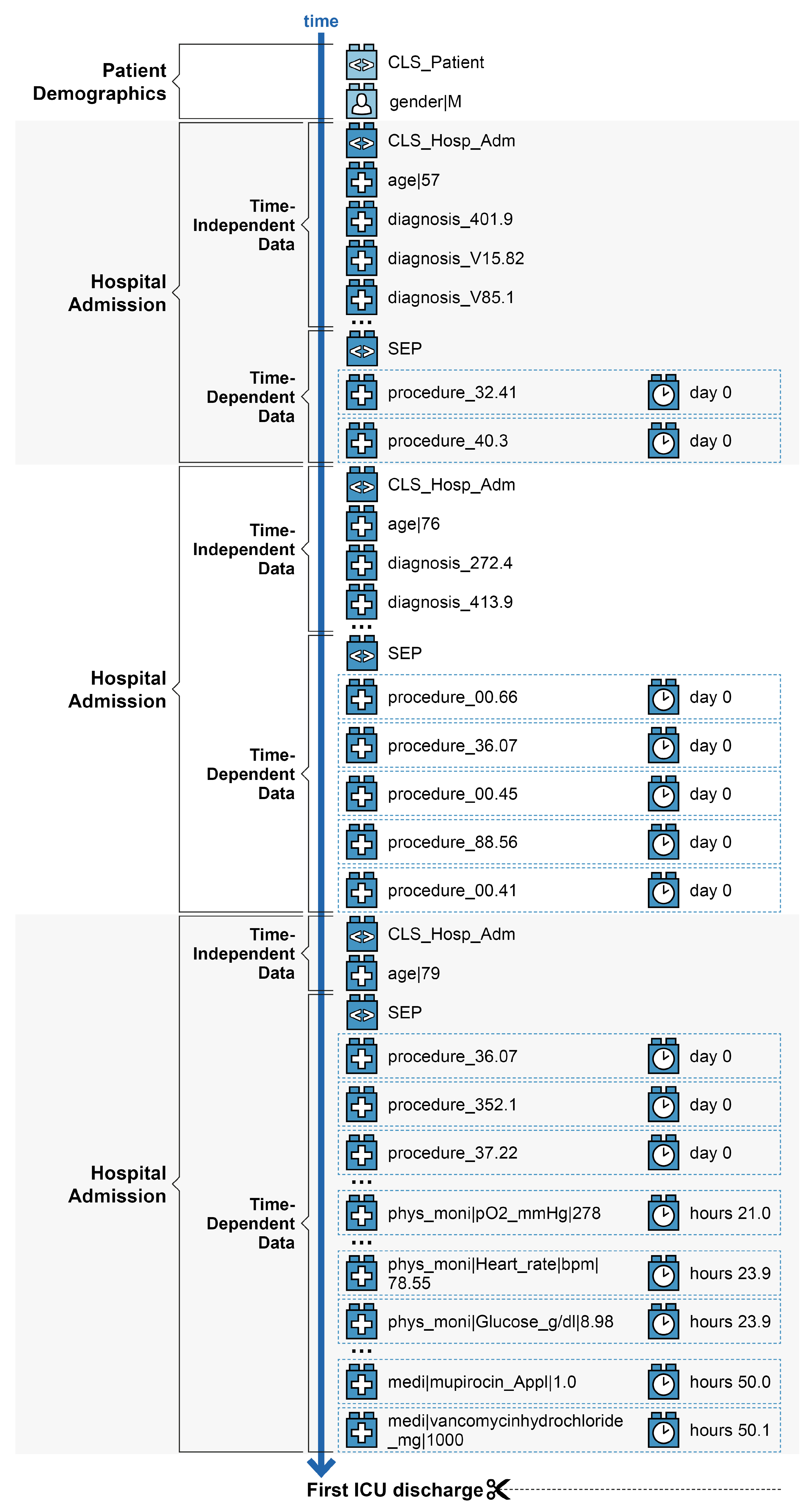
- Time-Series Cut-off: For the VR hospitalization, all time-dependent data (i.e., laboratory measurements, medications, physiological monitoring data, and procedures) with timestamps occurring after the first ICU discharge were removed. Since procedures in MIMIC-IV are recorded at a daily resolution only, all procedures dated on the day of ICU discharge were also excluded.
- 3.
- Untimed Data: We manually reviewed patient demographics and admission metadata, explicitly excluding total length of hospital stay, discharge time, and in-hospital mortality flags, as these features provide strong indications regarding the prediction target.
- 4.
- Diagnostic Codes: Diagnostic codes are recorded only at hospital-admission granularity and lack precise timestamps. To avoid leaking postoperative information, we, therefore, excluded all diagnostic codes assigned during the VR hospitalization. Only diagnoses from prior hospital admissions were retained to characterize pre-existing comorbidities.
3.2.4. Feature Relevance and Attribution Methods
4. Results
4.1. VR-General Cohort
4.2. Case Study: Postoperative Complication Risk Prognosis
4.2.1. ICU Readmission as Surrogate Target for Postoperative Complication Risk
4.2.2. Predictive Model Performance
4.2.3. Feature Importance
5. Discussion
5.1. A Clinically Valid, Reproducible Time-Series Cohort
5.2. ICU Readmission as Postoperative Risk Stratifier
5.3. Predictive Performance in Postoperative ICU Readmission Classification
5.4. Feature Importance: Method Caveats and Clinical Plausibility
5.5. Study Limitations
6. Conclusions
Author Contributions
Funding
Institutional Review Board Statement
Informed Consent Statement
Data Availability Statement
Acknowledgments
Conflicts of Interest
Appendix A. Valve Replacement Procedures

| ICD Code | Description |
|---|---|
| 3505 | Endovascular replacement of aortic valve |
| 3506 | Transapical replacement of aortic valve |
| 3521 | Open and other replacement of aortic valve with tissue graft |
| 3522 | Open and other replacement of aortic valve |
| 3523 | Open and other replacement of mitral valve with tissue graft |
| 3524 | Open and other replacement of mitral valve |
| 3507 | Endovascular replacement of pulmonary valve |
| 3508 | Transapical replacement of pulmonary valve |
| 3525 | Open and other replacement of pulmonary valve with tissue graft |
| 3526 | Open and other replacement of pulmonary valve |
| 3527 | Open and other replacement of tricuspid valve with tissue graft |
| 3528 | Open and other replacement of tricuspid valve |
| Replacement of Valve with: | |
| 02RF08N | Zooplastic Tissue, using Rapid Deployment Technique, Open Approach |
| 02RF38N | Zooplastic Tissue, using Rapid Deployment Technique, Percutaneous Approach |
| 02RF48N | Zooplastic Tissue, using Rapid Deployment Technique, |
| Percutaneous Endoscopic Approach | |
| X2RF032 | Zooplastic Tissue, Rapid Deployment Technique, Open Approach |
| X2RF332 | Zooplastic Tissue, Rapid Deployment Technique, Percutaneous Approach |
| X2RF432 | Zooplastic Tissue, Rapid Deployment Technique, Percutaneous Endoscopic Approach |
| 02RH38L | Zooplastic Tissue, In Existing Conduit, Percutaneous Approach |
| 02RH38M | Zooplastic Tissue, Native Site, Percutaneous Approach |
| 02R*07Z | Autologous Tissue Substitute, Open Approach |
| 02R*08Z | Zooplastic Tissue, Open Approach |
| 02R*0JZ | Synthetic Substitute, Open Approach |
| 02R*0KZ | Nonautologous Tissue Substitute, Open Approach |
| 02R*37H | Autologous Tissue Substitute, Transapical, Percutaneous Approach |
| 02R*37Z | Autologous Tissue Substitute, Percutaneous Approach |
| 02R*38H | Zooplastic Tissue, Transapical, Percutaneous Approach |
| 02R*38Z | Zooplastic Tissue, Percutaneous Approach |
| 02R*3JH | Synthetic Substitute, Transapical, Percutaneous Approach |
| 02R*3JZ | Synthetic Substitute, Percutaneous Approach |
| 02R*3KH | Nonautologous Tissue Substitute, Transapical, Percutaneous Approach |
| 02R*3KZ | Nonautologous Tissue Substitute, Percutaneous Approach |
| 02R*47Z | Autologous Tissue Substitute, Percutaneous Endoscopic Approach |
| 02R*48Z | Zooplastic Tissue, Percutaneous Endoscopic Approach |
| 02R*4JZ | Synthetic Substitute, Percutaneous Endoscopic Approach |
| 02R*4KZ | Nonautologous Tissue Substitute, Percutaneous Endoscopic Approach |
Appendix B. VR-General Dataset
| Category | Details |
|---|---|
| General Information | |
| Gender | |
| Age | |
| Height | |
| Weight | |
| BMI | |
| History of Tobacco Use | Smoking Status, Quit Date if Applicable |
| Patient History | |
| Diagnoses | All Diagnoses Recorded During Any Hospitalization |
| Procedures | All Procedures Recorded During Any Hospitalization |
| Parameters During VR Hospitalization | |
| Laboratory Measurements | |
| Kidney Retention Parameters | Creatinine, Urea, eGFR |
| Electrolytes | Potassium, Sodium, Magnesium, Phosphate, Calcium, Chloride, Osmolality |
| Inflammatory Markers | C-Reactive Protein (CRP) |
| Liver Function Tests | ALT, AST, Albumin, Bilirubin, Alkaline~Phosphatase |
| Hematology | Hemoglobin, Hematocrit, MCHC, RDW, WBC, Lymphocytes, Basophils, |
| Eosinophils, Neutrophils, Monocytes | |
| Cardiac Markers | BNP, Troponin I, Troponin T, CK-MB, LDH |
| Diabetes Markers | Blood Glucose, HbA1c |
| Coagulation Parameters | INR, Thrombin Time, PT, aPTT, Fibrinogen, Platelets |
| Lipid Profile | LDL, HDL, Triglycerides, Total Cholesterol |
| Blood Gas Analysis | Anion Gap, Bicarbonate, Base Excess, Oxygen Saturation, , |
| , pH, Lactate | |
| Medication | All Medications |
| Procedures | All Procedures |
| Physiological Monitoring Data | Postoperative |
| Lung Function | Respiratory Rate, Vital Capacity, Resistance, Arterial pressure, |
| Arterial Saturation, Arterial Pressure | |
| Heart Function | Left Atrial Pressure, Cardiac Output, EF |
| Vital Signs | |
| Blood Pressure | Non Invasive (on Ward)/Central Venous Pressure, |
| Pulmonary Artery Pressure, Arterial Blood Pressure (in ICU) | |
| Heart Rate | |
| Temperature | |
Appendix C. Tokenization Scheme
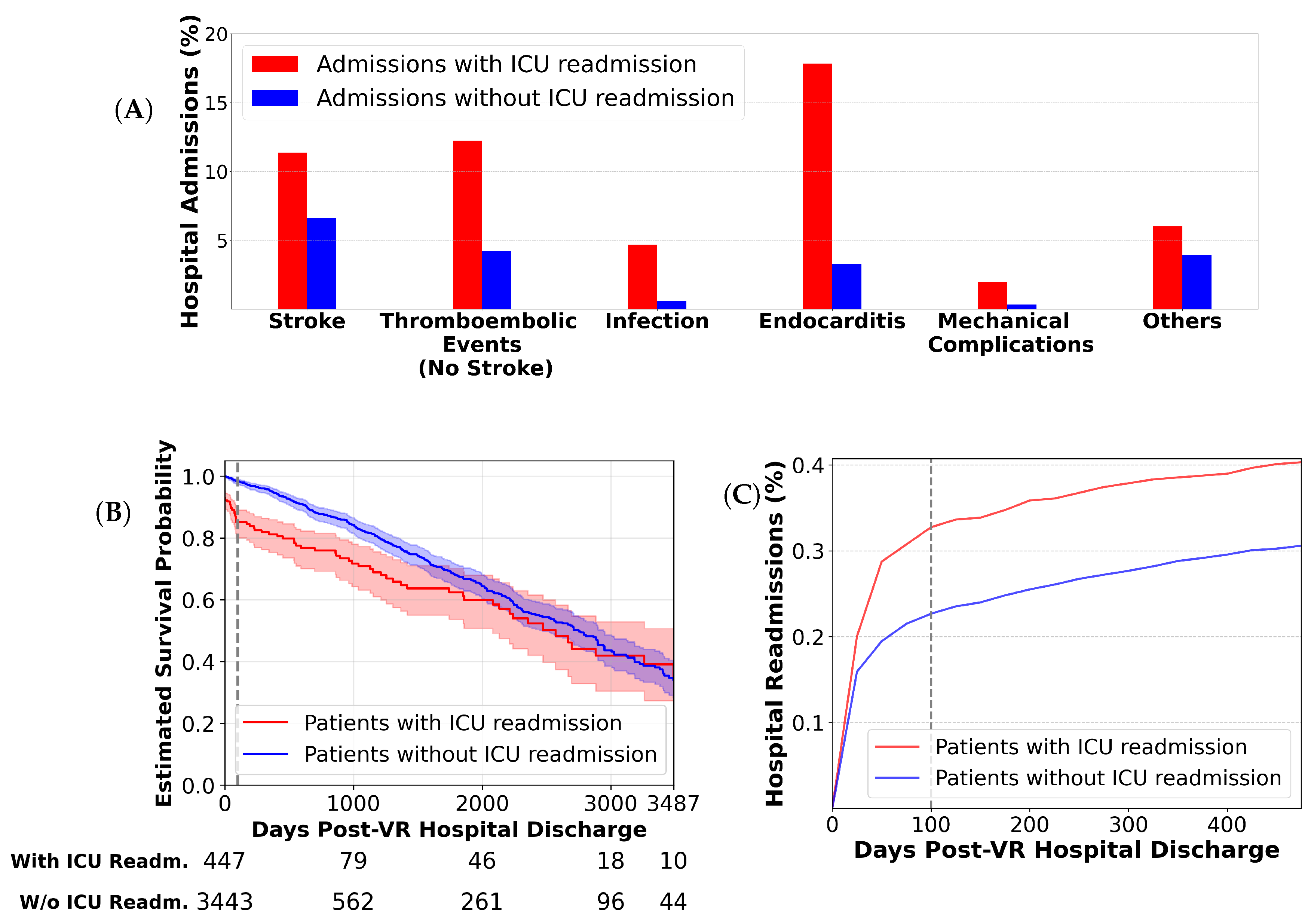
Appendix D. Postoperative Complications
| ICD Code | Description |
|---|---|
| Stroke
(Only
ischemic strokes are considered here, as valve prosthesis and potential postoperative atrial fibrillation increase the risk of embolisms. Hemorrhagic strokes, despite an increased risk, are excluded as they primarily result from anticoagulation therapy, not directly from the valve material or surgery.) | |
| 433. * | Occlusion and stenosis of precerebral arteries |
| 434. * | Occlusion of cerebral arteries |
| 435. * | Transient cerebral ischemia |
| G45. * | Transient cerebral ischemic attacks and related syndromes |
| I63. * | Cerebral infarction |
| Thromboembolic Events (other than Stroke) | |
| 444. * | Arterial embolism and thrombosis |
| 451. * | Phlebitis and thrombophlebitis |
| 452 | Portal vein thrombosis |
| 453. * | Other venous embolism and thrombosis |
| I74. * | Arterial embolism and thrombosis |
| I80. * | Thrombosis, phlebitis and thrombophlebitis |
| I81 | Portal vein thrombosis |
| I82. * | Other venous embolism and thrombosis |
| T82.81 * | Embolism due to cardiac prosthetic devices, implants and grafts |
| T82.86 * | Thrombosis due to cardiac prosthetic devices, implants and grafts |
| Infection | |
| 996.61 | Infection and inflammatory reaction due to cardiac device, implant, and graft |
| T82.6 * | Infection and inflammatory reaction due to cardiac valve prosthesis |
| Endocarditis | |
| 421. * | Acute and subacute endocarditis |
| 424.9 * | Endocarditis valve unspecified |
| I33. * | Acute and subacute endocarditis |
| Mechanical Complication | |
| 996.02 | Mechanical complication due to heart valve prosthesis |
| T82.0 * | Mechanical complication of heart valve prosthesis |
| Other Complications | |
| 996.71 | Other complications due to heart valve prosthesis |
| T82.8{2,3,4,5,9} * | Other complications of cardiac and vascular prosthetic devices, implants and grafts |
| T82.9 * | Unspecified complication of cardiac and vascular prosthetic device, implant and graft |
Appendix E. Detailed Feature Relevance and Attribution
| Category | Feature | Feature Importance |
|---|---|---|
| Procedure | Introduction of Nutritional Substance | |
| to Upper GI (3E0G76Z) | 0.33 | |
| Continuous Respiratory Mechanical | ||
| Ventilation > 96 h (5A1955Z) | 0.27 | |
| Endotracheal Airway Insertion (0BH17EZ) | 0.27 | |
| Historical Diagnoses | Severe Sepsis with Septic Shock (R65.21) | 0.13 |
| Ischemic Cardiomyopathy (I25.5) | 0.12 | |
| Unspecified Viral Hepatitis C | ||
| without Hepatic Coma (070.70) | 0.10 | |
| Lab | Base Excess Blood Gas | 0.39 |
| pH Blood Gas | 0.33 | |
| Blood Gas | 0.33 | |
| Medication | Docusate Sodium | 0.44 |
| Cefazolin Sodium | 0.32 | |
| Propofol | 0.25 | |
| Physiological Monitoring Data | Pulmonary Artery Pressure diastolic | 0.07 |
| Arterial Blood Pressure systolic | 0.05 | |
| Pulmonary Artery Pressure mean | 0.05 | |
| Patient Demographics | Age at Hospital Admission | 0.08 |
| Gender | 0.06 |
| Category | Feature | Feature Importance |
|---|---|---|
| Procedure | Pericardiocentesis (0W9D3ZZ) | 37.0 |
| Fluoroscopy of Mammary | ||
| Bypass Graft (B2181ZZ) | 0.45 | |
| Injection or infusion of therapeutic | ||
| or prophylactic substance (99.29) | 0.37 | |
| Historical Diagnoses | Anticoagulants causing | |
| adverse effects (E934.2) | 0.05 | |
| Personal history of other | ||
| malignant neoplasm (Z85.038) | 0.05 | |
| Cardiogenic shock (R57.0) | 0.05 | |
| Lab | Chloride Blood Gas | 0.90 |
| Sodium Blood Gas | 0.82 | |
| Hematocrit Blood Gas | ||
| Medication | Cefazolin Sodium | 0.47 |
| Metoprolol Tartrate | 0.34 | |
| Insulin Glargine | 0.30 | |
| Physiological Monitoring Data | Arterial Blood Pressure systolic | 0.36 |
| Arterial Pressure mean | 0.35 | |
| Cardiac Output (CCO) | 0.28 | |
| Patient Demographics | Age at Hospital Admission | 0.98 |
| Gender | 0.95 |
| Category | Feature | Feature Importance |
|---|---|---|
| Procedure | Introduction of Nutritional | |
| Substance to Upper GI (3E0G76Z) | 0.32 | |
| Insertion of Infusion Device into | ||
| Superior Vena Cava (02HV33Z) | 0.26 | |
| Continuous Respiratory Mechanical | ||
| Ventilation > 96 h (5A1955Z) | 0.16 | |
| Historical Diagnoses | Aortic valve disorders (424.1) | 0.02 |
| Hypertensive chronic kidney disease (I12.9) | 0.01 | |
| Asthma, unspecified type (493.90) | 0.01 | |
| Lab | pH Blood Gas | 1.00 |
| Blood Gas | 0.98 | |
| Glucose Blood Gas | 0.85 | |
| Medication | Docusate Sodium | 0.68 |
| Cefazolin Sodium | 0.67 | |
| Metoprolol Tartrate | 0.25 | |
| Physiological Monitoring Data | Heart Rate | 0.00 |
| Arterial Blood Pressure systolic | 0.00 | |
| Heart rate Alarm - High | 0.00 | |
| Patient Demographics | Age at Hospital Admission | 0.24 |
| Gender | 0.22 |
Appendix F. Statistical Tests for the Benefit of Temporal EHR Sequences

References
- Misawa, Y. Valve-related complications after mechanical heart valve implantation. Surg. Today 2015, 45, 1205–1209. [Google Scholar] [CrossRef] [Scilit]
- Del Val, D.; Abdel-Wahab, M.; Mangner, N.; Durand, E.; Ihlemann, N.; Urena, M.; Pellegrini, C.; Giannini, F.; Gasior, T.; Wojakowski, W.; et al. Stroke complicating infective endocarditis after transcatheter aortic valve replacement. J. Am. Coll. Cardiol. 2021, 77, 2276–2287. [Google Scholar] [CrossRef] [Scilit] [PubMed]
- Dodge, A.; Hurni, M.; Ruchat, P.; Stumpe, F.; Fischer, A.; Van Melle, G.; Sadeghi, H. Surgery in native valve endocarditis: Indications, results and risk factors. Eur. J. Cardio-Thorac. Surg. 1995, 9, 330–334. [Google Scholar] [CrossRef] [Scilit] [PubMed]
- Obafemi, T.; Mullis, D.; Bajaj, S.; Krishna, P.; Boyd, J. Results following implementation of a cardiac surgery ERAS protocol. PLoS ONE 2023, 18, e0277868. [Google Scholar] [CrossRef] [Scilit]
- Ljungqvist, O.; Scott, M.; Fearon, K.C. Enhanced recovery after surgery: A review. JAMA Surg. 2017, 152, 292–298. [Google Scholar] [CrossRef] [Scilit]
- Jensen, P.B.; Jensen, L.J.; Brunak, S. Mining Electronic Health Records: Towards Better Research Applications and Clinical Care. Nat. Rev. Genet. 2012, 13, 395–405. [Google Scholar] [CrossRef] [Scilit]
- Howe, J.L.; Adams, K.T.; Hettinger, A.Z.; Ratwani, R.M. Electronic Health Record Usability Issues and Potential Contribution to Patient Harm. J. Am. Med. Assoc. 2018, 319, 1276–1278. [Google Scholar] [CrossRef] [Scilit]
- Goodfellow, I.; Bengio, Y.; Courville, A. Deep Learning; MIT Press: Cambridge, MA, USA, 2016. [Google Scholar]
- Xiao, C.; Choi, E.; Sun, J. Opportunities and Challenges in Developing Deep Learning Models Using Electronic Health Records Data: A Systematic Review. J. Am. Med. Inform. Assoc. 2018, 25, 1419–1428. [Google Scholar] [CrossRef] [Scilit]
- Roques, F.; Michel, P.; Goldstone, A.; Nashef, S. The logistic euroscore. Eur. Heart J. 2003, 24, 882–883. [Google Scholar] [CrossRef] [Scilit]
- Nashef, S.A.; Roques, F.; Sharples, L.D.; Nilsson, J.; Smith, C.; Goldstone, A.R.; Lockowandt, U. Euroscore ii. Eur. J. Cardio-Thorac. Surg. 2012, 41, 734–745. [Google Scholar] [CrossRef] [Scilit] [PubMed]
- Dhillon, G.; Hassan, H.; Andra, C.A.; Zainal, S.; Raynaldo, A.H.; Haykal, T.B. STS (Society of Thoracic Surgeon) Score as a Predictor for Major Adverse Cardiovascular Events in Patients Undergone Coronary Artery Bypass Surgery During Admission in Haji Adam Malik General Hospital Medan. Zenodo 2022, 7, 500–505. [Google Scholar] [CrossRef]
- Kilic, A.; Goyal, A.; Miller, J.K.; Gleason, T.G.; Dubrawksi, A. Performance of a machine learning algorithm in predicting outcomes of aortic valve replacement. Ann. Thorac. Surg. 2021, 111, 503–510. [Google Scholar] [CrossRef] [Scilit]
- Jiang, H.; Liu, L.; Wang, Y.; Ji, H.; Ma, X.; Wu, J.; Huang, Y.; Wang, X.; Gui, R.; Zhao, Q.; et al. Machine learning for the prediction of complications in patients after mitral valve surgery. Front. Cardiovasc. Med. 2021, 8, 771246. [Google Scholar] [CrossRef] [Scilit]
- Agasthi, P.; Ashraf, H.; Pujari, S.H.; Girardo, M.E.; Tseng, A.; Mookadam, F.; Venepally, N.R.; Buras, M.; Khetarpal, B.K.; Allam, M.; et al. Artificial intelligence trumps TAVI2-SCORE and CoreValve score in predicting 1-year mortality post-transcatheter aortic valve replacement. Cardiovasc. Revasc. Med. 2021, 24, 33–41. [Google Scholar] [CrossRef] [Scilit] [PubMed]
- Hoffmann, J.; Mas-Peiro, S.; Berkowitsch, A.; Boeckling, F.; Rasper, T.; Pieszko, K.; De Rosa, R.; Hiczkiewicz, J.; Burchardt, P.; Fichtlscherer, S.; et al. Inflammatory signatures are associated with increased mortality after transfemoral transcatheter aortic valve implantation. ESC Heart Fail. 2020, 7, 2597–2610. [Google Scholar] [CrossRef] [Scilit] [PubMed]
- Kwiecinski, J.; Dabrowski, M.; Nombela-Franco, L.; Grodecki, K.; Pieszko, K.; Chmielak, Z.; Pylko, A.; Hennessey, B.; Kalinczuk, L.; Tirado-Conte, G.; et al. Machine learning for prediction of all-cause mortality after transcatheter aortic valve implantation. Eur. Heart J. Qual. Care Clin. Outcomes 2023, 9, 768–777. [Google Scholar] [CrossRef] [Scilit] [PubMed]
- Lertsanguansinchai, P.; Chokesuwattanaskul, R.; Petchlorlian, A.; Suttirut, P.; Buddhari, W.; Chula TAVI Team. Machine learning-based predictive risk models for 30-day and 1-year mortality in severe aortic stenosis patients undergoing transcatheter aortic valve implantation. Int. J. Cardiol. 2023, 374, 20–26. [Google Scholar] [CrossRef] [Scilit]
- Al-Farra, H.; Ravelli, A.C.; Henriques, J.P.; Houterman, S.; de Mol, B.A.; Abu-Hanna, A.; Committee, N.T.R. Development and validation of a prediction model for early mortality after transcatheter aortic valve implantation (TAVI) based on the Netherlands Heart Registration (NHR): The TAVI-NHR risk model. Catheter. Cardiovasc. Interv. 2022, 100, 879–889. [Google Scholar] [CrossRef] [Scilit]
- Leha, A.; Huber, C.; Friede, T.; Bauer, T.; Beckmann, A.; Bekeredjian, R.; Bleiziffer, S.; Herrmann, E.; Möllmann, H.; Walther, T.; et al. Development and validation of explainable machine learning models for risk of mortality in transcatheter aortic valve implantation: TAVI risk machine scores. Eur. Heart J. Digit. Health 2023, 4, 225–235. [Google Scholar] [CrossRef] [Scilit]
- Orfanoudaki, A.; Giannoutsou, A.; Hashim, S.; Bertsimas, D.; Hagberg, R.C. Machine learning models for mitral valve replacement: A comparative analysis with the Society of Thoracic Surgeons risk score. J. Card. Surg. 2022, 37, 18–28. [Google Scholar] [CrossRef] [Scilit]
- Edwards, F.H.; Peterson, E.D.; Coombs, L.P.; DeLong, E.R.; Jamieson, W.E.; Shroyer, A.L.W.; Grover, F.L. Prediction of operative mortality after valve replacement surgery. J. Am. Coll. Cardiol. 2001, 37, 885–892. [Google Scholar] [CrossRef] [Scilit]
- Hernandez-Suarez, D.F.; Kim, Y.; Villablanca, P.; Gupta, T.; Wiley, J.; Nieves-Rodriguez, B.G.; Rodriguez-Maldonado, J.; Feliu Maldonado, R.; da Luz Sant’Ana, I.; Sanina, C.; et al. Machine learning prediction models for in-hospital mortality after transcatheter aortic valve replacement. Cardiovasc. Interv. 2019, 12, 1328–1338. [Google Scholar] [CrossRef] [Scilit]
- Wang, J.; Zhu, J.; Li, H.; Wu, S.; Li, S.; Yao, Z.; Zhu, T.; Tang, B.; Tang, S.; Liu, J. Multimodal Visualization and Explainable Machine Learning–Driven Markers Enable Early Identification and Prognosis Prediction for Symptomatic Aortic Stenosis and Heart Failure With Preserved Ejection Fraction After Transcatheter Aortic Valve Replacement: Multicenter Cohort Study. J. Med Internet Res. 2025, 27, e70587. [Google Scholar] [CrossRef] [Scilit]
- Johnson, A.; Bulgarelli, L.; Pollard, T.; Horng, S.; Celi, L.A.; Mark, R. Mimic-iv. PhysioNet. 2020. pp. 49–55. Available online: https://physionet.org/content/mimiciv/1.0/ (accessed on 23 August 2021).
- Johnson, A.E.; Bulgarelli, L.; Shen, L.; Gayles, A.; Shammout, A.; Horng, S.; Pollard, T.J.; Hao, S.; Moody, B.; Gow, B.; et al. MIMIC-IV, a freely accessible electronic health record dataset. Sci. Data 2023, 10, 1. [Google Scholar] [CrossRef] [Scilit]
- von Ballmoos, M.C.W.; Kaneko, T.; Iribarne, A.; Kim, K.M.; Arghami, A.; Fiedler, A.; Habib, R.; Parsons, N.; Elhalabi, Z.; Krohn, C.; et al. The society of thoracic surgeons adult cardiac surgery database: 2023 update on procedure data and research. Ann. Thorac. Surg. 2024, 117, 260–270. [Google Scholar] [CrossRef] [Scilit] [PubMed]
- Taha, A.; David, A.; Ragnarsson, S.; Szamlewski, P.; Jamaly, S.; Smith, J.G.; Nielsen, S.J.; Jeppsson, A.; Martinsson, A. Pacemaker implantation after cardiac surgery: A contemporary, nationwide perspective. Heart 2025, 111, 1036–1042. [Google Scholar] [CrossRef] [Scilit] [PubMed]
- Jung, J.C.; Jang, M.J.; Hwang, H.Y. Meta-analysis comparing mitral valve repair versus replacement for degenerative mitral regurgitation across all ages. Am. J. Cardiol. 2019, 123, 446–453. [Google Scholar] [CrossRef] [Scilit]
- Frank, L.; Mach, F.; Yvo, M.; Carballo, D.; Konstantinos, C.; Bäck, M.; Benetos, A.; Biffi, A.; Boavida, J.; Capodanno, D.; et al. ESC Guidelines on cardiovascular disease prevention in clinical practice: Developed by the Task Force for cardiovascular disease prevention in clinical practice with representatives of the European Society of Cardiology and 12 medical societies With the special contribution of the European Association of Preventive Cardiology (EAPC). Eur. Heart J. 2021, 42, 3227–3337. [Google Scholar]
- World Health Organization. Global atlas on cardiovascular disease prevention and control. In Global Atlas on Cardiovascular Disease Prevention and Control; WHO Press: Geneva, Switzerland, 2011; p. 155. [Google Scholar]
- Piñón, M.; Paredes, E.; Acuña, B.; Raposeiras, S.; Casquero, E.; Ferrero, A.; Torres, I.; Legarra, J.J.; Pradas, G.; Barreiro-Morandeira, F.; et al. Frailty, disability and comorbidity: Different domains lead to different effects after surgical aortic valve replacement in elderly patients. Interact. Cardiovasc. Thorac. Surg. 2019, 29, 371–377. [Google Scholar] [CrossRef] [Scilit] [PubMed]
- Lee, K.S.; Park, D.I.; Lee, J.; Oh, O.; Kim, N.; Nam, G. Relationship between comorbidity and health outcomes in patients with heart failure: A systematic review and meta-analysis. BMC Cardiovasc. Disord. 2023, 23, 498. [Google Scholar] [CrossRef] [Scilit]
- Clough, R.A.; Leavitt, B.J.; Morton, J.R.; Plume, S.K.; Hernandez, F.; Nugent, W.; Lahey, S.J.; Ross, C.S.; O’Connor, G.T.; Group, N.N.E.C.D.S.; et al. The effect of comorbid illness on mortality outcomes in cardiac surgery. Arch. Surg. 2002, 137, 428–433. [Google Scholar] [CrossRef] [Scilit]
- Cornelissen, C.G.; Frechen, D.A.; Schreiner, K.; Marx, N.; Krüger, S. Inflammatory parameters and prediction of prognosis in infective endocarditis. BMC Infect. Dis. 2013, 13, 272. [Google Scholar] [CrossRef] [Scilit]
- Wilczek, K.; Bujak, K.; Reguła, R.; Chodór, P.; Osadnik, T. CARDIAC SURGERY Risk factors for paravalvular leak after transcatheter aortic valve implantation. Kardiochirurgia I Torakochirurgia Pol. J. Thorac. Cardiovasc. Surg. 2015, 12, 89–94. [Google Scholar] [CrossRef] [Scilit]
- Côté, N.; Pibarot, P.; Clavel, M.A. Incidence, risk factors, clinical impact, and management of bioprosthesis structural valve degeneration. Curr. Opin. Cardiol. 2017, 32, 123–129. [Google Scholar] [CrossRef] [Scilit]
- Brosin, J. Untersuchung zur Häufigkeit Postoperativer Blutungen nach Dermatochirurgischen Eingriffen von Patienten Unter Antithrombotischer Medikation: Eine Retrospektive Analyse. Ph.D. Thesis, Universität Rostock, Rostock, Germany, 1995. [Google Scholar]
- O’Rourke, D.J.; Palac, R.T.; Malenka, D.J.; Marrin, C.A.; Arbuckle, B.E.; Plehn, J.F. Outcome of mild periprosthetic regurgitation detected by intraoperative transesophageal echocardiography. J. Am. Coll. Cardiol. 2001, 38, 163–166. [Google Scholar] [CrossRef] [Scilit]
- Matteucci, M.; Ferrarese, S.; Cantore, C.; Massimi, G.; Facetti, S.; Mantovani, V.; Cappabianca, G.; Fina, D.; Lorusso, R.; Beghi, C. Early aortic paravalvular leak after conventional cardiac valve surgery: A single-center experience. Ann. Thorac. Surg. 2020, 109, 517–525. [Google Scholar] [CrossRef] [Scilit]
- Lonn, E. The use of surrogate endpoints in clinical trials: Focus on clinical trials in cardiovascular diseases. Pharmacoepidemiol. Drug Saf. 2001, 10, 497–508. [Google Scholar] [CrossRef] [Scilit] [PubMed]
- Christensen, R.; Ciani, O.; Manyara, A.M.; Taylor, R.S. Surrogate endpoints: A key concept in clinical epidemiology. J. Clin. Epidemiol. 2024, 167, 111242. [Google Scholar] [CrossRef] [Scilit] [PubMed]
- Litmathe, J.; Kurt, M.; Feindt, P.; Gams, E.; Boeken, U. Predictors and outcome of ICU readmission after cardiac surgery. Thorac. Cardiovasc. Surg. 2009, 57, 391–394. [Google Scholar] [CrossRef] [Scilit]
- Vaswani, A.; Shazeer, N.; Parmar, N.; Uszkoreit, J.; Jones, L.; Gomez, A.N.; Kaiser, Ł.; Polosukhin, I. Attention is all you need. Adv. Neural Inf. Process. Syst. 2017, 30, 6000–6010. [Google Scholar]
- Li, Y.; Rao, S.; Solares, J.R.A.; Hassaine, A.; Ramakrishnan, R.; Canoy, D.; Zhu, Y.; Rahimi, K.; Salimi-Khorshidi, G. BEHRT: Transformer for electronic health records. Sci. Rep. 2020, 10, 7155. [Google Scholar] [CrossRef] [Scilit]
- Lindenmeyer, A.; Blattmann, M.; Franke, S.; Neumuth, T.; Schneider, D. Towards Trustworthy AI in Healthcare: Epistemic Uncertainty Estimation for Clinical Decision Support. J. Pers. Med. 2025, 15, 58. [Google Scholar] [CrossRef] [Scilit] [PubMed]
- Liu, P.J.; Saleh, M.; Pot, E.; Goodrich, B.; Sepassi, R.; Kaiser, L.; Shazeer, N. Generating wikipedia by summarizing long sequences. arXiv 2018, arXiv:1801.10198. [Google Scholar] [CrossRef] [Scilit]
- Pang, C.; Jiang, X.; Kalluri, K.S.; Spotnitz, M.; Chen, R.; Perotte, A.; Natarajan, K. CEHR-BERT: Incorporating temporal information from structured EHR data to improve prediction tasks. In Proceedings of the Machine Learning for Health Symposium, PMLR, Virtual, 4 December 2021; pp. 239–260. [Google Scholar]
- Huang, K.; Altosaar, J.; Ranganath, R. Clinicalbert: Modeling clinical notes and predicting hospital readmission. arXiv 2019, arXiv:1904.05342. [Google Scholar]
- Li, Y.; Mamouei, M.; Salimi-Khorshidi, G.; Rao, S.; Hassaine, A.; Canoy, D.; Lukasiewicz, T.; Rahimi, K. Hi-BEHRT: Hierarchical transformer-based model for accurate prediction of clinical events using multimodal longitudinal electronic health records. IEEE J. Biomed. Health Inform. 2022, 27, 1106–1117. [Google Scholar] [CrossRef] [Scilit]
- Rasmy, L.; Xiang, Y.; Xie, Z.; Tao, C.; Zhi, D. Med-BERT: Pretrained contextualized embeddings on large-scale structured electronic health records for disease prediction. NPJ Digit. Med. 2021, 4, 86. [Google Scholar] [CrossRef] [Scilit] [PubMed]
- Kingma, D.P.; Ba, J. Adam: A method for stochastic optimization (2014). arXiv 2017, arXiv:1412.6980. [Google Scholar]
- Chen, T.; Guestrin, C. XGBoost: A scalable tree boosting system. In Proceedings of the 22nd ACM SIGKDD International Conference on Knowledge Discovery and Data Mining; ACM: New York, NY, USA, 2016; pp. 785–794. [Google Scholar] [CrossRef] [Scilit]
- Nwanosike, E.M.; Conway, B.R.; Merchant, H.A.; Hasan, S.S. Potential applications and performance of machine learning techniques and algorithms in clinical practice: A systematic review. Int. J. Med. Inform. 2022, 159, 104679. [Google Scholar] [CrossRef] [Scilit]
- Hong, W.; Zhou, X.; Jin, S.; Lu, Y.; Pan, J.; Lin, Q.; Yang, S.; Xu, T.; Basharat, Z.; Zippi, M.; et al. A comparison of XGBoost, random forest, and nomograph for the prediction of disease severity in patients with COVID-19 pneumonia: Implications of cytokine and immune cell profile. Front. Cell. Infect. Microbiol. 2022, 12, 819267. [Google Scholar] [CrossRef] [Scilit]
- Lv, H.; Yang, X.; Wang, B.; Wang, S.; Du, X.; Tan, Q.; Hao, Z.; Liu, Y.; Yan, J.; Xia, Y. Machine learning–driven models to predict prognostic outcomes in patients hospitalized with heart failure using electronic health records: Retrospective study. J. Med. Internet Res. 2021, 23, e24996. [Google Scholar] [CrossRef] [Scilit] [PubMed]
- Tanaka, M.; Akiyama, Y.; Mori, K.; Hosaka, I.; Endo, K.; Ogawa, T.; Sato, T.; Suzuki, T.; Yano, T.; Ohnishi, H.; et al. Machine learning-based analyses of contributing factors for the development of hypertension: A comparative study. Clin. Exp. Hypertens. 2025, 47, 2449613. [Google Scholar] [CrossRef] [Scilit] [PubMed]
- Lu, S.; Chen, R.; Wei, W.; Belovsky, M.; Lu, X. Understanding heart failure patients EHR clinical features via SHAP interpretation of tree-based machine learning model predictions. In Proceedings of the AMIA Annual Symposium, Washington, DC, USA, 5–9 November 2022; Volume 2021, p. 813. [Google Scholar]
- Wang, Y.G.; Chang, H.A.; Chen, M.H.; Tzeng, N.S.; Narumoto, J.; Liang, C.S.; Yeh, T.C. Predicting 5-Year Survival and Mortality in Dementia Patients: A Data-Driven Approach Using XGBoost for Enhanced Care and Resource Allocation. Psychiatry Investig. 2025, 22, 1057. [Google Scholar] [CrossRef] [Scilit]
- Neufang, S.; Li, F.; Akhrif, A.; Beyan, O.D. Toward a fair, gender-debiased classifier for the diagnosis of attention deficit/hyperactivity disorder-a Machine-Learning based classification study. BMC Med. Inform. Decis. Mak. 2025, 25, 290. [Google Scholar] [CrossRef] [Scilit]
- Baak, M.; Koopman, R.; Snoek, H.; Klous, S. A new correlation coefficient between categorical, ordinal and interval variables with Pearson characteristics. Comput. Stat. Data Anal. 2020, 152, 107043. [Google Scholar] [CrossRef] [Scilit]
- Sundararajan, M.; Taly, A.; Yan, Q. Axiomatic attribution for deep networks. In Proceedings of the International Conference on Machine Learning, PMLR, Sydney, Australia, 6–11 August 2017; pp. 3319–3328. [Google Scholar]
- Lundberg, S.M.; Lee, S.I. A unified approach to interpreting model predictions. Adv. Neural Inf. Process. Syst. 2017, 30, 4768–4777. [Google Scholar] [CrossRef]
- Nadeau, C.; Bengio, Y. Inference for the generalization error. Mach. Learn. 2003, 52, 239–281. [Google Scholar] [CrossRef] [Scilit]
- Lee, J.J.; Srinivasan, R.; Ong, C.S.; Alejo, D.; Schena, S.; Shpitser, I.; Sussman, M.; Whitman, G.J.; Malinsky, D. Causal determinants of postoperative length of stay in cardiac surgery using causal graphical learning. J. Thorac. Cardiovasc. Surg. 2023, 166, e446–e462. [Google Scholar] [CrossRef] [Scilit]
- Messé, S.R.; Acker, M.A.; Kasner, S.E.; Fanning, M.; Giovannetti, T.; Ratcliffe, S.J.; Bilello, M.; Szeto, W.Y.; Bavaria, J.E.; Hargrove, W.C., III; et al. Stroke after aortic valve surgery: Results from a prospective cohort. Circulation 2014, 129, 2253–2261. [Google Scholar] [CrossRef] [Scilit] [PubMed]
- Alwaqfi, N.; AlBarakat, M.M.; Qariouti, H.; Ibrahim, K.; Alzoubi, N. Stroke after heart valve surgery: A single center institution report. J. Cardiothorac. Surg. 2024, 19, 518. [Google Scholar] [CrossRef] [Scilit]
- Waksman, R.; Minha, S. Stroke after aortic valve replacement: The known and unknown. Circulation 2014, 129, 2245–2247. [Google Scholar] [CrossRef] [Scilit]
- Panhwar, M.S.; Ginwalla, M.; Kalra, A.; Gupta, T.; Kolte, D.; Khera, S.; Bhatt, D.L.; Sabik, J.F., III. Association of acute venous thromboembolism with in-hospital outcomes of coronary artery bypass graft surgery. J. Am. Heart Assoc. 2019, 8, e013246. [Google Scholar] [CrossRef] [Scilit]
- Ho, K.M.; Bham, E.; Pavey, W. Incidence of venous thromboembolism and benefits and risks of thromboprophylaxis after cardiac surgery: A systematic review and meta-analysis. J. Am. Heart Assoc. 2015, 4, e002652. [Google Scholar] [CrossRef] [Scilit]
- Laskar, N.; Bayliss, C.D.; Kirmani, B.H.; Chambers, J.B.; Maier, R.; Briffa, N.P.; Cartwright, N.; Kendall, S.; Shah, B.N.; Akowuah, E. Antithrombotic therapy after heart valve surgery: Contemporary practice in the UK. Interdiscip. CardioVascular Thorac. Surg. 2024, 38, ivae089. [Google Scholar] [CrossRef] [Scilit] [PubMed]
- Lanz, J.; Reardon, M.J.; Pilgrim, T.; Stortecky, S.; Deeb, G.M.; Chetcuti, S.; Yakubov, S.J.; Gleason, T.G.; Huang, J.; Windecker, S. Incidence and outcomes of infective endocarditis after transcatheter or surgical aortic valve replacement. J. Am. Heart Assoc. 2021, 10, e020368. [Google Scholar] [CrossRef] [Scilit]
- Cahill, T.J.; Raby, J.; Jewell, P.D.; Brennan, P.F.; Banning, A.P.; Byrne, J.; Kharbanda, R.K.; MacCarthy, P.A.; Thornhill, M.H.; Sandoe, J.A.; et al. Risk of infective endocarditis after surgical and transcatheter aortic valve replacement. Heart 2022, 108, 639–647. [Google Scholar] [CrossRef] [Scilit] [PubMed]
- Ried, I.D.; Omran, H.; Potratz, M.; Rudolph, T.K.; Scholtz, S.; Bleiziffer, S.; Piper, C. Infective endocarditis after isolated aortic valve replacement: Comparison between catheter-interventional and surgical valve replacement. Clin. Res. Cardiol. 2024, 113, 336–352. [Google Scholar] [CrossRef] [Scilit] [PubMed]
- Rubino, A.S.; Santarpino, G.; De Praetere, H.; Kasama, K.; Dalén, M.; Sartipy, U.; Lahtinen, J.; Heikkinen, J.; Deste, W.; Pollari, F.; et al. Early and intermediate outcome after aortic valve replacement with a sutureless bioprosthesis: Results of a multicenter study. J. Thorac. Cardiovasc. Surg. 2014, 148, 865–871. [Google Scholar] [CrossRef] [Scilit]
- Ali, S.; Duhan, S.; Alsaeed, T.; Atti, L.; Farooq, F.; Keisham, B.; Berry, R.; Sattar, Y.; Munir, A.; Brar, V.; et al. The Impact of Periprocedural Prosthetic Valve Leak After Transcatheter Aortic Valve Implantation. Complications 2025, 2, 9. [Google Scholar] [CrossRef] [Scilit]
- Foroutan, F.; Guyatt, G.H.; O’Brien, K.; Bain, E.; Stein, M.; Bhagra, S.; Sit, D.; Kamran, R.; Chang, Y.; Devji, T.; et al. Prognosis after surgical replacement with a bioprosthetic aortic valve in patients with severe symptomatic aortic stenosis: Systematic review of observational studies. BMJ 2016, 354, i5065. [Google Scholar] [CrossRef] [Scilit]
- Messori, A.; Trippoli, S.; Biancari, F. Early and intermediate survival after transcatheter aortic valve implantation: Systematic review and meta-analysis of 14 studies. BMJ Open 2013, 3, e001770. [Google Scholar] [CrossRef] [Scilit]
- Nabian, M.; Badawi, O.; Amelung, P.; Atallah, L. 1300: Performance Evaluation of The Discharge Readiness Score Across Eicu Data from 2007 to 2021. Crit. Care Med. 2024, 52, S622. [Google Scholar] [CrossRef] [Scilit]
- Oakes, D.F.; Borges, I.N.K.; Forgiarini, L.A.; Rieder, M.d.M. Assessment of ICU readmission risk with the Stability and Workload Index for Transfer score. J. Bras. Pneumol. 2014, 40, 73–76. [Google Scholar] [CrossRef] [Scilit] [PubMed]
- Wayesa, G.A.; Berhanu Wedajo, M.; Demissie, W.R.; Belay Gizaw, A.; Hika Gudeta, A.; Gudina Gula, G. Incidence of prolonged time to tracheal extubation and its associated factors among adult patients undergoing elective surgery at Jimma Medical Center, Jimma, Oromia, Ethiopia, 2024. Perioper. Med. 2025, 14, 48. [Google Scholar] [CrossRef] [Scilit]
- Camp, S.; Stamou, S.; Stiegel, R.; Reames, M.; Skipper, E.; Madjarov, J.; Velardo, B.; Geller, H.; Nussbaum, M.; Geller, R.; et al. Can timing of tracheal extubation predict improved outcomes after cardiac surgery? HSR Proc. Intensive Care Cardiovasc. Anesth. 2009, 1, 39. [Google Scholar]
- Lee, H.W.; Cho, Y.J. The impact of mechanical ventilation duration on the readmission to intensive care unit: A population-based observational study. Tuberc. Respir. Dis. 2020, 83, 303. [Google Scholar] [CrossRef] [Scilit]
- Hill, A.D.; Fowler, R.A.; Burns, K.E.; Rose, L.; Pinto, R.L.; Scales, D.C. Long-term outcomes and health care utilization after prolonged mechanical ventilation. Ann. Am. Thorac. Soc. 2017, 14, 355–362. [Google Scholar] [CrossRef] [Scilit] [PubMed]
- Dadam, M.M.; Pereira, A.B.; Cardoso, M.R.; Carnin, T.C.; Westphal, G.A. Effect of reintubation within 48 hours on mortality in critically ill patients after planned extubation. Respir. Care 2024, 69, 829–838. [Google Scholar] [CrossRef] [Scilit]
- Welbank, T.; Kurien, M. To PEG or not to PEG that is the question. Proc. Nutr. Soc. 2021, 80, 1–8. [Google Scholar] [CrossRef] [Scilit]
- Kramer, A.A.; Higgins, T.L.; Zimmerman, J.E. Intensive care unit readmissions in US hospitals: Patient characteristics, risk factors, and outcomes. Crit. Care Med. 2012, 40, 3–10. [Google Scholar] [CrossRef] [Scilit] [PubMed]
- Insights, P. Cardiovascular disease in chronic kidney disease. Circulation 2021, 143, 1157–1172. [Google Scholar] [CrossRef] [Scilit]
- Lee, S.H.; Choi, K.H.; Song, Y.B.; Jeong, D.S.; Yang, J.H.; Kim, W.S.; Lee, Y.T. Comprehensive assessment of heart failure in patients with preserved ejection fraction undergoing coronary bypass grafting. J. Thorac. Cardiovasc. Surg. 2023, 165, 2063–2073. [Google Scholar] [CrossRef] [Scilit] [PubMed]
- Fu, W.; Zhao, Y.; Zhang, K.; Dai, Q.; Biekan, J.; Zheng, J.; Dong, R.; Mu, J. Retrospective, observational analysis of cardiac function associated with global preoperative myocardial scar in patients with ischemic cardiomyopathy after coronary artery bypass grafting. J. Thorac. Dis. 2022, 14, 4319. [Google Scholar] [CrossRef] [Scilit] [PubMed]
- Généreux, P.; Cohen, D.J.; Pibarot, P.; Redfors, B.; Bax, J.J.; Zhao, Y.; Prince, H.; Makkar, R.R.; Kapadia, S.; Thourani, V.H.; et al. Cardiac damage and quality of life after aortic valve replacement in the PARTNER trials. J. Am. Coll. Cardiol. 2023, 81, 743–752. [Google Scholar] [CrossRef] [Scilit]
- Genereux, P.; Pibarot, P.; Redfors, B.; Bax, J.J.; Zhao, Y.; Makkar, R.R.; Kapadia, S.; Thourani, V.H.; Mack, M.J.; Nazif, T.M.; et al. Evolution and prognostic impact of cardiac damage after aortic valve replacement. J. Am. Coll. Cardiol. 2022, 80, 783–800. [Google Scholar] [CrossRef] [Scilit] [PubMed]
- Shen, H.N.; Lu, C.L.; Yang, H.H. Risk of recurrence after surviving severe sepsis: A matched cohort study. Crit. Care Med. 2016, 44, 1833–1841. [Google Scholar] [CrossRef] [Scilit]
- Martin, L.; Derwall, M.; Al Zoubi, S.; Zechendorf, E.; Reuter, D.A.; Thiemermann, C.; Schuerholz, T. The septic heart: Current understanding of molecular mechanisms and clinical implications. Chest 2019, 155, 427–437. [Google Scholar] [CrossRef] [Scilit]
- Care, D. Classification and diagnosis of diabetes. Diabetes Care 2017, 40, S11–S24. [Google Scholar]
- Sarnak, M.J.; Tighiouart, H.; Manjunath, G.; MacLeod, B.; Griffith, J.; Salem, D.; Levey, A.S. Anemia as a risk factor for cardiovascular disease in The Atherosclerosis Risk in Communities (ARIC) study. J. Am. Coll. Cardiol. 2002, 40, 27–33. [Google Scholar] [CrossRef] [Scilit]
- Xia, H.; Shen, H.; Cha, W.; Lu, Q. The prognostic significance of anemia in patients with heart failure: A meta-analysis of studies from the last decade. Front. Cardiovasc. Med. 2021, 8, 632318. [Google Scholar] [CrossRef] [Scilit]
- Dal Canto, E.; Ceriello, A.; Rydén, L.; Ferrini, M.; Hansen, T.B.; Schnell, O.; Standl, E.; Beulens, J.W. Diabetes as a cardiovascular risk factor: An overview of global trends of macro and micro vascular complications. Eur. J. Prev. Cardiol. 2019, 26, 25–32. [Google Scholar] [CrossRef] [Scilit]
- Leon, B.M.; Maddox, T.M. Diabetes and cardiovascular disease: Epidemiology, biological mechanisms, treatment recommendations and future research. World J. Diabetes 2015, 6, 1246. [Google Scholar] [CrossRef] [Scilit]
- Sarin, K.; Dhawan, N.; Shankhyan, V.K. Successful Management of a Case of Sudden Cardiac Arrest in a Postoff-pump Coronary Artery Bypass Graft Surgery Patient on Fourth Postoperative Day and Lessons Learned: A Resuscitation Challenge-A Case Report. Apollo Med. 2022, 19, S14–S17. [Google Scholar] [CrossRef] [Scilit]
- Modi, P.; Hassan, A.; Chitwood, W.R., Jr. Minimally invasive mitral valve surgery: A systematic review and meta-analysis. Eur. J. Cardio-Thorac. Surg. 2008, 34, 943–952. [Google Scholar] [CrossRef] [Scilit] [PubMed]
- Doenst, T.; Diab, M.; Sponholz, C.; Bauer, M.; Färber, G. The opportunities and limitations of minimally invasive cardiac surgery. Dtsch. Ärzteblatt Int. 2017, 114, 777. [Google Scholar] [CrossRef] [Scilit]
- Ilcheva, L.; Risteski, P.; Tudorache, I.; Häussler, A.; Papadopoulos, N.; Odavic, D.; Rodriguez Cetina Biefer, H.; Dzemali, O. Beyond conventional operations: Embracing the era of contemporary minimally invasive cardiac surgery. J. Clin. Med. 2023, 12, 7210. [Google Scholar] [CrossRef] [Scilit]
- Bratzler, D.W.; Dellinger, E.P.; Olsen, K.M.; Perl, T.M.; Auwaerter, P.G.; Bolon, M.K.; Fish, D.N.; Napolitano, L.M.; Sawyer, R.G.; Slain, D.; et al. Clinical practice guidelines for antimicrobial prophylaxis in surgery. Am. J. Health-Syst. Pharm. 2013, 70, 195–283. [Google Scholar] [CrossRef] [Scilit]
- Pettersson, G.B.; Hussain, S.T. Current AATS guidelines on surgical treatment of infective endocarditis. Ann. Cardiothorac. Surg. 2019, 8, 630. [Google Scholar] [CrossRef] [Scilit]
- Shehabi, Y.; Bellomo, R.; Reade, M.C.; Bailey, M.; Bass, F.; Howe, B.; McArthur, C.; Seppelt, I.M.; Webb, S.; Weisbrodt, L.; et al. Early intensive care sedation predicts long-term mortality in ventilated critically ill patients. Am. J. Respir. Crit. Care Med. 2012, 186, 724–731. [Google Scholar] [CrossRef] [Scilit] [PubMed]
- Levy, D.; Laghlam, D.; Estagnasie, P.; Brusset, A.; Squara, P.; Nguyen, L.S. Post-operative right ventricular failure after cardiac surgery: A cohort study. Front. Cardiovasc. Med. 2021, 8, 667328. [Google Scholar] [CrossRef] [Scilit]
- Rosa, R.G.; Roehrig, C.; Oliveira, R.P.d.; Maccari, J.G.; Antônio, A.C.P.; Castro, P.d.S.; Neto, F.L.D.; Balzano, P.d.C.; Teixeira, C. Comparison of unplanned intensive care unit readmission scores: A prospective cohort study. PLoS ONE 2015, 10, e0143127. [Google Scholar] [CrossRef] [Scilit] [PubMed]
- Ponzoni, C.R.; Corrêa, T.D.; Filho, R.R.; Serpa Neto, A.; Assunção, M.S.; Pardini, A.; Schettino, G.P. Readmission to the intensive care unit: Incidence, risk factors, resource use, and outcomes. A retrospective cohort study. Ann. Am. Thorac. Soc. 2017, 14, 1312–1319. [Google Scholar] [CrossRef] [Scilit] [PubMed]
- Lee, S.I.; Koh, Y.; Huh, J.W.; Hong, S.B.; Lim, C.M. Factors and outcomes of intensive care unit readmission in elderly patients. Gerontology 2022, 68, 280–288. [Google Scholar] [CrossRef] [Scilit]
- Zachrison, K.S.; Cash, R.E.; Adeoye, O.; Boggs, K.M.; Schwamm, L.H.; Mehrotra, A.; Camargo, C.A. Estimated population access to acute stroke and telestroke centers in the US, 2019. JAMA Netw. Open 2022, 5, e2145824. [Google Scholar] [CrossRef] [Scilit]
- Plate, J.D.; Leenen, L.P.; Houwert, M.; Hietbrink, F. Utilisation of intermediate care units: A systematic review. Crit. Care Res. Pract. 2017, 2017, 8038460. [Google Scholar] [CrossRef] [Scilit]
- Stelfox, H.T.; Hemmelgarn, B.R.; Bagshaw, S.M.; Gao, S.; Doig, C.J.; Nijssen-Jordan, C.; Manns, B. Intensive care unit bed availability and outcomes for hospitalized patients with sudden clinical deterioration. Arch. Intern. Med. 2012, 172, 467–474. [Google Scholar] [CrossRef] [Scilit]
- Engelman, D.T.; Ali, W.B.; Williams, J.B.; Perrault, L.P.; Reddy, V.S.; Arora, R.C.; Roselli, E.E.; Khoynezhad, A.; Gerdisch, M.; Levy, J.H.; et al. Guidelines for perioperative care in cardiac surgery: Enhanced recovery after surgery society recommendations. JAMA Surg. 2019, 154, 755–766. [Google Scholar] [CrossRef] [Scilit]
- Cowper, P.A.; DeLong, E.R.; Peterson, E.D.; Lipscomb, J.; Muhlbaier, L.H.; Jollis, J.G.; Pryor, D.B.; Mark, D.B. Geographic variation in resource use for coronary artery bypass surgery. Med. Care 1997, 35, 320–333. [Google Scholar] [CrossRef] [Scilit]
- Eshghali, M.; Kannan, D.; Salmanzadeh-Meydani, N.; Esmaieeli Sikaroudi, A.M. Machine learning based integrated scheduling and rescheduling for elective and emergency patients in the operating theatre. Ann. Oper. Res. 2024, 332, 989–1012. [Google Scholar] [CrossRef] [Scilit] [PubMed]
- Agasthi, P.; Ashraf, H.; Pujari, S.H.; Girardo, M.; Tseng, A.; Mookadam, F.; Venepally, N.; Buras, M.R.; Abraham, B.; Khetarpal, B.K.; et al. Prediction of permanent pacemaker implantation after transcatheter aortic valve replacement: The role of machine learning. World J. Cardiol. 2023, 15, 95. [Google Scholar] [CrossRef] [Scilit]
- Dell’Aquila, M.; Rossi, C.S.; Caldonazo, T.; Rahouma, M.; Harik, L.; Cancelli, G.; Ibrahim, M.; Van den Eynde, J.; Soletti, G.J.; Leith, J.; et al. Machine learning versus logistic regression for permanent pacemaker implantation prediction after transcatheter aortic valve replacement—A systematic review and meta-analysis. J. Med. Artif. Intell. 2024, 7, 32. [Google Scholar] [CrossRef] [Scilit]
- Ryan, C.T.; Zeng, Z.; Chatterjee, S.; Wall, M.J.; Moon, M.R.; Coselli, J.S.; Rosengart, T.K.; Li, M.; Ghanta, R.K. Machine learning for dynamic and early prediction of acute kidney injury after cardiac surgery. J. Thorac. Cardiovasc. Surg. 2023, 166, e551–e564. [Google Scholar] [CrossRef] [Scilit]
- Malik, M.I.; Nedadur, R.; Chu, M.W. An artificial intelligence and machine learning model for personalized prediction of long-term mitral valve repair durability. J. Thorac. Cardiovasc. Surg. 2025, 171, 133–141.e4. [Google Scholar] [CrossRef] [Scilit] [PubMed]
- Durand, E.; Sokoloff, A.; Urena-Alcazar, M.; Chevalier, B.; Chassaing, S.; Didier, R.; Tron, C.; Litzler, P.Y.; Bouleti, C.; Himbert, D.; et al. Assessment of long-term structural deterioration of transcatheter aortic bioprosthetic valves using the new European definition: A multicenter French study. Circ. Cardiovasc. Interv. 2019, 12, e007597. [Google Scholar] [CrossRef] [Scilit] [PubMed]
- Koene, R.J.; Prizment, A.E.; Blaes, A.; Konety, S.H. Shared risk factors in cardiovascular disease and cancer. Circulation 2016, 133, 1104–1114. [Google Scholar] [CrossRef] [Scilit] [PubMed]
- Légaré, J.F.; MacLean, A.; Buth, K.J.; Sullivan, J.A. Assessing the risk of waiting for coronary artery bypass graft surgery among patients with stenosis of the left main coronary artery. Cmaj 2005, 173, 371–375. [Google Scholar] [CrossRef] [Scilit]

| Characteristic | Value |
|---|---|
| Patient Demographics | |
| Number of Patients | 3890 |
| Number of Hospital Admissions | 12,205 |
| Age at time of VR (years), 5th/50th/95th percentile | 45/72/89 |
| Gender | Male: 2378 (61%) |
| Female: 1512 (39%) | |
| Risk Factors | |
| Smoker | 1042 (27%) |
| Diabetes Mellitus | 797 (20%) |
| Comorbidities | |
| Anemia | 1090 (28%) |
| Atrial Fibrillation | 1159 (30%) |
| Chronic Kidney Disease | 763 (20%) |
| Chronic Obstructive Pulmonary Disease | 396 (10%) |
| Renal Failure | 795 (20%) |
| Valve Replacement Procedure | |
| Aortic valve | 3224 (83%) |
| Mitral valve | 613 (16%) |
| Pulmonary valve | 50 (1%) |
| Tricuspid valve | 3 (<1%) |
| Hospitalization Statistics | |
| Number of Hospital Admissions per patient, 5th/50th/95th percentile | 1/2/10 |
| Length of Hospital Stay (days), 5th/50th/95th percentile | 0.8/5.0/20.5 |
| Single ICU admission during VR Hospital Stay | 3443 (89%) |
| Two or more ICU admissions during VR Hospital Stay | 447 (11%) |
| In-hospital Mortality | 32 (0.8%) |
| Common Postoperative Complications | |
| Stroke | 424 (11%) |
| Mechanical Complications | 29 (1%) |
| Thromboembolic Events | 418 (11%) |
| Infection | 132 (3%) |
| Endocarditis | 250 (6%) |
| Model | AUROC | AUPRC | ||
|---|---|---|---|---|
| SeqT | 0.869 | 0.013 | 0.686 | 0.024 |
| NonSeqT | 0.821 | 0.015 | 0.560 | 0.021 |
| XGBoost | 0.825 | 0.016 | 0.625 | 0.030 |
| Comparison | AUROC | AUPRC | ||||
|---|---|---|---|---|---|---|
| 95% CI (corr.) | 95% CI (corr.) | |||||
| SeqT − NonSeqT | ||||||
| SeqT − XGB | ||||||
| XGB − NonSeqT | ||||||
| Category | SHAP | IG | |||||||
|---|---|---|---|---|---|---|---|---|---|
| Procedures | 0.17 | 0.38 | 1.44 | 0.03 | 0.12 | 0.45 | 0.04 | 0.24 | 0.91 |
| Historic Diagn. | 0.10 | 0.27 | 0.44 | 0.01 | 0.01 | 0.01 | 0.01 | 0.09 | 0.14 |
| Lab | 0.31 | 0.19 | 17.19 | 0.69 | 0.74 | 64.60 | 0.28 | 0.50 | 43.55 |
| Medication | 0.17 | 0.14 | 1.34 | 0.10 | 0.13 | 1.25 | 0.06 | 0.12 | 1.15 |
| Phys. Monitoring | 0.08 | 0.02 | 3.50 | 0.00 | 0.00 | 0.12 | 0.09 | 0.04 | 8.65 |
| Pat. Demographics | 0.17 | 0.00 | 1.01 | 0.17 | 0.01 | 12.25 | 0.52 | 0.01 | 19.32 |
Disclaimer/Publisher’s Note: The statements, opinions and data contained in all publications are solely those of the individual author(s) and contributor(s) and not of MDPI and/or the editor(s). MDPI and/or the editor(s) disclaim responsibility for any injury to people or property resulting from any ideas, methods, instructions or products referred to in the content. |
© 2026 by the authors. Licensee MDPI, Basel, Switzerland. This article is an open access article distributed under the terms and conditions of the Creative Commons Attribution (CC BY) license.
Share and Cite
Blattmann, M.; Katalinic, M.; Lindenmeyer, A.; Franke, S.; Neumuth, T.; Schneider, D. A Reproducible Post-Valve-Replacement EHR Cohort for Comparative AI Studies. Diagnostics 2026, 16, 447. https://doi.org/10.3390/diagnostics16030447
Blattmann M, Katalinic M, Lindenmeyer A, Franke S, Neumuth T, Schneider D. A Reproducible Post-Valve-Replacement EHR Cohort for Comparative AI Studies. Diagnostics. 2026; 16(3):447. https://doi.org/10.3390/diagnostics16030447
Chicago/Turabian StyleBlattmann, Malte, Mika Katalinic, Adrian Lindenmeyer, Stefan Franke, Thomas Neumuth, and Daniel Schneider. 2026. "A Reproducible Post-Valve-Replacement EHR Cohort for Comparative AI Studies" Diagnostics 16, no. 3: 447. https://doi.org/10.3390/diagnostics16030447
APA StyleBlattmann, M., Katalinic, M., Lindenmeyer, A., Franke, S., Neumuth, T., & Schneider, D. (2026). A Reproducible Post-Valve-Replacement EHR Cohort for Comparative AI Studies. Diagnostics, 16(3), 447. https://doi.org/10.3390/diagnostics16030447